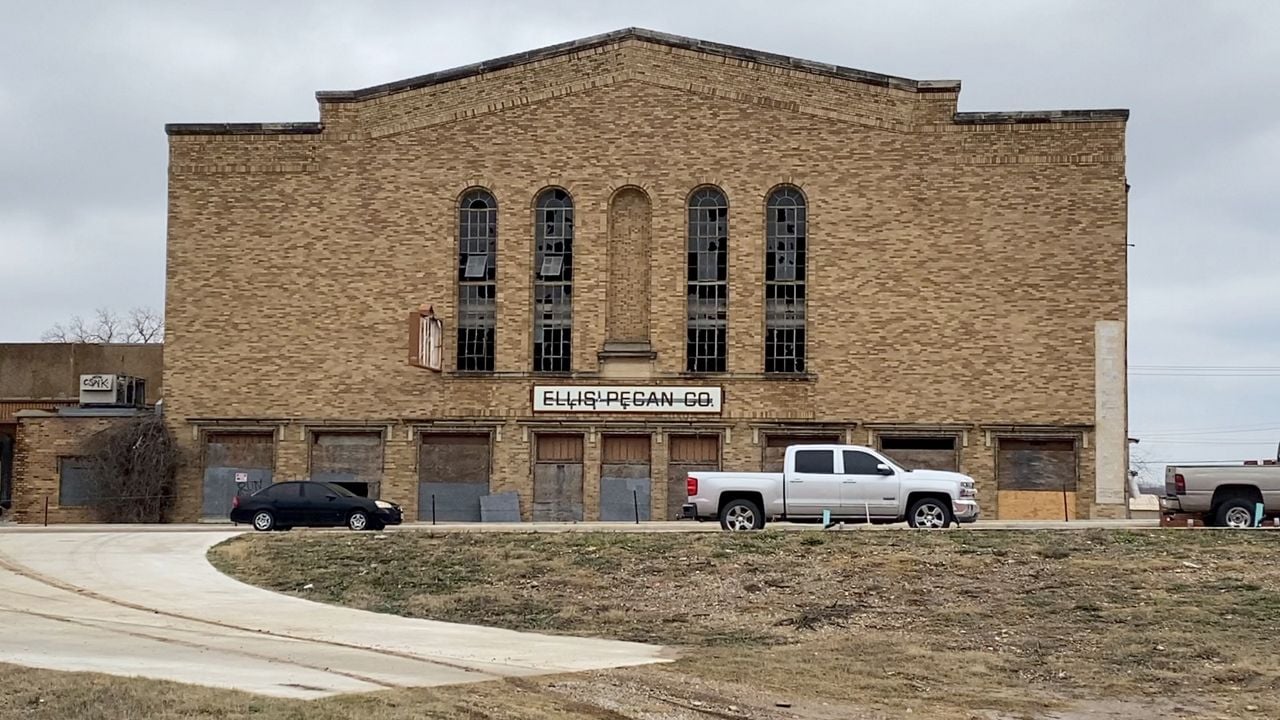
For many years, if you drove along North Main away from downtown Fort Worth, you passed a crumbling building on your right that had long stood vacant. When you asked locals about it, old-timers called it either the old Klan hall or the Ellis Pecan business. There was nothing on the building itself to confirm either version. Now, as the wrecking ball draws ever closer, it may be useful to learn the history of this place before it itself becomes history.
The building at 1012 N. Main was constructed in 1925 as a meeting hall for the Ku Klux Klan, replacing an earlier structure on the same site. Since then, it has passed through the hands of many owners, but the first arouses the strongest feelings. It was the second of two meeting halls built on this property. The first was erected in 1920 so that the Klan would no longer have to hold its meetings in the basement of the local courthouse.
This was the second, revived Klan. The first had been founded in Tennessee after the Civil War by embittered Confederate veterans and directed its hatred at freed Black people and the Northerners who protected them. In the early 1870s, federal law, backed by federal troops, forced it to cease operating. The Klan's name and organization were revived in Georgia in 1915 by a new generation of Southerners. This time, its enemies were not freed slaves or Northern profiteers, but immigrants, non-Catholics, and those branded unpatriotic. Its publicly proclaimed creed was: “God, home, and country." As self-appointed defenders of the purity of the Anglo-Saxon race, the Klan remained at its core a white supremacist organization, only with a longer list of enemies.
The Fort Worth chapter of the Klan was founded a year later by members of the local police force. They had no trouble winning over not only fellow police officers but many other people as well. Klan marches, parades, and auxiliary organizations soon followed. Membership was not considered shameful. Prominent attorney W. A. Hanger and respected judge Julian C. Hyer were Klan leaders and regarded membership as a political advantage. Klan candidates won a decisive victory in the 1922 local elections.
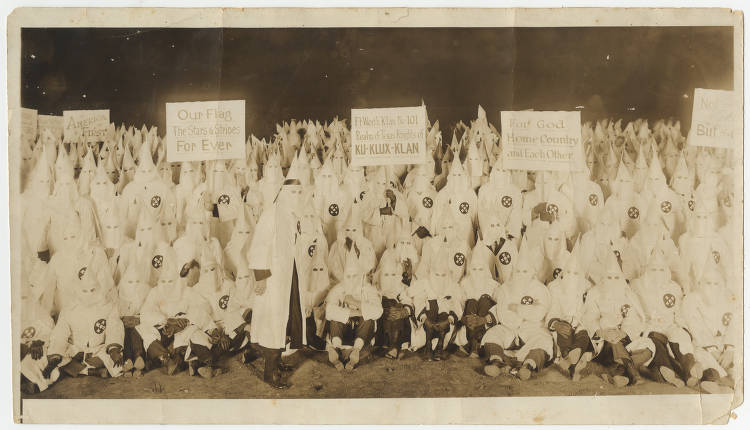
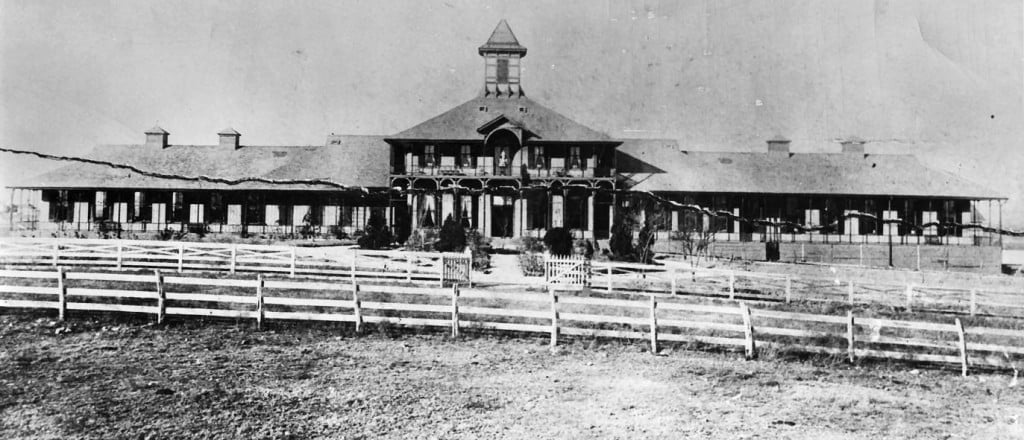
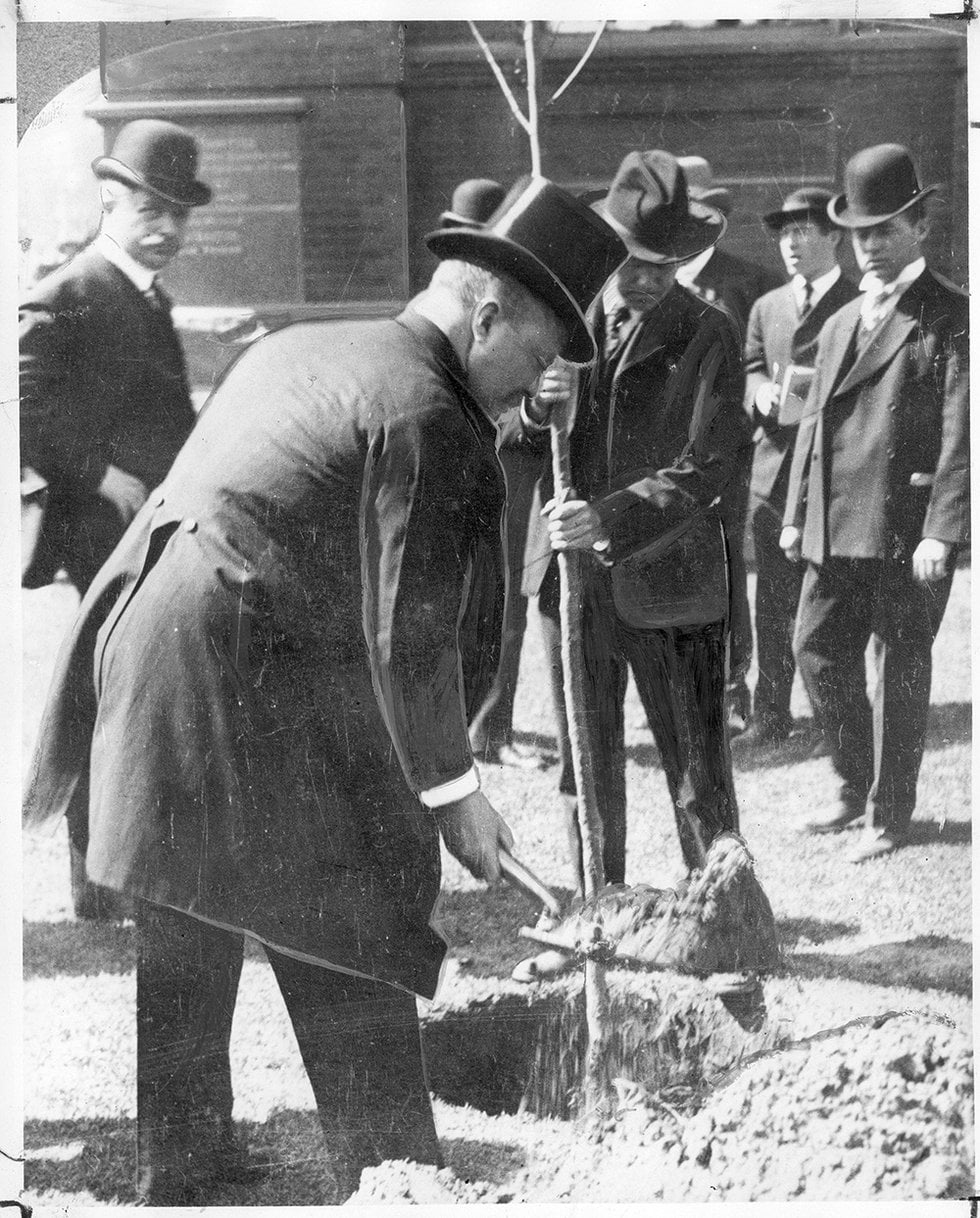
Someone in the organization proposed raising money to build a monument to the “historic Klan." After some discussion, however, they decided to build their own meeting hall instead. Turning this plan into brick and stone took several years and required an intensive fundraising campaign. To raise money and legally protect their interests, they established the American Building Corporation, which issued shares and raised the $90,000 needed for the building and the property on North Main. The cornerstone was ceremonially laid on Sunday, May 18, 1924. An impressive four-story building (1006 North Main) soon rose on the site. From the outset, it was intended to serve as more than merely a venue for their regular Friday evening meetings. It had a stage and an auditorium reportedly seating 4,000, which could be rented for “public gatherings and concerts." Chapter No. 101 needed a grand building because Fort Worth was the organization's headquarters in Texas and probably its largest center as well. The facilities even included a “fireproof vault" for storing records. Although it was a mixed-use building, there was no doubt about whom it belonged to: the Klan's name was carved in stone above the main entrance, and an electric “burning cross" crowned the telephone pole at the southwestern corner of the property.
The building rose in a remarkably short time, just one month after the cornerstone was laid. On July 28, Hiram Wesley Evans, Imperial Wizard of the Knights of the Ku Klux Klan, arrived to formally open the new hall and addressed a capacity crowd that had come to see and hear the organization's national leader. Another major name to appear in the hall was the celebrated magician and escape artist Harry Houdini, by then a somewhat faded star, who gave a speech and performed his “act" there on October 18.
The new owners did not enjoy their new hall for long. In the early hours of Thursday, November 6, 1924, the building burned down within two hours, despite the Fort Worth fire department deploying all its forces. Although arson was never proven, it was strongly suspected, and police opened an investigation. The total damage was estimated at $70,000 to $90,000. The Klan had close ties to the eccentric pastor of the First Baptist Church, J. Frank Norris, as evidenced, among other things, by the fact that the Klan's official publication and the church newspaper bore the same name: The Searchlight. This connection proved a lifeline as the Klan considered what to do about its planned Friday minstrel show, which was to be preceded by a parade through downtown and feature popular local baseball players Clarence “Big Boy" Kraft and Ziggy Sears. (Kraft later became a judge in Tarrant County.) The show was sold out. As the event appeared headed for failure, Norris rushed to the rescue. From Houston, he telegraphed: “Make the hall available to the Klan before anything else." But this order created a new problem because it left the local Euterpean Club singing society out in the cold, even though it had a performance scheduled in the hall that same evening. The society immediately filed a breach-of-contract lawsuit, and Norris was forced to back down on Friday. The Euterpean Club's performance would proceed as planned. Afterward, however, Norris kept his promise and allowed the Klan to use his church's facilities for as long as necessary.
The building was only partially insured, so the burden of rebuilding fell on the organization's members. No one disputed that they would rebuild it. By the 1924 Christmas program, they were already announcing that the architectural plans were complete and raising money to begin construction. One fundraising method was the sale of small tokens for fifteen dollars each. The front bore an engraved image of fully robed Klansmen. The reverse explained why the token had been created: “Fort Worth Klan Hall. Burned November 6, 1924." (Today, these tokens are collectors' items.) The building's architect was Klan member Earl Glasgow. The new hall at 1012 N. Main was somewhat smaller than its predecessor: it had only three stories, and the auditorium could hold no more than 2,000 visitors. Otherwise, the two buildings looked very similar. The first official event, held on June 5, 1925, was the ceremonial installation of new officers for the coming year. In the meantime, Chapter No. 101 held its weekly meetings in rented premises at the corner of Fourth Street and Commerce Street. It appears that J. Frank Norris's generous offer applied only to special events.
Like its predecessor, the new hall was more than merely the Klan's headquarters in Fort Worth; it was a multipurpose community space available for rent for religious revivals, appearances by celebrities, and musical concerts. The following year's program included, for example, a minstrel show organized by the Fort Worth Police Benevolent Association as a charity fundraiser and preacher Bessie May Randall's “Old-Time Gospel Faith Revival."
But the venue was losing money, and as the Klan's power and influence waned, it decided to sell. In 1927, brothers Marvin and Obie Leonard of the Leonard's department store bought it for use as a warehouse for merchandise and food. Apparently, that did not prove very profitable either, because in 1929 they sold it to a group of dance-marathon promoters. Dance marathons were a growing phenomenon at the time, in which couples competed for prizes and tried to remain on their feet for days at a time. The promoters removed most of the seats to make room for a dance floor and opened the doors at fifty cents admission with a promise of “entertainment around the clock." They renamed it the less controversial North Main Street Hall, which said as much about the venue's image as it did about its new owners.
By 1934, the building had declined further, and professional wrestling occupied it for the next six years, with programs consisting mainly of unknown local wrestlers capable of filling the hall with friends and relatives. The rapid decline slowed somewhat in 1937, when the Star-Telegram began staging Golden Gloves bouts in the building, showcasing the best young local boxing talent. It was a place where local people could enjoy an evening's entertainment during hard times without spending much money. The audience was rowdy and predominantly male.
In 1946, when the building's glory days were long past and it was no longer attractive to the entertainment industry, it was purchased by Lonnie V. Ellis, owner of the Ellis Pecan Company. Ellis, one of the state's largest commercial pecan producers, employed mainly Latino residents of the city's north side, more than half of them women who cracked, shelled, and packaged the nuts. During the season from November to March, the company employed around fifty workers, making it one of the largest employers of Latinos in Fort Worth. Cottage work carried out in living rooms and backyard sheds was transformed into industrial production. It was low-paid manual labor that generated large profits for the owners, but not for the workers themselves. There was a certain irony in the fact that a building once dedicated to white supremacy became the workplace of so many Latinos. The Ellis Pecan Company remained a family business for another half century before being sold in 1991 to a Missouri company that continued operating it under the same name. In 2000, it moved to a more prestigious neighborhood near the Ridgmar Mall shopping center. The building at 1012 North Main has stood vacant and for sale ever since.
Over the years, its past was occasionally recalled. In 1962, legendary concert pianist and conductor Rudolph Ganz came to Fort Worth as a member of the jury for the Van Cliburn International Competition. The local Composers League named him an honorary member, and old-timers recalled his fifty-one-year musical connection with Fort Worth, which included his 1924 appearance conducting the celebrated St. Louis Symphony Orchestra at its concert in the Klan hall. That evening, the hall was filled to capacity with elegantly dressed members of local society, without a single white hood or robe in sight.
In 2019, a determined initiative calling itself Coalition 1012 launched a concerted effort to save the old building. At the time, it was vaguely referred to as either the Klan hall or the Ellis Pecan business, depending on how far back the person being asked could remember. This effort coincided with a visionary project to reroute the Trinity River, part of which involved creating an island of more than 300 hectares that included the property on which the building stands. Suddenly, a relatively worthless piece of property became highly valuable real estate suitable for commercial premises or apartment buildings. A clash was inevitable: historic preservation versus economic development. And that was without even considering all the emotional weight the building carries. Its very existence is an affront to many in the Black community, who regard it as a “monument to violence." Others from the same community, however, advocate preserving it, not for something esoteric like historic preservation, but so that it can be transformed into a “living monument to liberation, love, and freedom." Consideration is being given to naming the restored building after Fred Rouse, a Black man who in 1921 became the last person lynched in Fort Worth. To a small group of preservationists, the building represents a unique historical artifact. It is architecturally unremarkable, but it is the only purpose-built Ku Klux Klan headquarters still standing. As such, it deserves to be saved from demolition for the same reason that plantation buildings have been preserved and listed on the National Register of Historic Places: not to celebrate the people who built them, but to preserve a piece of history from which we have something to learn. It is said that a picture is worth a thousand words. How much more valuable, then, is a historic building?
The case for preservation is compelling for several reasons. Those who look only at the bottom line might see the building as a key landmark along the northern Main Street corridor between the courthouse and the Stockyards district. As a combined cultural events center and history museum telling the story of race relations in Fort Worth, it would become an essential stop for curious visitors. The old, empty, crumbling shell of a building that was once a monument to hatred would thus receive a second chance, and people have always loved stories about second chances. But if one day you drive past 1012 N. Main and see only a shopping plaza or apartment buildings, you will know that the developers won.