In May 2026 alone, three memory chip manufacturers joined the exclusive club of companies with a market value exceeding one trillion dollars: Samsung, SK Hynix, and Micron. All three are being propelled by data centers’ insatiable demand for artificial intelligence chips. Until recently, this club was the exclusive domain of US technology companies: Nvidia, Apple, Microsoft, Amazon, Alphabet, and Meta. Memory manufacturers were not among them.
Samsung was first
Samsung was the first of the three to cross the magic threshold. It happened on May 6, when its shares surged by more than 14 percent to an all-time high. The South Korean manufacturer’s value exceeded one trillion dollars, making it only the second Asian company after Taiwan’s TSMC to reach this milestone.
Samsung reported an operating profit of more than 57 trillion won in the first quarter of 2026, exceeding its total profit for all of 2025. The driving force was its semiconductor division, which accounted for more than 90 percent of the total profit. And behind it all is a single product: high-bandwidth memory, known as HBM chips, without which AI servers cannot operate.
Samsung also announced that it had become the first company in the world to begin mass production of HBM4 chips, the latest generation of high-bandwidth memory. Another key factor was Nvidia’s approval of its chips for use in its systems. For investors, this was a clear signal: Samsung had become part of the artificial intelligence infrastructure.
SK Hynix
Three weeks later, it was SK Hynix’s turn. On Wednesday, May 27, its shares surged by nearly 15 percent during the day, making it the second South Korean company to be valued at more than one trillion dollars. Specifically, it reached 1.68 quadrillion won, equivalent to more than 1.1 trillion dollars. SK Hynix has been ahead in this segment from the very beginning. While Samsung still had to prove the quality of its memory chips to Nvidia, SK Hynix has been Nvidia’s key supplier since the very beginning of the boom. It was the first to bring the HBM3 and HBM3E generations to market, and its entire HBM chip output for 2026 has long been sold out.
Since the beginning of this year, SK Hynix shares have risen by approximately 250 percent. The company’s quarterly net profit has quadrupled. Demand has quite literally outpaced production, and the company cannot add capacity quickly enough.
Micron
Just before SK Hynix, on Tuesday, May 26, US company Micron Technology crossed the trillion-dollar threshold. Its shares rose by nearly 20 percent that day, their largest one-day gain since 2011. Since the beginning of 2026, they have gained more than 214 percent. The catalyst was a report by investment bank UBS, which tripled its price target for Micron shares. The reason? According to UBS, AI has permanently changed the structure of the entire memory market. Like SK Hynix, Micron reports that its HBM chip capacity for this year is sold out.
Why memory has suddenly become so scarce
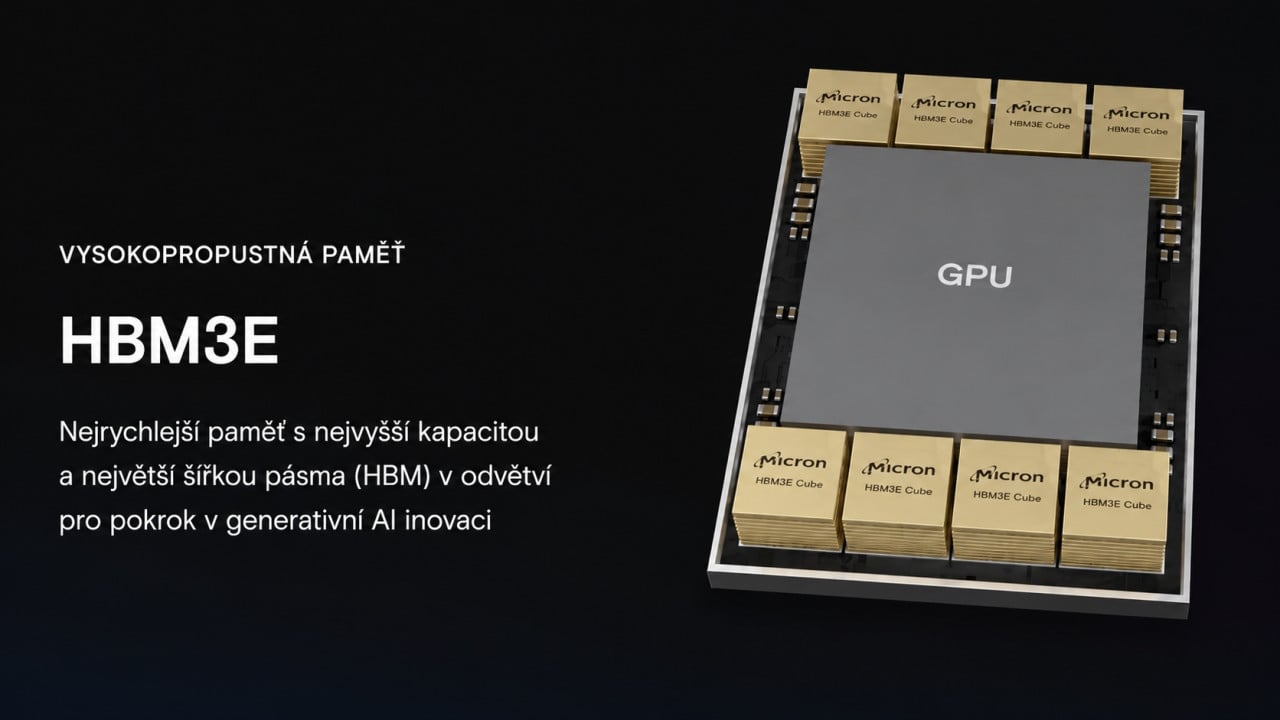
Memory chips have always remained somewhat in the background. Processors, graphics cards, and the companies behind them, such as Nvidia or Qualcomm, have always received the attention. But the massive expansion of AI has changed this balance. Modern language models and AI systems require enormous amounts of data for both training and regular operation, and that data must remain constantly available and be transferred at incredible speeds. HBM chips are precisely the component that meets this need. Without fast memory, Nvidia’s powerful GPUs would be unable to operate at full capacity.
Demand grew so quickly that supply could not keep up. HBM prices doubled in the first quarter of this year compared with the previous period. For the second quarter, analysts estimate a further price increase of up to 63 percent. And that does not even account for the impact on memory markets for phones, computers, or cars, where the shortage is also being felt. Analysts at Mirae Asset Securities expect demand to exceed supply until at least 2028.
A milestone for the South Korean market
Samsung and SK Hynix reaching their trillion-dollar milestones had an immediate impact on South Korea’s Kospi stock index. It reached an all-time high on May 27. On that day, the two companies alone accounted for half of the index’s total market capitalization. The Kospi has risen by more than 90 percent since the beginning of the year, after gaining 76 percent last year. South Korea thus became the first country outside the US to have more than one trillion-dollar company.
Nvidia has so far maintained its position as the world’s most valuable company, with a market value of more than 5 trillion dollars, while Apple and Microsoft have also recently crossed the 4 trillion dollar threshold. However, some investors warn that the AI chip market may be overheated and that company valuations could be significantly inflated.
Sources: bbc.com, bloomberg.com and siliconangle.com