OpenAI introduced GPT-6.2 Astra and GPT-6.2 Sol on November 17, 2026. Astra is designed for complex professional tasks, while Sol targets everyday work. Both models are available in ChatGPT Work and Codex, and to developers through the API.
Presentations, documents and browser experiences
OpenAI says Astra has improved at creating presentations, spreadsheets and documents that follow professional conventions. When preparing slides, it can use an original file or a screenshot as a template, matching the layout, colors, typography and writing style on new slides.
Both models can turn a written brief into an interactive browser experience, according to OpenAI. In Artificial Analysis’s AA-3D test, where people compare two implementations of the same prompt without knowing which model produced them, Astra received an Elo rating of 1,318. Claude Fable 5.2 reached 1,271 and Sol scored 1,259.
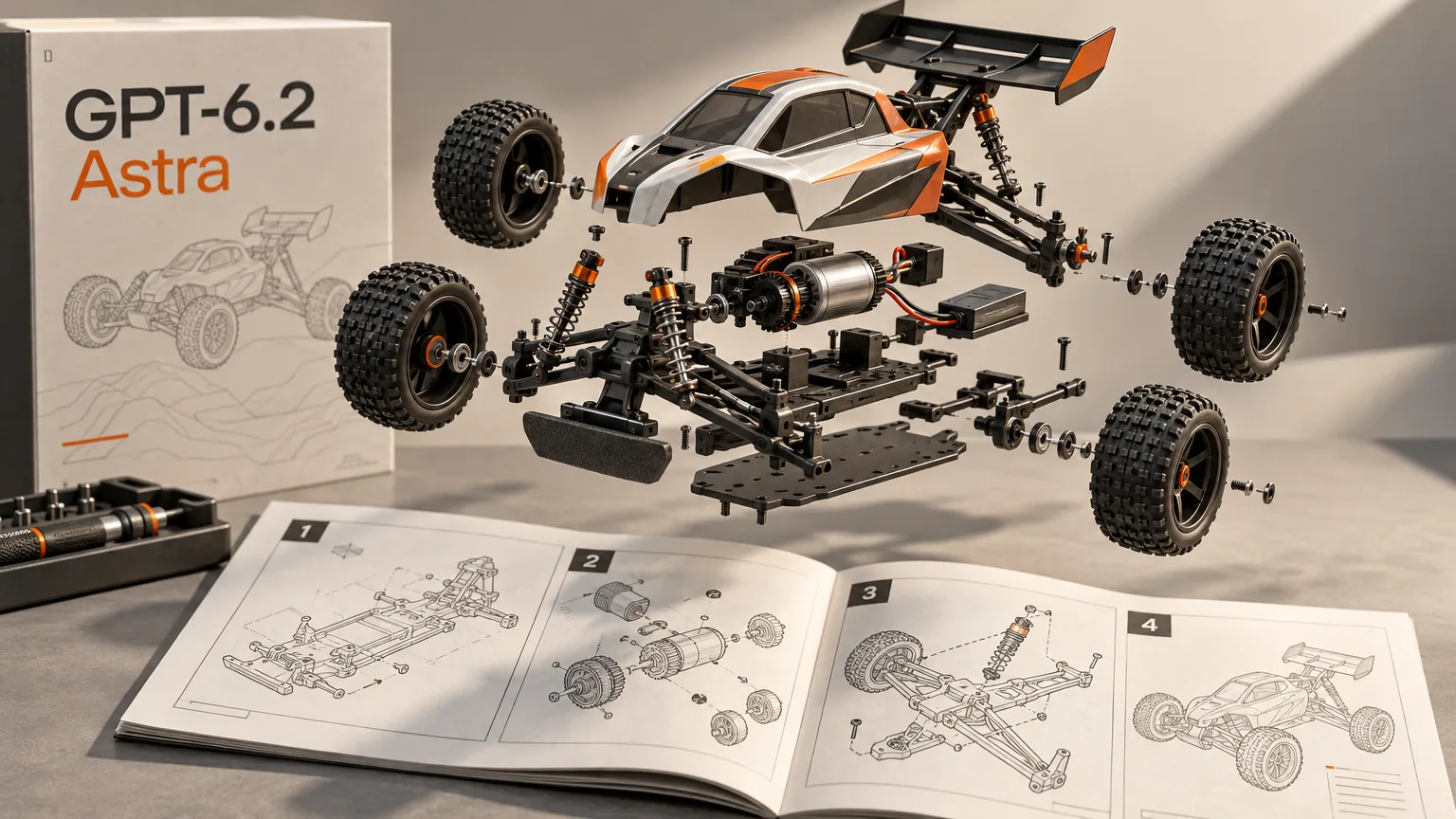
In an OpenAI demonstration, Astra was asked to model a remote-controlled buggy and its engine using photographs and manuals. It created the individual components, an animated assembly guide and an illustrated parts catalog.
Results in professional work and coding
In Agents’ Last Exam, which evaluates long-horizon professional workflows, Astra scored 5.2 points above GPT-6 Astra and 5.5 points above Claude Fable 5.2, according to OpenAI. Fable’s leaderboard result excludes nine tasks in which a fallback model was used.
OpenAI’s internal GDPval v2 test is based on real knowledge-work projects. Astra improved by 6.2 percentage points over GPT-6 Astra while using 22% fewer output tokens; Sol improved by 5.3 points over GPT-6.1 Sol.
In Cognition’s FrontierCode 2.0, which assesses whether changes to real codebases meet maintainers’ standards for merging, Sol scored 0.5 points below Astra, OpenAI says. Both models were tested at their maximum setting.
OpenAI also reported results for the legal benchmark Harvey LAB-AA v1.1: Astra more than doubled Claude Fable 5.2’s pass rate, according to the company. The test counts a result only if it meets every grading criterion and contains no material factual hallucinations; Astra for Law, a configuration for lawyers, scored higher still.
On Terminal-Bench-Science 0.1, which tests scientific work in a terminal, Astra scored nine percentage points above GPT-6 Astra, according to OpenAI.
Access in ChatGPT Work, Codex and the API
Plus, Pro, Enterprise and Edu subscribers can access both models in ChatGPT Work and Codex. Developers can find them in the OpenAI API as gpt-6.2-astra and gpt-6.2-sol.
Ultrafast mode is available for both models in the API, and Pro 500 subscribers can use it with either model. Pro 200 subscribers are gaining access first for Sol; eligible Enterprise and Edu customers need their workspace administrator to enable it.
Astra’s API input and output tokens are 20% cheaper than those of GPT-6 Astra, while Sol retains GPT-6.1 Sol’s rates.
According to OpenAI, both new models handle demanding tasks using fewer output tokens. The company says Sol can complete more work than GPT-6.1 Sol within the same paid plan.
Restrictions on security tasks
Both models launch with tighter restrictions on higher-risk cybersecurity assistance. OpenAI says these also affect some legitimate vulnerability research and security testing workflows. The company plans to bring the GPT-6.2 models to its Daybreak program.
In two tests, both models more often failed to flag an obstacle, such as a missing file or unavailable search tool, according to OpenAI. The company says additional instructions in Codex substantially reduce these omissions.