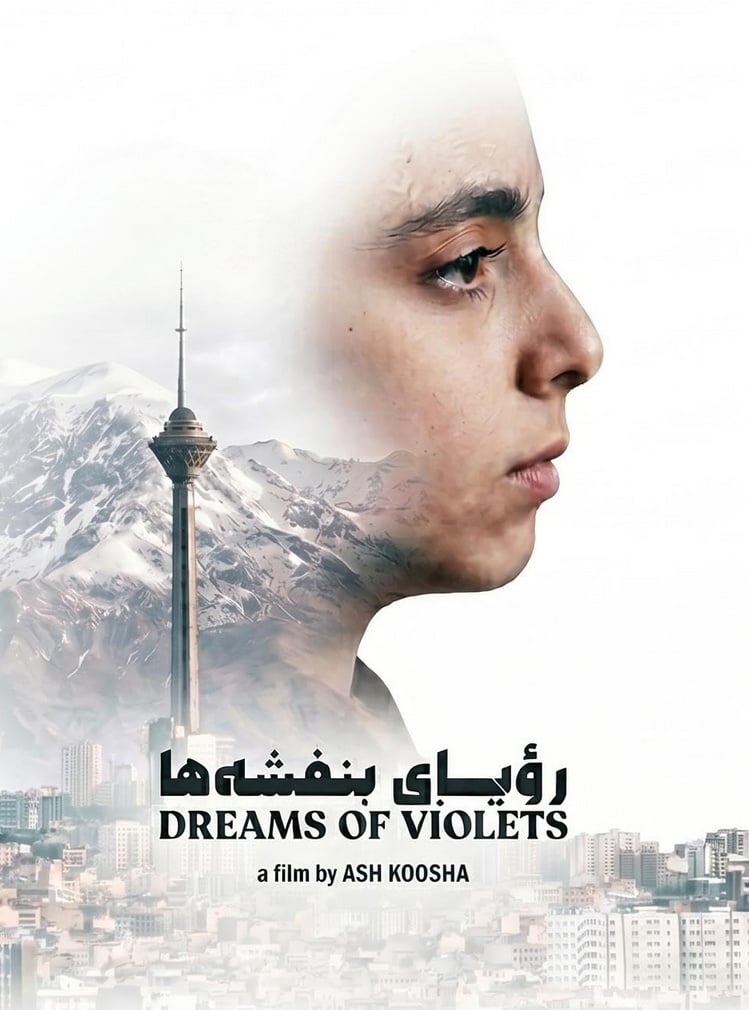
The Tribeca Film Festival, one of the most prestigious in the United States, will premiere a film on June 10 unlike anything ever seen in the history of major festivals. A feature-length narrative film in which every shot, every face, and every setting was created exclusively using artificial intelligence tools. It is called Dreams of Violets, and its story begins far from Hollywood studios, in exile, with a budget of two thousand dollars.
What the film is about
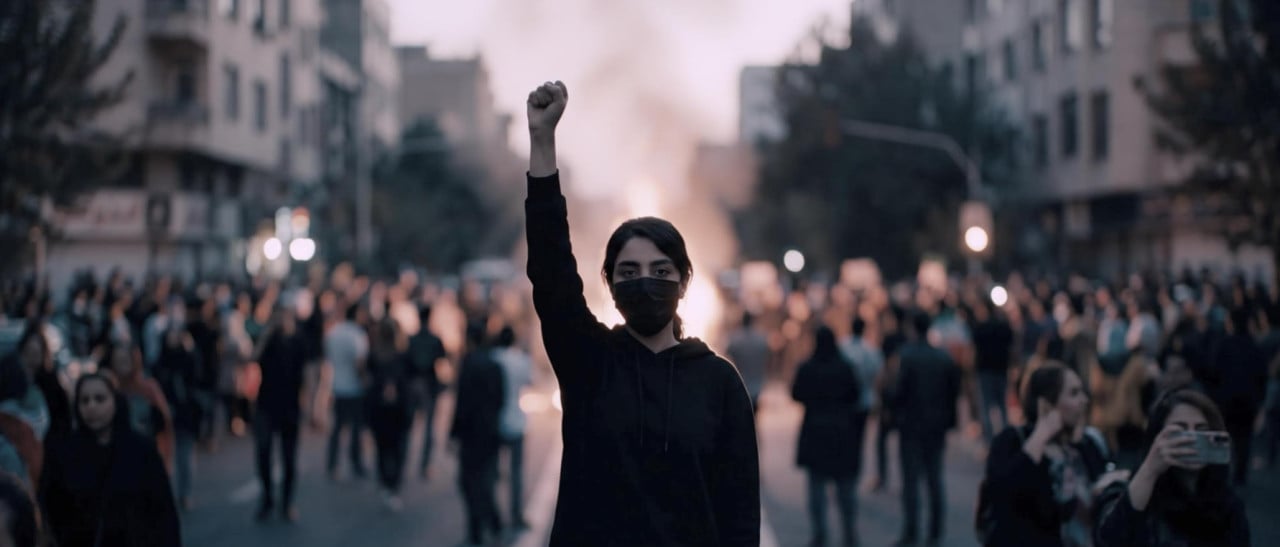
Tehran, January 2026. Iranian security forces are shooting wounded protesters. Communications have been cut off, the internet is down, and the international media have only minimal access to the events. International organizations estimate the number of civilian deaths at more than 7,000. It was then that London-based musician and composer Ash Koosha decided to make a film. Not to showcase a technological achievement. But because there simply was no other way.
"I wanted to make this film with actors, with a crew, with the dignity of a full production. That was not available to me. I am a person in exile, without access to Iran, without access to the places and people. AI allowed me to do what would otherwise have been impossible: create a memorial film about events that took place behind a wall I cannot cross," Koosha wrote in his statement.
Dreams of Violets is a 75-minute docudrama that follows five strangers on the streets of Tehran at dawn. Iranian forces are executing wounded protesters. A soldier discovers the group. Above them, from a window, a boy named Amir watches everything from his wheelchair and decides to act. The film draws on news reports, photographs, and eyewitness accounts, which AI video models used to construct the individual scenes.
Brothers from Iran who left but did not forget
The film was made by two brothers: Ash and Pooya Koosha. Both were born in Iran and left the country in 2009. Ash now lives in London, while Pooya lives in Menlo Park, California, where he serves as CTO and co-founder of Claigid. Both have deep roots in technology and AI. Their previous project, the company Auxuman, created Yona, an artificial pop star. In 2018, Ash released the album Return O, featuring vocals by Yona.
Tom Rogers, the former head of NBC Cable, is executive chairman of their new production company, Fountain 0, and an executive producer of the film. Fountain 0 was founded in 2025 with the goal of producing feature-length AI films and series. Dreams of Violets is its first project.
Creating the film with the help of AI
The film took approximately two to three months to make. The budget was two thousand dollars. This figure sparked considerable debate. One commenter beneath an article on Deadline calculated that, with an average shot length of three seconds and a runtime of 100 minutes, approximately 2,000 shots would have been created. Each shot requires several attempts to produce a reference image and several video generations. Their resulting estimate of the computing power needed for tens of thousands of high-resolution AI generations simply could not fit within two thousand dollars. Ash Koosha has not yet responded publicly to this objection.
The film was made using Google Nanobanana to create images and keyframes, and Kling AI to generate video from those frames. Claude AI assisted with language editing, while Google Gemini helped research the source materials. Ash Koosha initially voiced the characters himself, after which the voices were modified using AI tools. The blocking of actors on the set—that is, the positioning of characters within each shot—was directed manually by the filmmaker.
The result is a 74-minute Persian-language film presented in VistaVision format.
Tribeca says yes. And Hollywood trembles
The Tribeca Festival, whose co-founder Jane Rosenthal selected the film for its official program, will screen it on June 10, 2026, at New York's AMC Flat Iron Theatre. "The Tribeca Festival has long supported artists who push the boundaries of storytelling. The Koosha brothers' Dreams of Violets is a powerful example of how AI can be used not only as a tool for innovation, but as a medium for profoundly human stories," Rosenthal told The Hollywood Reporter.
It is a historic milestone. The film Hell Grind, a 95-minute AI horror film about demons, was screened in Cannes this year, but only as a side event at the film market, not as part of the festival's official program. No other AI film has yet been accepted into the main selection of a major festival. Dreams of Violets is the first. By comparison, the 2024 AI and deepfake biographical drama Putin attracted attention at Cannes, but it involved superimposing the Russian president's face onto a real actor rather than using fully generated content.
Ash Koosha himself admits that news of such a film's existence "will send chills down the spines of many people in Hollywood." At the same time, it represents an opportunity for independent filmmakers whose greatest obstacle is money. "As a first-time filmmaker, there is no way I could have finished this film without what AI tools enabled us to do," Koosha says. And the brothers already have two more films in development. Pooya Koosha believes that every subsequent project will be technically better than the one before it.
Additional source: deadline.com