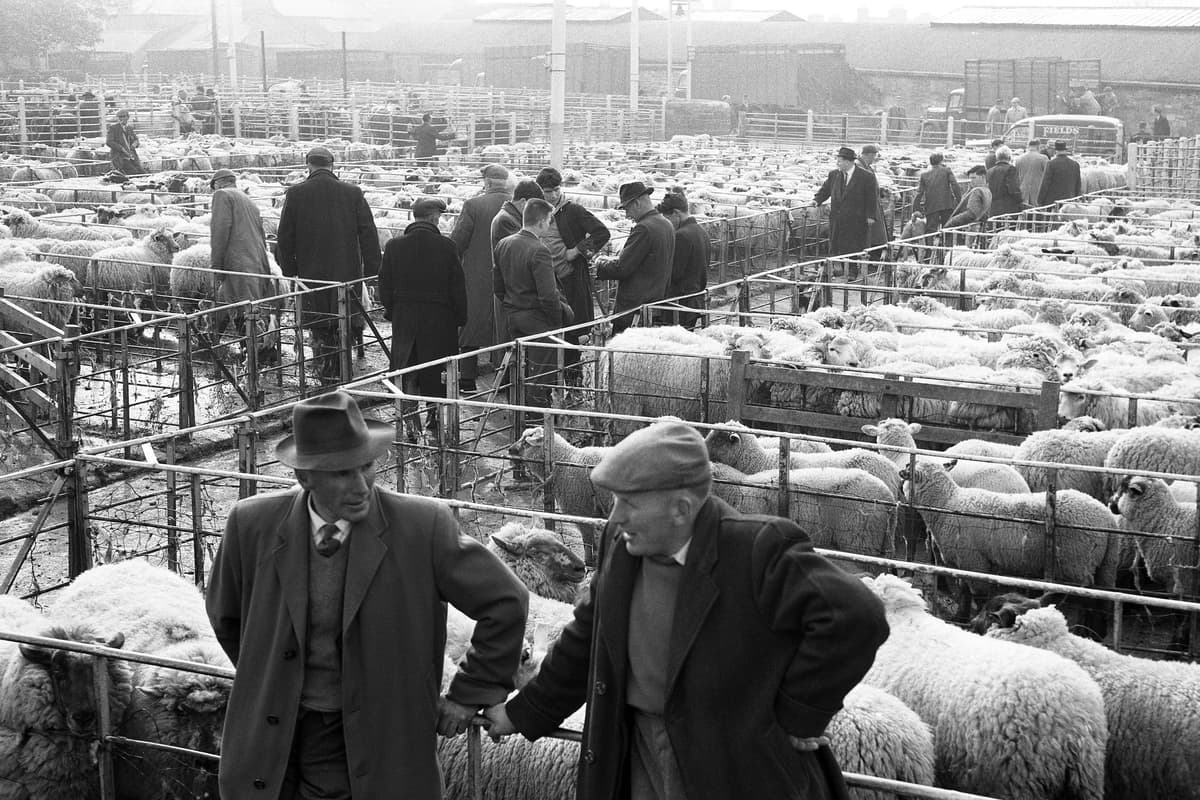
For Fort Worth and its stockyards, the 1970s, 1980s, and 1990s were a period of tremendous change. Pessimistic forecasts of future economic development spread everywhere as livestock receipts at the stockyards declined each year. From a peak of more than five million animals arriving at the stockyards in 1944 during World War II, receipts fell to 1,844,793 just ten years later. In 1964, another decade later, they fell again to 705,382. By 1974, only 269,992 animals were arriving annually, and the total continued to decline. The same story was unfolding at other major stockyards. The mighty Chicago stockyards—which had dominated the industry for many years—closed in 1971. Denver followed a year later. Wichita closed in 1980.
Initial efforts focused on keeping the Fort Worth stockyards in operation. The New York-based Canal-Randolph Corporation, which owned the stockyards at the time, built an auction arena in 1960 and attracted attention through special sales of young and feeder cattle. After $2 million in federal funds had been spent to improve flood-prone areas, Canal-Randolph completed a $750,000 project to restore the Livestock Exchange Building and modernize the pens.
Meanwhile, business leaders from the northern part of the city and the North Fort Worth Historical Society took steps to begin attracting tourists to the area. Volunteers kept a visitor center open in one corner of the Coliseum. The North Fort Worth Historical Society planned a museum. If fewer cattle were coming, why not invite people to see the historic district that made Fort Worth what it was: "Cowtown," "the city where the West begins," as the local newspaper had always proclaimed.
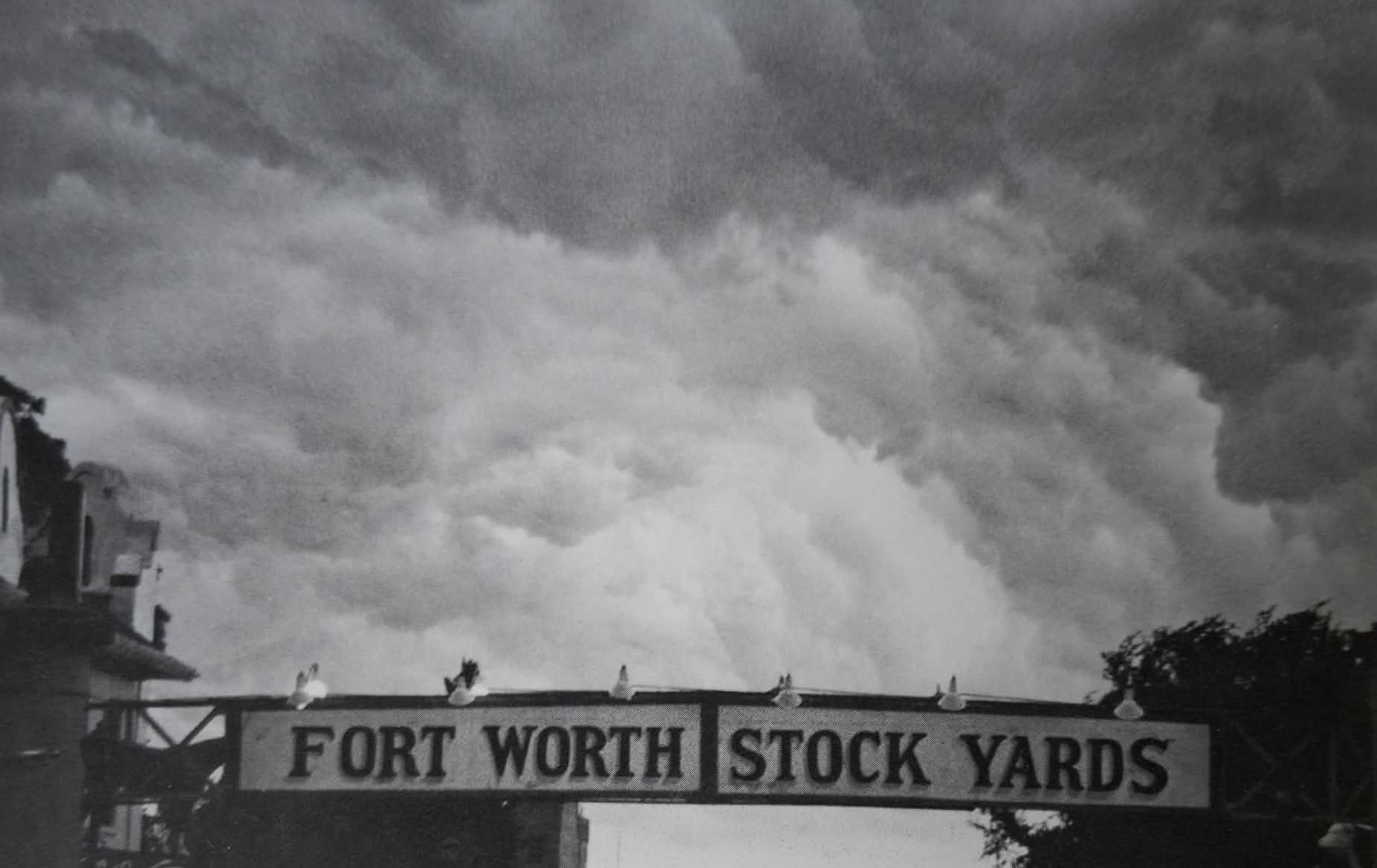
If storm clouds signal approaching trouble, observers of the stockyards should take heed. In the late 1950s and early 1960s, livestock receipts were declining. The two major meatpackers that purchased most of the slaughter animals arriving at the stockyards soon closed their operations—Armour in 1962 and Swift in 1971. Similar events were taking place across the country. By 1985, only 88,156 animals of all kinds arrived for sale at the Fort Worth stockyards.
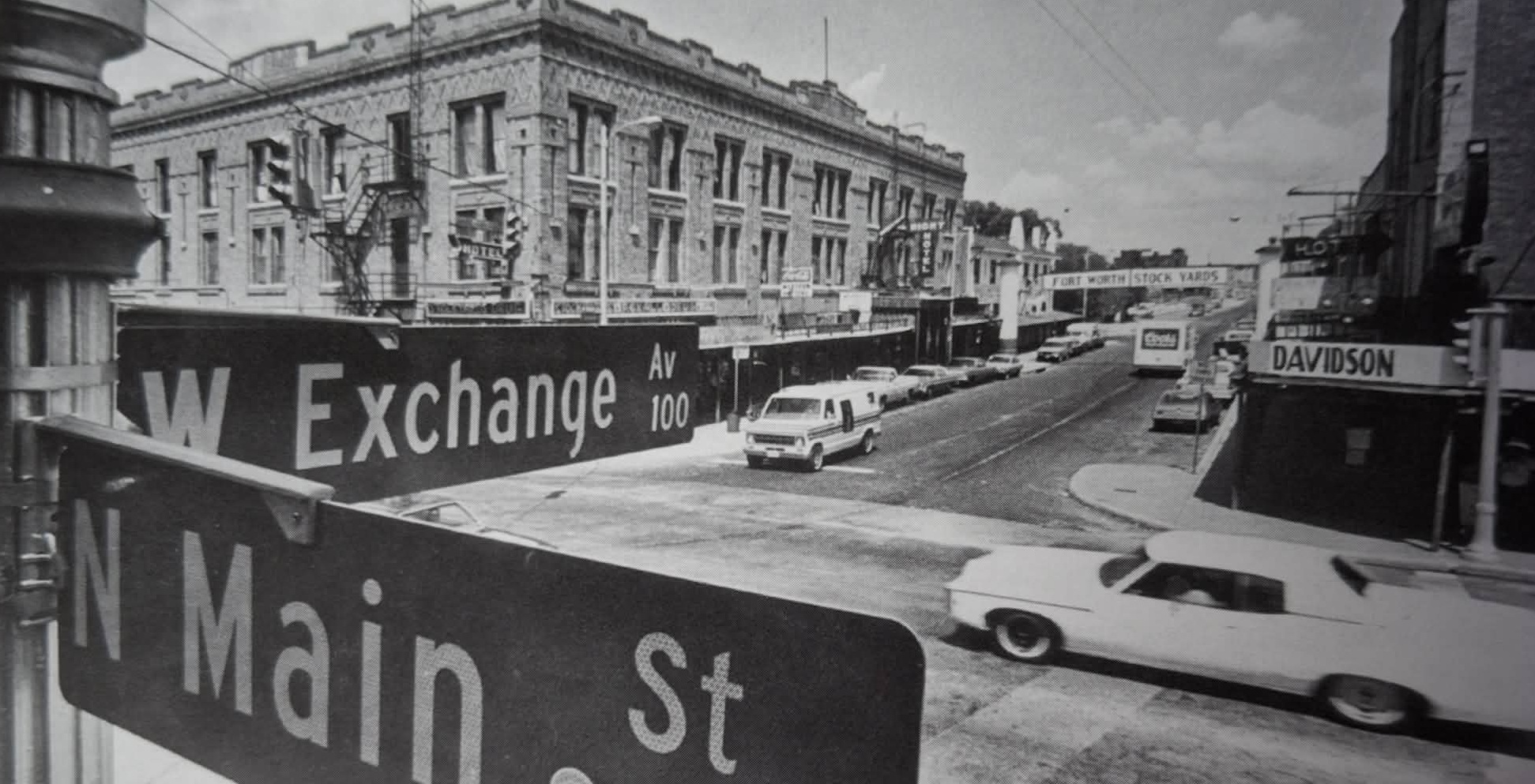
Any of the four corners at the intersection of North Main Street and Exchange Avenue ranks among the best-known street corners in Fort Worth. The photograph looks east toward the Thannisch Building across the street, which housed many businesses, beginning with Thannisch's Stockyards Club in 1906. There was always a hotel upstairs. In the 21st century, it is the exclusive Stockyards Hotel.
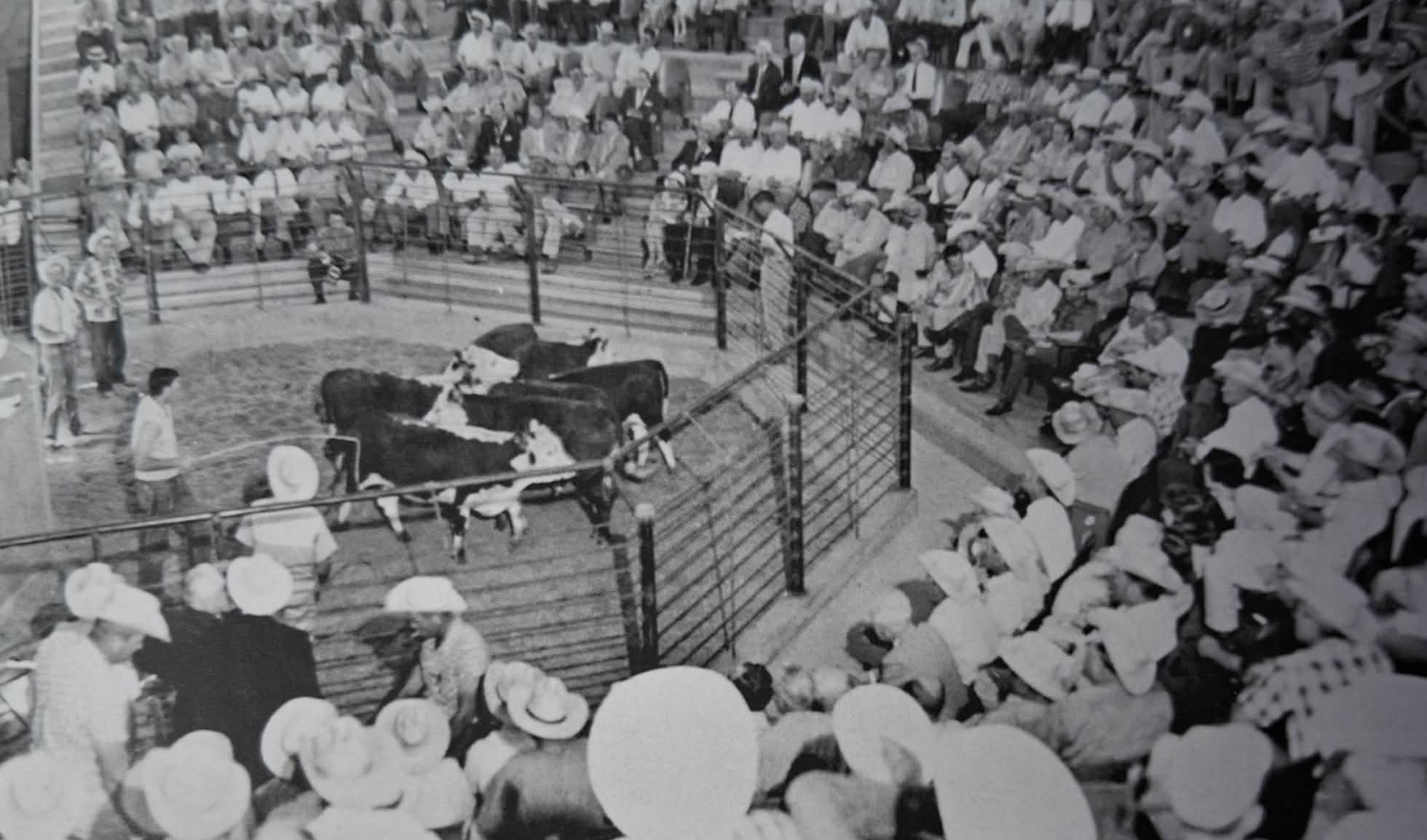
The Fort Worth stockyards followed the example of several other major stockyards in the country and began holding auctions in 1959. The following year, they built this auction arena with comfortable stadium seating. The innovation of live auctions was introduced as a way to compete with auctions that had developed in small rural towns in the 1930s and became more popular in the 1940s and 1950s.
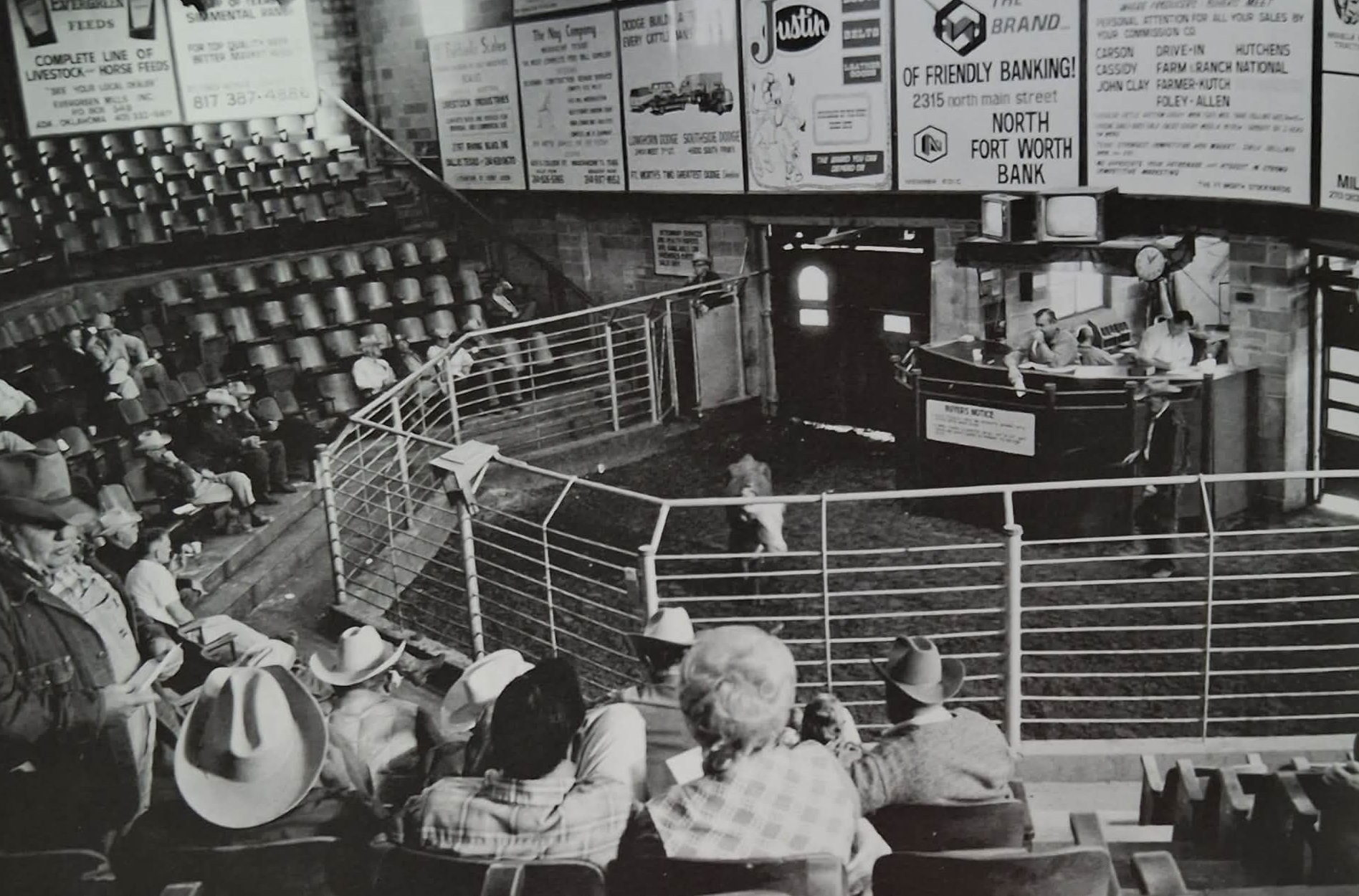
In the second half of the 20th century, major stockyards tried to halt declining livestock receipts by holding auctions. Previously, all sales were conducted by private agreement through commission agents. The popular Fort Worth auction began on just one day a week and continued alongside private-treaty sales. During auctions, handlers brought either one animal or a small group of animals into the ring through the doors shown on the left. Bidding began as soon as the announcer told the audience about the animals and who was selling them. After the sale, workers drove the animal or animals out through the doors on the right.
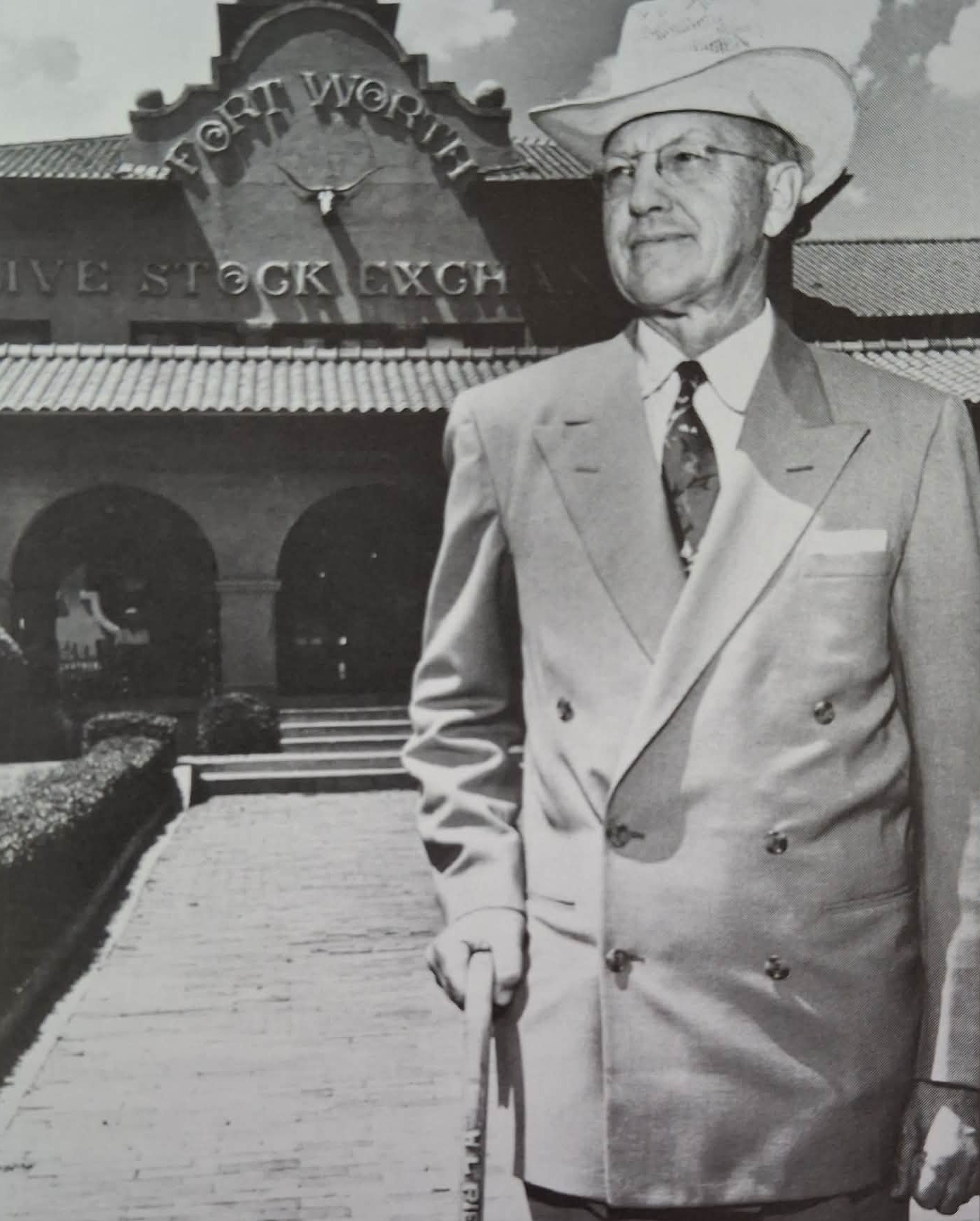
William Pier, a native of South Dakota, once worked at the Stockyards National Bank in Omaha, Nebraska. He moved to Fort Worth in 1928 as vice president of the Stockyards National Bank in Fort Worth. Pier served as president of the Fort Worth stockyards from 1959 to 1971.