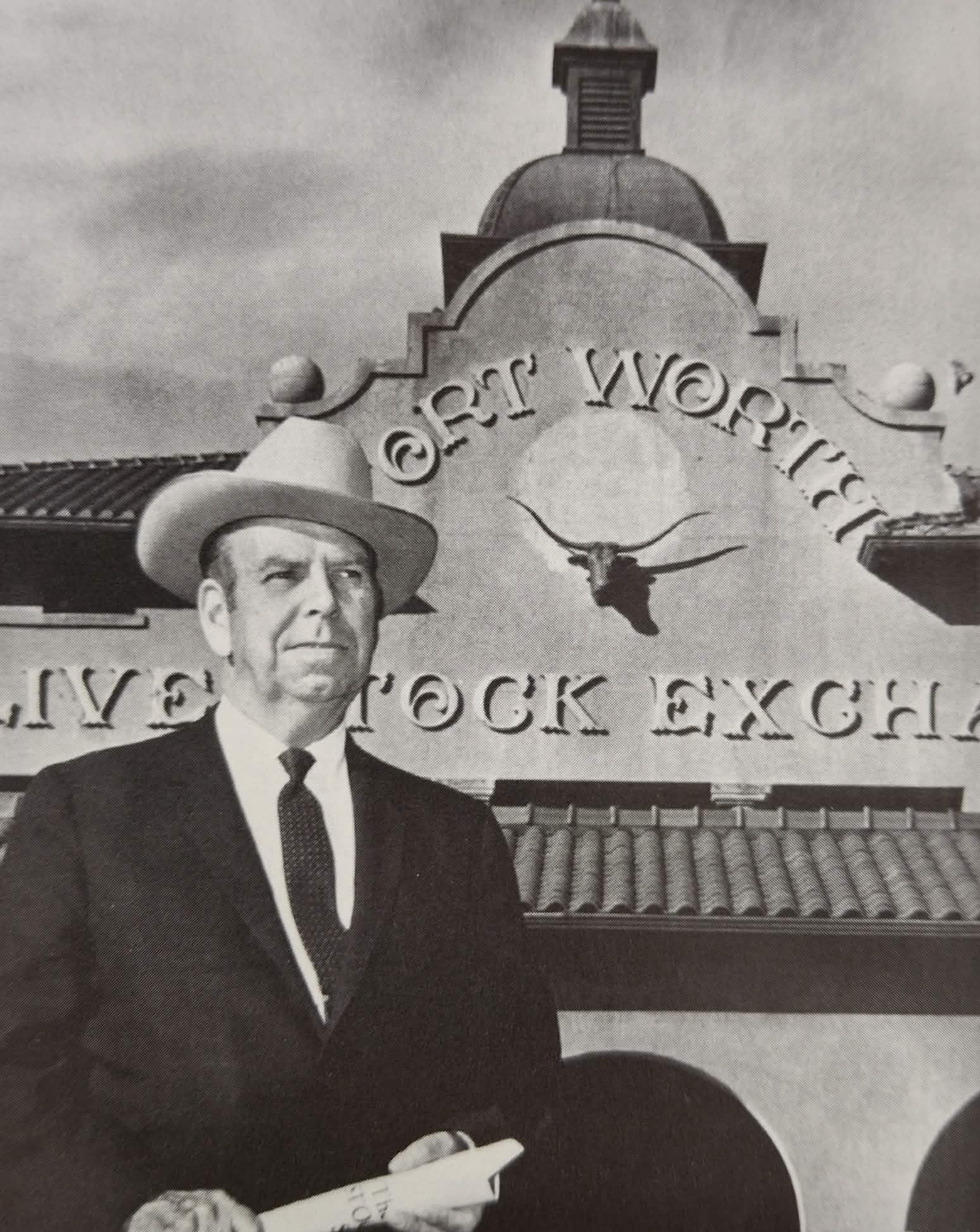
John M. Lewis, formerly president and general manager of the Sioux Falls Stockyards (opening photo), came to Fort Worth in 1958 to replace Bill Pier when he retired the following year. Stockyards management told him he could introduce new ideas and techniques to halt the decline in livestock receipts. While Lewis had the confidence of management, rank-and-file employees resisted the changes he tried to implement. Unfortunately, because the decline in the livestock industry was nationwide, his influence was limited.
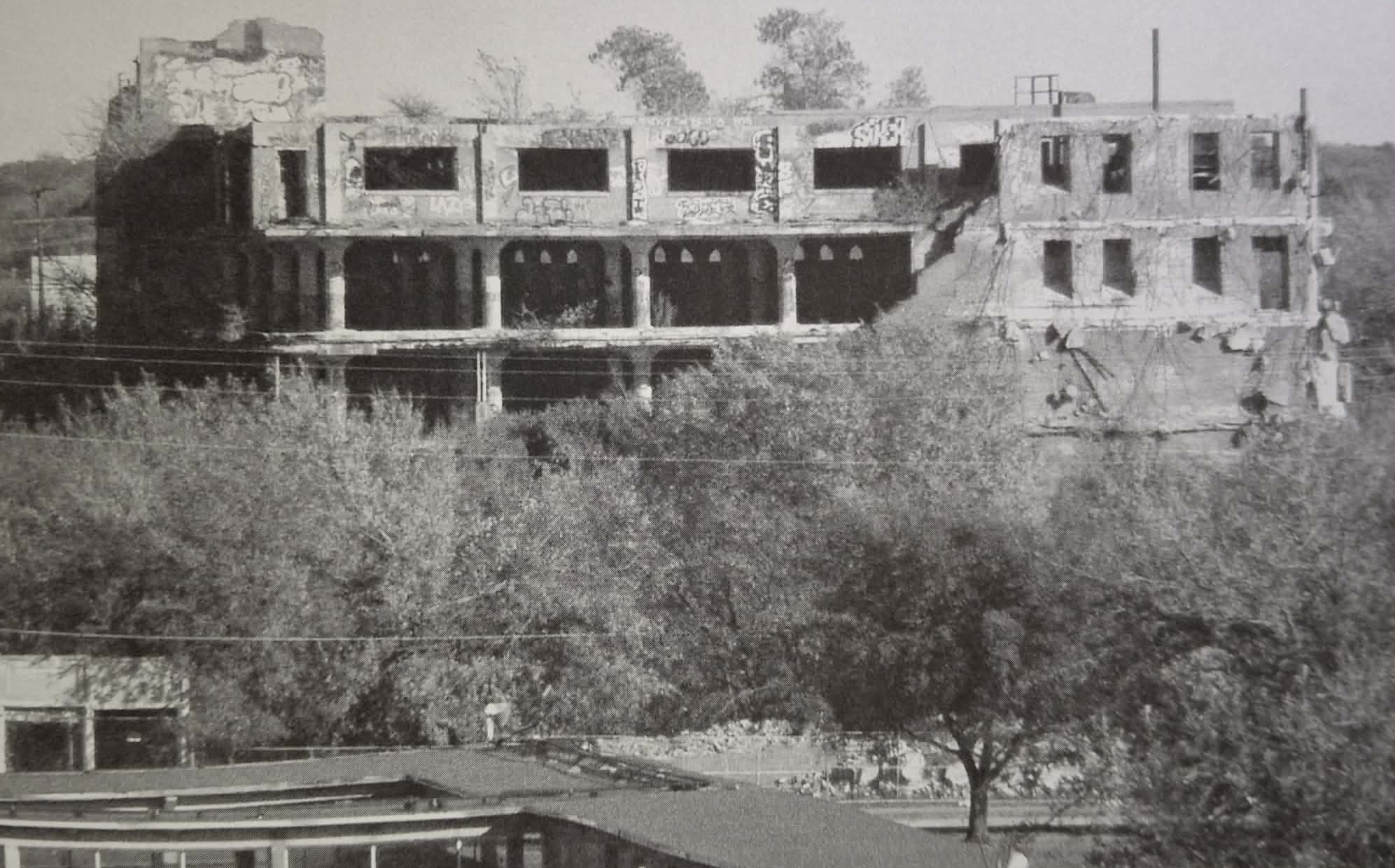
This brick shell is all that remains of the Swift and Company meatpacking plant. The Swift building was struck by two fires. A brief fire on January 11, 1974, affected only the fourth and fifth floors. A more catastrophic fire began on May 30, 1975, and burned throughout the night. Because the fire spread into an underground tunnel, it was difficult to extinguish and smoldered for three weeks.
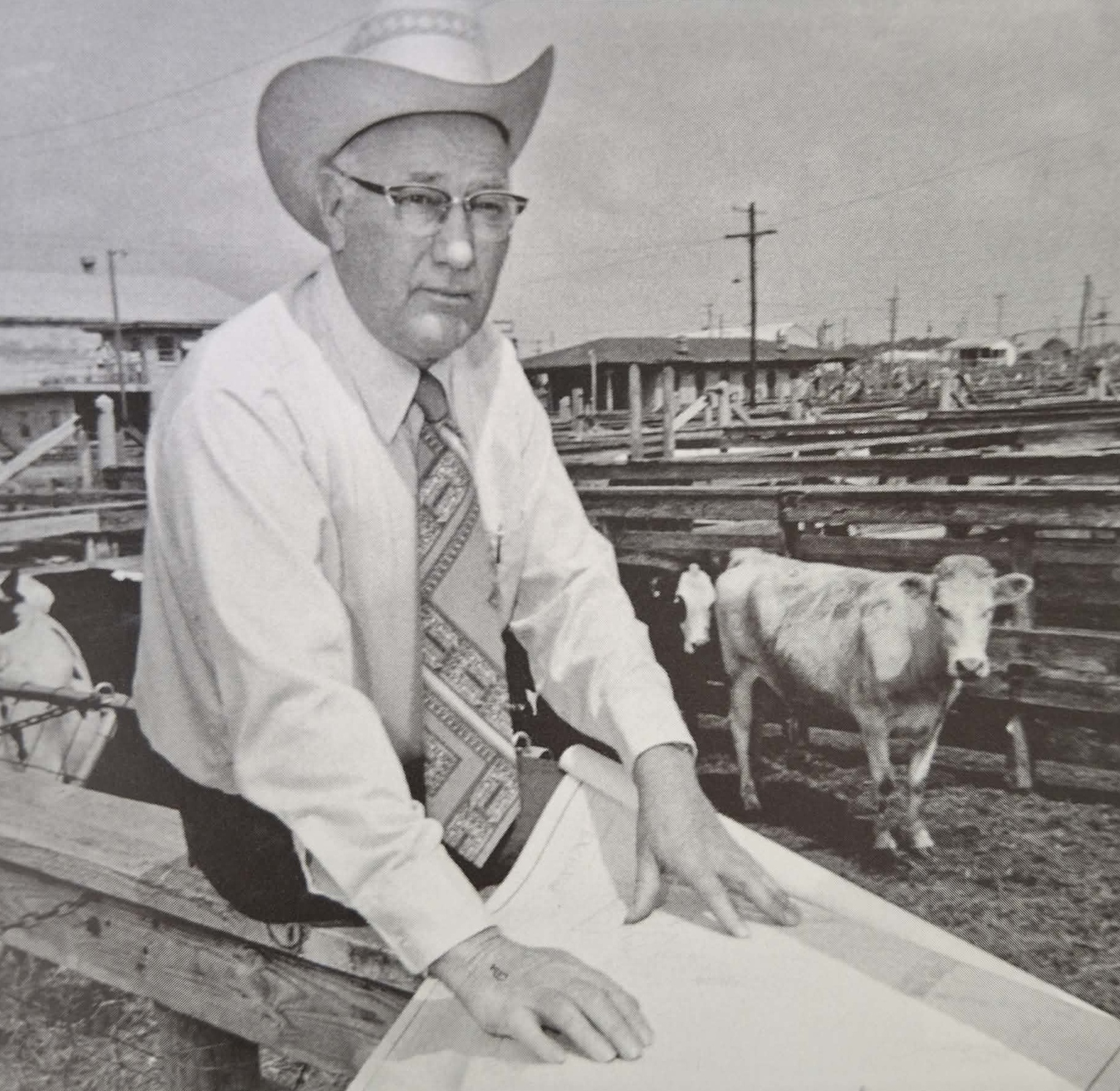
Elmo A. Klingenberg, known as "Mo", succeeded John M. Lewis as division president in 1971. A native of Illinois, he joined United Stockyards there, and the company (which owned the Fort Worth Stockyards) sent him to Fort Worth in 1946. He stayed and gradually worked his way up to president. His retirement in 1982 was one of the factors that led United to allow Gary Allen to establish a new company to operate the stockyards.
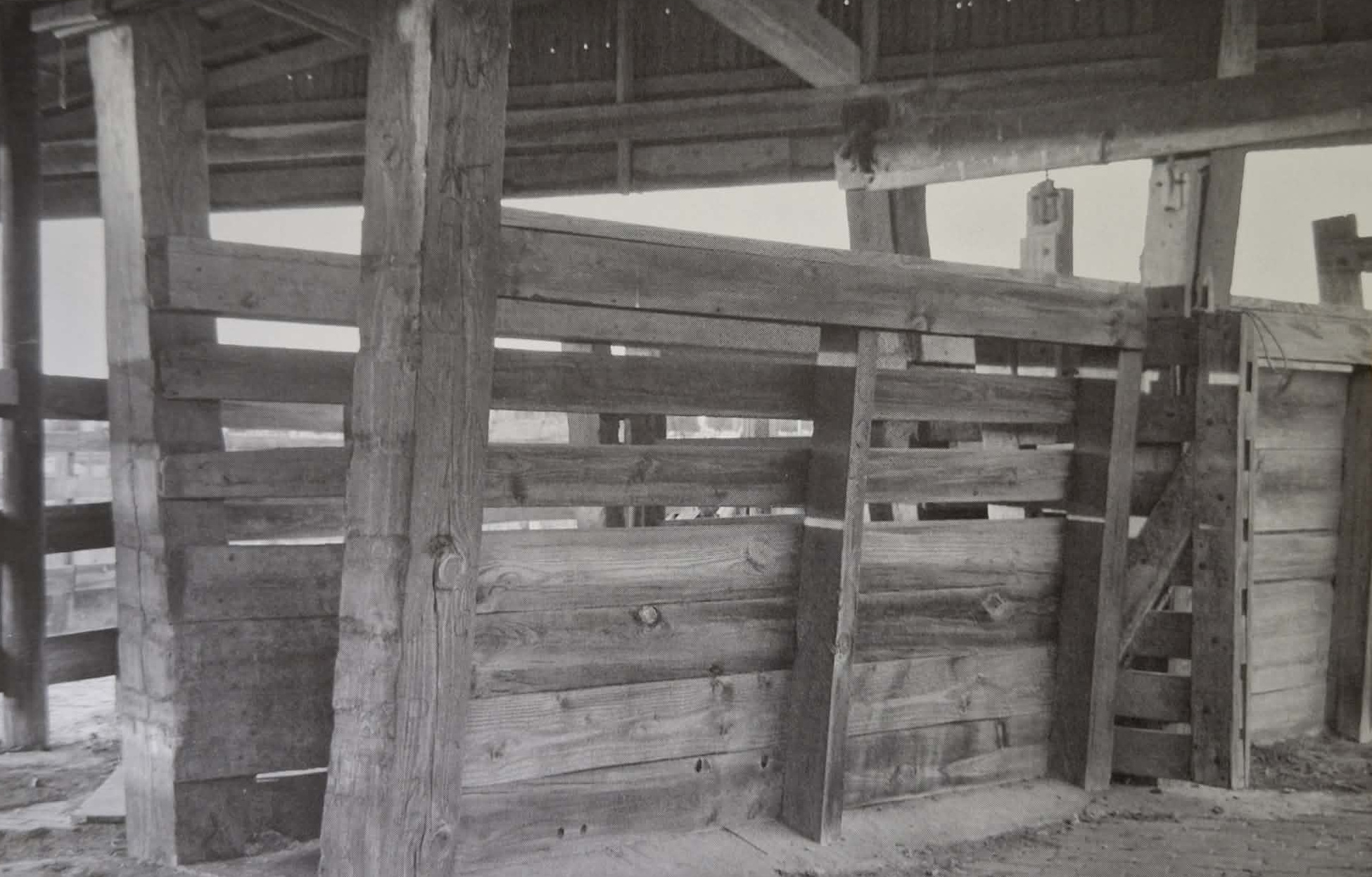
The Fort Worth Stockyards was once the largest livestock market south of Kansas City, but the market was changing. As fewer livestock sales took place, fewer ramps were needed to load or unload animals. The ramps were used less and less, and livestock receipts continued to decline. Eventually, Superior Livestock Auction was established and began selling livestock online and by video. Buyers picked up livestock from ramps at ranches rather than at the stockyards.
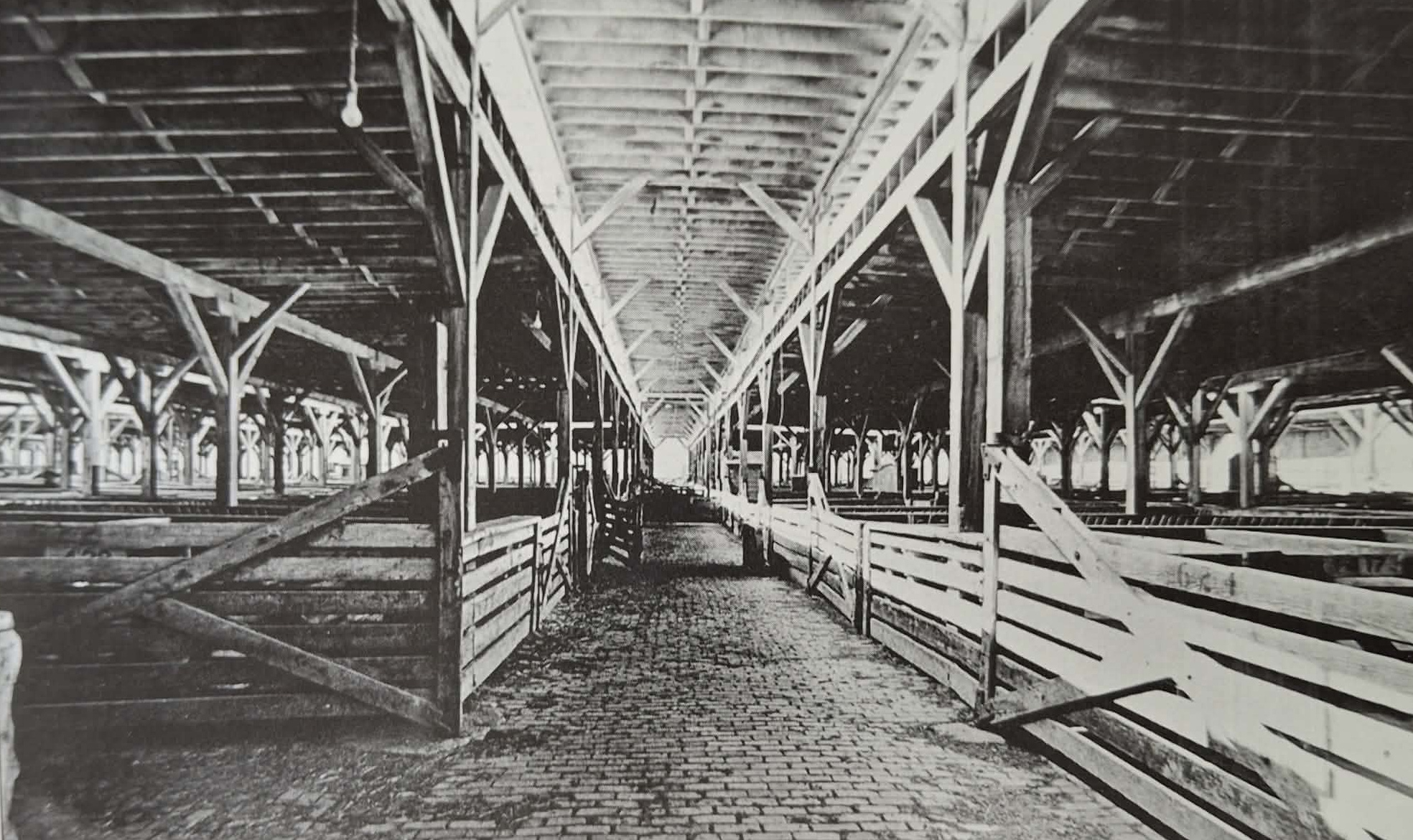
The covered sheep pens on the south side of Exchange Avenue look eerily empty in this 1972 photograph. The large receipts of the 1940s—receipts that made Fort Worth the largest sheep market in the world—were long gone. Stockyards Station, a popular dining and shopping area, now occupies this site following its redevelopment.
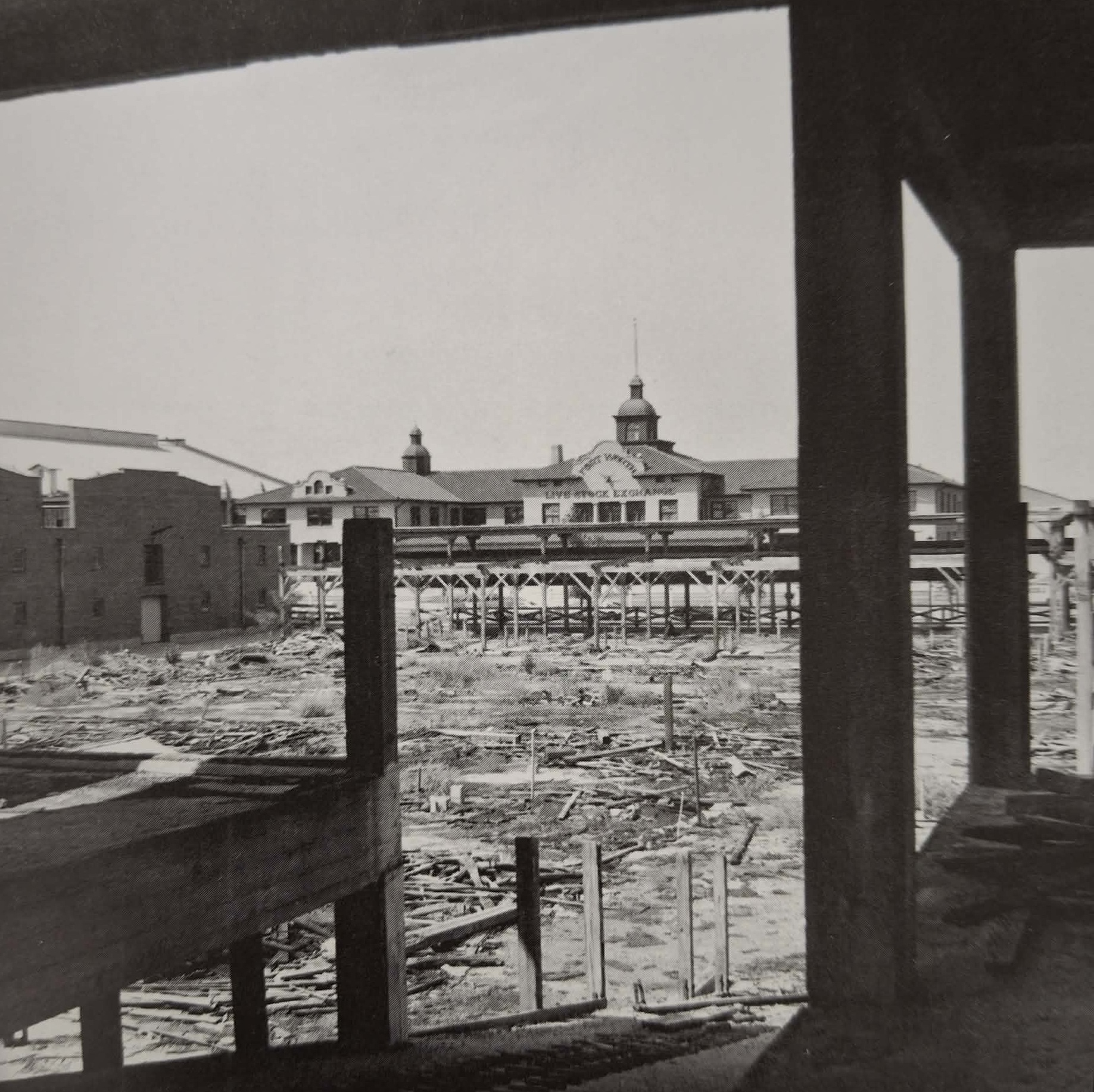
In this photograph, the Livestock Exchange Building can be seen beyond a debris-filled lot. The scattered wood on the ground represents the remains of hog pens demolished after sales collapsed. The horse and mule barns still exist, however, and the sheep pens were converted into "Stockyards Station", which houses numerous restaurants and shops.
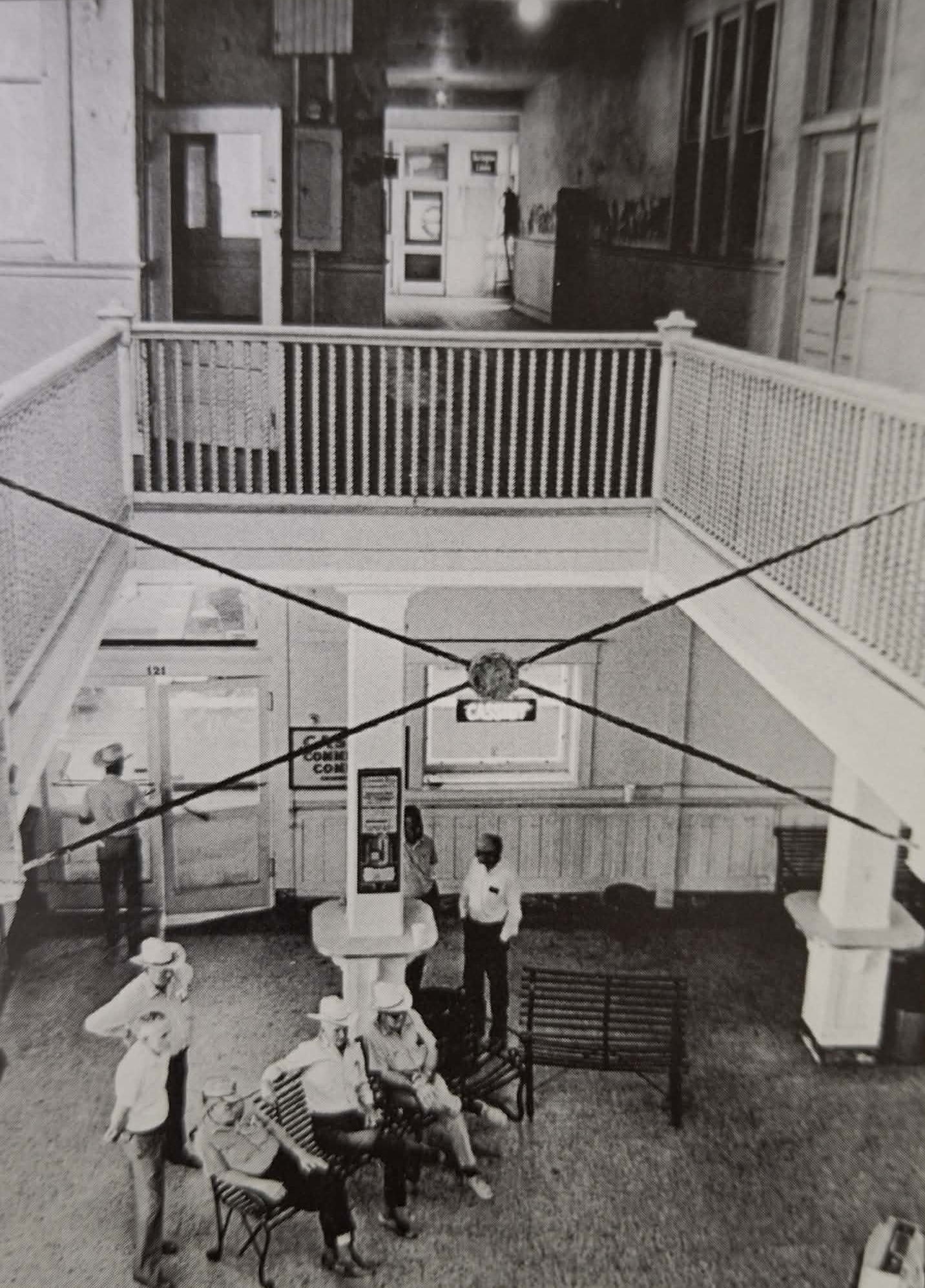
In the 1960s and 1970s, as livestock was sold at rural auctions or feedlots, activity at stockyards across the United States began to decline. On this day in November 1972, the owners of commission companies and employees with offices in the Livestock Exchange Building gathered to watch television during their free time.
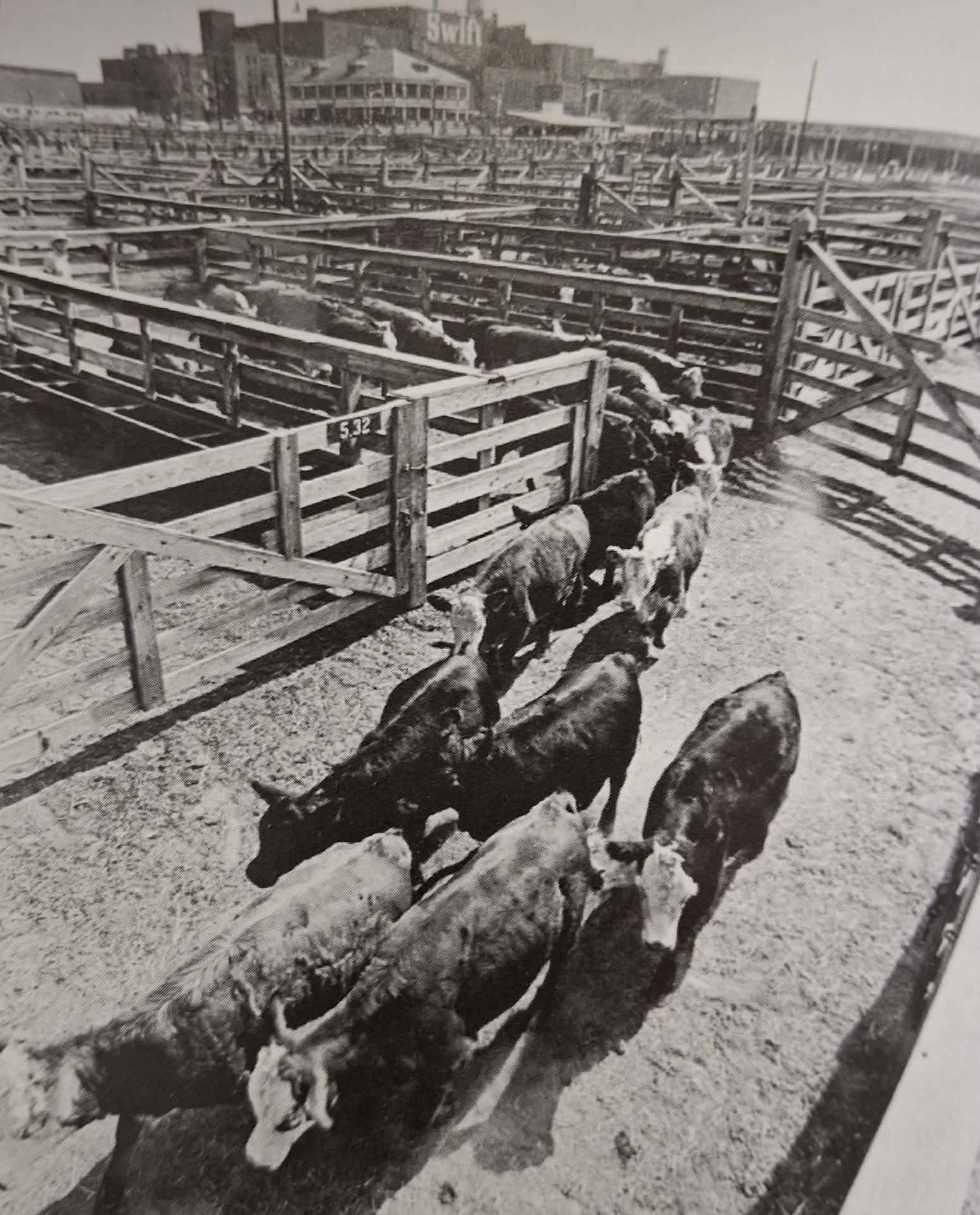
Because of the shift from stockyards to rural auctions and feedlots, by 1973 far fewer cattle and other livestock filled these historic pens than in earlier years. Despite reduced receipts at the Fort Worth Stockyards, life continued. Although Armour and Swift had closed, several independent meatpacking plants still purchased cattle for slaughter.