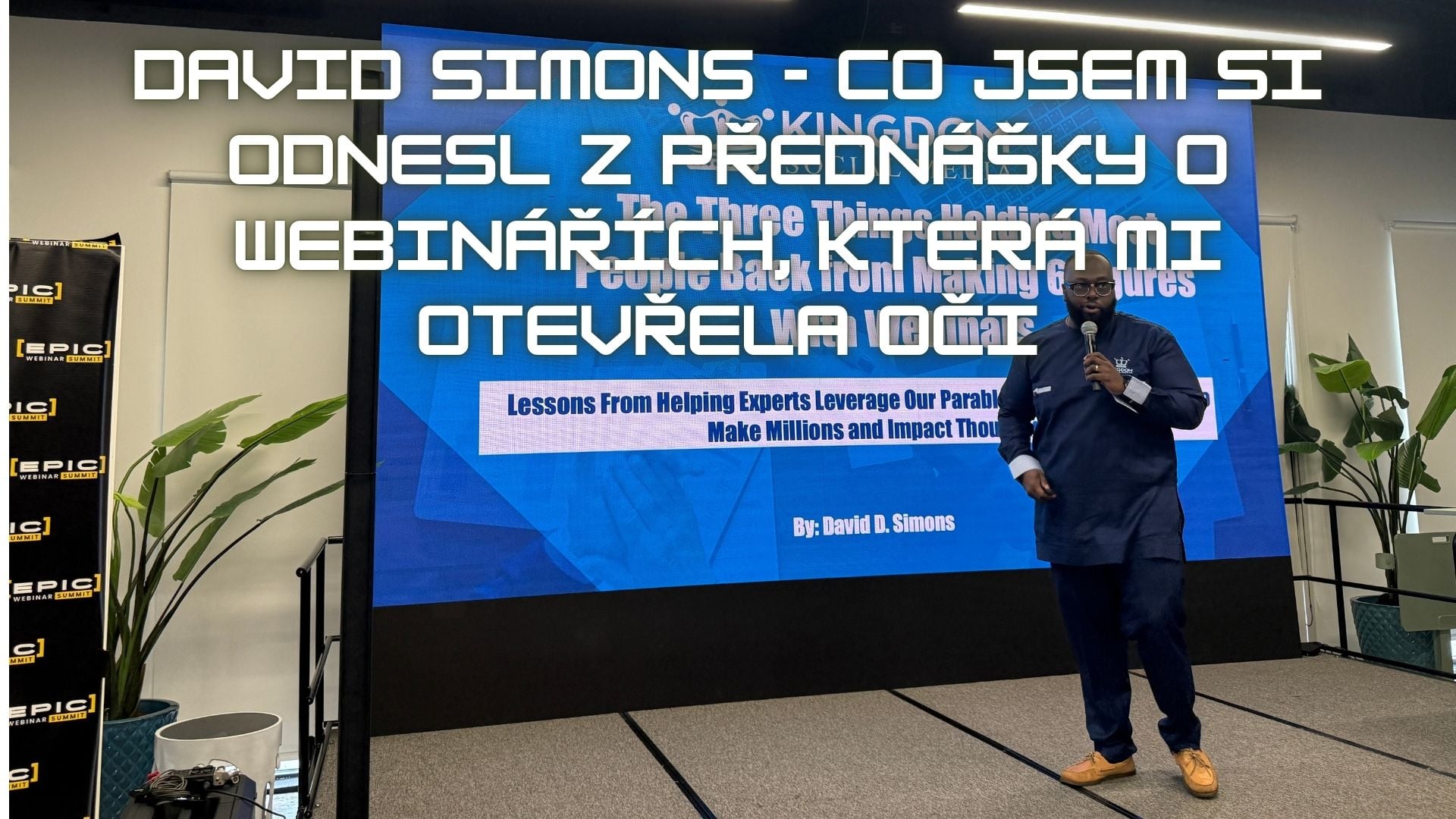
At the Epic Webinar Summit, David D. Simons of Kingdom Social Media gave a talk that really caught my attention. The topic? Three things holding most people back from earning six figures with webinars. And honestly, a lot of what he said resonated with me personally more than I expected.
David is no theorist. His approach, which he calls the Parable Presentation Method, has helped his clients generate over $12 million through webinars and online sales. And on stage, he shared the principles behind this method.
Let's go through the most important takeaways from his talk.
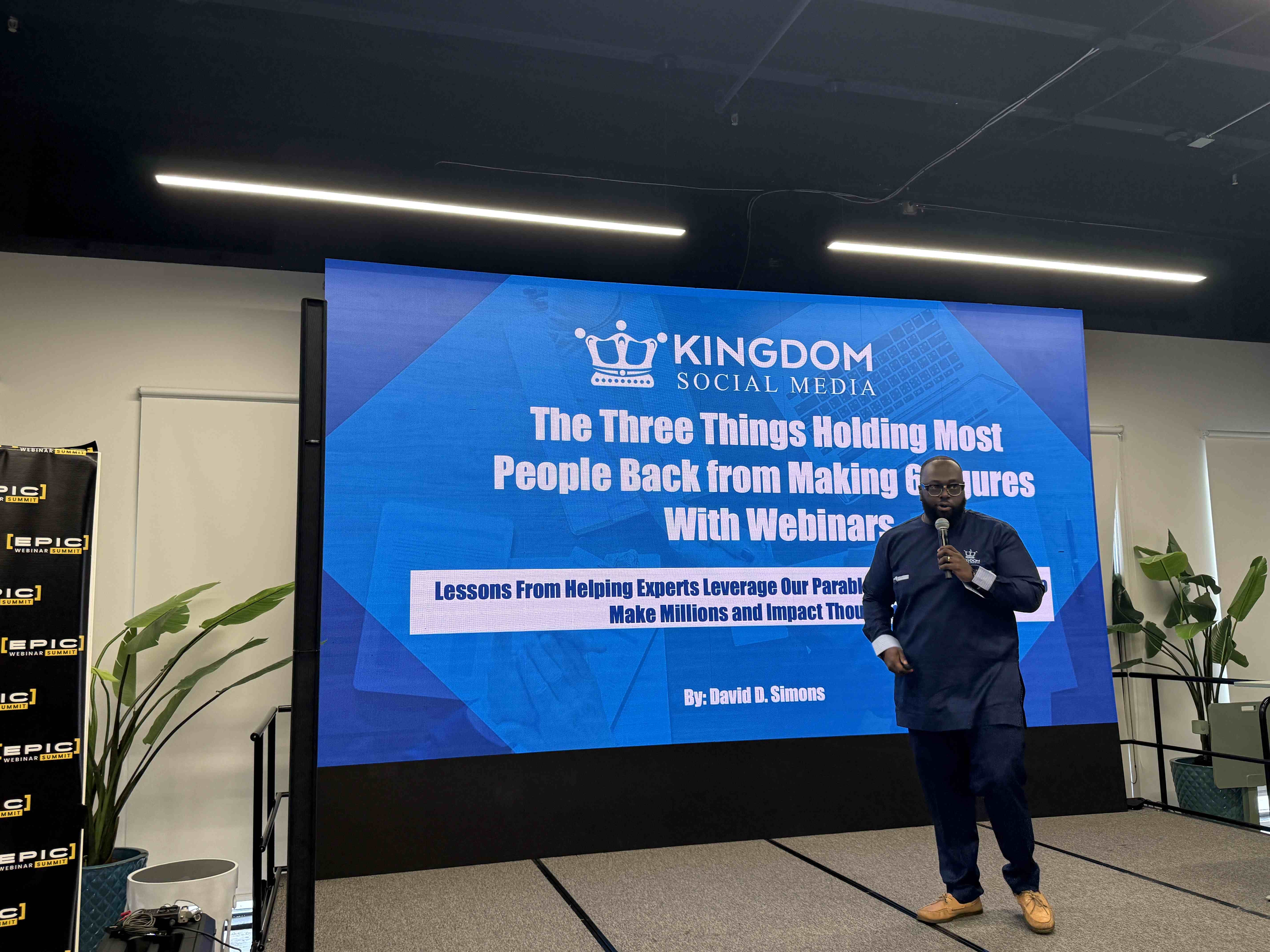
Three Things Holding People Back
Right at the start, David identified three key problems that most people struggle with:
First – it's easier to earn 10× more than to work 10× harder. It sounds like a cliché, but it's all about leverage. It's about using tools and systems intelligently instead of simply putting in more hours.
Second – most people are working with the wrong audience. They have content, they have an offer, but they're targeting completely the wrong people. And then they wonder why it isn't working.
Third – people pay for transformation, not information. This is a huge shift in mindset. You can find information everywhere today. But if you can help someone make real progress – that's what people are willing to pay for.
Mindset No. 1: Most People Don't Believe in Their Own Value
This was probably the most powerful moment of the entire talk for me. David said that webinars are one of the best ways to demonstrate your value to the market. But the problem lies elsewhere – most people don't believe in their own value.
And he isn't just talking about beginners. He coaches people at the top of their fields, and even they struggle with this.
Does that sound familiar? Do you know people who earn more than you even though they know less? That's exactly what this is about. Many of us have knowledge and experience, but we don't sell it because we don't believe in ourselves.
And this is where an interesting concept comes in – the belief funnel. David says that before you start building any marketing funnel, you first need to build belief in yourself and in what you offer. Because how can you sell something you don't believe in yourself?
Simple, but brutally accurate.
And one more thing caught my attention: David emphasized that no artificial intelligence can build your belief in yourself for you. AI can help you with content, automation, and all sorts of things – but you have to do that inner work yourself.
Selling = Helping
David uses an equation that is simple but changes the way you look at things: selling is helping, and helping is selling. He says you should see selling as something as natural as holding a door open for someone who needs it. It isn't manipulation – it's a service.
This is an idea I keep encountering more and more among people who actually make high-ticket sales. They don't feel bad about selling because they know they're genuinely helping someone.
Mindset No. 2: Webinars Build Authority
Another important point – webinars are a great opportunity to position yourself as an authority in your field. David admitted that he is more of an introvert and a behind-the-scenes person himself. But he realized that if you want to grow, you have to put yourself out there. You have to show the market what you can do and what you have achieved.
He learned from people such as Russell Brunson and Joe Bauer (a mentor to names such as Myron Golden and Brunson himself). And the key message was clear: you don't have to be the loudest person in the room, but you do have to be visible.
Mindset No. 3: Webinars Build Trust the Fastest
Here, David introduced a specific framework worth remembering – the online trust hierarchy:
At the lowest level is text – emails, landing pages, articles. People read your words, but trust builds slowly.
One level higher are images – visual content has a greater impact than text alone.
Then comes audio – podcasts, recordings. Hearing someone's voice already creates a stronger connection.
The next level is recorded video – ads, pre-recorded presentations. The combination of visuals and sound strengthens trust.
And at the very top is live video – in other words, webinars. Why? Because you engage the most senses at once. People see you, hear you, and feel your energy in real time. When you stumble over your words, they see it. When you get excited, they feel it. And this authenticity is exactly what builds trust the fastest.
David summed it up by referring to Stephen Covey – business moves at the speed of trust. And webinars are the fastest way to build that trust online.
By the way – if someone tells you webinars are dead, David has a clear opinion: those who say that usually just want to sell something else. And to do that, they usually use… a webinar.
Mistake No. 1: You Don't Have a Pain-Based Title
The last major point David had time to discuss was how to name your webinar. And the principle is simple – address people from a place of their pain, not from a place of your pleasure.
David illustrated this with an example from marketing: if you offer to help someone prepare for retirement, that's a “pleasant future” – but it lacks urgency. But if you tell the same person that you'll help them get out of debt, that's pain they feel right now. And that immediate pain is much more motivating.
He referred to Dan Kennedy, one of the most respected marketers, whose approach can be summarized as follows: successful marketing begins by identifying your audience's pain, intensifying it, and then presenting your product as the logical solution.
A simple principle, but when you look at most webinar titles – almost no one does it.
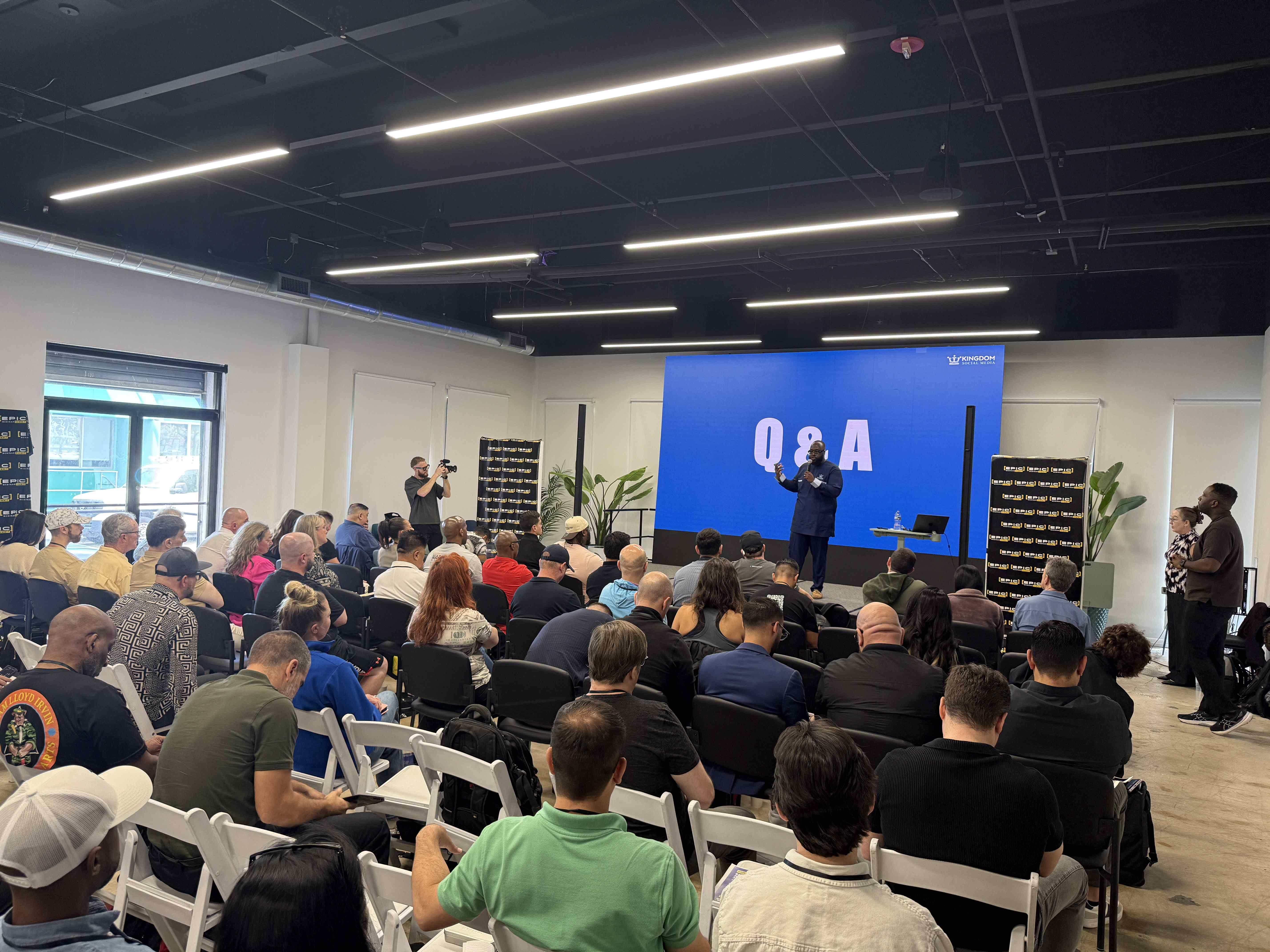
What Should You Take Away from This?
If I had to summarize the most important points from David's talk in a few sentences, it would be this:
Stop underestimating your knowledge. First build belief in what you offer, and only then build funnels and systems. Use webinars as a tool that builds trust faster than anything else online. And when you create content, speak the language of your audience's pain – not the language of your own ambitions.
David D. Simons of Kingdom Social Media was definitely one of the most interesting speakers at the Epic Webinar Summit. And even if you didn't hear his talk live, I believe these principles can help you make significant progress – whether with webinars or any other way you sell your knowledge online.