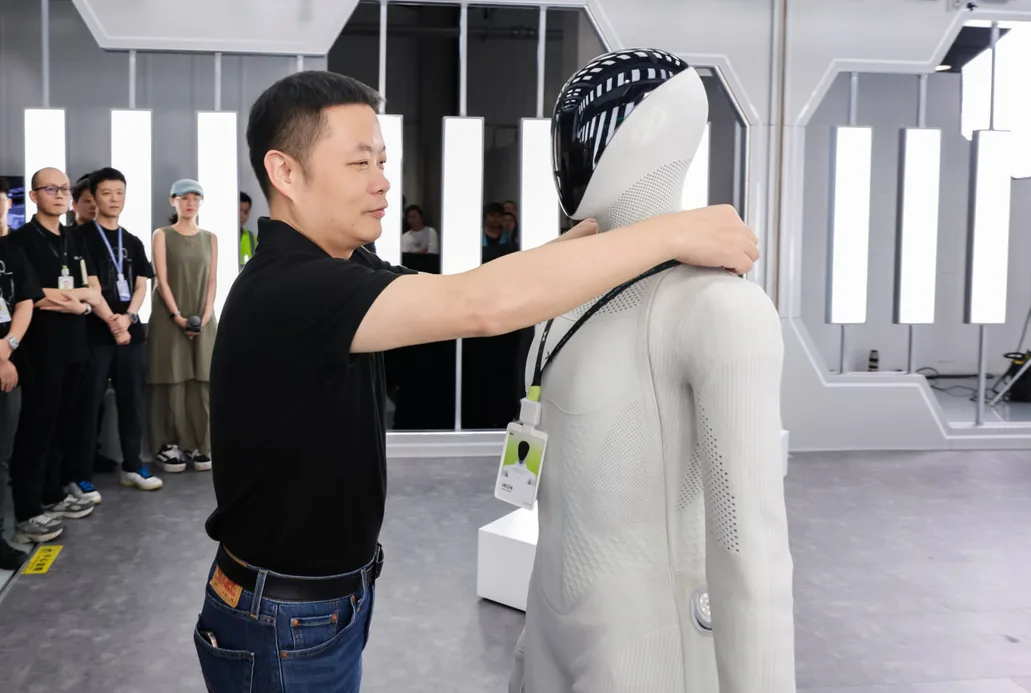
At the beginning of September, the first Iron humanoid robot rolled off the newly commissioned production line of Chinese automaker XPeng. The company described it as the world's first automated production line for advanced humanoid robots and as a transition from laboratory prototypes to genuine industrial manufacturing. Mass production is set to begin by the end of this year. XPeng plans to launch official sales and deliveries to customers in China and abroad next year.
Automaker XPeng and its new production line
Most humanoid robots appearing at conferences and in videos today are assembled by hand in small batches, practically one by one. That is precisely why it is difficult to guarantee that two manufactured machines will behave in the same way. XPeng is taking a different approach. It built the line according to automotive manufacturing standards, with machines handling more than eighty percent of the main production operations. The company's CEO and founder, He Xiaopeng, said that they had to design the line from scratch because there was no one to copy. According to him, today's step is a small one, but the automaker is establishing production for an entirely new product category and aims to achieve a faster pace and higher volumes. A symbolic finishing touch came when he personally attached an employee badge to Iron. The robot thus formally became a member of the team.
XPeng is best known as an electric vehicle manufacturer. The company is based in Guangzhou, its shares are traded on the New York and Hong Kong stock exchanges, and it offers models such as the X9, G6, G9, P7, and the new L03. According to its own statements, the company no longer describes itself as an automaker. It talks about physical artificial intelligence, meaning an effort to bring AI out of screens and into the real world, where it must grasp objects, navigate around obstacles, and communicate with people.
The company develops its own Turing chips, models that understand the physical world, electric vehicles, robotaxis, and flying vehicles. Management has long spoken about three areas of growth: cars, robotics, and international expansion. Robotics has been added as its second major branch. According to estimates, the margin on each machine sold is expected to be significantly higher than for electric cars because the field is technically demanding and there are few high-quality suppliers.
Iron looks like a human
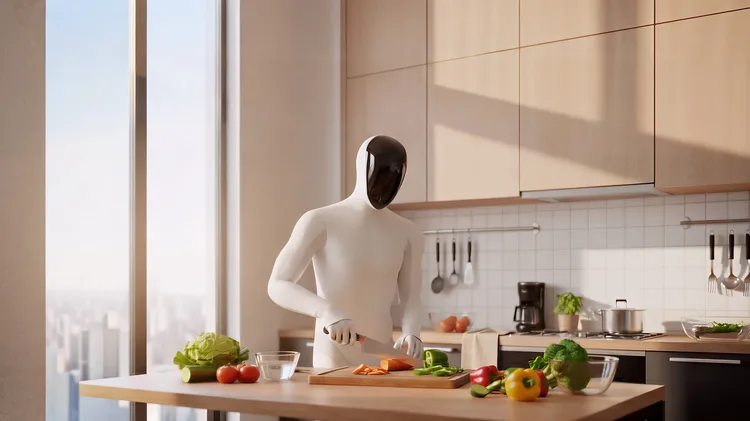
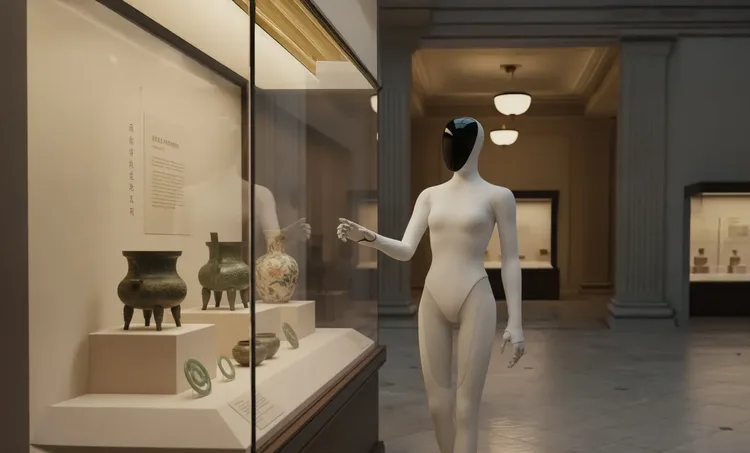
Iron is designed to operate in spaces that people have built for themselves, including stores, hallways, areas between tables, and staircases. Two legs and two arms with fingers are more practical than wheels and a single gripper in such environments because the machine does not require a modified facility or guide strips on the floor.
The structure is a fully enclosed flexible lattice design that combines appearance and safety. Put simply, the hard mechanical components are concealed beneath a compliant surface, so a collision with a person does not result in a blow from a metal edge. XPeng also mentions a bionic spine, electronic skin, and a natural gait in connection with the new generation. All of this is intended to make it easier for people to accept the machine in their vicinity. The robot is also expected to handle natural conversation and adapt its appearance to the role it is currently performing.
It is worth noting here that Iron has gone through several versions, and the figures vary depending on the source. Materials for the Australian market state 82 degrees of freedom, while the report on the production line mentions 76 degrees of freedom in the body and 21 in each hand. The specialist catalog Humanoid.guide lists approximately sixty joints, around two hundred total degrees of freedom of movement, and hands with 22 degrees of freedom for an earlier version of the robot. The same source describes a machine 173 centimeters tall and weighing around seventy kilograms, capable of walking at around four kilometers per hour, reaching a maximum of seven, carrying twenty kilograms, and operating for about four hours on a single charge. Its equipment includes all-around vision known as eagle eye and a structure modeled after bones, muscles, and skin, with a flexible spine.
XPeng places the greatest value on the computing components. Iron is powered by three proprietary Turing chips, and the company states that their combined performance is 2,250 TOPS. This unit is used for artificial intelligence chips and expresses the number of simple operations a machine can perform per second. One TOPS corresponds to one trillion such operations, meaning that, according to the manufacturer, Iron performs around two quadrillion calculations every second. Such high performance is necessary because, dozens of times per second, the robot must process images from its cameras, recognize objects in front of it, calculate the stability of its steps, and monitor the movement of its fingers when handling fragile objects. Each individual operation is trivial, but an enormous number of them must take place, above all instantaneously. The company also needs this much power so that the physical AI model can run directly on the robot rather than on a remote server. This enables the machine to respond without delay. In addition, environmental data does not have to leave the device, which the company presents as a privacy advantage.
According to XPeng, this allows Iron to handle more complex tasks without anyone remotely guiding its every move. The software is built on the company's proprietary Tianji AIOS platform, which combines environmental perception, motion control, and voice communication. The model is intended to integrate vision, language, and movement into a single system. Most demonstrations so far have taken place in laboratory or carefully prepared conditions, so its behavior in real-world operation remains to be seen.
Where Iron will work
Its first deployments will be at company premises. The robots will be placed in XPeng's own stores and corporate facilities, environments that the company controls and where it can safely address any potential errors. Possible roles include welcoming and accompanying visitors in showrooms, staffing reception desks, and assisting with manufacturing tasks.
In addition to commercial applications, Iron is also of interest for research. Its hands, with twenty-one degrees of freedom on each side, are among the most dexterous available in a mass-produced humanoid. Universities and laboratories see them as an ideal platform for testing embodied artificial intelligence. The offering includes remote updates and cloud connectivity, through which the machine is expected to improve gradually.
He Xiaopeng has repeatedly spoken about a robot that will become part of everyday life, help people with daily household routines, and ultimately serve as a companion. Materials for international markets therefore show Iron performing manual work in a home environment.