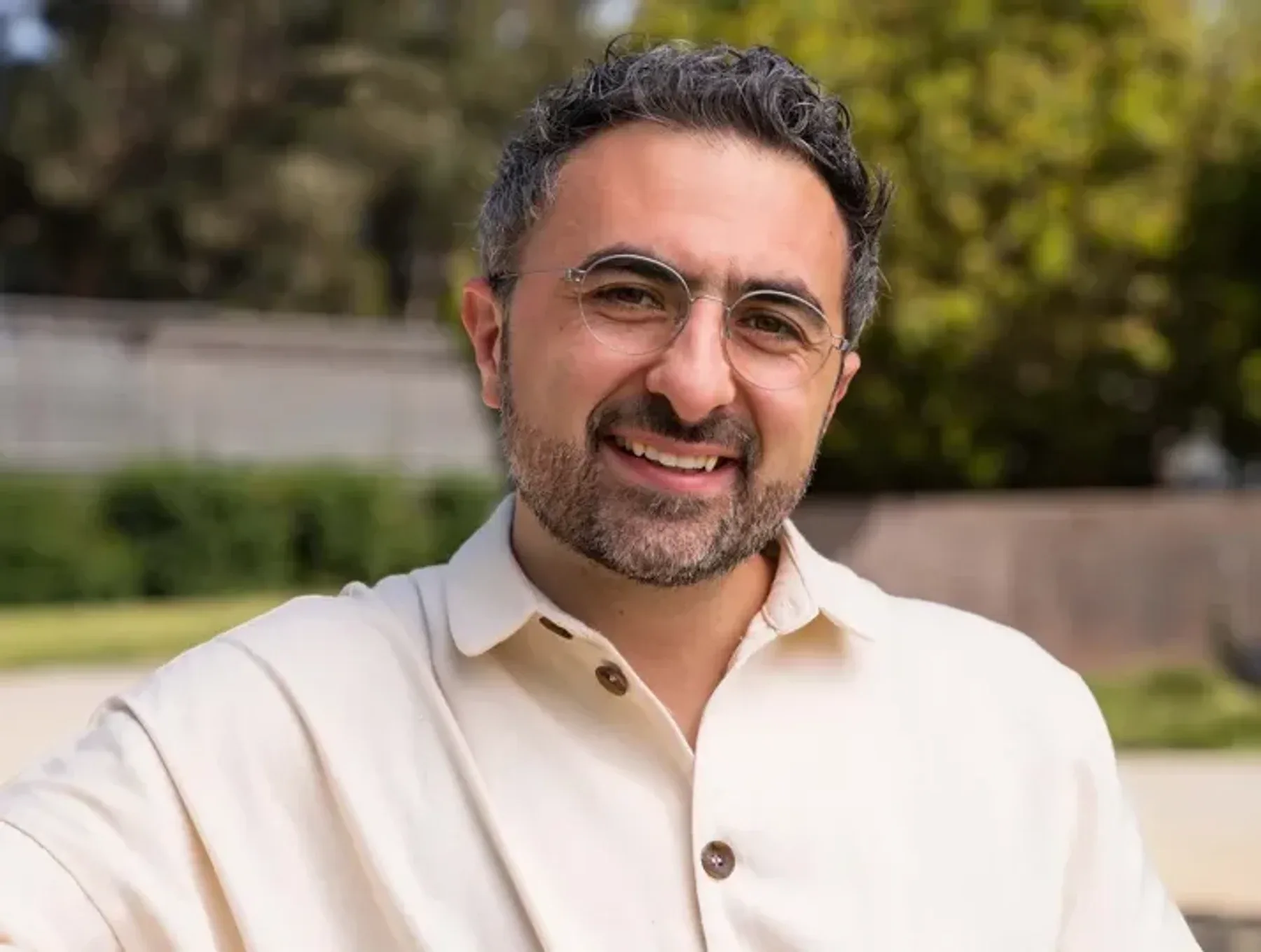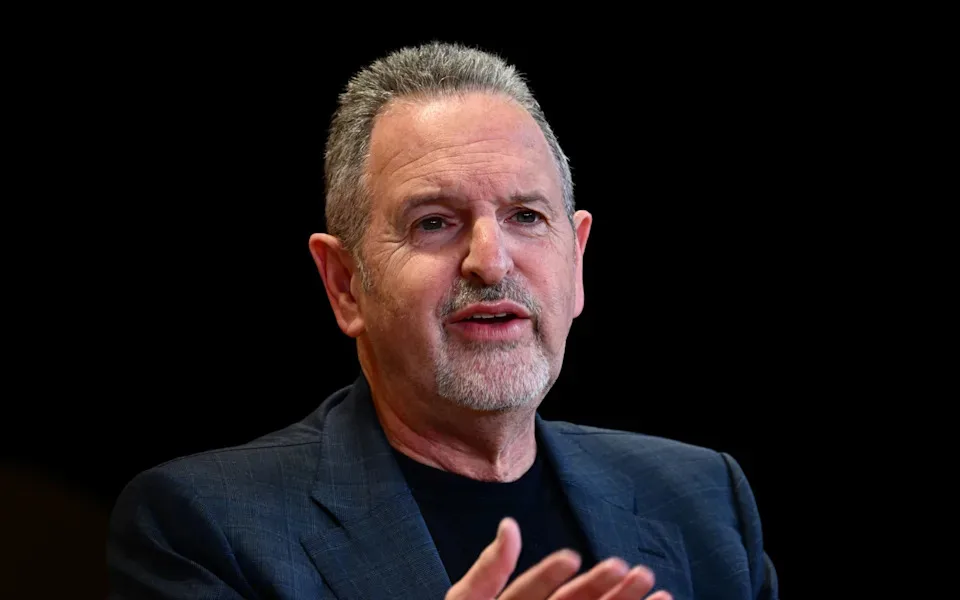
According to René Haas, CEO of the British company Arm, artificial intelligence will find a cure for cancer within the lifetimes of today’s generations. However, in an interview for the BBC’s Big Boss Interview podcast, he added that the entire industry’s growth is being held back by a shortage of chips for new data centers. Haas describes the disease as a mathematical problem that no one has yet been able to calculate. Modeling a cell, an entire human being, or how cancer manifests itself in a specific section of DNA is too complex not only for people but also for the computers powering today’s models. But things will begin to move forward once more data flows into these systems and the machines processing it become more powerful. Haas believes that artificial intelligence will help cure cancer in our lifetime.
AI and medicine
Doctors and researchers are already working with similar tools. Britain’s National Health Service announced that more than four million patients received their results faster thanks to funding allocated to computer-analyzed X-rays. Two years earlier, Google DeepMind introduced the AlphaFold 3 model, which predicts interactions between proteins, DNA, RNA, and drug molecules. Its spin-off, Isomorphic Labs, is preparing the first human trials of drugs designed by artificial intelligence.
Responding to Haas’s remarks, Chris Bakal of London’s Institute of Cancer Research said that the key question is no longer whether to use artificial intelligence, but what data to provide it with. In his laboratory, models are trained using data they measure themselves from patient samples, rather than data that can be downloaded from the internet. Moreover, even a massive data center would not be enough to run them. According to him, the future of medical artificial intelligence does not belong to whoever builds the most powerful computer, but to whoever has the right measurements and data. Bakal says that this approach can shorten the development of new drugs by several years.
What Arm actually designs
For a long time, Arm itself did not manufacture any chips. The Cambridge-based company designs processor architectures that form the brains of silicon circuits. Its designs are used in hundreds of billions of phones, cars, watches, and other devices around the world. Around five hundred companies, including Apple, Samsung, Qualcomm, and Nvidia, license them. Arm rose to prominence mainly because of the energy efficiency of its designs, which are now also being adopted by manufacturers of chips for data centers. Haas claims that Arm’s technology runs in half of all the world’s artificial intelligence data centers.
The company has also begun selling its own chips. Meta requested the processor, called Arm AGI. It went on sale in March, and customers have since placed orders worth more than two billion dollars.
There are too few factories, but more are being built
The problem is that there are too few chips of various kinds, which Haas says is delaying both the construction of data centers and the deployment of artificial intelligence. He points to plans for massive centers in France and the United States, as well as ideas to place them in orbit. However, this would require more chip manufacturing plants. Haas does not expect any of them to be built in Britain. According to him, such an operation is expensive, consumes large amounts of water and energy, and requires trained workers as well as a broad network of suppliers.
According to Haas, within ten years, self-learning robots used in manufacturing, cleaning, security, and repairs will also switch to Arm chips. He believes humanoid machines will become widespread within five years. A robot programmed to make beds will reportedly also learn to fold towels or empty trash cans. At the same time, he plays down concerns about mass layoffs. In his view, estimates of how many jobs machines will take away from people are exaggerated, and new jobs will offset the losses.
A manager with experience in both semiconductors and pharmaceuticals
Haas joined Arm in 2013 and became its CEO in 2022. He was recently also put in charge of the international division of the Japanese company SoftBank, and in April he stepped down from the supervisory board of the British pharmaceutical company AstraZeneca. His experience in both industries is clearly reflected in his thinking about cancer.
SoftBank, Arm’s principal owner, is one of the world’s largest technology investors and holds a stake in OpenAI. The Japanese company acquired Arm in 2016. It later listed some of the shares on New York’s Nasdaq exchange rather than in London, a decision some British politicians view with displeasure. Haas, however, points out that half of the employees have remained in Britain and that no other employer in Cambridge provides jobs to more people. Arm has more than seven thousand employees in total, around three thousand of them in the British Isles. Its value remains above 260 billion dollars. This summer, its shares climbed so high that Arm became the most valuable British company in history in absolute terms. Haas himself has been approved for compensation that would make him a billionaire in dollar terms if he pushes the company’s value toward one trillion.
Sources: bbc.com, theguardian.com and finance.yahoo.com