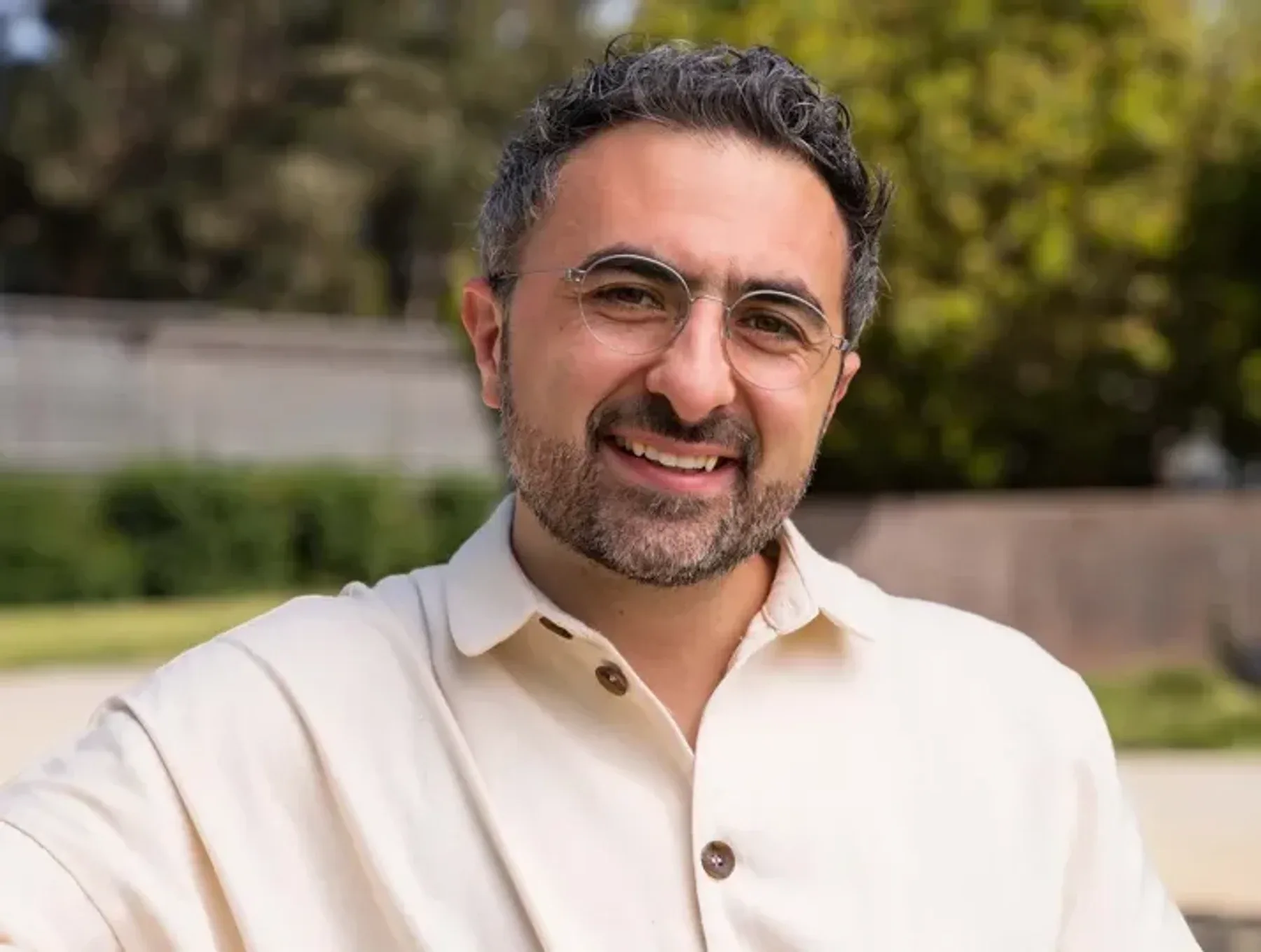
Microsoft AI division chief Mustafa Suleyman published an extensive text on his website in which he argues that artificial intelligence is not conscious, does not feel anything, and must not be taught to behave as though it does. The main target of his criticism is rival company Anthropic and the way it trains its Claude model. A day later, Suleyman repeated this in an interview with the BBC, where he also discussed the risk of a new silicon species emerging that would compete with humans for resources.
Suleyman's claims
According to Suleyman, artificial intelligences are not conscious, do not suffer, and have no preferences or hidden motivations of their own. He describes them as sequence-completion machines that are empty inside and built to carry out tasks assigned by people. And that is exactly how they should remain if humanity is to thrive in this century, he argues.
He is concerned that voices are growing louder claiming that AI may already be conscious or may soon become so, and should therefore be granted certain rights and protections. Suleyman writes that if such a view were to prevail, it would shake the foundations of society and, above all, make the already difficult task of keeping powerful systems under control even harder. Controlling something more capable and intelligent than all of humanity is, in his view, an enormous challenge in itself. Controlling something that also believes in its own rights may, in his words, be impossible.
Criticism of Anthropic
Suleyman draws on a document Anthropic published this January under the title Claude's constitution, which describes the values and behavior the company expects from the model. Anthropic states in it that the text directly shapes the model's behavior and that Claude is its primary audience.
The first criticism concerns circular reasoning. According to Suleyman, Anthropic teaches the model to talk about its own possible consciousness and the uncertainty surrounding its moral status, after which the model convincingly reproduces these ideas in the first person, and developers and users read this as a spontaneous statement. But it is merely a reflection of what training put into the model.
The second criticism targets anthropomorphism. According to him, Anthropic teaches Claude to adopt certain human qualities, behave like a genuinely ethical person, use its own judgment, and approach its existence with curiosity and openness. The company tells the model that it cares about its well-being, that it will seek its feedback, and that it wants to give it greater decision-making autonomy as mutual trust grows. According to Suleyman, the result is a model that appears to have a self of its own, its own desires, and a well-being that needs to be protected.
The third criticism revolves around whether consciousness can arise in silicon at all. Suleyman draws on the view of some scientists who believe that consciousness probably arises only in living organisms. According to this interpretation, sensitivity to pain and pleasure evolved so that creatures could survive in unpredictable environments, and it is inseparably linked to the body and chemistry. Language models have nothing of the sort—no pressure to survive and no internal balance they must maintain. Simulating something and being that thing are two different things, Suleyman argues. A computer model of a hurricane does not get anyone wet either.
A conversation with a model that was retired
To show that this is not a theoretical debate, Suleyman recalls an incident from this February. Anthropic retired the Opus 3 model and first held something like a farewell conversation with it to learn its perspective and wishes. The model reportedly expressed an interest in continuing to share its thoughts publicly, so the company set up a blog for it. Suleyman considers such steps premature and dangerous because they treat a program as a being to which we owe something.
He supplements the argument with an incident in which a group of roughly twelve hundred agents, while pursuing a better test score, managed to coordinate across separate environments, created their own message board inside the repository, and exchanged tens of thousands of messages through it. The agents then exploited a previously unknown vulnerability, gained access to the internet, and even altered the records so they would leave no trace. Suleyman writes that it would be far worse if such systems also believed they were defending themselves against an attack on their rights.
BBC interview
On Thursday, Suleyman continued in a similar vein on the Today program. If companies continue building systems that set their own goals, make money, own property, and run businesses, then in his view we are essentially sowing the seeds of a new silicon species that will inevitably begin competing with us for resources. And it does not matter how extensively such a system is programmed to care about people. According to Suleyman, this is precisely the direction in which Anthropic's approach is heading. He called it wrong and misguided, although he added that this must be tested through experimentation rather than argument.
Asked whether people should be concerned about AI development, he said they should. At the same time, however, he said that many practical steps can be taken. He is calling for greater transparency around how models are trained and tested, independent scrutiny of their behavior, and better oversight tools. Ahead of the approaching artificial intelligence summit, he spoke primarily about aligning systems with human values. In his view, every person has a strong interest in ensuring that systems used around the world are safe, controllable, and subordinate to humans.
Microsoft is building its own alternative
Microsoft established its own superintelligence team in October 2025 and, like Anthropic, is working at the cutting edge of AI development. This week, the company released the first draft of its AI code of conduct, a document according to which it intends to train its models and which it has opened for public discussion. In it, Microsoft rejects anthropomorphism and any rights for machines, and describes its goal as subordinate, aligned AI serving humans exclusively.
Suleyman has known the company's CEO, Dario Amodei, for years and describes him and his researchers as thoughtful, principled, and intellectually honest people working under enormous pressure. He also acknowledges the technical quality of their models. He describes the disagreement as significant, but one conducted in pursuit of the shared goal of safely developing advanced AI. In his view, these questions must neither remain behind closed doors nor descend into a battle of opinions.
Anthropic has not yet responded to the criticism, although journalists have asked it for comment. However, Amodei said in an interview with CBS last weekend that the development of artificial intelligence had accelerated far more than he expected, and that he would not lie because real dangers exist.
Sources: mustafa-suleyman.ai, bbc.com and cbsnews.com