When our family first built an altar for the Day of the Dead, we had virtually no decorations apart from a few framed photographs of family and friends who had left us over the years. Only later did a cut-paper banner appear, followed a year later by tiny sugar skulls, and quite recently by electric candles that glow all night after we blow out the real ones. But no matter how our altar has changed, it always begins with the same thing at its center: a grapefruit that takes us back to a distant memory of how it all began.
It is 1938, and my father is a young man. He lives in Donna, just a few miles north of the Rio Grande, and works at a fruit-packing plant. One afternoon, he is loading crates of grapefruit onto the bed of a truck when a group of high school girls walks by. He tries to catch the eye of one of them, but to no avail. Then he notices a little boy playing near the packing plant and gets an idea. He tosses him a grapefruit and tells him to run over with it to the girl in the gray plaid skirt. “Tell her someone wants to meet her,” he adds. “Now hurry.”
The boy delivers the gift, and that is exactly how my parents became my parents.
When I was growing up, we did not celebrate the Day of the Dead as a family. When I built my first altar seven years ago, all I knew was that it honored the dead. I had no idea that the holiday dated back to the Aztecs, or that what I sometimes call an altar is properly known as an ofrenda, meaning an offering, and that presenting food and drink along with photographs and mementos is part of a ritual intended to welcome back the souls of the dead each year in early November.
To tell the truth, I did not begin for cultural reasons. I started the tradition so that my two children would remember people of whom they themselves have almost no memories. My son Adrian was born three months before my father died, and my daughter Elena had just started first grade when my mother died. I wanted them to know who my parents were and where they were born. I wanted them to understand what mattered to my parents, whom they loved, and how they died.
Of course, I built that first altar years before the pandemic changed life on the border and everywhere else in the world. Before I had any idea of the grief that awaited us and everything we would eventually add to our altar.
Dances and Farewells
I was born a few months after my parents celebrated their twenty-fifth wedding anniversary. By then they did not go out very often, and when they did, it was either to a dance or a funeral. In Brownsville in the 1970s, Saturday nights meant dances at the community center or the Friendship Garden. If they went to a funeral or a rosary during the week, it was at one of the city’s four funeral homes. It was not that they had so many relatives and close friends who were passing away. Sometimes it was a woman from church whom they knew only from greeting her after every Sunday service. Other times it was the husband of the woman from whom Mom bought tamales at Christmas, or the sister of a man with whom my parents used to have coffee at a fast-food restaurant on Boca Chica Boulevard, or a man from the end of our street who had fixed my father’s lawn mower a few years earlier.
After a while, I stopped asking why they had to go to yet another rosary and why they could not skip this one. The answer was always the same: “para cumplir,” which basically meant “to do what is expected.” Or “para acompañar,” meaning “to be with the family.” They did not care whether the grieving wife, husband, or anyone in the family even knew who my parents were or how they knew the deceased. They did not go to be seen or appreciated. They came because that was what you did.
But when it was someone they knew whom I had never met or shaken hands with—and my father cared a great deal about that—I could stay home. Once, when I was ten, my father did take me to the rosary for the father of my friend from the boys’ club. The man had died in a bus crash on the road from Ciudad Victoria, and I remember it whenever I travel through Mexico and pass another roadside memorial.
Family was different. When we lost someone close to us, it also meant being reunited with people we had not seen or embraced in years. Even though they were sad occasions, part of me looked forward to my uncles, aunts, and cousins arriving from Chicago, Fresno, and Grand Rapids. After the funeral, we would gather in someone’s kitchen or backyard and listen to stories we had not heard since the last time we were together.
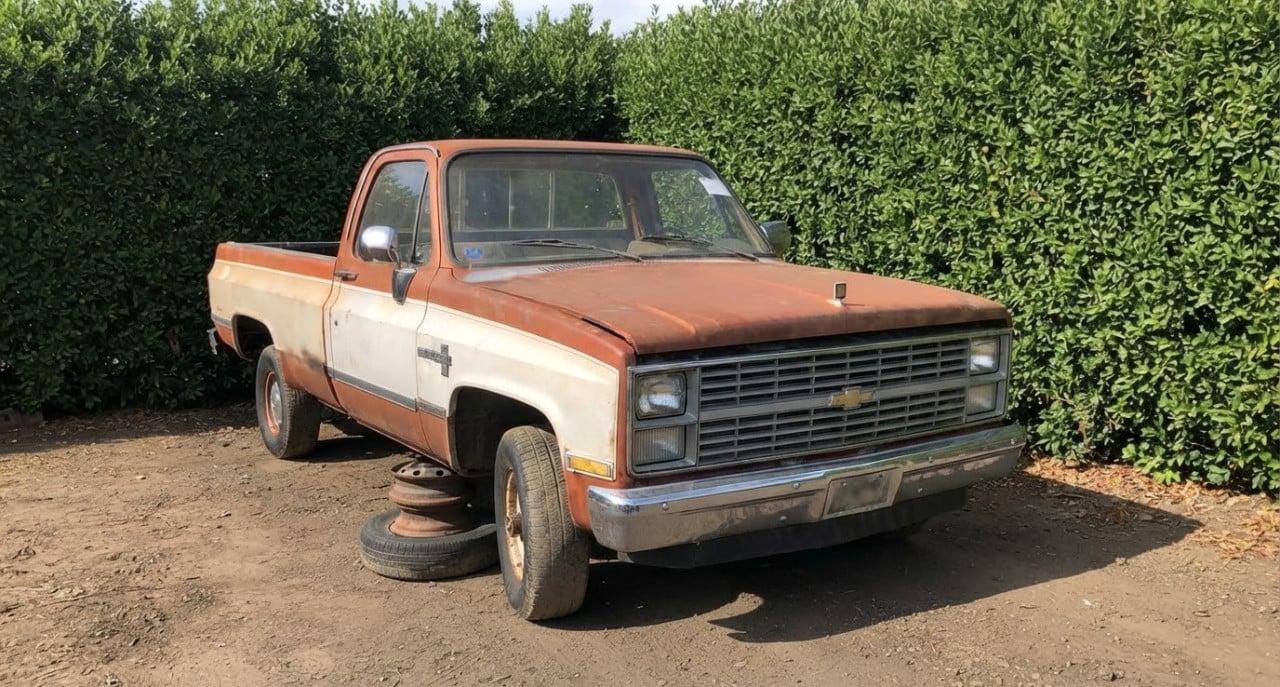
Uncle Nico would tell us about the afternoon in Houston when he was lying in the yard beneath his car, a bright yellow 1969 Chevrolet Bel Air, trying to loosen a bolt. Just as he turned onto his side, the car suddenly rocked, slipped off the blocks supporting it, and fell on top of him. It sounds terrible, but not when he acted out the whole scene, including how he cried for help, “BELIA, HELP ME!” and then described how he was saved by nothing short of a miracle—there is no other way to put it—because Aunt Belia and cousins Hilda and Rosy grabbed the bumper and lifted the car just enough for him to wriggle out from under it.
Then there was the story of how Uncle Héctor got a flat tire in the middle of King Ranch, a good twenty miles from the nearest gas station, only to discover that the spare was flat too. He, Aunt Nena, and Aunt Lilia hitched a ride with a truck, but there was only room for him up front, so the aunts had to climb behind the seats and lie down on the sleeper berth, where they looked at each other in the mirror on the cab’s ceiling.
Or the one about my father driving a taxi one night around 1944 in downtown Brownsville, near the market, when a man came backing out of one of the bars, swinging a barstool at two other men. As my father drew closer, he recognized the man with the stool as my mother’s younger brother Óscar, his namesake, so he slowed down just enough to open the passenger door and let his brother-in-law jump in. Stories like that.
At the Funeral Home
Considering how many rosaries and funerals I had seen my parents attend, perhaps I should not have been so surprised many years later when my father, by then in his eighties and retired for a full decade, accepted a part-time job at a funeral home. He had spent most of his life working beneath the South Texas sun, as a farm laborer, delivery driver, firefighter, then a police officer, and finally for thirty-three years as a tick inspector for the U.S. Department of Agriculture. For much of that time, he rode long stretches along the Rio Grande on horseback, making sure cattle were not being driven across from Mexico and spreading cattle fever. That is why his horse-shaped belt buckle also has a place on our altar.
As a funeral home employee, he was supposed to answer the phones, welcome people and show them into one of the two visitation rooms, encourage them to sign the guest book, and give directions to those arriving from out of town. If someone called in sick, he might be asked to help one of the funeral attendants at the church and the cemetery. He loved dressing for work in one of his dark suits and then choosing a tie from the six he kept hanging on a rack. He loved wearing real lace-up dress shoes instead of the Velcro ones my mother had bought him when he retired and stopped wearing work boots. He loved being the first to arrive at work and the last to leave, and most of all he loved being able to help people whose families he had known forever.
The Year We Could Not Be Together
My father died in 2007, but I often wonder how he would have reacted if he had seen all the parents and grandparents, aunts and uncles, and cousins who fell victim to COVID in the Lower Rio Grande in 2020. Especially in Hidalgo County, where more than ninety percent of the population is Latino and which became the epicenter of the entire crisis that summer. The county accounts for only three percent of Texas’s population, but at the time it represented twelve percent of all coronavirus deaths in the state. It was here that, at the end of July, we lost my father’s favorite nephew, my cousin A. C. “Beto” Jaime. Two days later, his wife of sixty-three years, Dora, also died of the coronavirus.
Beto was well known throughout the area, having devoted his entire life to public service, and from 1972 to 1978 he was the first Mexican American to serve as mayor of Pharr. But because of social-distancing rules, only immediate family could attend the joint funeral service for him and Dora, all of them masked and advised not to embrace or cry on one another’s shoulders. I cannot imagine how my father would have understood the rules that kept the family from being with Beto in the intensive care unit and holding his hand as he took his last breath. What would he have said if I told him that we could watch the funeral only via a livestream on my laptop? If he had seen two attendants wheeling two caskets down the aisle and placing them side by side at the altar, would his throat have tightened with a terrible sob, as mine did?
Of the many wounds inflicted by the pandemic, perhaps the cruelest was that it deprived us of the chance to grieve together. When you grow up near the border, you are constantly reminded of how uncertain life can be, but also that we will always be there for one another. We understood that no matter what happened, those who remained would not bear the loss alone.
Like so many others in the Lower Rio Grande, we are a family that touches and embraces. We hug, we kiss, we cry, and then we hug again. No one cries as long or as loudly as Aunt Minerva, who had to be held back at my mother’s funeral six years ago to keep her from throwing herself onto the casket as it was lowered into the ground. I still remember how Beto embraced me at my father’s rosary, patting me on the back, squeezing a little tighter, and reminding me over and over that I was not going through it alone.
So beside my father’s buckle and the grapefruit, I will have to add to the altar a photograph of Beto and Dora dancing, because they loved to dance at every wedding and every family gathering. I can see the irrepressible smile on Beto’s face as he twirls Dora one way and then back into his arms, as if the song never had to end.
A Hand on the Shoulder
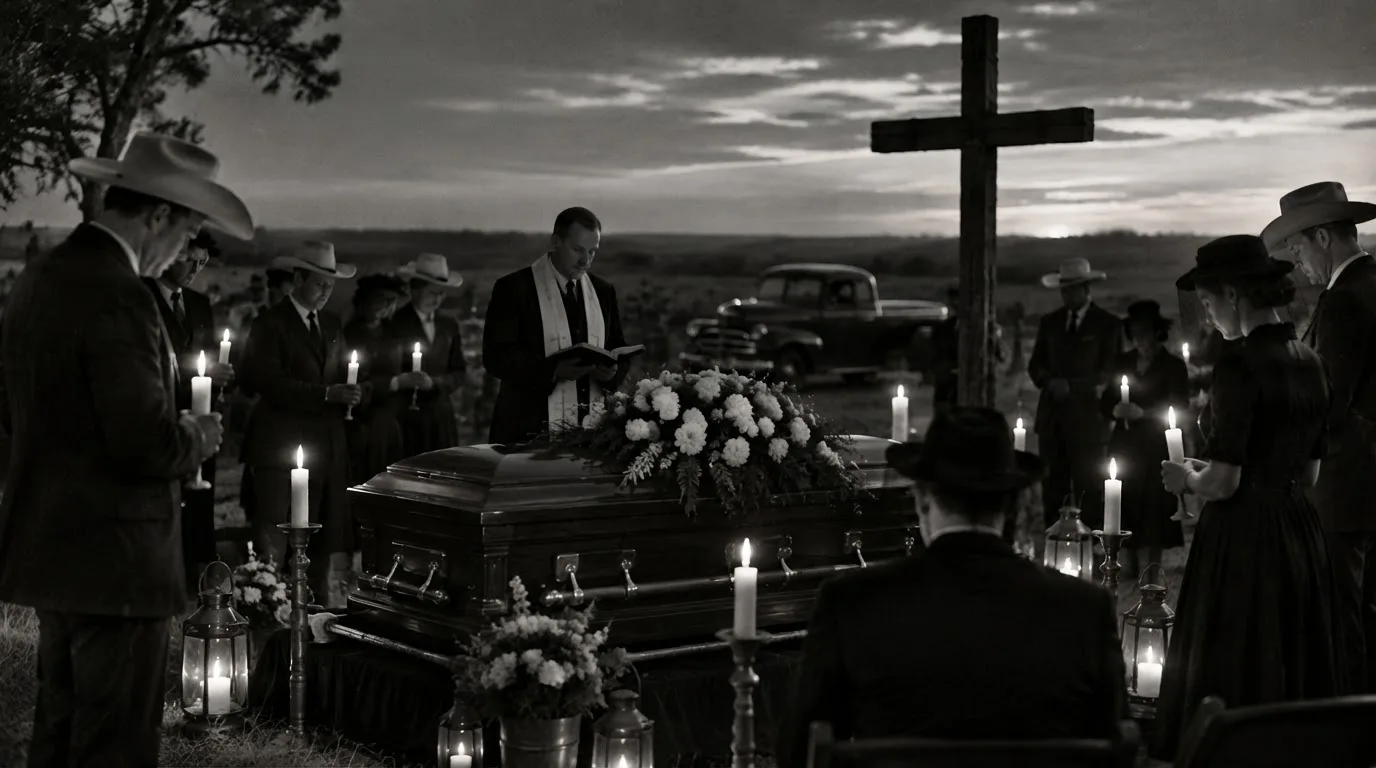
Because Beto and Dora’s burial itself was no longer being livestreamed, I learned about it from their eldest son, Bert, who works as a chaplain at a nearby hospital and served at the altar during the service. Bert was to say the final prayers at his parents’ grave, and when the moment came, he stepped toward it, passing his five siblings, their families, and the musician they had hired to play a final farewell for their parents.
Everyone waited for Bert to speak, but when he opened his mouth, his voice caught and he could not get out a single word. He thought about how his father had died, followed by his mother within forty-eight hours. He thought about the two weeks that had to pass before the service could even take place because the funeral home was overwhelmed. He thought about how coming to terms with his parents’ deaths felt like a test of his faith in God’s will, and he wondered whether he would be able to make it through the final prayer at all. Then he felt someone place a hand on his left shoulder, followed by another hand resting on his right. He turned and saw his youngest brother Kevin and his own son Andres standing behind him, holding him up. He needed nothing more to make it to the end.