Of all the images that shape the idea of Texas, one particular type of person ranks among the most vivid and enduring. Right after the cowboy, he is probably the most iconic: the stubborn, hard-living oilman, a solitary wildcatter whose silhouette stands out against a lone derrick in the middle of an empty prairie. Day after day, he wipes the sweat from his brow as his drill pipe disappears deeper into the earth. He goes without sleep, he suffers, staying one step ahead of the banks, until at last comes that glorious morning when the ground begins to tremble, the derrick shudders, and a geyser of black oil erupts from the earth, finally drenching him in a shower of inky black gold. That is how Texas fortunes—and modern Texas itself—were made.
And although it has been decades since the last true oil gusher arced over the Texas sky, that wildcatter spirit can still be seen. That sense of a lone, dogged rebel fighting against a world full of doubters can be found in the careers of Texas entrepreneurs as different as Robert F. Smith, Mark Cuban, and Thai Lee. Many Texans believe this is no coincidence. They believe there is something innate in the Texas character, something self-propelling and closely tied to entrepreneurship, and that this helps explain the stream of people who, over roughly the past century and a half, have risen from poverty to wealth and achieved nationwide renown.
Many Texans, and certainly those with Anglo-Saxon roots, possessed this outlook almost from the beginning. As citizens of the only future state to defeat a foreign nation in a war by its own efforts, they rarely suffered from a lack of self-confidence. In their own view, they settled a harsh wilderness by themselves, defeated Mexico by themselves, and created a unique corps, the Texas Rangers, which became perhaps the most effective fighting force in mid-nineteenth-century North America. Boastful? Well, quite possibly. They were swaggering victors. “Texas brag” was already a recognized term in the first years after the Revolution of 1836.
But outsiders, too, noticed something distinctive about Texans. “These people are rough and wild, but their perseverance and courage are admirable,” one British diplomat wrote in the 1840s. “These strange people shake and jolt terribly along their way, yet they do move forward, and even prosper under circumstances in which our people would starve or die.” A legacy of violence created combative loners who relied on themselves and their families and had little regard for officials or expert advisers of any kind.
Among the first prominent Texas entrepreneurs, the forerunners of the wildcatters, were sturdy cattlemen who profited from the tough and untamed longhorn cattle in the years after the Civil War. Millions of these cattle, which had not reached the market during the fighting, then roamed South Texas. Cattle barons such as Richard King, Charles Goodnight, and John Chisum gathered them into enormous herds and drove them to the nearest railheads in Kansas, as well as to California, New Mexico, Colorado, and as far north as Montana. Within fifteen years, Texas cattle—and Texas cattlemen—had virtually taken control of the new open-range ranching domain that extended across fifteen western states and territories.
It was a world of self-made men and self-made laws. On and off the cattle trails, Native American tribes and cattle thieves posed a constant threat, and Texas frontier cattlemen did not hesitate for a moment to mete out swift justice to nearly anyone who looked askance at their herds, whether with a bullet or a noose. There was no government office, bank, or savings institution to help a cattleman in his daily life on the plains. The ranchers created a business that was entirely their own, with its own rules, its own laws, and its own ways of surviving. Those who failed fell and were forgotten beside the bodies of the thieves and Comanches they left behind. Those who succeeded became millionaires. Their worldview—that you were on your own, that you either sank or swam, and that every Texan had to fend for himself—became the definition of the Texas spirit, or at least of how people imagined it.
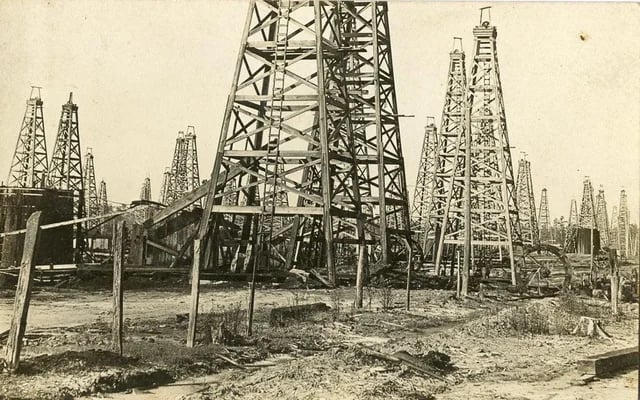
That made Texas the ideal place for the industry that suddenly erupted from an unsightly hill south of Beaumont in 1901: oil. The Spindletop field, of course, changed everything, both Texas and the entire world. Those first gushers could produce more oil than the rest of the planet and made everything from the internal combustion engine and the automobile to modern factories feasible. The man who discovered Spindletop was a one-armed brawler named Pattillo “Bud” Higgins, and his struggle encapsulates the story of the fledgling Texas oil industry. Higgins lost control of the well before it had even been drilled, much as Texans quickly lost control of the industry they should rightfully have overseen. The big men from the East poured in and turned Texans into serfs on their corporate estates. The Texas oil workers of that era did not get rich working for the major oil companies, but the clever ones gained valuable experience.
This feudal system lasted for nearly twenty years, until World War I ended in 1918 and the economy exploded, until the Roaring Twenties arrived and everyone and his mother bought an automobile. Oil companies suddenly wanted to drill anywhere and everywhere, but Texas was simply too large for them to drill all the land they had leased. And so they began passing information to a whole army of bright young Texas men who agreed to share the profits from any oil they found. Thus the wildcatter was born.
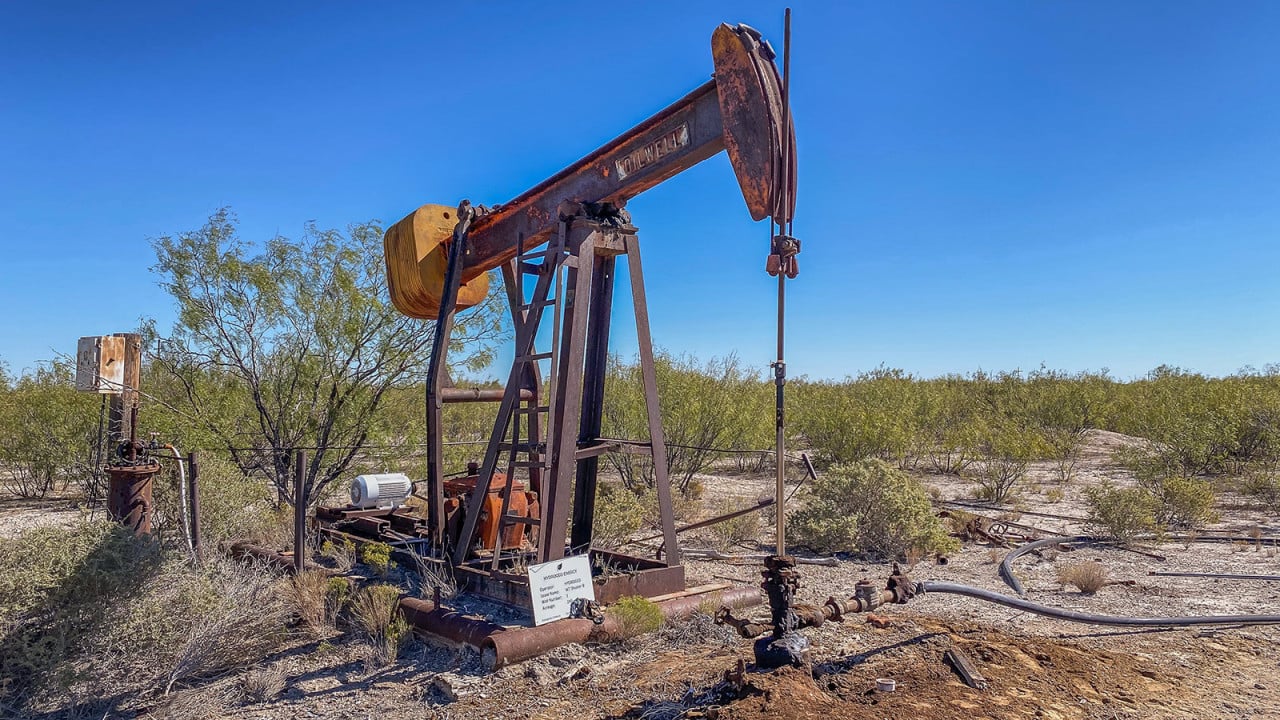
During the 1920s, you could see them in courthouses in Mexia, Luling, and Burkburnett, men in mud-caked work boots bending over maps and land records, huddling together and whispering among themselves. In every corner of the state, on the brushy plains east of Austin and in the deserts along the New Mexico border, you could spot their rickety wooden derricks slowly rising into the sky. Most wells were dry. A few men found oil, and a handful became truly rich, if it could be called that. But not fabulously rich. Not yet.
Thank God for the Great Depression. The economic collapse that began in 1929 was, simply put, the best thing that ever happened to the Texas wildcatter. The major oil companies slashed their exploration budgets and stopped leasing almost any new land. A host of solitary Texas wildcatters rushed into the resulting void, and their discoveries during a brief six-year window, from 1930 to 1935, transformed the state forever.
It was not easy. Like the ranchers who sixty years earlier had rounded up longhorn cattle roaming the strip around the Nueces River, they managed almost entirely on their own, relying on their own hunches, their own sweat, and their own money, sometimes with one or two partners and now and then with a little money from a bank. But bankers were not there to drill wells, which was always the tricky part. Down in Conroe, north of Houston, George Strake begged and borrowed the equipment he needed to drill a promising tract. Far out in West Texas, Sid Richardson paid his rig workers with food. Back in Fort Worth, he looked both ways before leaving his makeshift office, which was really just a place at the counter in a friend’s drugstore, because he was always afraid that one of his creditors would serve him with a summons.
And behold, they found oil. Oceans of oil. And because the major companies had withdrawn, nearly all the profits went straight into their own pockets. Dozens of men became millionaires literally overnight. The oil fields that Strake, Richardson, and others like them discovered during the Depression permanently enshrined the Texas wildcatter among American legends. Strake found the Conroe field, the third largest in the state, and eventually became one of the richest people in the country. Richardson struck the Keystone field in 1935 and was soon moving in White House circles. His friend Clint Murchison made money from pipelines and seemingly every corner of the industry; his son founded the Dallas Cowboys football team. Houston’s richest wildcatter, a stern curmudgeon named Hugh Roy Cullen, discovered the Tom O'Connor field and ultimately sparred with a series of American presidents, funded the University of Houston, and paid for a large share of the city’s medical facilities.
But the greatest wildcatter of them all was H. L. Hunt of Dallas, a gambler and cardsharp who quite by chance stumbled upon what was then the largest oil field in American history: East Texas. He was a profoundly strange man whose predilections included serial polygamy—he concealed not just one but two secret families. Hunt hoodwinked a character nicknamed Dad Joiner into handing over leases that Joiner had coaxed from a host of widows, and after one fateful gusher, he awoke one morning as probably the richest man in America. In the 1950s, during the great golden age of Texas wildcatter wealth, Hunt, Cullen, Richardson, and Murchison passed that title back and forth among themselves. Texas was never the same again.
Ever since, the wildcatter has been the state’s defining symbol of what is possible, what it takes, and the idea that a single person with the right character, the right business plan, or simply the right kind of luck can rise very, very high. “One riot, one Ranger,” the saying goes, and it is a principle that can just as easily be applied to a wildcatter or to many of the state’s promising modern entrepreneurs, whether they are extracting shale oil in South Texas, building wind farms in the Texas Panhandle, or raising money in Austin to launch their businesses. Whether it is reality or merely an oft-told tale probably does not matter. It is what many Texans believe.