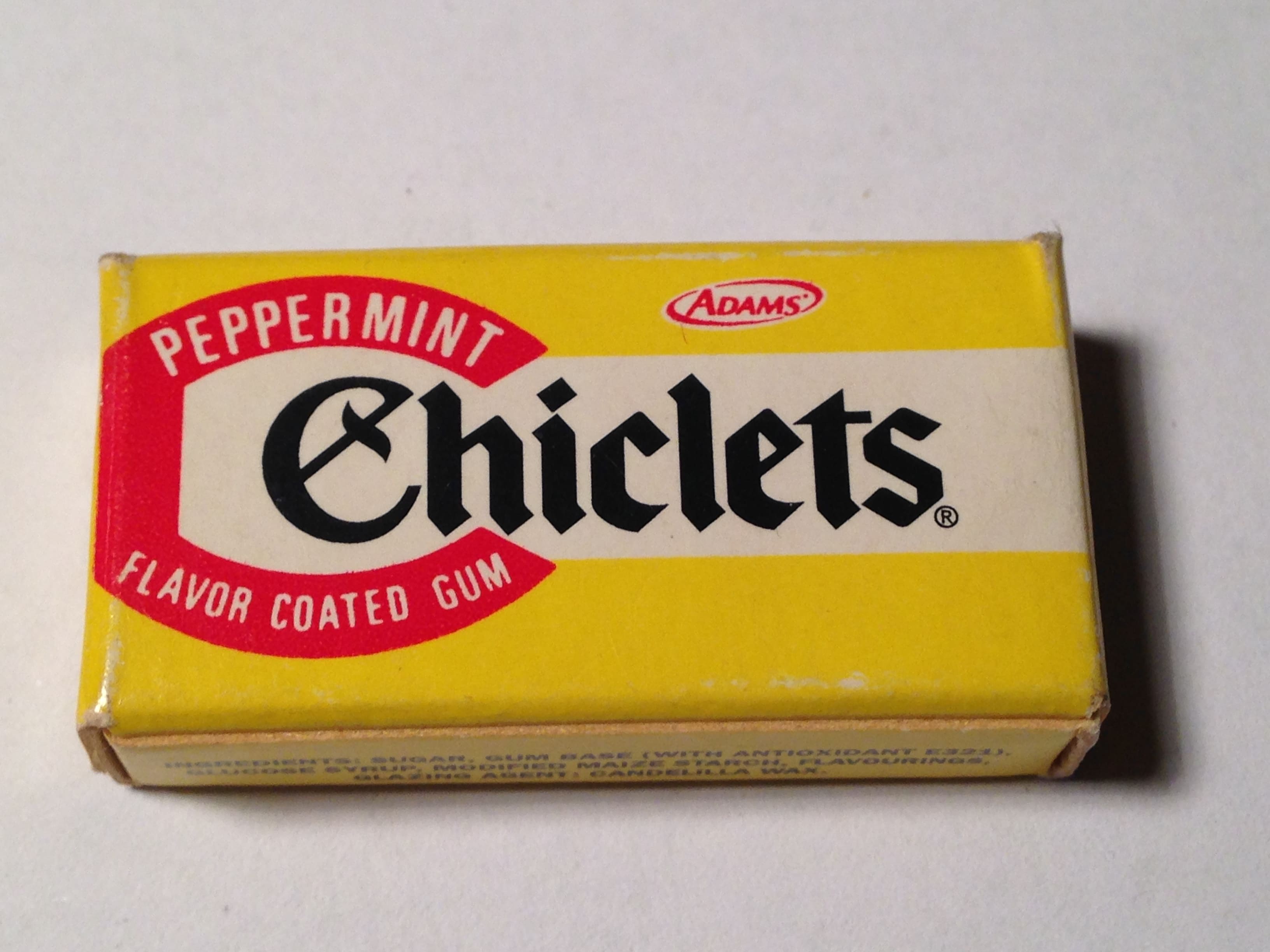
“Quieres Chicle?” Do you want some gum? Whenever I cross the bridge into Mexico, I am surrounded by a crowd of children saying, “Hey, gringo, do you want Chicle?” I call them the Chiclet kids. The Chiclet mafia.
It is quite fitting, one might say, that you are welcomed at the border with chewing gum, because Mexico is where the American chewing gum industry began. And you will not believe who was involved.
It all began with an unlikely partnership between a New York photographer and inventor and a famous Mexican citizen. Their paths crossed around 1869 in New York, where the famous Mexican had been exiled to Staten Island.
Thomas Adams was the inventor, a real tinkerer. The exiled Mexican had the idea that chicle—a natural gum from the sapodilla tree that the Maya had chewed for hundreds of years—could be vulcanized and used instead of or together with rubber, which was quite expensive, to manufacture bicycle tires and other rubber-based products. He needed money so he could return to Mexico and political power, and he happened to have access to a large supply of chicle from Mexico. Adams knew that if the idea worked, they would both become rich.
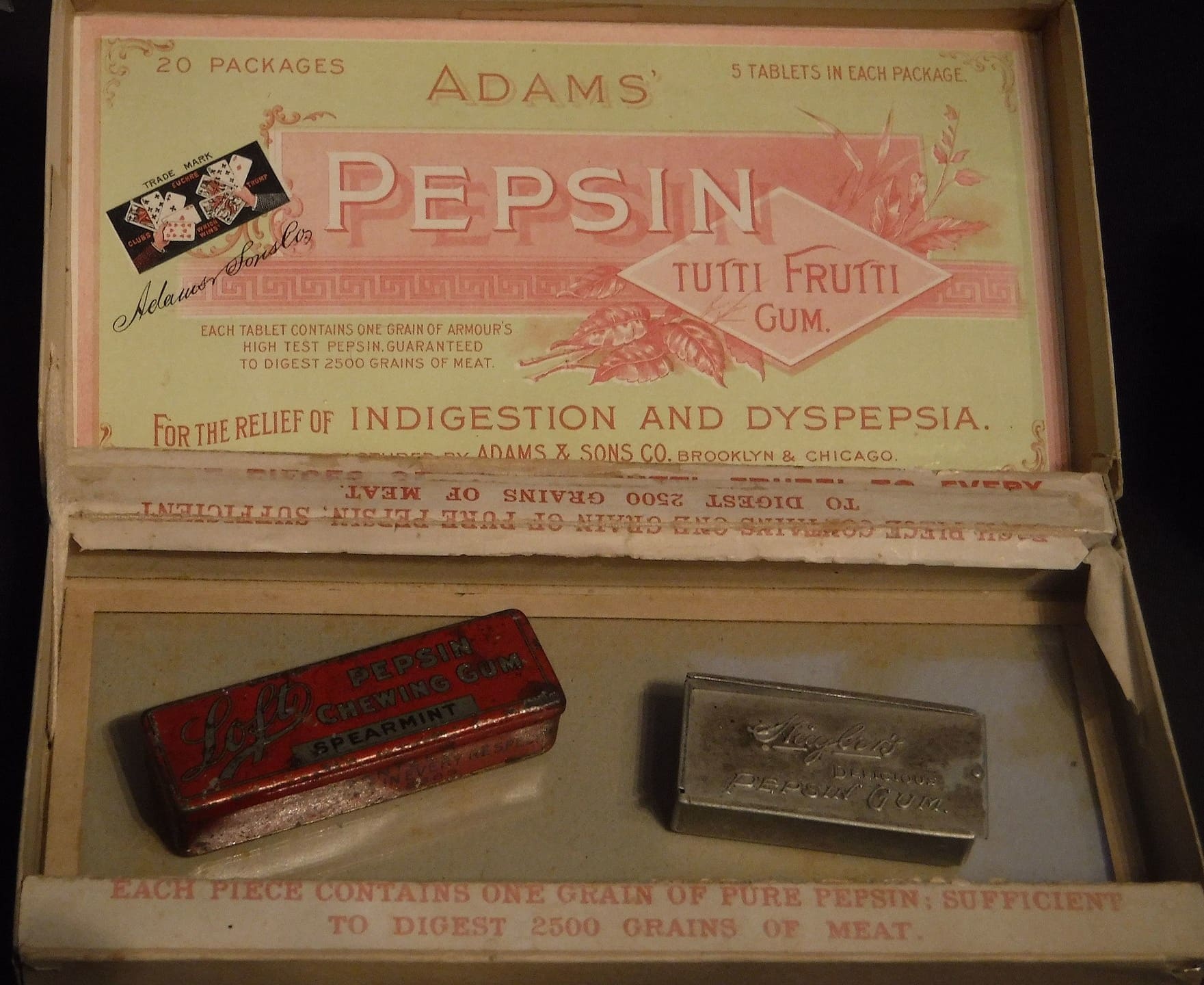
Well, Adams tried every possible way of using chicle as a substitute for or additive to rubber, but it did not work for tires. What he did discover, however, was that the Maya were right—it was fun to chew and more elastic than the paraffin-based chewing gums common at the time.
So he began cooking and shaping chicle into pieces of chewing gum, which he sold to drugstores and candy shops. “Adams New York Snapping and Stretching Gum” was launched. As his chewing gum became more popular, Adams invented a machine to manufacture it in 1871 and flavored it with mint, sugar, and licorice. A hard candy-coated gum called Chiclets was added to the Adams line (which eventually became Adams Cadbury) in the early 20th century.
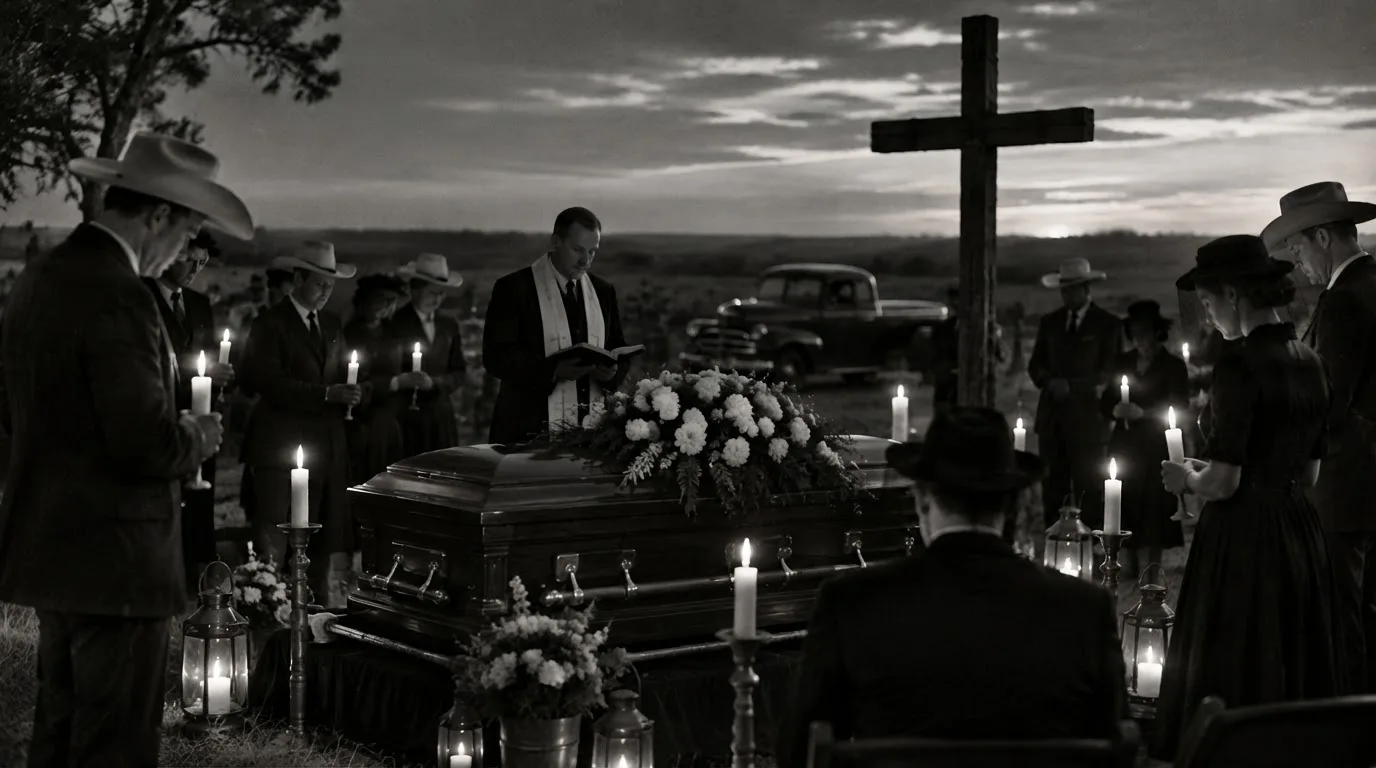
As it turned out, Adams’s famous partner was quite mistaken in thinking that chicle would be good for tires. One could also say that he showed poor judgment when he gave up and returned to Mexico before Adams came up with the idea of chewing gum. But that was not the first thing he had been wrong about. He was also wrong when he thought he could easily defeat 187 Texans at the Alamo. It cost him a third of his army. Antonio López de Santa Anna was also wrong when he thought he and his soldiers could take a nap while Sam Houston was wide awake on the other side of the prairie at San Jacinto. That cost him Texas.
Only one thing went right for Santa Anna that day in 1836: He managed to escape from the battle on horseback. He would almost certainly have been killed on the spot if he had been caught during the battle, but the following day, when a group of scouts found him hiding in the grass and brought him back to camp, the Texan commander, General Sam Houston, spared his life. Many angry Texan soldiers wanted to hang Santa Anna from the nearest cottonwood tree, but Houston stopped them. Santa Anna later spoke of the kindness and goodness shown to him by Houston, his victorious enemy.
Historians, including the Alamo’s director of history and curator Richard Bruce Winders, tell us that Santa Anna, as president of Mexico, was far more valuable to the Texans alive than dead. The captive president had to sign the Treaties of Velasco, which recognized Texas’s independence, before he was released to Mexico.
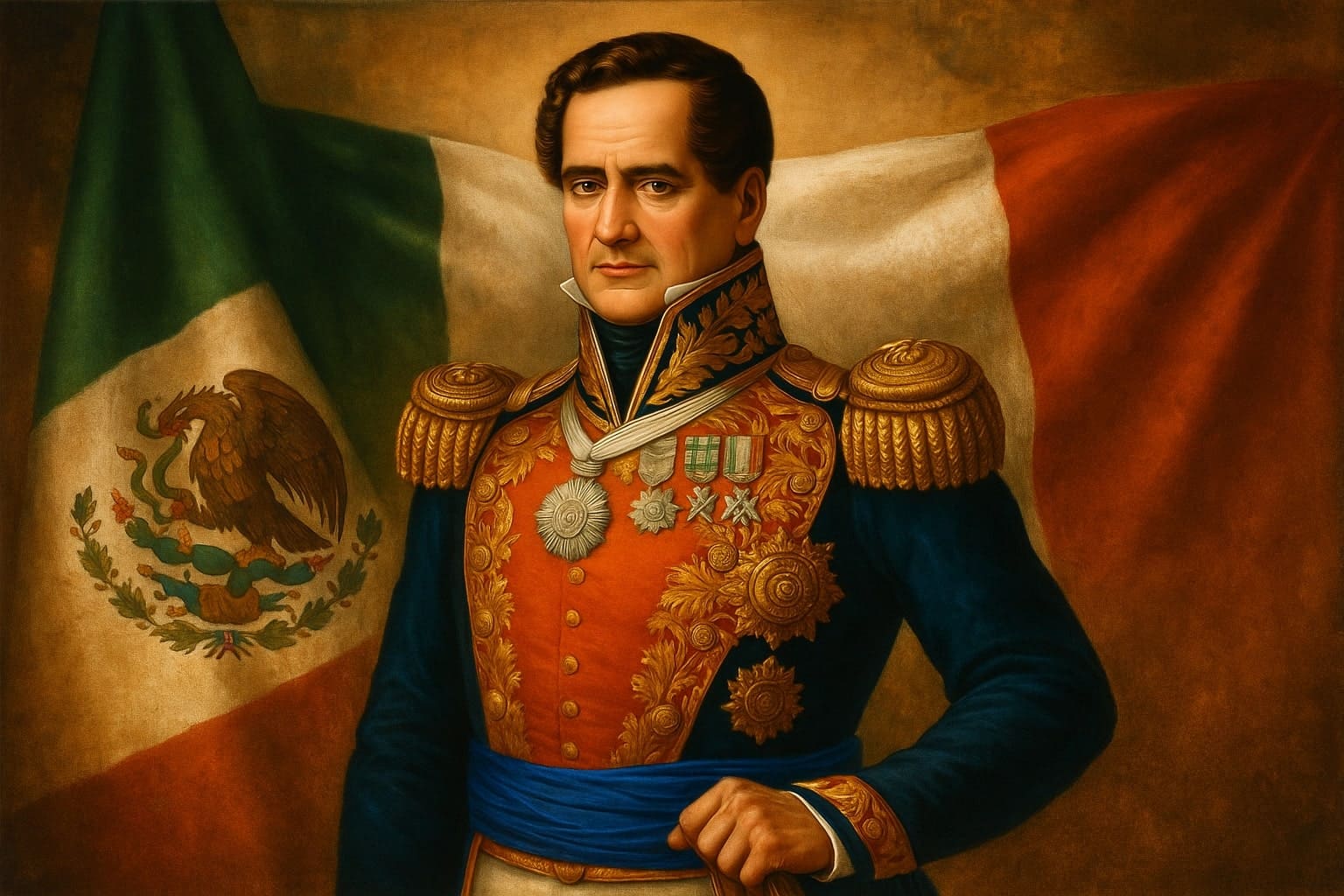
Santa Anna survived his political disaster and exile. He fought against the Americans in the Mexican-American War and lost. He fought against the French and lost a leg, but compensated for it by having his leg buried with full military honors. Truth really is stranger than fiction.
And almost as strange is the fact that Santa Anna eventually found refuge in New York, in the country against which he had once led armies, and there unintentionally launched the American chewing gum industry.
So the next time someone offers you a Chiclet, remember Sam Houston. Without him, it might not exist.
Sources: wikipedia.org, wikipedia.org