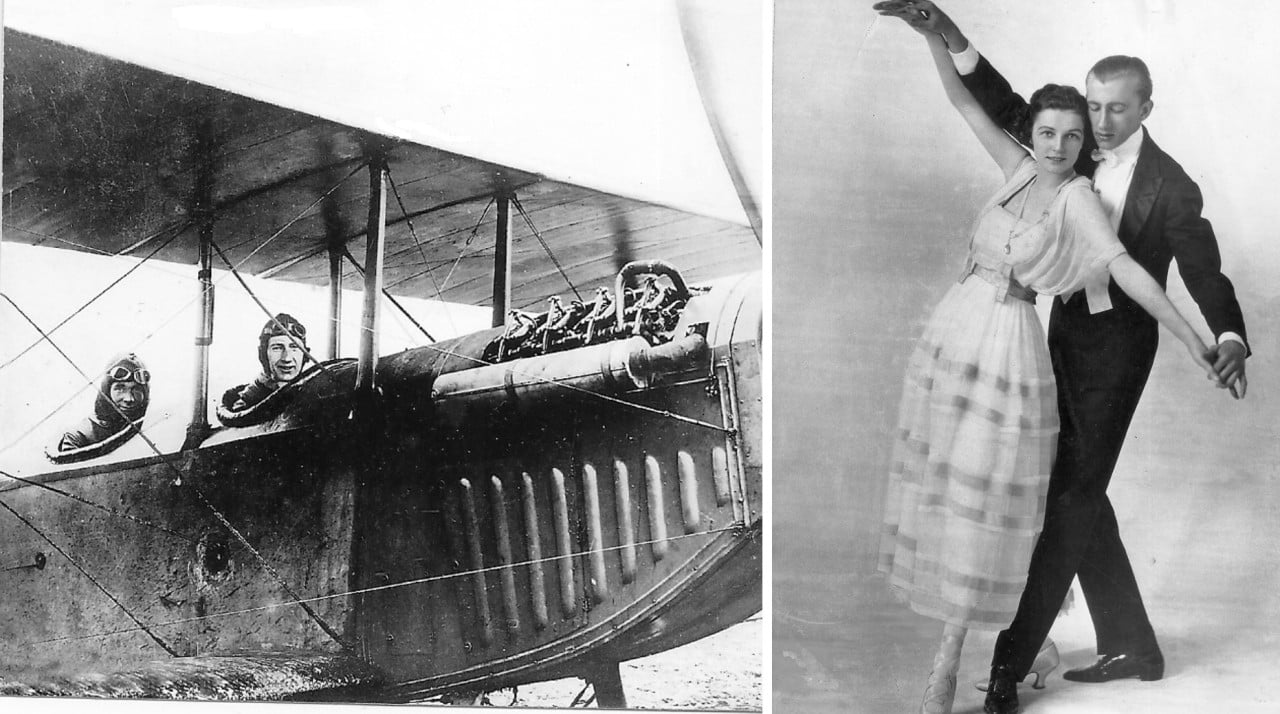
Before the First World War, Vernon and Irene Castle were the darlings of the stage on both sides of the Atlantic. They were the true “beautiful people” of their day, the first famous power couple, long before Brad and Angelina came along. As a dance duo, they popularized the foxtrot and tango. With their athleticism and elegance, they elevated dance in the eyes of the masses. As music publisher Edward B. Marks said of the music scene after 1910: “The public demanded tunes they could dance to.” And the music that brought people onto the dance floor at the time was called ragtime. And so ballroom dancing was born.
Vernon Castle, as his stage name went (he was born Vernon Castle Blythe), was a true Englishman educated at the University of Birmingham who began his career as an engineer. However, the tall, lanky man soon discovered that his true talent lay in dancing. While visiting the United States in 1906, he also discovered that he was drawn to the stage. He embarked on a career as a Broadway musical actor, specializing in comic routines. He met Irene Foote in the summer of 1910 while staying in New Rochelle, New York. She was six years younger than Vernon and had been passionate about the theater since childhood. The less-than-handsome Englishman did not impress her at first, until she discovered how much experience he had in the entertainment world. They also shared a love of dance, as Irene had studied ballroom dancing with a respected instructor. Vernon introduced her to Broadway circles, and she gradually found minor roles as a chorus dancer.
In time, love brought them together, and they married in May 1911. Irene, who longed for greater recognition than her work in the dance chorus brought her, came up with the idea of putting together a dance act. Although neither lacked talent or personal charm, it was difficult to establish such a pair. Most dance acts at the time were not regarded as genuine art. The Castles had to go to Paris to achieve success. They returned to the United States in 1912 and began performing in smaller New York venues, where they revived their Parisian cabaret act. Their star truly rose after they invented a brand-new dance called the “Castle Walk,” which quickly captured the attention of high society. They secured an engagement on Broadway, where they introduced a number of new, sophisticated dances, including variations on the waltz and foxtrot. They became America’s dance instructors and performed to packed houses on their tours. They were also America’s sweethearts, a charming couple who demonstrated their love on stage every night in a way that offended no one. They were rich and famous, and the future looked bright. Vernon cultivated the image of a man about town, within the bounds of propriety, of course, which included acquiring an airplane and learning to fly. Irene became a fashion icon and set new trends.
Then came the war. Twenty-three-year-old Vernon, an experienced pilot, heard the call of his homeland. In 1916, he sailed to England and enlisted in the Royal Flying Corps. He displayed genuine talent at the controls of the aircraft operated by the corps and was soon sent to the Western Front, where he distinguished himself and flew one hundred and fifty combat missions. Just as remarkable was the fact that he survived them all without a scratch. Captain Castle seemed to live under a lucky star. He was then recalled from France and sent to America to train a new generation of pilots.
While Vernon fought in Europe, Irene pursued dreams of her own: she shone in silent films and put together a successful solo dance act. America’s golden couple thus proved they could be just as happy apart as they were together.
The British reached an agreement with the American government to train their pilots in the United States, which made sense in terms of both training conditions and the British financial arrangements and diplomatic objectives. In October 1917, Vernon and the 84th Canadian Training Squadron moved from Camp Mohawk in Ontario to the more favorable climate of Fort Worth, Texas. They settled at Carruthers Field (one of three airfields collectively known as Camp Taliaferro), carved out of the prairie in Benbrook, southwest of Fort Worth. It was a stark and desolate home for the irrepressible man about town, yet the remote airfield did not prevent him from enjoying a social life. To get around the area, he bought a car in Dallas, which allowed him to spend his free time in the company of the local elite.
The locals were somewhat reserved toward the insular Canadian boys, but the charming Captain Castle and his pet monkey won them over. Vernon and Irene’s names were well known in Fort Worth, although most people did not know them personally, thanks to their music and dance steps, which were performed in the exclusive rooftop garden of the Westbrook Hotel. Ironically, the very same dances performed by high-society dancers on hotel dance floors, such as the “Turkey Trot,” “Grizzly Bear,” and “Bunny Hug,” took on an entirely different dimension when danced by Fort Worth’s Black residents in poorer neighborhoods. In polite society, these dances were decorously renamed the “One-Step,” “Long Boston,” and “Foxtrot” to pass public censorship. But when Black patrons performed them in dance halls with all their improvised movements, it was enough to have such venues closed “by order of the police.” Meanwhile, white patrons in the better part of town danced late into the night, trying to be like Vernon and Irene.
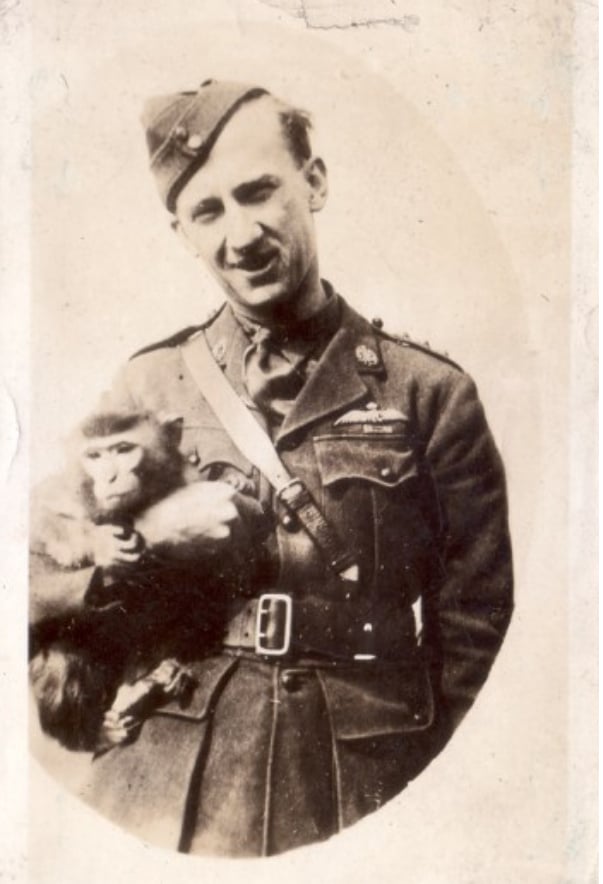
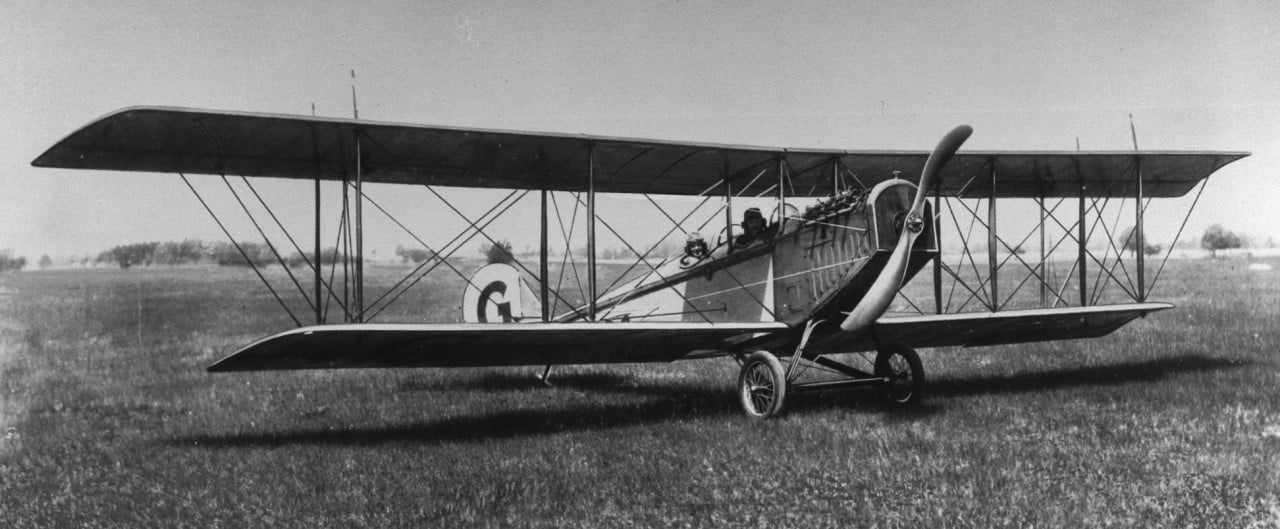
Vernon enthusiastically told reporters that he was very fond of Texans, whom he called “Westerners.” Despite his disregard for rules and regulations, he was an excellent instructor. On his own, however, he was a daredevil who took excessive risks in the underpowered Curtiss JN4, known as the “Jenny,” with a top speed of just 120 kilometers per hour. After America entered the war in April 1917, he also trained American boys. When he was not racing around the surrounding countryside, he “borrowed” airplanes without permission for demonstration flights and stopped at training airfields in Dallas. His superiors disapproved of wasting fuel and endangering government property, but he did not care. In the winter of 1917–1918, his exploits reportedly nearly resulted in a court-martial and his dismissal from the Royal Flying Corps.
Although newspapers portrayed Vernon and Irene’s separation as a mutual wartime sacrifice, according to biographer Eve Golden, the truth was different. Both had found lovers and quietly filed for divorce, intending to announce it after the war. During his stay in Fort Worth, rumors circulated that Vernon was having an affair with a local girl named Inez Childers. After February 15, 1918, however, it no longer mattered.
It was Vernon Castle’s last day in this world. Word came that he was to be recalled to Canada to command a new Royal Flying Corps school. While waiting for his orders, he continued training his current group of students. That Friday morning, he took off with American cadet R. O. Peters. The instructor usually sat in the rear seat, which was considered “safe” because the Curtiss Jenny was nose-heavy and tended to strike the ground nose-first in a crash. Captain Castle, however, for reasons known only to himself, preferred to sit in front, perhaps to show his students how much he trusted them. In any case, Peters sat in the rear, while Castle, in yet another breach of regulations, did not fasten his safety harness. The training flight went well until they came in to land. Peters carelessly descended directly above another aircraft piloted by a Royal Flying Corps cadet who was just taking off. Neither pilot saw the other until it was too late. Vernon, whose view of the ground was blocked by the nose of his aircraft, tried at the last moment to seize the controls and bank the plane into a half-circle, a maneuver he had performed many times before, but the Jenny stalled and plunged forty to fifty feet nose-first. Vernon’s body struck the instrument panel, breaking his neck and causing severe head injuries, either of which would have been fatal on its own. He was dead when he was pulled from the wreckage. The pilots of the other aircraft and Cadet Peters survived. That same day, a board of inquiry absolved the instructor of all responsibility, thereby ensuring that he would be remembered as a hero who “sacrificed his own life to save another.” Vernon Castle was the thirty-first fatality at the three airfields around Fort Worth out of 101 deaths over the full thirteen months that the airfields were in operation.
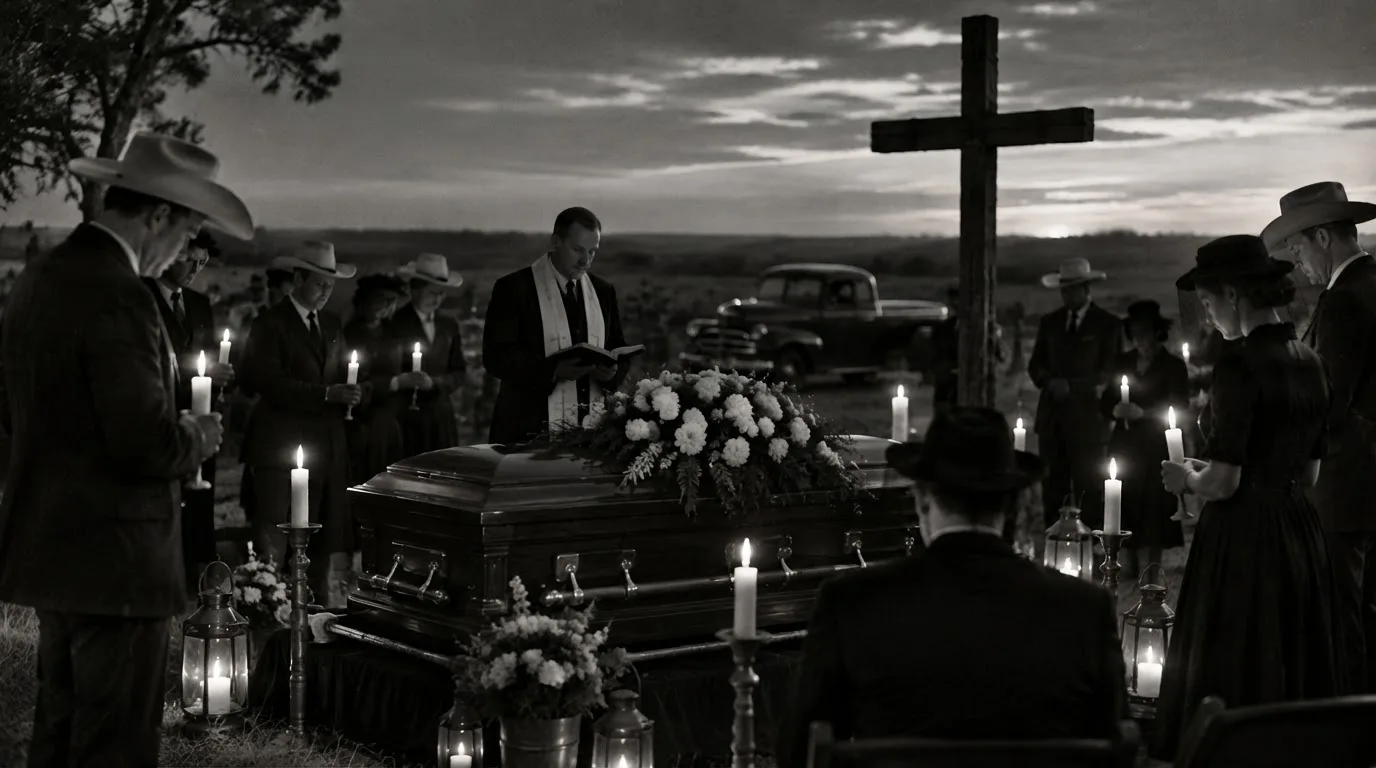
Fort Worth bid farewell to Vernon Castle with full pomp and ceremony. His body was placed in a closed coffin at Robertson’s funeral home on the corner of Tenth and Throckmorton Streets on February 16. The unusual closed coffin for such a popular aviator suggested that his body had been horribly disfigured in the crash. The coffin was draped with the British flag and surrounded by masses of flowers. Following the public viewing, the funeral service was conducted by the Reverend Henry Eckel, rector of the Anglican Church of St. Andrew. Vernon Castle had never been a faithful churchgoer, but the Anglican Church was the American sister of the Church of England, to which every Englishman belonged from birth. The body was then carried in a ceremonial military procession to the Texas and Pacific station for transport to New York, where Irene was waiting. The procession was led by an honor guard of Fort Worth mounted police, followed by the Camp Bowie marching band and an honor guard of two hundred and fifty American and British airmen, then the flag-draped coffin on a gun carriage drawn by six horses. The procession traveled from Robertson’s funeral home along Throckmorton Street to the courthouse and then back down Main Street to the station. Thousands of mourners lined the route to pay their last respects to a soldier who was as American as he was English. When the body arrived in New York, it was laid to eternal rest at Woodlawn Cemetery in the Bronx alongside renowned statesmen and celebrities. Prominent Fort Worth residents immediately began raising money to erect a monument to the fallen hero. It was never built, but the city renamed the section of Circle Park Boulevard from Grand Avenue to Circle Park “Vernon Castle Boulevard” in his honor.
Irene Castle came to Fort Worth for the first time in November 1922. In the meantime, she had remarried and was touring with her solo show, “Dances and Fashions.” The company stopped in Fort Worth near the end of the tour. With some free time, Irene set out to see the city and look for Vernon’s memorial at Greenwood Cemetery and Vernon Castle Boulevard. She laid a wreath at the memorial, but what she found on the street named after Vernon disappointed her. Instead of a handsome tree-lined boulevard with stately homes on both sides, she found a working-class street that she dismissed as “rough and unsightly... unworthy of the famous name bestowed upon it.” She never returned to Fort Worth, and the city never invited her back. Fort Worth had opened its heart only to Vernon Castle, and that was enough.