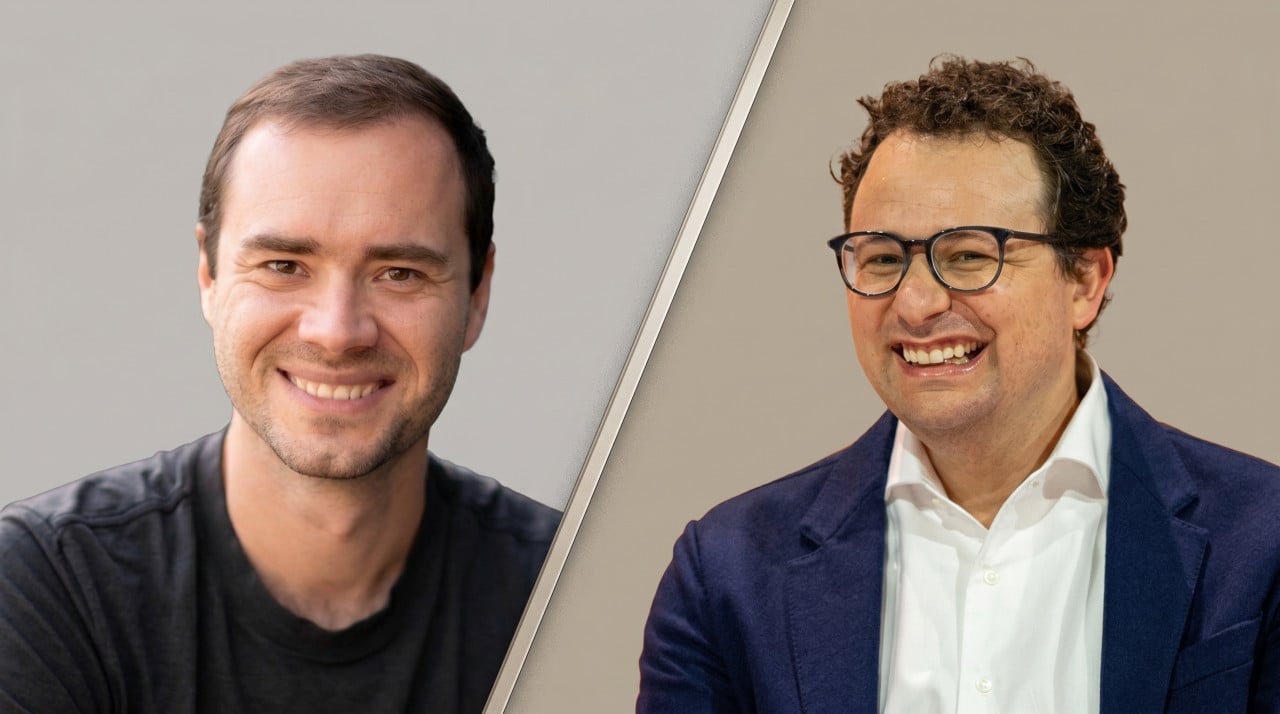
Andrej Karpathy, a co-founder of OpenAI and one of the most closely followed researchers in artificial intelligence, has announced his move to Anthropic. He announced the move himself on X.
Karpathy joined Anthropic immediately this week. He will work on the pretraining team led by Nicholas Joseph, another former OpenAI employee. His main task will be to build a new team focused on using Claude itself to accelerate pretraining research, one of the most expensive and computationally intensive phases of language model development.
A journey through OpenAI, Tesla, and back again
Karpathy's résumé is difficult to compare with anyone else's in the AI world. As a founding research scientist, he was there at the birth of OpenAI, where he focused on deep learning and computer vision. In 2017, Elon Musk recruited him to Tesla, where he led the computer vision team for the Autopilot system. At the time, Musk described Karpathy in an internal email as “probably the second-best person in the world at computer vision,” just behind Ilya Sutskever.
He left Tesla in 2022. At the time, the company still did not sell a vehicle that could be safely operated without a driver ready to intervene immediately. He briefly returned to OpenAI, which he left for a second time in February 2024 to found Eureka Labs, an educational startup focused on using AI assistants in teaching. What will happen to this project now remains unclear. Karpathy only added that education would remain close to his heart and that he would return to this work in time.
Personal update: I've joined Anthropic. I think the next few years at the frontier of LLMs will be especially formative. I am very excited to join the team here and get back to R&D. I remain deeply passionate about education and plan to resume my work on it in time.
— Andrej Karpathy (@karpathy) May 19, 2026
The man who coined “vibe coding”
The broader public outside the narrow research community began to take greater notice of him in early 2025, when he coined the term “vibe coding”. It describes an approach to programming in which a person fully surrenders to an artificial intelligence tool and stops worrying about what the specific code actually does. The phrase quickly caught on. Today, it is used by developers, startups, and journalists around the world, illustrating how deeply AI tools have penetrated software development, including Anthropic's own Claude Code.
In February 2026, Karpathy himself suggested that the term “vibe coding” was no longer sufficient to describe a situation in which AI agents write code themselves and humans merely supervise. He proposed a new term: “agentic engineering”. And this very shift from assisted coding to fully autonomous AI agents is probably one of the reasons Anthropic recruited him.
Anthropic has reason to celebrate
Karpathy is one of those rare researchers who can connect the theory of language models with real-world, large-scale training processes. Anthropic is betting that research accelerated by AI, rather than merely by greater computing power, is the way to keep pace with OpenAI and Google.
Anthropic has been gaining momentum in recent months. The company's value on secondary markets has surpassed one trillion dollars, putting it ahead of OpenAI for the first time. The company is succeeding with its Claude Code and Cowork tools and benefiting from growing public interest following its turbulent confrontation with the Trump administration. Meanwhile, the rivalry with OpenAI has reached the point where the two CEOs, Sam Altman and Dario Amodei, refused to shake hands during a group photo with other AI leaders at a summit in India.
Karpathy is not the only person to have joined Anthropic in recent weeks. In early May, Ross Nordeen, a founding member of xAI and former Tesla employee, made the move. Chris Rohlf, a cybersecurity veteran with more than twenty years of experience at Yahoo and Meta, then joined the safety testing team.
Sources: techcrunch.com and axios.com