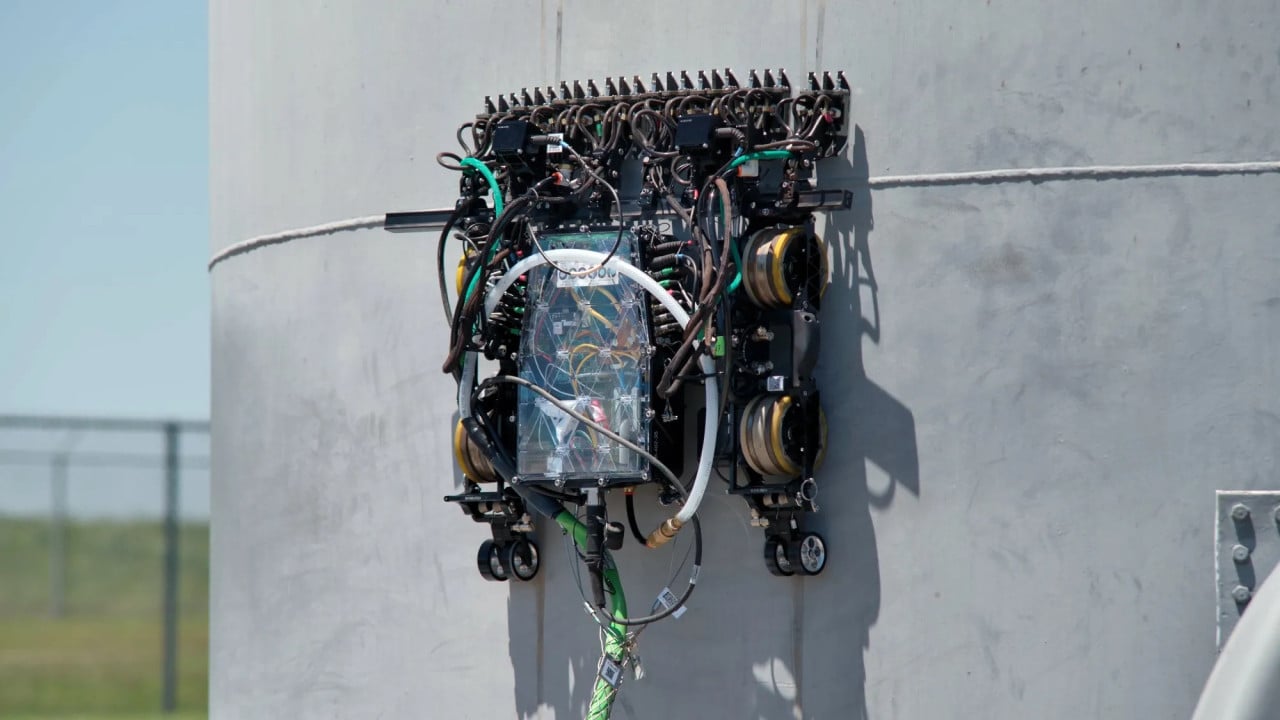
Somewhere in a Pacific Ocean port, a machine is slowly moving along the hull of a warship. It is not a sailor crawling around with a flashlight and notebook. It is a robot. And this very scene will soon become an everyday reality for 18 ships in the U.S. Pacific Fleet. The United States Navy (US Navy) has signed a contract with Pittsburgh-based Gecko Robotics. It is a five-year contract worth up to $71 million, with the initial award amounting to $54 million. It is the largest robotics contract the US Navy has ever awarded.
Why the Navy desperately needed help
The problem with maintaining the U.S. fleet is nothing new. A December 2024 report by the Government Accountability Office (GAO) revealed that amphibious warship readiness averaged only around 46% between 2011 and 2020. By August 2025, it had fallen to just 41%. The result? A gap of more than five months in Marine Corps deployments. Approximately 40% of the entire fleet is out of service at any given time due to lengthy repairs. Meanwhile, maintenance costs amount to $13 billion to $20 billion annually.
Then-Chief of Naval Operations Admiral Lisa Franchetti therefore announced an ambitious goal in the fall of 2024: 80% of the fleet ready for deployment by 2027. Her successor, Admiral Daryl Caudle, embraced this commitment and said openly: "Readiness is not a line item in the budget. It is a promise to the American people that their Navy will never arrive late to the fight."
What the robots do
A port engineer stationed in Japan approached the company to ask what it could actually do. Gecko conducted an assessment and drew up a preventive maintenance plan. The Navy was impressed. The relationship grew until it culminated in the March agreement. The Pittsburgh-based company is no newcomer. It has worked with the US Navy for four years and also deploys its robots in the energy sector, industry, and other fields where aging infrastructure requires constant monitoring.
Gecko deploys a combination of three types of equipment: robots that climb walls and ship hulls, drones that fly through enclosed spaces, and fixed sensors. Together, they collect detailed data on welds, decks, hulls, and internal components. They go where humans either cannot reach or where it would be dangerous for them to do so.
The collected data is fed into the company’s artificial intelligence system, specifically a platform called Cantilever. It uses the data to create a digital model of each ship, known as a "digital twin." The system then detects both visible and hidden defects and recommends what should be repaired and in what order.
The results are impressive. Gecko claims that its technology identifies maintenance needs up to 50 times faster and more accurately than manual methods. In one specific case, a single robotic assessment of a flight deck eliminated more than three months of potential maintenance delays.
The company currently operates a fleet of approximately 250 robots and plans to build another 50 to 60 units this year.
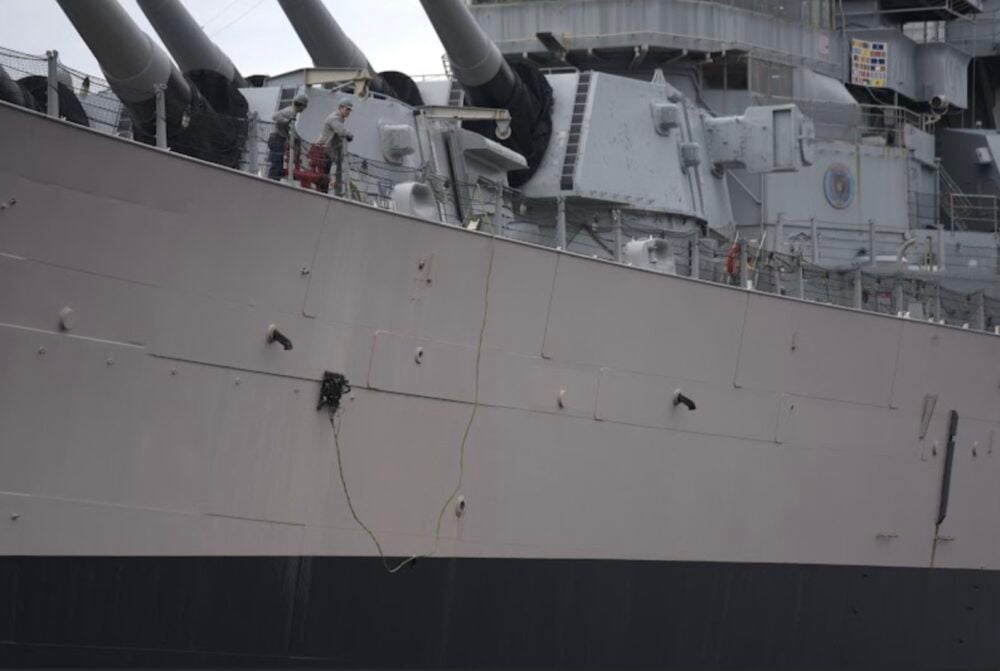
A port call for repairs? That will no longer be necessary
Gecko Robotics CEO and co-founder Jake Loosararian envisions a world where ships do not have to spend months in repair yards because the system continuously knows what is broken and what needs to be repaired while underway. Predictive maintenance instead of reactive firefighting. That is exactly the shift the Navy needs.
The contract covers destroyers, amphibious warships, and littoral combat ships in the Pacific Fleet. It is also available to other branches of the U.S. military through the GSA government contracting framework, so the potential for expansion is enormous. It is fair to say that the U.S. Navy has placed a major bet on robots. Given the figures showing the condition of the fleet, it was about time.
Sources: militarytimes.com and reuters.com