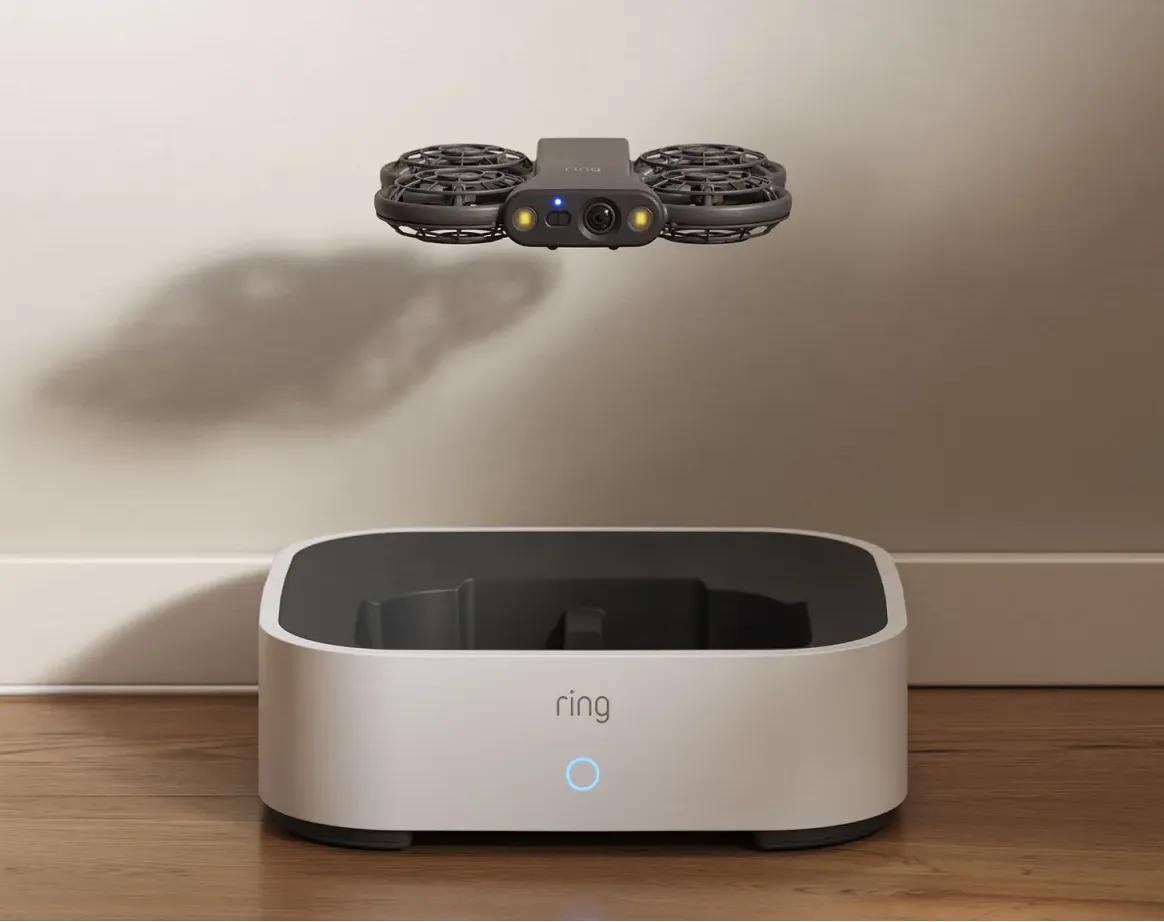
Ring, a company known mainly for its smart video doorbells, is venturing into robotics. The Amazon-owned company has unveiled a new division called Ring Robotics, along with two devices that no longer just hang on a wall waiting for something to pass in front of them. Ring Drone Cam is a small drone that flies around an apartment or house and checks what is happening inside. Ring Rover Cam is a wheeled robot designed to monitor stores, offices, and other commercial premises when no one is there.
Ring founder Jamie Siminoff says customers have wanted for years to see places that fixed cameras cannot reach, while also not wanting cameras in locations where they would be intrusive. According to him, the solution was not to add more cameras, but to rethink from the ground up what a security device should actually be able to do. He says development was difficult and took a long time.
It creates its own map
Both machines are powered by the same system, called AI Pilot. It combines cameras, specialized image recognition models, sensors built directly into the device, and cloud computing. This allows the machines to navigate spaces without human assistance.
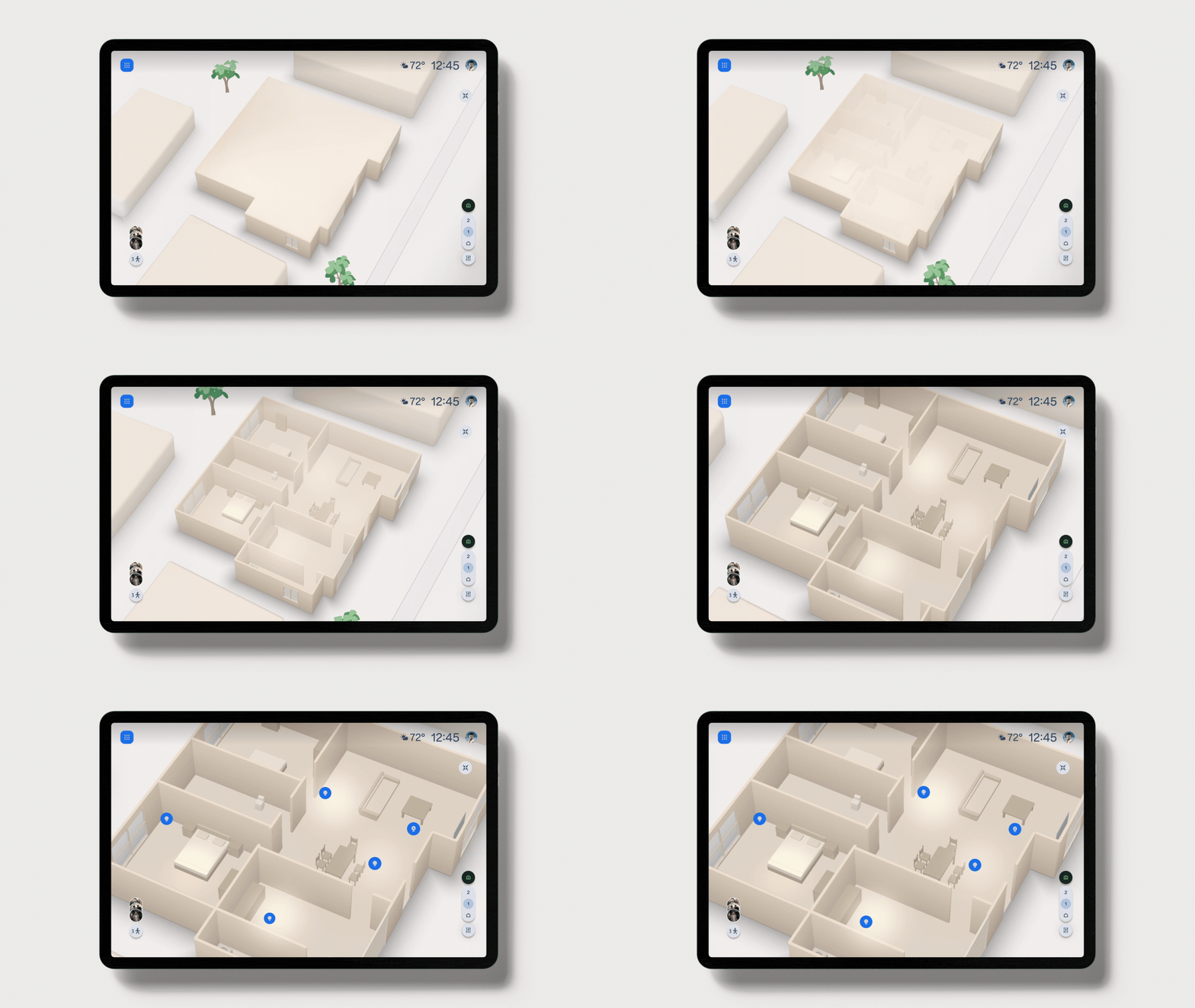
Anyone should be able to handle the setup. The drone only needs to be carried through the home once, while the Rover drives around the premises by itself. Based on what they see along the way, they create a floor plan, identify individual rooms, and automatically suggest places that deserve more frequent checks. These might include a side entrance, windows, a checkout counter, or a long hallway. The owner can then add custom points. When a machine sets out on patrol, AI Pilot plans the shortest route and navigates around furniture, shelves, and other obstacles as it moves.
The drone takes off when an alarm is triggered
Ring Drone Cam spends most of its time out of sight in its charging dock. It takes off according to a schedule, on command from the app, or automatically when another Ring camera, sensor, or alarm is triggered. It then flies to predefined locations and shows the owner what triggered the alarm. So if a sensor by the back door beeps, the drone heads there to investigate.
The camera records in 2K, has a 148-degree field of view, and can rotate all the way around, allowing it to capture the entire room. For nighttime patrols, it has two LED lights that turn on automatically in low light. It can also be sent on patrol using the new three-dimensional Alexa Home Map. Ring envisions people sending the drone on one last round before leaving for the weekend to check whether the windows have been left closed.
A round-the-clock guard
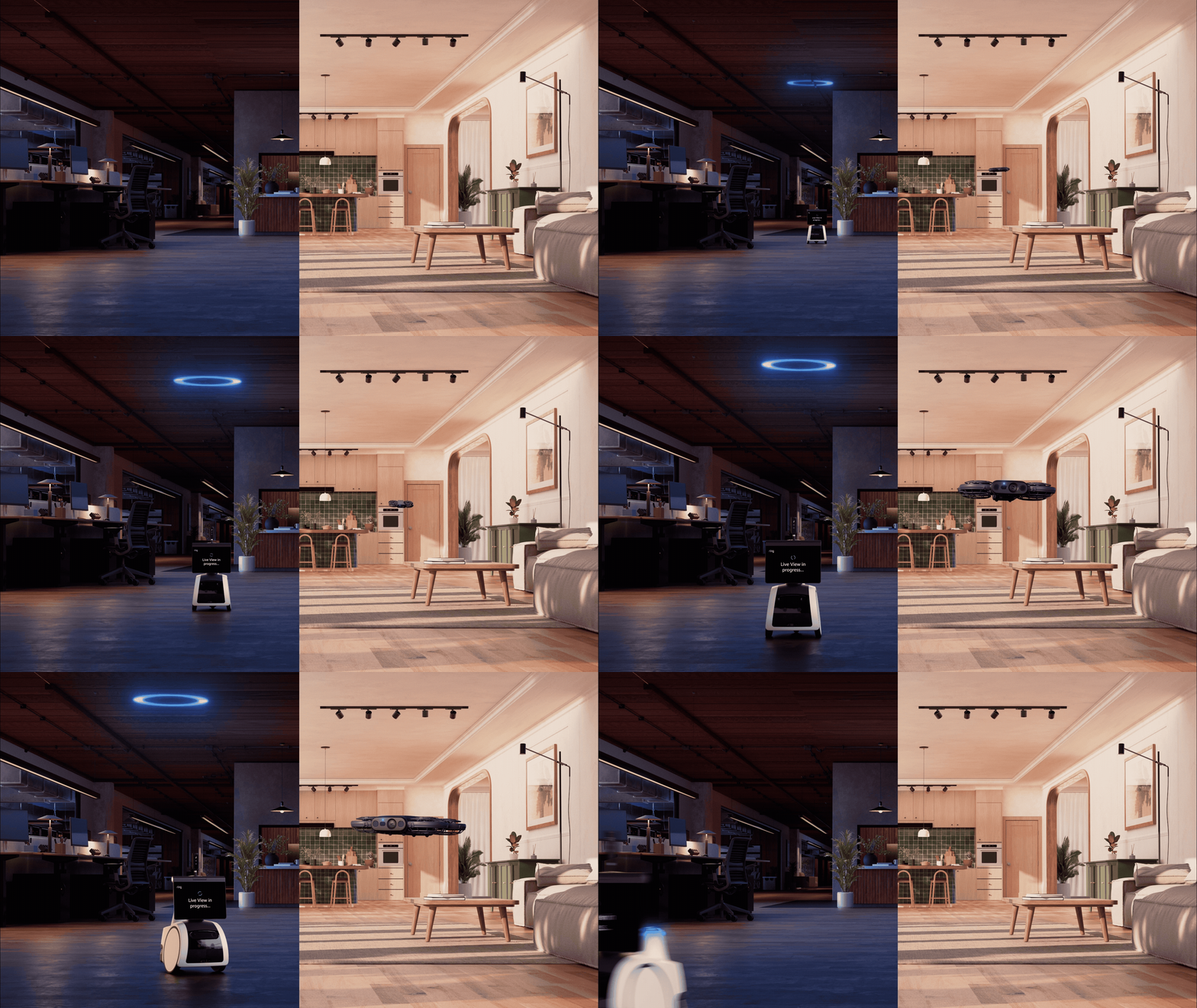
Rover Cam is aimed at businesses and, at first glance, resembles the Astro robot. Amazon introduced it in 2021 as a home assistant and later turned it into a security guard for small businesses. However, the robot failed to catch on, and the company withdrew it from sale after seven months. Ring acknowledges that Astro served as inspiration because its owners most valued the ability to send it on patrol. This time, however, the company has not created a home robot that can also provide security. Rover is designed solely for surveillance.
With a single tap, it can be sent to any room, where it looks around in every direction upon arrival. The owner can schedule regular patrols after closing or before opening. The robot also sets out automatically as soon as a sensor is triggered. It carries its camera on a retractable periscope-like mast, allowing it to see over counters and shelves. The mast height can be saved for each stop. It streams 4K video continuously to a mobile phone throughout the journey, not just at stops. It also monitors for people while in its charging dock, and when it detects someone, it begins recording and sends an alert. A siren and flashing beacon let an intruder know they have been detected. Two-way audio allows the owner to speak to them from anywhere. Ring compares the robot to a security guard who never goes home. In practice, this means it can patrol a store after closing and check at two in the morning why a sensor was triggered.
Privacy, price, and availability
Ring has long faced criticism over privacy. Critics accuse it of creating an unofficial surveillance network through its cameras that police routinely access. TechCrunch expects the new machines to face similar criticism because they may intrude on privacy even more.
Ring counters that privacy protection is the default setting on both devices. The drone rests in its dock with the camera turned off and only begins recording after takeoff. In sleep mode, Rover retracts the mast with its camera and turns off the microphone. Indicator lights—and, on Rover, the display—show when the machines are recording. However, they are not intended to be discreet. The drone's propellers are not silent, and the robot's flashing beacon is clearly visible, which is intended to deter intruders. Videos are protected by TAKE encryption, which Ring says is its strongest default protection to date. It is not yet clear whether recordings can also be stored locally, as Ring cameras usually send them to the cloud.
For now, Ring has announced sales only in the United States. The company will begin shipping Rover Cam on December 16, and it costs just under one thousand dollars, with preorders already open. Customers will have to wait until January 27, 2027, for the drone, which will cost around $250. However, Ring Drone Cam has not yet received the necessary approval from the U.S. Federal Communications Commission (FCC) and cannot be sold until it does. Scheduled patrols and some other features will require a paid Ring Protect subscription.
Sources: aboutamazon.com, techcrunch.com and cnbc.com