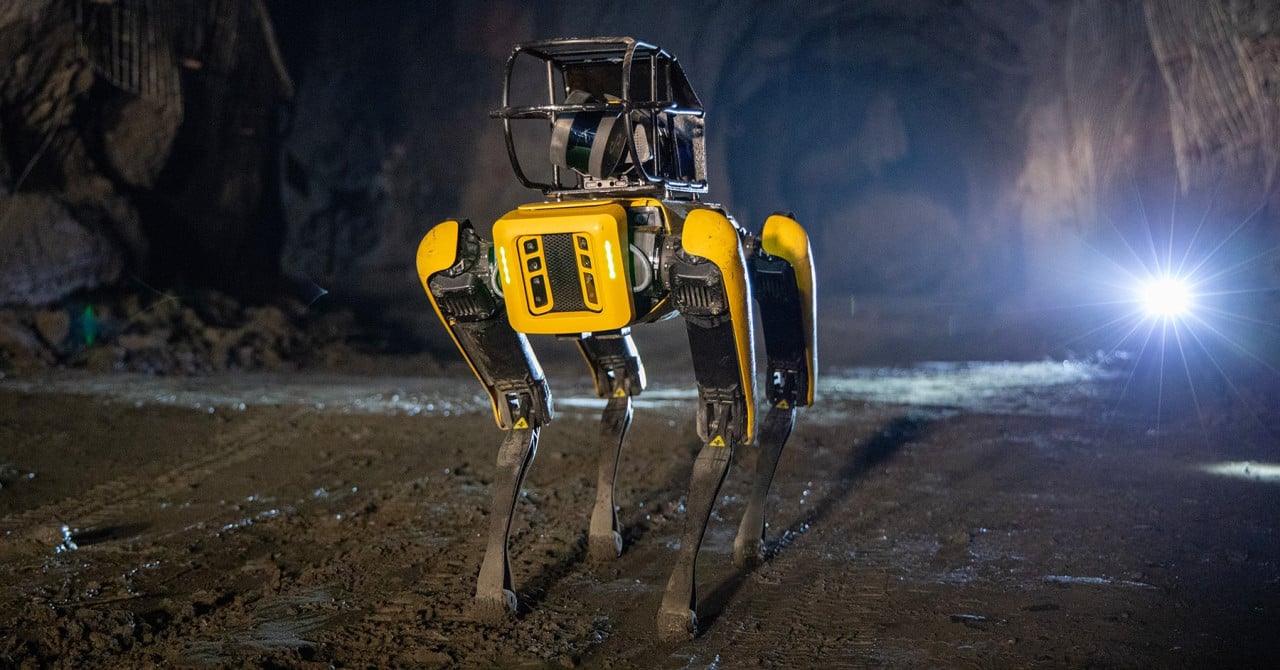
"I was at a data center this week. Over the past year, we have seen a huge, huge increase in interest from data centers." And it is no wonder. The world is literally racing to build enormous server facilities for artificial intelligence, and someone has to guard them. But a human security guard has one major disadvantage: they need to sleep, eat, and occasionally take a vacation." Says Merry Frayne of Boston Dynamics.
The solution? A four-legged robot that needs none of those things.
Why robots?
Data centers are growing at a pace no one expected just a few years ago. In North America alone, new capacity totaling 35 gigawatts is currently under construction. More than 5,000 data centers are operating in the United States, with another 800 to 1,000 currently under construction. Each of them covers dozens of hectares and must operate continuously, 24 hours a day, 7 days a week.
Now try to imagine how many people would be needed to keep such a site truly secure. Cameras and fixed sensors are not enough because they cannot cover every corner, every roof, or every fence. And this is precisely where robotic dogs come into play.
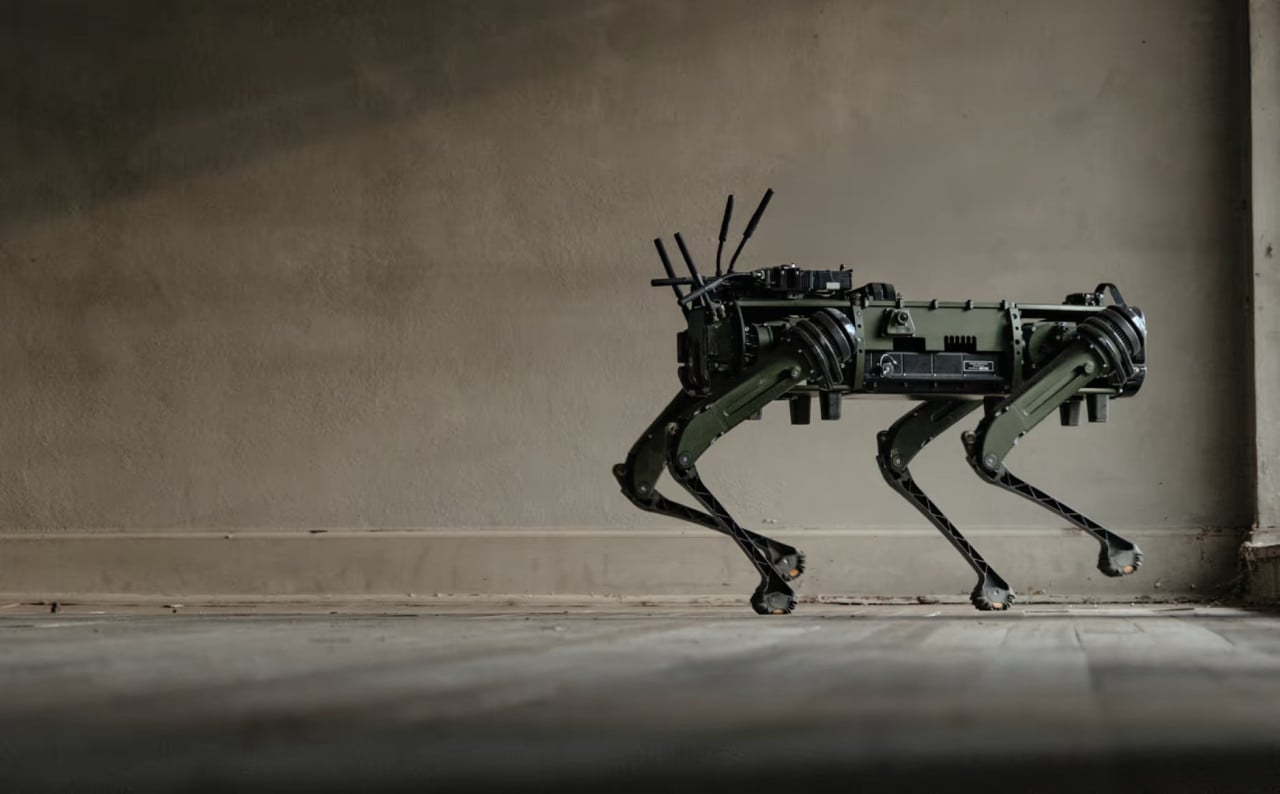
Two companies dominate the market. Boston Dynamics with its Spot robot and Ghost Robotics with its Vision 60 model. Both robots look somewhat like large dogs, move on four legs, and can handle terrain that would stop conventional wheeled robots.
Spot from Boston Dynamics is more than just a security guard. Data centers deploy it for a whole range of tasks: patrolling the site perimeter, mapping spaces, monitoring construction work, and performing industrial inspections. Equipped with the right sensors, it can detect thermal anomalies, fluid leaks, puddles, unusual sounds, or even doors that someone forgot to close. Its price? From $175,000 to $300,000 (approximately 4 to 7 million Czech korunas), depending on the configuration.
Vision 60 from Ghost Robotics focuses primarily on external perimeter security. It patrols along fences, looks for holes in fencing, suspicious objects, or intruders, and transmits live video directly to the control room. Its price starts at $165,000 (about 3.8 million Czech korunas).
The economics make sense
Here comes the part that will convince even the biggest skeptics. One human security guard costs roughly $150,000 per year, including benefits and overtime. A robot costs more upfront, but after that, it only needs electricity. Michael Subhan, director of business development at Ghost Robotics, puts it simply: "Instead of two security guards costing $300,000, you can have one security guard and a robot. And, of course, the robot does not get sick or go on vacation."
Frayne of Boston Dynamics says that customers typically achieve a return on investment within two years, but usually within 18 months. And that does not even include the value of the data the robot continuously collects.
Eighteen months. That is a pretty solid figure, isn't it?
A robot's duties
A real-world example illustrates it best. Novva Data Centers, a Utah-based colocation data center operator, deployed a team of Spot robots at its flagship 1.5-million-square-foot (more than 139,000 m²) facility in West Jordan.
The robots travel along preplanned routes, collect environmental data, inspect equipment, and report any deviations from normal conditions. Thanks to thermal sensors, they can alert technicians to overheating power supply units or failing cooling systems before an outage occurs. And an outage at a data center? That means millions of dollars in losses for every hour.
Spot can travel several kilometers on a single charge and operates reliably in both heat and freezing temperatures. For data centers built in desert regions or cold climates, this is a practical advantage that no human security guard in a golf cart can offer.
Are robots replacing people or helping them?
Both companies agree on one thing: robots are not a replacement for people, but an extension of them. People still sit in control rooms, watch live video feeds from the robots, and decide on every response. "We are not here to replace the human security guard. We are here to complement them," says Subhan.
That sounds nice. But the economic logic tells a slightly different story. When a robot pays for itself in 18 months and provides continuous protection without sick leave or overtime, it is only a matter of time before data center operators start calculating how many people they actually still need. For now, robots are more of a supplement. But the market is growing quickly, and the technology is improving even faster. Boston Dynamics describes data centers as an "emerging market" within its industrial business. Ghost Robotics works with a handful of operators, but interest is rising.
Sources: techspot.com and finance.yahoo.com