

It was only a matter of time. On March 17, Microsoft announced a major reorganization of its AI division, openly acknowledging what had been apparent for some time: Copilot as a product needs a radical change of direction. The enterprise and consumer versions of the assistant had operated separately for years, like two siblings who barely speak to each other. That is now changing.
Satya Nadella sent employees an internal memo that soon became public. In it, he wrote plainly and clearly: "We are bringing the Copilot system for commercial and consumer segments together as one unified whole." No diplomatic fluff, no vague promises. Just a fact.
Behind this decision is the pressure Microsoft is feeling from all sides. Google is aggressively pushing its Gemini to both businesses and ordinary users. Anthropic and its Claude are attracting attention from the media and users alike. And the numbers? They speak for themselves. Copilot has approximately 6 million daily active users. OpenAI's ChatGPT has more than 440 million. Gemini has more than 80 million. That is a chasm that cannot be crossed without fundamental changes.
Copilot's new leader: Jacob Andreou
Jacob Andreou is taking charge of the unified Copilot, assuming the new role of executive vice president and reporting directly to Nadella. Andreou is no newcomer to the technology world. Before joining Microsoft, he spent years at Snap, where he helped scale the product from its early beginnings. At Microsoft, he then focused on product and growth within the AI division.
His task is clear: to lead Copilot's design, product, growth, and engineering across both the enterprise and consumer worlds. It sounds like a lot of work. Because it is. Alongside Andreou, Ryan Roslansky, Perry Clarke, and Charles Lamanna will be responsible for the Microsoft 365 platform and Copilot infrastructure, and they will also report directly to Nadella. Together with Mustafa Suleyman, these four make up Copilot's new leadership team.
Suleyman bids farewell to Copilot and sets his sights higher
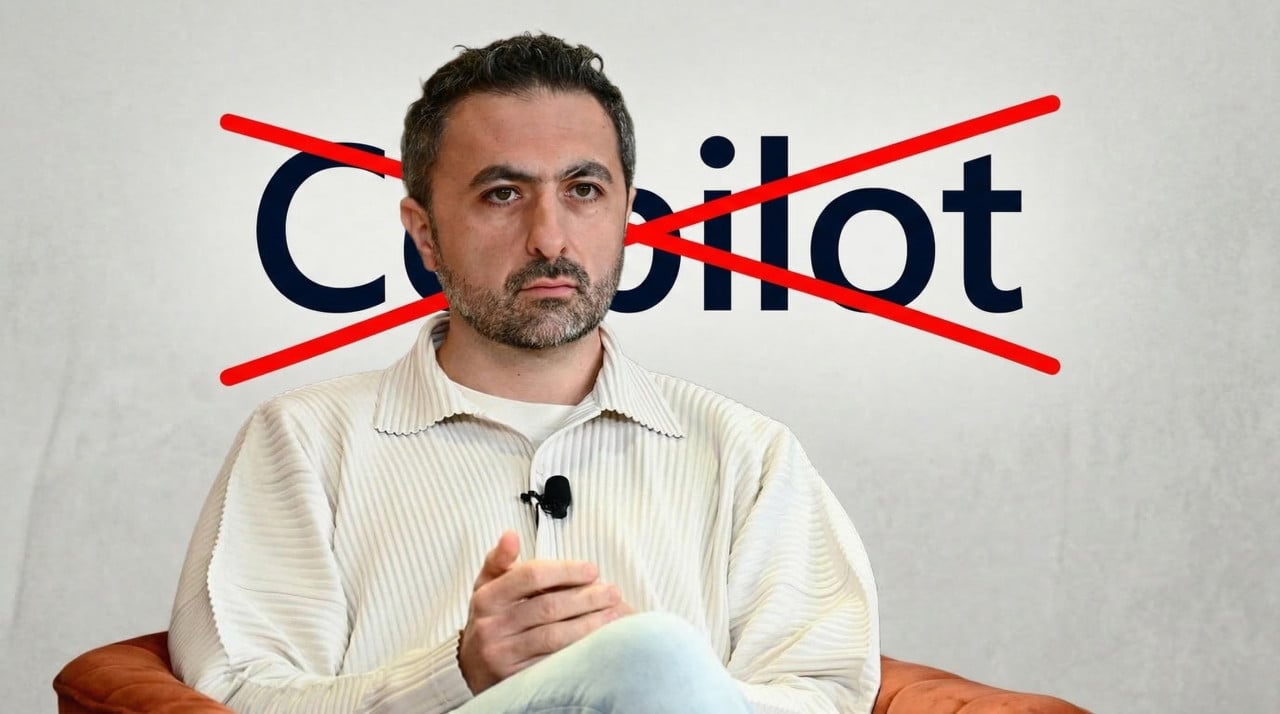
Mustafa Suleyman, head of Microsoft AI and co-founder of DeepMind, is stepping away from the day-to-day management of Copilot. Not because he failed. But because Microsoft wants him to focus on something far more ambitious.
Suleyman said it bluntly in his internal letter to employees: "I came to Microsoft with one primary mission: to create superintelligence that will have a transformative, positive impact on millions of people." And that is precisely what he now wants to focus on fully.
In November 2025, Microsoft assembled a dedicated superintelligence team. Suleyman will lead it, with the goal of building models over the next five years that significantly surpass current capabilities. They are starting, for example, with medical diagnostics. "The model is the product," Suleyman said in an interview with CNBC. That sums up the entire philosophy behind the new direction.
Suleyman has not disappeared entirely, however. He retains a direct line to Andreou and remains involved in the day-to-day operations of Microsoft AI. But his main energy is now focused elsewhere.
What the reorganization means
The reorganization is not just about who reports to whom. It is an admission that the existing approach did not work as Microsoft had hoped. The consumer and enterprise versions of Copilot looked different, behaved differently, and did not share common features. It was confusing for users. And costly for Microsoft.
The new structure rests on four pillars: the Copilot experience, the Copilot platform, Microsoft 365 applications, and AI models. Nadella described it as a shift "from a collection of great products to a truly integrated system that is simpler and more powerful for customers."
Copilot for businesses, which costs 30 dollars per month, has reached 15 million annual users. The consumer version recorded an almost threefold year-over-year increase in daily app users. The numbers are growing, but they remain modest compared with the competition. Only about 3% of enterprise users with an Office subscription have access to the Microsoft 365 Copilot add-on.
If you use Copilot at work or at home, you should notice a difference in the coming months. Unifying the teams should bring a more consistent experience, shared features, and faster development. Microsoft promises that Copilot will stop being a "collection of products" and become a truly interconnected system.
Will it be enough? ChatGPT and Gemini have a huge lead. Anthropic and Claude are gaining momentum. Microsoft is betting that unifying Copilot and Suleyman's leap into developing proprietary models will give it the weapons it has so far lacked. Time will tell whether it works.
Additional sources: theverge.com and finance.yahoo.com


