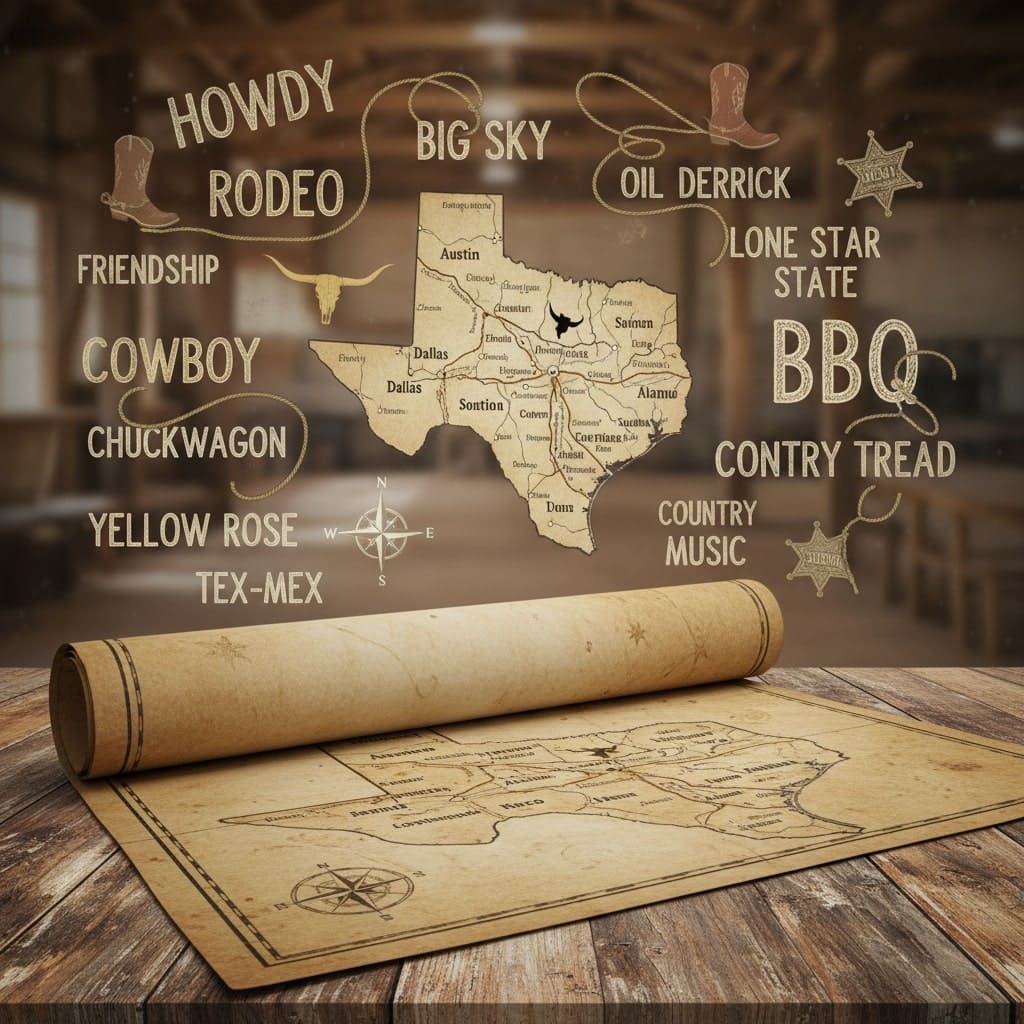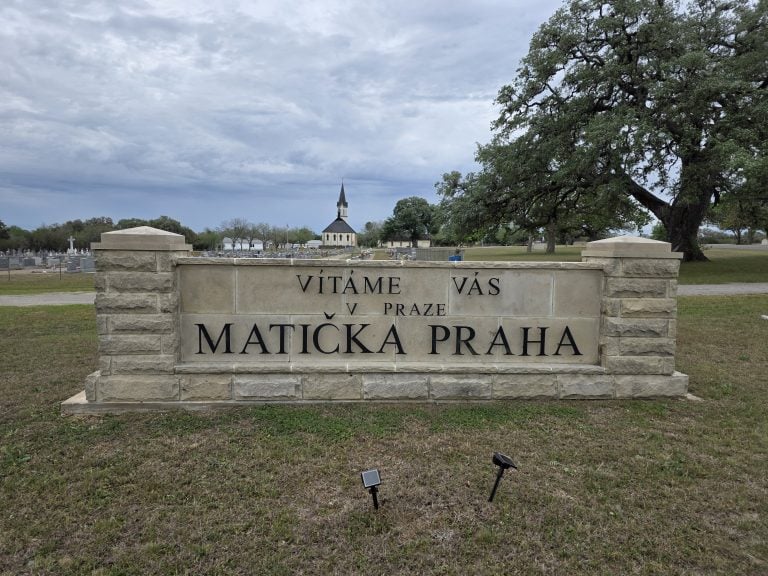
The map of Texas draws inspiration from more cultures than that of almost any other American state. We have Czech names: Praha, Moravia, Dubina. German ones: Breslau, New Baden, New Ulm, or New Braunfels, to name just a few. Scattered across the state are small towns whose names come from the Polish (Panna Maria), Swiss (New Bern), Norwegian (Oslo), Danish (Danevang), and Russian (Marfa, Odessa) settlers who first arrived here. And you do not have to leave Texas at all to visit most of Europe’s famous cities: we have Paris, Athens, New London, Berlin, and Dublin (as well as Edinburg, if you can forgive the decidedly un-Scottish spelling. And, for that matter, Rhome).
Apart from surnames and names derived from English and Indigenous languages such as Comanche, however, Spanish is the most common source of our place names. And we Texans mangle it quite often, whether the name belongs to a city, a street, or a river.
We get a few names more or less right. We do pretty well with Laredo, Del Rio, Seguin, and Comal, and despite a slightly different accent and flattened vowels, we also make a decent job of El Paso, San Antonio, Bandera, and Concho (the county, that is). Bosque County, meanwhile, is a typically Texan hybrid: locals pronounce it “BOSS-key,” which is close to the Spanish “BOSS-keh,” though not quite exact, but still much closer than the American-sounding “bosk” or “boss-cue.”
Other names, though, we mangle beyond recognition. It should properly be pronounced “ah-mah-REE-yoh,” not “am-uh-RILL-uh” or “muh-RILL-uh,” as I have heard it said in bars. “Sahn hah-SEEN-toh,” not “San juh-SIN-tuh.” Refugio should sound like “reh-FOO-hee-oh,” not “reh-FURY-oh,” and the nearby shrimping port of Palacios should be pronounced “pah-LAH-see-ohs,” not “puh-LASH-us.” And do not even get me started on how people in Austin pronounce Menchaca “MEN-shack” and Guadalupe “WAD-uh-loop” or “GWAD-uh-loop.” Much like the unnecessary “s” that slips all too often into the name New Braunfels, how did that extra “r” find its way into Pedernales, turning it into “per-den-AL-iss”?
My favorite of all, though, is the small town of Bogata in northeast Texas. It is named after Bogotá, Colombia, but locals pronounce it roughly “buh-GO-duh,” and that is exactly what you have to call it too unless you want them to laugh at you as an outsider.
After all, the entire state is really one big mispronunciation: if we wanted to be completely accurate, we should say “Tejas” instead of Texas, although the Spaniards themselves arrived at even that name by adapting a word from the language of the Caddo people. But should we care? Should we abandon our traditional Texan mispronunciations just because more Texans of Anglo-Saxon descent now speak Spanish, while the number of native Spanish speakers arriving here from south of the border is also growing? Should we be ashamed of the way we mangle Spanish (or Caddo, or any other language)?
Probably not, says Gustavo Arellano, former editor in chief of the Orange County Weekly and former author of the nationally syndicated column “Ask a Mexican.” “To me, it just shows that we have a shared heritage,” he says. “Whether we have been here for five or six generations or only a short while, we will call it whatever the locals called it when we arrived.”
There are exceptions, of course. Arellano, a Southern California native of Mexican descent, points to the relatively recent migration of Midwesterners to Southern California. He blames those Midwestern American accents for the soft “j” sound we now hear everywhere in Los Angeles (suddenly “Los AN-juh-lus” instead of “Los AHN-heh-les”), and for turning the Los Feliz neighborhood from “feh-LEES” into “FEE-liz.”
For Arellano, this linguistic transformation is inevitable. “It is just going to happen,” he adds. “Americans will mangle Spanish names, but I have to say it works the other way around too. There is a city (in California) called Cudahy, and when I was growing up, I always heard native Spanish speakers pronounce it ‘car-ah-HIGH.’ White locals called it ‘cuh-DAY-high.’”
The same thing can be observed in Houston, where people in the surrounding, predominantly Spanish-speaking neighborhood turned Tellepsen Street, named after a Norwegian immigrant, into “tailspin.”
Some longtime Texans, meanwhile, are beginning to feel a creeping sense of guilt. You pronounce street names the way you have always heard them pronounced and risk being shamed by people who speak better Spanish. But consider this: Nashville residents do not pronounce Demonbreun correctly, nor do the people of “Glazgo” pronounce Scotland’s Glasgow correctly. And in “Noo Yawk,” locals have been mangling the Dutch names that once filled the landscape for so long and so casually that today we no longer even realize that places such as Yonkers, the Bronx, or Flushing ever had anything to do with the land of tulips and dikes.
And if that is the case, why should residents of Refugio, Bogata, San Jacinto County, or San Felipe Street be ashamed of pronouncing their local names the way they were taught?
What will be, will be, que será, será. Or, as we would say it, “kay sirrah sirrah.”