London-based robotics company Humanoid, which officially operates under the name SKL Robotics, has joined the ranks of so-called unicorns, young companies valued at more than one billion dollars. According to two sources familiar with the negotiations, the company is finalizing plans to raise roughly $150 million in the first part of an investment round. The round values the business at $1.2 billion, excluding the newly invested funds. The company also plans to raise another $80 million to $100 million in a further round by September.
In a remarkably short time, Humanoid has grown into one of Europe’s leading prospects in the field of so-called physical artificial intelligence, meaning intelligent machines capable of working with their hands in real-world environments. The company’s goal is to build safe humanoid robots that can be mass-produced and deployed in real-world operations.
Two robots
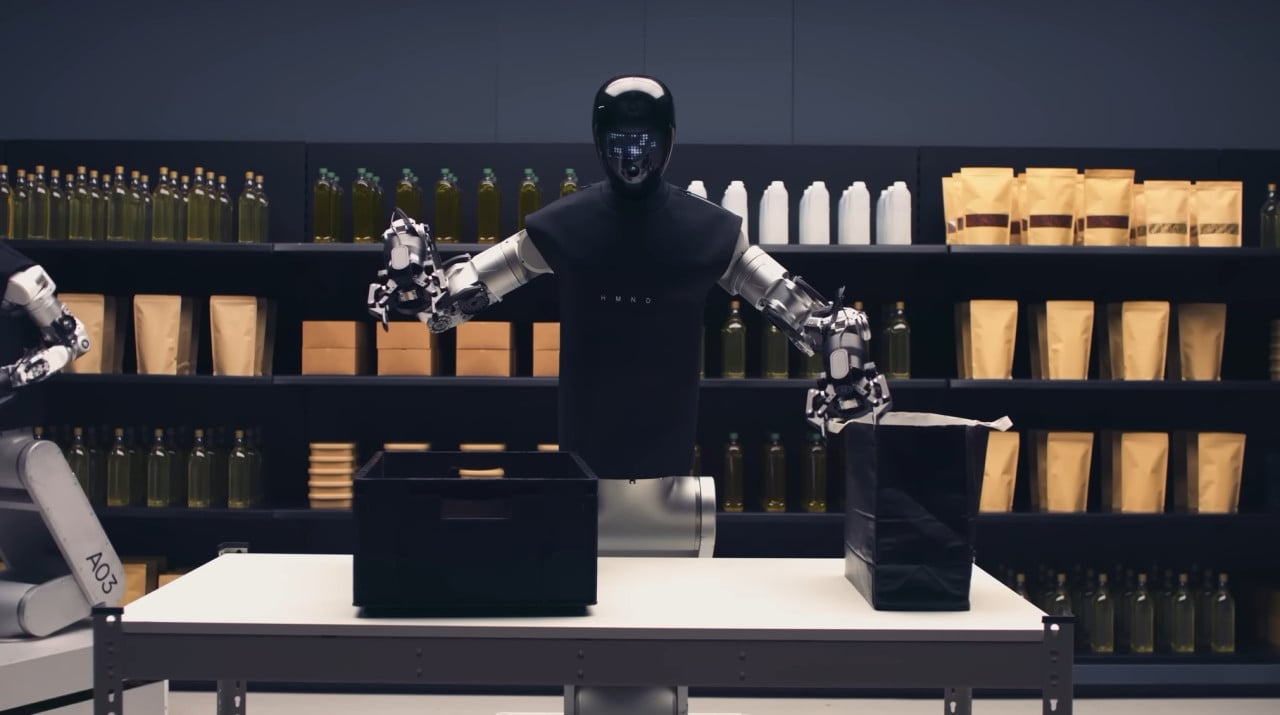
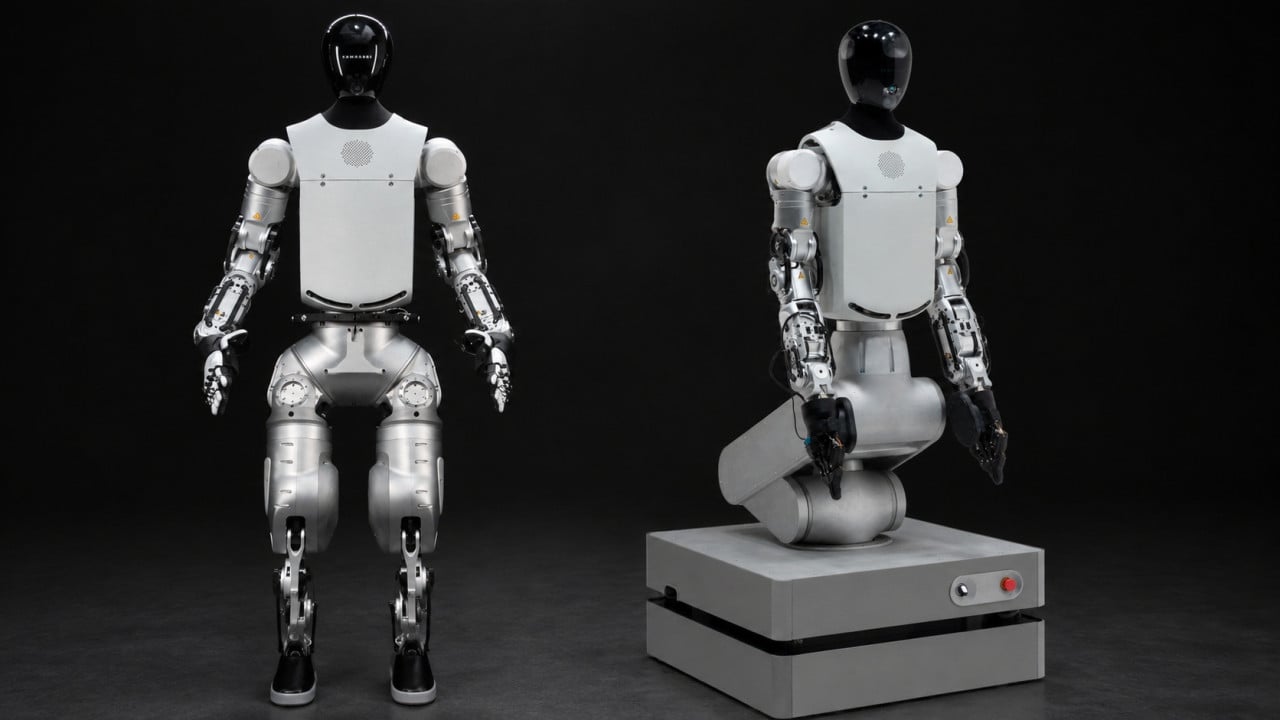
The company’s flagship is a robot called HMND 01, which comes in two versions.
The first, the Alpha Wheeled version, moves on a wheeled base and is designed primarily for industrial use. It is a robust machine standing 220 centimeters tall, weighing around 300 kilograms, and capable of maneuvering in all directions at speeds of up to 7.2 kilometers per hour. It can operate for approximately four hours on a single charge and carry loads of up to 15 kilograms. Its body has 29 so-called degrees of freedom, which, in simple terms, means the number of independent joint movements it can perform, excluding the grippers themselves.
The second version, Alpha Bipedal, walks on two legs like a human. It is noticeably lighter, weighing around 90 kilograms, standing 179 centimeters tall, and moving at speeds of up to 5.4 kilometers per hour. The company says it built this robot in just five months and that it was already walking steadily after two days of training. The robot can walk straight and around corners, turn in place, sidestep, walk backward, squat, hop, and even run. If someone pushes it from any direction, it can recover on its own and maintain its balance. Its head also contains a screen, lights, an array of six microphones, and speakers, allowing people to communicate with it naturally.
Both robots perceive the world through cameras providing a 360-degree view and depth sensors that measure distance. They have additional cameras in their wrists, as well as force sensors and tactile feedback distributed across their bodies, allowing them to sense how firmly they are holding something or what they have collided with. For hands, they can be equipped with either a fully functional five-fingered hand or a simple gripping claw, depending on the task they need to perform. NVIDIA technology provides the computing power and decision-making capabilities.
KinetIQ control system
However, the company’s real strength is not the hardware itself, but the intelligent control system it calls KinetIQ. It works on both types of machines and consists of four layers, each handling a different level of decision-making and operating at a different speed.
The highest layer is responsible for controlling an entire fleet of robots at once and assigning work among them based on the orders received. Below it is a level that commands an individual robot and uses its specific abilities, such as moving through space or grasping objects, as tools to achieve a goal. The third layer is a proprietary neural network that translates instructions expressed in ordinary language, such as pick up the box or take the bottle from the shelf, into specific movements. The final and lowest level handles only the physics, ensuring that the robot maintains its balance and smoothly performs the movement requested by the higher levels.
This division allows the company to develop and test individual components separately and bring new capabilities into practical use more quickly. Interestingly, the upper body of both robots is controlled by the same system, so skills acquired while grasping objects can be easily transferred between the wheeled and legged versions, regardless of how each robot moves.
Robots that learn from their own mistakes
The company’s latest step is an extension called KinetIQ Ascend. Until now, the robots learned by imitating the movements of people controlling them remotely. But this approach has its limits. Through imitation, a machine can never become faster or better than the person it copies, and more importantly, it can never learn what it must not do.
That is why the company has deployed so-called reinforcement learning. The robot repeatedly attempts a task on its own and learns from both its successes and failures, directly on the actual machine in real-world operation, even continuously day and night. The goal is 99.9 percent reliability, meaning a state in which the robot keeps pace with people and almost never fails.
When picking metal rings from a box and placing them on a conveyor, throughput increased by 42 percent. When handing objects to a person, throughput rose by 85 percent and the success rate increased from 80 to 98 percent, meaning ten times fewer errors. When lifting boxes with both hands, performance more than doubled and the success rate climbed from 78 to 99 percent. All these improvements came after just a few days of training.
Two findings surprised the company. First, it is enough to train only the most difficult part of a task to improve the entire operation. Second, when the robot was trained on a single object, it also improved at handling items it had never tried before. Its general grasping ability therefore improved on its own.
Further plans and goals
The company is betting that the robots will continue learning even after they are delivered to customers. Whenever a supervisor intervenes and corrects a robot, the system remembers the intervention as a signal that it did something wrong and avoids repeating it next time. Every deployed machine therefore also collects data to improve the next generation of robots. The company calls this a skills factory, a set of tools that makes it possible to quickly create a new capability and fine-tune it until it is ready for deployment.
Early collaborations show that this is more than just theory. Together with Schaeffler, the company successfully tested picking bearing rings from boxes in an environment close to actual production. In collaboration with SAP and manufacturer Martur Fompak International, it is also tackling one of the automotive industry’s most difficult tasks: the intelligent kitting of parts for seat assembly.
Humanoid is therefore among the companies seeking to move humanoid robots out of laboratories and onto real production lines and into warehouses as soon as possible. Its newly achieved billion-dollar valuation suggests that investors also believe in this plan.
Sources: theinformation.com and thehumanoid.ai