I assume the first Spanish word I ever heard was gringo.
The second word I heard was pinche, which came before gringo and was directed at me.
I wasn’t offended. My friend Gonzales told me at the time that the man was praising my thriftiness.
Every Anglo-Texan should master what I like to call Spanish for gringos. It’s important if we are to fully enjoy the bicultural nature of Texas. Why exclude ourselves from half the heritage of this beautiful state?
With or without the adjective pinche, besides calling us gringos, they also call us bolillos, because we are the color of those lovely pointed white-flour bread rolls. Another nice compliment.
Most gringos know the word cerveza. That was the first word I learned in a bar. Next came bien fría: Nice and cold. Otra. Another. And after a few more otras, I needed this phrase: “¿Dónde está el baño?” Survival Spanish. Priceless.
Spanish is a language of diminutives. Thanks to the diminutive endings -ito and -ita, everything is affectionately small. My wife will say, “¿Quieres huevito y cafecito?” “Would you like a little egg and a little coffee?” I say yes, and soon she arrives with three scrambled eggs wrapped in two large flour tortillas with chorizo and a mug of coffee. And I wonder, “What happened to the -ito?”
In Spanish, everything is -ito. I know a guy named Carlos who weighs 300 pounds, but his mother still calls him Carlitos.
That’s another thing gringos should know: Spanish is a language of opposites. Big is small, and small is big. Go to any construction site and you’ll find a man who looks anorexic, and they call him Gordo (Fatty). You’ll find a dark-haired guy they call Blondie or Güerito. Newlyweds call each other viejo and vieja, old man and old woman.
Think about that festive drink, the margarita. It’s a drink whose name means little Margaret. But they serve it in an enormous glass that could hold the entire Arctic Ocean.
Ahorita (something like “directly” in Texas slang) doesn’t mean “now.” It means soon, which means maybe tomorrow or next week.
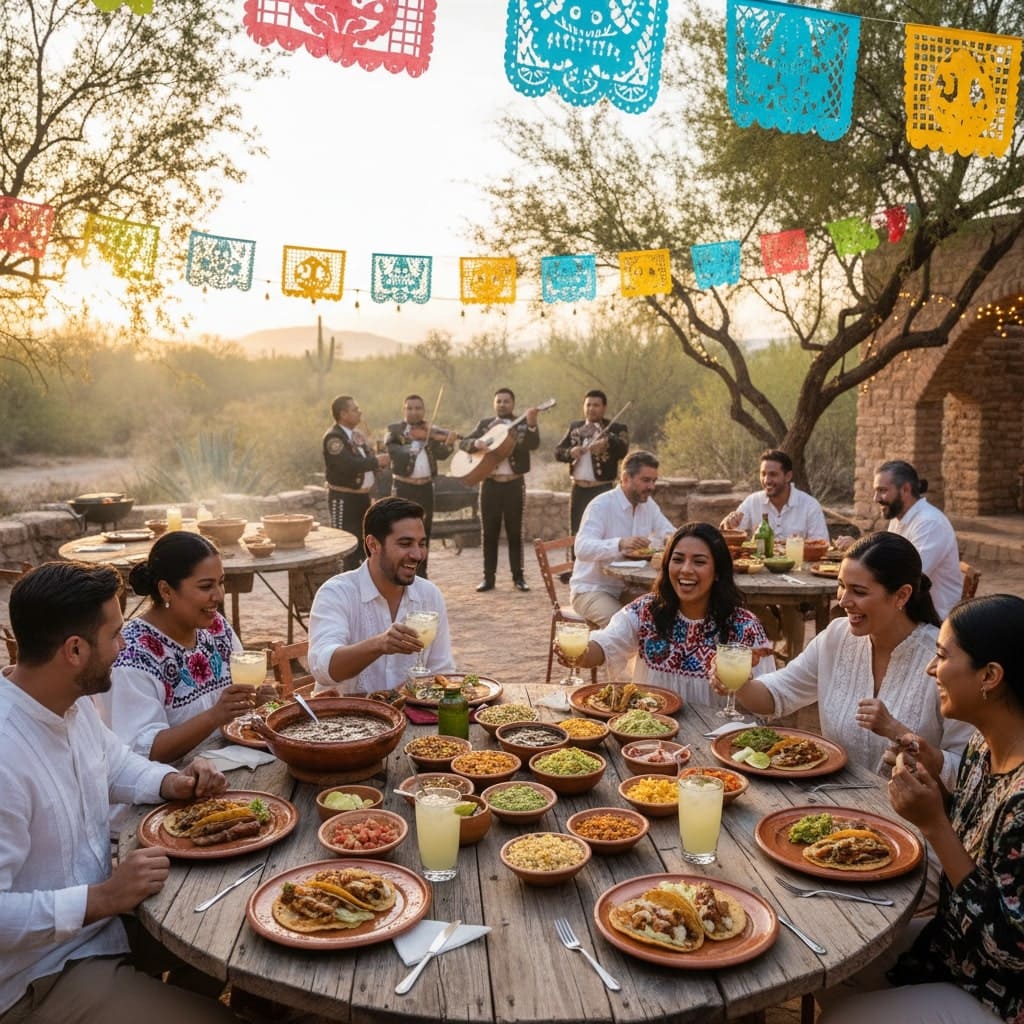
Making sure a guest is well fed is a core value in a Hispanic household. At 11 in the morning, your hostess will ask if you would like something to eat. You say, “I already had eggs, bacon, and toast,” and she replies, “Pero, necesita un pedacito de pastel.” You need a little piece of cake. “Siéntate.” Sit down. And all you can do is surrender. It’s like visiting your grandmother in the Czech Republic.
We gringos don’t need an enormous vocabulary or perfect pronunciation. We just have to try. You can say “Quiero una cervezita, bien fría, por favor” in the roughest rural East Texas accent, and the Hispanic world will open up to you because you’re making an effort. They’ll toast you with “¡Saludcita!” and welcome you with abrazotes (big hugs). Unless they’re tourists from Monterrey. Then you’re still just a pinche gringo.