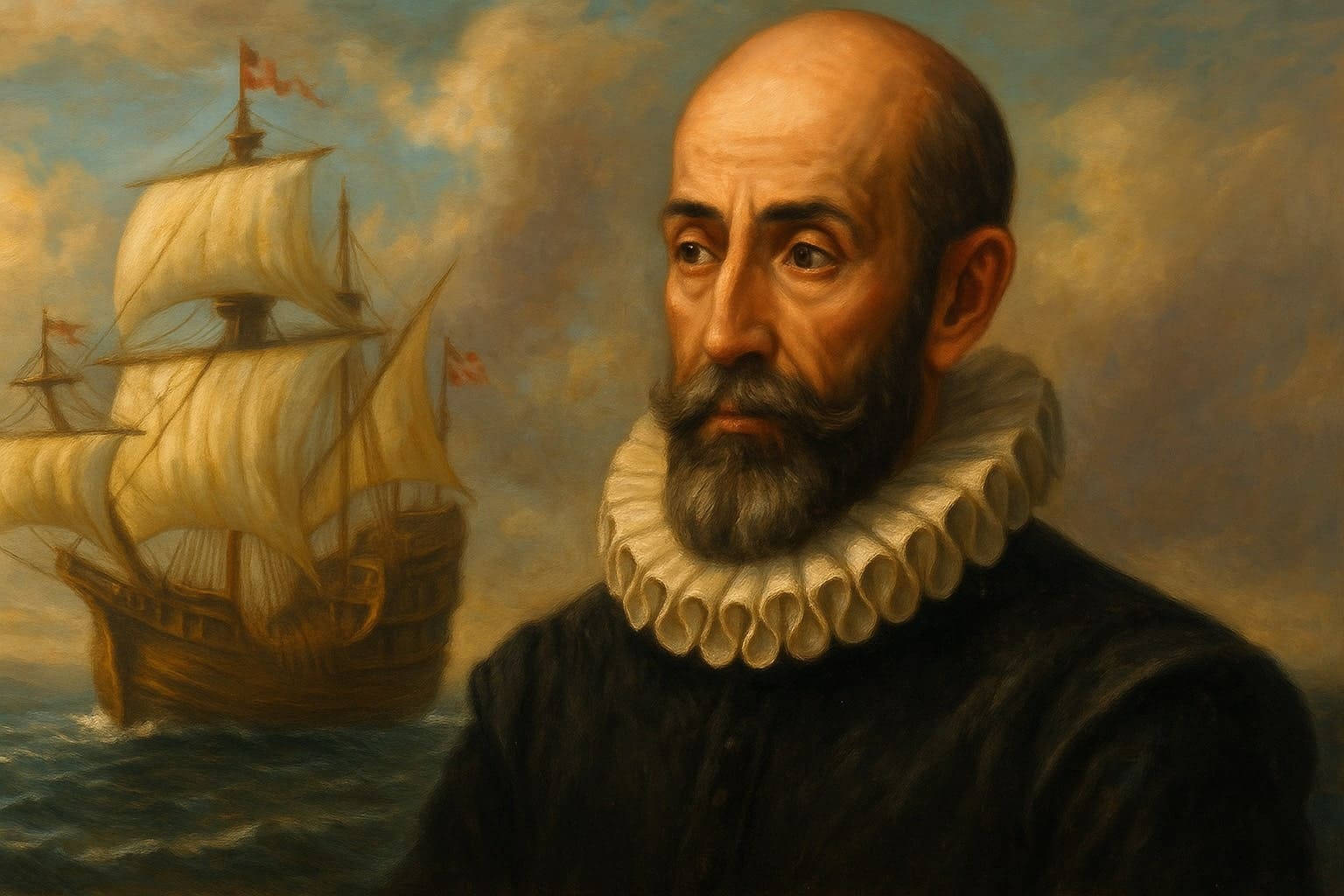
The first European to walk across Texas—well, “walk” is not quite the right word; just a nod to Ernest Tubb. The first European to cross Texas on foot was Cabeza de Vaca. And, as the story goes, he made part of the journey barefoot and at least partially naked.
His full name was Álvar Núñez Cabeza de Vaca. "Álvar" is said to mean guardian or truth-speaker. (Translation: “Álvar” is said to mean guardian or truth-speaker.) It turned out that he could be considered something like a guardian—or at least an advocate—of the Indigenous peoples of the Americas, given the general sympathy he showed toward them, in contrast to the general contempt in which most Europeans held them from the very beginning. In Spain, as many sources agree, he advocated better treatment of the natives by the invading Spaniards.
Cabeza de Vaca began his adventures in the New World as treasurer of a Spanish naval expedition that sailed from Spain in 1527 with a mission to explore and colonize Florida. About 300 Spaniards with 40 horses landed near present-day Tampa Bay in the spring of 1528 with orders to explore northward, but they then became separated from the expedition's ships. Within a few months, while contending with Indian attacks and starvation, about 250 survivors reached the Florida Panhandle, where they managed to build five large rafts to escape into the Gulf of Mexico. They used the horses for food and their clothing as sails. They followed the coast and reached the mouth of the Mississippi River, which swept them out to sea, where currents and storms separated them. Many died after drinking seawater in desperation. Many fell overboard and drowned.
Most of the rafts eventually landed on the coast of present-day Texas, from Galveston Island to Matagorda Bay. The raft commanded by Cabeza de Vaca washed ashore on an island near Galveston (probably present-day Follet's Island or San Luis Island, southwest of Galveston Island), together with another raft carrying a total of 50 to 90 survivors—accounts vary. They tried to repair their rafts, but they were washed away, leaving the survivors without clothing, food, or equipment.
The native Indians on the island rescued the castaways and fed them as best they could, but many of the men died from malnutrition and disease. Many Indians also died, probably from European viruses brought by de Vaca's group. The survivors of the Spanish expedition were at the mercy of the Coahuiltecan Indians, forced to dig for edible roots, gather firewood, and keep fires burning all night to ward off swarms of mosquitoes. They were often beaten. No wonder they named the island where they landed Isla de Malhado—the Island of Misfortune.
Cabeza de Vaca eventually reached the mainland, however. While he was away, 12 surviving men left and continued along the coast, only to die from starvation and attacks by less friendly Indians. Only two Spaniards and one African slave remained on the island.
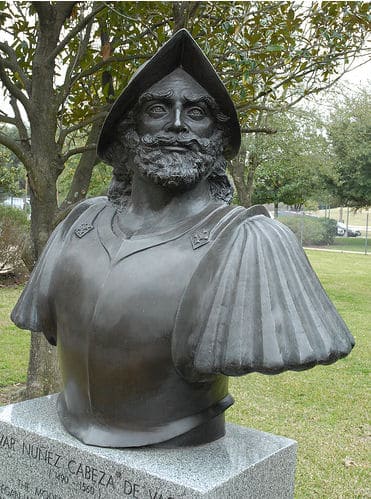
Meanwhile, on the mainland, de Vaca became a trader, carrying trade goods inland during the summer and receiving food in exchange for caring for sick Indians, who believed he had healing powers. But eventually he reunited with his surviving companions on the coast, where they remained at the mercy of the Karankawa Indians.
They were trapped in this hellish situation for several years. Despite the suffering they endured, a small hope sustained them: Cortés was only 1,000 miles away in Mexico. Perhaps they could reach him. Eventually, they managed to escape and set off toward Mexico.
They headed southwest, probably along the coastal route that is now Texas State Highway 35. They escaped with virtually no clothing or shoes. They had to travel through increasingly rugged terrain filled with mesquite brush, cacti, and sharp coastal grasses. They ate pecans, prickly pear fruit, prickly pear pads, and mesquite beans. "It was an 'extreme tale of survival: four naked men at the mercy of the natural elements, facing an extraordinary array of native societies,'" historian Andres Resendez wrote in his book A Land So Strange: The Epic Journey of Cabeza de Vaca. (“It was an ‘extreme tale of survival: four naked men at the mercy of the natural elements, facing an extraordinary array of native societies,’” historian Andres Resendez wrote in his book A Land So Strange: The Epic Journey of Cabeza de Vaca.)
The exact route of their journey will never be known, but according to most accounts, they temporarily turned west as they approached Baffin Bay to avoid the treacherous desert sands that dominated the land to the south, between the bay and the Rio Grande.
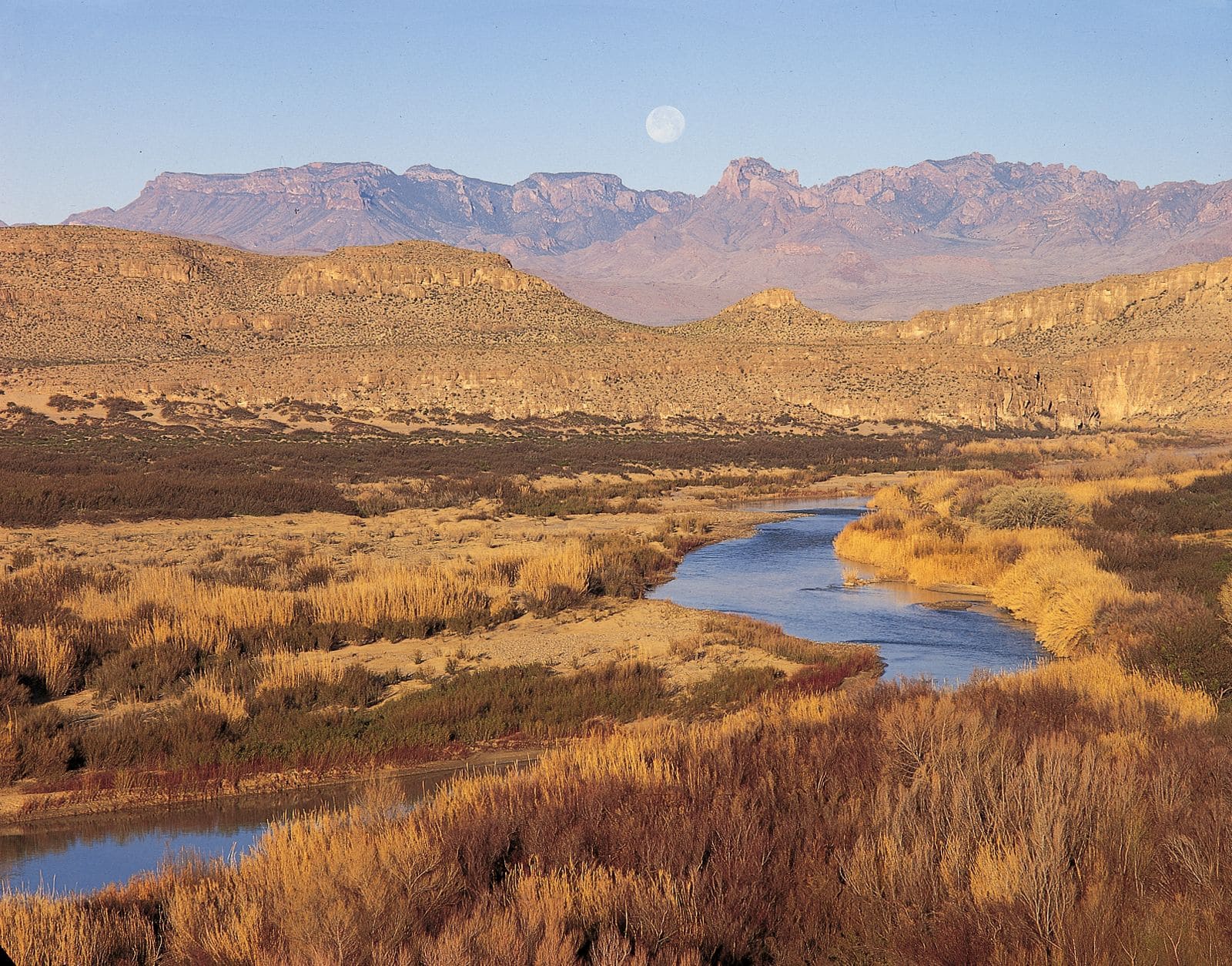
Despite the hardships of their journey, Cabeza de Vaca still marveled at the beauty of the Texas coastal plains. He saw bison, which he called enormous cows, and even tasted their meat once or twice when it was given to him by the natives. He declared it better than European beef. He later recalled: "All over the land there are vast and handsome pastures with good grass for cattle, and it strikes me that the soil would be very fertile were the country inhabited and improved by reasoning people." (“All over the land there are vast and handsome pastures with good grass for cattle, and it strikes me that the soil would be very fertile were the country inhabited and improved by reasoning people.”)
His speculation could be said to have foreshadowed the great cattle ranches, such as the King Ranch, that flourished 300 years later. Cabeza de Vaca himself later advocated colonizing the region through peaceful coexistence and cooperation with the Indians.
One thing the castaways had on their side was that they became known as healers—especially de Vaca. Some Indians called them the “Children of the Sun.” Indians began flocking to them to be healed, and they did what they could, gently blowing on their bodies and making the sign of the cross over them. Sometimes they recited rosaries, which surely made them seem even more mystical.
Fortunately, a number of the people they treated reported feeling better. Thus, their reputation preceded them, and many of the tribes they encountered on their journey welcomed them as holy men and demigods. Cabeza de Vaca himself scoffed at their supposed healing powers, but over time he came to believe that God was working through them to save them. Why else would they be the last survivors out of about three hundred? They must be blessed.
Cabeza de Vaca and his companions traveled west and then southwest, perhaps through the site of present-day Falfurrias and onward to the site of Roma, where they crossed the Rio Grande. The route they followed is much debated. Some say they traveled west toward Laredo or Eagle Pass. But we know for certain that once in Mexico, they eventually turned northwest, passed through the Big Bend region, and then veered steadily west.
They reached what is believed to have been the Gulf of California in northwestern Mexico. Eventually, they encountered their countrymen, who were hunting slaves in Mexico, near present-day Culiacán. The Spanish soldiers were shocked by de Vaca's appearance: Hair down to his waist. A beard down to his chest. Barely clothed. After nearly ten years of hardship, the castaways had been rescued. In 1536, almost ten years after leaving Spain, they reached Mexico City; de Vaca eventually returned to Spain.
Cabeza de Vaca was the first European to get a good look at the splendor of Texas and leave a record of what it might become. He was Texas's first tourist and, thanks to his observations and writings about the natives, its first ethnologist. He wrote the first travel guide to Texas, one might say. And despite the suffering he endured there, he gave Texas a five-star rating for its potential.
FOR FURTHER READING: Chronicle of the Narvaez Expedition, by Álvar Núñez Cabeza de Vaca; A Land So Strange: The Epic Journey of Cabeza de Vaca, by Andres Resendez.