

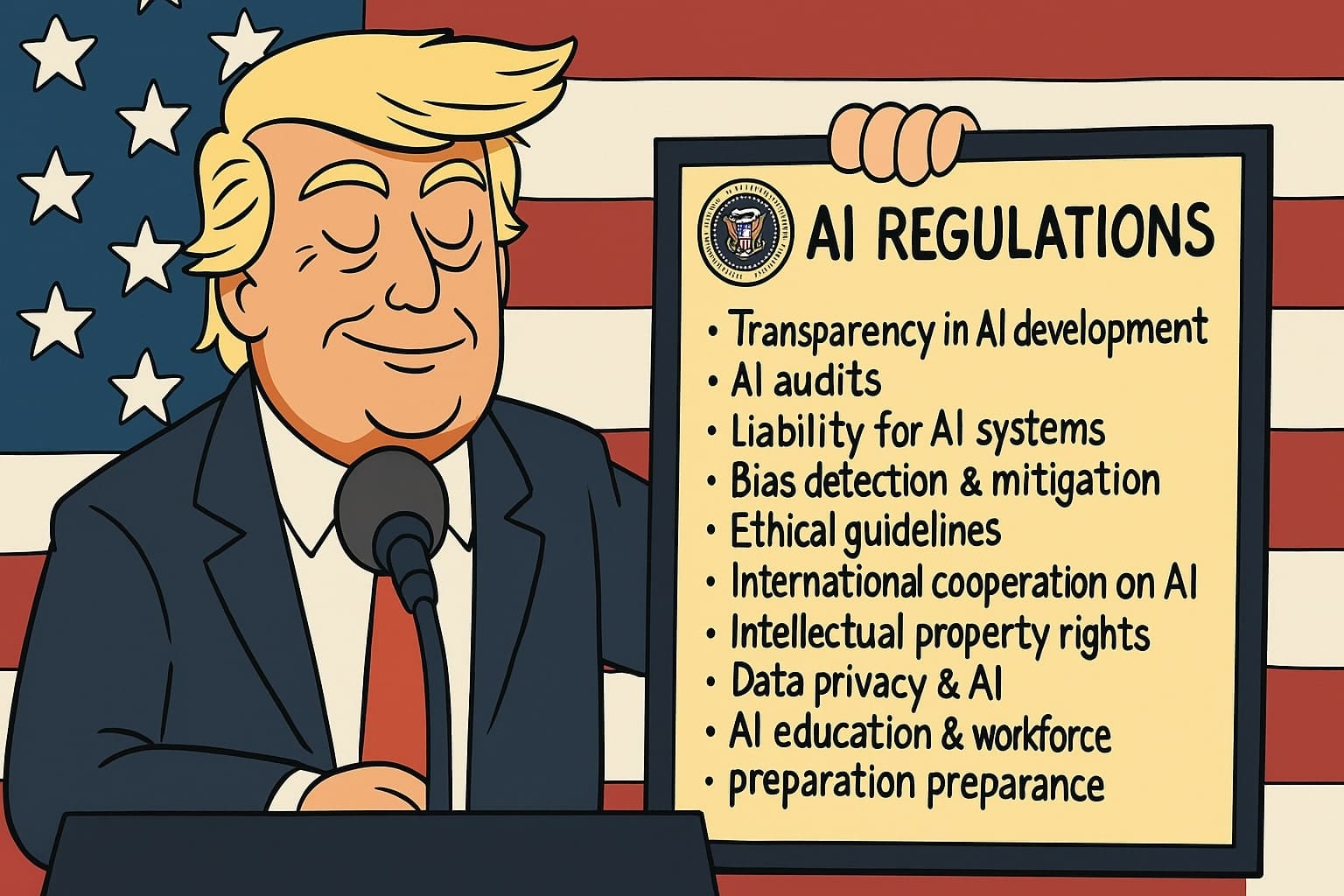
Trump's Revolutionary AI Plan: How He Wants the US to Win the Global AI Race
President Donald Trump has just unveiled a comprehensive action plan for artificial intelligence (AI) designed to boost American innovation and eliminate what the White House describes as unnecessary bureaucracy and ideological bias. This 28-page document contains more than 90 specific steps to be implemented over the next year. According to David Sacks, who is responsible for cryptocurrency in the Trump administration, the goal is to ensure that the United States wins the global AI race. The plan promises to build data center infrastructure, support American technologies, and review federal policies that hinder AI development in both the private sector and government.
Trump plans to sign three related executive orders. One will support the international export of American AI technologies, while another will focus on eliminating what the administration describes as "woke" or ideologically biased AI systems. The White House emphasizes that American AI development must be free from ideological bias or engineered social agendas. Sacks added that the plan also focuses on preventing the misuse of AI by malicious actors and monitoring emerging risks.
Key Points of the Plan and Its Goals
The administration views AI as a revolutionary technology with profound implications for both the economy and national security. It is therefore focused on ensuring that the US remains the dominant force in this field, particularly in its competition with China. The plan calls for reviewing and repealing policies that hinder AI development and supports its use in both the private and public sectors. For example, last month Trump allowed US technology giant Nvidia to resume sales of its high-end AI chips to China, reversing the previous ban on H20 chips.
This action plan stems from an executive order Trump signed shortly after taking office in January, when he revoked Joe Biden's previous 2023 order. Biden's order established safety and security standards for the use of AI in the federal government. Trump's team says the new plan was shaped by more than 10,000 public comments and focuses on the rapid development of AI without unnecessary obstacles.
Key Criticisms of the New Plan
However, the plan has drawn strong criticism from experts and former officials who see it as a dangerous step backward in regulation. Sarah Myers West, co-executive director of the AI Now Institute, described the plan as a gift to tech billionaires that does not serve the interests of the general public. According to her, the administration's stance prioritizes corporate interests over the needs of ordinary people who are already affected by AI.
Further criticism came from Jim Secreto, former deputy chief of staff to Commerce Secretary Gina Raimondo under Biden. He said Trump's plan abandons responsible safeguards that protect national security and public trust. According to him, accelerating innovation is important, but eliminating safety standards risks turning America's AI revolution into a reckless gamble. Secreto also warned that promoting aggressive AI exports without sensible controls strengthens China's position.
For a clearer overview, here are the main counterarguments (points of opposition or criticism) that people have raised, based on the available information from the article and related sources:

The plan appears to be part of a broader debate over AI regulation in the US. For example, recent negotiations on a budget bill initially included a proposed ten-year moratorium on state AI regulations, which was ultimately removed from the bill. The Trump administration also revoked Biden's order on its first day in office, which critics say weakened safety standards. The plan emphasizes the need to monitor AI risks, but critics point out that without regulations, the technology could be misused by malicious actors.
Significance for the Future of AI
This action plan is a clear signal that the Trump administration is betting on rapid AI growth as the key to US economic and security dominance. With more than 90 measures, including infrastructure development and exports, it could significantly accelerate innovation. Nevertheless, the criticism highlights potential risks, such as weakened protections and an imbalance between corporations and the public. It will be interesting to see how these plans unfold in practice—will the US remain the leader, or will the points of contention manifest themselves as real-world problems?


