The Year 1918
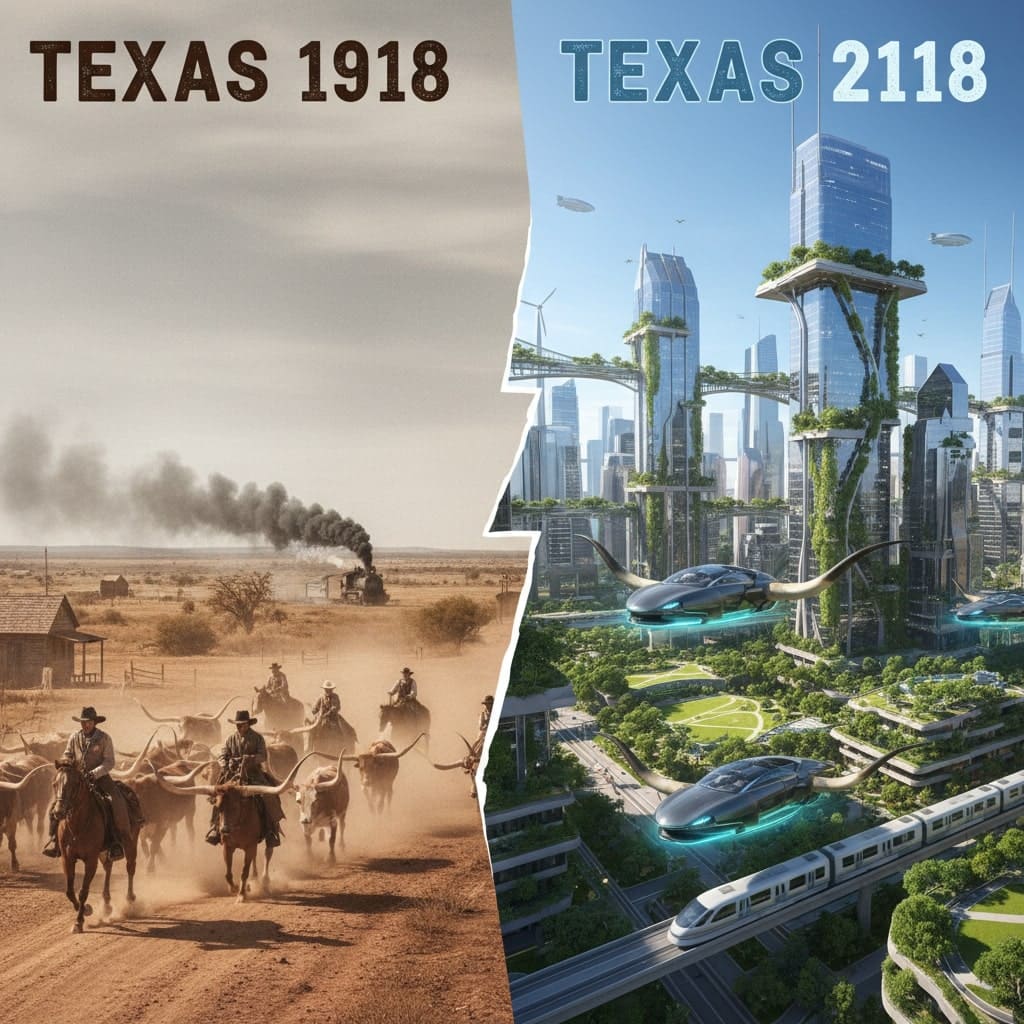
I decided to look back one hundred years, to 1918, and at the same time look one hundred years ahead, to make some predictions about Texas in 2118.
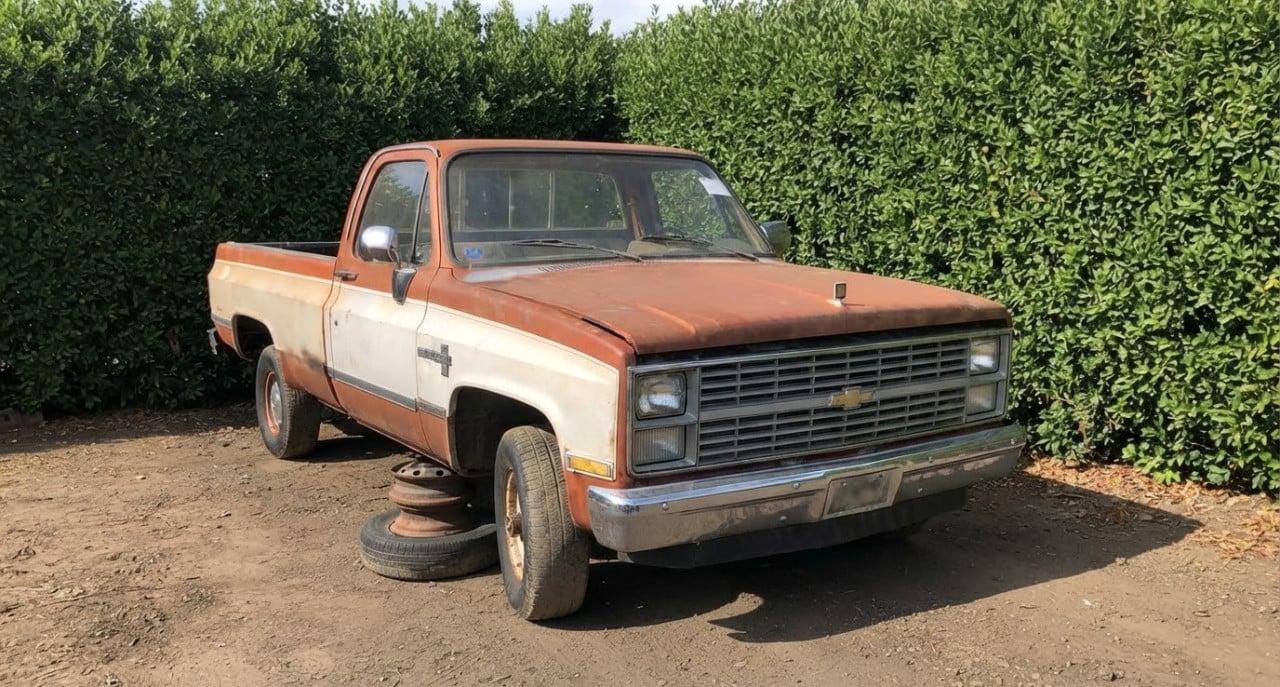
In 1918, there were fewer than 250,000 vehicles on the roads in Texas. Incidentally, no driver’s license was required to operate any of them. Given that the population of Texas at the time was only about 5 million, there was roughly one vehicle for every 20 people. That meant the ride to a family reunion was pretty cramped.
Today, there are 22 million vehicles on the roads in Texas. There are 28 million Texans living here. Subtract the children, and you have almost one vehicle for every Texan of driving age. Since 1918, cars and trucks have multiplied much faster than Texans. We have seen a twentyfold increase in vehicles and only a sixfold increase in people. We are adding cars and trucks faster than we are producing Texans.
In 1918, Texas had a larger population than California, by about 25%. By 2018, California had surpassed us by a little more than 25%; Texas had 27 million people, California 40 million. Of course, at the rate Californians are moving here, that may soon be reversed.
Two global events in 1918 overshadowed everything else. One was the end of World War I. (Incidentally, at the time it was called the “Great War.” It did not become World War I until World War II came along, creating the need for a different designation.) One million Texans registered for the draft, and 200,000 of them fought in the Great War. Volunteering was high in Texas, perhaps because Germany offered Mexico a deal in a communiqué known as the Zimmermann Telegram: If Mexico joined Germany, Germany would help Mexico reclaim Texas (and what is now New Mexico and Arizona). During the war years, about 5,200 Texas servicemen (and servicewomen) died.
About a third of them died not overseas but in the United States—many of them because of another devastating event that struck in 1918, the influenza pandemic, better known as the Spanish flu. It was especially sad that we had soldiers who survived four years of horrific trench warfare and mustard gas, only to return home and die of the flu.
The Spanish flu was unusual in that it posed the greatest threat to adults between the ages of 20 and 40, rather than to children and the elderly. The pandemic gripped the world for about two years. The virus struck suddenly and could kill quickly.
Some believe that children who survived the flu that year went on to live healthy lives because they developed strong immunity. My uncle’s mother had the Spanish flu when she was 8 years old. She lived to be almost 102. She was in good company: Walt Disney and Woodrow Wilson had it, as did Texas writer Katherine Anne Porter, who later wrote a novella based on the epidemic titled Pale Horse, Pale Rider. A 2008 Vanderbilt University study found that survivors like these still had active antibodies against the Spanish flu in their bodies 90 years after contracting it.
World War I touched many people, but the flu affected even more. Worldwide, far more people died from the Spanish flu than in World War I. Texas cities with military bases, such as El Paso, were hit especially hard. About 600 people died in El Paso, nearly 1 percent of the population; thousands more, of course, contracted it and survived.
Today, we have flu vaccines, first developed by Jonas Salk and Thomas Francis in 1938. So although a pandemic on the scale of the one in 1918 is not impossible, most experts believe it is highly unlikely. However, we cannot necessarily say the same about world wars.
The Year 2118
Now let us turn to the future: What will Texas look like 100 years from now, in 2118? One can only follow the trends and guess. As the renowned management theorist Peter Drucker said: “Trying to predict the future is like trying to drive down a country road at night with no lights while looking out the back window.” With that warning in mind, let us try anyway.
If we follow Google’s futurists, we can predict that there will be fewer cars per capita on the roads than there are now. Self-driving buses and cars already exist today (in 2025). Some visionaries believe that we will simply summon self-driving transportation services using some future version of smartphones, which will probably no longer be called phones. I wonder whether we will have nicely lifted taxis, occasionally with longhorn cattle horns mounted on the front, just for nostalgia’s sake.
In 2017, Texas’s official demographer, Steve Murdock—the man everyone turns to about the future of Texas—was asked what he thought the population of Texas would be in 2118. His answer:
“If Texas continues to grow as it has in the recent past, it could be expected to increase its population to more than 80 million by 2118. That assumes Texas acquires the technology and other means to increase its water supply. That would put us in the neighborhood of present-day Egypt in terms of size and population.”
By 2050 or 2060, Murdock predicts that Texas will be about 55 percent Hispanic and 20 percent Anglo, but he does not project the trends any further. However, he warned that Texas must ensure educational opportunities for everyone, or we will not see the same kind of success in the next century that we had in the last.
My personal estimate is that Texas will be much more urbanized in 2118 than it is today, especially east of I-35. DFW (Dallas-Fort Worth), Houston, and San Antonio will be supercities. Austin could become a kind of enormous suburb of San Antonio. We may see San Antonio and Houston arguing over city-limit signs.
If the major technology giants see the future correctly, our cities will be friendlier to people, pushing vehicles off the streets and turning many of them into green spaces for walking, cycling, and sports. And we will all have robots with artificial intelligence.
I just hope they will say “howdy” and “I’m fixin’ to” and “while I’m up, can I get you a beer?”