

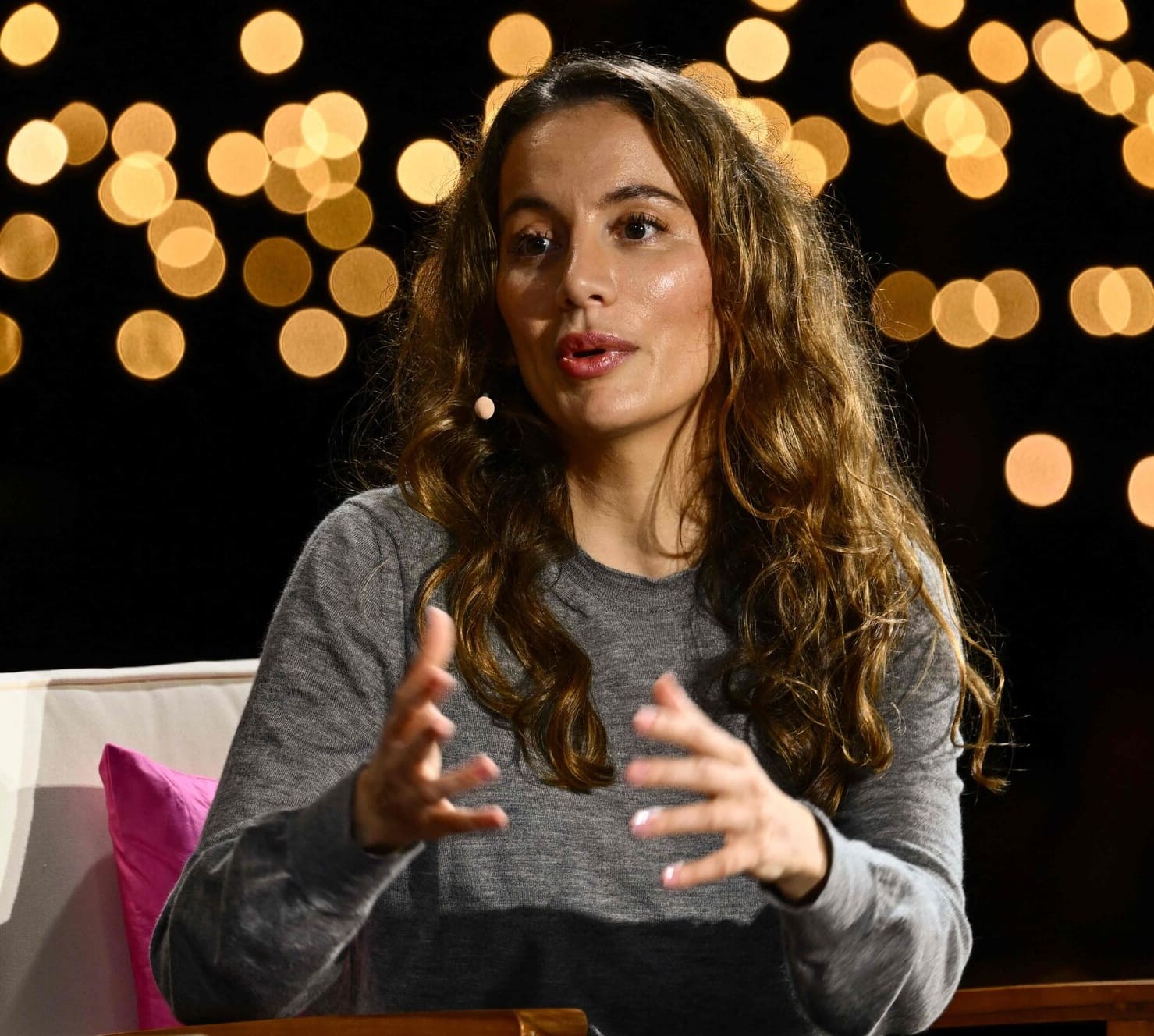
Mira Murati, who previously served as chief technology officer at OpenAI, founded the startup Thinking Machines Lab together with several prominent researchers. Now, the team has unveiled its first product – Tinker. It is a flexible API that allows developers and researchers to customize advanced artificial intelligence models without having to worry about complex infrastructure. Tinker thus opens the door to model experimentation in which users control the algorithms and data, while the company handles distributed training.
What Tinker Offers Developers
Tinker supports fine-tuning using both supervised methods and reinforcement learning on models such as Llama and Qwen. Users can customize models for specific tasks, such as solving mathematical problems or analyzing chemical data, all with simple Python code. Switching between small and large models, such as Qwen-235B-A22B, requires changing only a single string in the code. Tinker runs as a managed service on Thinking Machines Lab’s internal clusters, where the company handles scheduling, resource allocation, and failure recovery. By using LoRA (low-rank adaptation), training runs share the same pool of computing resources, reducing costs.
Tools and Support for Users
The Tinker API provides core functions such as forward_backward for calculating gradients, optim_step for updating weights, sample for generating tokens, and save_state for saving the training state. In addition, the company has released the open-source Tinker Cookbook library, which contains modern implementations of post-training methods. These tools help achieve good results without unnecessary complexity. Supported models range from Qwen3-4B-Instruct-2507 to Llama-3.1-70B, including mixture-of-experts models.
Early Users and Their Projects
Tinker is already being tested by groups at universities such as Princeton, Stanford, and Berkeley, as well as Redwood Research. For example, the Princeton Goedel Team trained models for mathematical proofs, the Rotskoff Chemistry group at Stanford customized a model for chemical reasoning, Berkeley’s SkyRL group experimented with asynchronous off-policy RL (reinforcement learning) in tool-enabled multi-agent environments, and Redwood Research used Tinker for RL on Qwen3-32B in challenging AI control tasks.
Availability and Future
Thinking Machines Lab is accepting applications for early access starting today, initially free of charge. In the coming weeks, it plans to introduce usage-based paid plans. The company raised $2 billion in seed funding (approximately CZK 46 billion) and achieved a valuation of $12 billion (about CZK 276 billion), demonstrating strong investor interest. Tinker is thus betting on a future where the key is not the largest general-purpose AI, but the easy creation of many hyper-specialized models. If you are a researcher or an organization, you can join the waitlist or contact the team directly.


