My uncle once came across a television show in which people in Port Arthur, Texas, good-naturedly poked fun at Ann Richards in 1992. It seemed to him like a scene from a completely different era. George H. W. Bush was president then, and Ann Richards was governor. Four years had already passed since she had electrified the Democratic National Convention by saying that the forty-first president had been “born with a silver foot in his mouth,” and by then she was very close to becoming a true legend, if she had not already become one long before. Yet this event in East Texas was clearly taking place among friends, especially among the good old boys whom Ann Richards had endured, coaxed, and perhaps even backed into a corner a little at the Governor’s Mansion to get her way. There was Carl Parker, the once-influential Democratic state senator, as well as Walter Umphrey, the eccentrically wealthy East Texas attorney and generous Democratic donor. Bum Phillips, the former coach of the now-defunct Houston Oilers, offered words of praise. Before the program began, Ann Richards, speaking into a live microphone, scolded then-congressman Jack Brooks, the longtime head of the Texas delegation, over a crime bill. And of course, her best friend Molly Ivins was there too, taking her rightful place at the lectern.
This was certainly not a crowd anyone would mistake for residents of an upscale Connecticut suburb. Many of the men were heavyset, with pale complexions and ill-fitting suits. If you did not have a proper Texas accent, they might not even have let you in. Many of the jokes were the kind a person would not tell today without risking a lawsuit. But Ann and Molly, as everyone called them whether they knew them personally or not, fit in perfectly and could return every blow. Ivins launched into the thickest Texas drawl and began with the words: “I’ve known Ann Richards since she was as insignificant as the Exxon oil company in its earliest days.” When the applause died down, she added that Ann Richards was “one of the finest public officials Texas ever sent to California for treatment.”
Ann Richards began her part of the evening by walking up to the podium, picking up the wooden yardstick that the previous speaker had used as a pointer, and casually setting it aside. “There’s nothing here big enough to measure with this,” she muttered, making the entire room laugh before she had even begun her speech, which she then delivered with impeccable comic timing. Even from that old, slightly dusty performance, it was easy to understand why the two women became Texas icons. They were, of course, very funny and very smart, but more importantly, they could bridge all the chasms that can divide us. They belonged to Texas and yet stood somewhat apart from it, in a way that won them friends and disarmed potential enemies. Whatever hardships these women experienced in life—and they did experience them—they were successful by any measure, and in a male-dominated world that, as Ann Richards’s most famous analogy put it, required them to dance backward like Ginger Rogers, and in high heels at that. My uncle himself was well into middle age before he realized that their stories were also his story and the story of so many Texas women before him.
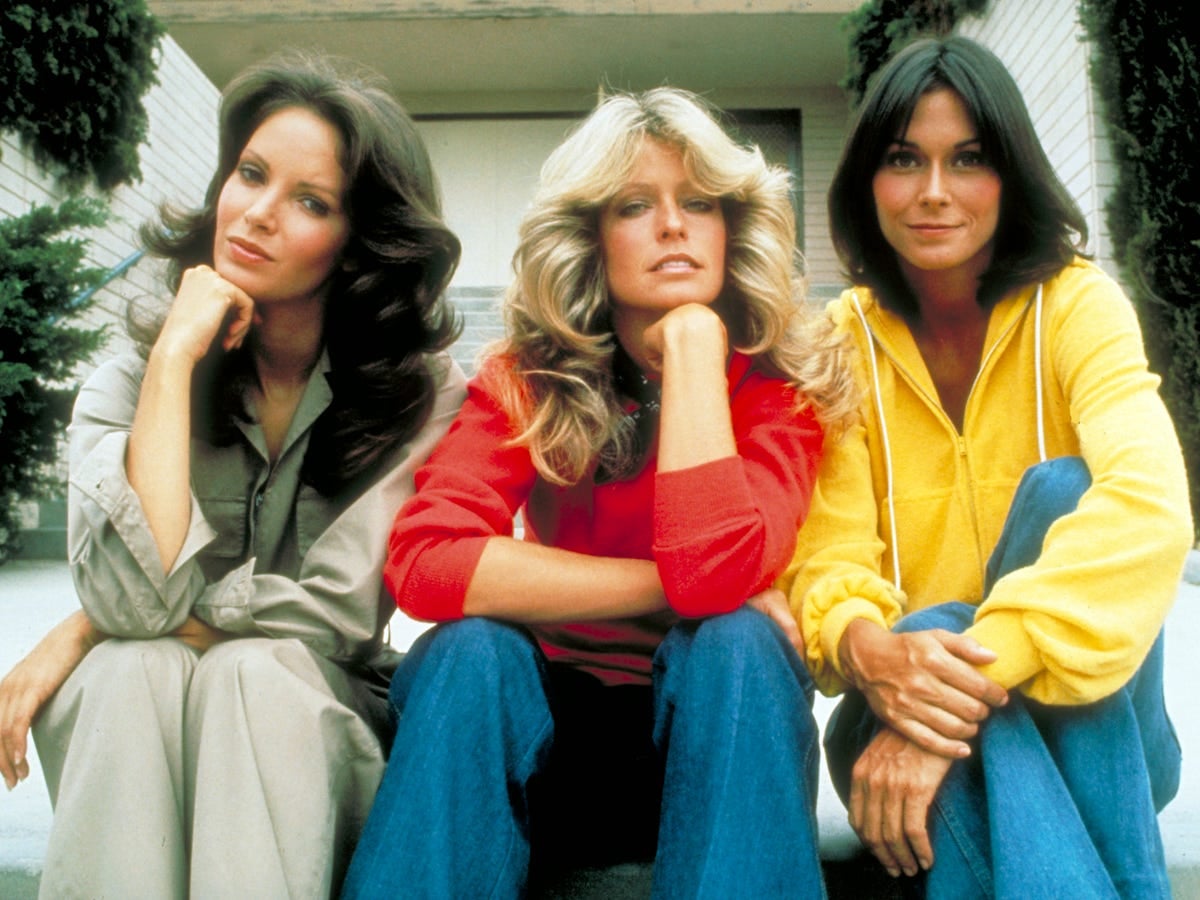
When my uncle was growing up in San Antonio in the 1960s, he did not have very many female role models to choose from. Or at least that was how it seemed to him at the time. He was even convinced that the women around him essentially had only two options: either follow the path of Richards and Ivins, or take the obvious, though unattainable, route chosen by many of his friends—the path of Farrah Fawcett. If you are younger than, say, seventy-something, you remember Farrah at the height of her fame. She was the breathtaking, dazzling blonde star of the original Charlie’s Angels and the face on a poster that fueled the fantasies of countless teenage boys. She was the embodiment of Texas beauty, that gorgeous, fresh-faced sorority girl who made anyone who was not a blue-eyed blonde with long legs and a mastery of flirting seriously doubt herself. (My uncle himself lived, so to speak, in prehistoric times: before Selena, before Beyoncé, let alone Lizzo and Megan Thee Stallion.) His high school, like most Texas high schools at the time, was ruled by miniature Farrah look-alikes, often, though not always, cheerleaders who seemed to know some secret about makeup, hair dye, and all the feminine wiles with which they attracted the attention of the best-looking boys in school. Even so, he did not envy them; the whole thing simply seemed pointless to him. He pursued other interests. He read Siddhartha and protested the construction of a freeway that was supposed to run through the city. His high school plan was clear: get out of Texas and never return.

In the end, however, he returned, and over the years he realized that the only person who saw those two types of women as irreconcilable opposites was himself. Perhaps anyone making a list of the most popular Texas women would slip into black-and-white thinking if they framed it as an either-or equation. Either the representatives were Ann Richards, Molly Ivins, and Barbara Jordan with her powerful voice, or victory belonged to the Farrah type. In his eyes, Group A was smart, tough, and funny, while Group B was beautiful, attractive, and polished. But anyone who took the trouble to look closely at the lives of both groups would soon discover that some of their qualities overlapped and that both succeeded because they found a way to wield power in a world still controlled by men. Some of the qualities that make Texas women so remarkable are ones they share with Texas men: tenacity, shrewdness, boundless, if occasionally reckless, optimism, and the ability to hold everyone’s attention simply by being great company. He was also convinced that Texas women had been forced to pick up the pieces after thickheaded men so many times that they had honed these abilities almost to perfection. These women were not uptight like New Englanders, and they rejected the fragility of Southern ladies with a certain disdain.
Take Lynn Wyatt, for example. Few women of her generation from Houston’s River Oaks neighborhood would even have considered traveling out of state. When Lynn was little, Houston still had separate drinking fountains for Black and white people, which, along with her domineering father, undoubtedly shaped her political views. And at a time when there were still places on San Antonio’s West Side where poor drainage caused homes and streets to flood after every rain, Rosie Castro would take her twin sons, Julián and Joaquín, to the polls and teach them to hand out leaflets for Raza Unida Party candidates.
In short, most of these women came of age at a time—say, before the oil boom of the late 1970s and early 1980s—when jokes about backward Texans contained more than a grain of truth. Contempt for education flourished because it brought comfort to the enormous number of people who had none. Rich people were celebrated—and celebrated themselves—because there were not many of them. Most people knew firsthand how hard life could be. Texas was a place where people had to learn to entertain themselves and find beauty and joy even amid harsh conditions. That task, of course, fell to women. It was no accident that both Ann Richards and Lynn Wyatt were famous for their parties. Ann Richards’s hosting advice included, first, never washing the floor beforehand and, second, not feeding the guests until it was really late. She served homemade bread and vegetables from her own garden, and her egg dishes came courtesy of the chickens she kept in the yard. She always had a box of costumes on hand and had no problem dressing up as Santa Claus, Dolly Parton, or, famously, a tampon. Lynn Wyatt hosted formal dinners for as many as sixty guests, with themes such as Denim and Diamonds, Bet on Pink, or Gypsy Evening.
“Your life sounds like one big party,” my uncle once told Lynn Wyatt while interviewing her for an article, after she had probably just finished telling him about socializing with Prince Charles or Elton John. “Oh,” she said, her voice softening, “if only you knew.” Her tone made it clear that her life had not been all fun and games. After all, she was married to a man many considered the Darth Vader of the oil business. But perhaps that was the secret of so many Texas women my uncle admired: focus on the good times. The bad ones will come again soon enough.
Most of us cannot recognize the veins of precious ore running through our own past. My uncle himself was too busy rebelling against his hometown to see that there might be anything of lasting value there. But now he understands that he had always been surrounded by women who defied convention, and that the image of the Texas woman did not originate at the top but grew from the bottom up, from women who learned by any means necessary to create not just a room of their own, but an entire world that better matched their dreams and desires. It is no coincidence that Robert Hammond, his childhood neighbor, later built the High Line park in New York. His mother, Pat, had transformed their home into a world of wonders capable of awakening even the most stunted imagination. She collected absolutely everything: kites, brooches, shed cicada shells stored in jars. Instead of curtains, strings of lollipops hung in the windows, and she even had old magic tricks she had bought from a failing shop on Broadway.
His best friend’s mother offered ballet and tap lessons on her patio, which also served as a stage for performances. Someone else’s mother taught them batik in her garage using dyes she had ordered all the way from India, while another friend’s mother carved decorations out of melons for elaborate Chinese dinners. His mother took him to junk shops on McCullough Avenue, where they rummaged through piles and piles of things until my uncle learned to recognize true treasures among all the Asian souvenirs San Antonio soldiers brought home from overseas. She taught him to restore neglected furniture and distinguish a loquat from a kumquat and a mesquite tree from a hackberry. When he was about six, she put him on a horse, without a helmet, of course, and he learned that falling off and getting back on was the most important lesson in life.
If he surprised himself by racing back to Texas after studying on the East Coast, to what was then the rapidly growing city of Houston, he was equally surprised that the women who attracted him were not East Coast refugees but women who, like him, had grown up there. They had a gift for optimism that kept them alive rather than deceiving them. They did not always have to storm the barricades. It was all right to have fun too. One of his friends once livened up a boring dinner by showing everyone how to wipe a spoon clean and then stick it to their faces so it hung from their noses. “I was raised to be ornamental and entertaining,” another of his friends reflected. That may have been true, but it did not stop her from becoming an attorney.
To this day, my uncle is ashamed when he remembers how he initially underestimated his friend Sally, whom he met more than forty years ago when they worked together at a law firm. She struck him as a taller, dark-haired version of Farrah, a Group B type who, even in her twenties, possessed an elegance beyond her years. She had a whiskey-and-cigarette-soaked laugh that echoed through the halls. He imagined that Sally, as a child of an old Houston family, had enjoyed every possible advantage. Only later did he learn that her childhood had been as full of trials as anyone else’s. She simply bore them with grace and humor, just as she wore a cape embroidered with Our Lady of Guadalupe to stuffy parties in River Oaks. When my uncle’s mother died eleven years ago, Sally brought him an enormous rosemary bush, its branches twisting in every direction and giving off an intoxicating woodland fragrance. The message was clear: sometimes, in the face of loss, the only thing we can do is breathe in as much beauty as we possibly can.
My uncle wonders whether today’s teenage girls have anyone to tell them such things. He does not think we will ever again see anyone like Ann or Molly, or their counterparts in small towns and suburbs. Texas has become much more connected to the rest of the country and the world, and women may no longer be so constrained that they must hide their dreams and ambitions behind costumes and biting humor. They can work in oil fields and large law firms alike, and they speak like professors from the most prestigious universities. And now they have so many homegrown role models to choose from: Beyoncé and Lizzo, Simone Biles and Eva Longoria, Cecile Richards and Harris County Judge Lina Hidalgo, to name just a few. These are women who were not bound by all the rules and prejudices of previous generations. But perhaps Queen Bey, as Beyoncé is known, contains some of Lynn Wyatt’s tasteful flamboyance, while Lizzo’s style carries some of Molly Ivins’s defiance. Lina Hidalgo’s determination may be polite, but she is every bit as tireless as Rosie Castro. And no one could ever doubt that Cecile Richards is her mother’s daughter. Thanks to women like Ann, Cecile now dances with such extraordinary grace—not backward in high heels, but forward. And in whatever shoes she pleases.