It was 1950, and the modern civil rights movement was still some four or five years away. The grim events that unfolded on both banks of the Trinity River foreshadowed what was yet to come. They converged into one fateful cluster of stories that went entirely unnoticed by the white press. The Black-owned Dallas Express, however, took notice. Right on the front page, directly beneath a headline about the bombings of homes in Dallas’s Black neighborhoods, was a headline about the “enormous crowd of people who came to bid farewell to Gooseneck.”
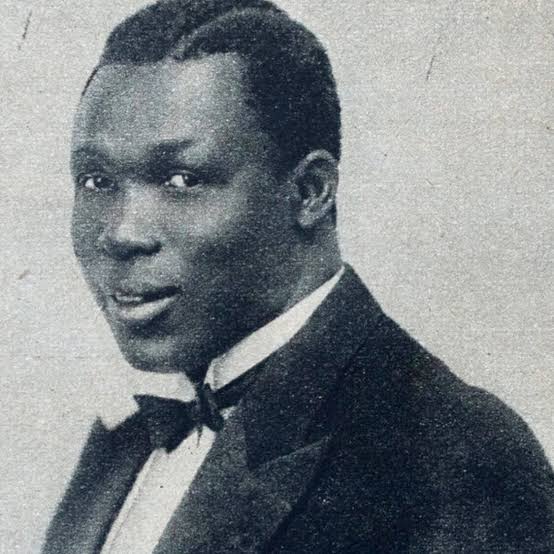
William Madison McDonald died in Fort Worth on Tuesday, July 11, at the age of eighty-four. Better known among whites and Blacks alike by the nickname “Gooseneck Bill,” he had been one of the leading African American figures in social, political, educational, and civic life for more than sixty years. He is said to have been the first Black millionaire in Texas and was certainly one of the first in the entire country. He first came to Fort Worth around 1908 and, together with other members of the Prince Hall Masonic lodge, founded Fraternal Bank & Trust, the first Black-owned bank in Texas. For many years, it was the only bank in Fort Worth that lent money to Black people.
McDonald was one of the leaders of the Black and white Republican coalition known as the “Black and Tan Alliance,” and he wielded influence at national party conventions as well. It was at one such convention in 1896 that a reporter for the Dallas Morning News gave him the nickname “Gooseneck Bill.” The name stuck and followed him for the rest of his life. It became so firmly established that even the Dallas Express itself called him that without hesitation. In 1904, the party elected him chairman of its state committee, an exceptional honor because he received the votes of both Blacks and whites. He was a stirring orator and continued giving public speeches until four years before his death, when illness overcame him. One of his last speeches was delivered at I. M. Terrell High School. As the man who determined who would lead Texas’s Black Prince Hall Masons, he wielded enormous influence and made a great deal of money. His reputation also rests on the story that when all the white banks in Fort Worth were failing during the Great Depression, they came to McDonald’s Fraternal Bank & Trust to borrow money.
During the final years of his life, McDonald lived with his fifth wife in a stately home in the Terrell Heights neighborhood. Following the funeral service at Mount Pisgah Baptist Church on July 16, 1950, where only those who arrived early could find room, he was buried in the segregated section known as Trinity at Oakwood Cemetery.
His death left an enormous void in the leadership of the Black community, not only in Fort Worth but throughout Texas. He was one of the few Black men who could sit down and negotiate with white leaders, securing concessions that preserved the peace and helped protect the safety of Black people in their neighborhoods. It was not equality, but it was better than the alternative. The peaceful relations he had overseen in Fort Worth for so many years endured after his death and laid the groundwork for Martin Luther King Jr.’s historic visit in 1959 and for school desegregation in the 1960s.
Across the Trinity, just as the Dallas Express was mourning McDonald’s passing, the same newspaper was expressing outrage over a recent series of bombings of African American homes in South Dallas. The purpose of these attacks was to prevent Black homeowners from settling in white neighborhoods. Over the previous six months, six homes had been destroyed by explosives, most recently on July 7. This brought the total number of such attacks since they began in 1941 to twenty-five, and the Dallas police had not arrested a single person. Fortunately, no one had been killed.
The police investigation was utterly at a loss. The Texas Rangers repeatedly rejected requests to come to the city to “help” the police, saying that local law enforcement had everything under control and, moreover, that local authorities had not even asked them to intervene. The local NAACP branch pleaded with Governor Allan Shivers to take action, but he flatly refused even to offer a reward. He declared that it was Dallas’s problem. The Dallas Express ominously warned: “If the Dallas authorities do not stop these attacks, we will wake up one morning to the worst kind of riot… There will be killing.”
Fort Worth itself had also experienced bombings of Black homes in the Near South Side area in 1925. This was only five years after unidentified white night riders lynched Fred Rouse. This series of bombings, however, was in no way connected to Rouse’s murder. In response, the police promised to protect Black residents from “bombers and night riders.” They found no motive for the five attacks that took place over nine months other than the neighborhood’s rapid transition from white to Black, and they had no suspects. The attacks continued into 1926, and the city even offered a reward for information leading to the capture of the perpetrator or perpetrators, but that, too, produced no results. Fortunately, no one was killed, which may or may not have been what the attackers intended. In the 1930s, calm returned to the neighborhood now known as Terrell Heights (after the Black educator I. M. Terrell), and everyone hoped it would remain that way. In 1950, Fort Worth’s leaders could pat themselves on the back for their city’s twenty years of racial peace.
The Dallas wave of attacks from 1941 to 1950 also ended as mysteriously as it had begun, and calm returned to South Dallas. The authorities breathed a sigh of relief, probably glad that they had not been forced to arrest anyone. Trying to prosecute white suspects would have unleashed an ugly situation on both sides of the racial divide. It was better that the crisis had burned itself out. Racial violence was thus averted in both Fort Worth and Dallas for several more years. But as Bob Dylan would sing in the following decade, “the times they are a-changin’.” The country was four years away from the Supreme Court’s decision in Brown (which ordered the desegregation of public schools) and five years away from the bus boycott in Montgomery, Alabama. Had Bill McDonald lived to see such times, we can only guess what he would have thought of these events and what he might have done. He was the same man who had once led the “Black and Tan Alliance” in the Republican Party, yet his message to his own people had always been to lift themselves up through their own efforts without seeking help from white people or the government.