If you want to experience one of the most beautiful beaches in America, I definitely recommend heading to Florida’s West Coast – specifically Siesta Key Beach in Sarasota.
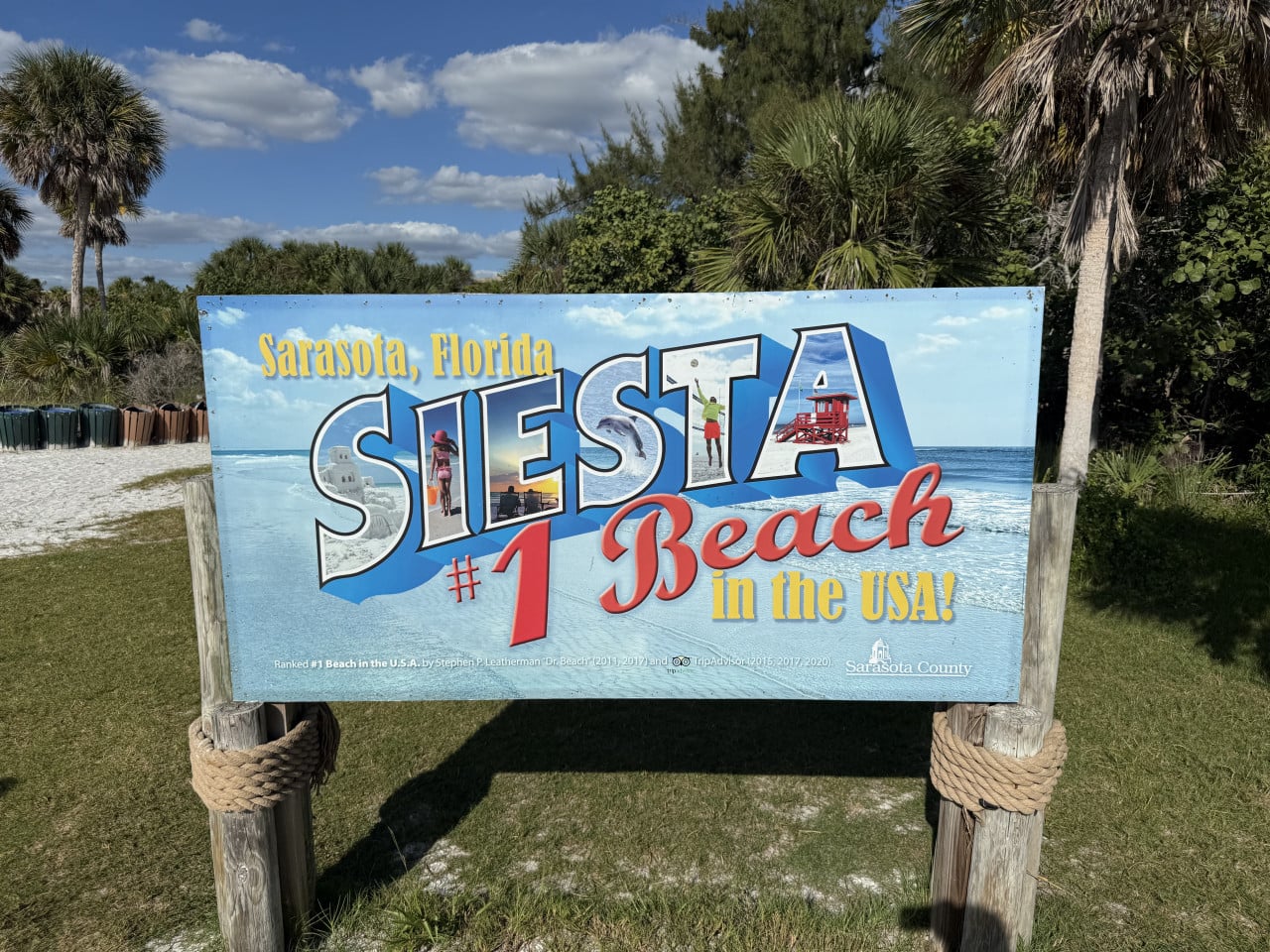
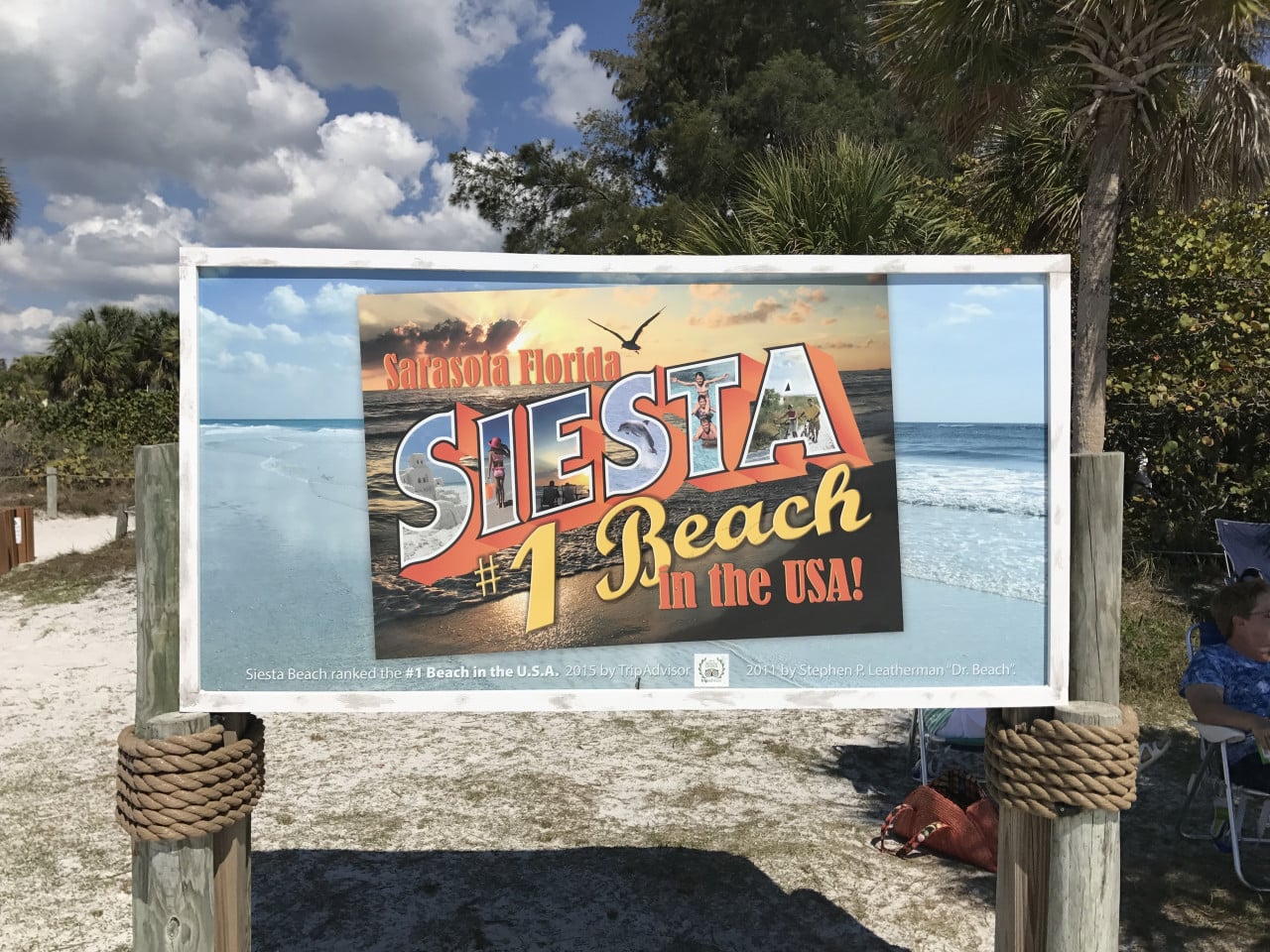
I lived in Sarasota for about 7 months and went to Siesta Key practically every day, so I think I can safely say that I know the beach really well. And in my opinion, it truly is the “number one beach in the USA” – exactly as the famous sign everyone takes a photo with proclaims.
I did read somewhere online that some people dispute the title, but in my opinion, this beach really is unique – and I’ll explain why right away.
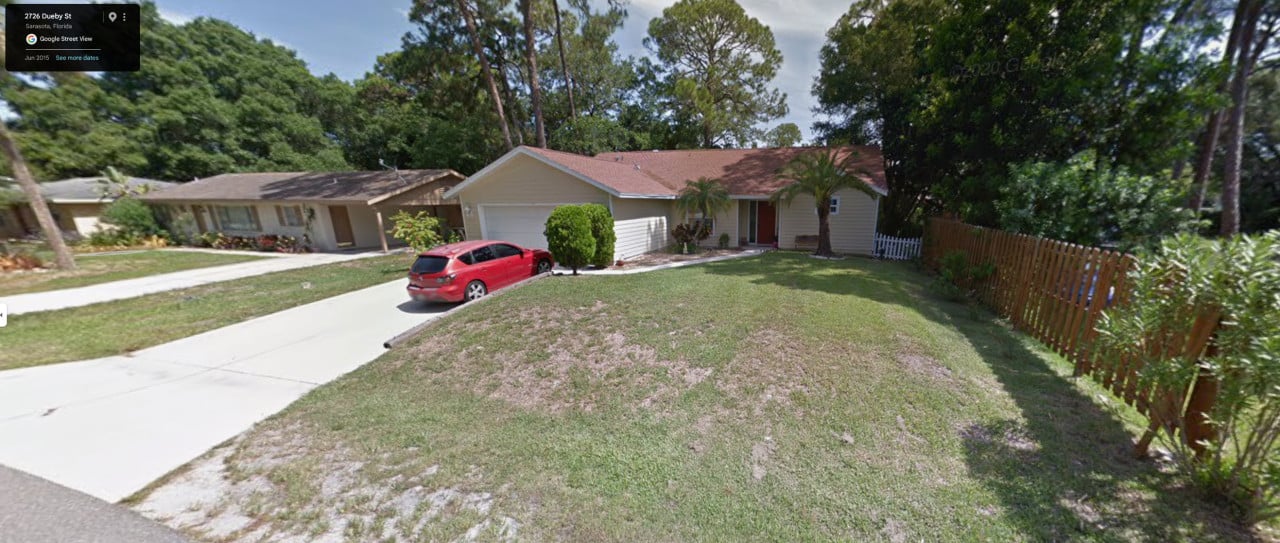
A little nostalgia, mainly for me - the house where I once lived in Sarasota - address: 2745 Dueby St, Sarasota, FL.
Where to find Siesta Key Beach
Siesta Key Beach is located on the island (more precisely, a barrier island) of Siesta Key, which lies just off the coast of Sarasota on Florida’s west coast, in the Gulf of Mexico.
The island itself is about 8 miles (approximately 13 km) long and covers only 2.4 square miles. Yet it is home to three beaches – the main Siesta Beach, as well as Crescent Beach and Turtle Beach – plus the lively center of Siesta Key Village.
It takes about 15–20 minutes to get there by car from Sarasota, and it is approximately 100 km from Tampa Airport (about an hour by car). Orlando is farther away, roughly 200 km.
What makes Siesta Key Beach so special
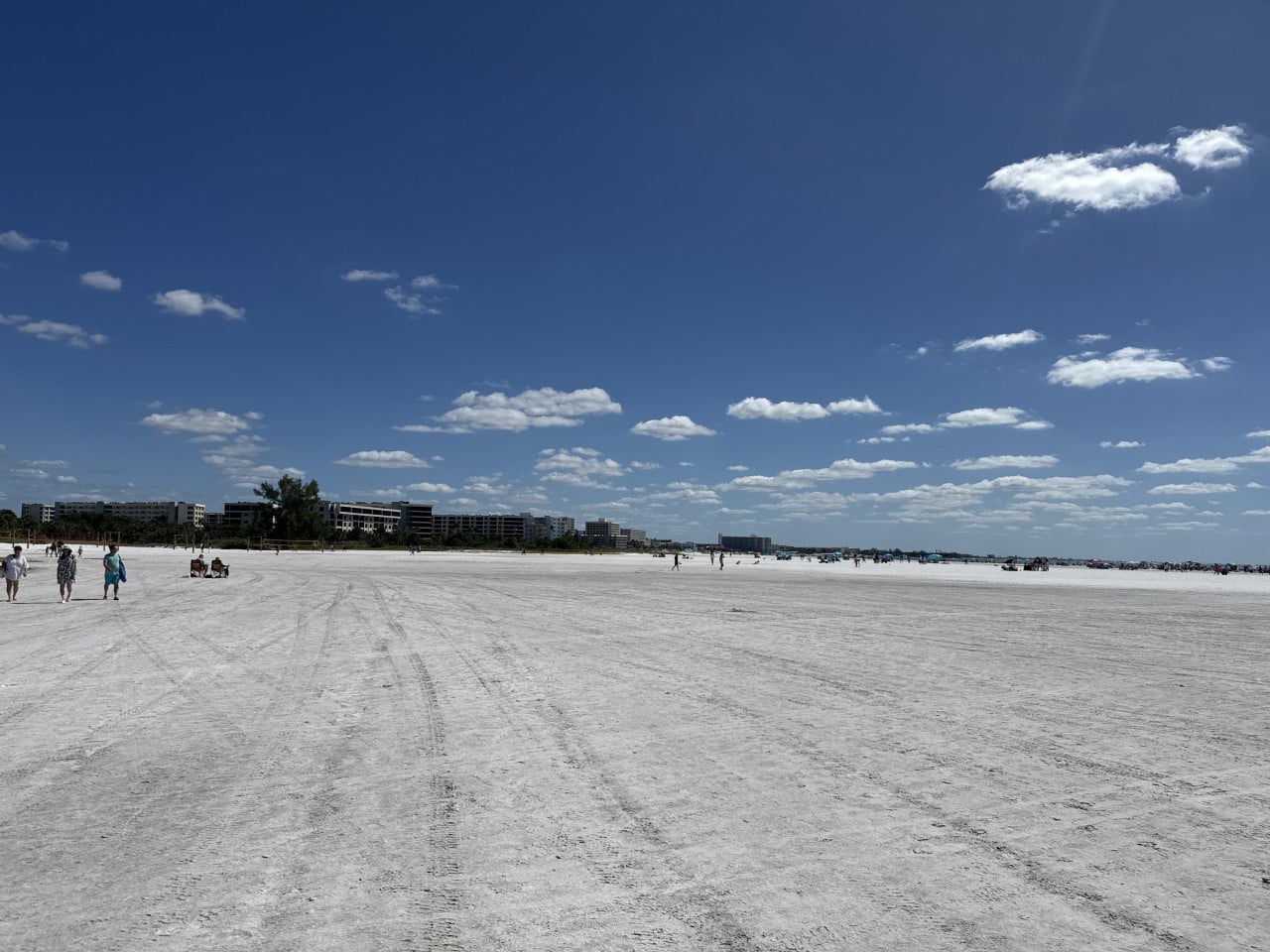
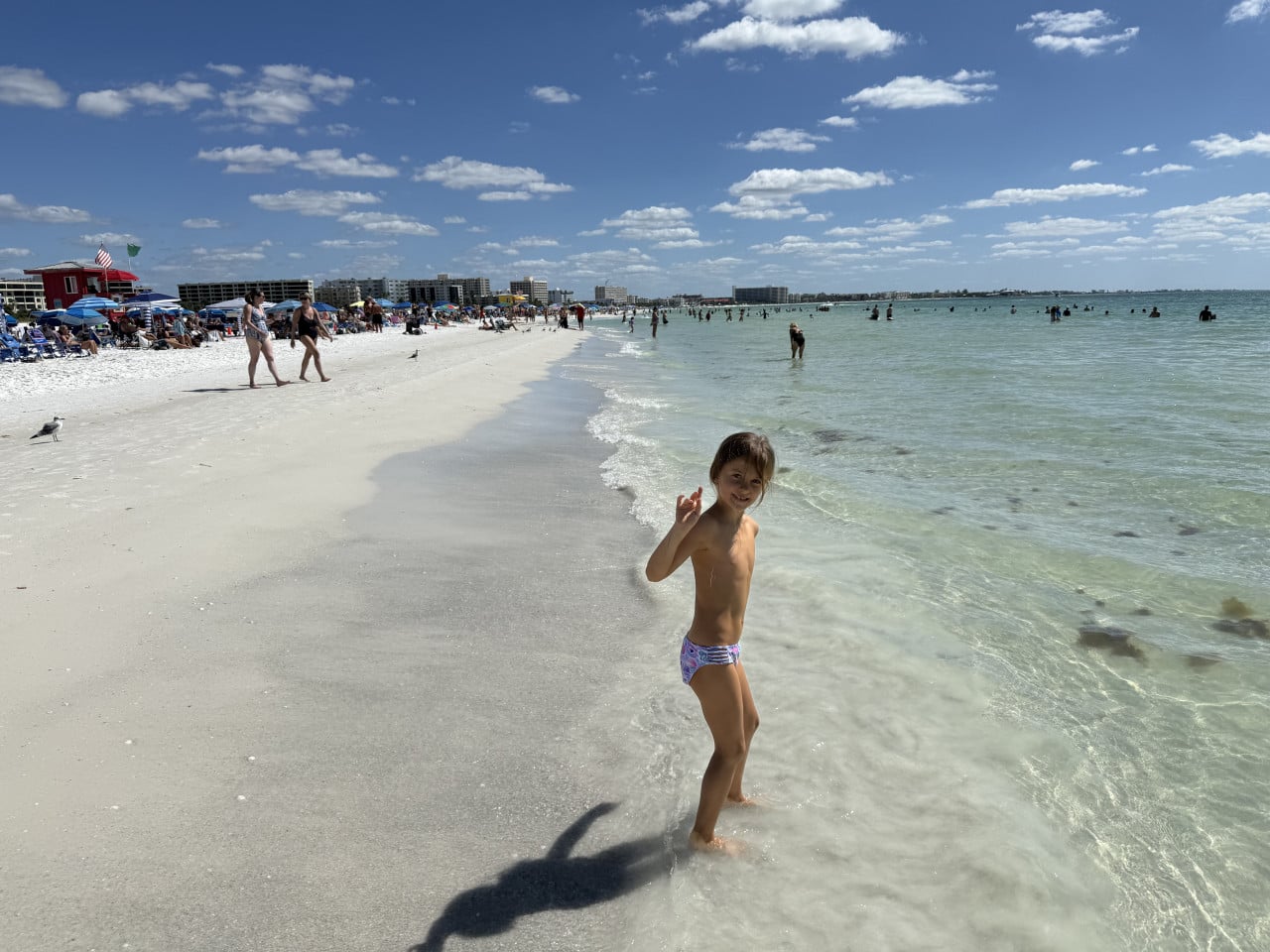
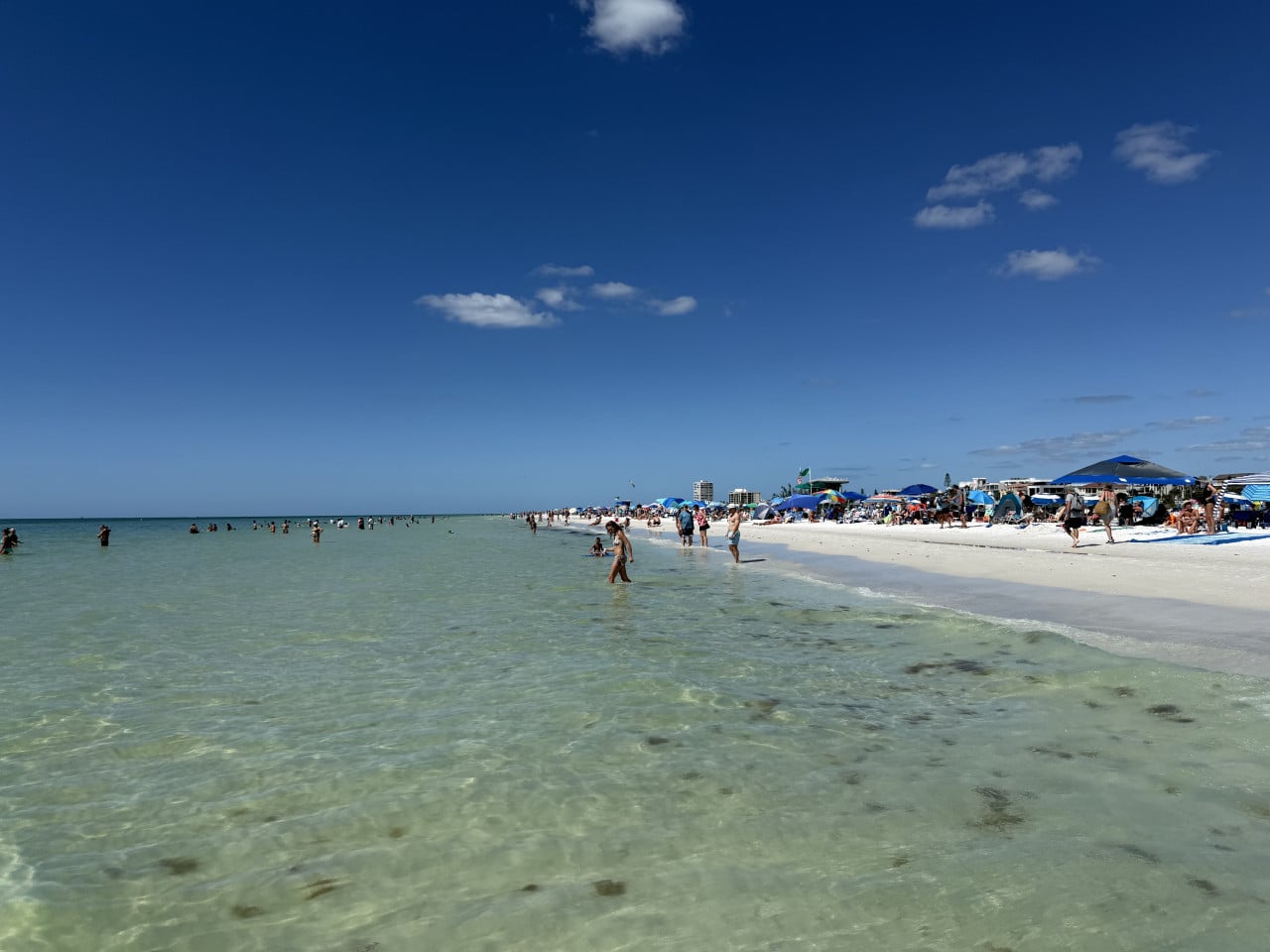
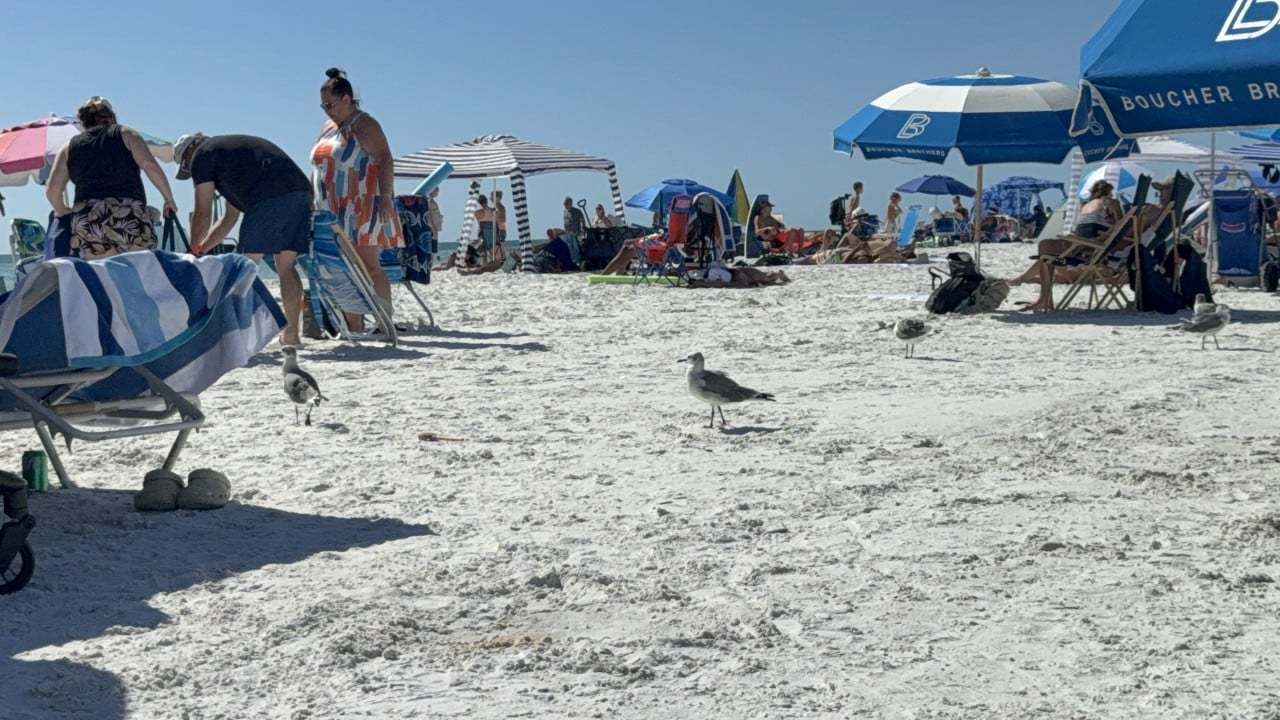
The main attraction of Siesta Key Beach – and the reason it has repeatedly been voted the best beach in the USA – is its sand. This is not ordinary beach sand like the kind you may know from Croatia or Egypt.
The sand on Siesta Key is 99% pure quartz.
And here’s the interesting part: the sand is not local at all. Most of it comes from the Appalachian Mountains, from where rivers carried it over millions of years all the way to the Gulf of Mexico. Harvard geologists estimate that the individual grains are literally millions of years old.
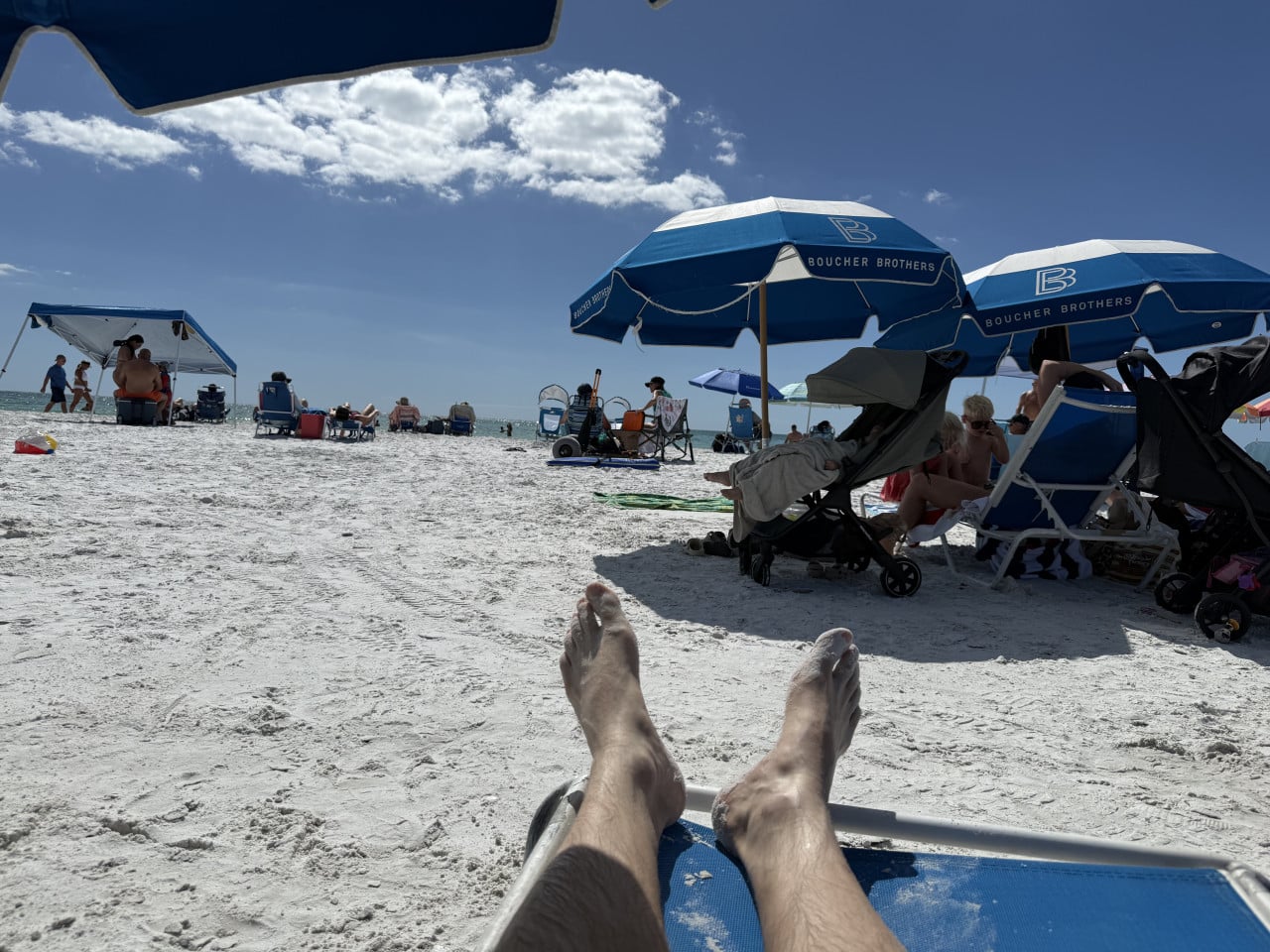
And because it is made of pure quartz, it has one fantastic quality – it doesn’t burn your feet. Quartz reflects sunlight and does not retain heat like ordinary coral or shell sand. So even in the greatest heat, you can walk on it barefoot without your feet burning. Yes, it can sometimes be hot, but not as hot as elsewhere. It looks almost like powdered sugar: compact, dense, and strikingly white.
Add blue to turquoise water, a gently sloping seabed, and small waves, and you have a paradise both for children and for swimmers who do not like the rough ocean waters of the East Coast.
A brief history of Siesta Key
Siesta Key also has a fairly interesting history connected with the beach. If history is not your thing, feel free to skip this section – but in my opinion, it provides useful context and gives the place more depth.
Until the beginning of the 20th century, the island was virtually uninhabited and wild. It was called Clam Island, later Little Sarasota Key, or simply Sarasota Key. Only a few fishing families lived here; otherwise, it was a place full of venomous snakes (rattlesnakes, cottonmouths, and coral snakes), wild boars, and mosquitoes – not exactly a great place to live.
Before that, the Tocobaga tribe – Native Americans who made their living by fishing on the island – had a base here. Traces of them can be found at Turtle Beach, where archaeologists still occasionally discover artifacts.
Things changed in 1906, when the Roberts couple opened Roberts' Inn (later Siesta Inn) – a small hotel that began attracting people from the northern United States who wanted to escape the harsh winters. A year later, in 1907, entrepreneur Harry Higel and Captain Roberts founded the Siesta Land Company – and that was when the island received its present-day name, Siesta Key.
Higel, who later also became the mayor of Sarasota, had big plans for the island and pushed for the Army Corps of Engineers to build a bridge there. He succeeded in 1917, when the first bridge connecting Siesta Key to the mainland opened. A second bridge at the southern end was added in 1927 (at Stickney Point).
A sad detail – Harry Higel was murdered in 1921 under circumstances that were never resolved. His killer was never caught.
In the years that followed, the island slowly began to grow. During the 1920s and 1930s, wealthy visitors from the northern USA began arriving and building villas here. In the 1940s and 1950s, local architects Ralph Twitchell and Paul Rudolph built several modern homes that remain icons of the so-called Sarasota School of Architecture to this day.
In 1954, Sarasota County purchased the first public land for the beach – and since then, Siesta Key Beach has continued to grow and become known to more and more people. Today, it receives roughly 350,000 visitors annually.
And one more interesting detail I learned: Siesta Key has not been directly hit by a hurricane since the 19th century. Local legend says that the island was blessed by a Native American chief and has been protected ever since. There is no scientific basis for this, of course, but the fact is that the recent major hurricanes Helene and Milton (2024) came closer to the island than might have been expected – paradoxically, they did hit Siesta Key quite hard, but they did not put it out of operation, and it still looks just as beautiful.
Why it is called the #1 Beach in the USA
Siesta Key earned its reputation as “America’s most beautiful beach” mainly thanks to Stephen Leatherman, whom everyone calls “Dr. Beach”. He is the director of the Laboratory for Coastal Research at Florida International University, and every year since 1991, he has ranked the best American beaches according to 50 criteria (sand, water quality, facilities, crowds, cleanliness, etc.).
Siesta Beach topped his rankings for the first time in 2011, and the title has been associated with it ever since. In 2017, TripAdvisor also named it #1 in the USA, and in 2025, it was once again ranked #1 in the USA and #4 in the world in TripAdvisor’s “Best of the Best Beaches” awards.
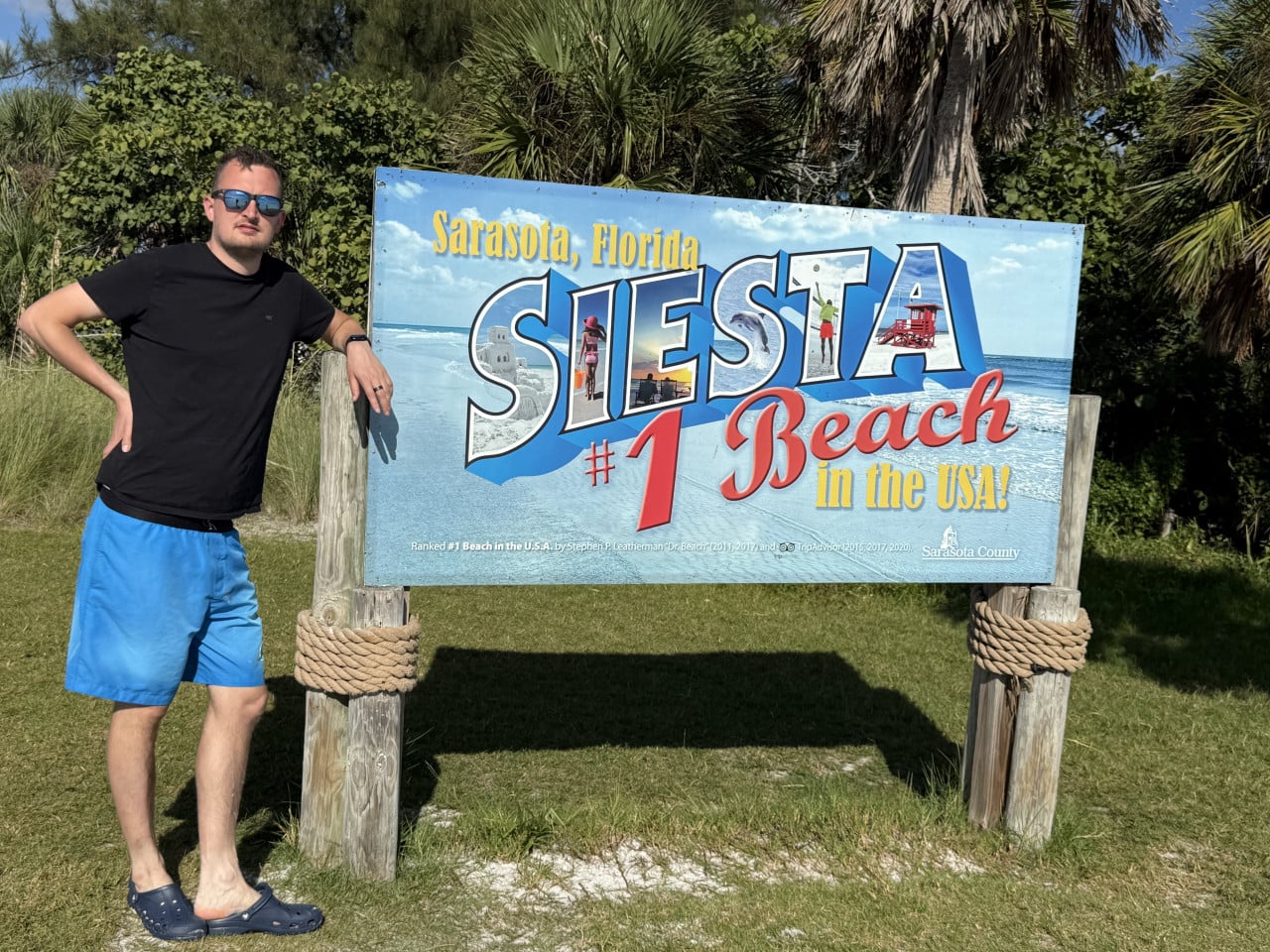
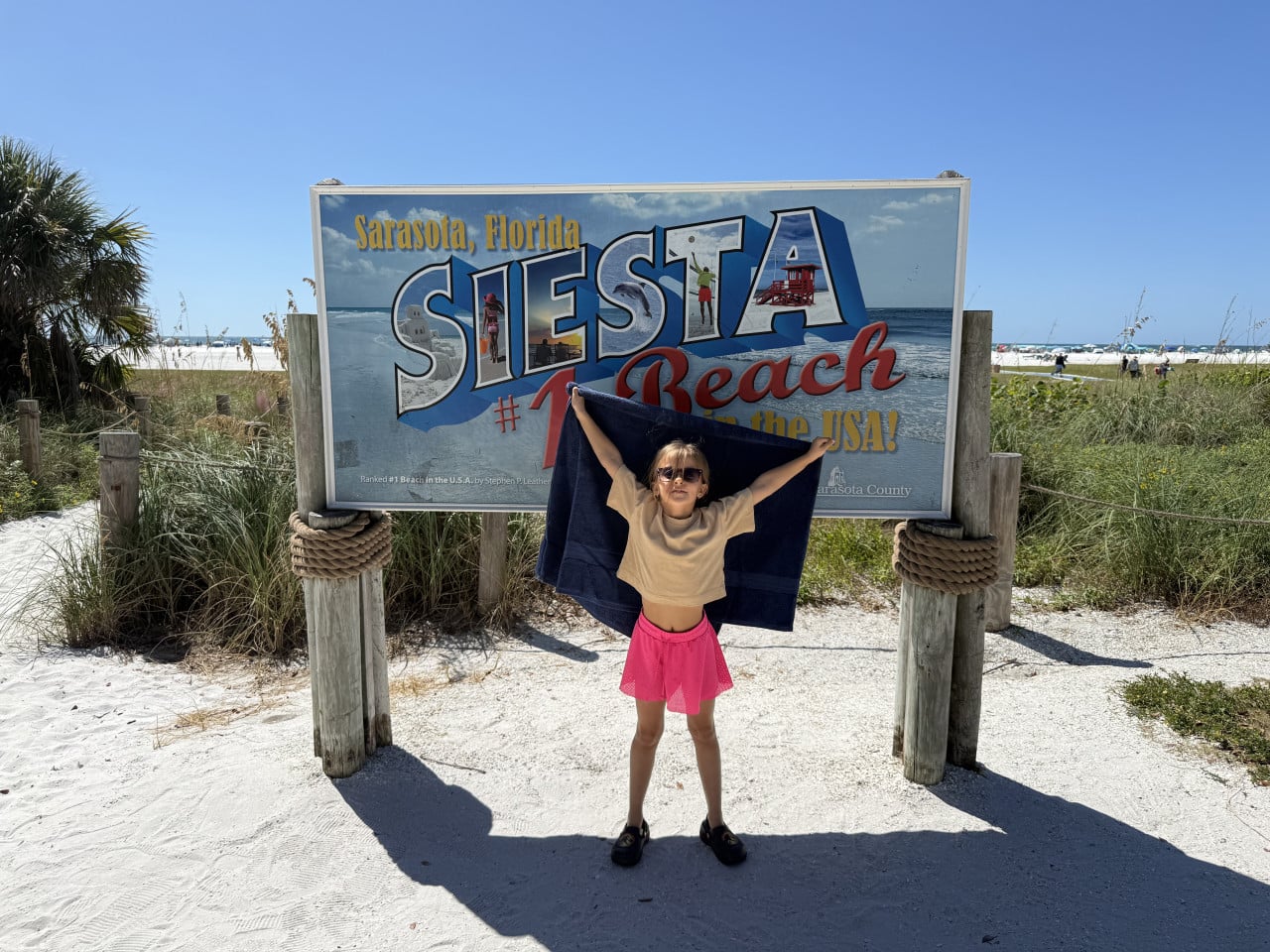
So when you see the “#1 Beach in the USA” sign, it is not just local marketing – it is a claim supported by international rankings.
The sign currently standing by the entrance is a newer version. I still remember the older one, which I used to take photos with years ago when I lived in Sarasota. You can find photos of the old sign in various places online; it looked like this:
Practical information: parking, restrooms, and facilities
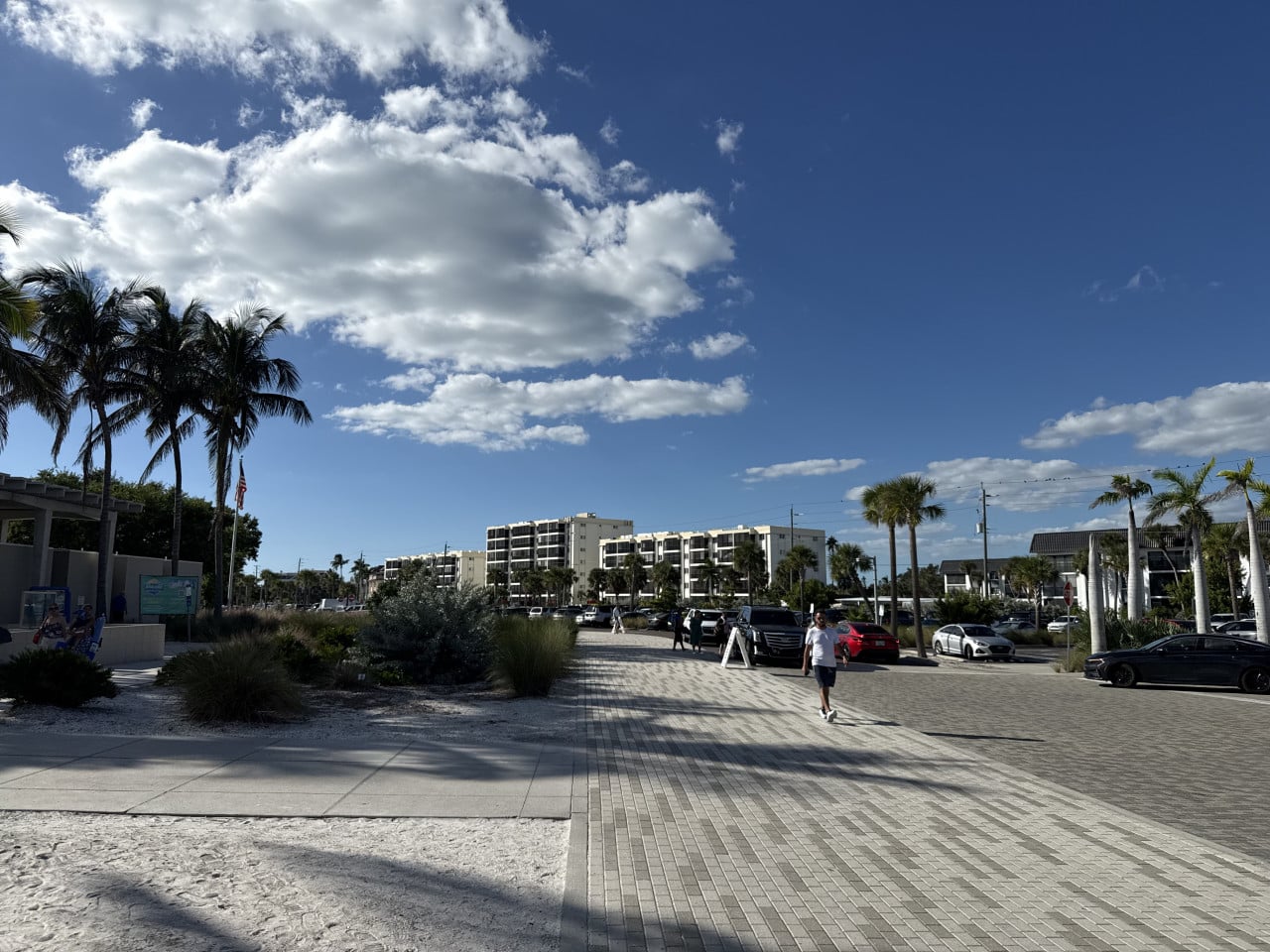
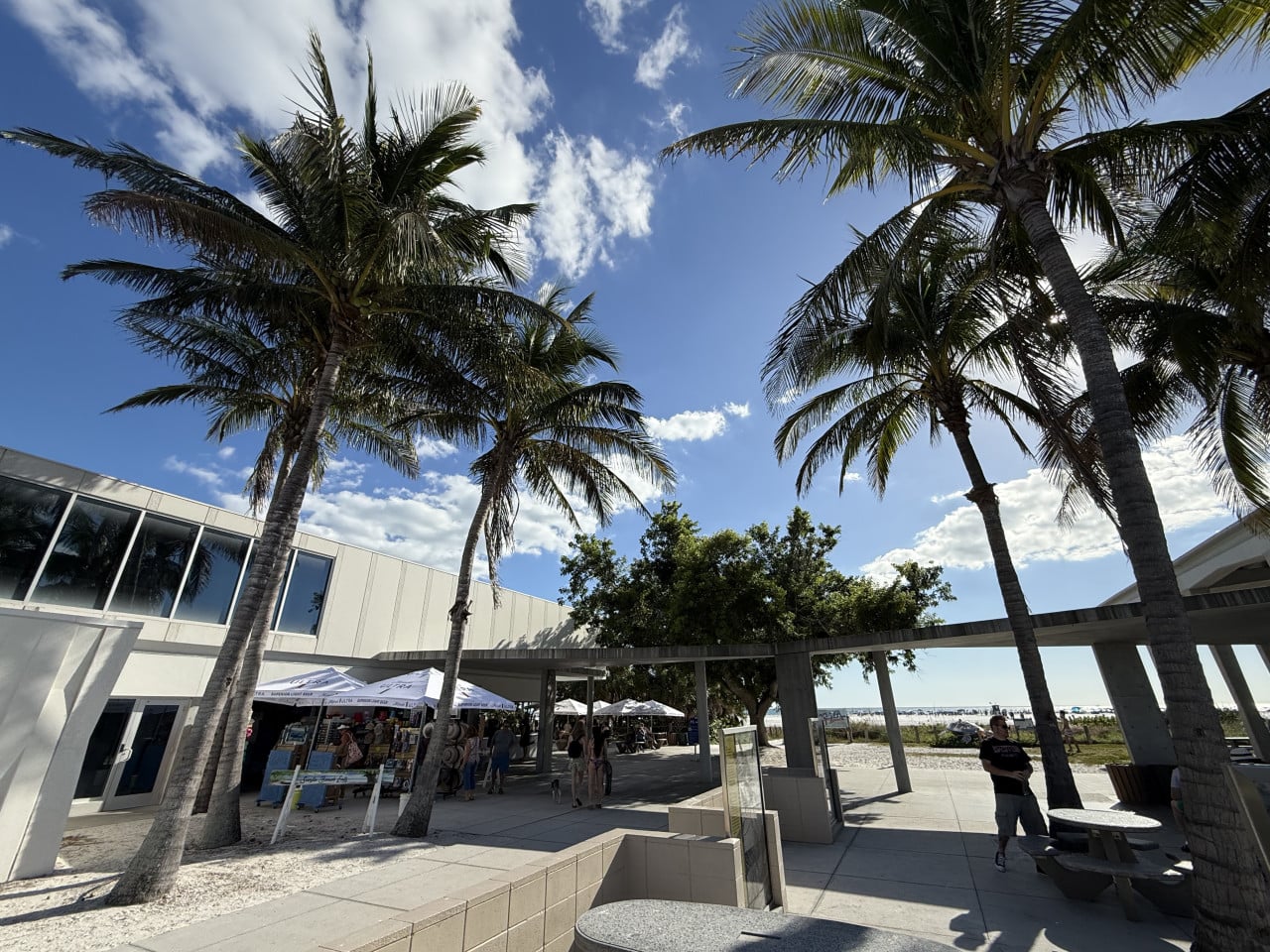
When you arrive at Siesta Key Beach, there is a large main parking lot by the Siesta Beach Pavilion (address: approximately 948 Beach Rd, Siesta Key, FL 34242). It can accommodate more than 950 cars, but it still fills up quickly during the high season – ideally, arrive before noon.
Importantly, parking is free, which is quite rare in America at such a famous beach. There are also several smaller paid parking areas next to the main lot and many private residences nearby.
Facilities available directly within the beach grounds include:
-
modern restrooms (following a $21 million renovation in 2016)
-
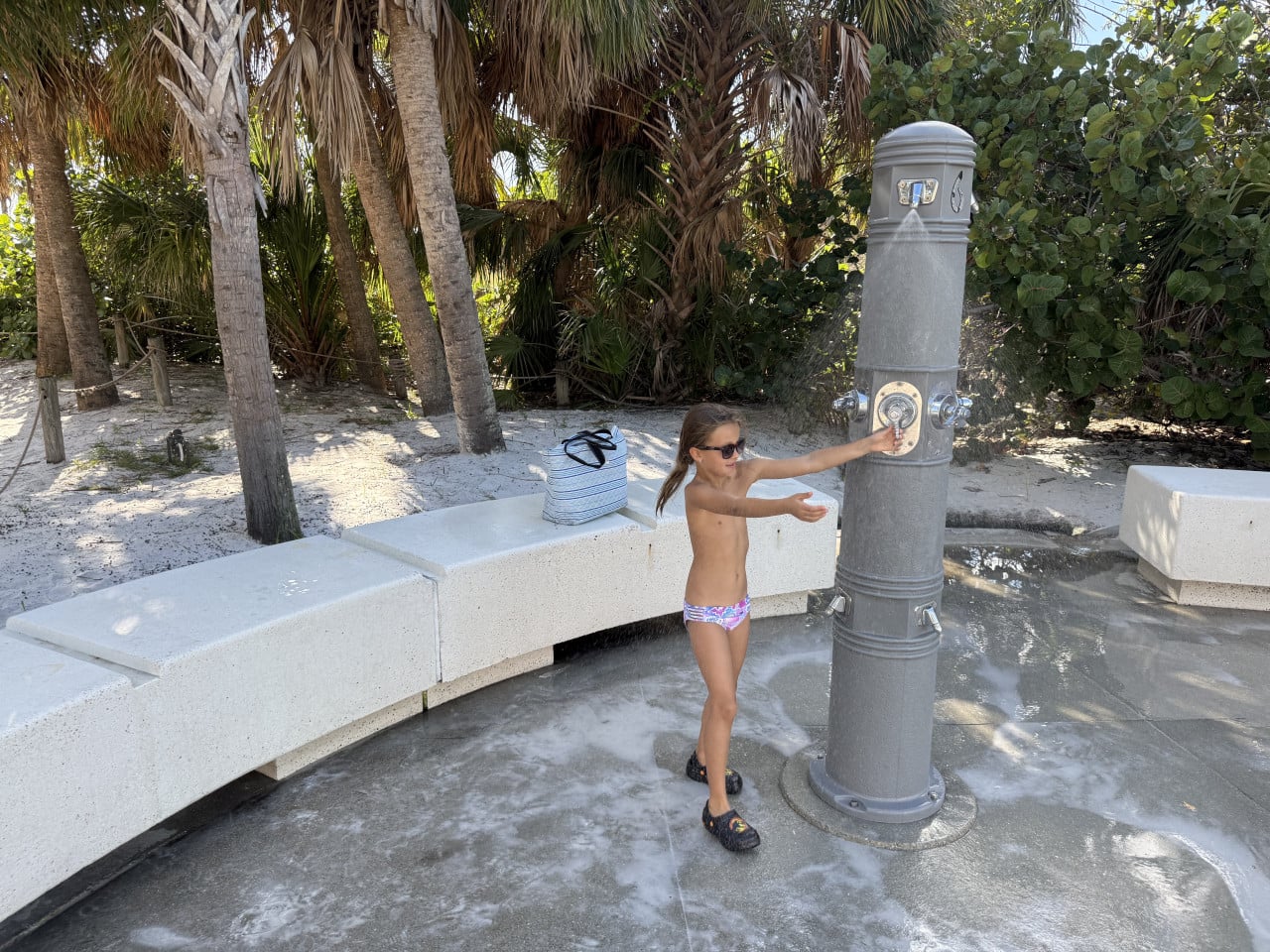
showers for rinsing off sand and salt
-
two food stands (Sundeck Café, etc.)
-
beach wheelchairs (available to borrow)
-
covered picnic shelters
-
lifeguards year-round
-
a sandcastle-shaped playground
-
tennis courts
-
You can rent umbrellas and lounge chairs for a fee
The entire area is really clean and well maintained, which was another major difference for me compared with South Beach in Miami, for example.
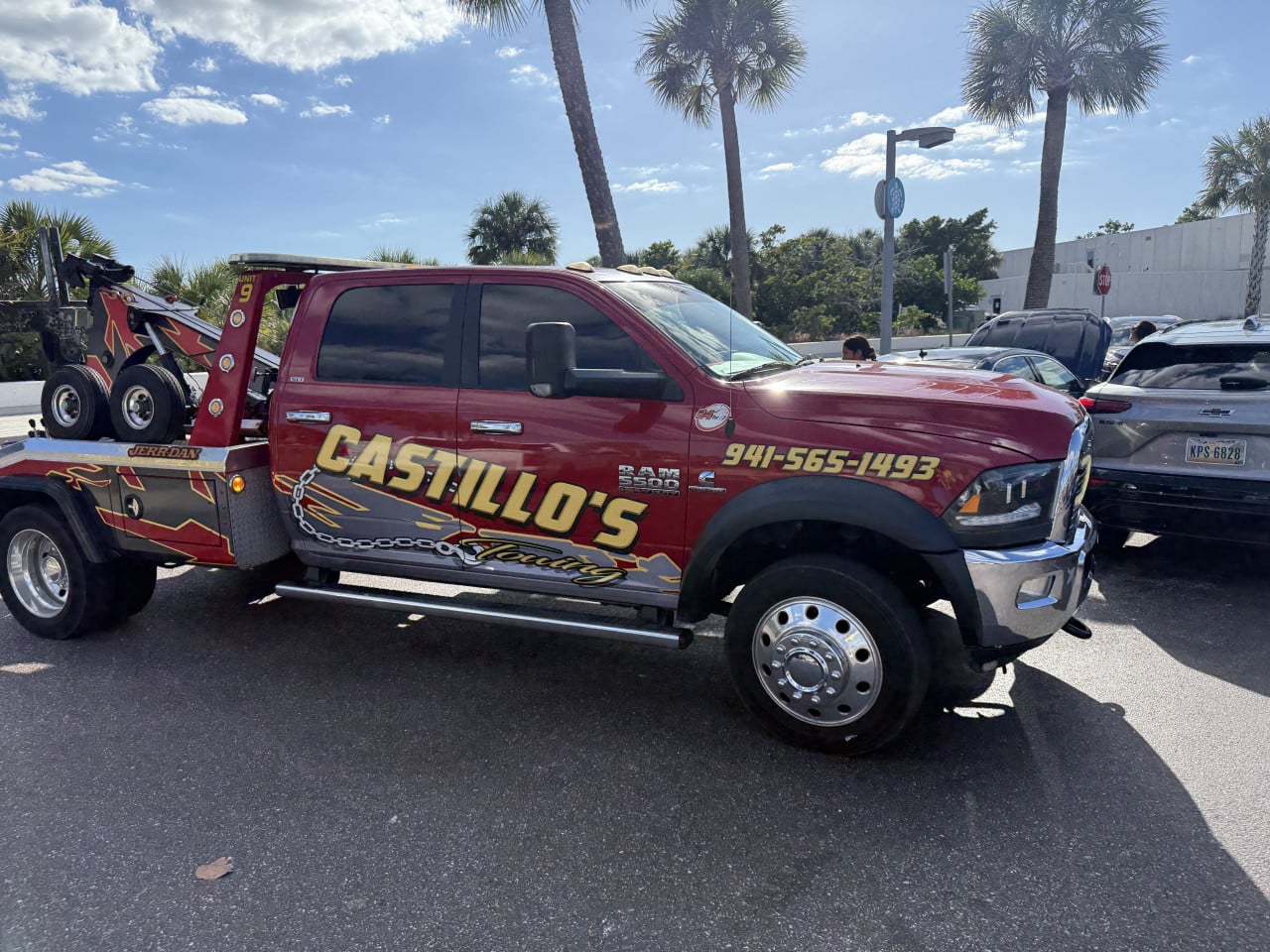
A small tip: if you drive to the beach, pay attention to the parking regulations – there are fairly strict restrictions on the surrounding streets, and tow trucks patrol the area quite frequently. I saw it happen many times with my own eyes.
Siesta Key vs. South Beach Miami: an obvious choice for me
I have had the opportunity to see quite a few beaches in the USA, and people often ask how Miami and its famous South Beach compare.
South Beach is not bad – it has atmosphere, people, and Art Deco architecture. But in my opinion, the beach itself does not quite match the quality of Siesta Key. It is busier, there are more buildings, and the sand is coarser and more yellow. Overall, it is more about “being seen,” posting it on Instagram, and soaking up Miami as a city.
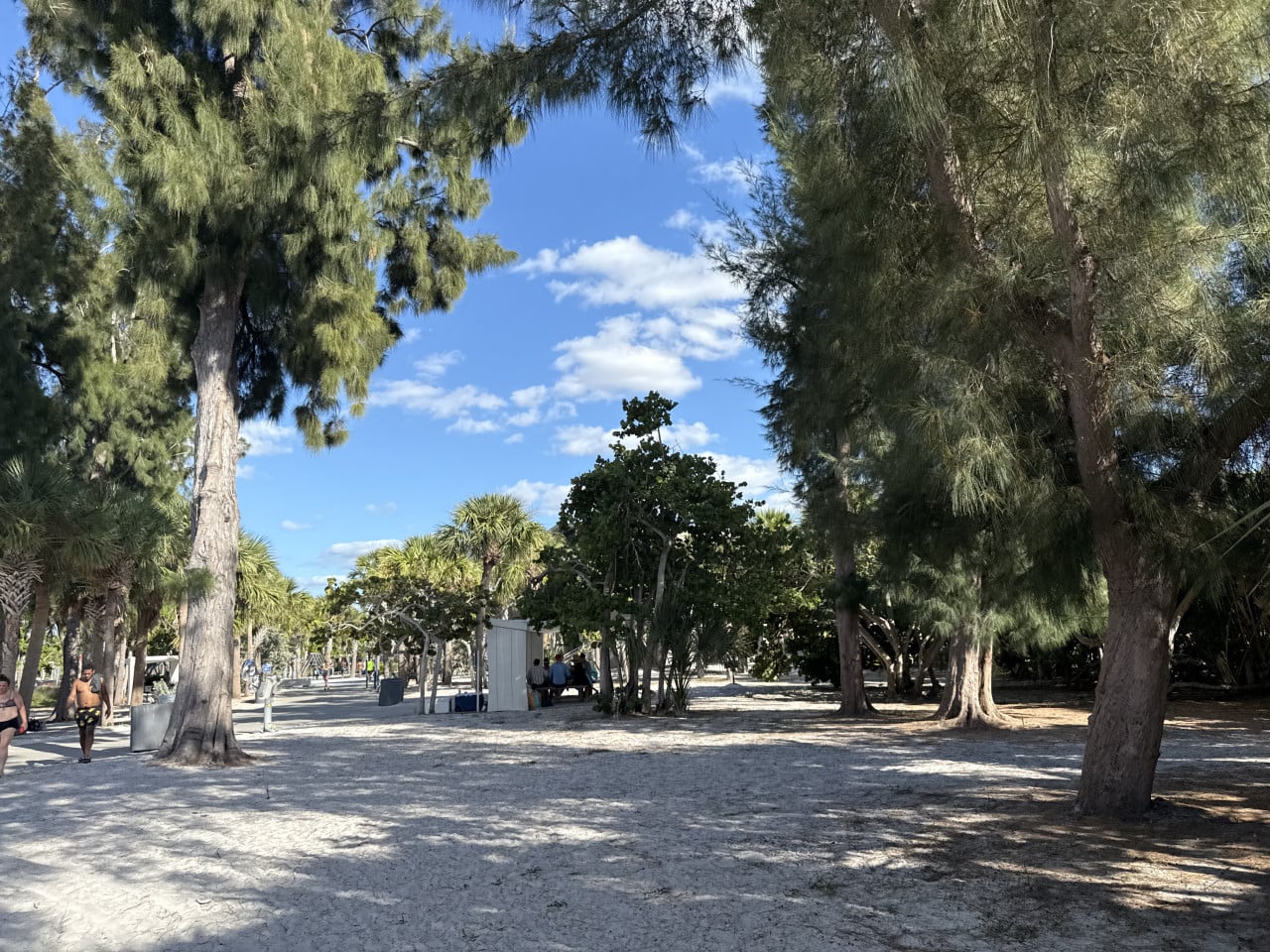
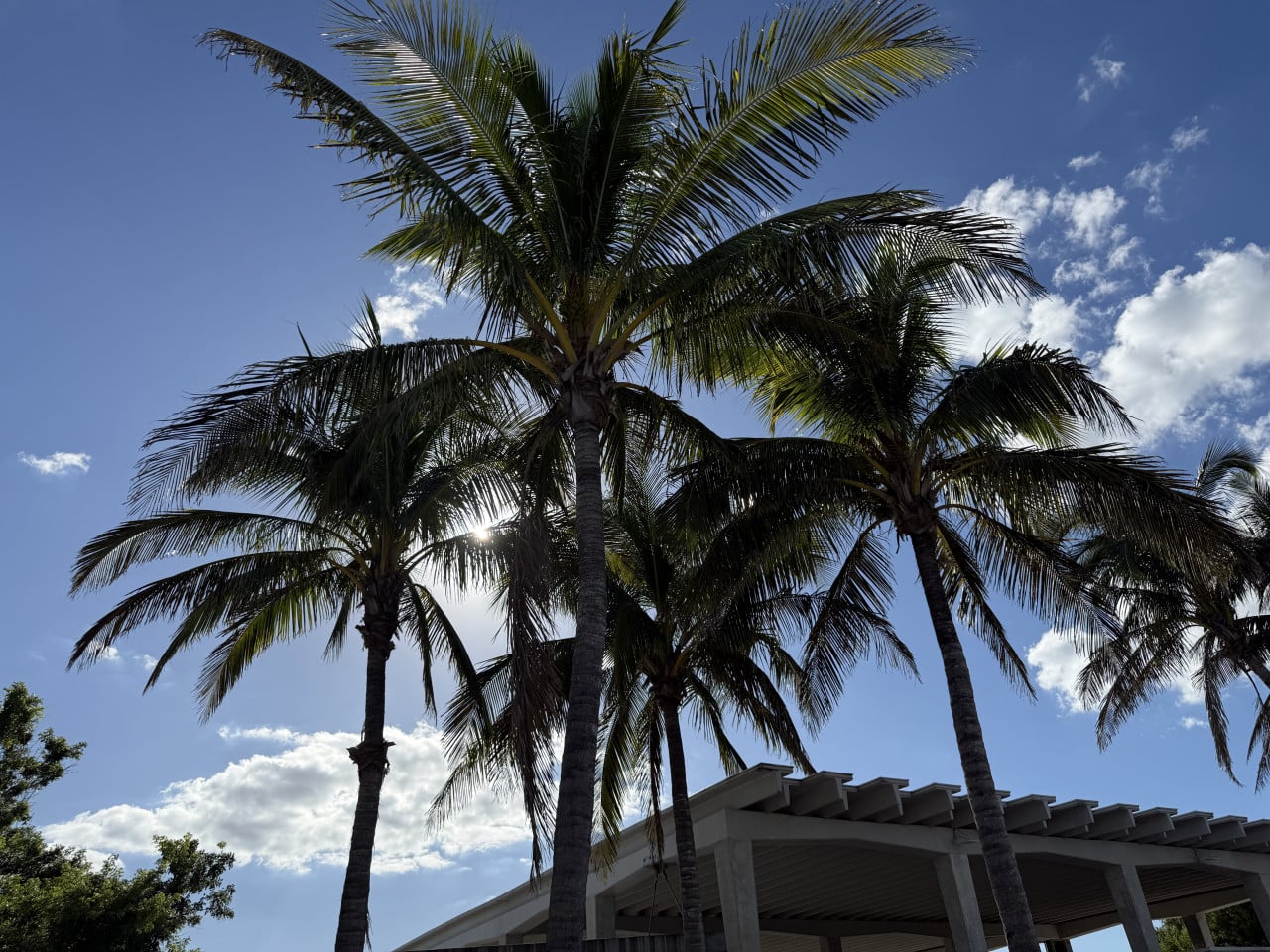
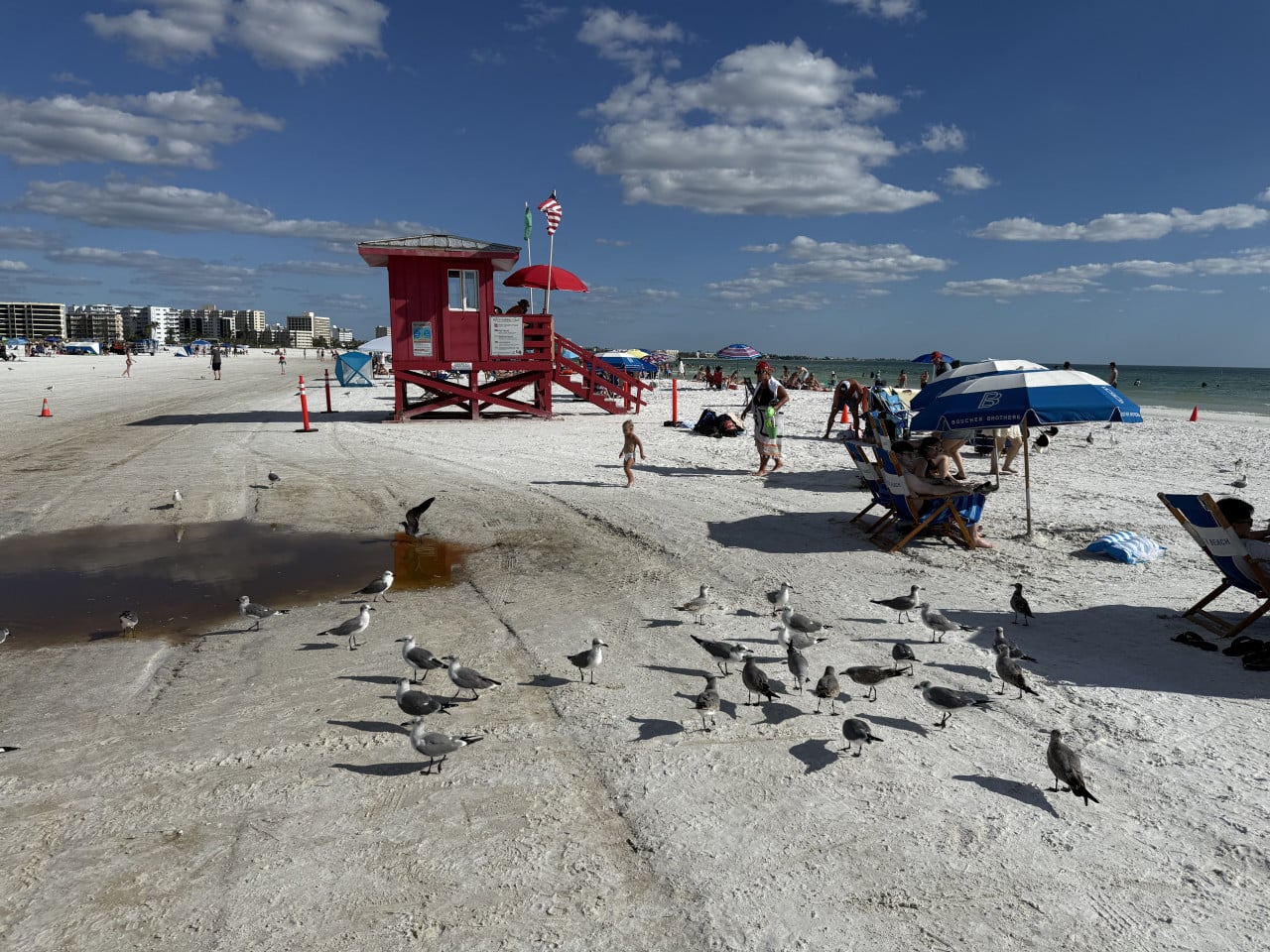
Siesta Key is the exact opposite. You can relax there even during the high season, because the beach is so vast that people spread out. It is not usually extremely crowded, and the atmosphere is idyllic – seagulls, palm trees, and peace and quiet.
So if you do not want to be part of the hustle and bustle you find in Miami and are looking for more of a relaxing vacation, whether with your family or on your own, Siesta Key Beach is the obvious choice.
Lifeguards, seagulls, and a classic beach atmosphere
One feature that nicely completes the atmosphere at Siesta Key Beach is the typical red lifeguard towers with American flags. Lifeguards are present here year-round, which is far from standard at American beaches.
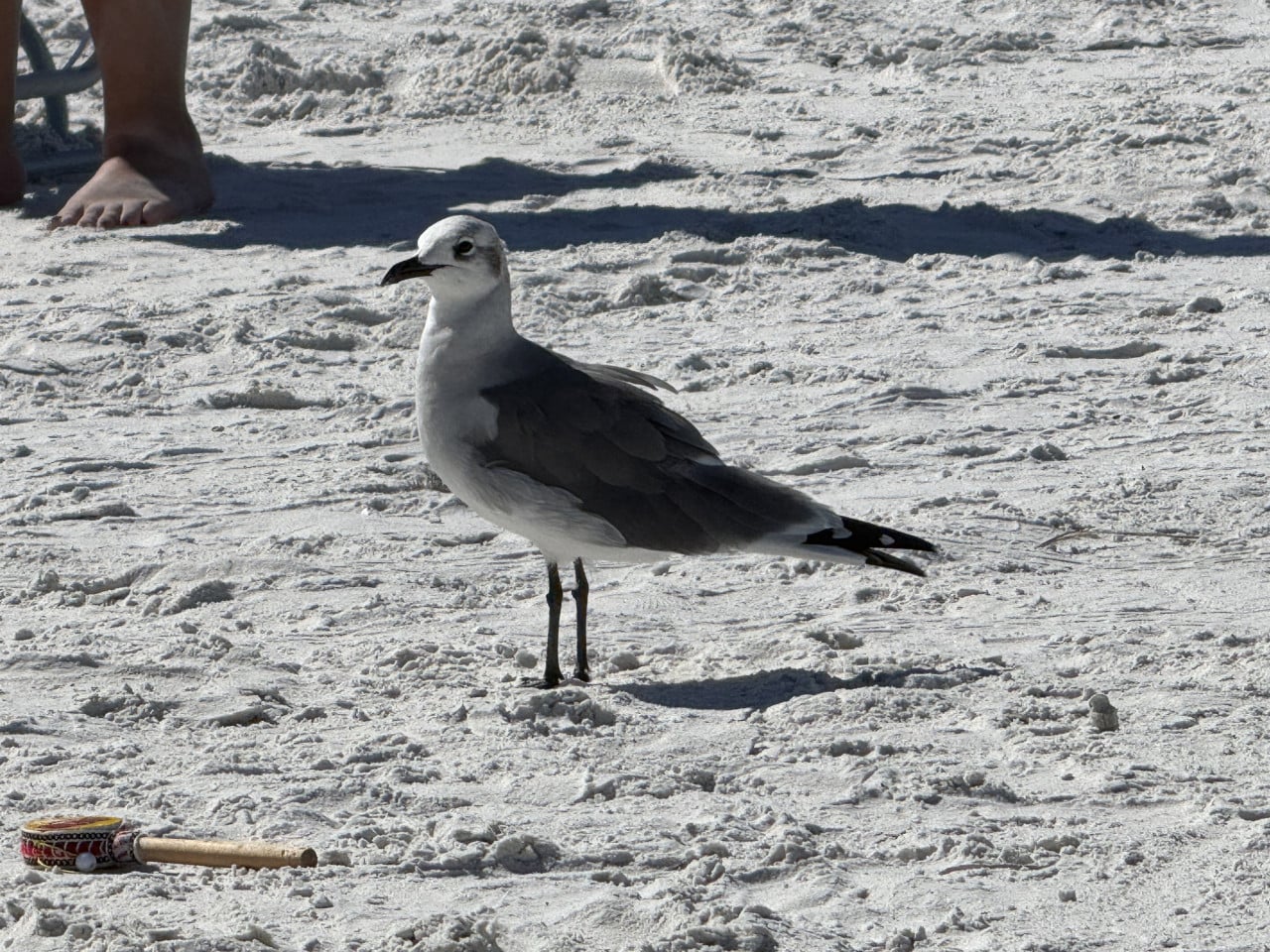
And, of course, seagulls – there are whole flocks of them here, so when you unwrap a sandwich, expect immediate visitors.
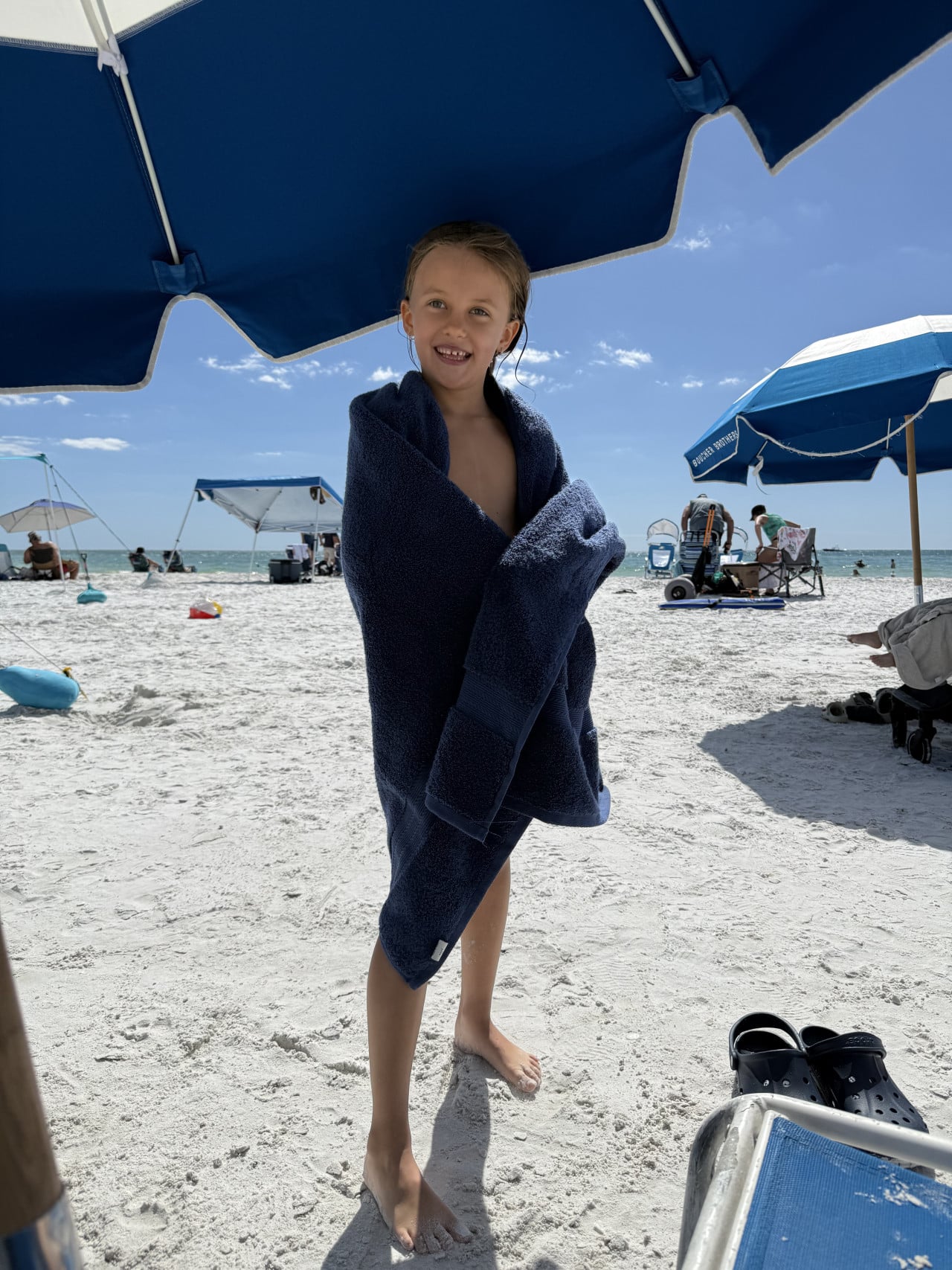
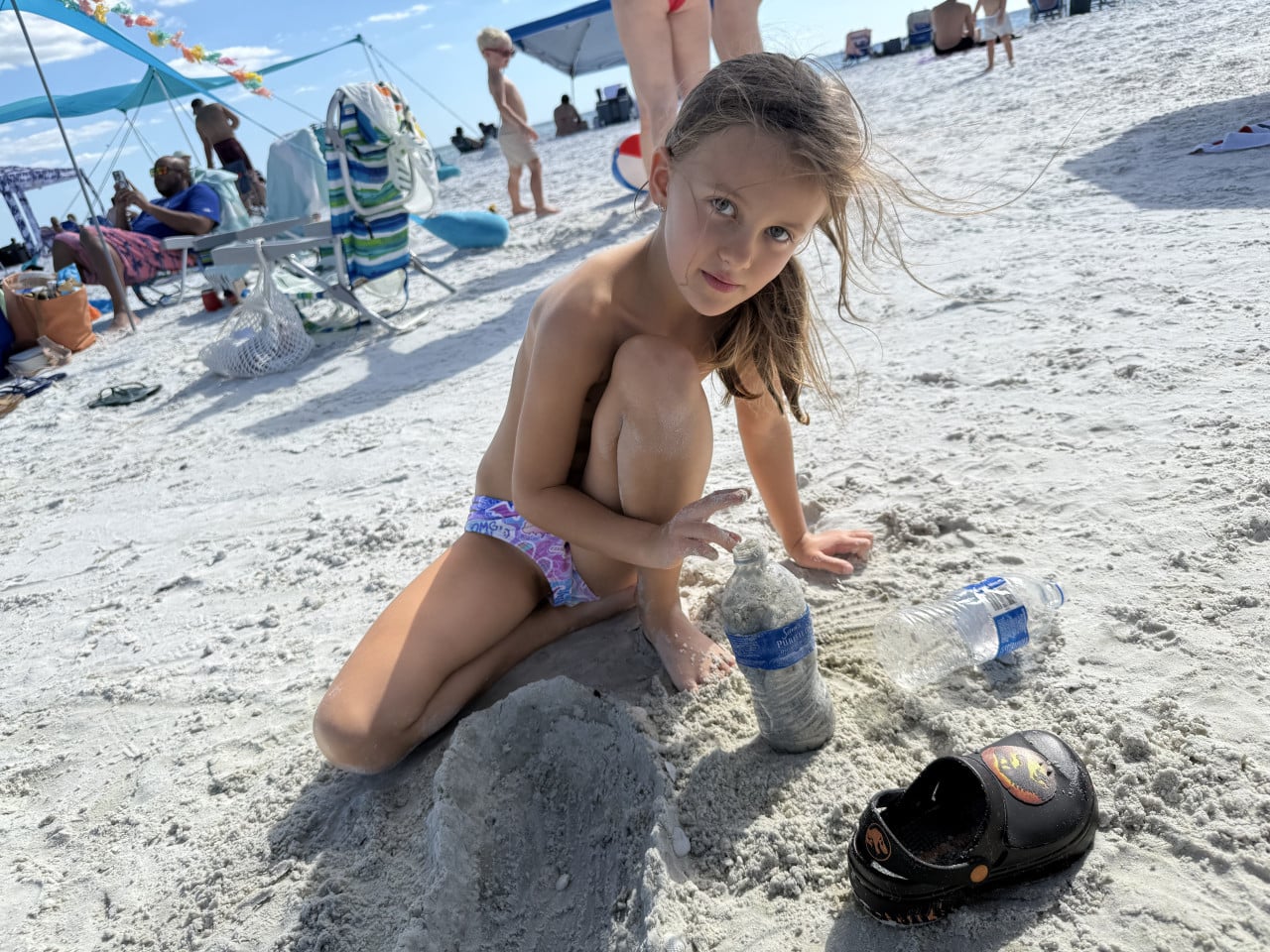
My daughter loved it here. I brought her here, showed her where I used to live, walked along the beach with her, built a few sandcastles, and spent the whole day on the beach. It was very enjoyable, and we would return anytime.
Siesta Key Village – food, bars, and Independence Day
Once you have explored Siesta Key during the day, it is good to know that the lively center of Siesta Key Village is just a short distance from the beach. You will find plenty of bars, restaurants, souvenir shops, and art galleries there.
I was here once on Independence Day (July 4), and it was quite an experience. I wrote about it in a separate article – if you are interested, you can find it here.
Incidentally, a free trolley runs from Siesta Key Village to the beach and back – handy if you do not want to deal with a car and parking.
The Hooters that changed my life: where I discovered my favorite chain
This may be the most unnecessary personal memory in the entire article, but it is simply part of Siesta Key for me.
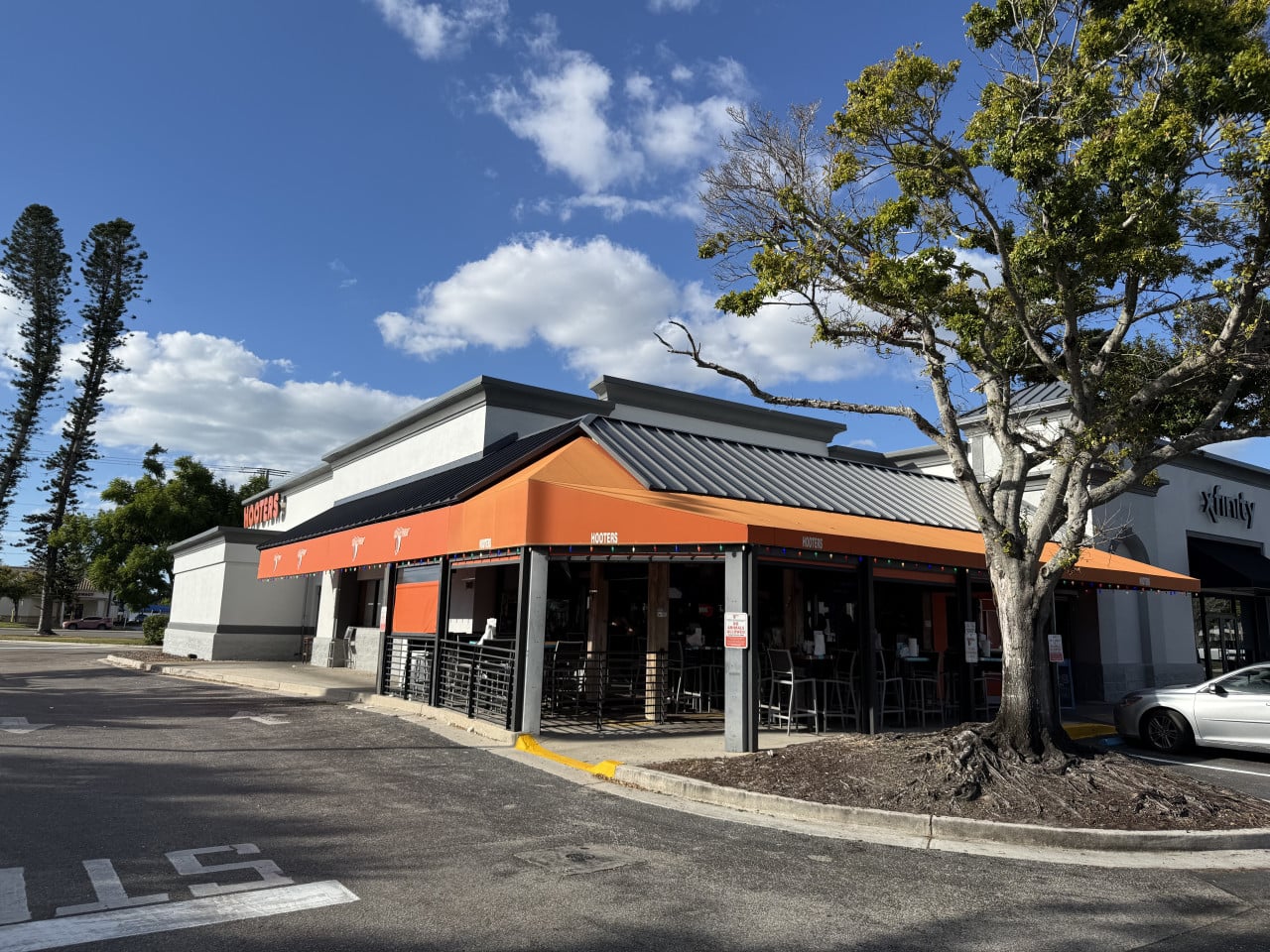
Right by the parking lot, before you drive onto the bridge to Siesta Key (so before entering the island), there is a large Hooters. And this particular Hooters was the very first one I ever visited in my life – which is how I came to like Hooters in general, and I still go there whenever I am in America.
I wrote about Hooters in greater depth in a separate article – what Hooters actually is, what made it famous, and why I enjoy it so much. If you are interested, take a look here.

In conclusion: recommended – but watch out for #2
If you are in Florida and choosing a beach, then I definitely recommend Siesta Key Beach. Beautiful, clear water, white beaches, flocks of seagulls, palm trees, and an overall atmosphere that is relatively rare in America. Idyllic compared with Miami or other beaches.
I also have my “number two” beach, which is Fort Myers Beach – but I will write about that another time in a separate article. It simply cannot compete with Siesta Key. For me, Siesta Key is the clear number one.
Before you leave, do not forget to take a photo by the number one beach USA sign – it is practically a mandatory photo and a lifelong souvenir from this beach. And if you happen to find the older version of the sign (it looked different around 5–7 years ago; it was smaller and more retro), consider it a bonus collector’s item 😊. I do not know whether it is still there, though; I did not see it during my most recent visit.
And as I wrote in one of my previous articles: if you want to see paradise on Earth, not everything is on the other – Asian – side of the world. Sometimes, all you have to do is fly to Florida.