When I lived in Sarasota for about six months in 2015, I traveled a lot. Most weekends when I wasn’t working, I tried to head somewhere to enjoy nature. And like every newcomer to Florida, I had one unfulfilled desire – to have my picture taken with a proper alligator.
After arriving, I kept hearing about alligators and saw warning signs everywhere, but I never had a chance to spot one. People around me kept saying, “There are hundreds of them here, thousands all around us.” It was quite frustrating for me.
So one morning, I typed the following phrase into Google: “Where is the most alligators located in Florida?” And the first result that came up was Myakka River State Park, followed by the Everglades. I’ll write a separate article about that, but for now I have to say one thing that many people in the Czech Republic don’t believe:
You will generally see far more alligators in Myakka than in the Everglades. And without having to pay for an airboat tour or make your way to remote places that tourists don’t even know about.
A brief but interesting history of the park
Myakka isn’t just “some” park. It is one of the oldest and largest state parks in Florida – covering more than 37,000 acres (approximately 150 km²) and forming part of an even larger protected area known as “Myakka Island,” which encompasses more than 80,000 acres.
The first inhabitants of this area were Native Americans of the Calusa tribe, who hunted and fished here thousands of years ago. In the 19th century, the area was used as cattle pasture, and in 1910, Bertha Palmer purchased a significant portion of the land – a progressive entrepreneur from Chicago who fell in love with Sarasota and became a pioneer in its development.
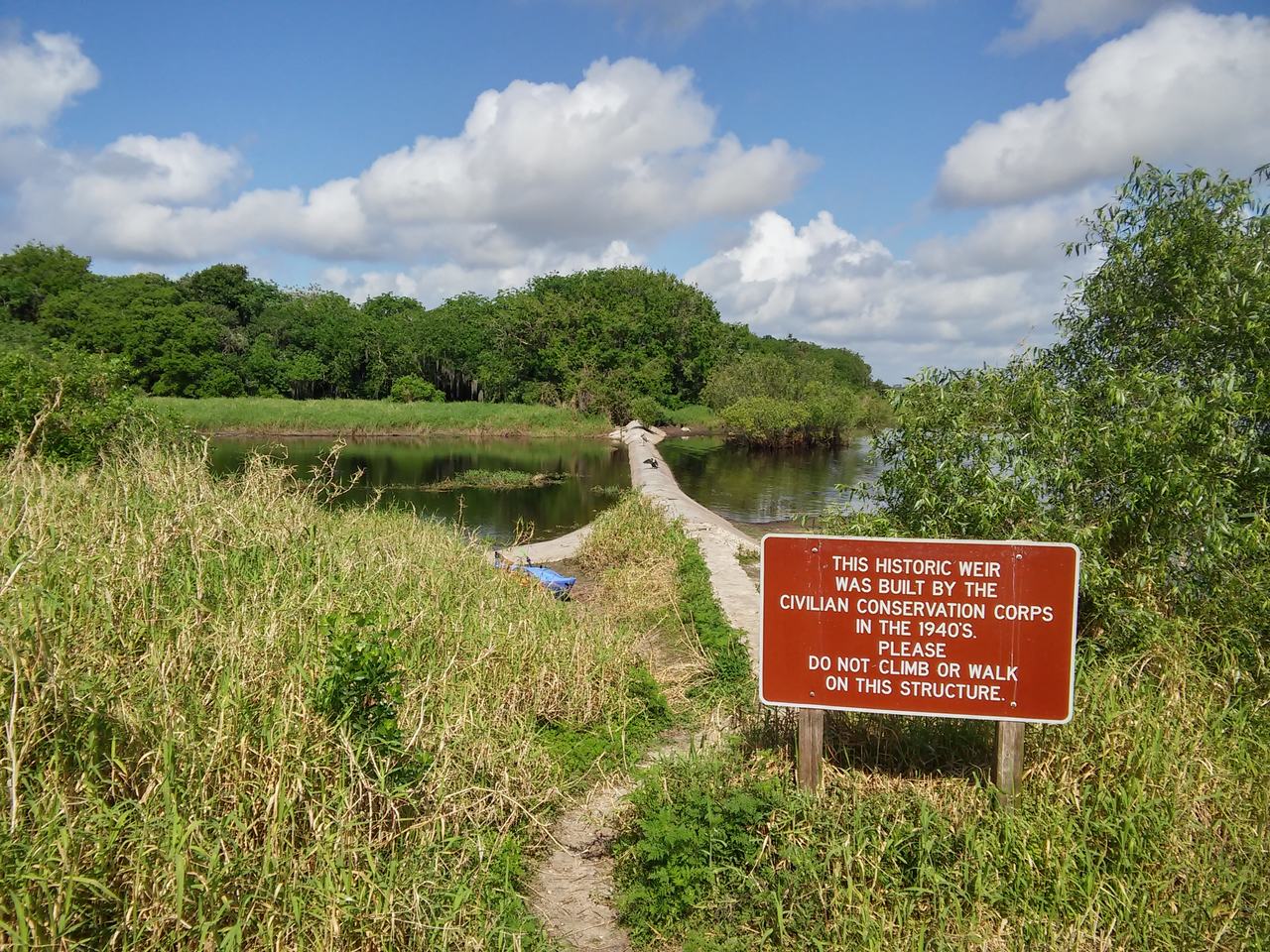
The park in its present form was established in the 1930s thanks to the Civilian Conservation Corps (CCC) – a program created by President Roosevelt as part of the New Deal during the Great Depression. Young men built roads, bridges, cabins, and other structures from palm logs, which are still in use today. The park officially opened to the public in 1941.
In 1985, the Myakka River was designated a “Wild and Scenic River” – the first river in Florida to receive this status. Today, the park is also listed on the National Register of Historic Places (since 2011).
Interestingly, the park’s name comes from an encounter in 1843 between European surveyor Sam Reid and the Seminoles, who described the river to him as “Miarca”. On maps, this gradually evolved into the modern spelling, Myakka.
Park entrance, fees, and practical information
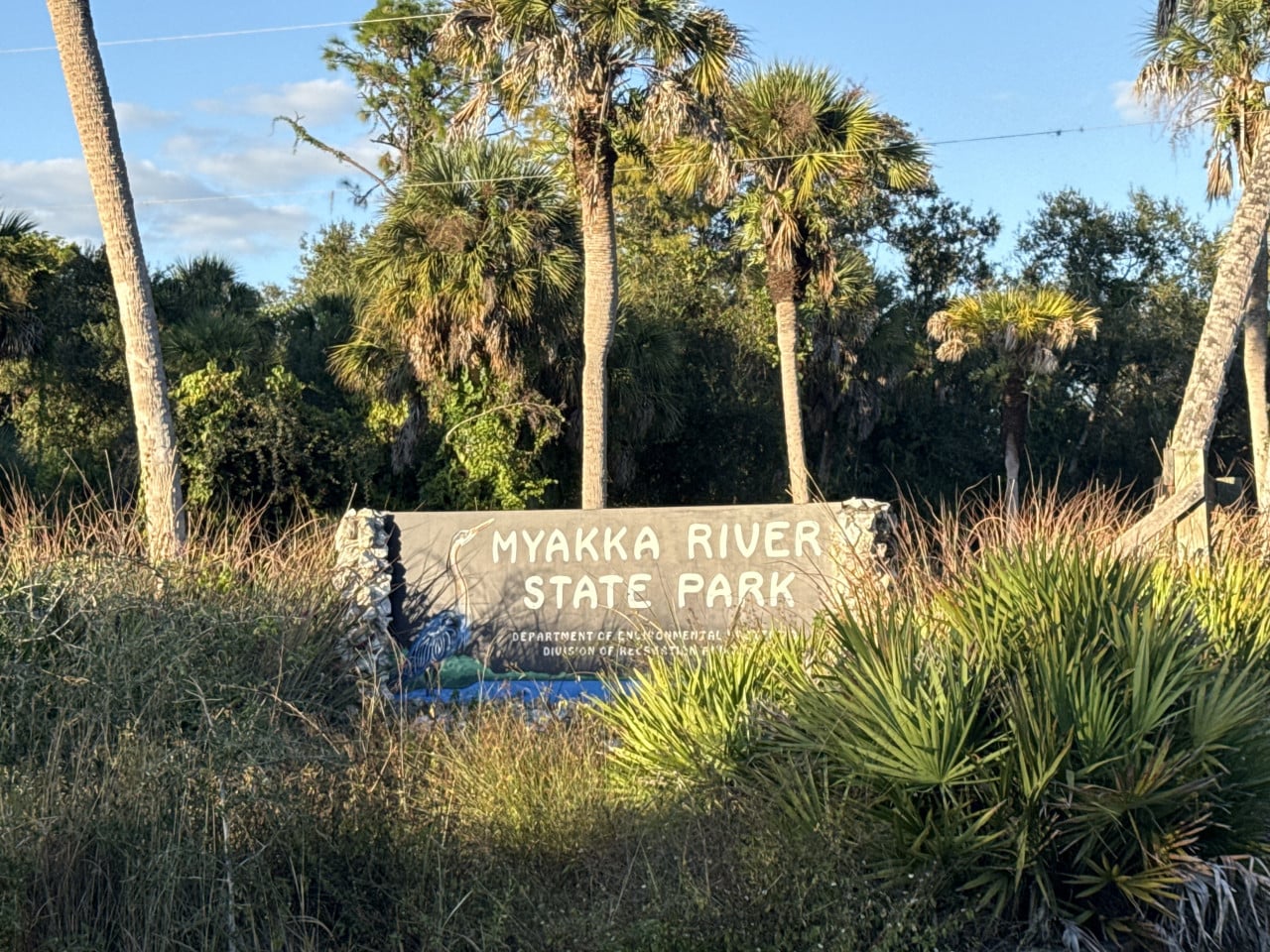
When you arrive, you will come to an entrance gate, where a local ranger collects the fee. It is usually a nominal amount of around 10 dollars per vehicle (up to 8 people). If you plan to visit Florida state parks more frequently, I recommend purchasing an Annual Pass – the annual pass generally pays for itself after your second or third visit.
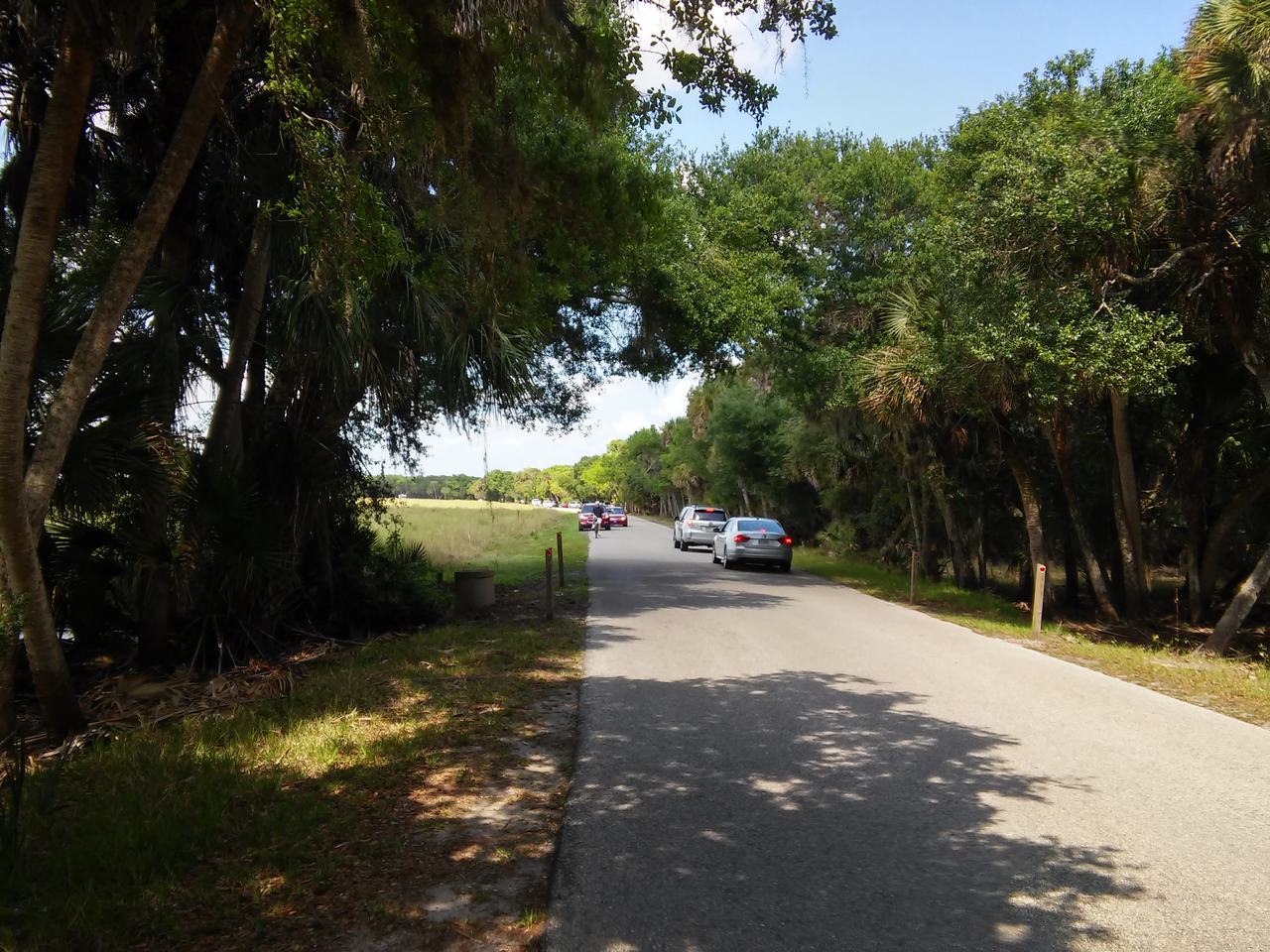
Like most state parks in the US, Myakka is a drive-thru park. This means you can drive directly to the individual attractions and trails. It makes sense – the park is enormous, and walking through the entire park would take all day. The best approach is therefore to drive straight to the entrance of a specific trail and begin walking from there.
You can also camp overnight in the park, and if you want to experience a little nostalgia, you can rent one of the original palm-log cabins built by the CCC in the 1930s. Current fees can be found on the official Myakka River State Park website.
Alligators – the true stars of the park
If you’re going to Myakka, you’re probably going because of the alligators and, of course, the typical Florida wilderness. As far as the alligators are concerned, you certainly won’t be disappointed. Approximately 4,000 of them live in the park, and the Upper Myakka Lake area is among the places with the highest alligator populations in Florida. There is even a sinkhole here called “Deep Hole” – a karst sinkhole 130 feet deep (about 40 meters) and 90 meters wide – where hundreds of alligators gather in one place during the dry season because the other bodies of water dry up.
Here are a few interesting facts about alligators that personally surprised me:
The word “alligator” comes from Spanish. Spanish conquistadors called these unfamiliar reptiles “el lagarto” – meaning “the lizard.” Over time, the English pronunciation evolved into today’s “alligator.”
They are more closely related to birds than to lizards. Alligators come from the same evolutionary branch as dinosaurs. And unlike other reptiles, they have a four-chambered heart, just like birds and mammals.
The sex of the hatchlings is determined by the temperature of the nest. At temperatures below 28 °C, females hatch; above 33 °C, males hatch.
They can live up to 50 years in the wild and easily more than 70 years in captivity.
An adult male averages 3.4 meters in length and weighs around 360 kg, but record specimens in Florida have measured more than 4.3 meters and weighed 470 kilograms. Florida even designated the alligator as its official state reptile (in 1987).
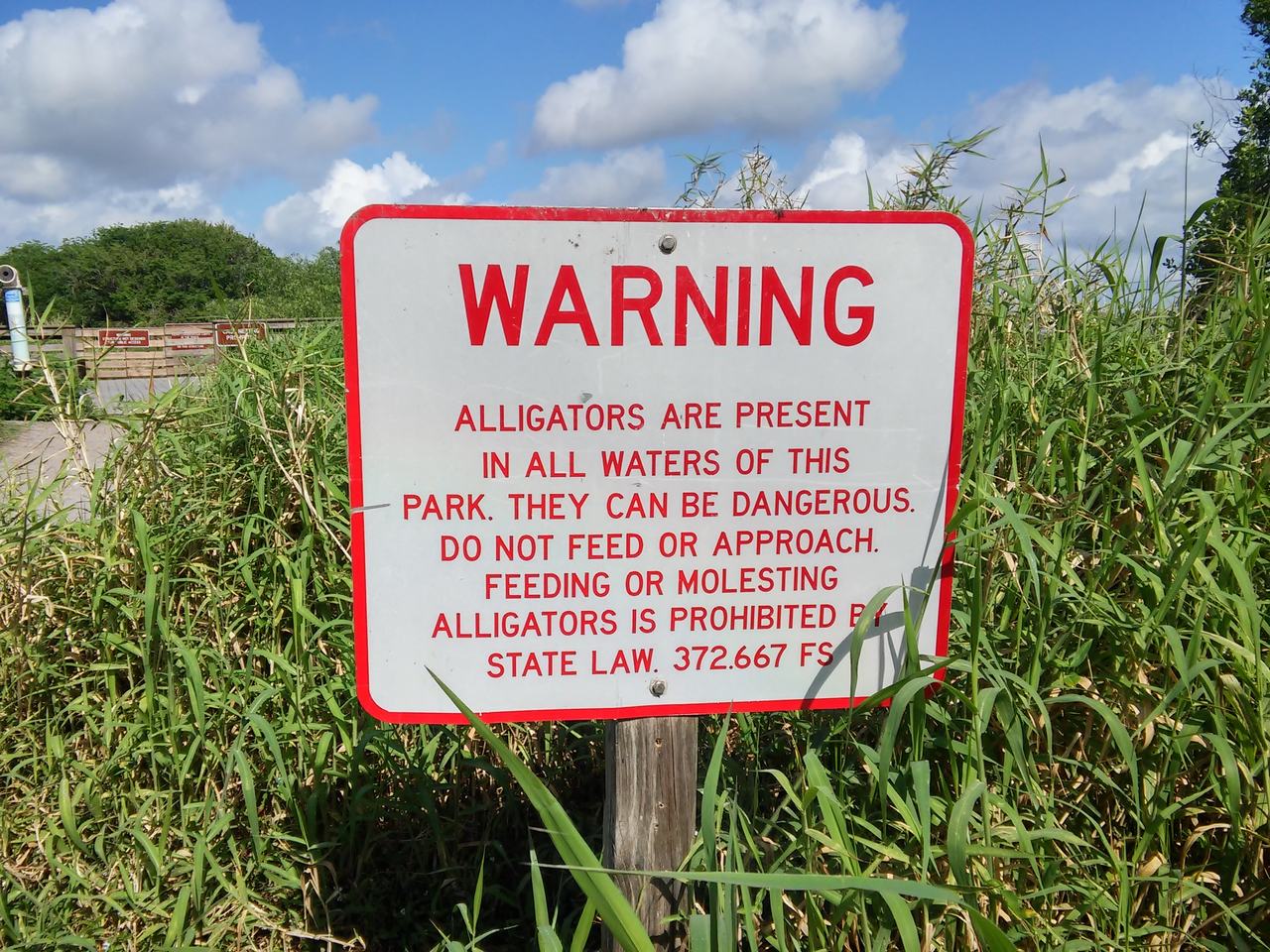
Feeding wild alligators is illegal throughout Florida. And it makes sense – they lose their natural fear of humans. You will see signs with this warning everywhere.
And of course – alligators are very fast. Even though they look lazy on land, they can outrun you over a short distance. So be cautious, even if they don’t appear dangerous. I never recommend approaching them, whether you’re curious or want to take a good photo.
Incidentally, in addition to alligators, the park is home to many other animals that you should watch out for. Once, I saw a venomous snake right on the trail – species commonly found in Florida include coral snakes, water moccasins (cottonmouths), and various rattlesnakes. Do not reach into holes in trees, among palm roots, or into tall grass.
The bridge at the beginning of the park – your first alligators within reach
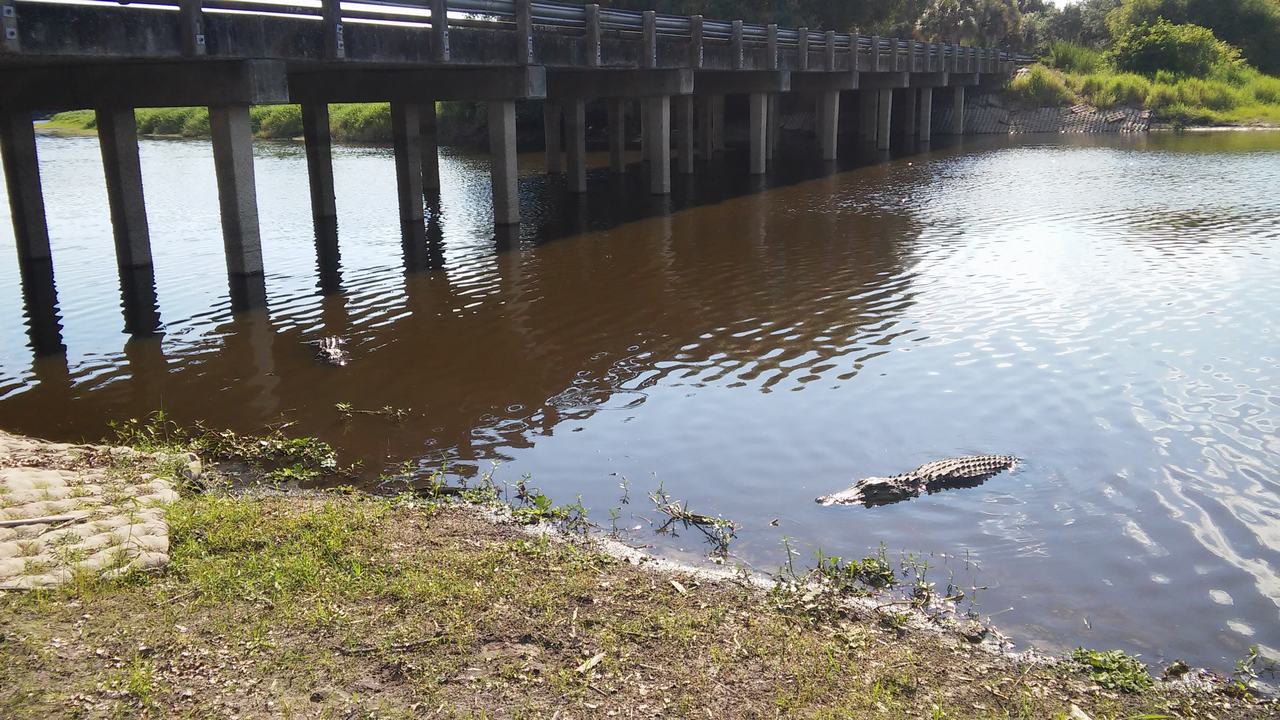
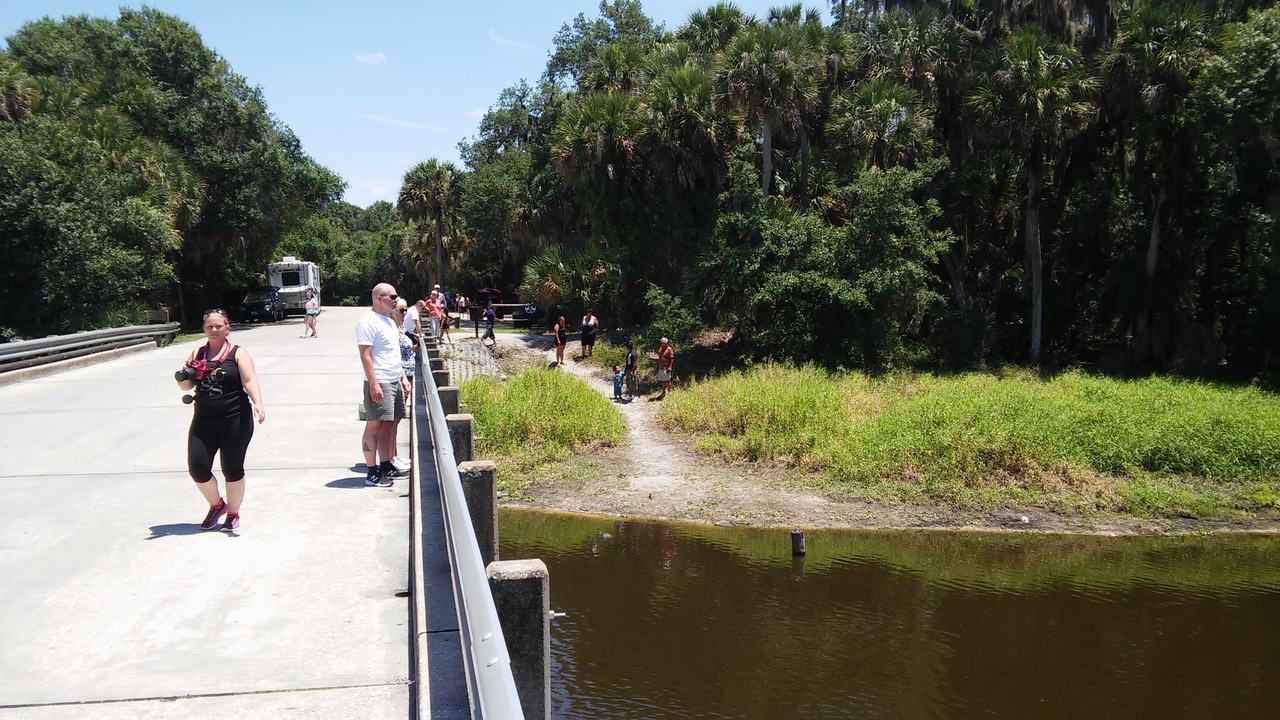
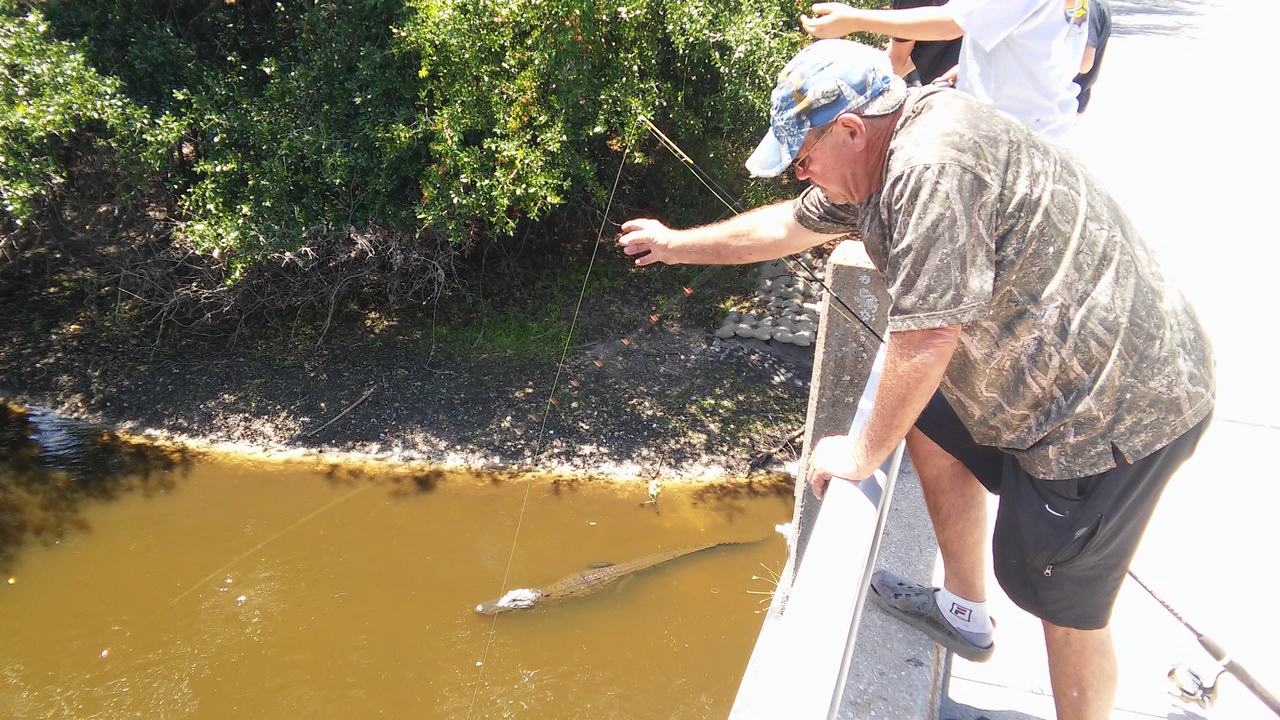
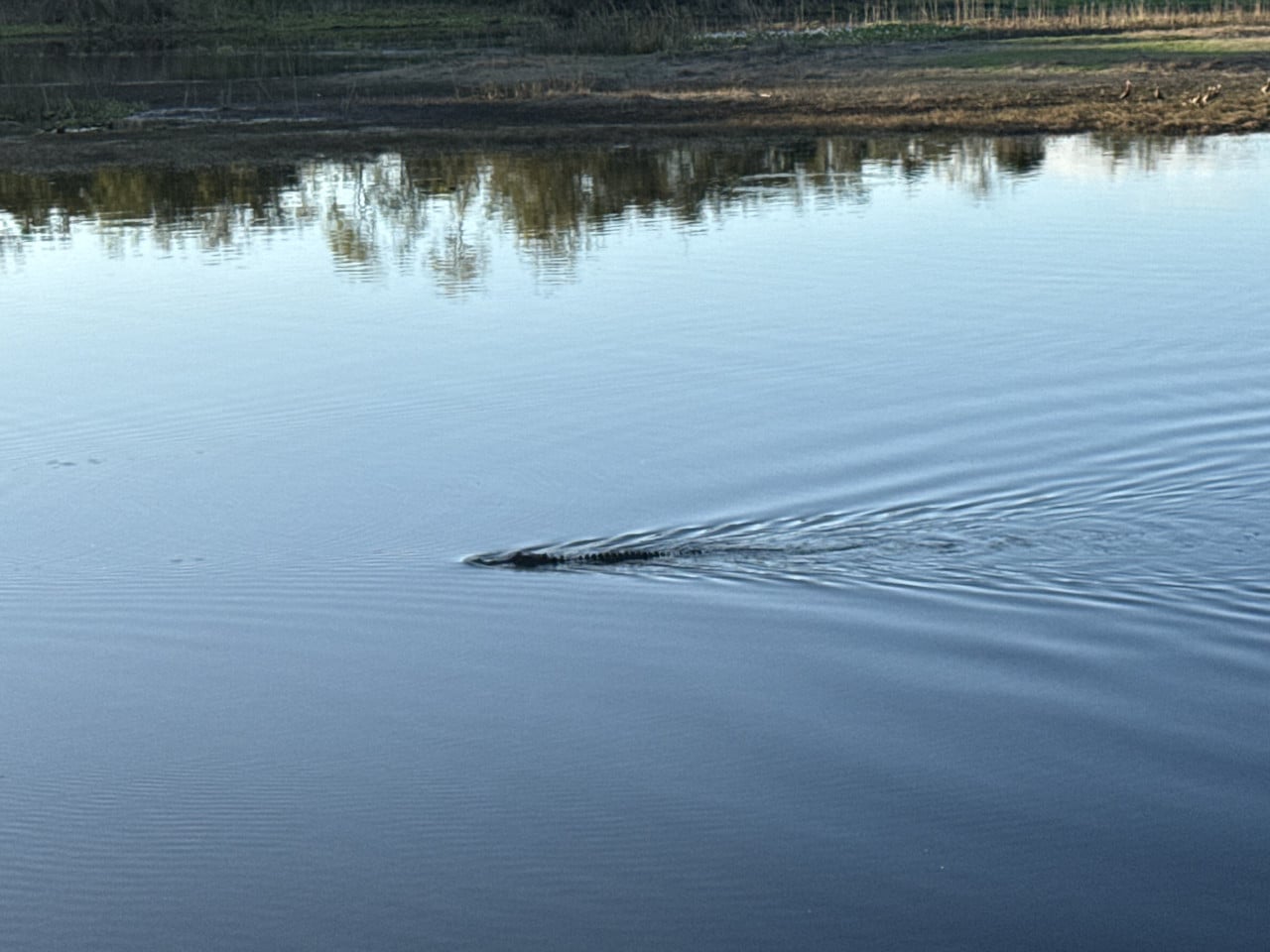
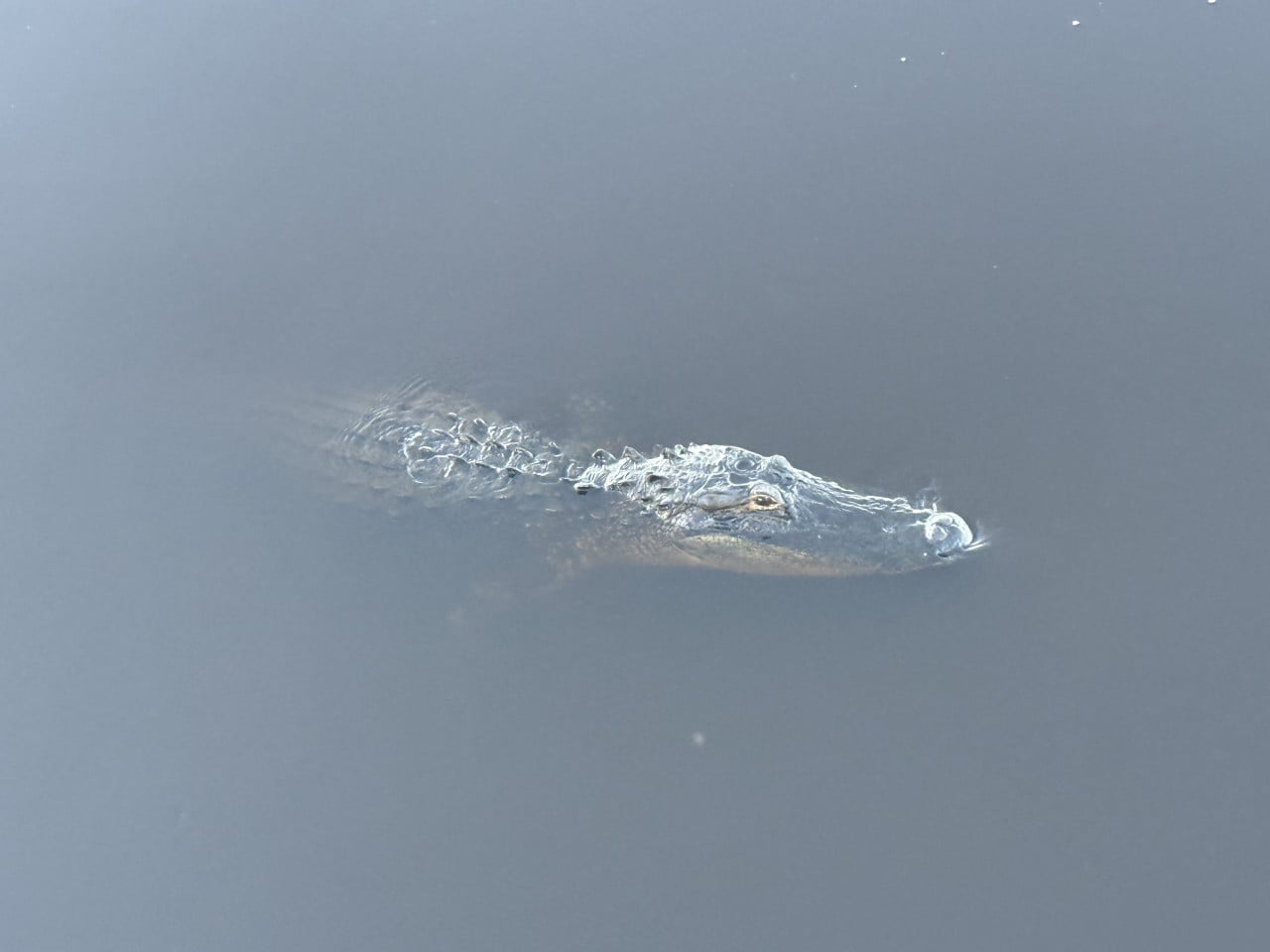
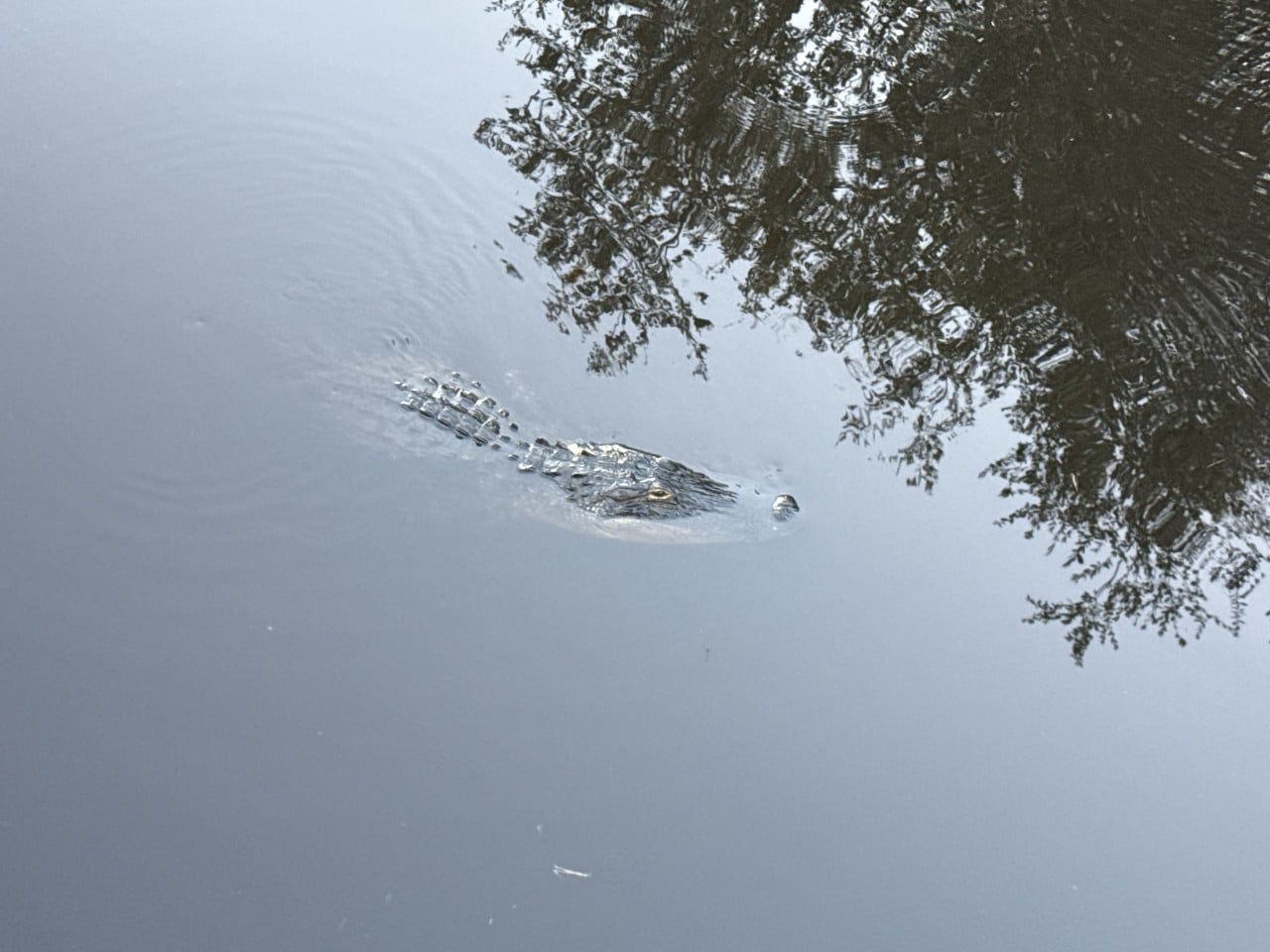
Right at the beginning of the park, before you reach the Nature Trail, you will drive across a short bridge. I recommend stopping in the adjacent parking areas. On sunny days, you can usually see alligators from the bridge, almost within arm’s reach.
We even played with one; a man had a fishing rod and was casting bait to it. In any case, seeing a huge alligator from the bridge, lying motionless in the water, is an unforgettable experience. But be careful – as I have already mentioned, even if they don’t look like it, they are very fast and can injure you.
William S. Boylston Nature Trail and Canopy Walk
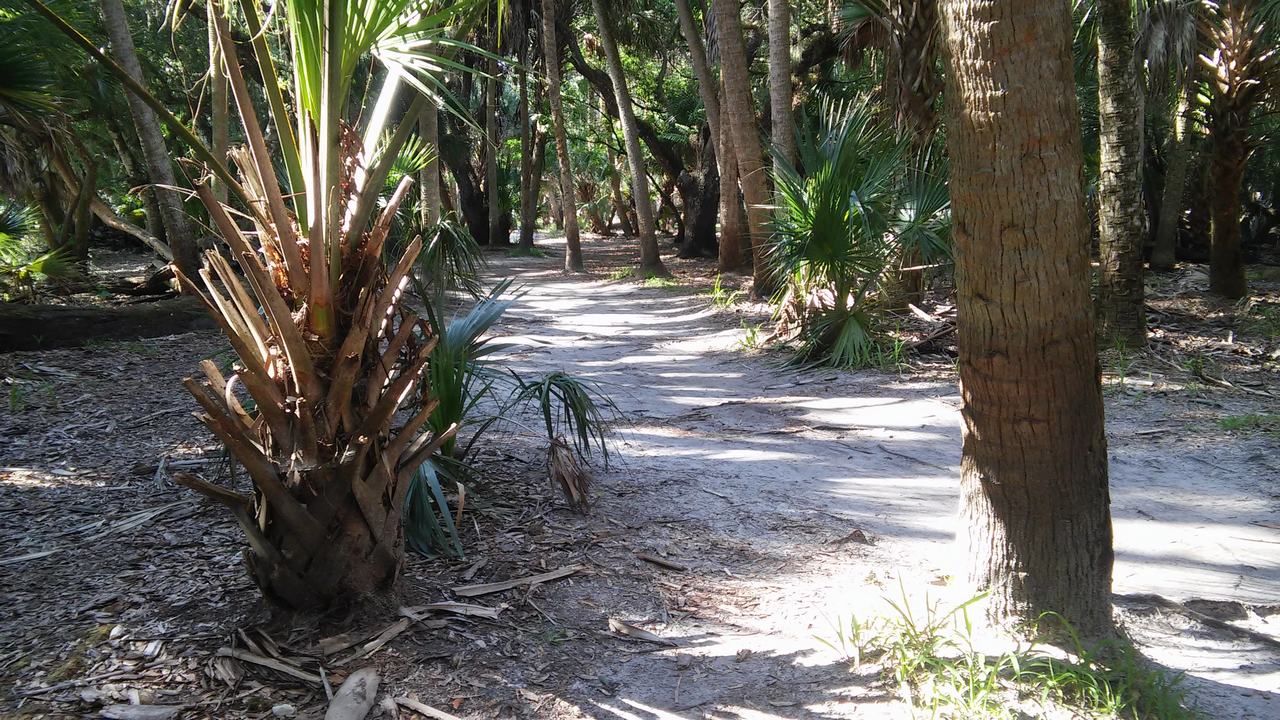
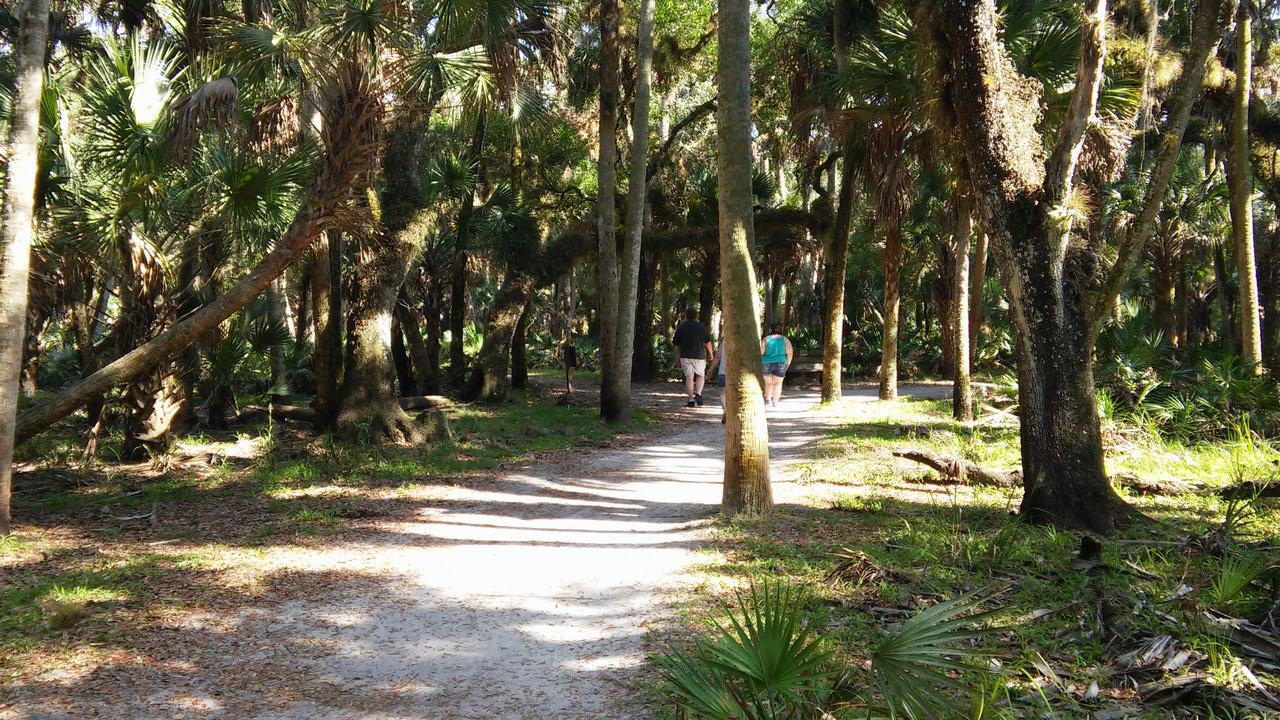
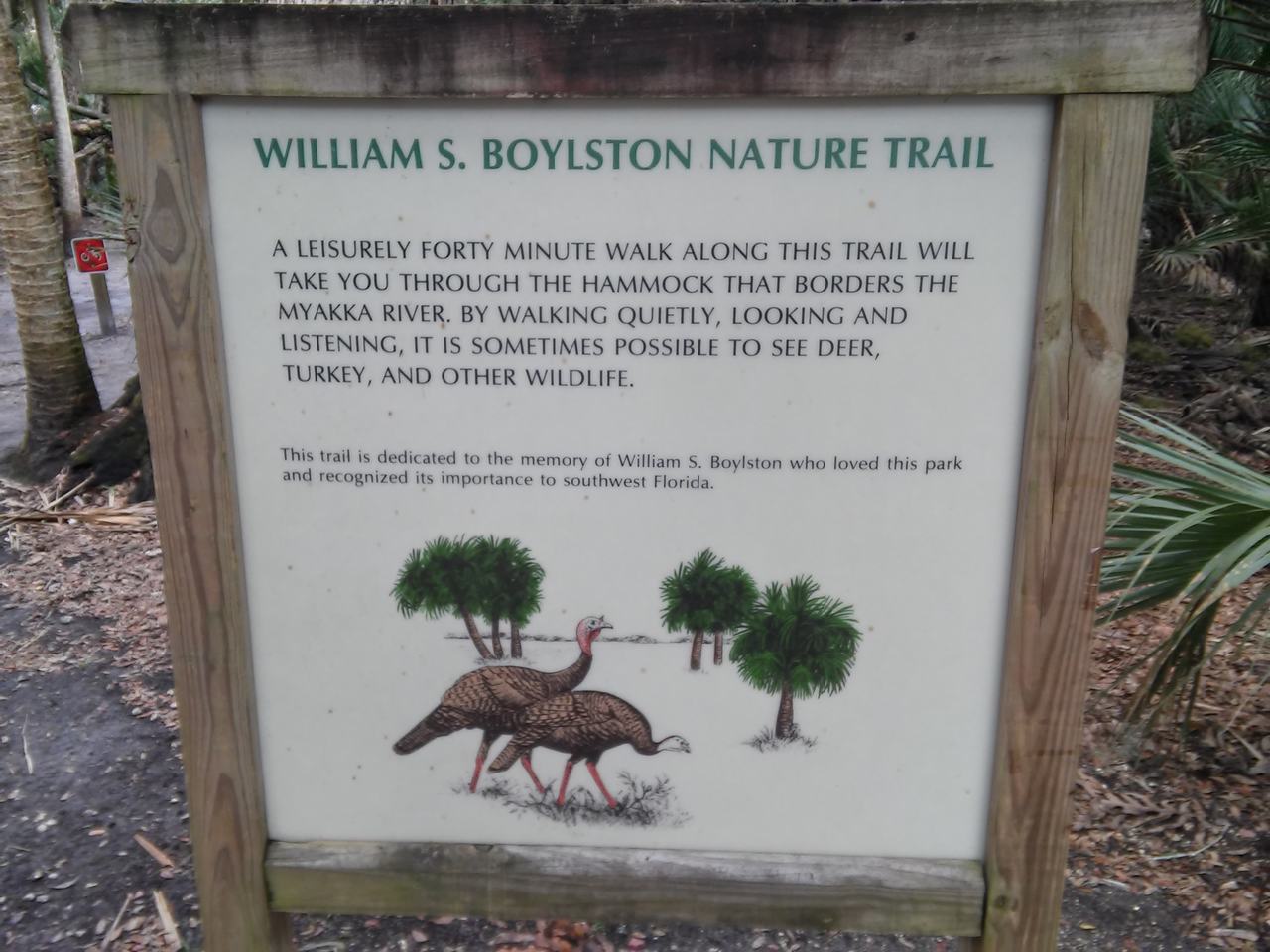
After exploring the bridge, I recommend parking at the entrance to the William S. Boylston Nature Trail. The trail is well marked, and the entire loop is just under a mile long (approximately 1.3 km). The trail is dedicated to the memory of William S. Boylston, who loved this park and supported its conservation.
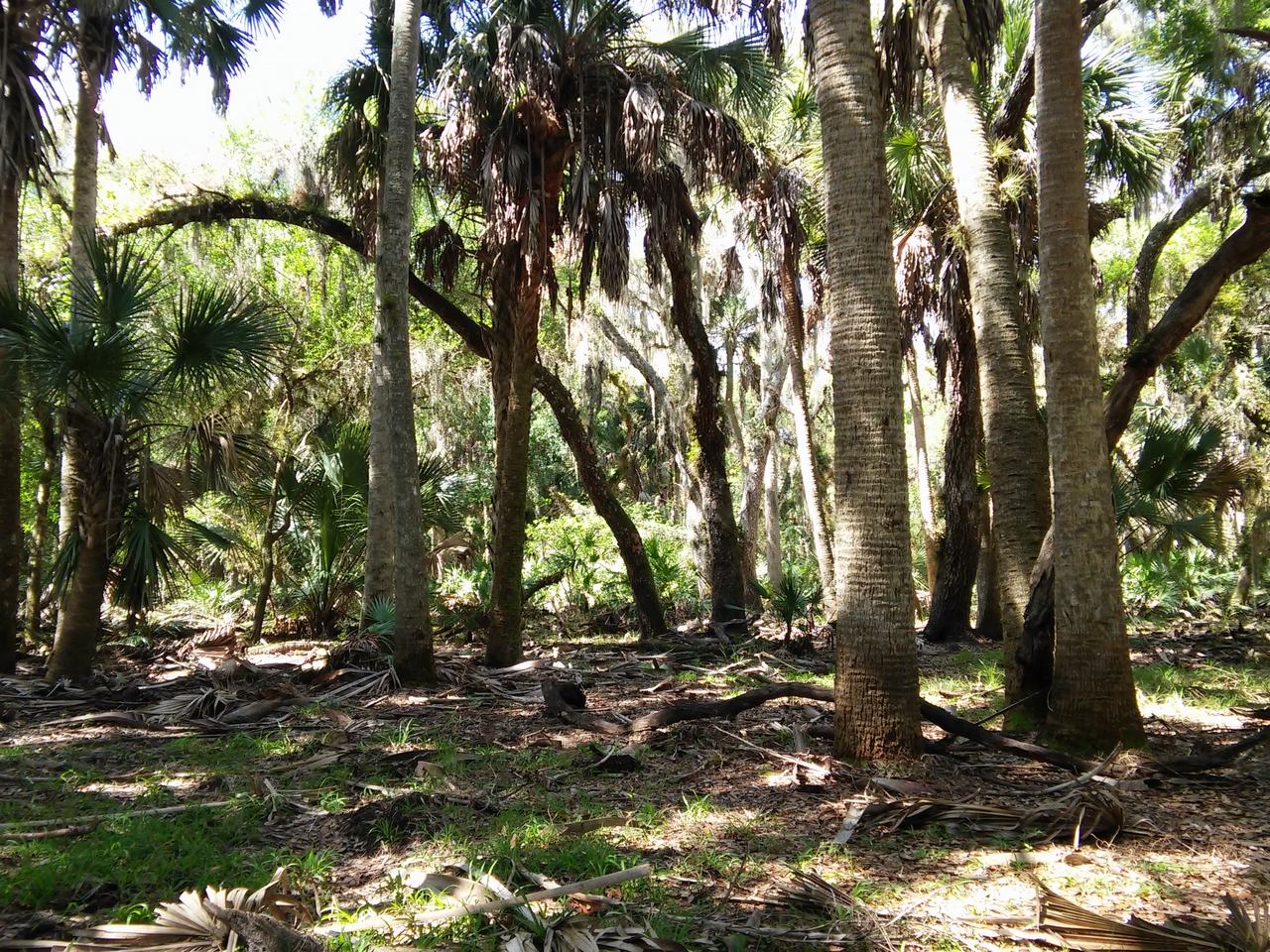
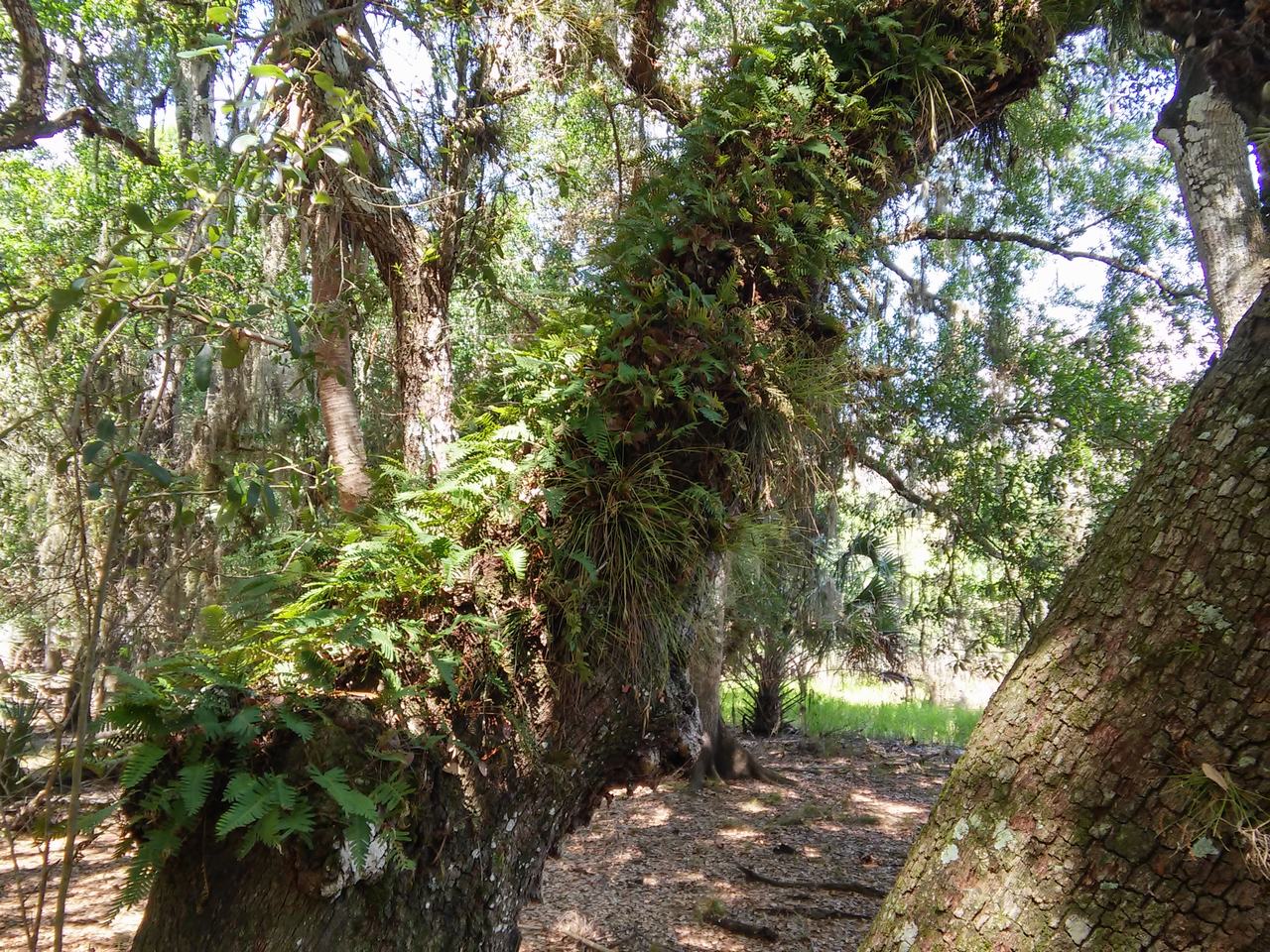
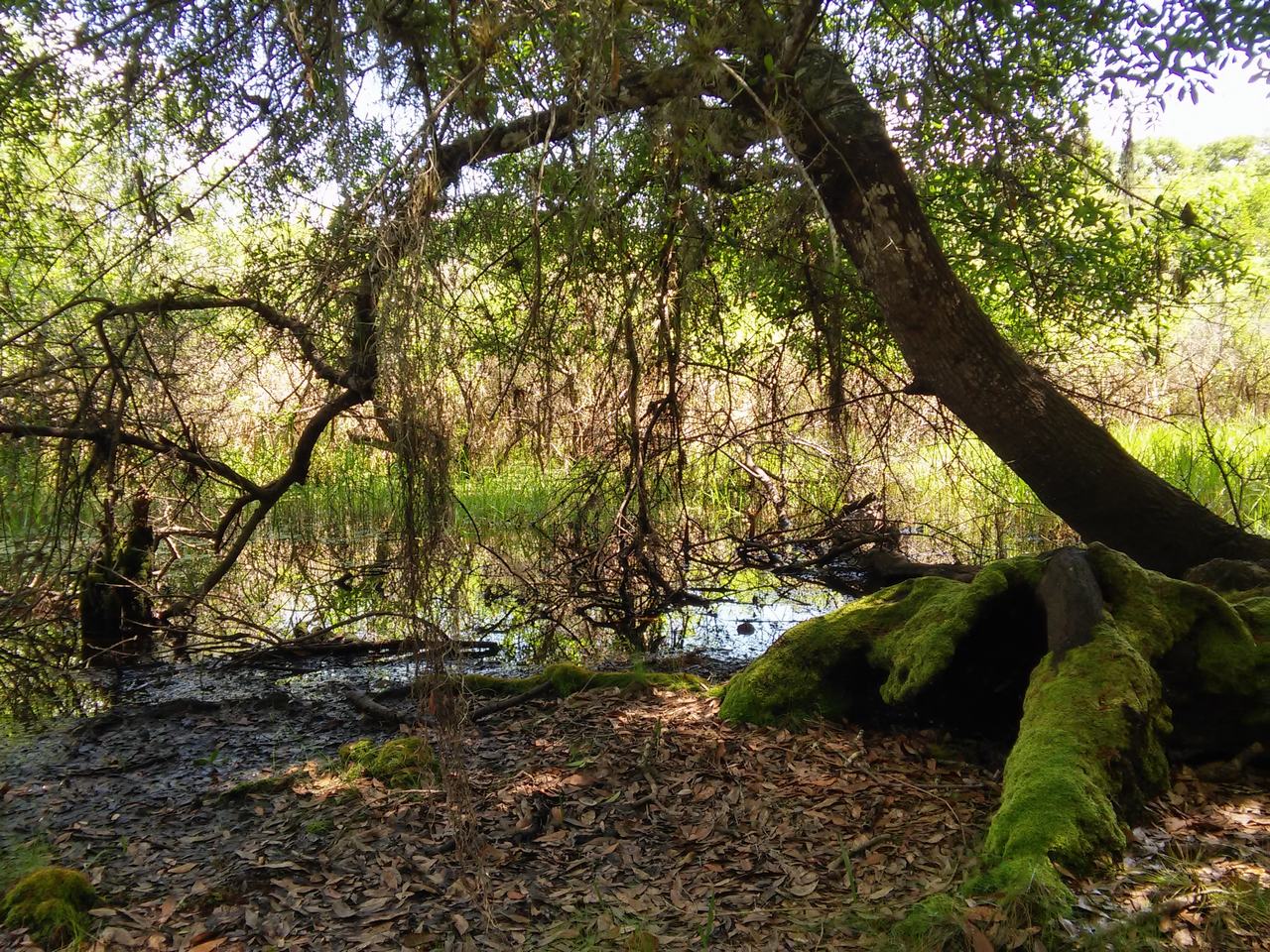
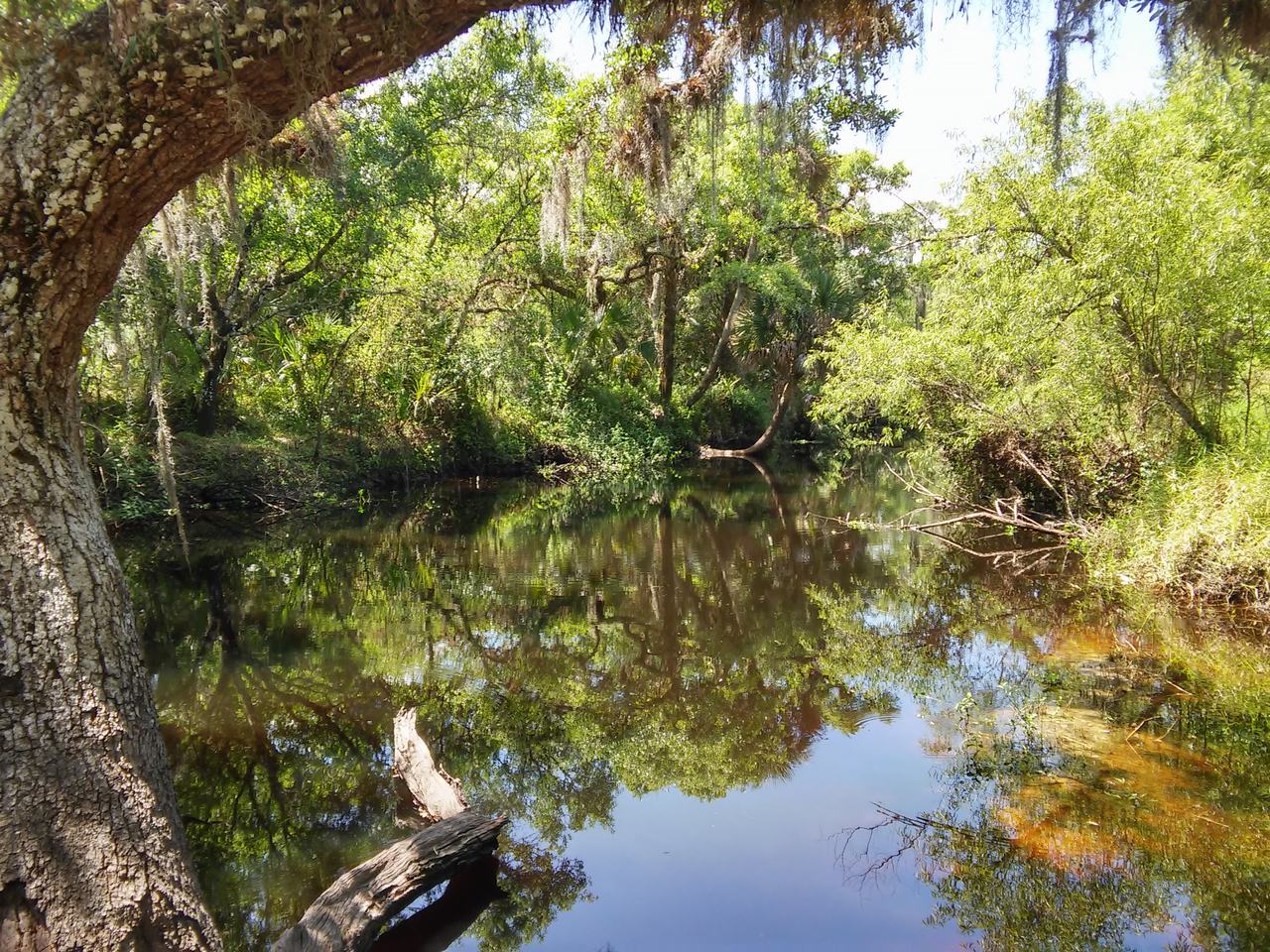
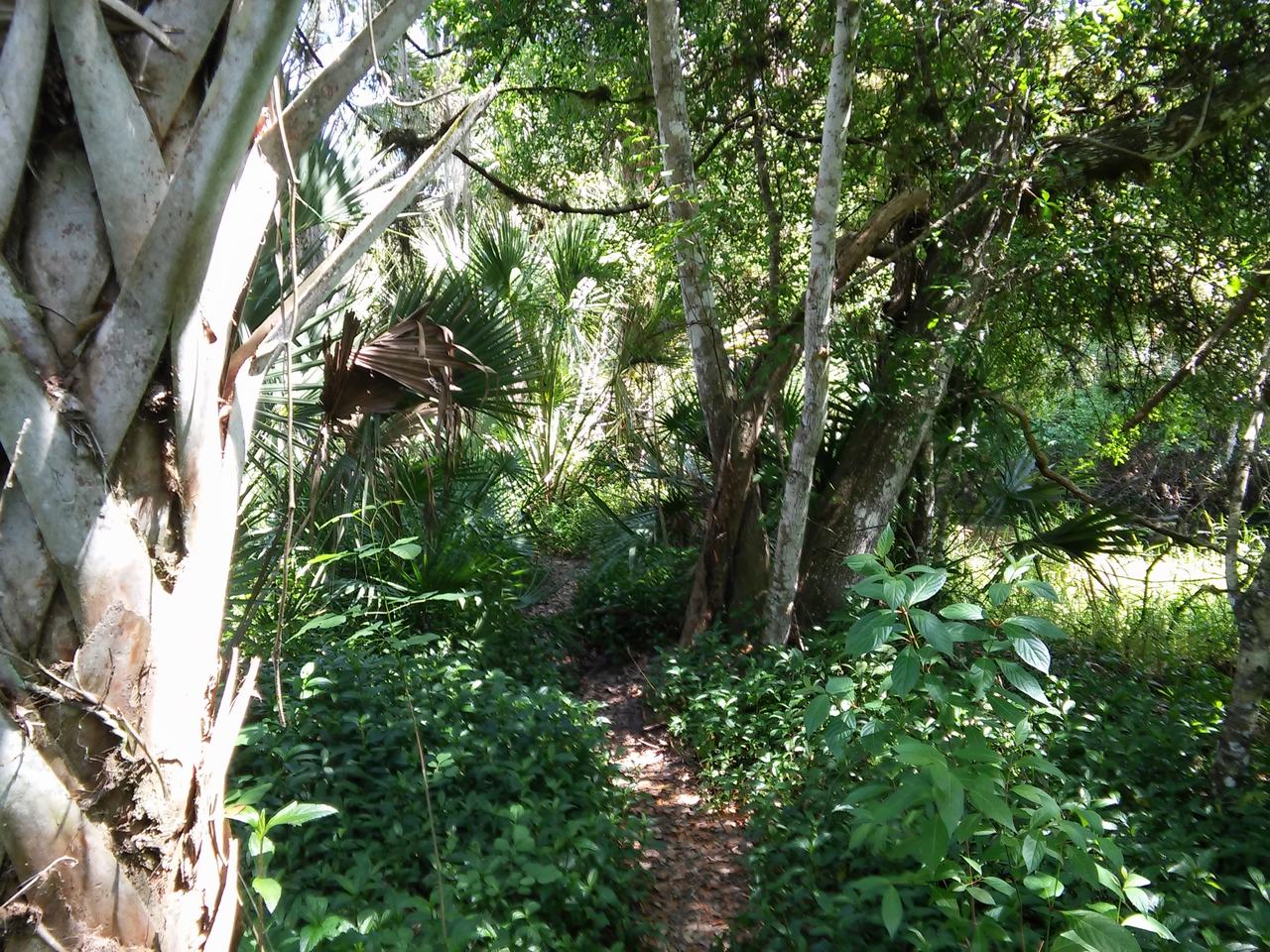
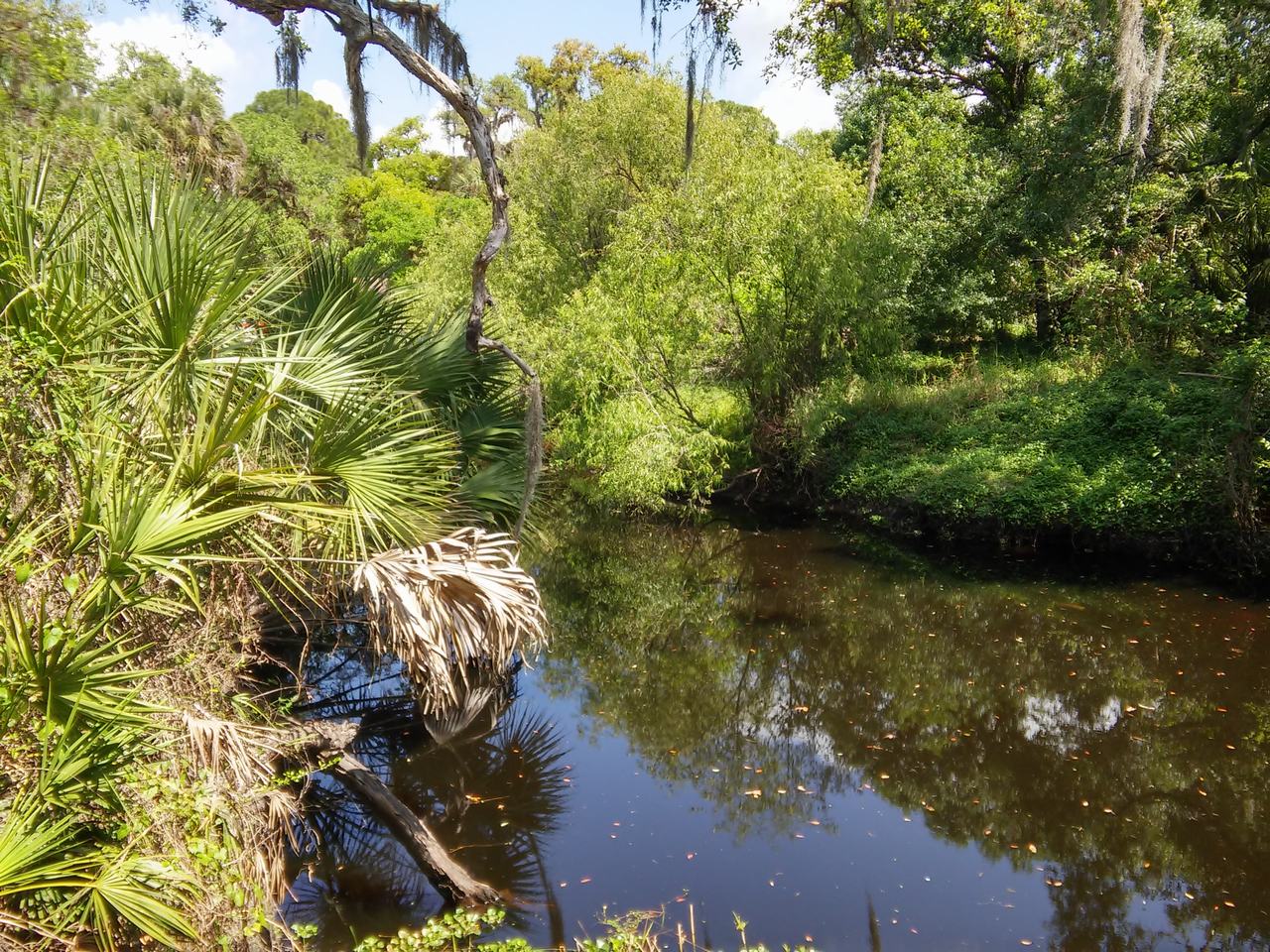
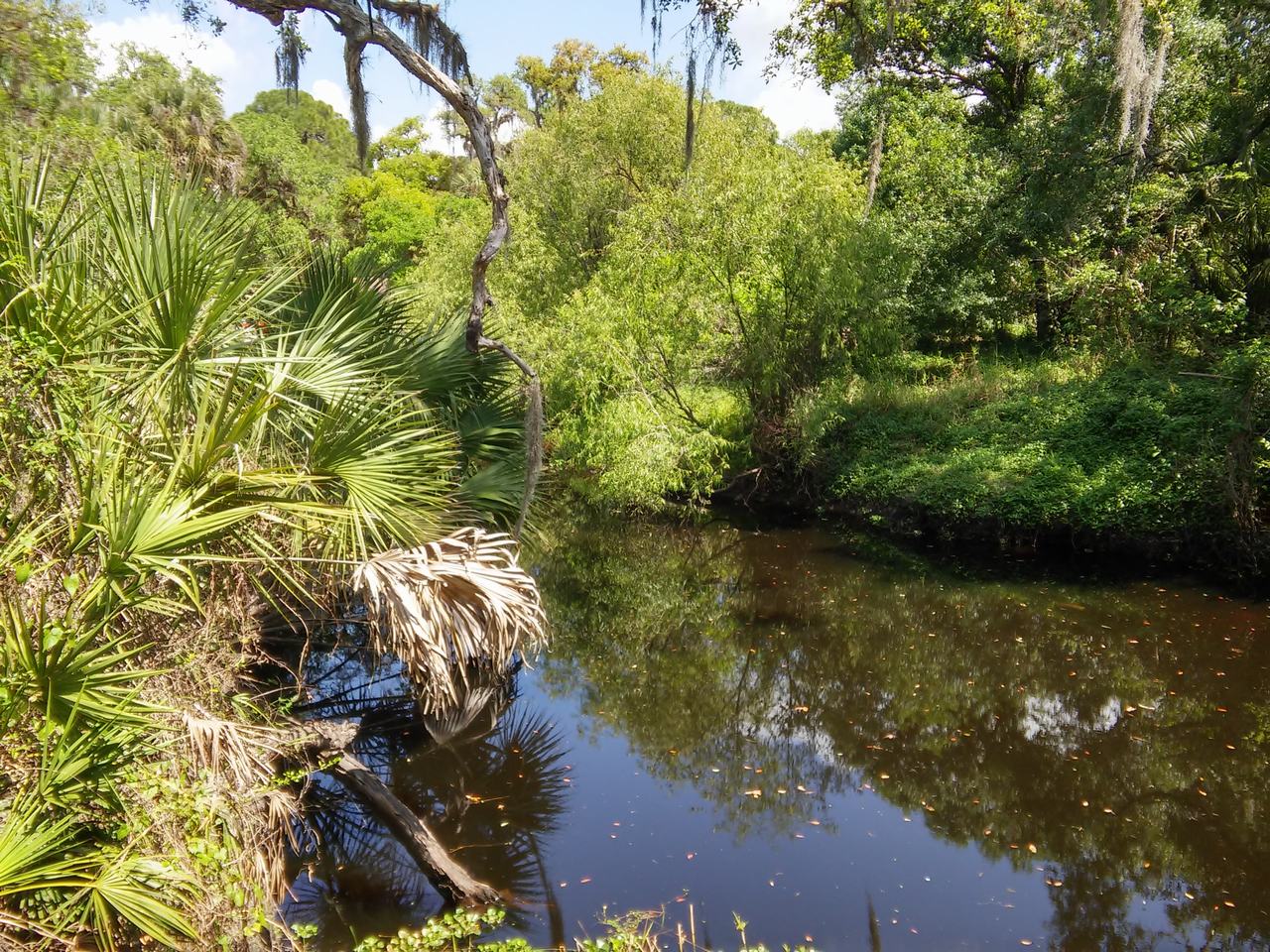
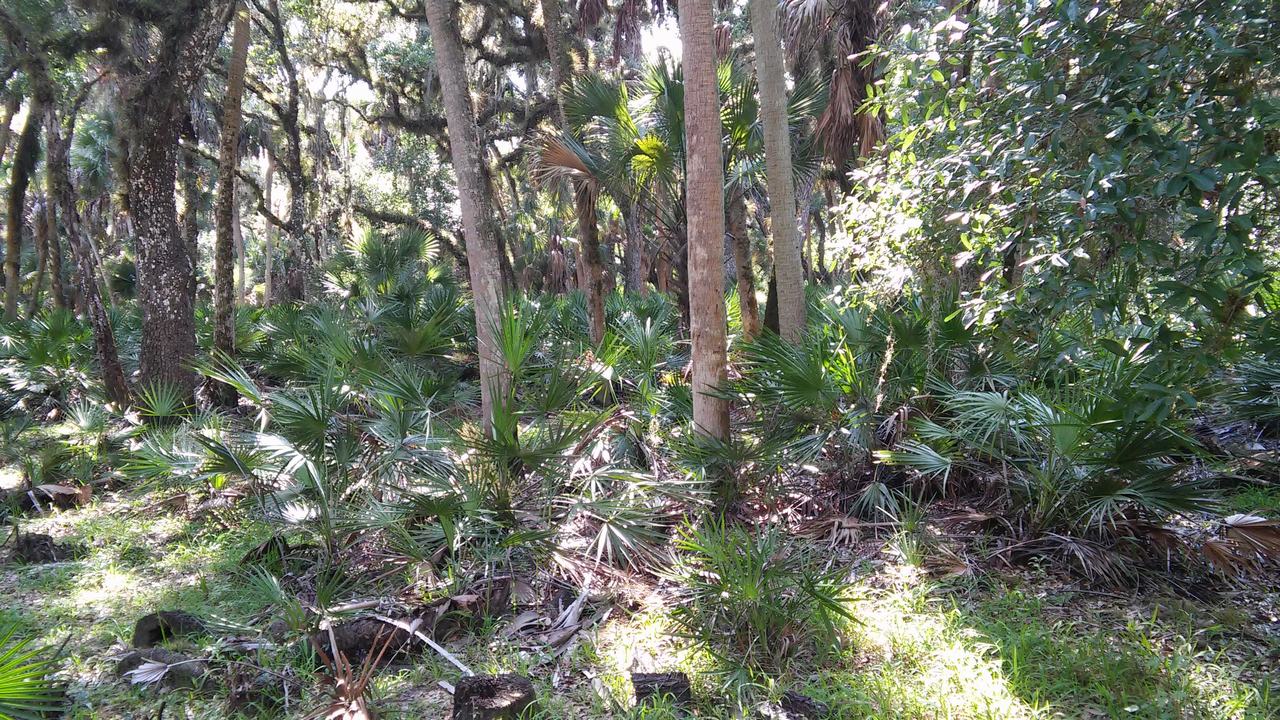
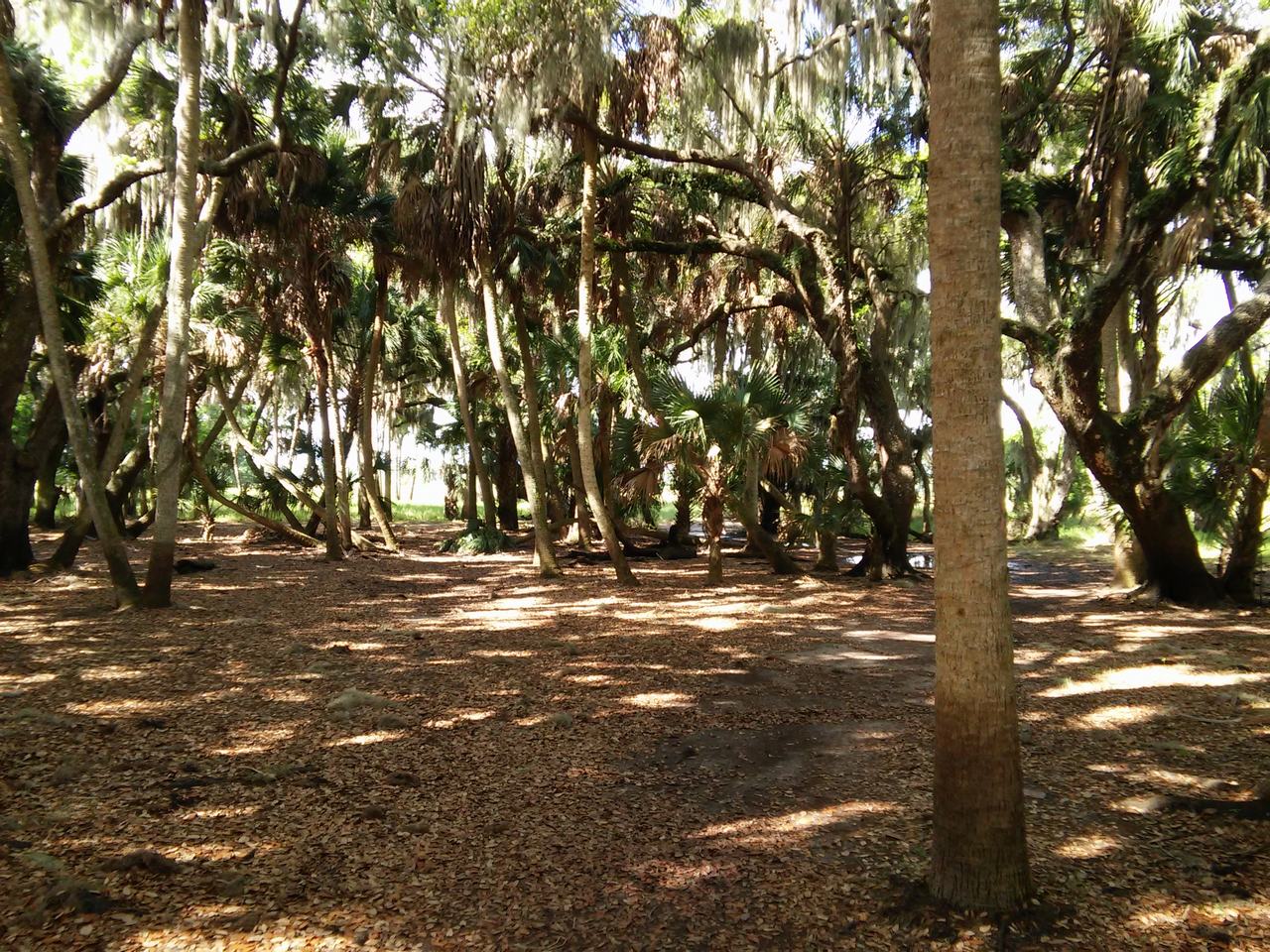
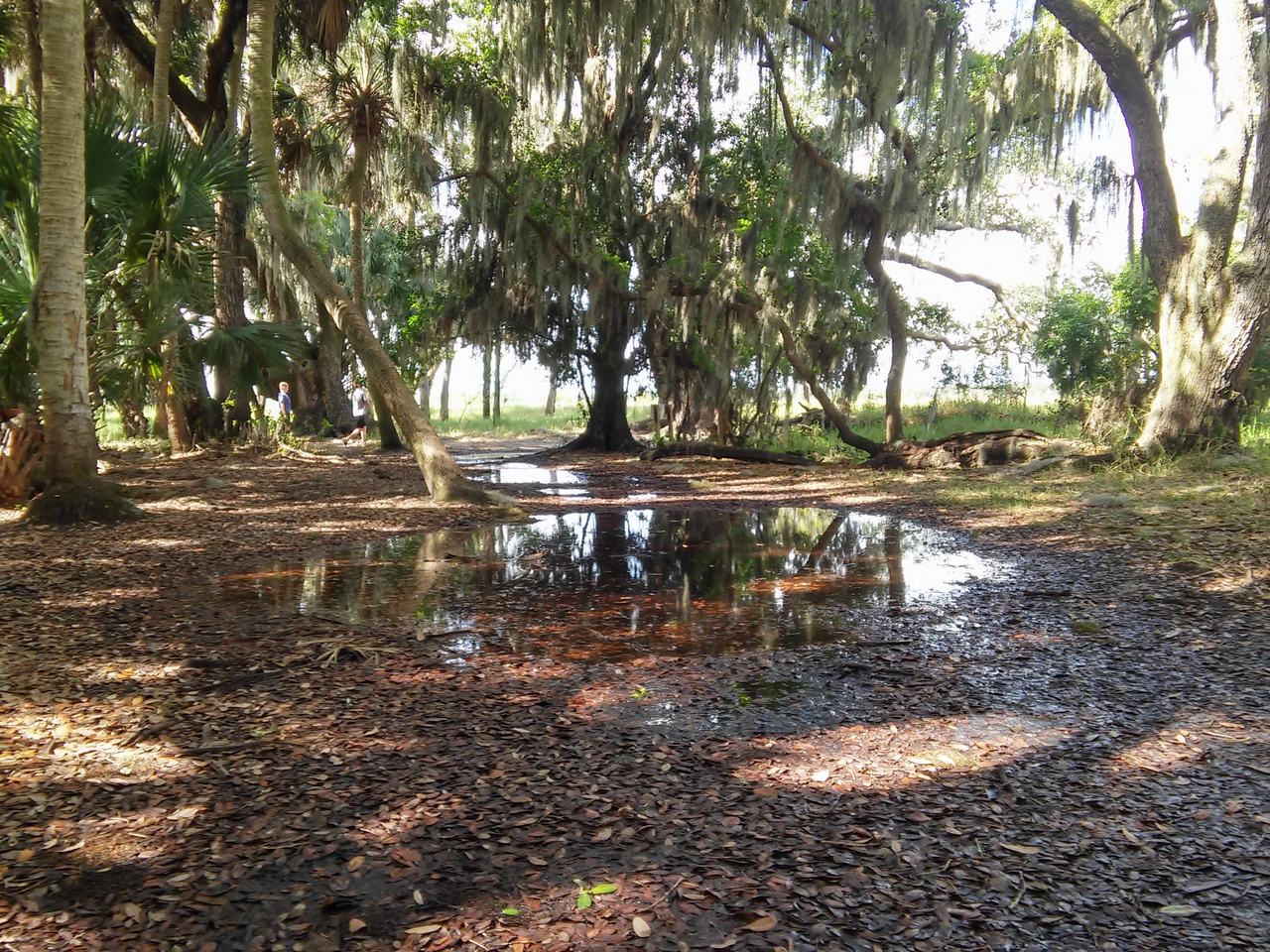
The walk leads through a quiet palm and oak grove (known as a “hammock”) bordering the Myakka River. Try to walk quietly – you can often see deer, wild turkeys, and other wildlife here.
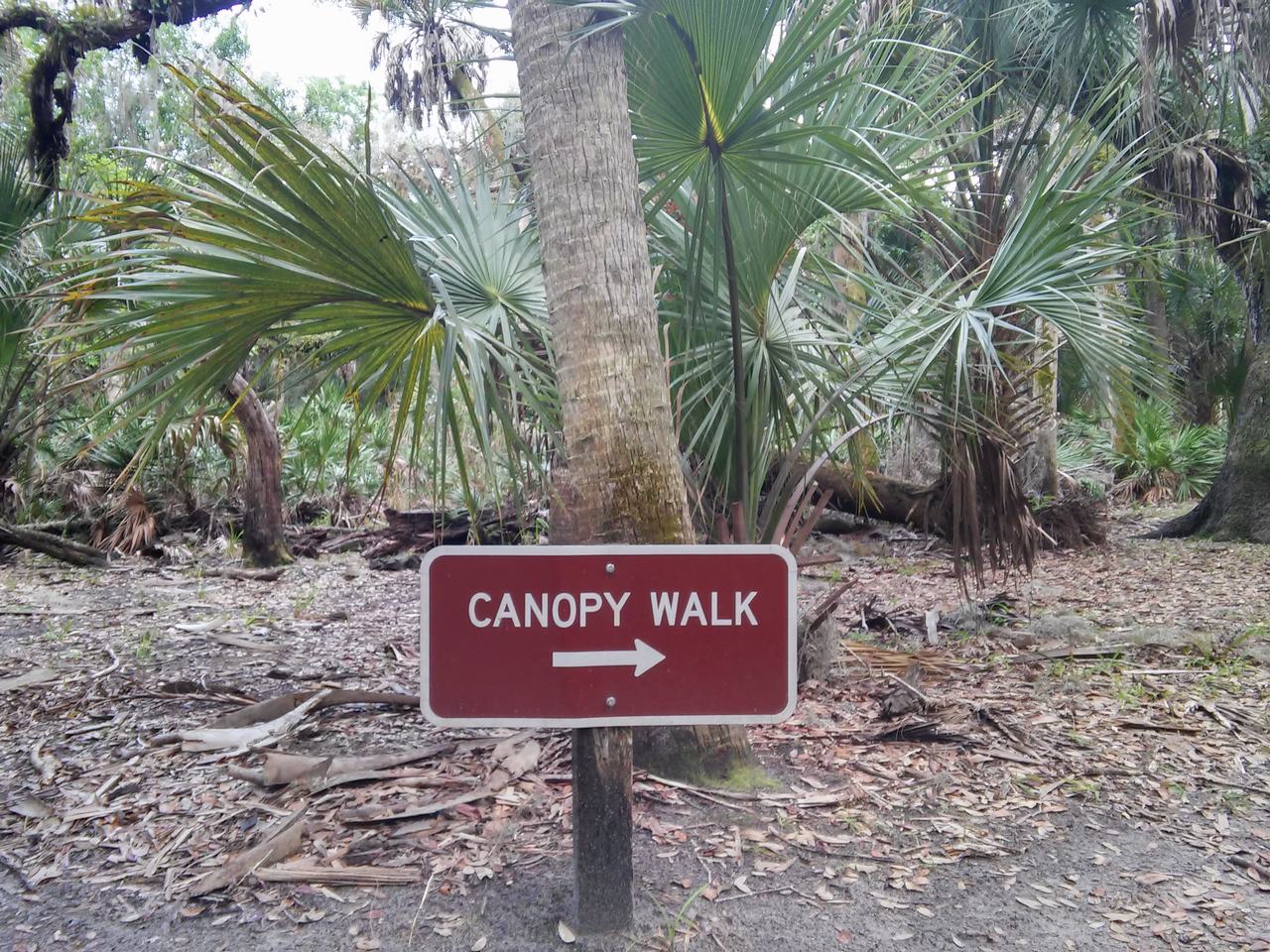
Less than a tenth of a mile from the parking lot, you will reach the greatest highlight of the entire trail – the Canopy Walk.
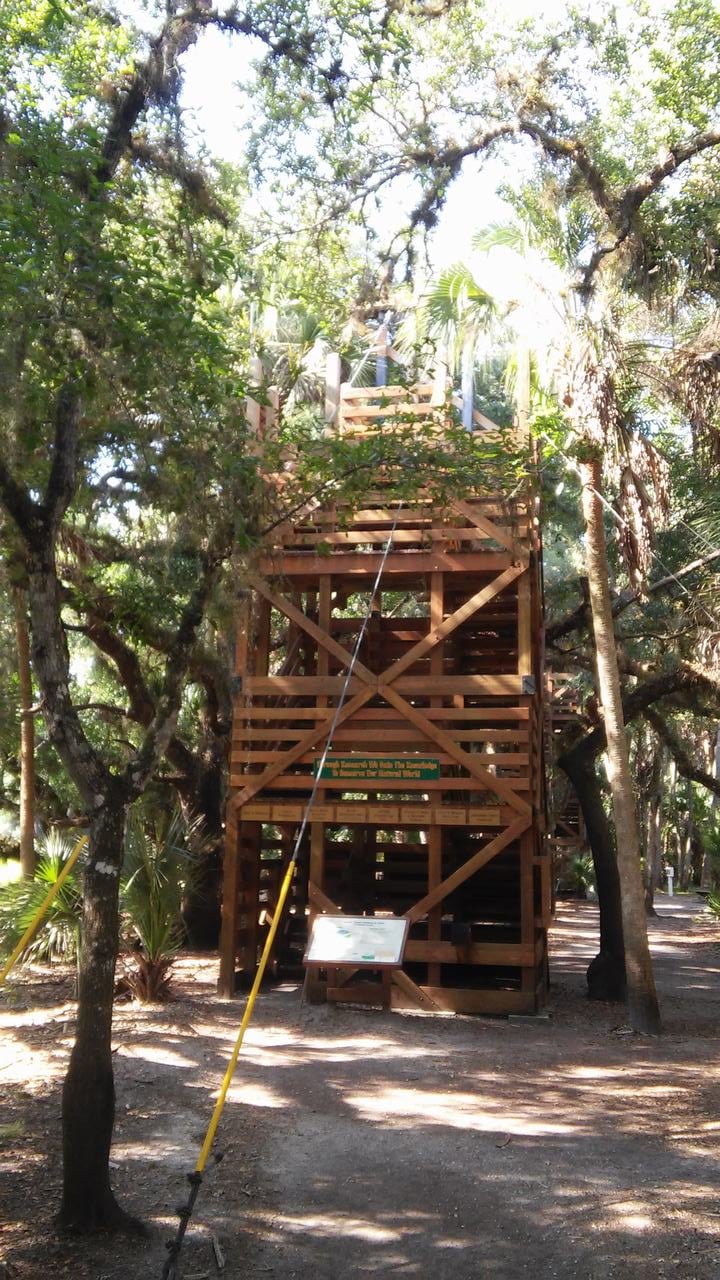
And now for one truly fascinating fact that many visitors don’t realize: In 2000, the Myakka Canopy Walk became the first public treetop walkway in North America. Before that, similar structures existed mainly in the rainforests of South and Central America and were used exclusively by scientists. It was inspired by Canadian canopy scientist Dr. Margaret D. Lowman and created through a partnership between the TREE Foundation, Friends of Myakka River, and the Florida Park Service.
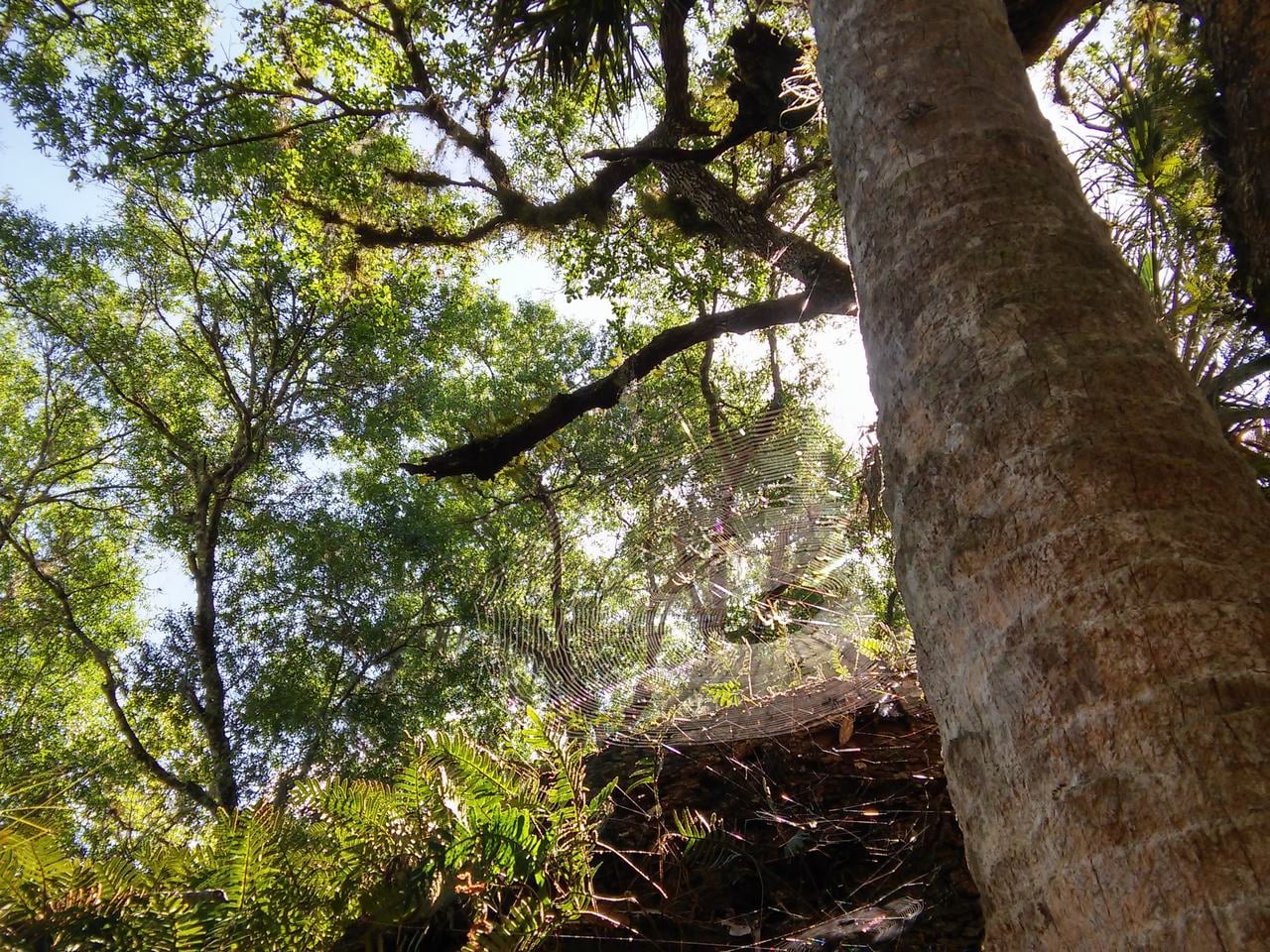
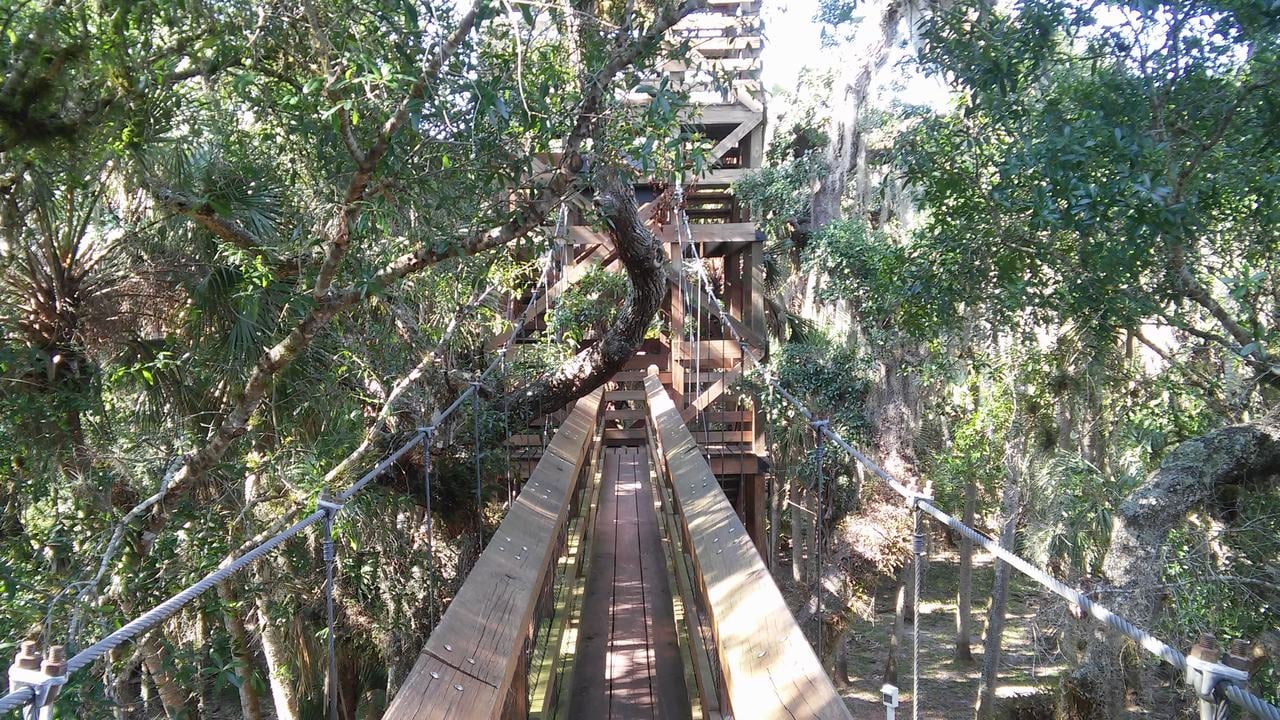
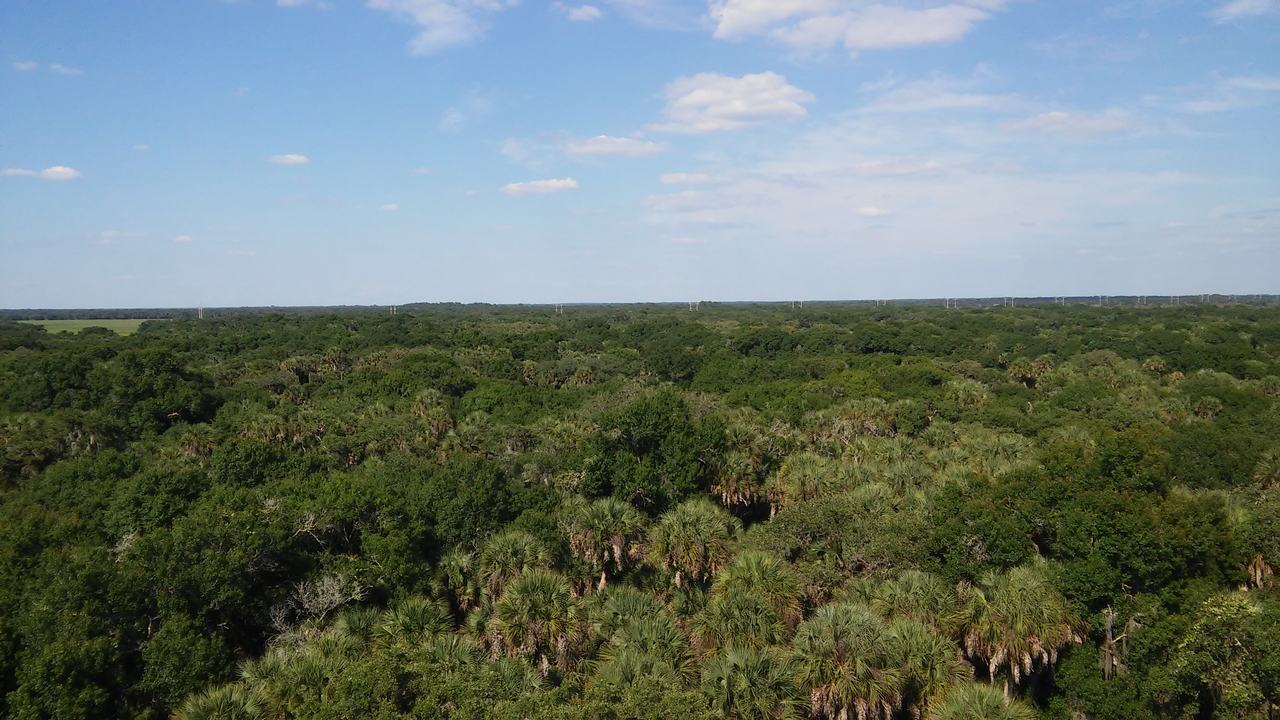
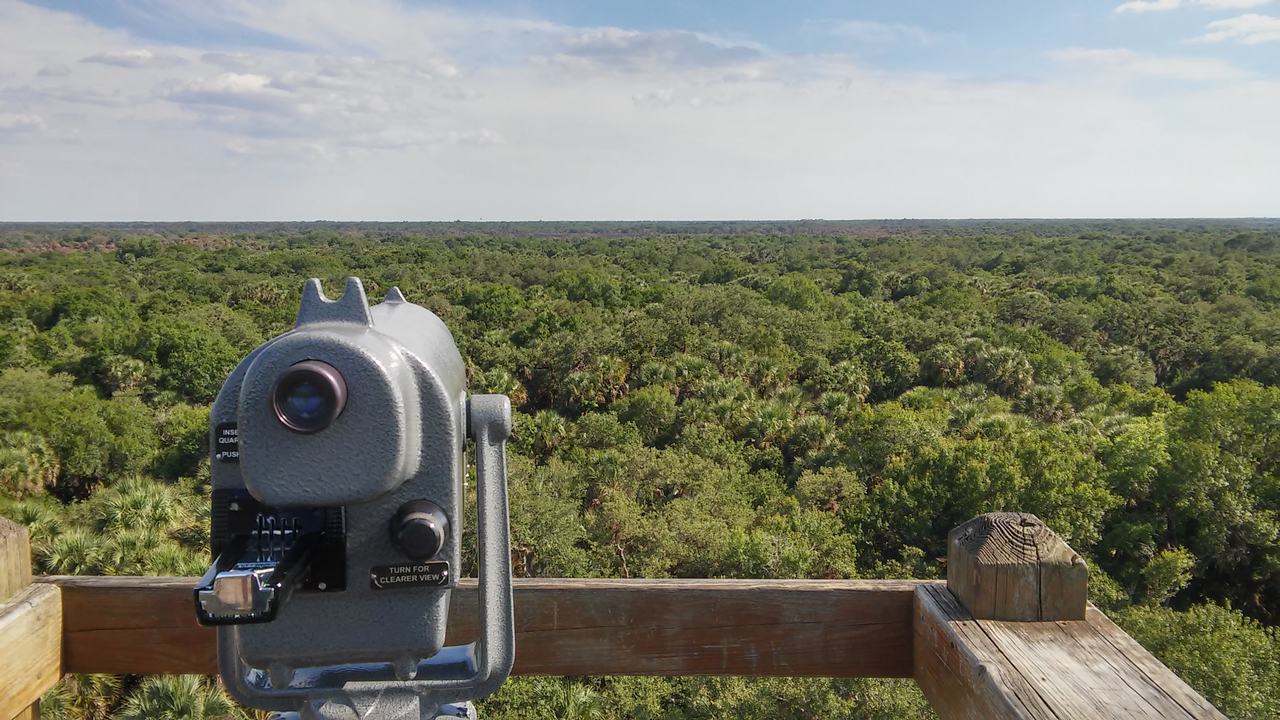
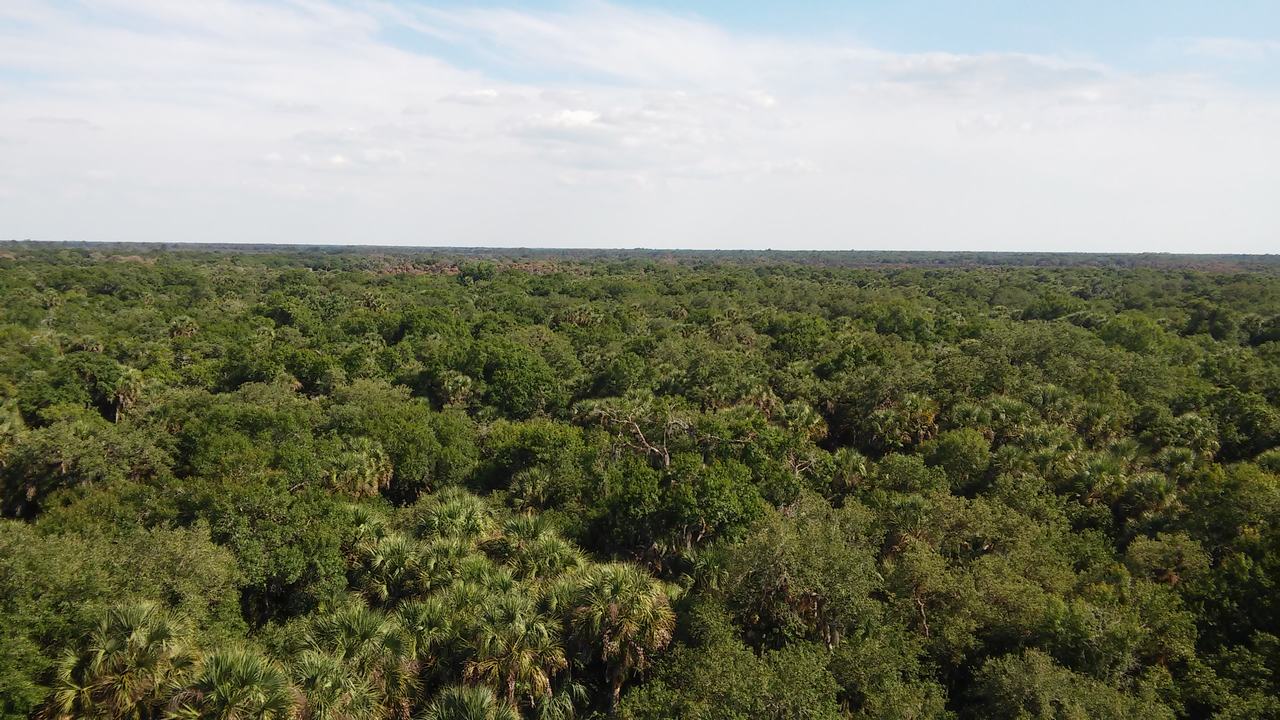
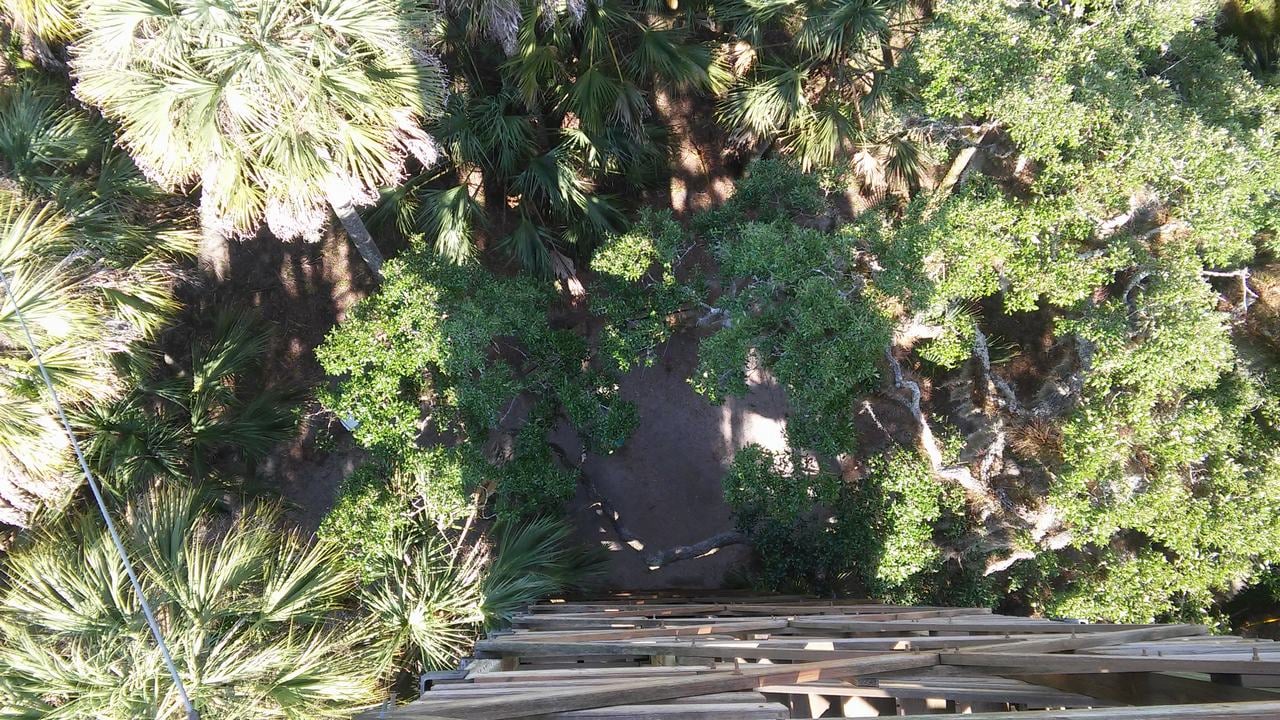
The structure consists of two towers connected by a 30-meter-long suspension bridge 7.5 meters above the ground. The second tower reaches a height of 22 meters (74 feet) and offers a truly breathtaking view of the entire park – you can see the forest, wetlands, prairie, and even the river.
The bridge sways slightly as you walk across it, so keep that in mind if you are afraid of heights. Personally, I always spend the most time here, taking photos and admiring the view.
After climbing the tower, you return to the ground and continue along the trail through the palm grove back to your car. I recommend walking the entire loop – it takes you to places that cannot be reached from the park’s main road.
Birdwalk – how I experienced it before and what it looked like in 2025
When we arrived from Sarasota in 2025 (it was “on the way” as we headed toward Miami), we also stopped at the Birdwalk – one of the most popular places in the park.
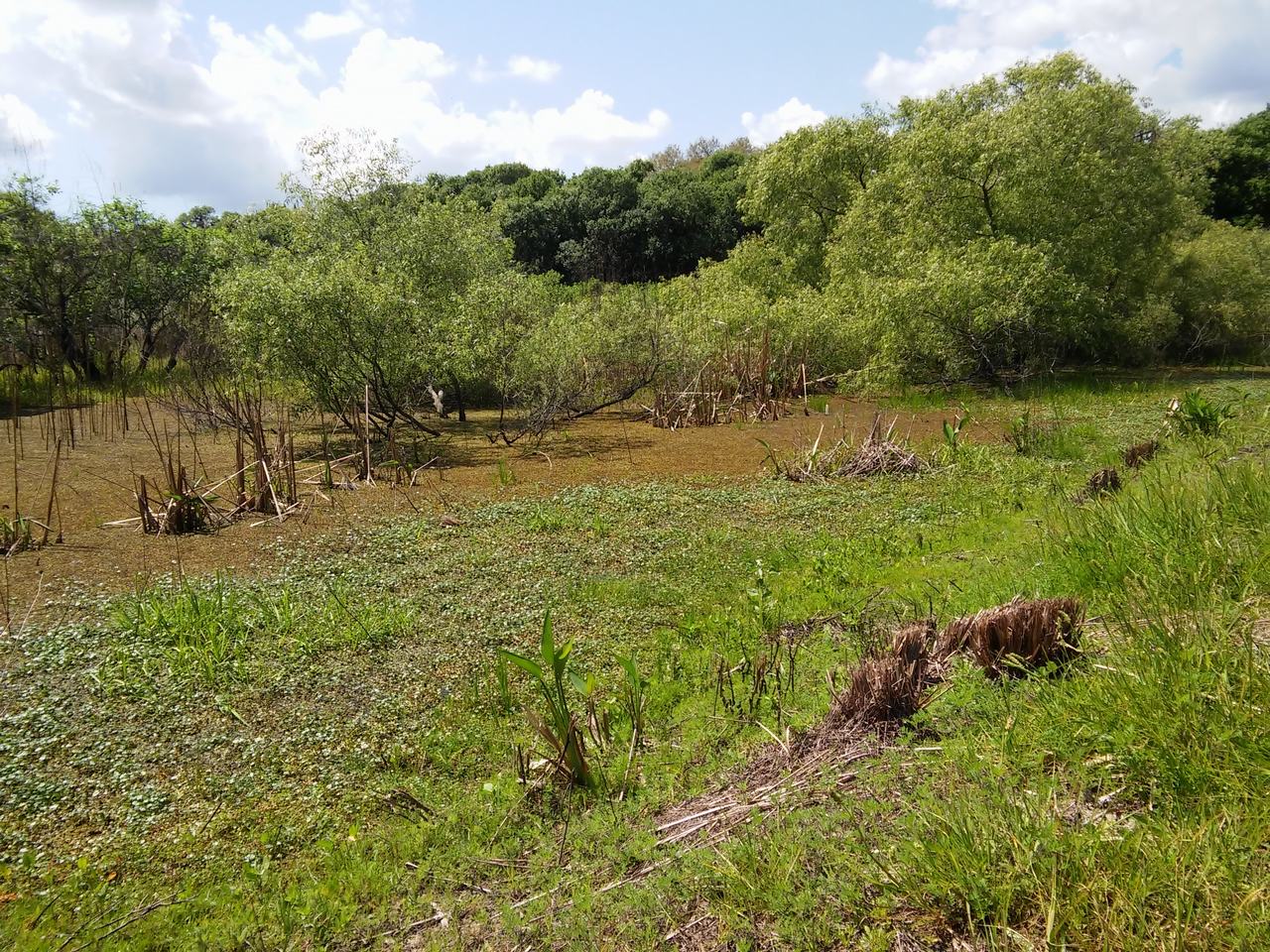
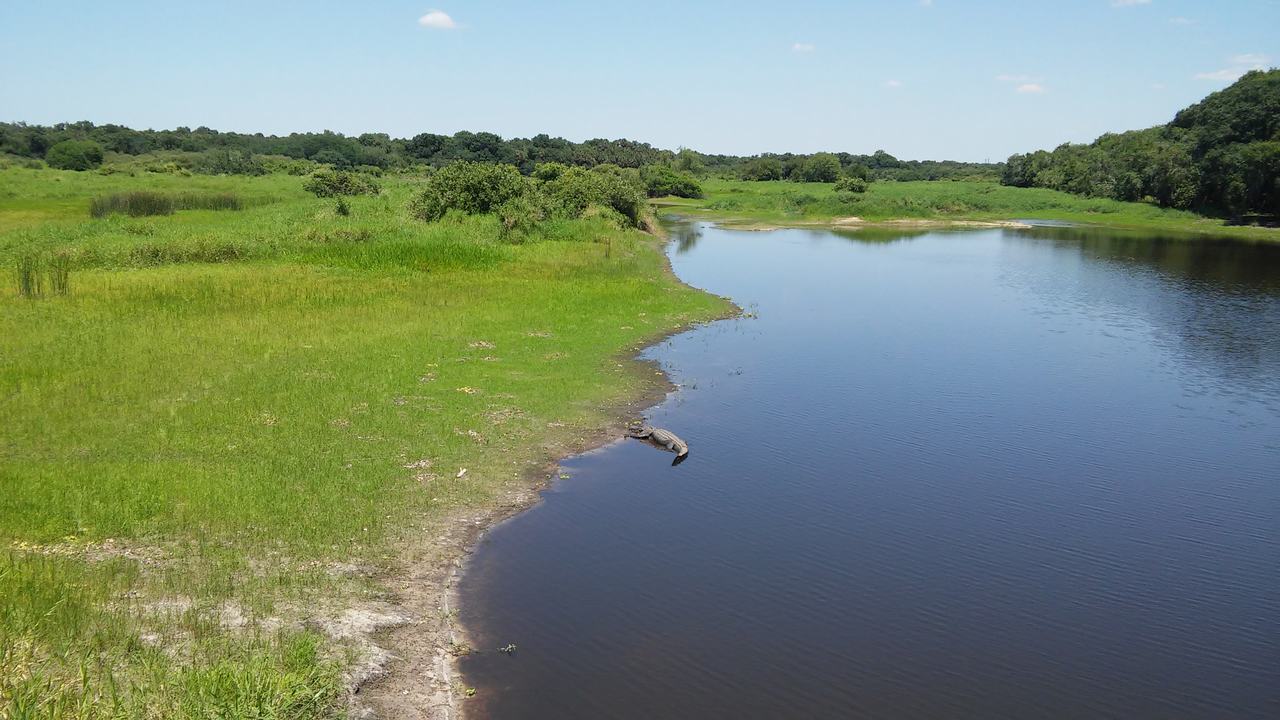
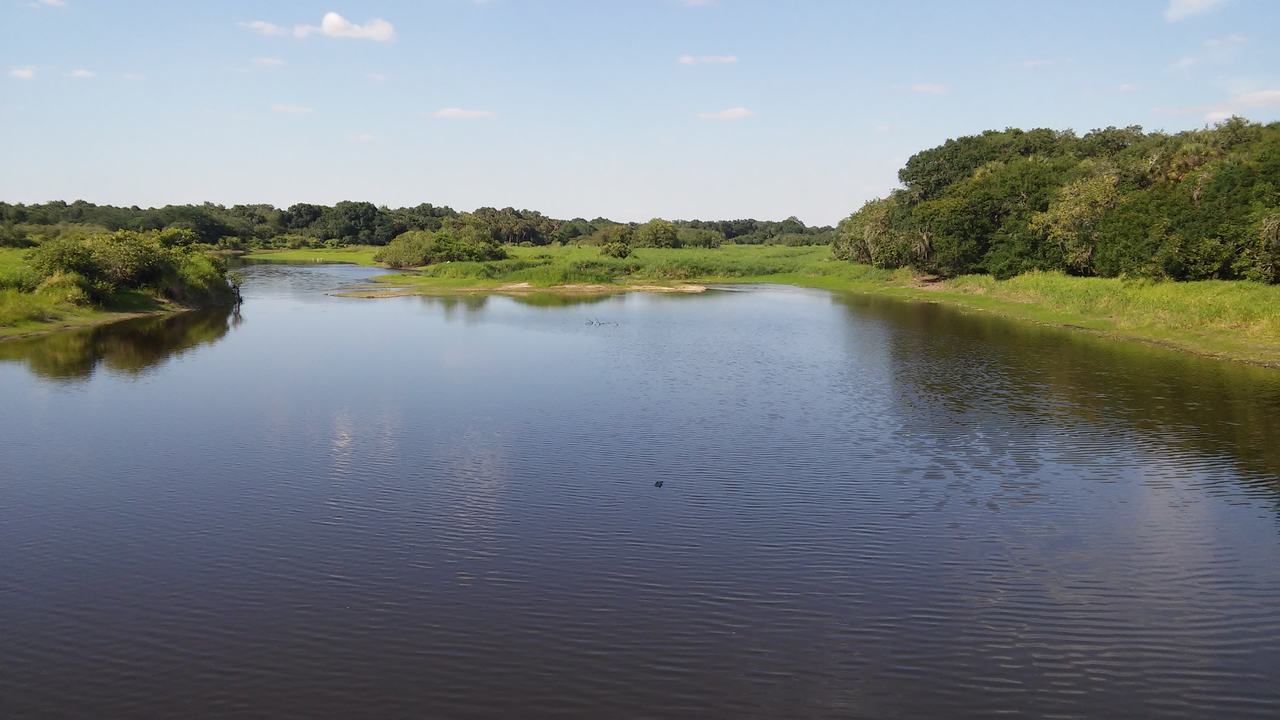
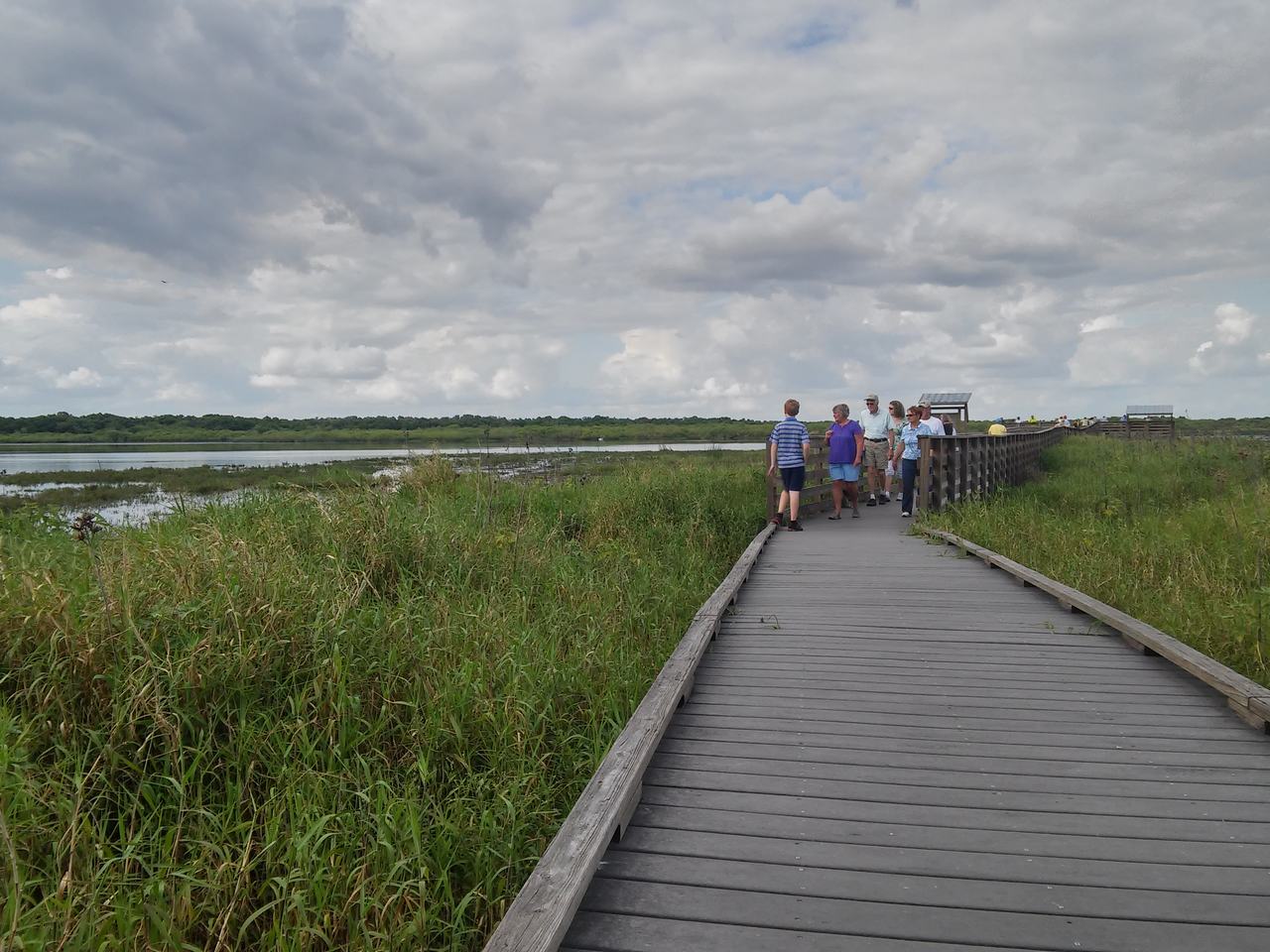
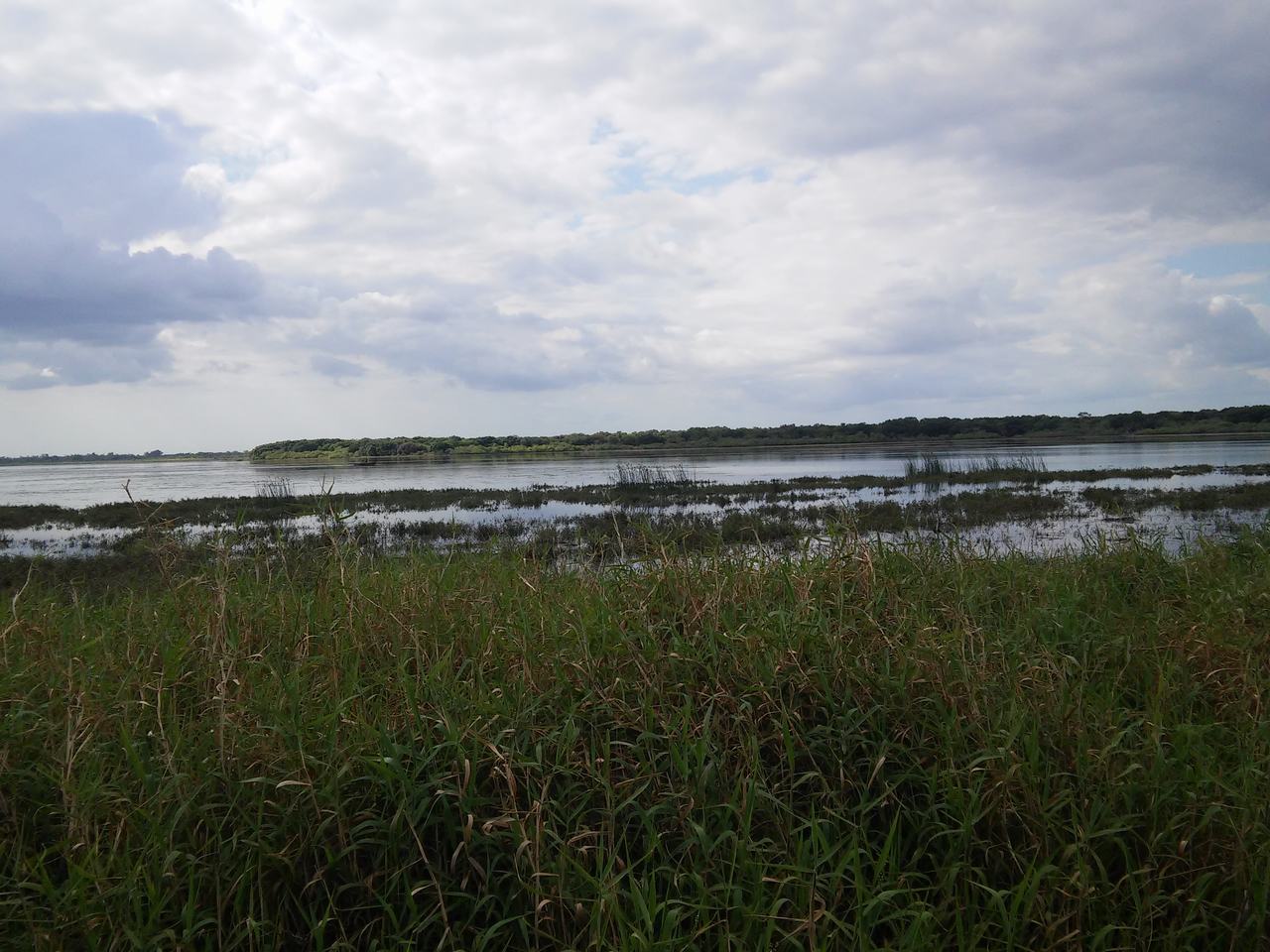
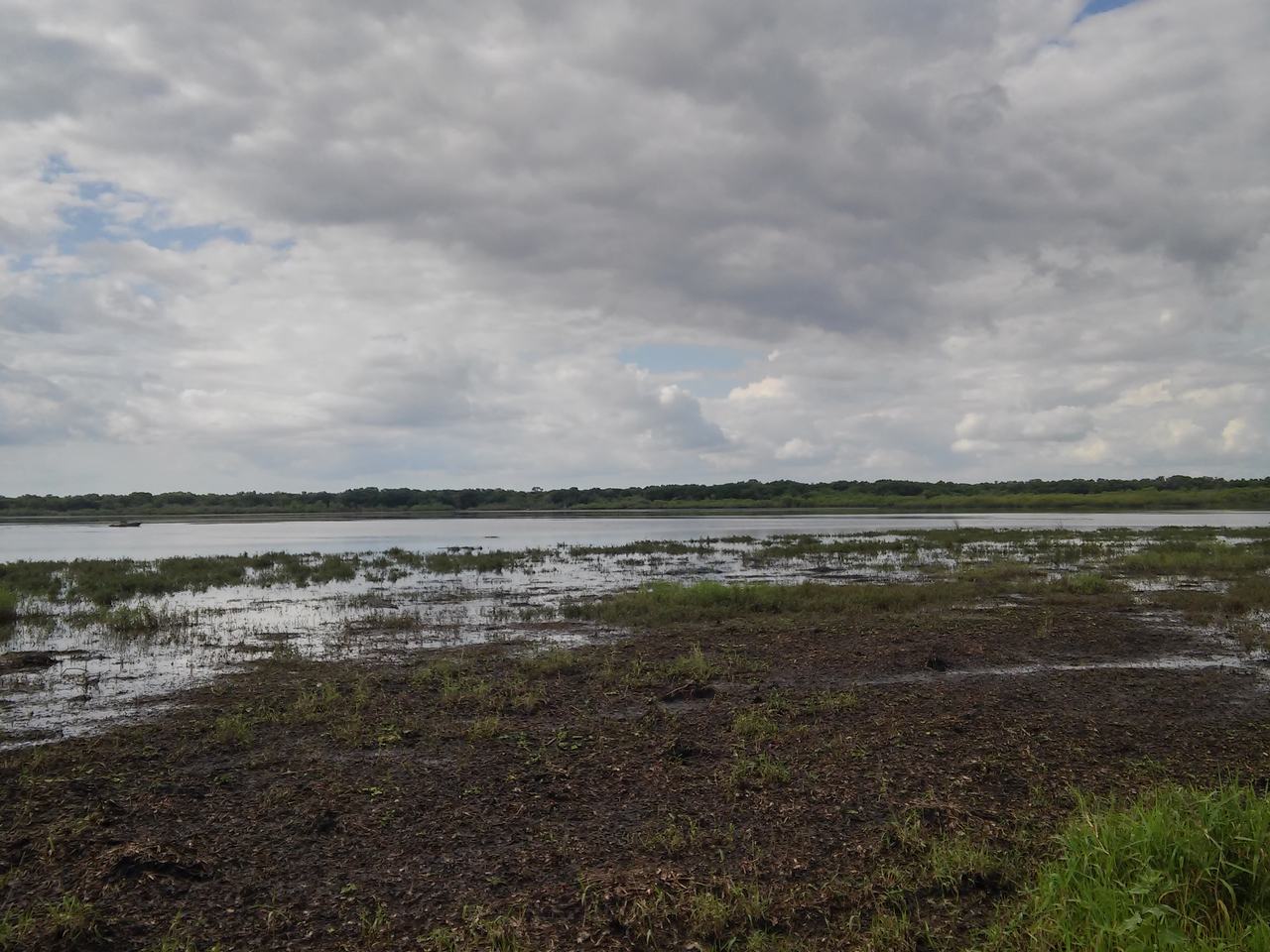
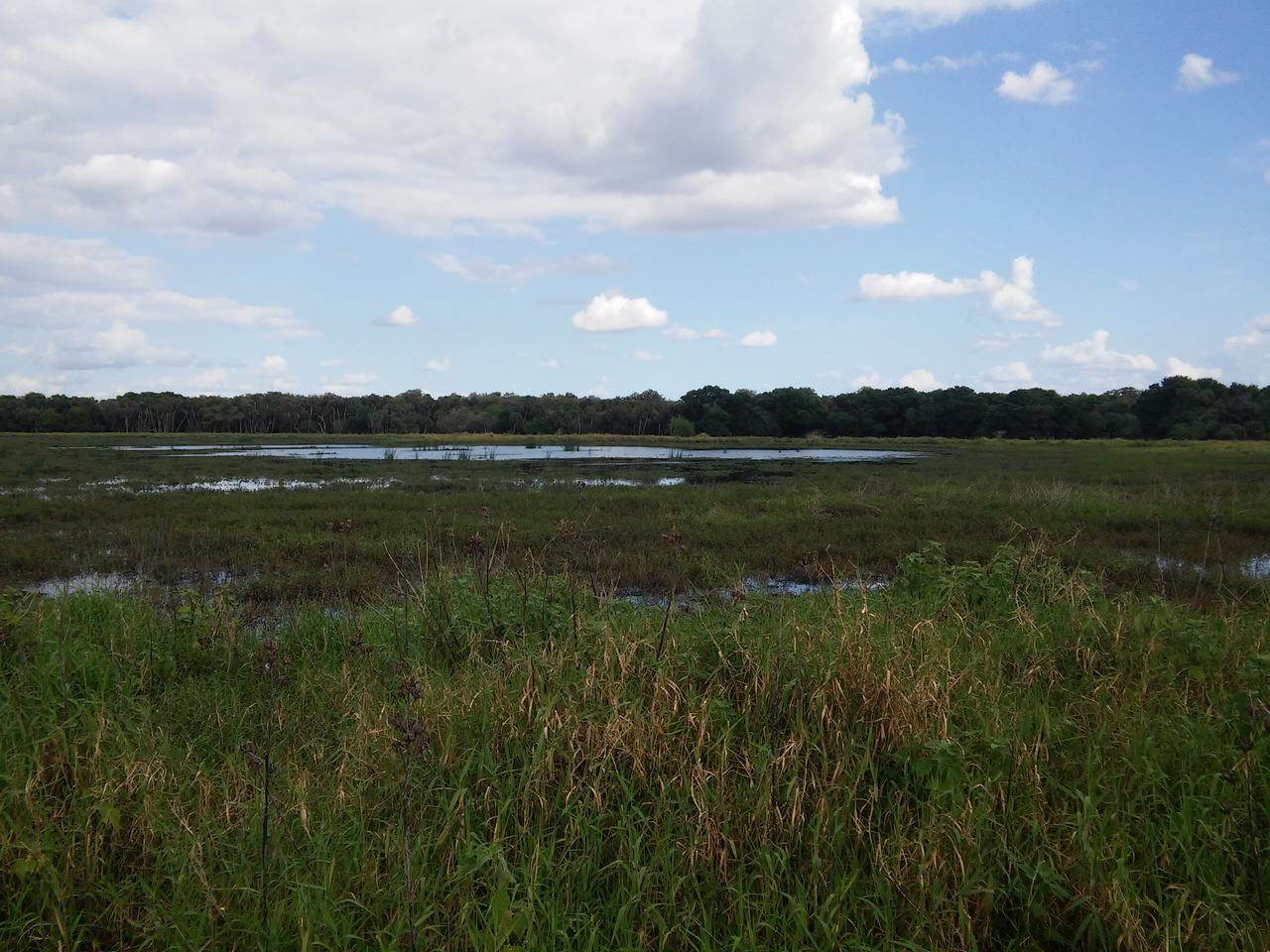
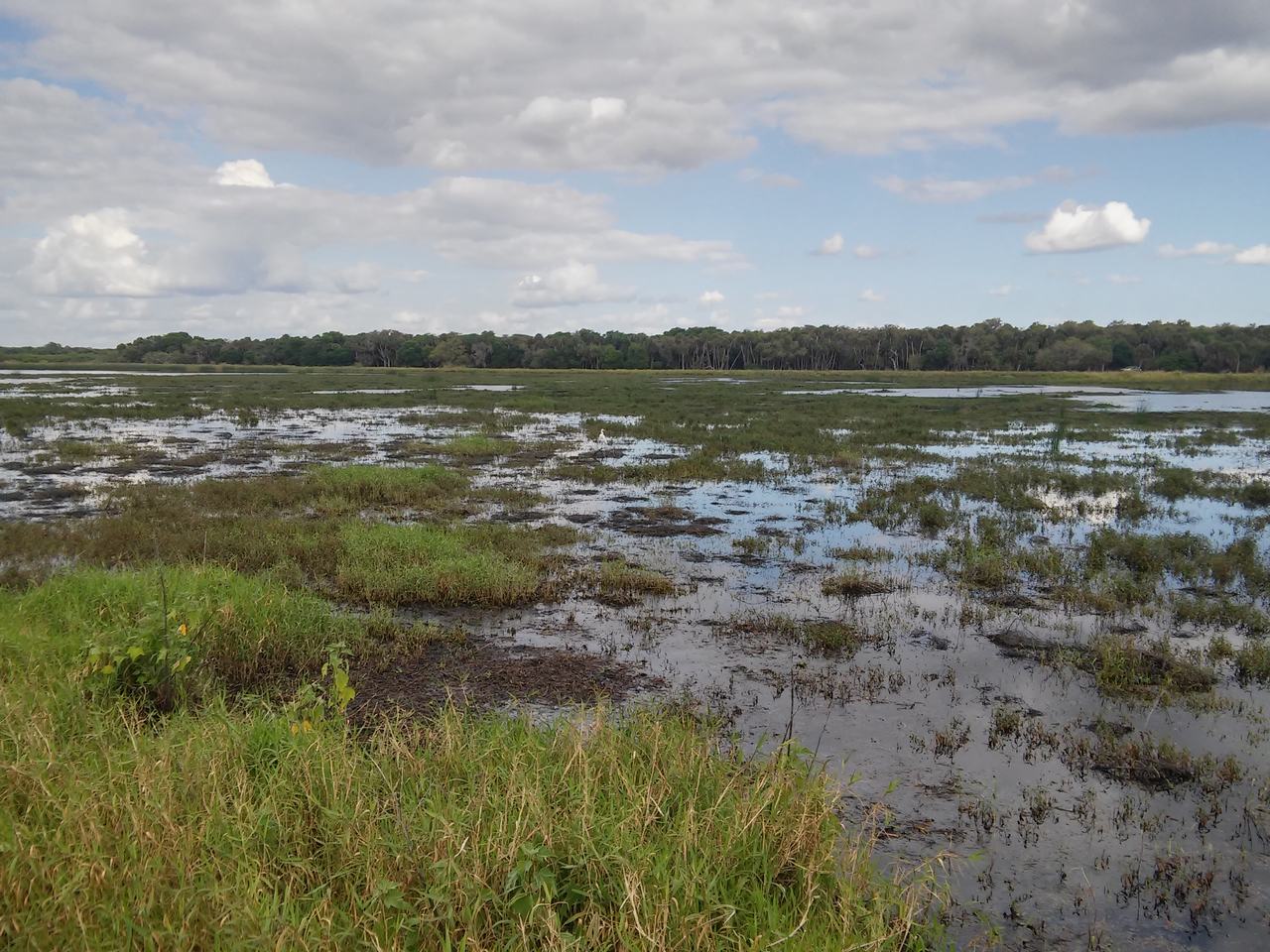
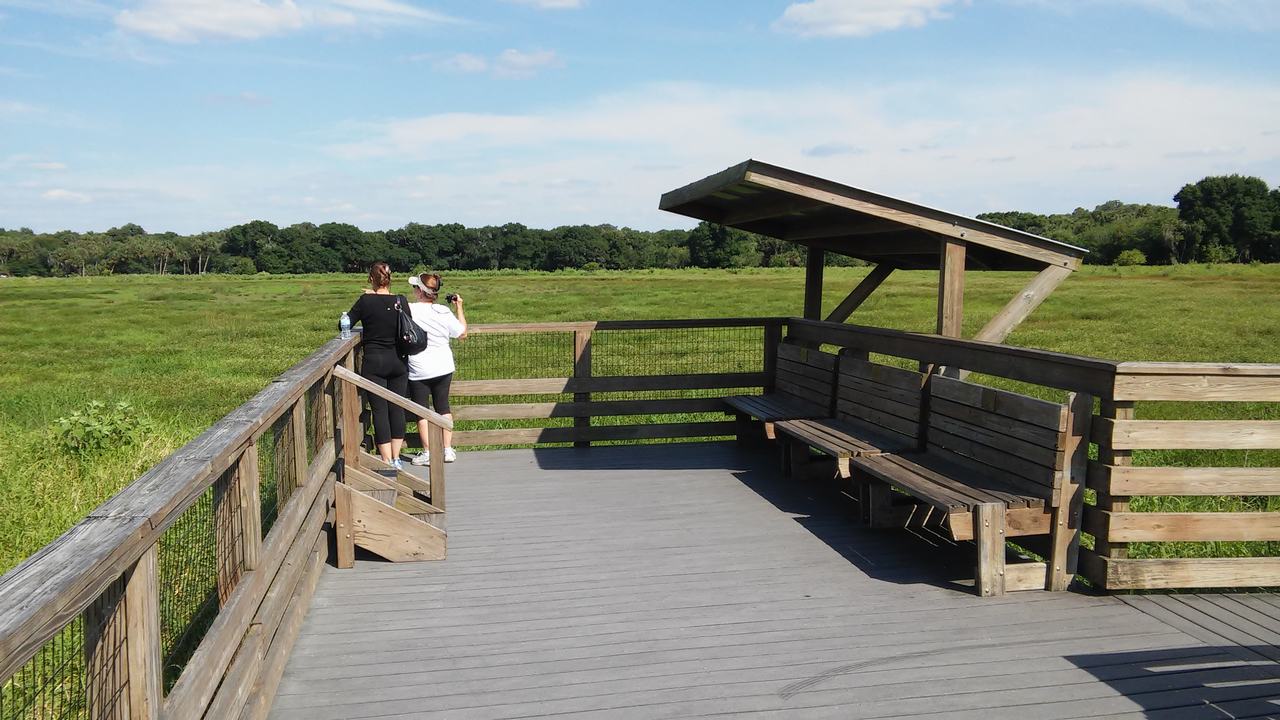
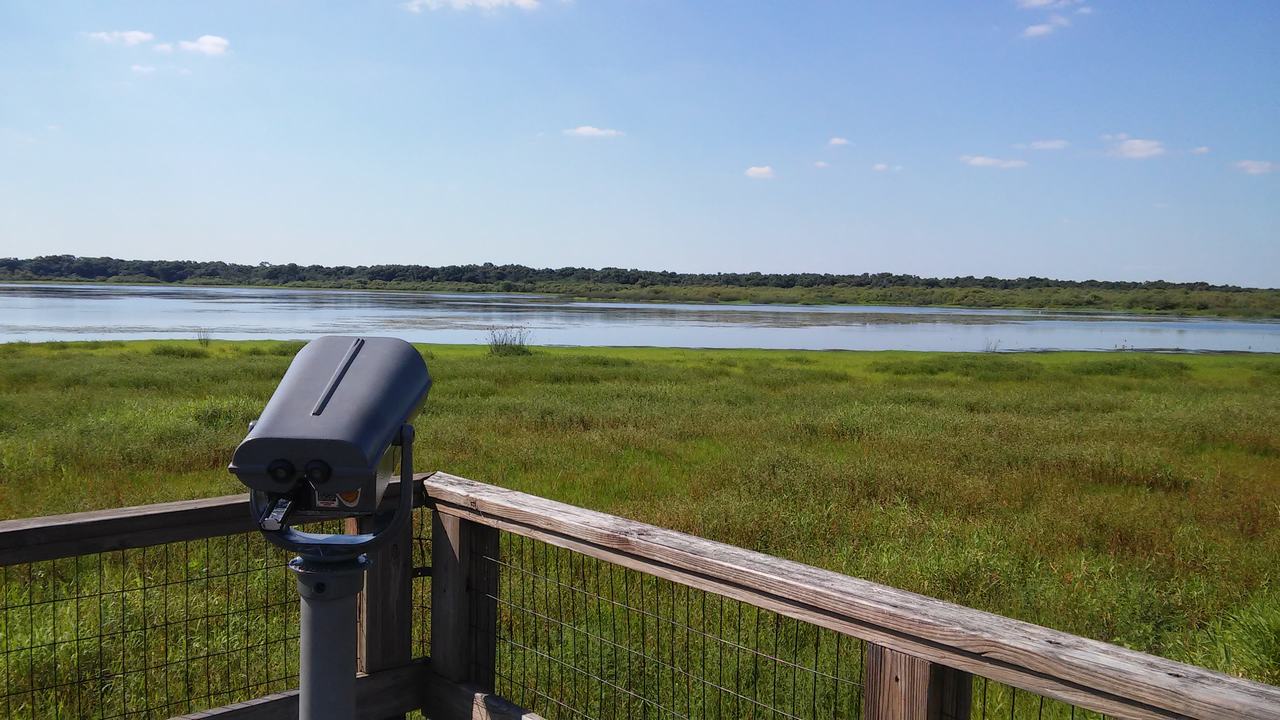
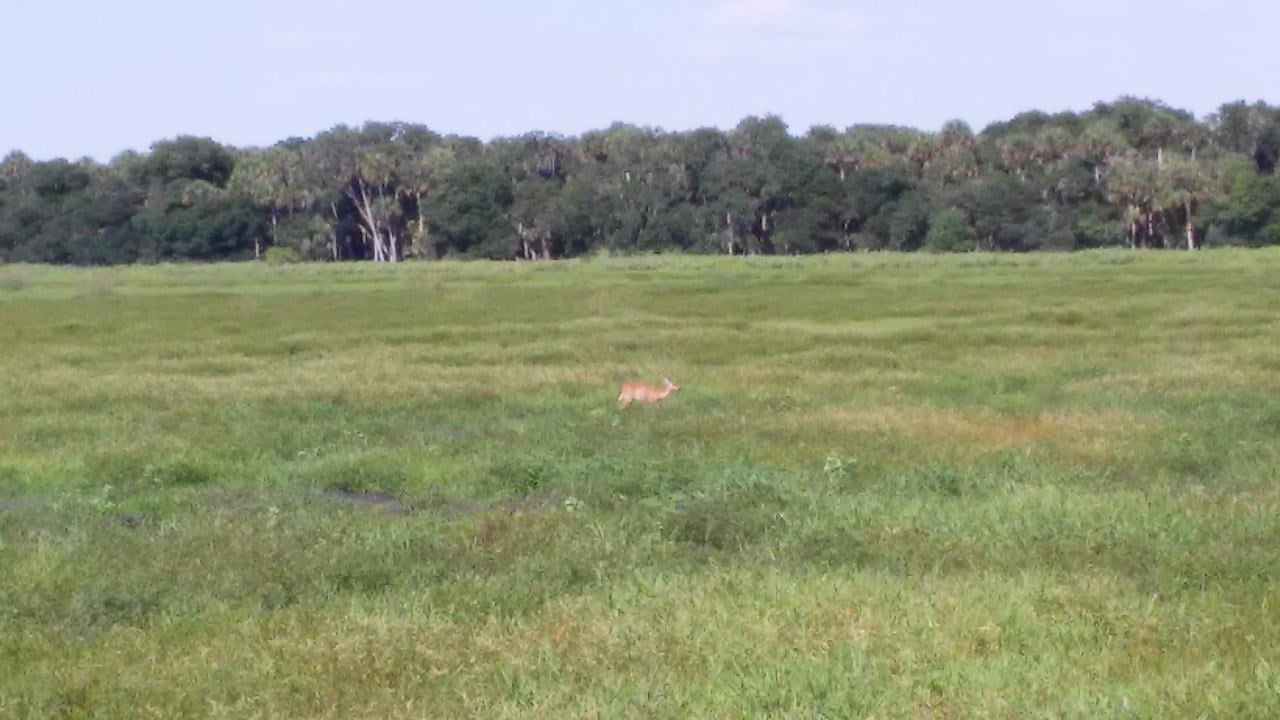
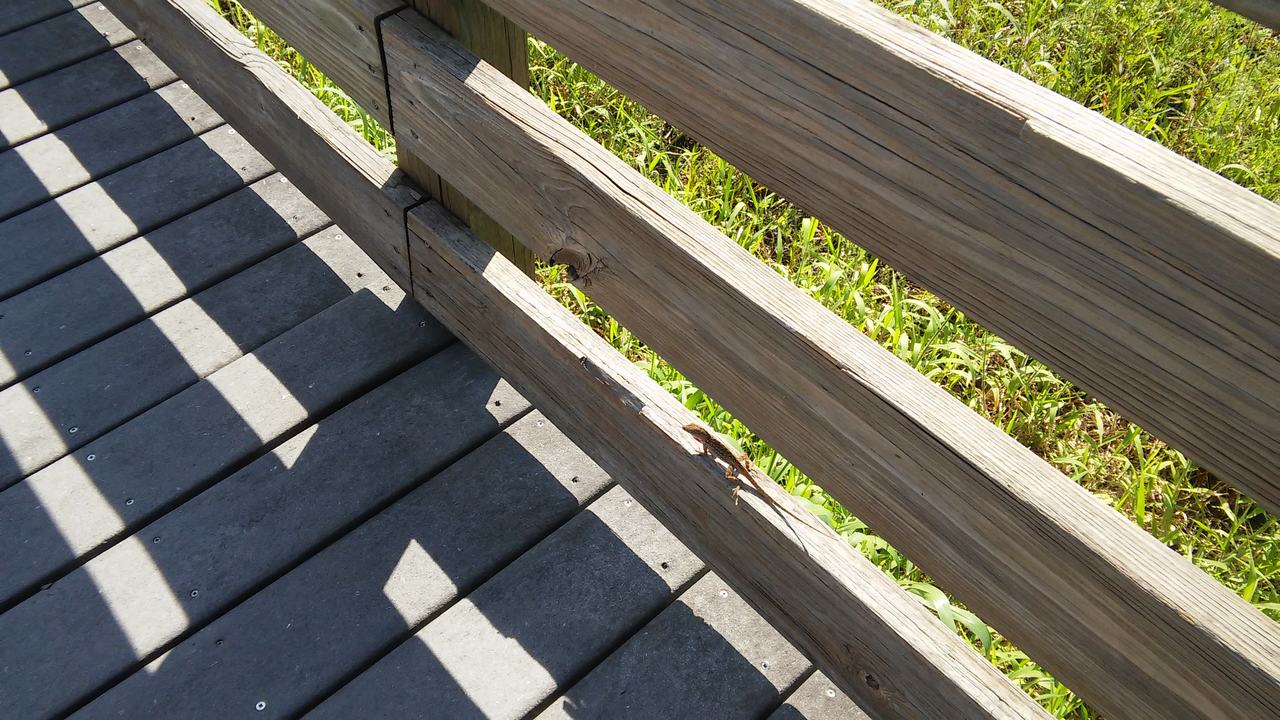
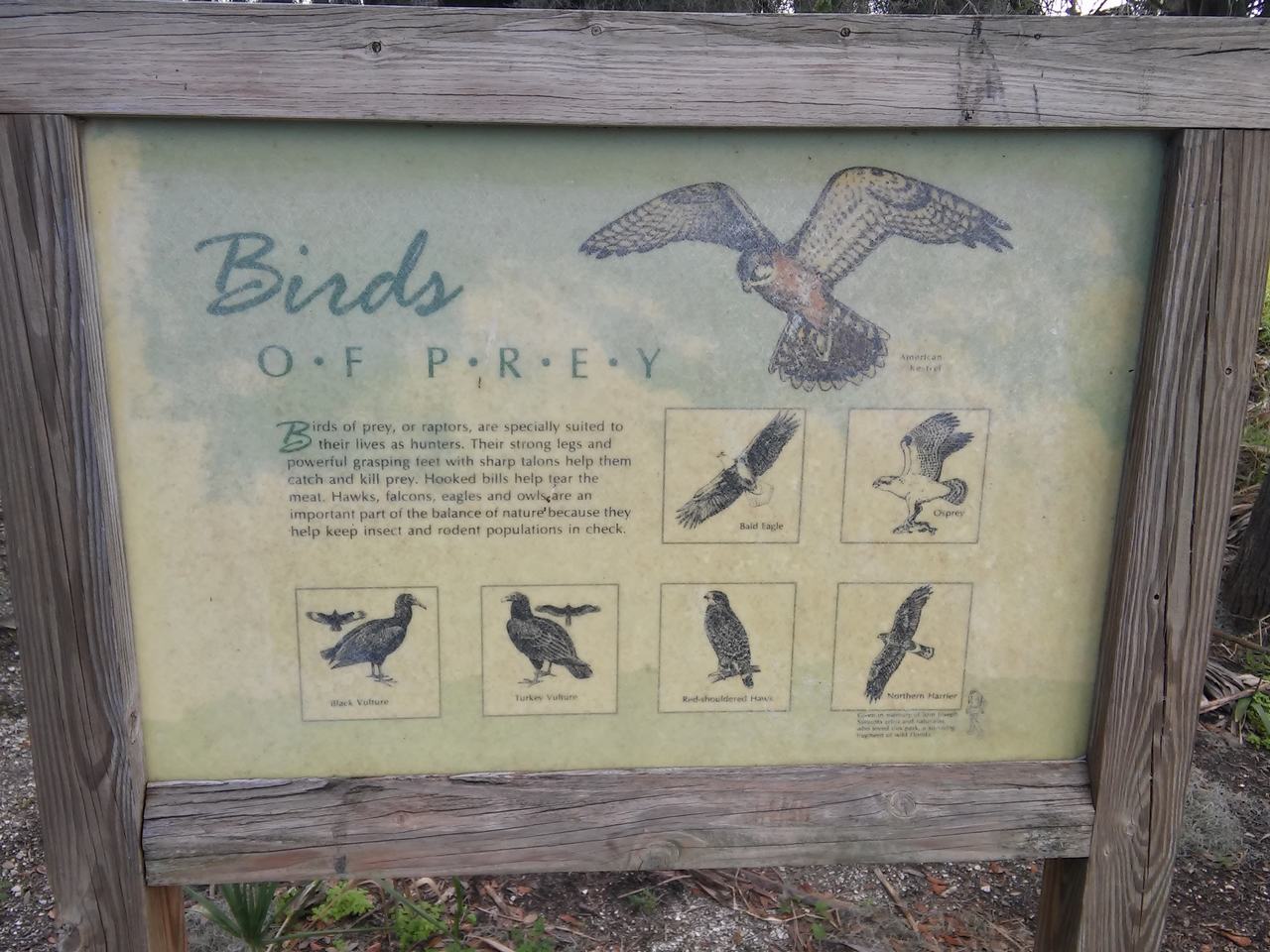
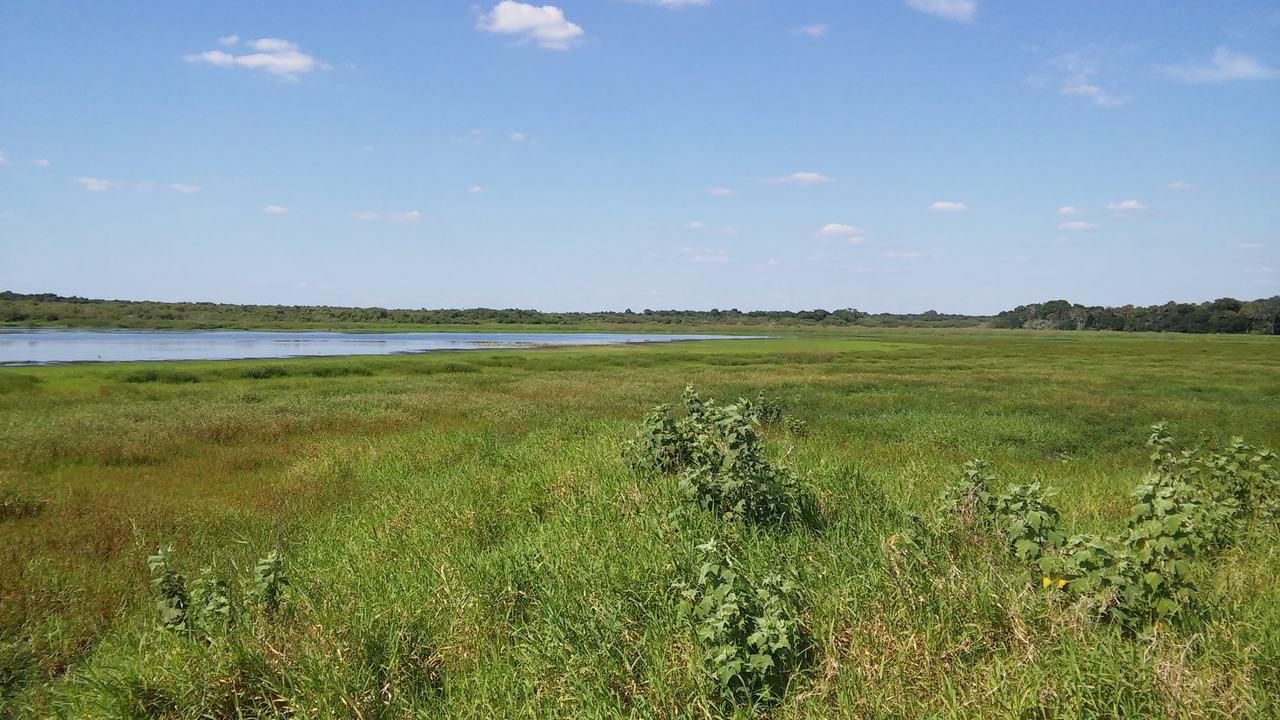
The Birdwalk is a wooden boardwalk leading directly into the heart of the wetland prairie beside Upper Myakka Lake. From the boardwalk, you can observe pelicans, herons, ibises, roseate spoonbills, alligators, and dozens of other bird species. It is a truly extraordinary place.
To my dismay, by 2025 the Birdwalk was already badly damaged and closed – apparently as a result of hurricanes and flooding that have repeatedly struck this part of Florida in recent years. It was therefore no longer accessible as I remembered it from the past.
For completeness, I am also including photos from the days when the Birdwalk was fully accessible. It had an observation platform with benches where you could sit peacefully and watch what was happening in the wetlands.
I hope the park reconstructs the Birdwalk as soon as possible. It truly was one of the most beautiful places for observing Florida’s wildlife.
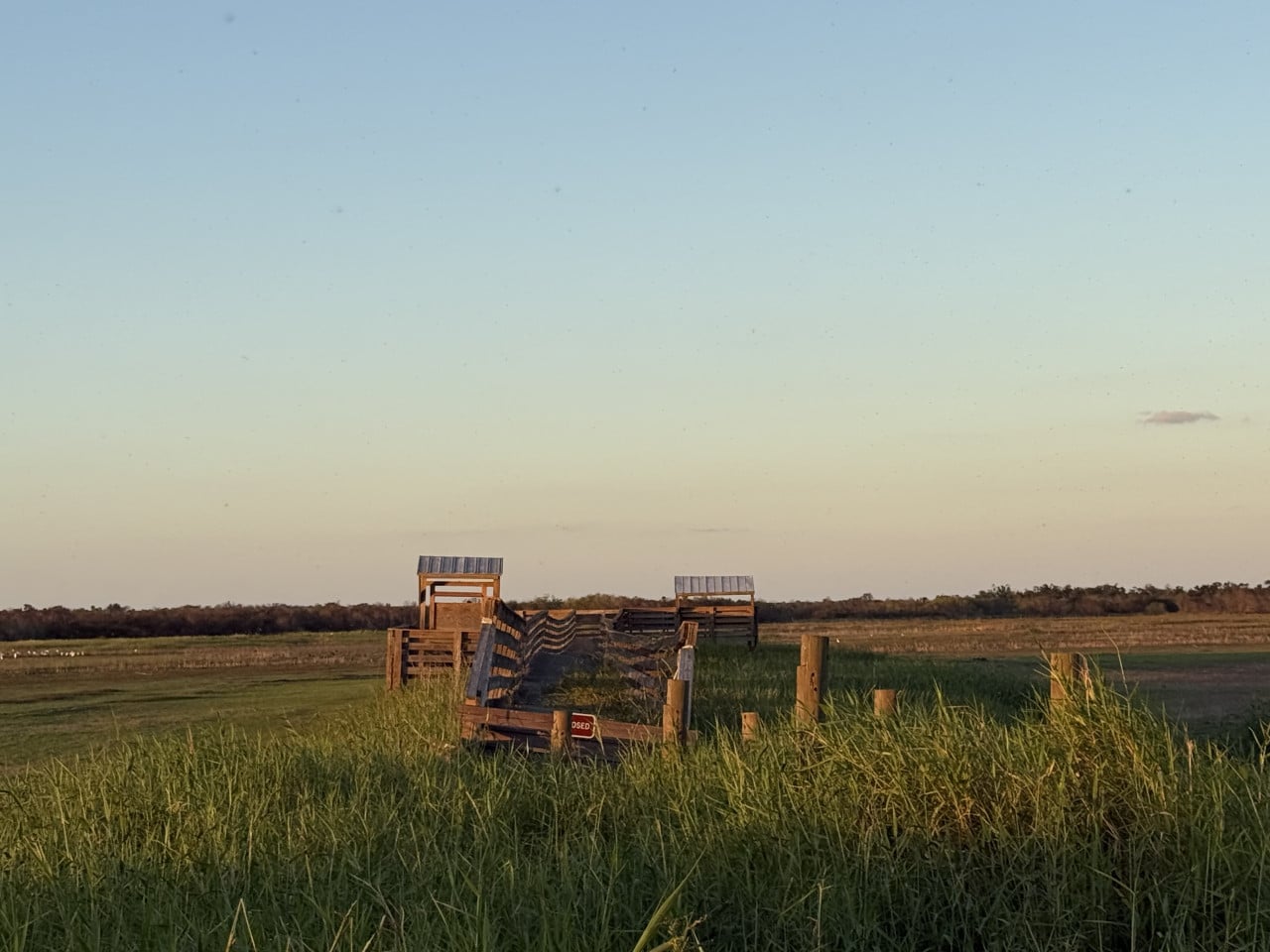
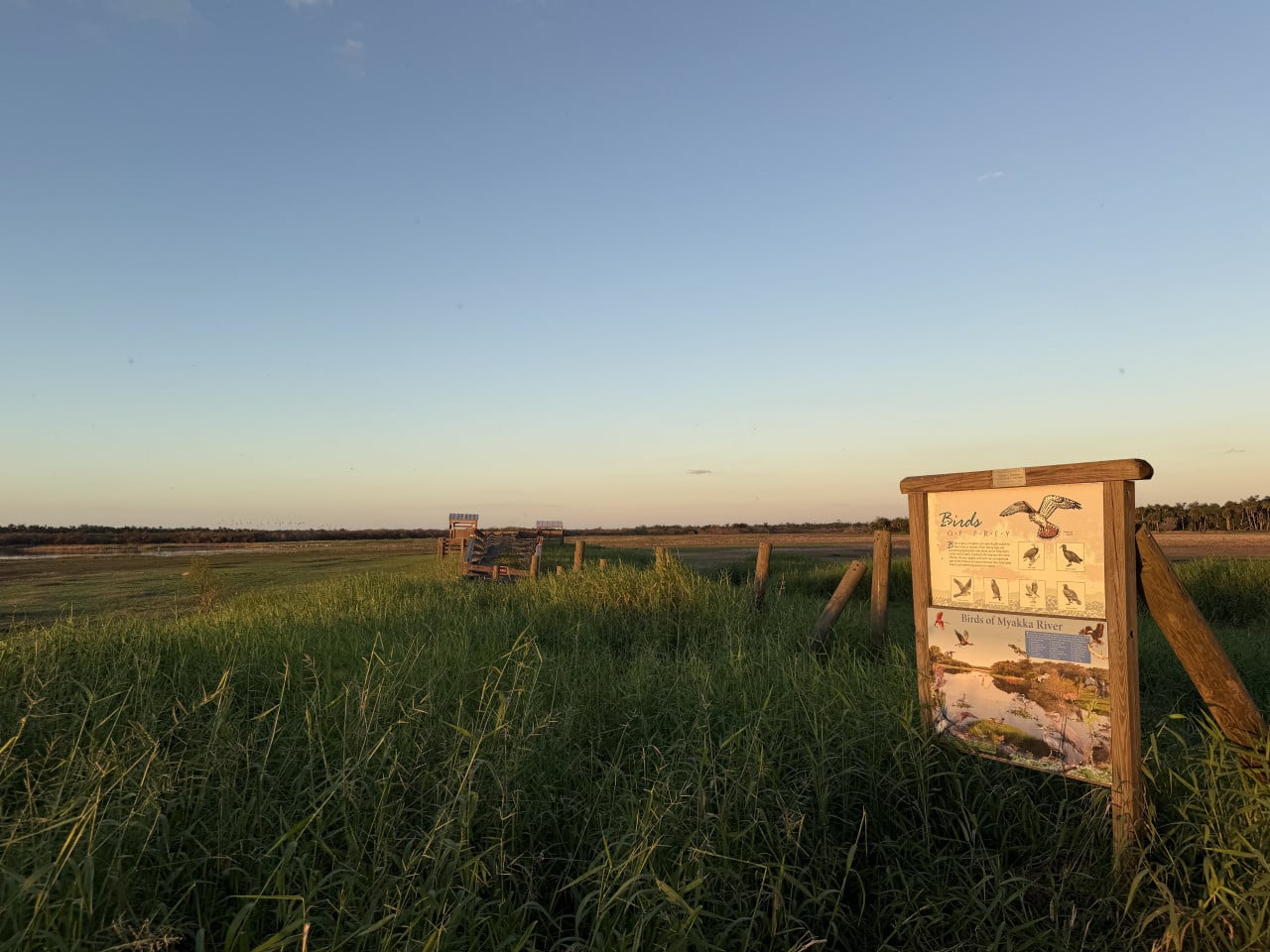
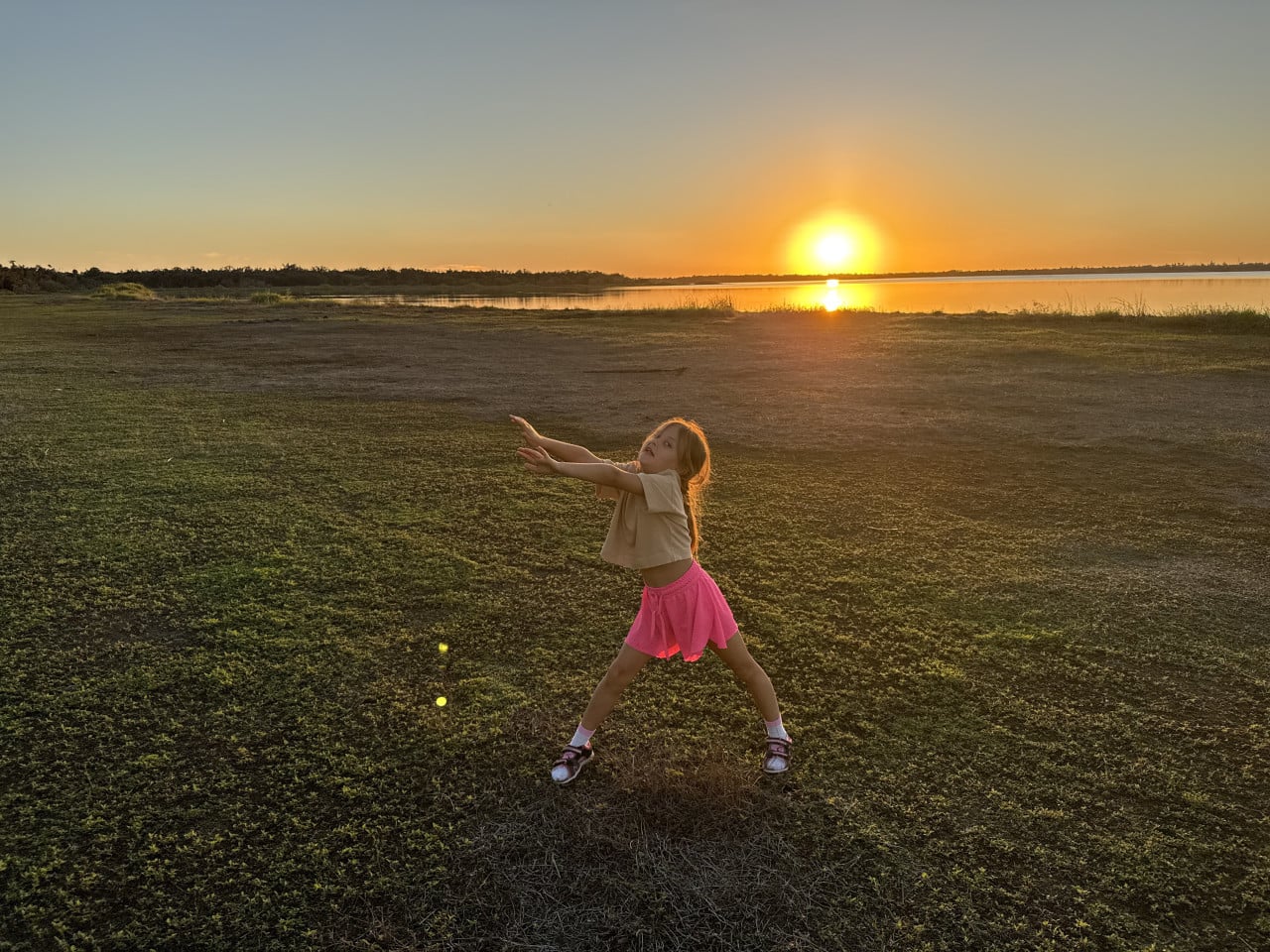
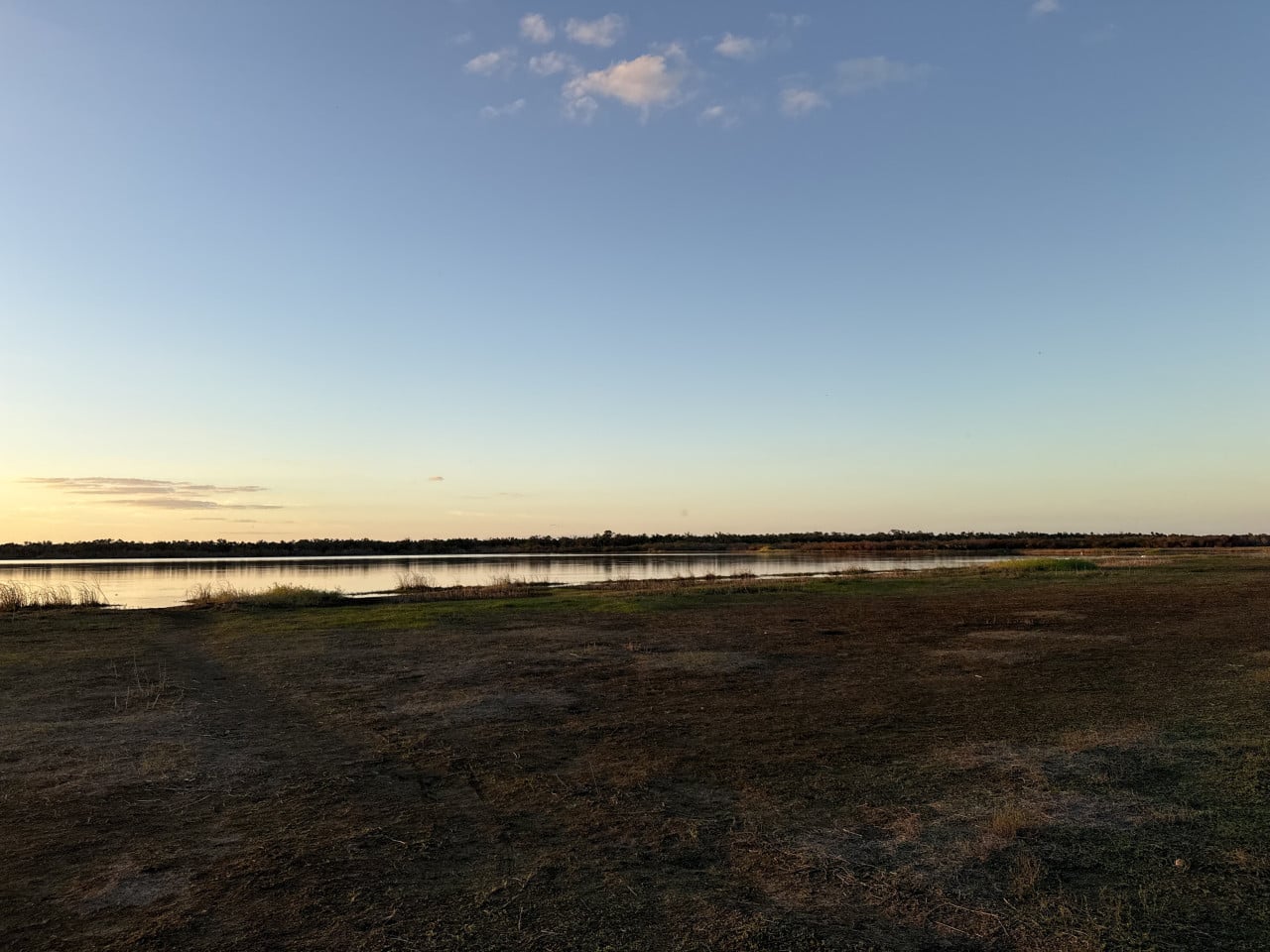
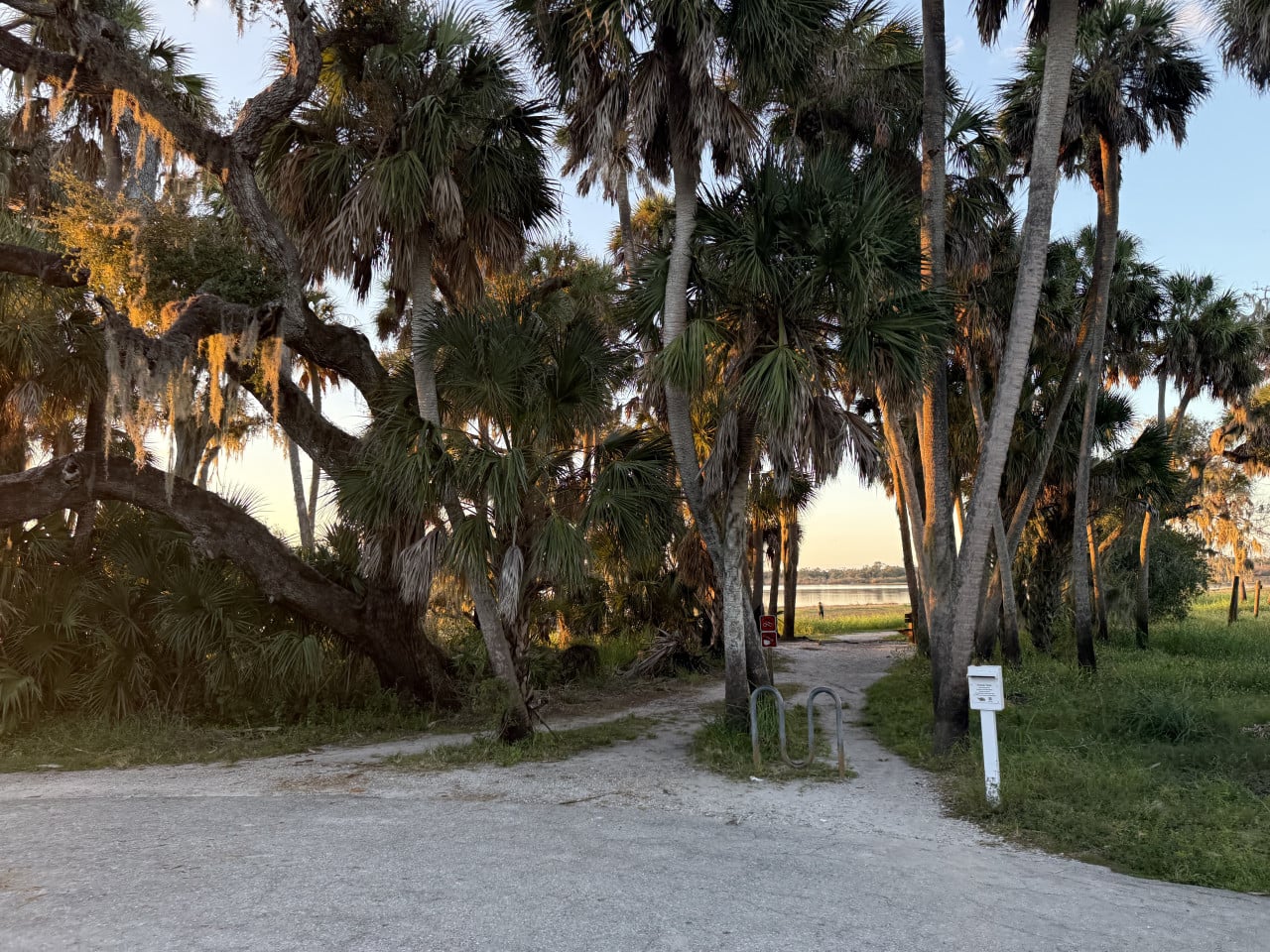
And this is what the Birdwalk looked like in 2015, when it was still open.
A trip along Fox Road – the trail tourists overlook
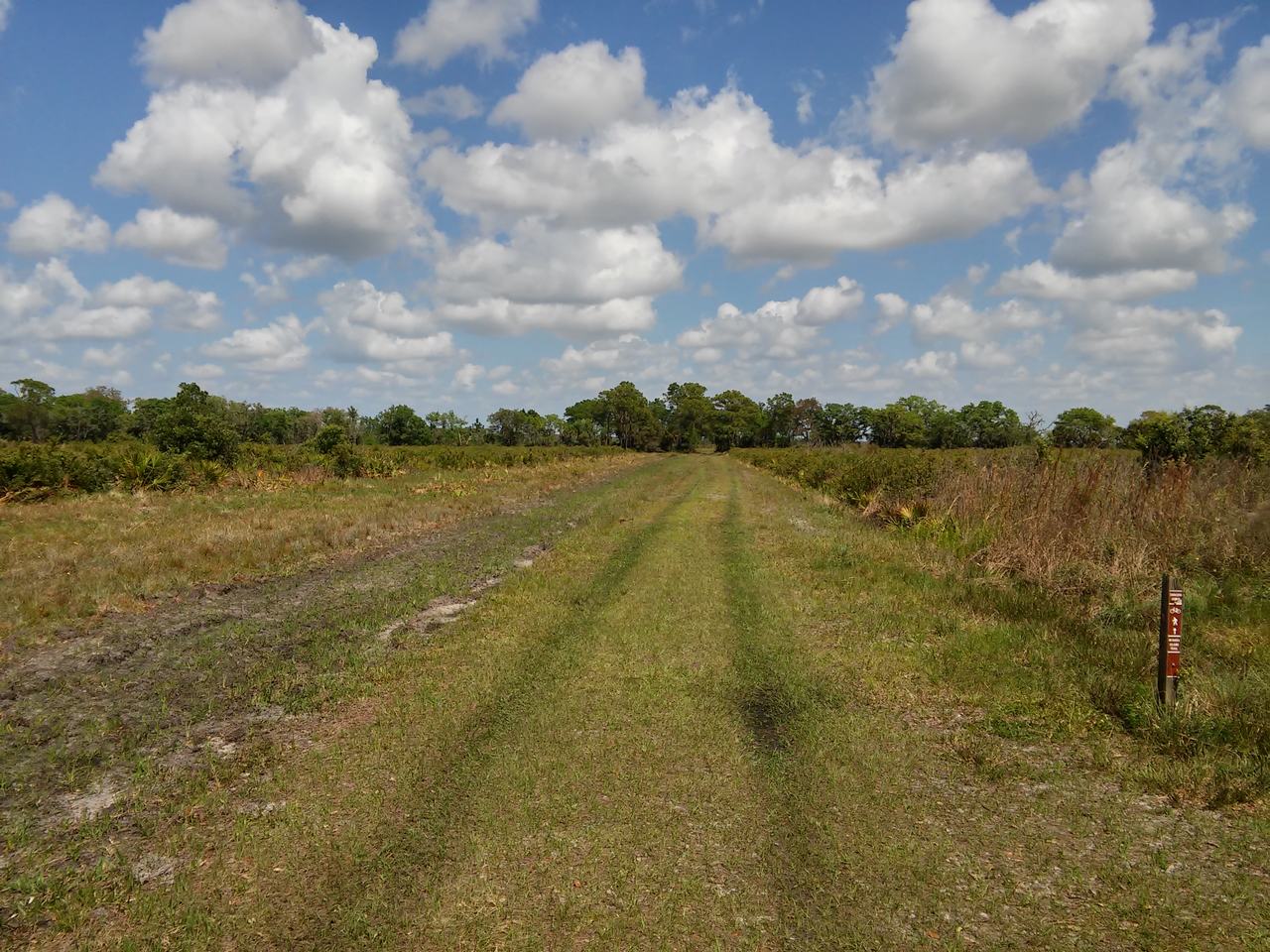
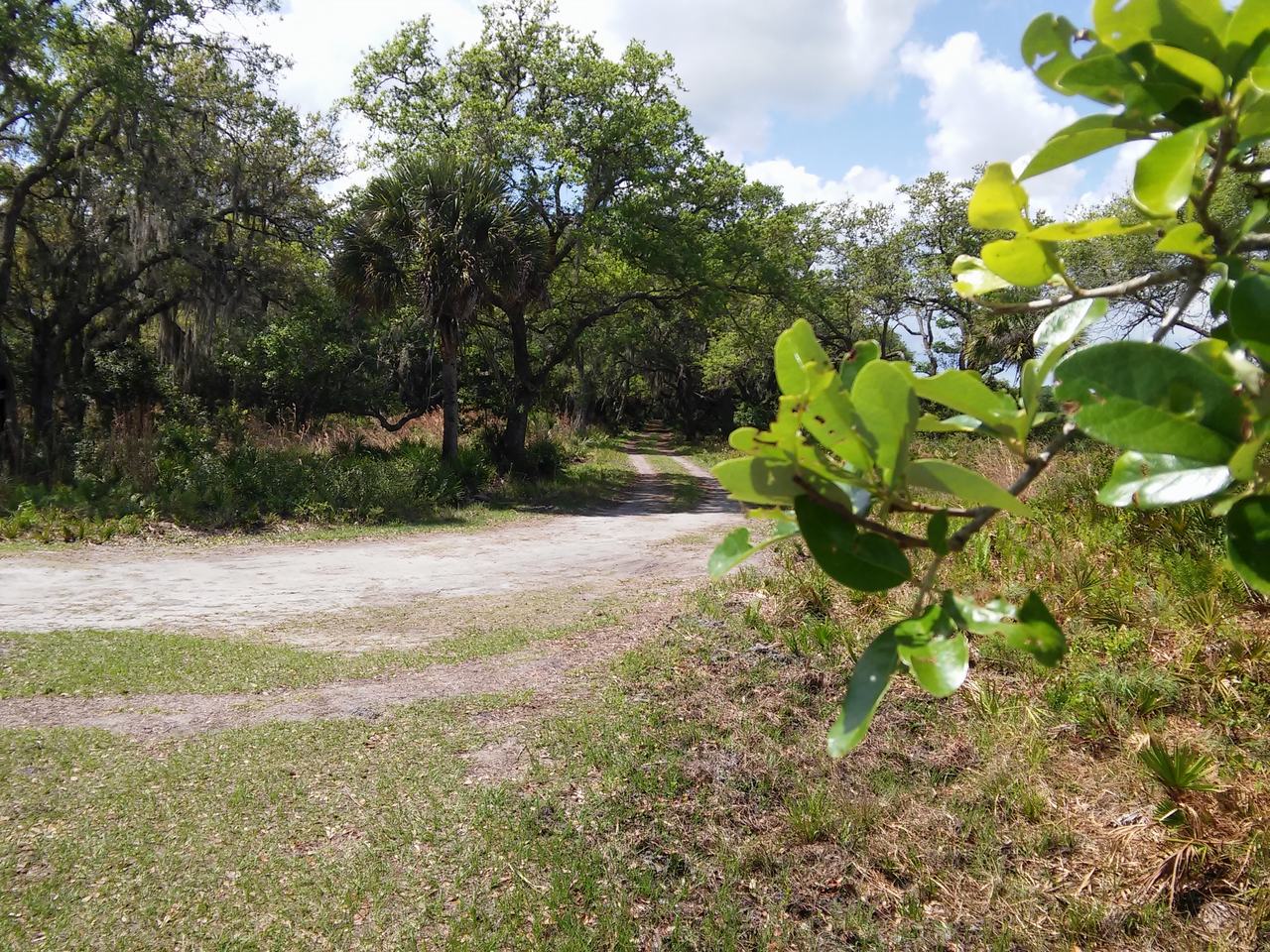
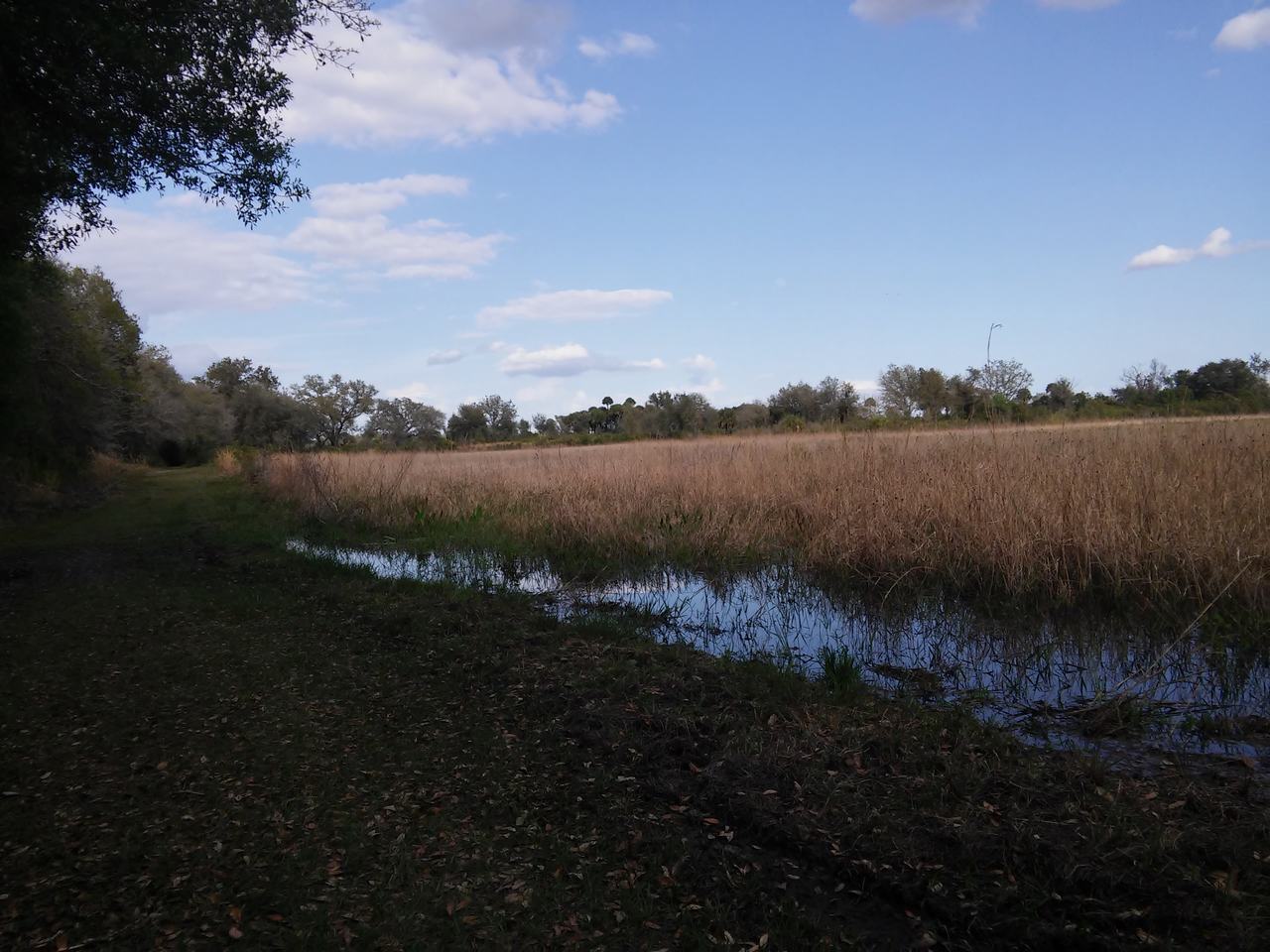
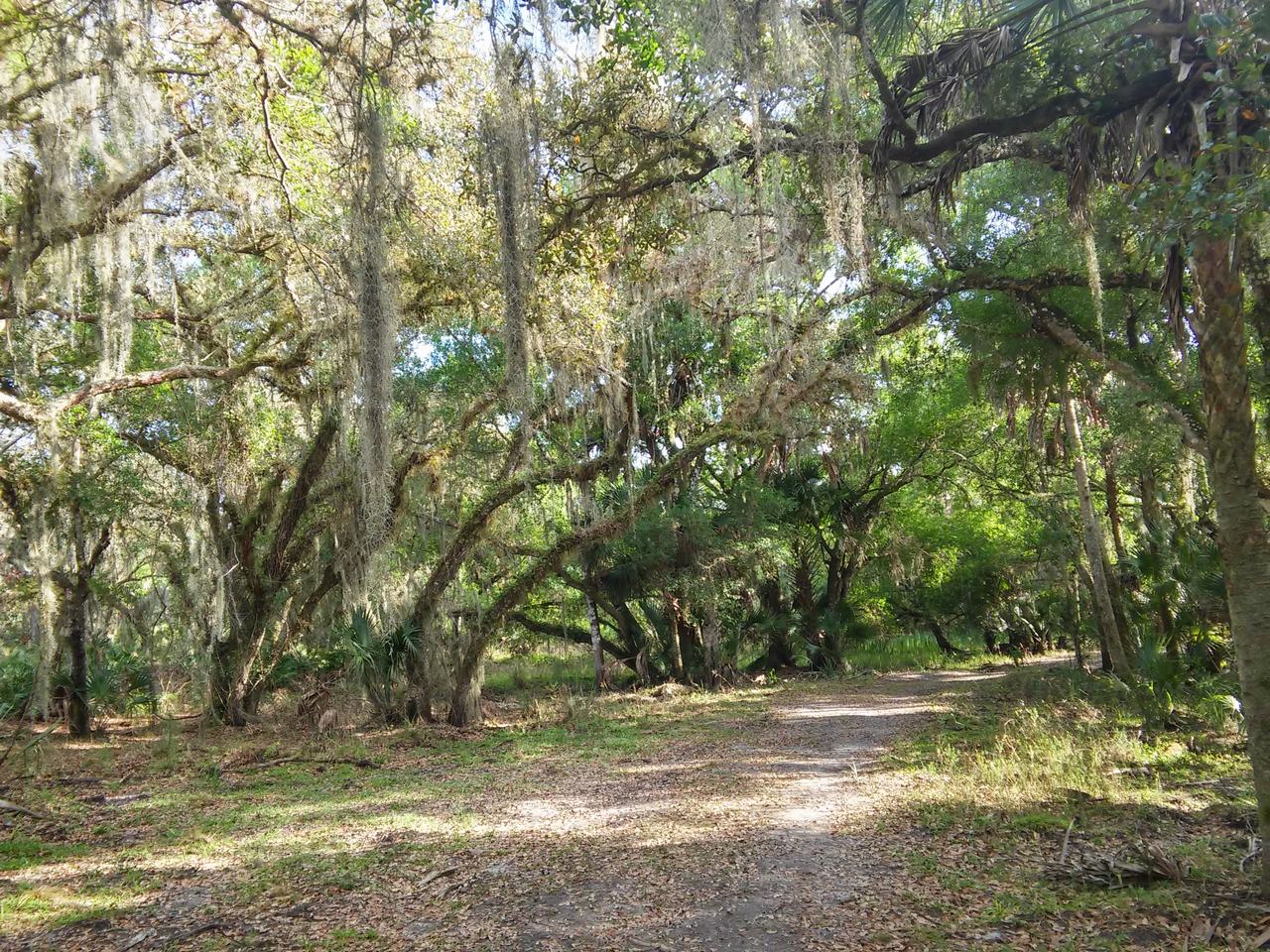
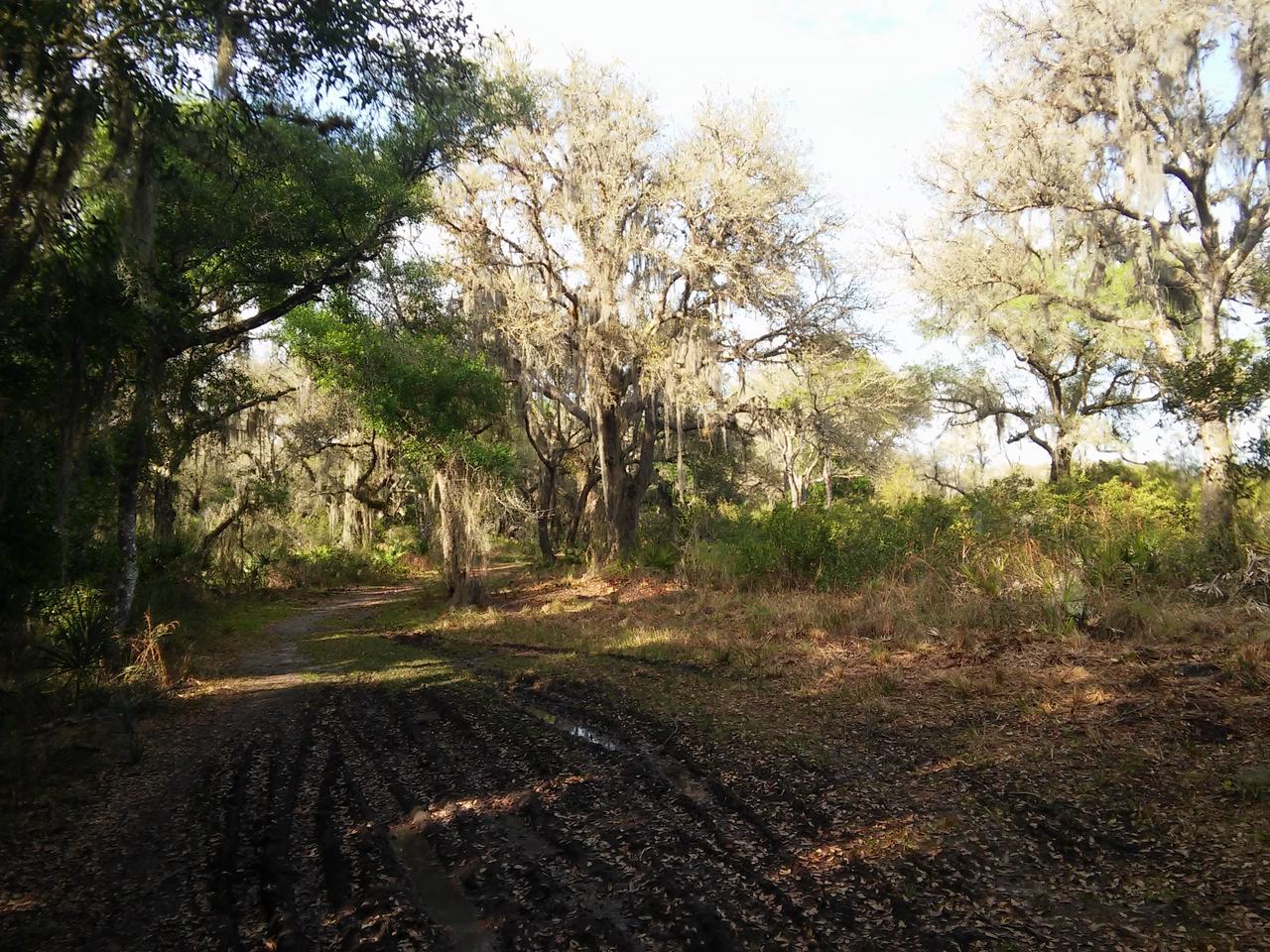
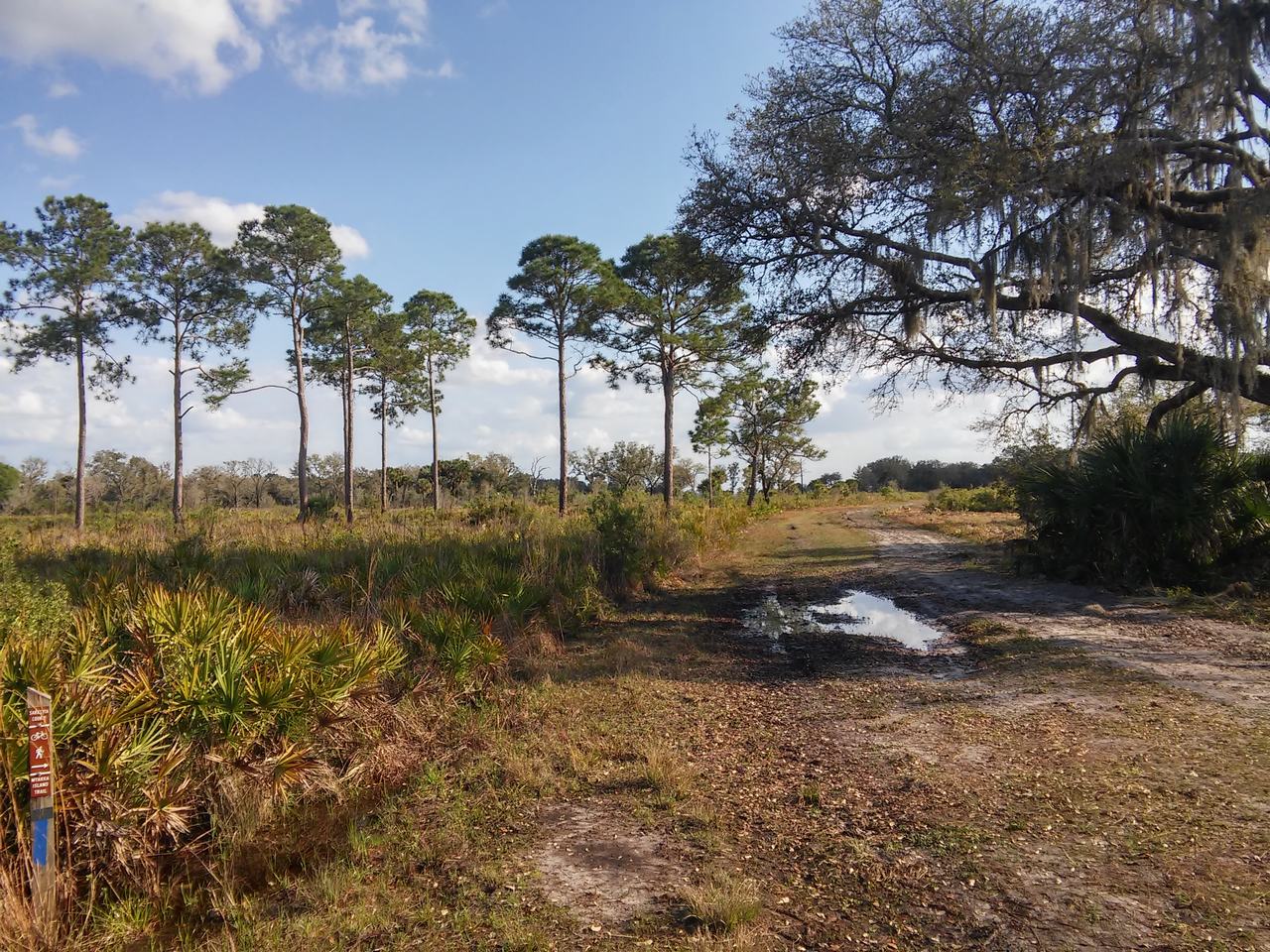
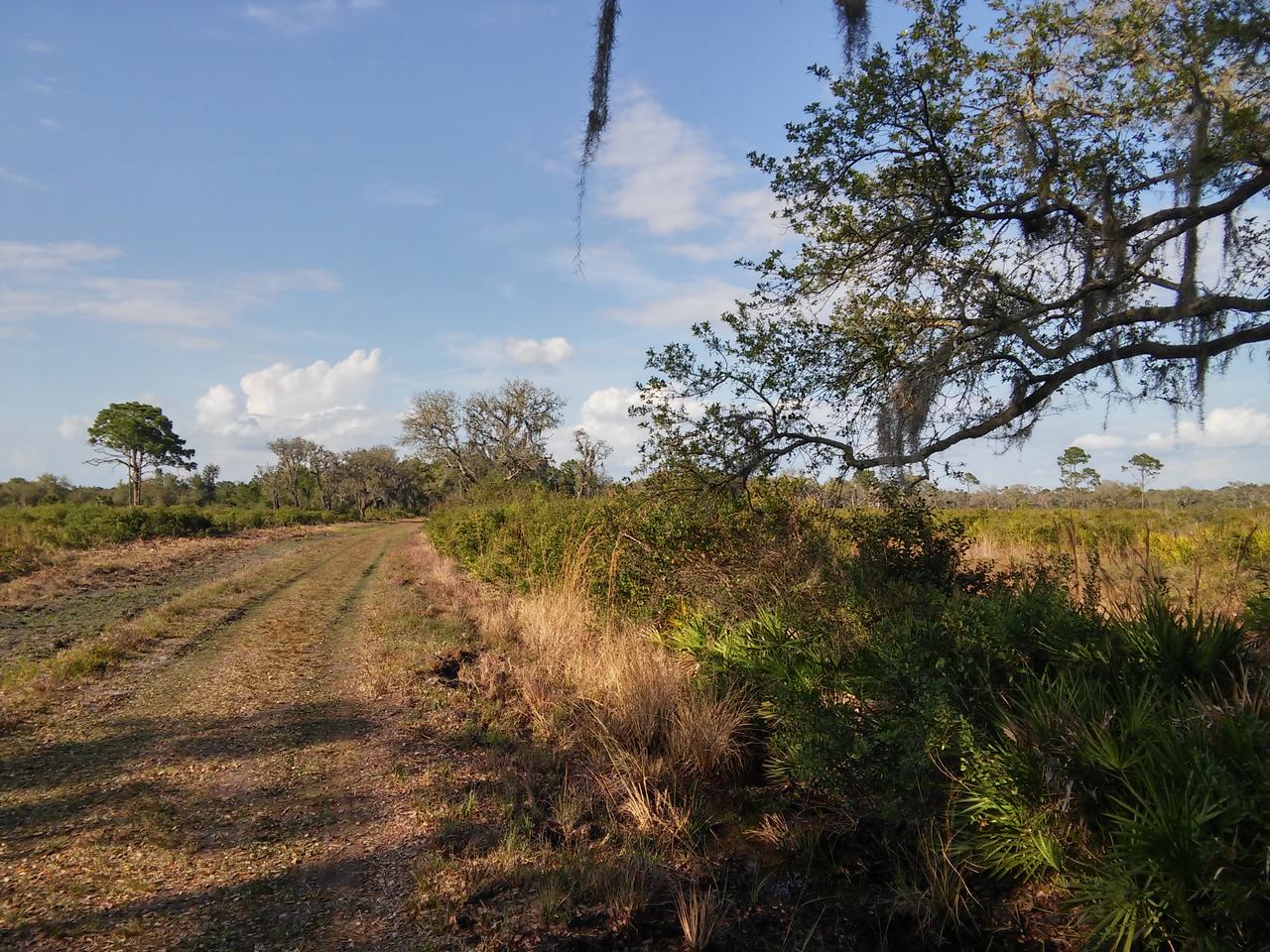
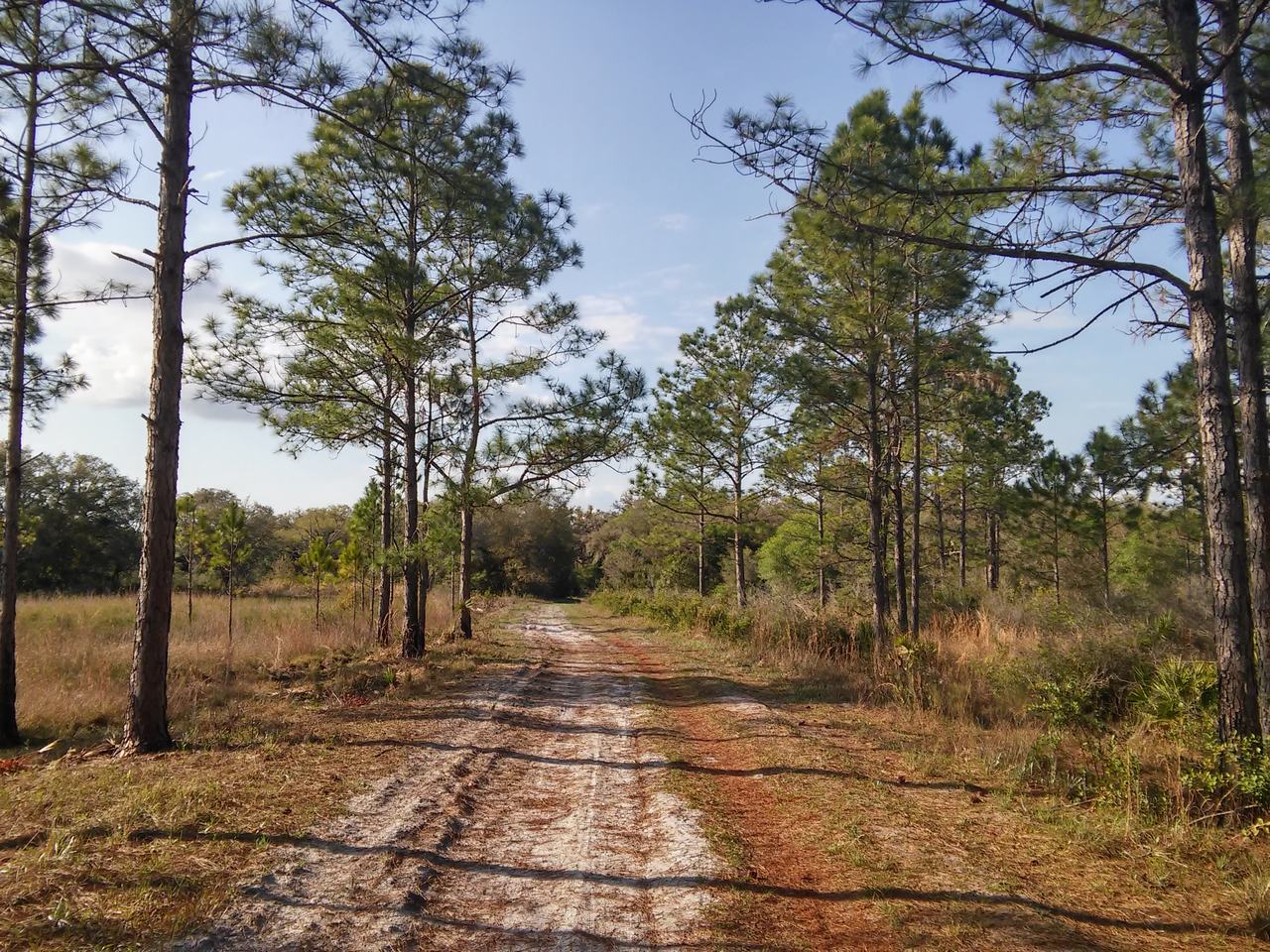
Once, when I was alone in the park, I wanted to see something other than the main attractions. So I set off north along the Fox's High Road trail. The maps make it look like a short distance, but the reality is different – the walk took me about two hours.
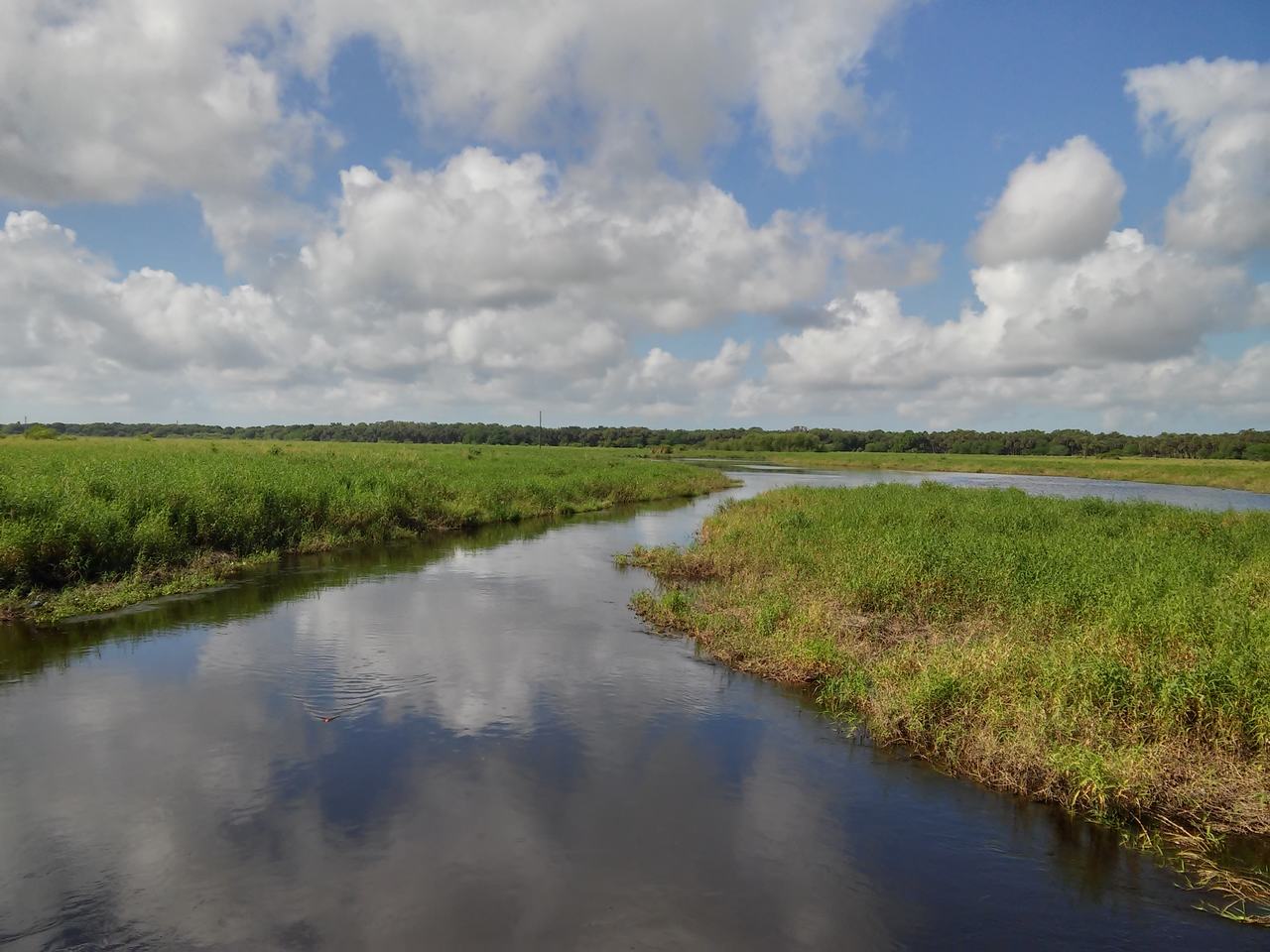
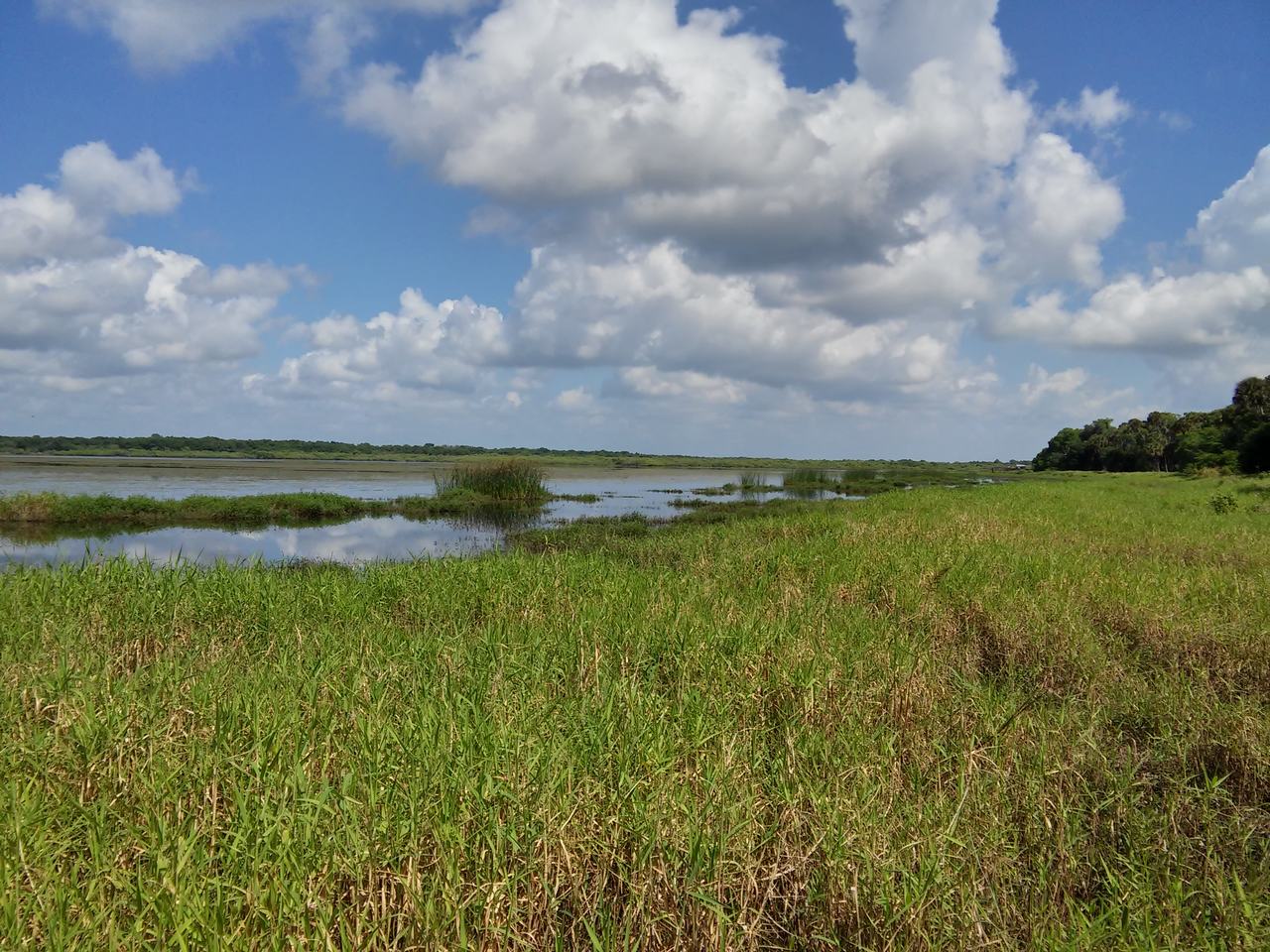
This part of the park has a completely different character from the palm groves by the river. Here, you walk through expansive Florida dry prairie – which, incidentally, is described as the second most biologically diverse ecosystem in North America, after the Amazon rainforest. You will find pine “flatwoods,” palmetto thickets, and enormous live oaks draped in Spanish moss.
Along the way, we saw turkeys, various species of birds, and – as I already mentioned – a venomous snake right on the trail. If you set out on a similar trail, bring water, a hat, and good shoes. The Florida sun is merciless, and shade is scarce.
What else you can experience in Myakka
The park offers far more than you can manage in a single visit:
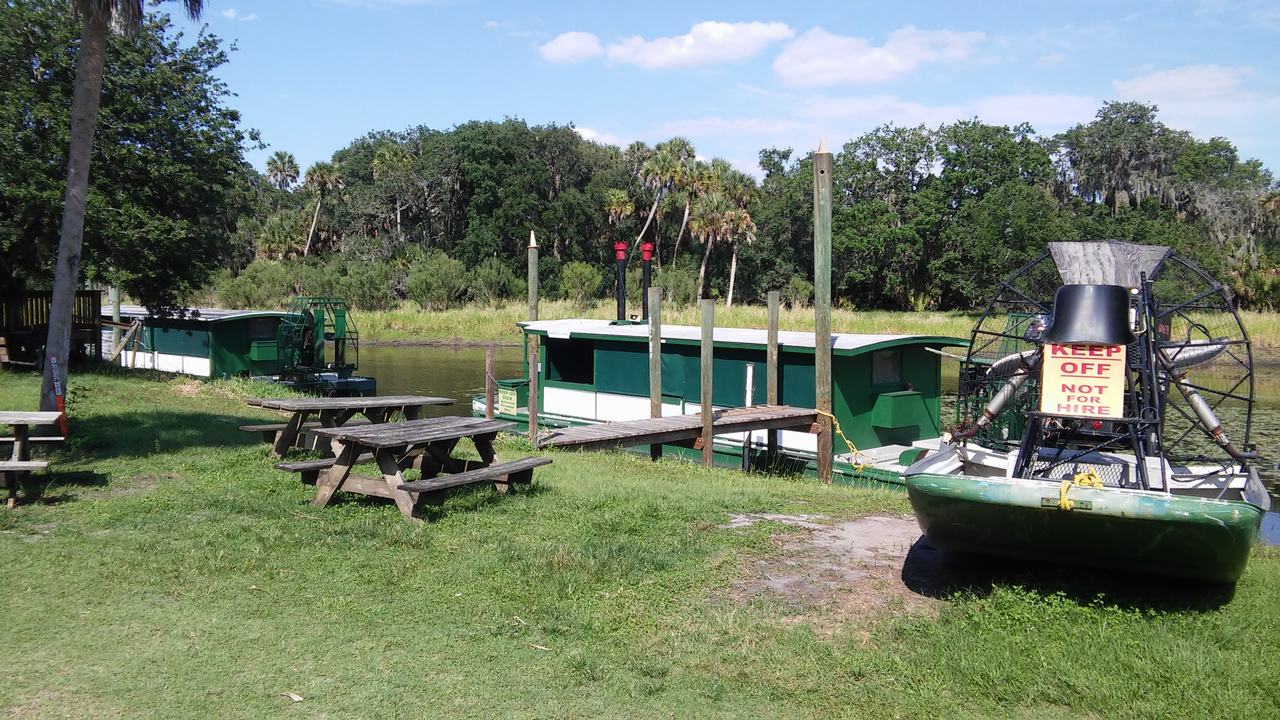
Airboat tours on Upper Myakka Lake – these are apparently the largest airboats in the world (they are called the “Myakka Maiden” and “Gator Gal”). The hour-long ride costs a few dollars and lets you see plenty of alligators, birds, and other animals up close.
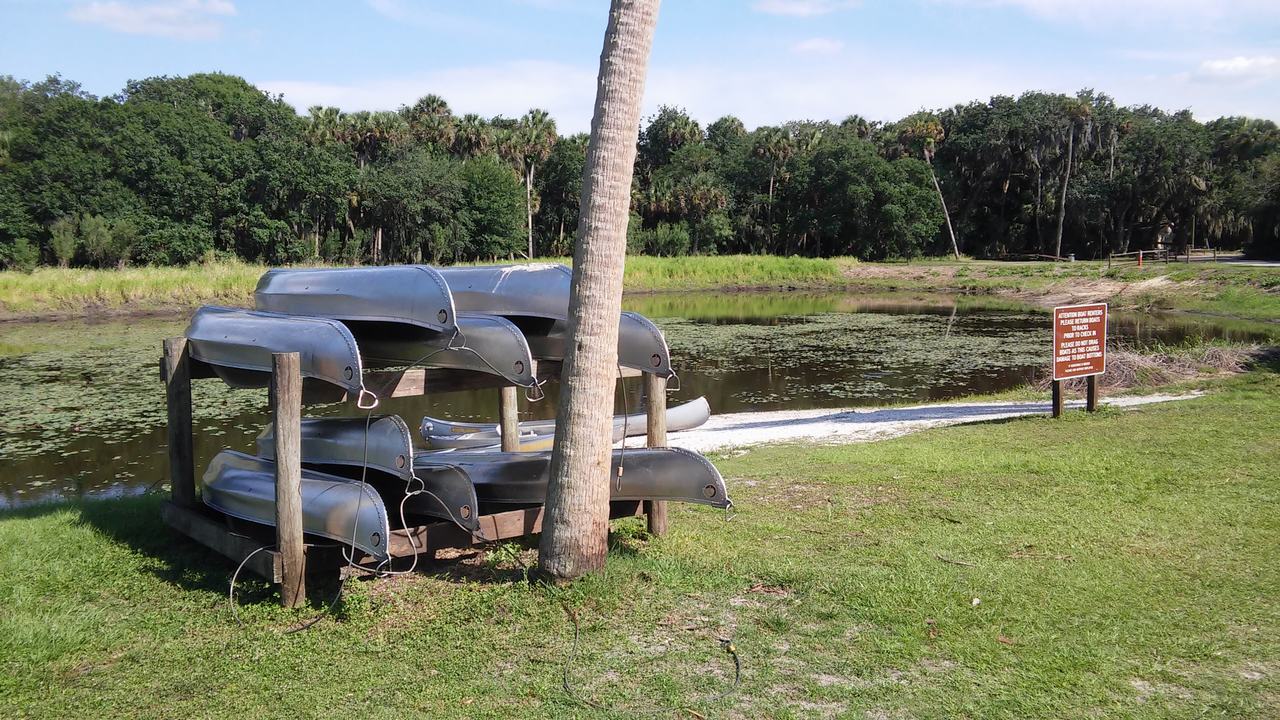
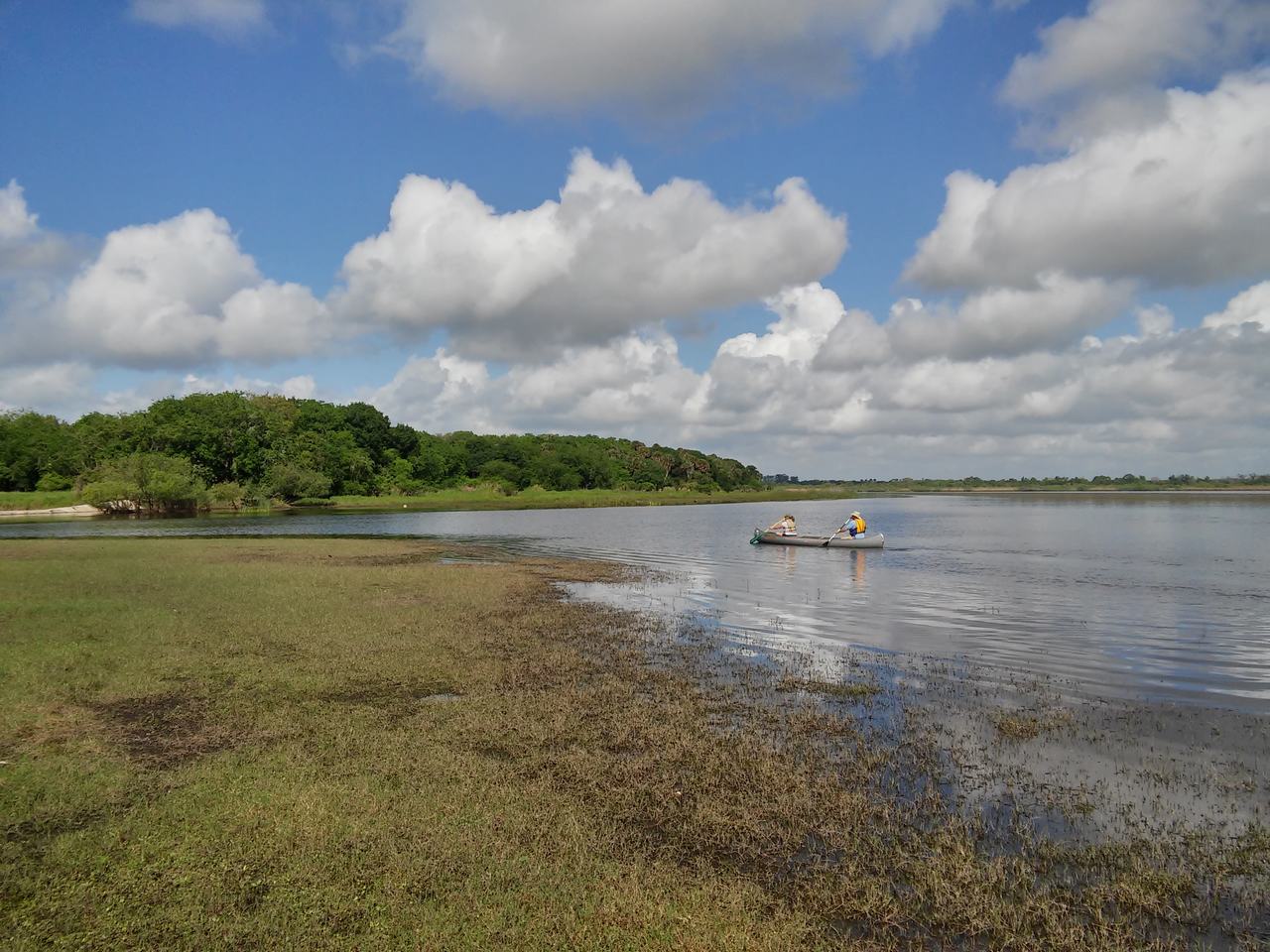
Kayak and canoe rentals at Myakka Outpost – for the more adventurous. Kayaking on the main lake among the alligators is, of course, an adrenaline-filled experience (incidentally, they rent aluminum kayaks here – they have a better chance of surviving contact with an alligator than plastic ones).
Tram Safari – from mid-December through May, a special tram travels through the park and takes you to remote backcountry areas that cannot be reached by car.
Fishing – from the platform at Myakka Outpost. With some luck (and the appropriate license, which you can buy at places such as Walmart or Bass Pro Shops), you can fish in a lake full of alligators.
Camping – either in a full-service campground or directly in the original cabins from the 1930s built by the CCC.
Cycling routes and more than 60 km of hiking trails for more demanding visitors.
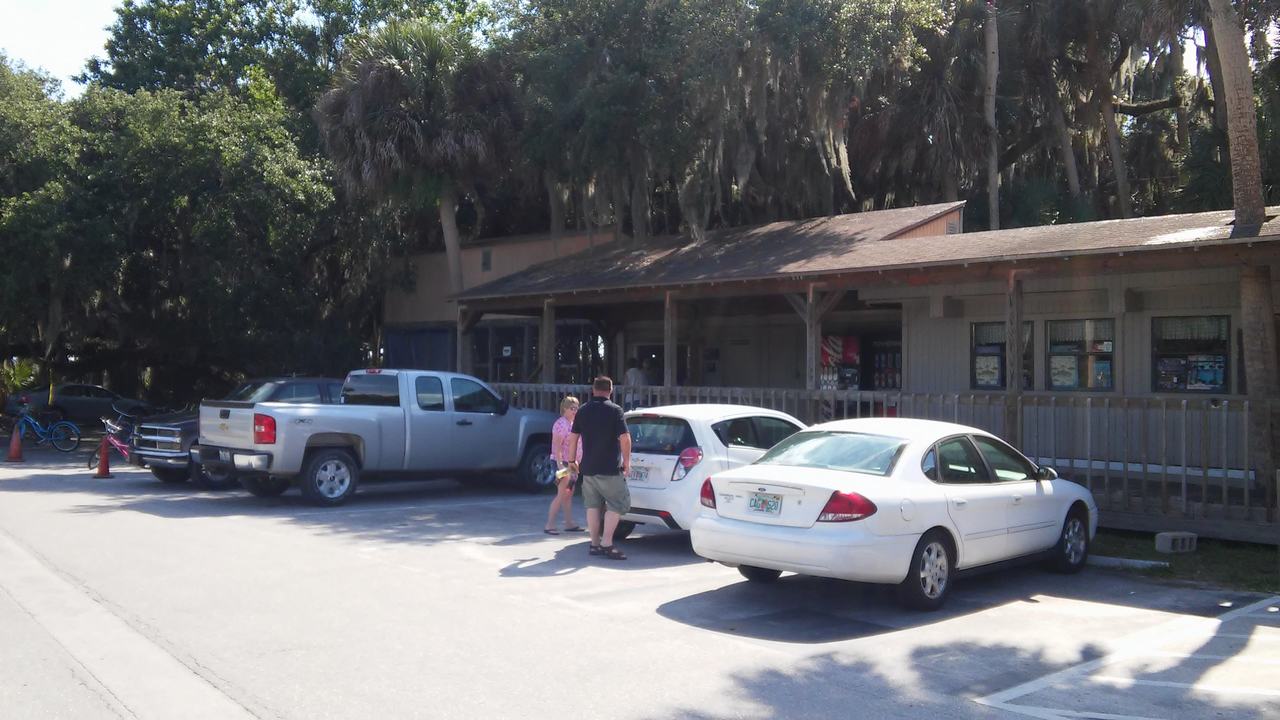
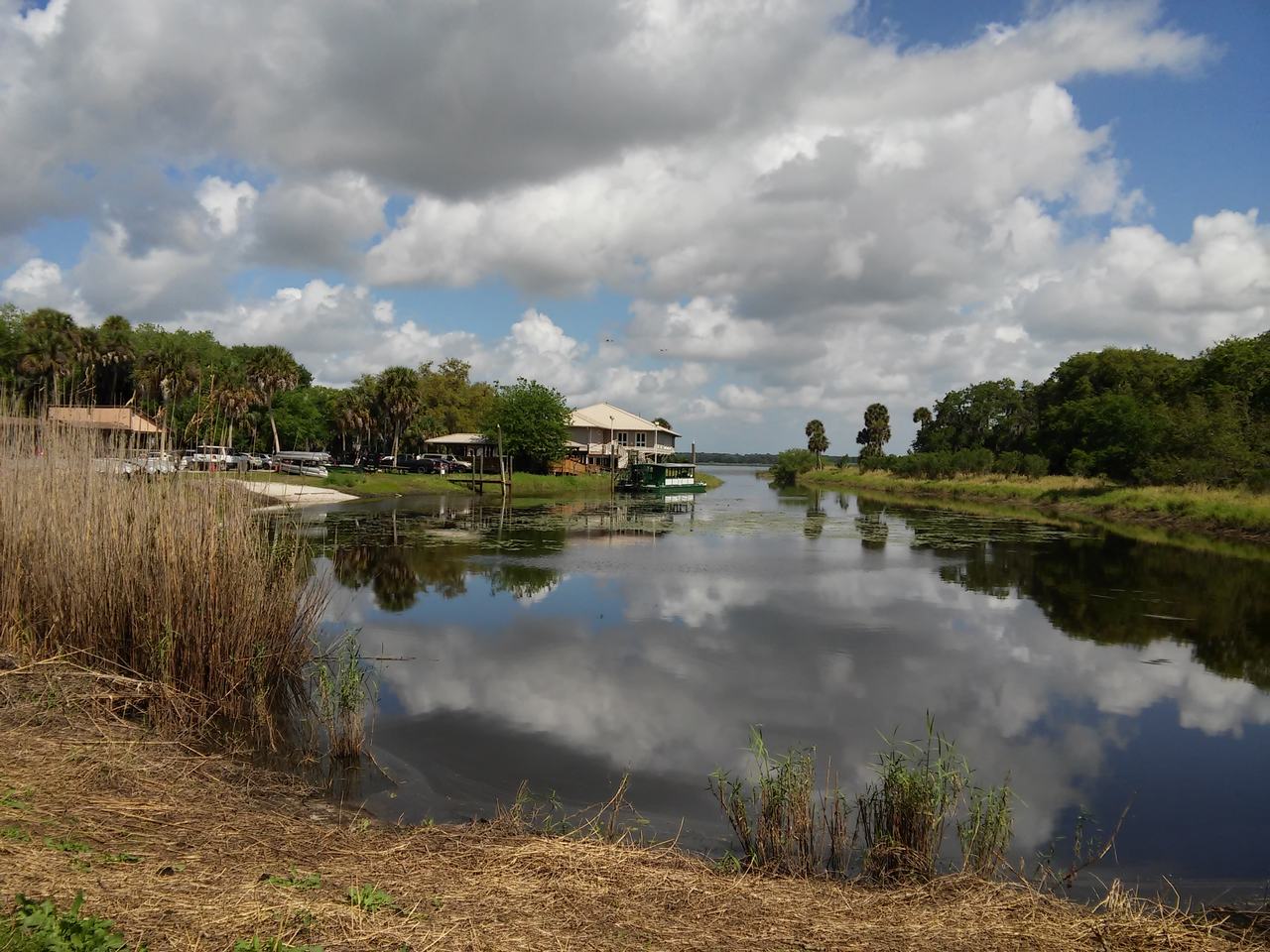
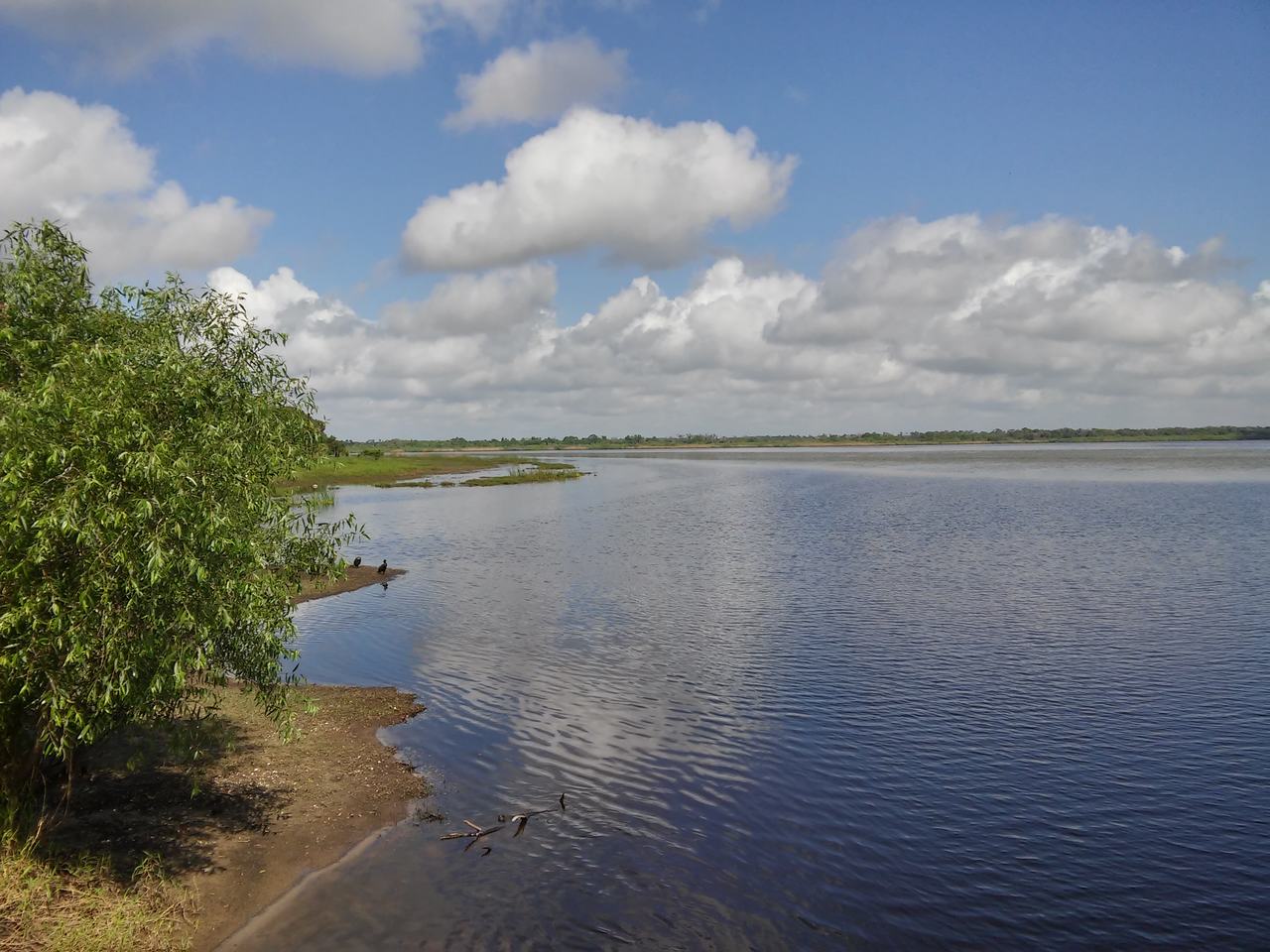
This is what Myakka Outpost, where the airboats depart from, looks like.
Conclusion – is Myakka River State Park worth visiting?
Absolutely. If you are on Florida’s west coast, especially around Sarasota, I highly recommend this park. I have to repeat what I have been saying from the beginning – you will see far more alligators here than in the Everglades, especially in the easily accessible parts of the park.
The park is enormous, beautifully maintained, rich in diverse ecosystems and interesting places. It is true “wild Florida” - the way it was known to its Native inhabitants and the first Spanish explorers.
And even though the Birdwalk was unfortunately closed during our most recent visit, the remaining attractions are well worth it. The bridge with its alligators, the Canopy Walk with its history as the first of its kind in North America, and Fox Road with its expansive prairie – together, they create an experience you will never forget.
When you make it to Florida, be sure to stop here. It is about an hour from Tampa and Sarasota, and a little over an hour north of Fort Myers – and for just a few dollars, you will find yourself in one of the most magical parts of wild Florida.
Here is one more video and a few additional photos I found.