If you ever visit Miami or Florida’s west coast, the Everglades should definitely be on your itinerary. I’ve personally visited this unique national park about eight, perhaps even ten times – most recently in June and October 2025 – and I discovered something new every time. I’ve also explored places that ordinary tourists rarely reach, so I think I can write about it fairly comprehensively.
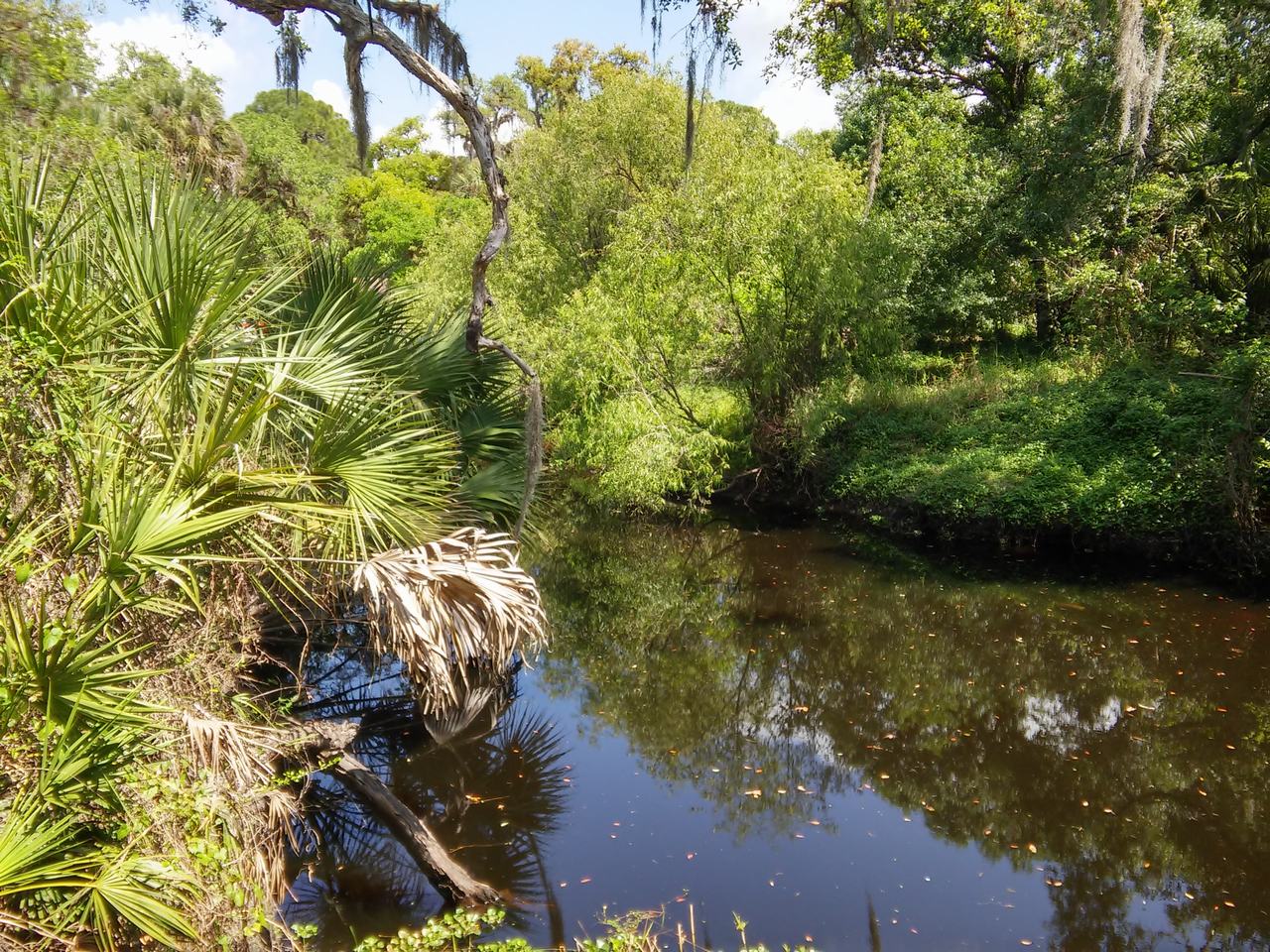
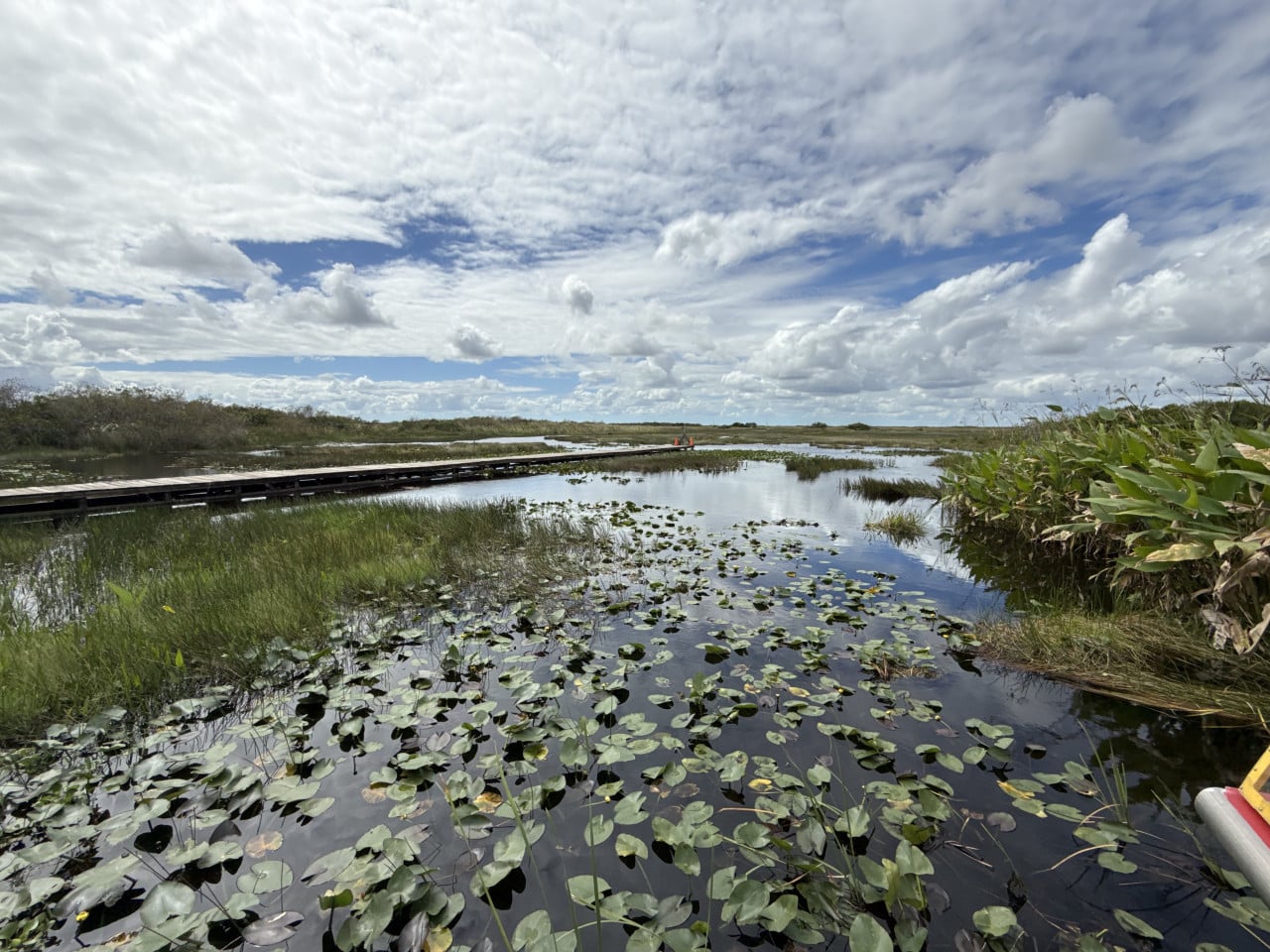
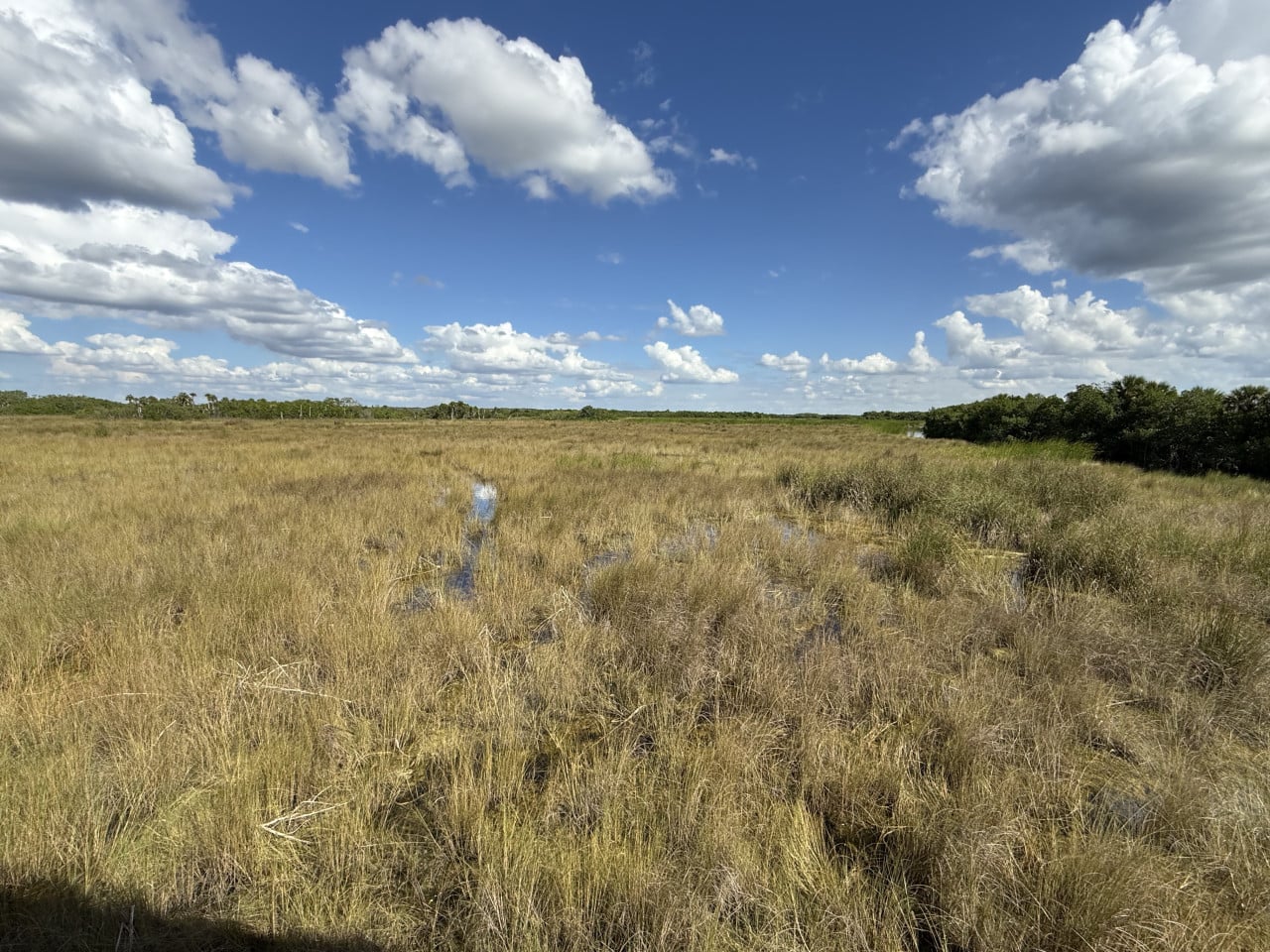
The Everglades are simply vast subtropical wetlands full of alligators, snakes, and wildlife. At the same time, they are one of South Florida’s biggest tourist attractions and a place I recommend to anyone who wants to see American wilderness that is quite different from what you find in Yellowstone or Yosemite.
In this article, I’ll cover both the park’s history and interesting facts, as well as specific places worth visiting – airboats, the Miccosukee Indian Village, and a quieter trail in Big Cypress.
How to get to the Everglades
There are several ways to reach the Everglades, and much depends on where you are in Florida.
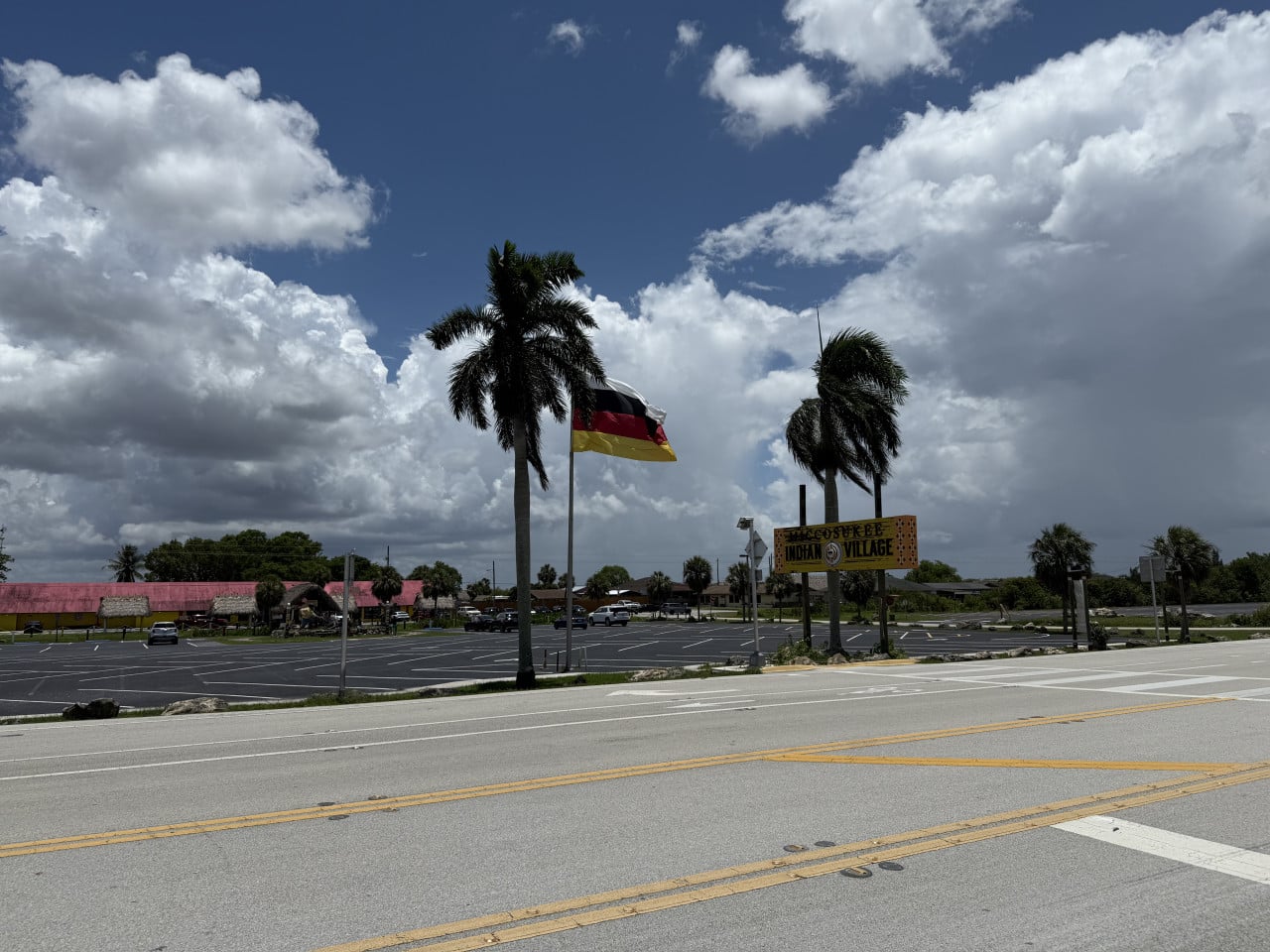
Between Miami and Naples (from east to west or vice versa), the famous Tamiami Trail (US Highway 41) crosses the park – the original road dating from 1928, which was the first to cut across the Florida peninsula and remains one of the most scenic routes through the Everglades.
If you are traveling from Tampa to Miami, you essentially have two options. You can get from Tampa to Miami either via I-75, which is called Alligator Alley where it crosses the Everglades (faster, four lanes, with tolls), or along the more winding Tamiami Trail (US 41), which is slower but definitely more scenic, offers many more opportunities to see alligators, and lets you soak up the atmosphere of Florida’s true wilderness.
I personally prefer the Tamiami Trail – most of the overlooks, park entrances, Indian villages, and airboat operators are located along it.
What the Everglades are and a little history
The Everglades are often described as a “River of Grass” – this metaphor comes from journalist Marjory Stoneman Douglas’s 1947 book of the same name, whose writing helped save the park. It is not a stagnant swamp, as it might seem at first glance, but a vast, extremely slow-flowing river that moves south from Lake Okeechobee into Florida Bay at a rate of only about 30 meters per day.
A few facts I find interesting:
-
The park was established on December 6, 1947, and it is the first national park in the United States created primarily to protect biodiversity, rather than geological formations such as the Grand Canyon or Yellowstone.
-
It covers more than 6,100 km² – making it the third-largest national park in the contiguous United States after Death Valley and Yellowstone.
-
The Everglades are the only place in the world simultaneously included in three international UNESCO designations: a Biosphere Reserve (1976), a World Heritage Site (1979), and a Ramsar Wetland of International Importance (1987).
-
The park is also the only place in the world where alligators and crocodiles live together in the wild. Alligators prefer fresh water, while crocodiles can also tolerate salt water – and in the Everglades, wetlands and saltwater bays meet.
-
Geologically, the entire area is very young – active wetlands have existed here for “only” about 5,000 years.
A sadder fact is that today’s Everglades are only about half their original size. During the 20th century, a vast portion of the wetlands was drained for agriculture and development – and the park itself must rely on the enormous, multibillion-dollar Comprehensive Everglades Restoration Plan (CERP), which aims to eventually restore the natural flow of water.
Alligators: how many are actually there?
The alligator is the signature animal of the Everglades and a keystone species of the entire ecosystem. Estimates vary, but it is generally stated that around 200,000 alligators live within the Everglades themselves, with approximately 1.3 million across Florida as a whole.
What fascinates me is their role in the ecosystem. During the dry season, alligators dig so-called “alligator holes” in the mud – small pools that retain water even when everything around them has dried out. These holes then become a refuge for fish, turtles, and birds that might otherwise die during the dry season. Without alligators, the Everglades would function very differently.
In terms of size, males commonly grow to 3.4 to 4.6 meters, while females are smaller (2.5–3 m). Alligators have one of the strongest bites in the animal kingdom – over 2,100 PSI.
And now for a more personal aside. I remember a time when my friends and I fed alligators Walmart chickens from a bridge in the Everglades – we threw them off the bridge, and suddenly dozens or even hundreds of alligators gathered below us. It was an incredible sight. Of course, we had no idea at the time that feeding alligators is strictly prohibited in the United States and also extremely dangerous – an alligator that learns to associate people with food loses its natural fear and becomes dangerous. I would not do it today and definitely do not recommend it to anyone, but back then it was an unforgettable experience.
I’ll also never forget one trip when, on our way from Fort Myers/Naples to Miami, we spent the night in a tent in the Everglades. In the morning, we saw a mother alligator with her small babies nearby. It was only much later that I learned how incredibly lucky we had been – female alligators protect their young extremely aggressively and are much more dangerous than usual at that time.
Pythons: the nightmare changing the entire ecosystem
When discussing the creatures of the Everglades, we cannot leave out Burmese pythons, which have become perhaps the biggest ecological problem in all of Florida.
This enormous snake is native to Southeast Asia. It arrived in Florida in the 1970s as an exotic pet – and unfortunately, many owners released their snakes into the wild when they grew too large to handle. A key moment came in 1992, when Hurricane Andrew destroyed a python breeding facility and dozens or hundreds of snakes escaped directly into the Everglades.
Today, estimates of their numbers range from tens of thousands to 300,000 individuals. No one knows exactly – pythons are extremely well camouflaged and difficult to count. What is certain, however, is their impact. Studies from 1996–2012 revealed a drastic decline in mammal populations in the Everglades:
-
raccoons: a decline of 99.3%
-
opossums: a decline of 98.9%
-
bobcats: a decline of 87.5%
-
rabbits and foxes have virtually disappeared from the park
Pythons are incredibly powerful predators – specimens have been found that swallowed a 6-foot alligator or an adult deer. The largest python captured in Florida measured almost 6 meters and weighed 57 kilograms (caught in 2023 in Big Cypress National Preserve).
Florida combats them through the Python Elimination Program and the annual Florida Python Challenge – a competition in which hunters receive rewards for every snake caught ($50 for the first 4 feet and another $25 for each additional foot). Realistically, however, they can no longer be eradicated, and the goal is instead to control the population.
Incidentally, pythons in the Everglades are essentially non-aggressive toward humans. Over the past 20 years, there has not been a single python attack among the park’s one million annual visitors. Their impact is
purely ecological.
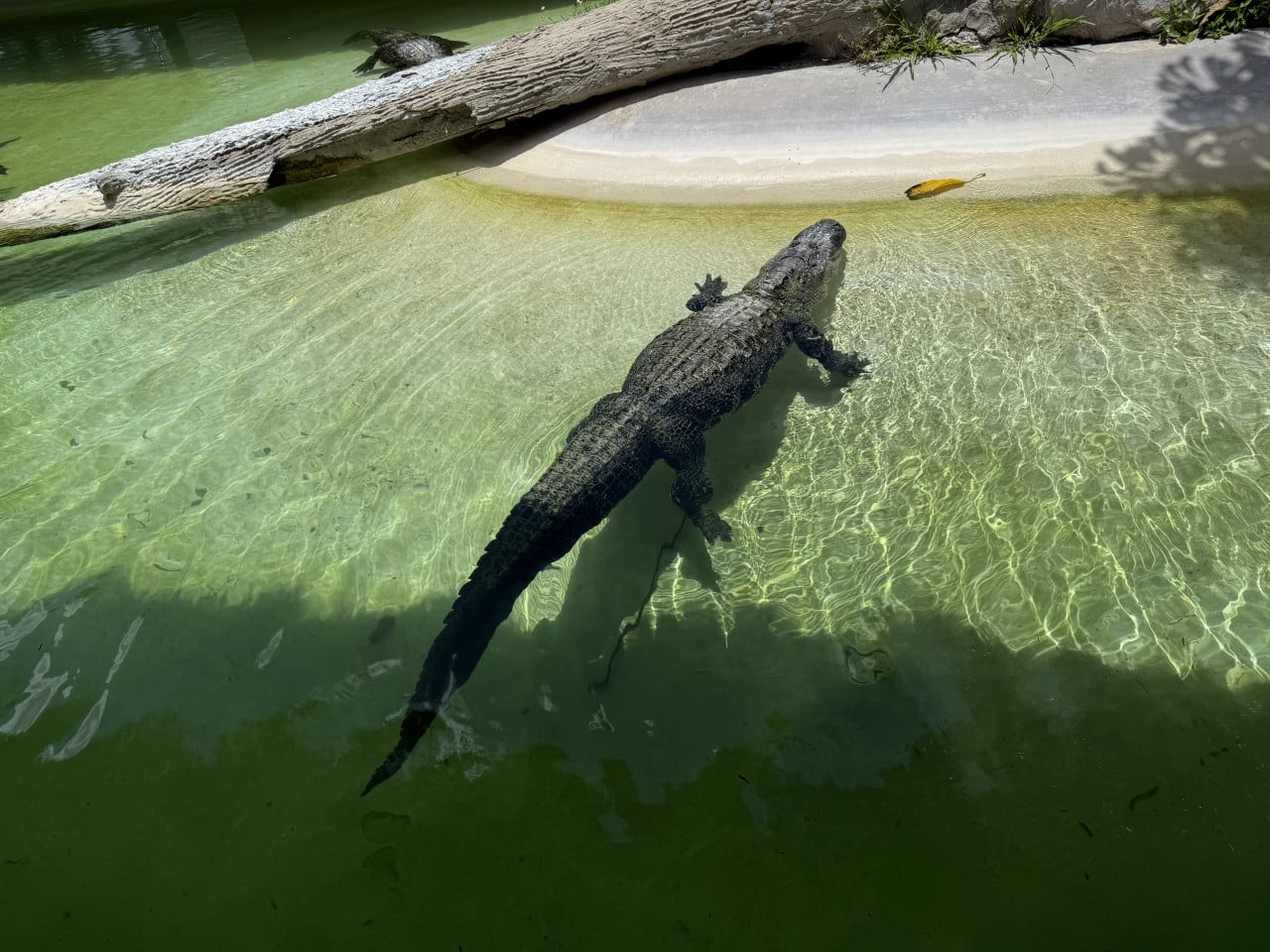
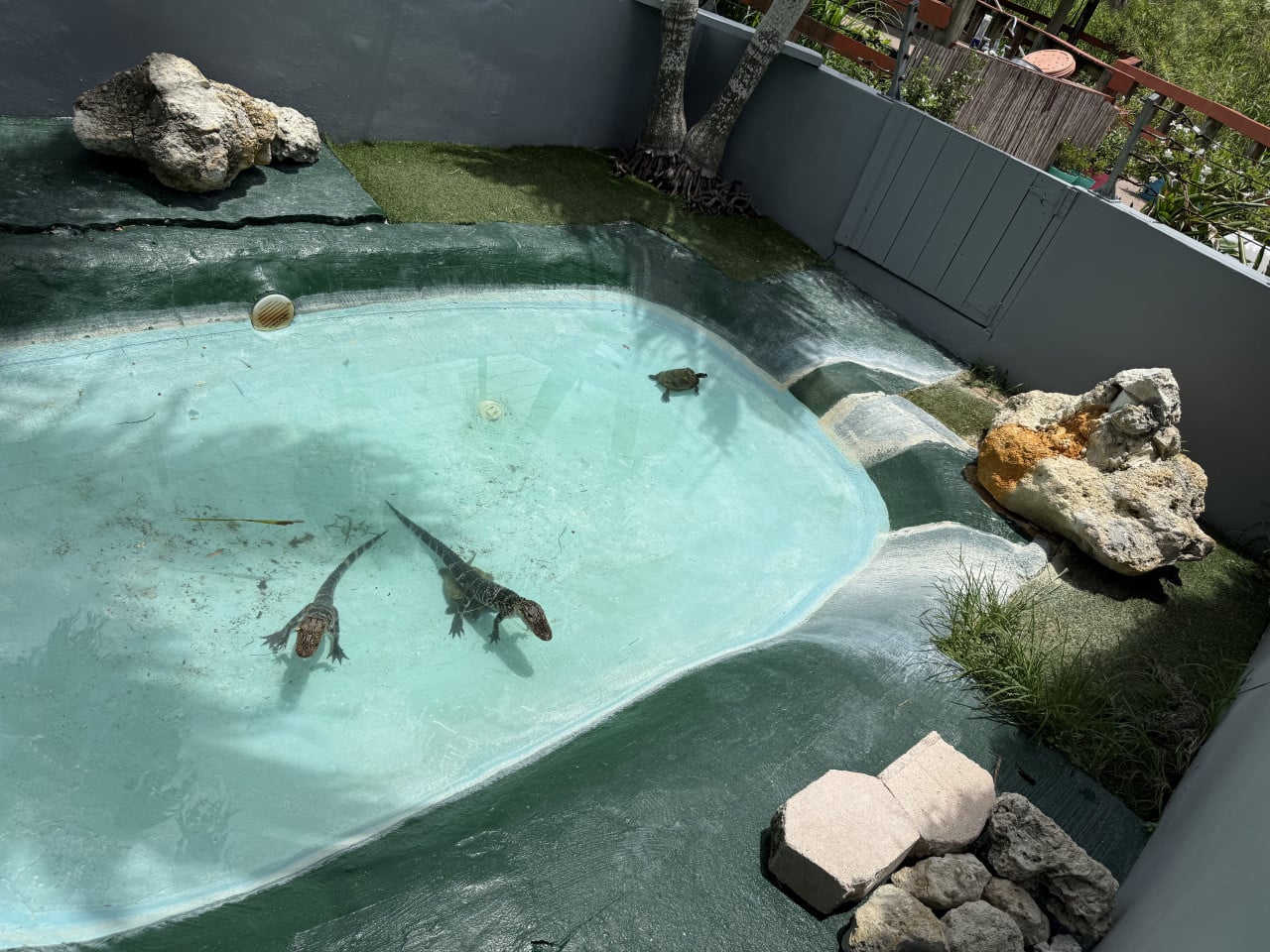
Alligators at the Miccosukee Indian Village and airboats
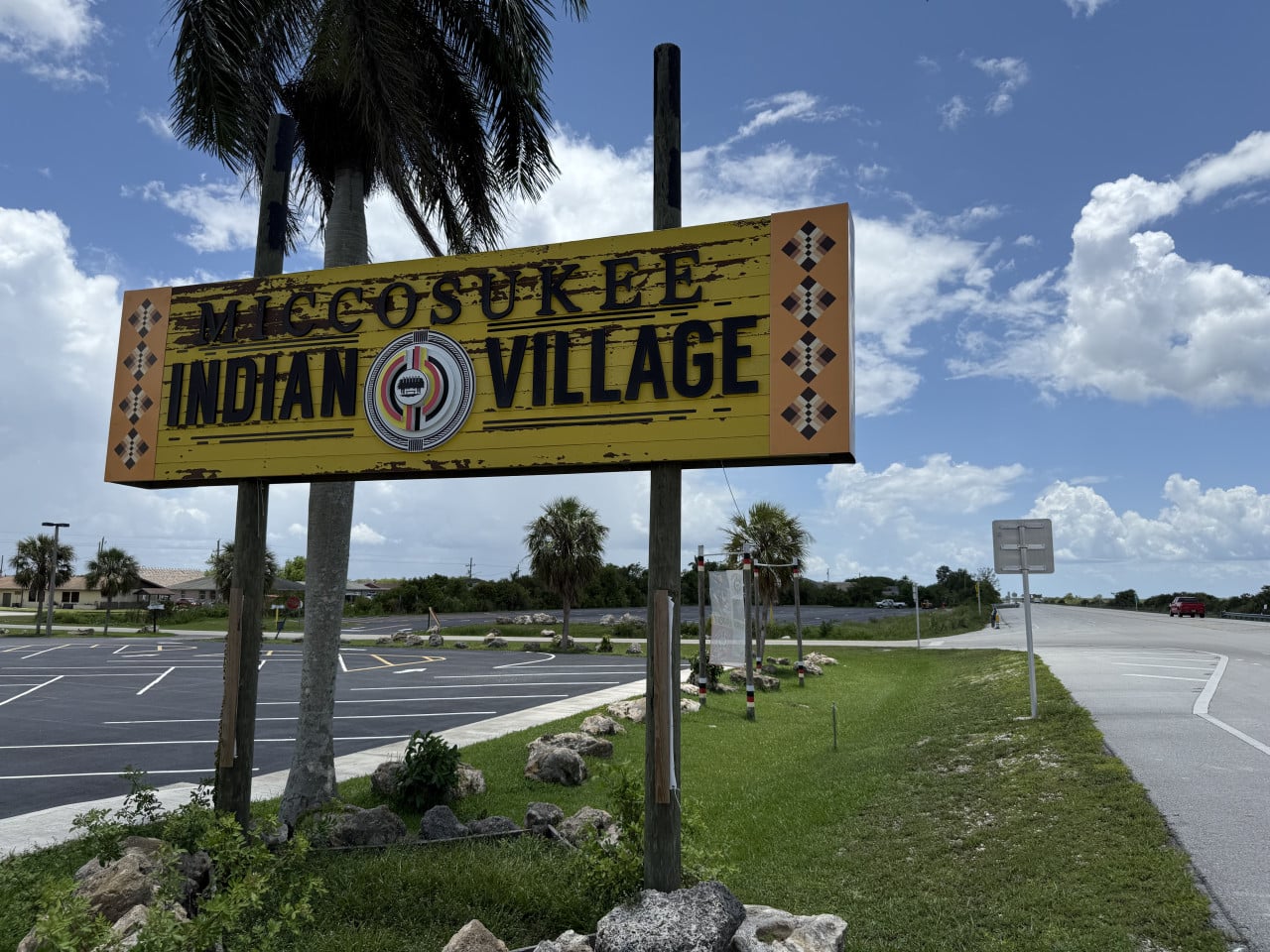
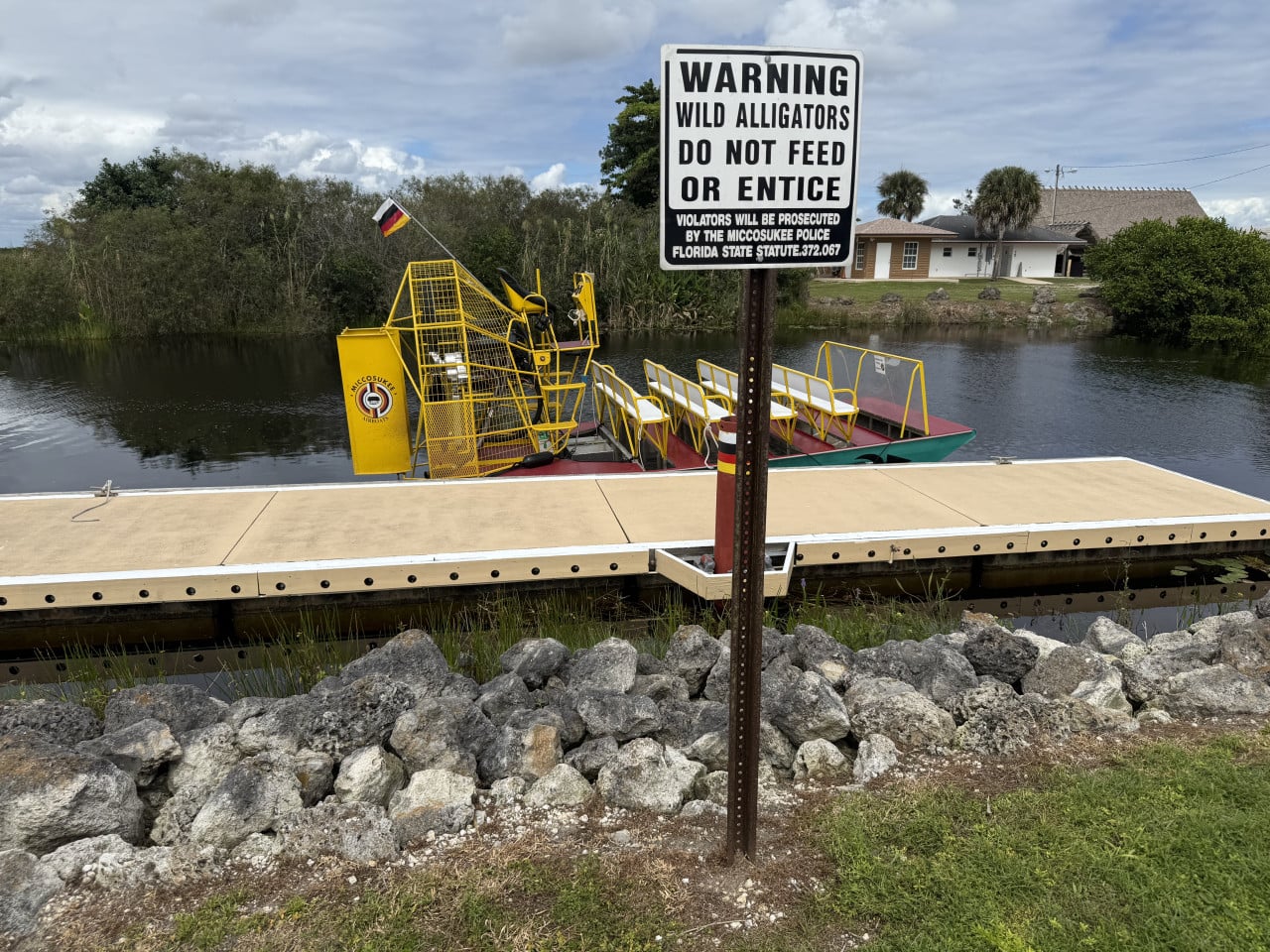
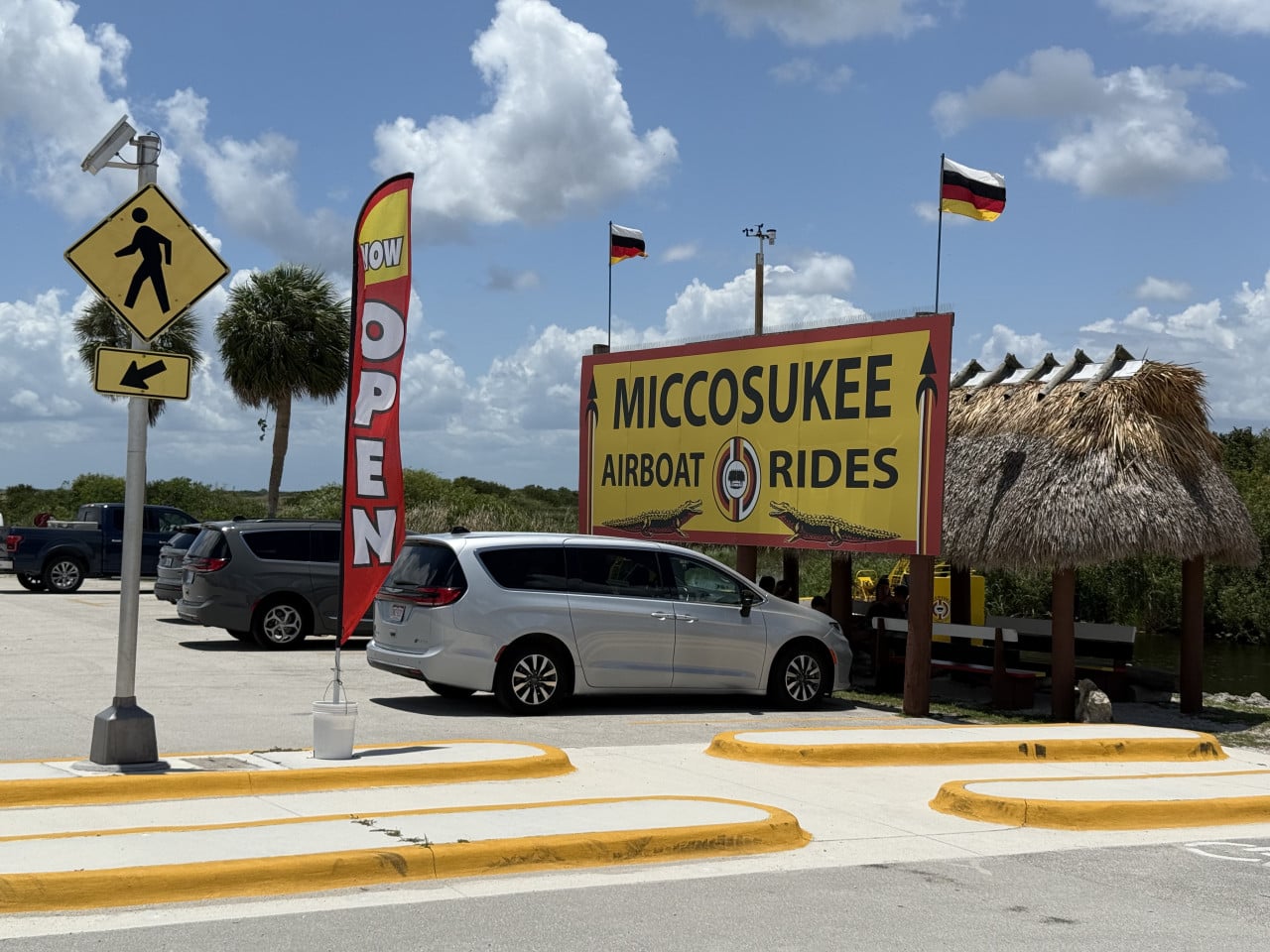
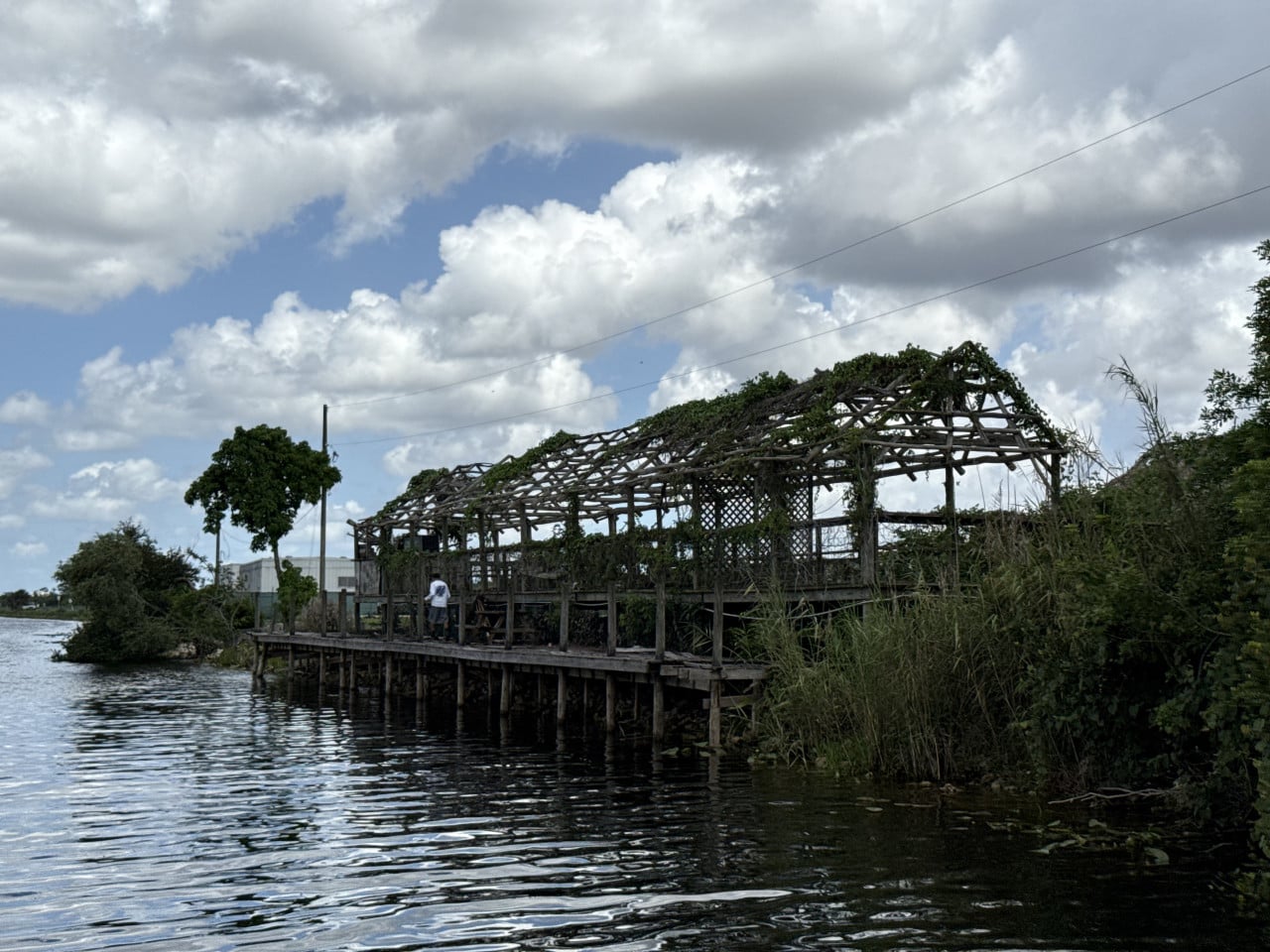
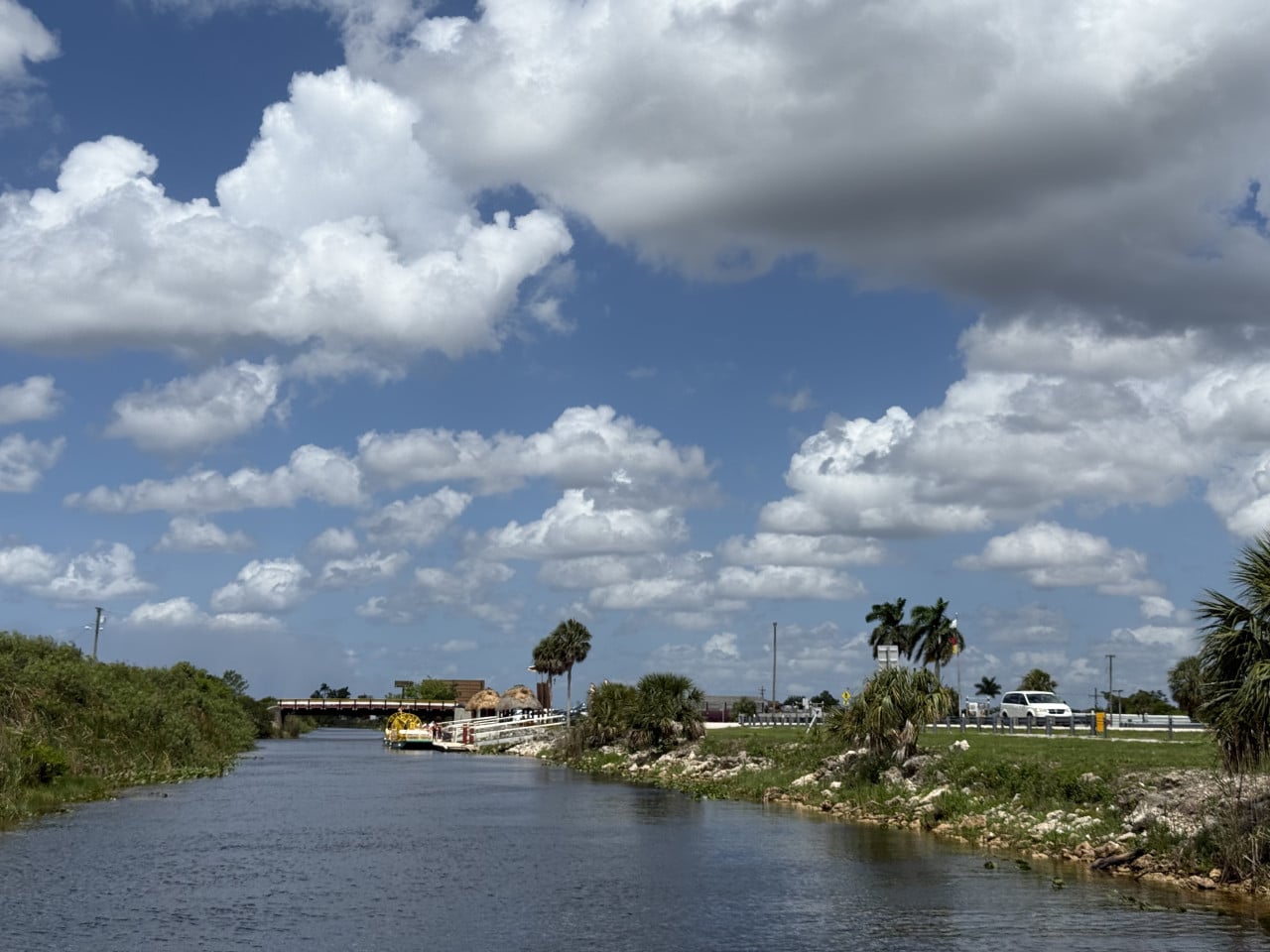
If you are coming from Miami and want to take a classic airboat ride, I recommend stopping at the Miccosukee Indian Village.
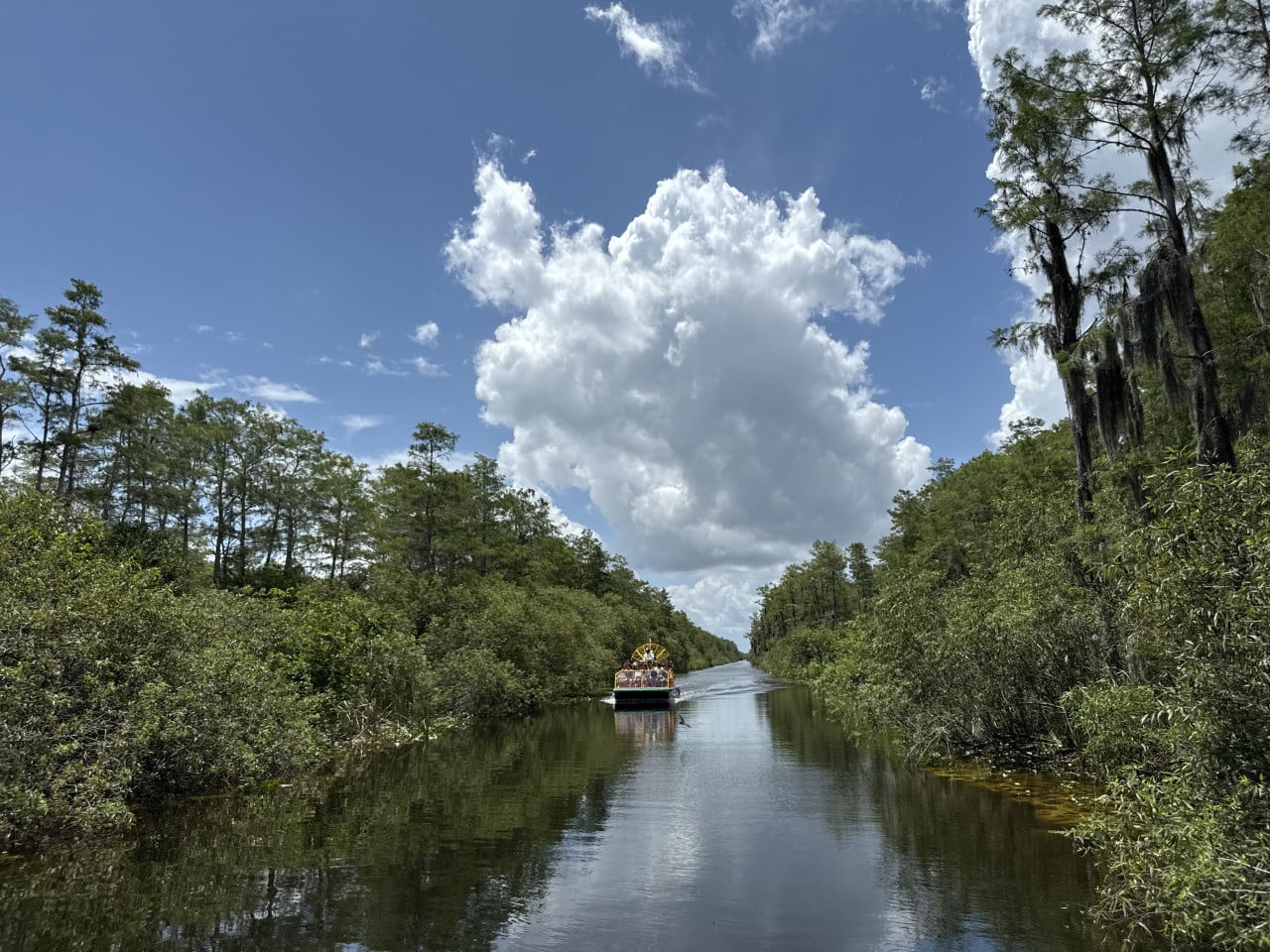
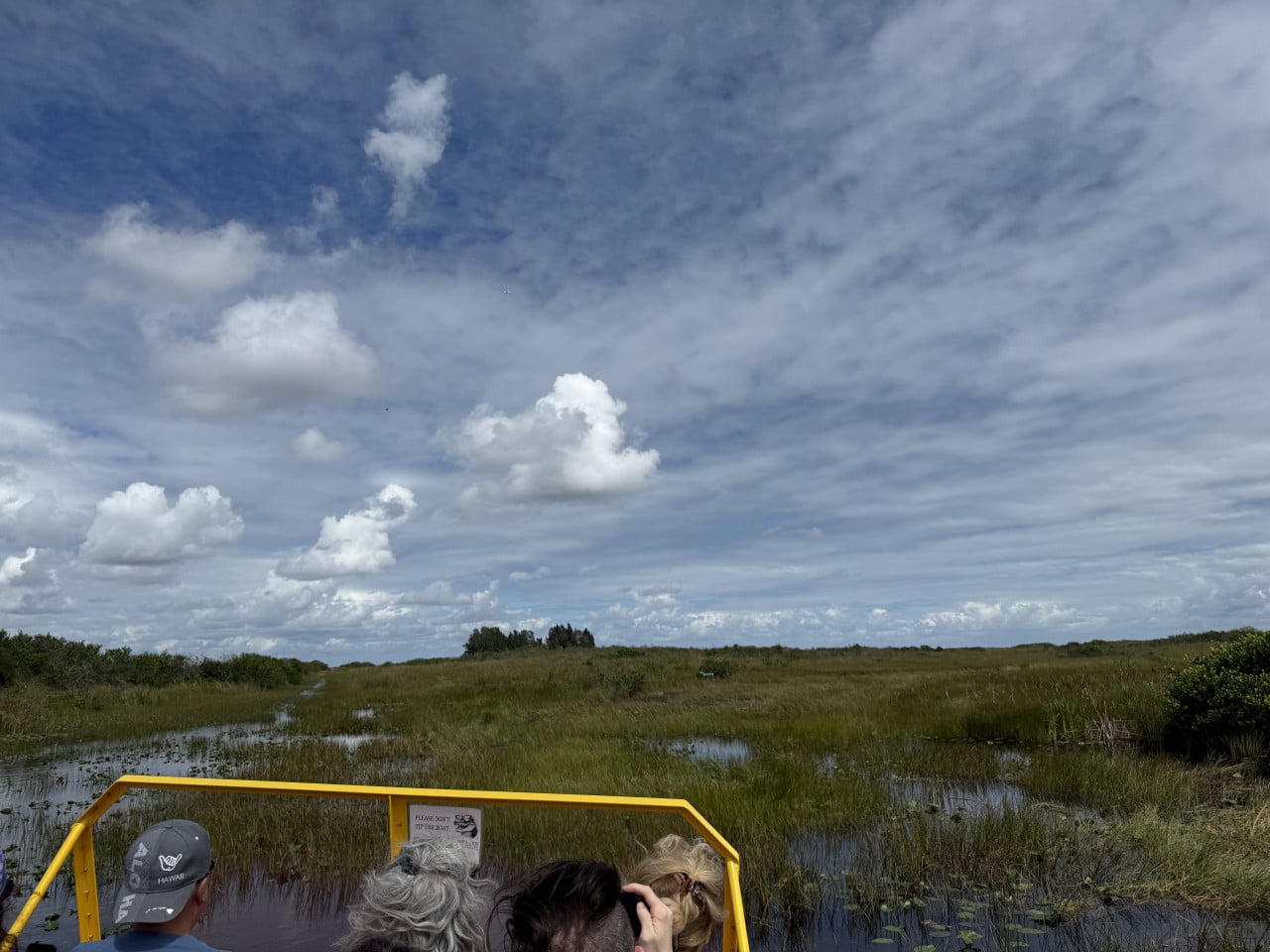
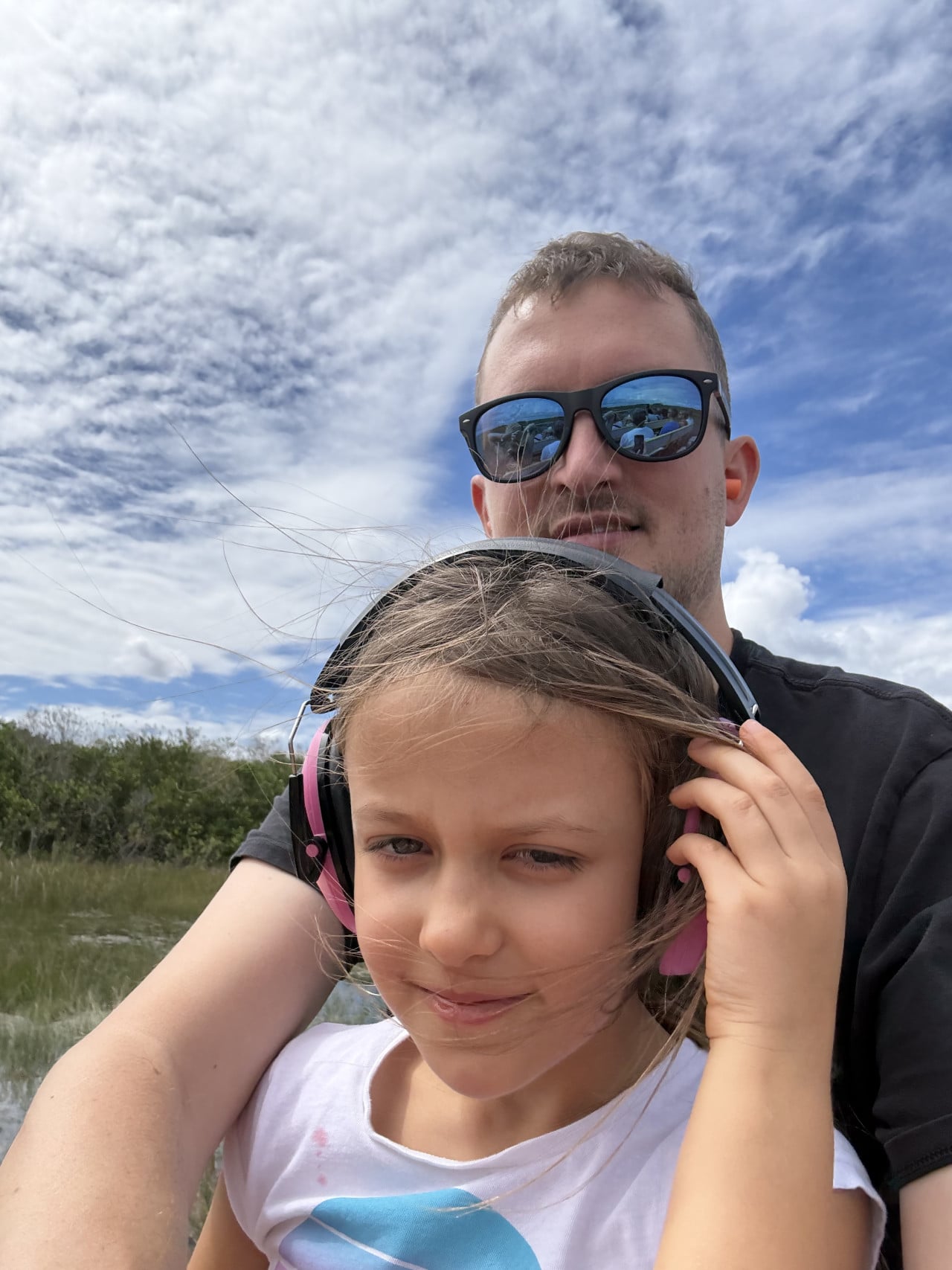
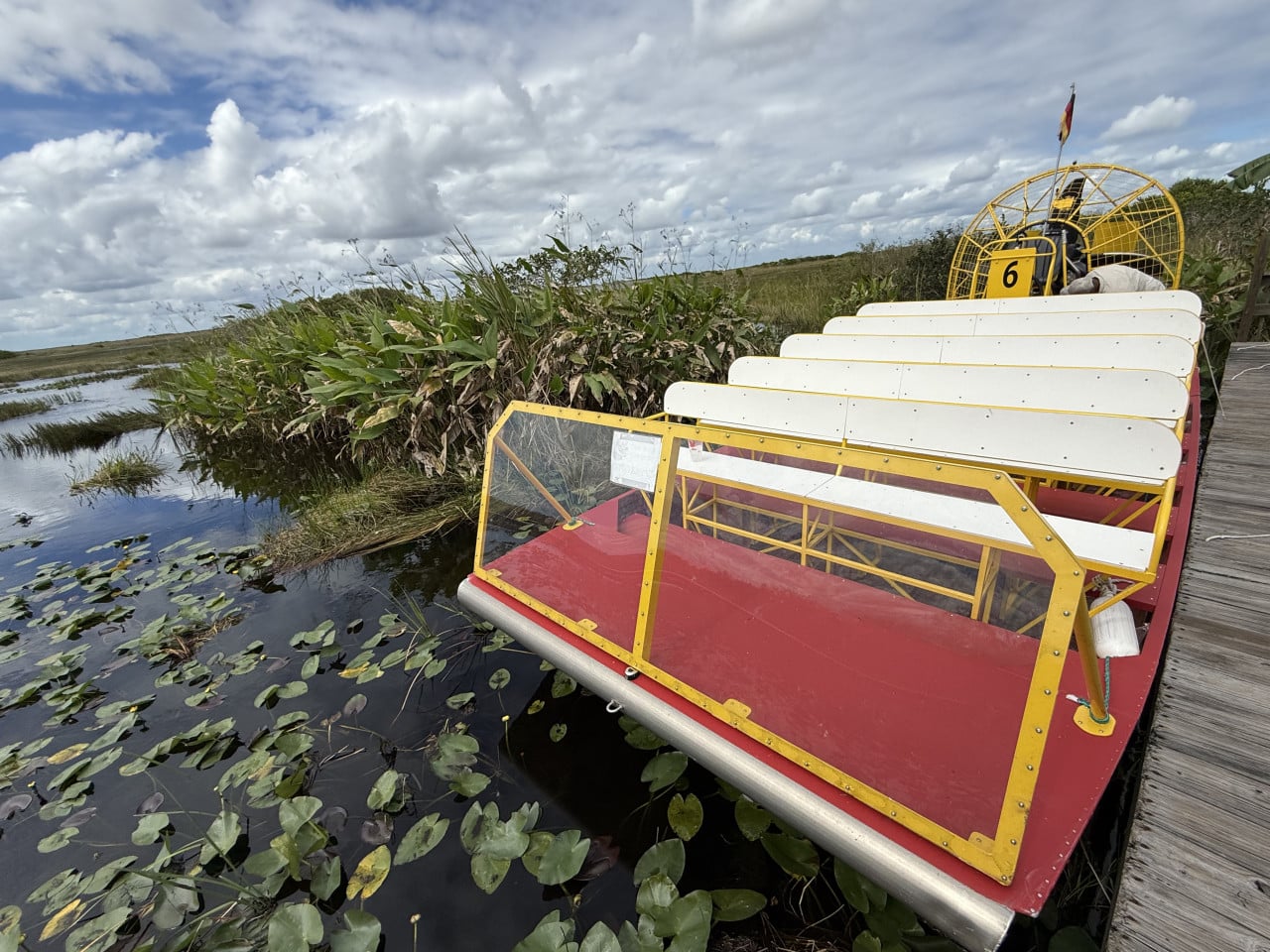
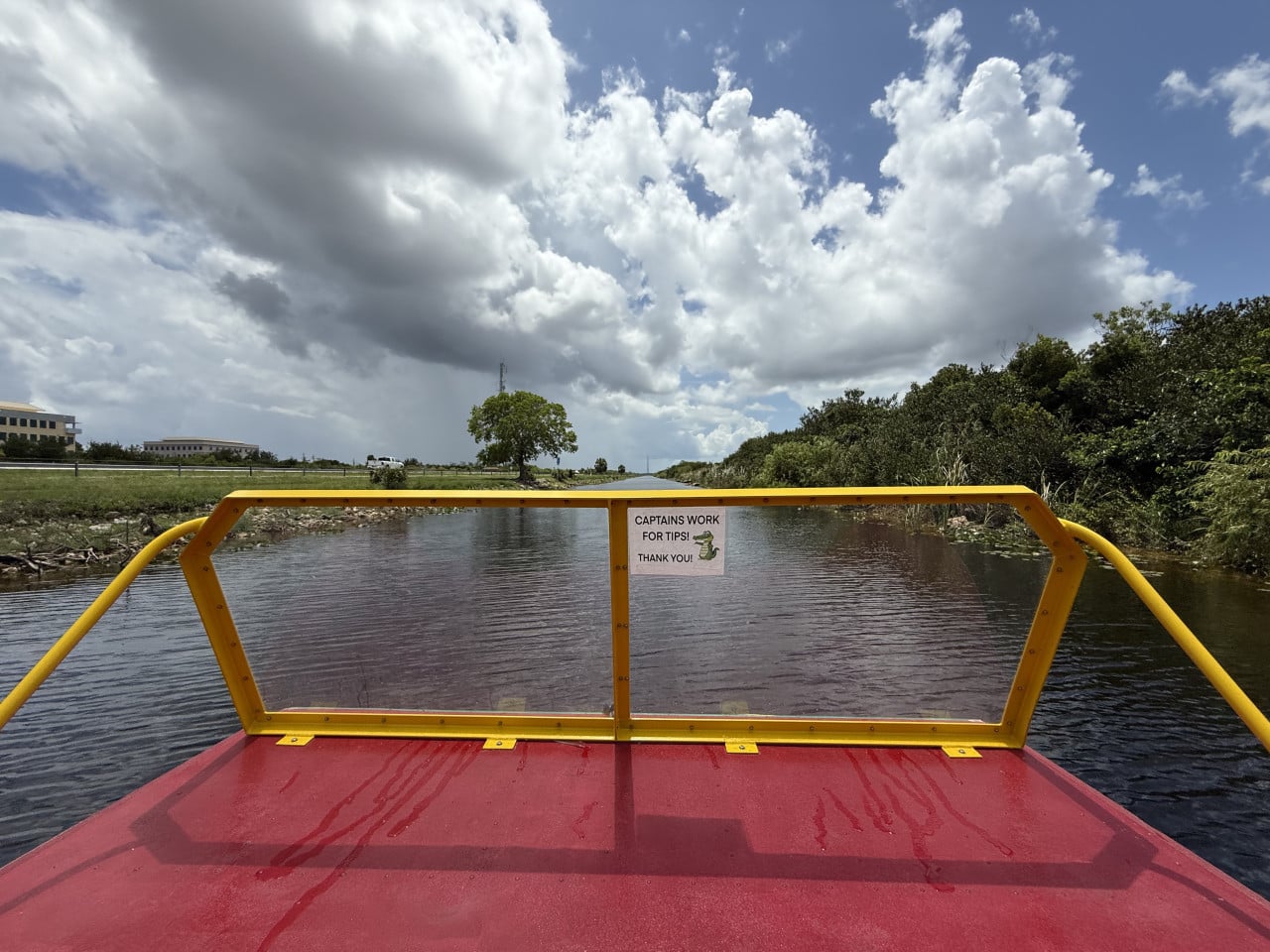
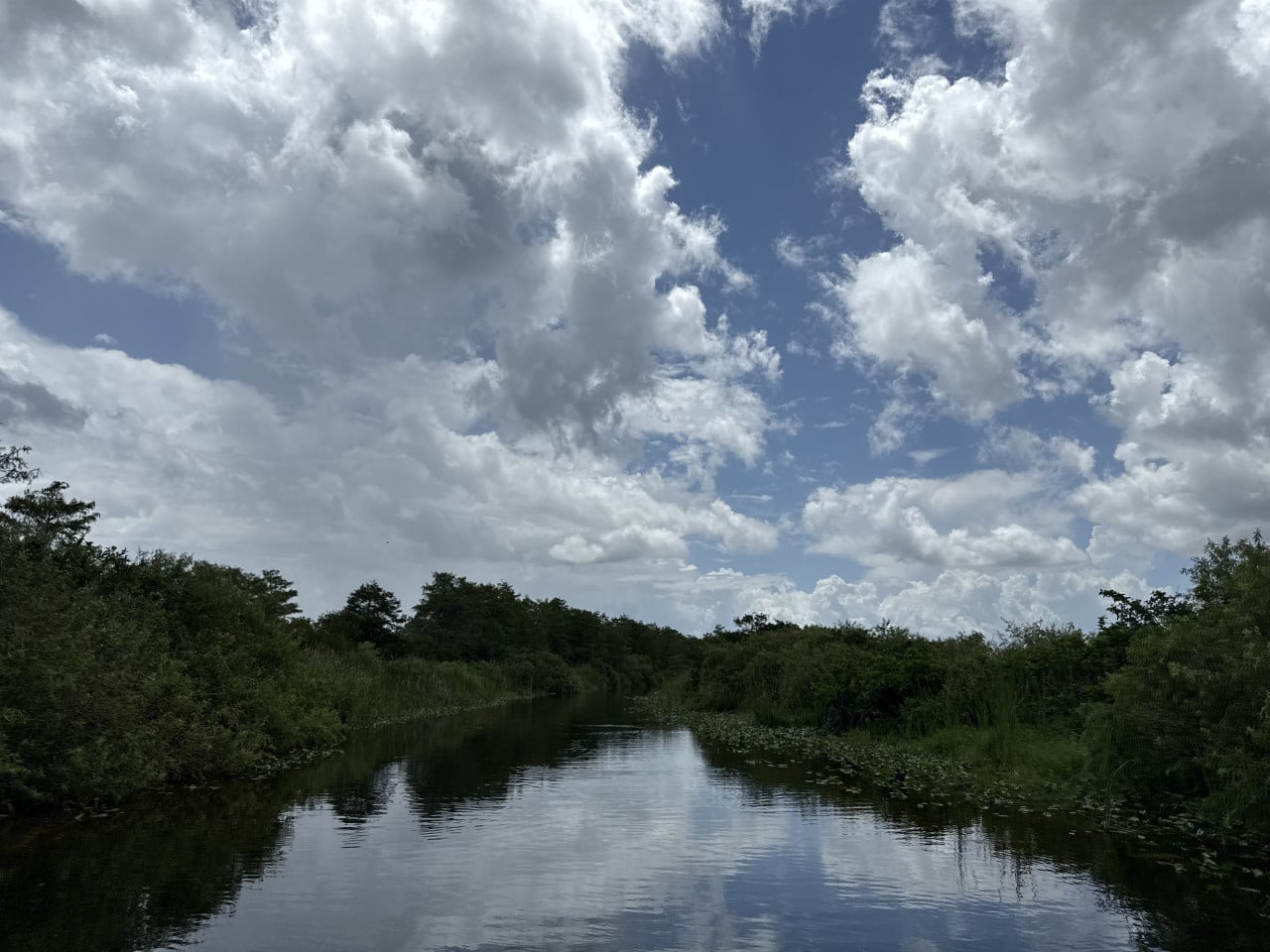
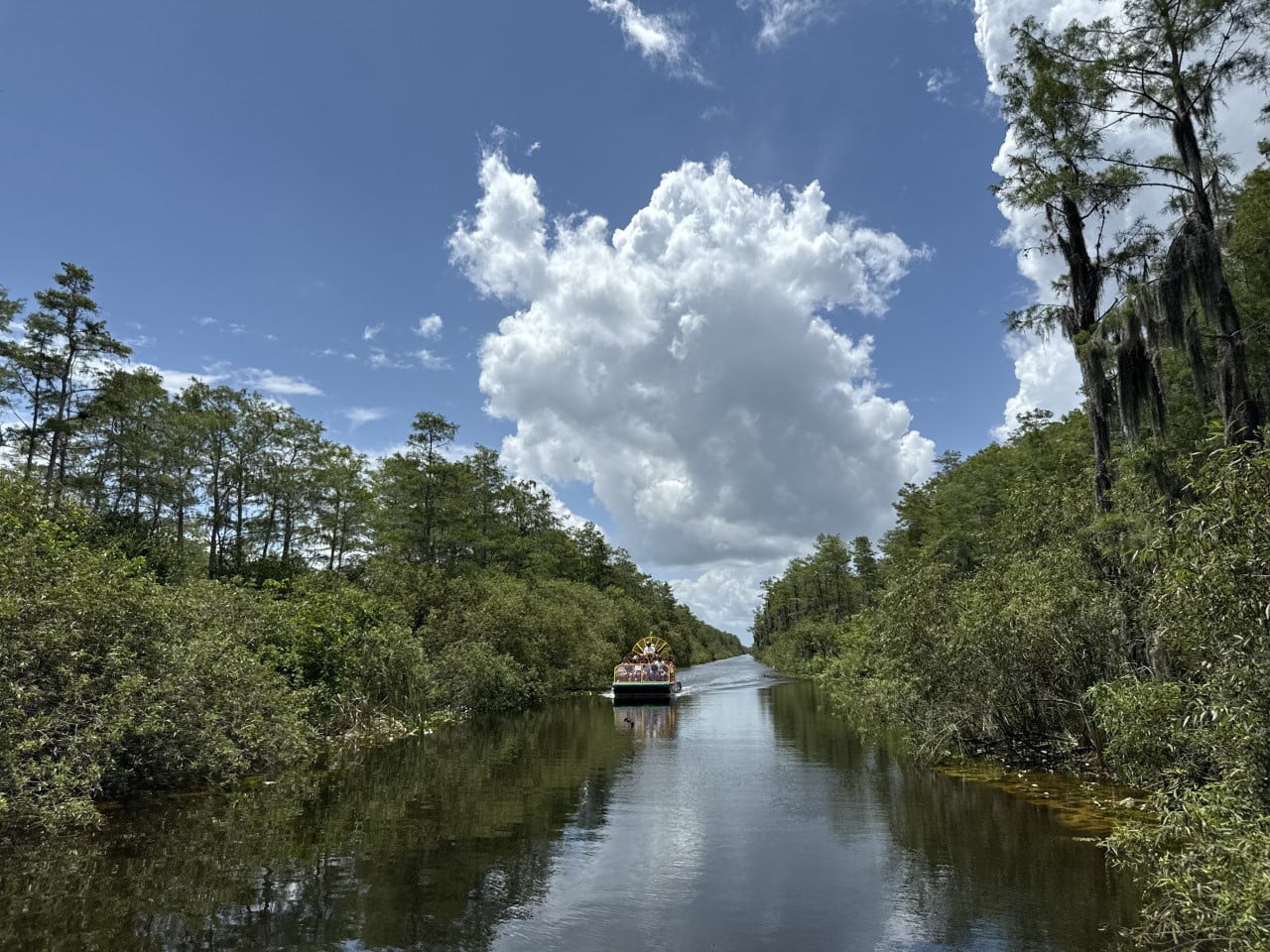
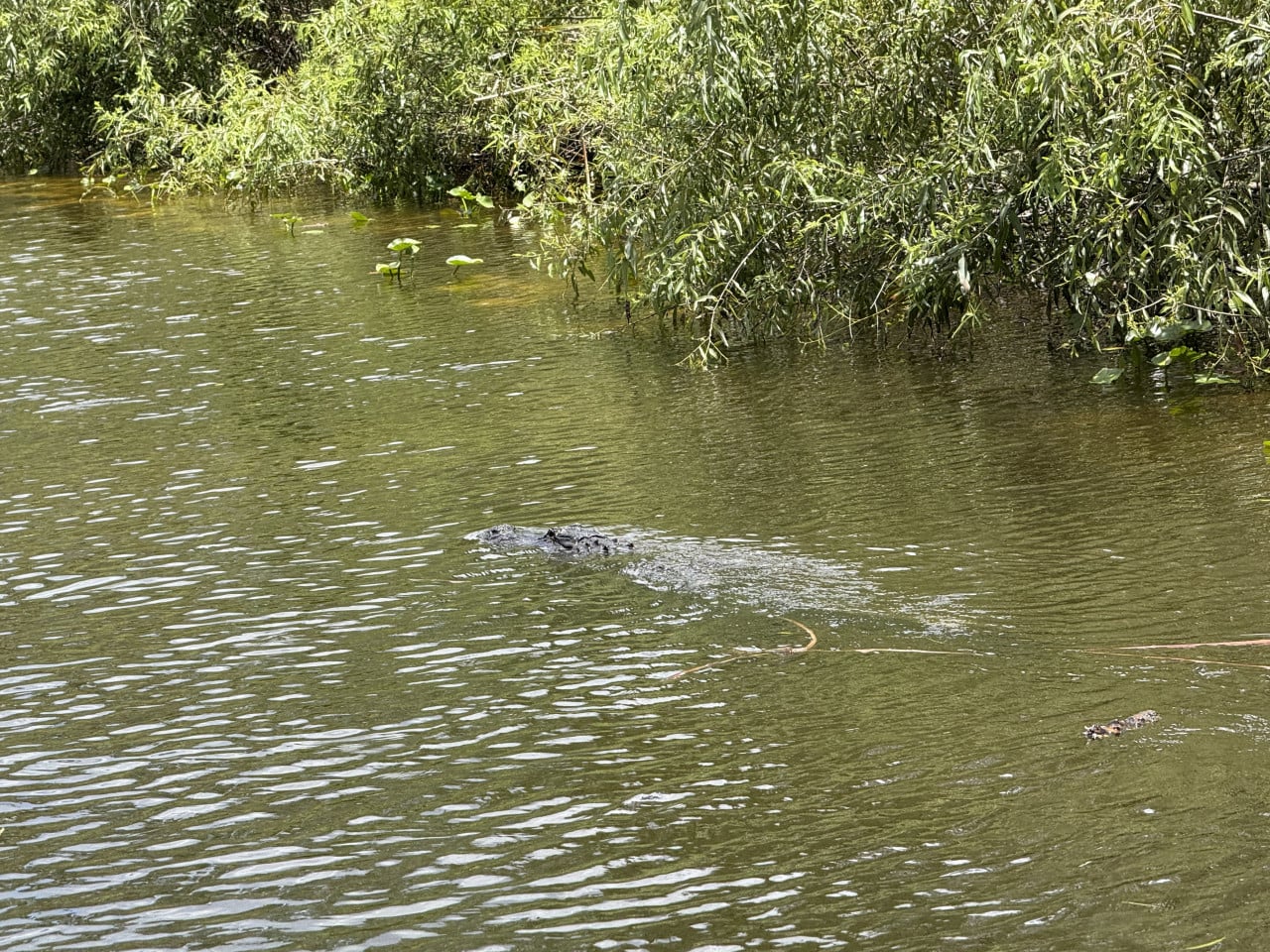
Airboats operate across from the village, and from personal experience, I can say it is worth it. Airboats are flat-bottomed vessels with huge aircraft engines at the back that travel across the wetlands. You are given earmuffs because the engine is genuinely deafening, and a guide takes you to places where alligators regularly bask in the sun. I know it is quite commercial, but honestly, it is worth it. I have taken this ride about five times, and we saw at least one alligator in the wild every time – often several. The operators have it down to a science and know exactly where “their” alligators tend to be.
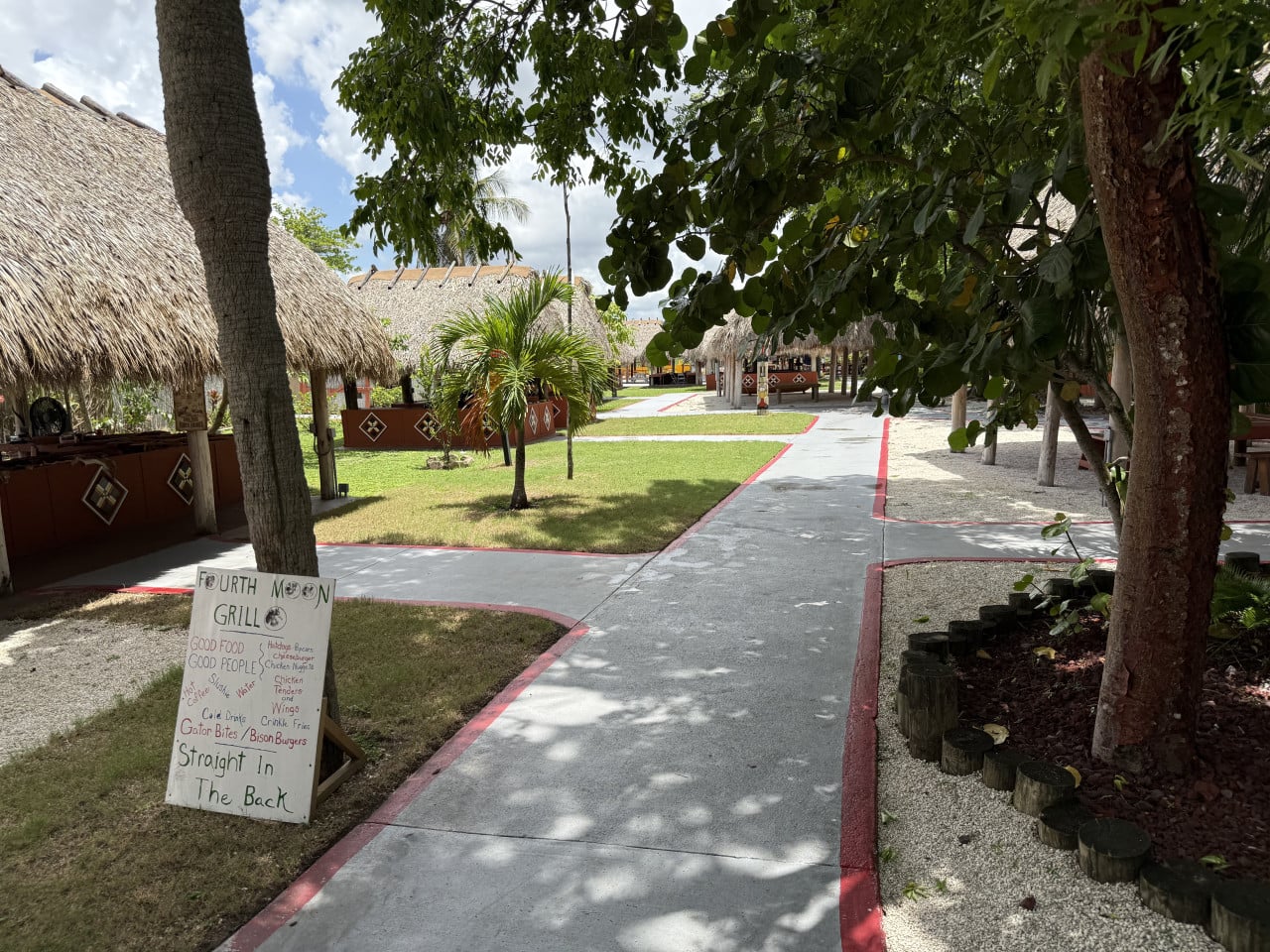
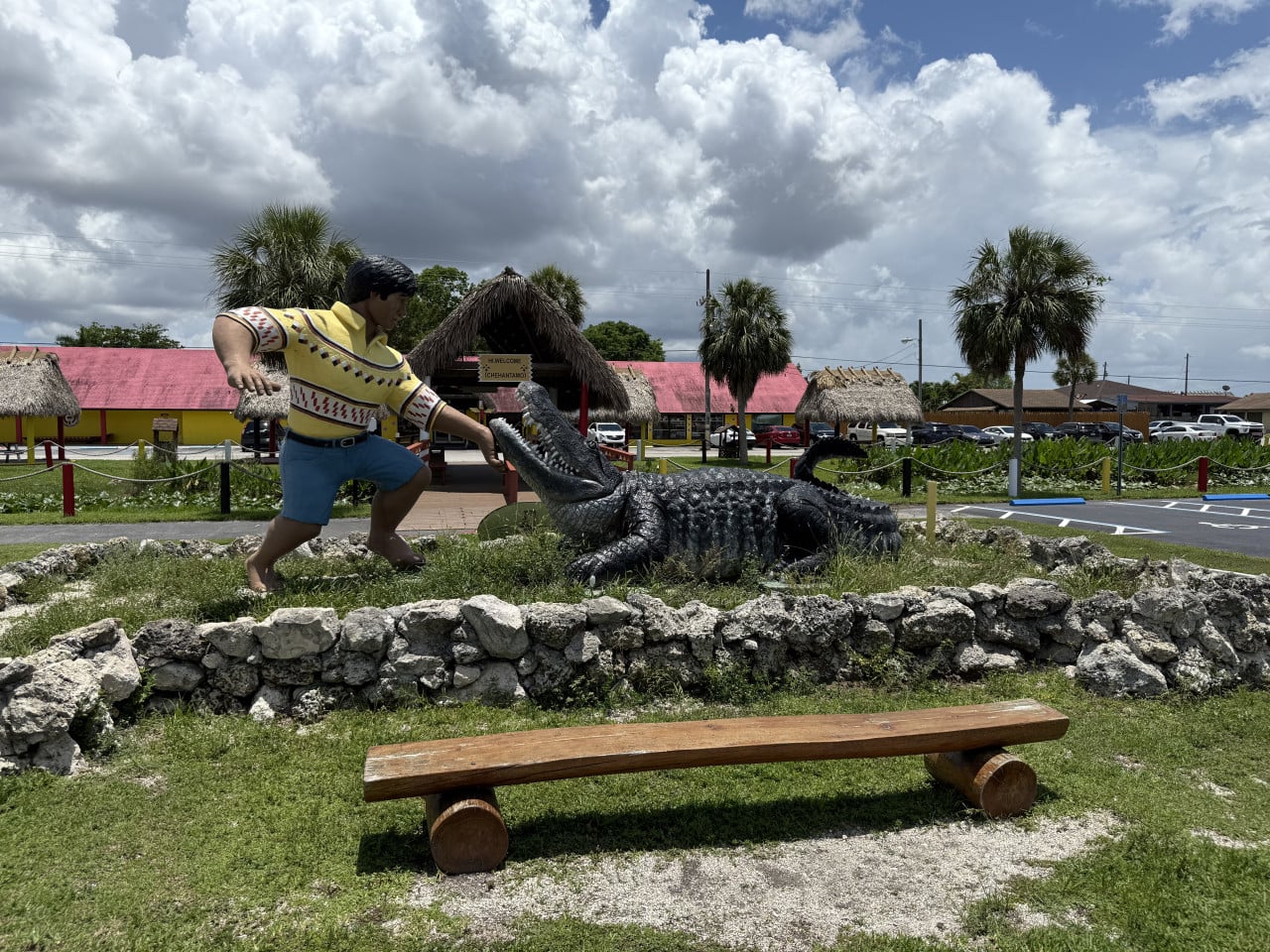
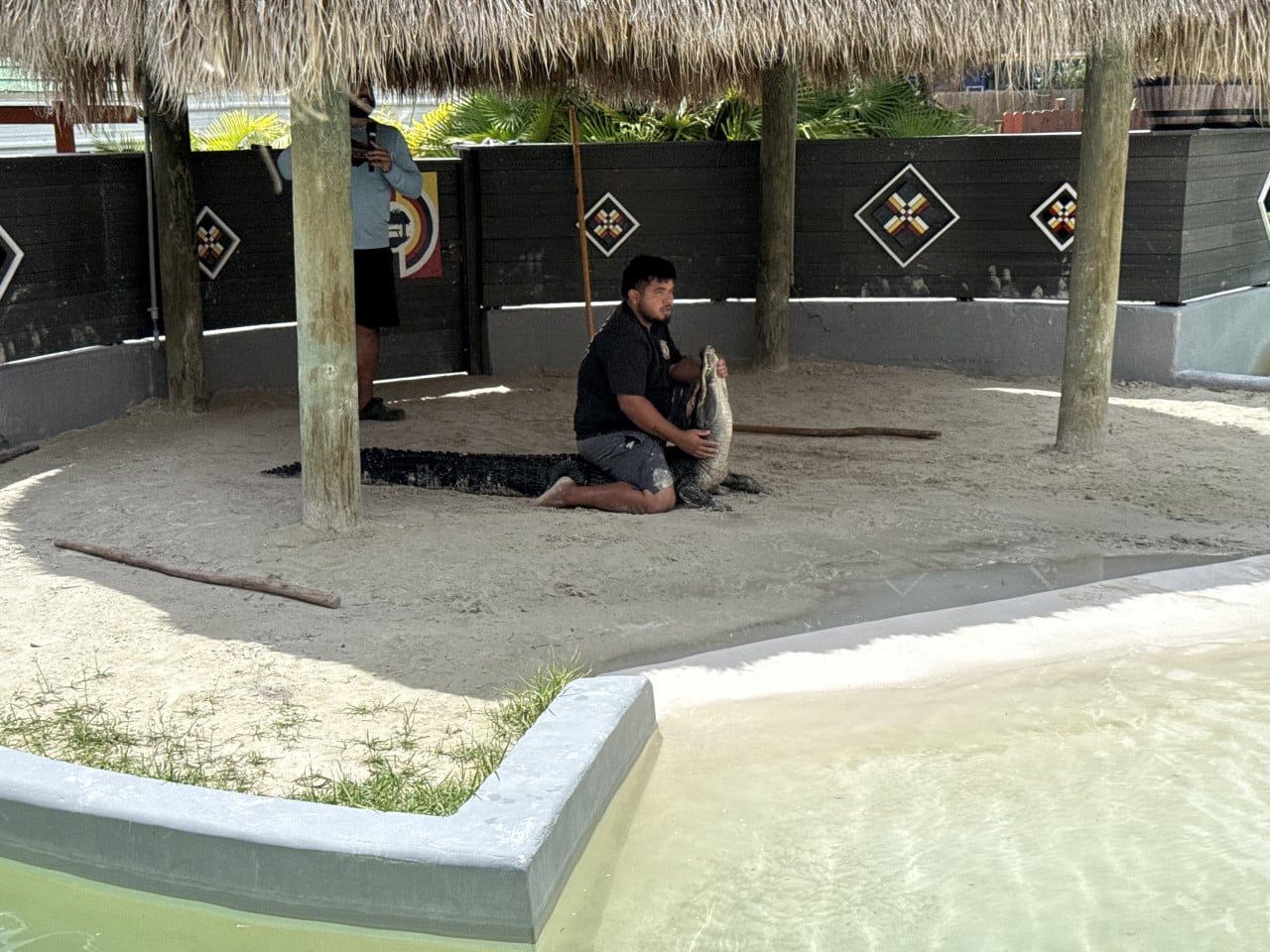
The Miccosukee Indian Village itself is also worth visiting:
-
You can see an alligator show – alligator wrestling, demonstrations of how tribal members handle them, and explanations of traditions
-
At the small museum, you can learn about the tribe’s history
-
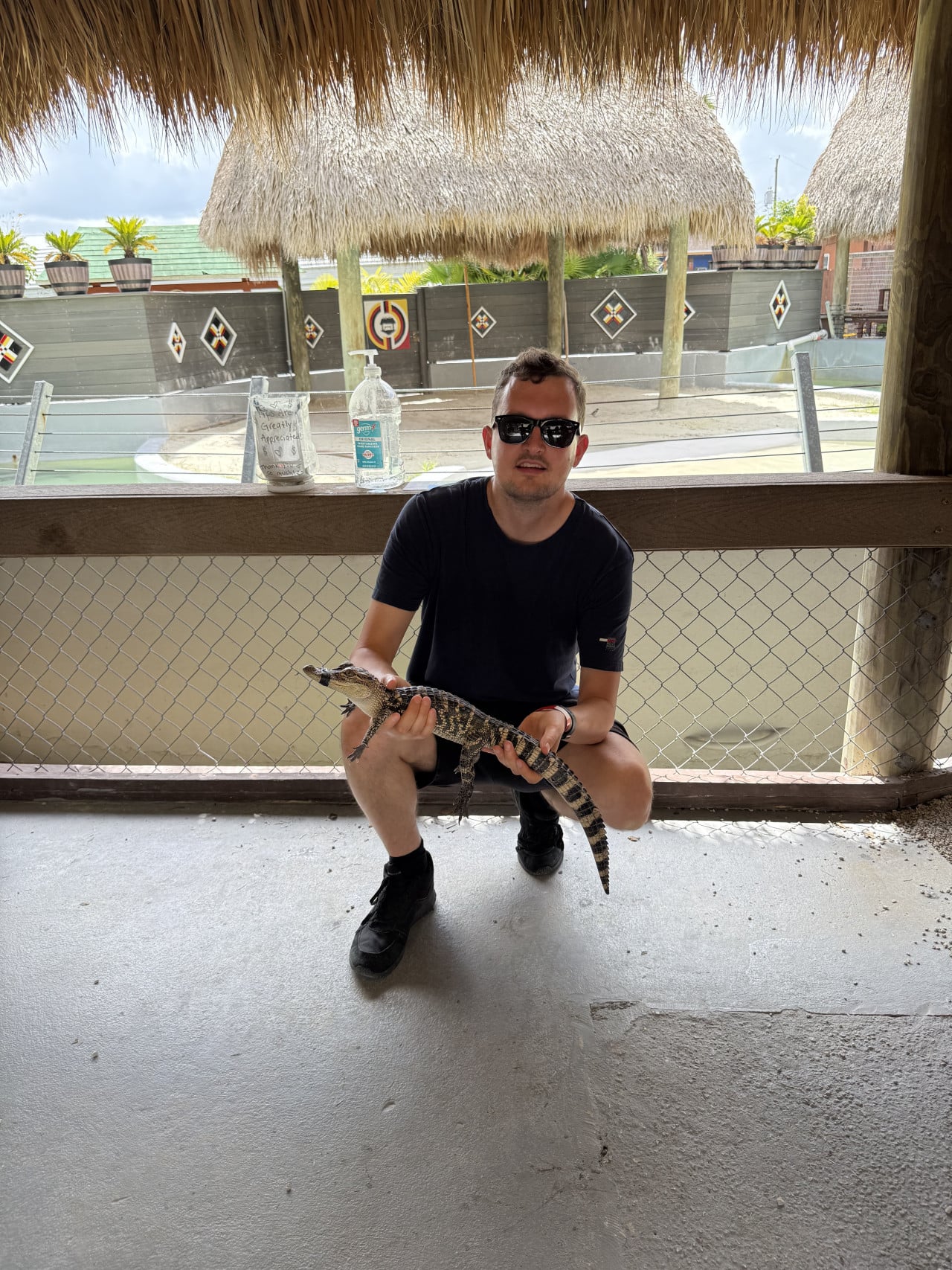
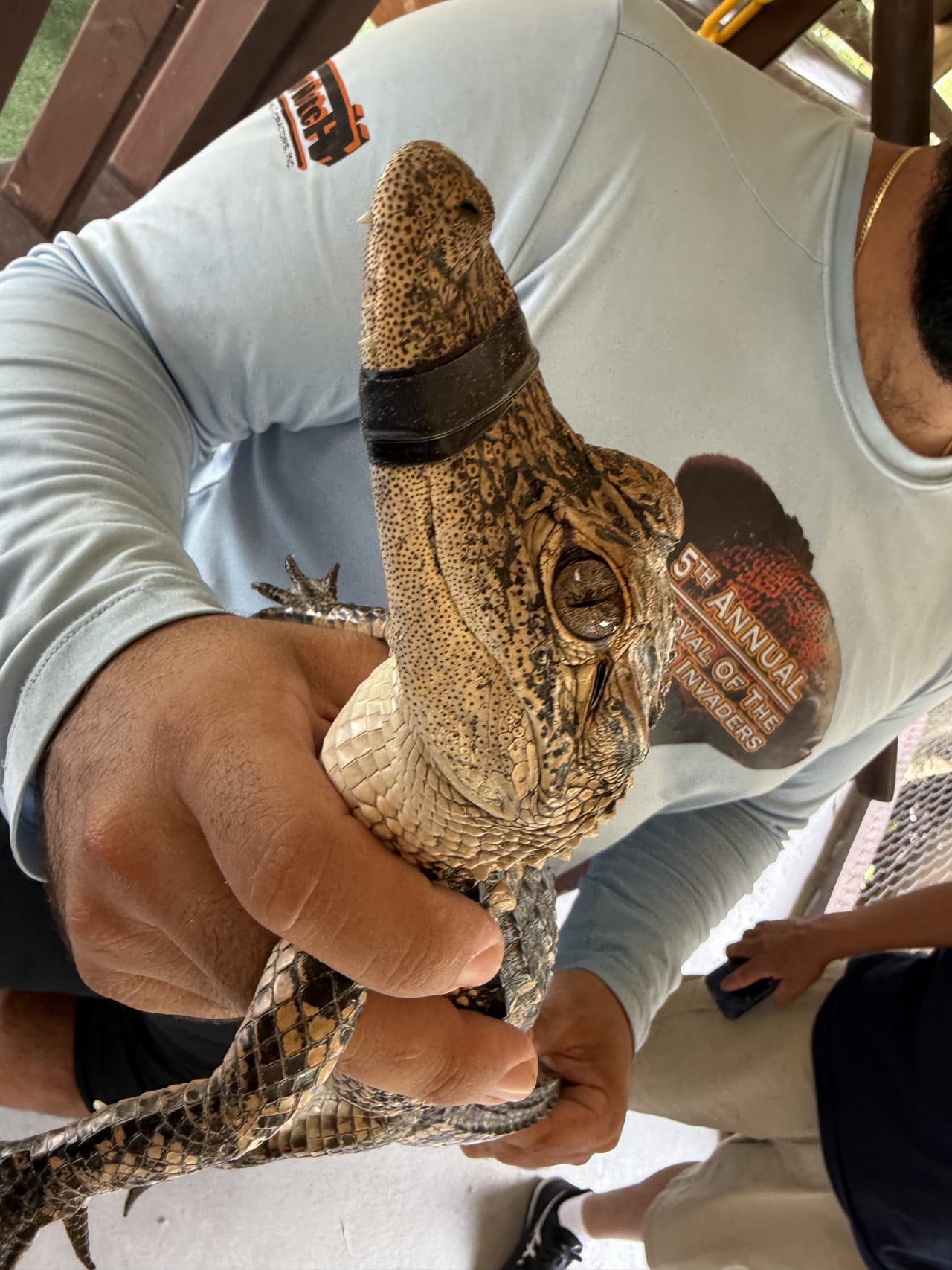
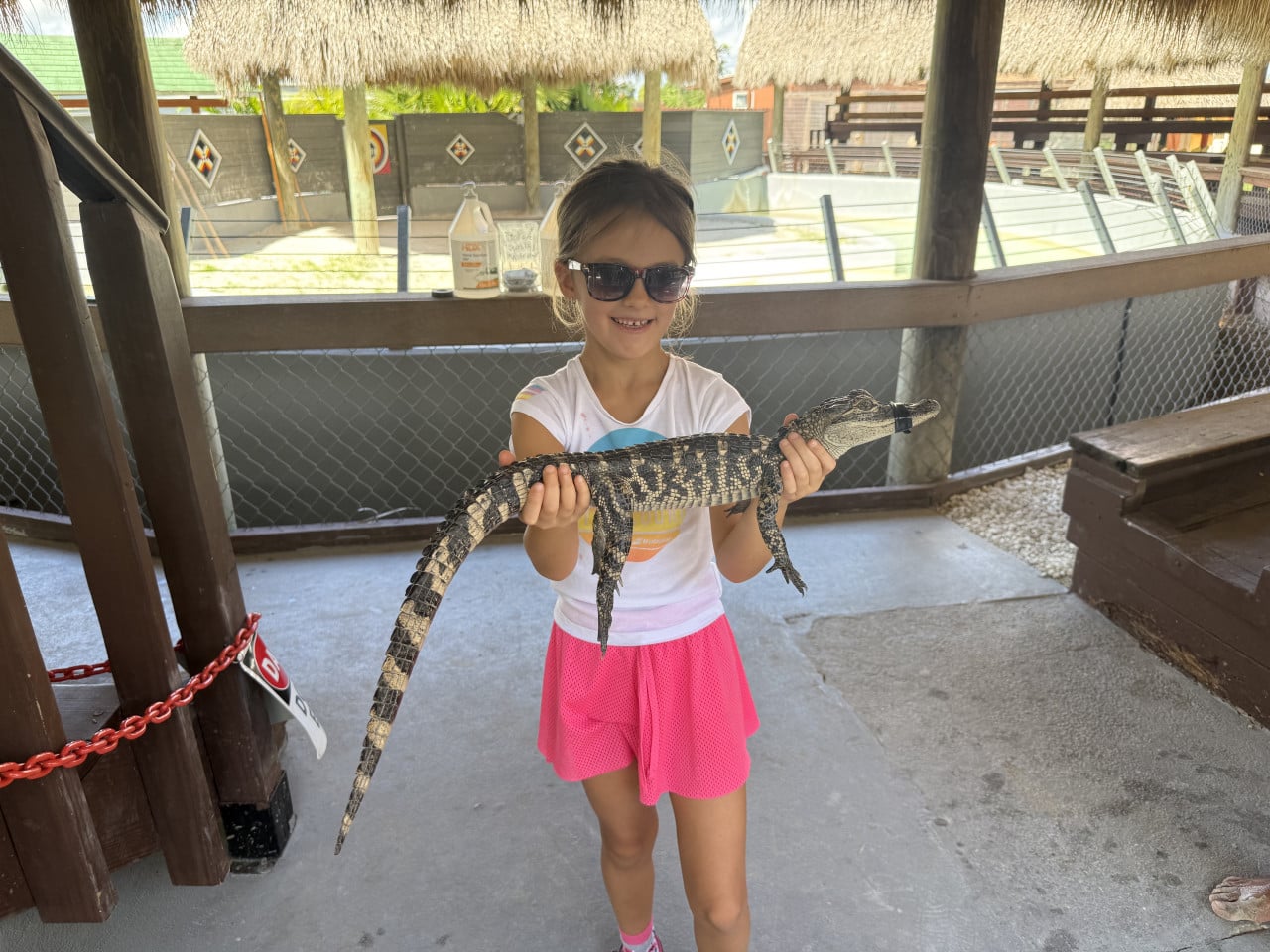
And what my daughter enjoyed most was being able to hold a baby alligator and have her photo taken with it. She was absolutely thrilled, and I recommend it to anyone traveling with children – it is an unforgettable experience for them.
The combination of an airboat ride, the Indian village, and the near certainty of seeing an alligator makes this stop perhaps the most reliable Everglades experience for anyone with only one free day or at least one afternoon in Miami.
The Miccosukee and Seminole Indians: the people who were never defeated
This part is worth mentioning because it is a completely different history from the one most people know about South Florida.
When the United States fought three brutal Seminole Wars in the 19th century (1817–18, 1835–42, 1855–58) and attempted to relocate all Native Americans west to present-day Oklahoma, some refused to leave. They entered the wetlands of the Everglades and Big Cypress and hid on small “hammocks” – islands of higher ground among the wetlands – where the U.S. Army simply could not reach them.
After the third war ended in 1858, about 200 unconquered Native Americans remained in the Everglades. They are therefore known as “The Unconquered People”. About two-thirds of them were the ancestors of today’s Miccosukee, while the rest were Seminole. They lived there in isolation for almost the entire following century.
When the Tamiami Trail was completed in 1928, many families gradually moved closer to the road – hence the name “Trail Indians.” They began selling souvenirs and handicrafts and taking tourists on airboat rides. This created an economic model that continues to operate today.
An interesting story: when the U.S. government refused to recognize the Miccosukee as a separate tribe in the 1950s, leader Buffalo Tiger traveled to Cuba in 1959 to ask Fidel Castro for international recognition of his community as a sovereign nation. Castro agreed. Only afterward – in January 1962 – did U.S. authorities officially recognize the Miccosukee Tribe of Indians of Florida.
Today, the tribe has more than 600 members and owns a casino, a hotel, and much of the tourist infrastructure along the Tamiami Trail.
Fakahatchee Strand and Big Cypress Bend Boardwalk: a tip for a quieter visit
If you do not want only an airboat ride and a commercial attraction but would like to explore the Everglades on foot, I have a tip that is well worth considering.
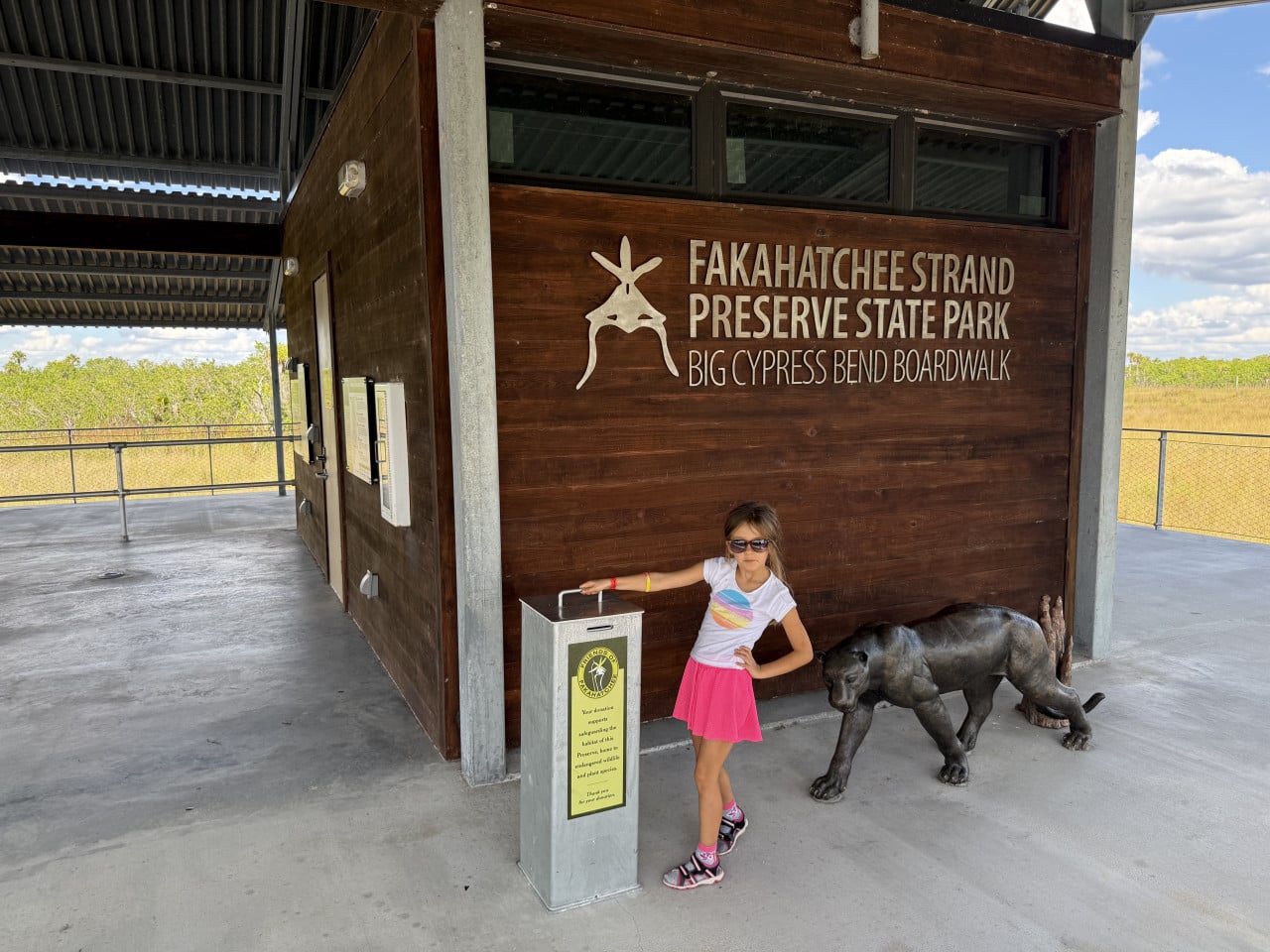
Fakahatchee Strand Preserve State Park is an enormous protected area (more than 80,000 acres), and locals call it the “Amazon of North America”. Here you will find the largest cypress-palm wetland in the world, 44 species of orchids (including the famous “ghost orchid”), 14 species of bromeliads, rare Florida panthers, and black bears.
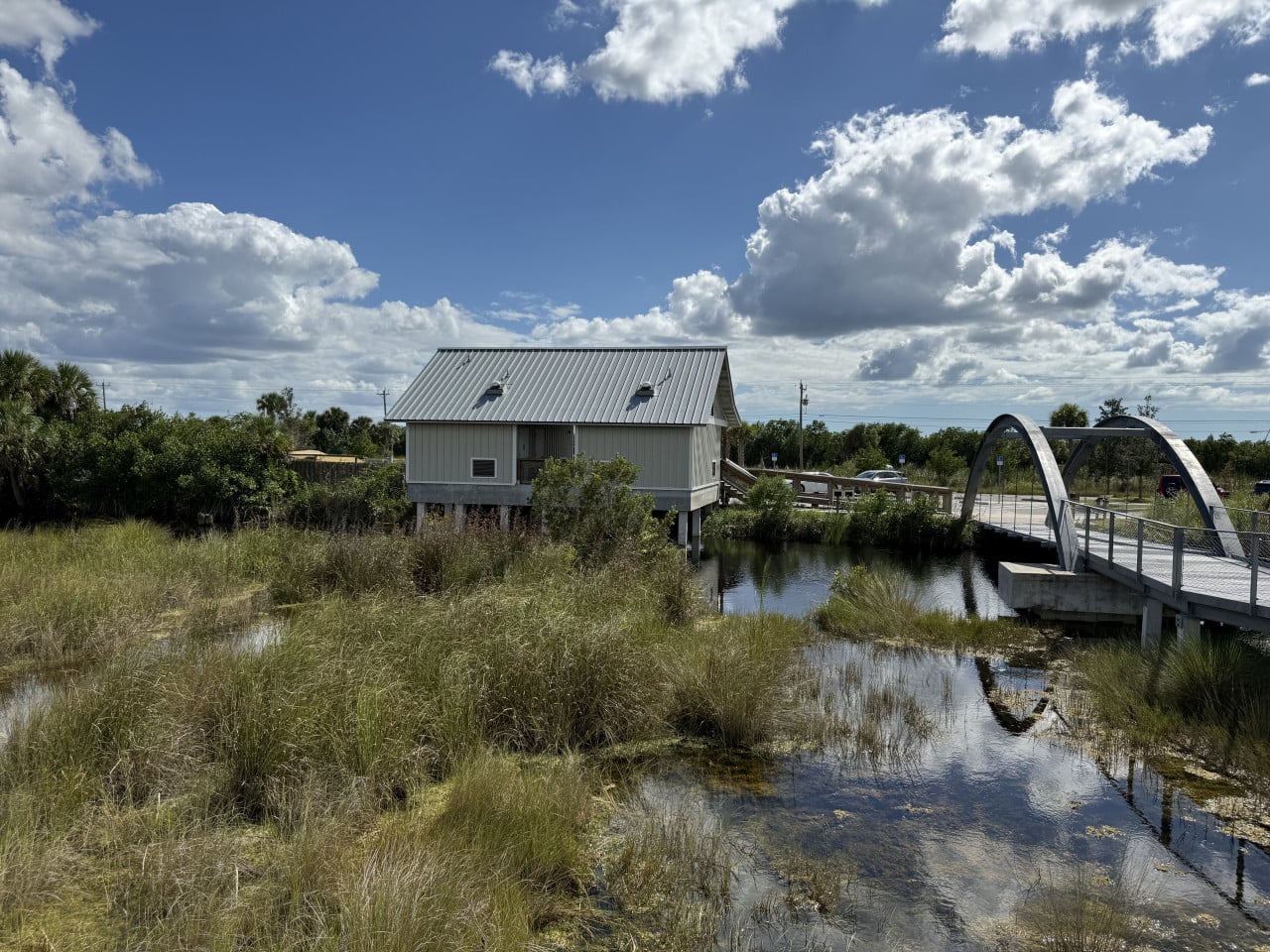
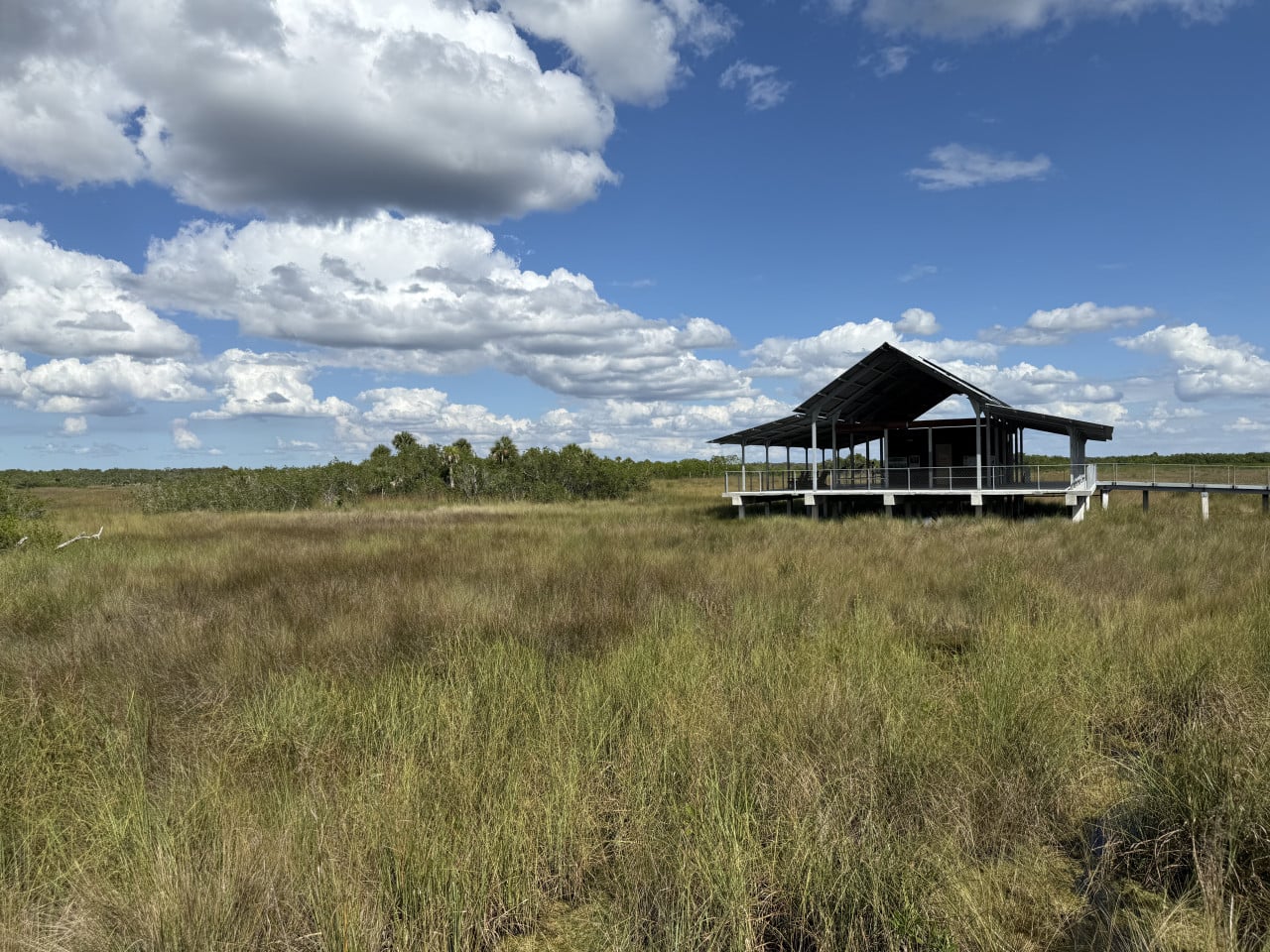
The best way to get a taste of it is the Big Cypress Bend Boardwalk – a wooden boardwalk built above the wetlands.
-
Length: approximately 2.3 miles (3.7 km) round trip, most of it on an elevated wooden boardwalk
-
Admission: approximately $3 per car
-
Open daily from 8:00 a.m. until sunset
-
Along the way, you will pass 500-year-old cypress trees that are more than a meter in diameter
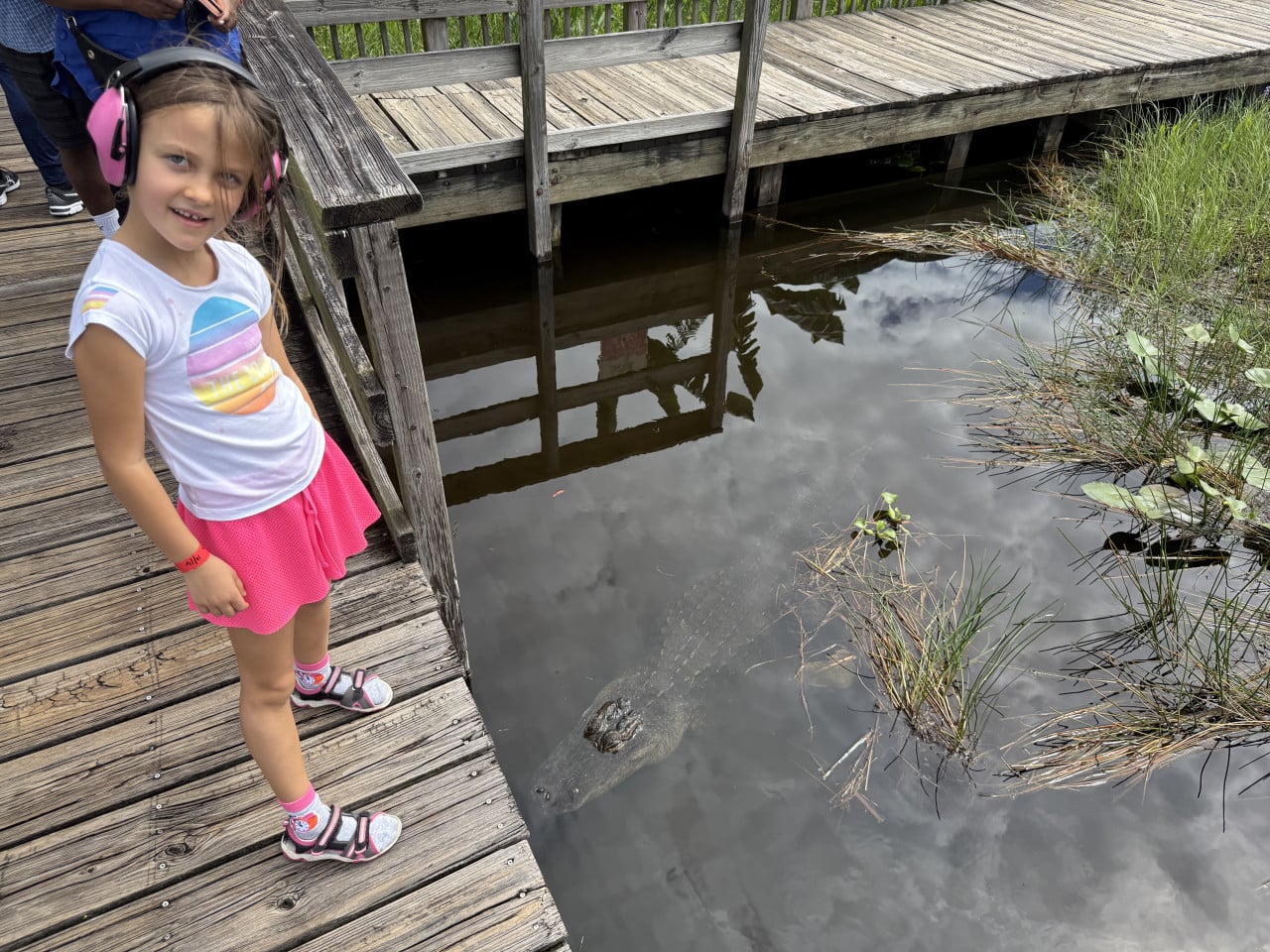
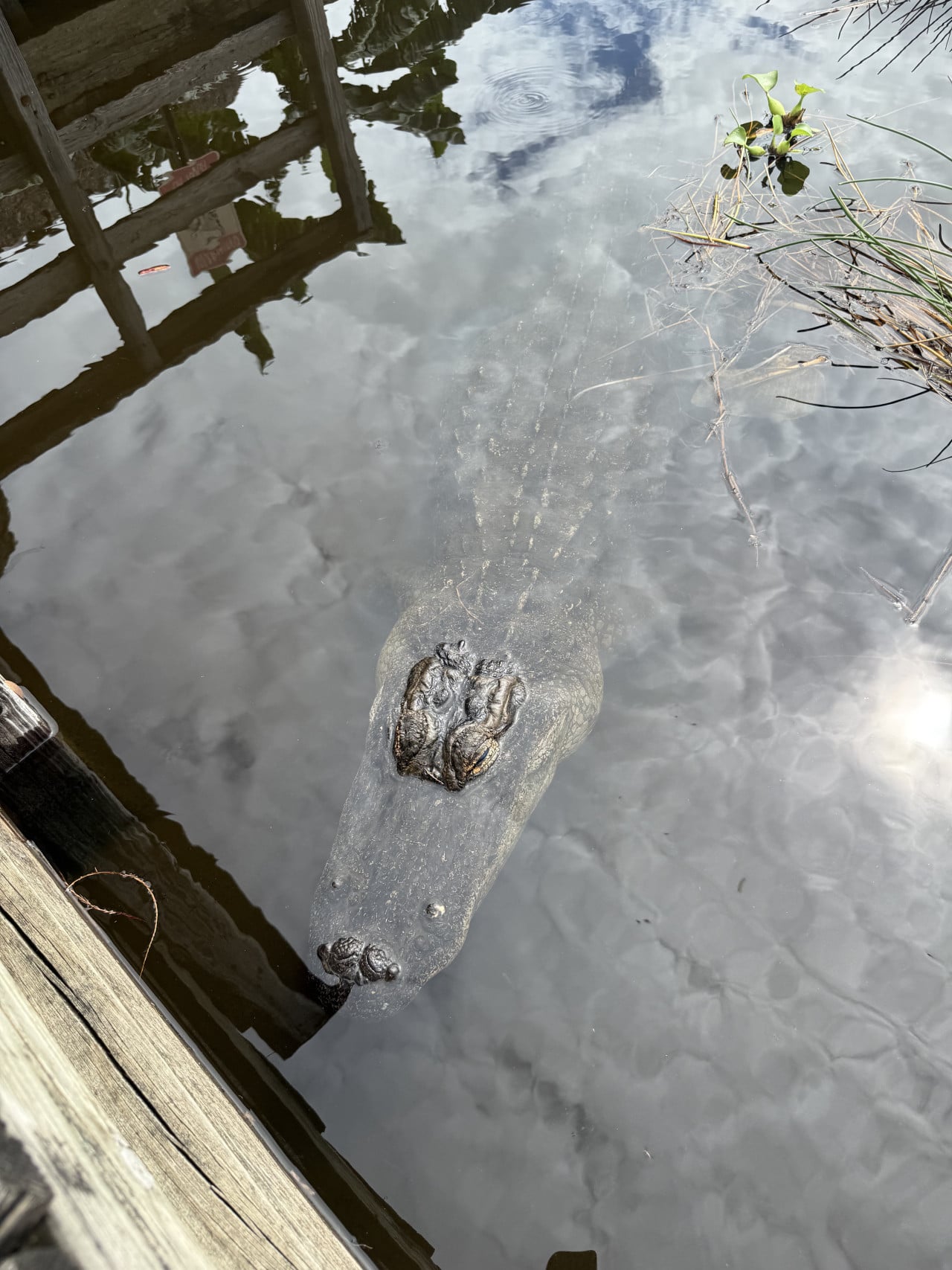
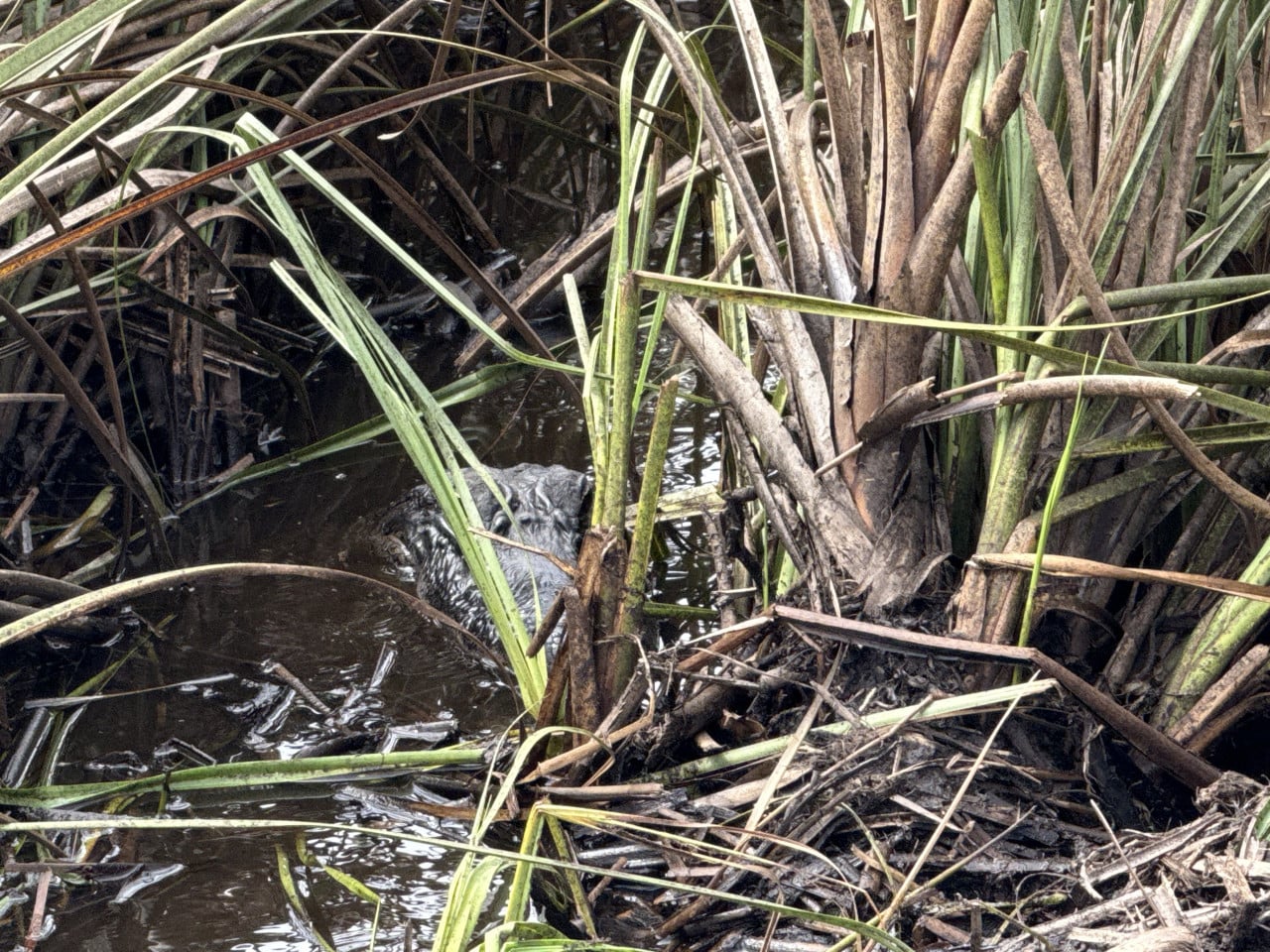
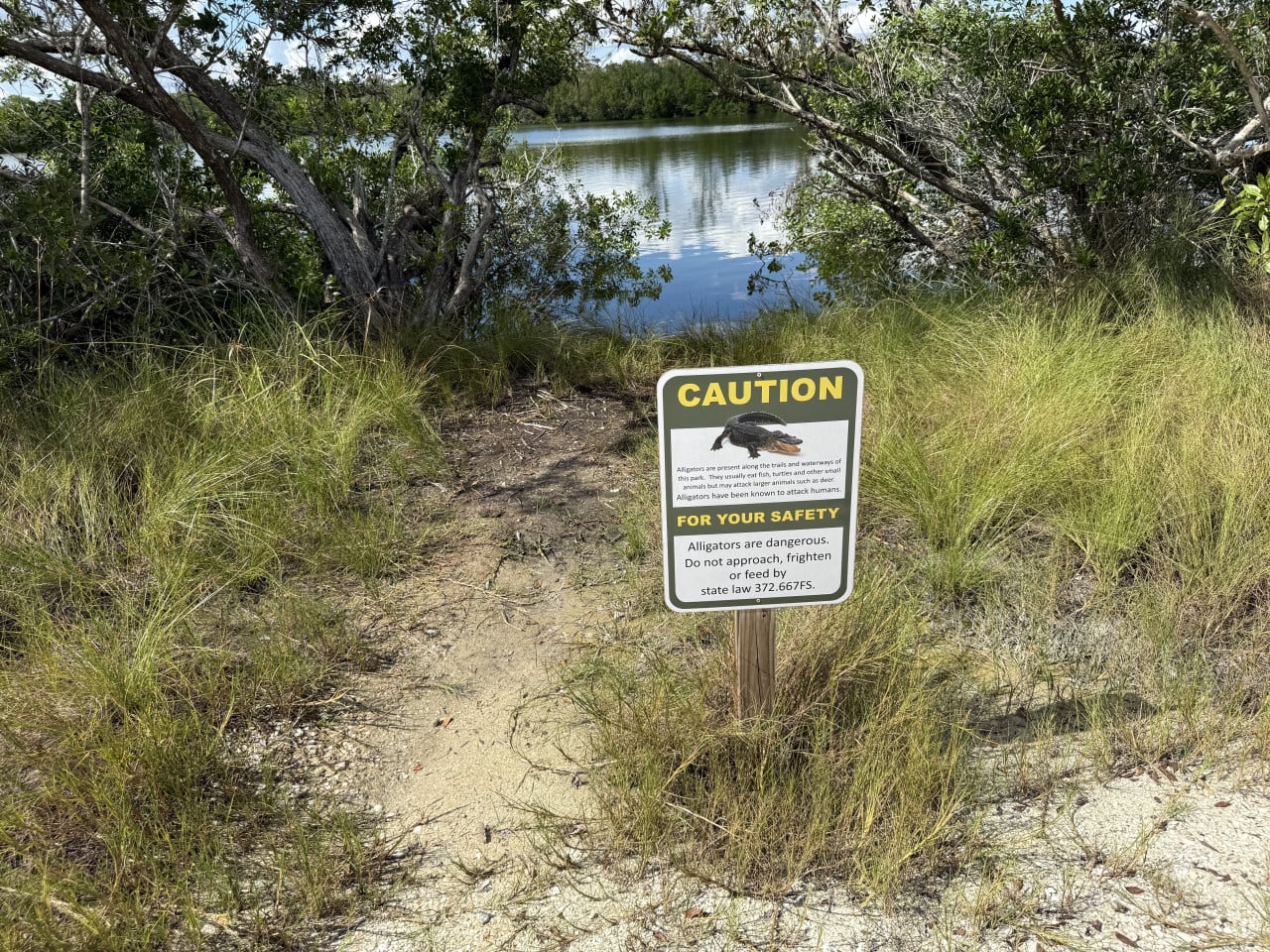
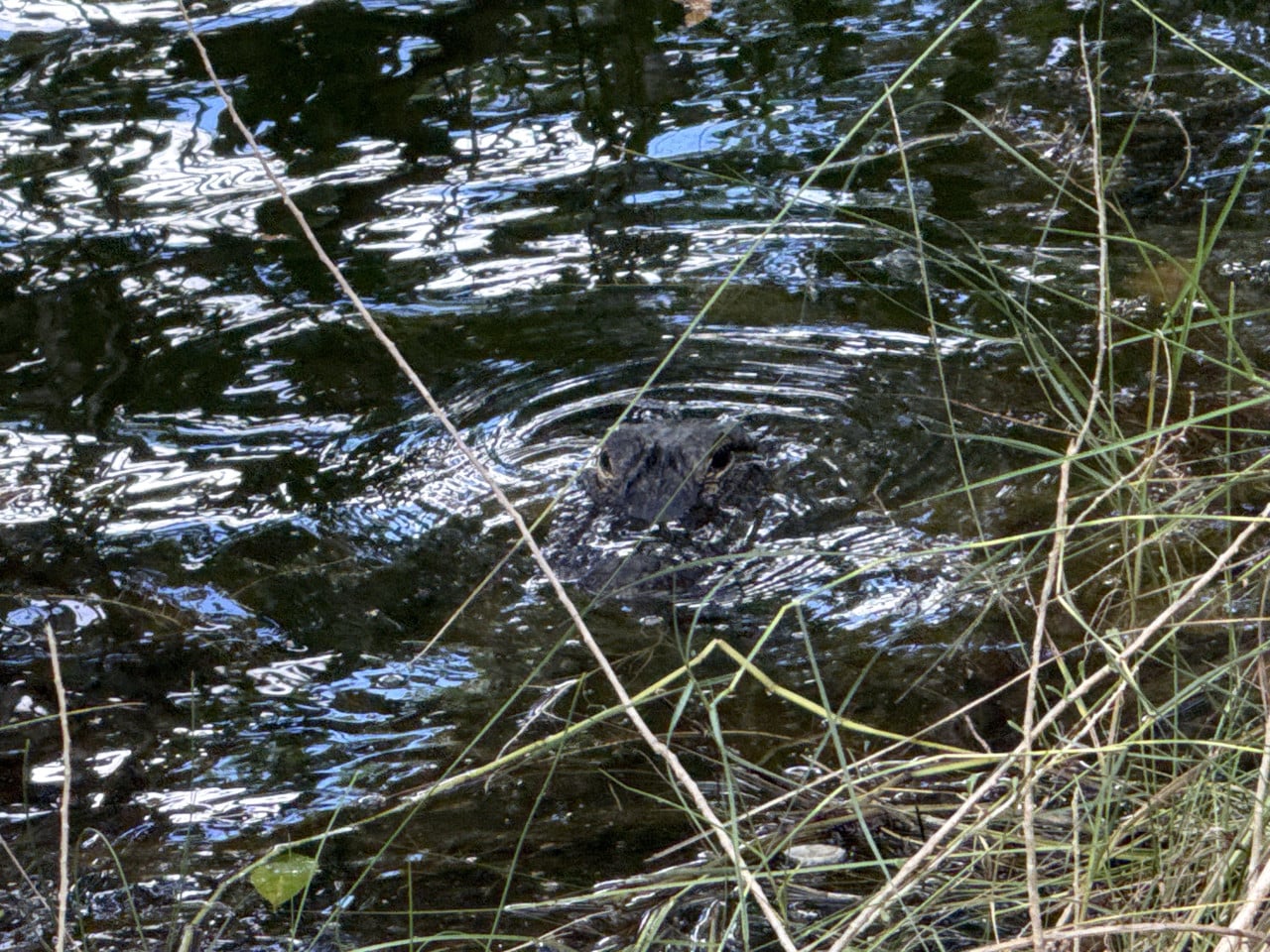
The walk was exceptionally pleasant. There are interpretive signs along the way, and at the end there is a pond where alligators bask. Naturally, there are warnings everywhere: “Caution: Alligators.” We managed to spot an alligator directly from the boardwalk – it stood beside us, staring without even blinking. My daughter was thrilled because she desperately wanted to see an alligator truly in the wild, not behind glass.
An interesting detail: we even saw one alligator in a former parking lot/rest area when we were heading out for an airboat ride and stopped at a kind of “rest area” in the middle of the lake. It lay there like a local, as if it were a regular patron. Local residents pointed at it as though it were the most ordinary thing in the world. This is typical of the Everglades – an alligator is not an attraction. An alligator simply belongs in the landscape.
What else is worth seeing in the Everglades
The park is enormous, so if you have several days, it is worth venturing beyond the most heavily traveled route. A few tips:
-
Shark Valley – a 15-mile loop that can be explored by bicycle, on foot, or aboard a “tram tour” bus. There is often an extremely high concentration of alligators right beside the road.
-
Anhinga Trail at Royal Palm – a short loop near Florida City, ideal for observing birds and alligators within a compact area.
-
Flamingo Visitor Center – the southernmost point in the park, where boats depart for Florida Bay (with a chance to see crocodiles and manatees).
-
Big Cypress National Preserve – right next to the park, a good place for a slow drive along Loop Road, with a high chance of seeing alligators.
-
Ten Thousand Islands – a maze of mangrove islands in the western part of the park.
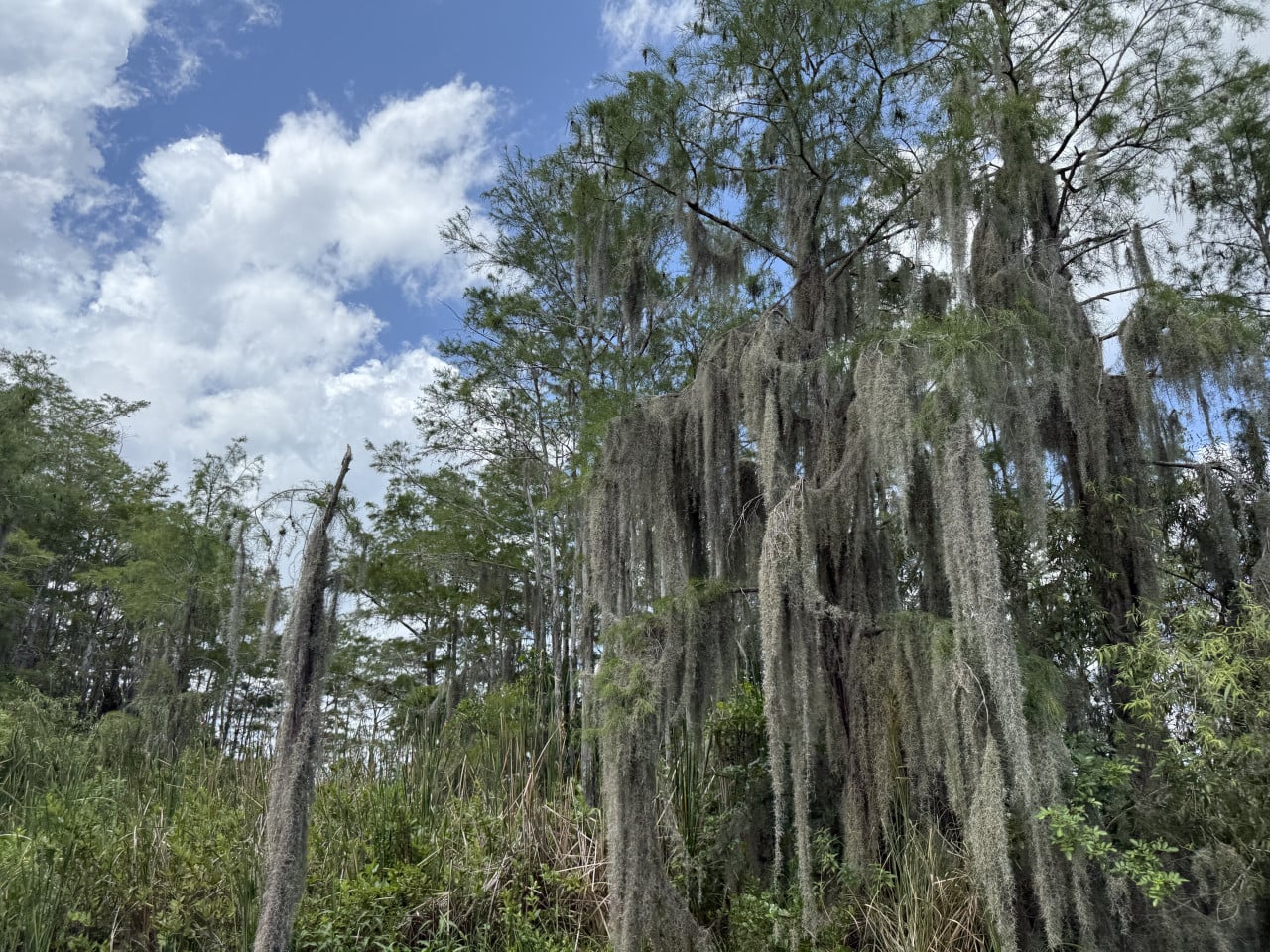
Cypress trees, with their characteristic “knees” protruding from the water, are one of the most beautiful sights, and photographs do not quite capture them. They are worth seeing in person.
A few practical tips to finish
If you are visiting the Everglades for the first time, I have put together a few details I wish I had known before setting out:
-
The best time to visit is during the dry season, approximately December through April. Water levels drop, alligators gather around ponds, and wildlife viewing is significantly better. Summer is hospitable only to mosquitoes – and the mosquitoes here are exceptionally large.
-
Always bring insect repellent. Even in winter.
-
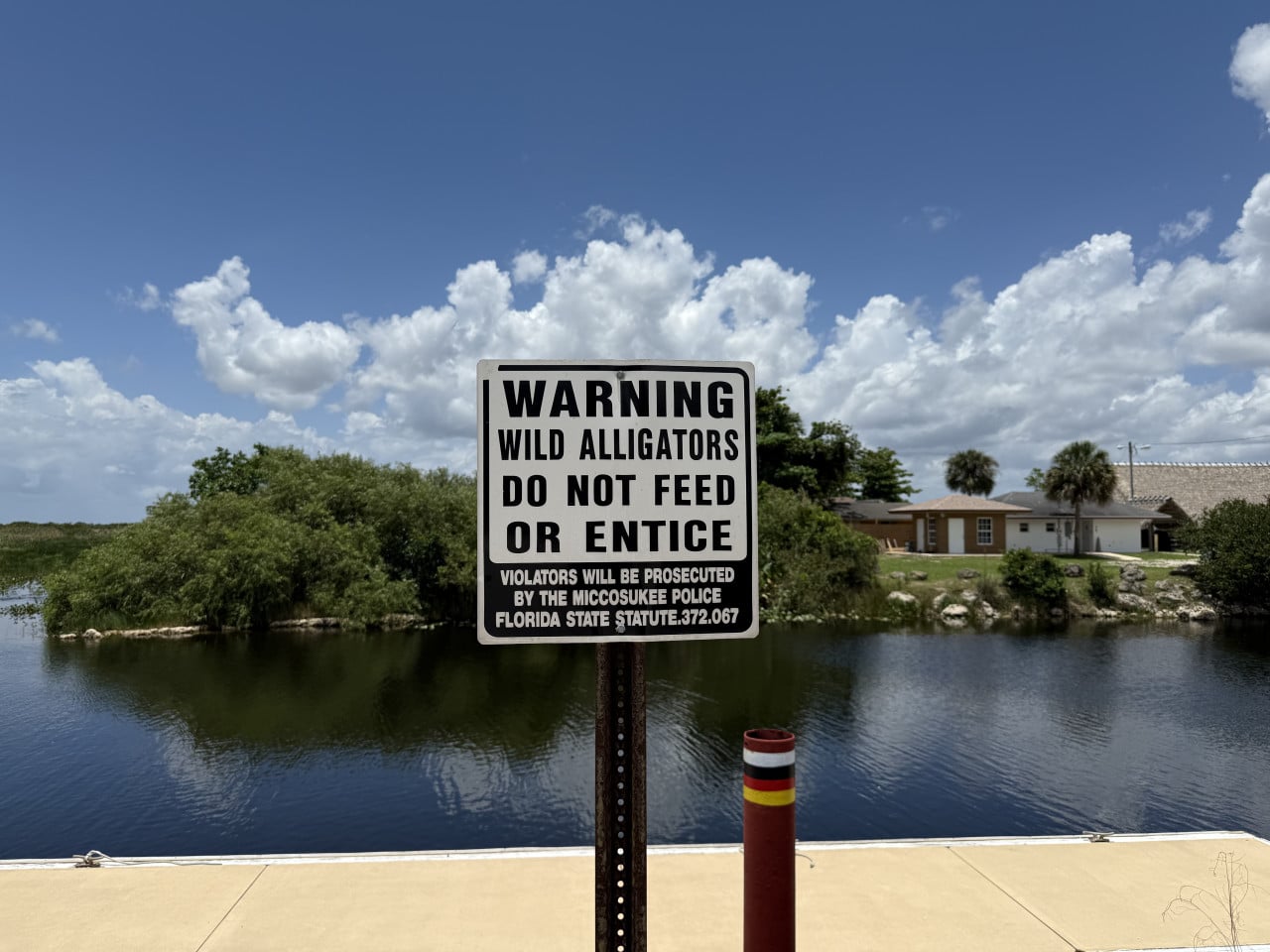
Never feed alligators. I know, I did it myself in the past and survived – but today it is illegal, and more importantly, it causes alligators to lose their natural fear of people, which can ultimately cost both humans and the alligator its life.
-
Keep your distance. The rule is to stay at least 4.5 meters (15 feet) away from an alligator. Be especially careful near shorelines – alligators can strike over short distances so quickly that you have no chance to dodge them.
-
Keep pets away from the water. Alligators attack dogs much more readily than people.
Is it worth it?
Absolutely.
The Everglades are not a “typical” national park – do not expect mountain views and dramatic photographic moments like those in Yosemite. It is a slower, more subtle experience, teeming with life and distinctly local. There are lots of alligators, plenty of birds and fish, and cypress trees, mangroves, and endless grasslands. And if you are lucky, you might catch a glimpse of a panther, an alligator, or even a python.
Personally, the Everglades are among the places I enjoy returning to – and somewhere I will certainly bring the next generation as well. My daughter thoroughly enjoyed the trip; she even held an alligator at the Indian Village, and a few minutes later she was pointing at another one in the lake from the boardwalk. For children, it is one of those experiences they remember for years.
If you are in Florida – whether in Miami or on the west coast around Naples and Fort Myers – free up one day in your calendar and go. It is worth it.
And yes, when it comes to the airboat, feel free to ignore the fact that it is “touristy.” It is definitely worth trying once in your life.