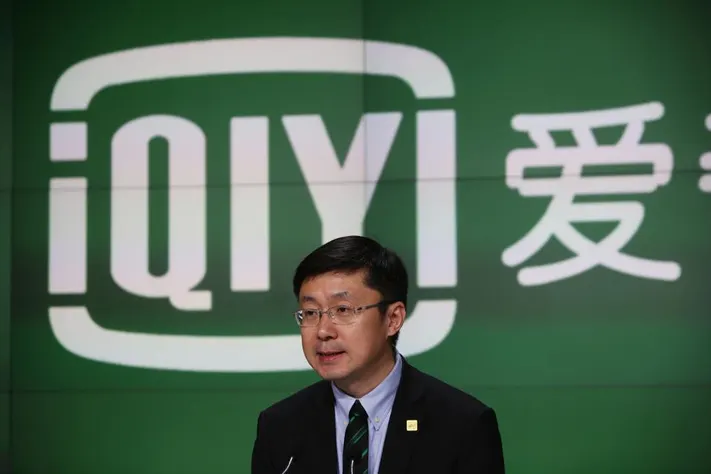
iQiyi, China’s largest streaming platform and a direct competitor to Netflix, has launched what it calls the biggest overhaul of the company since its founding in 2010. And AI is at the heart of the entire project. Speaking before a hall full of filmmakers and producers, iQiyi founder and CEO Gong Yu announced that much of what his platform will offer viewers over the next five years will not be made under studio lights or behind a camera, but created using AI.
The company is bleeding money, and AI is meant to save it
Before going any further, it is worth understanding why iQiyi is taking this step. The company has long struggled with declining revenue. Revenue is expected to fall by 13% in the first quarter of 2026, while it ended 2025 with total revenue down 7% year over year to approximately 27.3 billion yuan.
The decline is primarily due to the rapid rise of short-form videos. Platforms such as Douyin, ByteDance’s Chinese version of TikTok, have fragmented viewers’ attention to such an extent that the traditional streaming model, built around feature-length content and series, is losing ground. Viewers are simply spending more and more time scrolling through short clips and less time watching feature films or binge-watching series.
During the announcement, Gong Yu said: "Once every decade, a wave like this comes along, and we have to catch it."
The Nadou Pro model and 70 AI agents
iQiyi has a plan for achieving this transformation. It is called Nadou Pro, and it is the first AI tool in China designed specifically for professional film and television production. The platform was launched on March 30, 2026, and received its full commercial debut at the conference showcase.
What can Nadou Pro do? Essentially everything that previously required an entire team of people. The platform includes nearly 70 specialized AI agents covering screenwriting, directing, visual design, storyboarding, editing, and final video processing. One of its key features is the so-called "blockbuster prompts," commands that translate an abstract creative idea into concrete cinematic language suitable for production.
Nadou Pro is powered by a combination of iQiyi’s proprietary models and technologies from external partners. For the Chinese market, these include models from Alibaba, ByteDance, and Kuaishou. The international version of the tool will use Google Veo 3.1. Creators can also draw from iQiyi’s licensed library, where they can find ready-made digital scenery, props, and virtual characters.
The system also addresses one of the greatest challenges in AI production to date: maintaining consistency in characters and environments throughout an entire work. Until now, this has been one of the main reasons why AI video has worked predominantly in short formats of up to 30 seconds rather than in feature-length films.
The first 16 films generated entirely by AI
A collection of 16 films created using Nadou Pro is already available to watch on the iQiyi platform, covering genres ranging from science fiction and anime to historical dramas. All of the works were created in collaboration with creators who had access to the platform while it was still in the testing phase.
The company also wants to attract independent creators with financial incentives. It is promising creators who produce content using AI a 20% higher share of advertising and subscription revenue compared with standard creators. The favorable terms also apply to AI works and mid-length series (at least 5 minutes per episode, with a total runtime of more than 60 minutes). iQiyi’s goal is to release the first commercially successful feature film created entirely by artificial intelligence.
Viewers are not convinced yet
iQiyi is, of course, not alone. Interest in AI content has swept across the entire media industry on both sides of the Pacific. Netflix acknowledged that it used AI-generated imagery in the Argentine sci-fi series El Eternauta. Amazon MGM Studios launched its own internal team to develop AI tools for film and television, which has been operating in closed beta since the beginning of this year. In the United States, the $70 million film Bitcoin: Killing Satoshi, directed by Doug Liman, is in development and openly lays claim to the title of the first major studio production filmed with the help of AI.
But is there genuine interest from viewers? That is a question no one can answer yet. Short AI videos are enormously successful on TikTok and Instagram because viewers only need to devote a few seconds to the content. Paying for a subscription or a movie ticket and then watching an AI film for an hour and a half is something entirely different. Approximately half of respondents in a March 2026 NBC News poll admitted that they had a generally negative view of artificial intelligence.
Moreover, AI video production remains financially demanding. OpenAI recently discontinued Sora, its AI video generator that effectively started the entire wave, in order to cut costs ahead of its planned stock market debut. With Sora gone, Disney’s billion-dollar investment plan in video AI also lost its rationale.
Gong Yu has no doubts
iQiyi’s CEO promised that the platform would not stop investing in professionally produced content. At the same time, however, he openly admitted that this type of content would gradually account for a smaller share of the platform’s overall mix. AI content will take priority. "I am convinced that this is the right decision," Gong said. "In a year, we will know whether I was right."
Meanwhile, iQiyi is also looking for other ways to plug its financial hole. Overseas subscribers generated more than 30% higher revenue for the company last year than the year before, although this still represents only a small fraction of total revenue. The company also opened its first iQIYI LAND theme park in Yangzhou and applied for a listing on the Hong Kong Stock Exchange in March to secure access to capital closer to home.
Sources: gizmodo.com and finance.yahoo.com