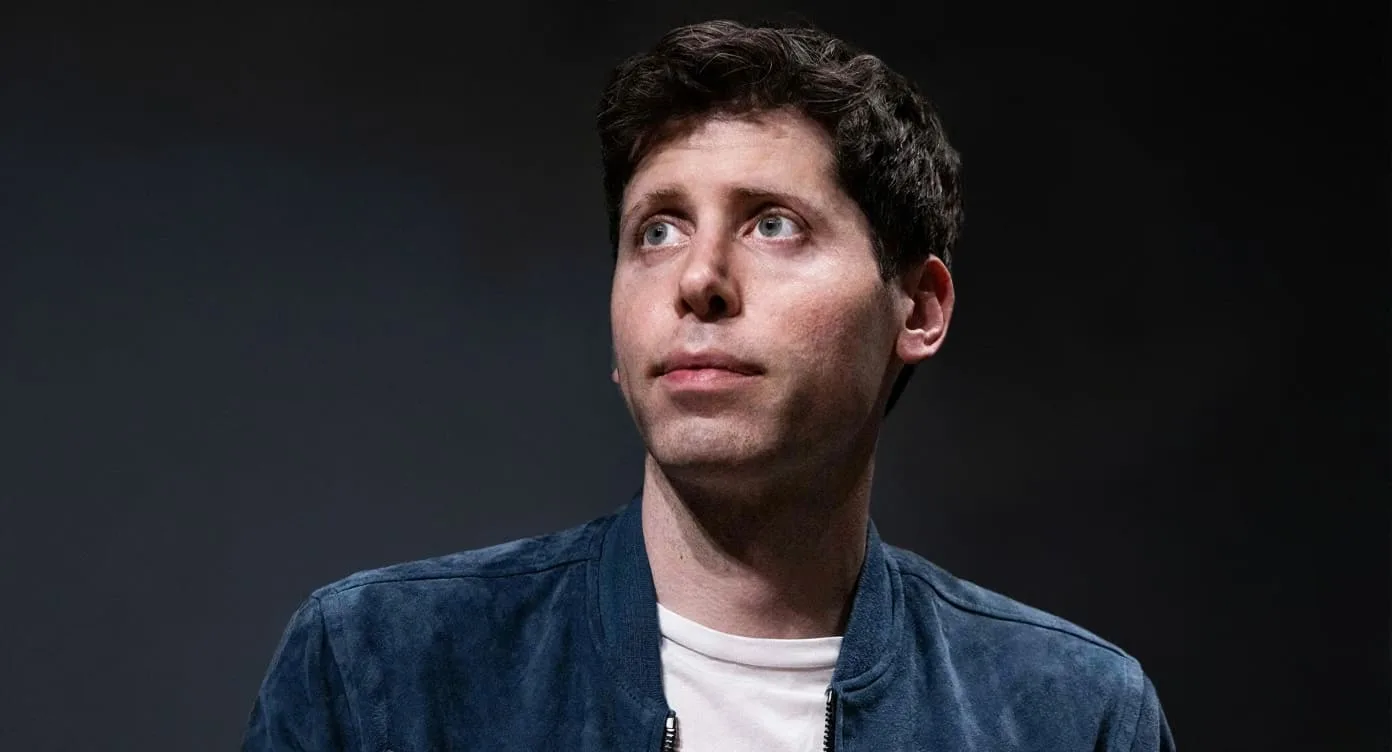
Sam Altman has led OpenAI since 2019, and during that time he has become the most visible face of artificial intelligence. He launched ChatGPT, was fired by the company’s own board in November 2023, and returned to the company five days later. This April, Elon Musk, a co-founder of the same company, testified against him in court, and a few days earlier someone threw an incendiary device at his home in San Francisco. His path to the top began with a computer he received as an eight-year-old boy in Missouri.
The Boy Who Took Apart a Macintosh
Sam Altman was born on April 22, 1985, in Chicago. His mother, Connie Gibstine, works as a dermatologist, and his father, Jerry Altman, was a real estate broker. Sam is the oldest of four children. In 1989, the family moved to Clayton, Missouri, where his father was from. According to family recollections, they ate dinner together every day and played table tennis, pool, or charades. At the age of eight, he received his first computer, an Apple Macintosh, taught himself to program on it, and took it apart to understand how it worked.
He later described it as a golden age of computers, when programming was easy to learn and fun. He attended the private John Burroughs preparatory school near St. Louis, where he took a step that made him a public figure on a small scale for the first time. At the age of 17, he announced at a school assembly that he was gay and urged teachers to display signs in their classrooms supporting gay students. His admissions counselor at the time later said that he had changed the school by doing so.
Two Years at Stanford, Then His First Company
After graduating from high school in 2003, he enrolled at Stanford to study computer science, but left two years later at the age of 19. He later claimed that he learned more playing poker with classmates than he did in professors’ lectures. According to him, the game taught him to notice patterns in people’s behavior and make decisions with highly imperfect information. In 2005, he co-founded Loopt, a mobile app for sharing locations with friends. As the company’s CEO, he raised more than $30 million from investors.
Loopt was among the first companies to receive funding from the Y Combinator accelerator, and above all, it helped Sam establish contacts with influential people in Silicon Valley. However, the app failed to win over users. In March 2012, Green Dot acquired it for more than $40 million. Loopt’s board twice attempted to remove Altman from management, but his supporters managed to keep him in his position at the time.
Y Combinator and a Networking Machine
Altman first joined the Y Combinator accelerator part-time in 2011. In February 2014, he replaced his mentor Paul Graham as its head. He wanted to expand the organization so that it would fund a thousand new companies a year, and he pushed for support for so-called hard technologies. By the time he left in 2019, about 1,900 companies had passed through the accelerator, including Airbnb, Instacart, DoorDash, Reddit, and Twitch. In 2014, he also served as Reddit’s CEO for a full eight days.
His departure from the accelerator was publicly presented as a promotion to chairman of the board. Journalists later described this explanation as false. The accelerator’s partners had complained to Graham that Altman was using his position to gain preferential access to investment opportunities. Graham stated unequivocally that Altman had left because he had lost the partners’ trust.
OpenAI and Manhattan Project-Sized Ambitions
OpenAI was founded in 2015 as a nonprofit organization intended to develop artificial intelligence for the benefit of humanity. Altman and Elon Musk served as co-chairmen, and Peter Thiel was also among the founders. Companies such as Amazon Web Services, Microsoft, and Infosys pledged startup funding totaling one billion dollars. Altman personally persuaded Ilya Sutskever and Dario Amodei to join, offering them Y Combinator shares. In conversations with Musk, he framed the entire project as a rivalry with Google. He later compared OpenAI’s ambitions to the Manhattan Project and liked to point out that he was born on the same day as Robert Oppenheimer.
But the promised money came in slowly. By 2019, the company had raised only $130 million of the pledged billion. In 2018, Musk wanted to take over the leadership so that OpenAI could catch up with Google. Altman refused, Musk left, and he stopped providing funding. As a result, a commercial arm of the company was established in 2019, still controlled by the nonprofit board, into which Microsoft invested billions of dollars as well as Azure computing capacity.
ChatGPT and the Year the World Woke Up
When OpenAI launched ChatGPT at the end of 2022, more than one million people signed up within five days. At the time, the company’s internal projections anticipated revenue of $200 million for 2023 and one billion dollars for 2024.
Altman began traveling like a statesman. In May 2023, he testified before a Senate subcommittee on artificial intelligence oversight and immediately afterward embarked on a tour of 22 countries, where he met, among others, Ursula von der Leyen. Time magazine named him one of the 100 most influential people in the world. He later said of that period that running the company had been fun until ChatGPT was released, after which the decisions became much harder.
The Five Days OpenAI Lost Him
OpenAI’s board announced on November 17, 2023, that it was removing Altman because he had not been consistently candid in his communications with it. Greg Brockman responded by resigning. Three days later, Microsoft CEO Satya Nadella announced that Altman and Brockman would lead a new research team at Microsoft. However, the employees opposed the board. An open letter threatening a mass departure was ultimately signed by more than 700 of the company’s 770 employees, including Sutskever, who wrote that he regretted his involvement in the dismissal. On November 21, both Altman and Brockman returned, and a new board was formed with Bret Taylor as chairman.
The reasons gradually came to light. Former board member Helen Toner said in May 2024 that Altman had withheld information, failed to inform the board in advance about the launch of ChatGPT, and did not disclose his ownership of the OpenAI startup fund. According to her, two executives told the board about psychological abuse, and many employees feared retaliation if they did not support Altman.
The Lawsuit with Musk and Attacks on His Home
In 2024, Musk filed two lawsuits accusing Altman and OpenAI of breach of contract and abandoning their original mission to benefit humanity. OpenAI countered that it had received only $45 million from Musk, not the promised billion, and that he himself had wanted to merge the company with Tesla. The trial began in April 2026, Musk testified for three days, and ultimately lost the case. The jury unanimously agreed that he had brought the lawsuit too late.
Ten days before jury selection began, a 20-year-old man from Texas threw an incendiary bottle at the gate of Altman’s home in San Francisco, starting a fire. Altman escaped unharmed, the attacker was detained by police, and two days later someone fired at the same house from a car. In January 2025, his sister Ann also filed a lawsuit against him over sexual abuse during childhood. Altman, together with his mother and brothers, issued a statement calling the allegations completely false and filed a defamation lawsuit against his sister.
Wealth That Did Not Come from OpenAI
Interestingly, OpenAI itself plays only a small role in his wealth. According to Forbes, his net worth was around $1.9 billion in August 2025, even though he took no equity when OpenAI was founded and earns $76,000 a year as its CEO. He later admitted that if he could go back in time, he would take a small stake so that he would not have to keep explaining the issue.
He built his wealth through investments. In 2012, he founded the Hydrazine Capital fund with his brother, whose first $21 million came mainly from Peter Thiel, and he subsequently invested three-quarters of it in Y Combinator companies. Before Reddit went public in 2024, he was its third-largest shareholder, with a stake of around 9 percent, and the value of those shares had climbed to $1.4 billion by October 2024. In June 2024, his portfolio included more than 400 companies worth approximately $2.8 billion.
He chairs the board of fusion company Helion Energy and, until April 2025, also chaired the board of nuclear energy company Oklo, which he left to avoid a conflict of interest. His Worldcoin project, which scans people’s eyes, was investigated or suspended by authorities in France, Britain, Bavaria, South Korea, Spain, Portugal, Hong Kong, and Kenya. In May 2024, Altman and his husband Oliver Mulherin joined the Giving Pledge, committing to give away most of their wealth. Back in 2016, he said that he had guns, gold, potassium iodide, antibiotics, batteries, water, gas masks from the Israeli military, and land in Big Sur that he could fly to.
Sources: wikipedia.org and britannica.com