I have visited Egypt about nine times already, and I would gladly go there again. To some people, the pyramids, temples, and tombs may seem the same after several visits, but for me it is exactly the opposite. Every time I discover something new there, and every time I find myself wondering again how people could possibly have built something like this thousands of years ago.
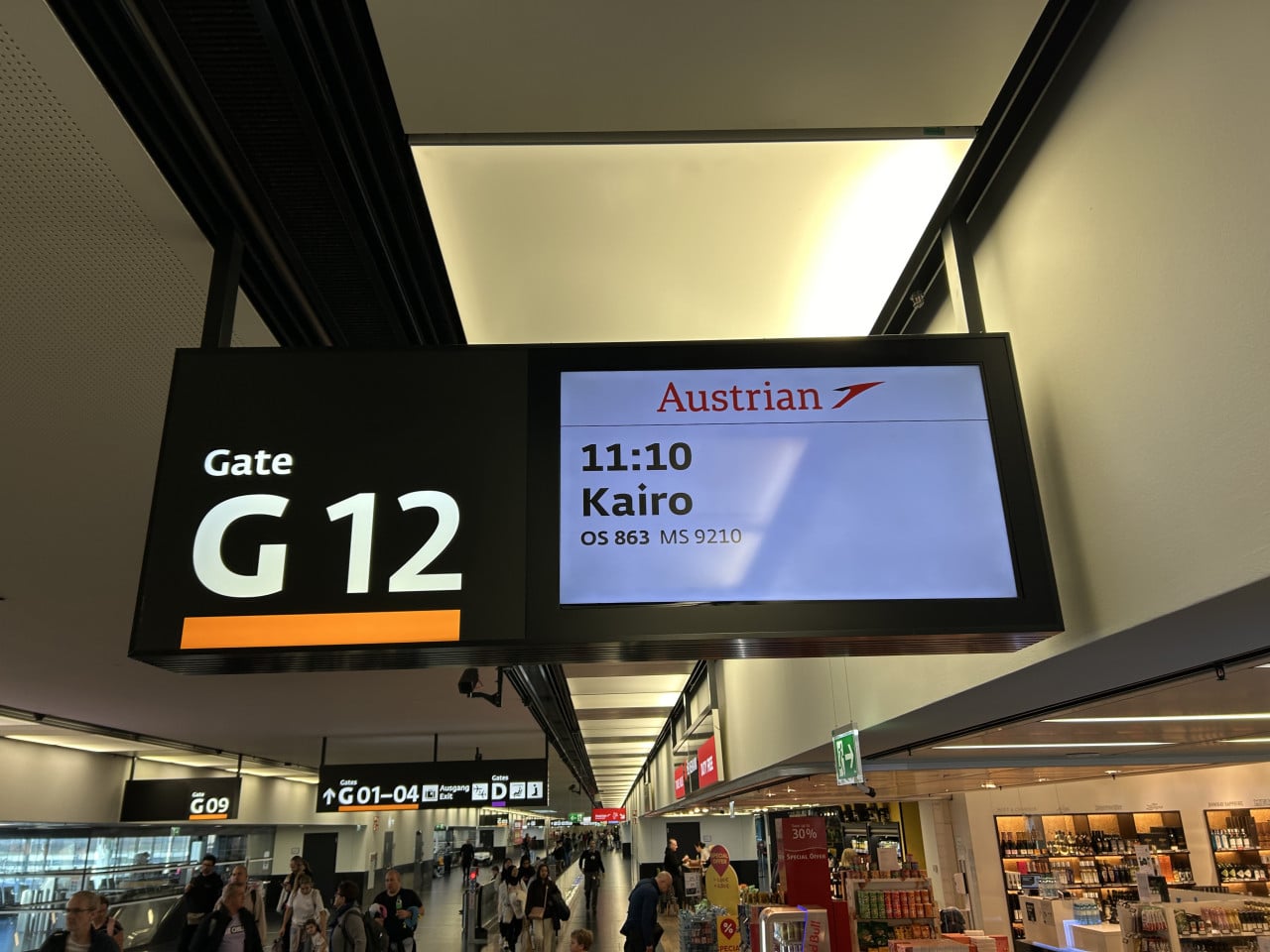
On our relatively recent trip to Egypt, our first major stop was Cairo and the Pyramids of Giza. We flew into Cairo, checked into our hotel, and after our first night, we headed straight to the pyramids the following morning.
And even though I already knew them from previous visits, that first sight took my breath away once again.
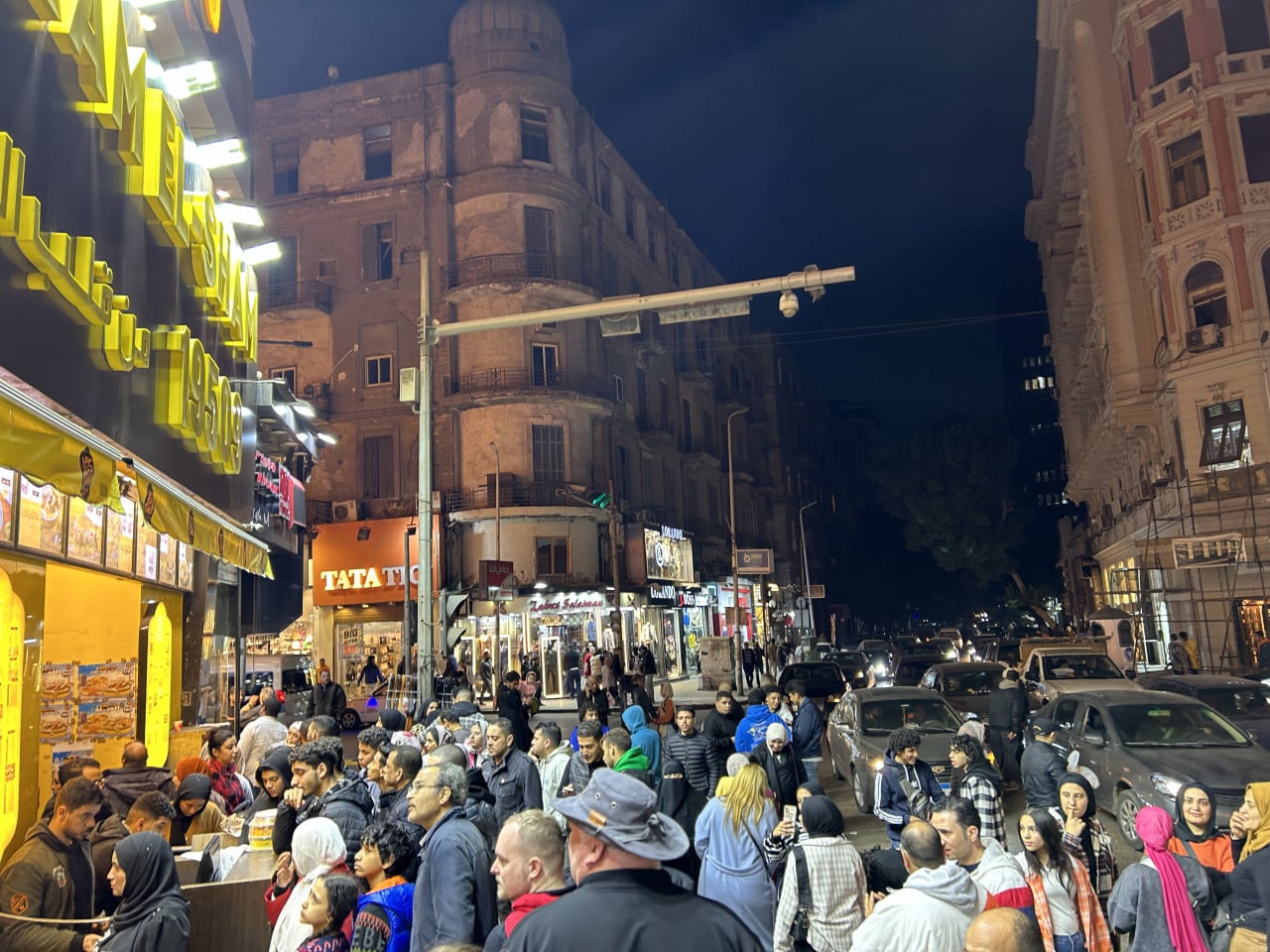
Our first evening in Cairo
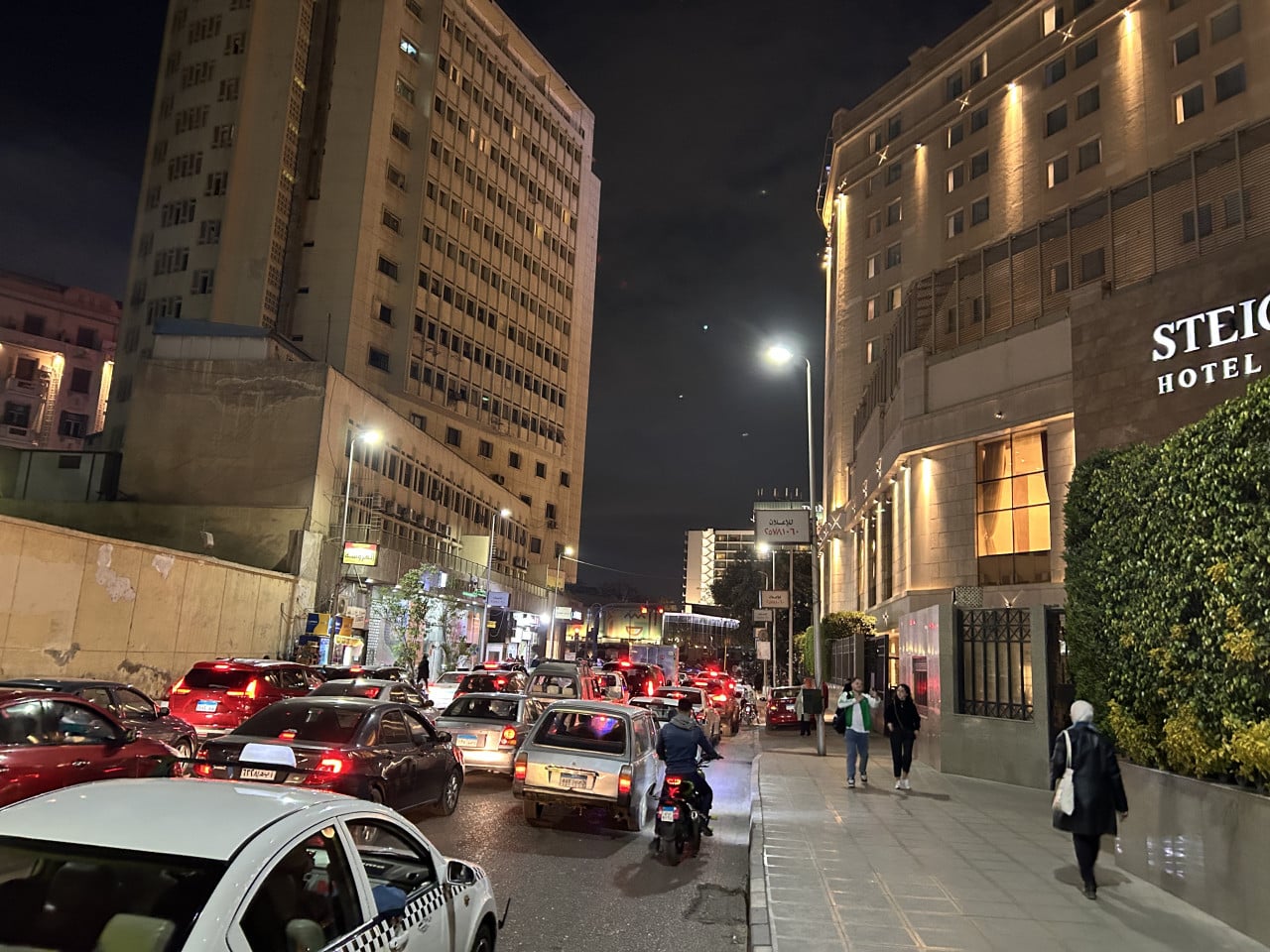
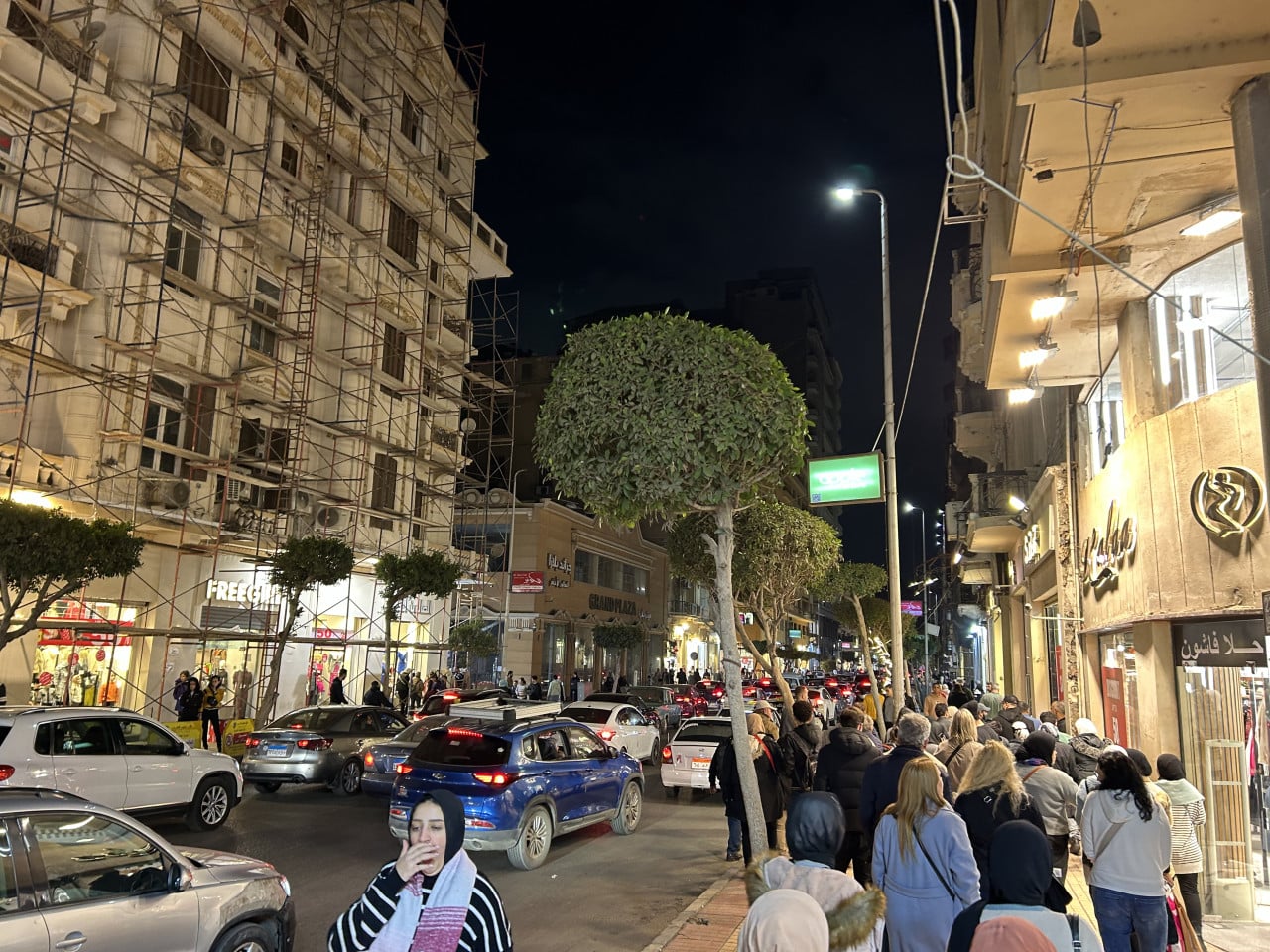
Before visiting the pyramids, we naturally also went into Cairo itself that evening. This city has an entirely unique atmosphere. It is noisy, chaotic, packed with people and cars, and in places it feels as though no traffic rules exist at all.
But that is precisely what makes Cairo so interesting. Here, you experience a completely different world from Europe. The streets are full of shops, stalls, the aromas of food, honking cars, and people who remain outside until late at night.
Some people may be a little shocked by their first encounter with Cairo, but I like this vibrant atmosphere. Egypt is not a polished destination where everything is perfectly organized. It is real, occasionally chaotic, and sometimes a little wild, but that is exactly what makes it unforgettable.
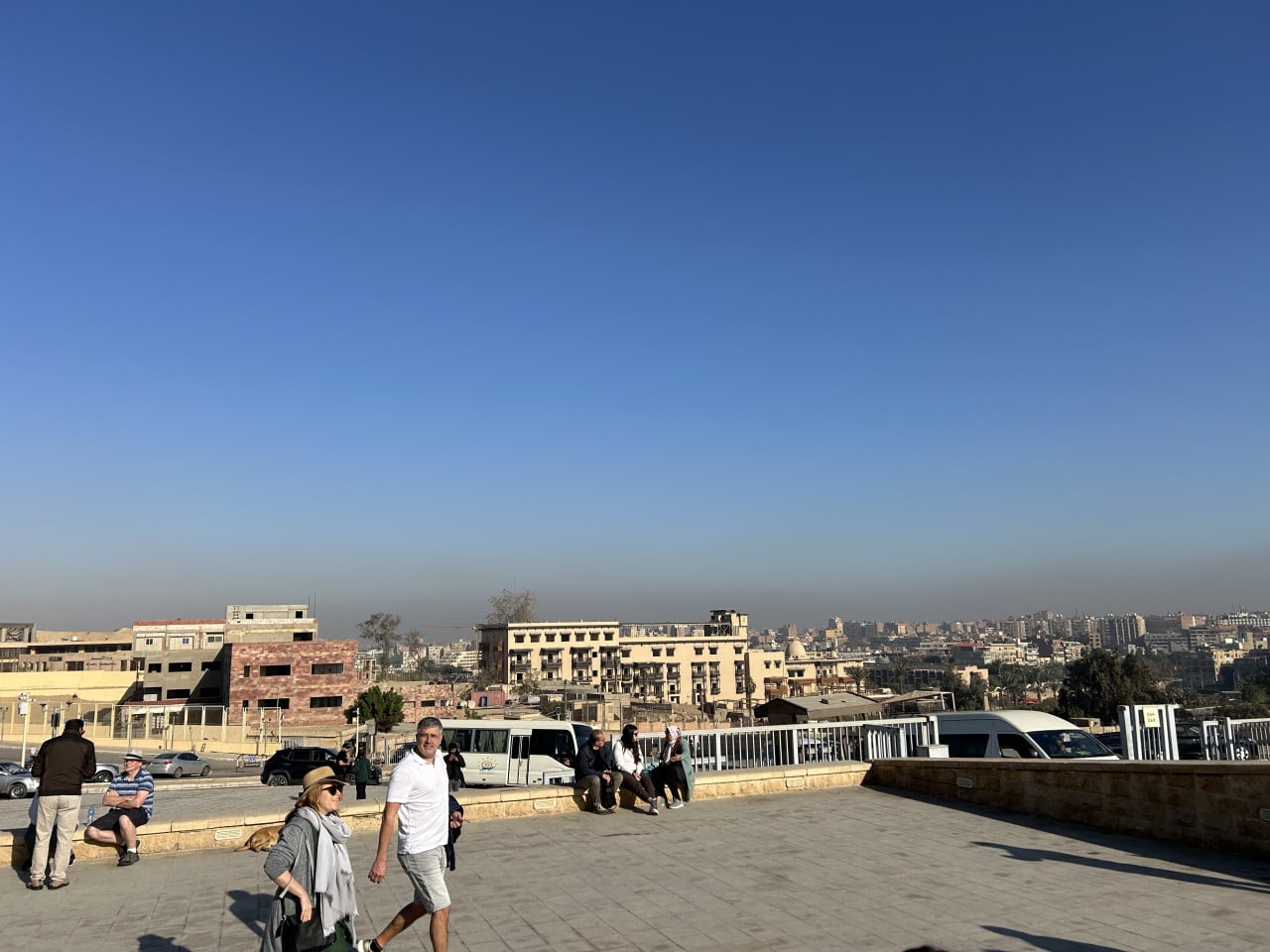
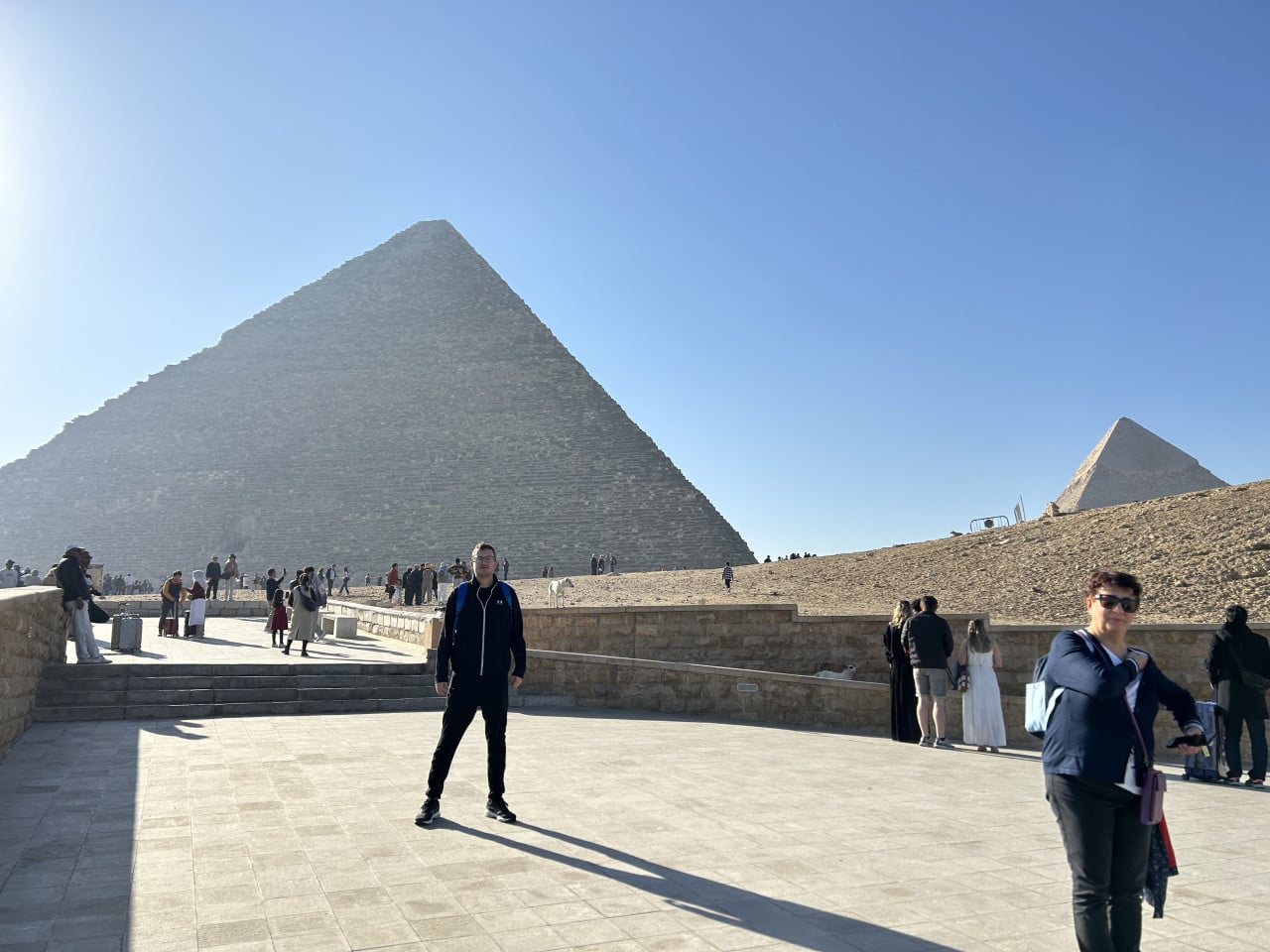
You realize how enormous the pyramids are while still in the parking lot
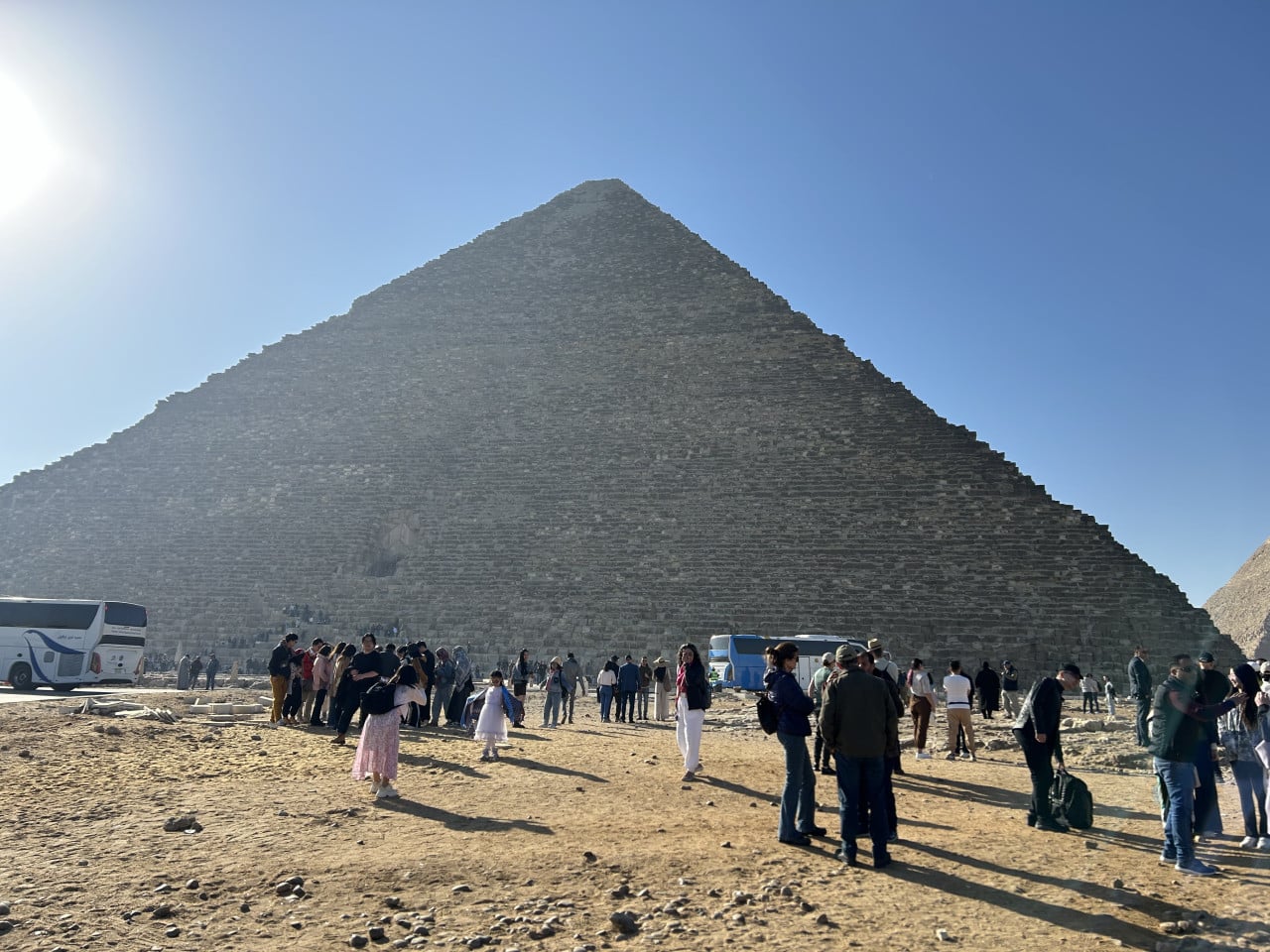
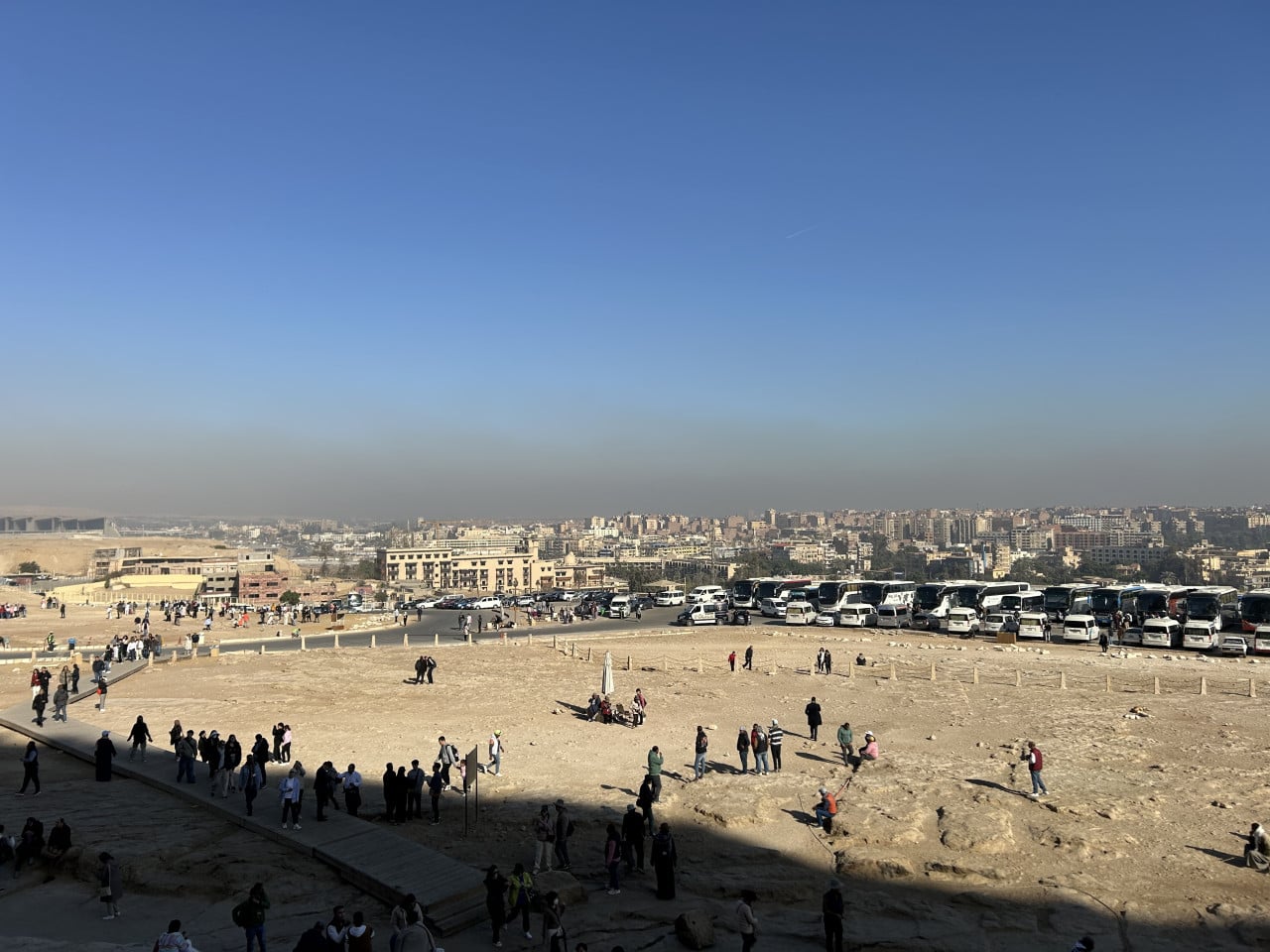
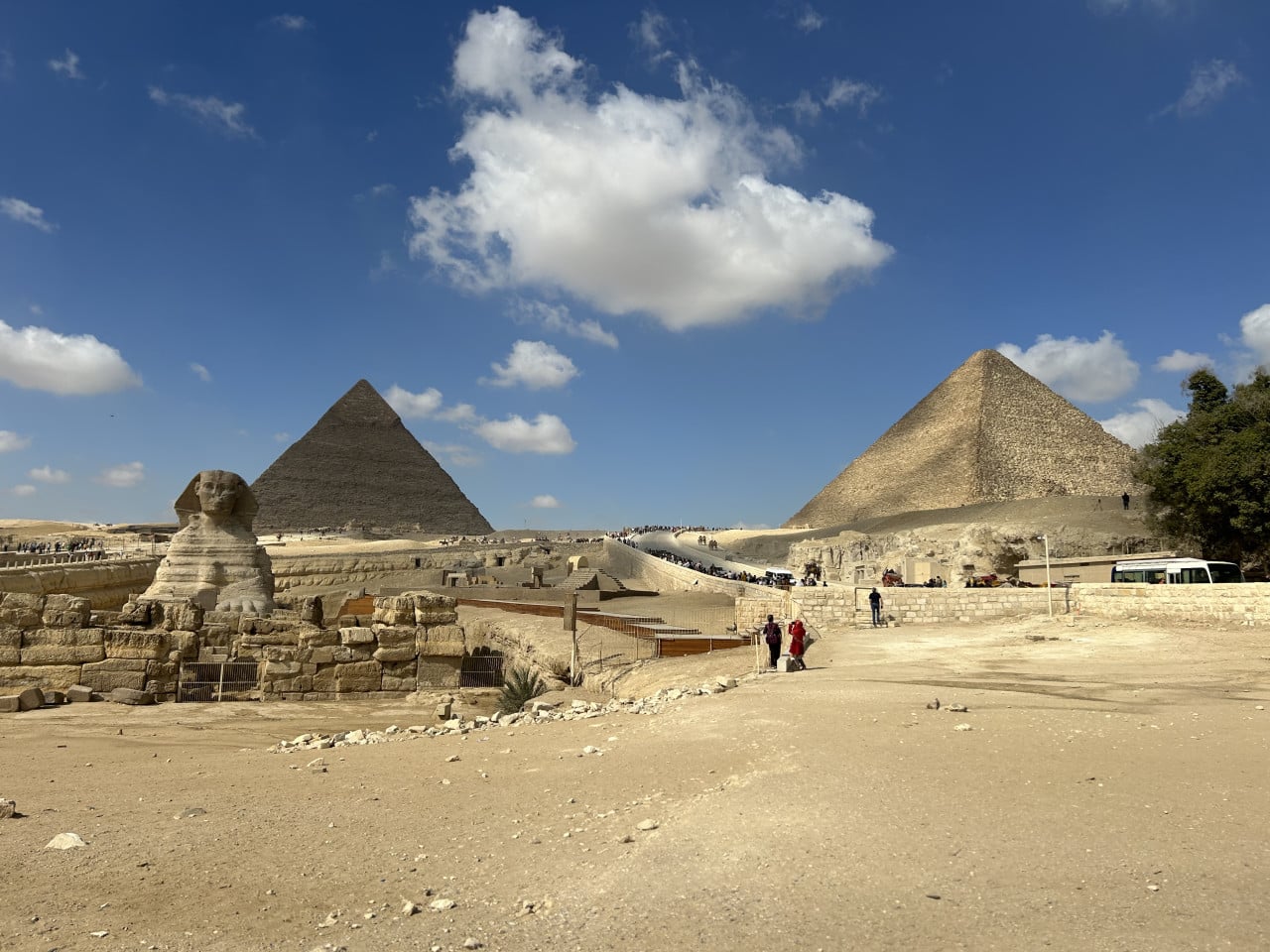
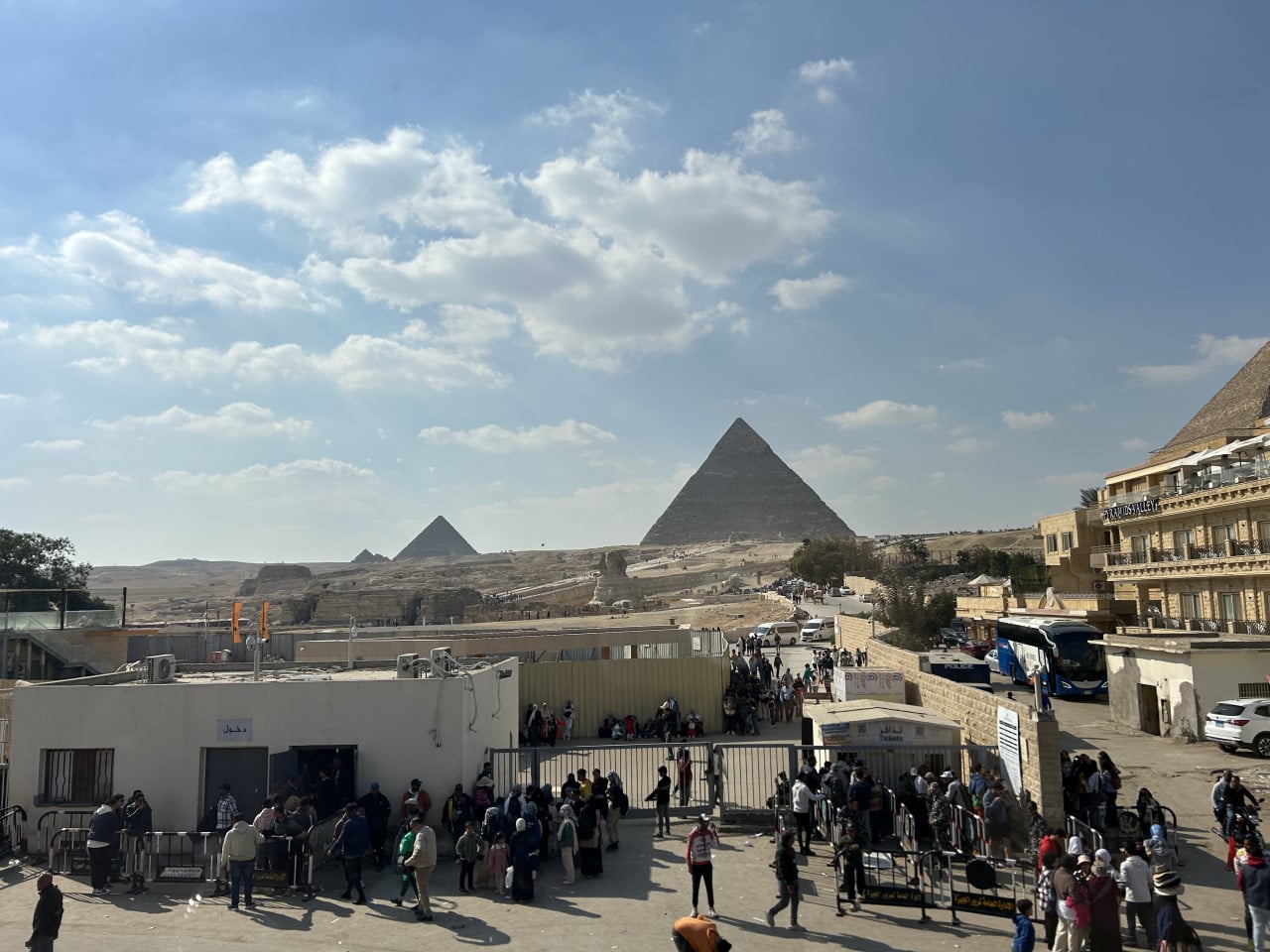
After arriving in Giza, we first stopped in the parking lot. From there, we already had a beautiful view not only of Cairo but, above all, of the pyramids themselves.
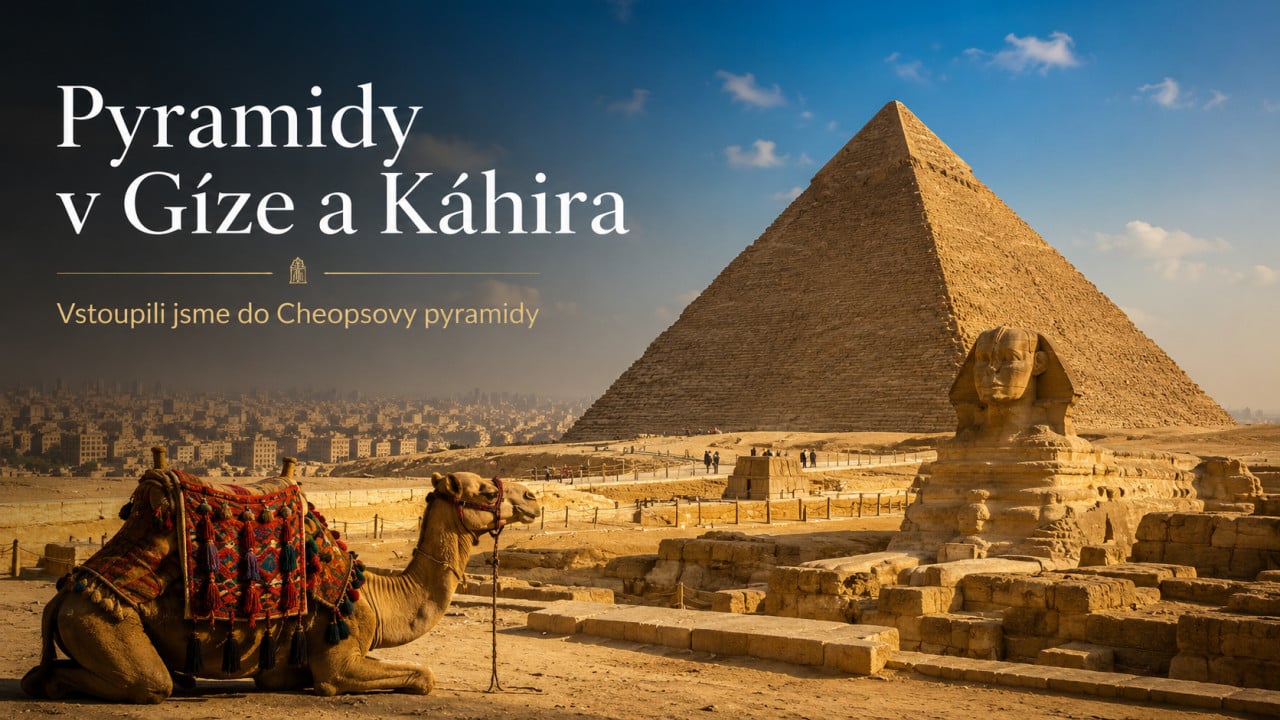
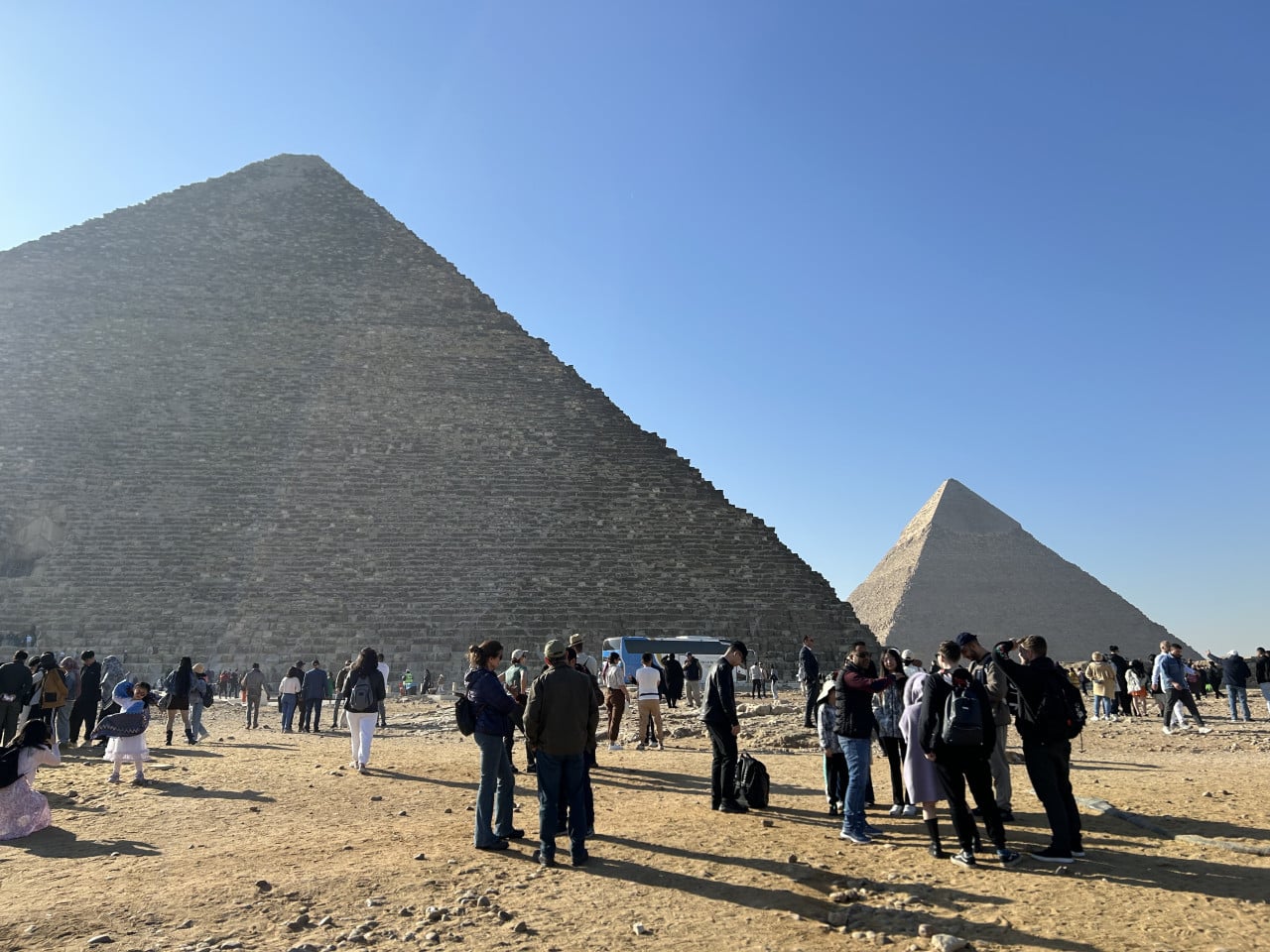
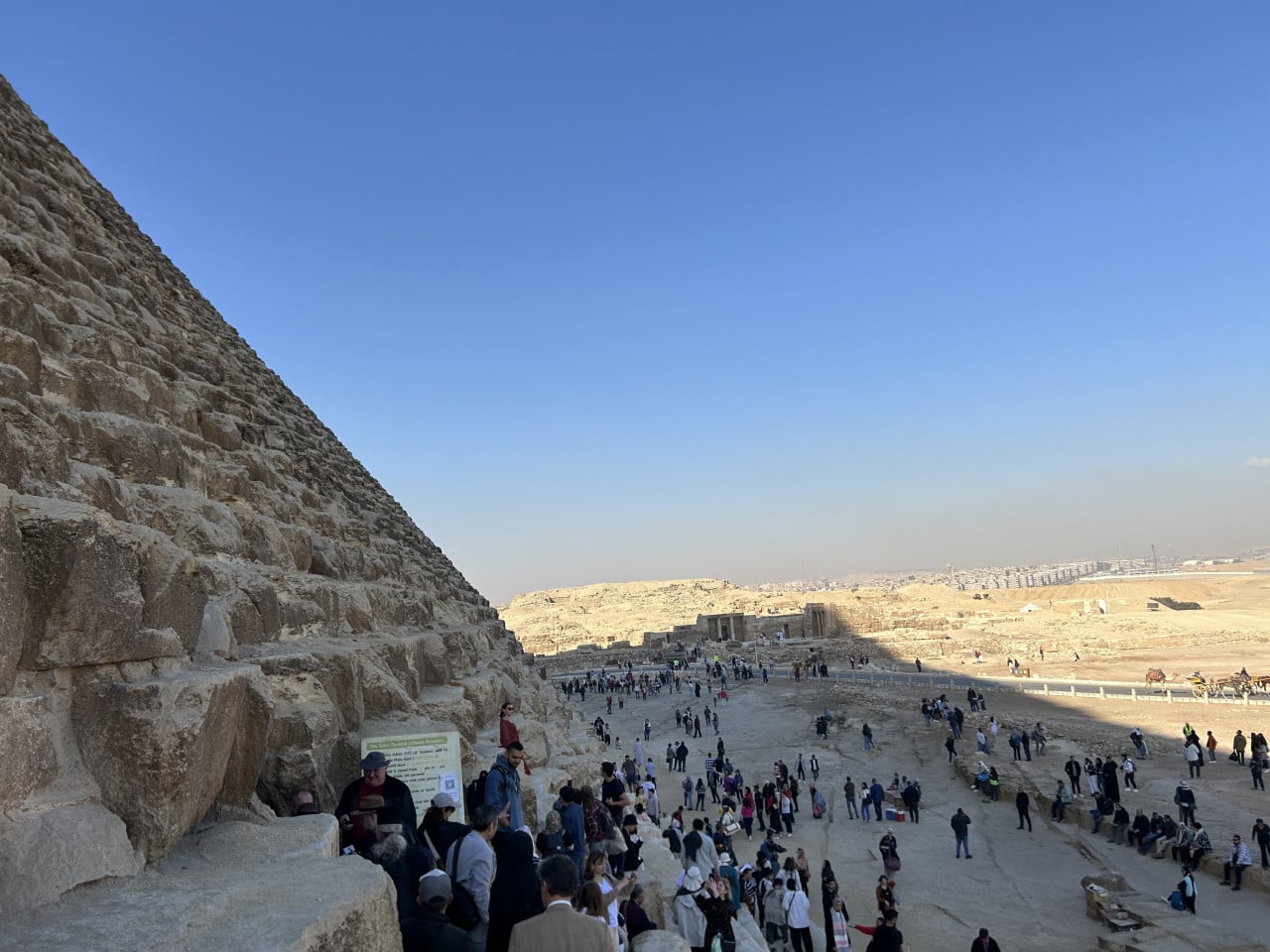
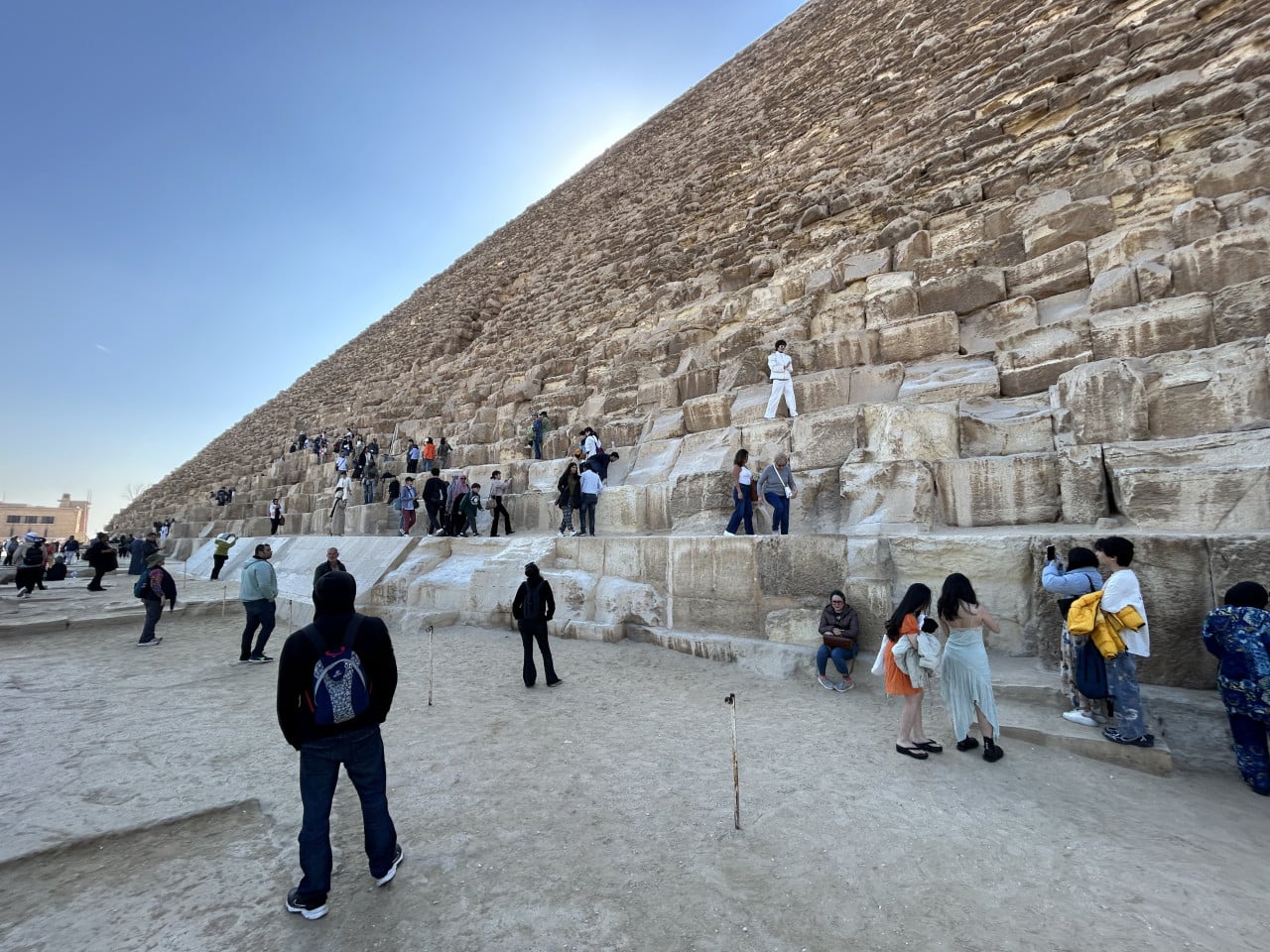
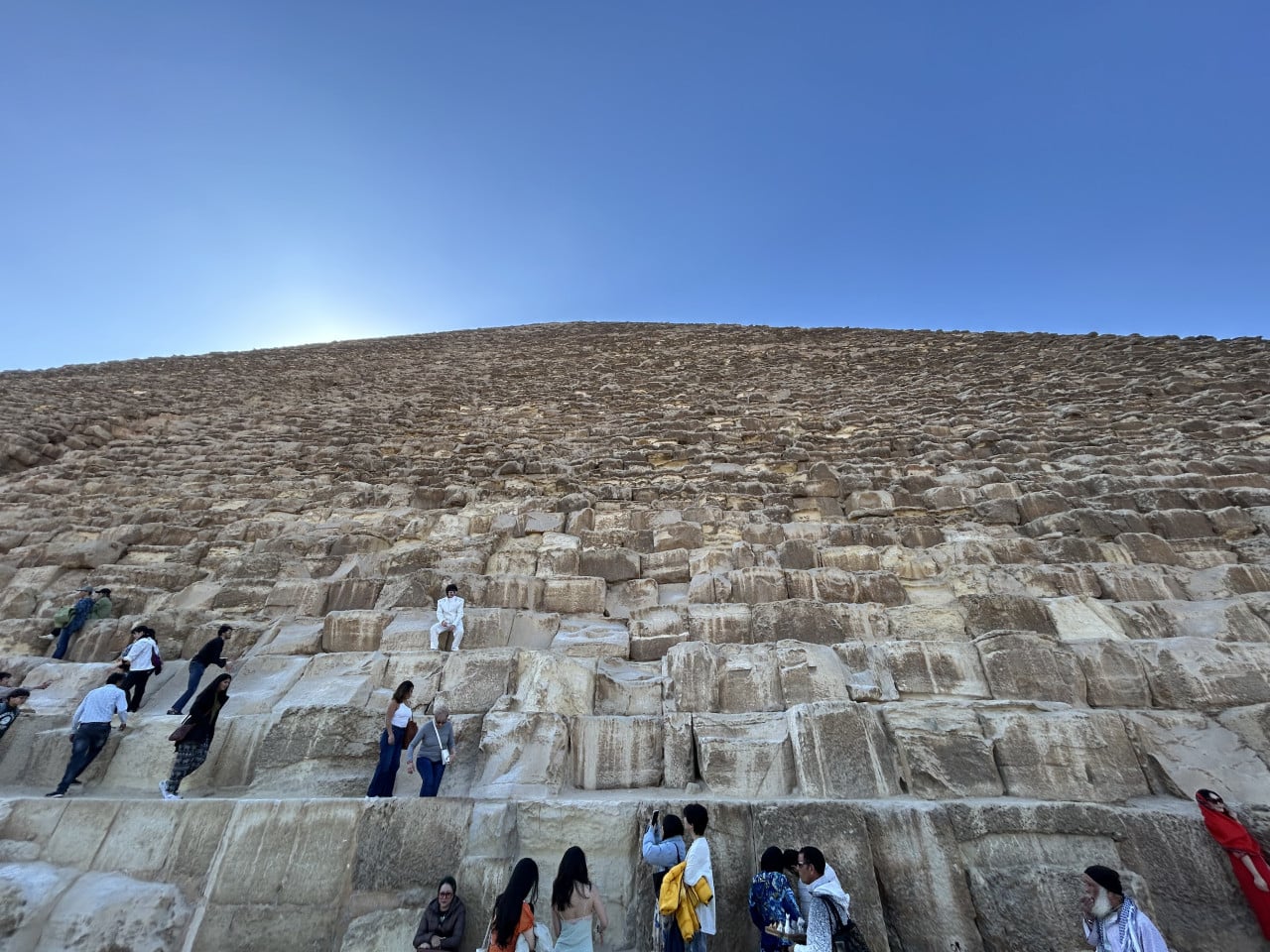
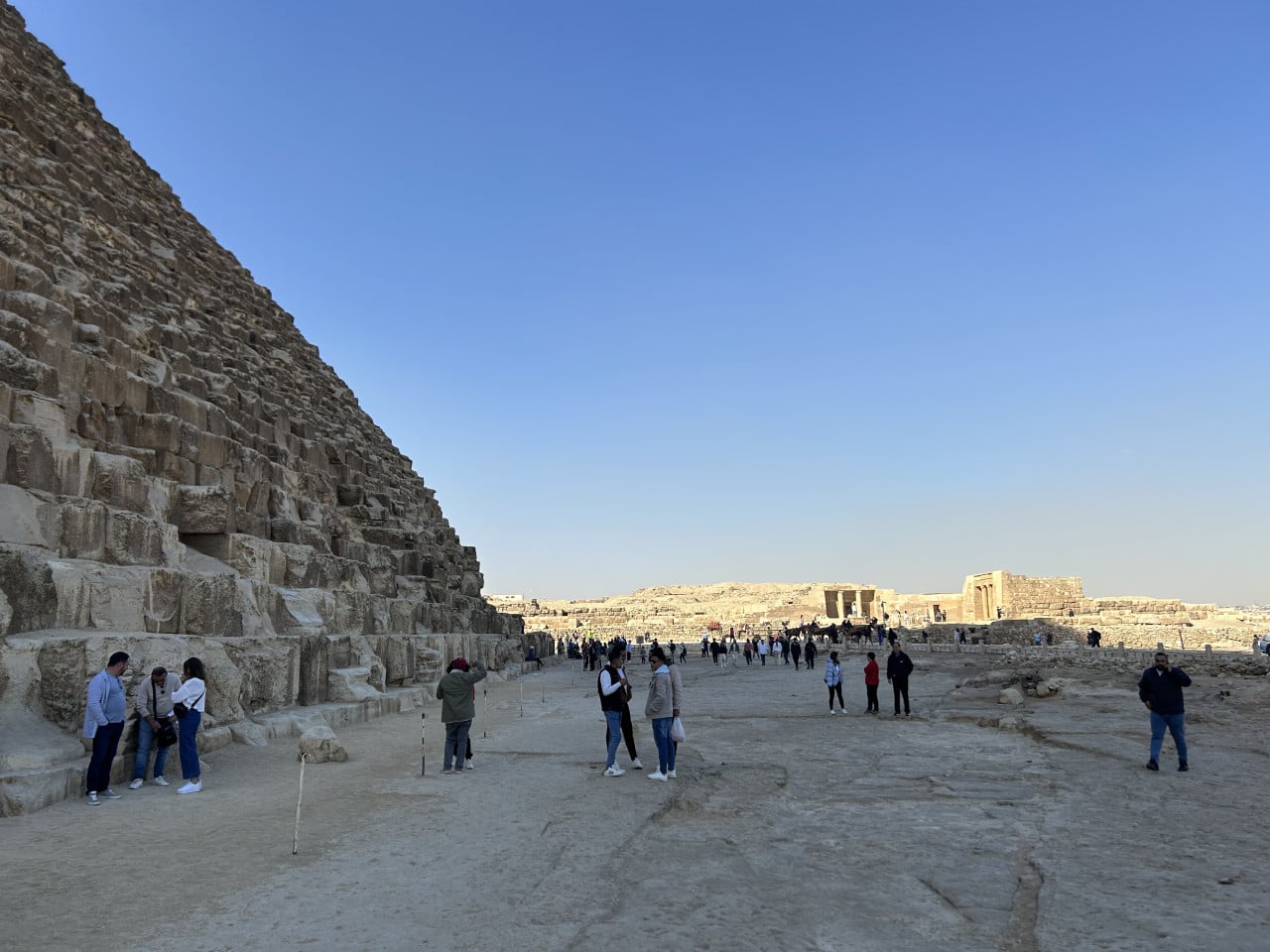
They look enormous in photographs, but it is only when you stand directly beneath them that you truly begin to grasp their scale. They are incredible monuments. You know that they are more than a hundred meters tall, but until you stand before them, you cannot properly imagine their size.
The Great Pyramid, also known as the Pyramid of Khufu, originally stood approximately 146.6 meters tall. Today, it is several meters shorter because its summit and outer casing are missing. It is also the oldest and the only surviving wonder of the original Seven Wonders of the Ancient World. (Smithsonian Institution)
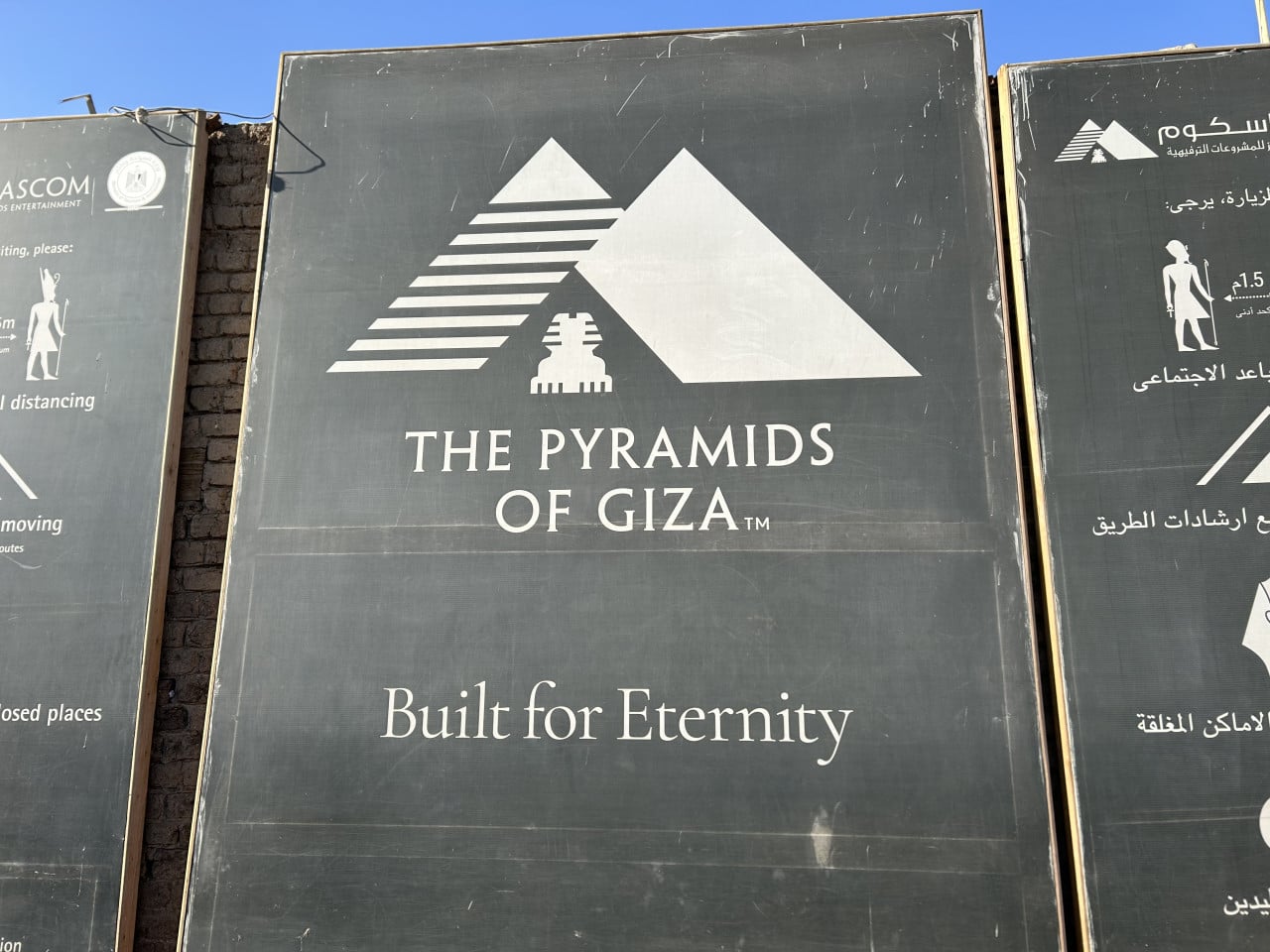
Giza is changing: electric buses have replaced the tourist train
When we visited the site, extensive work was taking place in the surrounding area, and it was not entirely clear how the new system would operate. At first glance, it looked as though some kind of tourist train was being built.
In reality, it is not a traditional train but a new system of air-conditioned electric buses. The project includes a new visitor center, parking facilities, electronic tickets, rest areas, restaurants, shops, and stops at the main monuments. The electric buses operate on a “hop-on, hop-off” basis and connect the visitor center, panoramic viewpoints, the pyramids of Menkaure, Khafre, and Khufu, and the area by the Sphinx. Pilot operations of the new system began in April 2025, and private cars and tour buses are no longer generally permitted to drive directly across the plateau. (Ahram Online)
The purpose of the entire project is to remove traffic from the archaeological site, reduce pollution, and somewhat rein in the chaos that prevailed here for many years. Vendors, camel handlers, and carriage operators are also to have their own designated areas.
The historic Marriott Mena House hotel also stands near the old entrance. It is located practically at the foot of the pyramids, and some rooms, balconies, and the hotel restaurant offer direct views of them. If someone were looking for truly exceptional accommodation in Cairo and did not mind the higher price, waking up with the Pyramid of Khufu outside the window must be an experience in itself. (Marriott)
What exactly do the Pyramids of Giza represent?
The three main Pyramids of Giza were built during the Fourth Dynasty of the Old Kingdom, approximately between 2600 and 2500 BC. The largest was built for the ruler Khufu, also known by his Greek name, Cheops. The second pyramid belonged to his son Khafre, also known as Chephren, and the third and smallest of the main pyramids belonged to the ruler Menkaure. (Egyptian Monuments)
Moreover, the pyramids were not isolated structures in the middle of the desert. Each was part of an extensive funerary complex. These included mortuary and valley temples, causeways, smaller queens’ pyramids, tombs of prominent officials, and, in some cases, pits containing funerary boats.
The pyramids also originally looked different from the way they do today. Their surfaces were covered with precisely cut blocks of pale limestone from Tura. They must have shone in the sunlight and been visible from a great distance. Most of this casing was removed over the following centuries and used as building material. However, part of the original smooth casing is still clearly visible at the top of Khafre’s pyramid.
How could they have built the pyramids?
I think this is a question almost everyone asks when standing beneath a pyramid.
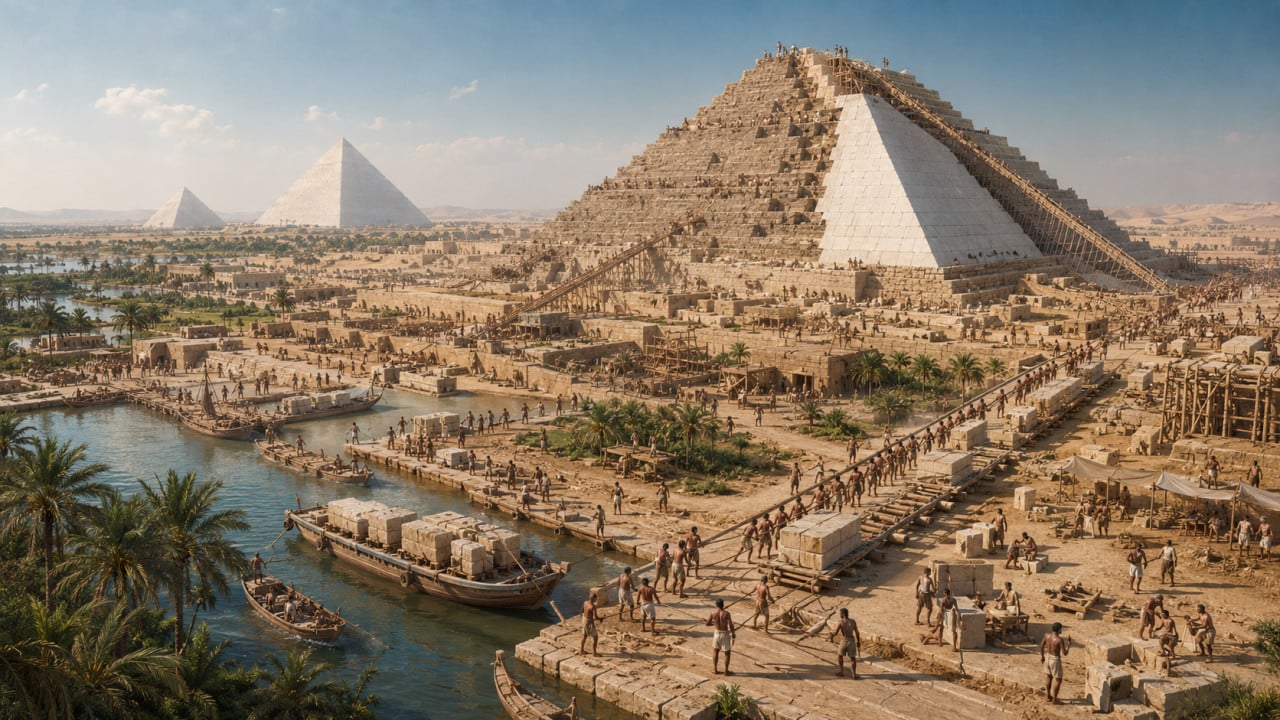
The Great Pyramid consists of an enormous number of stone blocks. Most of the limestone came directly from the Giza Plateau, while higher-quality white limestone for the casing was transported from quarries in Tura, and the granite used inside the pyramid came all the way from the Aswan region.
One particularly interesting discovery is the so-called Diary of Merer—papyrus documents more than 4,500 years old that describe the daily work of a group of men who transported limestone by water from Tura to an area called Akhet-Khufu, meaning Khufu’s pyramid complex. It is therefore not merely an assumption that the Egyptians transported stone along the Nile and canals. There is also an administrative record written by a man who supervised this transportation. (IFAO)
Archaeologists have also discovered an extensive settlement near the pyramids that served as a base for the builders. It contained residential buildings, bakeries, storage facilities, and areas for preparing food. The modern view is therefore not that the pyramids were built by tens of thousands of enslaved people being whipped by overseers. Rather, they were built by well-organized teams of craftsmen, laborers, stonemasons, transport workers, scribes, and other specialists. (AERA)
However, we still do not know exactly how they moved the blocks to the higher levels. The most likely explanation is a combination of sledges, ramps, levers, and perfectly organized human labor. The debate mainly concerns what the ramps looked like—whether they were straight, wound around the pyramid, or were partially concealed inside the structure as it was being built.
So yes, the exact construction process remains a mystery to some extent. But that does not mean we have no evidence and must automatically resort to explanations involving aliens.
And what about theories of a power plant and wireless energy transmission?
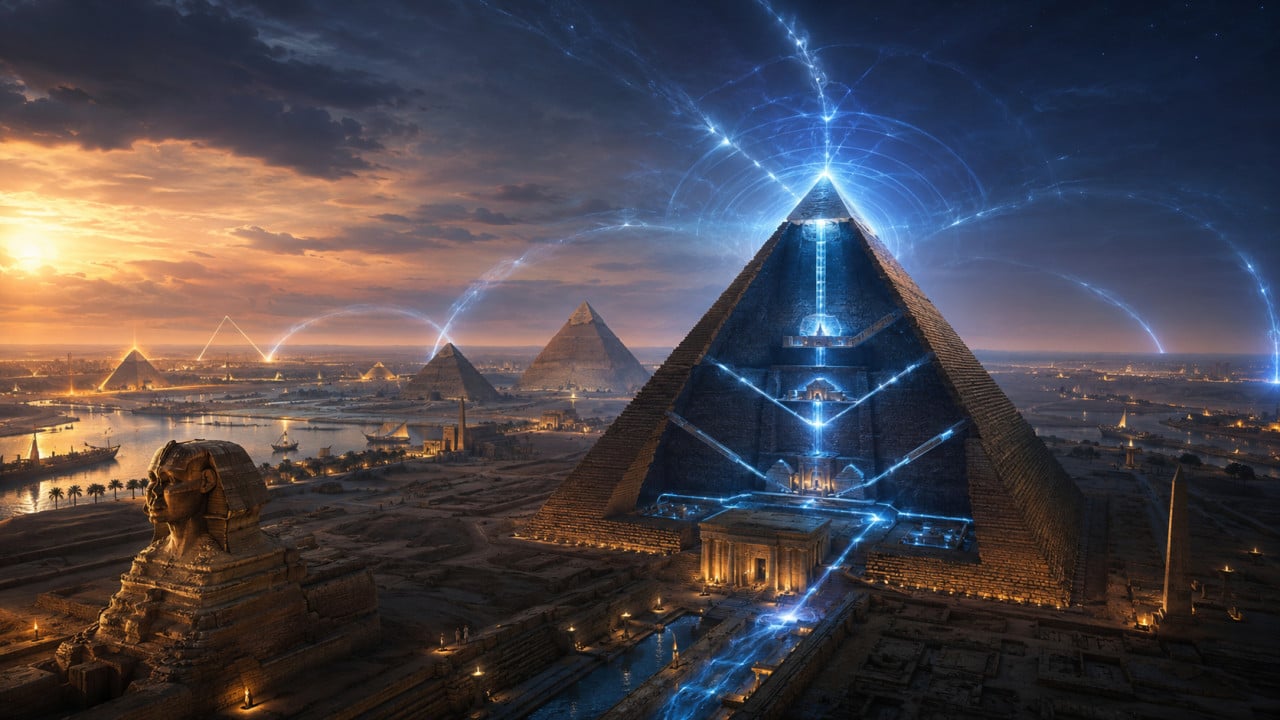
There are, of course, a vast number of theories surrounding the pyramids. According to some, they were not intended to serve as tombs but as power plants, resonant devices, or tools for the wireless transmission of energy. Other theories claim that they were built by a much older civilization that has since disappeared and that the Egyptians merely appropriated them.
I admit that when you stand directly inside a pyramid, some questions really do cross your mind. The structure is incredibly precise and enormous, and at first glance it feels completely different from the richly decorated tombs in Luxor.
However, there is no credible archaeological evidence for an energy-generating power plant or alien builders. The dating, surrounding temples, burial grounds, workers’ settlement, contemporary inscriptions, and Merer papyri all fit the period of Khufu and his successors.
That does not mean, however, that there is nothing left to discover inside. In 2017, scientists used cosmic-ray particles to detect a previously unknown void at least thirty meters long above the Grand Gallery. Its exact function remains unknown to this day. So genuine mysteries still exist inside the pyramid—they may simply be a little different from those presented in conspiracy documentaries. (Nature).
Beware of pushy vendors
After buying our tickets, we headed directly toward the Pyramid of Khufu. Before we reached it, however, we encountered something I would like to warn other travelers about.
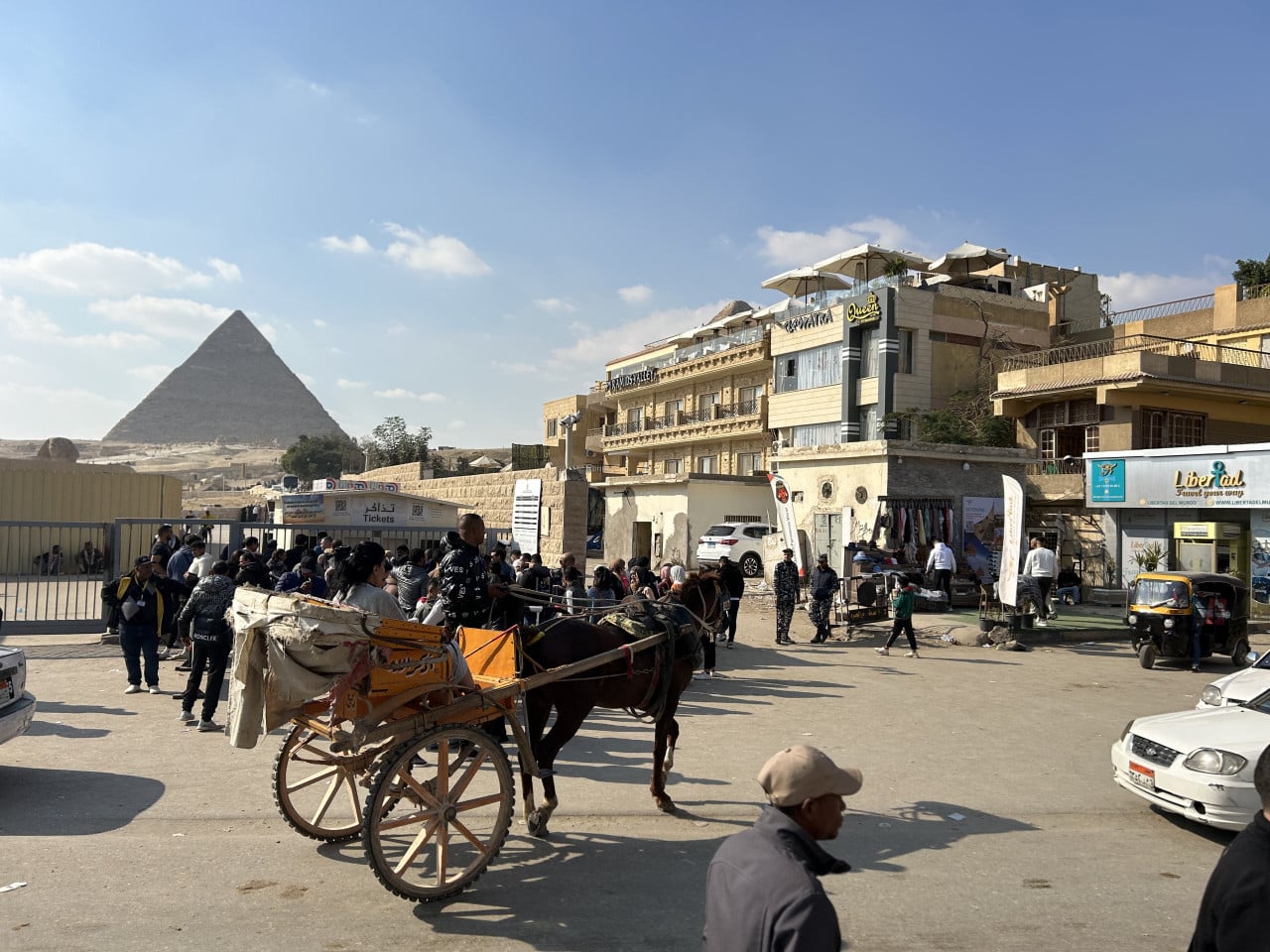
There are a large number of vendors in the area who can be extremely pushy. Some start putting souvenirs into your hands, offer supposed free gifts, and then demand payment. They even tried to put merchandise into our bags and backpacks. When we did not want to buy anything, they responded with unpleasant remarks and insults.
Of course, I do not want to claim that they all behave this way. You will certainly also meet respectable vendors here. However, I recommend not accepting anything unless you are genuinely interested. If you do want to buy something, always agree on the final price in advance and do not let anyone pressure you into making a quick decision.
Entering the Pyramid of Khufu
We had also purchased a separate ticket to enter the Pyramid of Khufu. Entry inside is not automatically included in the standard admission fee for the entire site, so you need to plan for this in advance.
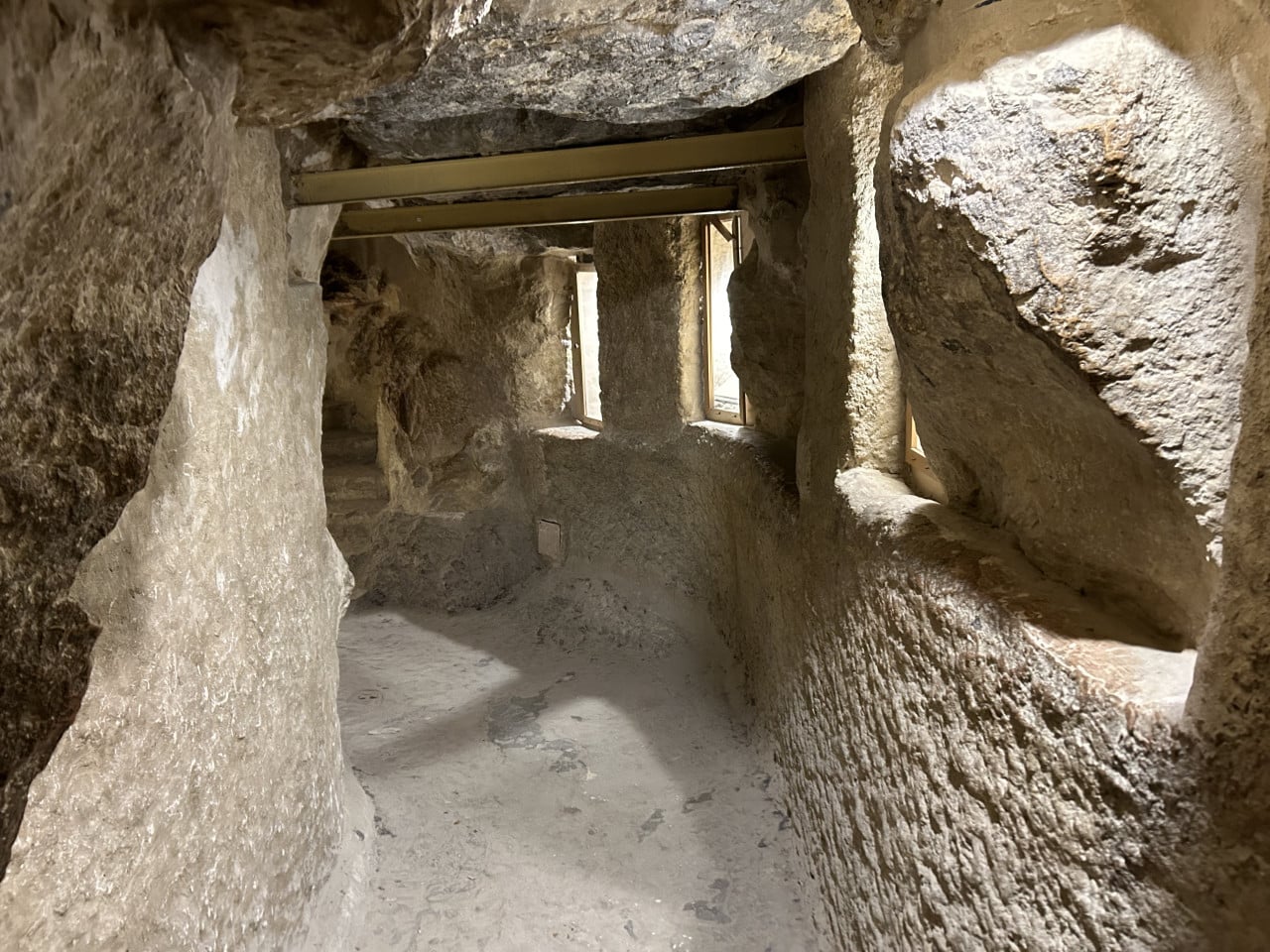
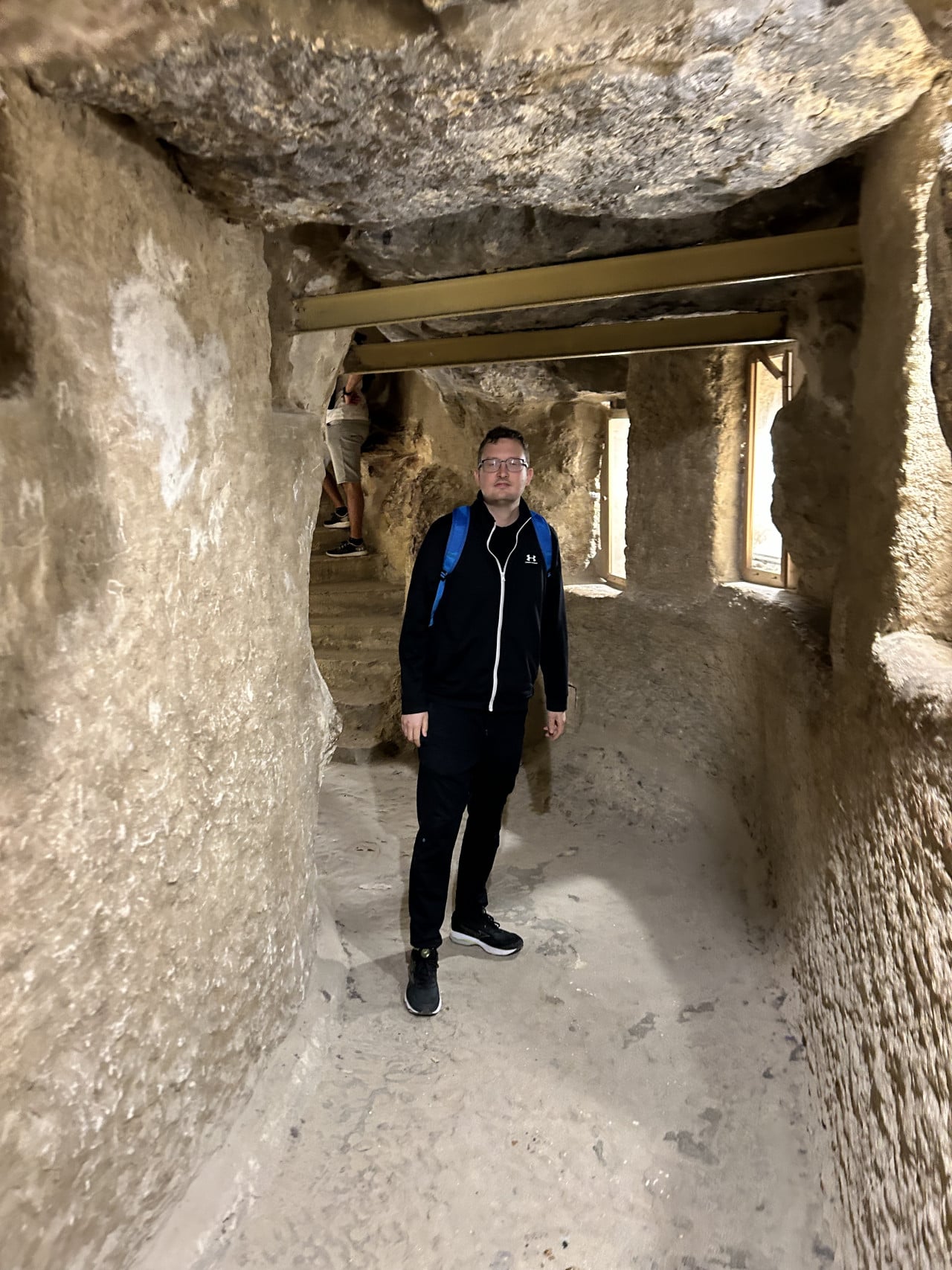
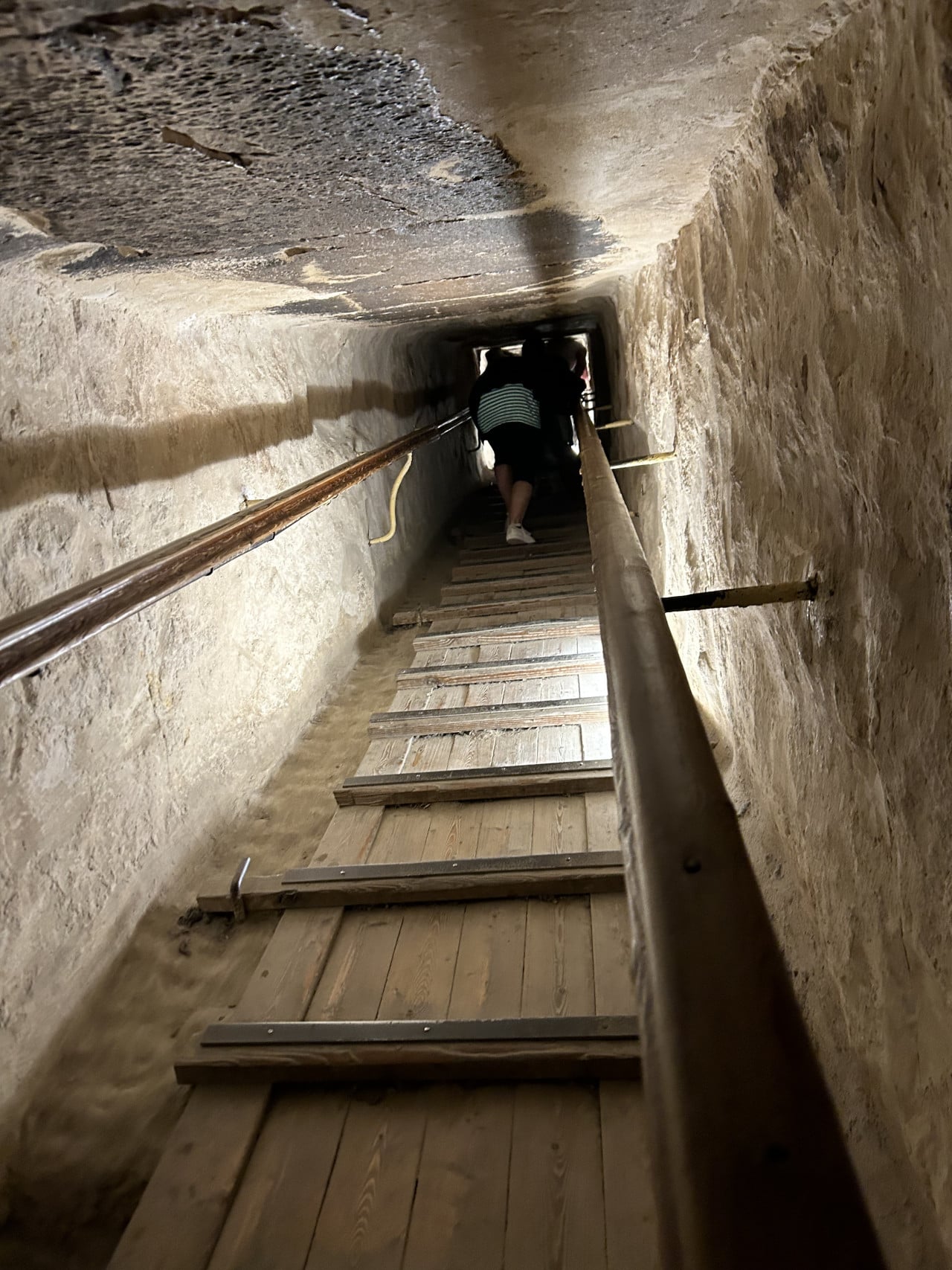
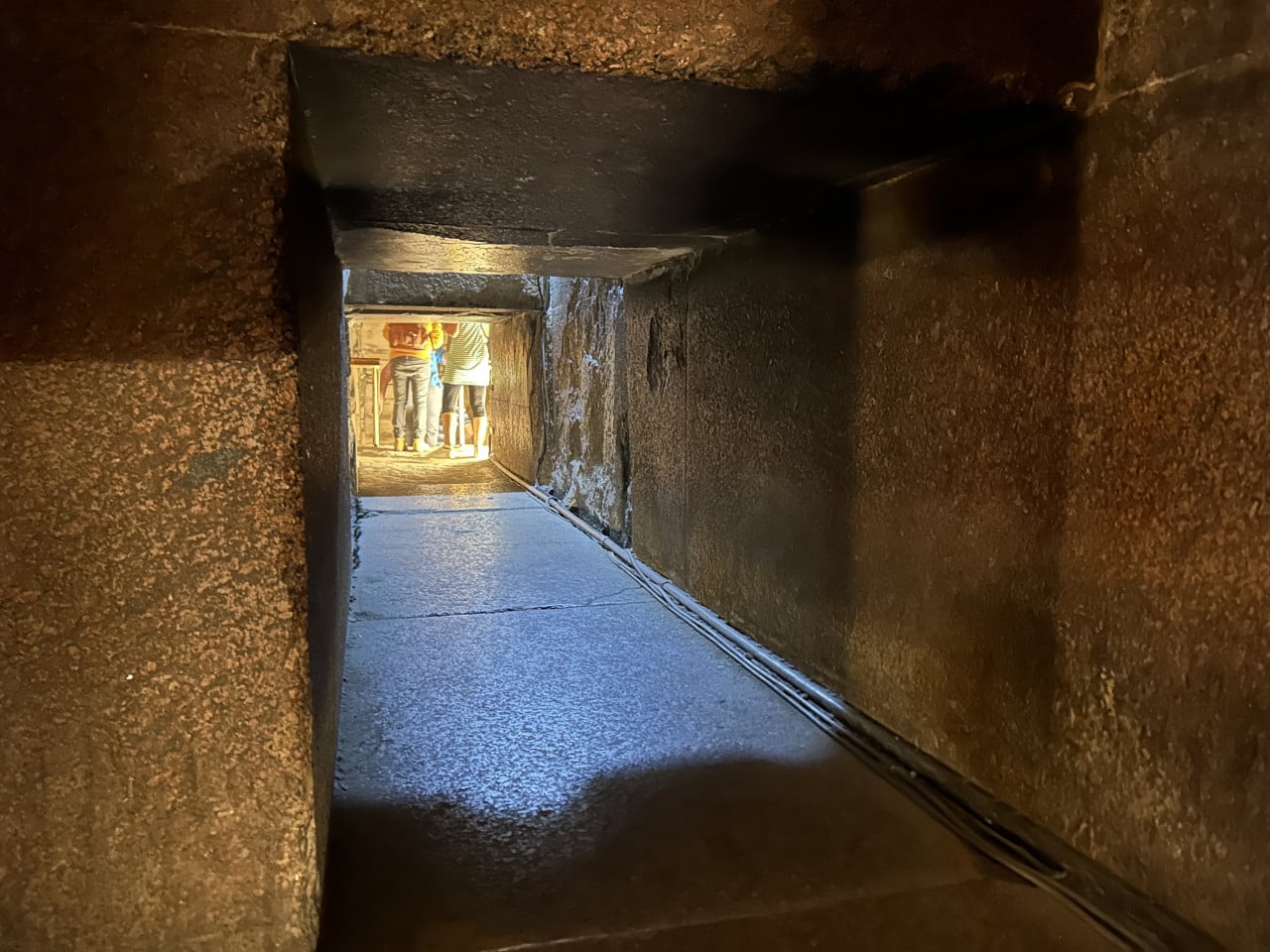
The route begins with a fairly narrow passage. This is followed by wooden steps and a long corridor through which you have to move while bent deeply forward, in places almost on all fours. When another group of people is coming the other way, there is not much room to pass.
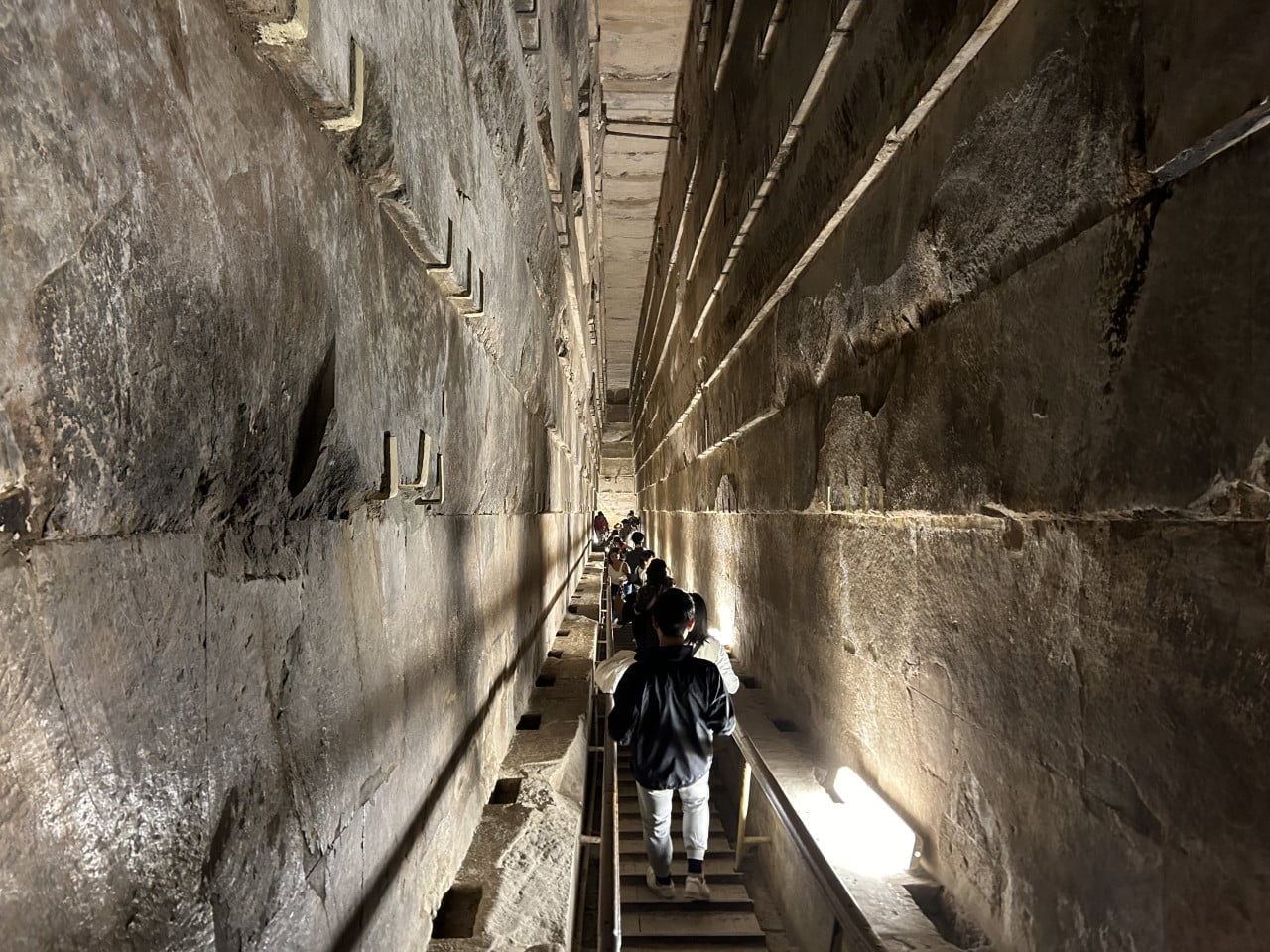
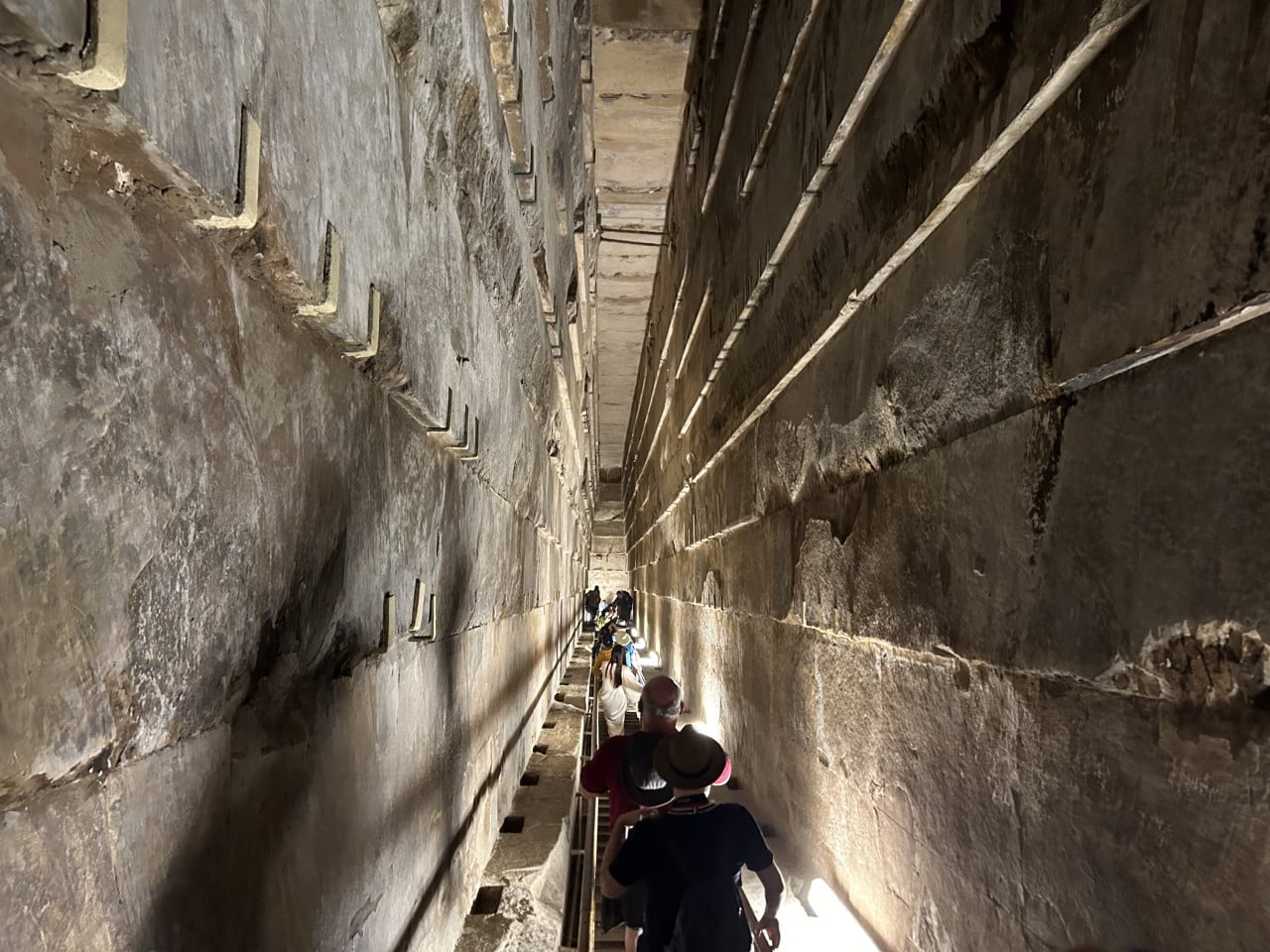
Gradually, we reached the Grand Gallery. This is a tall, narrow, and very steep space that feels truly monumental. Although you are inside an enormous pyramid, you spend most of your time moving through relatively confined passages.
It was extremely hot inside, and as the number of visitors increased, the air quality quickly deteriorated. If you suffer from claustrophobia, have knee problems, or dislike moving for long periods while bent forward, I would carefully consider whether to visit.
On the other hand, we also encountered older visitors inside, and most of them managed the route. It is not a mountaineering feat, but it is certainly not a comfortable stroll either.
The King’s Chamber and the “concrete” sarcophagus
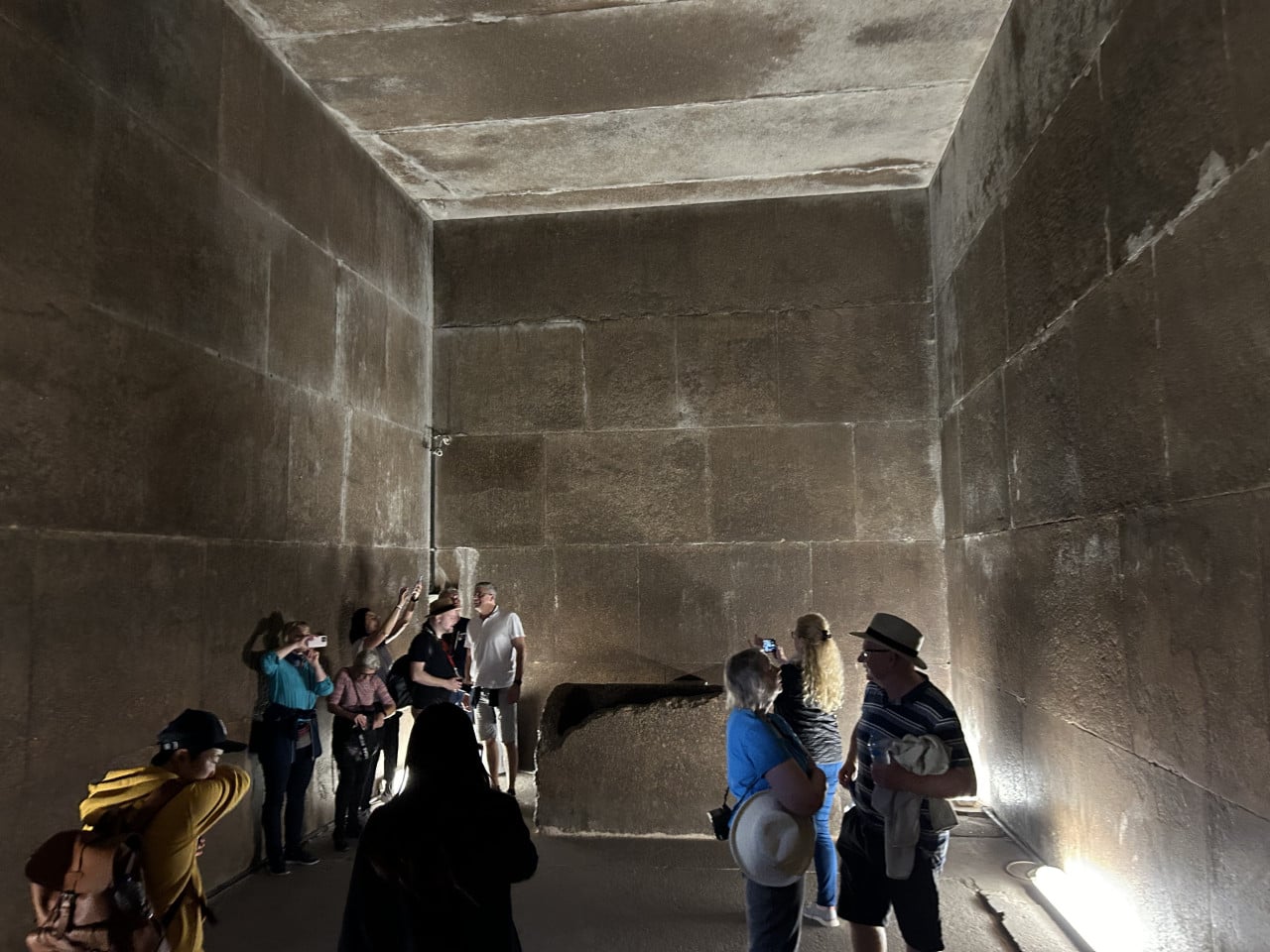
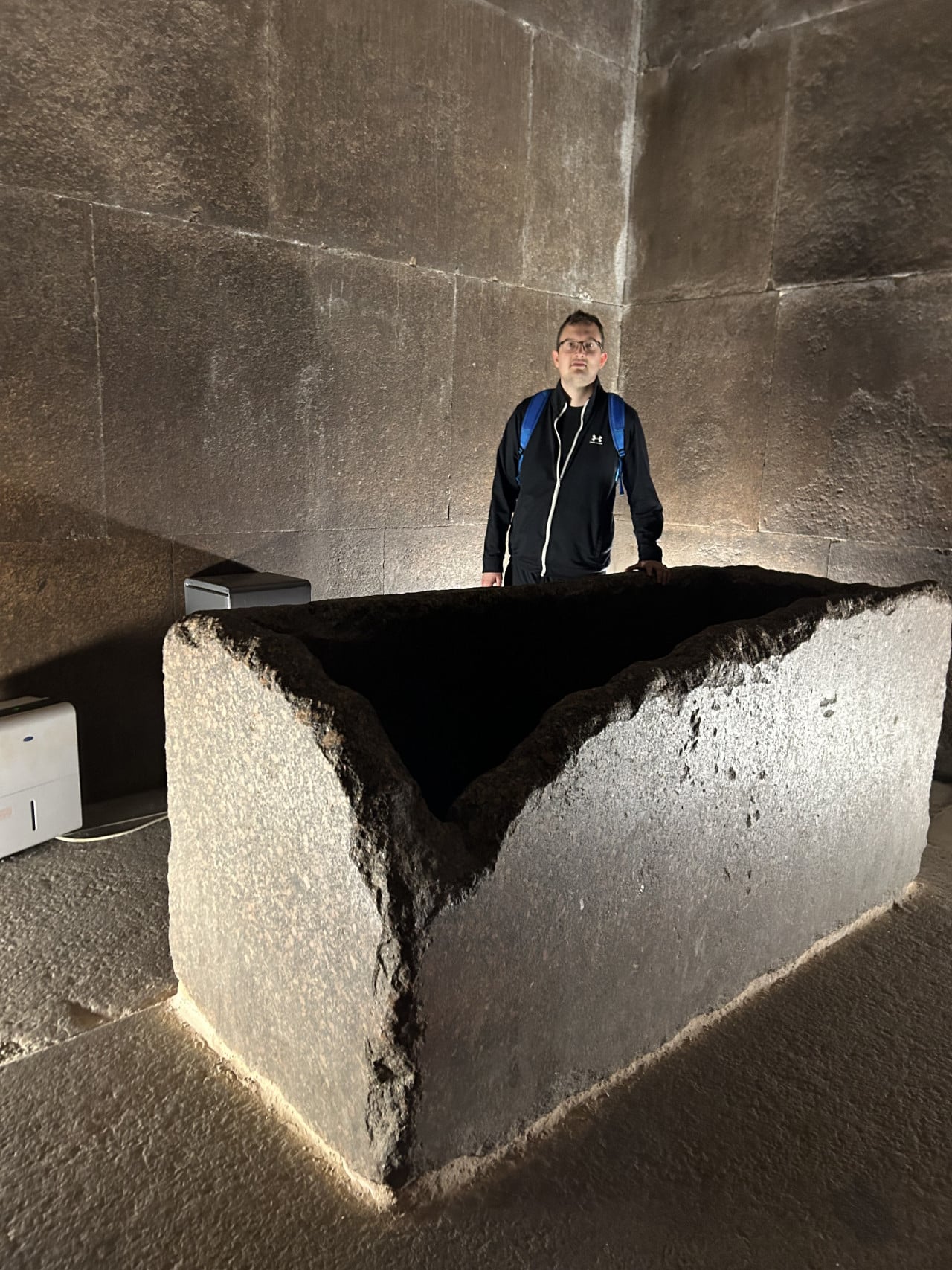
At the end, we reached the so-called King’s Chamber. When I stood there, I was surprised by how empty the entire space felt.
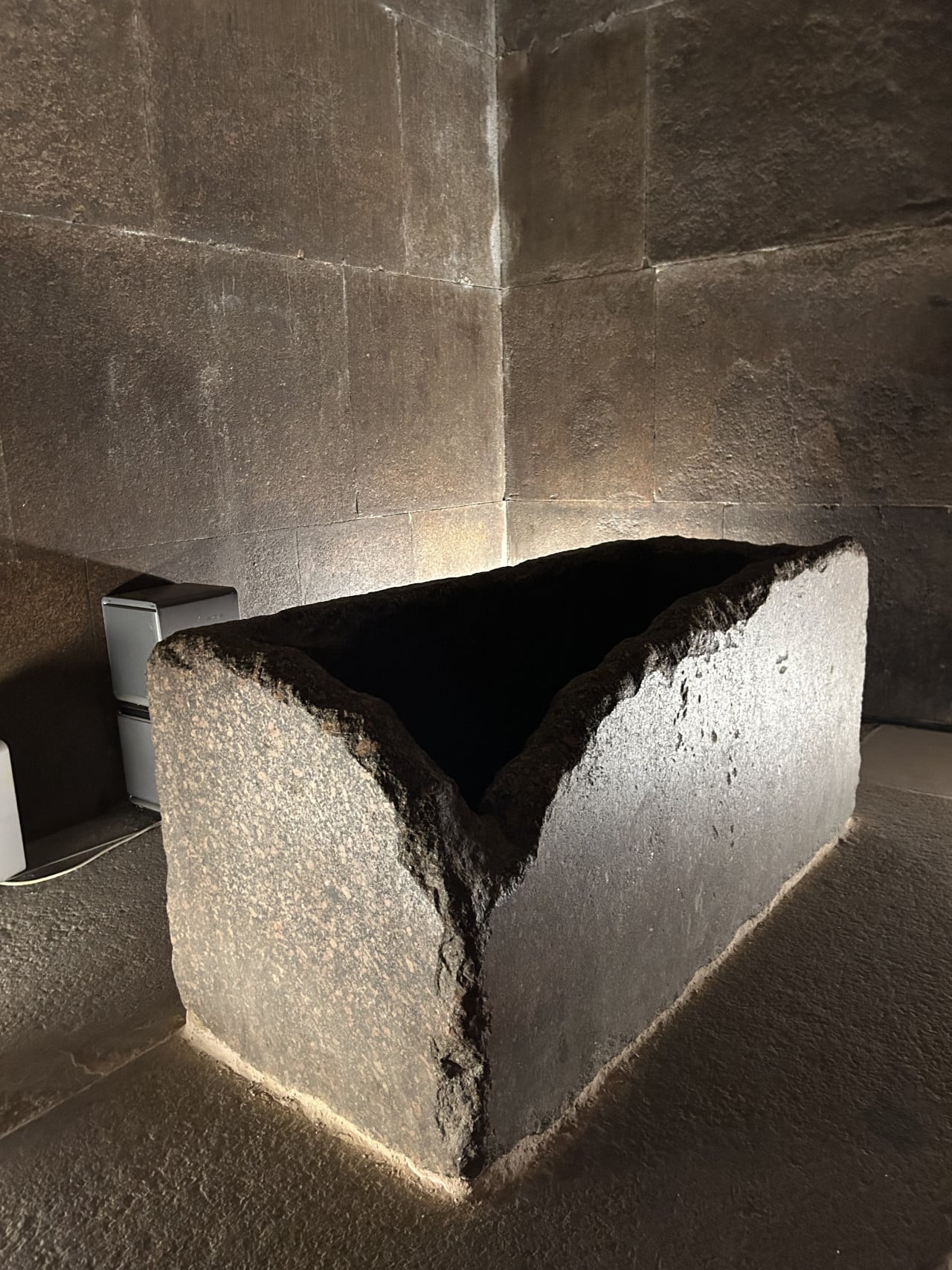
There is a large stone container by one wall. At first glance, in the dim light, it can look almost like a concrete bathtub, but it is actually a sarcophagus made from Aswan granite. It is even larger than some of the access passages, so it must have been placed in the chamber while the pyramid was still being built, with the room completed around it. (Giza Media)
It was here that I began to wonder whether the pyramids really were tombs.
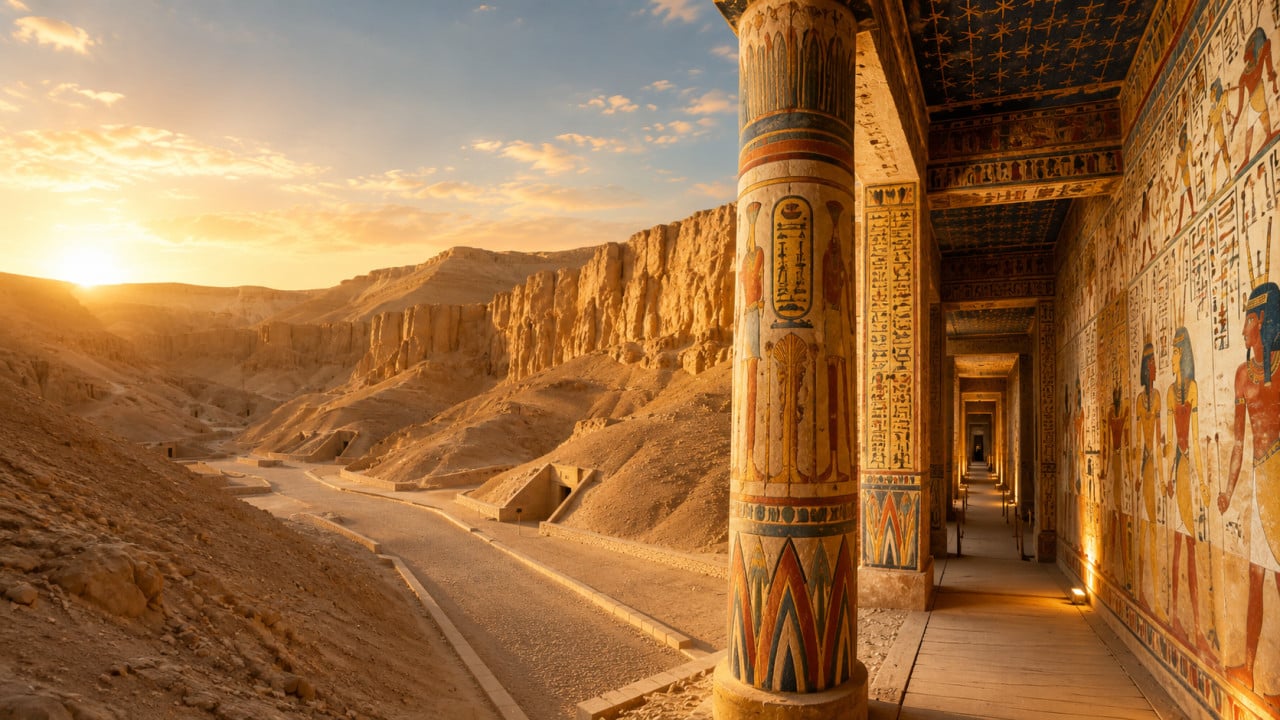
When you visit the tombs in the Valley of the Kings near Luxor, the walls are filled with colorful scenes, hieroglyphs, gods, protective texts, and depictions of the afterlife. You will find nothing like that in the Pyramid of Khufu. The walls are practically bare, and the entire space feels austere and technical.
However, it is important to add that the Pyramid of Khufu was built much earlier than the tombs in Luxor. The so-called Pyramid Texts did not begin appearing on the walls of royal pyramids until the end of the Fifth Dynasty, several generations after Khufu. The fact that his pyramid does not have extensive decoration on its walls is therefore not unusual for its period. (Smithsonian Institution)
Honestly, even after visiting, I would not dare claim that I know the answer to every question. The personal feeling inside the pyramid was completely different from that in the traditional tombs of Luxor. However, the archaeological evidence still points fairly strongly to it having been part of a royal funerary complex.
The most beautiful panorama of the pyramids
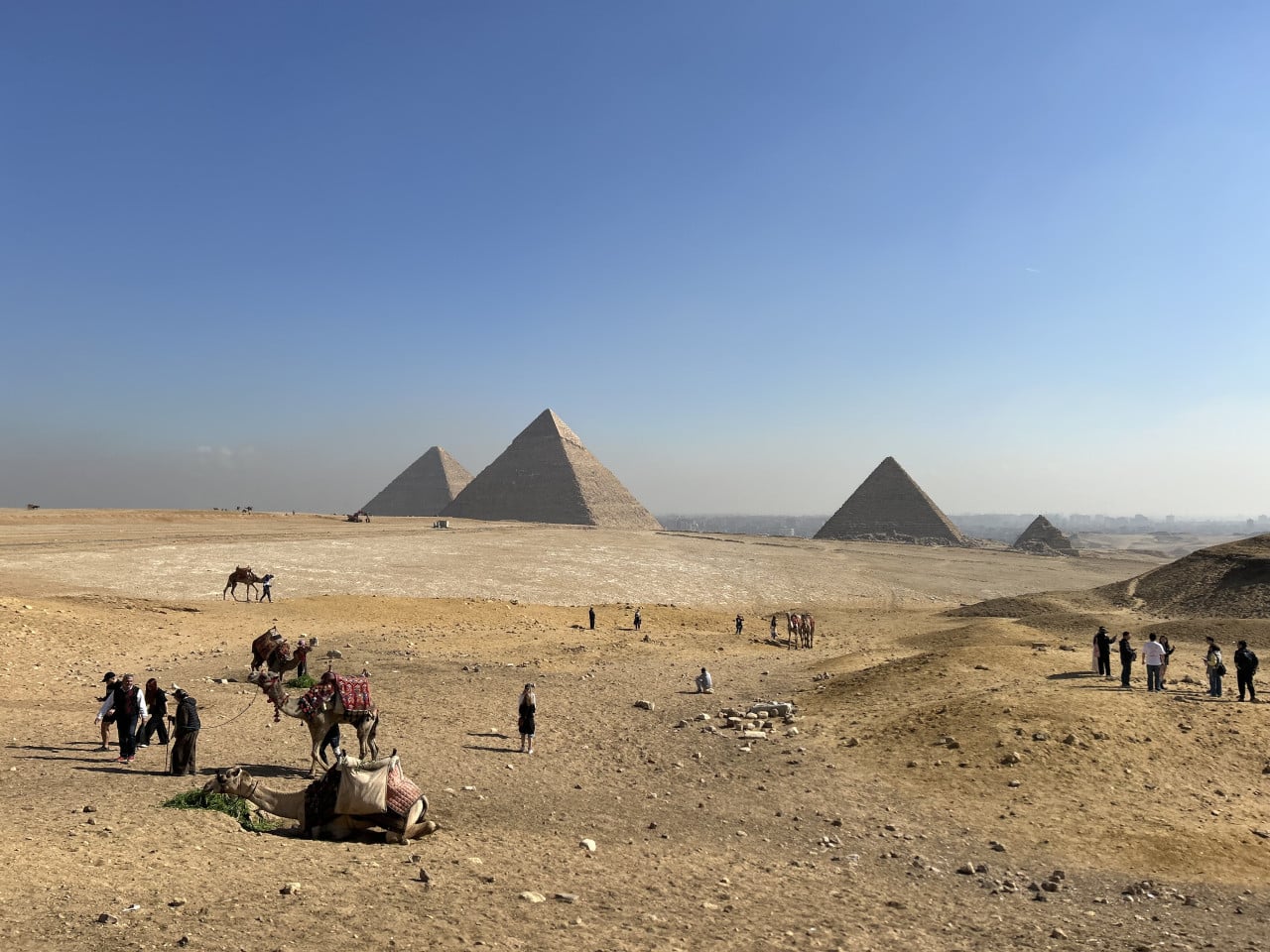
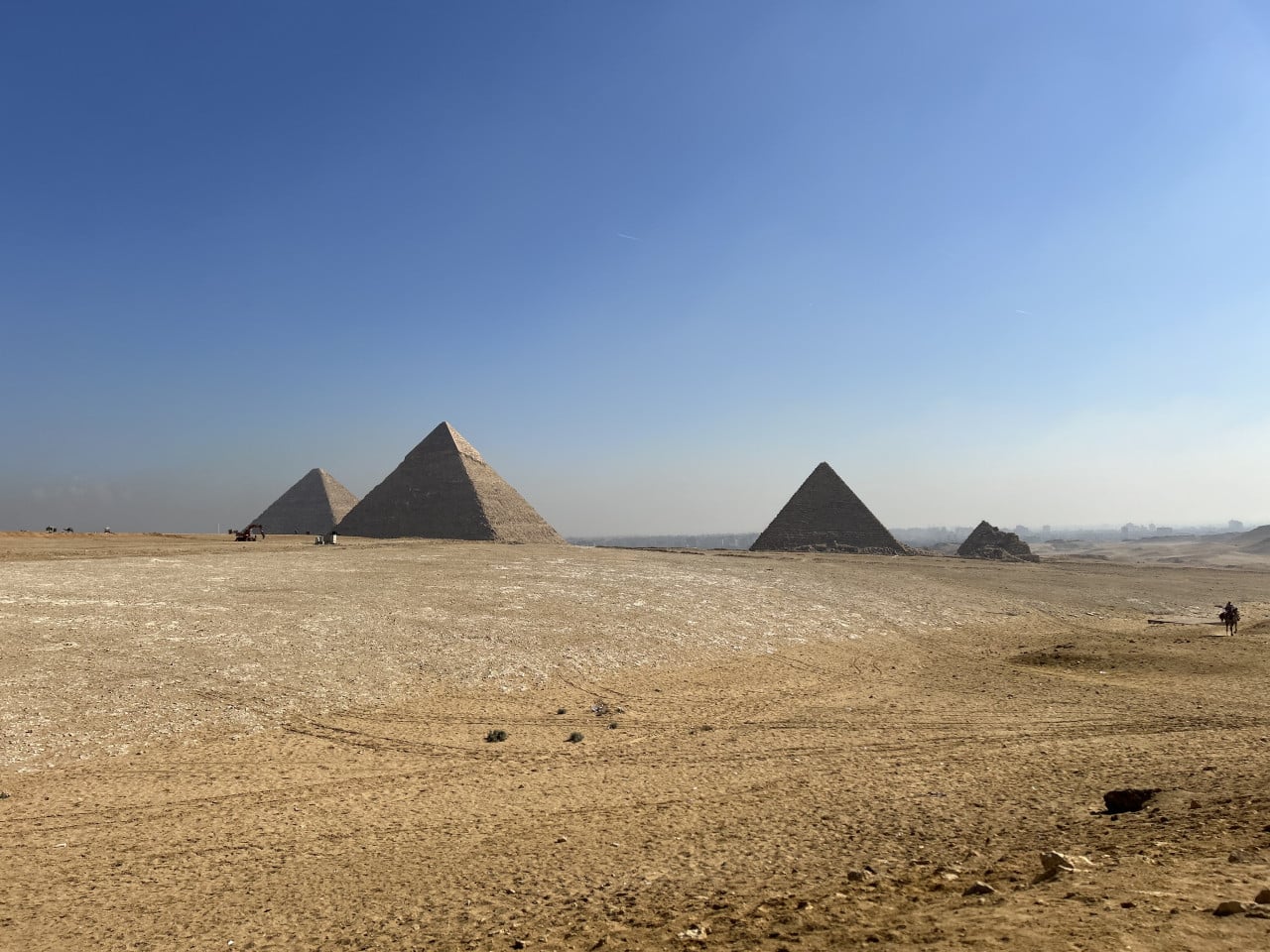
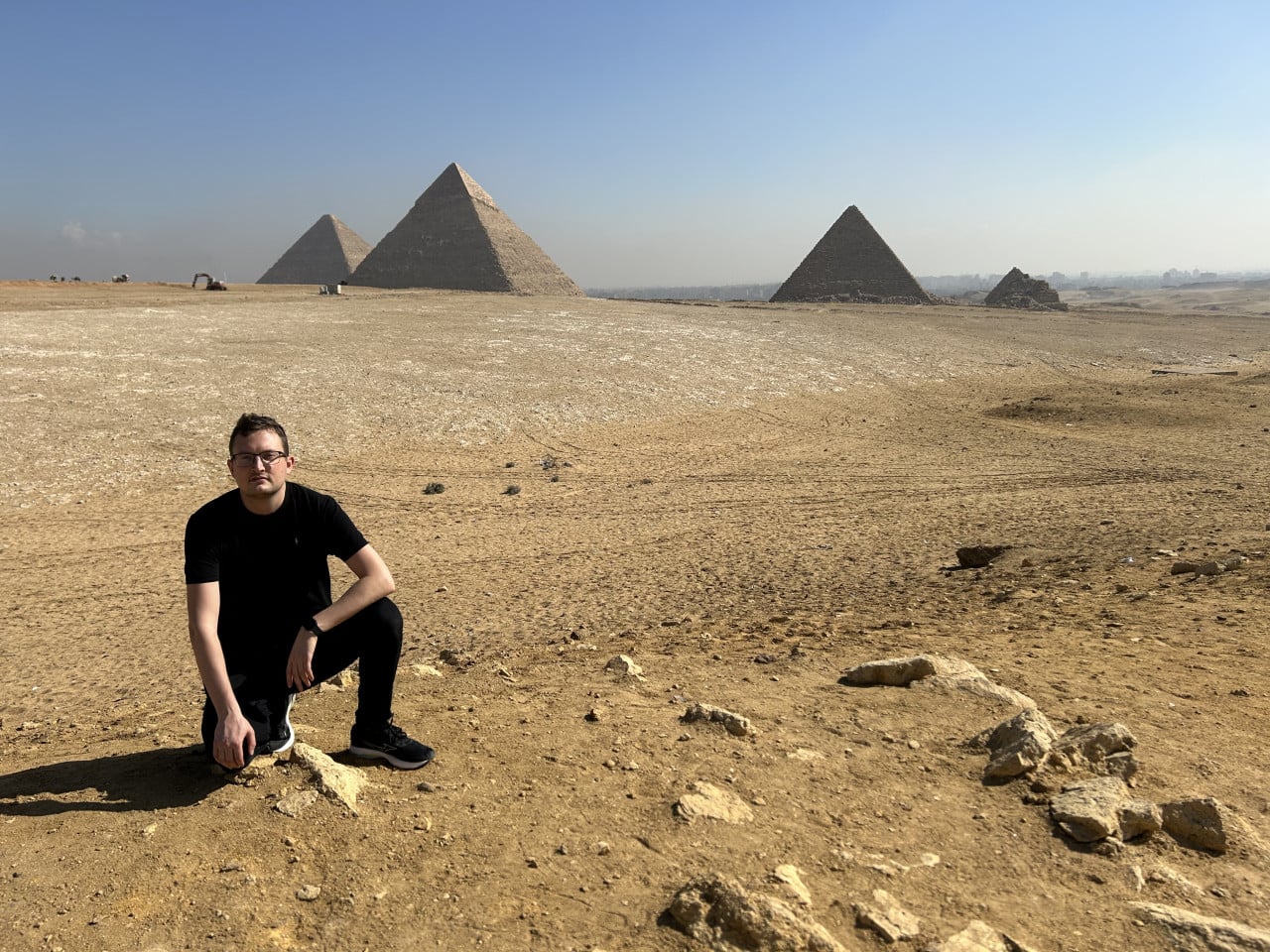
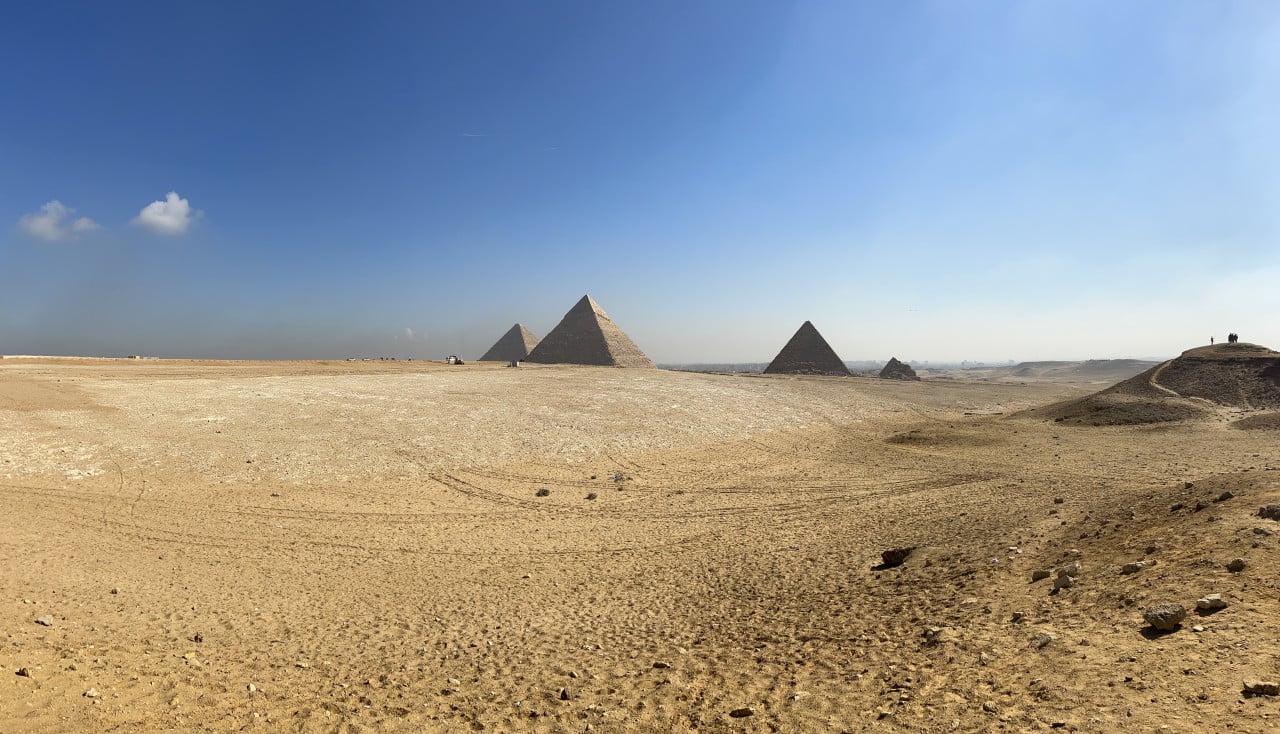
After visiting the Pyramid of Khufu, we continued to the panoramic viewpoint, from which all three main pyramids can be seen at once.
I absolutely fell in love with this place. When viewing them up close, you mainly notice the size of the individual stones. From the viewpoint, however, you can see the entire complex and finally understand how it is arranged within the landscape.
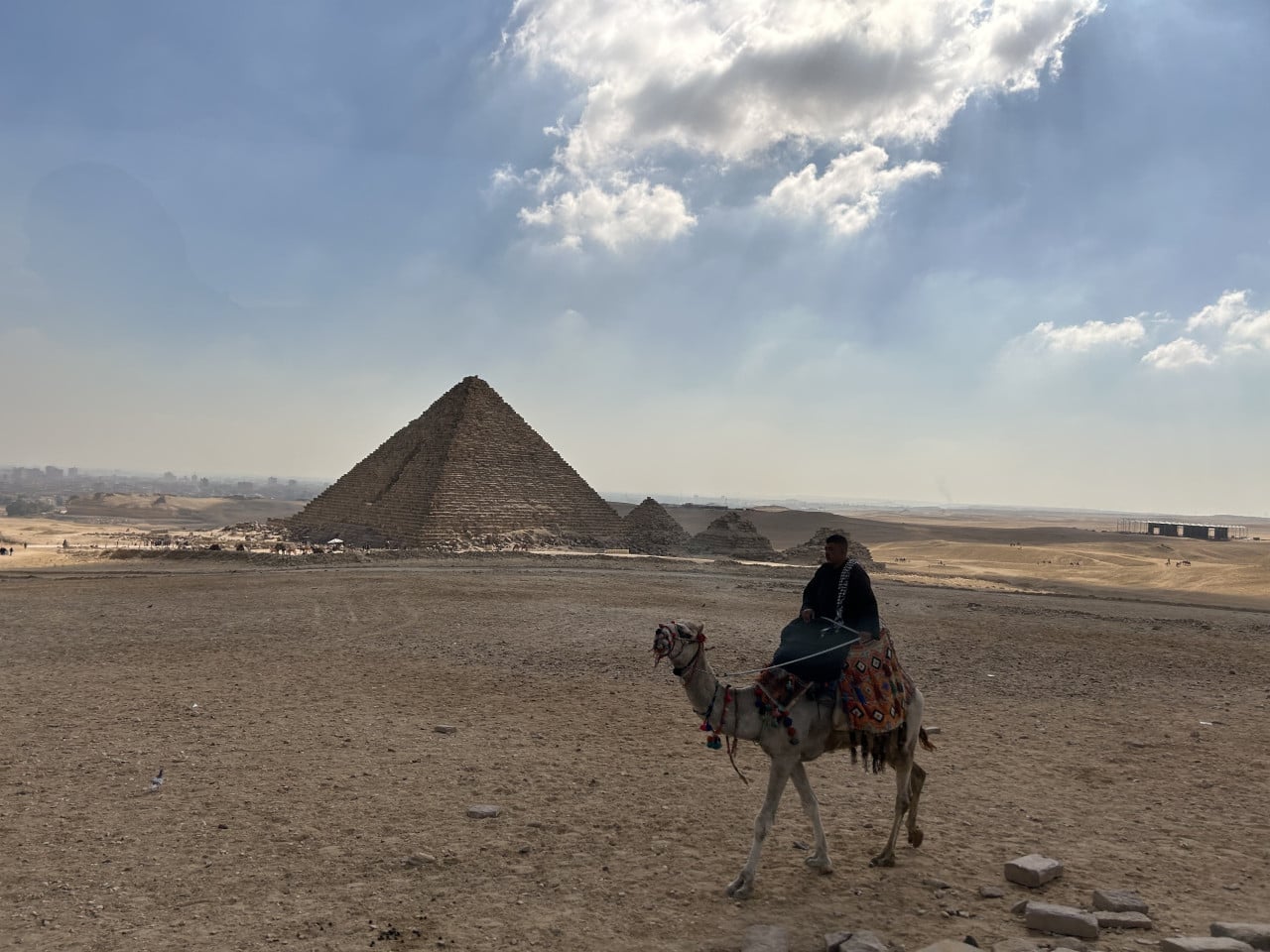
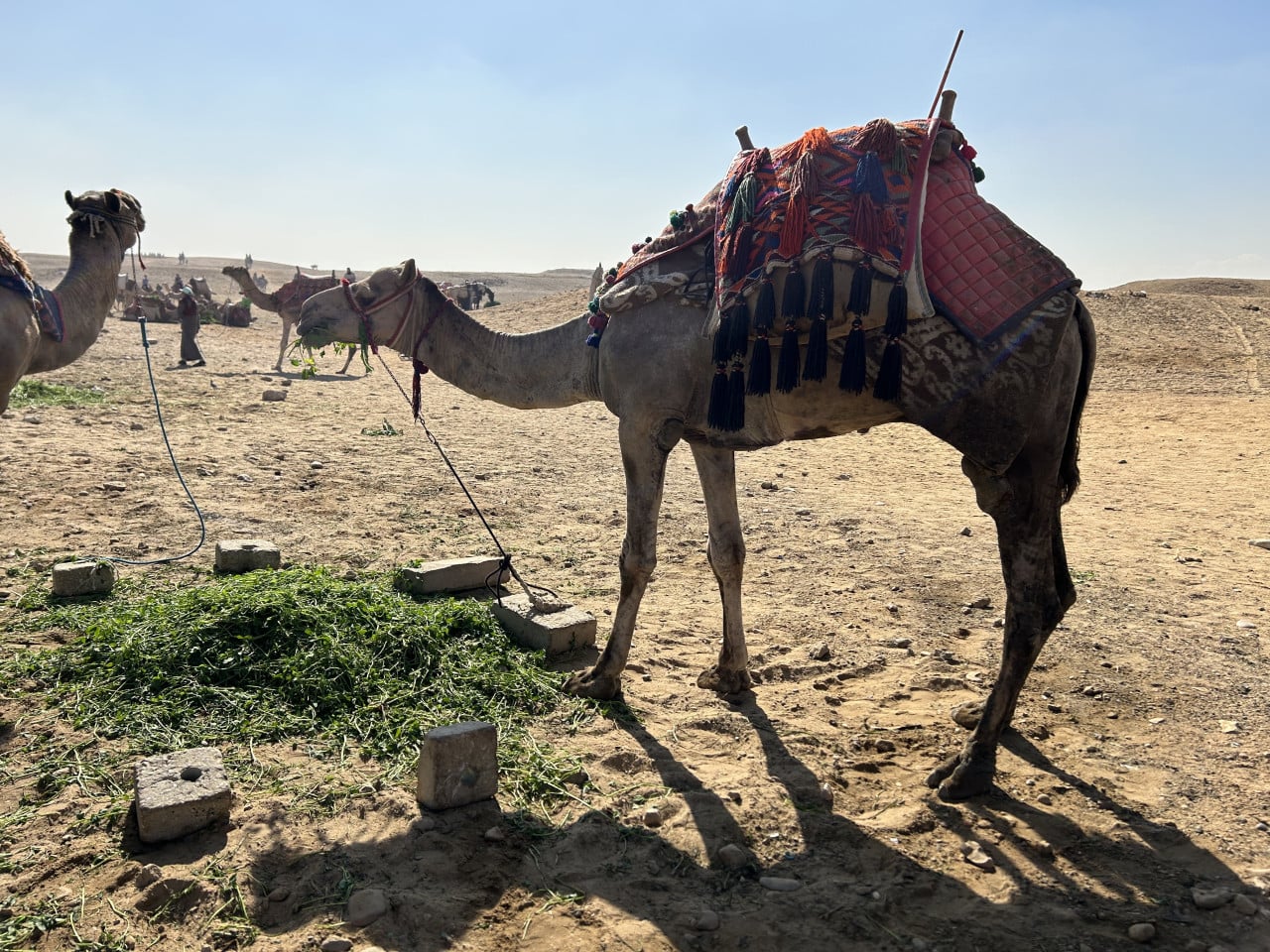
This is where the photographs with camels and pyramids in the background are taken. The camels themselves look beautiful and often have colorful saddles and decorations. Before taking a ride, however, I would again recommend agreeing on the exact price, the length of the route, and whether the return journey is included in the price.
The Sphinx: guardian of the Giza necropolis
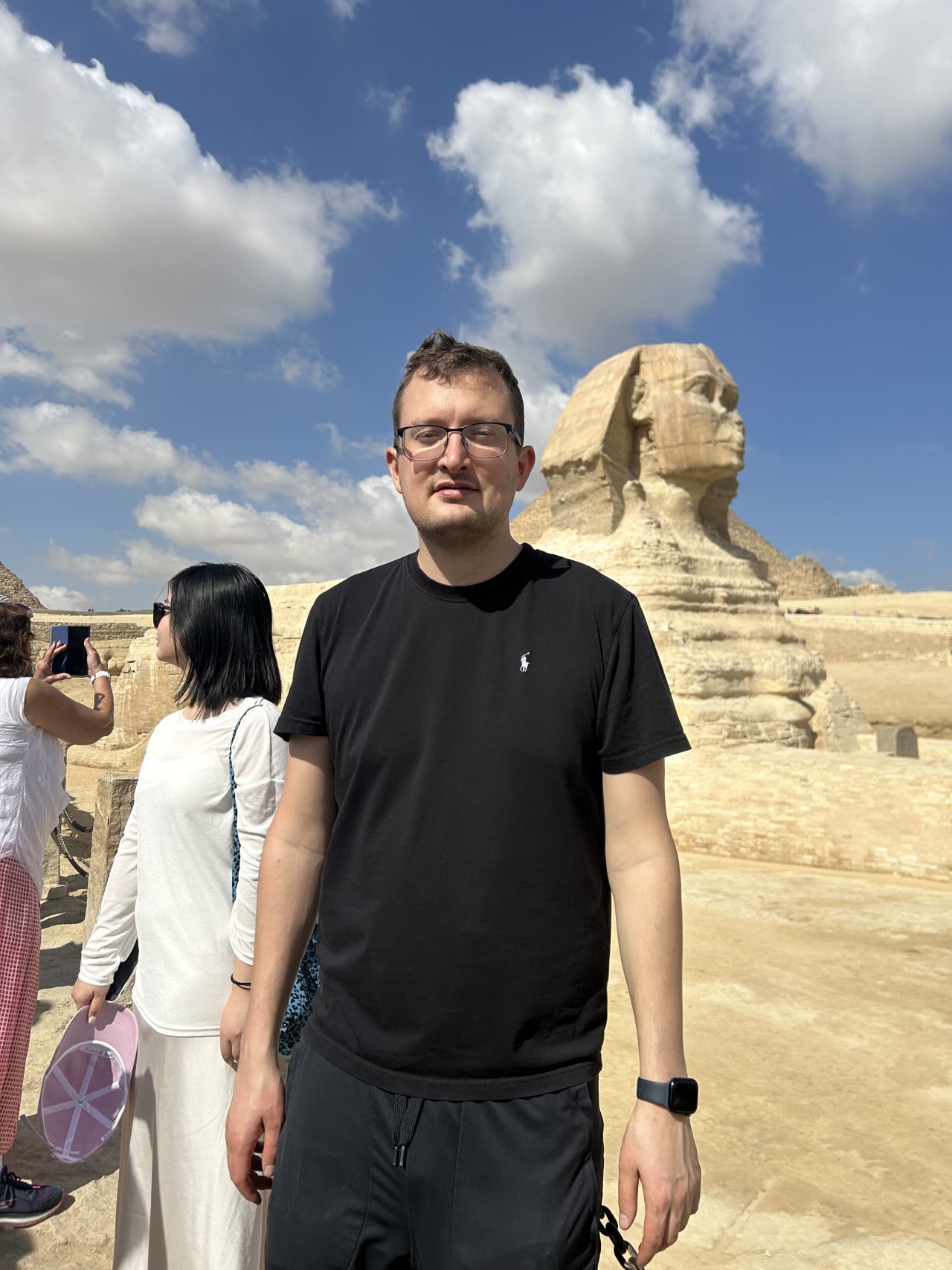
Our next stop was the Great Sphinx.
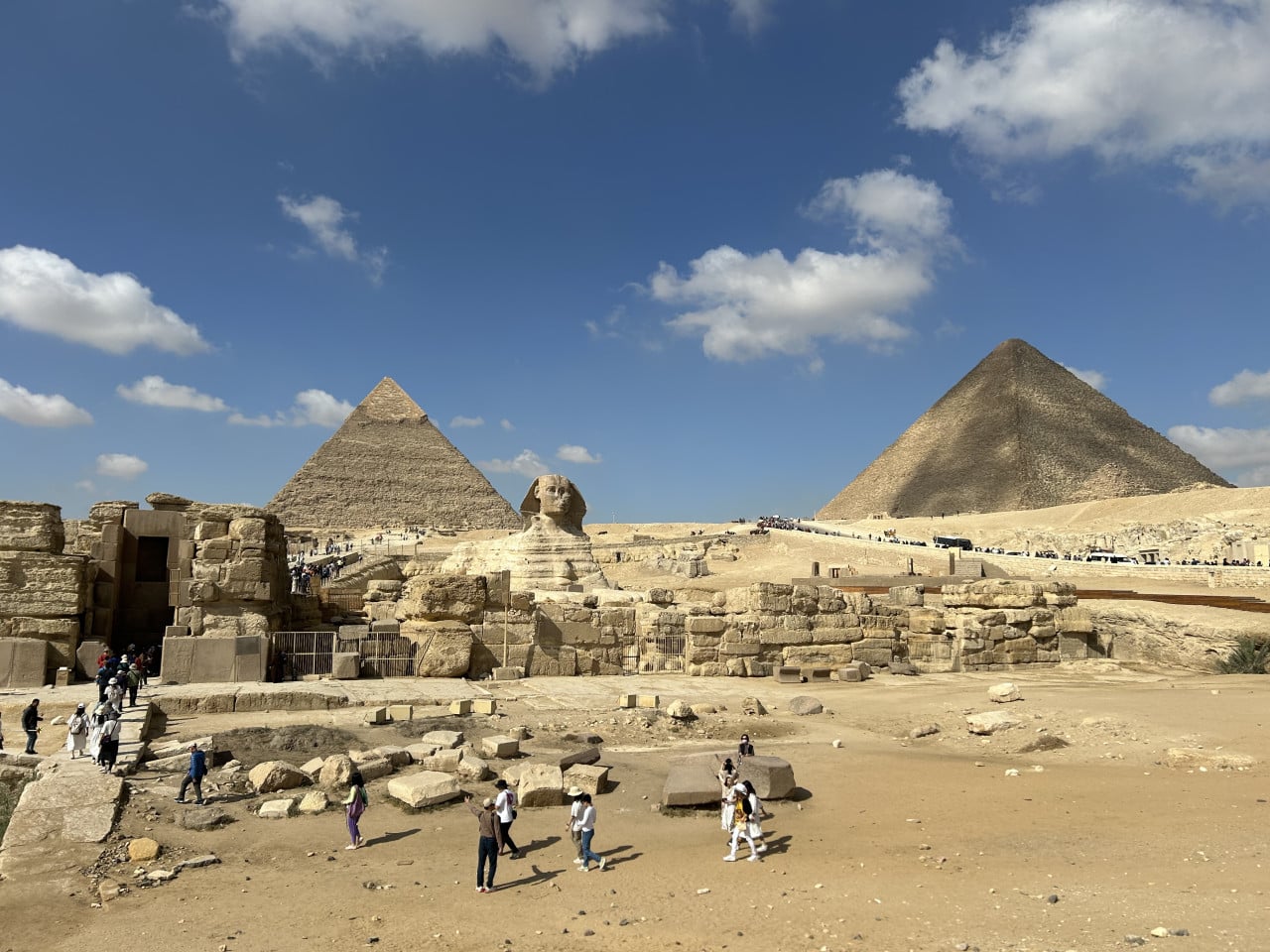
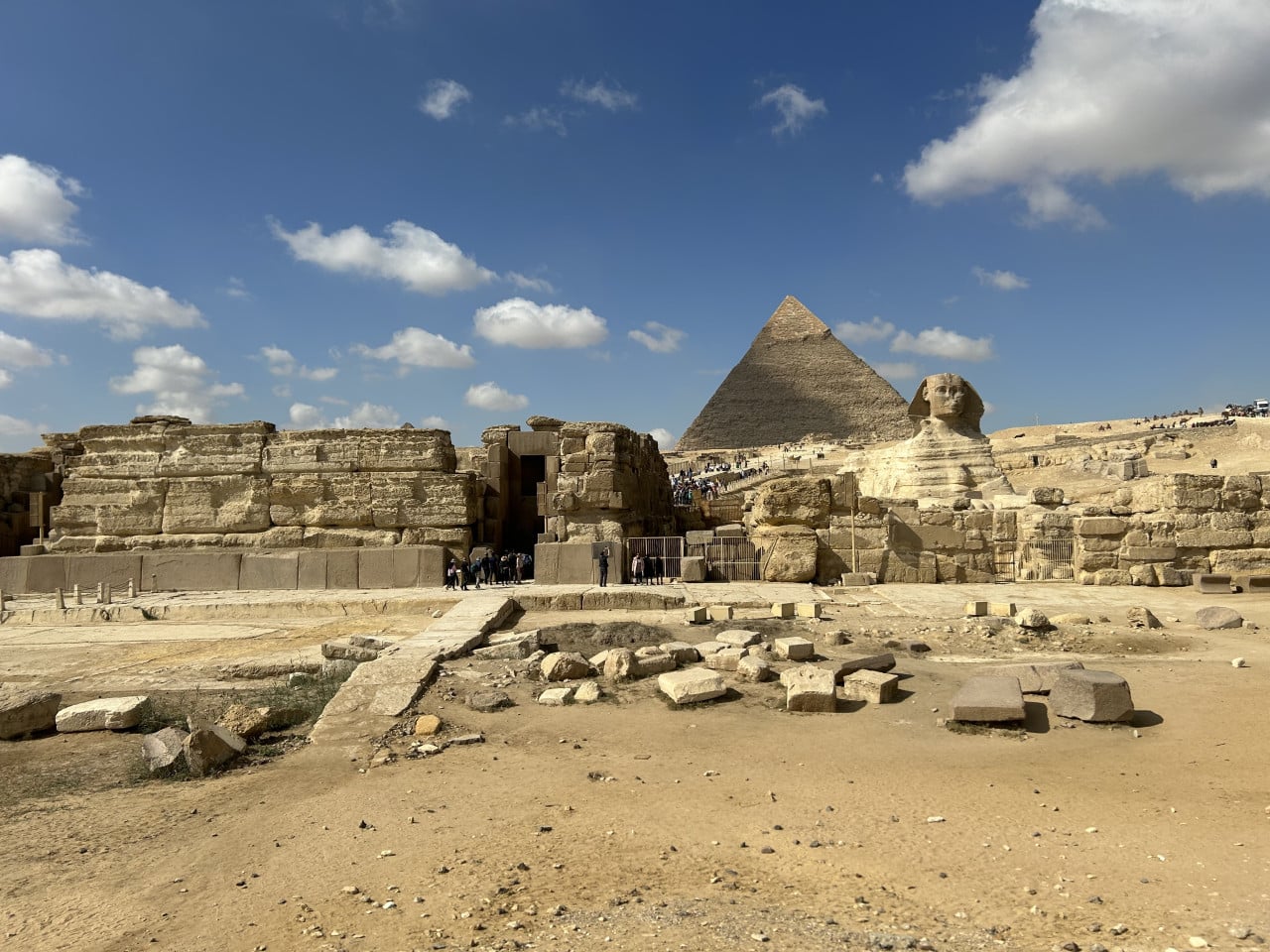
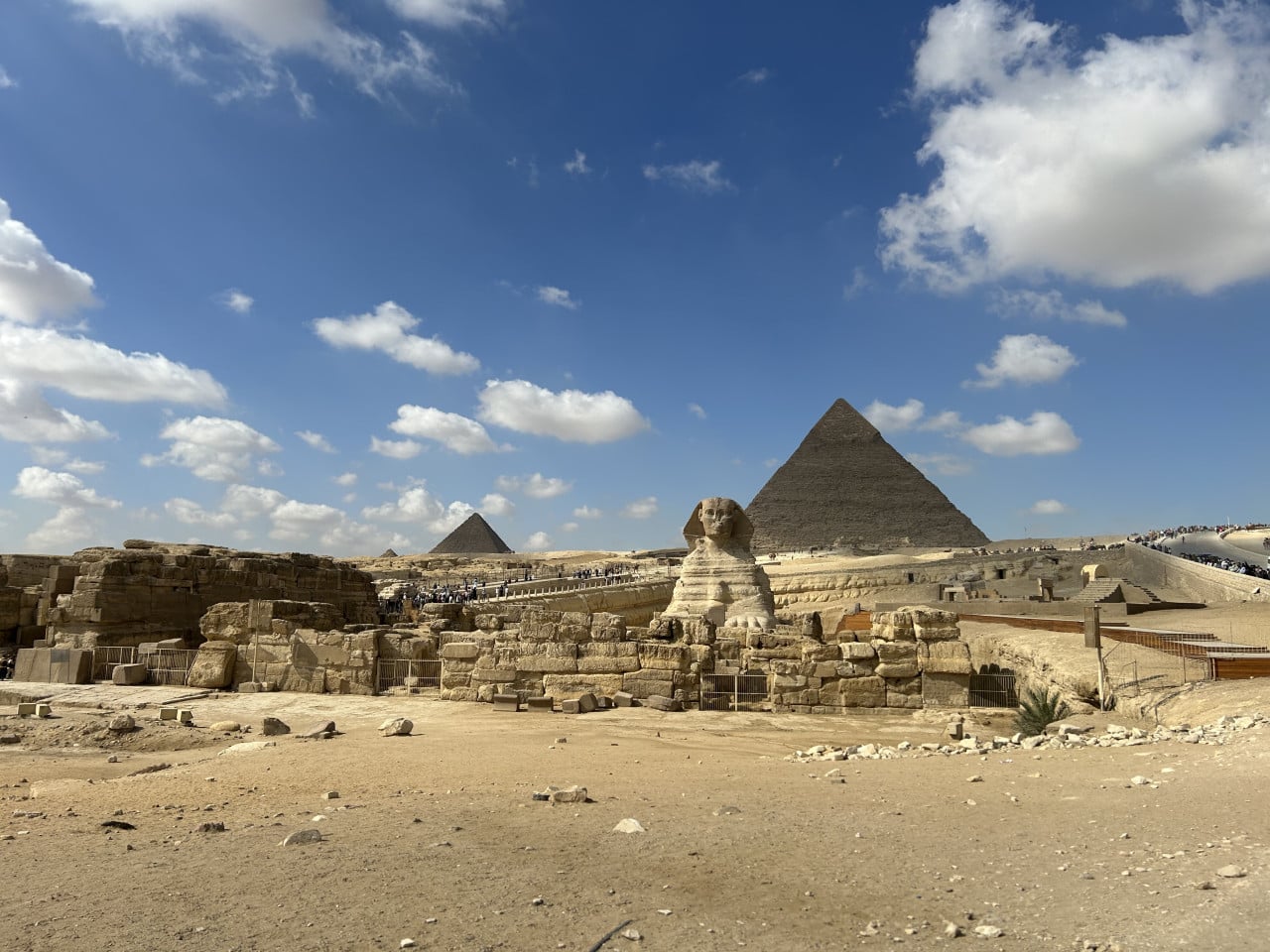
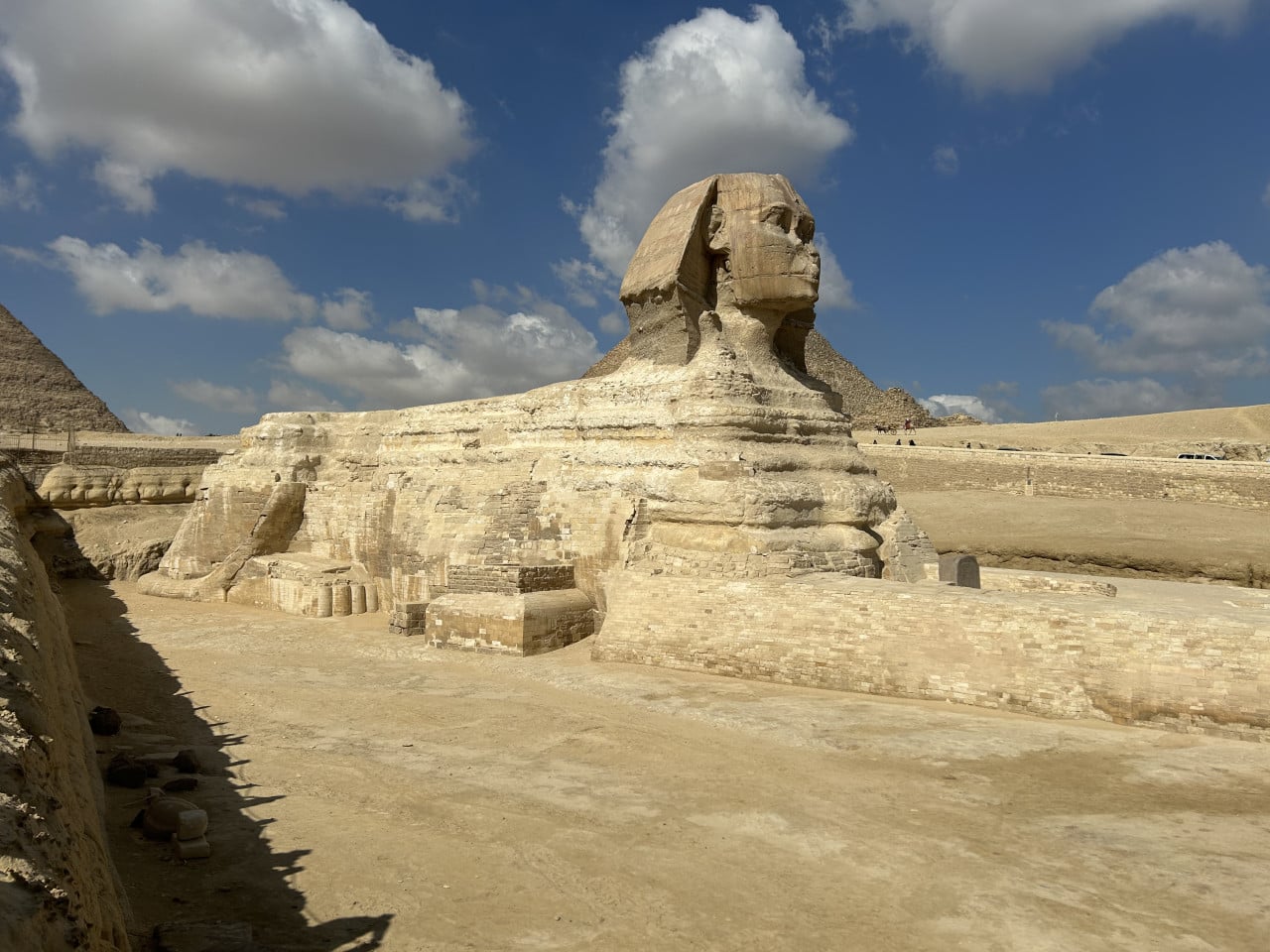
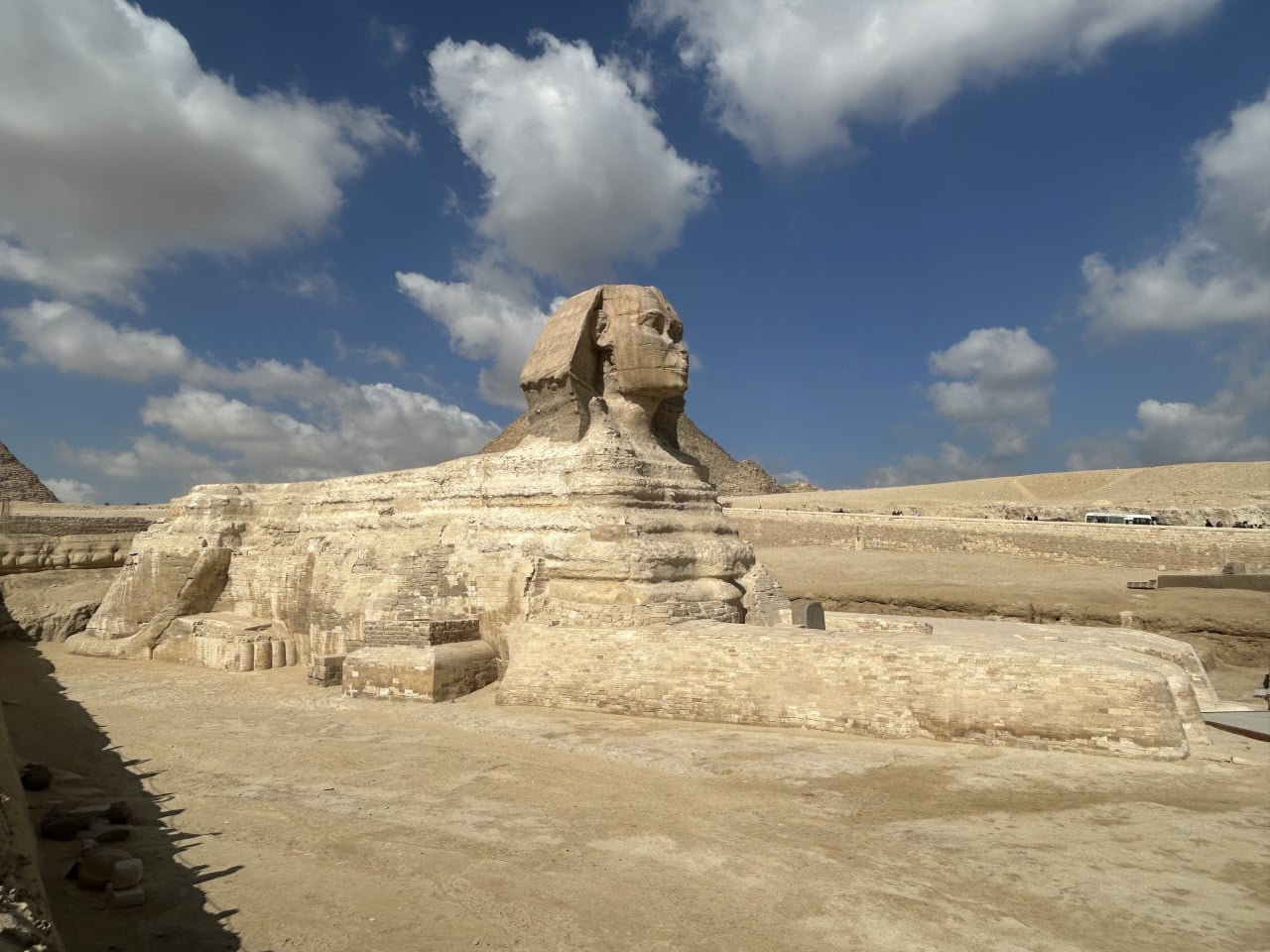
The Sphinx has the body of a lion and a human head and is carved directly from the limestone bedrock. Most archaeological evidence connects it with the ruler Khafre, builder of the second-largest pyramid. It was therefore probably created around the middle of the 26th century BC. It lies directly beside Khafre’s valley temple and the causeway leading to his pyramid. (Egyptian Monuments)
We do not know its exact meaning, but it probably represented the ruler associated with the strength of a lion and served as a symbolic guardian of the sacred space. The Sphinx faces east, toward the rising sun.
When you stand directly in front of it, you may be surprised that its head appears relatively small in proportion to its body. This is partly due to perspective, the differing hardness of the individual limestone layers, and the numerous repairs made to the body over the millennia.
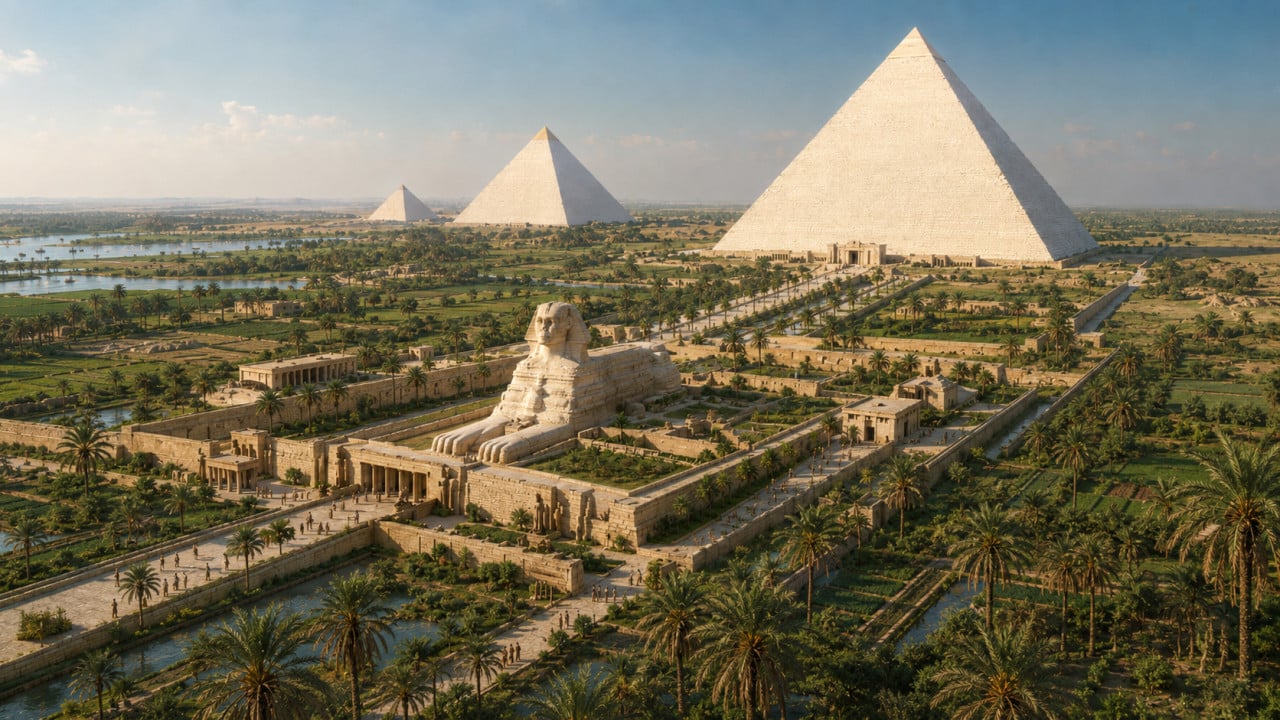
Were there water, palm trees, and greenery around the Sphinx?
Looking at today’s parched landscape, it is difficult to imagine that the area once looked different.
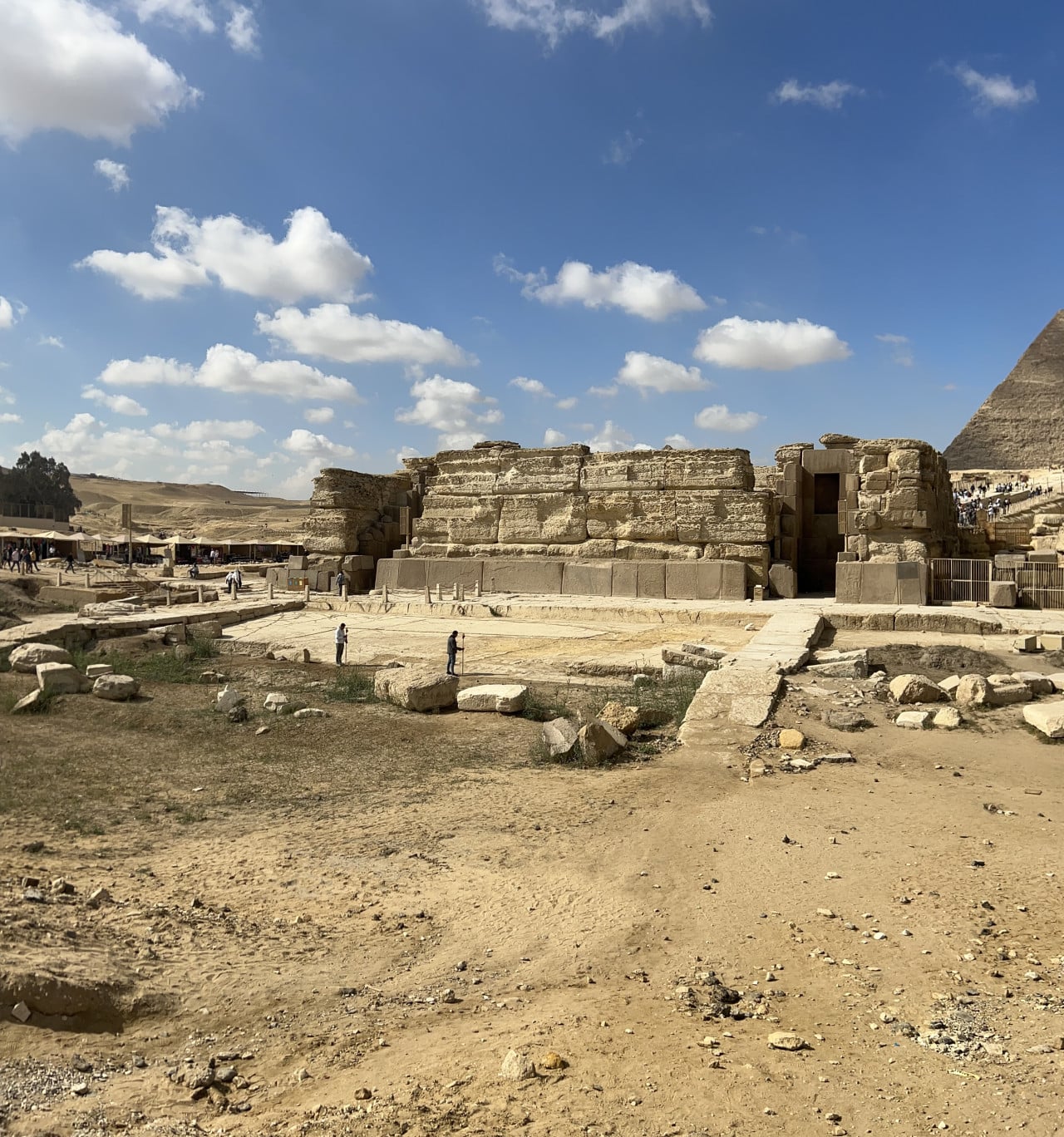
We have no evidence that a decorative moat filled with water and palm trees once surrounded the entire Sphinx. What has been verified, however, is that the eastern edge of the Giza complex lay much closer to the branches of the Nile, harbor basins, and canals that existed at the time. Archaeological research has uncovered traces of harbors near the pyramid complexes, and more recent research has described a now-vanished branch of the Nile that may have facilitated the transportation of people and building materials. (AERA)
On one side, therefore, stood the rocky plateau with the pyramids, while on the other stretched the more fertile Nile floodplain with vegetation, fields, trees, canals, and harbor structures. The entire site probably did not look like a group of isolated monuments in the middle of an endless desert, as we know it today.
What might be hidden beneath today’s houses?
Directly in front of the Sphinx today is the densely built-up Nazlet el-Samman neighborhood. Local people told us that additional structures and archaeological remains may lie beneath some of the houses and have not yet been explored.
I was unable to reliably verify the story about specific property owners who refuse to allow archaeologists onto their land. However, the idea that further parts of the ancient complex lie beneath the modern buildings is entirely plausible.
Part of Khufu’s valley temple and the continuation of his causeway probably lie beneath the present-day village. Limestone walls, basalt slabs, and other remains of ancient structures have been discovered here during sewer excavations and the construction of modern houses. However, more extensive excavations are extraordinarily difficult because of the dense development. (Giza Media)
It is therefore quite possible that Giza still conceals many things we know nothing about.
Lunch with a view of the pyramids
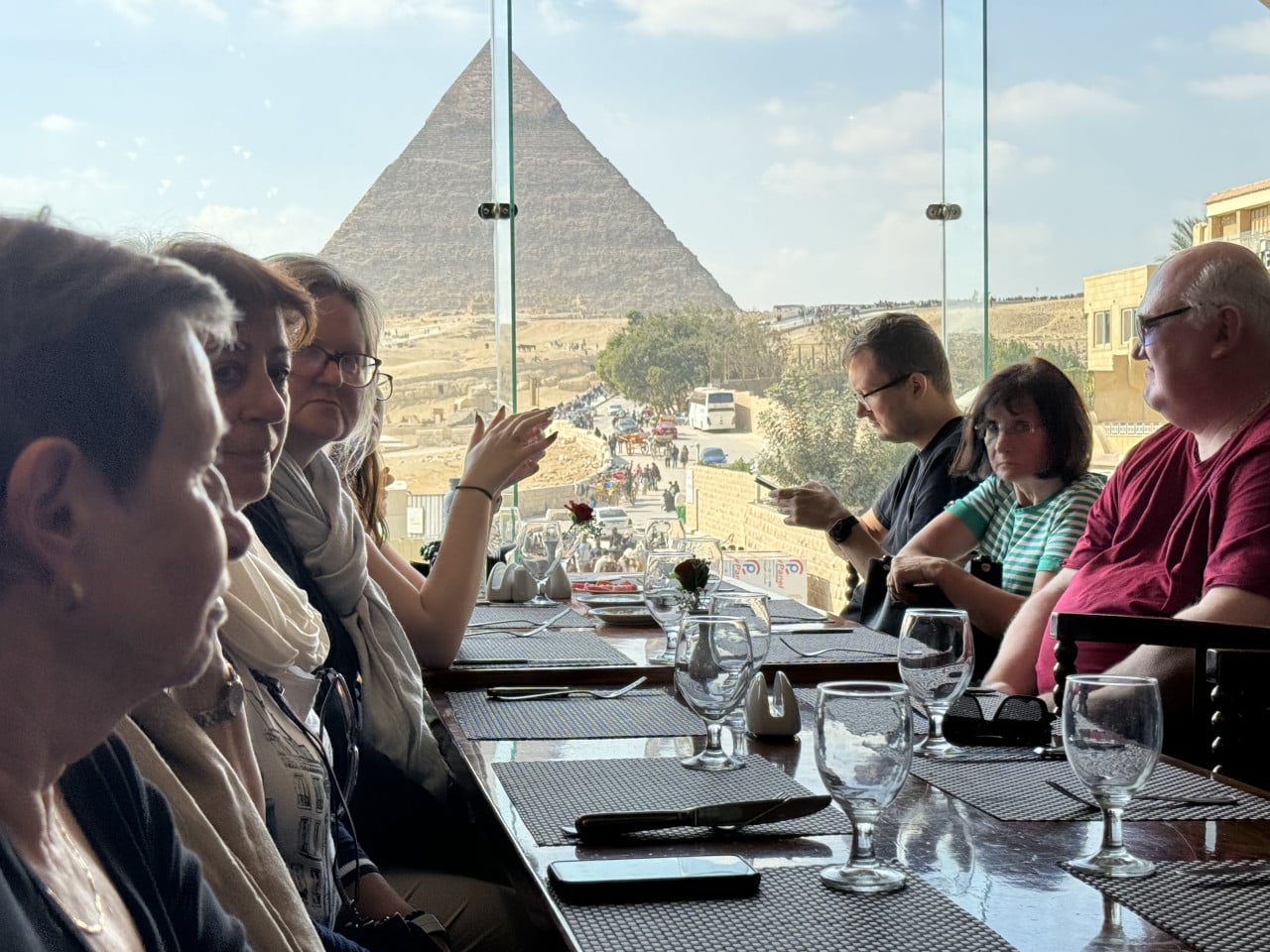
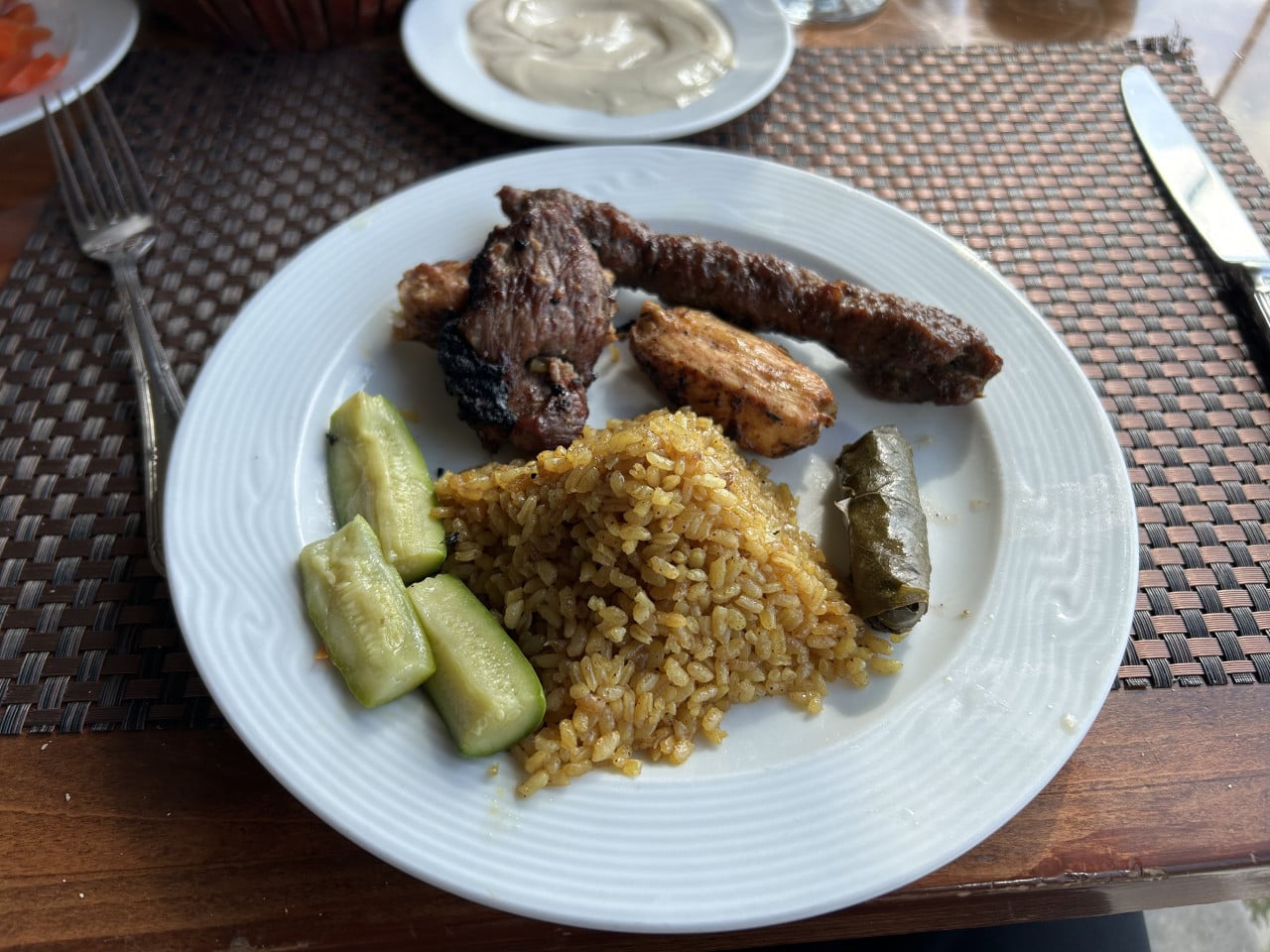
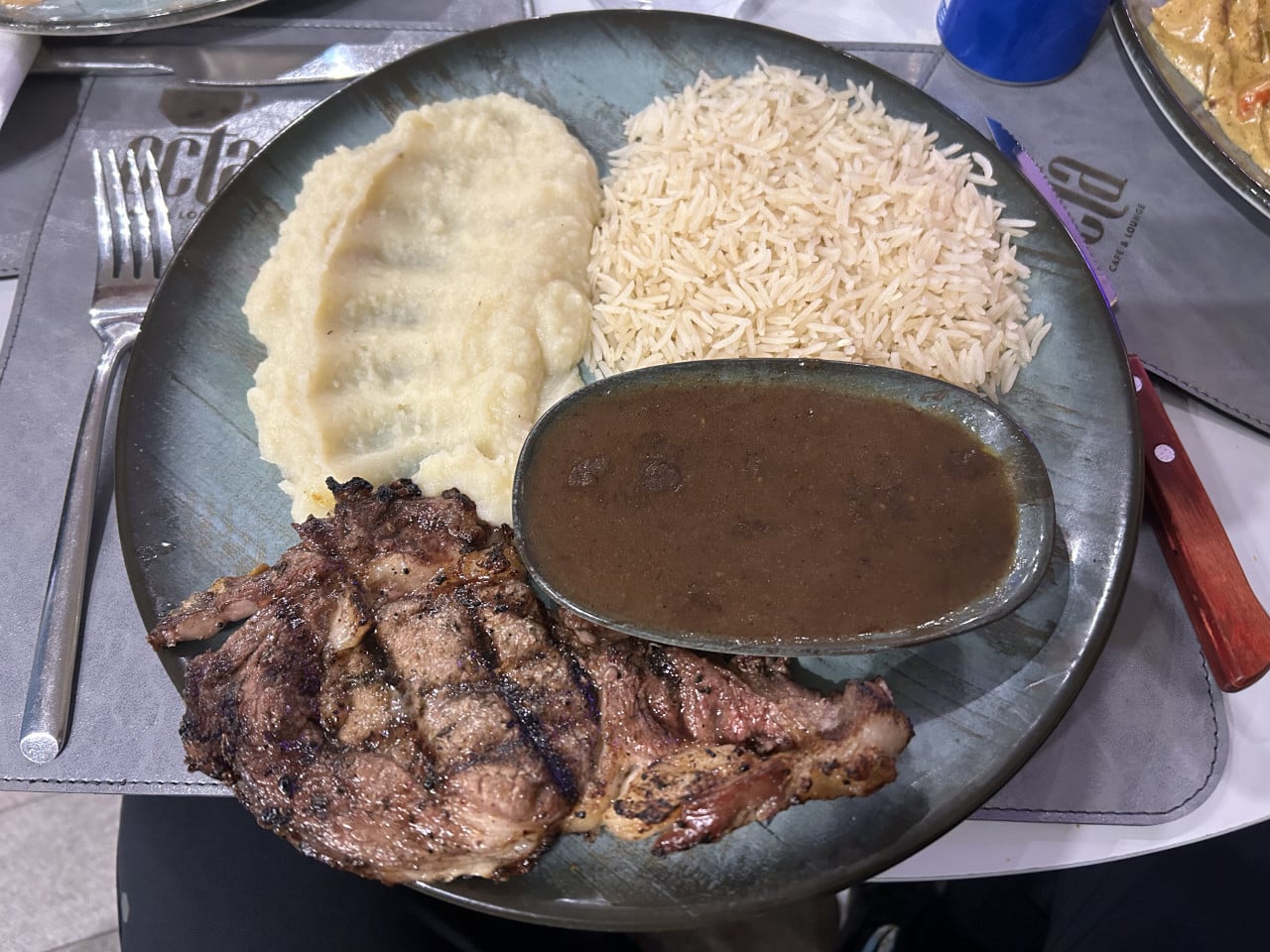
After visiting the Sphinx, we headed to lunch. There are many restaurants in the area, and some offer truly beautiful views of the pyramids.
Sitting at a table, eating, and looking at a pyramid several thousand years old is something you never really tire of. For a moment, you stop noticing the noise of the street, the vendors, and the crowds of visitors, and simply look.
How papyrus is made
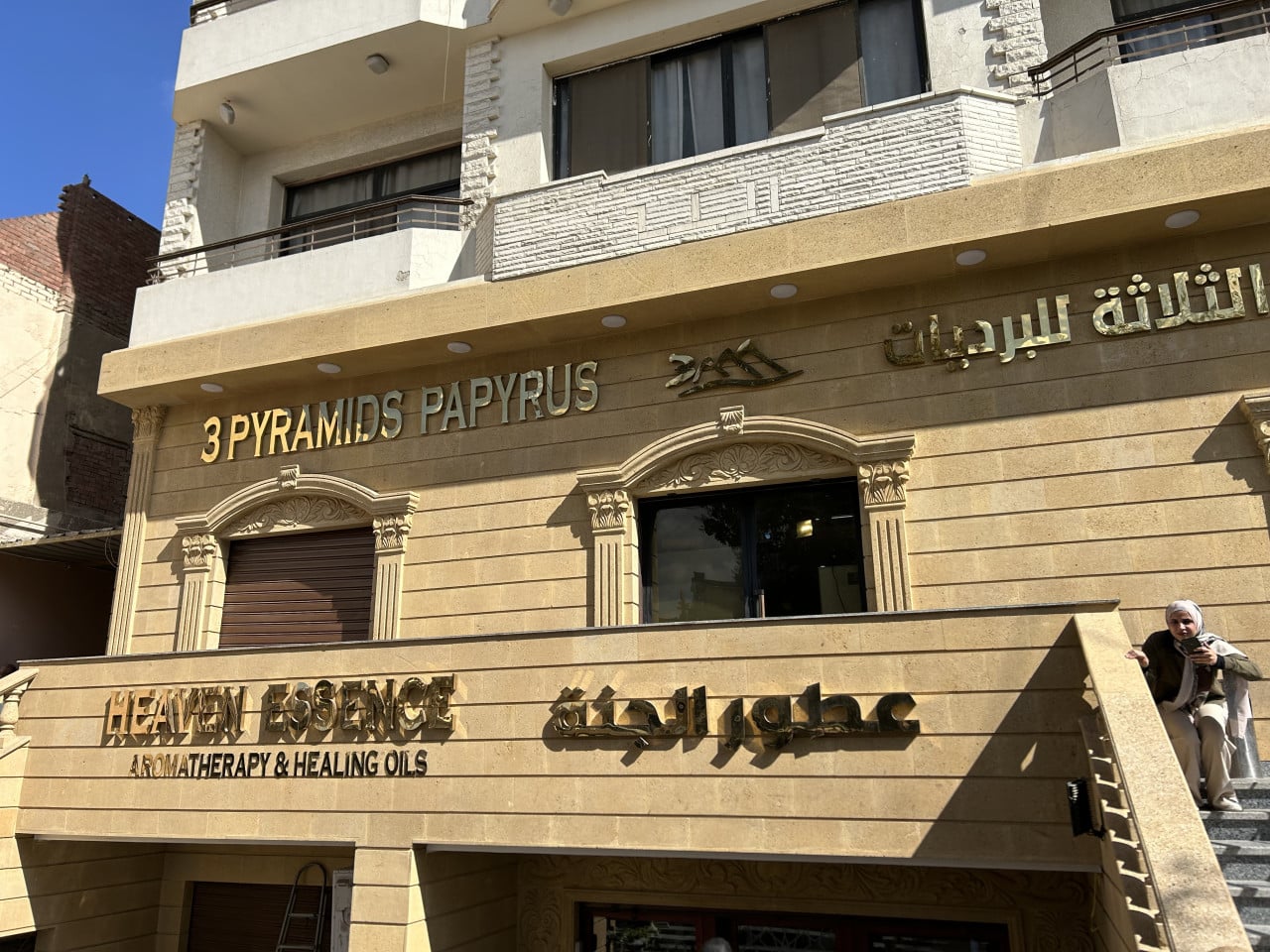
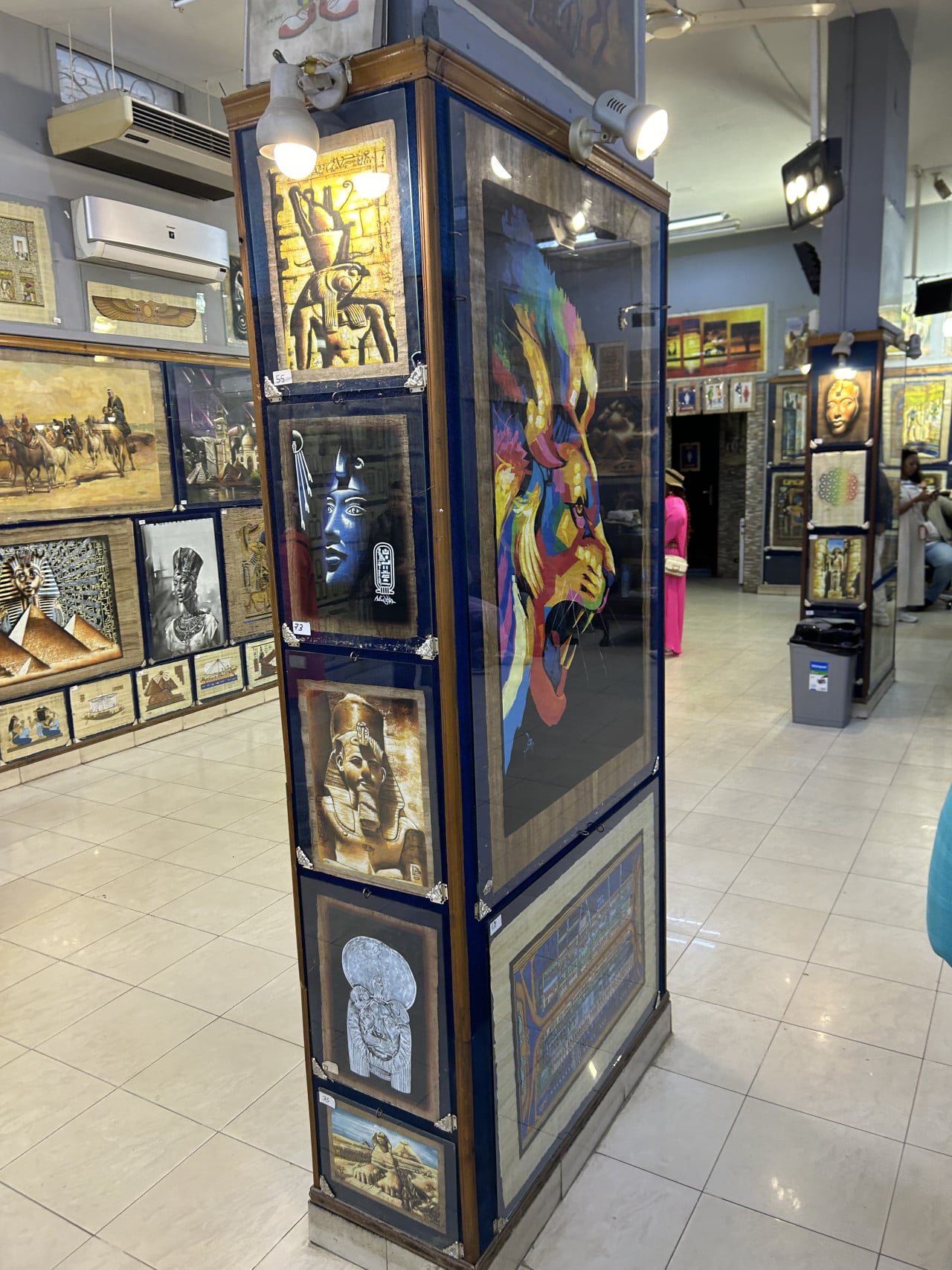
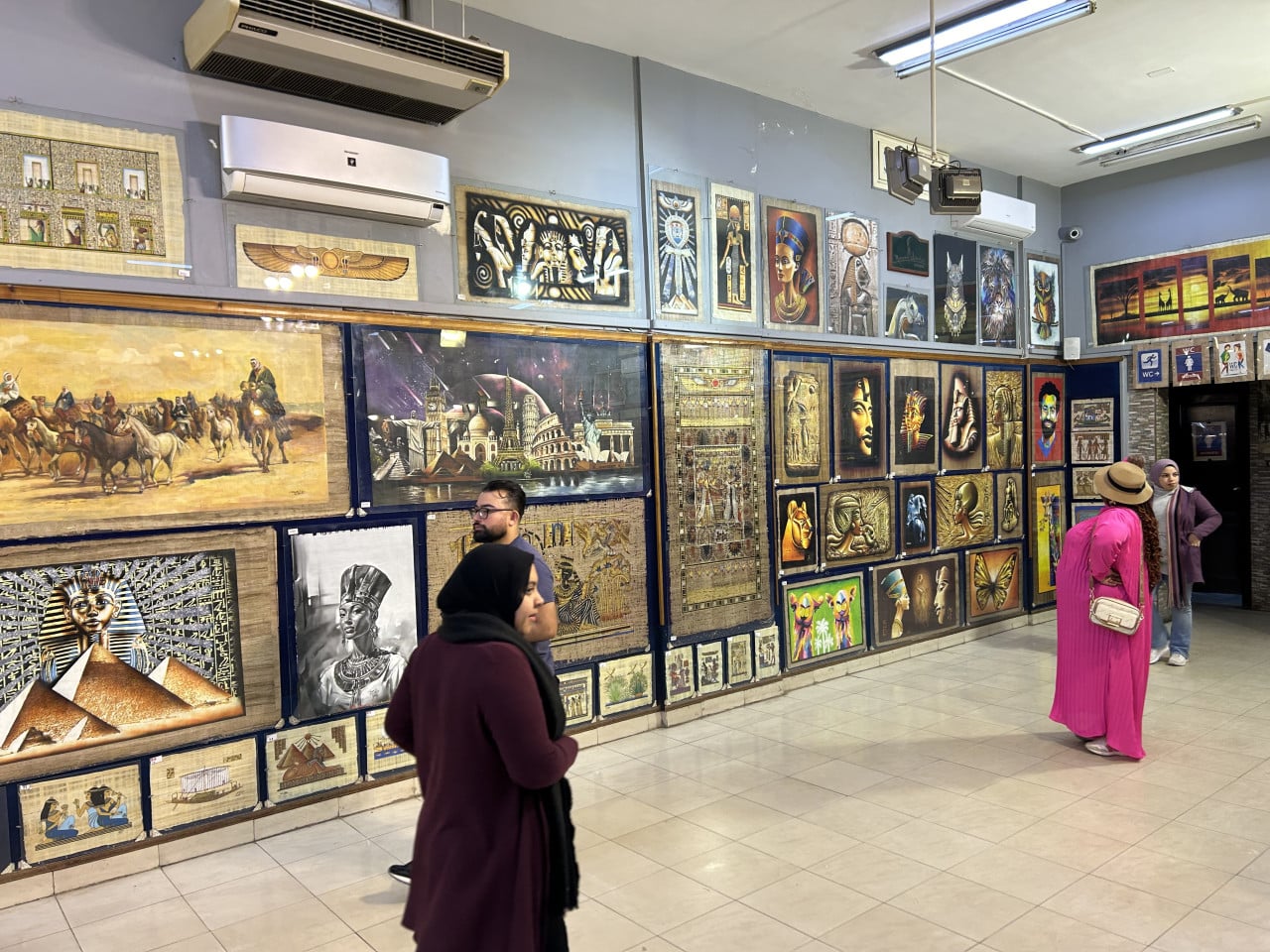
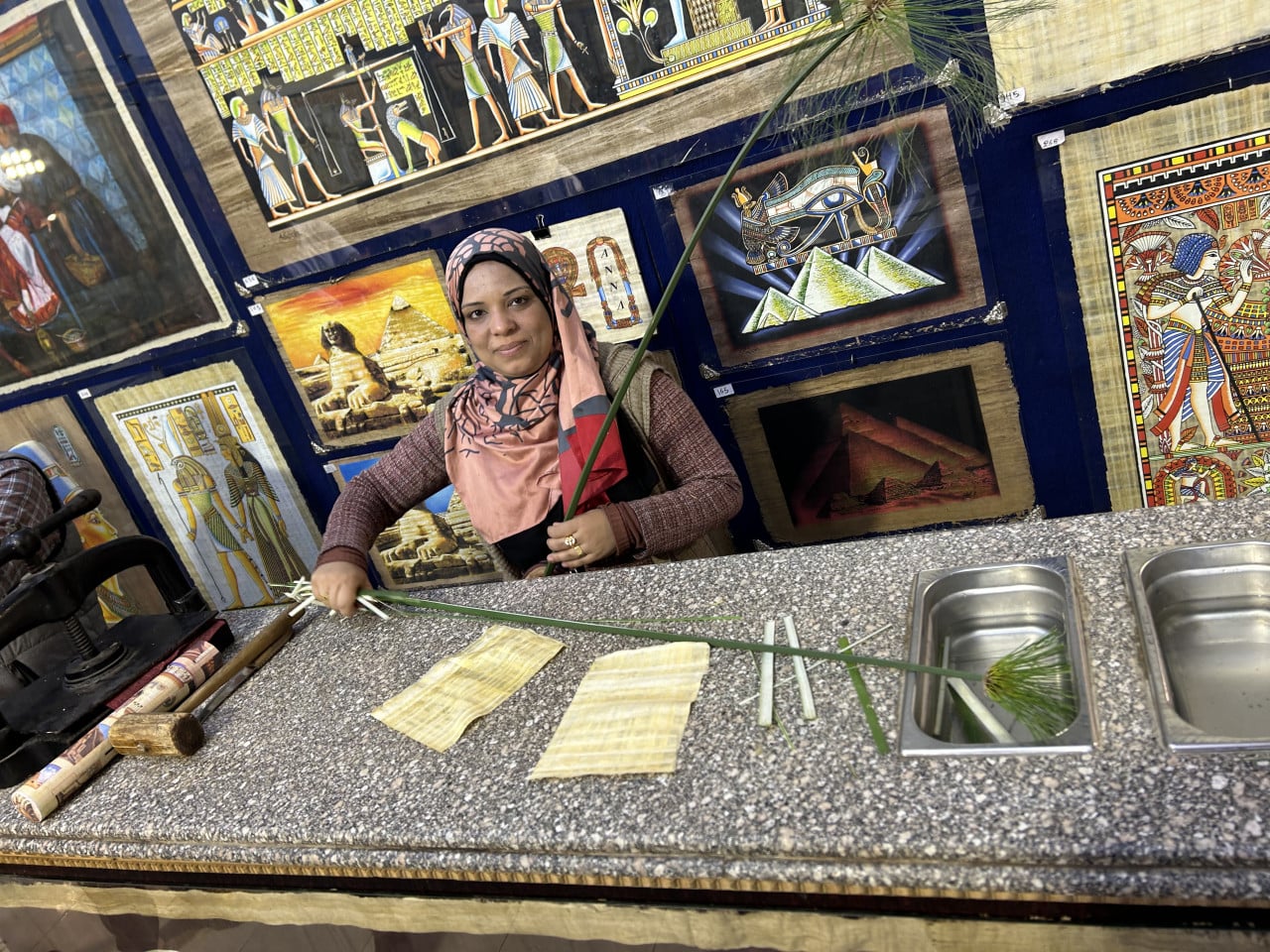
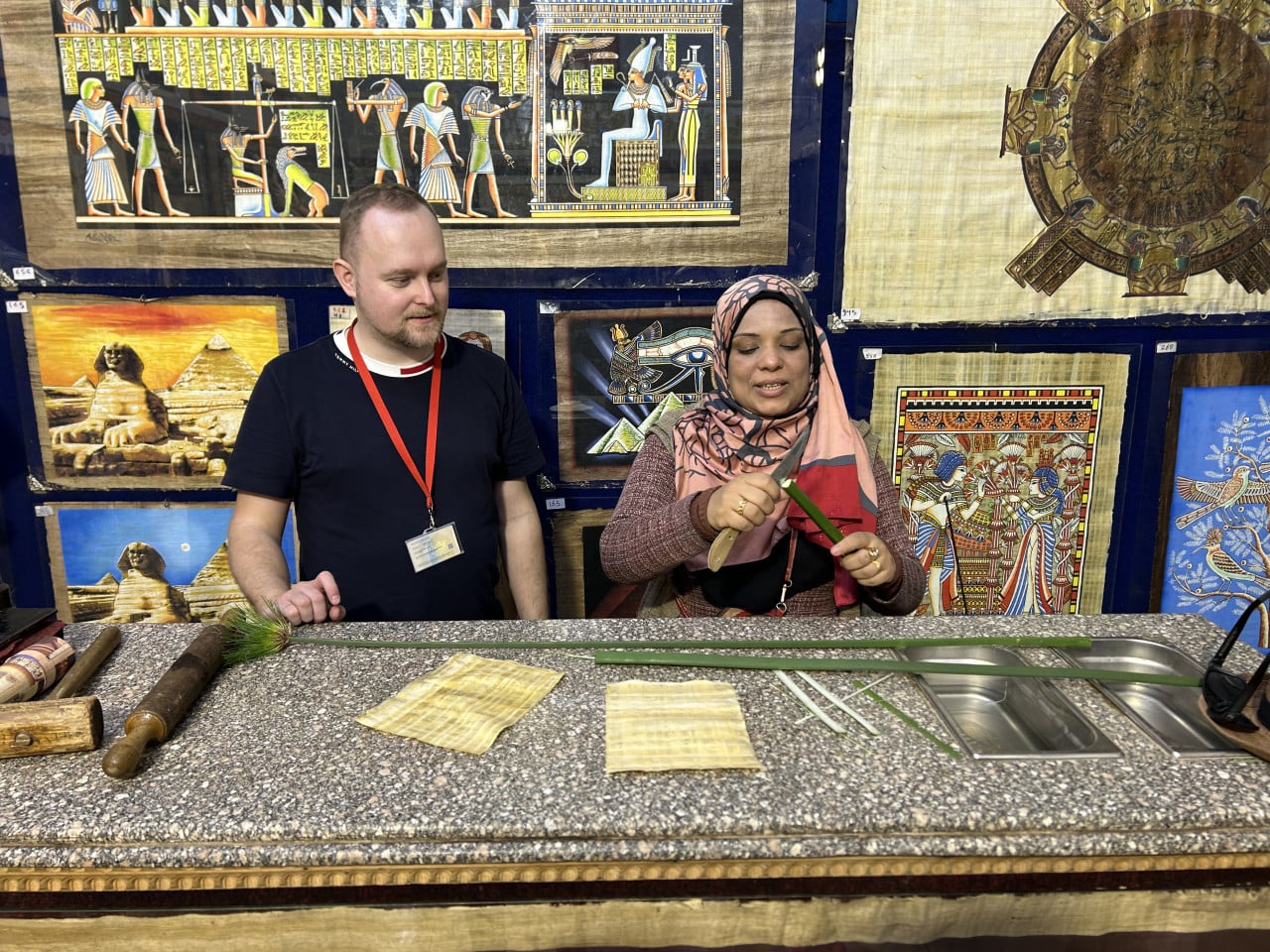
There are also several shops selling papyrus, perfumes, and souvenirs around the pyramids. We visited 3 Pyramids Papyrus, where they showed us the traditional method of processing papyrus.
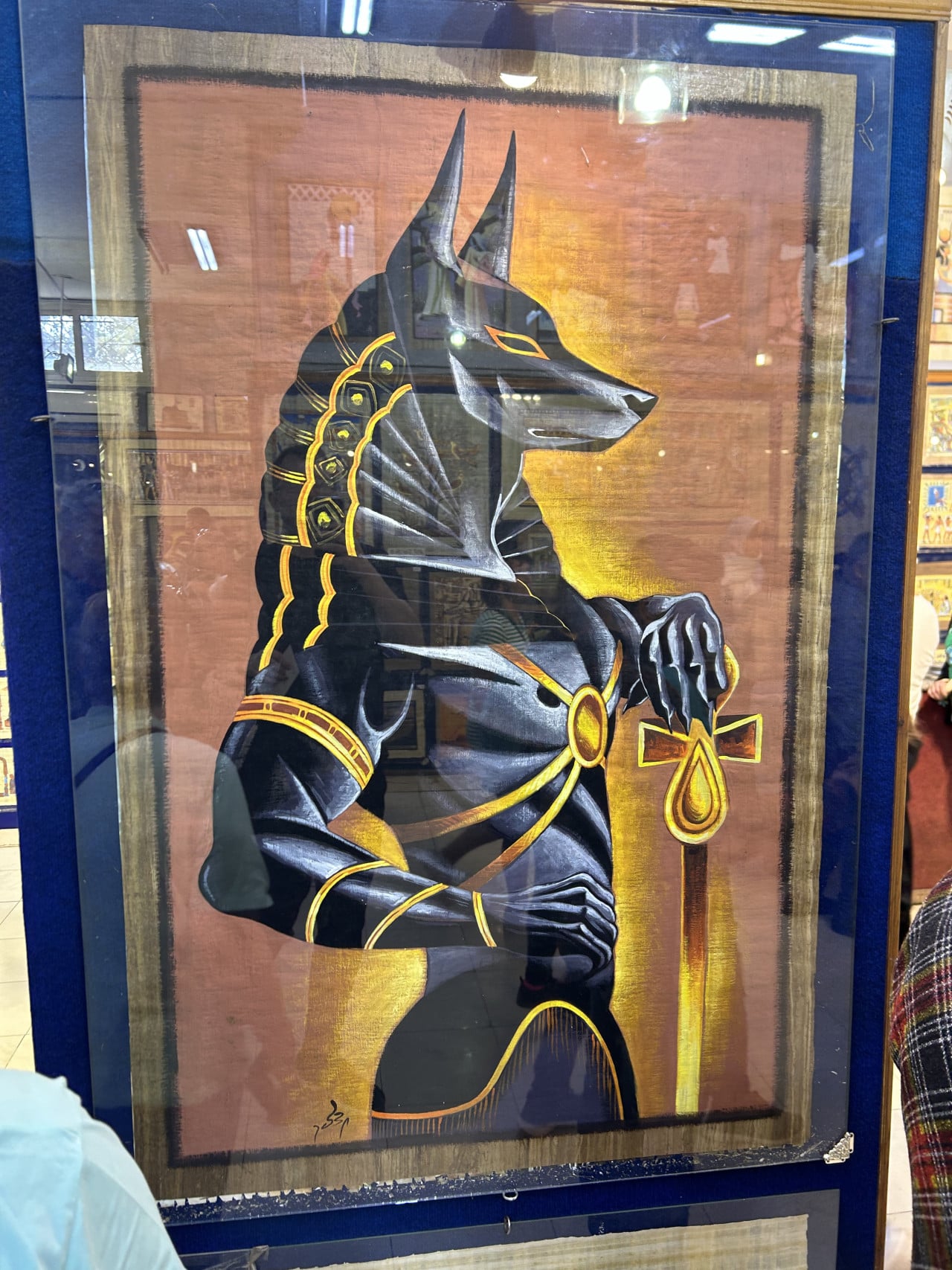
The papyrus stalk is cut into thin strips, which are soaked, laid crosswise over one another, and then pressed. The plant’s juices help bind the individual layers together, and once dried, they form a strong material that can be painted or written on.
Of course, it is primarily a tourist shop, and you should expect the demonstration to be followed by an offer to buy paintings. However, I liked some of the designs and eventually bought one papyrus.
The old Egyptian Museum in Tahrir Square
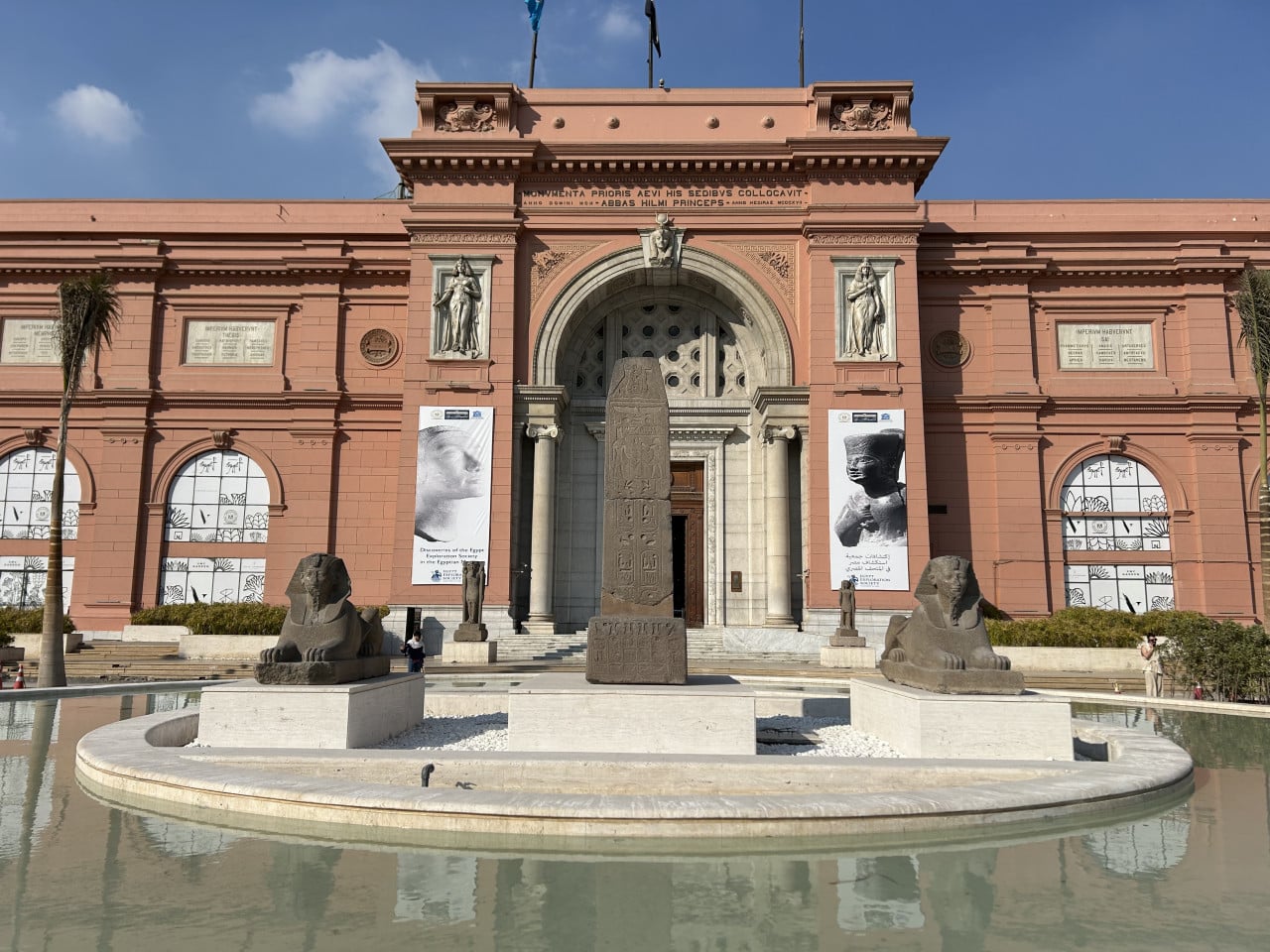
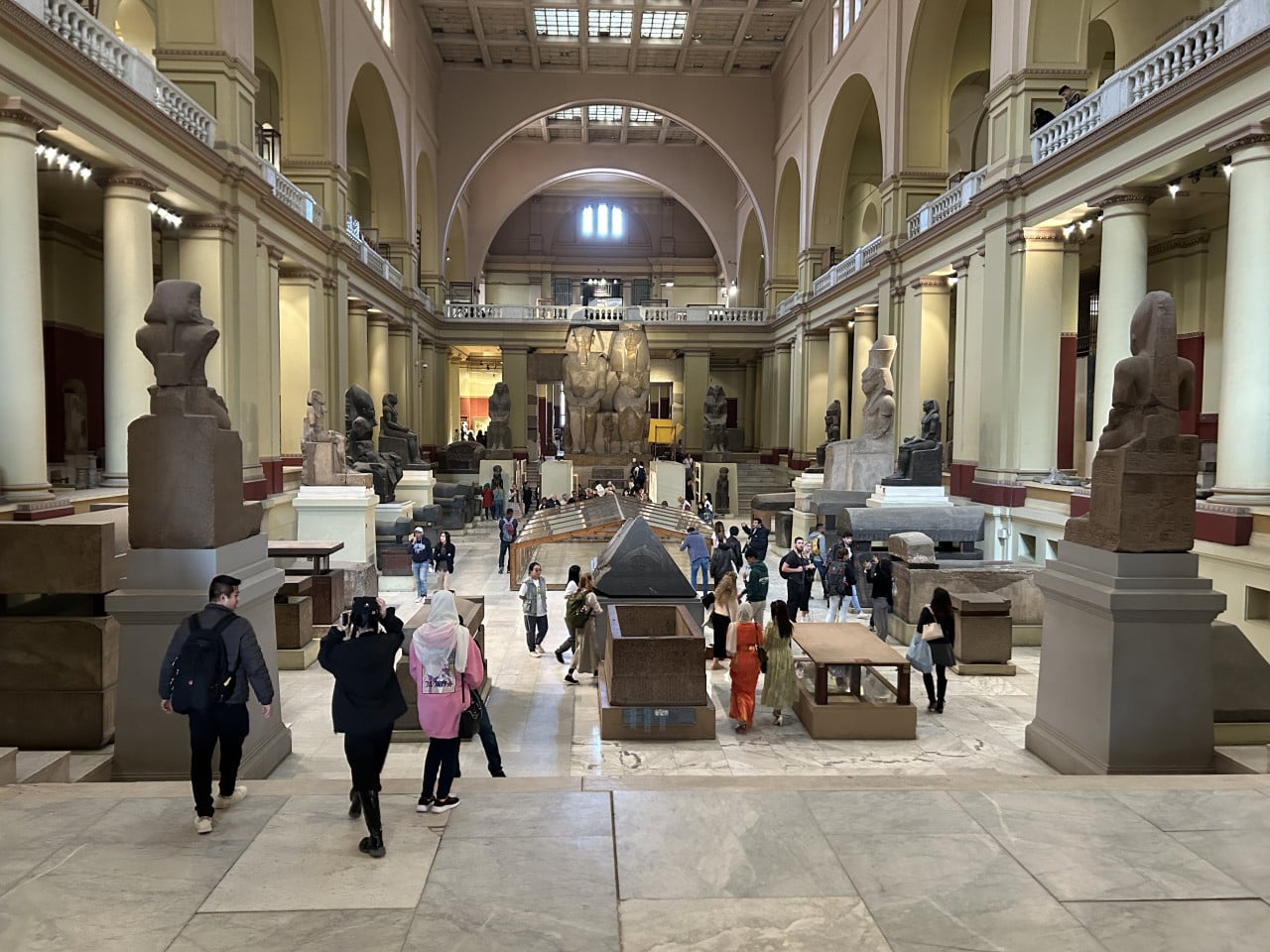
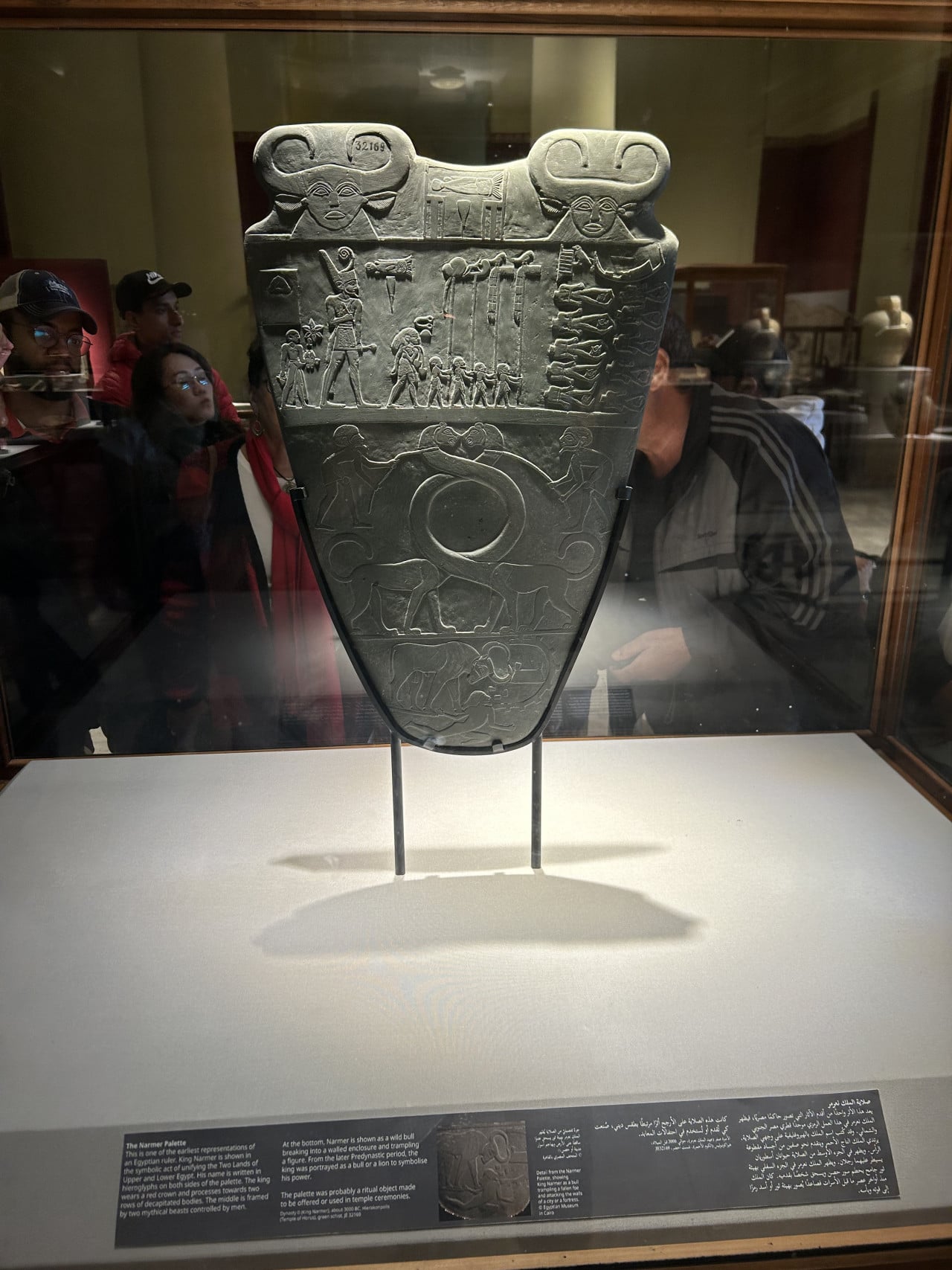
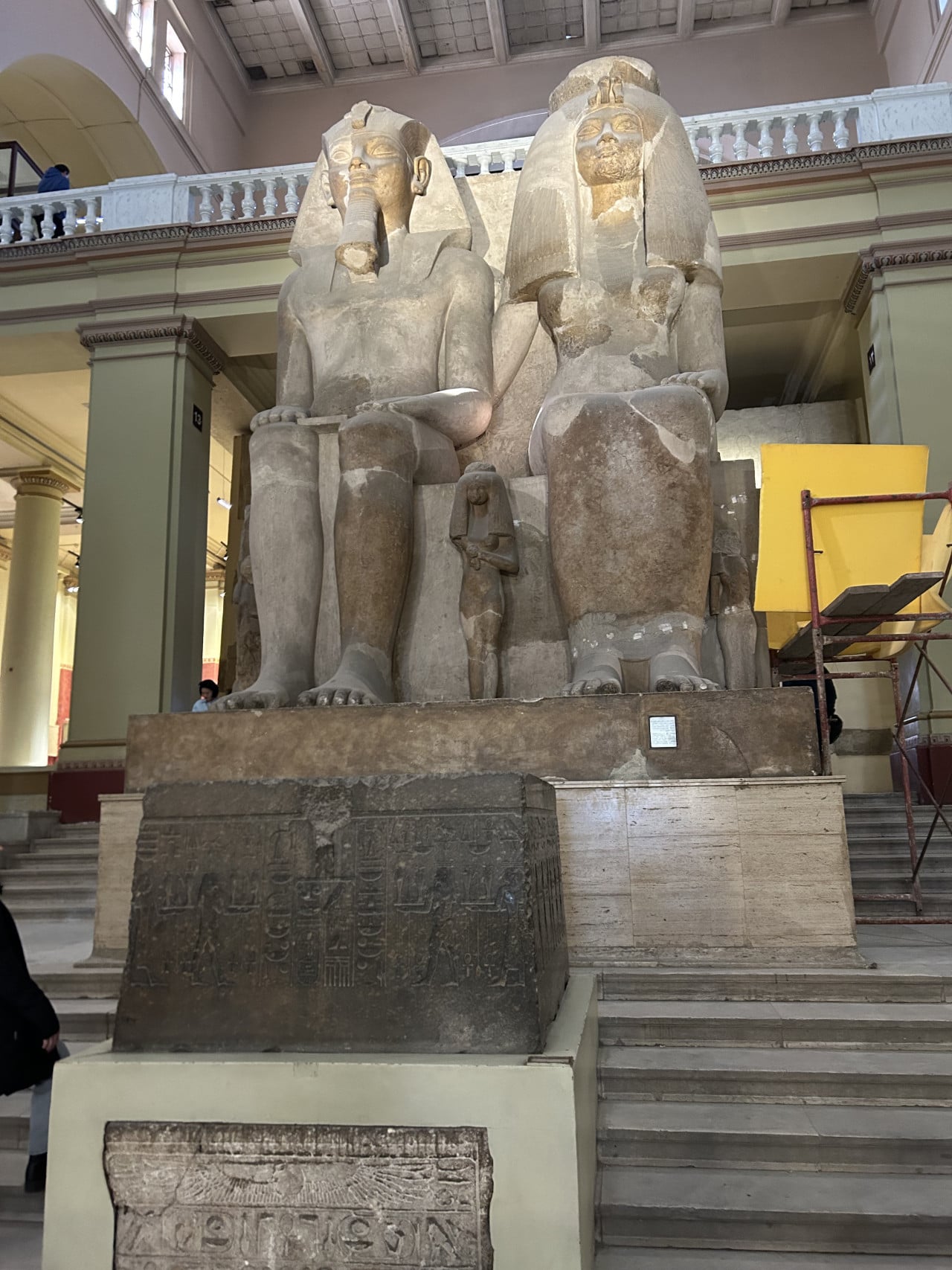
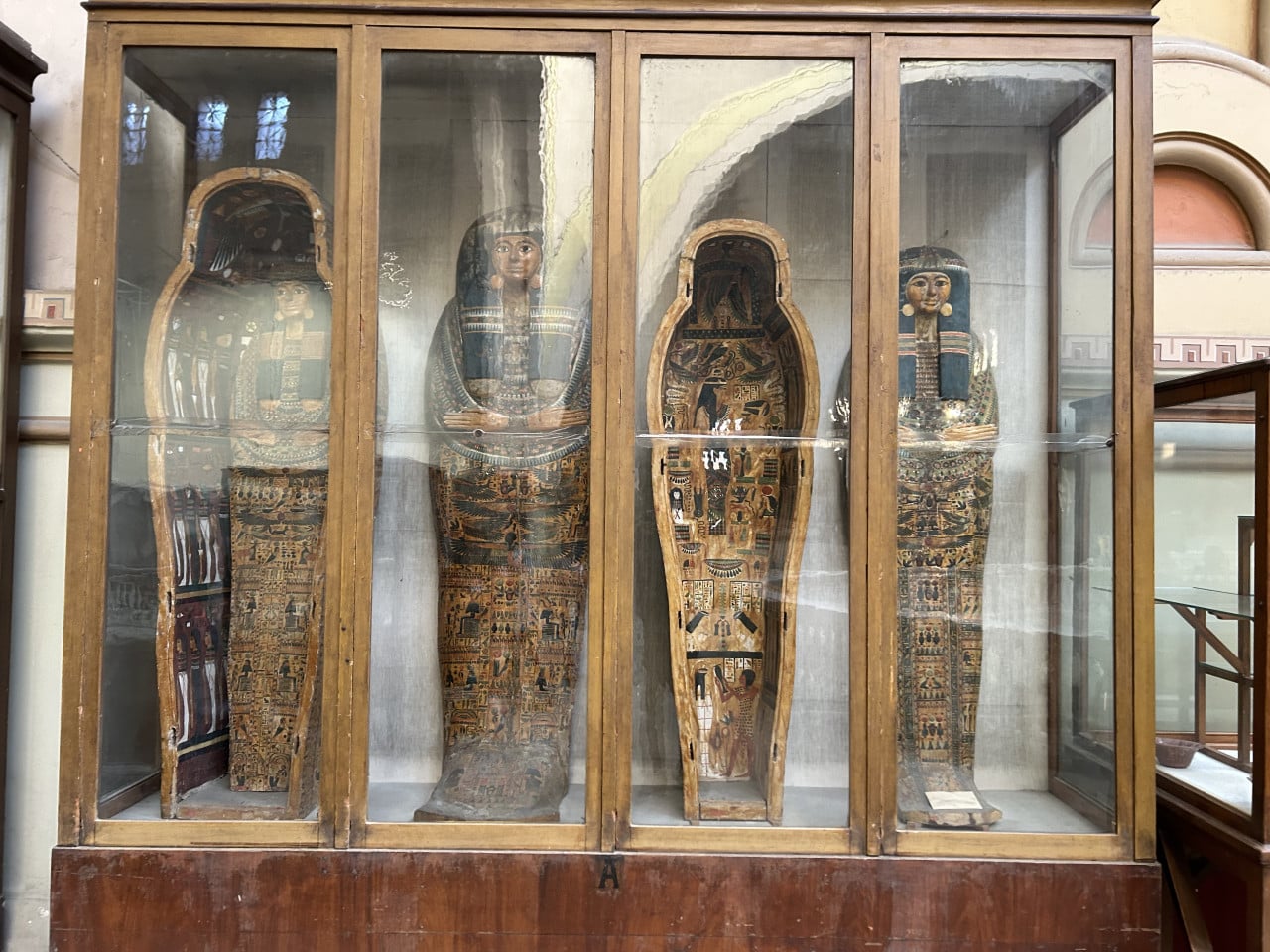
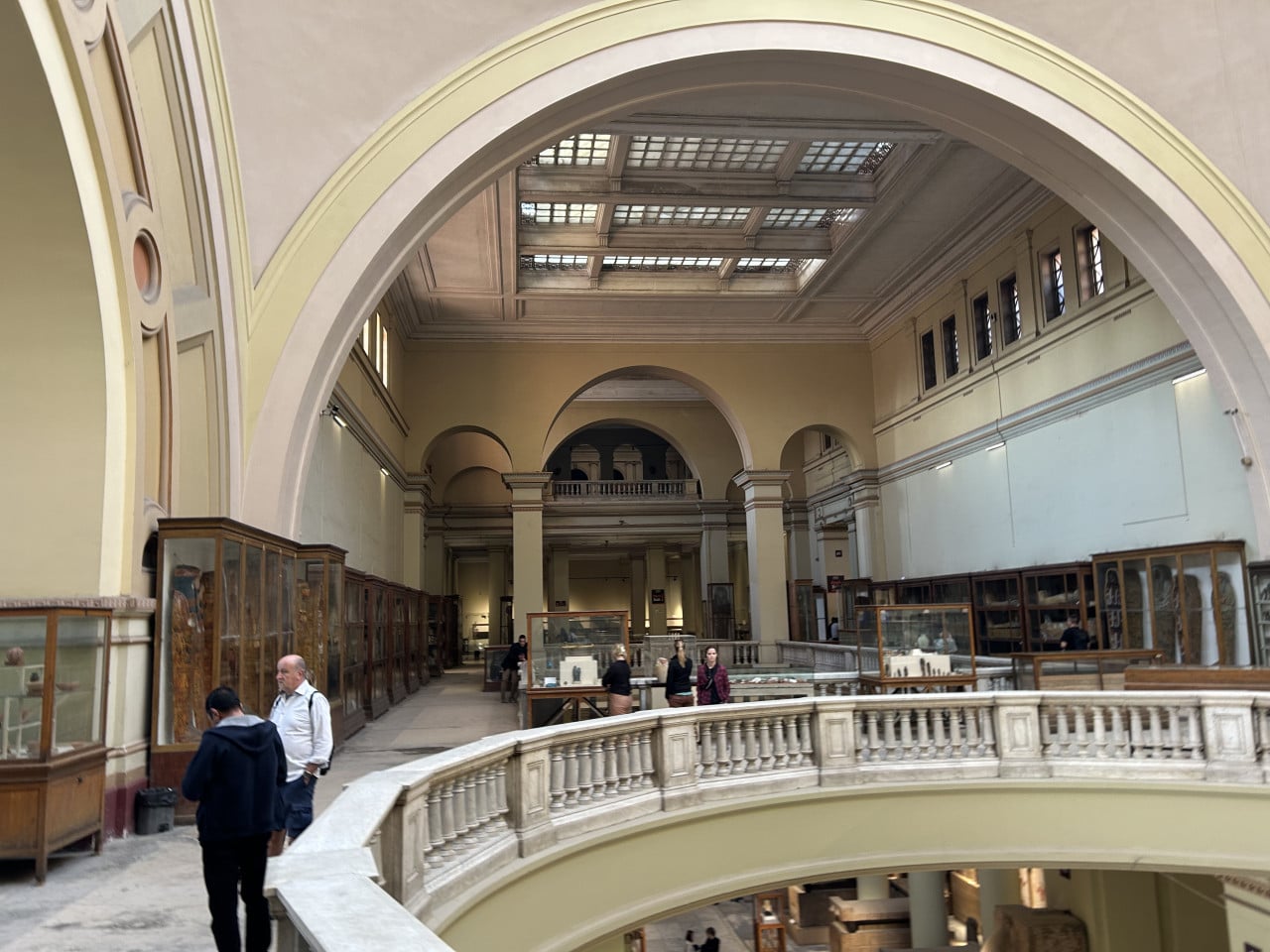
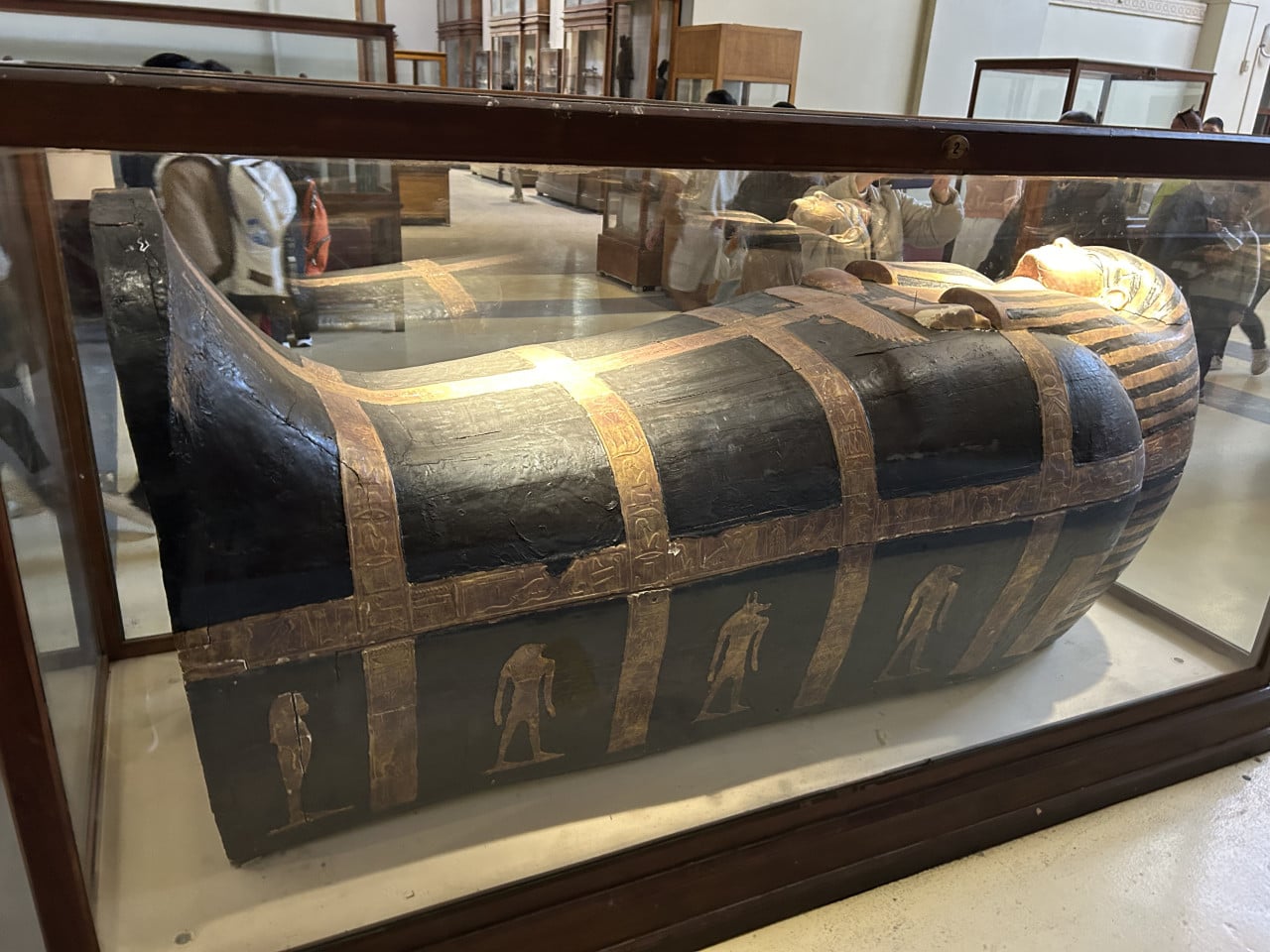
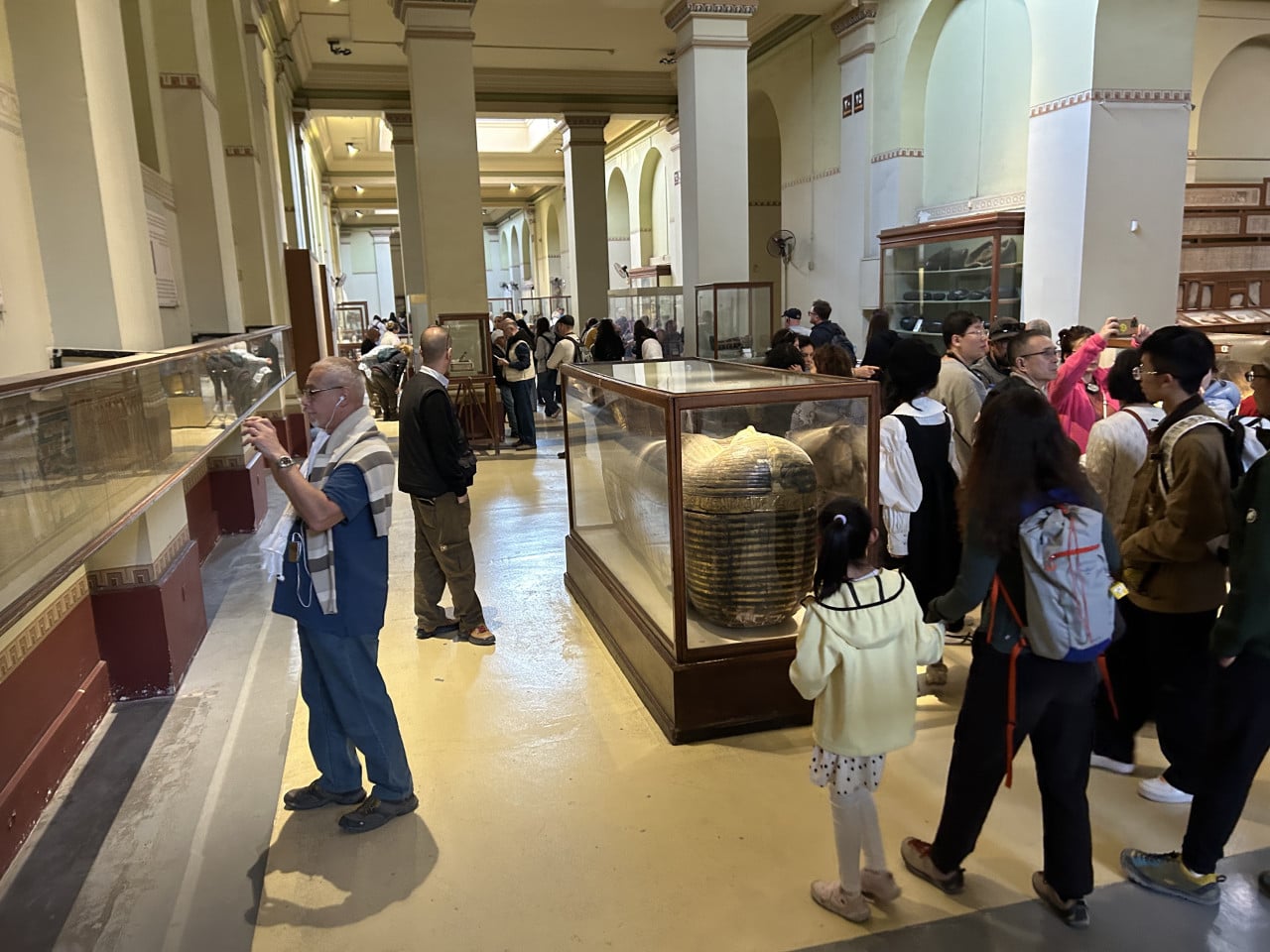
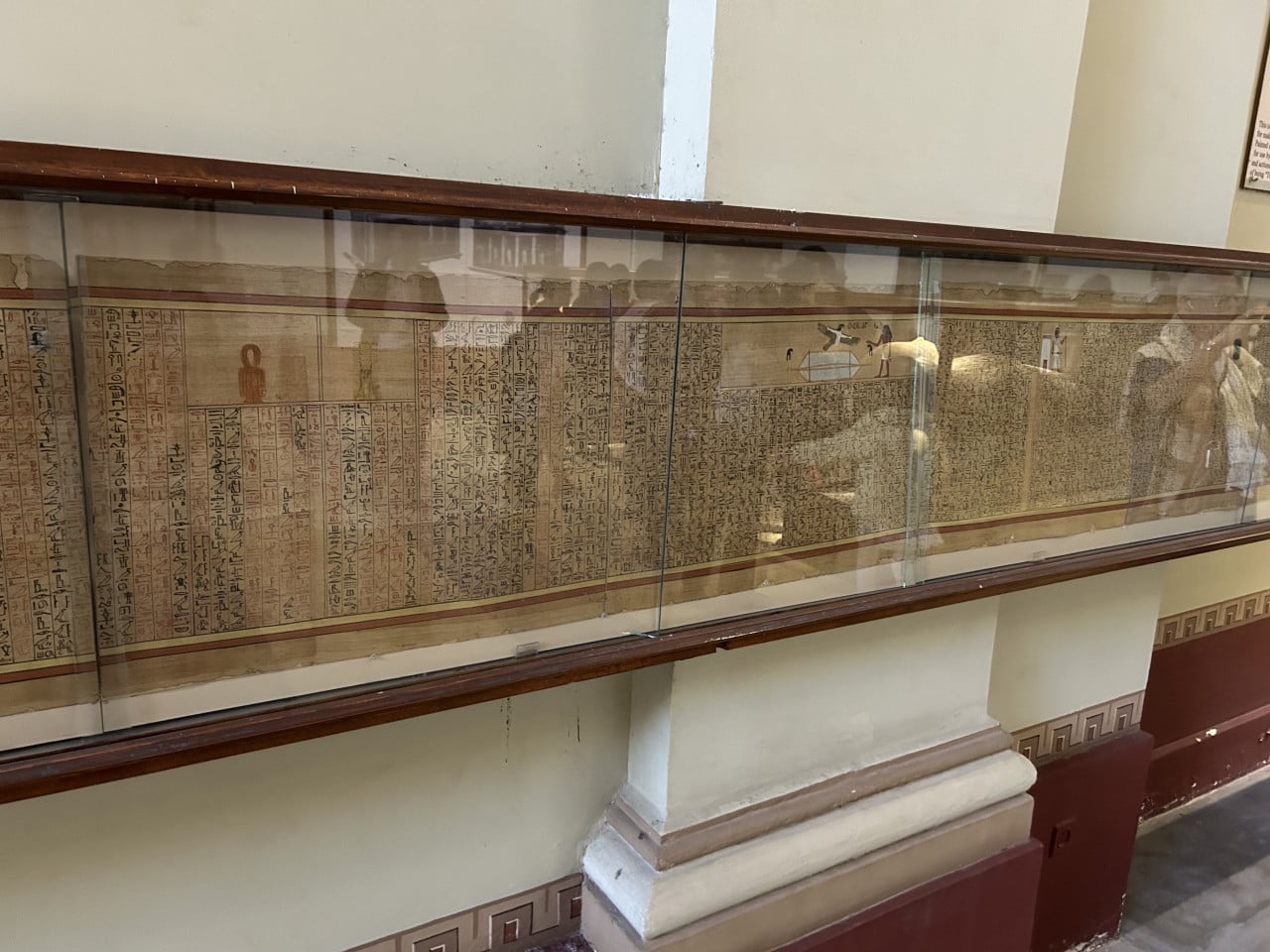
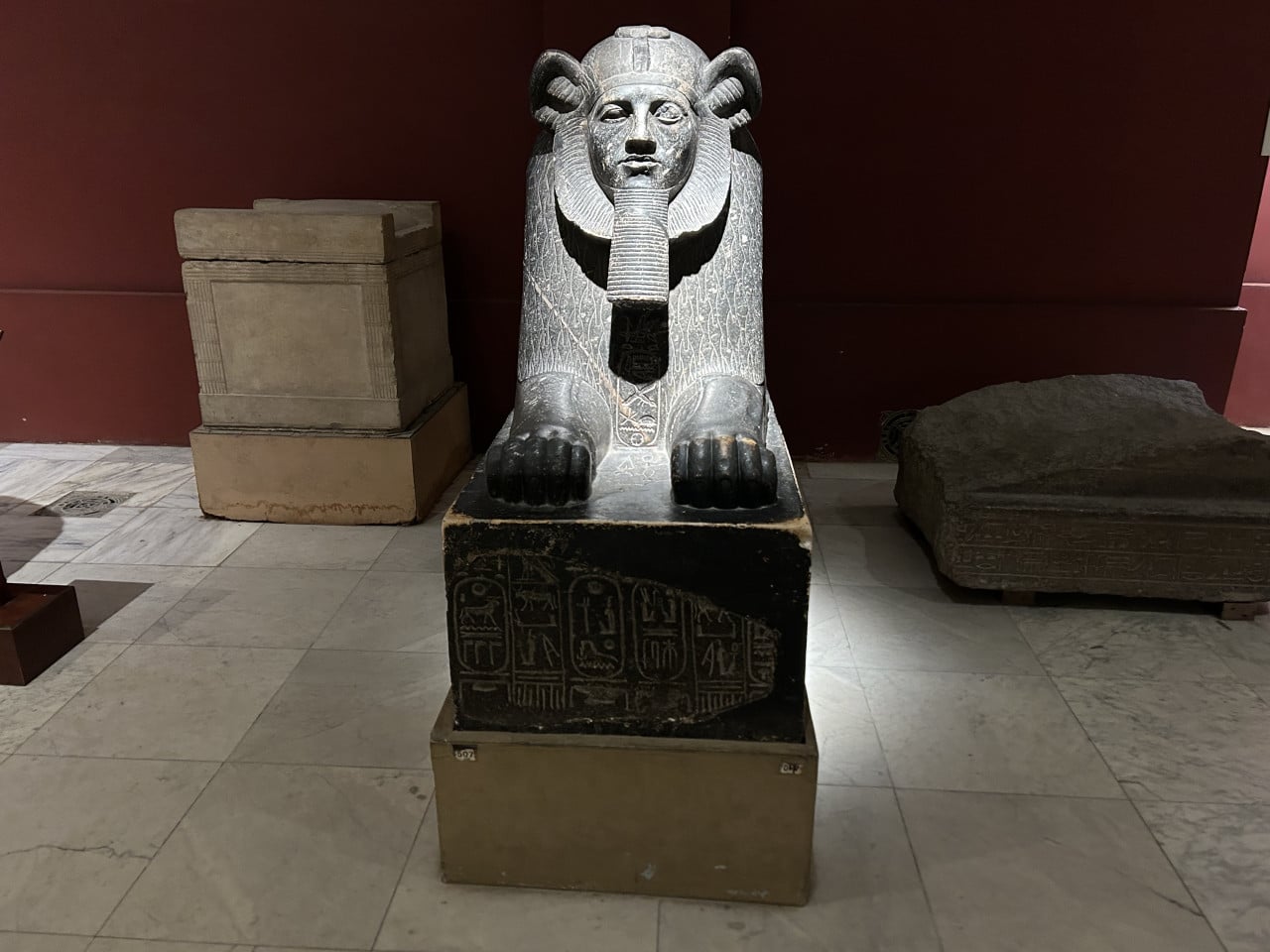
During our stay, we also visited the old Egyptian Museum in Tahrir Square. The building opened as early as 1902 and is itself an important part of modern Cairo’s history. The museum houses artifacts ranging from the Predynastic Period to the Greco-Roman era. (Egyptian Monuments)
I really liked the old museum. It has the distinctive atmosphere of a classic archaeological museum—high ceilings, display cases full of objects, large statues, and, in places, almost the feeling that you are walking through an enormous warehouse of history.
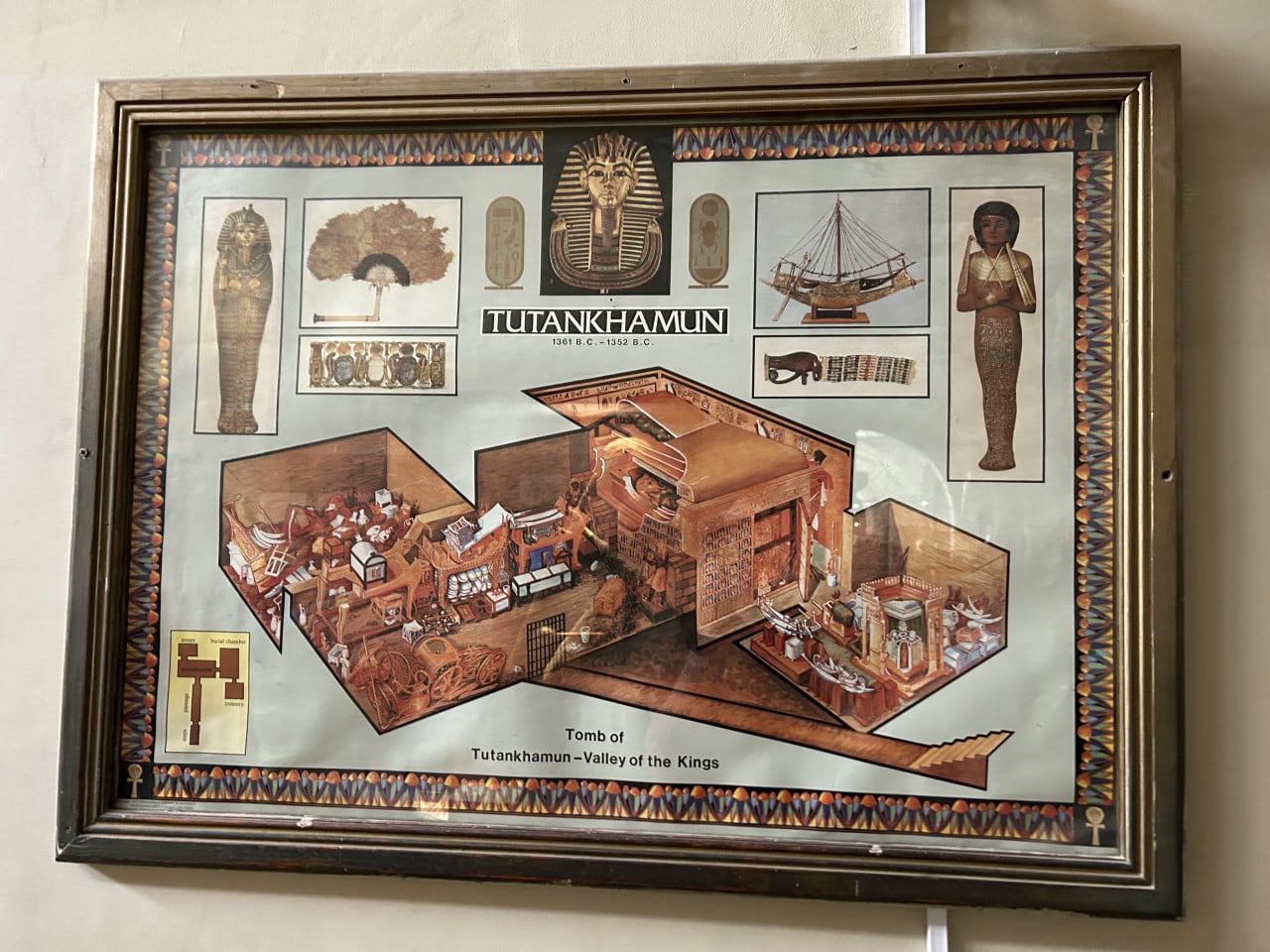
At the time of our visit, it was already apparent that some of the most important collections were gradually being moved elsewhere. Some objects from Tutankhamun’s tomb were being transferred to the new Grand Egyptian Museum. The royal mummies, on the other hand, were not moved to the new museum in Giza but to the National Museum of Egyptian Civilization in Fustat, where they have a separate hall. (Egyptian Monuments)
However, the old museum certainly has not disappeared. It remains open and still contains an extensive collection of important objects.
The Grand Egyptian Museum: Tutankhamun’s new home
We also visited the site of the new Grand Egyptian Museum, or GEM. At the time of our visit, not all the exhibitions were open yet, and we saw only part of what was being prepared there.
Today, the situation is different. After many years of preparation, the museum fully opened at the end of 2025. Visitors have access to the main galleries, the grand staircase, the Khufu Boat Museum, and, above all, the complete exhibition of Tutankhamun’s treasures. For the first time, thousands of objects discovered in his tomb are displayed together in one place, including the famous golden mask, throne, jewelry, and ceremonial chariots. (AP News)
The entrance hall alone, with its monumental statue of Ramesses II, is impressive. The entire building is also designed to create a visual connection with the nearby pyramids.
In my view, the ideal option is to visit both museums. The old museum in Tahrir Square offers the atmosphere of classic Cairo and the history of Egyptology, while the new GEM presents a modern, grandly conceived exhibition for which you should set aside several hours.
I still have not grown tired of Egypt
The pyramids, the Sphinx, Cairo, and both museums were once again an incredible experience for me.
I have visited Egypt about nine times, and I still feel that I have seen only a fraction of what this country has to offer. You can return to the pyramids repeatedly, continue to Saqqara, Luxor, the Valley of the Kings, Karnak, or Abu Simbel, or take a cruise along the Nile—and every time, there will be something new to discover.
Honestly, I still do not understand how they could have built the pyramids with the resources available to them at the time. I can read studies about ramps, boats, work crews, and precise organization, but when I stand directly beneath the Pyramid of Khufu, it still seems almost unbelievable.
And perhaps that is precisely why I still find Egypt so fascinating.
The more you know about it, the more questions arise.