Aswan is a place where, in a single day, you can travel from several-thousand-year-old Egyptian temples to a massive unfinished obelisk and then to a hotel where Winston Churchill stayed and Agatha Christie sought inspiration.
That is exactly what our day looked like. First, we took a boat to the Philae temple complex, then visited the famous Unfinished Obelisk, and finally stopped at the legendary Old Cataract Hotel. Each of these places was completely different, but they all had one thing in common—truly fascinating history.
By boat to the Philae temple complex
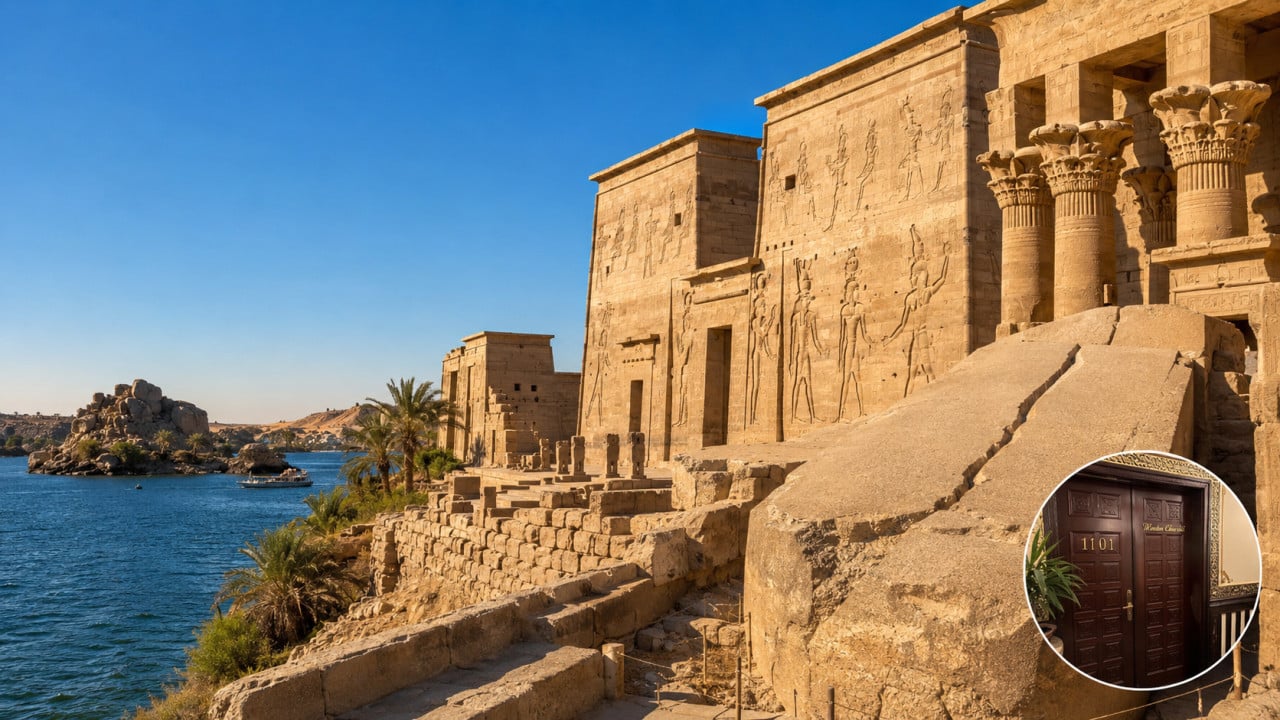
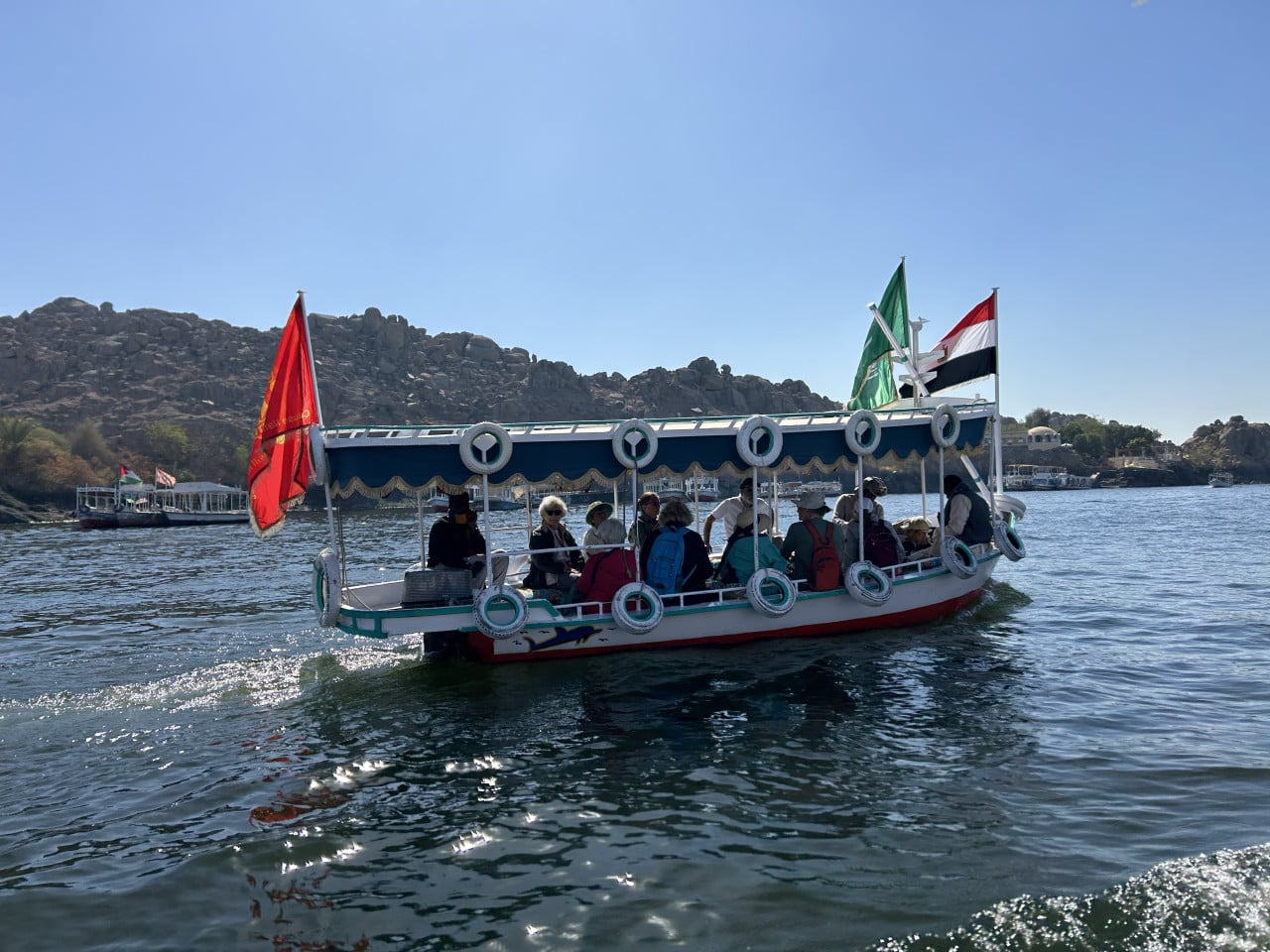
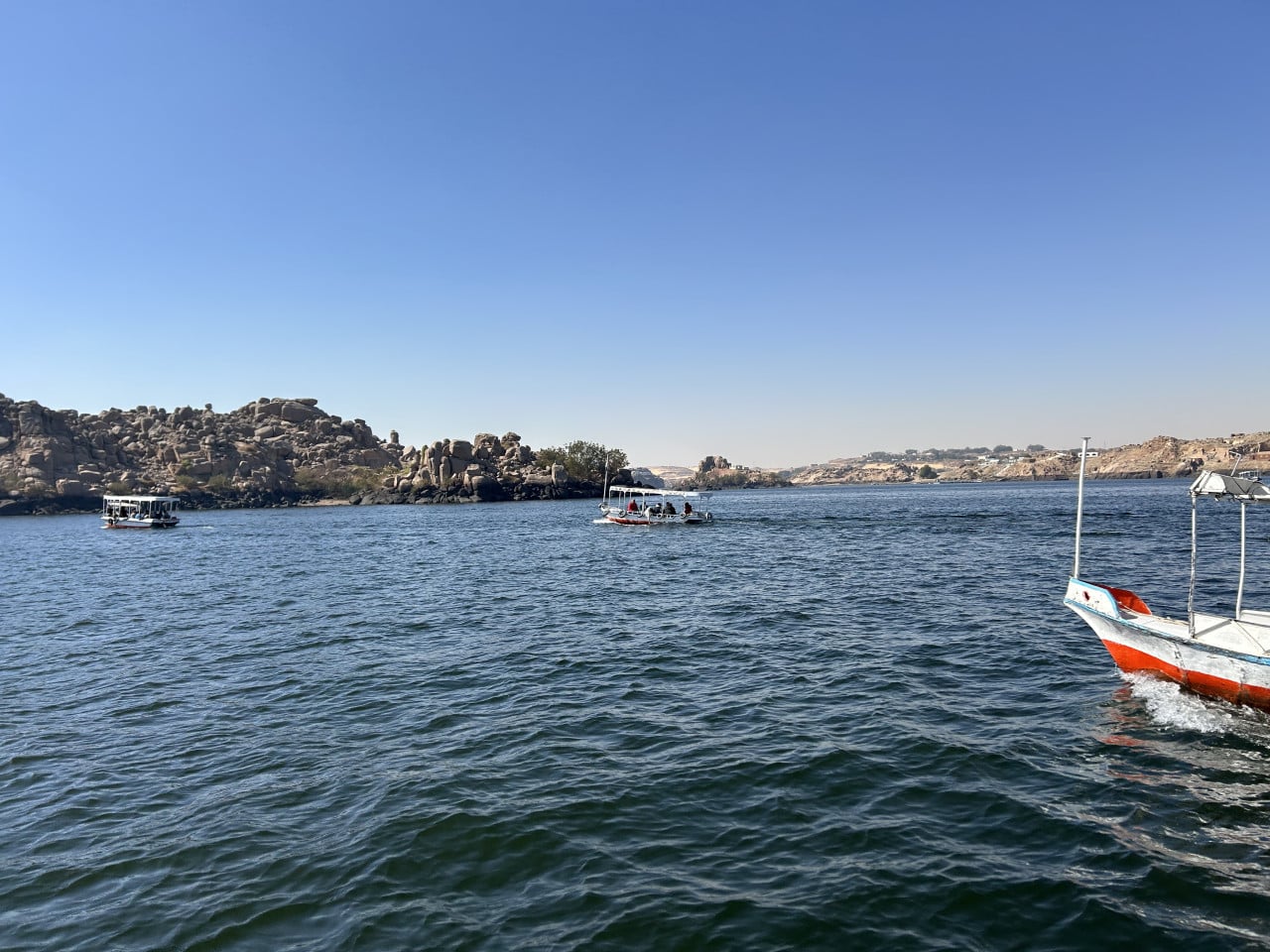
You cannot reach the Philae temple complex by car or on foot. It is located on an island, so we first boarded a small motorboat and set off across the water.
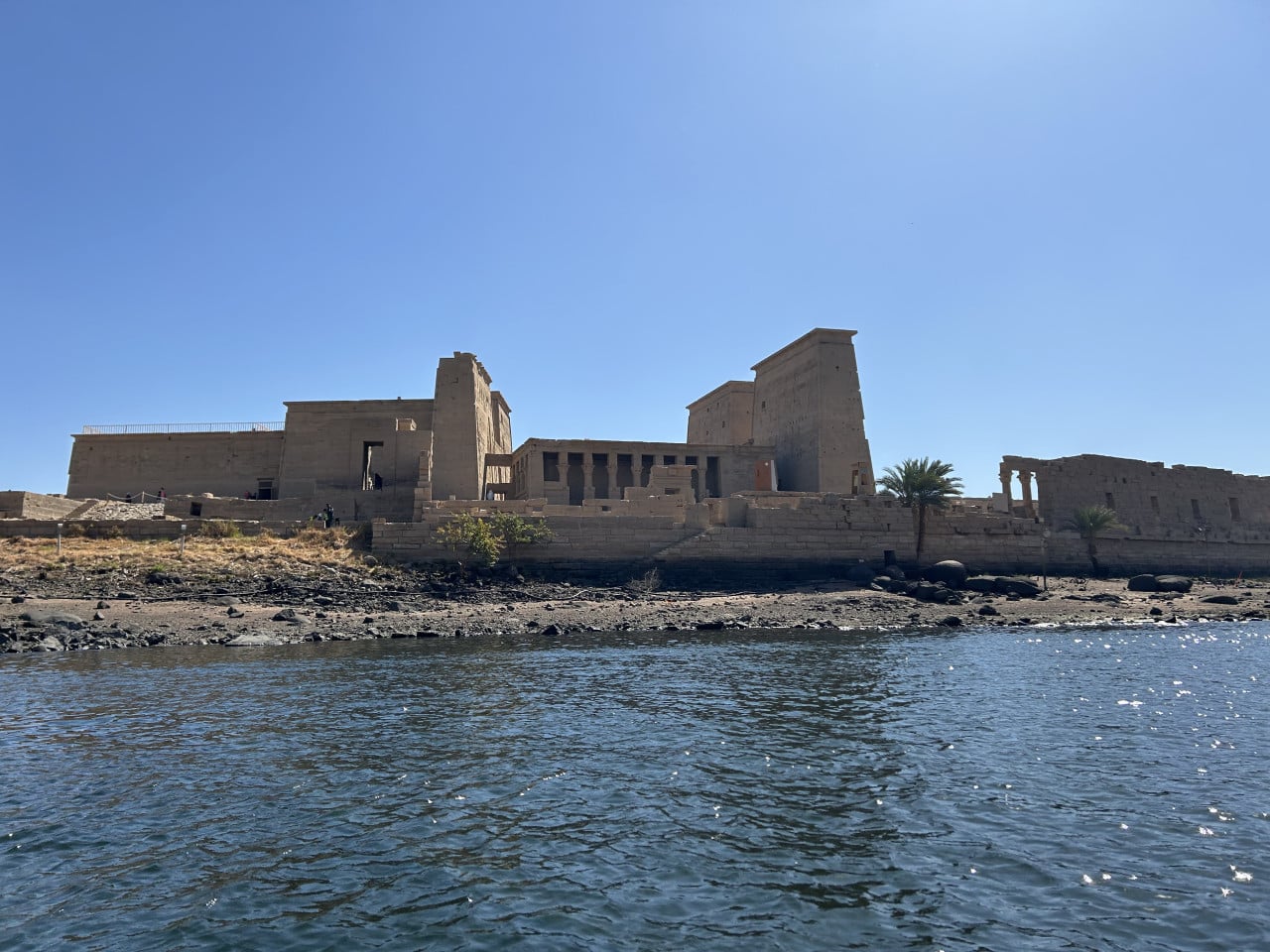
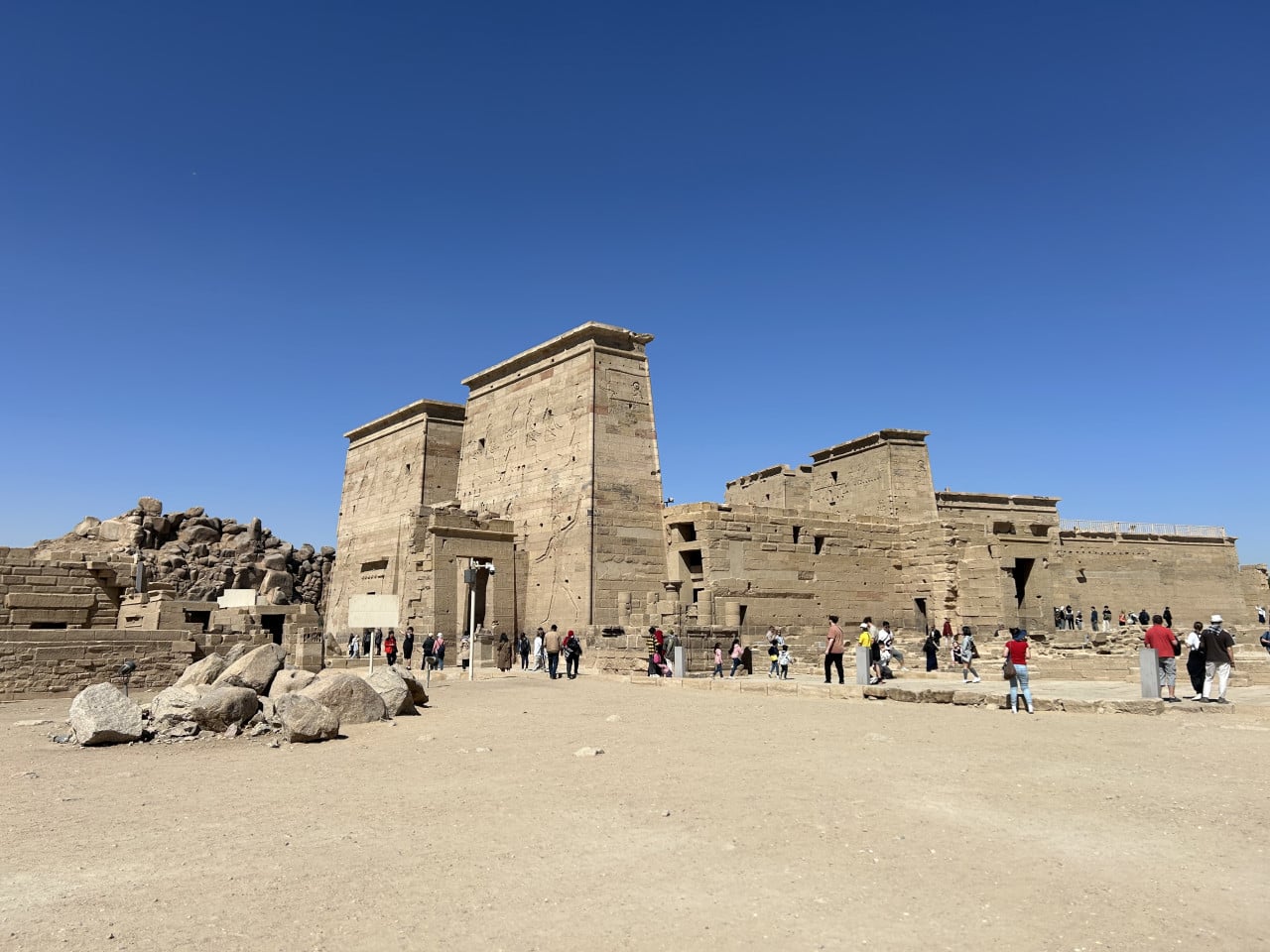
Even during the cruise, massive sandstone structures gradually began to appear before us. From a distance, the entire complex looked a little like ruins, but the closer we came, the easier it was to see how extensive and well preserved it actually was.
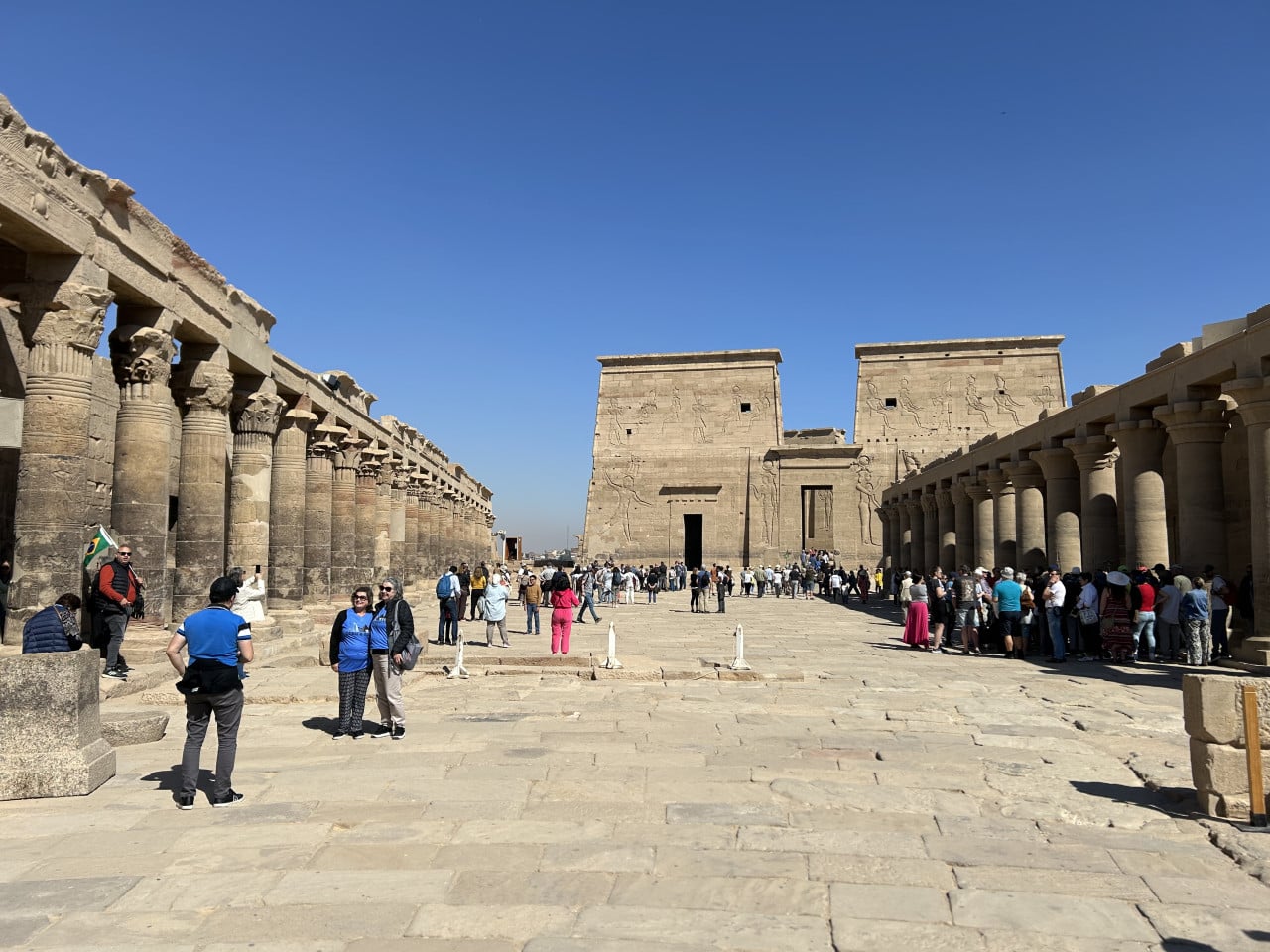
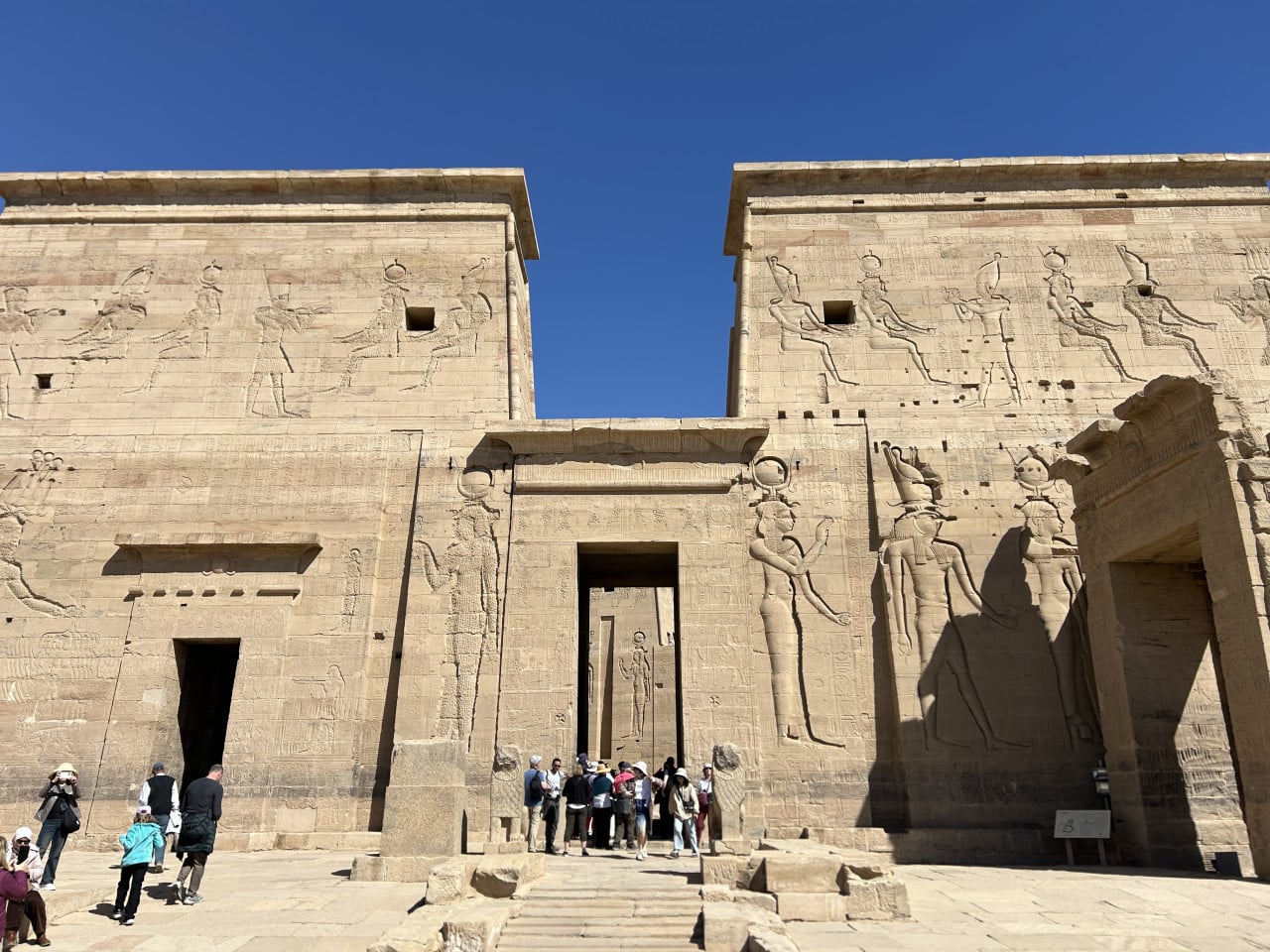
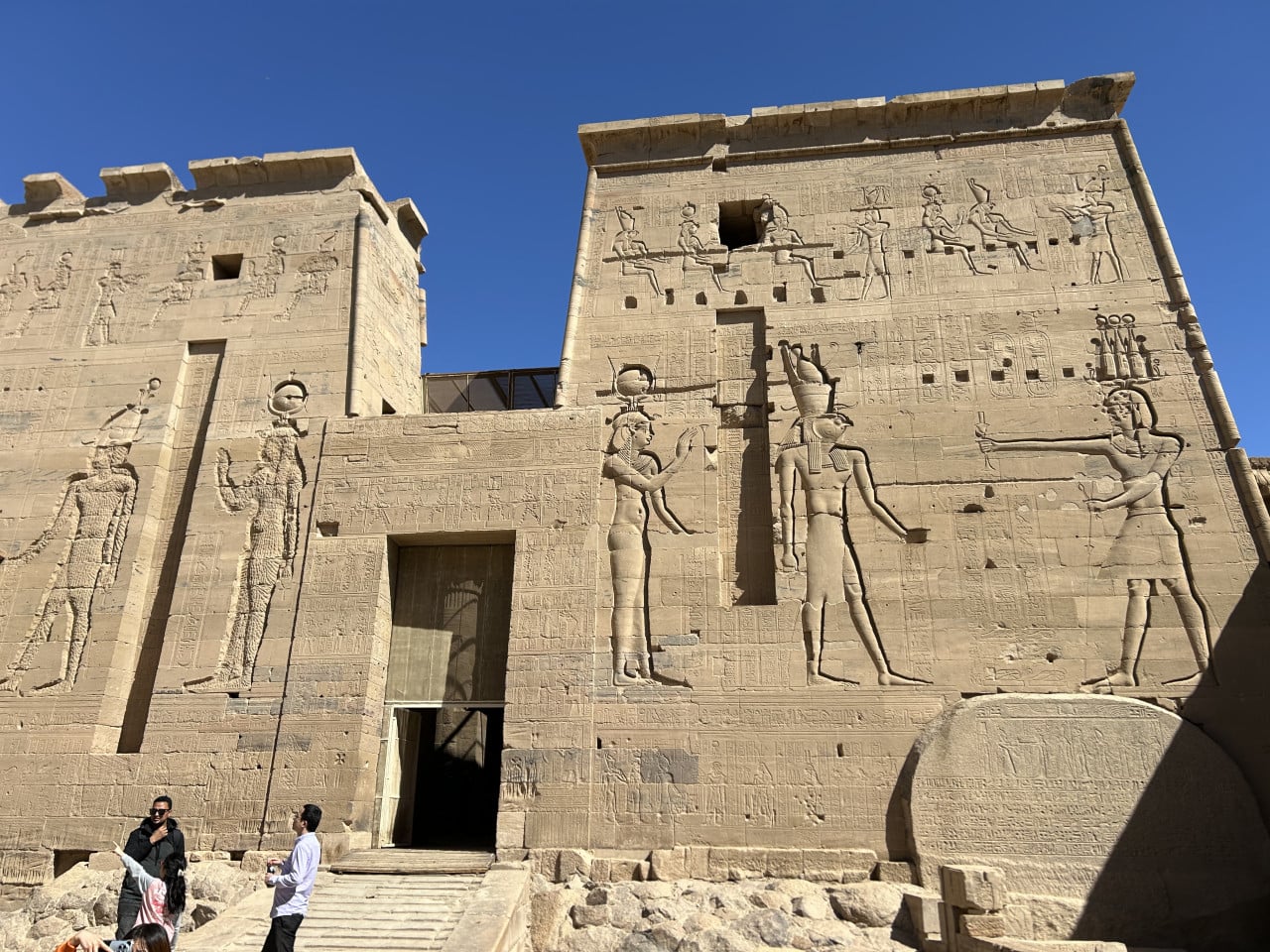
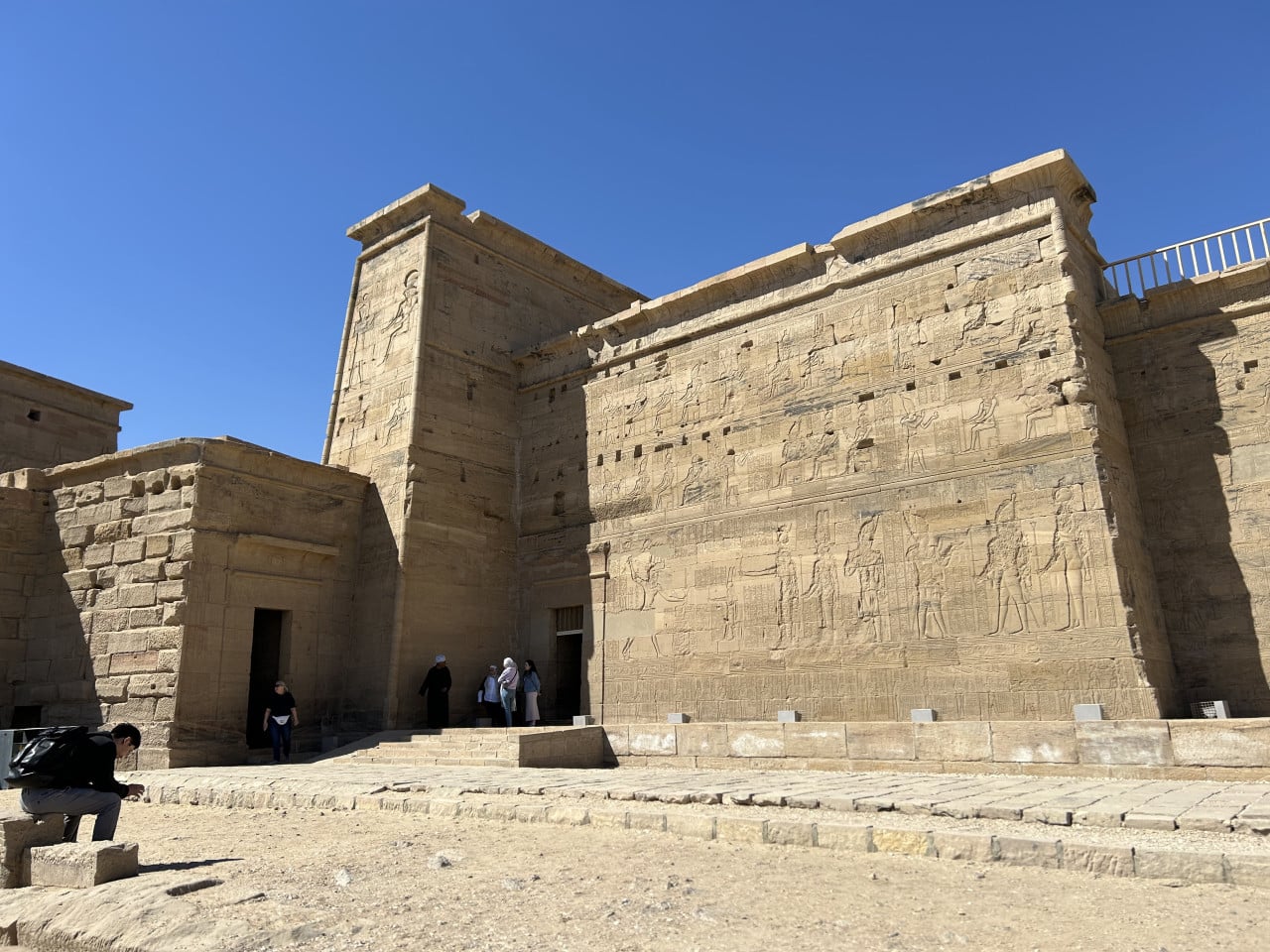
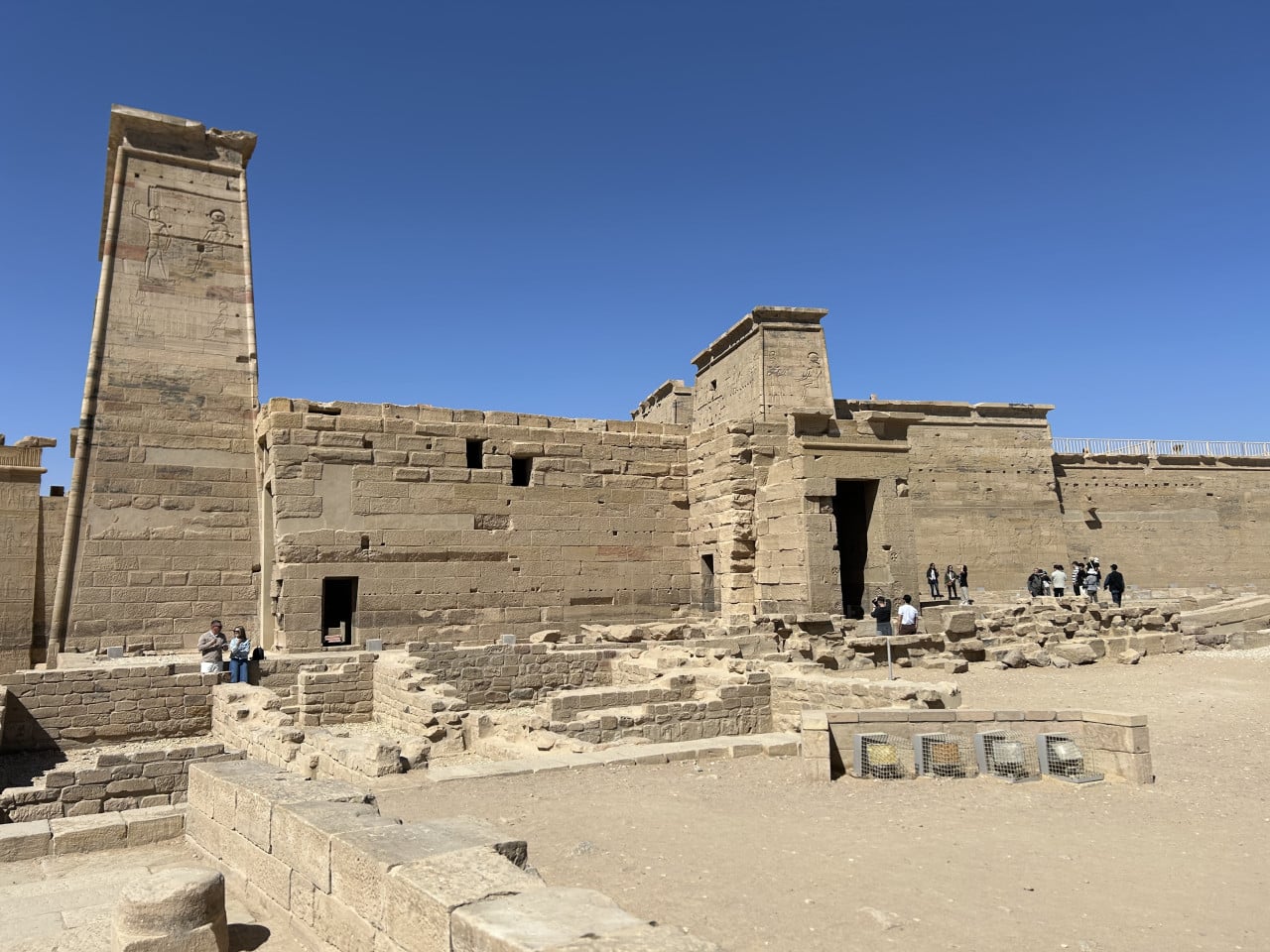
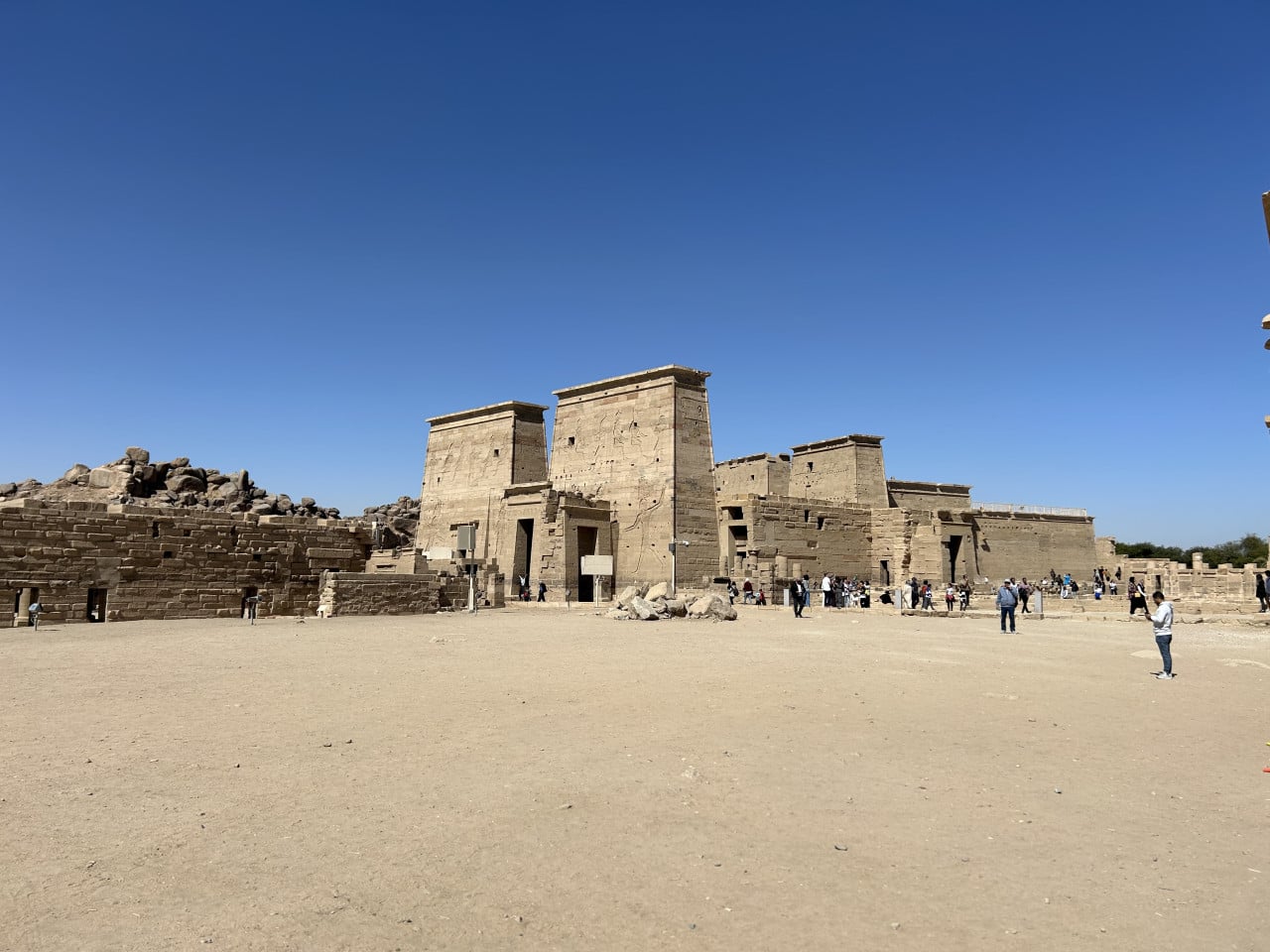
After landing, we headed straight for the main entrance. Huge temple pylons covered with reliefs of Egyptian rulers and gods towered before us. What I had originally thought were obelisks were actually mainly tall pylons, massive columns, and various parts of temple buildings. We did not reach a real obelisk until later in the day.
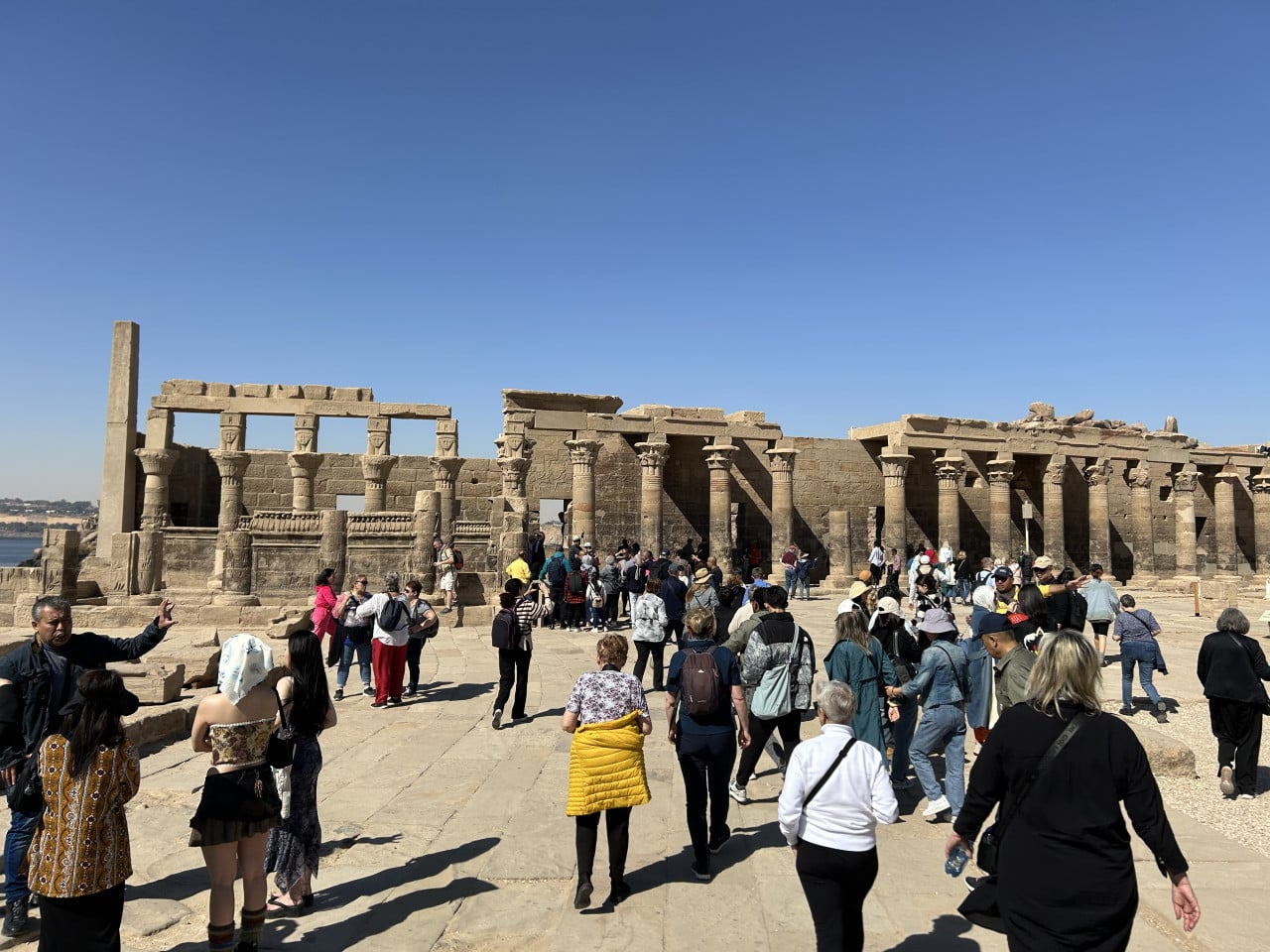
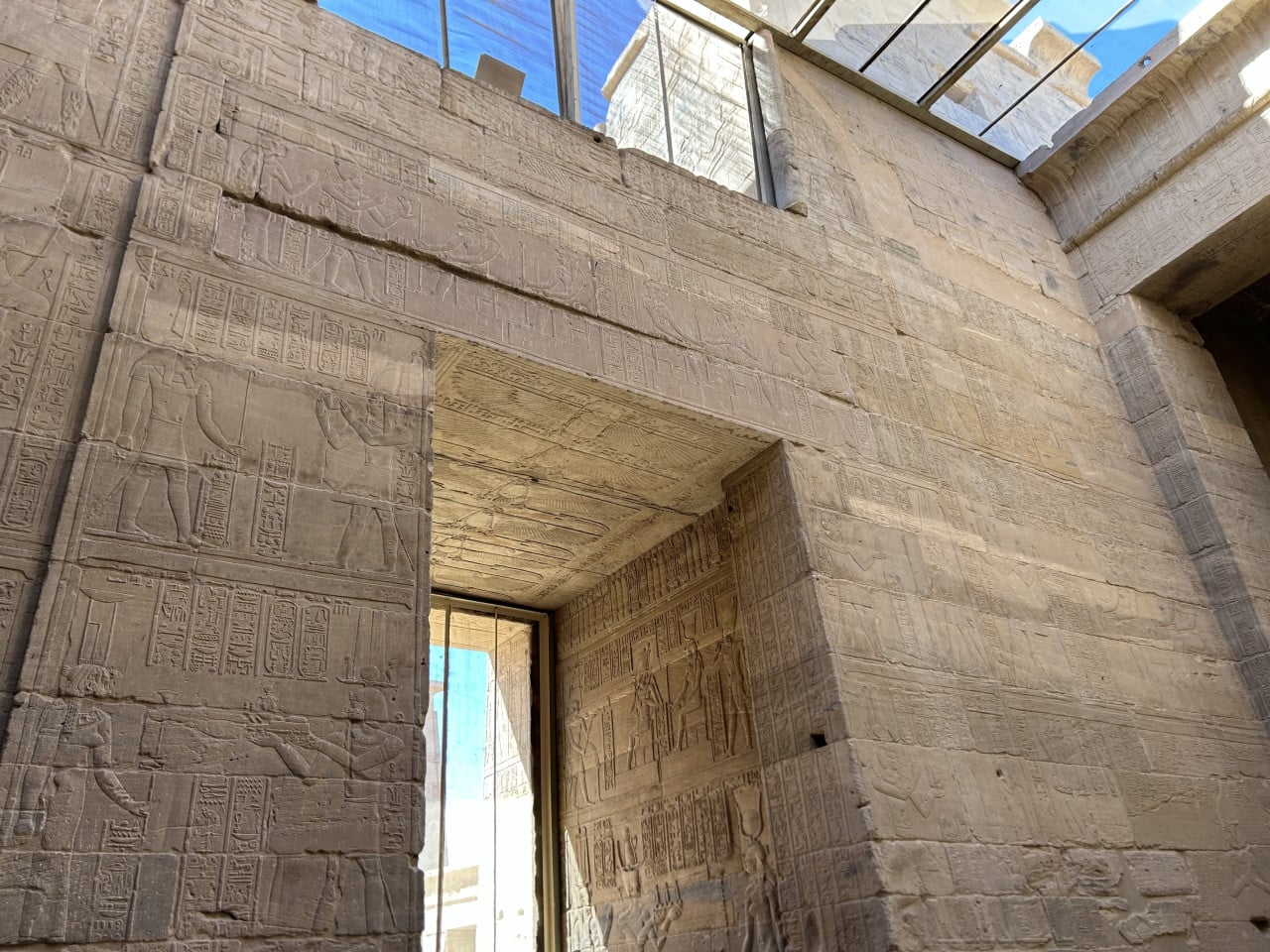
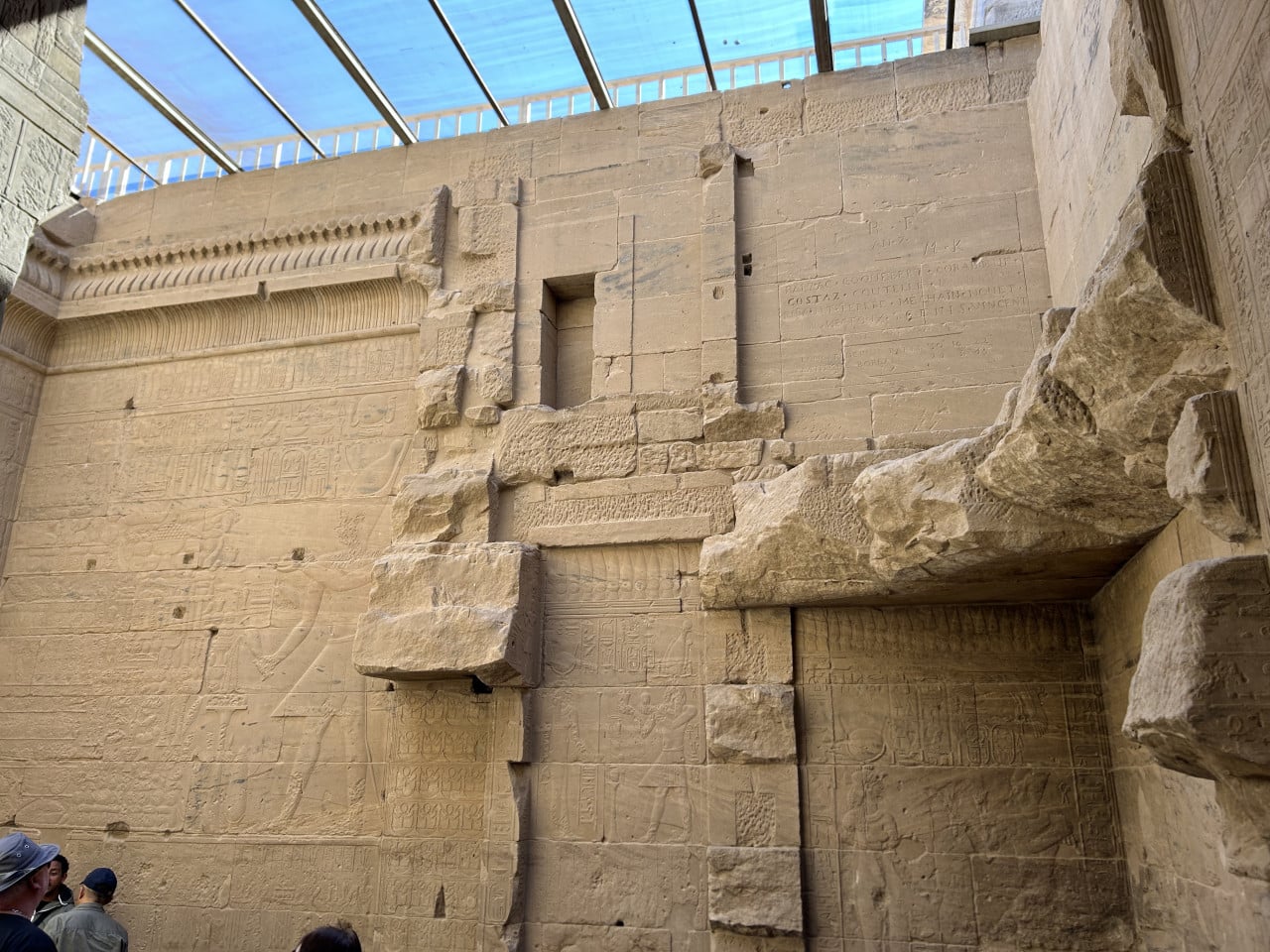
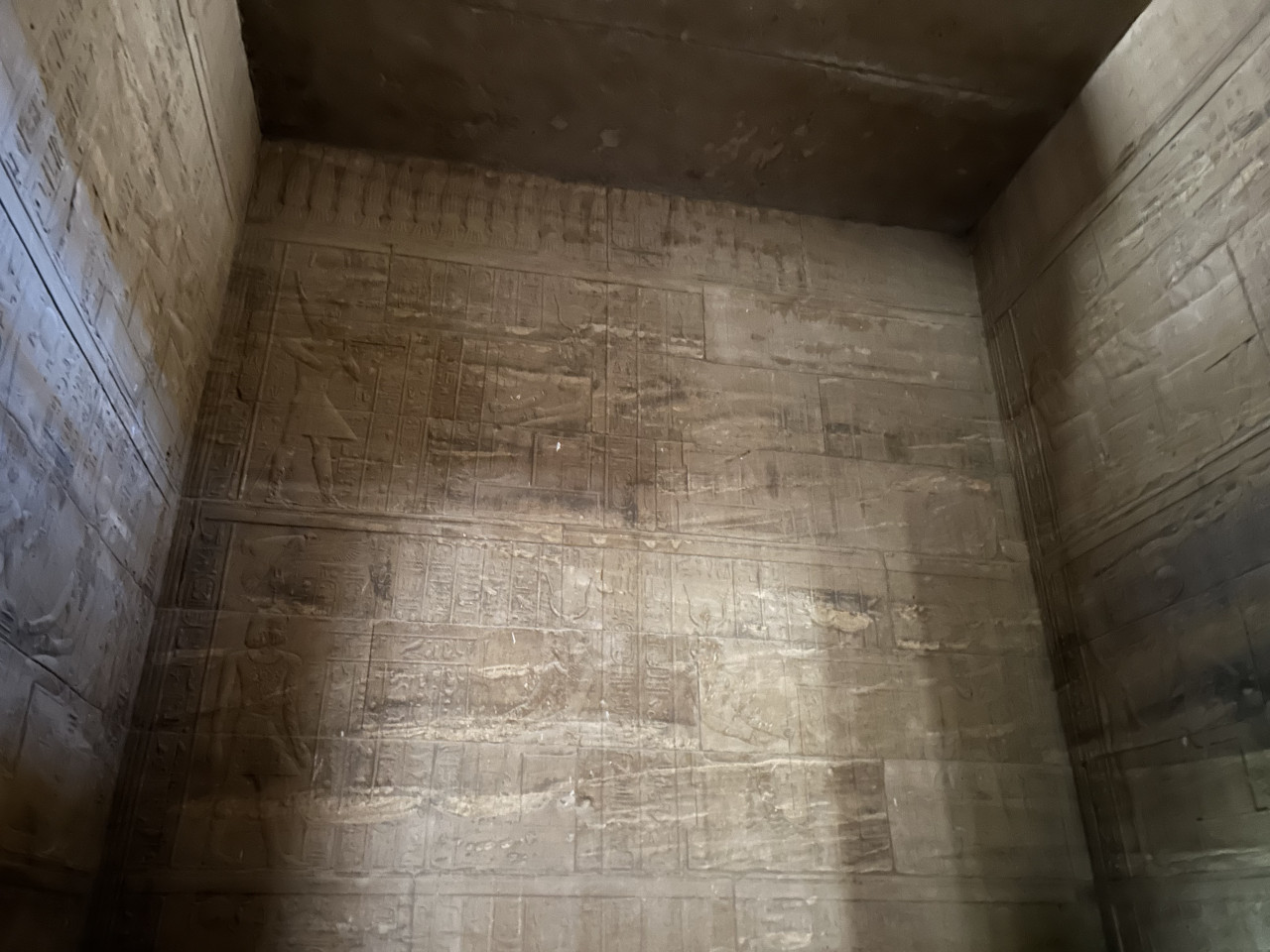
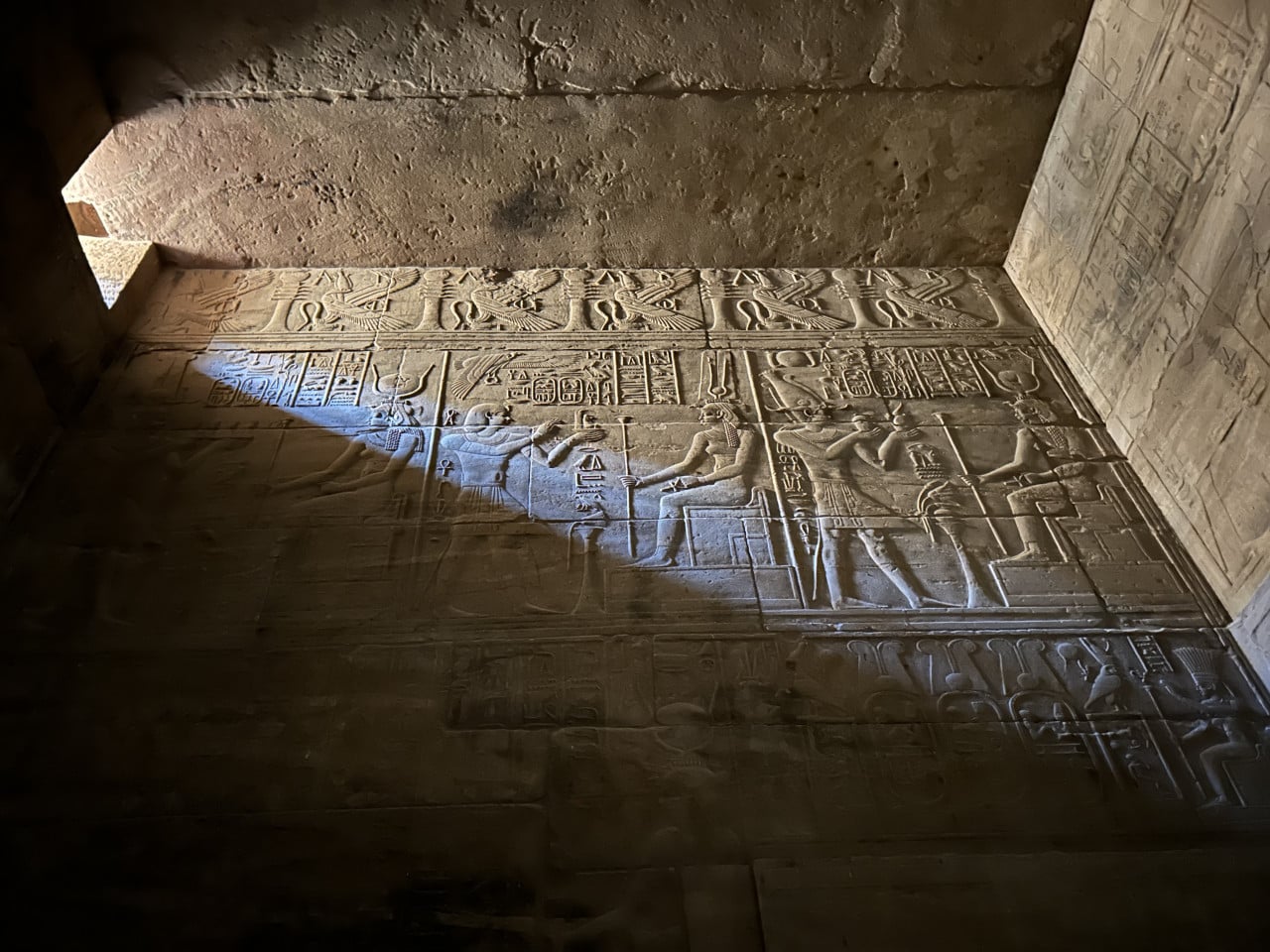
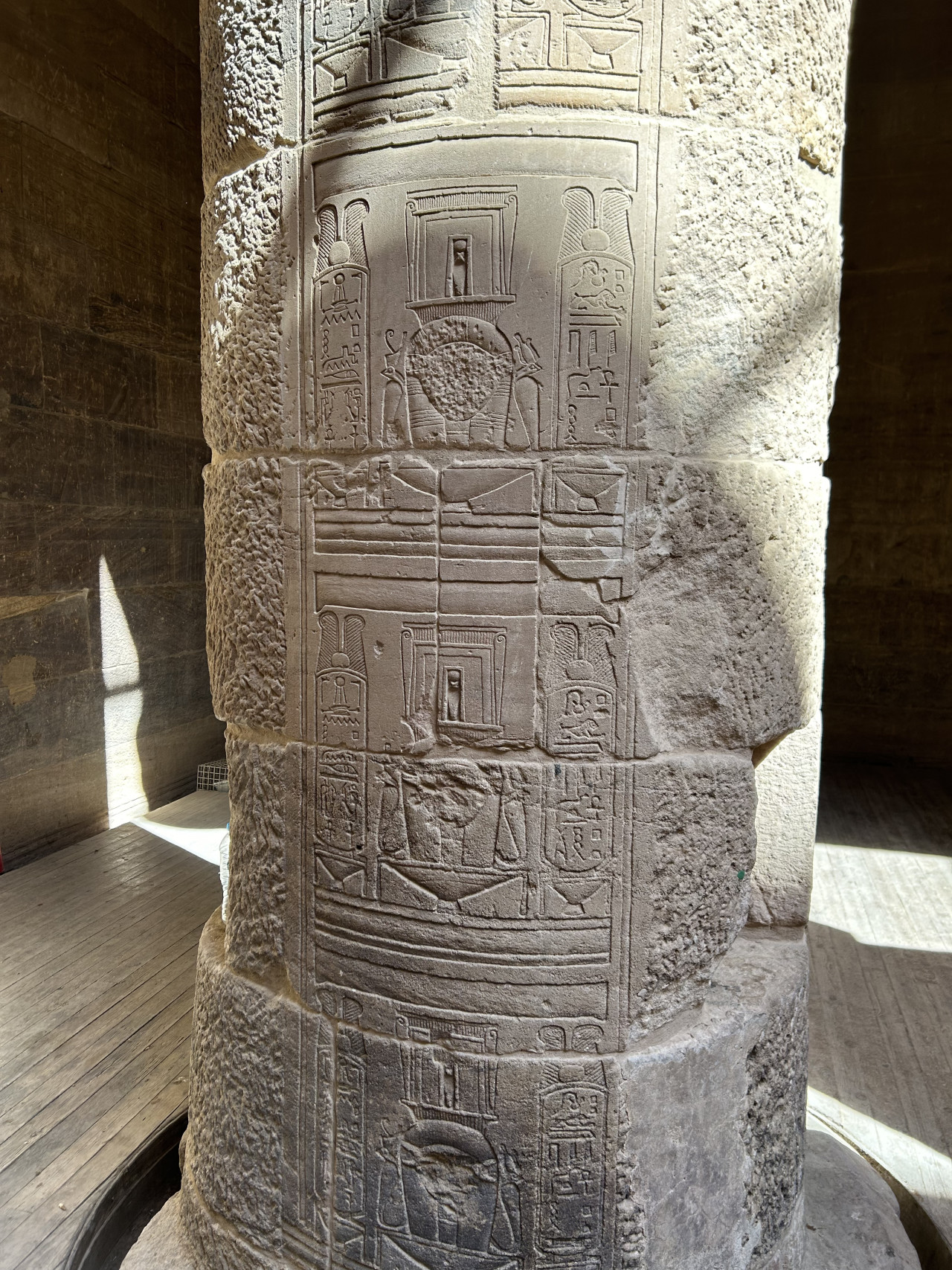
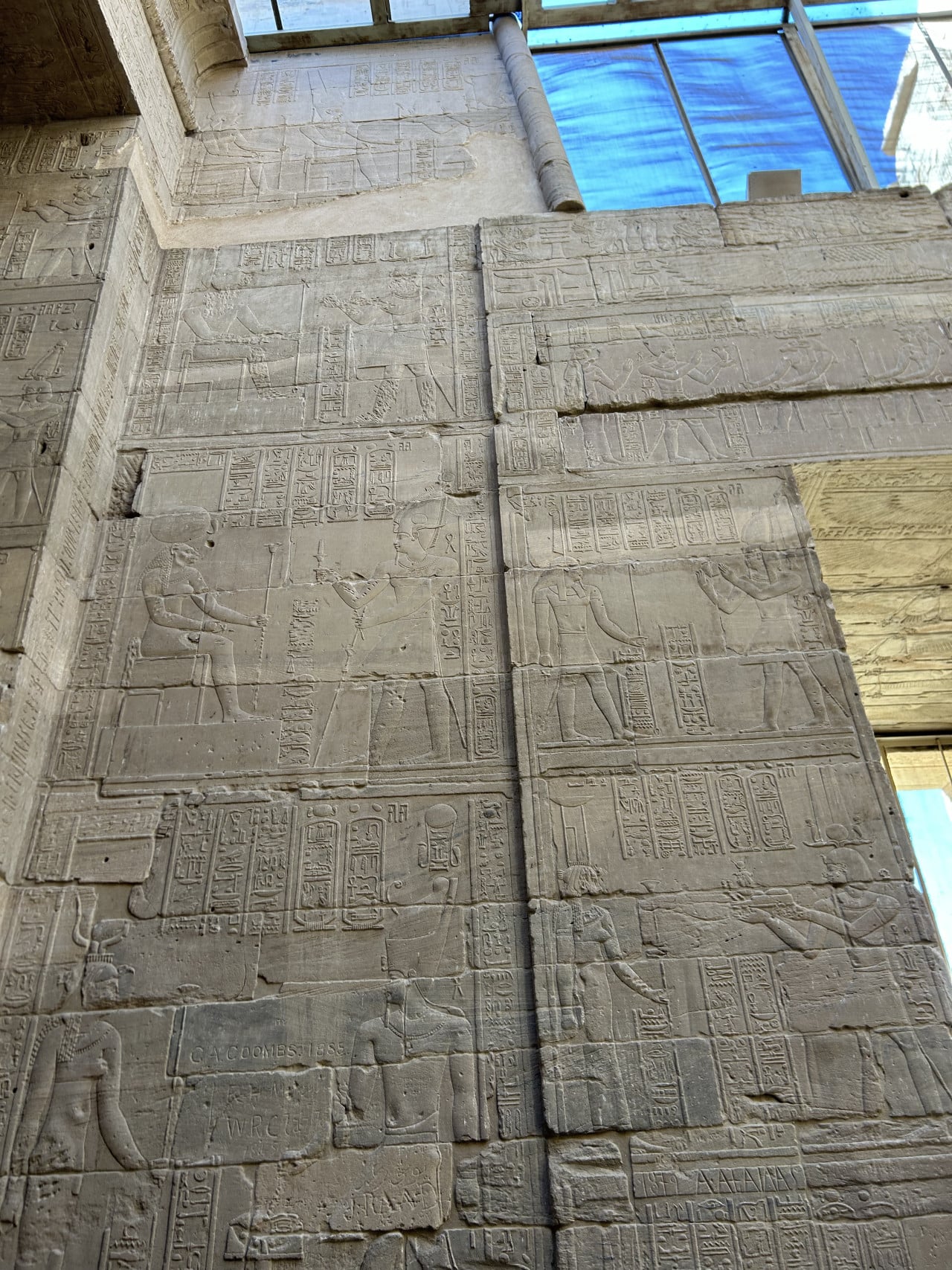
As soon as we entered, we were surrounded by hieroglyphs on practically every side. They covered the walls, columns, lintels, and smaller rooms. Some reliefs were very well preserved, while others had been damaged or deliberately removed.
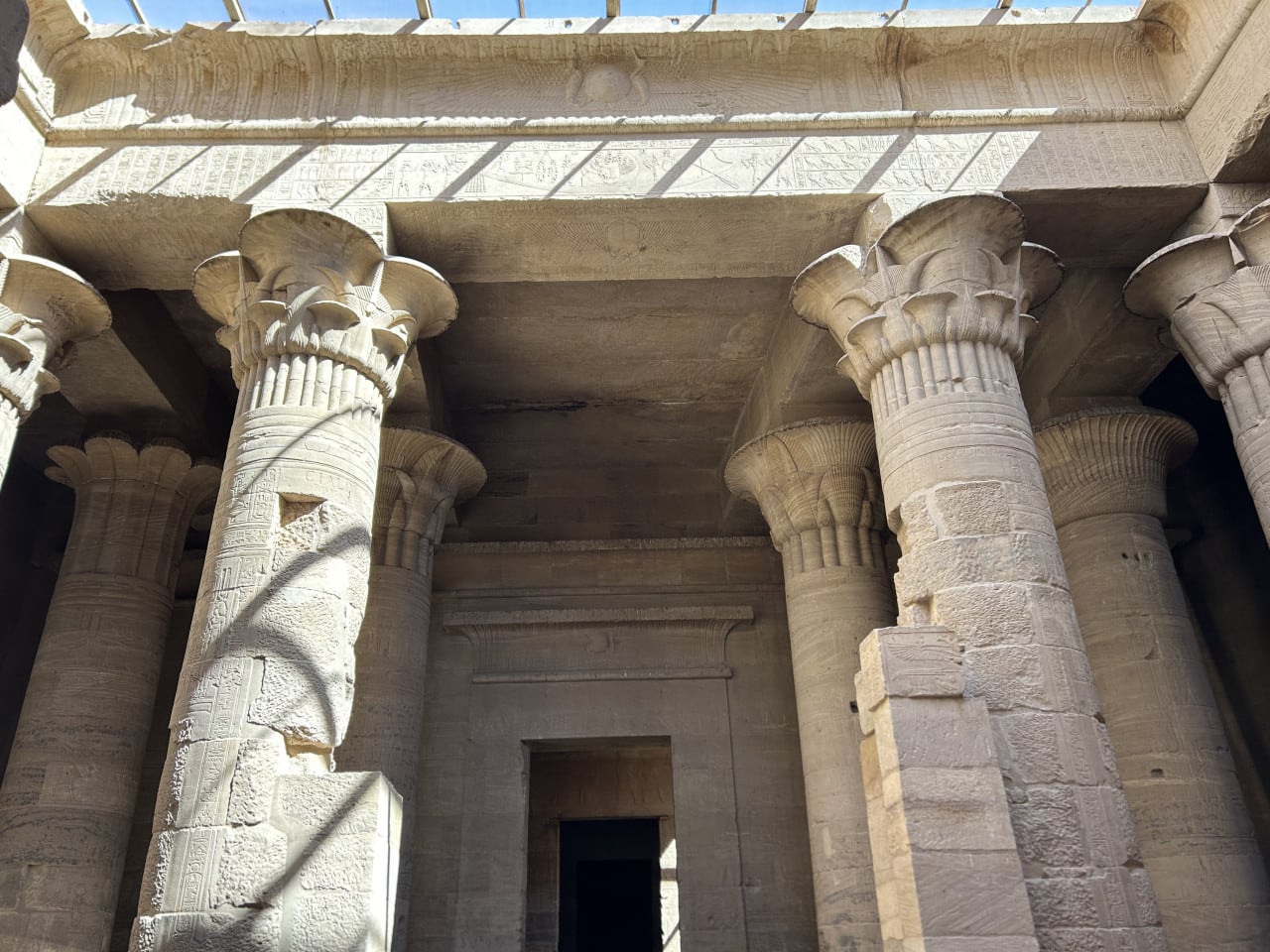
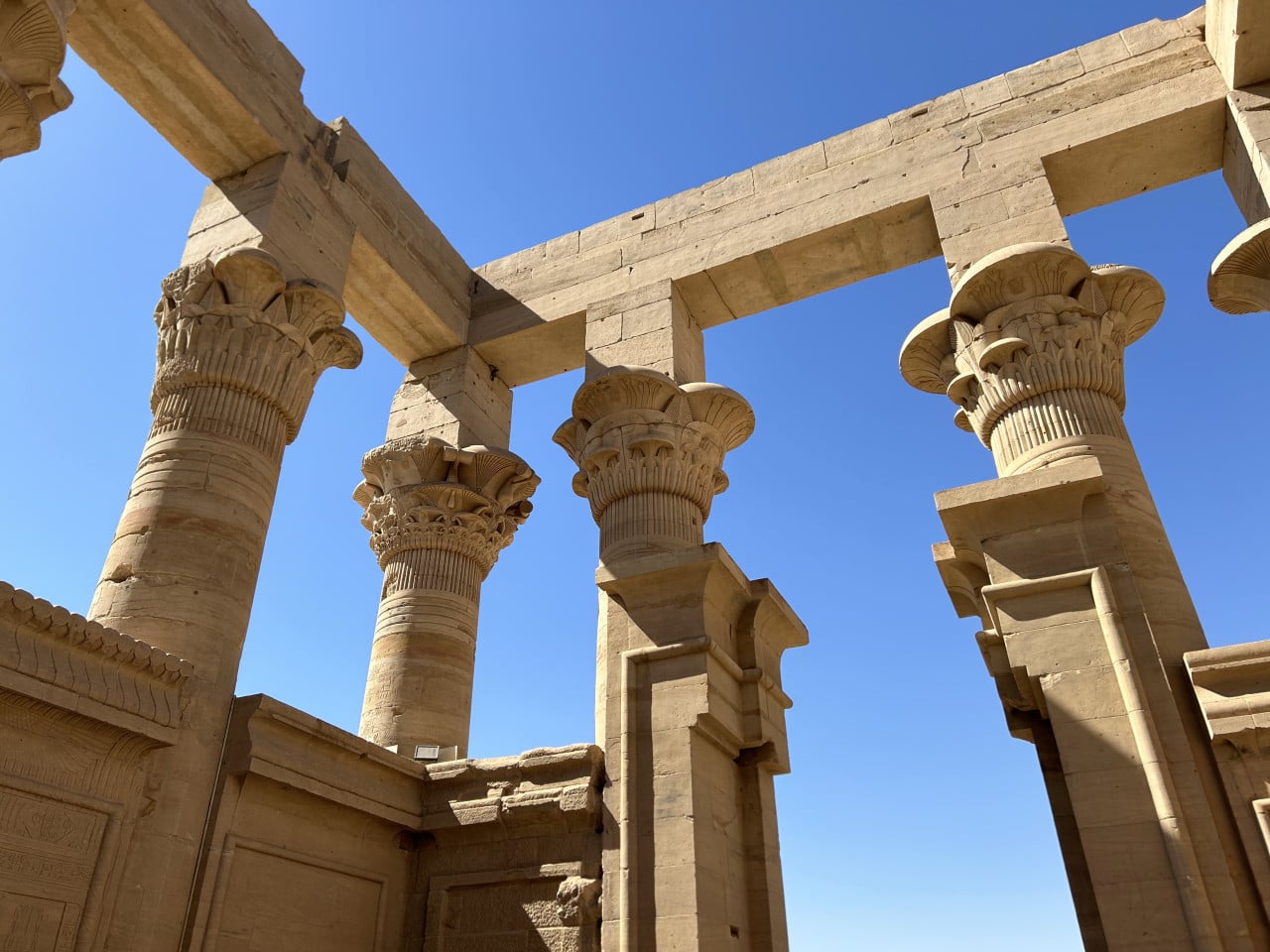
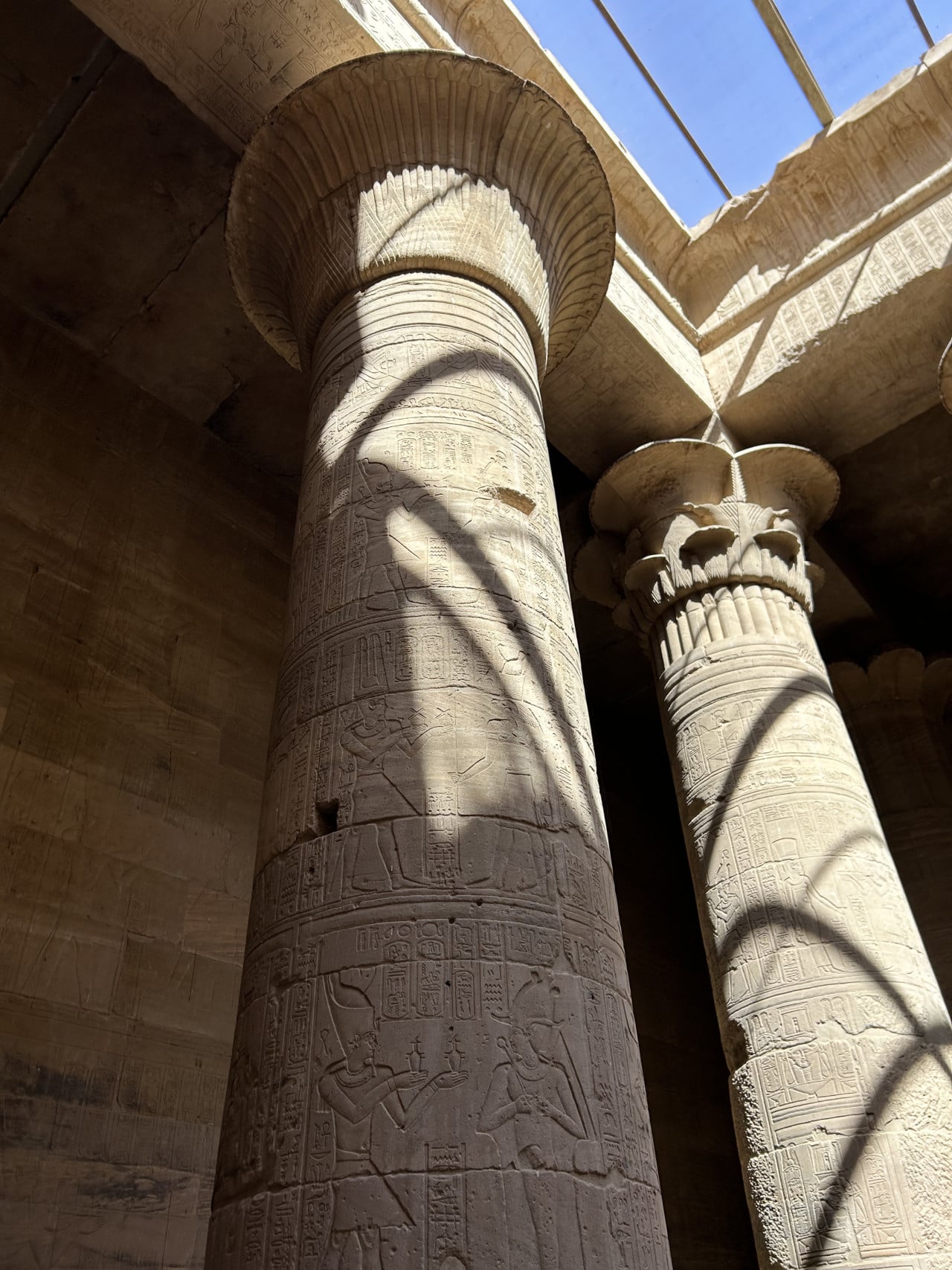
The columns with capitals shaped like lotus and papyrus flowers were also very interesting. Each looked slightly different, and looking up made it easy to see how much work must have gone into creating them.
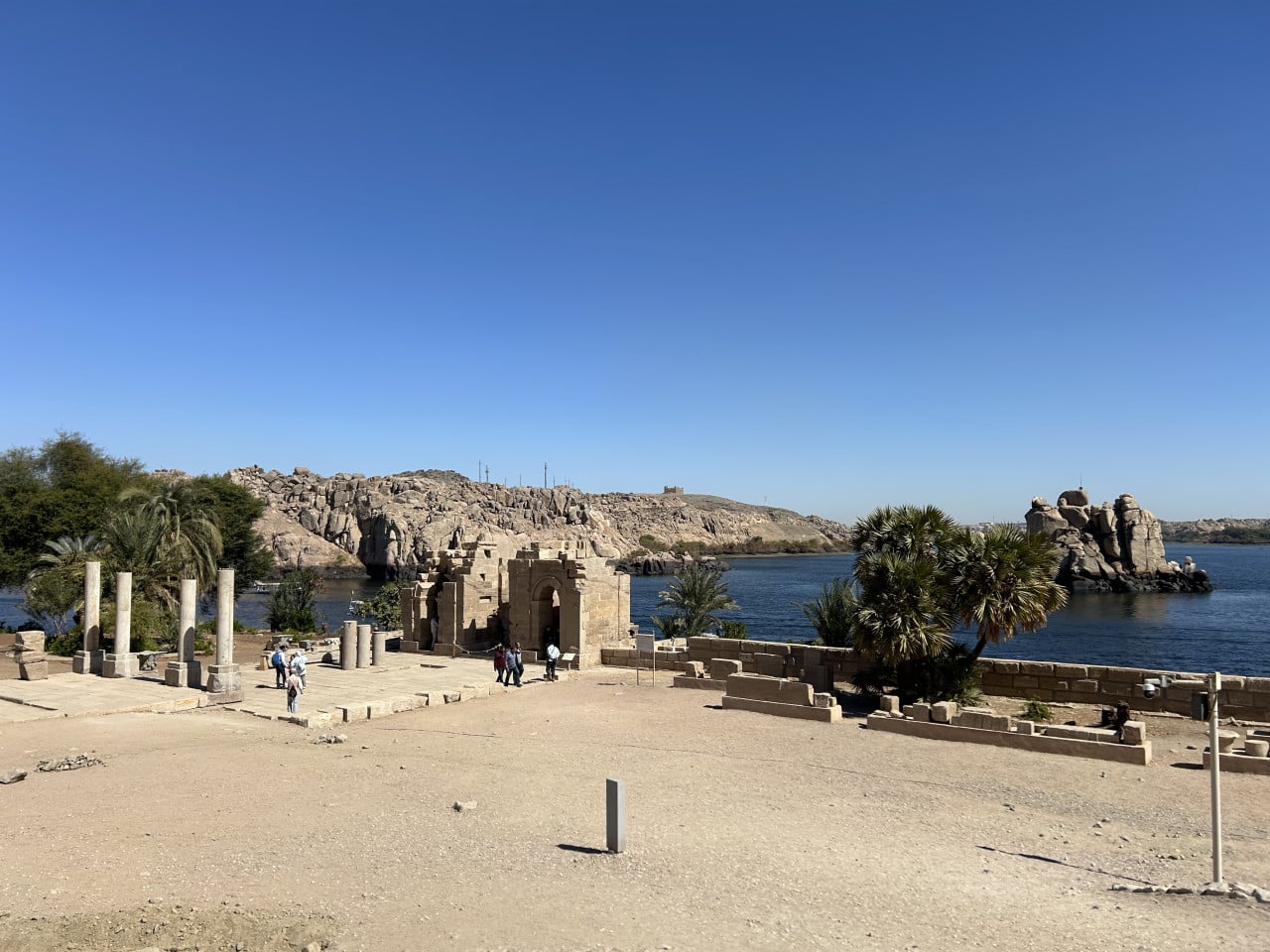
The entire complex is also surrounded by water and rocky islets. Of course, it is not the sea, as some photographs might suggest, but a reservoir on the Nile. Combined with the blue sky, sandstone buildings, and almost parched landscape, however, the place looked truly beautiful.
Philae is no longer located on its original island
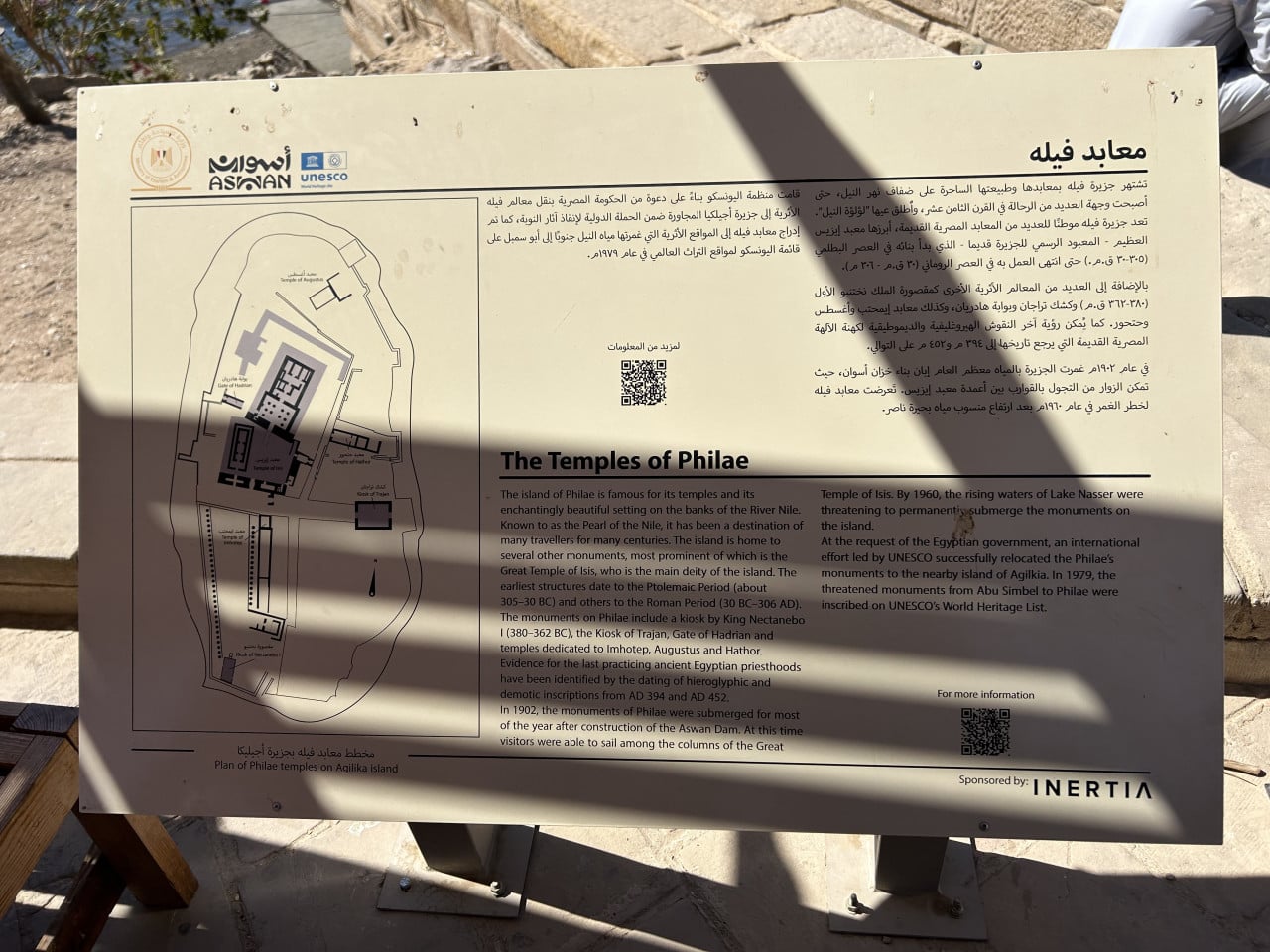
Interestingly, although the complex is still known as Philae, it no longer stands on the original island of Philae. It is located on the nearby, higher island of Agilkia.
After the construction of the older Aswan Dam, the original island was regularly submerged. For part of the year, the temples were so flooded that visitors could sail in boats directly between the temple columns. Furthermore, after construction began on the new Aswan High Dam, there was a risk that the entire complex would be permanently submerged.
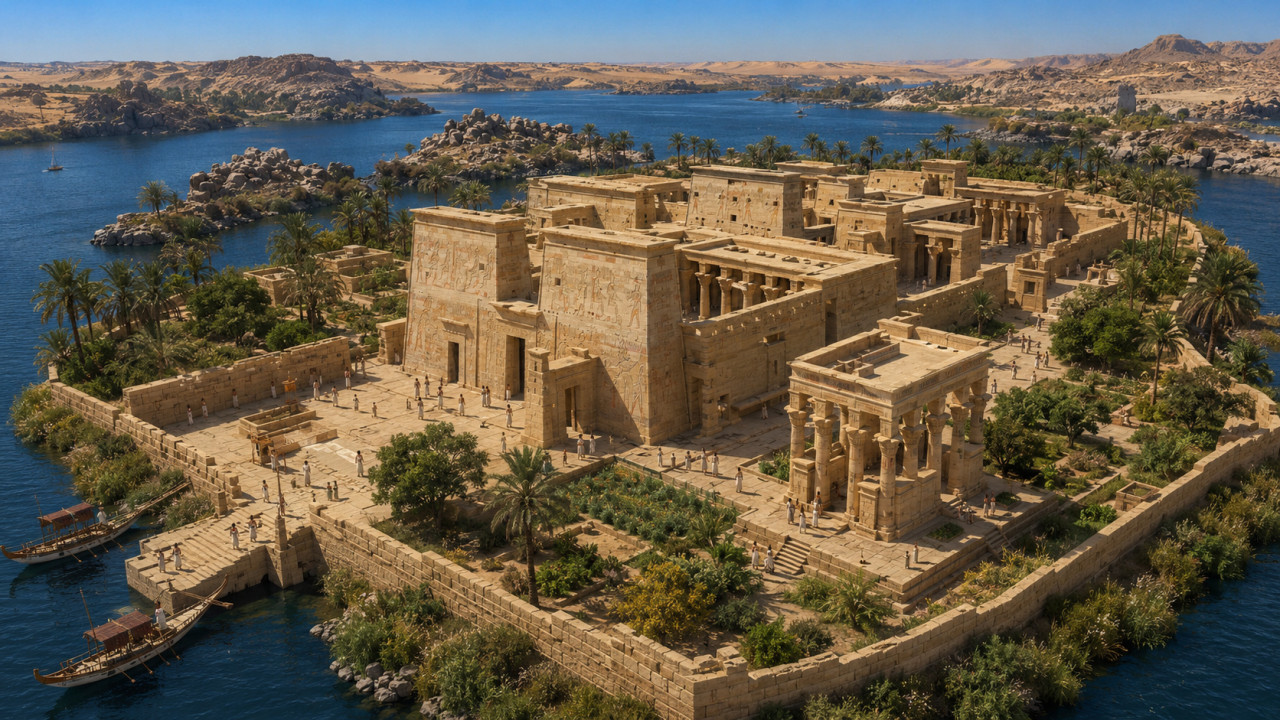
Egypt therefore launched an extensive rescue operation together with UNESCO. The individual structures were precisely surveyed, dismantled into approximately 40,000 stone blocks, and then reassembled on Agilkia Island. Beforehand, the island itself was reshaped to resemble the original island of Philae as closely as possible. (UNESCO World Heritage Centre)
So when you walk among the temples today, you are looking at the original ancient structures, but in a different place from where they were built more than two thousand years ago. Honestly, if I had not known this, it would never have occurred to me during the visit that practically the entire complex had been dismantled and reassembled.
This is roughly what the Philae temple complex may have looked like in its heyday:
The Temple of the Goddess Isis and its history
The most important part of the entire complex is the Great Temple of the goddess Isis. Isis was one of the most important Egyptian goddesses. She was the wife of the god Osiris, the mother of Horus, and was associated with motherhood, healing, protection, and royal power.
According to Egyptian mythology, Osiris was murdered by his brother Seth and his body was divided into pieces. Isis found the individual pieces, joined them back together, and briefly brought Osiris back to life. They subsequently had a son, Horus, who later fought Seth for rule over Egypt.
It is the stories of Isis, Osiris, and Horus that are depicted in many of the reliefs throughout the temple complex.
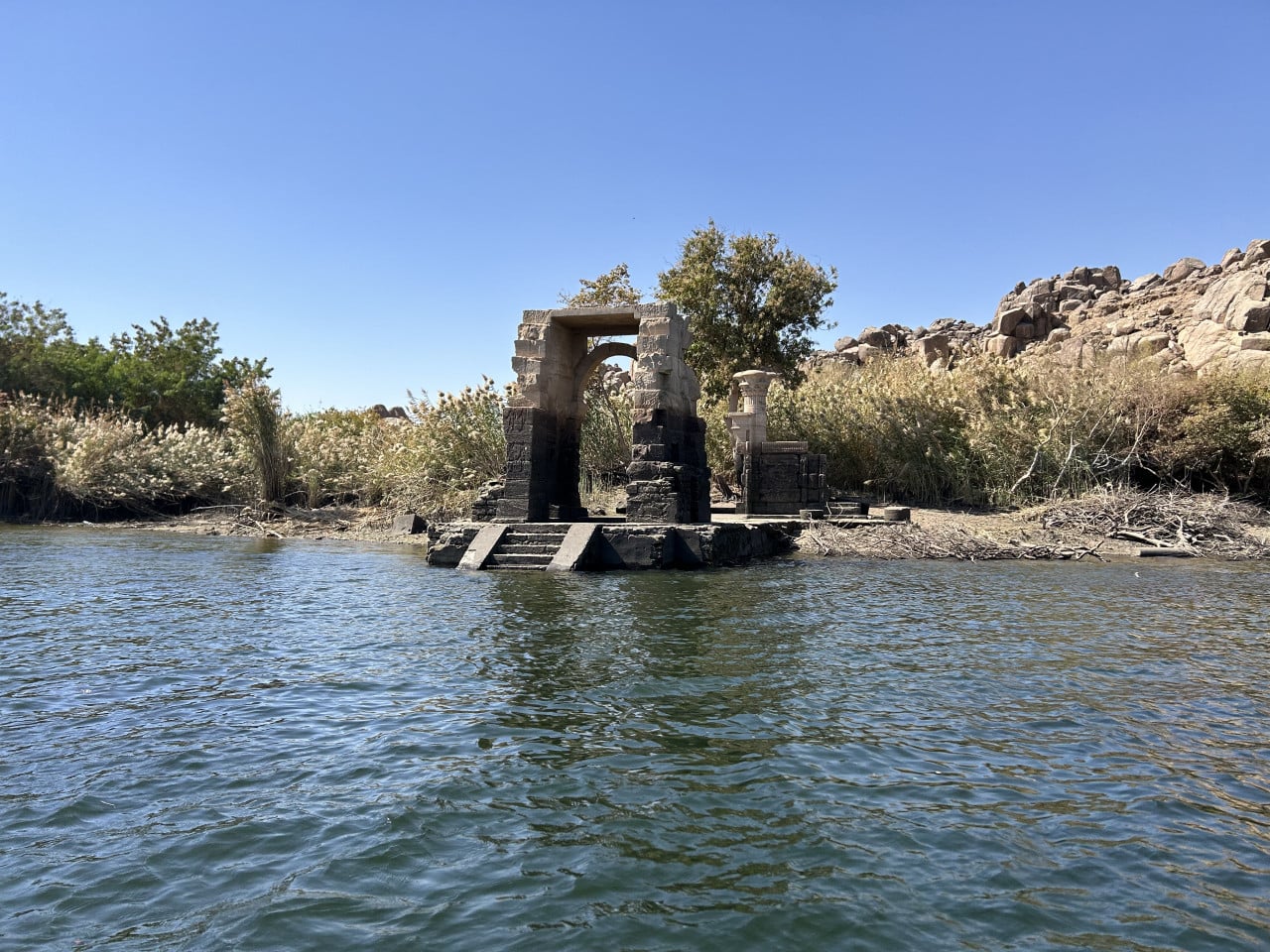
The oldest surviving structure is the kiosk of Pharaoh Nectanebo I, who ruled in the 4th century BC. Most of the complex, however, dates from the Ptolemaic period, the Greek dynasty that ruled Egypt after Alexander the Great conquered the country. Construction of the main Temple of Isis was begun by Ptolemy II Philadelphus, who ruled from 285 to 246 BC. (Egypt's Monuments)
The complex was gradually expanded by other Ptolemaic rulers and later by Roman emperors. Ptolemy VI had a temple to the goddess Hathor built here, while the emperors Augustus, Hadrian, and Trajan also left behind buildings or decorations. (Egypt's Monuments)
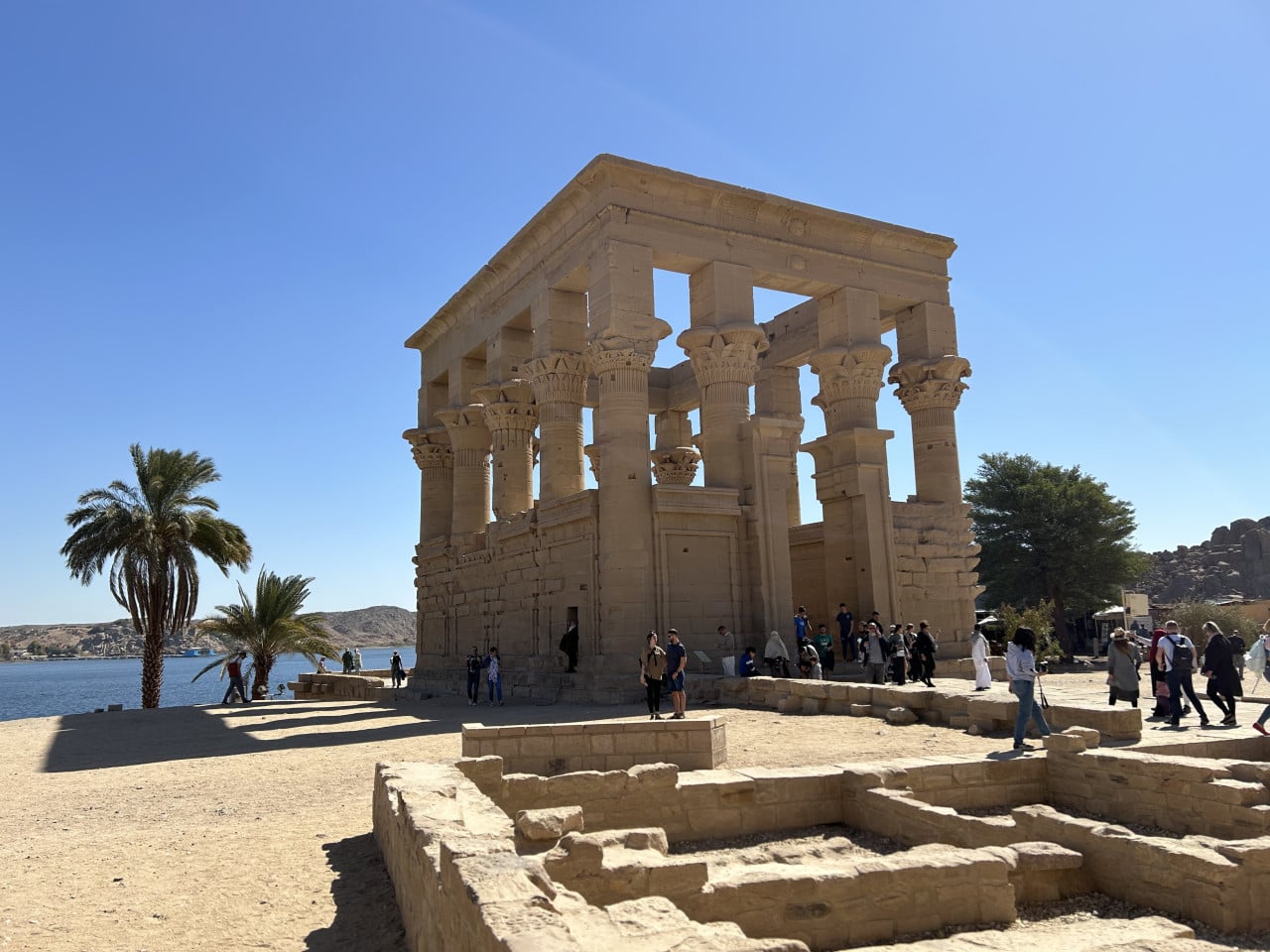
The photogenic Trajan's Kiosk, which stands near the water, dates from the Roman period. It consists of fourteen massive columns with richly decorated capitals. The structure was never fully completed and today lacks a roof, yet it remains one of the best-known parts of Philae.
The last known hieroglyph in the world
Philae was not merely one of many Egyptian temples. The cult of the goddess Isis survived here for an unusually long time, even after Egypt became part of the Roman Empire and gradually adopted Christianity.
This is where the last known precisely dated inscription written in Egyptian hieroglyphs can be found. It was carved by a priest named Esmet-Akhom in AD 394. By then, hieroglyphs were already an almost forgotten script understood by only a small group of priests. (Egypt's Monuments)
The Temple of Isis remained in use until the reign of the Byzantine emperor Justinian I. In the 6th century, the pagan cult was definitively brought to an end and part of the temple was converted into a Christian church. In some places, therefore, you can see Christian crosses, while the faces and figures of the original Egyptian gods were deliberately damaged. (Egypt's Monuments)
As a result, Philae captures several different historical periods at once—ancient Egypt, the rule of the Greek Ptolemies, the Roman Empire, and the rise of Christianity.
Walking among columns and hieroglyphs
Inside, we wandered around, took photographs, and explored the individual rooms. Some were quite dark, with light entering only through narrow doorways. It was in these spaces that the reliefs stood out most vividly from the walls.
In contrast, the harsh Egyptian sun shone down on the open courtyards, creating striking contrasts of light and shadow between the tall columns. The entire complex was much larger than it had initially appeared from the boat.
Of course, there were quite a lot of tourists, but the site is extensive enough that we were also able to find quieter places. What I liked most was the combination of monumental temples, hieroglyphs, and views of the water around the island.
The Unfinished Obelisk: the largest obelisk that was never completed
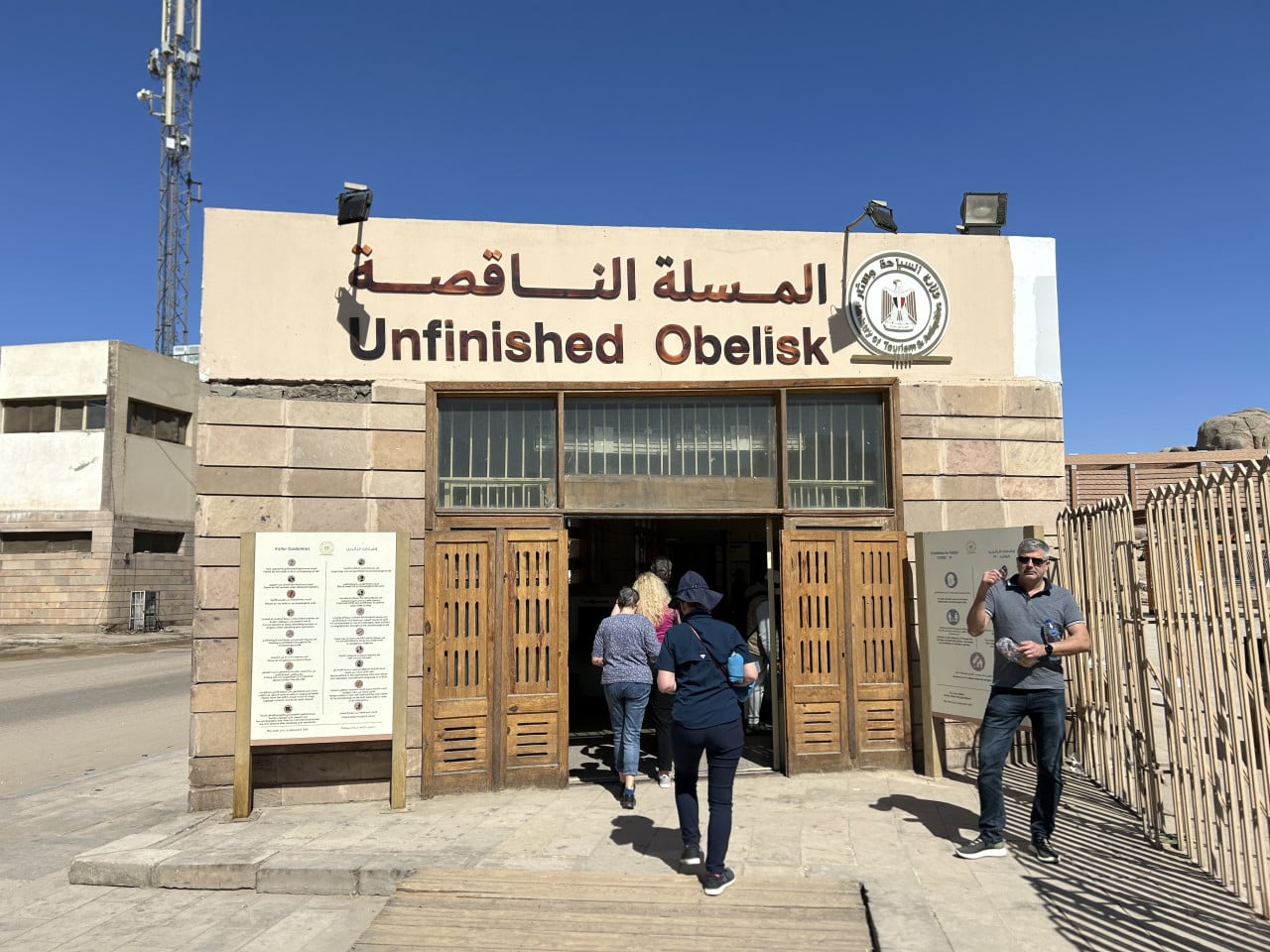
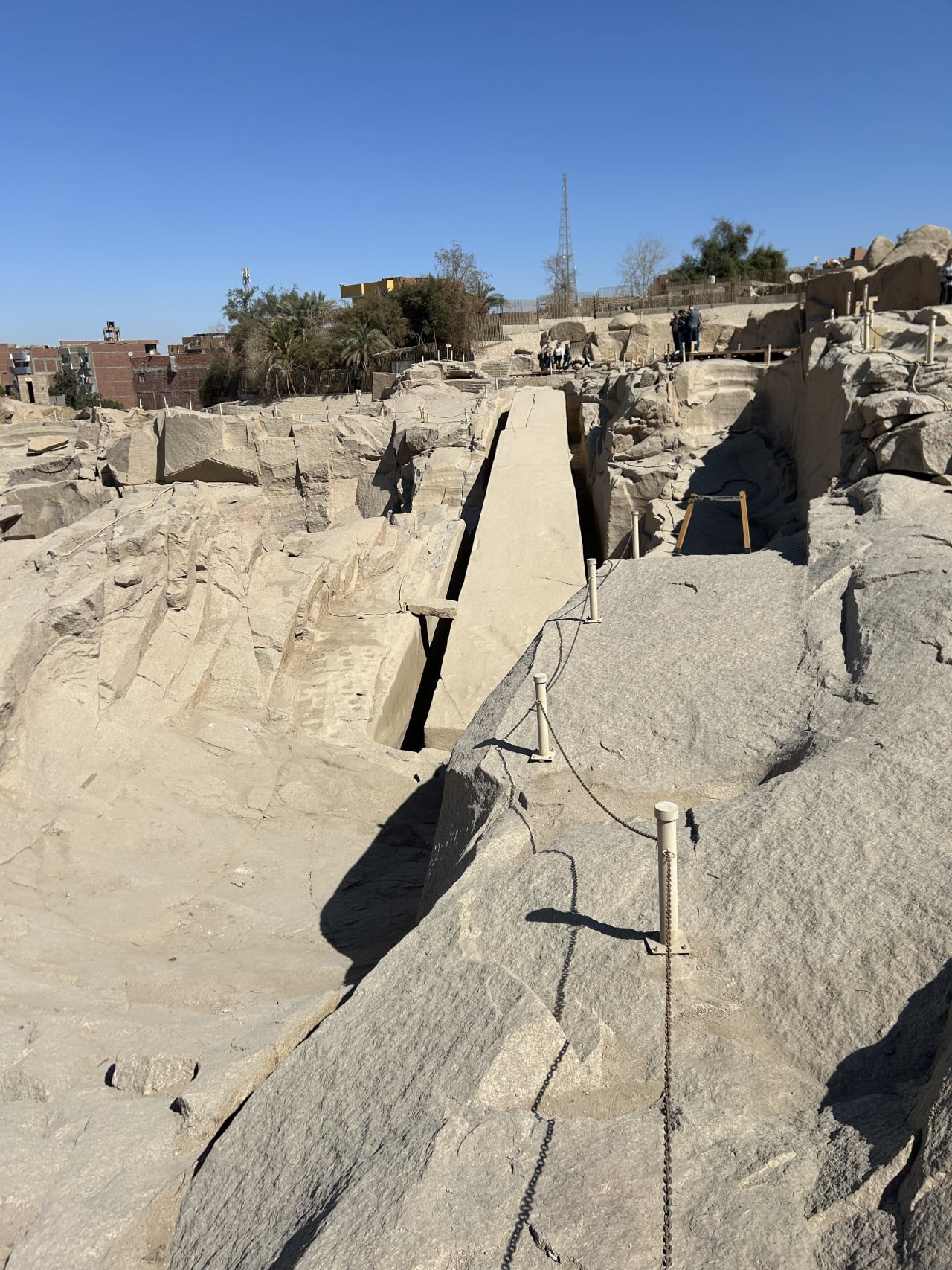
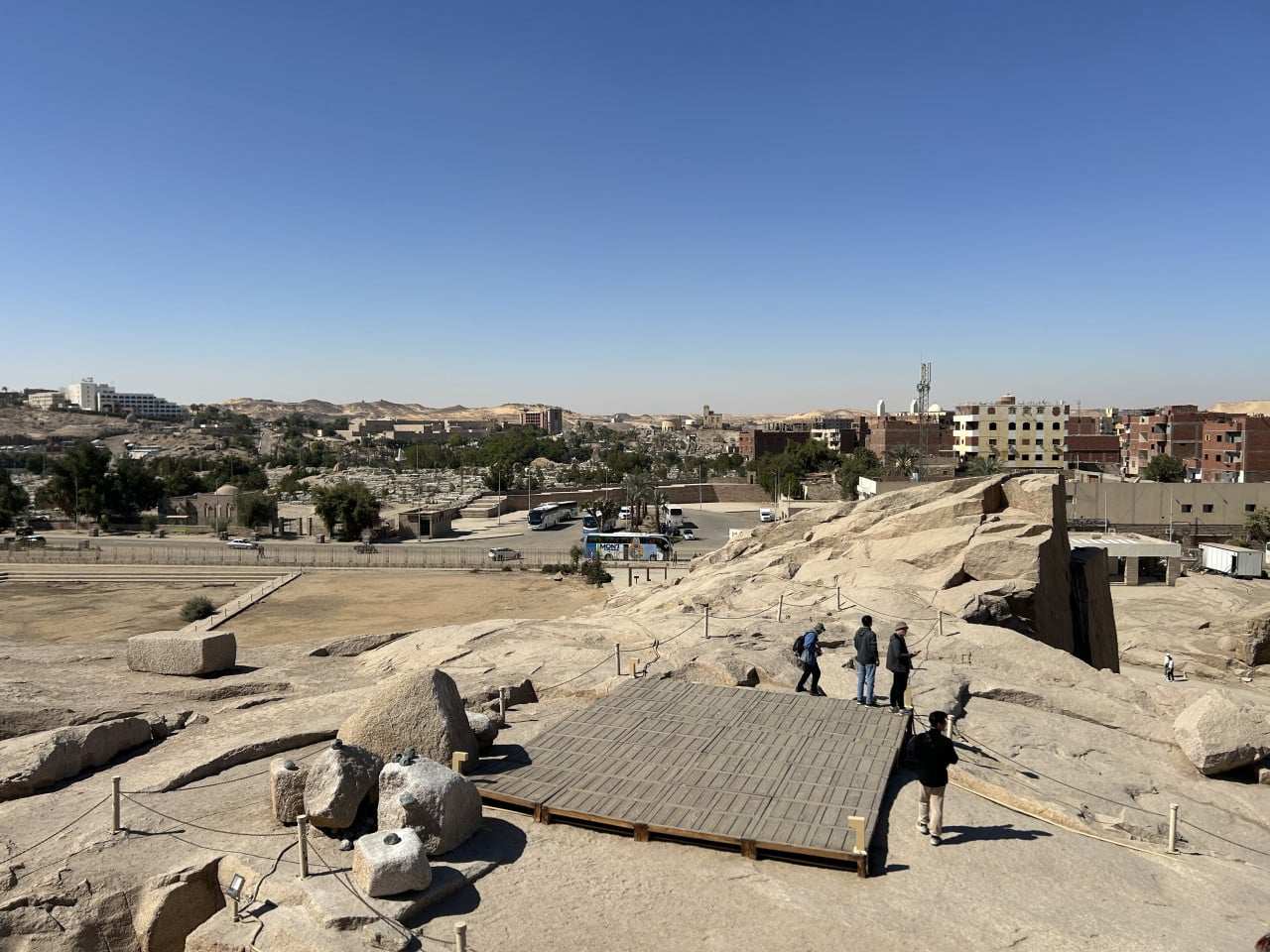
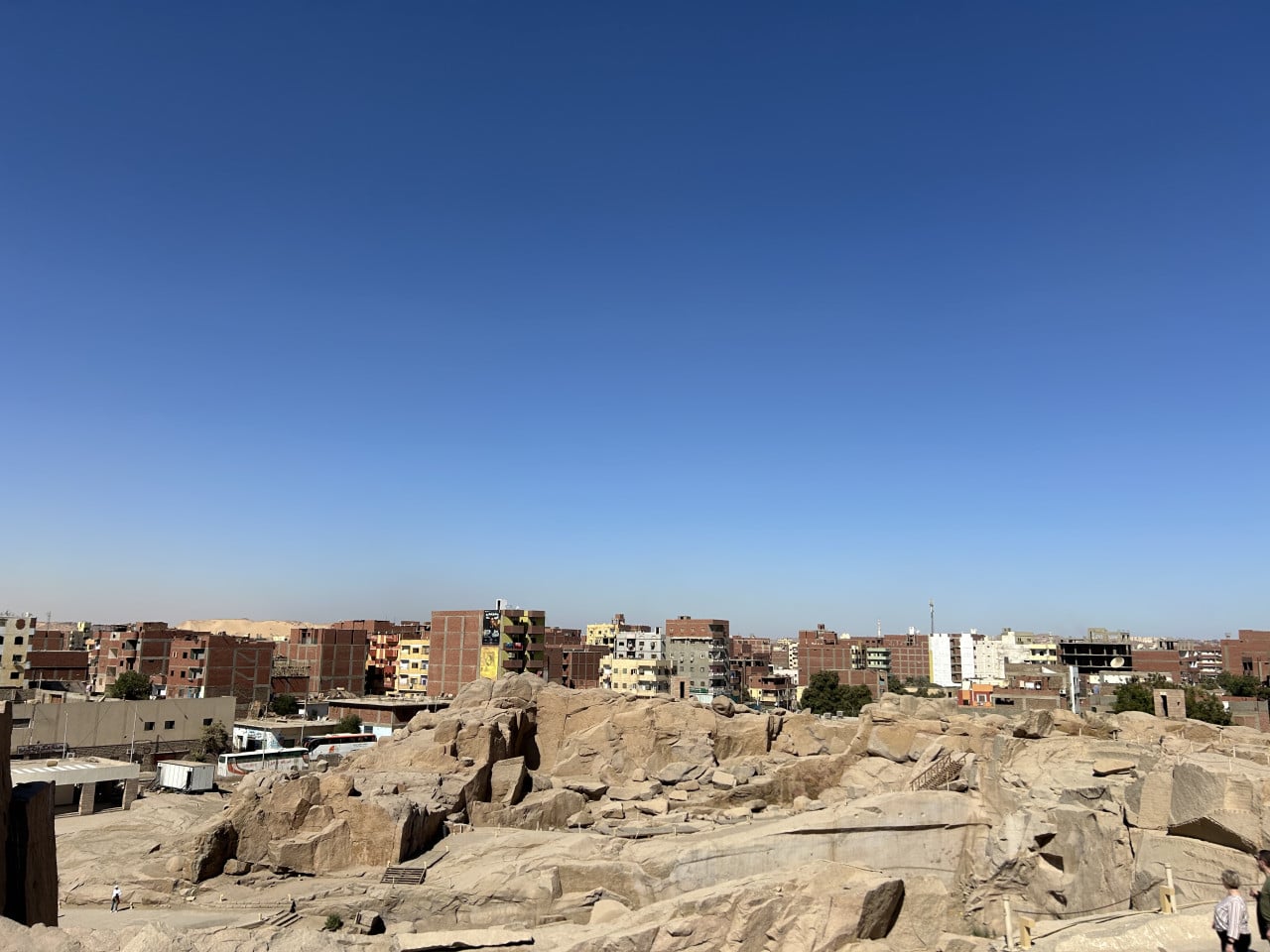
After visiting Philae, we continued to the Unfinished Obelisk, which is located directly in one of Aswan's ancient granite quarries.
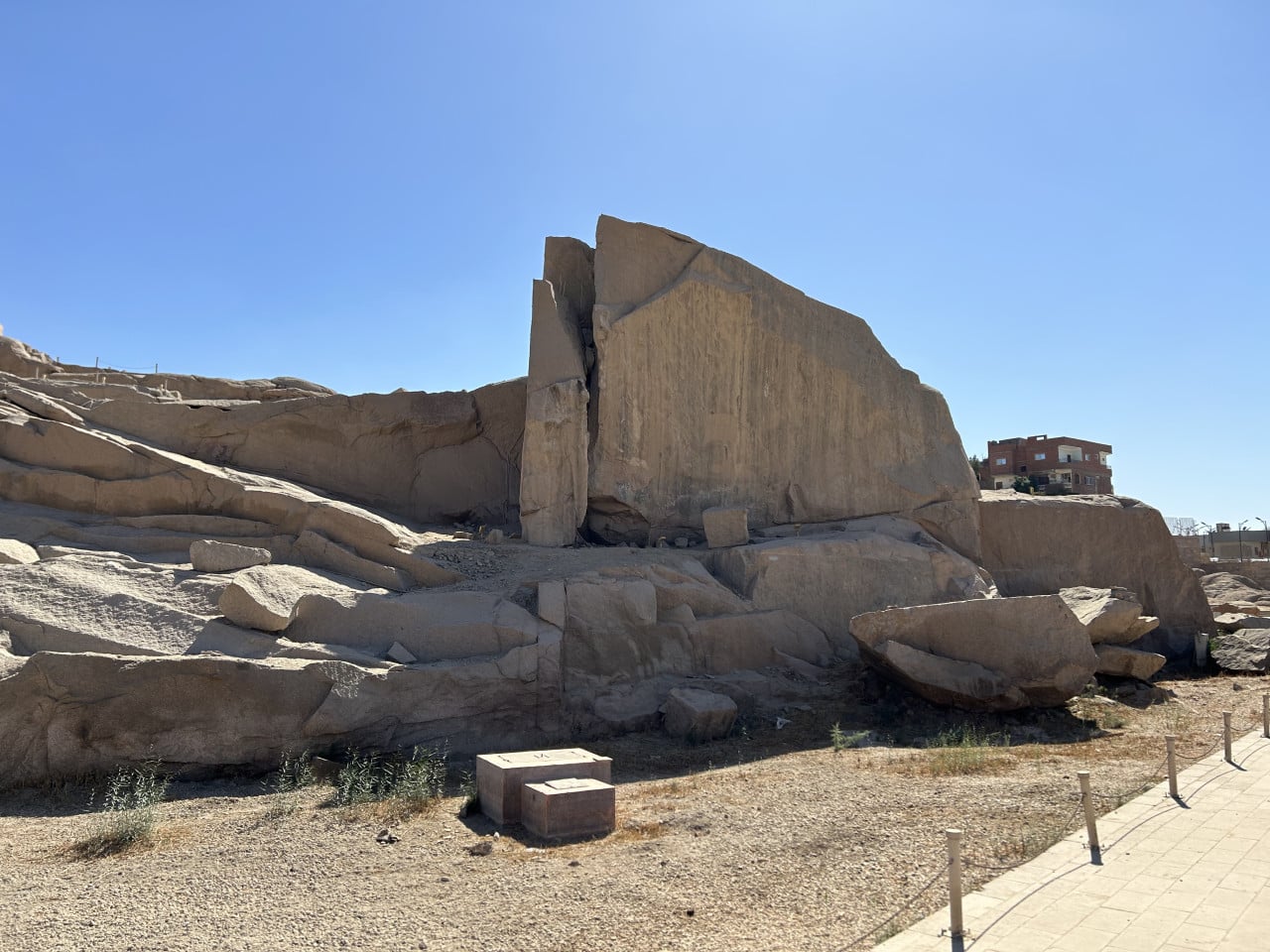
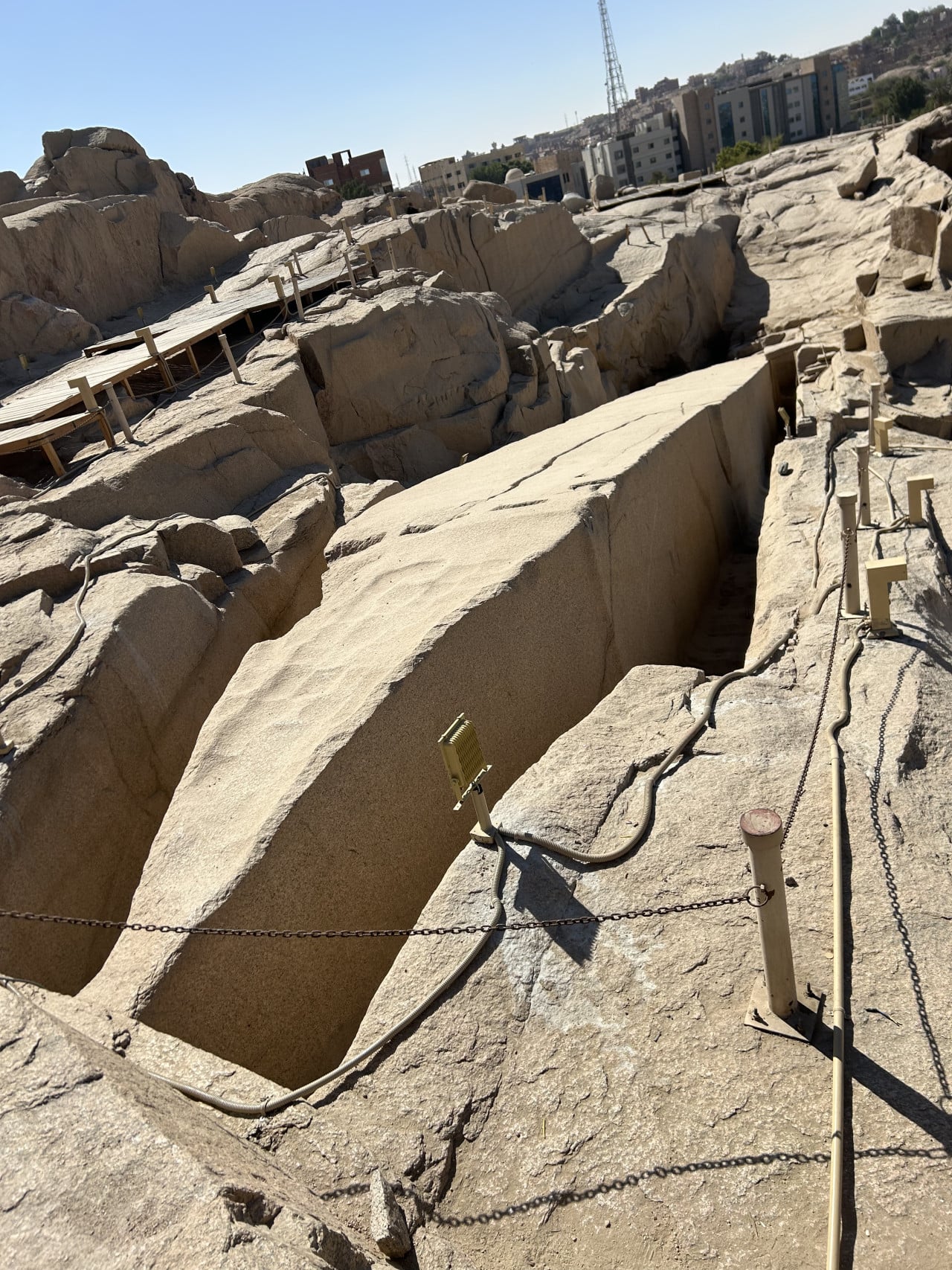
At first glance, the site does not look as monumental as the temple complex. The obelisk does not stand upright but still lies in the granite bedrock from which ancient workers began carving it.
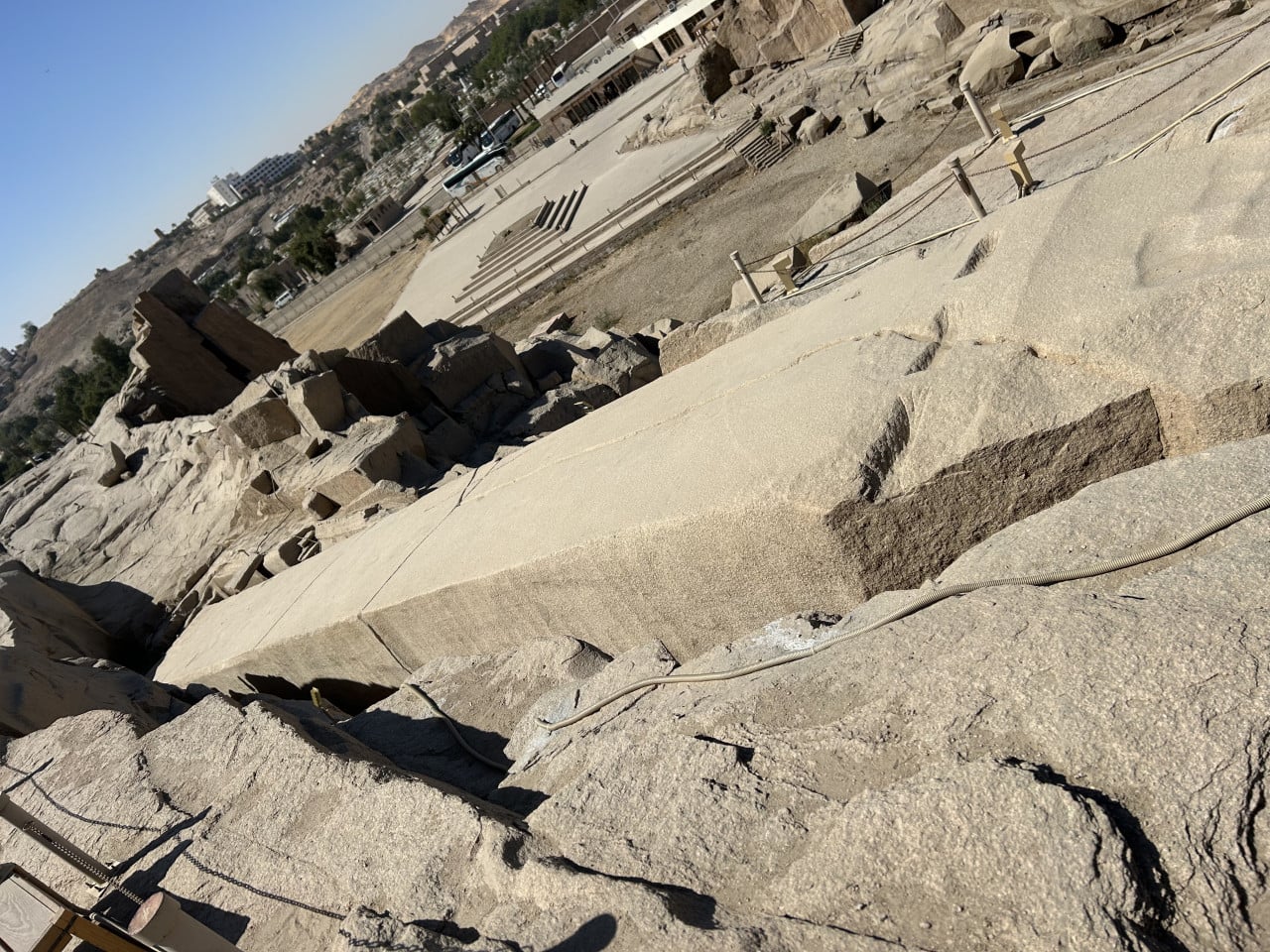
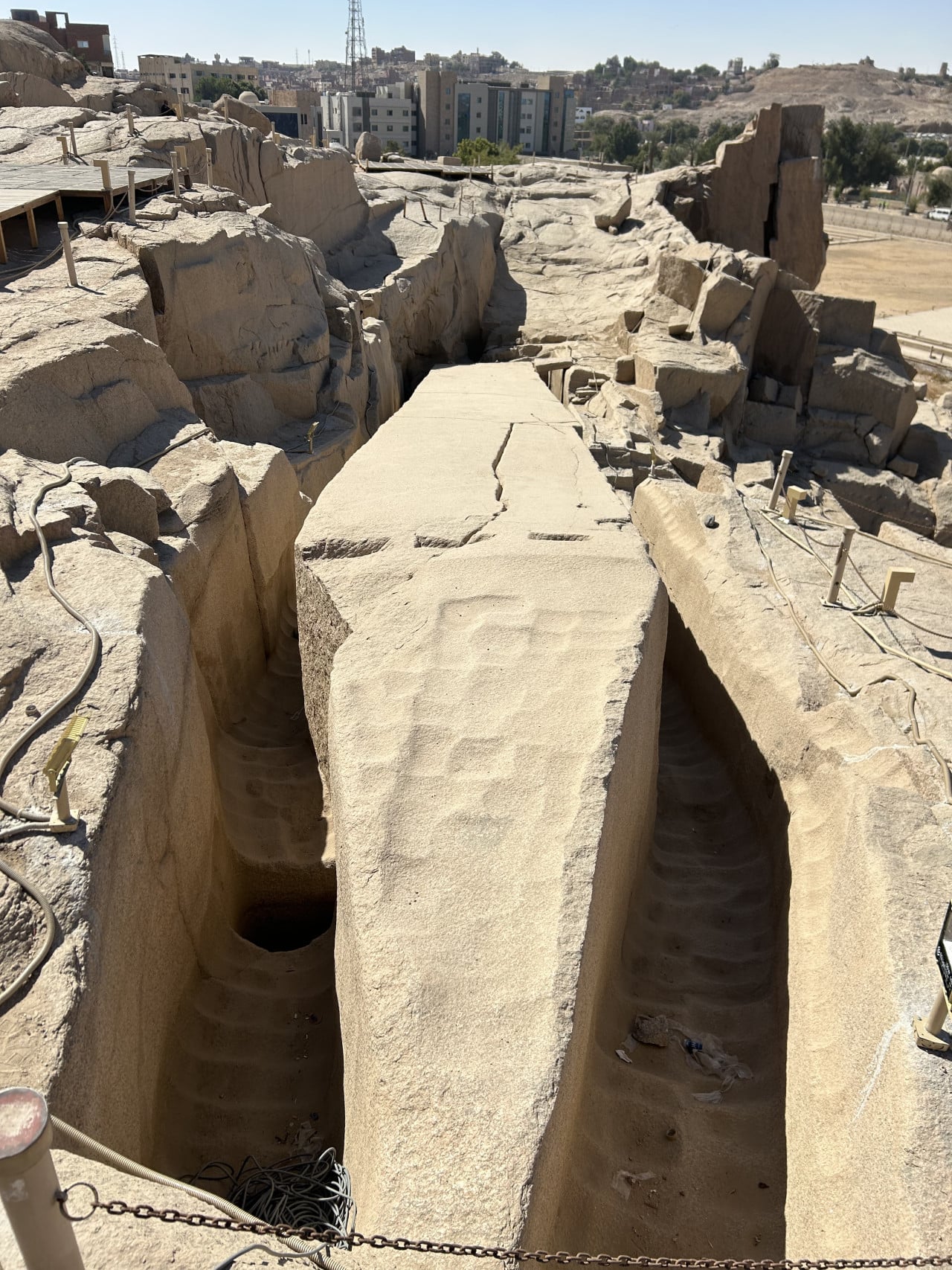
Only when you get above it and look along its full length do you realize how enormous it was intended to be. If completed, it would have measured approximately 42 meters and weighed about 1,168 tons. It would therefore have been the largest known obelisk ever created by the ancient Egyptians. (Egypt's Monuments)
It is believed to have been commissioned by Queen Hatshepsut in the 15th century BC. It was probably intended to be transported to the temple complex at Karnak near present-day Luxor. (Egypt's Monuments)
Why did the Egyptians not finish it?
Obelisks were made from a single piece of stone. Workers therefore first cut deep trenches around the future obelisk and gradually shaped its sides. Only in the final stage was it to be separated from the bedrock beneath it.
During the work, however, cracks appeared in the granite. For such a large stone monolith, this was a critical problem. The entire obelisk could have broken apart during separation, transportation, or erection, so work was stopped. The obelisk thus remained lying exactly where workers had been shaping it thousands of years ago. (Egypt's Monuments)
Paradoxically, this failure makes the site exceptionally valuable to archaeologists. Tool marks and working grooves can still be seen on the surface and around the obelisk. Here, it is much easier to imagine how the Egyptians made enormous stone monuments than when looking only at a finished obelisk standing in front of a temple.
Honestly, the visit was interesting mainly because it made us imagine what would have followed if the stone had not cracked. Carving a monolith weighing more than a thousand tons was already incredible, but the Egyptians also planned to transport it to the Nile, load it onto a ship, carry it hundreds of kilometers, and then erect it vertically.
The Old Cataract Hotel and Winston Churchill
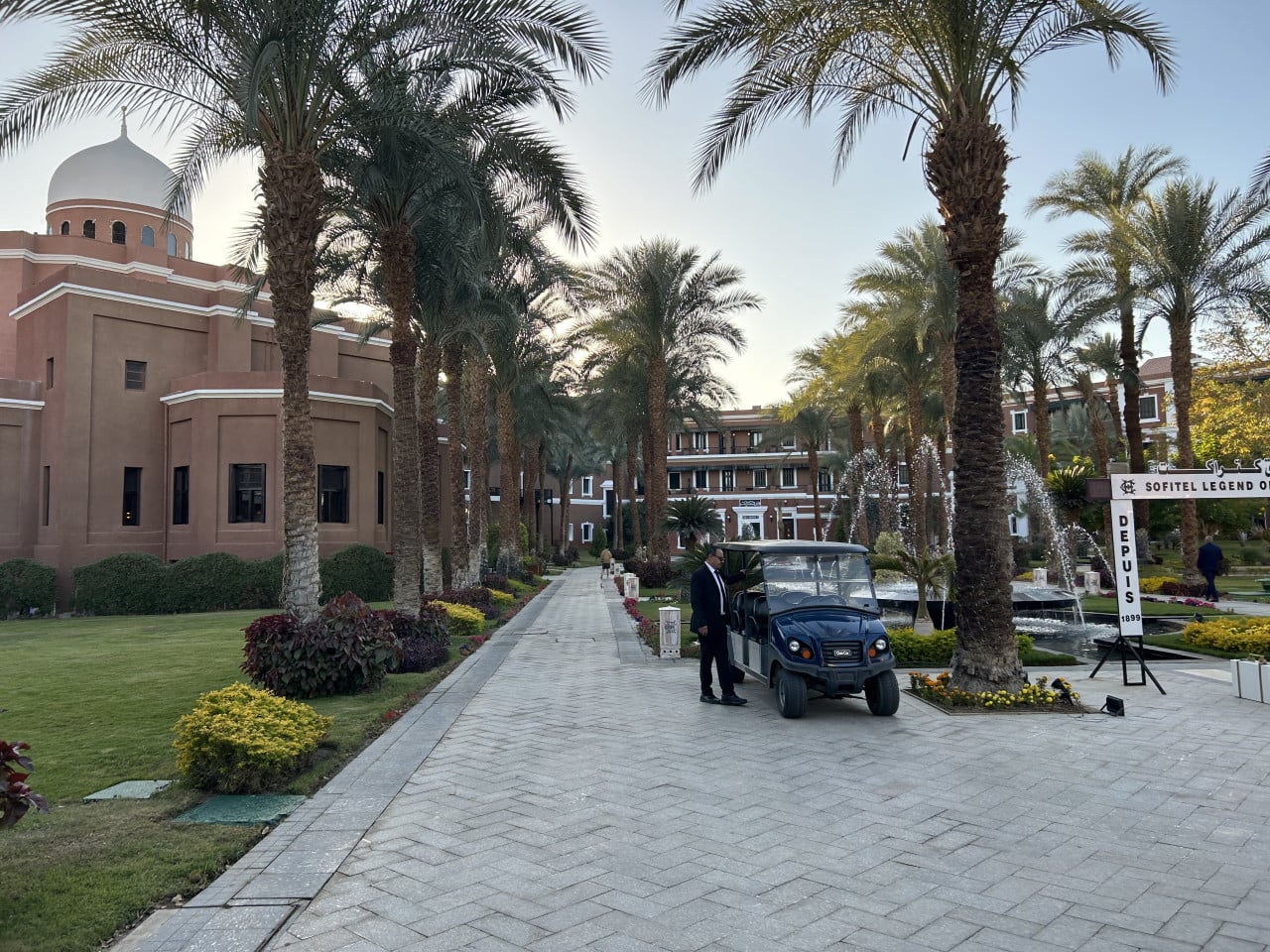
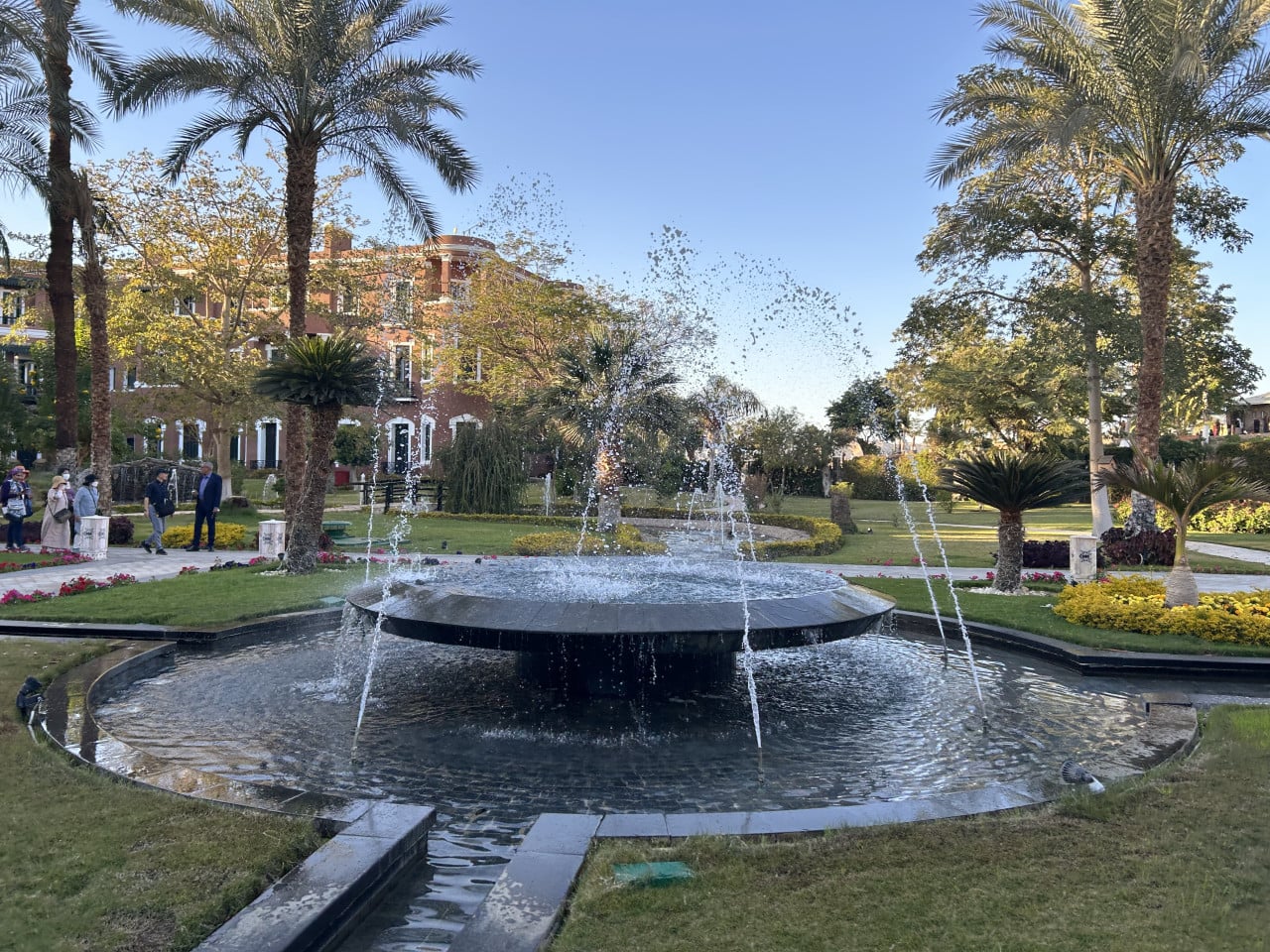
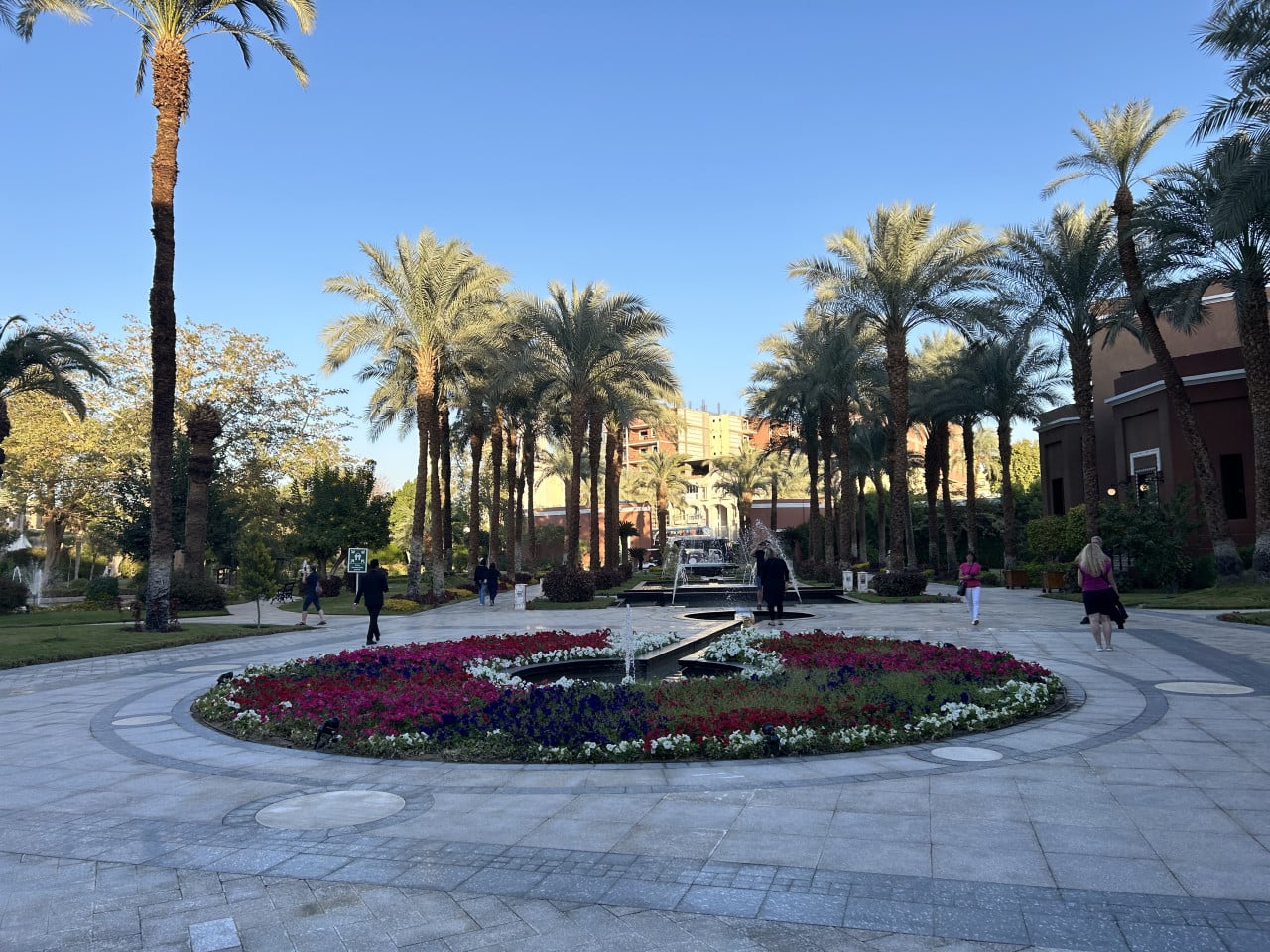
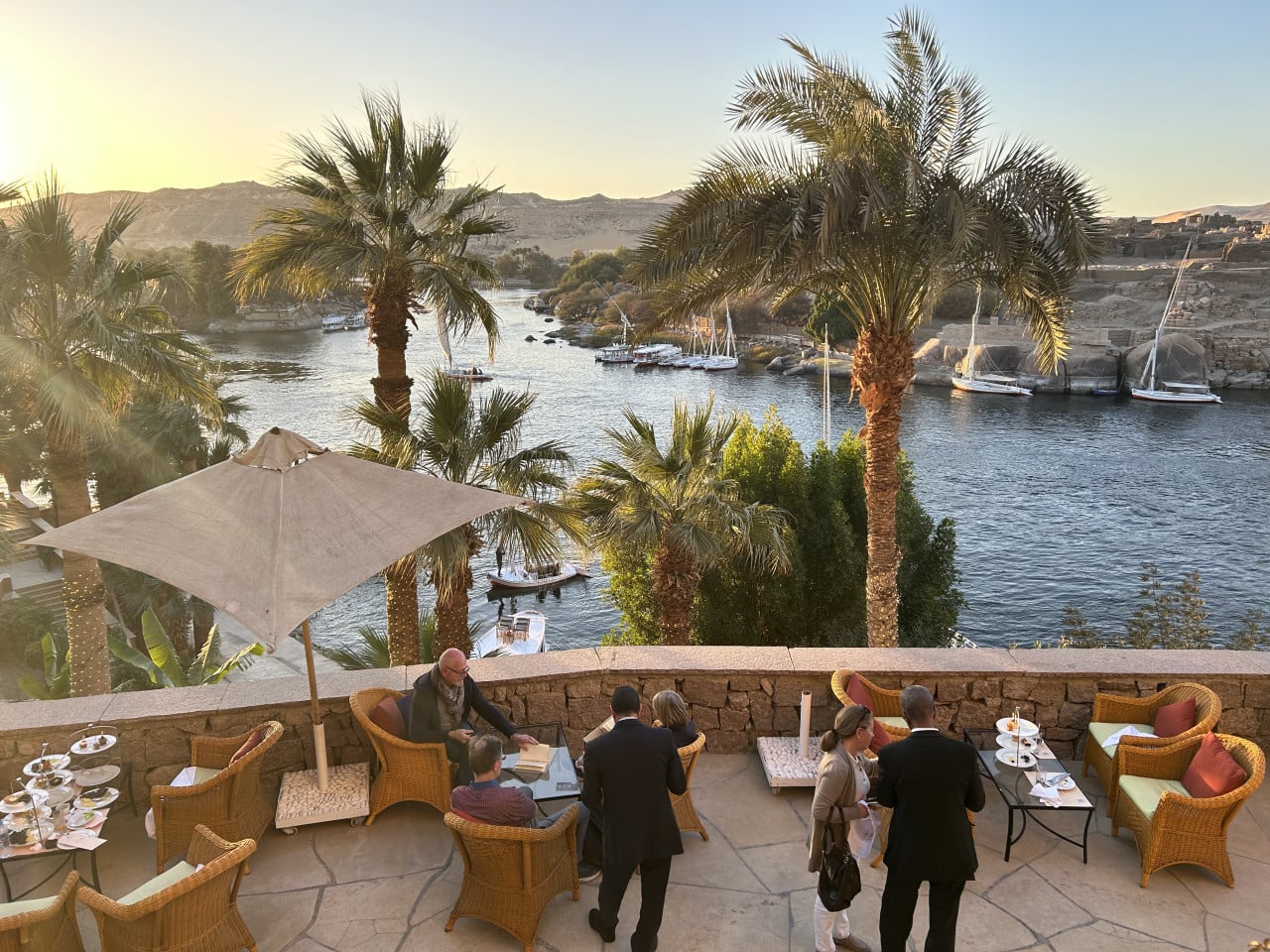
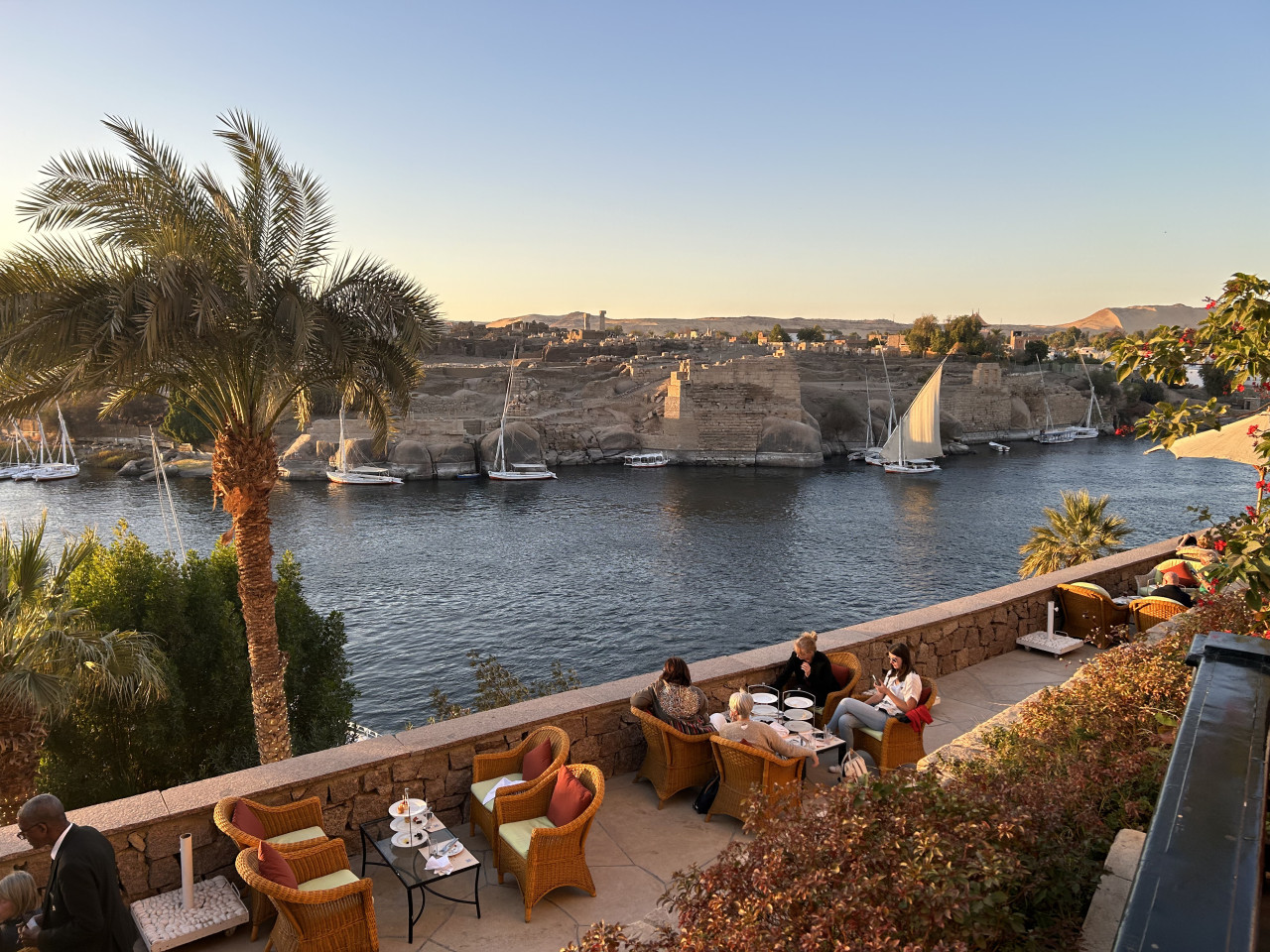
Our final stop before returning to the boat was the famous Old Cataract Hotel, which stands on elevated ground directly above the Nile.
The hotel was established around 1899 and 1900 at the initiative of the travel company Thomas Cook & Son. It was intended to provide luxurious accommodation for wealthy European travelers who came to explore the monuments of Egypt and Nubia. Its name refers to the First Cataract of the Nile, an area of granite rocks and former rapids around Aswan. (insightvacations.com)
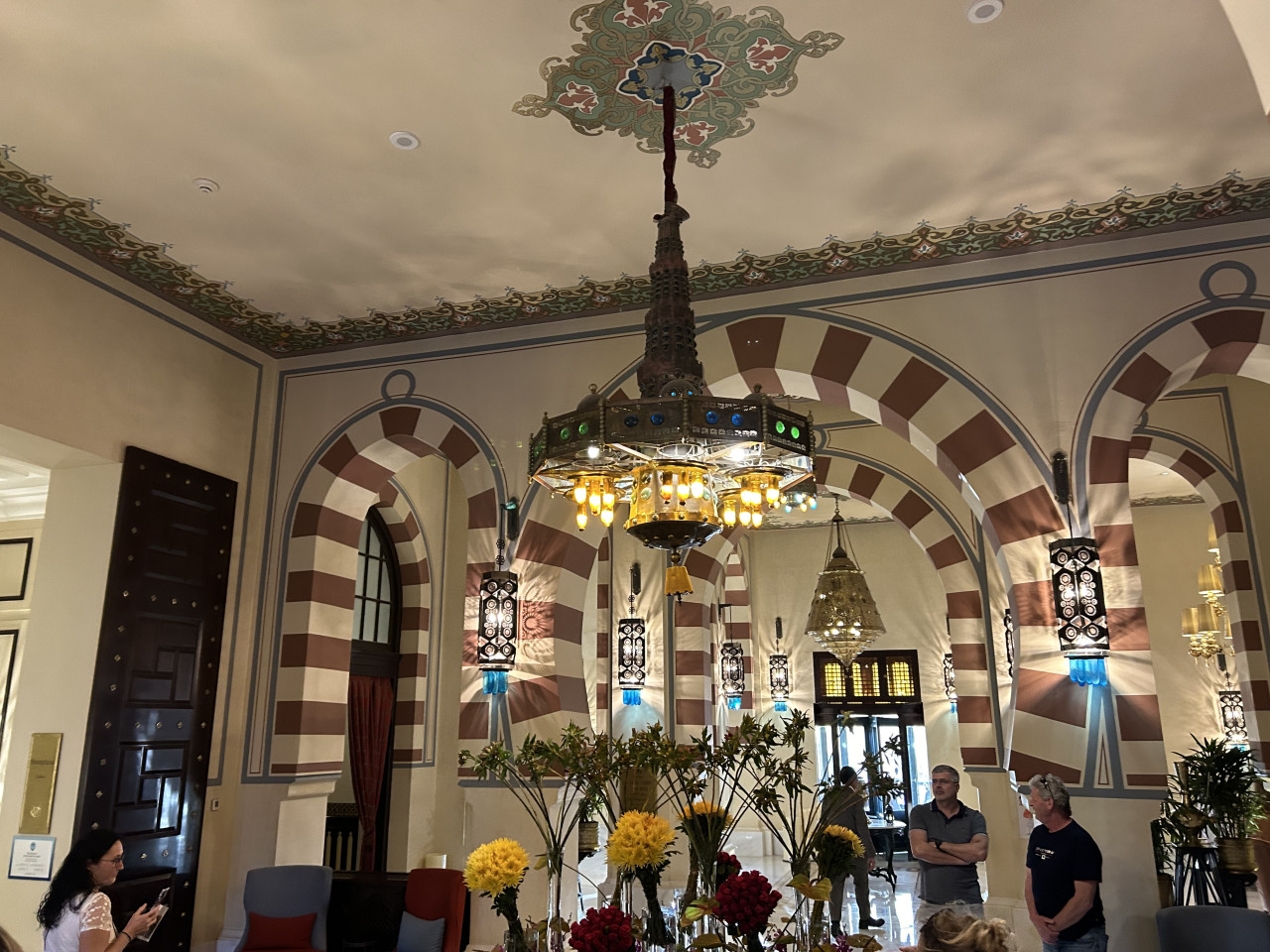
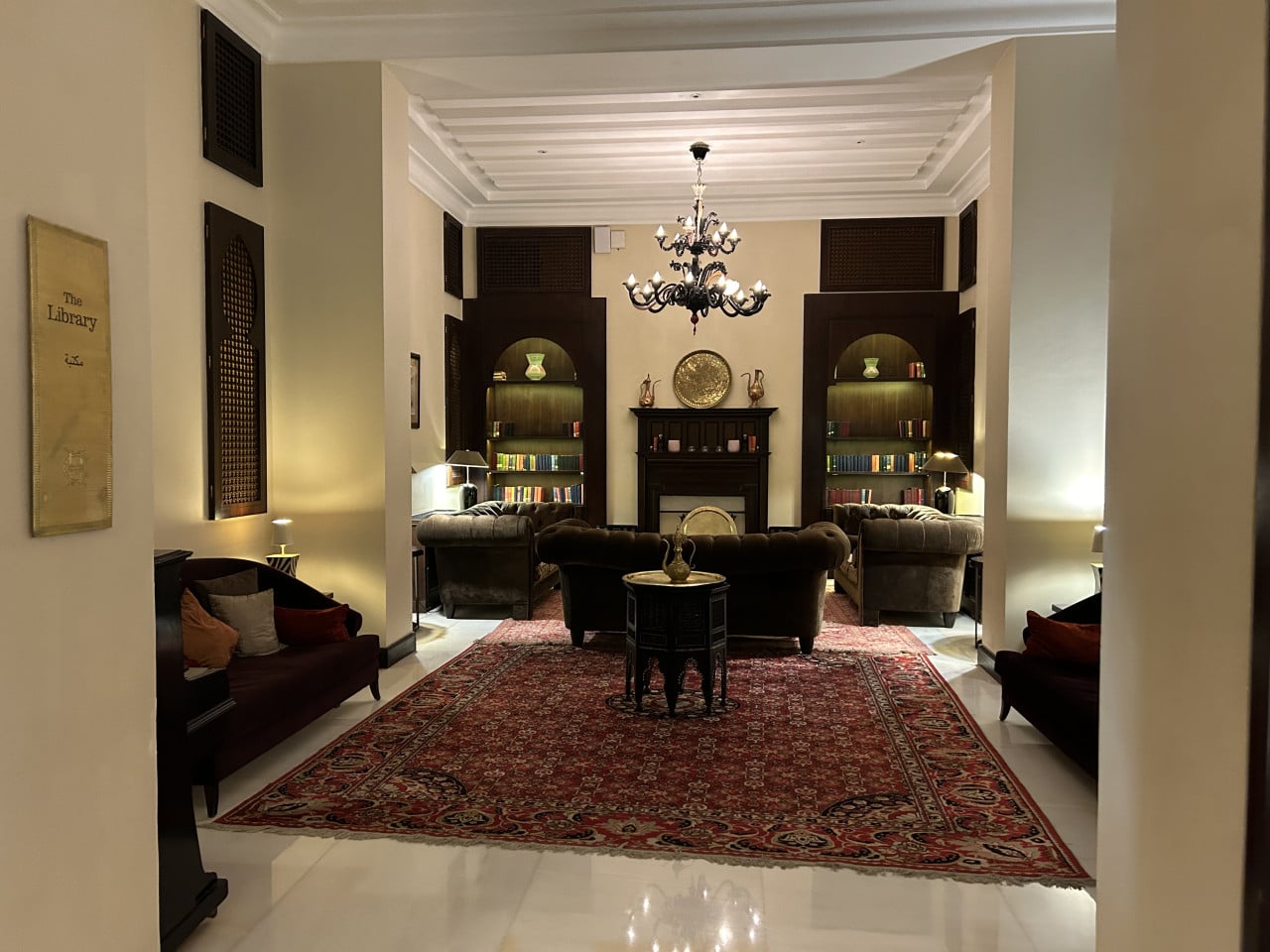
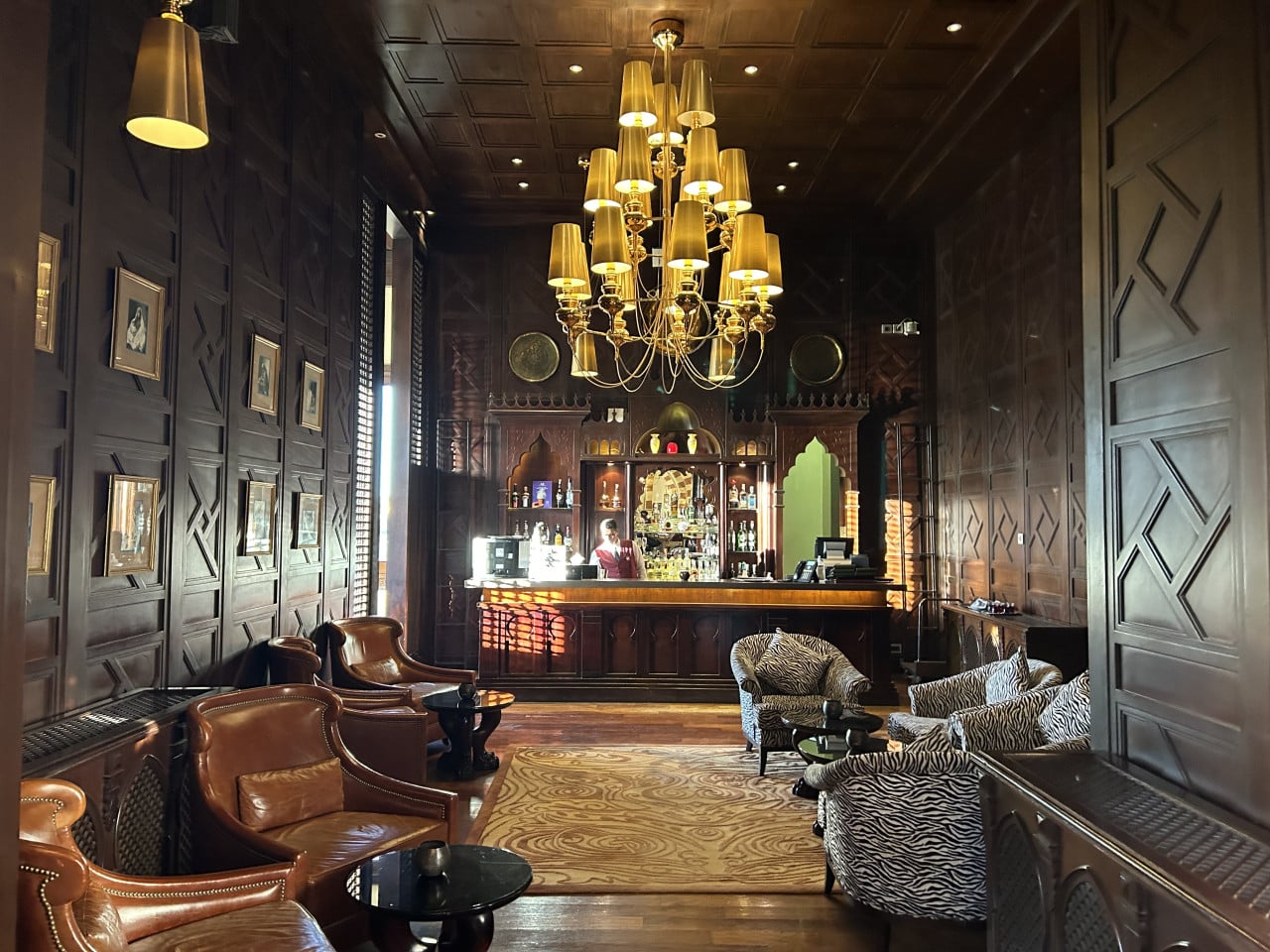
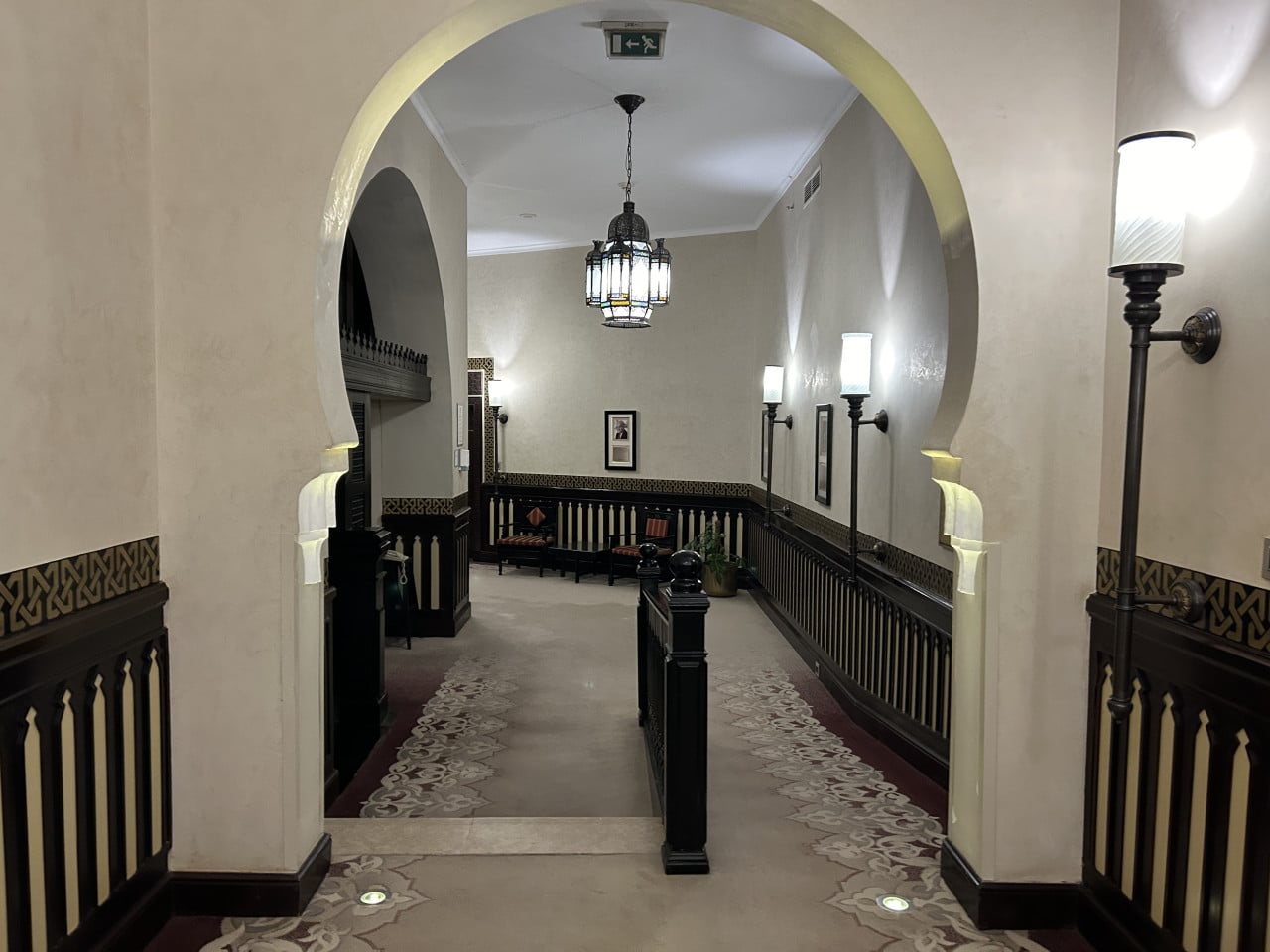
The interior itself feels very historic. Here you will find dark carved wood, Oriental ornaments, high ceilings, and a combination of Victorian and Moorish architecture. From the beginning, the hotel was intended for prominent and wealthy guests, which is also reflected in its décor.
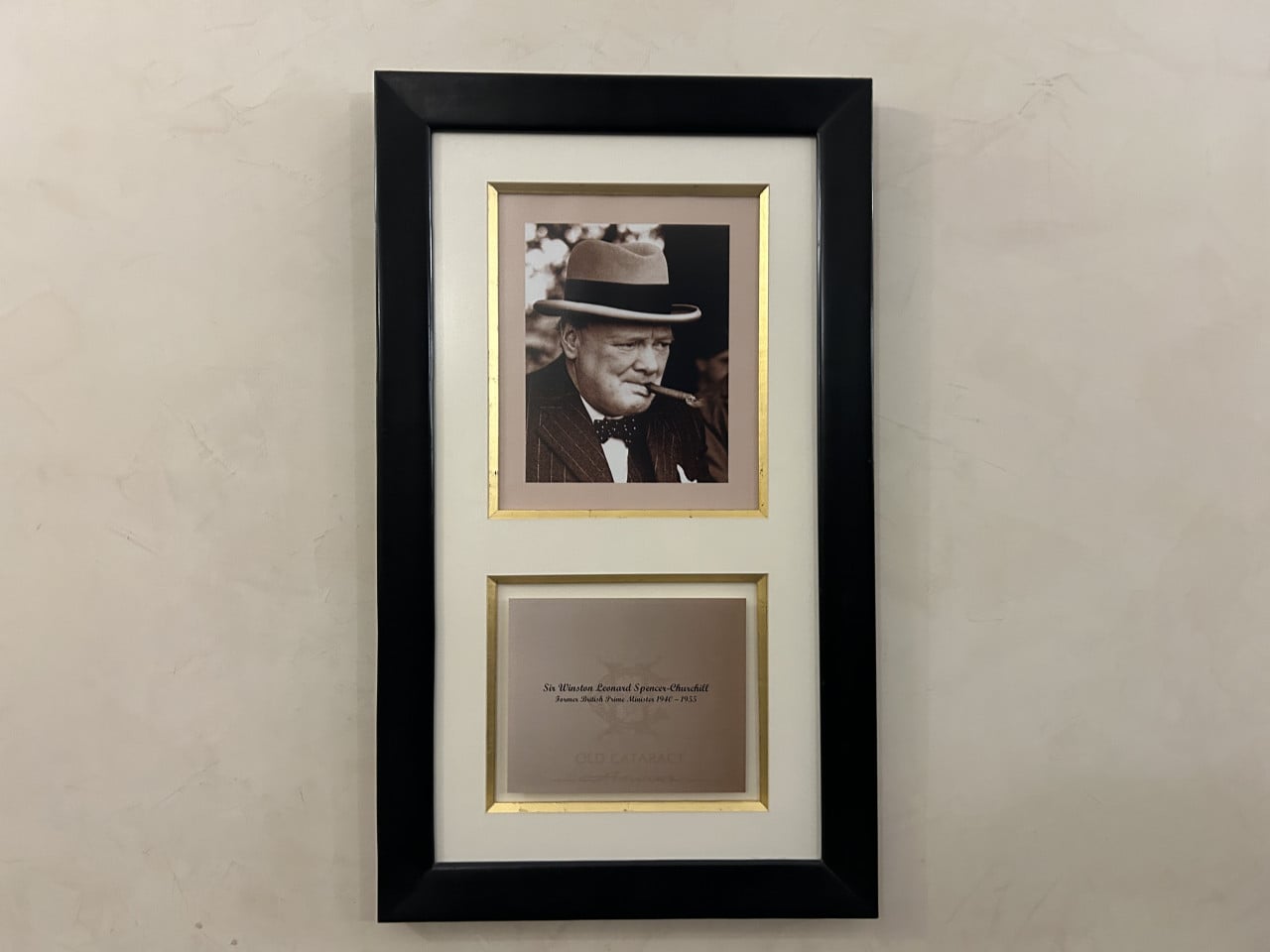
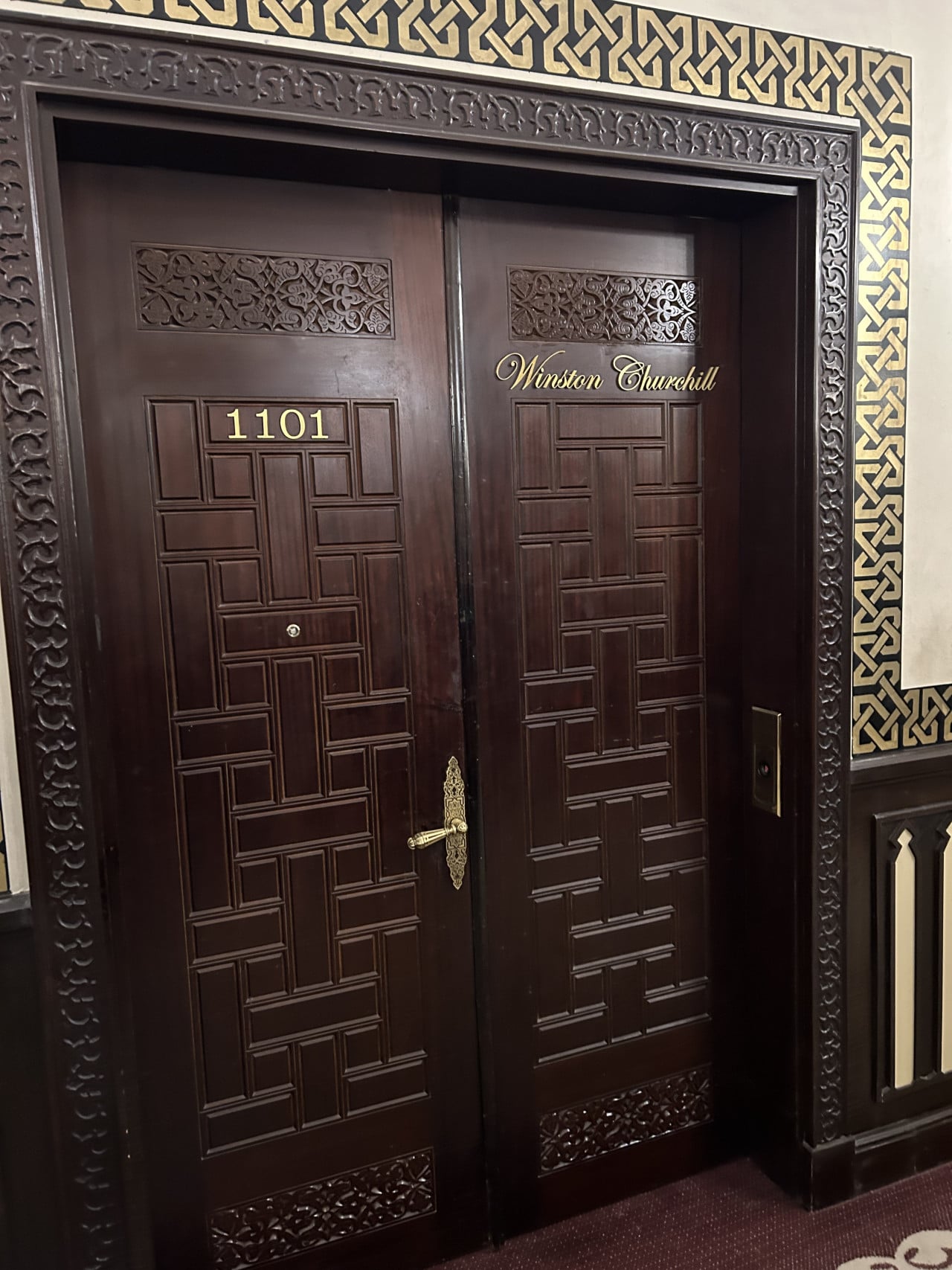
Famous visitors included Winston Churchill, Russian Tsar Nicholas II, King Farouk of Egypt, Princess Diana, and archaeologist Howard Carter. One of the most luxurious suites is still named after Winston Churchill. We went to see its ornate doors. (insightvacations.com)
The writer Agatha Christie is also closely associated with the hotel. It is traditionally said that she found inspiration here for her famous novel Death on the Nile and wrote part of the book on the hotel terrace overlooking the river. Another suite in the hotel is named after her, and the 1978 film adaptation of the book was partially filmed here. (insightvacations.com)
Back to the boat and onward along the Nile
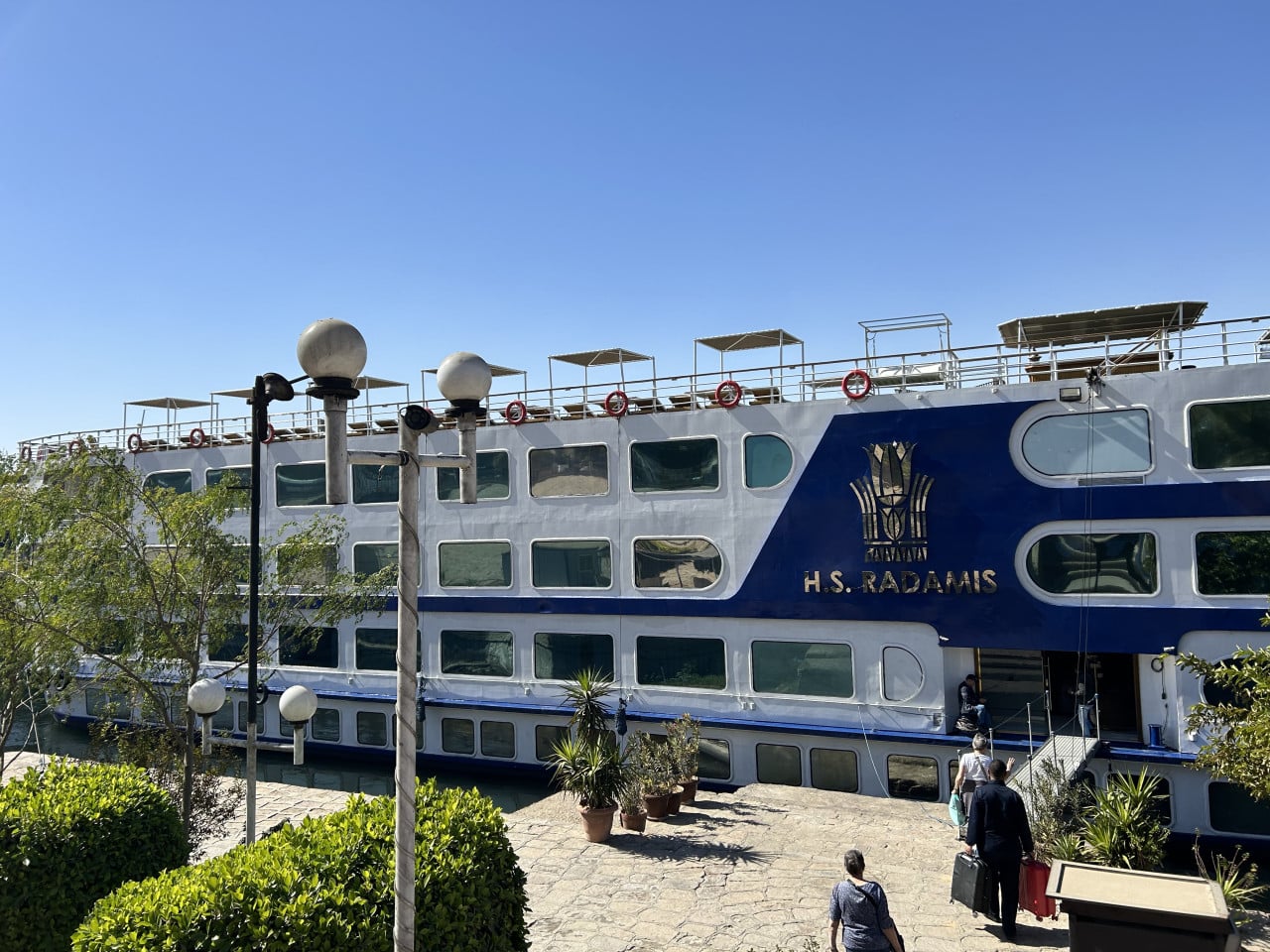
Our visit to the Old Cataract Hotel concluded our itinerary in Aswan. We then returned to the boat, from where we continued our cruise along the Nile.
In a single day, we saw a temple complex that had to be rescued from the water and moved to another island, an obelisk that never left its quarry because of a crack, and a hotel whose rooms have hosted politicians, writers, archaeologists, and members of royal families.
It is precisely this combination of ancient history, engineering curiosities, and stories of famous figures that makes Aswan one of the most interesting places we visited during our journey through Egypt.