From the Valley of the Kings to the Temple of Hatshepsut: the woman who became pharaoh and the secret cache of mummies
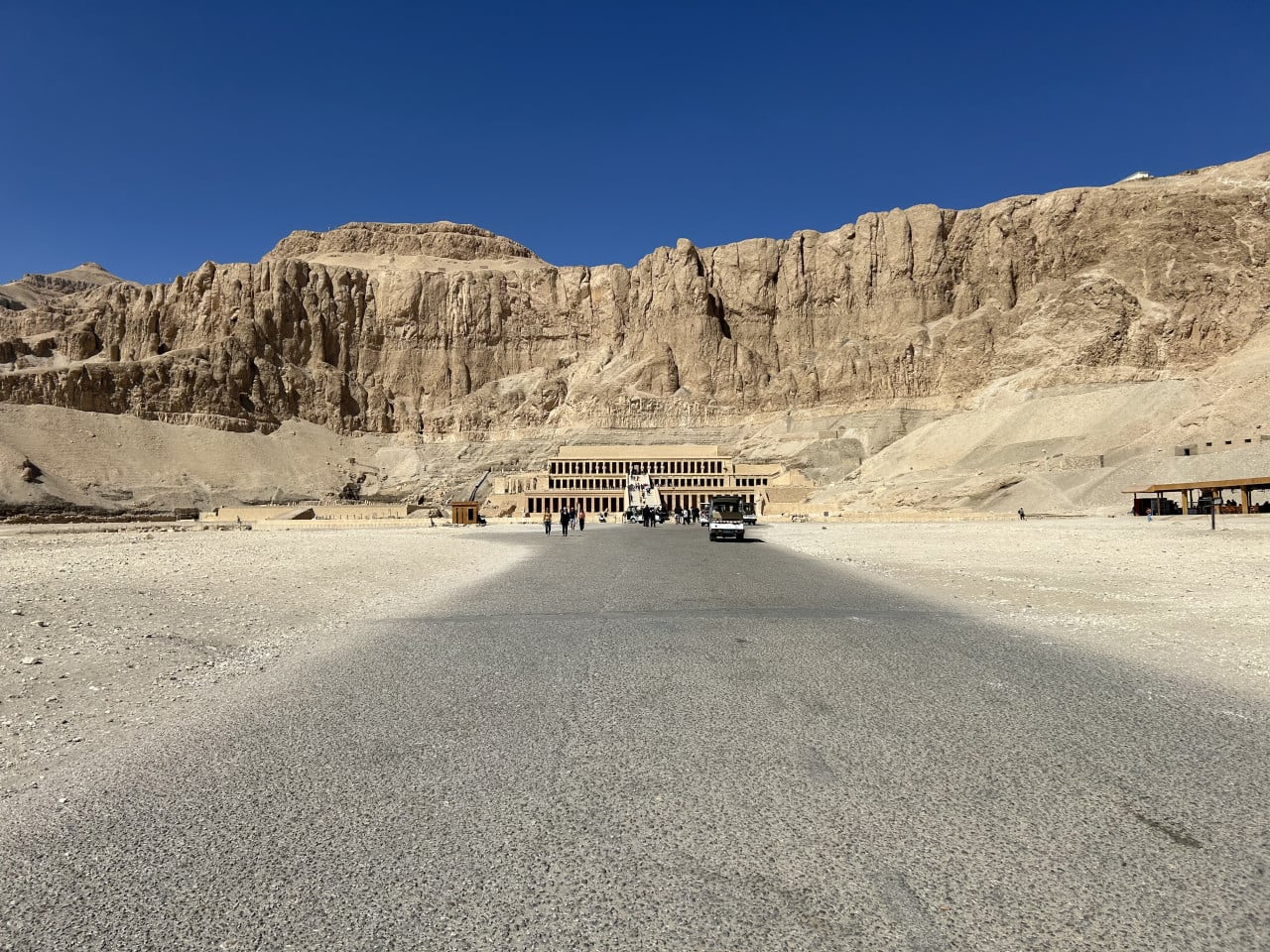
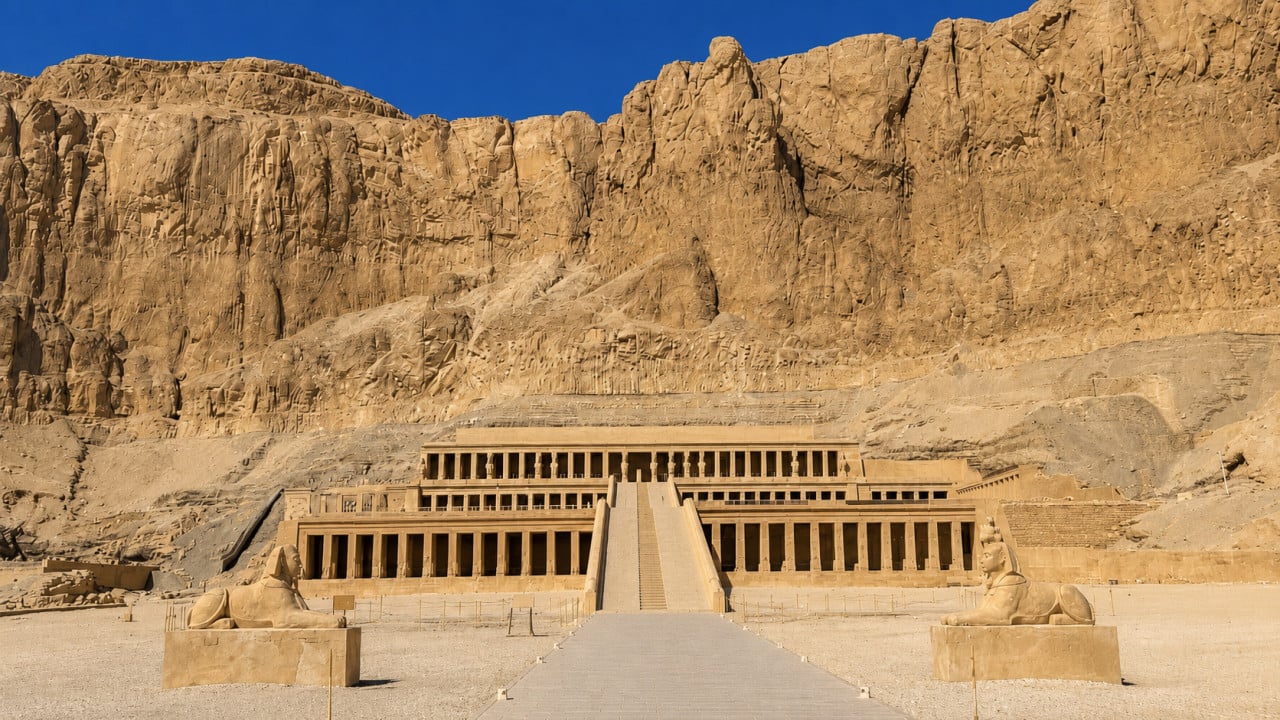
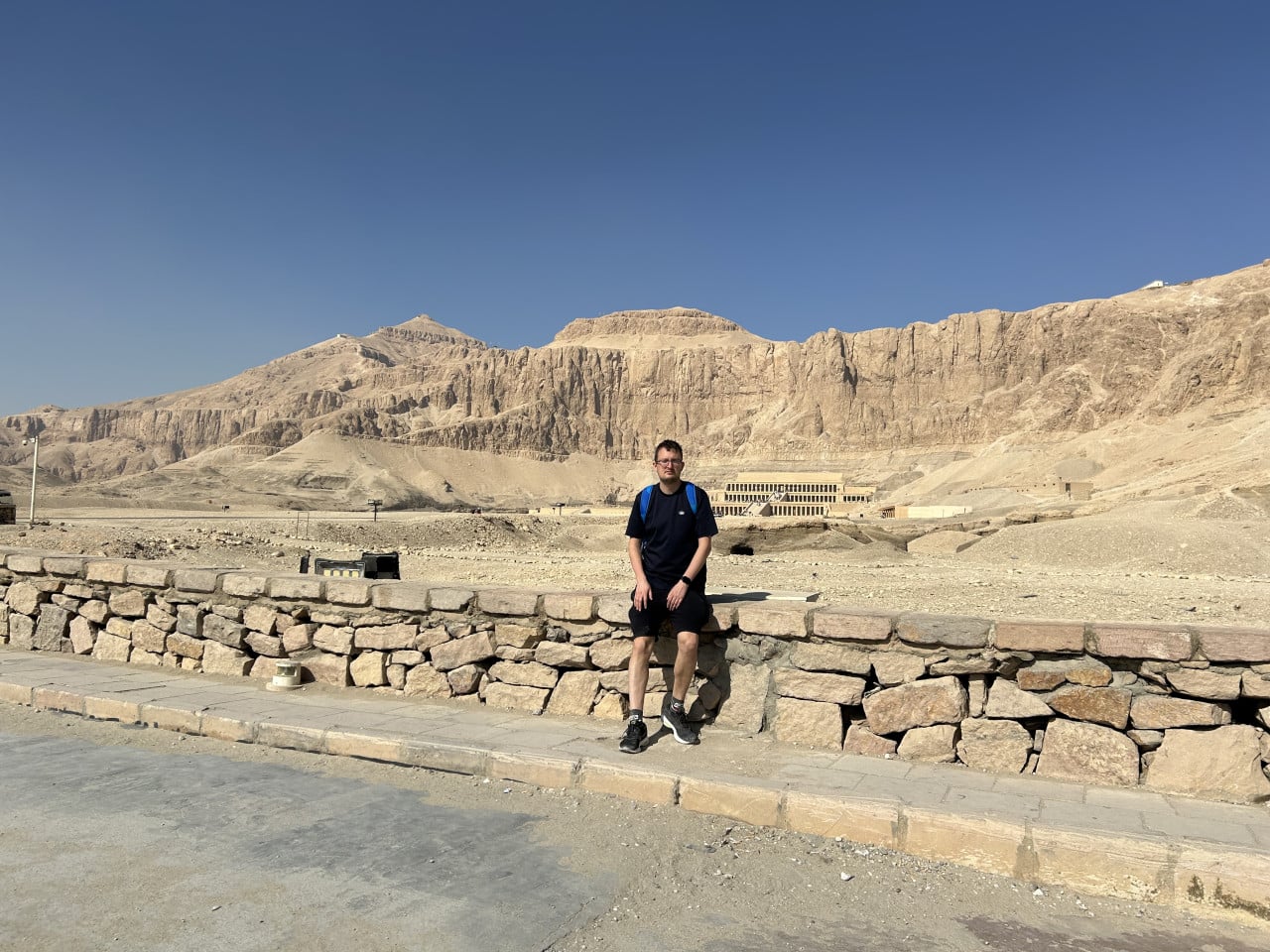
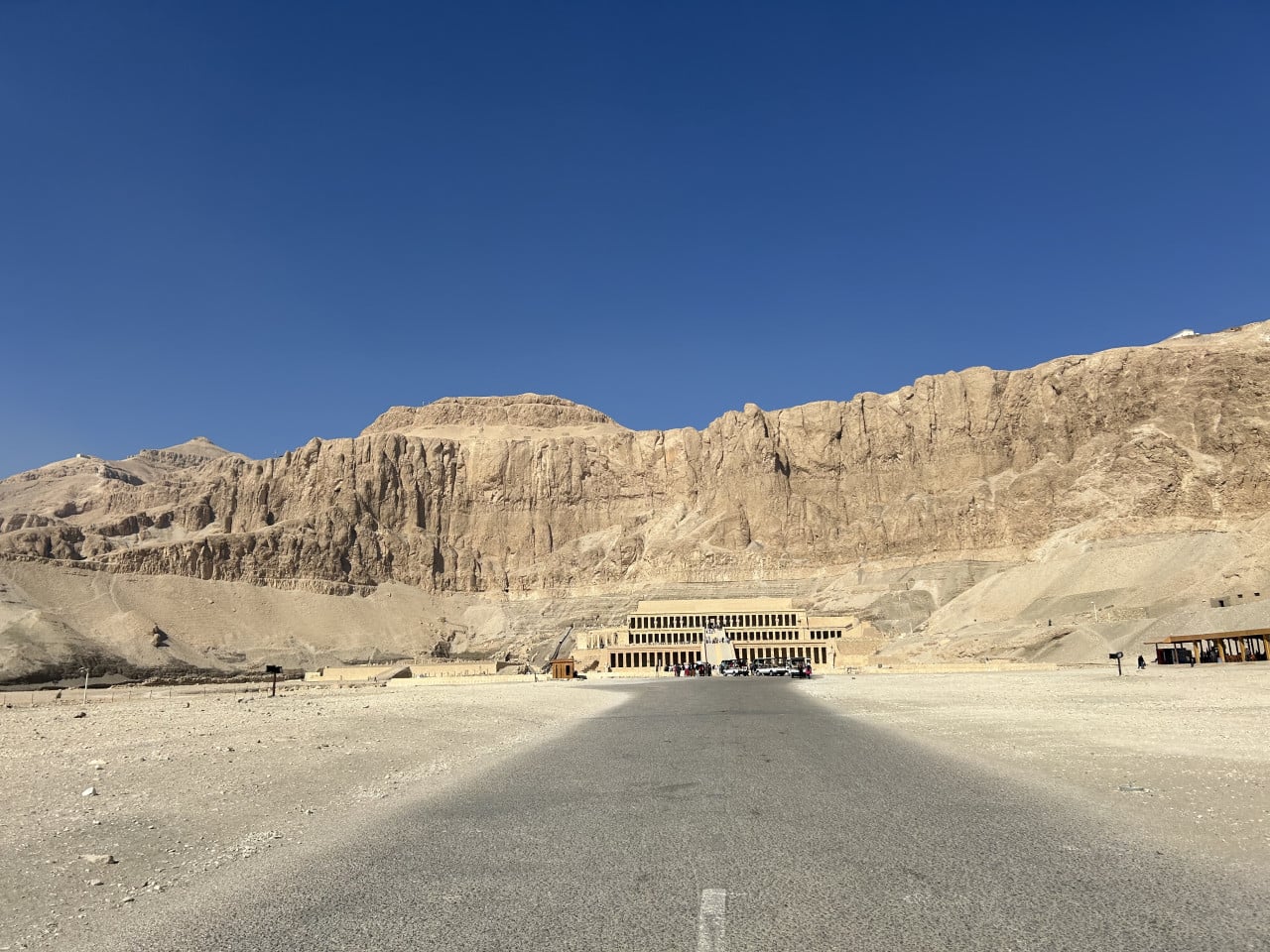
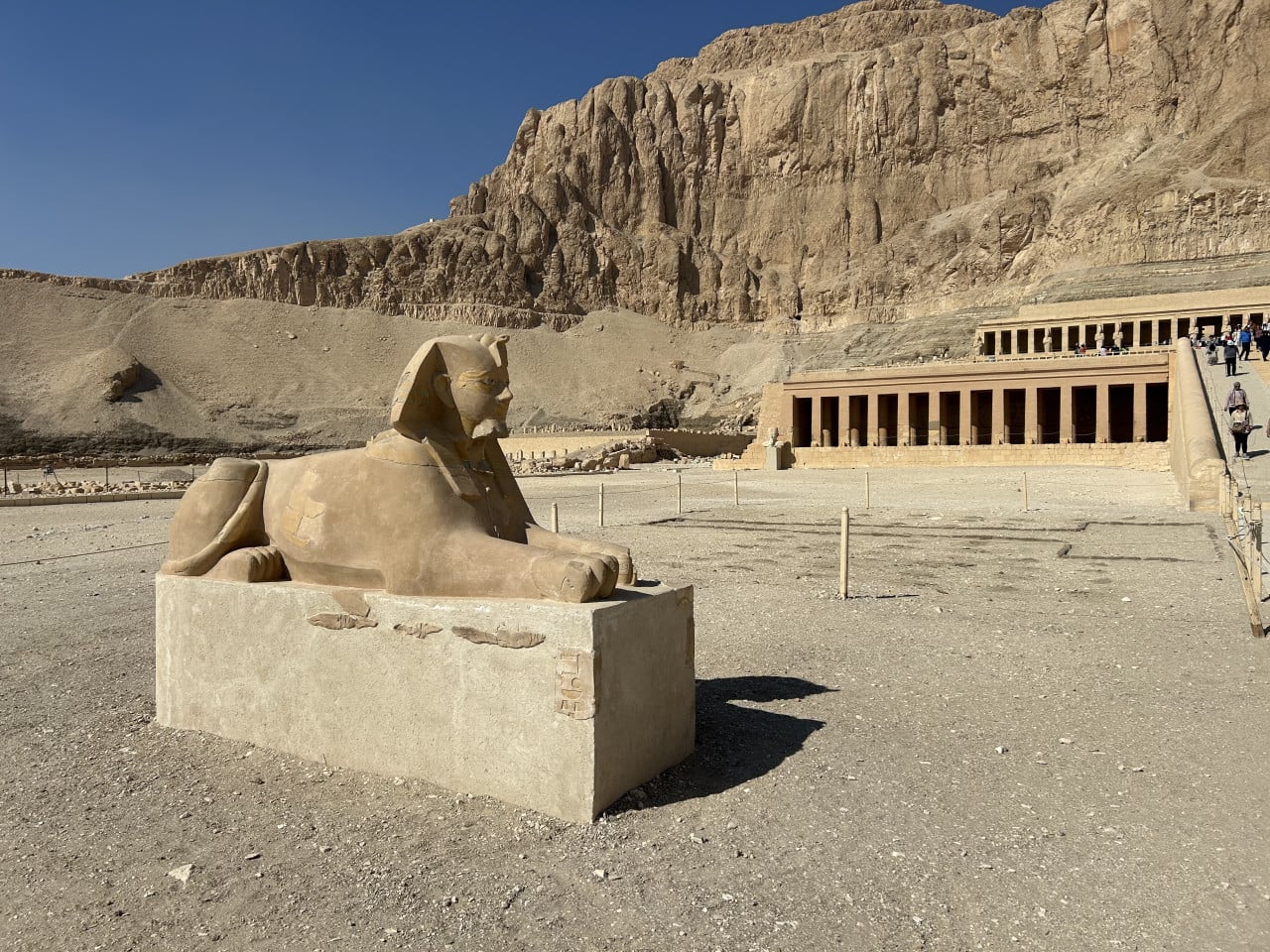
From the Valley of the Kings, we continued to the mortuary temple of Queen Hatshepsut at Deir el-Bahari. I remembered this place from when I visited Egypt as a teenager.
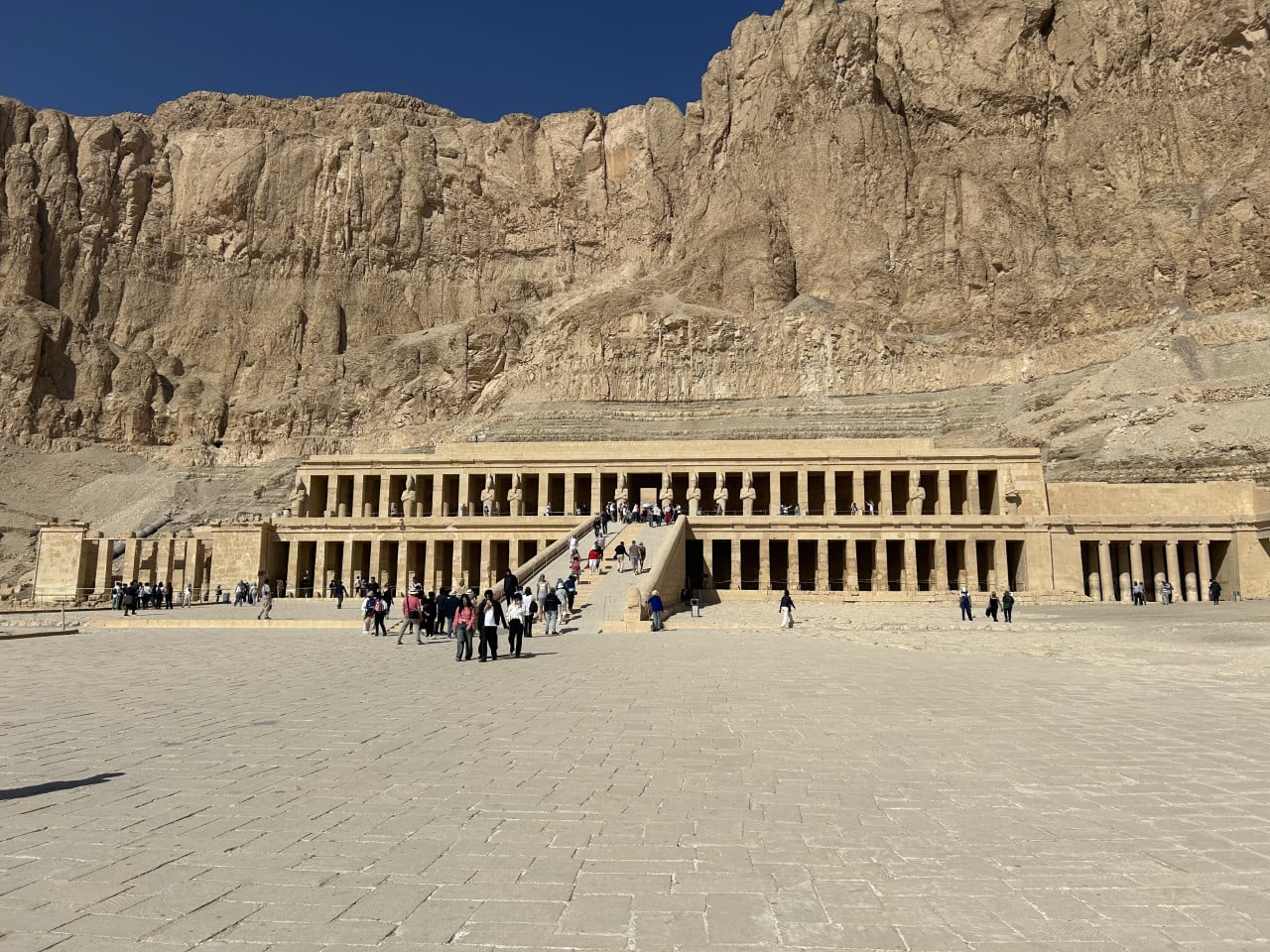
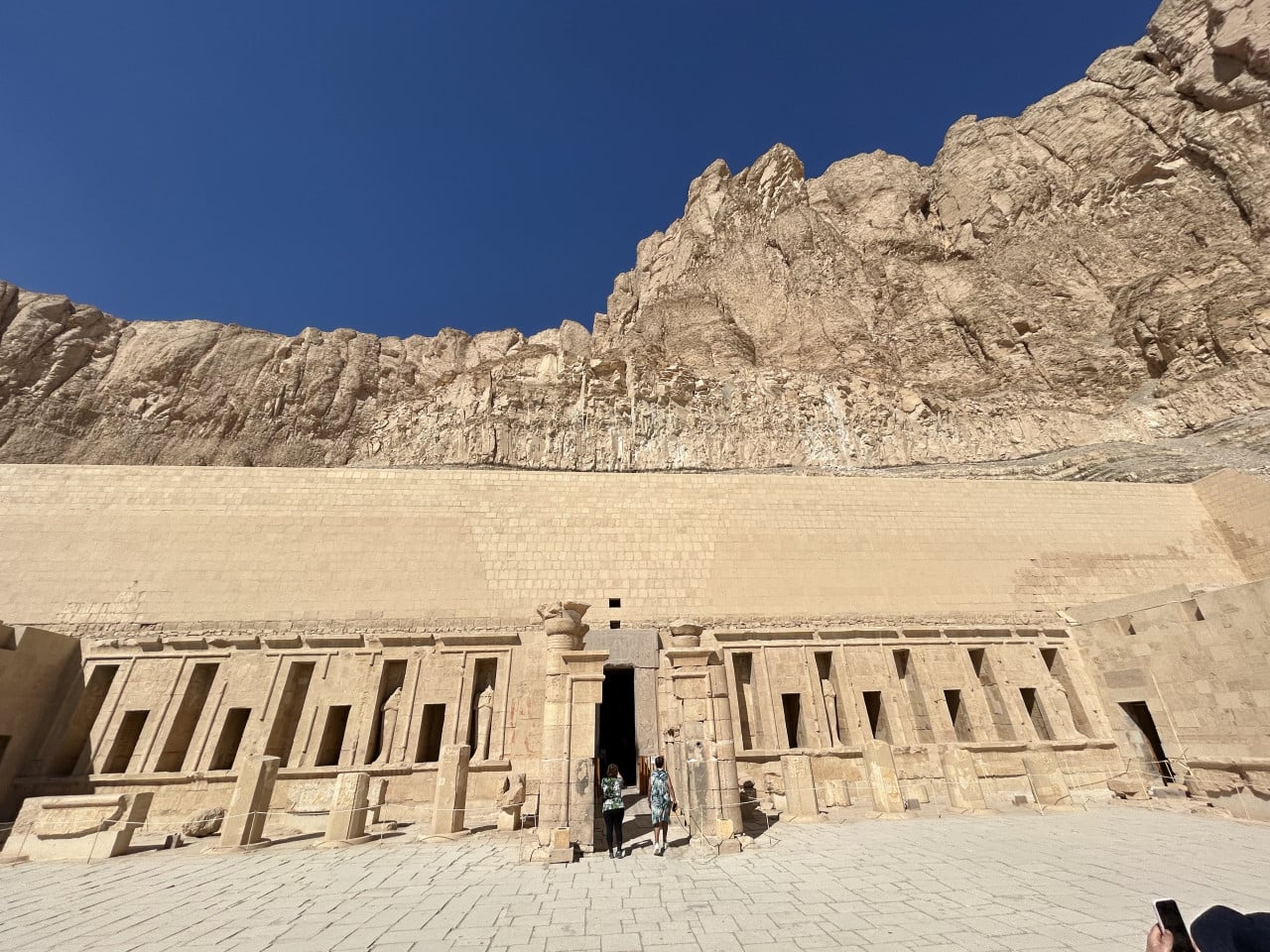
I was not entirely sure whether I had visited this particular temple back then, but as soon as the monumental structure set directly beneath the towering cliff appeared before us, I knew. These were exactly the open colonnaded halls, long terraces, and cliffs rising above the entire complex that I remembered.
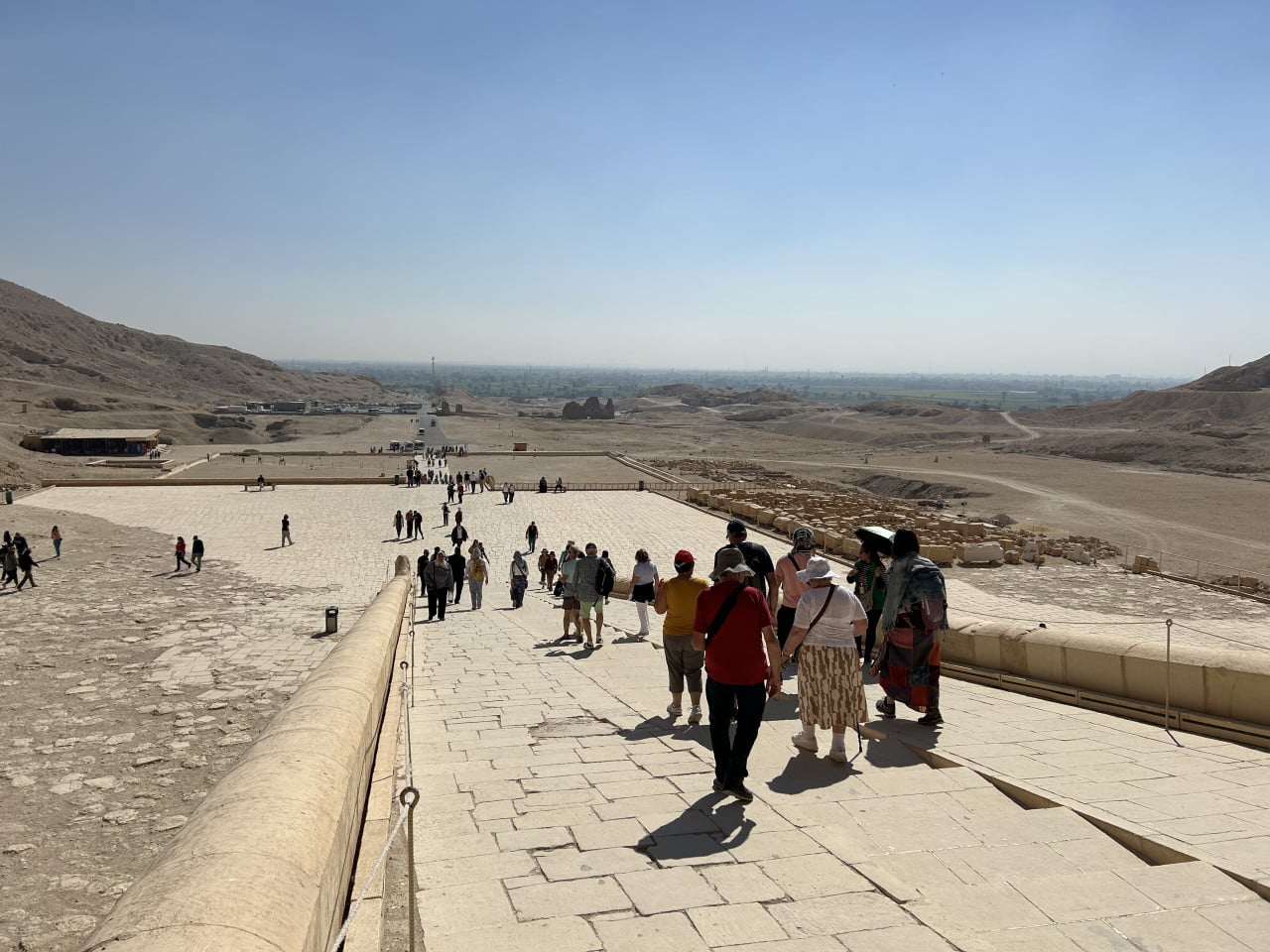
Even the approach itself is incredible. From a distance, the temple appears almost perfectly symmetrical, and the color of its stone allows it to blend naturally into the surrounding mountains. Honestly, at first glance it looks surprisingly modern, even though it was built almost 3,500 years ago.
The queen who assumed the title of pharaoh
Hatshepsut is one of the most fascinating figures in ancient Egypt. She was the principal wife of her half-brother Thutmose II. After his death, she became regent for the young Thutmose III, who was both her stepson and nephew. Within a few years, however, she assumed full royal titles and began ruling as pharaoh—together with Thutmose III, but as the more powerful co-ruler. Her reign is generally dated to approximately 1479–1458 BC. (The Metropolitan Museum of Art)
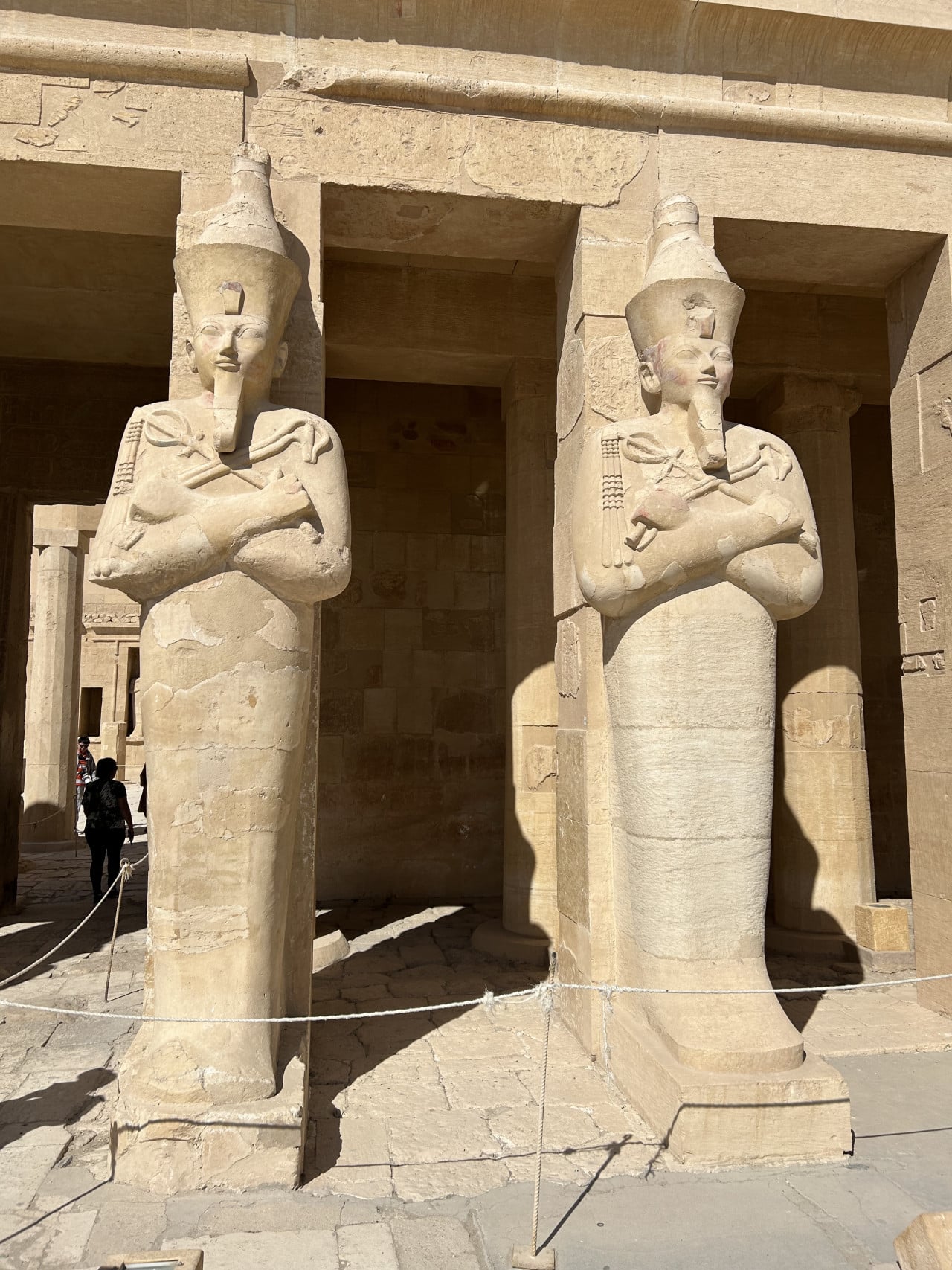
Incidentally, this is why Hatshepsut is depicted as a man in many statues. She wears the traditional pharaonic headdress, a short male kilt, and the characteristic false beard. However, this was not an attempt to pretend that she was a man. She was simply adopting the visual symbols that had been associated with the office of the Egyptian king for centuries. Nevertheless, in some statues she still has fairly delicate and feminine features. (The Metropolitan Museum of Art)
Her reign was not merely some brief historical anomaly. It lasted more than twenty years, and Egypt prospered during it. Hatshepsut supported trade, temple construction, and the restoration of important monuments. One of her most famous achievements was a trading expedition to the land of Punt, from where the Egyptians brought back gold, ivory, incense, myrrh, exotic animals, and even living trees intended for temple gardens. (The Metropolitan Museum of Art)
A temple on three terraces
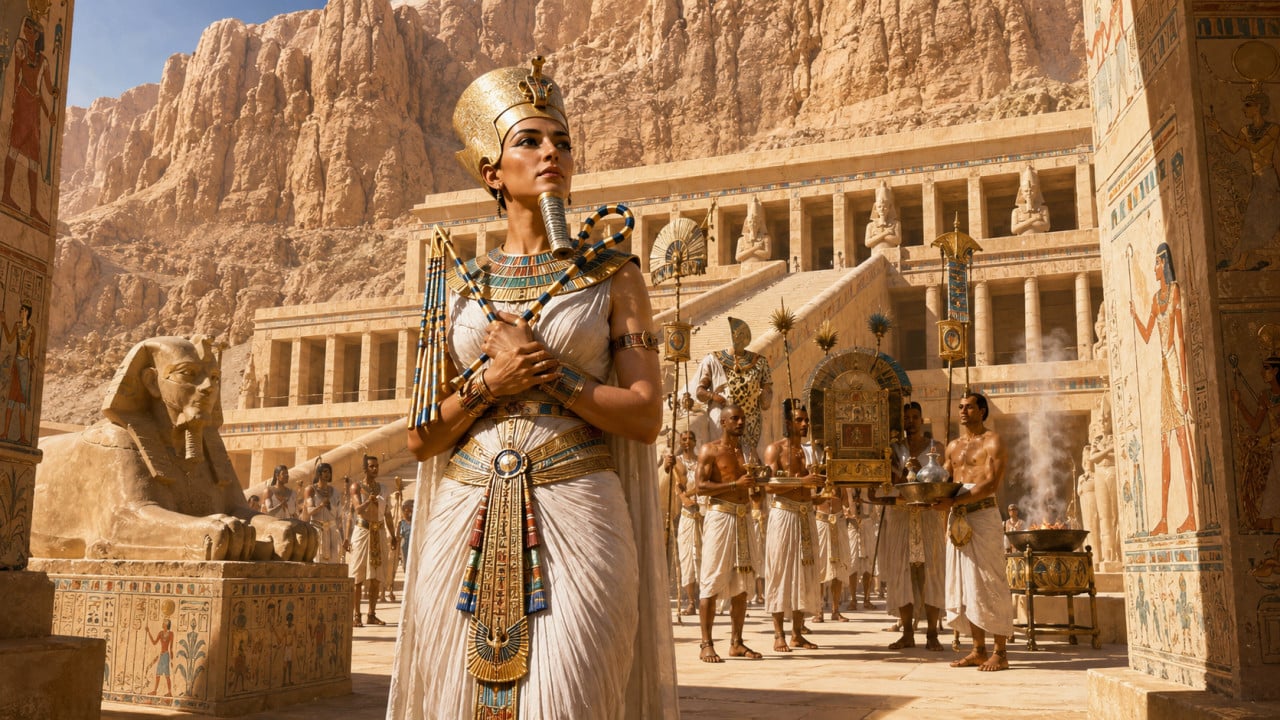
The temple bore the ancient Egyptian name Djeser-Djeseru, which translates approximately as “Holy of Holies.” It was built over a period of approximately fourteen to sixteen years during the joint reign of Hatshepsut and Thutmose III. Its design is often associated with Senenmut, one of the most important men at the queen's court. He managed her estate, tutored her daughter Neferure, and probably also supervised the construction of this temple complex. (The Metropolitan Museum of Art)
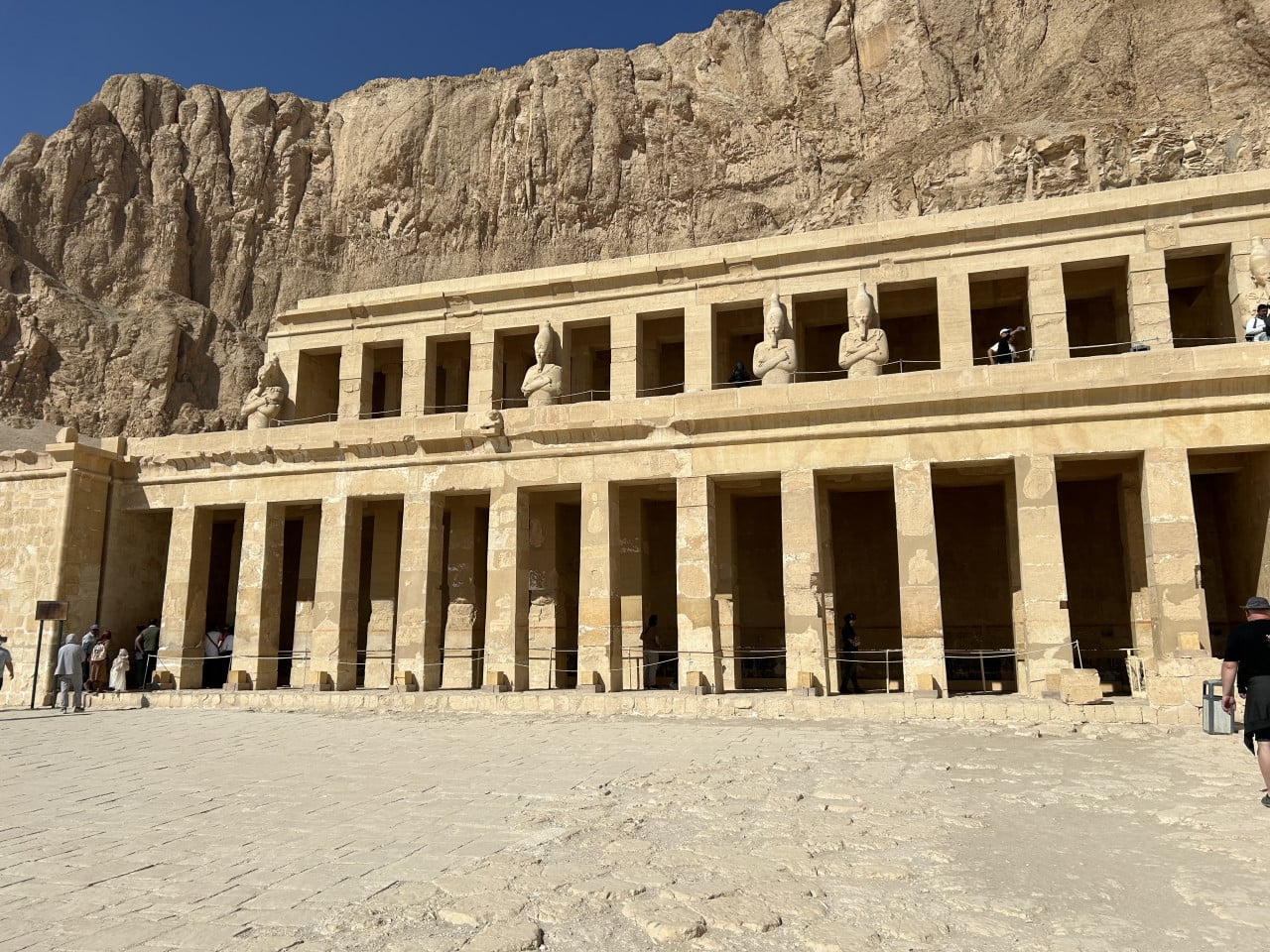
The entire temple is divided into three terraces connected by long central ramps. Open colonnaded halls stand at the end of each terrace. These were what I remembered most vividly from my first visit.
On the upper terrace stand massive statues of Hatshepsut in the form of the god Osiris. They have crossed arms, pharaonic beards, and bodies that partly resemble mummies. The temple was not her tomb in the conventional sense. It served primarily for rituals and the ruler's funerary cult. In addition to Hatshepsut, her father Thutmose I, the goddess Hathor, the god of the dead Anubis, and solar deities were also worshipped here. The most important place, however, belonged to the god Amun, whose main temple stood on the opposite bank of the Nile at Karnak. (Egypt's Monuments)
Paintings, reliefs, and a ceiling full of stars
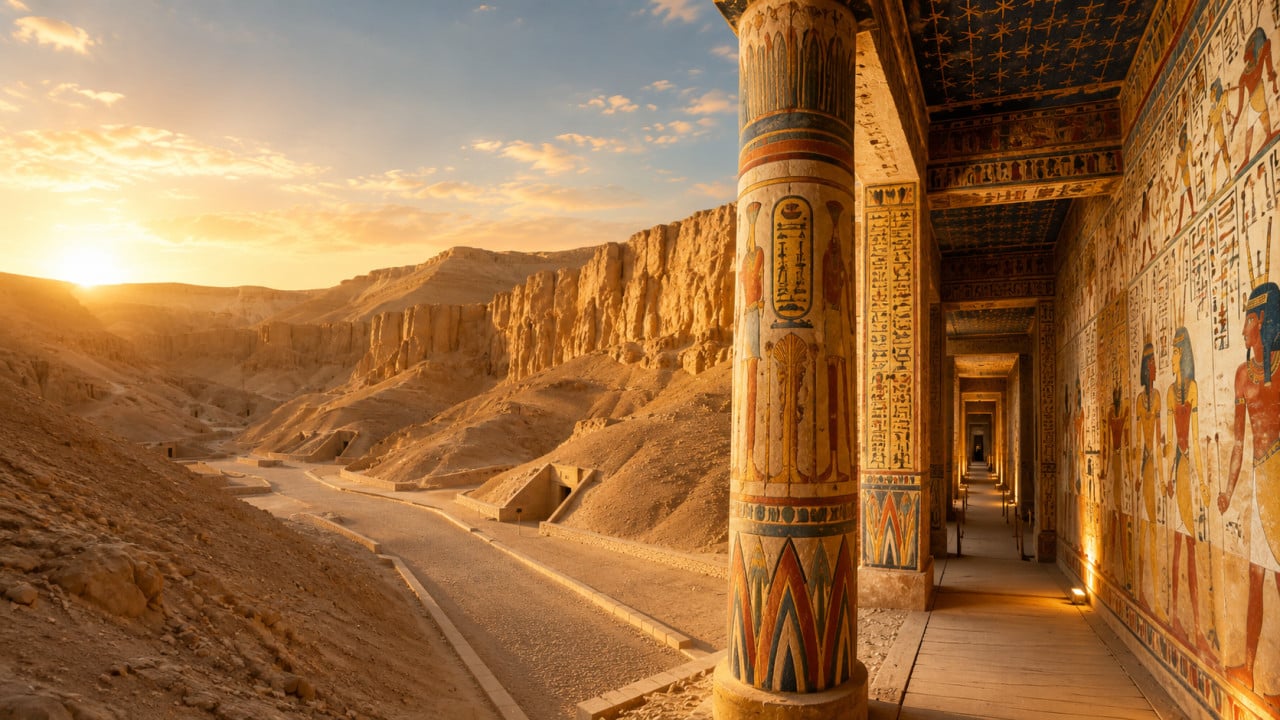
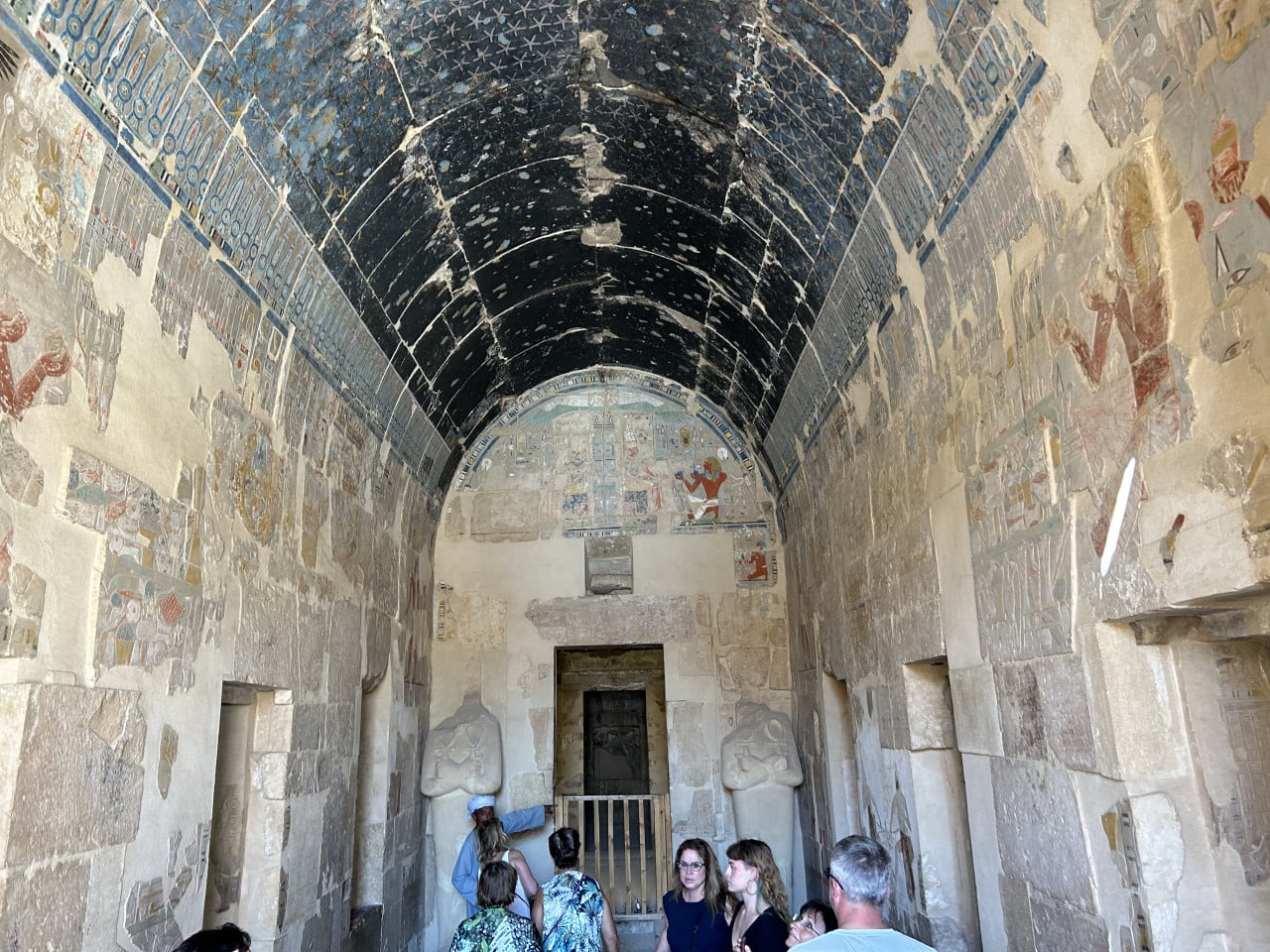
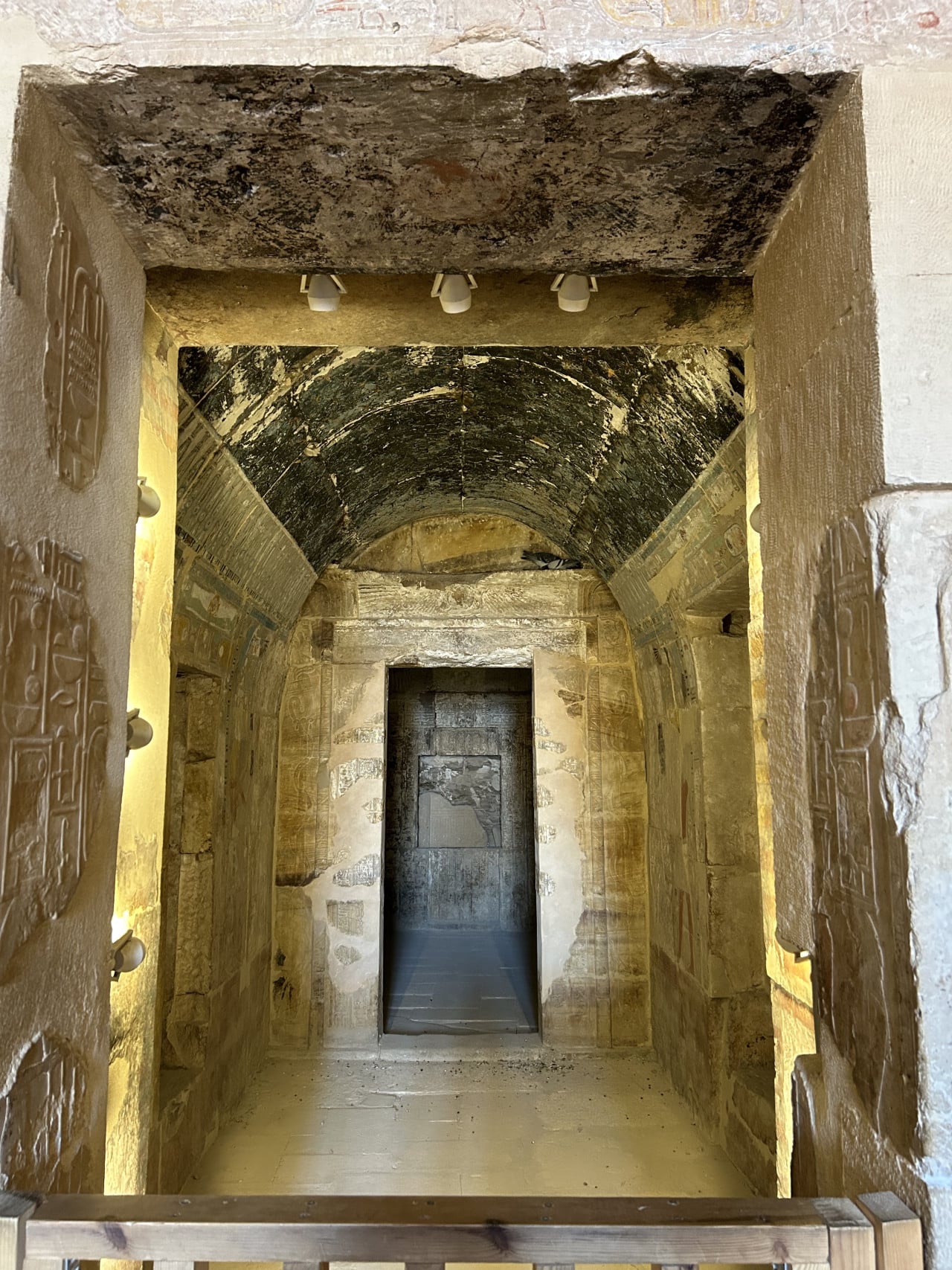
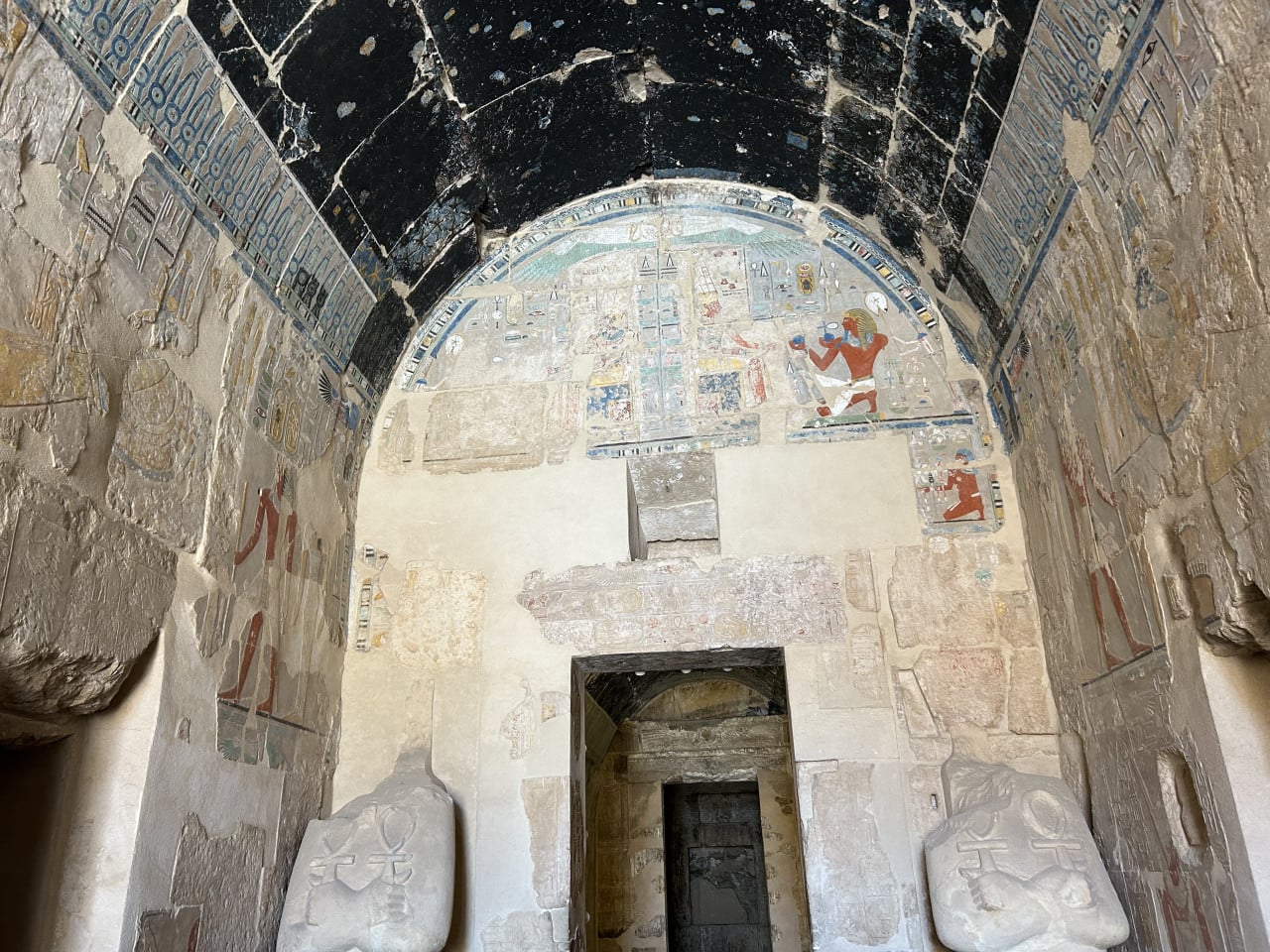
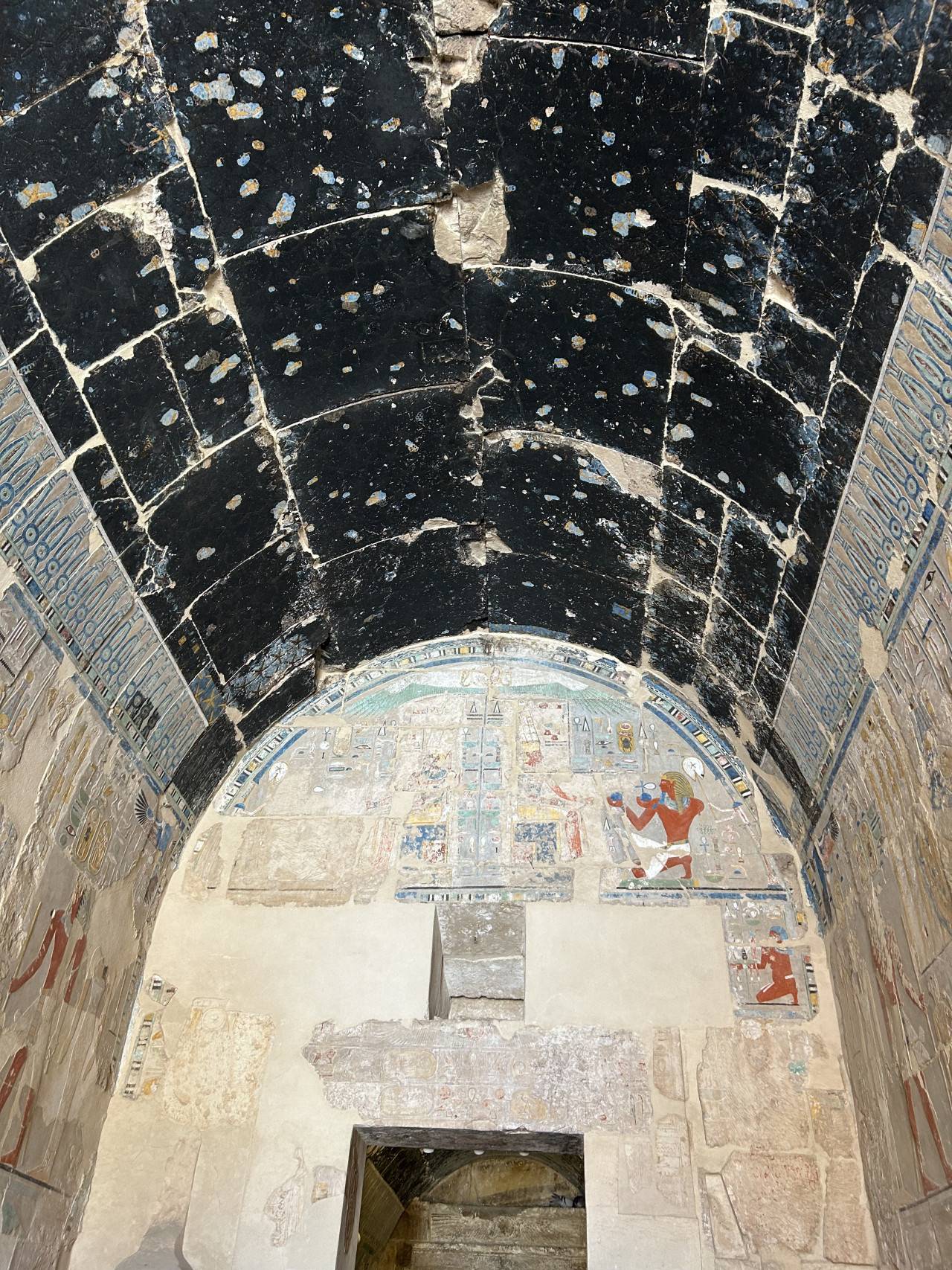
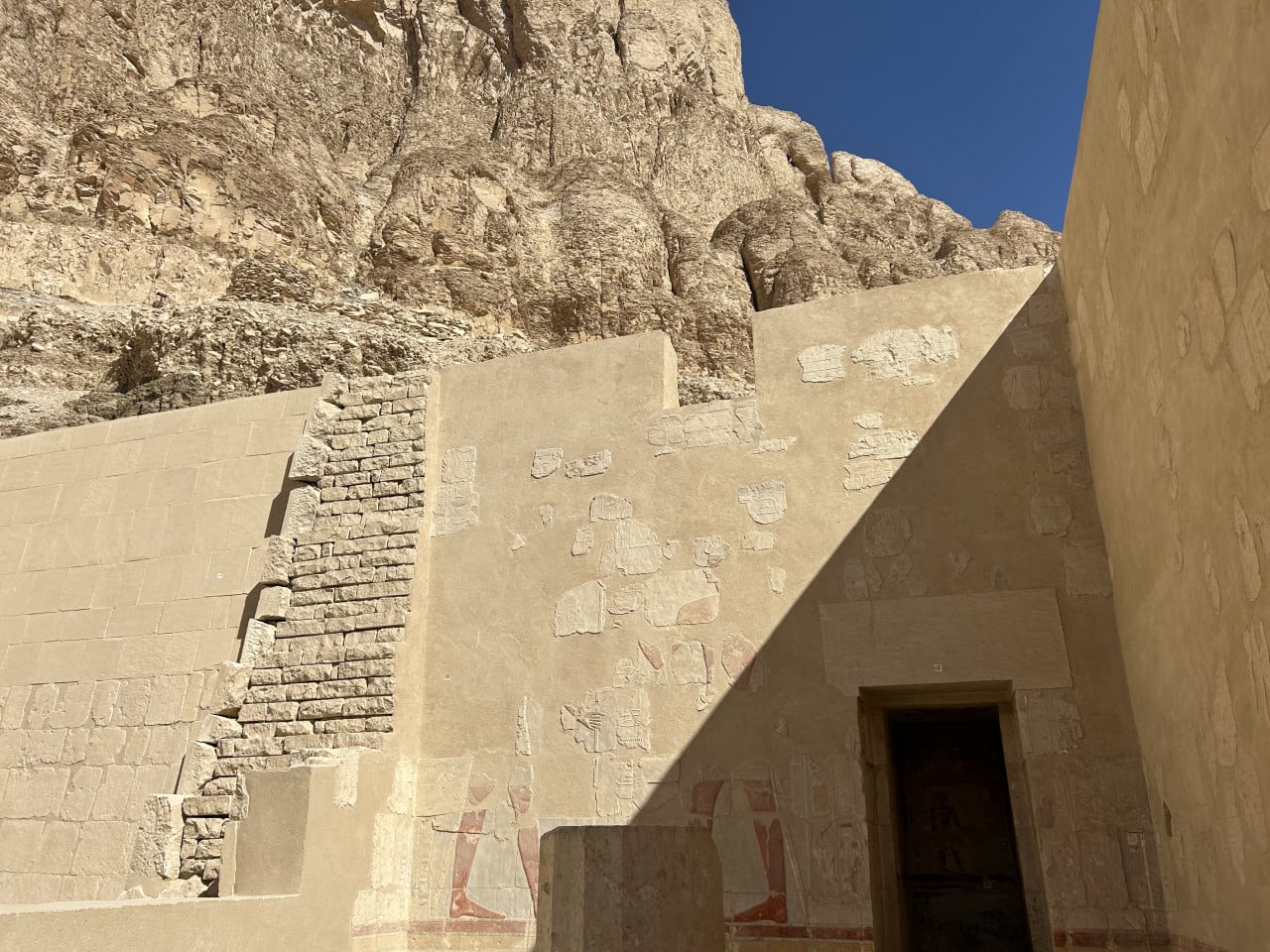
From the outside, the temple is impressive primarily because of its size and location beneath the cliffs. Inside, however, you begin to discover much smaller rooms, chapels, and corridors whose walls are covered with hieroglyphs and reliefs.
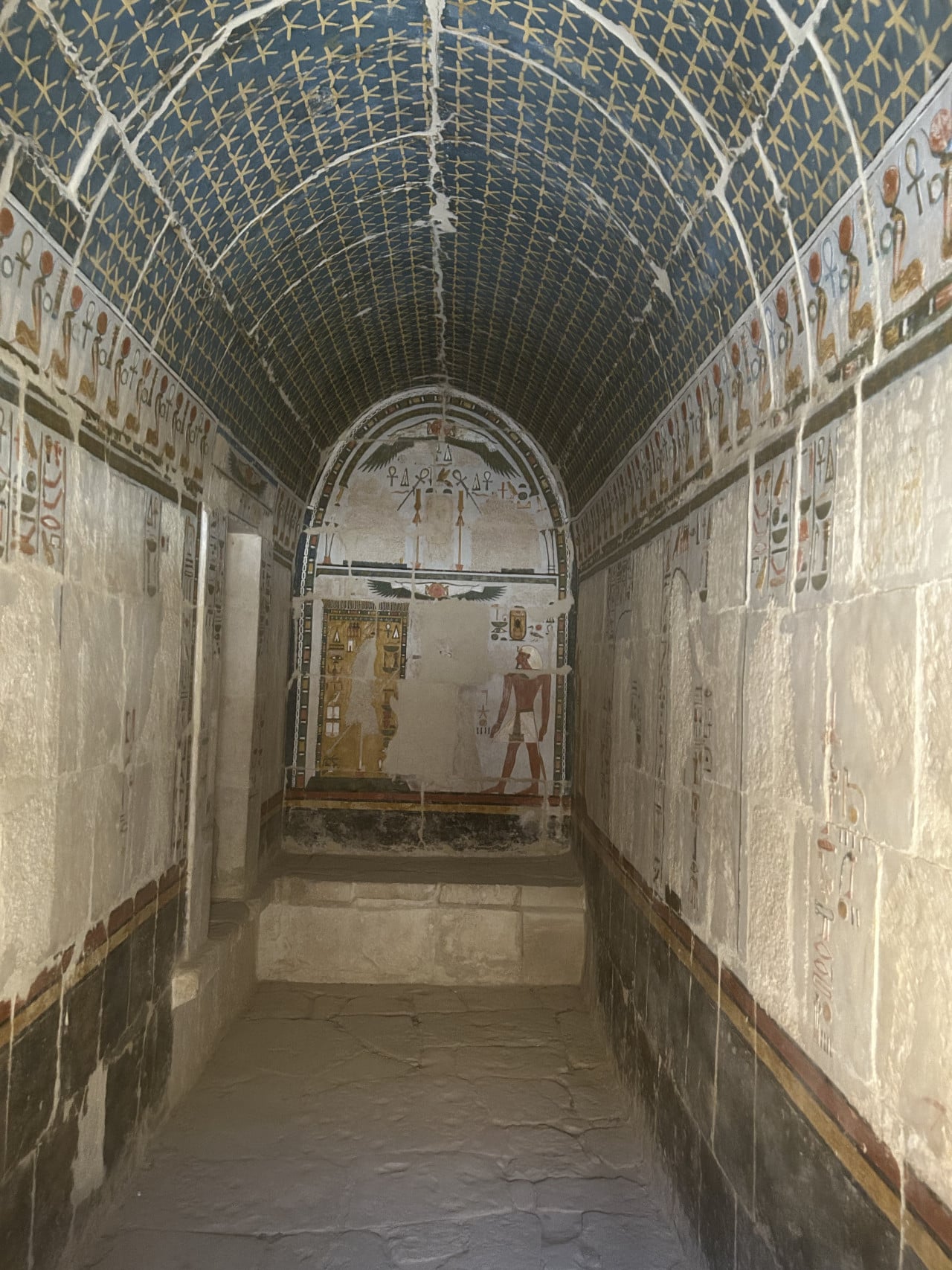
Some of the original colors have survived in places. What impressed me most were the dark blue ceilings scattered with yellow stars, intended to represent the night sky. When you realize how old these paintings are, it is almost impossible to comprehend that you can still distinguish blue, red, yellow, or green on them.
Among the best-known scenes is the aforementioned expedition to the land of Punt. The reliefs depict the local people, their houses, trees, and the goods the Egyptians brought home. Another part of the decoration was intended to explain why Hatshepsut in particular had the right to rule. She claimed that her father Thutmose I had designated her as his successor and that her true divine father was Amun himself. This was not merely decoration—it was a carefully crafted political message intended for both subjects and gods. (Egypt's Monuments)
Why someone tried to erase Hatshepsut from history
On many walls, it is clear that some figures or inscriptions were deliberately removed. After Hatshepsut's death, the gradual destruction of her statues and erasure of her name began.
For a long time, a simple story was told according to which Thutmose III wanted revenge on her for taking power from him in his youth. However, the alterations probably did not begin until approximately twenty years after her death, which was quite late. The motive therefore may not have been personal. Instead, it may have been related to an attempt to restore the traditional male line of rulers and secure the succession of Thutmose's son. (The Metropolitan Museum of Art)
More recent research also shows that not all the broken statues were destroyed in a fit of hatred. Some may have been ritually “deactivated” by being broken at specific points, while certain fragments were simply reused as building material in later periods. The precise reason for erasing Hatshepsut has therefore still not been conclusively explained. (Cambridge University Press & Assessment)
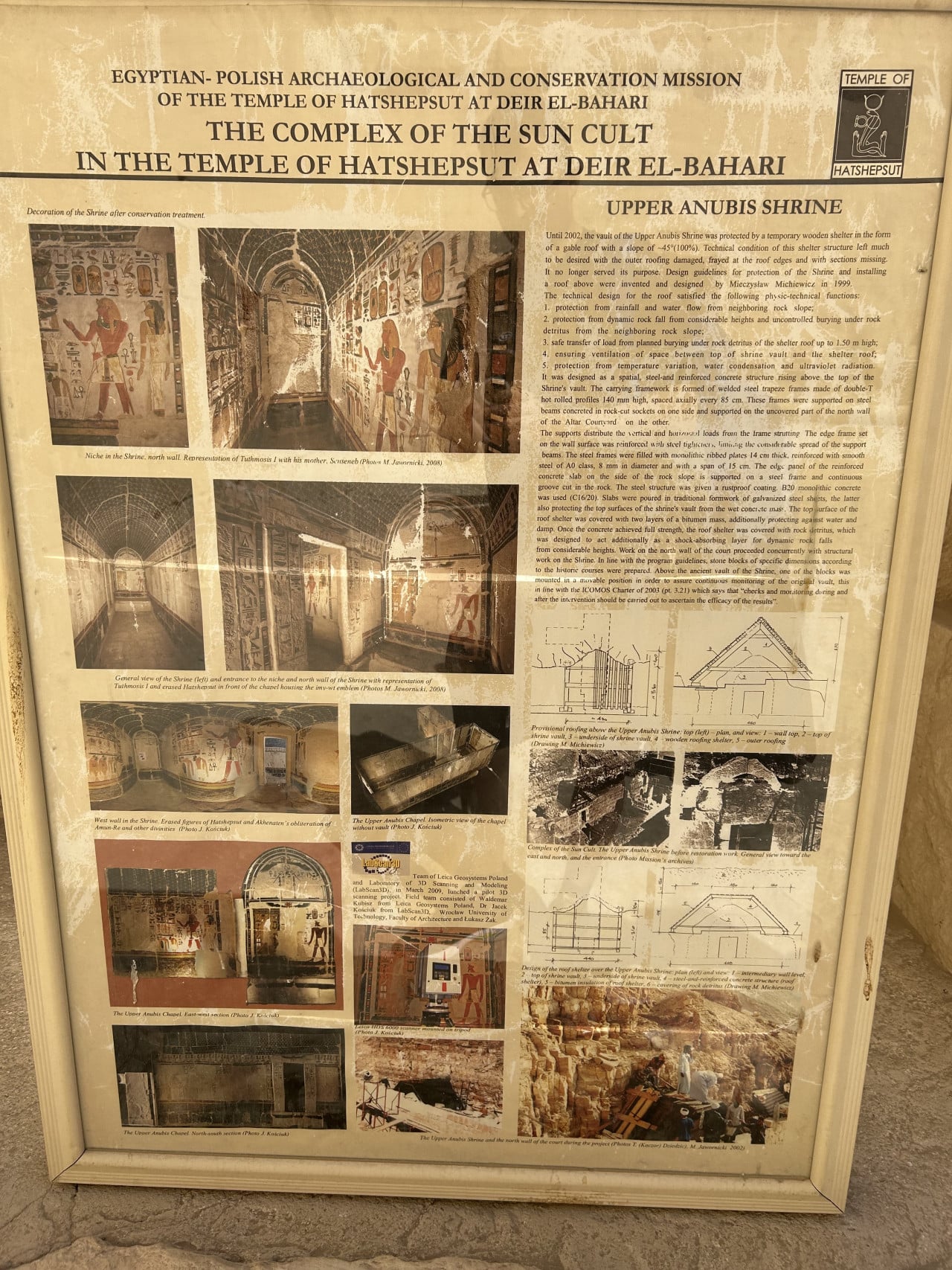
Over the following centuries, the temple was also damaged by falling rocks, the removal of building materials, and the later conversion of part of the complex into a Christian monastery. Archaeological work began here in the 19th century, and since 1961 a Polish-Egyptian archaeological and conservation mission has played a major role in its research and reconstruction. Much of what visitors see today was gradually reassembled from discovered fragments. (The Metropolitan Museum of Art)
Secret caches of royal mummies
I also remembered stories about secret caches and pharaohs from the time of Ramesses. My memory was not entirely wrong; these caches were simply not located directly inside the temple.
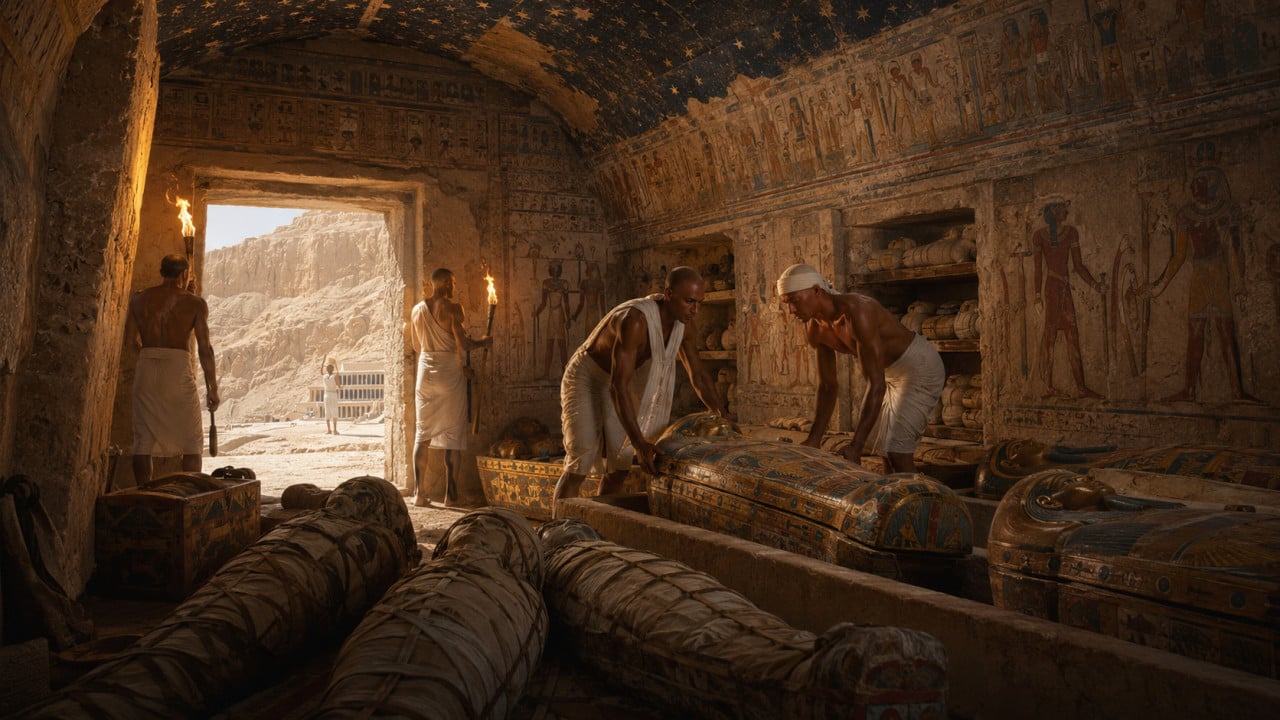
The so-called Royal Cache, now designated TT320 or DB320, was discovered in the surrounding cliffs of Deir el-Bahari. Around the turn of the 11th and 10th centuries BC, priests of the 21st Dynasty moved the mummies of long-dead rulers here. Their original tombs in the Valley of the Kings had been repeatedly plundered, so the priests tried to save at least the pharaohs' bodies. (National Geographic)
When the cache was opened to Egyptologists in 1881, it contained more than fifty bodies. Among them were the mummies of at least eleven pharaohs, including Seti I and one of Egypt's most famous rulers—Ramesses II. The mummies had often been removed from their original coffins, rewrapped, and labeled with notes by the priests who had tried to protect them. (National Geographic)
So these were not secret rooms created during the reign of Ramesses II. His mummy, however, was one of those hidden by priests in the surrounding cliffs several centuries later.
And it was not the only cache of its kind. In 1891, the mass tomb of Bab el-Gasus was also discovered near Deir el-Bahari, where 153 priests and priestesses of the god Amun had been buried. Archaeologists found hundreds of decorated coffins, papyri, amulets, and funerary objects there. The entire area beneath the cliffs was thus a much larger funerary and religious center than the temple alone might suggest. (egyptianmuseumcairo.e.g.)
A temple you will not easily forget
In my opinion, Queen Hatshepsut's temple is one of the most impressive structures around Luxor. Not only because of its history, but above all because of how perfectly it is integrated into the surrounding landscape.
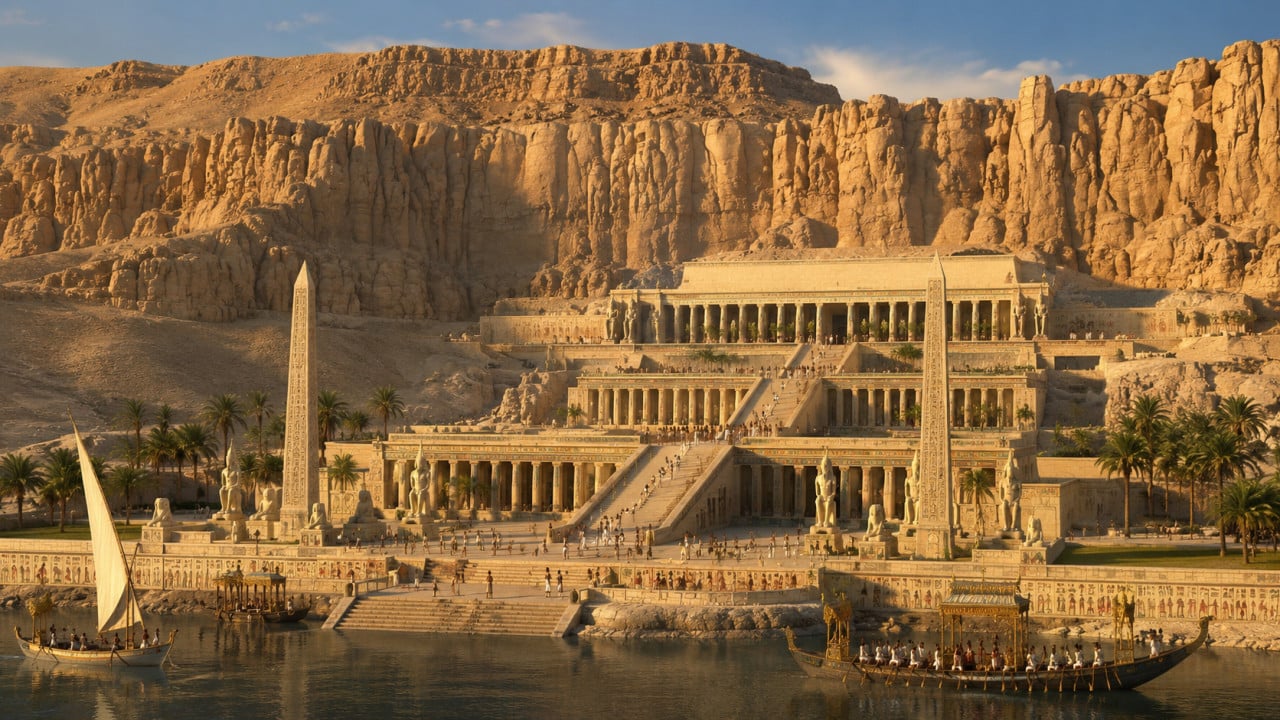
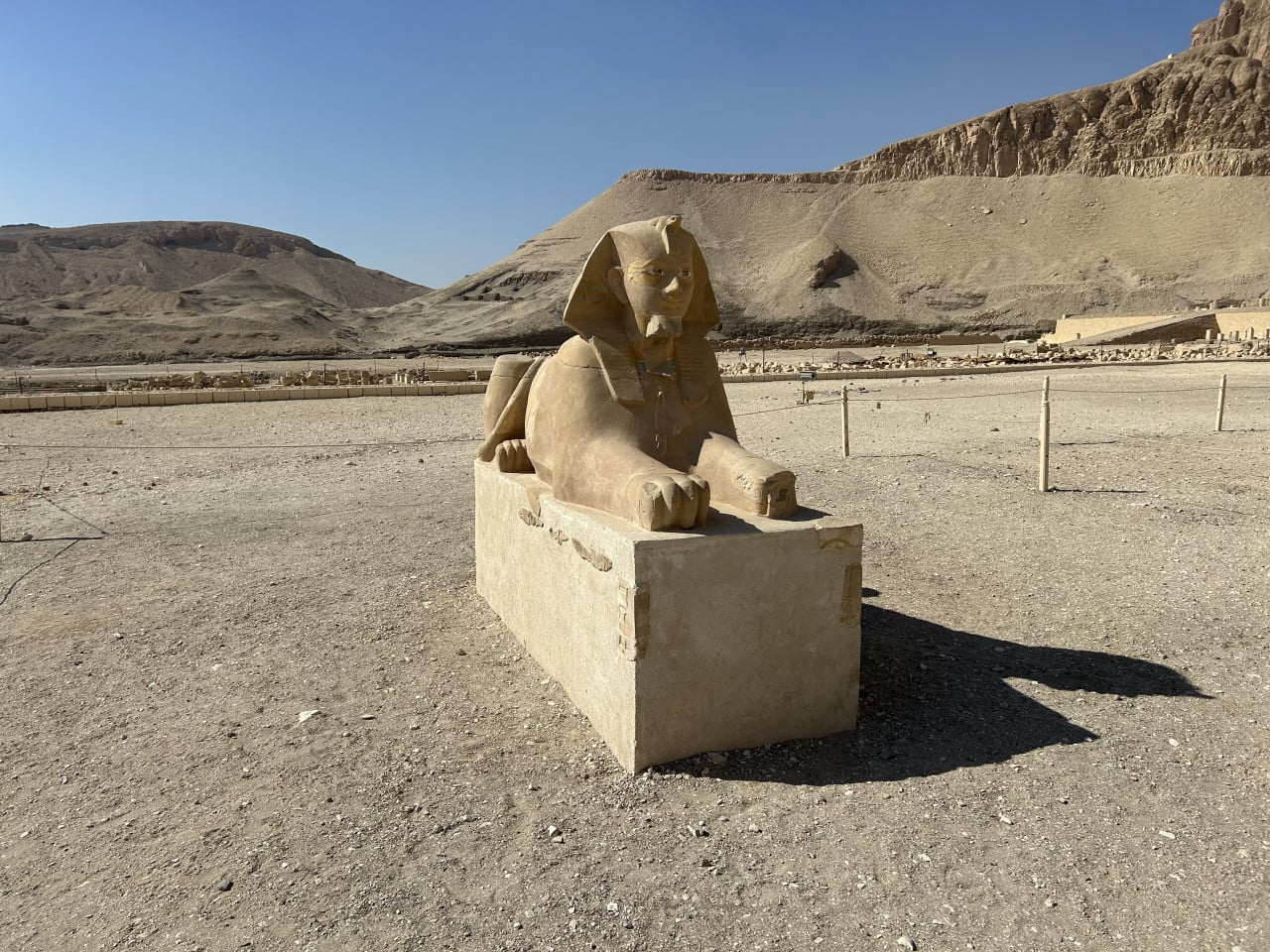
From a distance, you see the orderly terraces and columns. As you come closer, you begin to notice sphinxes, statues, traces of color, and hieroglyphs. And inside, the story of a woman who managed to become pharaoh almost three and a half thousand years ago gradually unfolds before you.
It is precisely places like this that make you feel that in Egypt, history is not merely something you read about in a book. You are standing right in the middle of it.