Early Departure from Aswan and Dawn in the Middle of the Desert
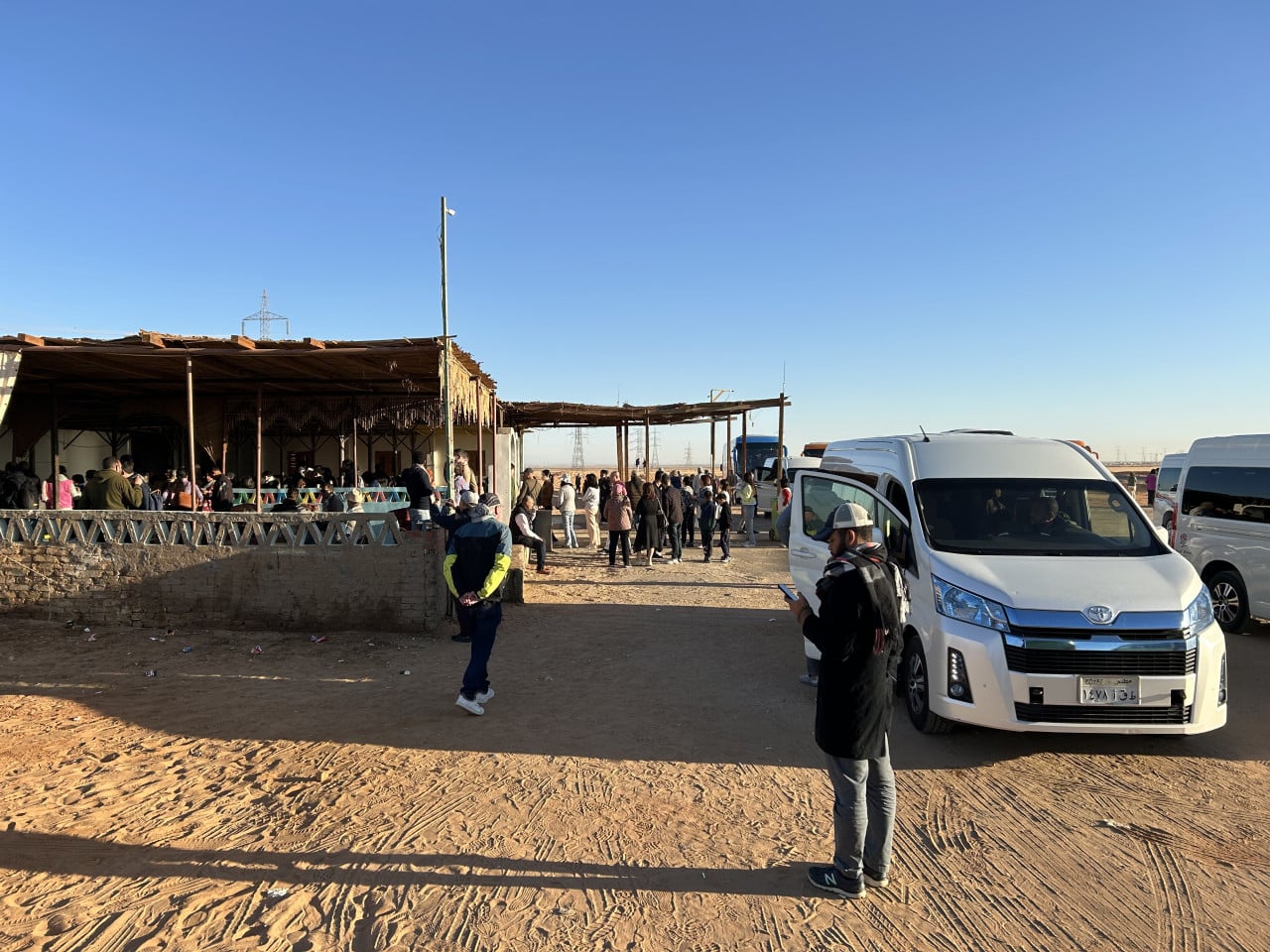
We traveled from Aswan to Abu Simbel by organized transfer. We set off while it was still night, or rather very early in the morning, and the journey took approximately three and a half hours.
My mom recently told me that she would definitely choose to fly on another similar trip. It would save us quite a lot of time, and we would not have to spend several hours sitting in a minibus. Maybe next time.
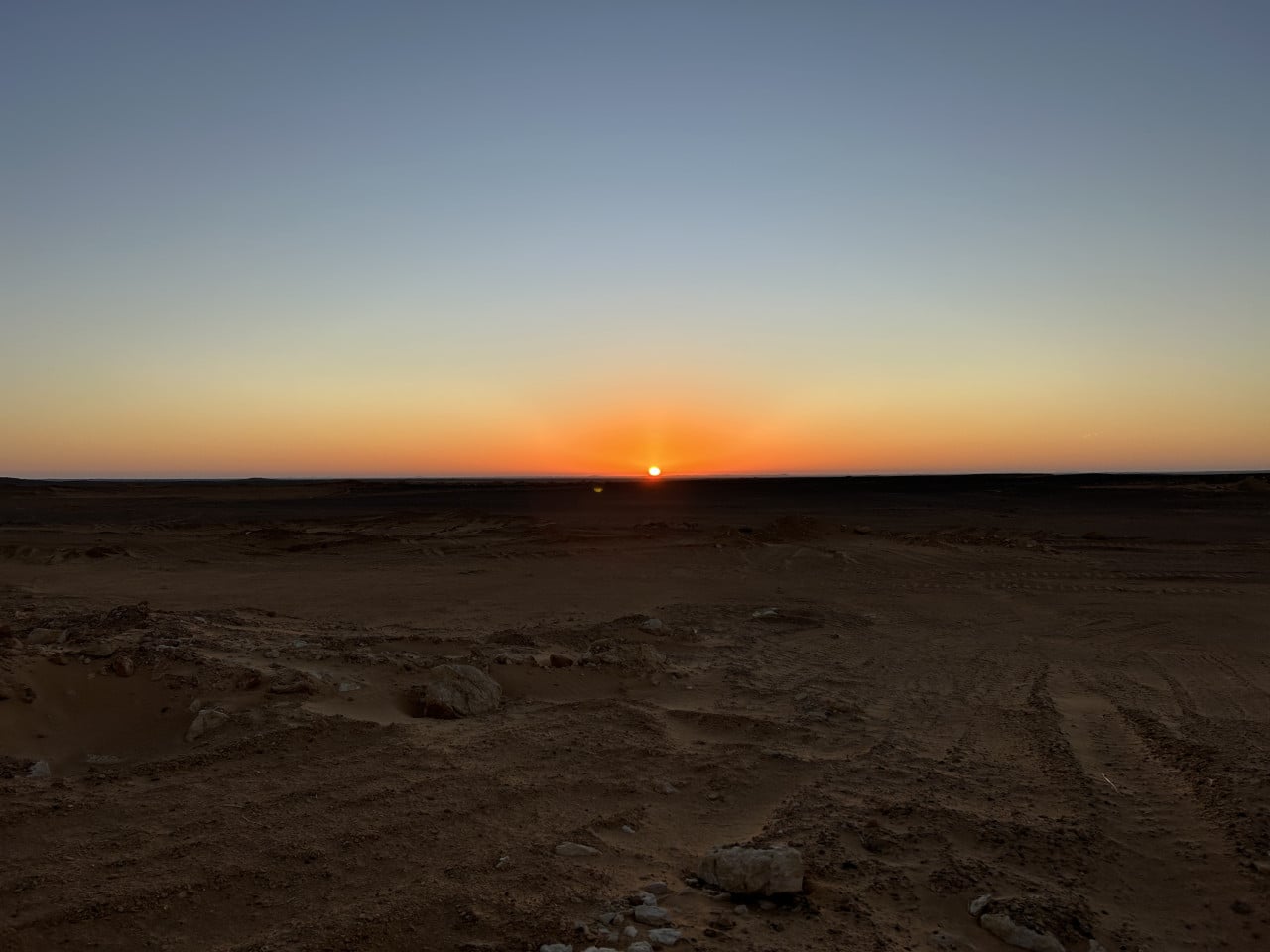
On the other hand, the journey through the desert had one major advantage. Dawn broke along the way, and watching the orange sun slowly emerge above the endless plain was truly beautiful. All around us there was nothing but desert, sand, and an almost perfectly flat horizon.
The journey itself had a special atmosphere and gradually prepared us for what awaited us at the end.
A Place I Have Remembered for More Than Fifteen Years
This was not my first time in Abu Simbel. I first came here more than fifteen years ago, when I was considerably younger. Even so, this is perhaps the place I remember most vividly of all Egypt's monuments.
Apart from the pyramids, of course.
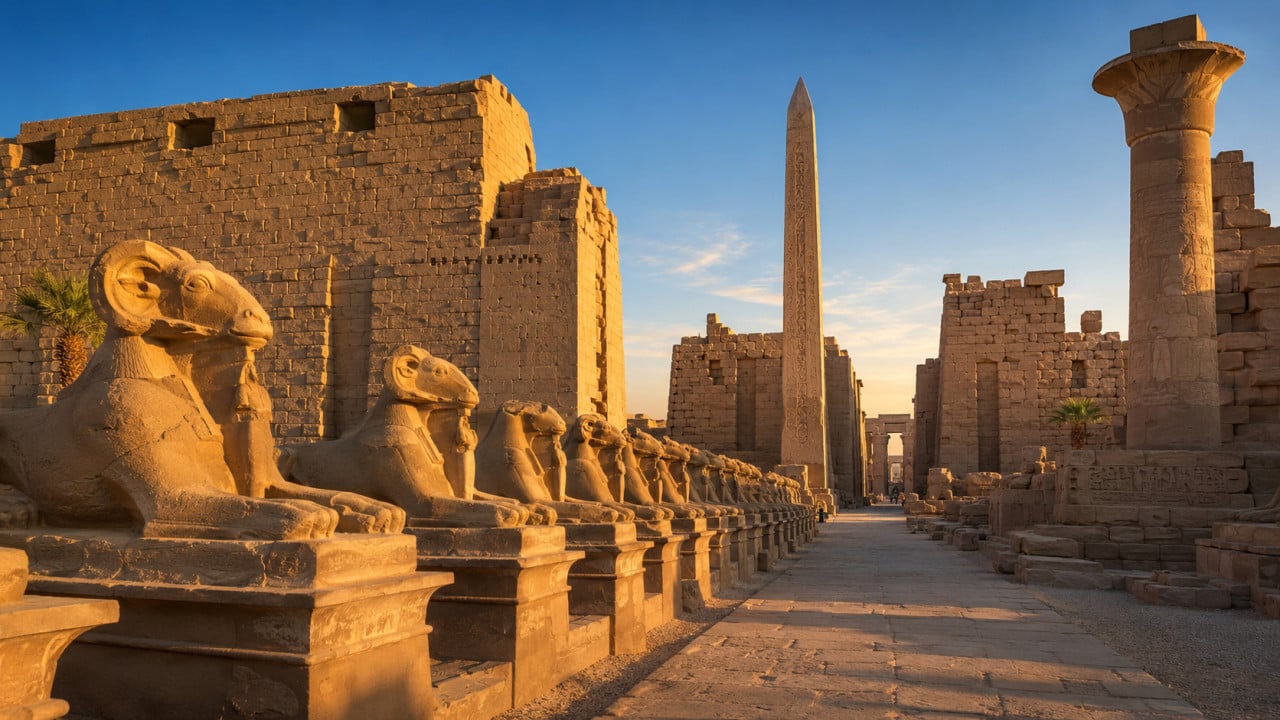
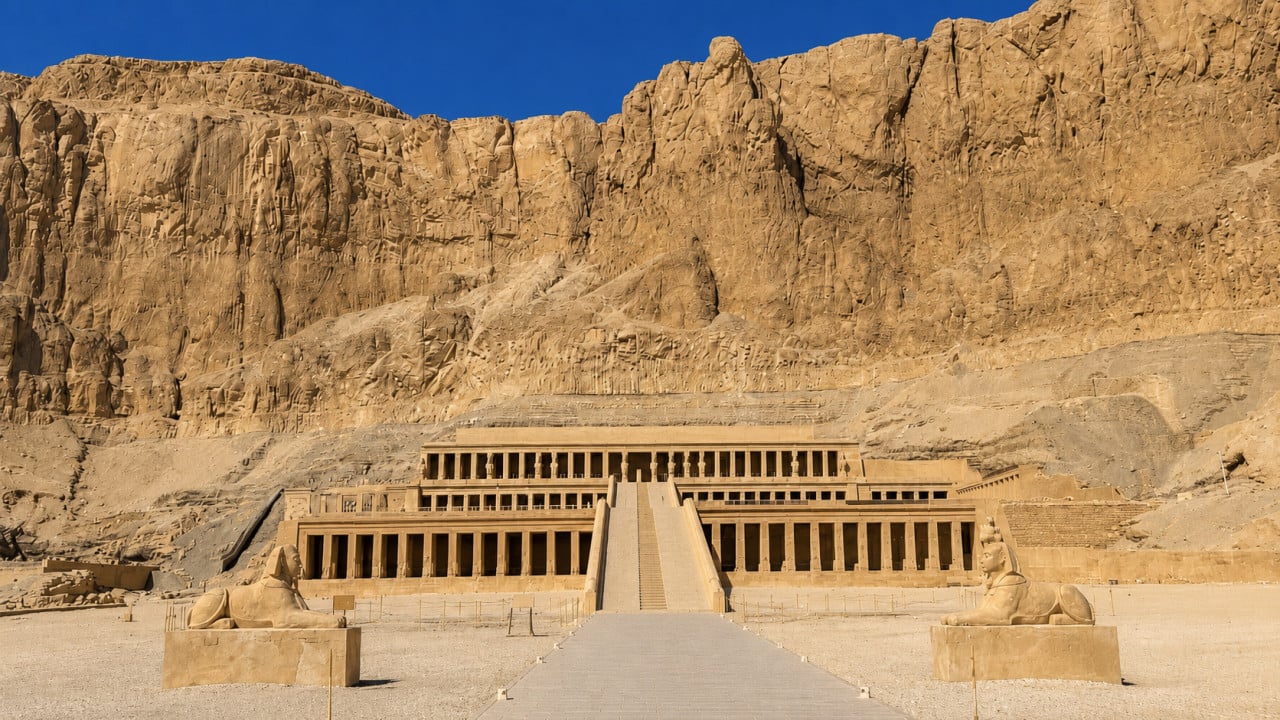
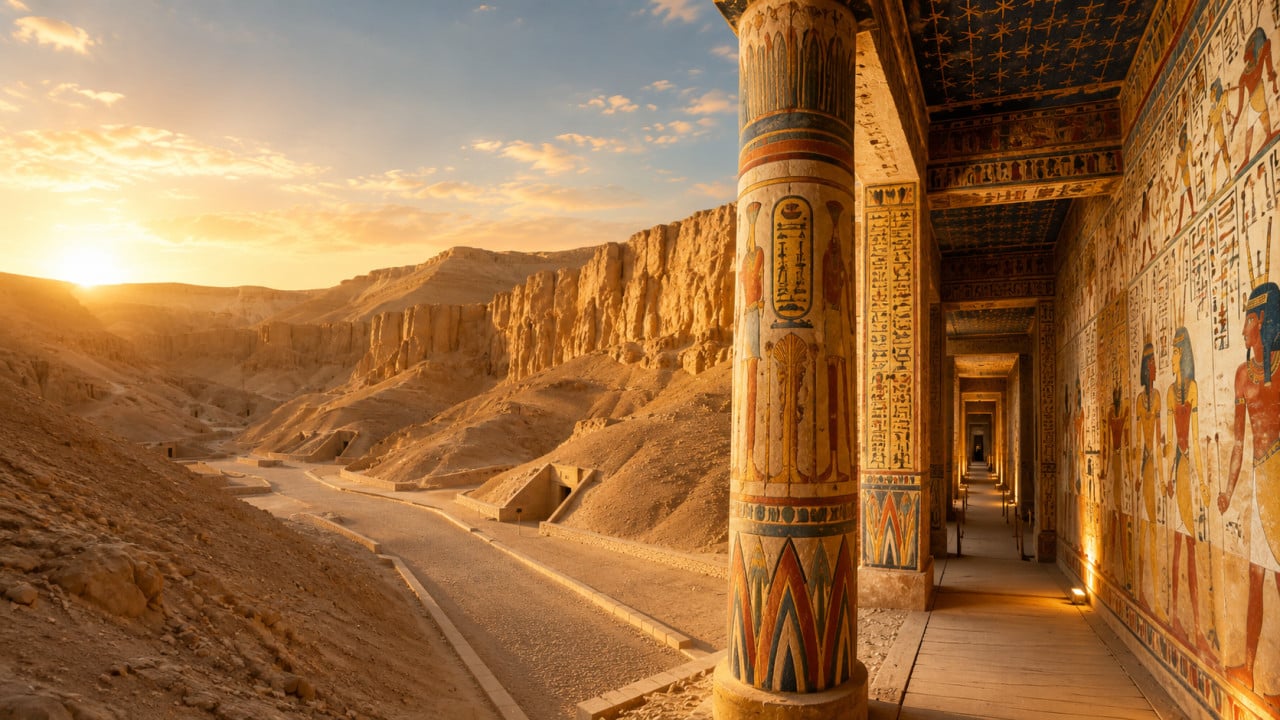
When someone asks me about my favorite monuments in Egypt, the pyramids and Abu Simbel are at the top of my list. Right behind them, I would rank the Valley of the Kings and the Valley of the Queens, Karnak, and the Temple of Queen Hatshepsut.
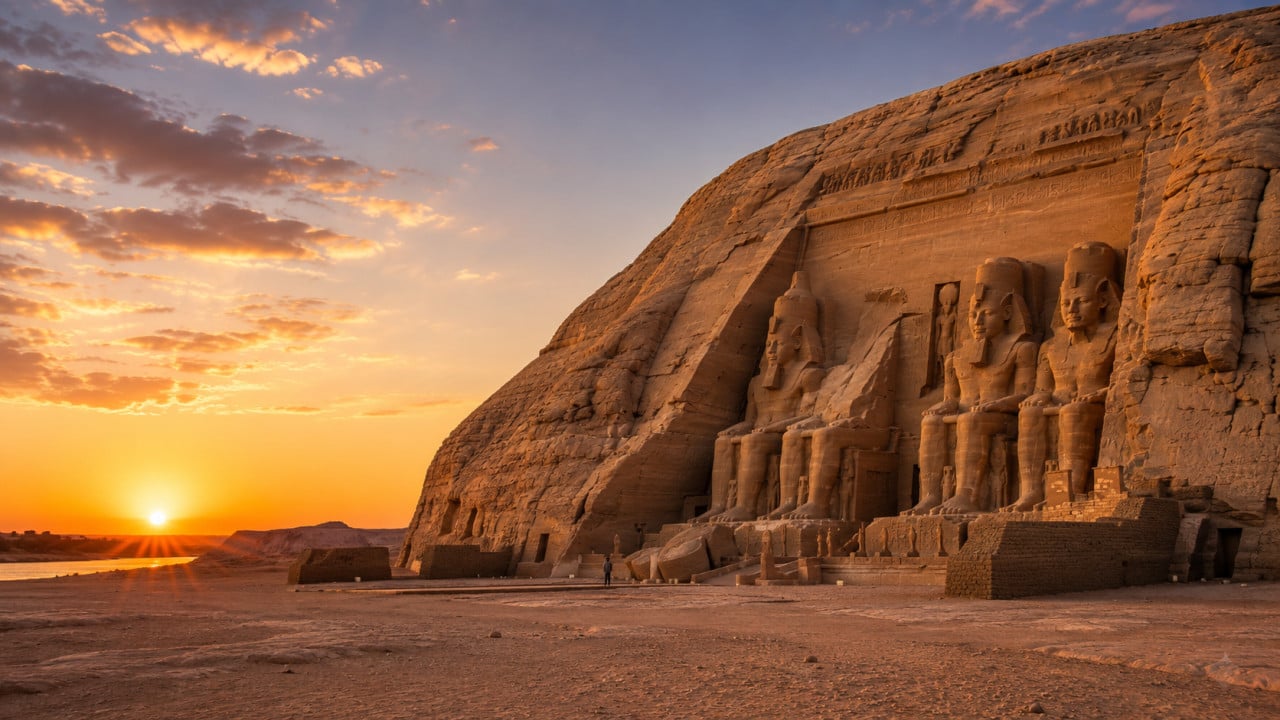
But Abu Simbel is different. Perhaps it is because of its location in the middle of the desert, the enormous statues, or the way the early morning sun falls on the temple. When the first rays strike the sandstone rock and illuminate the pharaoh's faces, the entire place looks almost cinematic.
For me, it is undoubtedly one of the most beautiful and impressive temple complexes in all of Egypt.
Four Giant Statues, but Still Only One Pharaoh
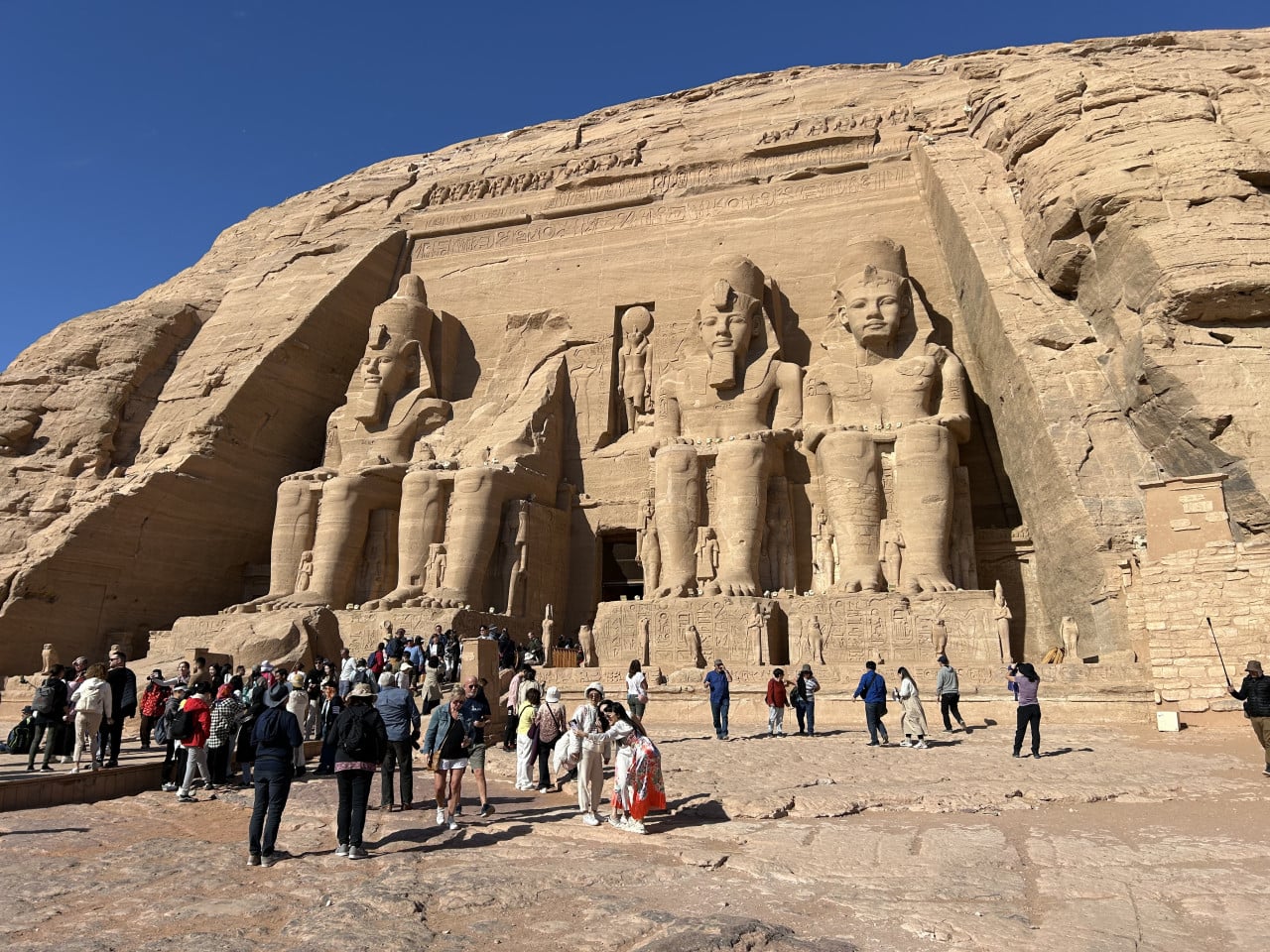
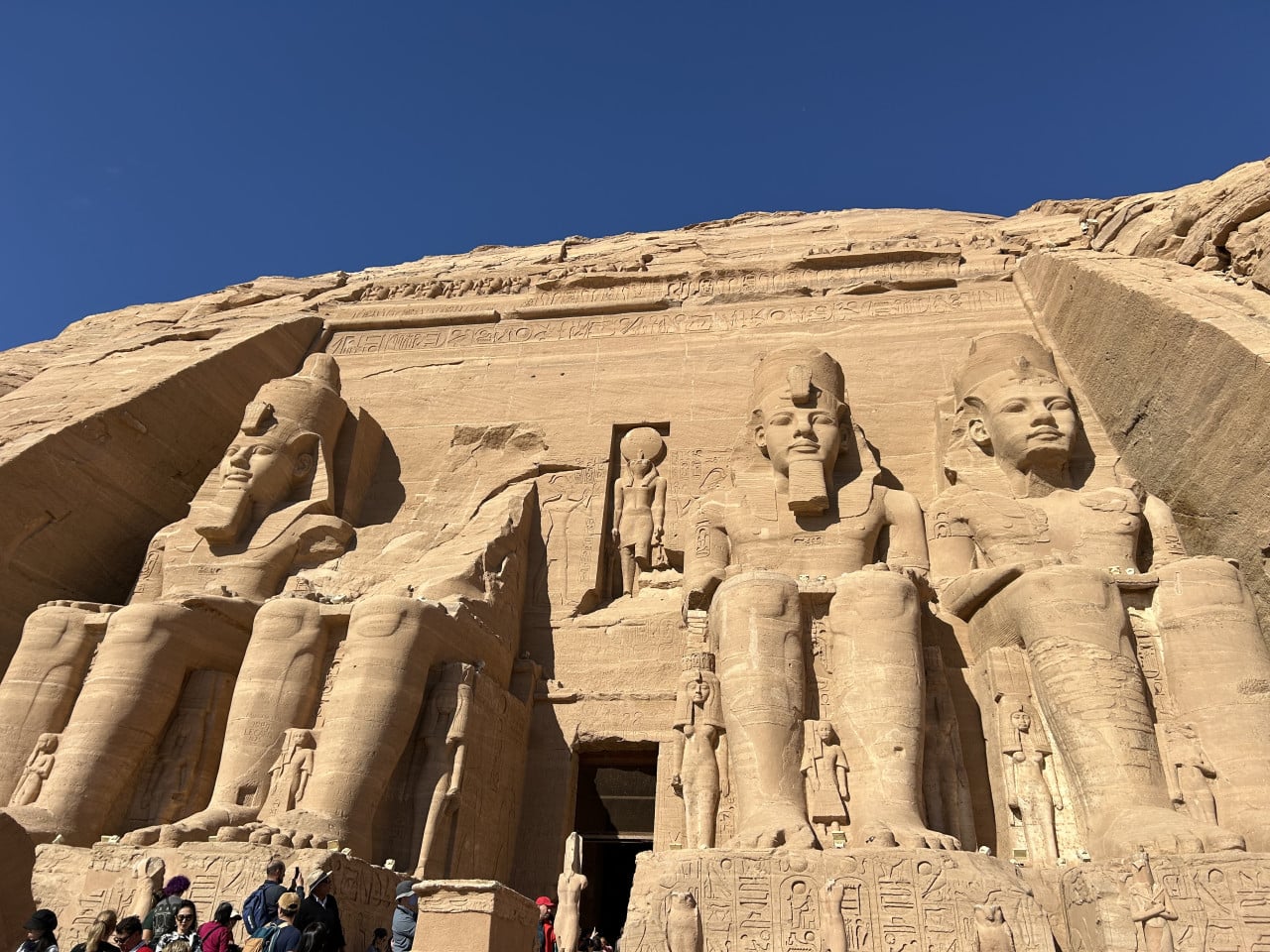
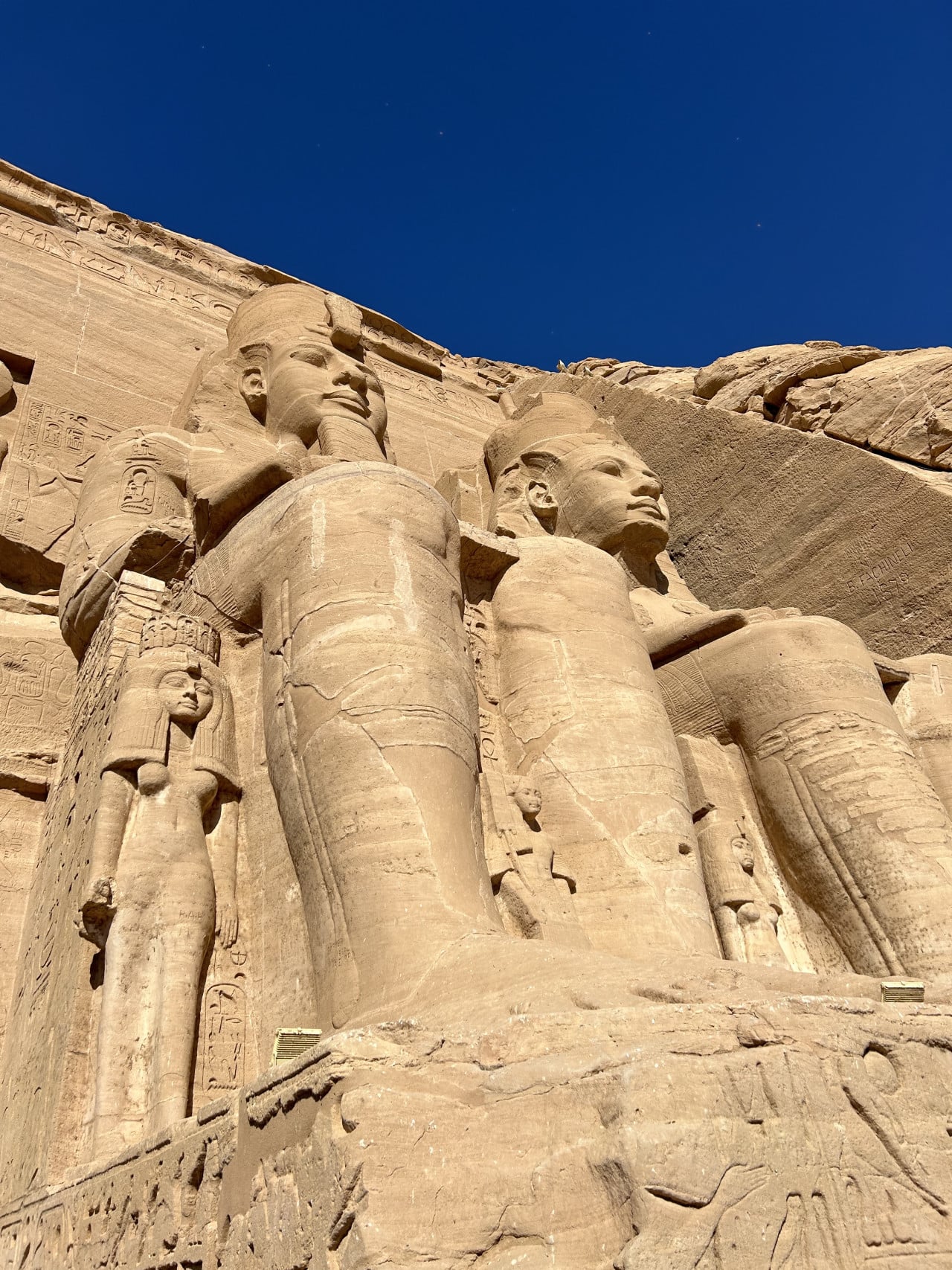
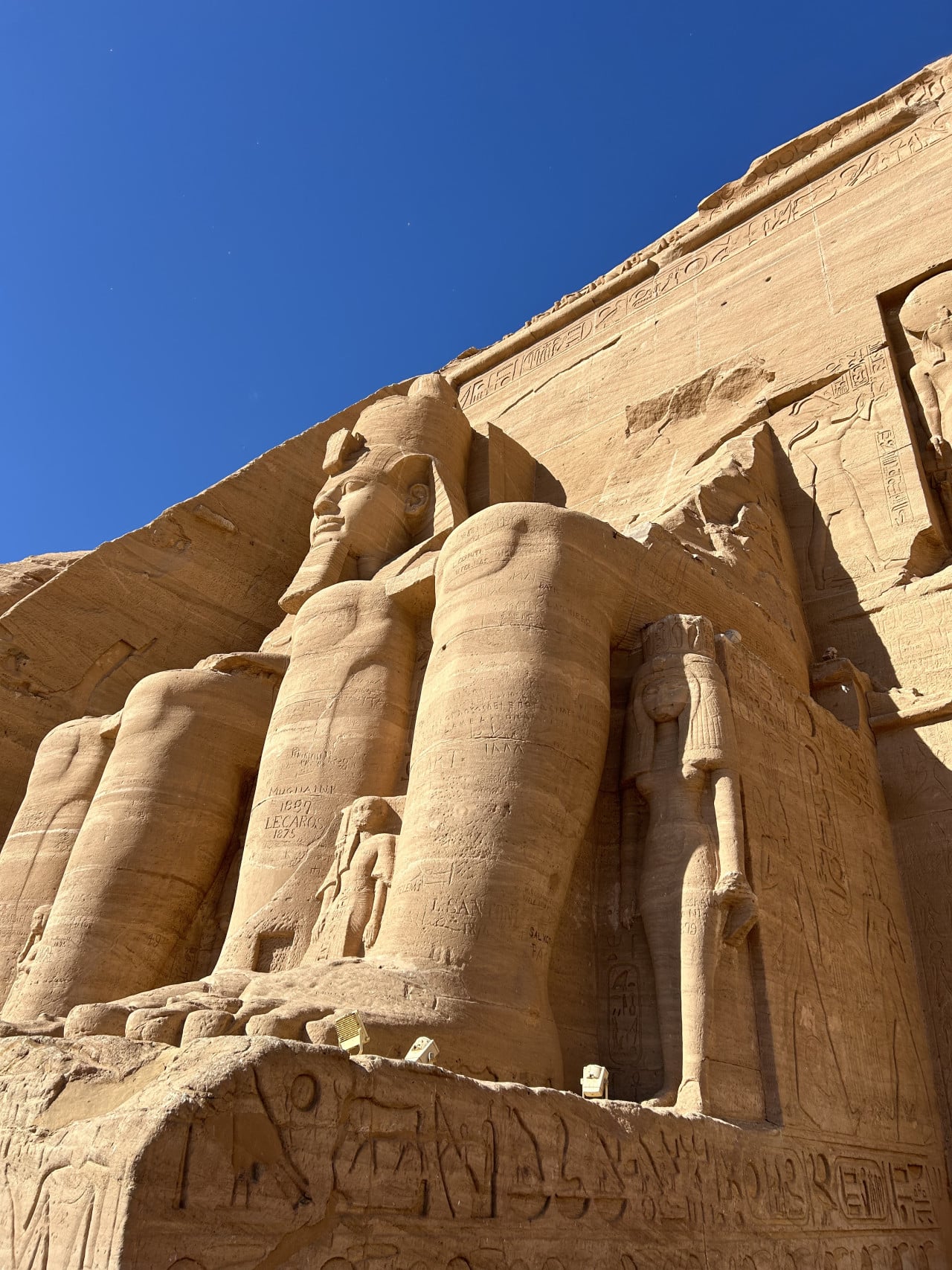
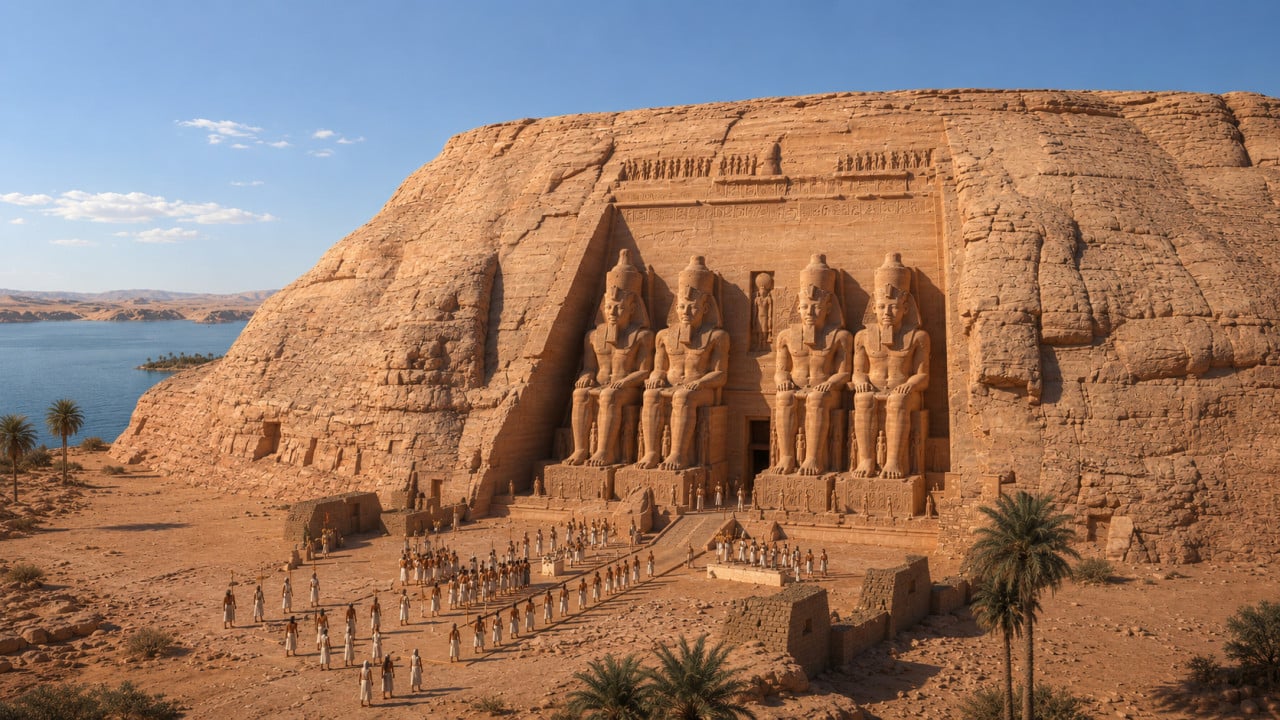
When you approach the Great Temple, a rock face opens up before you with one of the most famous façades of ancient Egypt. The entrance is guarded by four seated statues, each approximately twenty meters tall.
Interestingly, all four depict the same person—the pharaoh Ramesses II.
They are therefore not four different gods or rulers. Ramesses had himself depicted four times, and on a monumental scale. As soon as they arrived, every visitor was meant to understand exactly who they were dealing with.
One of the colossal statues was damaged by an earthquake in the distant past. Its head and part of its torso fell to the ground, where they remain to this day. During the temple's modern relocation, the statue was deliberately not repaired; instead, its pieces were positioned approximately as they had been found. (Egypt's Monuments)
At the feet of the enormous figures, you can see much smaller statues of members of the ruler's family. The difference in size was not accidental—it was intended to emphasize the pharaoh's almost superhuman status.
Why Abu Simbel Was Built
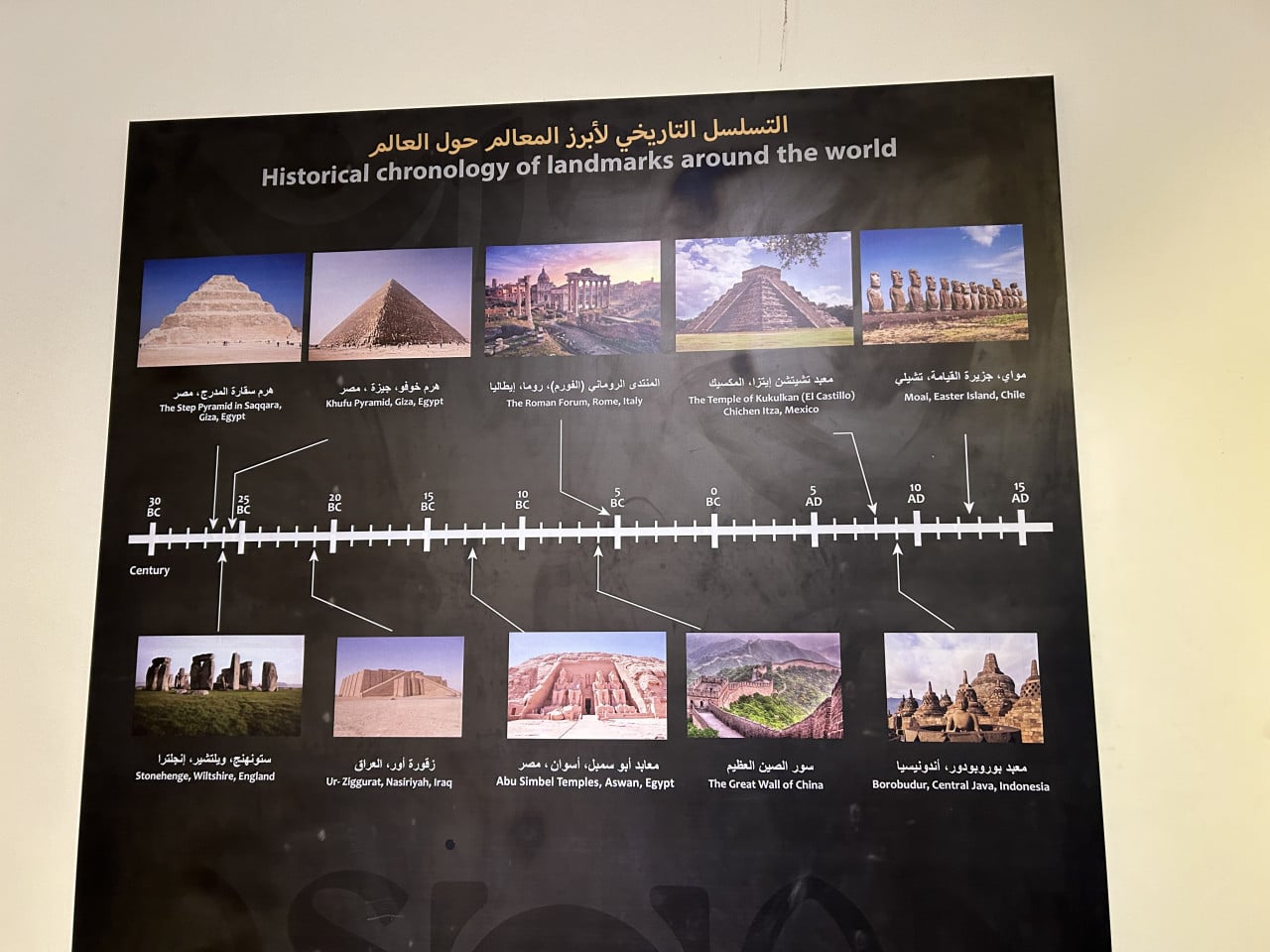
The temples at Abu Simbel were carved into the rock in the 13th century BC on the orders of Ramesses II, one of the most powerful and longest-reigning pharaohs in Egyptian history. The Great Temple was built around 1264 BC and was dedicated to the gods Amun-Ra, Ra-Horakhty, and Ptah, as well as to the deified Ramesses II himself. (Egypt's Monuments)
The temple was not merely a religious site. It stood in Nubia, near the southern border of the Egyptian Empire, and also conveyed a clear political message. Anyone approaching from the south along the Nile was meant to see the monumental image of the pharaoh and understand that they were entering territory controlled by Egypt.
It was essentially a demonstration of power more than three thousand years ago.
Moreover, Ramesses II had himself placed among the gods inside the temple. In this way, he immortalized not only his reign but also the idea that his authority was of divine origin. (Experience Egypt)
Inside the Temple: Battles, Gods, and Ancient Egyptian Propaganda
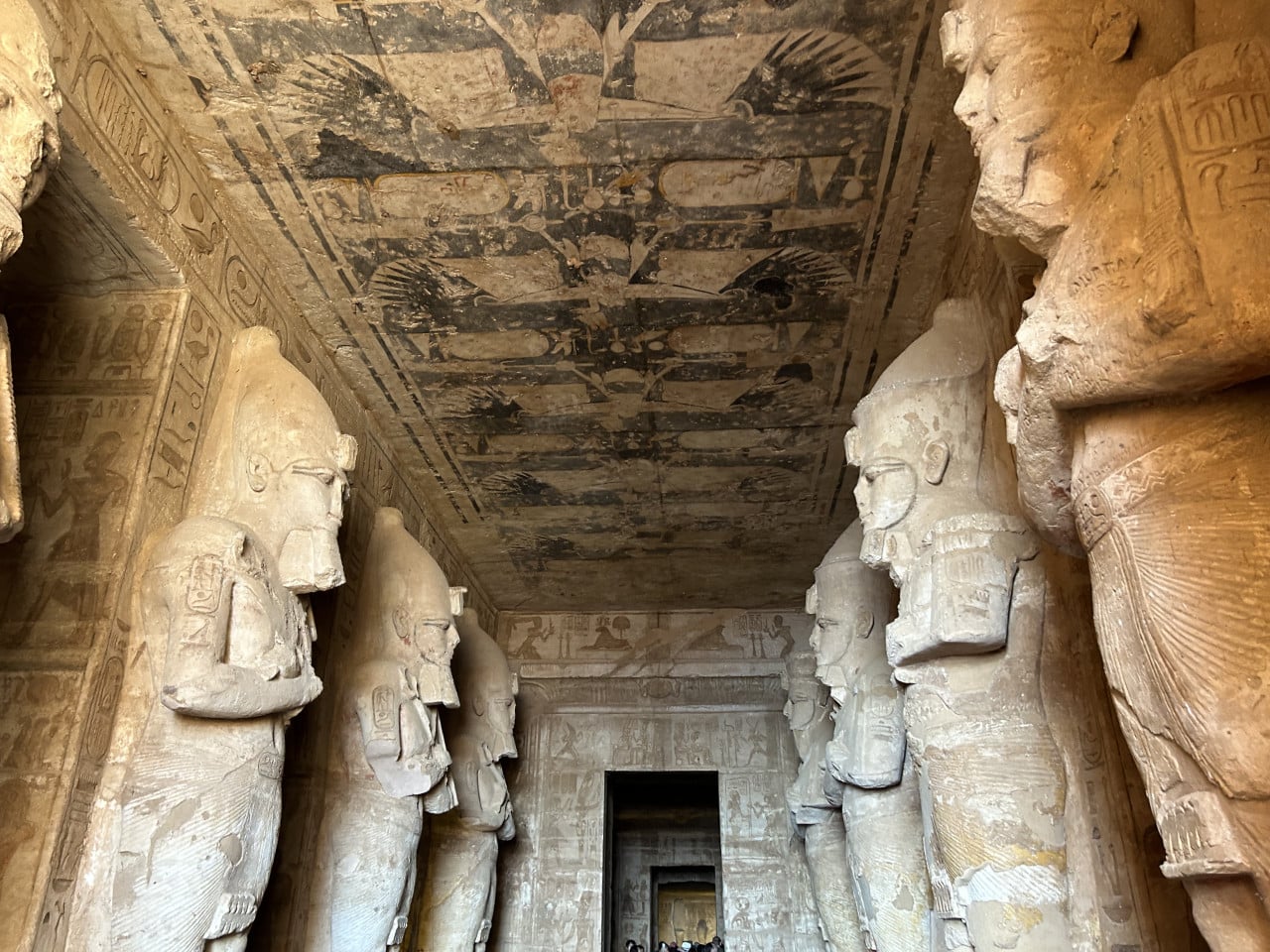
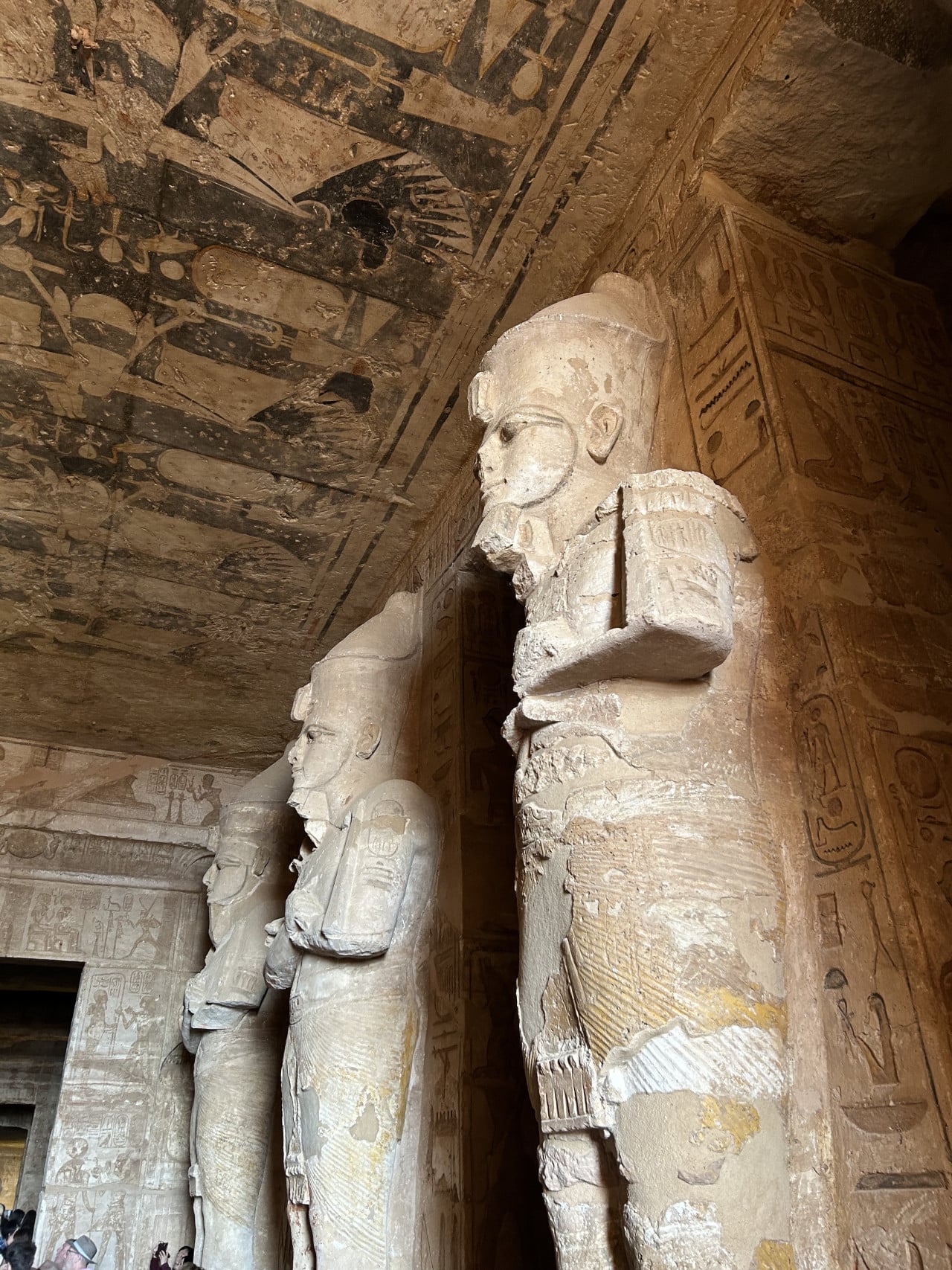
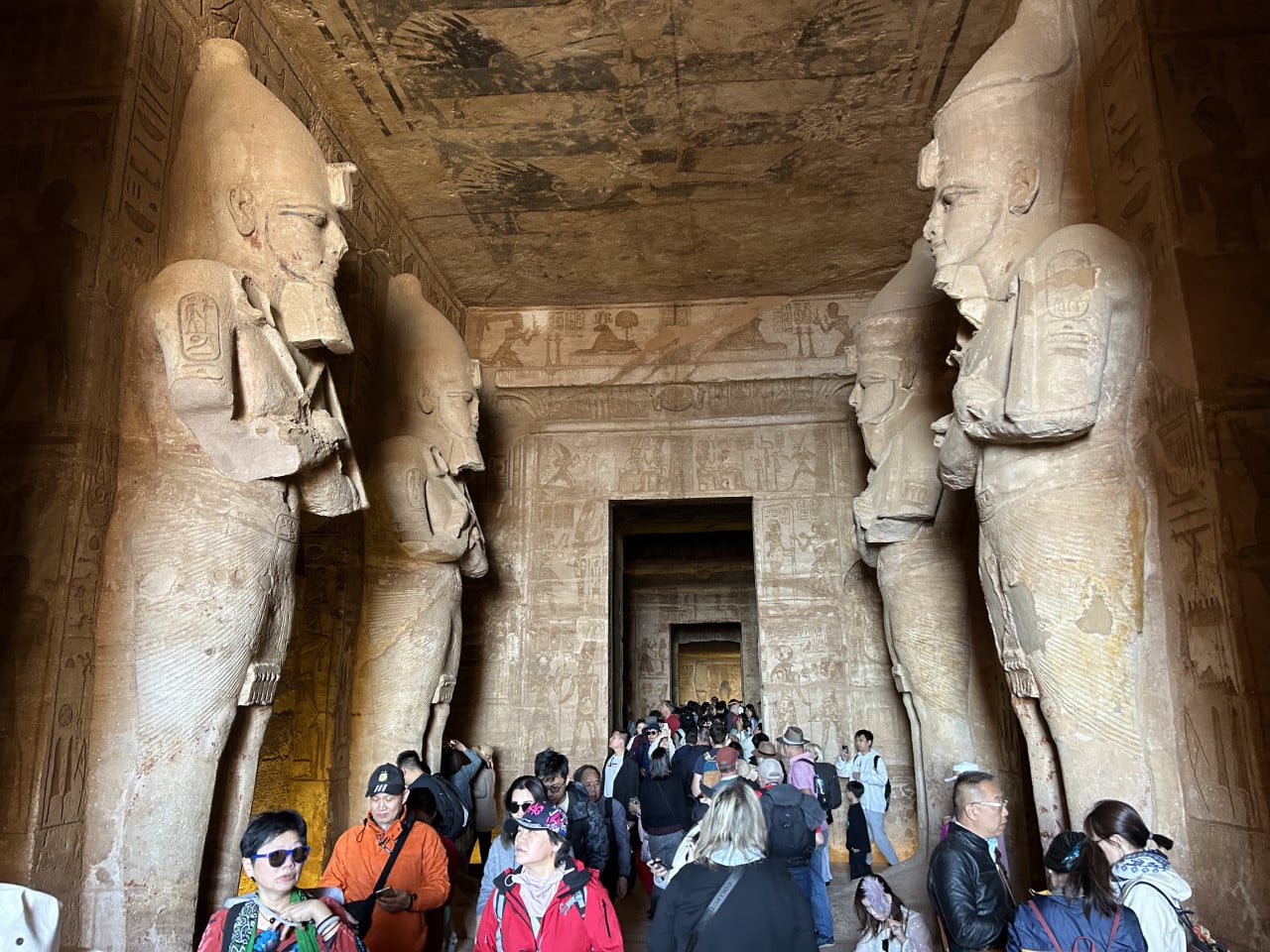
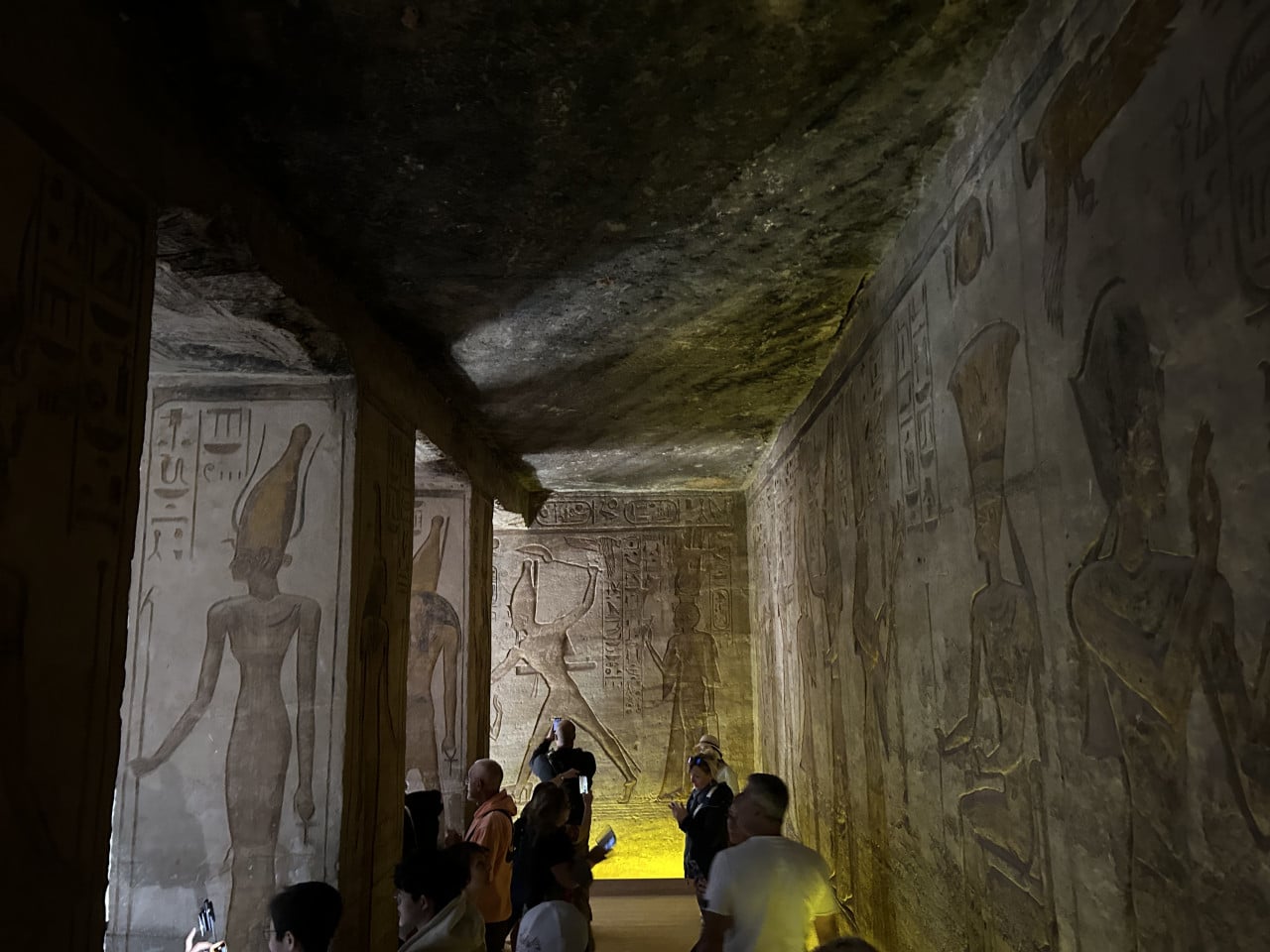
After entering the temple, you find yourself in a vast hall lined with eight enormous figures of Ramesses II. They take the form of the god Osiris, and the pharaoh is once again presented here as a ruler who crossed the boundary between man and deity.
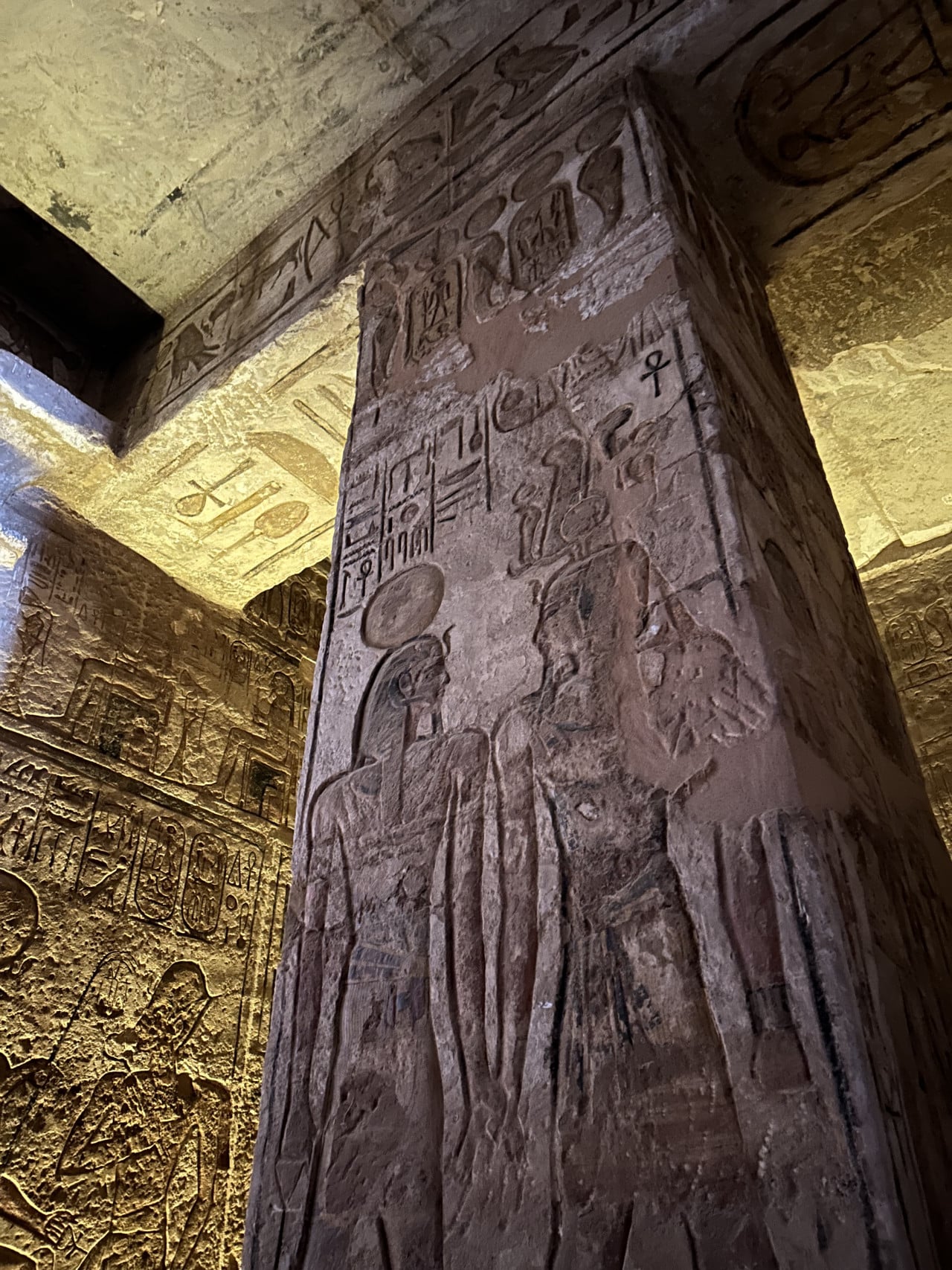
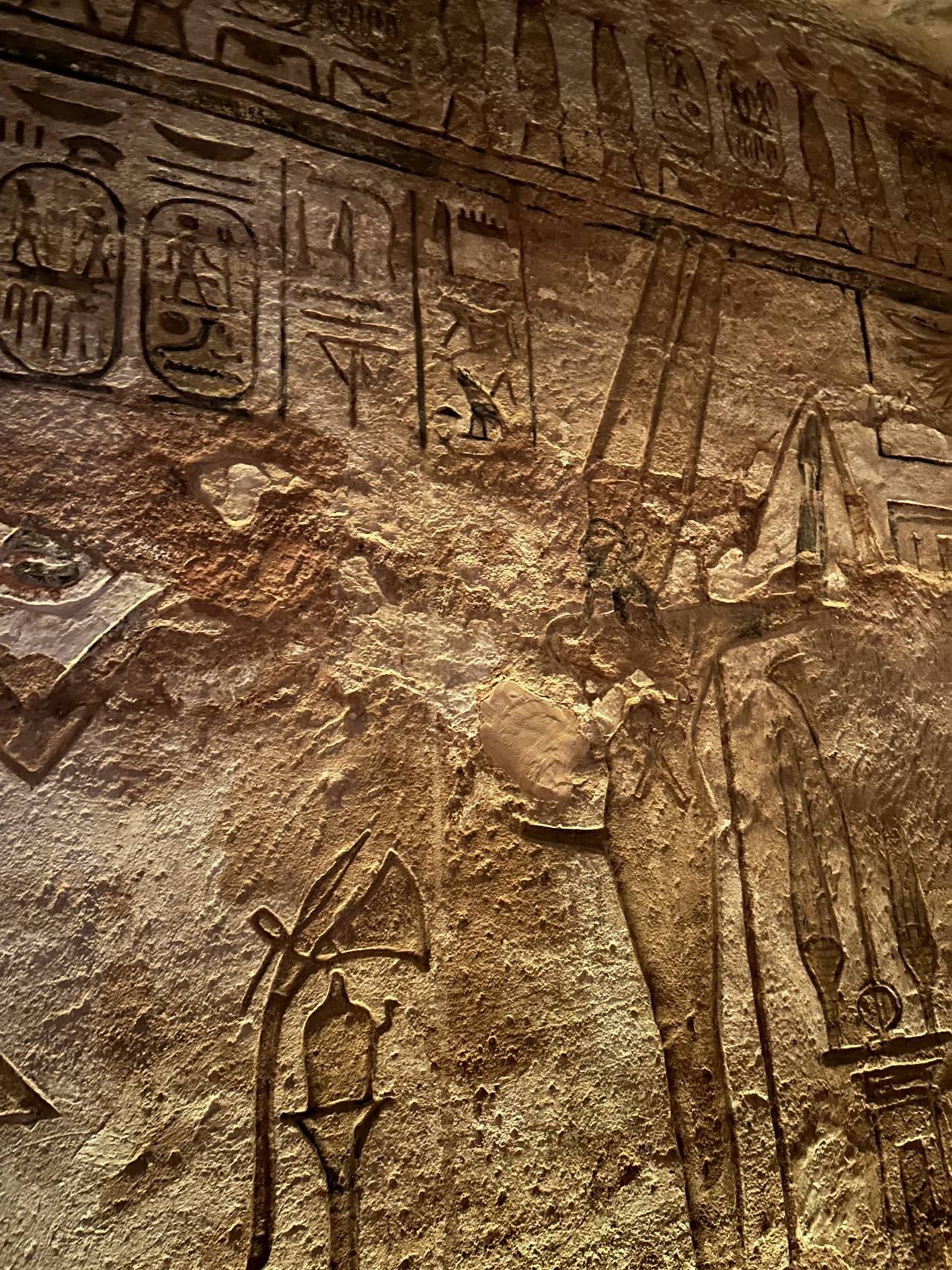
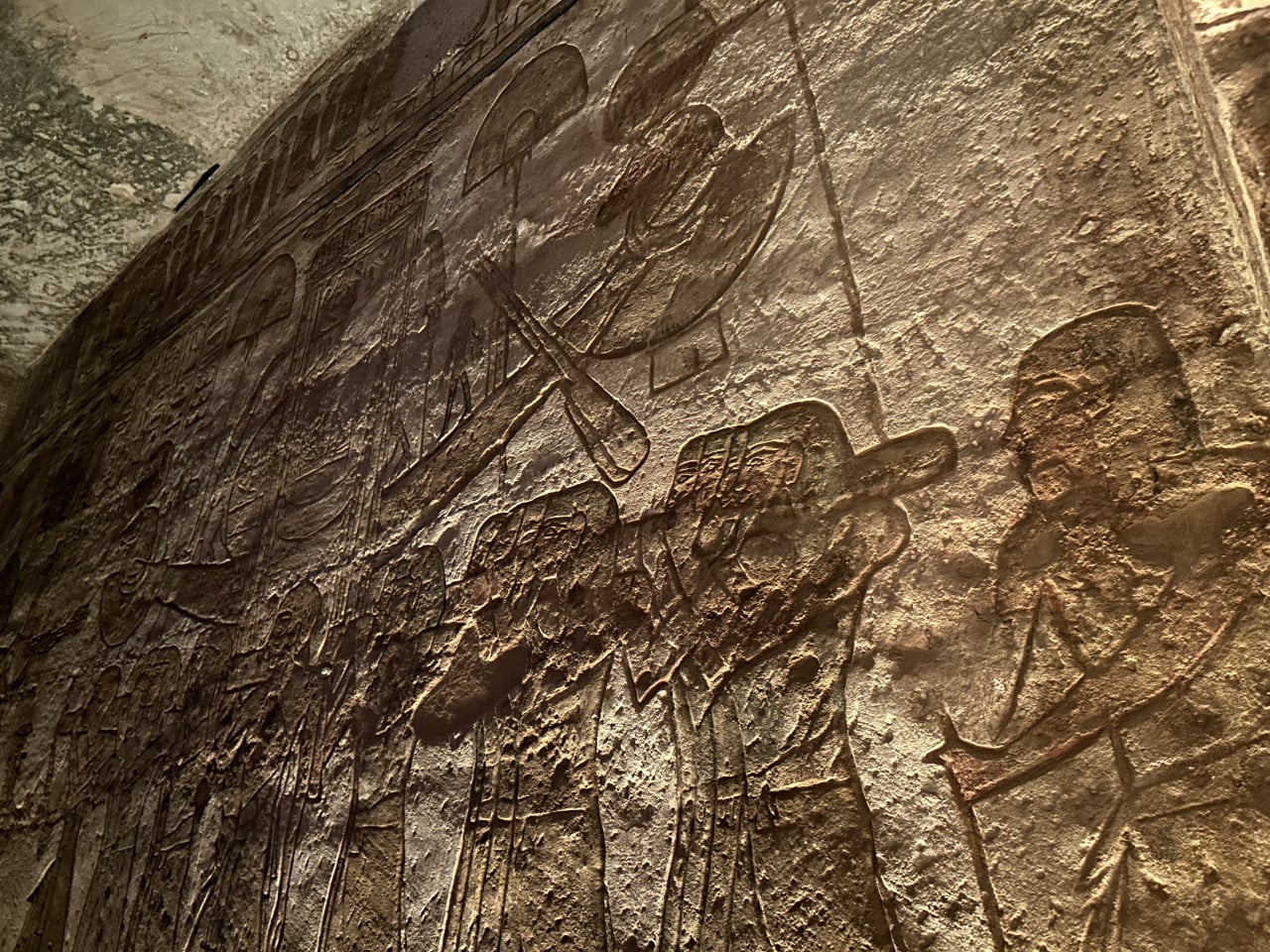
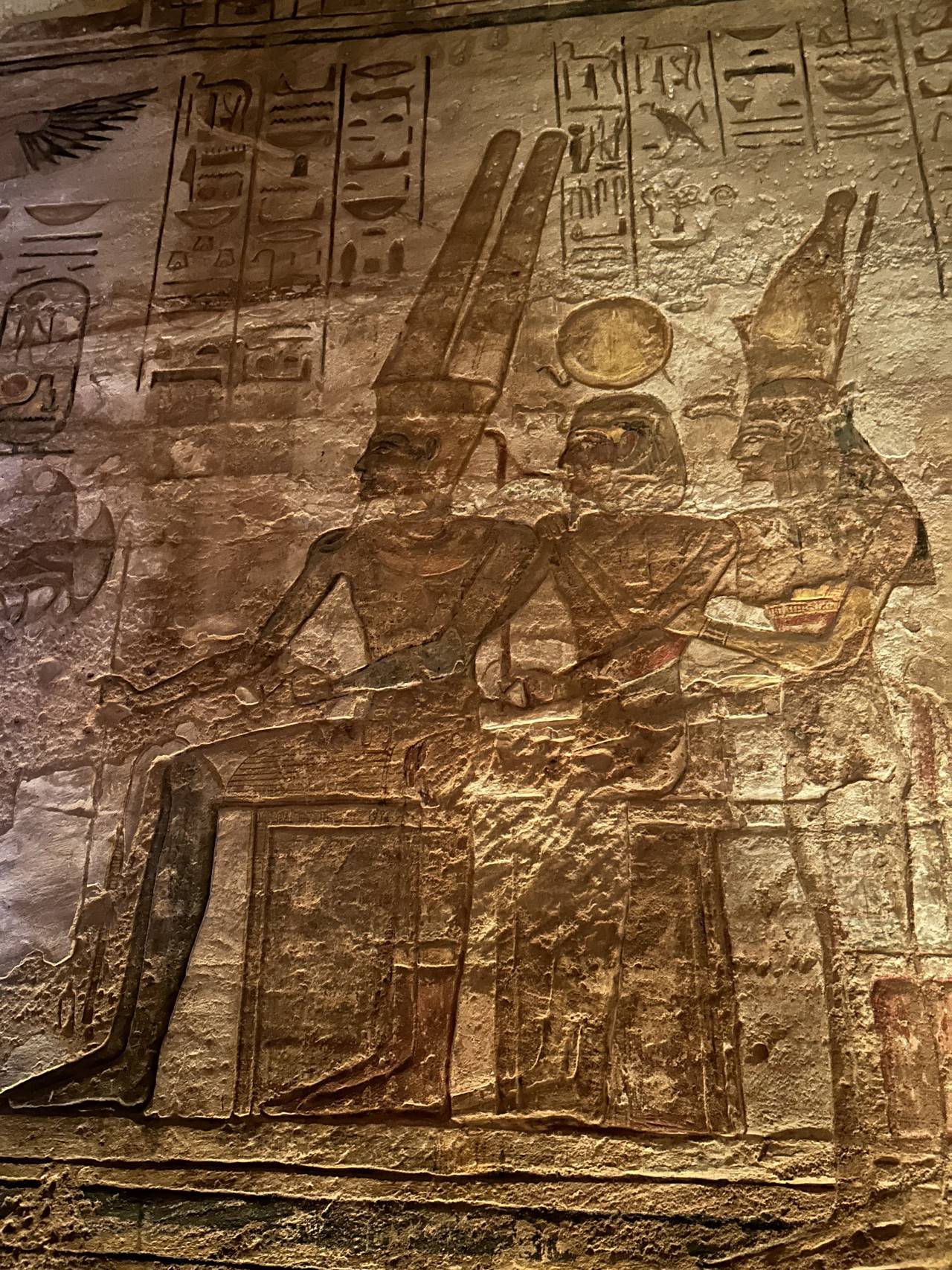
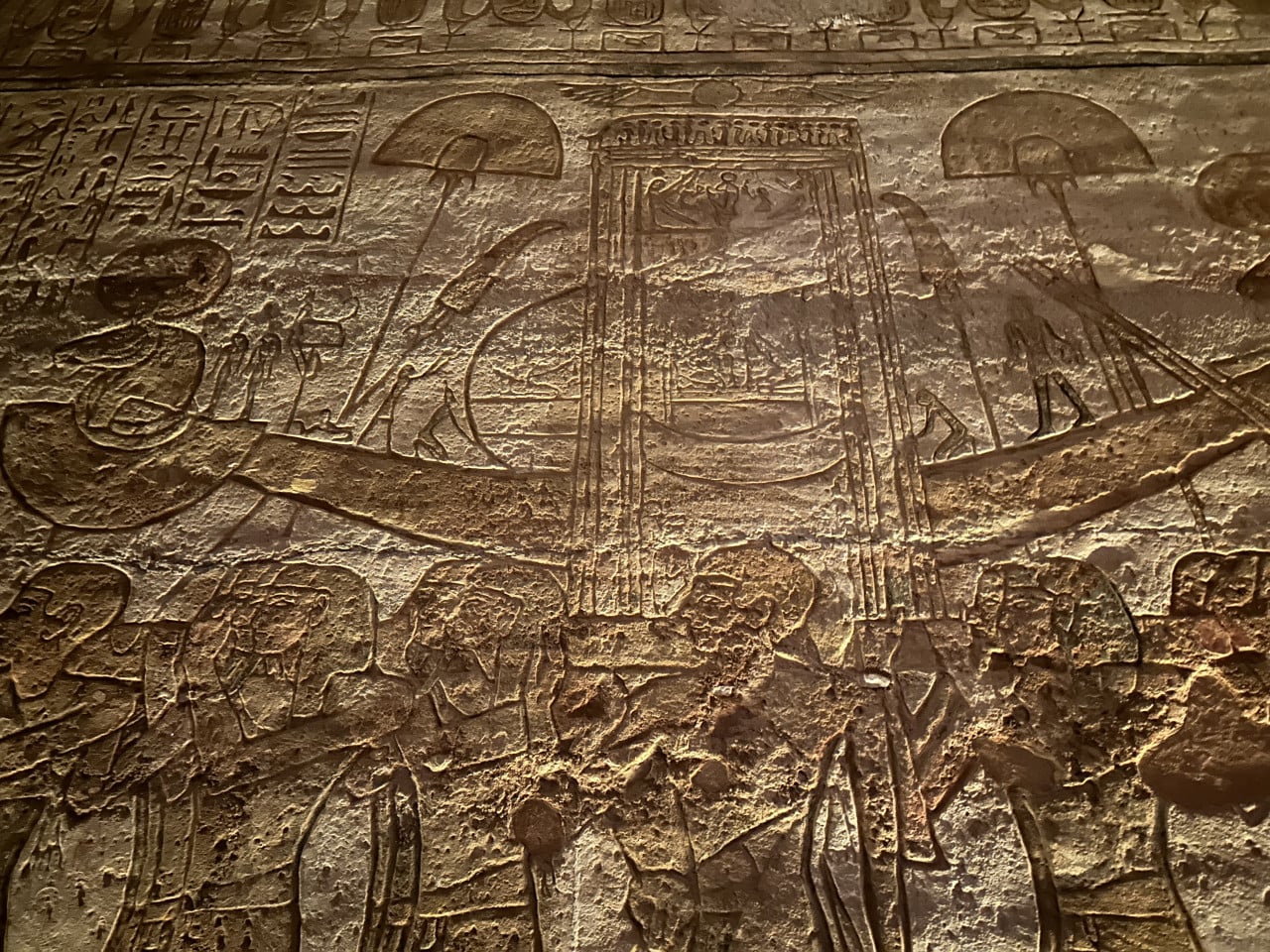
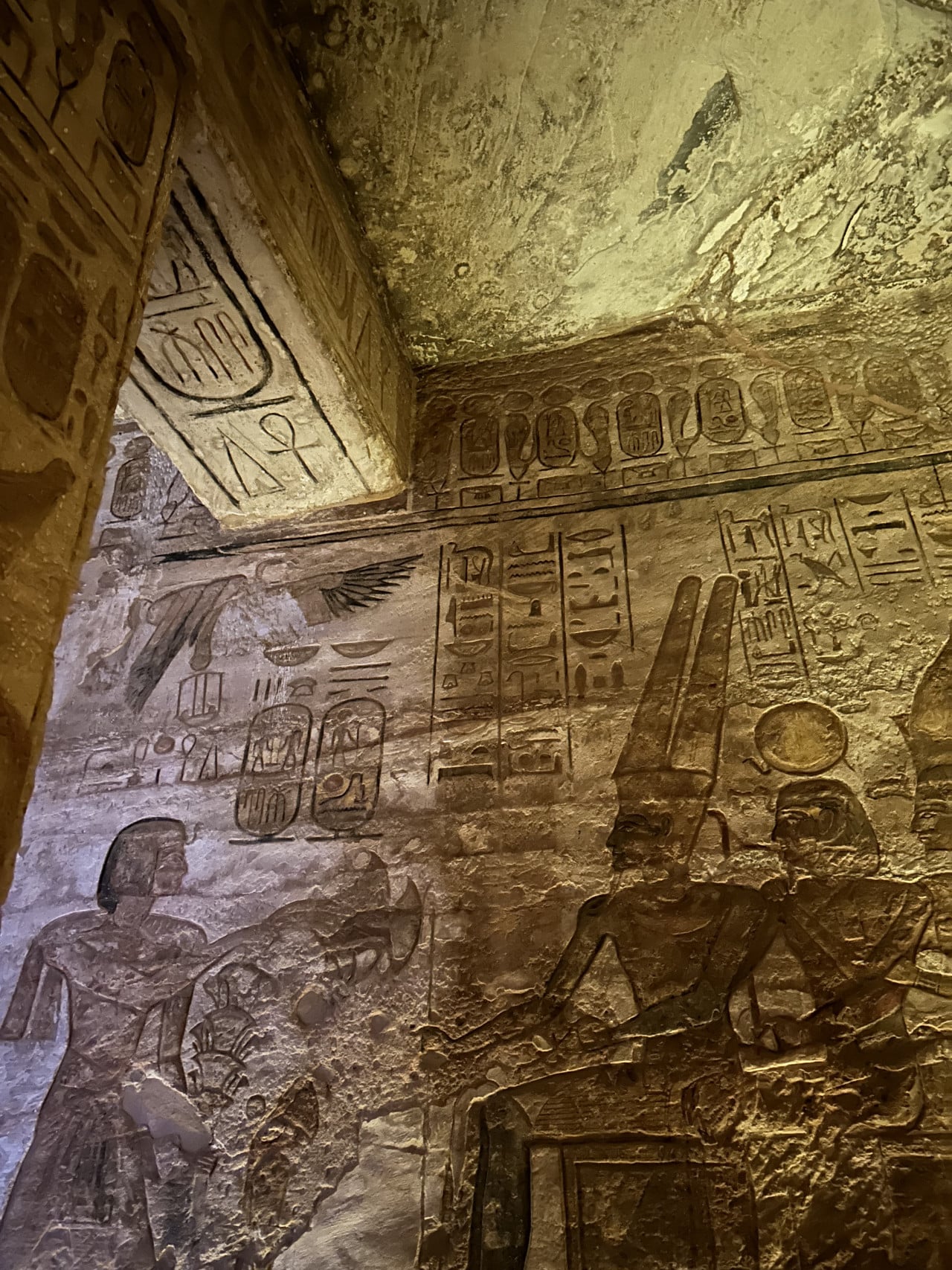
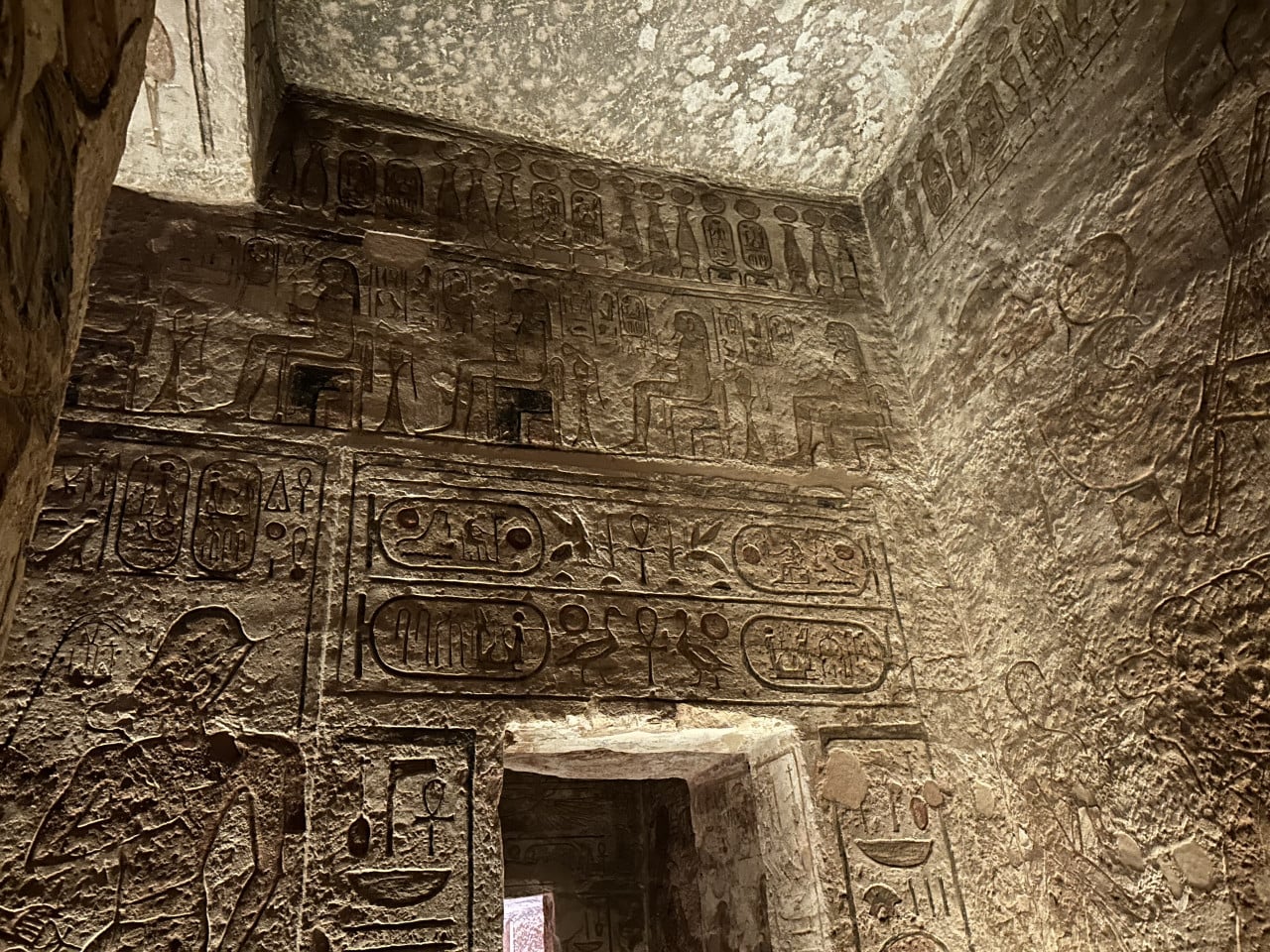
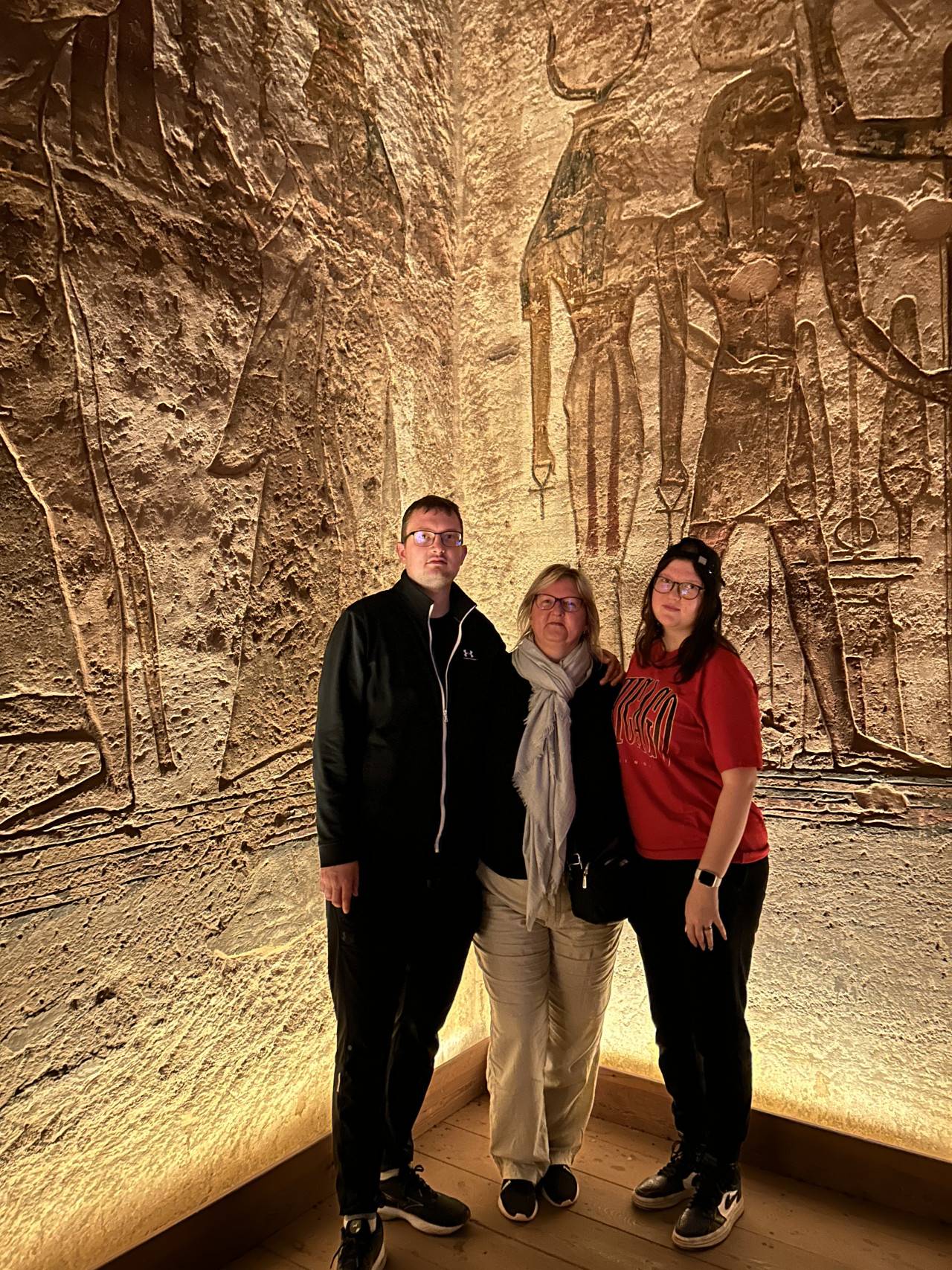
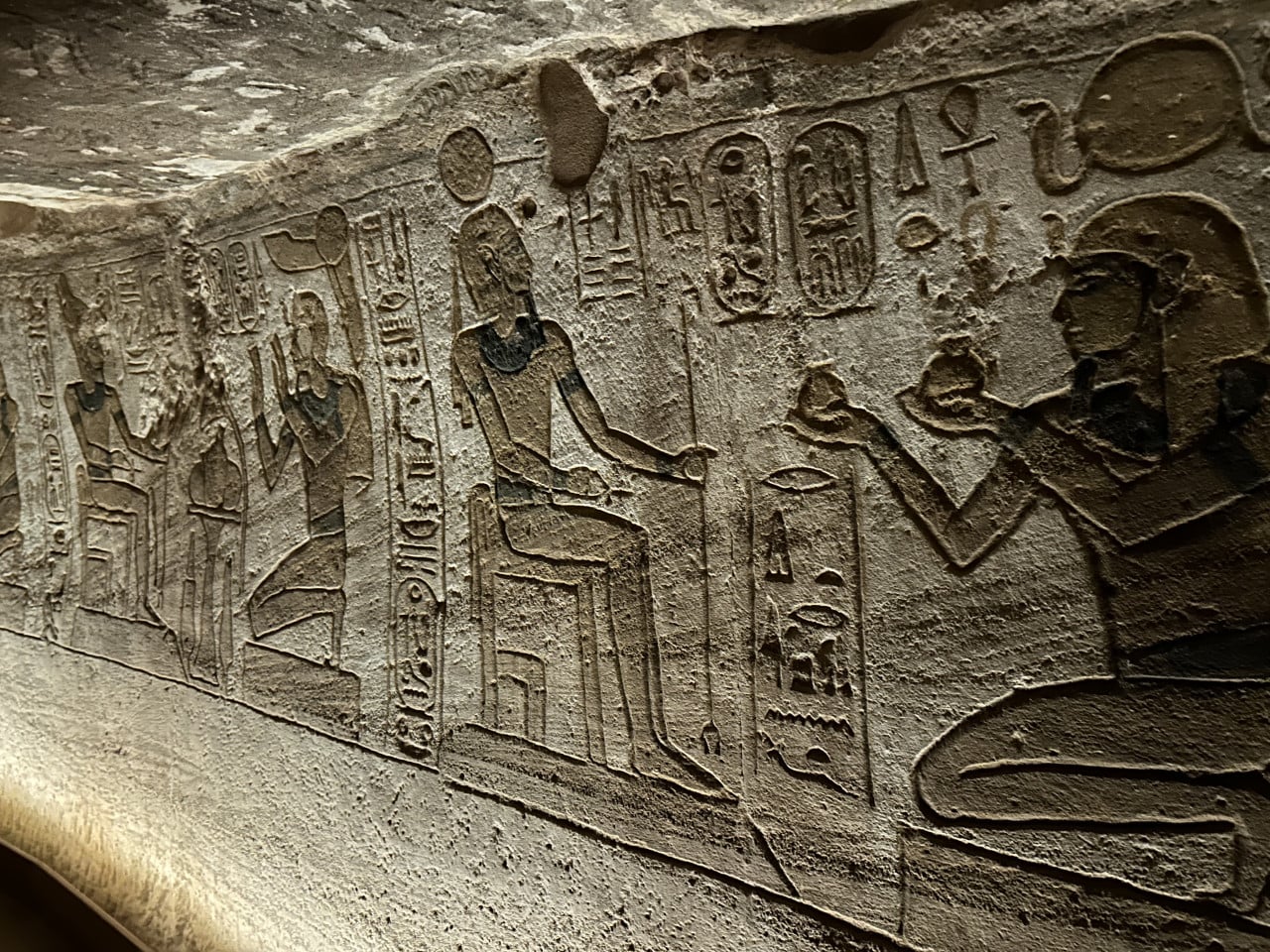
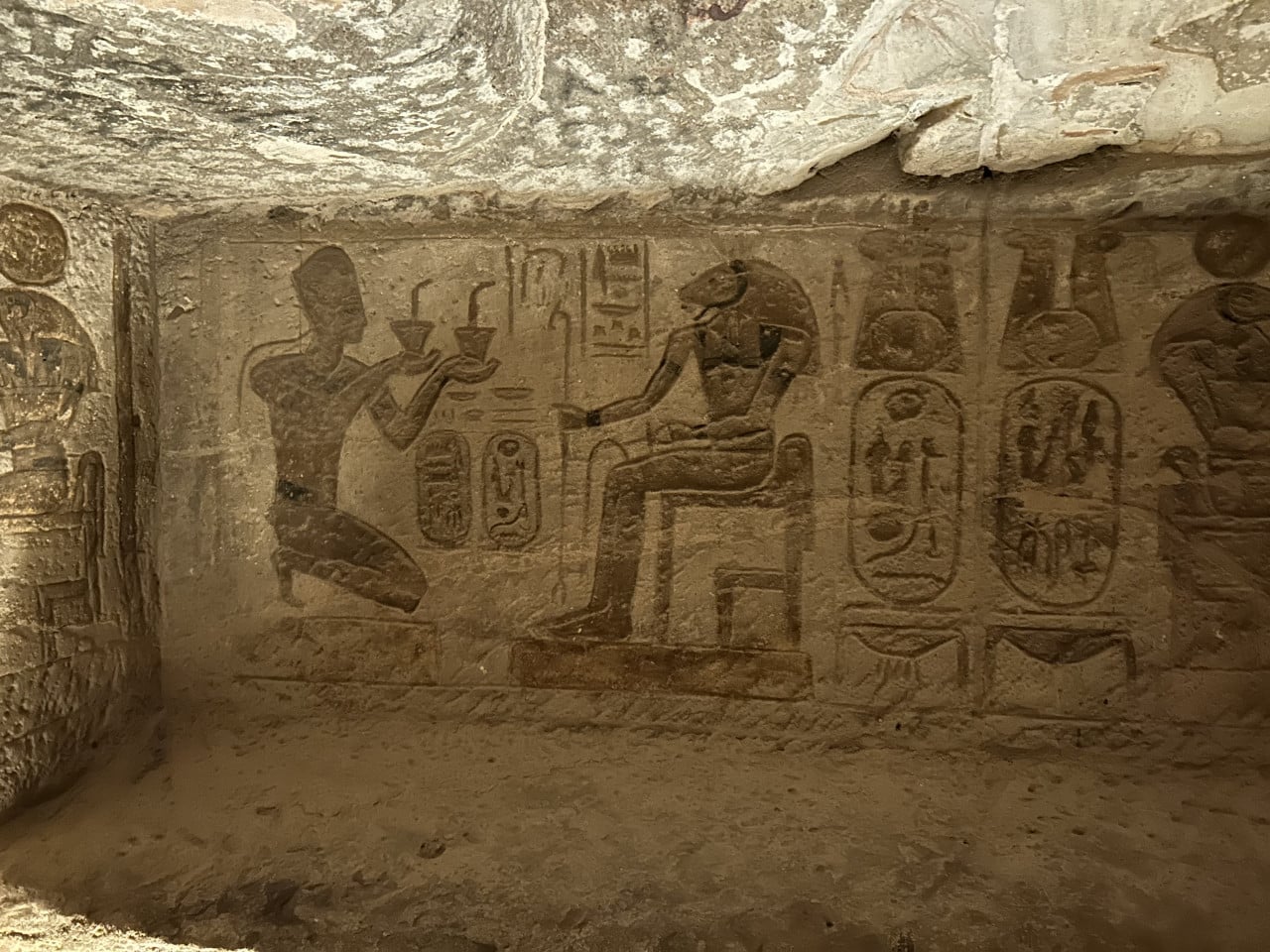
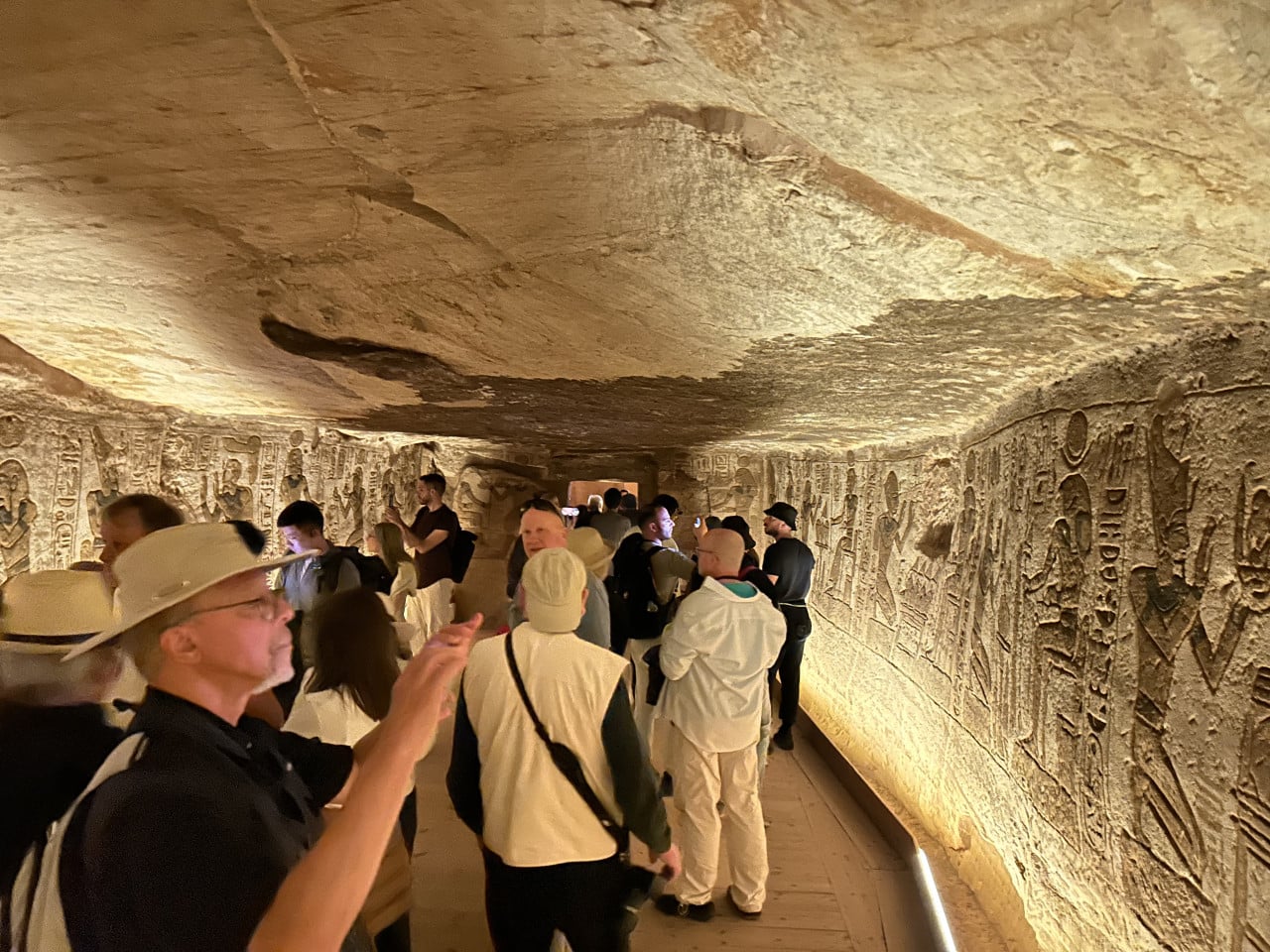
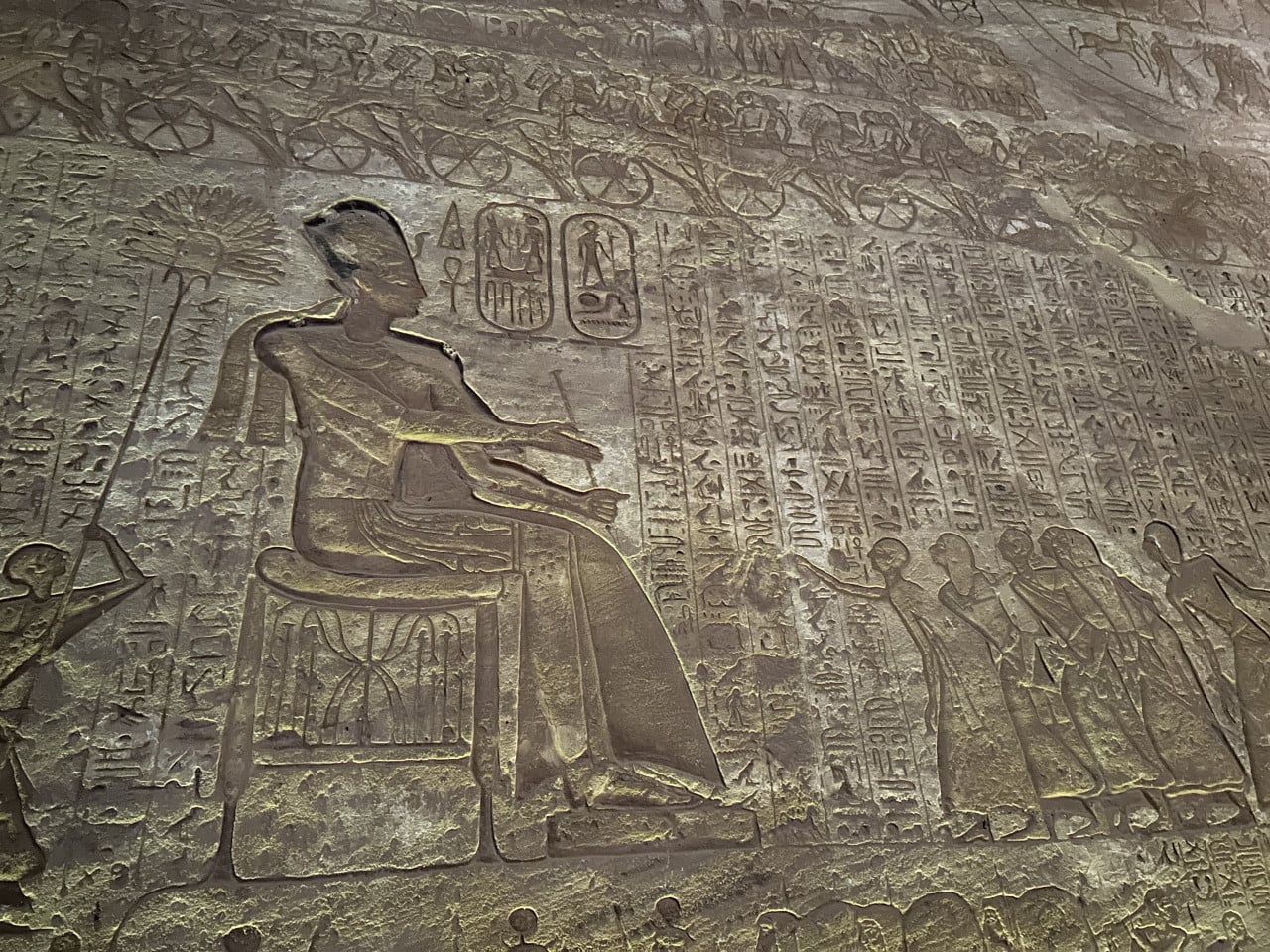
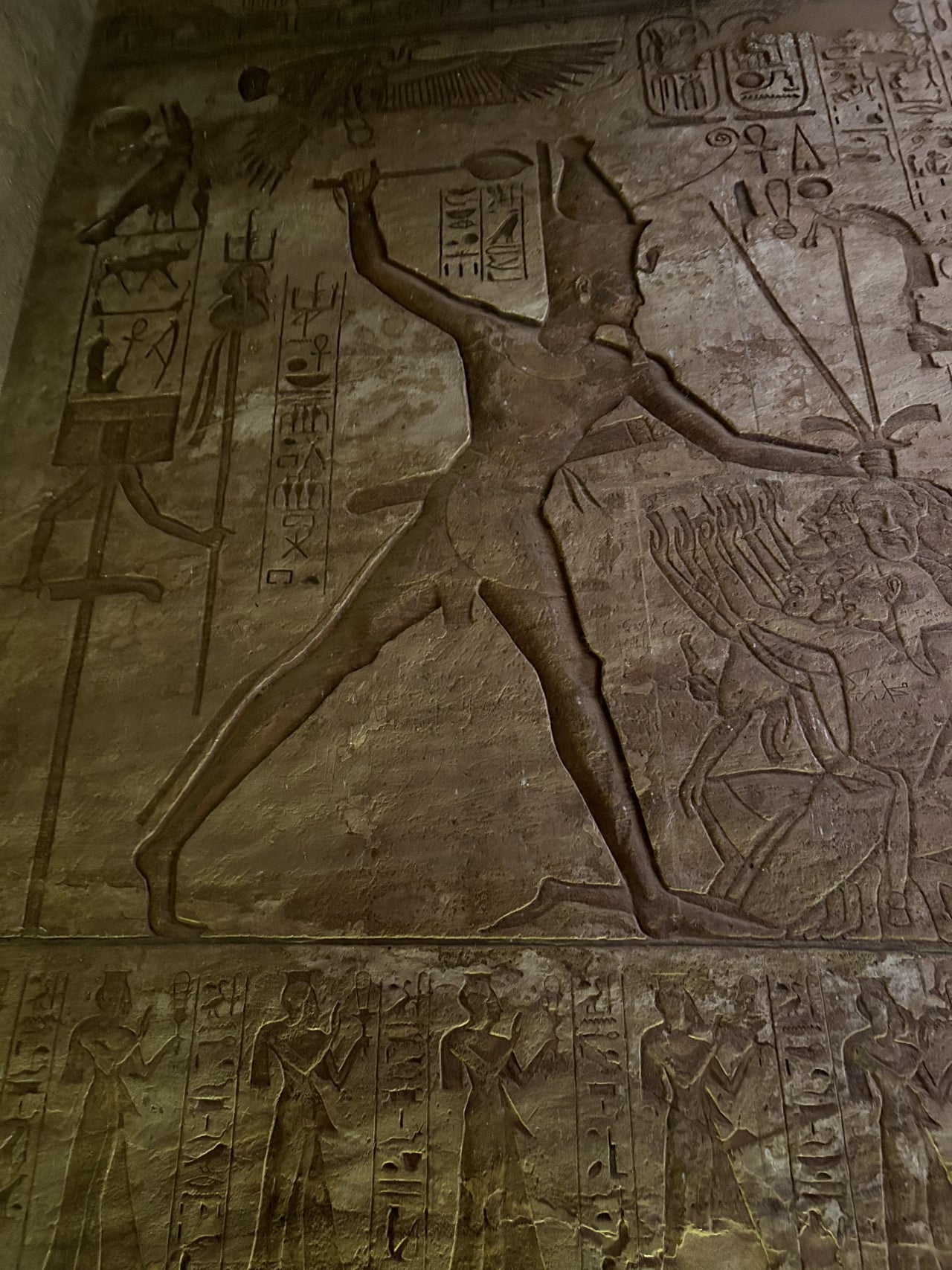
The walls are covered with hieroglyphs and reliefs. They do not form a single continuous visual “book,” but depict various religious ceremonies, offerings to the gods, scenes from royal life, and, above all, military campaigns.
The most famous section depicts the Battle of Kadesh, in which Ramesses II fought the Hittites. In the reliefs, he is shown as a fearless warrior standing almost alone against the enemy army, firing his bow from his war chariot and saving the Egyptian forces.
However, the actual outcome of the battle was not as clear-cut as the pharaoh's stone propaganda attempts to suggest. The Egyptians did not decisively defeat the Hittites, and their conflict was later resolved through diplomacy and a peace treaty. (Smarthistory)
In this respect, not much has changed from modern propaganda. The ruler mainly had the version of history recorded on the temple walls in which he appeared as an invincible victor.
A Symbolic Journey from Light into Darkness
During our visit, the guide also told us about the journey of life and death that the individual spaces and reliefs were intended to symbolize.
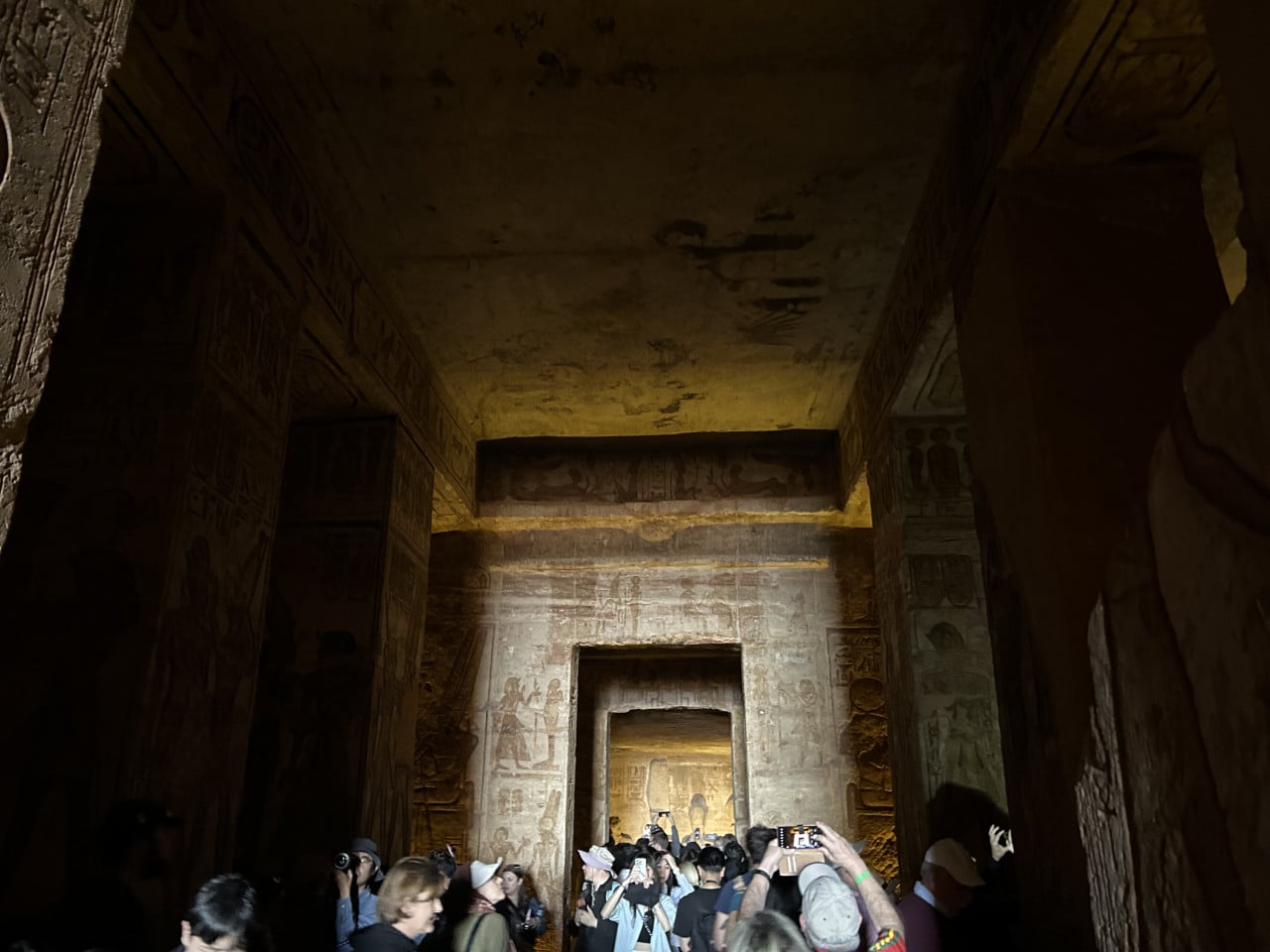
The temple gradually narrows toward the interior, the ceilings become lower, and daylight diminishes. From the open space in front of the façade, you pass through monumental halls ever deeper into the rock until you reach a small and almost completely dark sanctuary.
This can be understood as a symbolic transition from the ordinary human world into the sacred realm of the gods. On the walls, scenes of war alternate with images in which Ramesses presents offerings to the gods, receives their protection, and is gradually depicted as one of them.
It is therefore not directly a classic story of judgment in the afterlife, such as the one we know from the Book of the Dead. Rather, it represents the pharaoh's journey from an earthly ruler to an eternal and deified sovereign.
Four Figures in the Deepest Part of the Temple
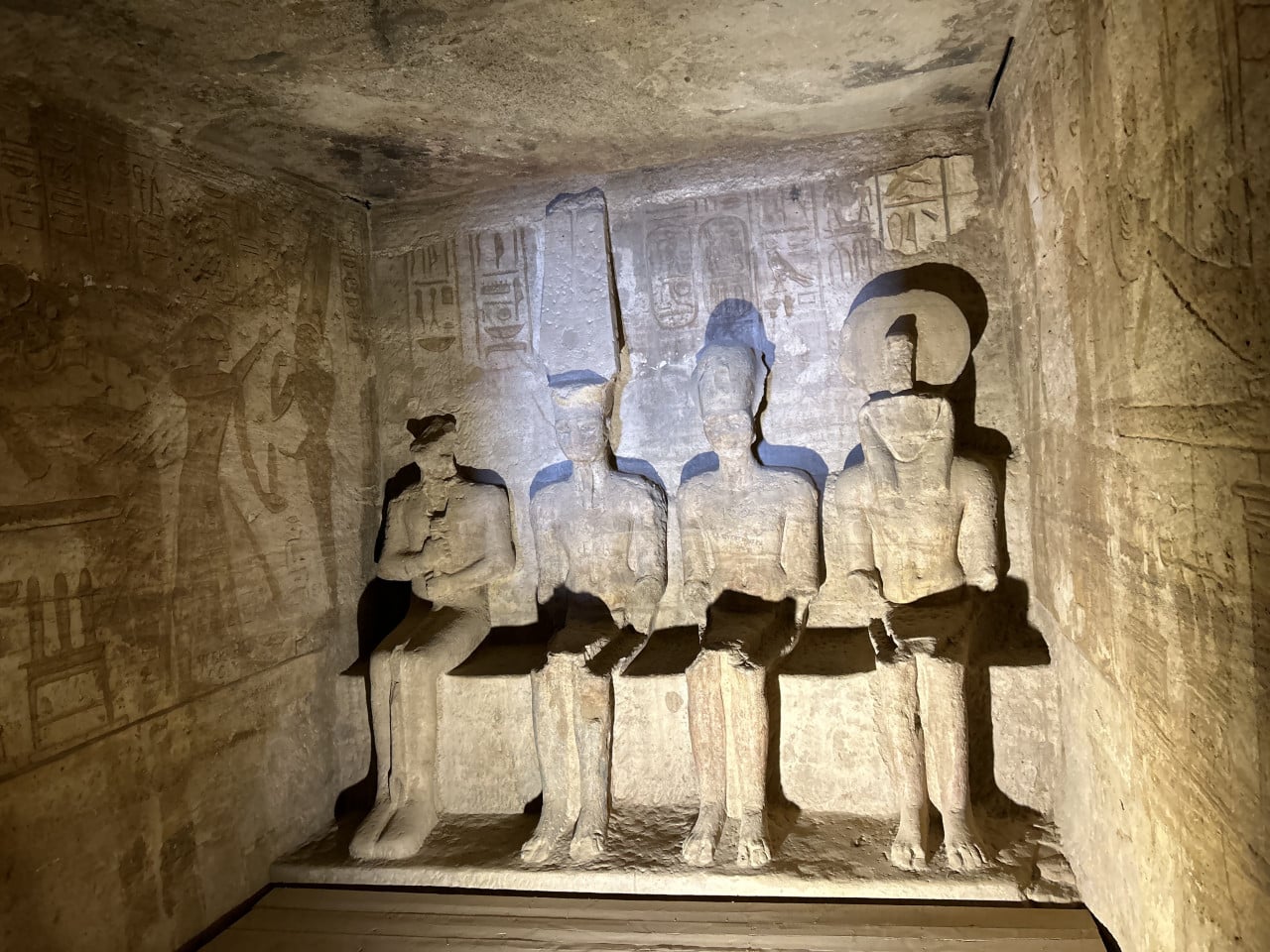
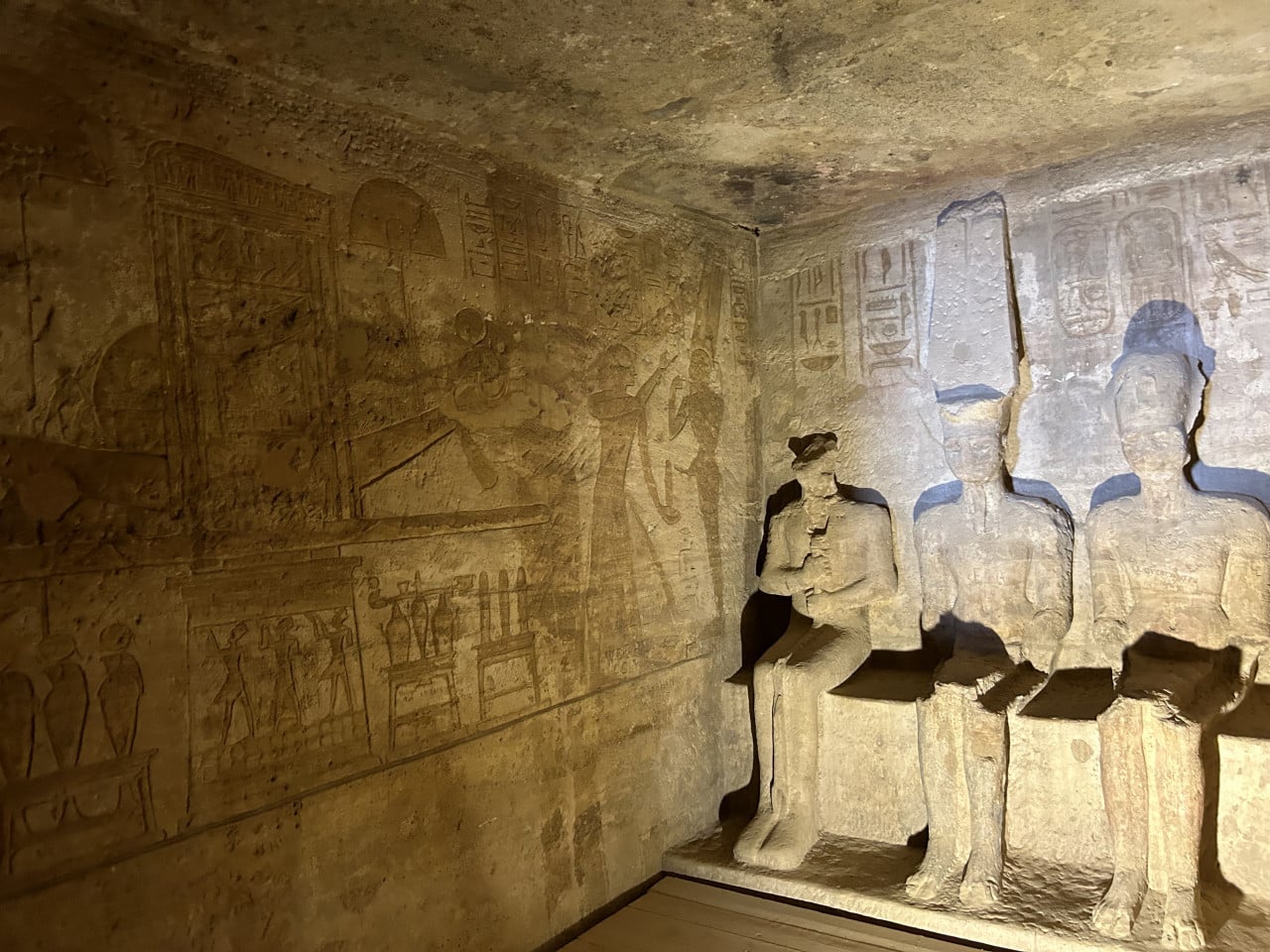
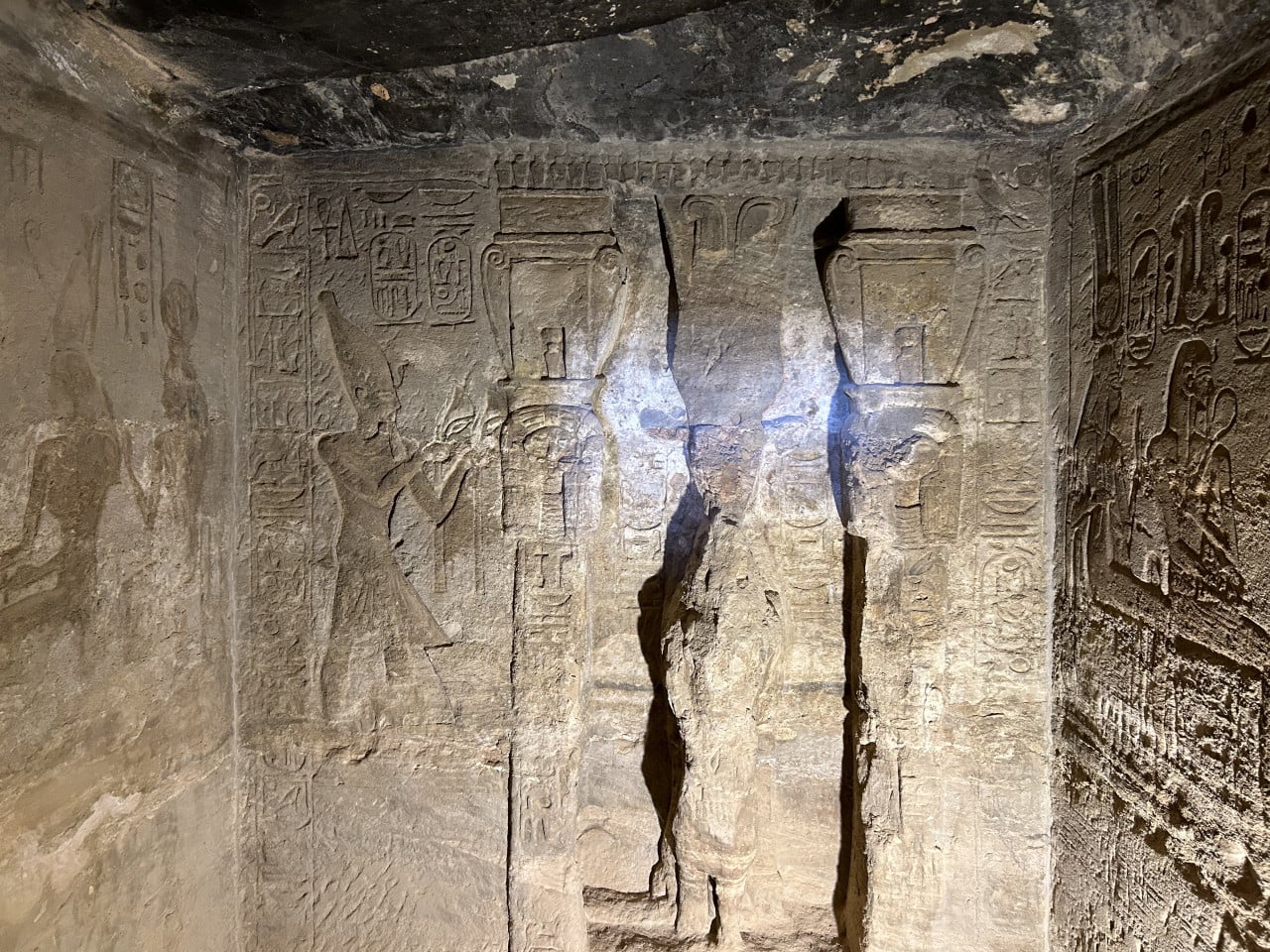
At the very end of the Great Temple is a sanctuary containing four seated figures carved directly into the rear wall.
Viewed from left to right, they are:
Ptah, Amun-Ra, the deified Ramesses II, and Ra-Horakhty.
These are the four statues shown in the photograph below. Their identical dimensions are no coincidence. Ramesses II sits here in the same row and at the same size as the most important gods of Egypt at the time. It is one of the clearest examples of how he had his own cult established. (UNESCO Digital Library)
And these statues are connected to the most famous feature of the entire temple.
Sunlight That Penetrates Dozens of Meters into the Rock
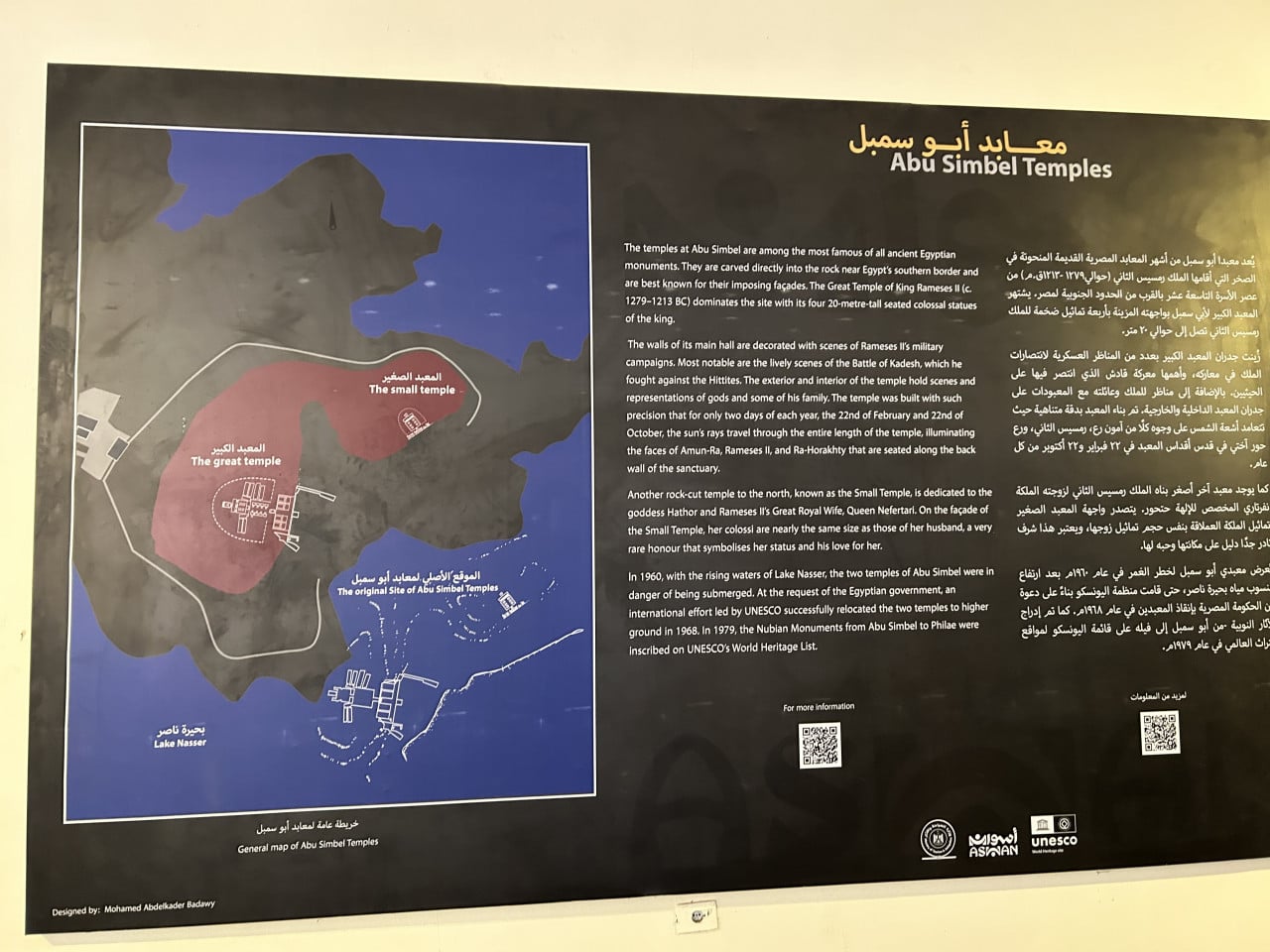
The temple was oriented with incredible precision. Every year on February 22 and October 22, the rays of the rising sun enter through the doorway and travel along the approximately sixty-meter-long axis of the temple to the innermost sanctuary.
The sunlight gradually illuminates the faces of Ra-Horakhty, the deified Ramesses II, and Amun-Ra.
However, the statue of the god Ptah remains in shadow. Ptah was also associated with darkness and the underworld, so his face is the one the sun's rays do not reach. (Experience Egypt)
Today, thousands of visitors come to witness this moment. Even outside these two specific days, however, a morning visit is very impressive. The sight of the sun illuminating the enormous statues on the façade is exactly the image that has remained in my memory since my first visit more than fifteen years ago.
An illustration of how the temple looked when it was built.
The Small Temple for Queen Nefertari
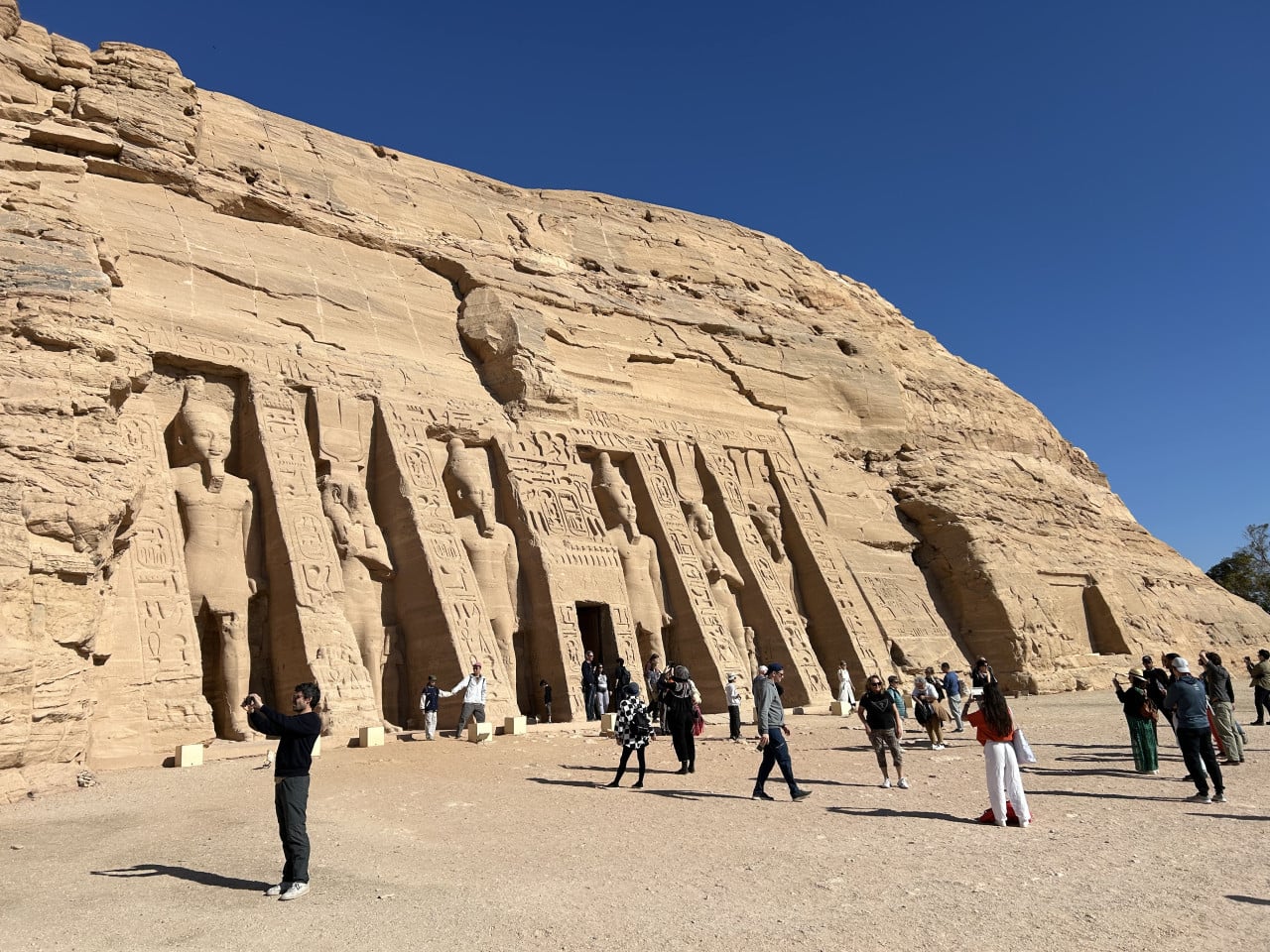
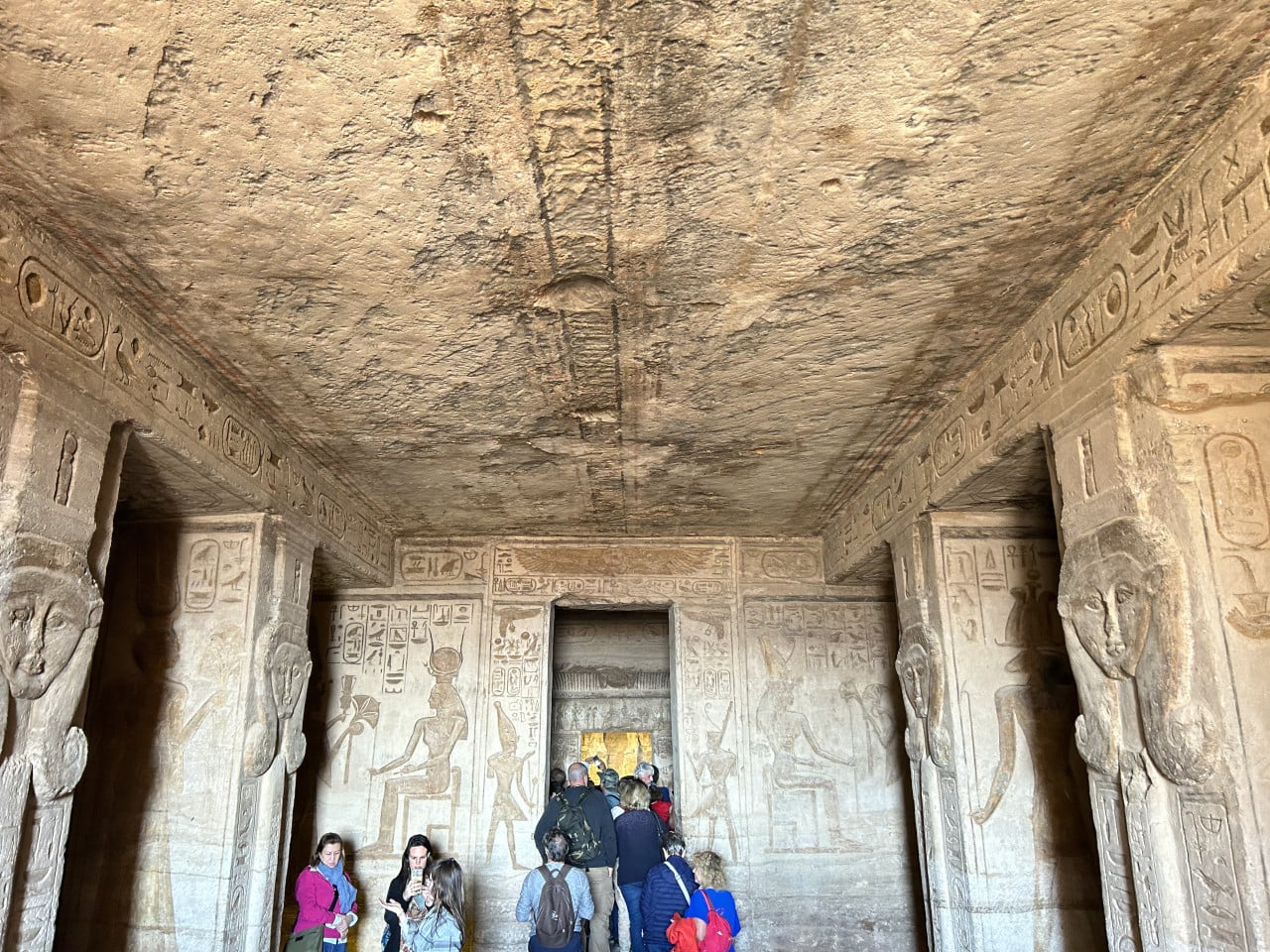
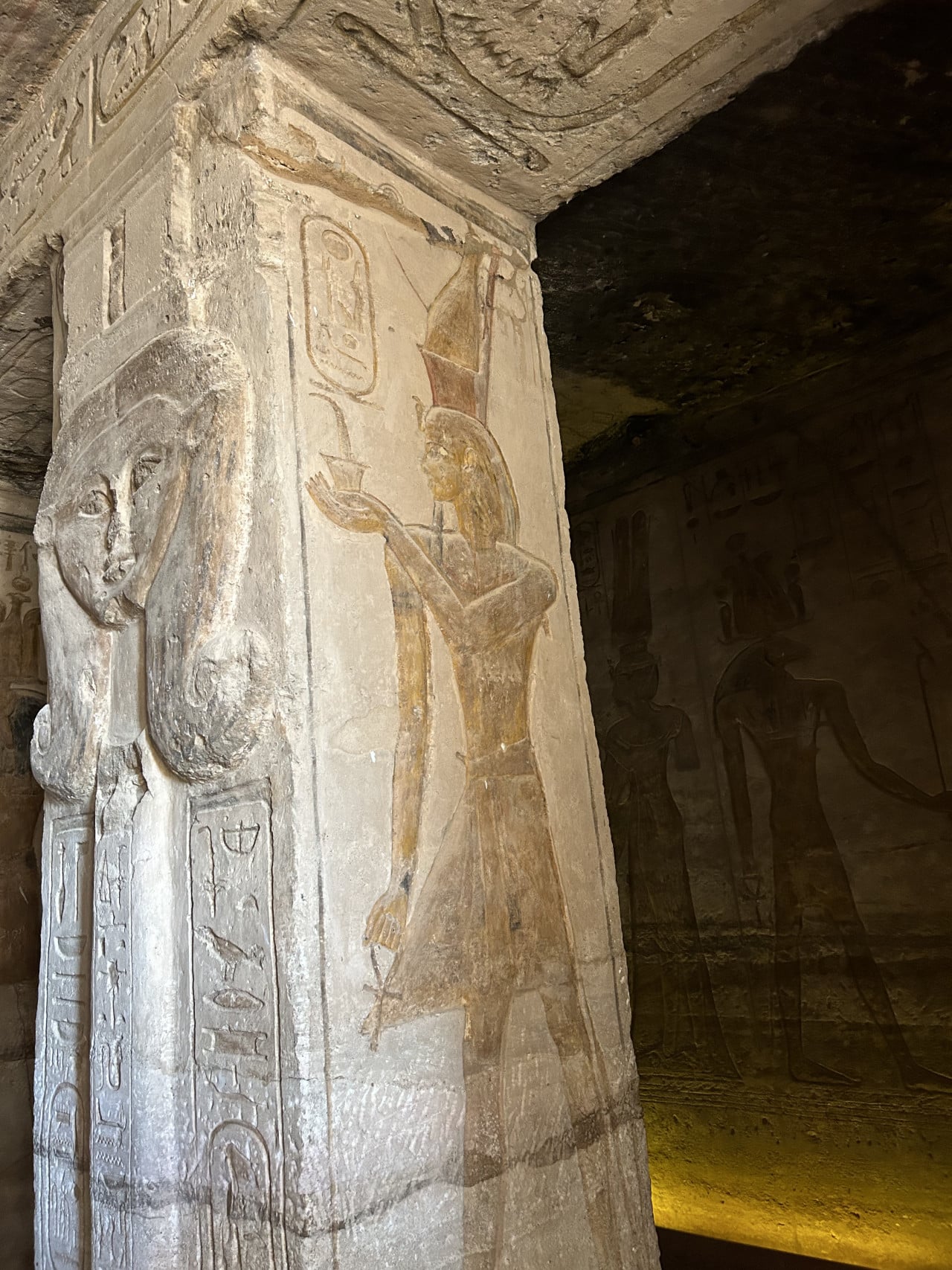
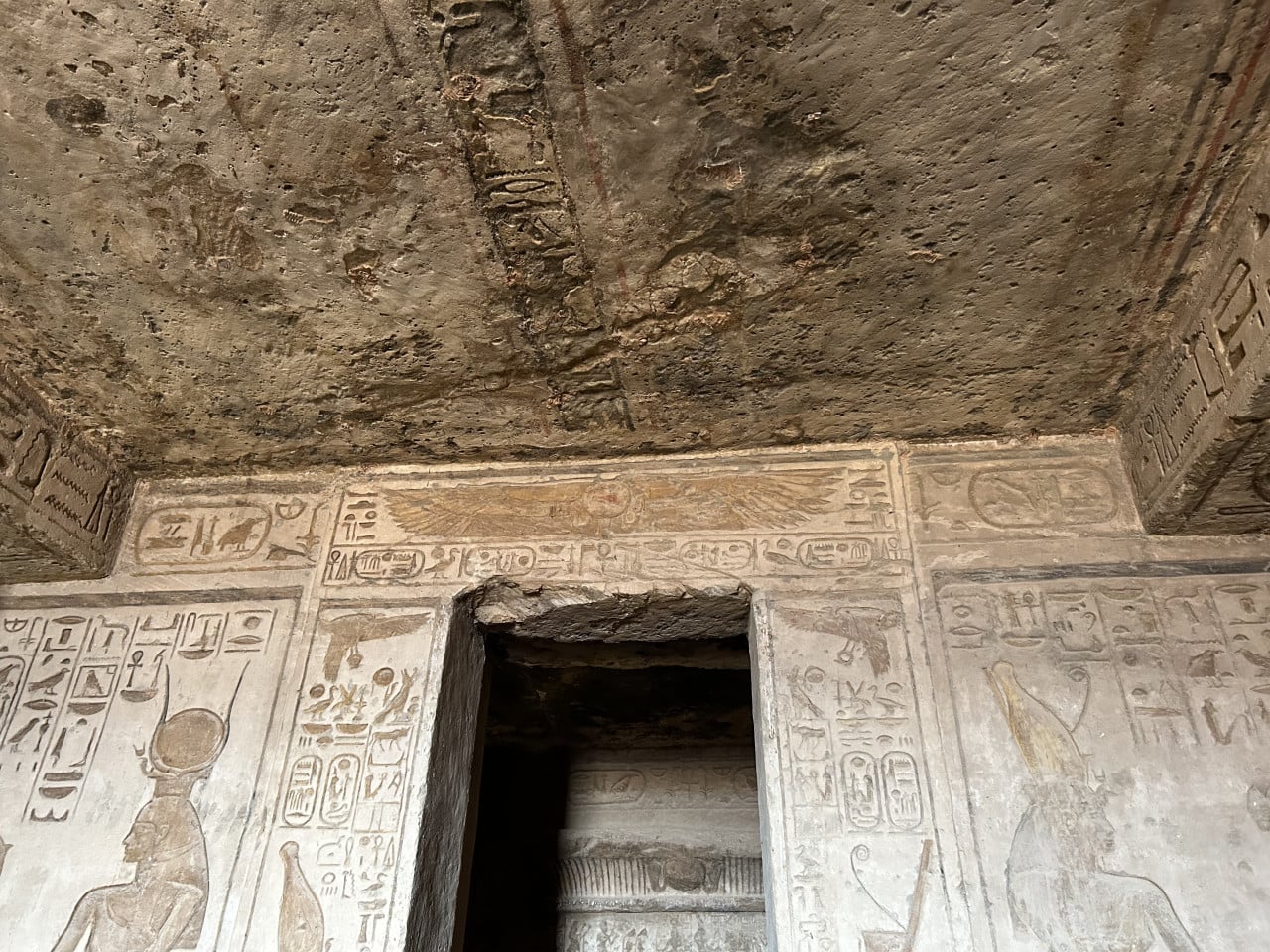
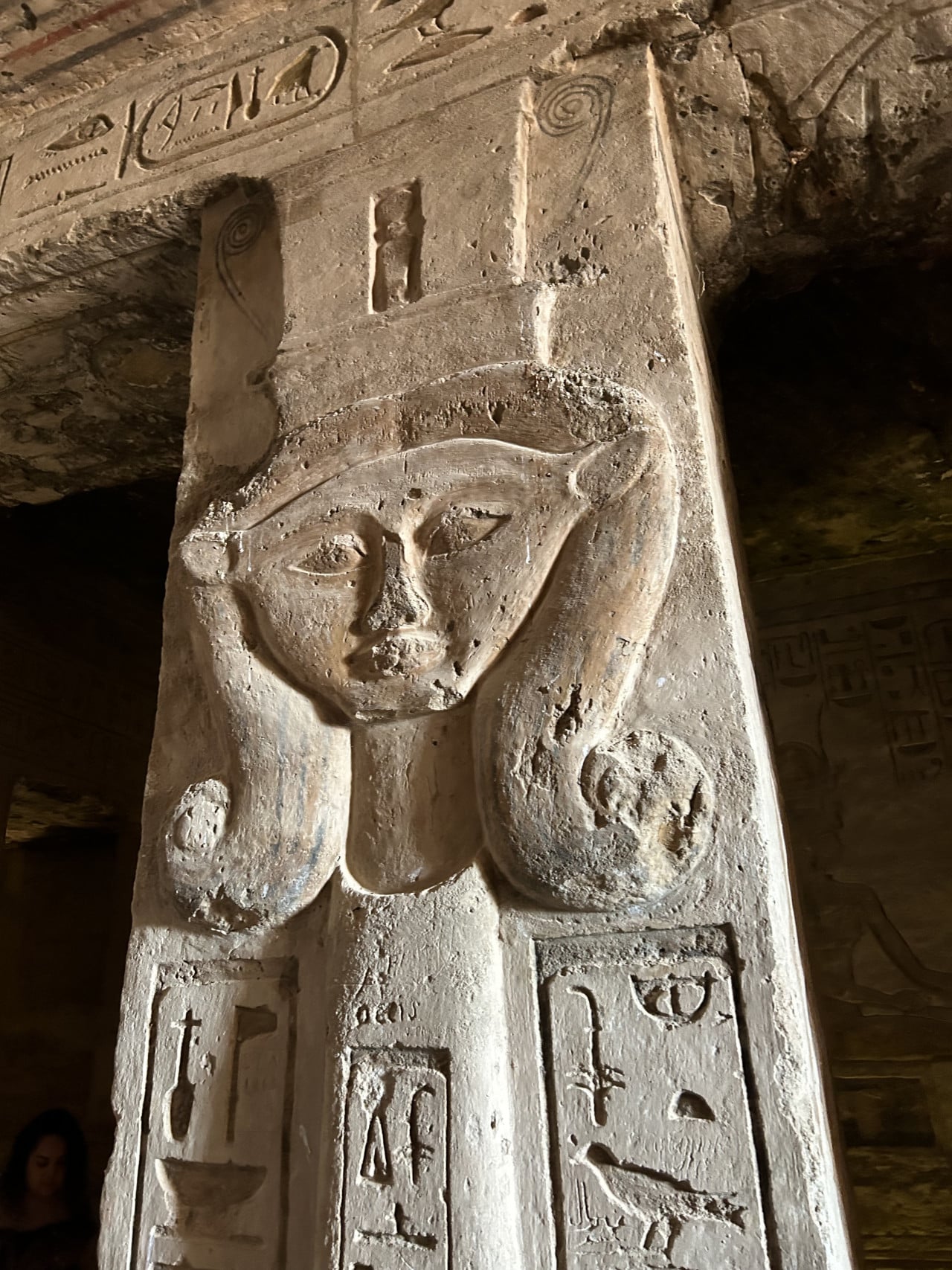
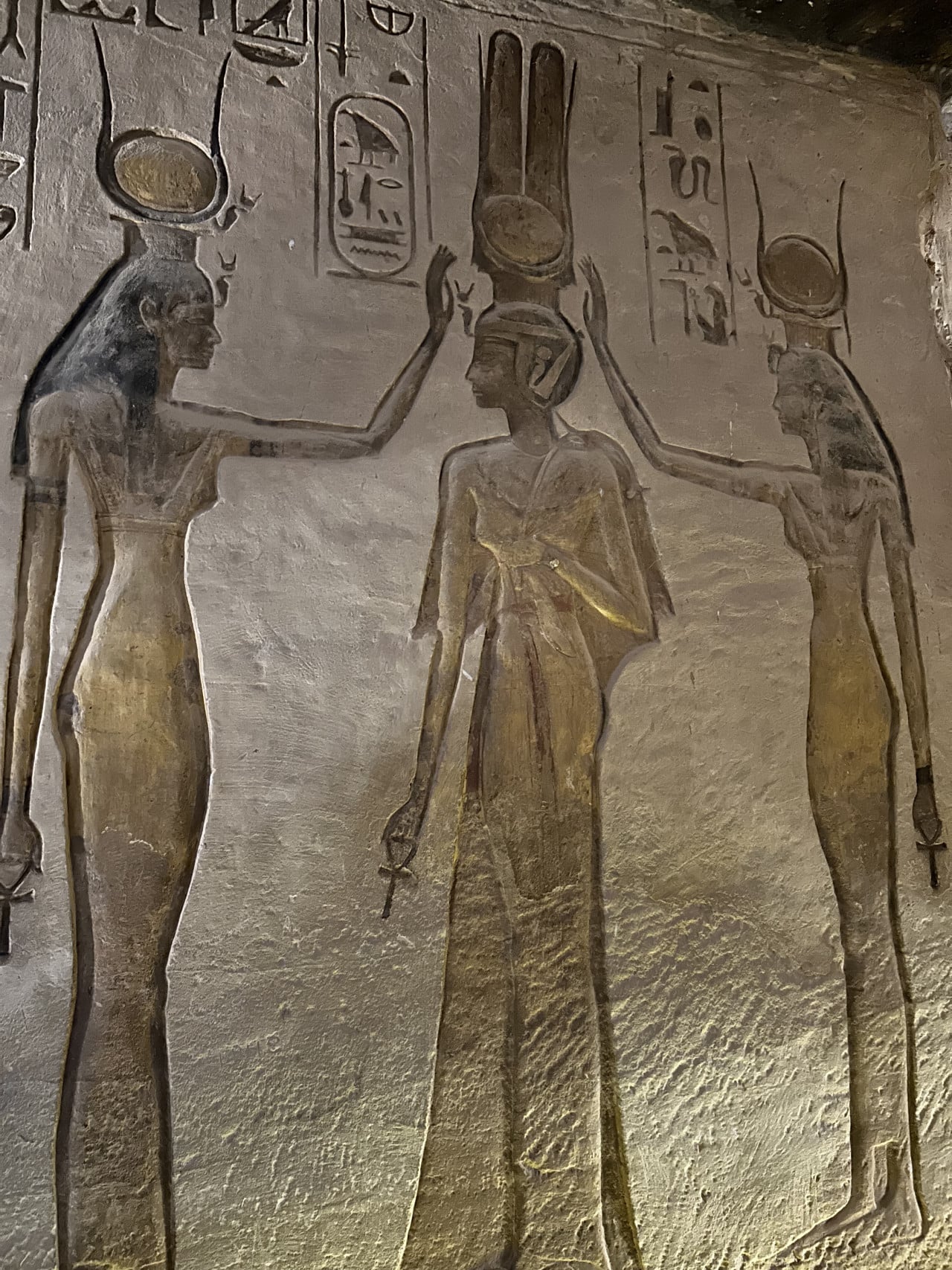
Next to the Great Temple stands a second, smaller temple dedicated to the goddess Hathor and Ramesses's wife, Queen Nefertari.
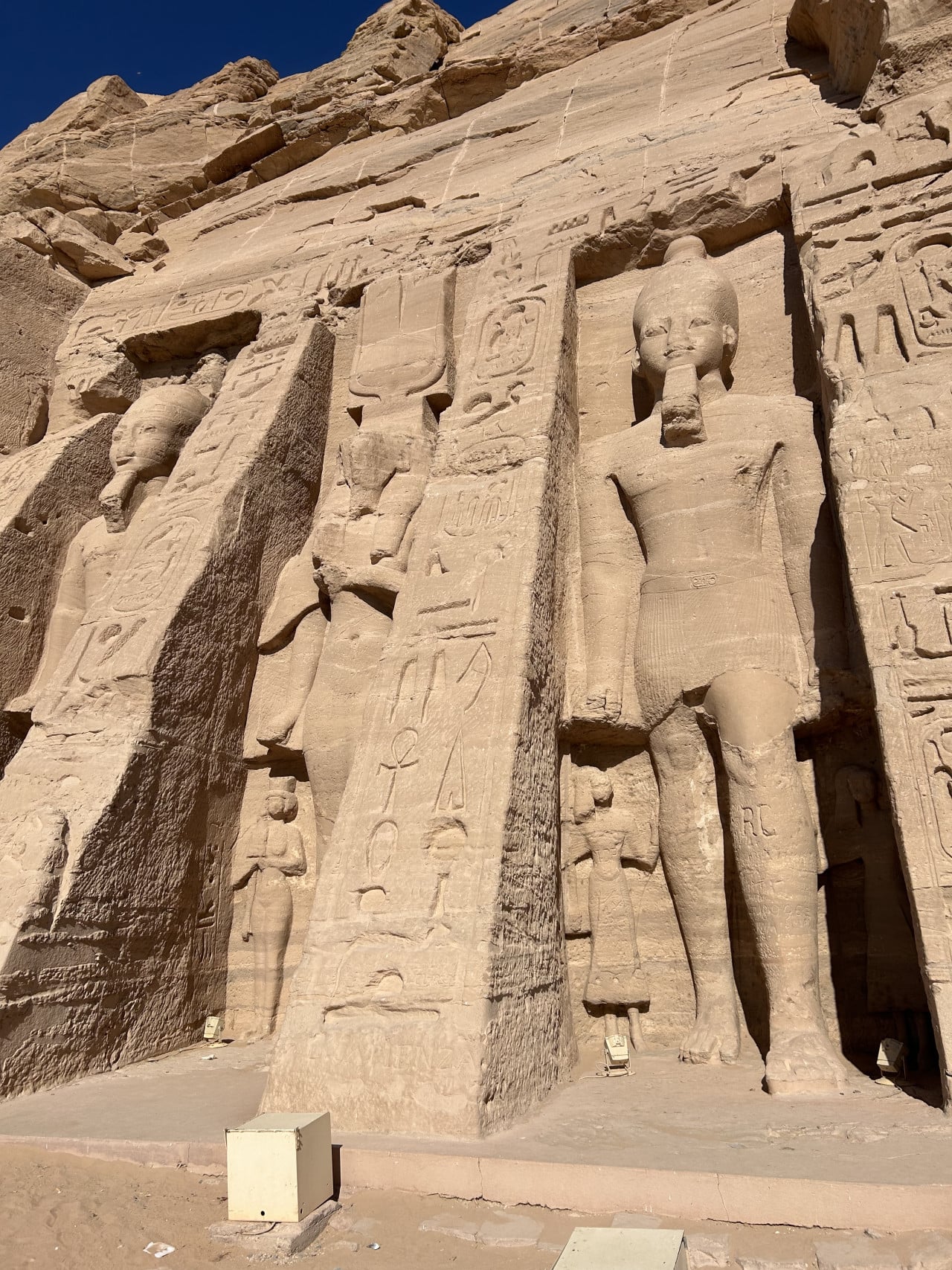
Its façade is decorated with six figures approximately ten meters tall—four depict Ramesses II and two depict Nefertari. What is especially remarkable is that the queen is shown as almost the same height as her husband.
In ancient Egypt, a figure's importance was often expressed by its size, and the ruler's wives or children were usually depicted as considerably smaller. The equally tall statues of Nefertari therefore represent a very rare honor and demonstrate the exceptional status she held in Ramesses's eyes. (Egypt's Monuments)
Inside, the columns are decorated with the face of the goddess Hathor, who was associated with love, music, joy, and motherhood. At the same time, the temple symbolically linked Nefertari with this goddess.
The Temple That Nearly Ended Up Underwater
Today, Abu Simbel looks as though it has stood in the same place since it was built. In reality, however, the entire complex is located elsewhere than it was several decades ago.
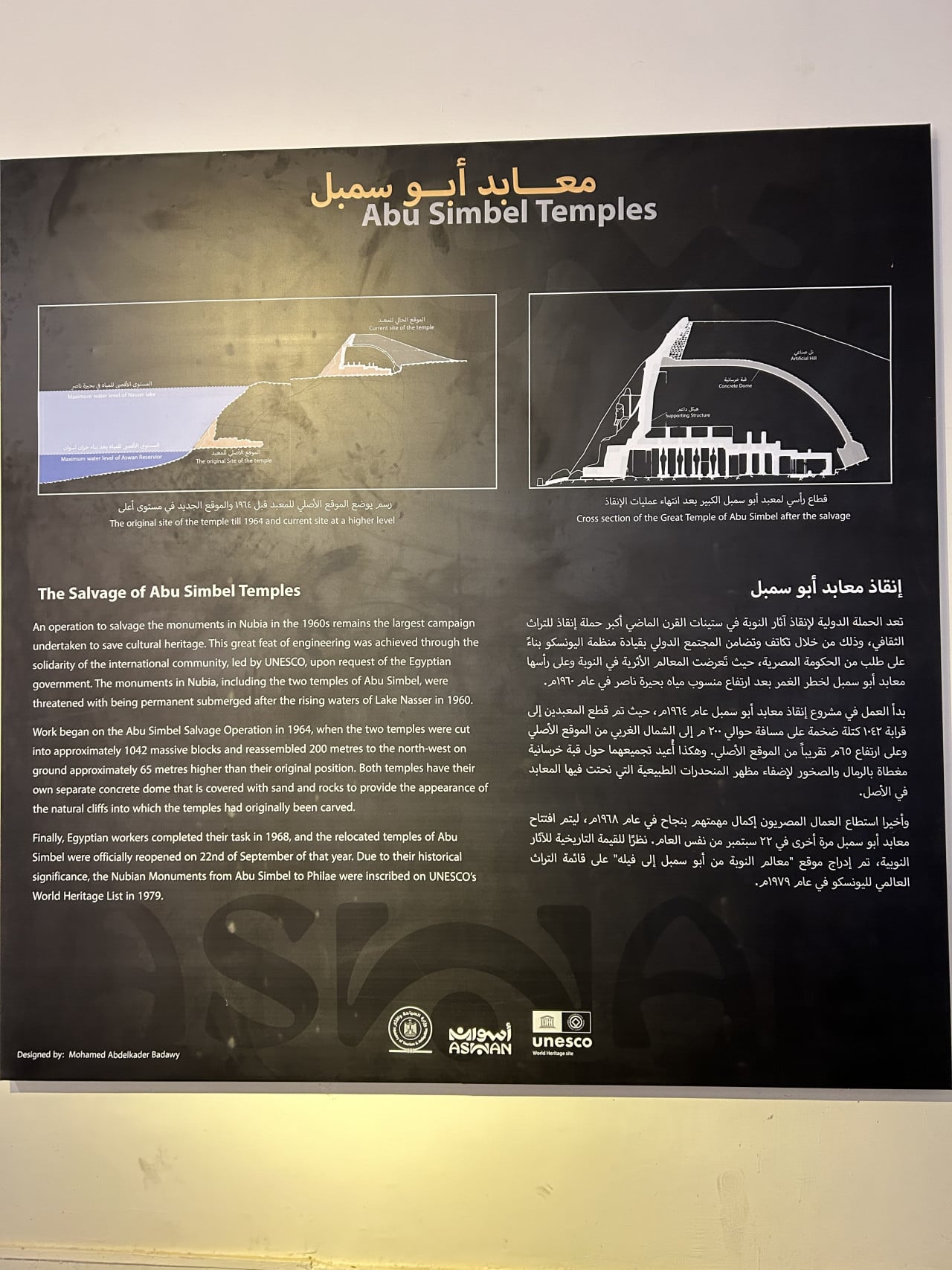
Construction of the Aswan High Dam began in the 1960s. It was intended to provide Egypt with electricity generation, flood control, and sufficient water for agriculture. At the same time, however, the enormous Lake Nasser was being created, and its rising waters threatened to completely submerge Abu Simbel and many other Nubian monuments.
The temples on the island of Philae faced a similar fate.
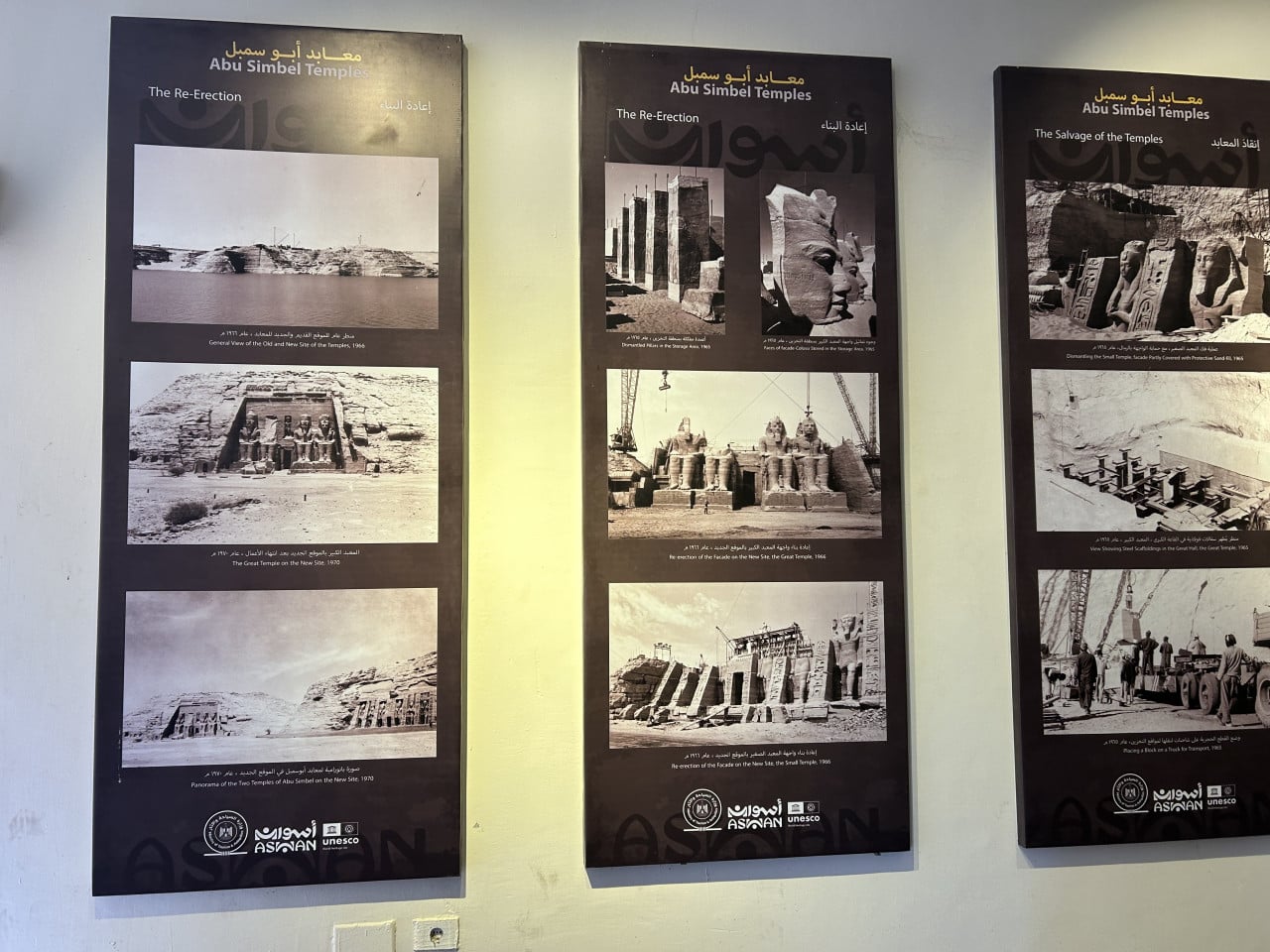
Egypt and Sudan therefore asked UNESCO for help. In 1960, a large-scale international rescue campaign was launched, involving dozens of countries. Experts ultimately decided to dismantle, relocate, and reassemble the temples in a safe location. (UNESCO World Heritage Centre)
More Than a Thousand Stone Blocks
Beginning in 1963, workers gradually cut the temple apart using special saws. They divided the entire complex into more than a thousand numbered blocks, many of which weighed around thirty tons.
Each piece had to be precisely documented, lifted, transported, and then returned to its correct position.
The temples were rebuilt approximately 65 meters above their original level and nearly 200 meters farther inland. In place of the original natural rock, a reinforced concrete structure was built and covered with an artificial rock mass so that the finished site would look as similar as possible to how it had appeared before the relocation. (UNESCO World Heritage Centre)
The engineers also attempted to preserve the temple's original orientation and its alignment with the rising sun.
The rescue operation was completed in 1968, and Abu Simbel was officially opened at its new location on September 22 of that year. In 1979, the Nubian monuments from Abu Simbel to Philae were inscribed on the UNESCO World Heritage List. (UNESCO World Heritage Centre)
When you walk through the temple today, past the statues and reliefs, it is almost impossible to tell that the entire monument was cut apart, transported, and reassembled. That is perhaps what I find just as incredible about the whole story as the original construction more than three thousand years ago.
The Temple Was Hidden Beneath the Sand for Centuries
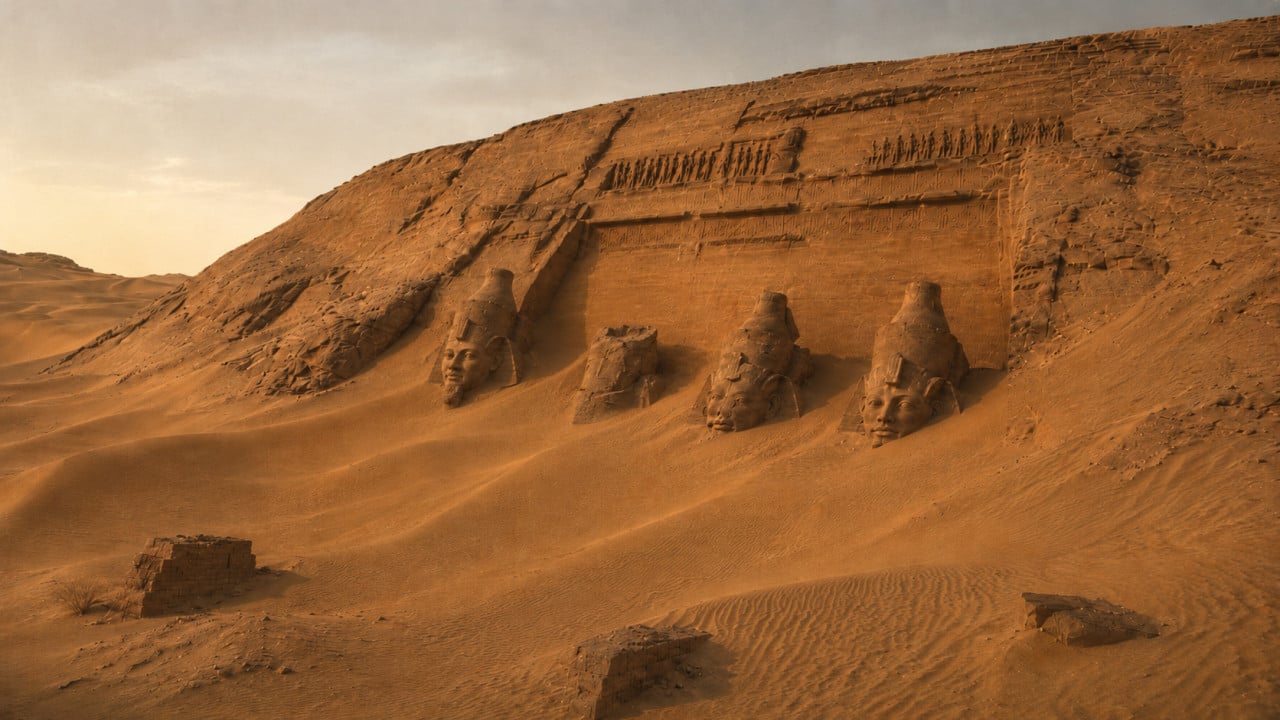
Another interesting fact is that Abu Simbel remained unknown to European travelers for a long time. Much of the façade was gradually buried beneath desert sand, leaving only parts of the giant statues visible above the surface.
The Swiss traveler Johann Ludwig Burckhardt came across the site in 1813. However, the entrance to the Great Temple remained buried until 1817, when Giovanni Battista Belzoni's expedition cleared it after several weeks of work.
The temple was thus first rescued from the sand and, less than 150 years later, rescued a second time from the water. (UNESCO Digital Library)
Is the Journey from Aswan Worth It?
The journey from Aswan is long, and getting up in the middle of the night is not exactly pleasant. But once you arrive, you quickly understand why so many people come here every day.
Abu Simbel is monumental, beautiful, and incredibly well thought out. It brings together the pharaoh's history, religion, politics, astronomy, and one of the greatest conservation and engineering projects of the modern era.
My mom would probably choose to fly next time, and honestly—after several hours in a minibus, I can understand why.
But I definitely would not skip the visit itself.
Together with the pyramids, Abu Simbel remains one of the most impressive monuments in all of Egypt for me. And when you see it early in the morning, as the sun begins to illuminate the four enormous faces of Ramesses II, you will most likely remember it long after you return home.