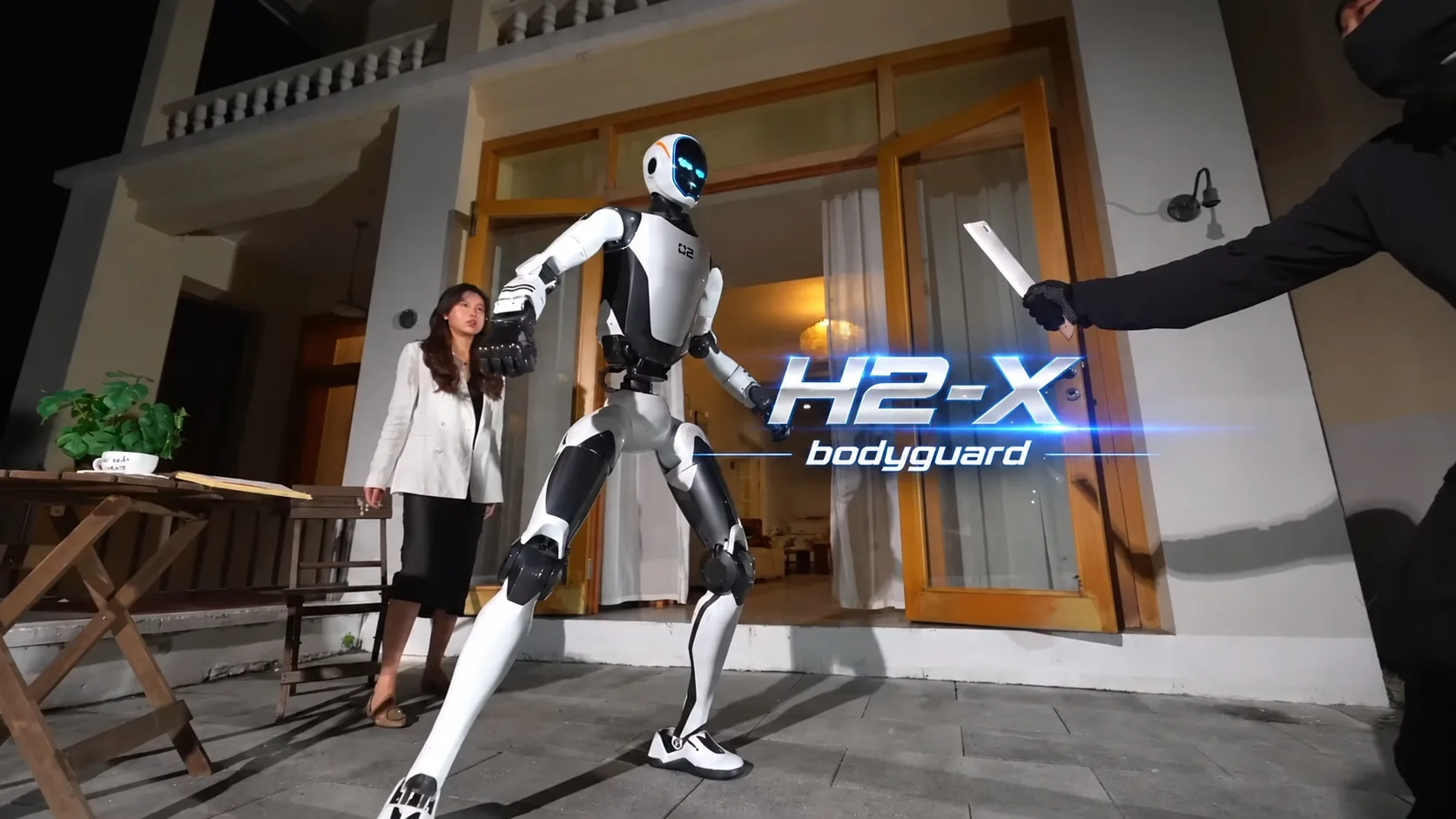
Chinese robot manufacturer Unitree went public with a valuation of around $66 billion, but lost nearly half its value in just one week. Analysts point out that although robot development is advancing, the machines are still unable to perform work that customers would pay for. This was precisely the topic discussed by developers at the Actuate conference, which focuses on software for efficiently controlling robots.
Enthusiasm that runs into empty data folders
Actuate is organized by Foxglove, a company that helps physical AI developers manage and visualize collected data. Since its inaugural edition in 2023, the event has tripled in size, drawing fifteen hundred attendees this year. Enthusiasm was palpable at every turn, as were concerns. At the Avala booth, for example, a sign promised to solve the robotic data crisis.
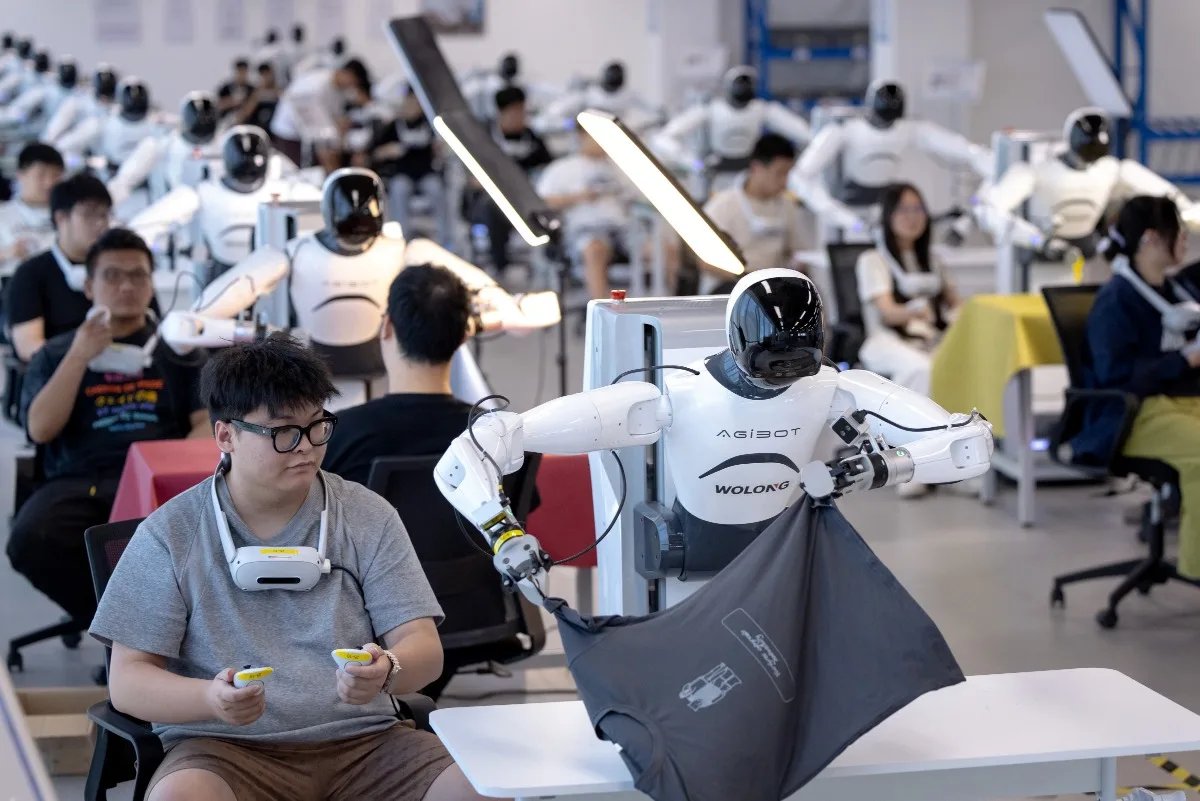
The crisis is that high-quality training data is scarce. A universal robot for any task remains a distant vision. Even direct training for one specific task has yet to produce a product that can be relied on in everyday operation. Developers are therefore copying the methods used by language model creators. They are seeking more diverse datasets, testing different training regimes, and looking for better reinforcement learning scenarios.
Harry Mellsop, co-founder of Antioch, a startup developing simulation tools, compares the current state of physical AI to the GPT-2 era before the arrival of ChatGPT. For the field to cross this threshold, it will need more data and computing power. This will primarily mean graphics cards optimized for ray tracing, which enables realistic simulations.
Autonomous vehicles are the furthest ahead
Self-driving cars are in the best position. Data can be collected from human-driven cars, and the main task is to avoid collisions rather than manipulate objects. It is no coincidence that many model-building tools originated in this field. Foxglove was founded by former employees of Cruise, General Motors' self-driving project.
Automakers are now exploring whether their machine learning development infrastructure can also open the door to humanoid robots. Tesla is developing its Optimus model, while Wayve and Uber have also opened laboratories focused on humanoid forms.
Wayve CEO Alex Kendall told TechCrunch that it is necessary to start with vehicles. According to him, manipulation robotics is roughly where self-driving technology was five years ago. The data infrastructure, simulations, and operational tools will largely be shared, with differences emerging only in the world model for a machine's specific form. Kendall also warns against committing to a single hardware platform. Sensors and other components change rapidly, so a general model should be as independent of specific hardware as possible.
Théophile Gervet, CEO of Genesis AI, sees it differently. According to him, it is too early for a software-only strategy, and the opportunity lies in jointly developing hardware and AI.
Specialized robots make money
Gervet also raised the industry's second major issue: choosing the right focus. Companies targeting specific tasks already have their machines in the field. Gritt builds solar farms, Agility deploys robots in industry, and Bedrock autonomously operates excavators. Universal humanoid robots, by contrast, have yet to make much headway outside laboratories.
According to Gervet, no customer is interested in a universal robot that succeeds in only eighty percent of cases. At the same time, he adds that a creator of a narrowly focused product built on older technology can easily be overtaken by competitors using more advanced models.
Specialization is attractive because it generates both revenue and real-world operational data. Although this data may not be diverse enough to develop general models, it is essential for making a specific robot work. Bedrock CTO Kevin Peterson said that excavation work helps the company understand manipulation in unpredictable environments. The goal is to create an intelligence layer that can be used across a wide range of construction machinery.
Managing these records is challenging because image and lidar data take up enormous amounts of space. Foxglove therefore introduced a tool built on Nvidia's open Cosmos world model. Engineers can use it to search data with natural-language sentences, assemble tests and simulations from it, and detect errors more quickly.
So when will the big moment arrive?
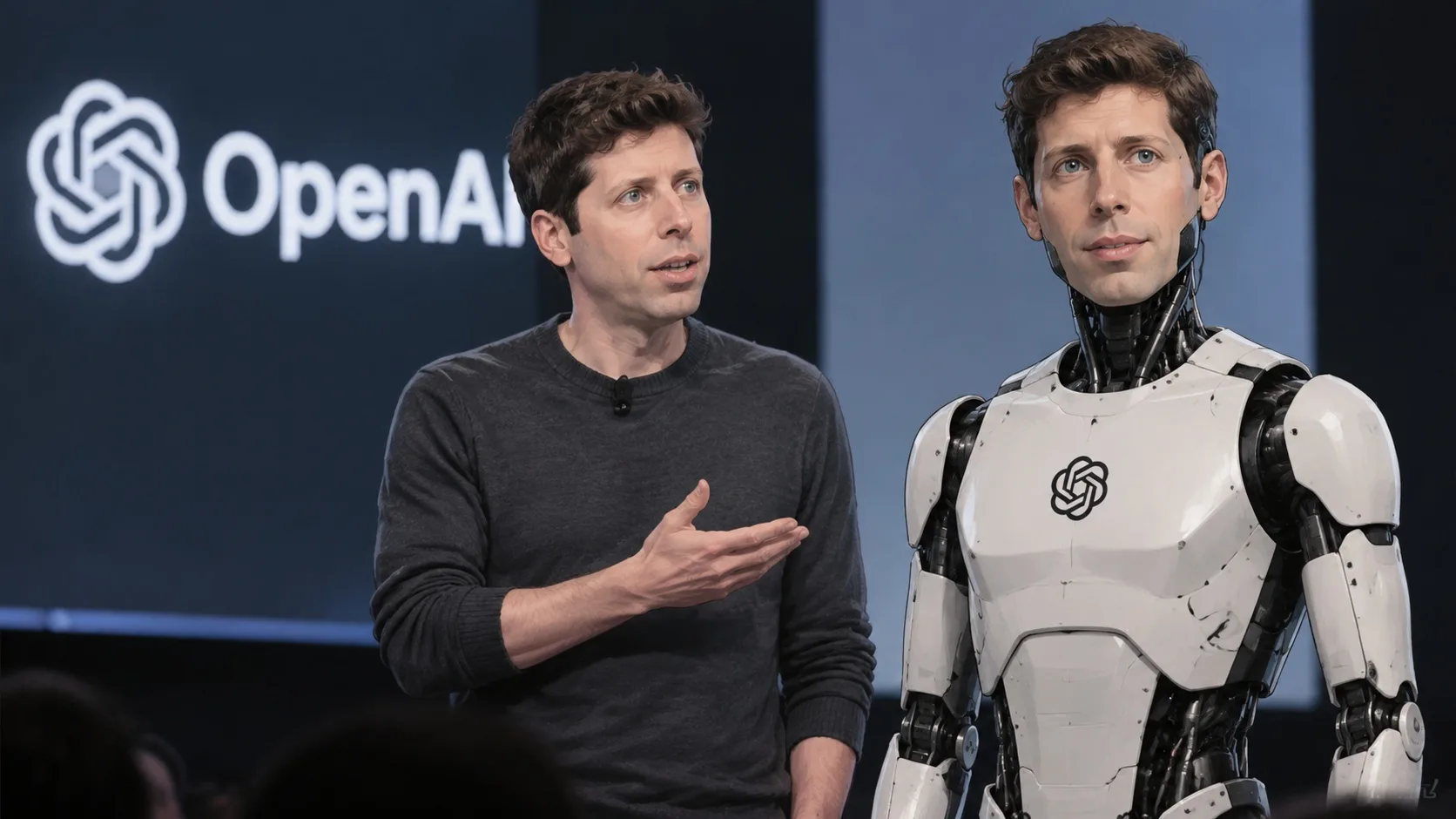
Sam Altman recently said that physical AI is set for a major breakthrough similar to the success of ChatGPT within the next few years. Kendall points out that the world's largest fleet of robots still consists of household vacuum cleaners. According to him, the turning point will come when ordinary customers, rather than investors, are excited. As an example, he cites a car in which the driver can activate unsupervised driving on hardware costing less than a thousand dollars. Wayve is targeting this goal, licensing its models to automakers and seeing a billion-dollar opportunity in the sector, which it wants to use to fund the development of a general model for robots.
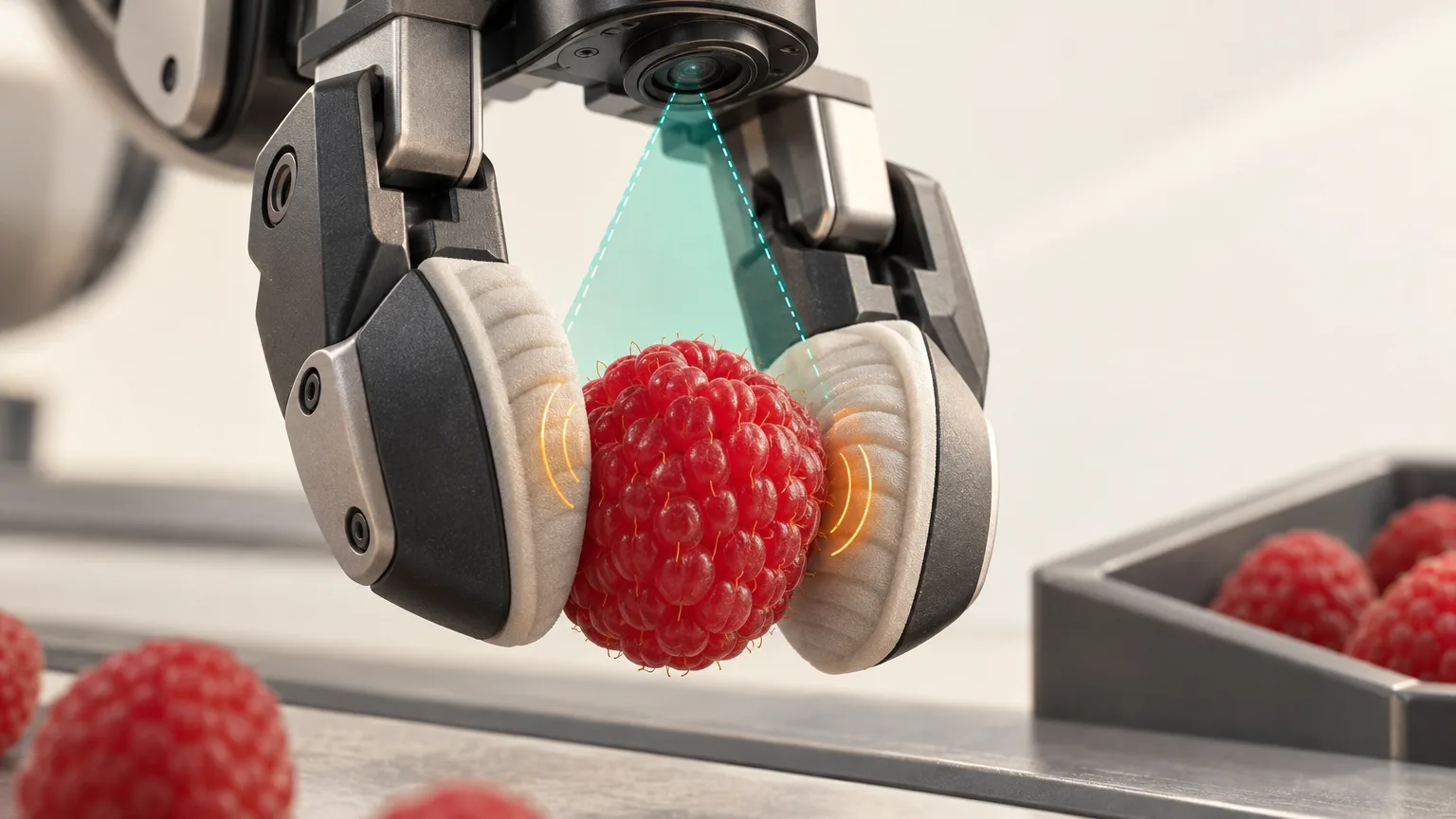
Gervet envisions this breakthrough as object manipulation that works immediately after the machine is unboxed. A person speaks to the robot in ordinary language, asks it to move a chair closer or clear the table, and the machine performs the task reliably.
Foxglove CEO Adrian Macneil sees it differently. He told TechCrunch that robotics will not have any ChatGPT-like moment. ChatGPT became a phenomenon mainly thanks to digital distribution, as it gained one million users in a single week. Distributing physical machines around the world is incomparably more difficult. Macneil would therefore prefer to see a milestone akin to the Apple II or IBM PC in computing history. In other words, the day when people buy a household robot that begins doing something genuinely useful and enjoyable for them.