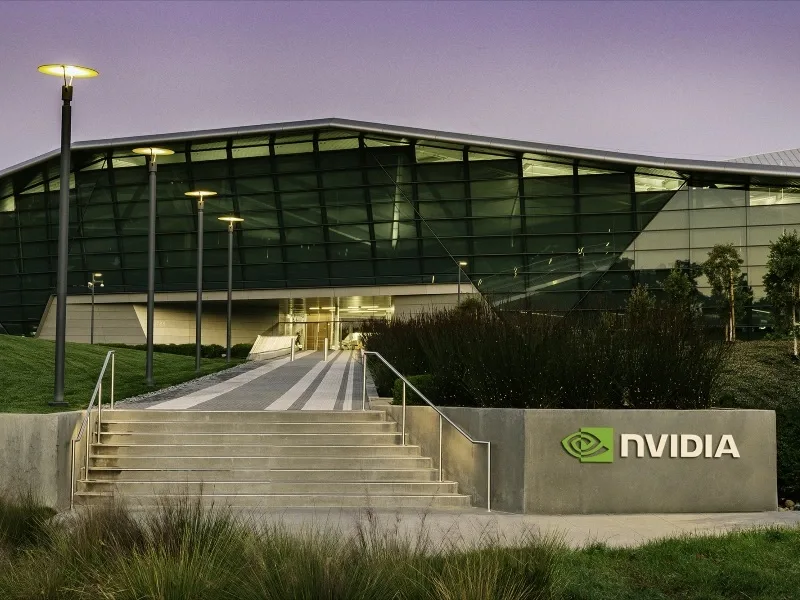
Nvidia has agreed to purchase Hugging Face, the largest repository of open artificial intelligence models, for $12.9 billion. The Information reported the news, citing a source familiar with the negotiations. It is one of the largest acquisitions in Nvidia’s history. In doing so, the company led by Jensen Huang is signaling that it believes demand for artificial intelligence is still growing rather than peaking. However, nothing has been confirmed yet. Business Insider, which was the first to report buyer interest over the previous weekend, said that no agreement had been signed and the talks could still fall apart.
What the Hugging Face platform is
The company was founded in 2016 and has become a place where developers upload and download open artificial intelligence models. It is often nicknamed the “GitHub of artificial intelligence” and is a common first stop for models, datasets, and machine-learning tools. By the standards of today’s market, however, it is still a small business. The Information reports annual revenue of around $150 million, up from approximately $100 million just two months earlier. Company CEO Clem Delangue told journalists in July that this had brought the company close to profitability.
What Nvidia will gain from the acquisition
Above all, it will gain something that cannot be manufactured in any chip factory. Hugging Face is the go-to destination for a vast community of developers and brings with it control over the distribution of open models. Nvidia already dominates the hardware on which these models are trained and run. The acquisition would take it one level higher, to the place where developers discover and share models, optimize them for specific chips, and deploy them in applications.
The second reason is to defend its own position, which is beginning to look more vulnerable than it once did. Practically all major closed-model labs, such as OpenAI, Google, Amazon, and Anthropic, are now developing their own chips so they are less dependent on Nvidia. If open models attract customers who would otherwise turn to these companies, demand for Nvidia hardware will remain higher. This is precisely why the company has already invested tens of billions of dollars in developing its own open models. Reuters points out that Nvidia would acquire Hugging Face at exactly the time when closed-model developers are seeking alternatives to its graphics chips.
Analysts view the situation similarly. Siddy Jobe of the Eonopolis Exponential Technologies fund said on CNBC’s Squawk Box Europe that Nvidia is primarily a community and platform company, making Hugging Face a good fit from this perspective. According to him, Nvidia wants to be involved across the entire ecosystem, from energy and foundation models to applications. Nvidia itself has long made it clear that it does not want to distinguish between open and closed models. The acquisition would therefore fill one of the remaining gaps in this structure.
The third benefit is a return to cloud services. The company scaled back its own cloud business, known as DGX Cloud, about a year ago. Hugging Face already helps developers run models on rented computing power, however, so Nvidia would not be starting from scratch.
There is also another practical advantage. Nvidia has pledged to help its customers cover the costs of cloud contracts worth tens of billions of dollars. If these clients do not use all of the capacity they have contracted, Nvidia will be left with it. With Hugging Face up its sleeve, it could sell this unused capacity to the platform’s users and partially mitigate the risk it has taken on.
Benefits for Hugging Face
For a company with annual revenue of around $150 million, a price approaching $13 billion is an offer that is very difficult to refuse. Such a valuation multiple is extraordinary for a business of this size. Hugging Face may have come within sight of profitability, but in an environment where computing power is purchased in billion-dollar quantities, its own cash is insufficient to fund major ambitions.
The company would gain exactly that kind of backing, because Nvidia has far greater financial resources and also owns the chips on which Hugging Face models run. The platform could then offer its developers computing power and model optimization directly from the hardware manufacturer rather than through an intermediary renting capacity elsewhere.
Developments in the wider market also play a role. Competitors that built similar infrastructure for developers are gradually ending up inside larger companies. According to reports, Stripe paid more than $7 billion for OpenRouter in early August. Founded in early 2023, the startup helps customers select suitable models for specific tasks based on their needs and budgets. Yet in May, OpenRouter had been valued at $1.3 billion in a Series B funding round. Remaining independent and small is starting to become a more expensive option than joining someone else.
Hugging Face rejected Nvidia last year
This is not the first attempt. The Financial Times reported in January that Hugging Face had rejected a $500 million investment from Nvidia last year that would have valued the company at $7 billion. The explanation at the time was that management did not want to accept an amount that would give one powerful investor a say in its decisions. The jump from $7 billion to $12.9 billion in less than a year is significant, especially considering that the company was valued at $4.5 billion as recently as 2023.
Selling the entire company, however, is a different situation from accepting one giant investor. An investment usually means losing some influence while facing pressure for further growth, whereas under a new owner, it is at least clear who makes the decisions.
The dispute over open models
This year, Clem Delangue publicly stood on the same side as Nvidia. Washington had spent months debating whether to restrict open-weight models. After Chinese labs such as Moonshot AI released systems like Kimi K3, concerns about competitiveness and national security began to grow in American politics. These systems matched the best American models in tests while being significantly cheaper to operate. White House adviser David Sacks, by contrast, argued that the fear was being fueled by the monopoly of Anthropic and OpenAI.
Appearing on CBS’s Face the Nation this August, Clem Delangue said that following a cyberattack, Hugging Face had defended itself using a Chinese open model modified by Nvidia. He referred to a letter signed by Jensen Huang and 24 other company representatives, including Hugging Face. The document calls on the U.S. government to support open models rather than restrict them.
Sources: gizmodo.com and techcrunch.com