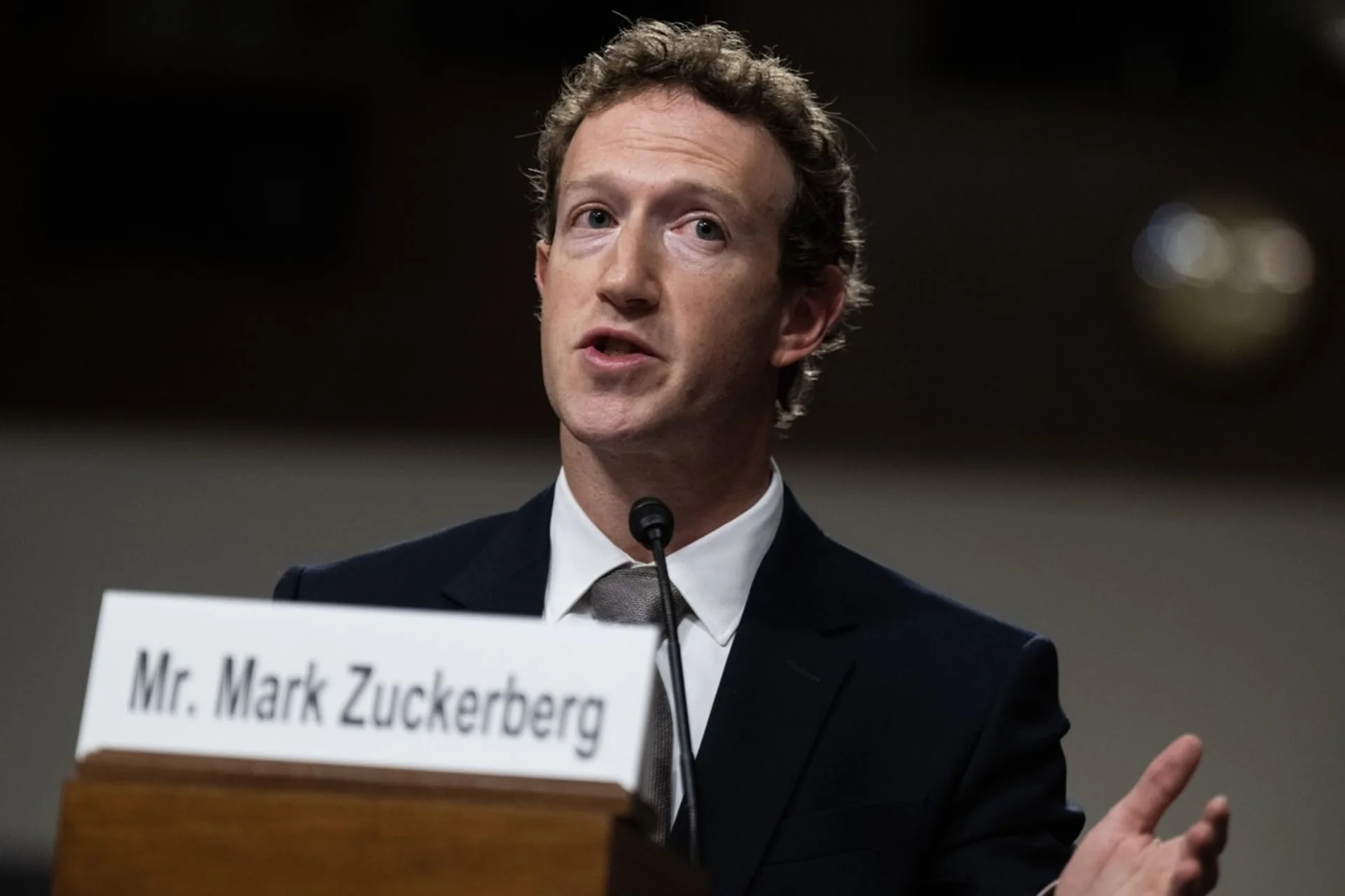
In January this year, Mark Zuckerberg traveled to Hawaii with his closest associates and returned with a plan to rebuild Meta from the ground up. Artificial intelligence was to take over the day-to-day work of thousands of employees, while the remaining staff would form small groups of specialists overseeing the software. Internally, the initiative was given the code name Project OT, which stood for Organization Transformation. By November, some teams were to be reduced by 60 percent.
As Reuters reported based on dozens of internal documents, notes, recordings, and interviews with more than twenty people familiar with conditions at the company, only the first part of the plan survived. Zuckerberg canceled the second wave of layoffs because the technology proved much weaker than he had expected, while employees openly rebelled.
The Birth of the Plan
Zuckerberg and his leadership team met in January for their annual gathering at his Hawaii compound. An internal planning document reviewed by Reuters described a future in which artificial intelligence would handle most routine work, while smaller groups of highly capable people would oversee virtual workers. The scenarios calculated by management included the aforementioned figure of 60 percent.
A year earlier, Meta executives had already begun examining how technology startups organized their work. Chief Data Officer Alex Schultz and Chief Product Officer Naomi Gleit both traveled to Asia and, according to three sources, were impressed by how companies there had built their organizational structures around artificial intelligence. Gleit told Reuters in June that she had spent considerable time at Meta’s Singapore office and that local practices had inspired some teams in California and New York. According to her, many of the ideas came from the bottom up.
Two Waves of Layoffs
The workforce reduction was to take place in two stages. The first layoffs occurred in May, while the second wave was planned for November; the process also included eliminating open positions and dismissing employees with poorer performance ratings. In one document, an HR manager estimated that the cuts would be as extensive as, or even greater than, those three years earlier, when the company lost roughly a quarter of its workforce. In May, however, Zuckerberg halted preparations for November. Meta laid off approximately eight thousand people, equivalent to a tenth of its workforce, and in the same week reassigned another seven thousand to positions related to artificial intelligence. Reuters was unable to determine exactly what prompted the change of heart.
Meta confirmed the project’s existence. It was a year-long effort to cut costs, reorganize team structures, and move employees to priority work, such as preparing training data. The company acknowledged the division into two stages and the contemplated 60-percent threshold, saying that the figure applied only to scenarios for specific teams and that several major divisions were not included in the plan at all. According to the company’s statement, management canceled the second wave before it had even calculated how many people would lose their jobs. Meta added that it ultimately did not implement every modeled scenario because a company-wide rollout had never been planned.
Agents Wrote Code Extremely Quickly, but Did Not Add Features
Meta’s own data revealed the problem before anyone could declare the effort a success. According to a June post by Chief Technology Officer Andrew Bosworth, changes to internal platforms and infrastructure increased by 220 percent year over year. However, changes that actually reached users as new or improved features rose by only 36 percent.
This discrepancy was not without consequences. An internal April document warned that unsupervised AI agents were making extensive and disruptive changes that a human would not make. Serious technical and security incidents, including service outages and potential data leaks, increased by 40 percent, while the time spent resolving them jumped by 70 percent. Infrastructure teams reported the first stability issues as early as March. In June, attackers used Meta’s new support chatbot to gain access to prominent Instagram accounts, including the inactive page of the Obama White House. The company declined to comment on the data.
Employees Realized They Were Training Their Replacements
At the same time, people inside the company began to understand what was happening. Meta reassigned some engineers to writing software puzzles that served as training data, work many described as mindless drudgery. Management also ordered monitoring software to be installed on the computers of U.S. employees, recording keystrokes and mouse movements so that bots could learn to operate the system like humans. It suspended the program in June. Twenty-six employees then sued the company, claiming that its algorithms had selected people on sick leave for dismissal.
Morale at the company fell sharply, and the decline became visible externally as well. Images of elephants began appearing under posts by executives, referring to the English expression “the elephant in the room” that no one wants to discuss. An internal satisfaction metric fell from 74 to 55 percent favorable responses in the midyear survey, while efforts to organize gained momentum within the company. The May layoffs were also handled so clumsily that they triggered a wave of embarrassment throughout the organization. Outraged employees launched into vulgar tirades on company forums while Zuckerberg promised them better refreshments and additional benefits.
The New Team Structure and Its Impact
A company guide described what the new Meta was supposed to look like. Product teams of ten to twenty specialists were to be reduced to cells of three to five employees. Engineers, designers, and product managers were all to receive the common title of builder, layers of middle management were to disappear, and daily priorities were to be set through assessments conducted with the help of AI agents. By June, at least eleven units had reorganized their work in this way. Their leaders were to oversee thirty to fifty subordinates, with support from HR staff and unspecified artificial intelligence systems. Meta declined to explain exactly what this wording meant. The company maintains, however, that performance reviews and promotions were and continue to be handled by people, not machines.
At a July meeting with employees, Meta’s chief acknowledged that he had misjudged the timing. According to him, the development of autonomous systems had not accelerated as the company expected for at least the previous four months. Nevertheless, he still expected benefits within three to six months. Meanwhile, in August, Bosworth told subordinates not to request time off based on supposed time savings from artificial intelligence.
The public messaging shifted. Meta now advertises that it is building around the human factor, and in an extensive essay, Zuckerberg predicts an abundance of jobs, although he acknowledges that individual companies will employ fewer people. In his view, corporations may shrink in size, much as they did during the historical transition from industrial giants to technology companies.
Spending has not changed. Meta plans to invest at least $130 billion this year in chips and infrastructure for artificial intelligence, with Zuckerberg himself admitting that the cuts were intended to free up money for these rising expenses. As early as the spring, some investors were asking what the company was actually getting in return for such enormous sums. In its second-quarter report, the company listed 75,472 employees as of the end of June, but that figure still included approximately eight thousand departing employees from the May wave. Zuckerberg promised there would be no more company-wide layoffs this year. However, that wording leaves open the possibility of cuts within individual teams, as well as throughout 2027, something employees have duly noticed.