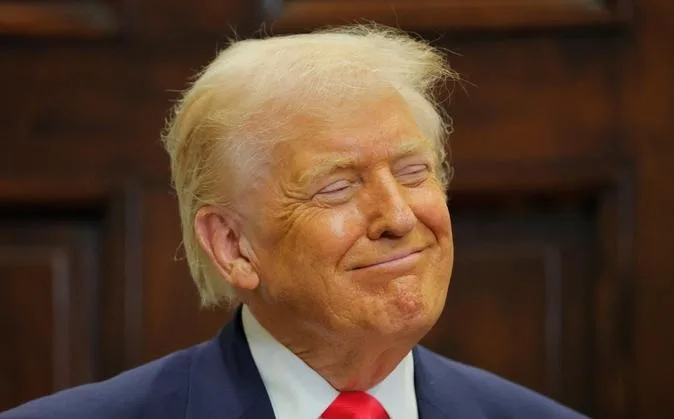
Donald Trump bought shares in SpaceX less than two weeks after the rocket company went public. According to a public financial disclosure, he invested up to $50,000 in them. This gave him a financial stake in a major US government contractor led by his former adviser Elon Musk.
Purchase did not come to light until August
Trump did not comment on the purchase anywhere, and journalists learned about it two months later. He signed the relevant financial disclosure on August 12, and the authorities published it on August 22. According to the document, the June 23 share purchase was one of more than a thousand stock market transactions the president made in June.
The document does not reveal exactly how much Trump paid for the shares. US government officials report the value of their assets in ranges, so the disclosure included only a figure between $15,000 and $50,000. Reuters was unable to determine the exact amount.
Record-breaking IPO and a rapid price decline
To understand the June purchase, it is necessary to go back eleven days. SpaceX went public on June 12, breaking all previous US IPO records. The company raised $75 billion when it entered the market.
The euphoria did not last long, however. The share price climbed above $200 and then began to fall. Around June 23, it was trading in the middle of the range at approximately $150, and on Monday, August 24, it fell back to the offering price of $135. The president’s stake therefore appears to be at a slight loss.
White House says the president did not decide on the purchase
White House spokesman Davis Ingle told Reuters that the president’s portfolio is independently managed by external financial institutions and tracks recognized indexes such as the Schwab 1000. According to him, neither Trump nor anyone in his family can direct or influence the purchase and sale of specific assets.
The explanation appears credible and points to one unusual feature of this particular stock. Even before going public, SpaceX lobbied the administrators of well-known indexes to change their rules and allow the company to be added more quickly. As a result, many people now own shares in the company without knowing it. Anyone tracking a broad US index automatically gained exposure to SpaceX. A portfolio designed to track an index would then have purchased the shares at approximately the time recorded in the disclosure.
Whether the president personally decided on the purchase, however, is a different question from whether the transaction appeared in his disclosure. The document itself does not provide an answer.
A company whose funding is determined by his own administration
The sum of $50,000 is negligible compared with Trump’s wealth. What matters is not the amount itself, but the company on the other side of the transaction. SpaceX is a major contractor for the US military and routinely applies to federal agencies for various permits.
It derives a large share of its revenue from federal contracts awarded by NASA and the Department of Defense. Its Starlink service also depends on decisions about frequency allocations and launch licenses made by government agencies. The company also benefits from the government easing regulations for commercial spaceflight. Various media outlets have long highlighted SpaceX’s series of successes in Washington.
Government support is also continuing. Trump instructed his team to significantly increase the number of commercial rocket launches from the United States. SpaceX completely dominates this industry. Its Starlink service is also expanding its business with the government, selling connectivity to federal agencies and pursuing defense communications contracts. The company is therefore negotiating with procurement officials whose superiors report directly to the president.
Potential conflict of interest
This is the crux of the potential conflict of interest. Presidents are under no legal obligation to divest their assets because the conflict-of-interest law that binds most federal officials does not apply to the head of state. Blind trusts and voluntary divestment remain merely customary rather than mandatory, and this administration does not intend to follow those practices.
That leaves the disclosure, which operates only retroactively. The June purchase became publicly known at the end of August, by which time the president had owned the stake for two months. During that period, he made a number of decisions affecting the company.
Government ethics lawyers have argued for years that while citing index tracking may be factually accurate, it does not resolve the underlying issue. The president can influence the value of a stock he owns regardless of whether he chose it himself. The opposing view is that the same applies to every company in the index. That is precisely why divestment, rather than mere disclosure, was customary in the past.
Most large funds hold the same stake
Trump is far from the only person to have joined SpaceX’s shareholder base over the course of a few days in June. The company raised $75 billion in its IPO, while demand reached approximately $250 billion, and BlackRock alone placed orders for $5 billion worth of shares. An offering of this size placed almost every major institutional portfolio in the United States in the same position the president now occupies. When a single company enters indexes on such a scale, the question of a financial interest in future government decisions ceases to be an issue concerning individuals alone.
Neither SpaceX nor Elon Musk commented on the disclosure. Moreover, the document covers the state of the president’s assets as of a given date and says nothing about whether he has increased, reduced, or completely sold the stake since June.
Sources: thenextweb.com and finance.yahoo.com