This story begins like many good stories: Two men walked into a bar.
Now we need to elaborate a little: Two men walked into a bar in San Antonio roughly 50 years ago. Well, actually, it was more of a restaurant with a bar. They ordered drinks. One of them grabbed a cocktail napkin, pulled out a pen, and said to the other, “Here’s the plan.”
He drew a simple triangle on the napkin. At the top of the triangle, he wrote “Dallas.” At the bottom left, he marked “San Antonio.” At the bottom right, he wrote “Houston.”
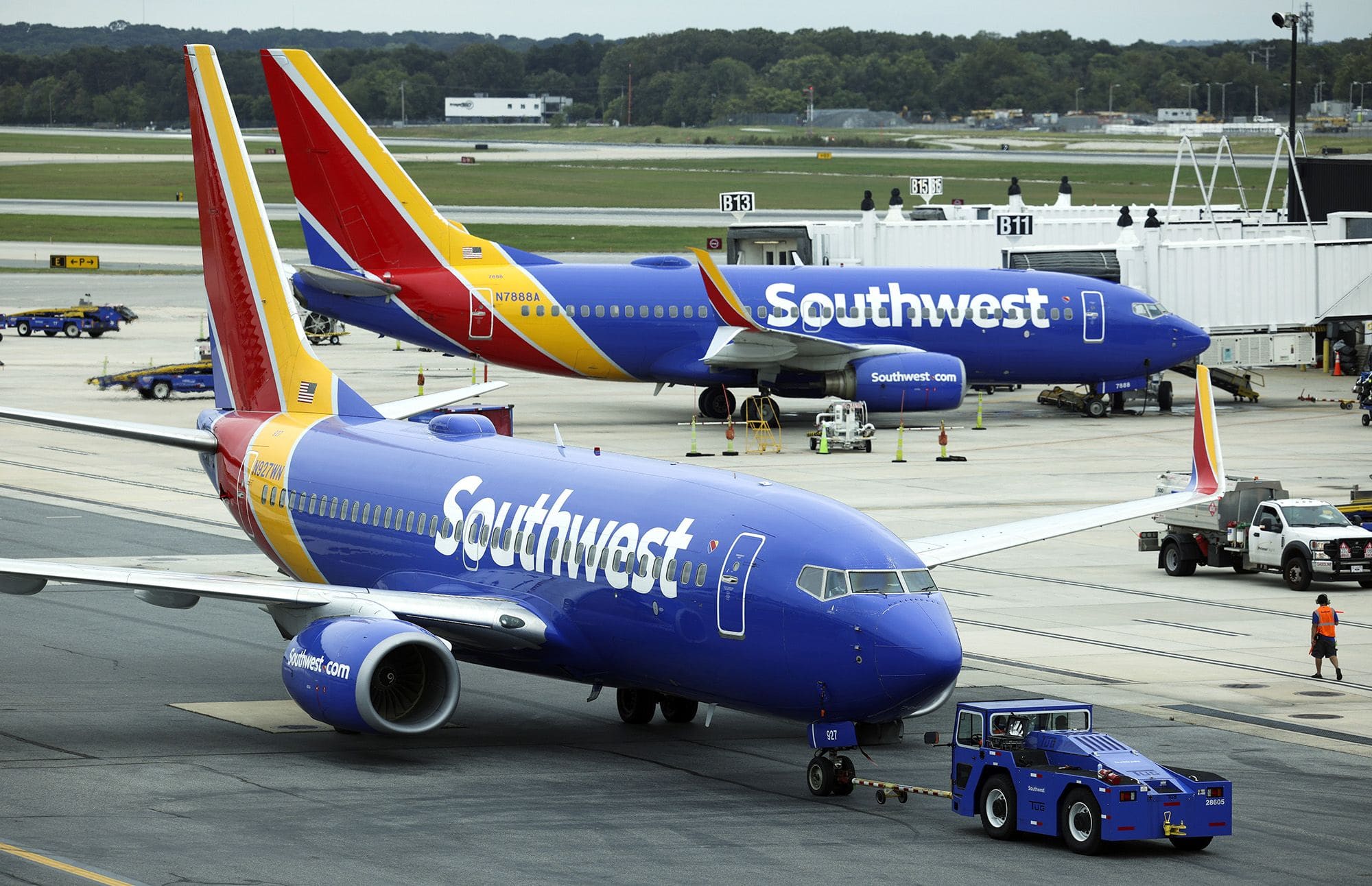
“Done,” he said. “That’s our business plan. Fly between these cities several times a day, every day.” And that is how the story of Southwest Airlines began—on a simple napkin in a San Antonio bar.
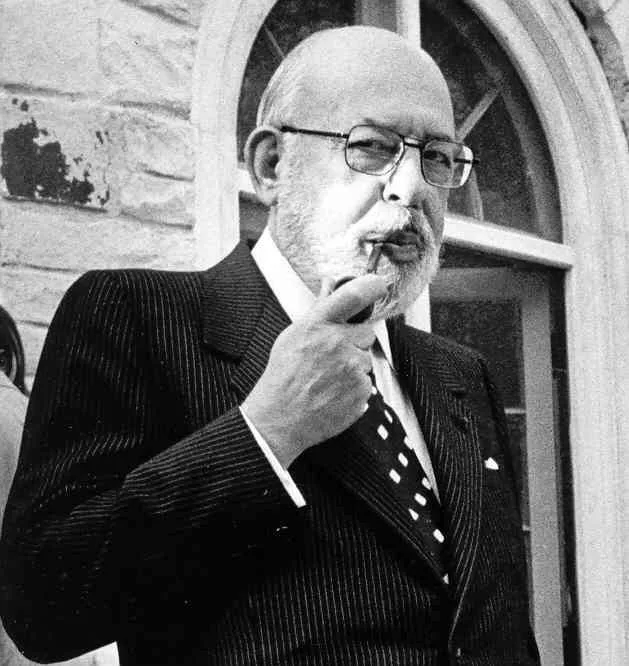
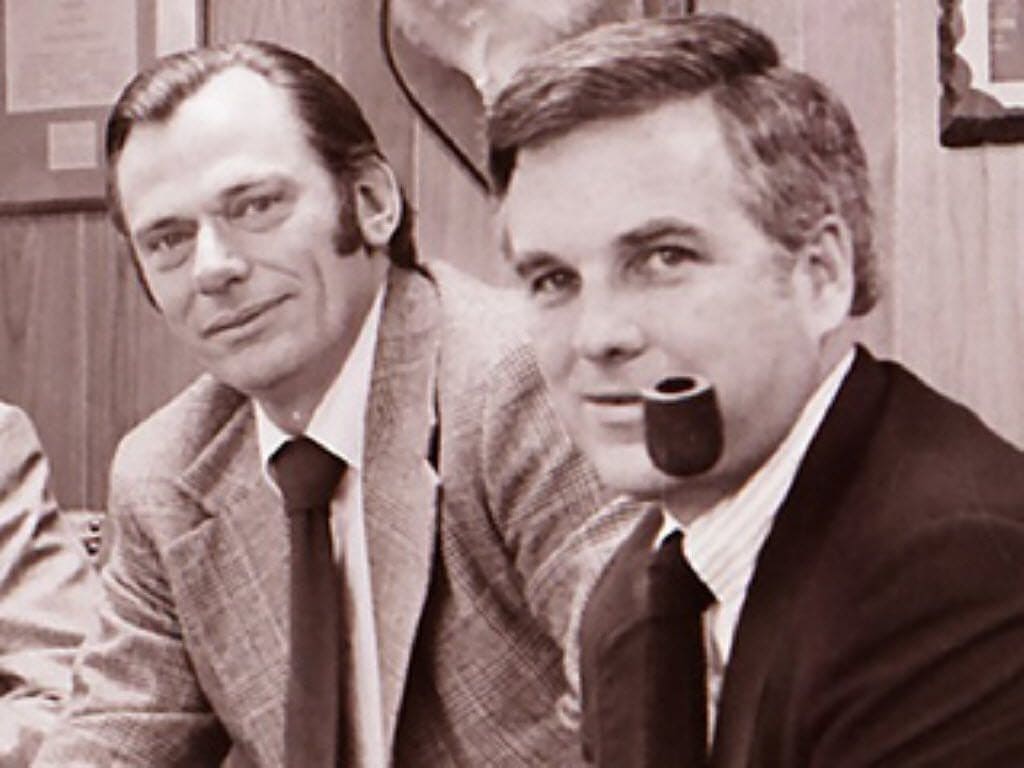
The two men were Rollin King and Herb Kelleher. Rollin was a pilot and entrepreneur; Herb was a lawyer. Rollin became the company’s chief executive, and Herb its chairman. At Southwest Airlines headquarters, there is a plaque depicting a version of the original napkin with this exchange: “Herb, let’s start an airline.” “Rollin, you’re crazy. Let’s do it!”
It was a good thing King was a lawyer, because he and Kelleher faced fierce legal opposition from several major airlines that did not want competition. It took until 1971, but they finally got their airline off the ground.
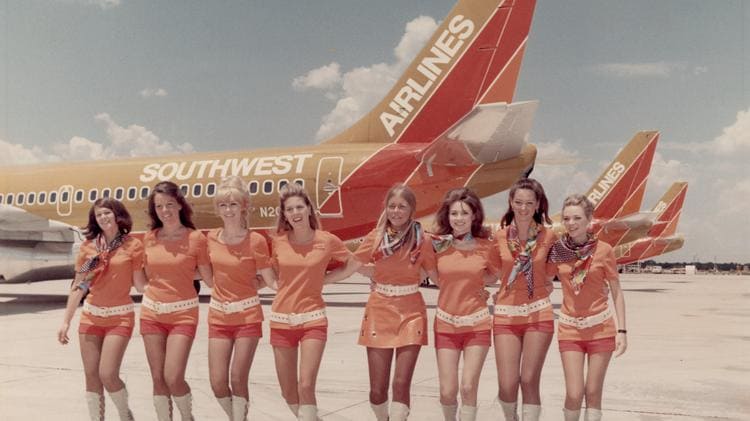
Southwest became famous for many things: the nickname LUV Airlines, which remains its stock ticker symbol to this day; it called its territory the Love Triangle and its flight attendants (then called stewardesses) Love Hostesses. Southwest dressed them in short shorts and white go-go boots.
After all, they were competing in the “sexy skies,” where Braniff stewardesses wore uniforms designed by Emilio Pucci—including one collection called “Air Strip,” which was designed so that pieces of clothing could be removed during the flight. Continental, another fierce competitor, advertised with the not-so-subtle double entendre: “We really move our tail for you.” Southwest fought back with advertisements in which stewardesses sweetly whispered the new slogan: “There is someone up there who loves you.”
But behind the flamboyance lay true business genius in Southwest’s efficiency—fares as cheap as peanuts and a 10-minute turnaround (unloading the aircraft, cleaning it, restocking it, and preparing it for the next flight, something that had never been accomplished before). To this day, Southwest has not recorded a single fatal accident on its flights. Now that is a safety record!
Perhaps the most interesting story in Southwest Airlines history was the fare war it waged with the now-defunct Braniff Airlines in 1972. Braniff went head-to-head with Southwest on the Houston–Dallas route, offering one-way tickets for $13 in an attempt to “break” Southwest, which did not have pockets as deep as major players like Braniff.
Southwest responded with a $13 fare—or the full $26 fare, which included a free fifth of premium liquor. The liquor would have cost less than $13 in a store, but business travelers booked Southwest flights on their corporate accounts and took home a free bottle of their favorite drink, sometimes two or three a week, nicely stocking their home bars courtesy of Southwest.
According to airline legend, it took two months for Braniff to give up, and during that time Southwest was the largest distributor of Chivas, Crown Royal, and Smirnoff in Texas.
In 2007, seven years before his death, Rollin King admitted to The Dallas Morning News that the napkin story was not entirely true—it was simply one hell of a good story. But it was too late: The myth had become stronger than reality. It had worked its magic for years and could not be undone.
An old marketing saying goes: when the legend becomes fact, print the legend. That is what I prefer. After all, it is hard to imagine that a concept so perfectly adhering to the principle of Occam’s razor—that the simplest solution is the best—would not at some point have been sketched on a napkin, a pad of paper, or the dust on the hood of a Cadillac.