First-time visitors to Dallas often wonder how the ninth-largest city in the United States came to grow on a hot, flat, unremarkable stretch of prairie. Why would settlers choose to live so far from the beauty of the mountains and the riches of the oceans? The truth is that Dallas was a business venture from the very beginning. Its founder, John Neely Bryan, established a trading post beside a convenient crossing, the only natural ford across the Trinity River for many miles.
Yet it was not until sixty-six years later that three people in their twenties opened a store that would permanently establish the city as a destination for shoppers. In early September 1907, a full-page advertisement in the Dallas Morning News announced the opening of a new and exclusive fashion house for women, specializing in ready-to-wear clothing. Herbert Marcus, his sister Carrie, and her husband Al Neiman named their downtown Dallas store Neiman Marcus. The hyphen they initially used in the name was later dropped.
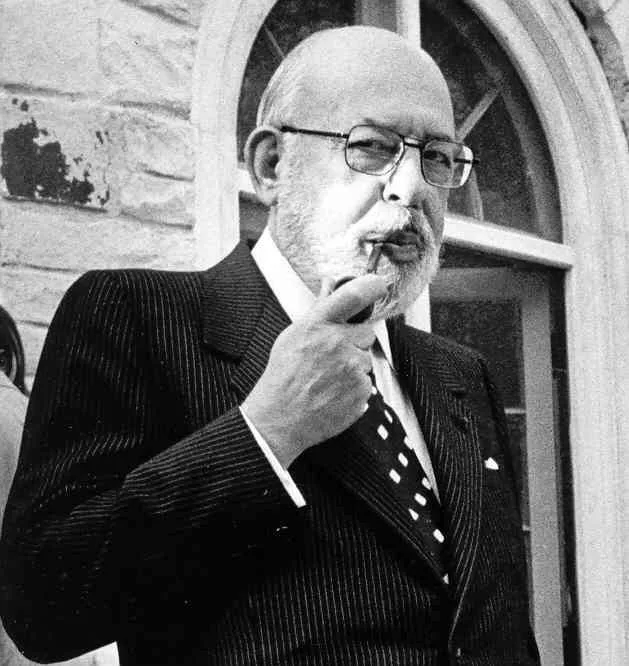
Although the business was commonly known simply as Neiman’s, after Al and Carrie divorced in 1928, the Marcus family ran the company for decades. By then, Herbert’s eldest son, Stanley, had joined the family business. In his 1974 memoir, Minding the Store, Stanley described the recipe for success he had learned from his father. For every piece of merchandise, he said, there was a suitable customer. A merchant’s task was not only to bring the two together, but also to prevent the customer from making the wrong choice. He called this the doctrine of idealistic practicality.
The company benefited greatly from the discovery of oil in Texas, which brought a new kind of customer. These were people who had come into money quickly and wanted to spend it just as quickly on the luxuries they had only heard about all their lives. At a time when Texas was far more isolated from the world than it is today, Stanley turned Dallas into a market that fashion houses in New York, Paris, and Milan could not afford to ignore. He held weekly fashion shows right inside the store and established the Neiman Marcus Award for Distinguished Service in the Field of Fashion. It came to be known as the Oscar of the fashion world and attracted such figures as Coco Chanel and Yves Saint Laurent to Texas.
I have the simplest tastes; I am always satisfied with the best, Stanley liked to say, borrowing Oscar Wilde’s words. His customers therefore trusted that Neiman Marcus would give them the best of everything. Their desires were further encouraged by the introduction of extraordinarily lavish gifts in the annual Christmas catalog, known as the Christmas Book. Over the years, its His and Hers gifts included a two-person submarine, ancient Egyptian-style sarcophagi, two matching hot-air balloons with pink stripes, and live camels. One year, a pair of Beechcraft airplanes was offered, and a West Texas farmer reportedly wrote to the store saying that he already had an airplane, but if they were willing to split up the pair, he would take one for his wife, who had long wanted an aircraft of her own.
When the downtown Dallas store was expanded in the early 1950s, Stanley had a restaurant built on the new sixth floor. It did not take long for the elegant space to become the place where one simply had to lunch if one belonged to local high society. Neiman Marcus thus became almost as famous for its fluffy popovers with strawberry butter as for its merchandise. Today, this flagship store also has a small café and a hair salon. The chain’s second-oldest Dallas store boasts two restaurants, each with its own bar, as well as a salon and spa department. When the company expanded to Houston and later across the country, most of the new stores repeated this model, allowing customers to spend an entire day in luxury with dining, spa treatments, and beauty care. Generations of affluent Texans were willing to travel across the state for hours to enjoy this experience.
Shopping thus became an attraction for which Dallas was known far and wide, so much so that the world’s largest air-conditioned indoor shopping complex was built in the city. The center opened in 1965, with Neiman Marcus as its main attraction. This elegant shopping mall, NorthPark Center, still draws more than twenty-six million visitors each year, making it the most visited destination in Dallas. Its clean lines and modern design give it the character of both a museum and a department store. Its corridors are indeed adorned with works by acclaimed artists such as Andy Warhol and Frank Stella. Even as enclosed shopping malls slowly disappear, NorthPark remains a place where all kinds of people from across the city gather. For Dallas, it is quite simply what Central Park is to New York.
To a city with no obvious natural wealth to fuel its growth, Stanley Marcus brought a taste of the outside world. Until then, Dallas had been a place built primarily from the visions of its founders. Thanks to Marcus, Texans learned about all the things they might desire and were inspired to carve out a place of their own on the global fashion stage. This legacy can be seen throughout the city. Dallas has since grown into one of the world’s most luxurious centers of opulence. It is evident in the fashion houses of Highland Park Village, the boutiques on Main Street downtown, and the designer showrooms and art galleries of the Design District. The influence of the Neiman Marcus department store was also clearly reflected in the decision by Dallas officials to commission the celebrated architect I. M. Pei to design City Hall and Santiago Calatrava to design a pair of bridges across the Trinity River. This influence also spread into the growing suburbs and luxury shopping districts such as Shops at Legacy in Plano and Town Square in Southlake. Affluent Texans learned to expect and demand the best. Mr. Stanley, as many affectionately called him, sold them a dream. And they embraced it enthusiastically.