

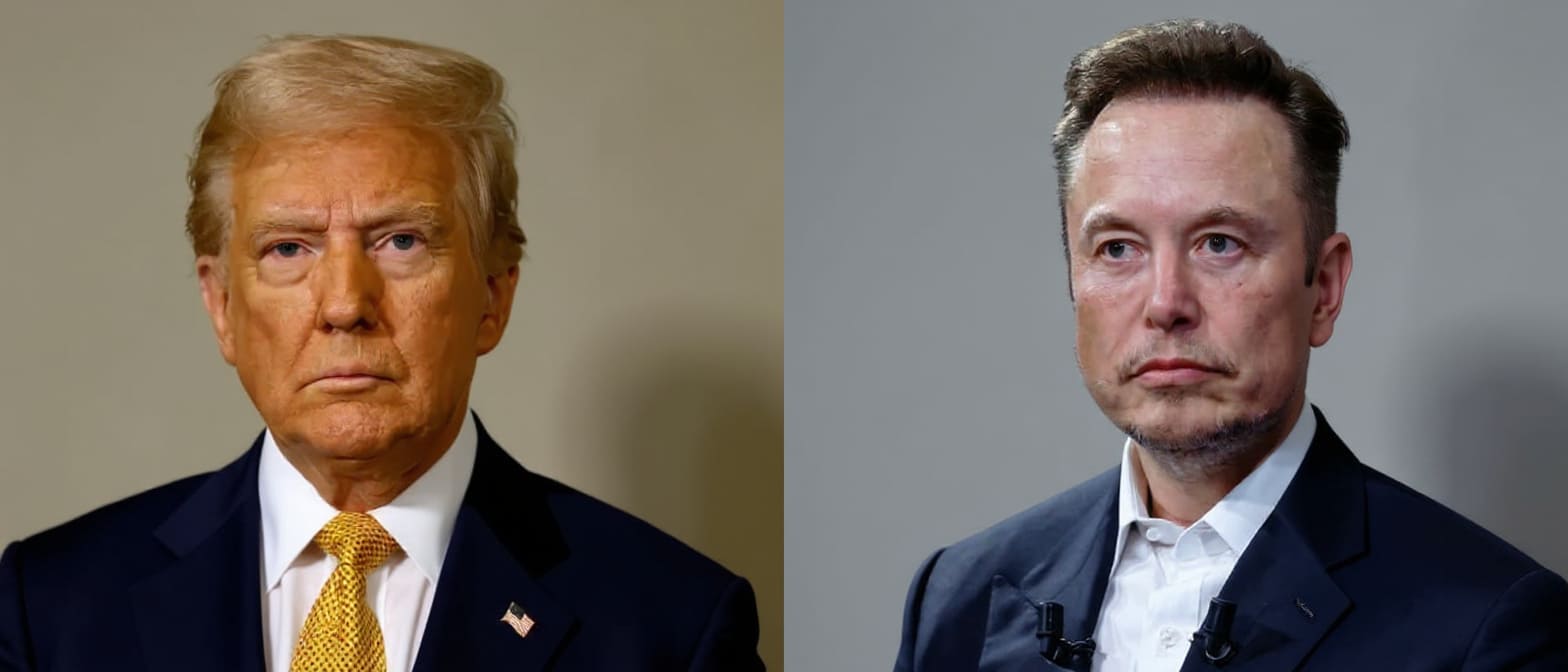
From Conflict to Partnership: Trump and Musk Join Forces Again Over AI
Donald Trump, who returned to the White House this year, is now proposing the creation of a new federal agency focused on artificial intelligence. The plan includes close cooperation with xAI, led by Elon Musk. According to publicly available information, the agency is intended to help the United States maintain its leading position in artificial intelligence, particularly in its competition with China. Trump sees Musk as a key ally because xAI specializes in advanced technologies that could strengthen national security and the economy. Details suggest that Musk's company would provide expertise and resources for the rapid development of projects, accelerating the implementation of AI across various sectors.
Elon Musk, the founder of xAI, has previously expressed support for the idea of cooperating with the government if it helps achieve safer development of artificial intelligence. xAI was founded with the goal of exploring the universe and developing advanced systems, which now aligns with Trump's ambitions.
Heated Exchanges Earlier This Year
Although Trump and Musk are now moving toward a partnership, their relationship has not always been smooth. Earlier in 2025, a series of sharp public disputes escalated into personal attacks. Trump expressed disappointment with Musk after he criticized Trump's major legislative proposal, called the "One Big Beautiful Bill Act." The legislation extended tax cuts, increased spending on the military and border security, while reducing funding for social programs. Musk responded by accusing Trump of ingratitude for his support during the 2024 election, in which his contributions allegedly played a key role in Trump's victory.
The dispute intensified further when Musk claimed without evidence that Trump was mentioned in the Jeffrey Epstein files, which would explain why the documents had not been released. Musk repeated the claim on social media and even supported calls for Trump's impeachment, proposing Vice President JD Vance as a replacement. Trump, in turn, said that he had "asked Musk to leave" and threatened to terminate government subsidies and contracts for Musk's companies. He accused Musk of "going crazy," and the entire conflict played out primarily on social media, where it was followed by millions of people.
These exchanges were amplified by the media and revealed a deep rift between two previously close allies. Musk had previously supported Trump with large campaign donations and had been appointed to a high-level government commission called DOGE. Public opinion polls at the time revealed growing concerns about Musk's influence within the administration, adding fuel to the fire.
Related Developments and Details
In addition to these disputes, other related information emerged. For example, Trump warned of "serious consequences" if Musk funded Democrats, underscoring the political dimension of their relationship. Musk also had a heated conversation with a Trump adviser during one of these conflicts, in which they argued about policy and accusations. Despite this, they now appear to be moving toward reconciliation through their shared interest in artificial intelligence.
Within the context of the federal agency, xAI could play a role in projects involving massive data centers or advanced artificial intelligence models. The Trump administration plans to invest in these areas to ensure that the US remains at the forefront of technological progress. Musk, known for companies such as Tesla and SpaceX, brings experience with real-world AI applications to the partnership, which could lead to practical outcomes such as improved security systems or economic forecasting.
This partnership between Trump, Musk, and xAI represents an interesting turn after turbulent months filled with conflict. While the earlier disputes exposed personal and political tensions, shared goals in artificial intelligence now appear to be bringing them together. People are watching to see how this development plays out in practice, as it could influence the future of technology in the US. Details from public sources suggest that this cooperation could bring innovation, but also spark debate about the influence of private companies on government decision-making.
Source: wsj.com


