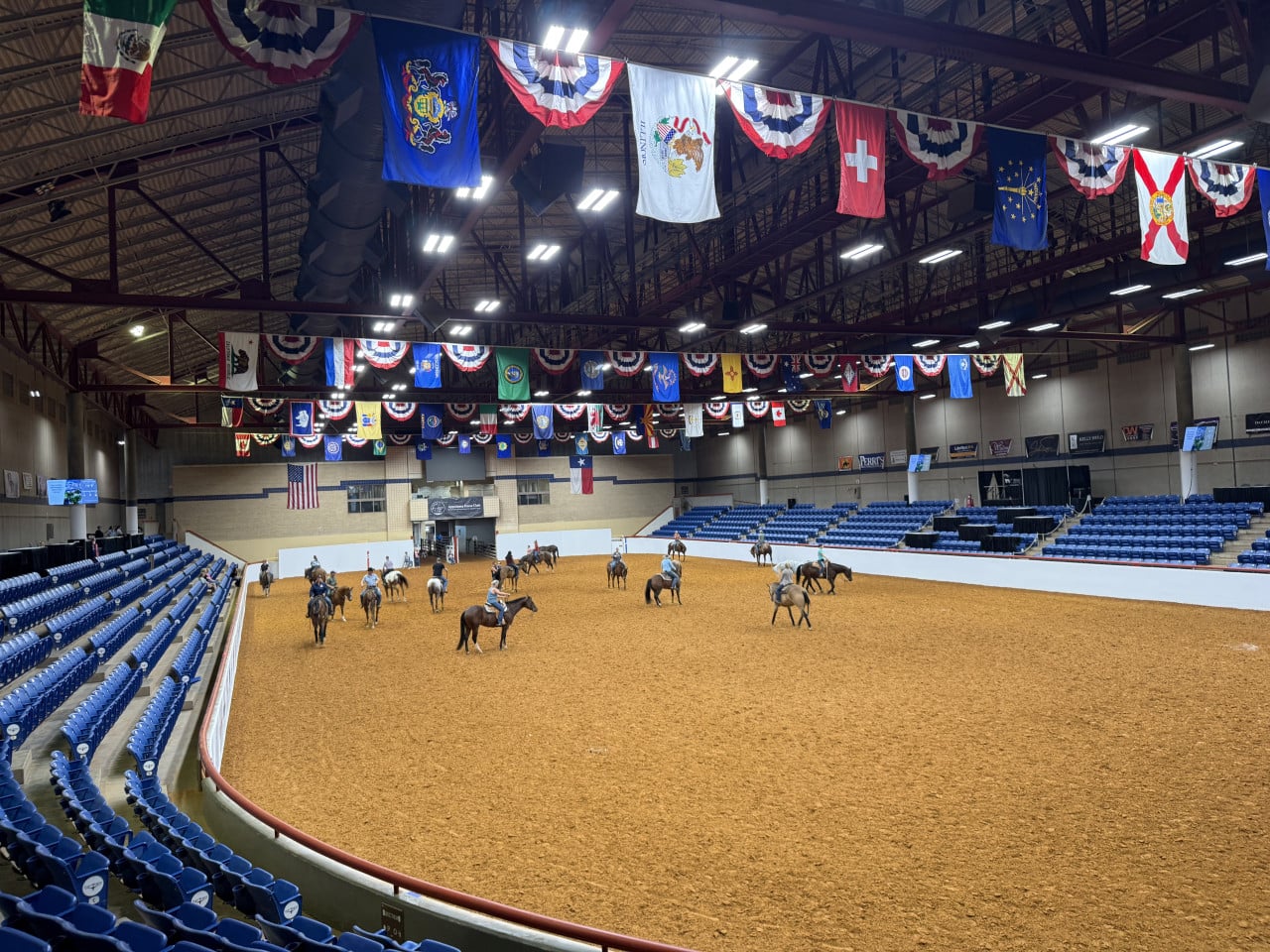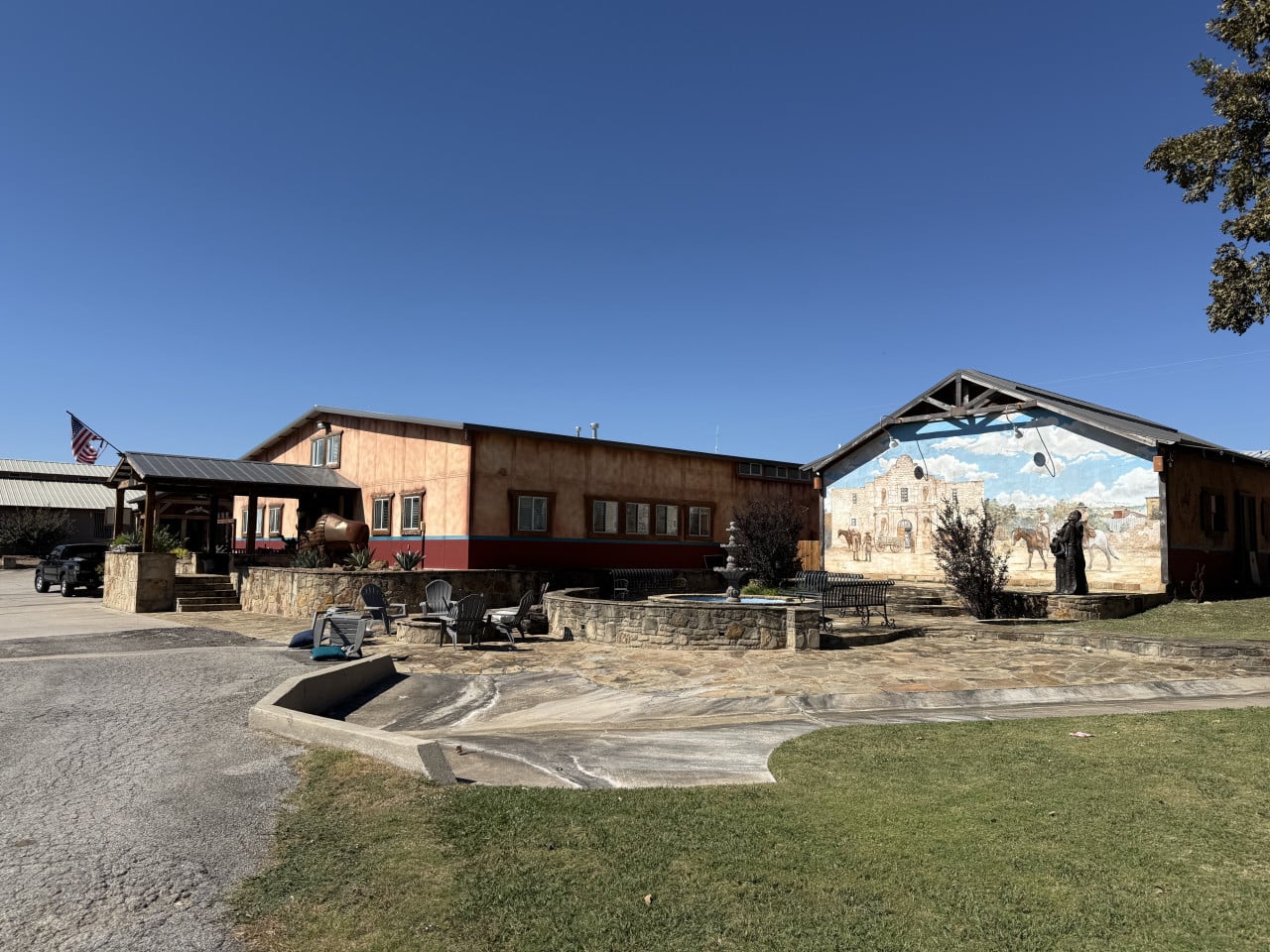
When we were in Dallas for the Appaloosa Horse Show, we ended up with a nice break between events one day. And since sitting in the stands all day doing nothing isn't much fun—especially for the kids—we decided to head to Fort Worth Zoo.
We also brought along a friend's son so he wouldn't get bored either, and honestly, I didn't expect the local zoo to captivate us so much. In the end, we had a wonderful day there, and Fort Worth Zoo ranked among the best American zoos we've seen so far.
A few words about Fort Worth Zoo—what makes it special
When I started looking into the zoo in more detail, I discovered several things that I found really interesting.
Fort Worth Zoo was founded back in 1909, making it the oldest continuously operating zoo in all of Texas. And its beginnings were truly modest—the first "collection" of animals consisted of one lion, two bear cubs, one alligator, a coyote, a peacock, and a few rabbits. That was it.
But over more than a century, those humble beginnings grew into one of the most highly regarded zoos in the United States. Today, it is home to more than 7,000 animals representing over 500 species, 68 of which are endangered.
A few facts and figures that caught my attention:
-
Until 1991, the zoo was operated directly by the City of Fort Worth. That year, however, due to declining attendance and outdated enclosures, it was taken over by the nonprofit Fort Worth Zoological Association, which has since raised more than 186 million dollars from private sources for modernization.
-
Fort Worth Zoo is the only zoo in Texas that keeps bonobos (a type of chimpanzee), and one of only seven in the entire United States.
-
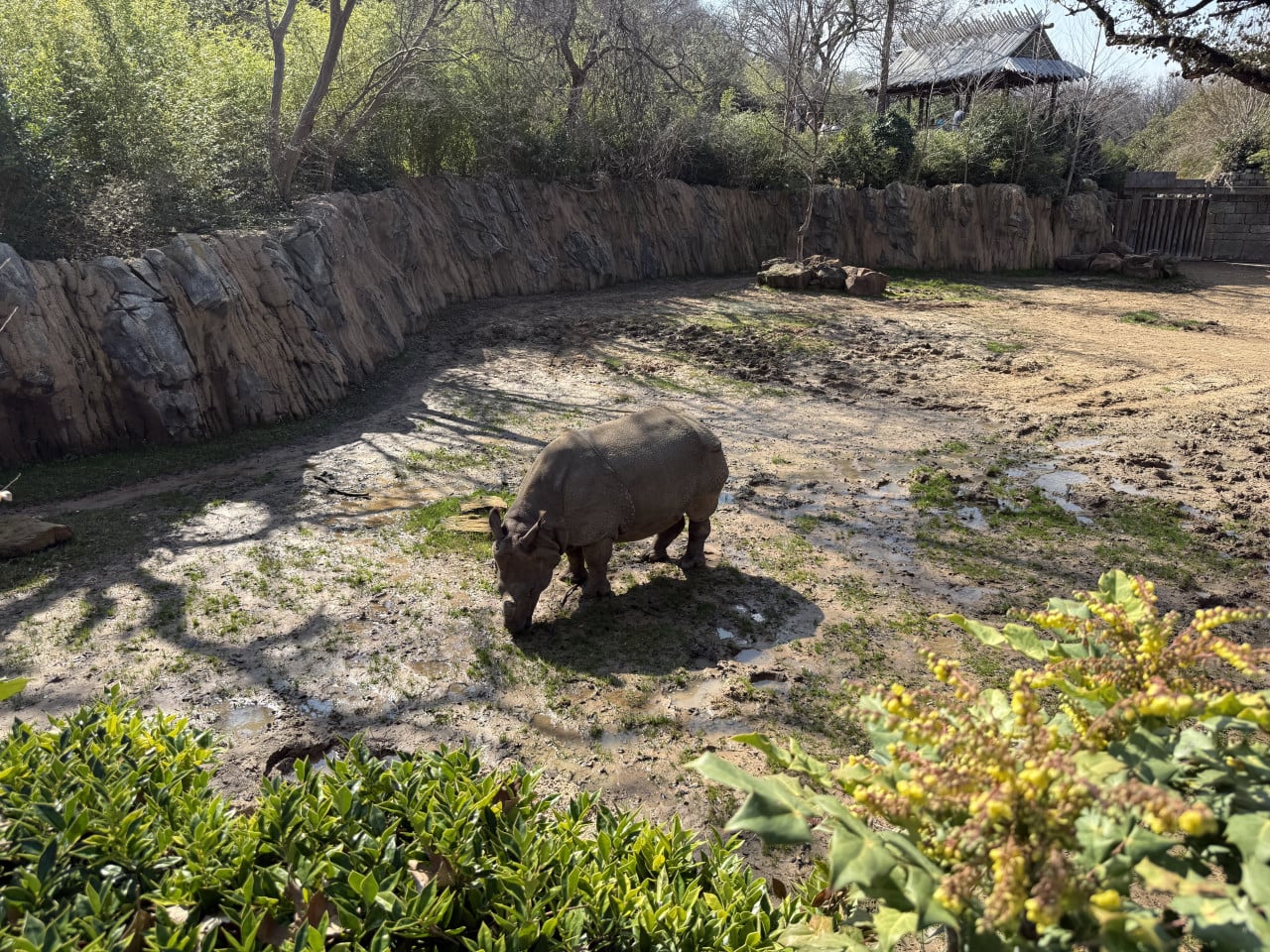
It is also one of only five zoos in the world where you can see two of the five rhino species at the same time (the black rhino and the greater one-horned rhino).
-
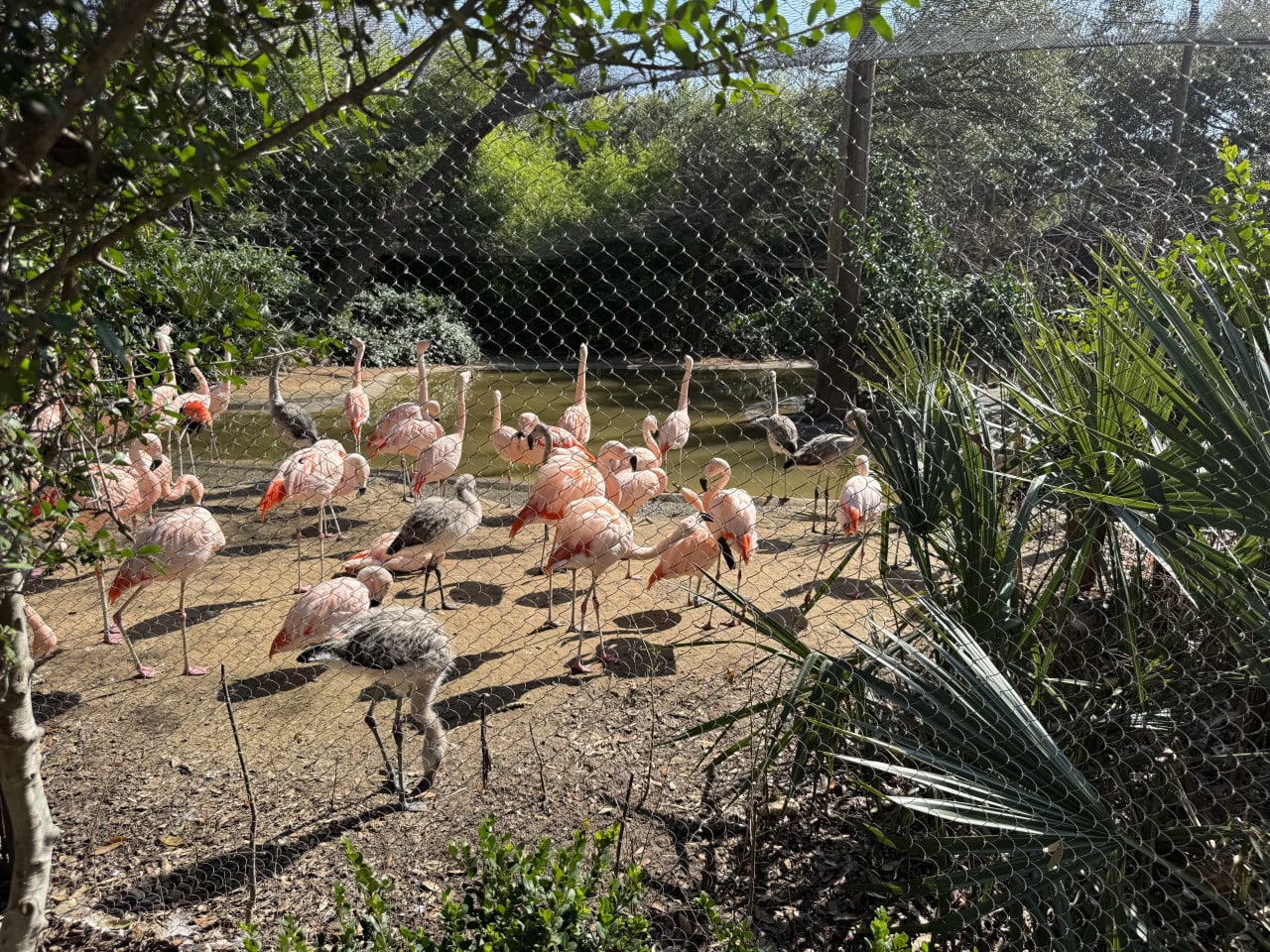
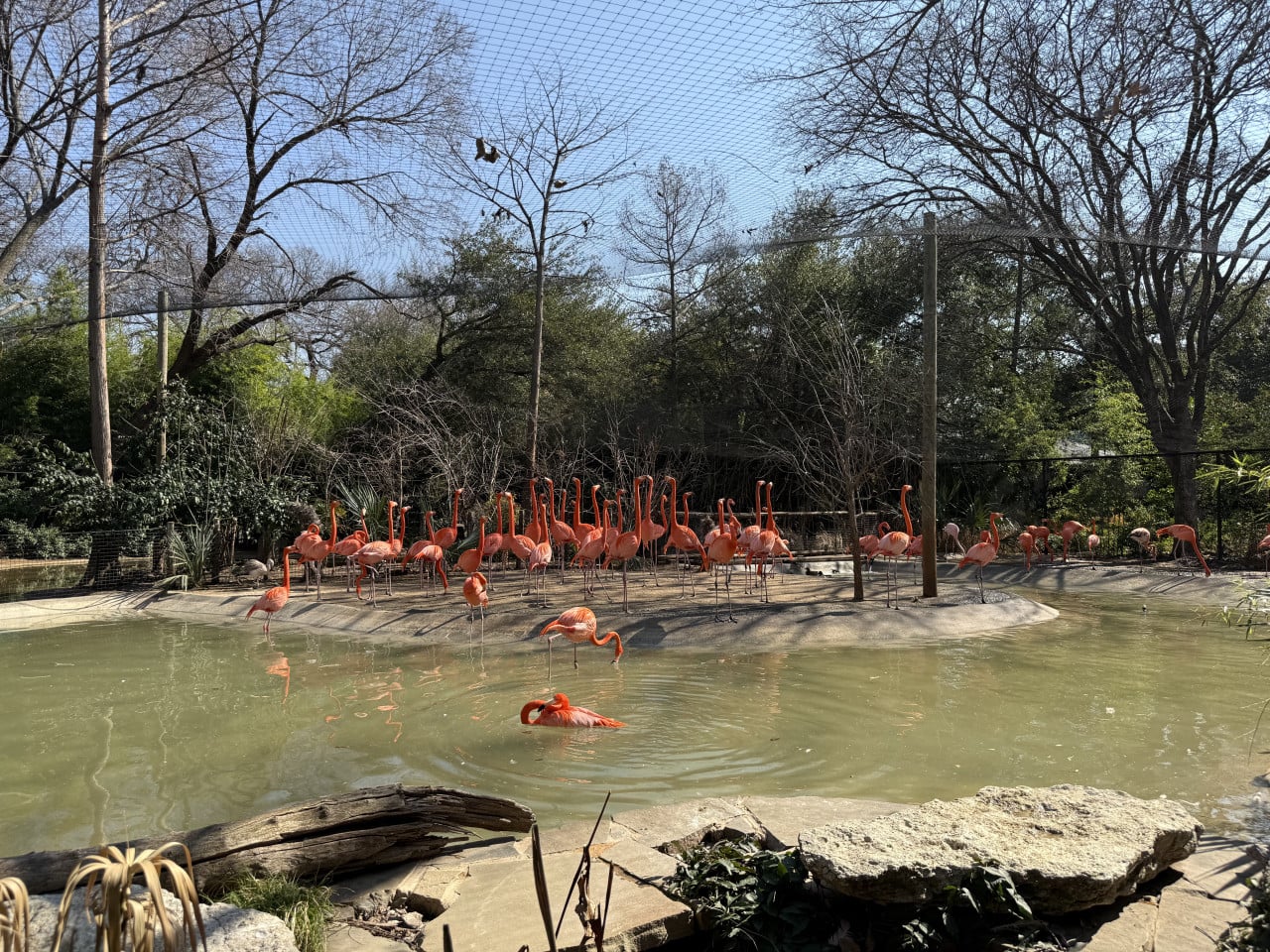
It is home to the world's most successful breeding colony of lesser flamingos—chicks have been hatching here regularly since 2001.
-
USA Today has repeatedly named it the best zoo in North America.
-
And a fun fact for fans of curiosities—a forty-foot sculpture of an iguana named Iggy, created by artist Bob "Daddy-O" Wade, sits on the roof of the veterinary clinic.
The entire grounds cover just under 100 acres and are home to both native Texan animals and elephants, giraffes, cheetahs, and Komodo dragons.
First impressions and a Halloween atmosphere
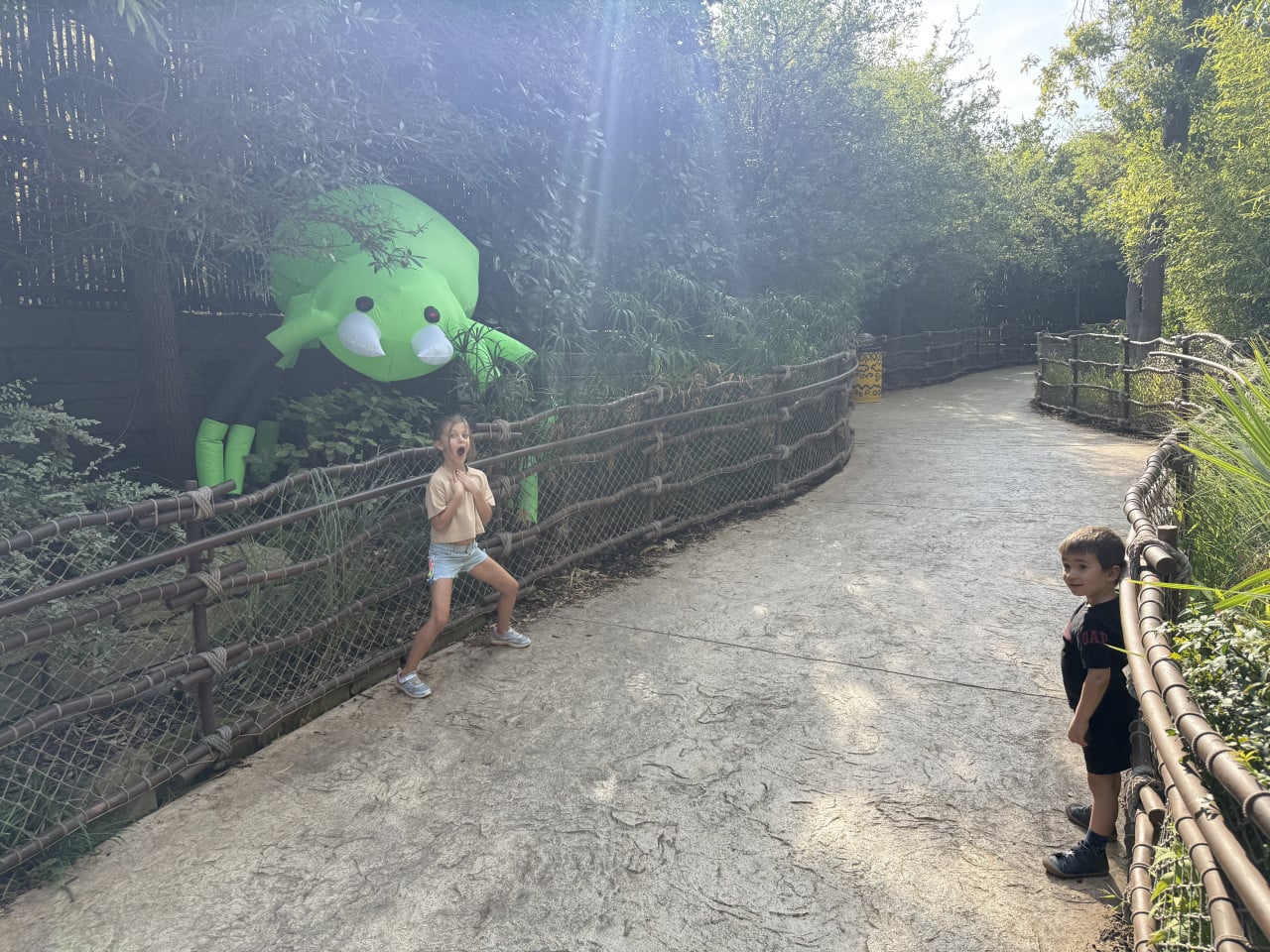
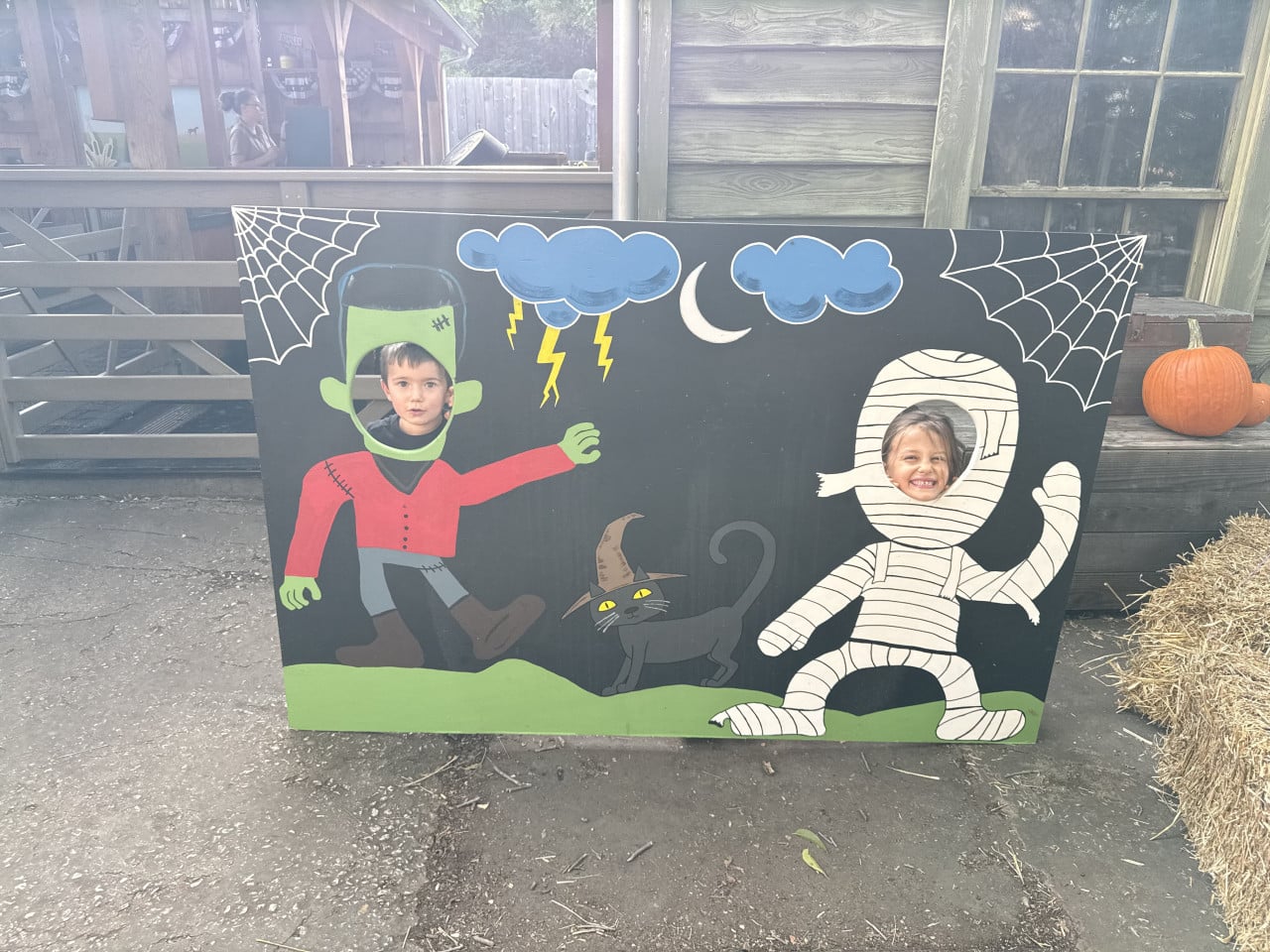
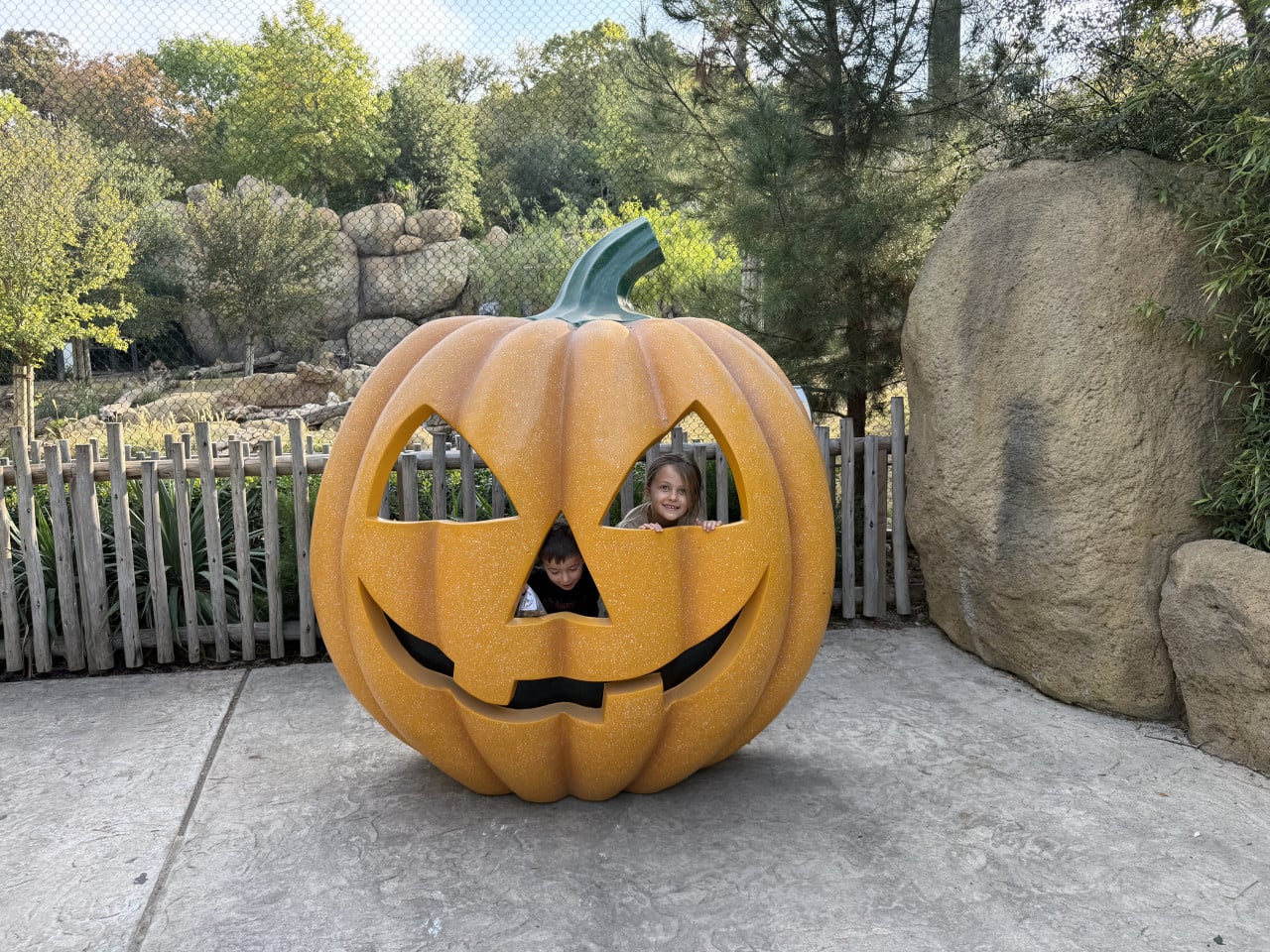
We arrived at Fort Worth Zoo just before Halloween—and it was immediately clear, as always, that Americans really go all out for this holiday. Halloween decorations, pumpkins, skeletons, spiderwebs, and everything else associated with the holiday were displayed throughout the zoo.
The zoo even holds an annual family event called Boo at the Zoo during October—and we came across signs advertising the program right away.
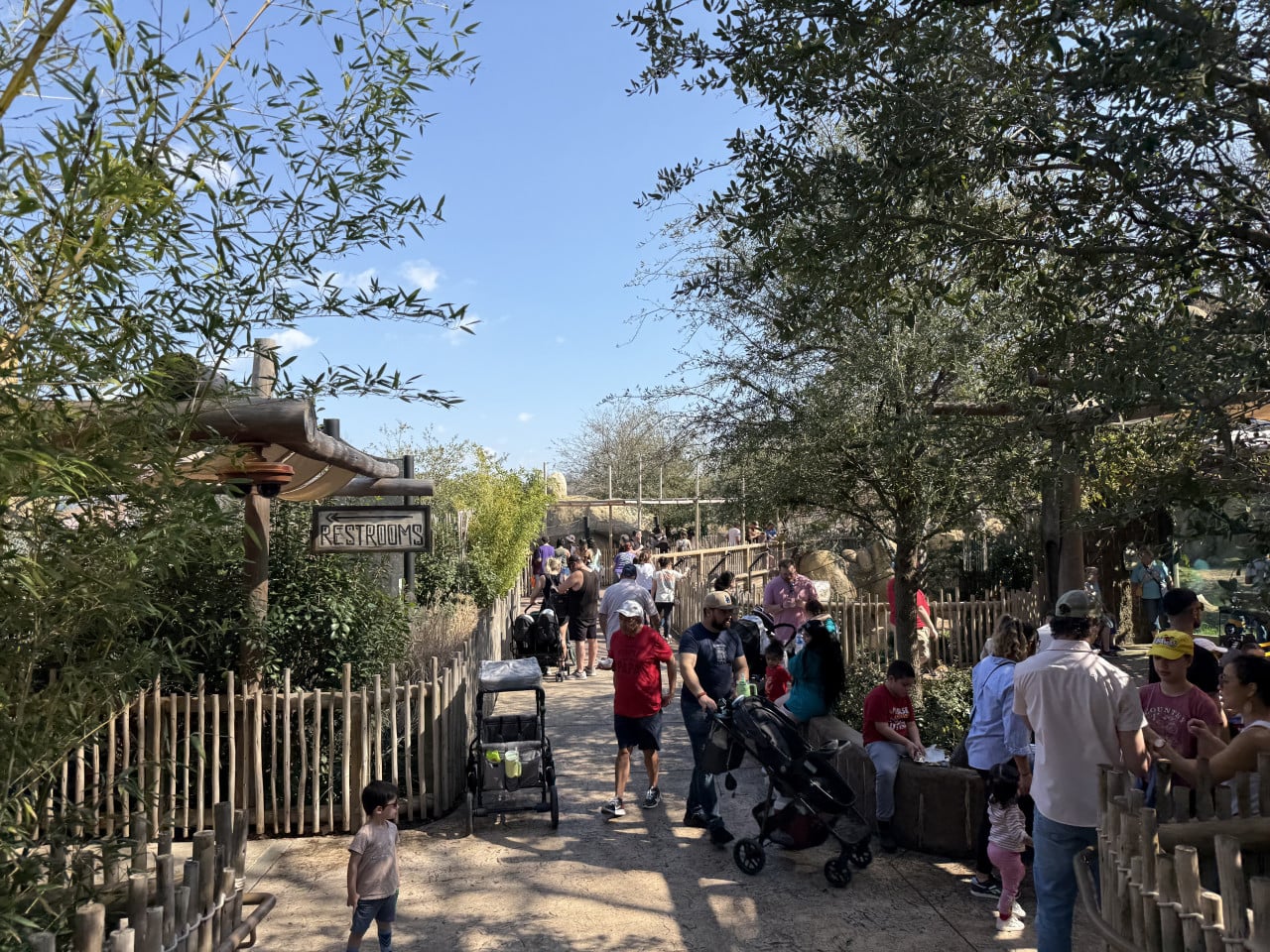
There were plenty of visitors, but thanks to how spacious and nicely laid out the grounds are, we never felt crowded anywhere. In some places, it felt more like relaxing in a park—with trees, stone pathways, water, and little bridges.
The breathtaking turquoise lagoon by the elephants
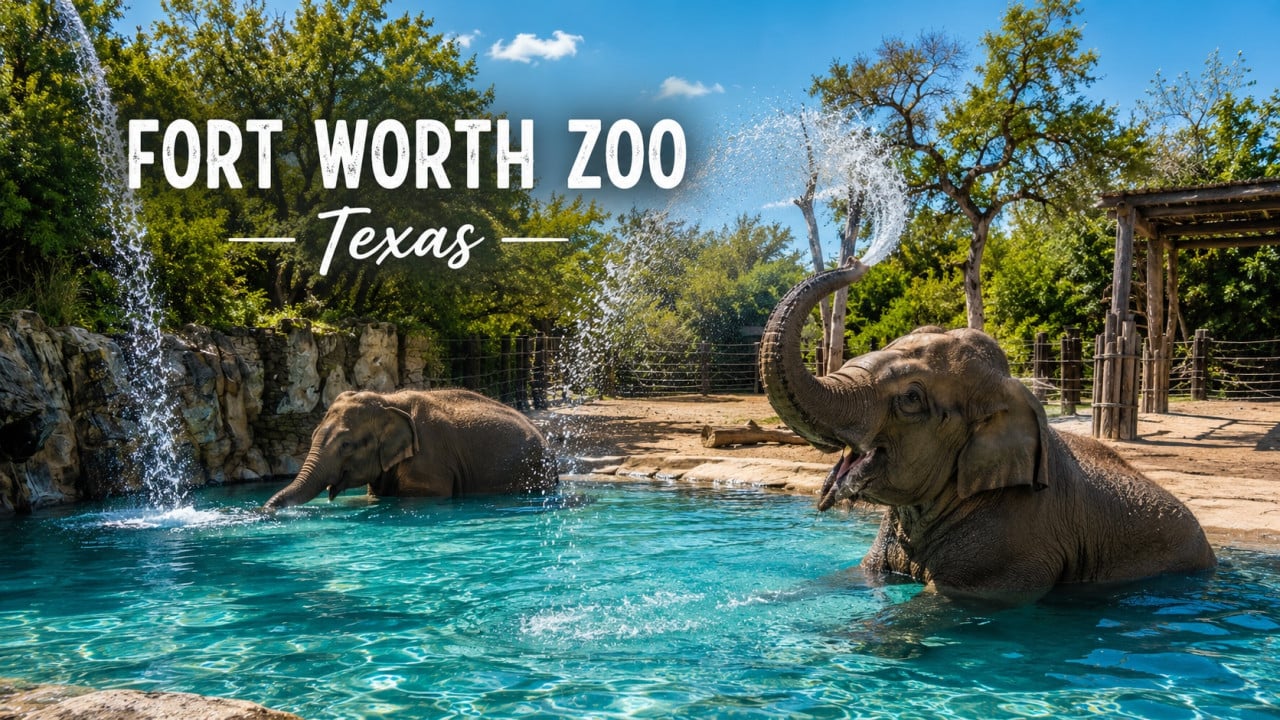
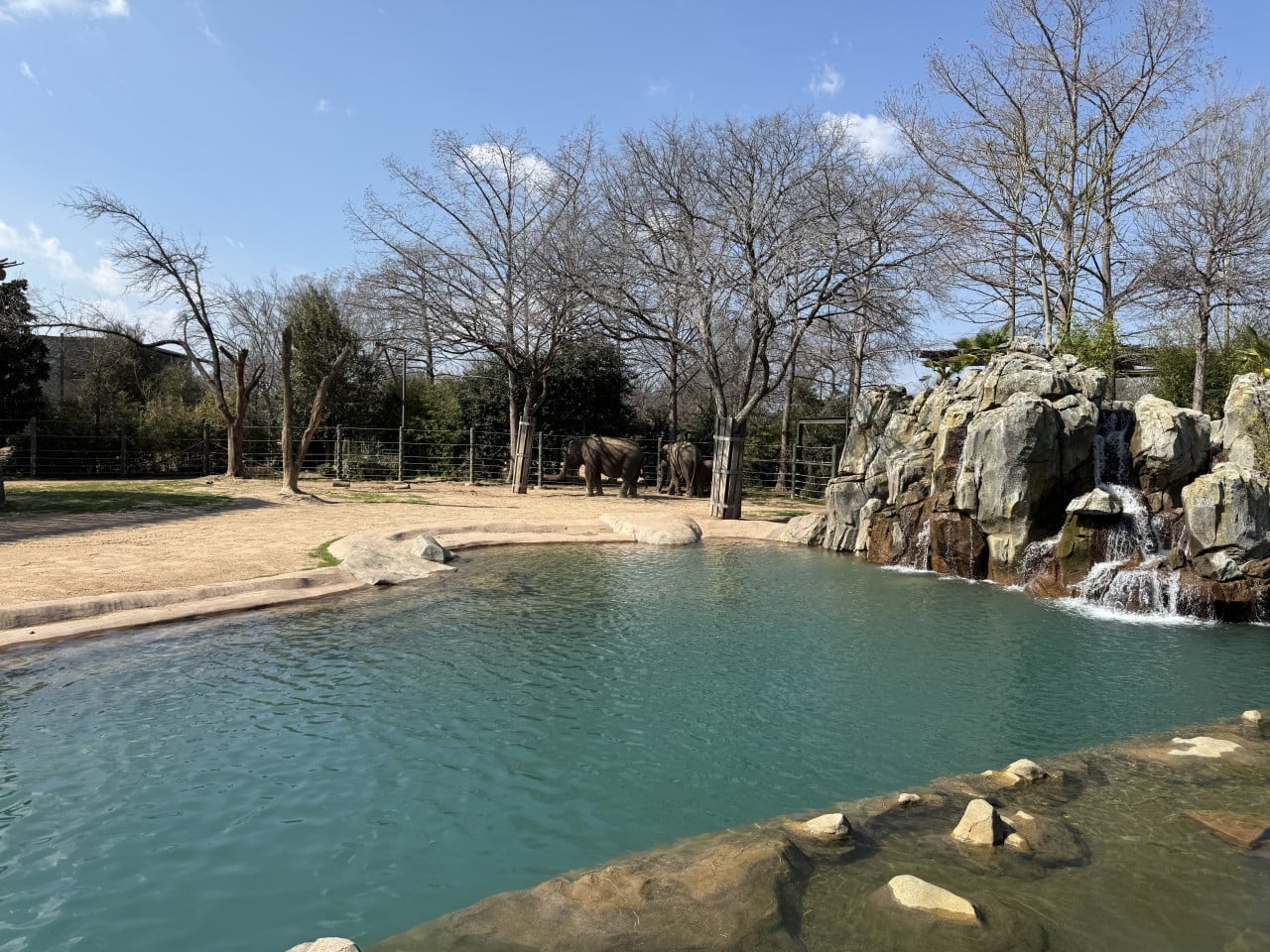
The first thing that really surprised me at the zoo was the crystal-clear blue water by the elephants. And I don't mean ordinary blue—I'm talking about a deep turquoise, almost Caribbean blue that looked like something from a vacation photo.
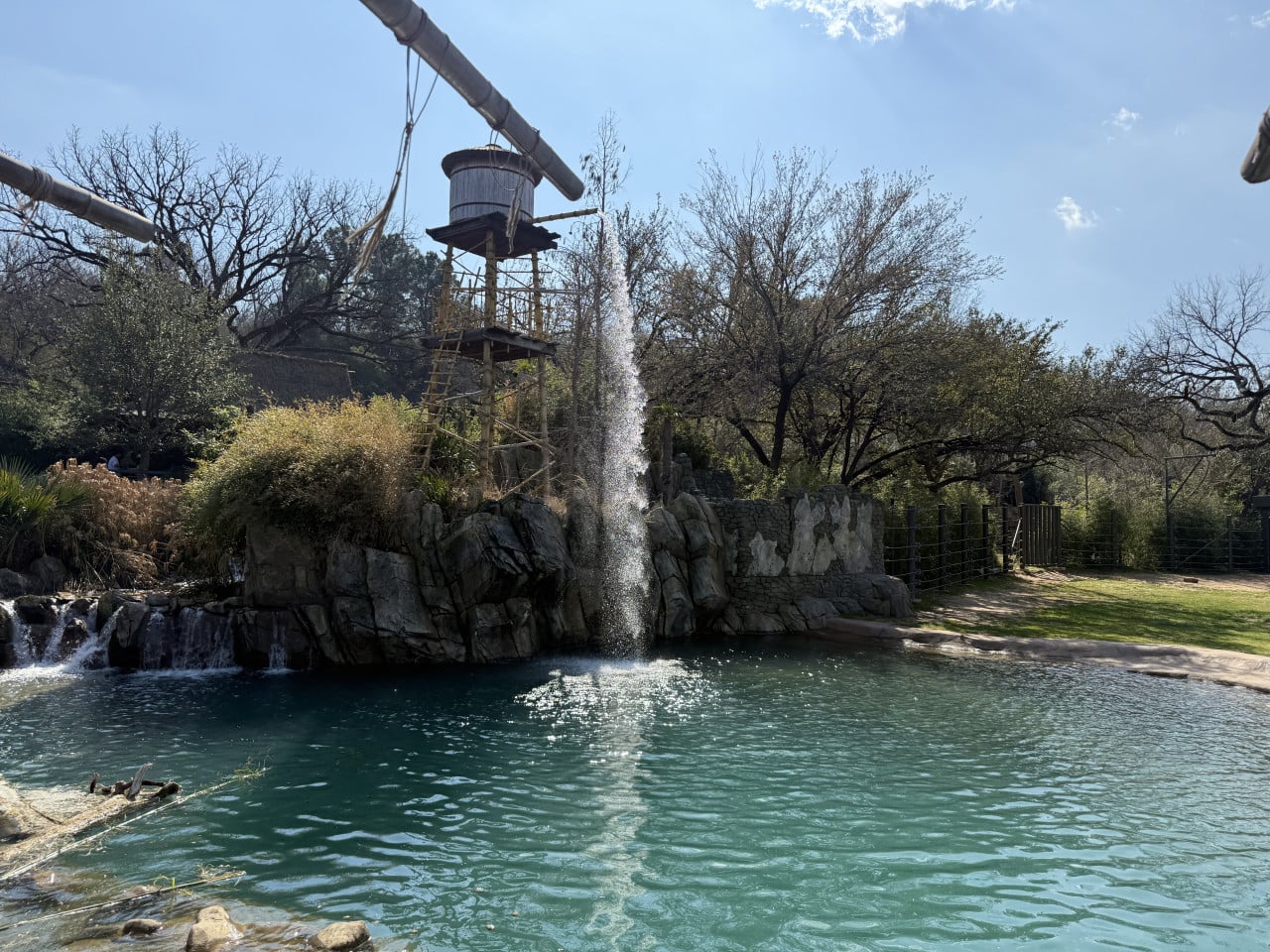
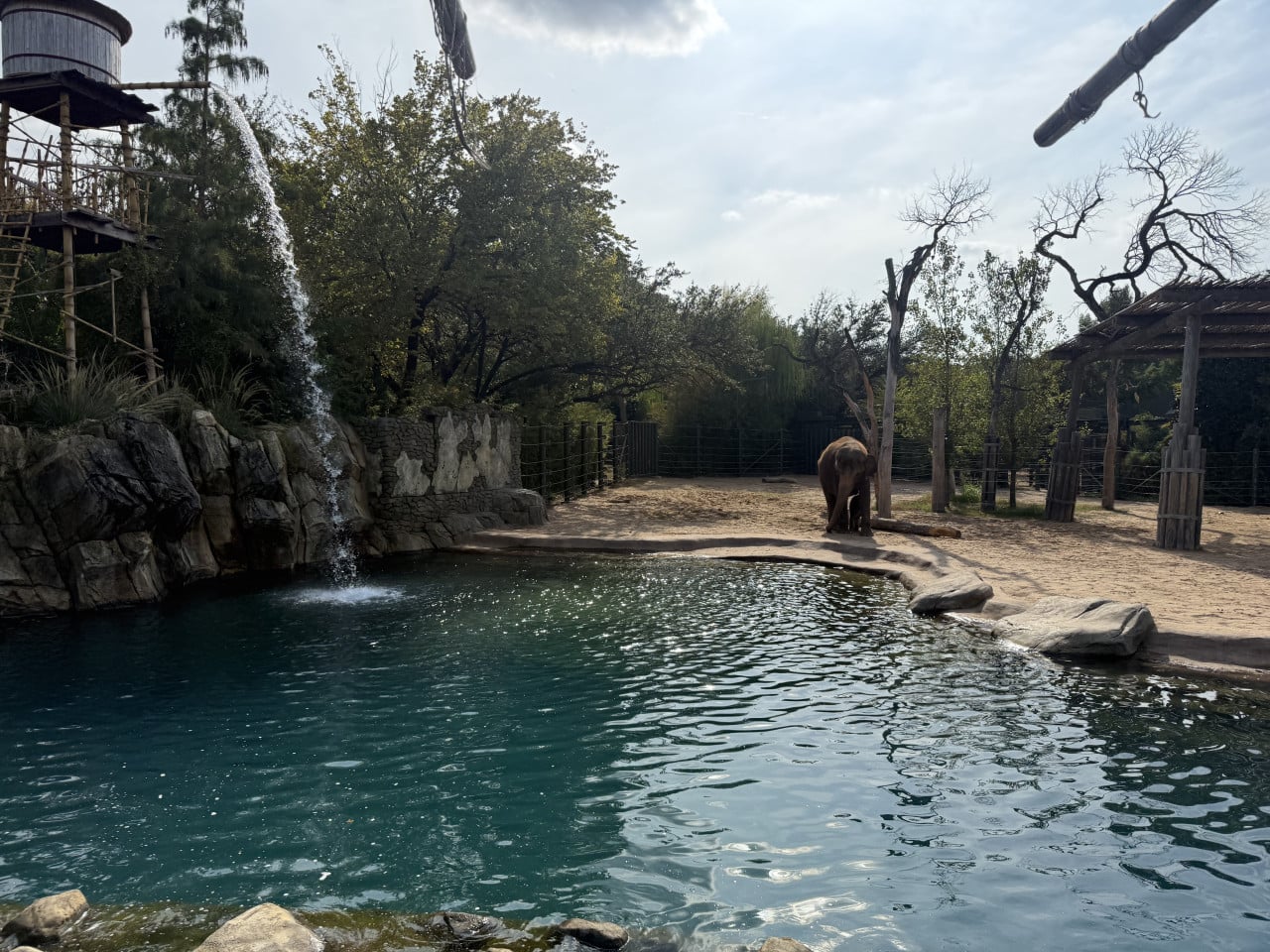
The elephants walked around a waterfall cascading from a wooden structure into the lagoon, and the whole scene looked like a set from an adventure movie.
It wasn't until later that I looked it up—the enclosure is called Elephant Springs, it opened in April 2021, and it received an international award for excellence in design from the Themed Entertainment Association. The water is, of course, artificially colored blue with some kind of chemical, but the visual effect is amazing.
And it isn't just a backdrop—Fort Worth Zoo is an international leader in Asian elephant conservation, one of the founders of the International Elephant Foundation, and the zoo is home to a three-generation herd of Asian elephants in which four calves have been successfully born.
Overall, I really liked how beautifully everything was maintained—the enclosures, the water, and the greenery. It genuinely felt almost luxurious.
Raptor Canyon and other impressive enclosures
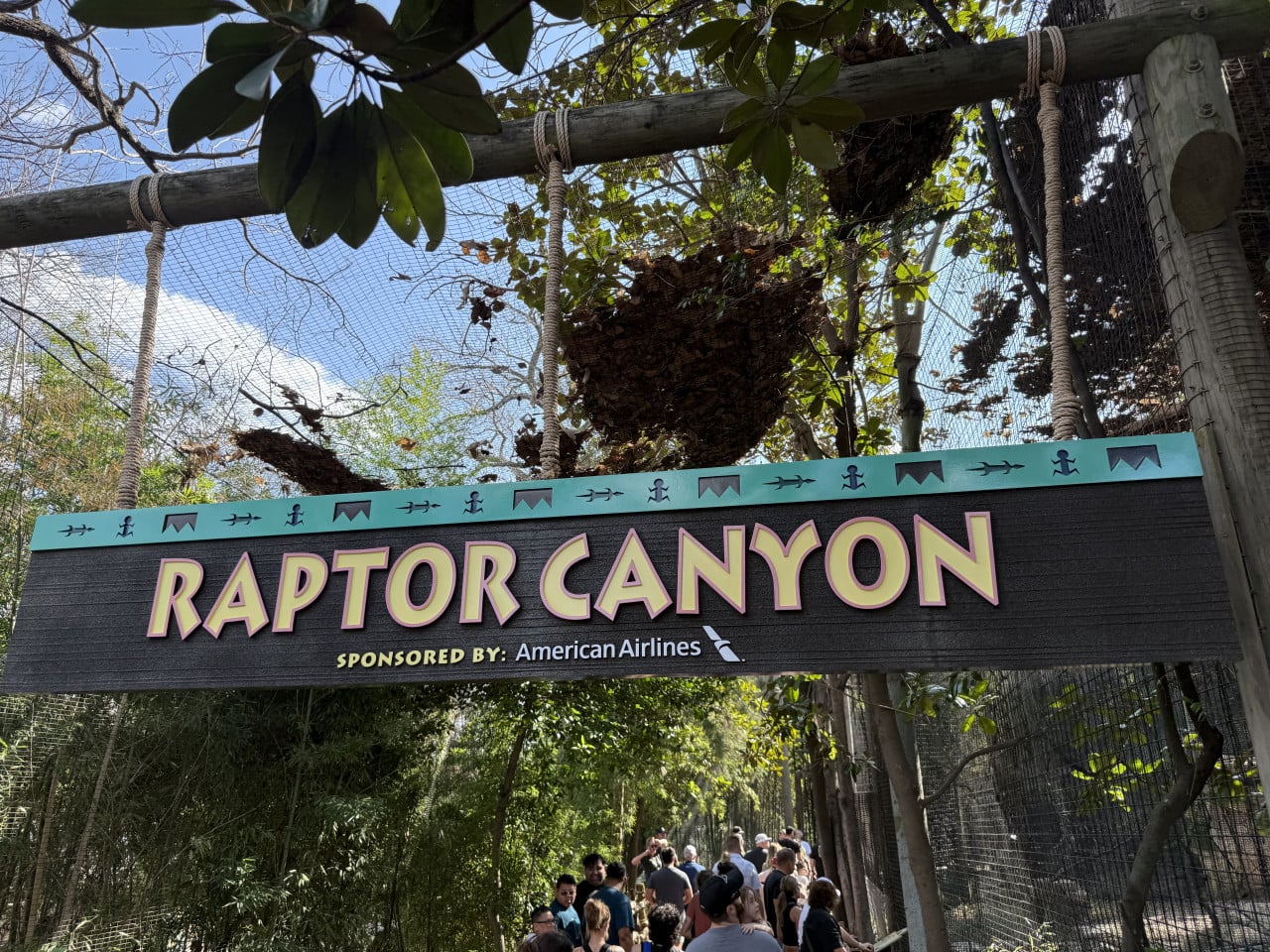
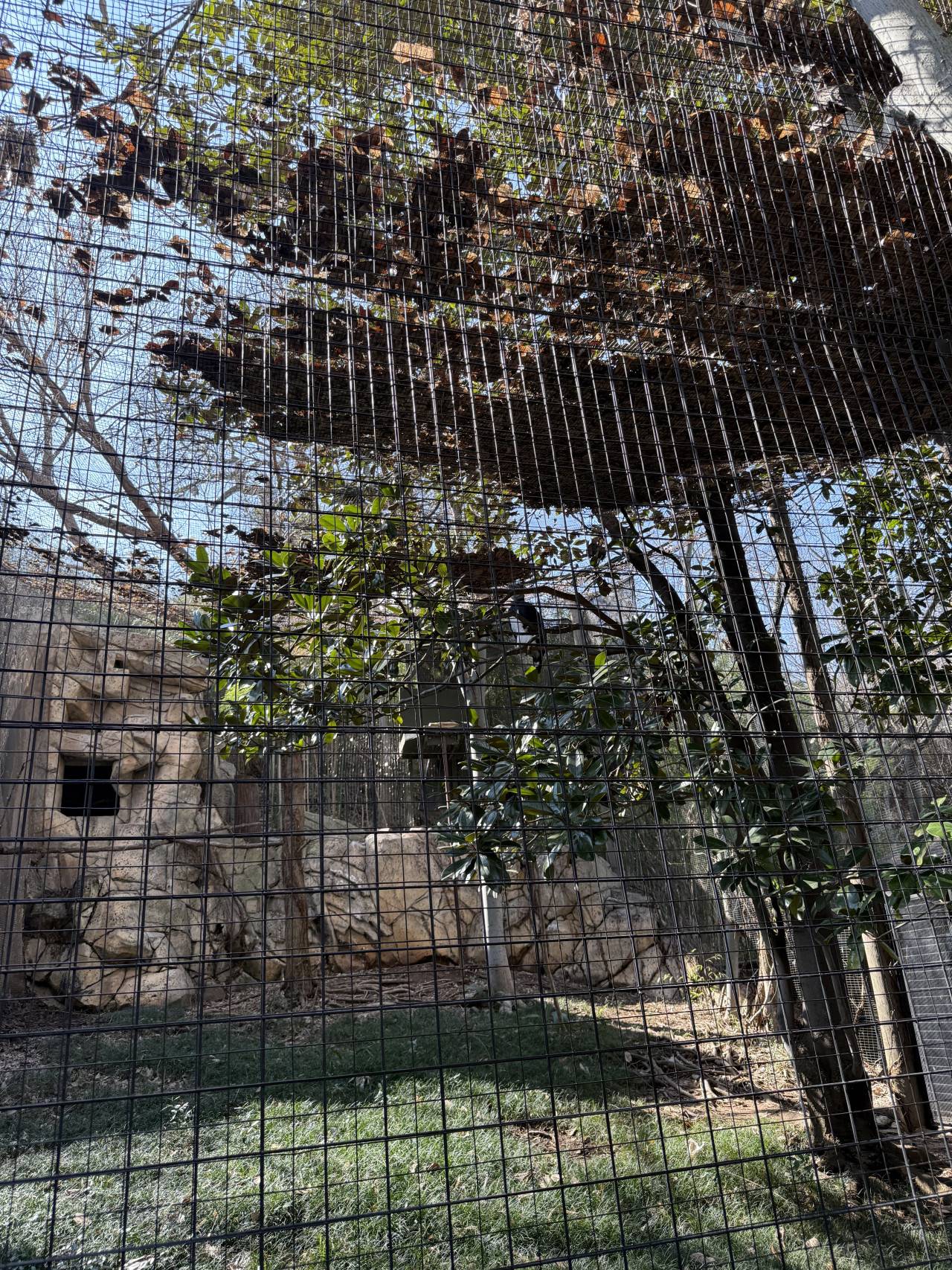
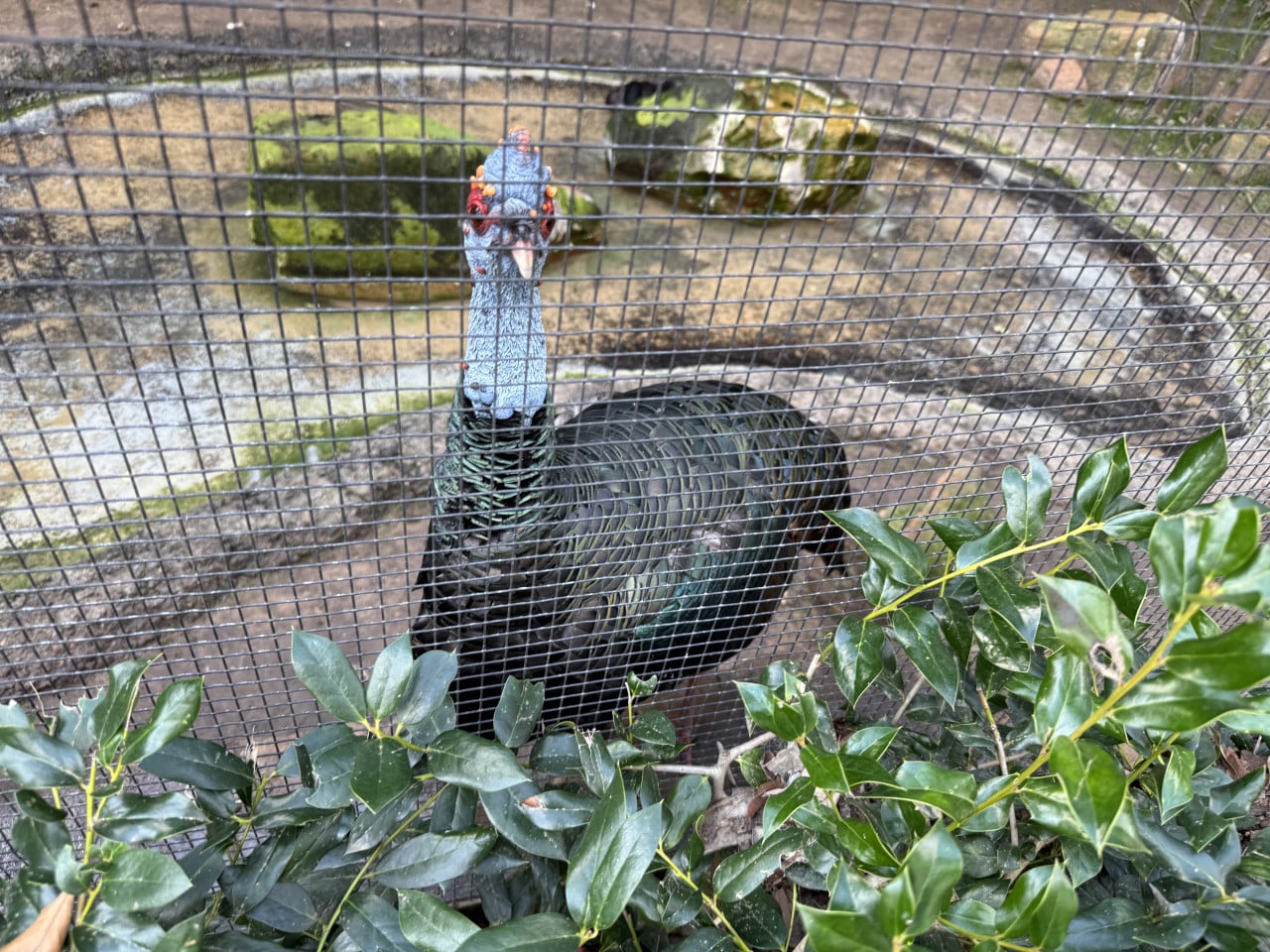
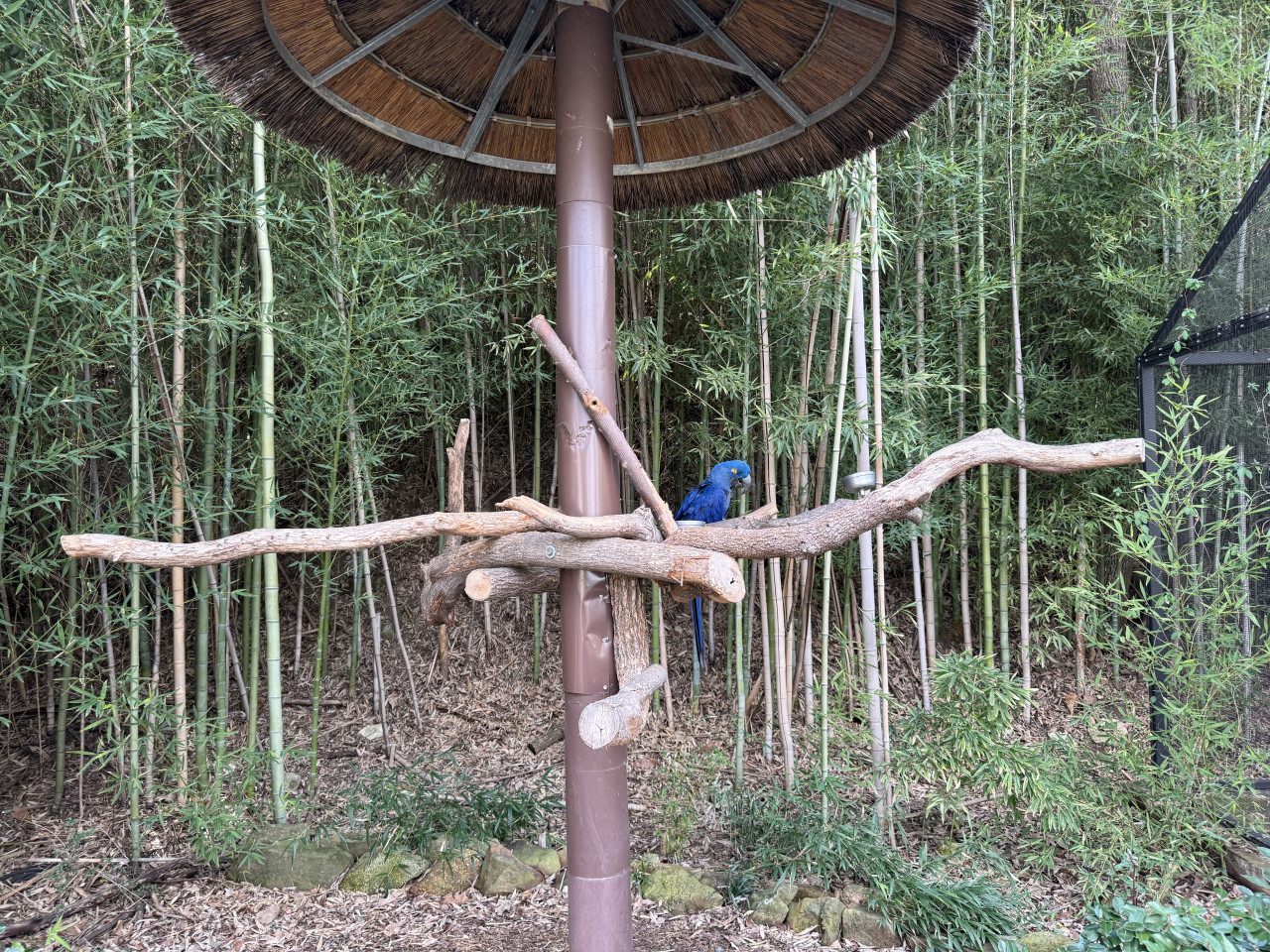
Along the way, we passed the large Raptor Canyon aviary, which is sponsored by American Airlines. Inside are some of the largest and rarest birds of prey in the world.
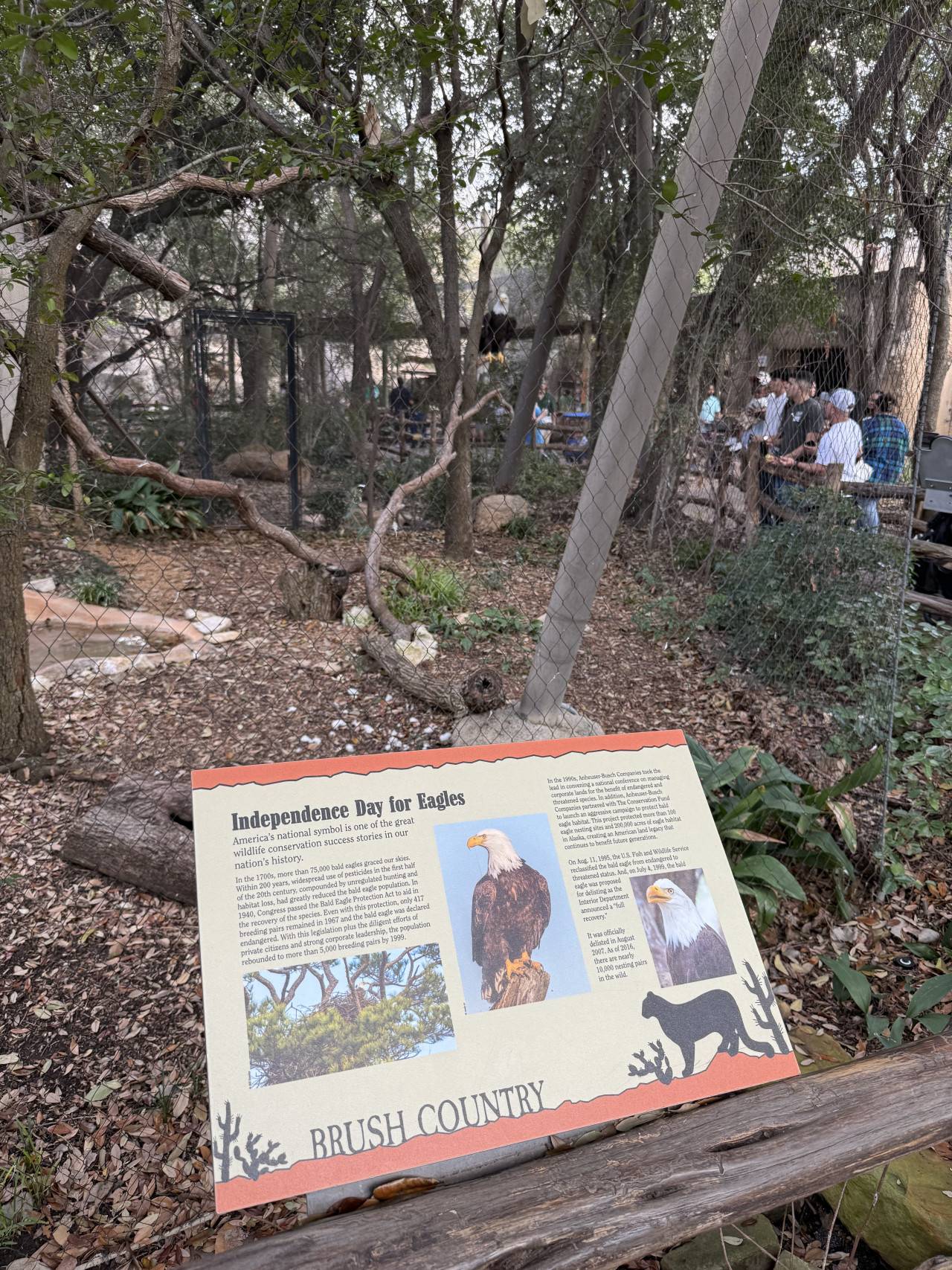
I was also very interested in the section dedicated to the bald eagle, the national symbol of the United States. A sign by the enclosure explained how the bald eagle population had fallen to around 417 nesting pairs in the 1960s—and how, thanks to conservation programs, it was finally removed from the endangered species list in 2007.
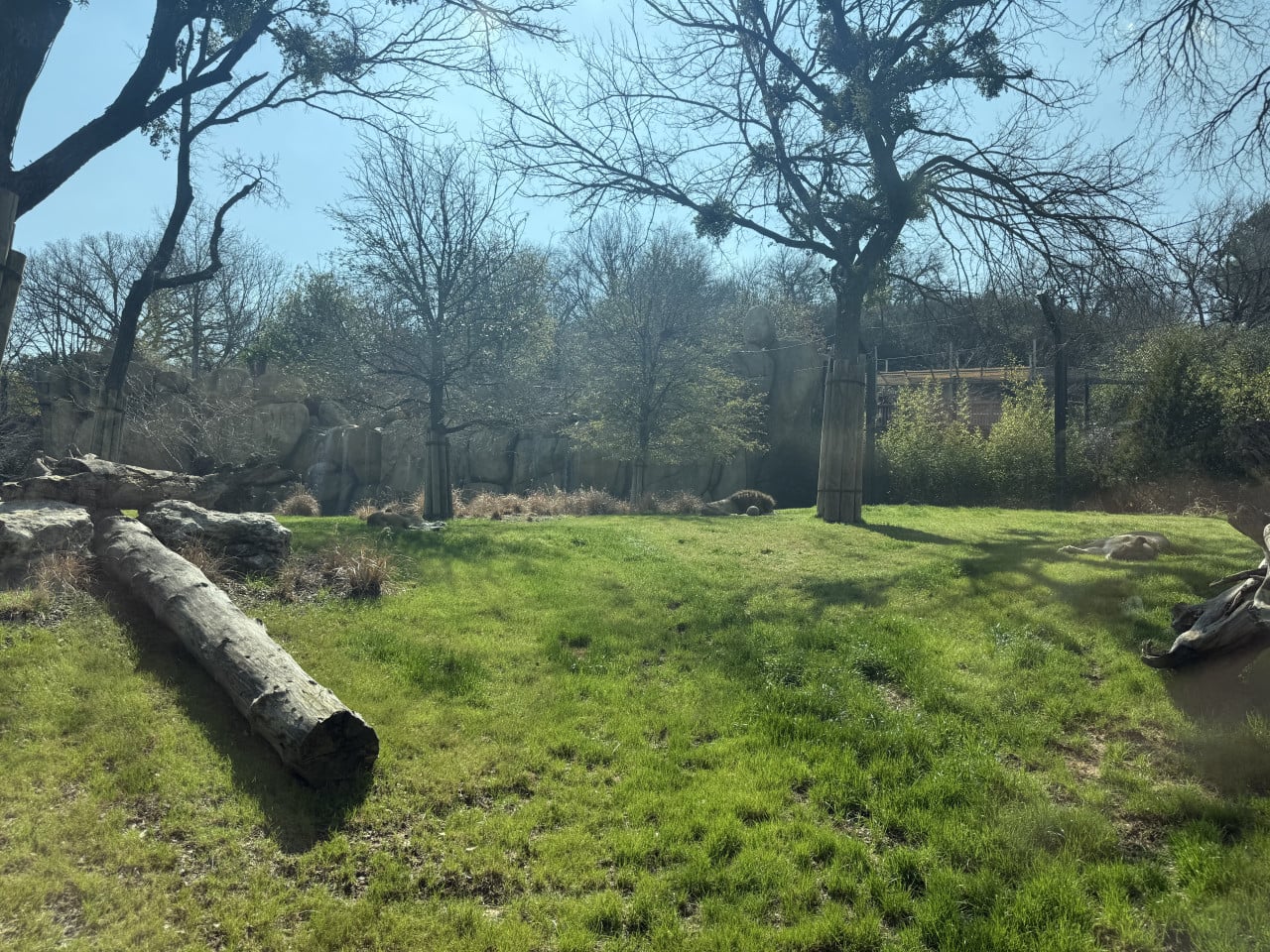
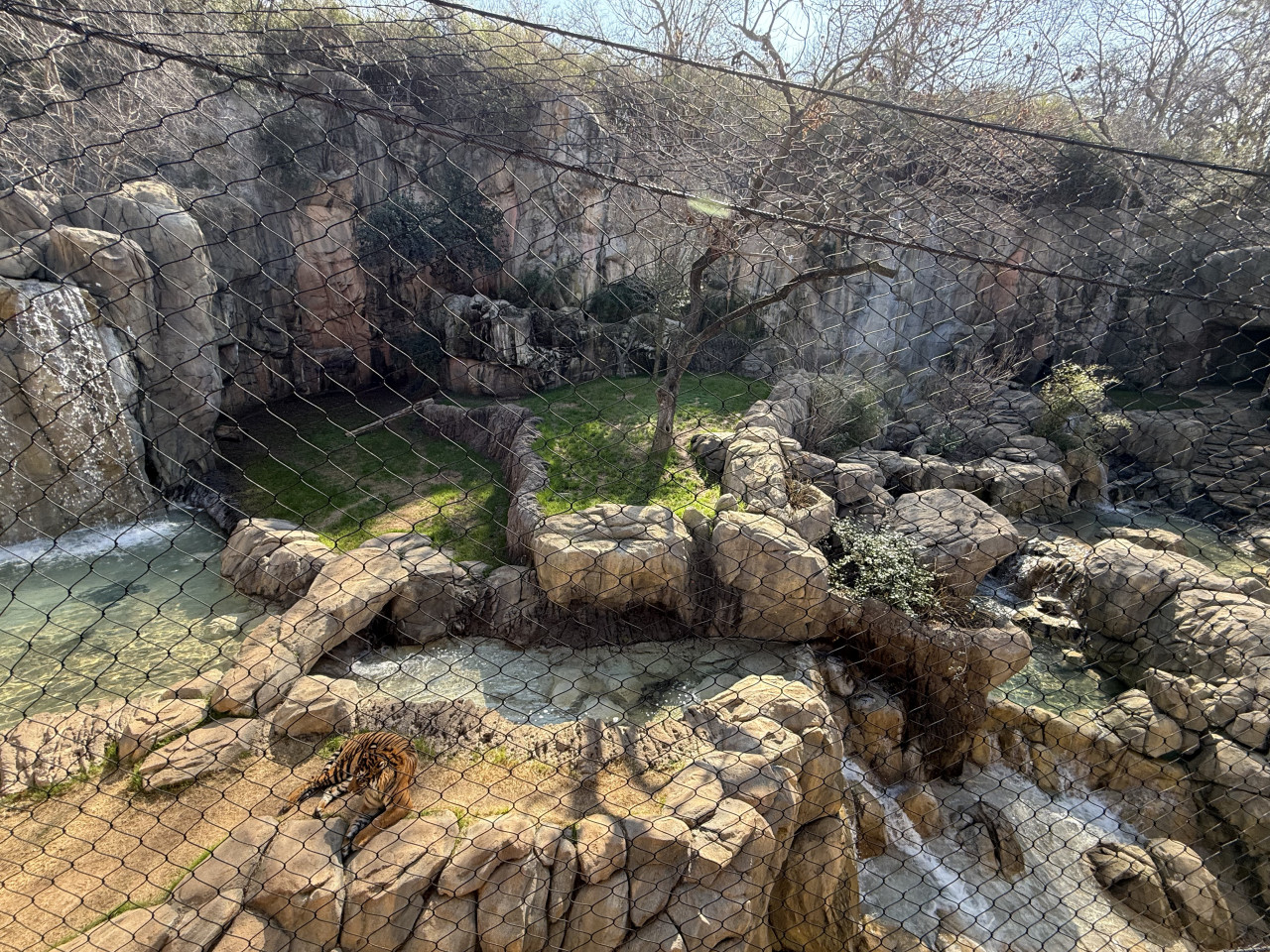
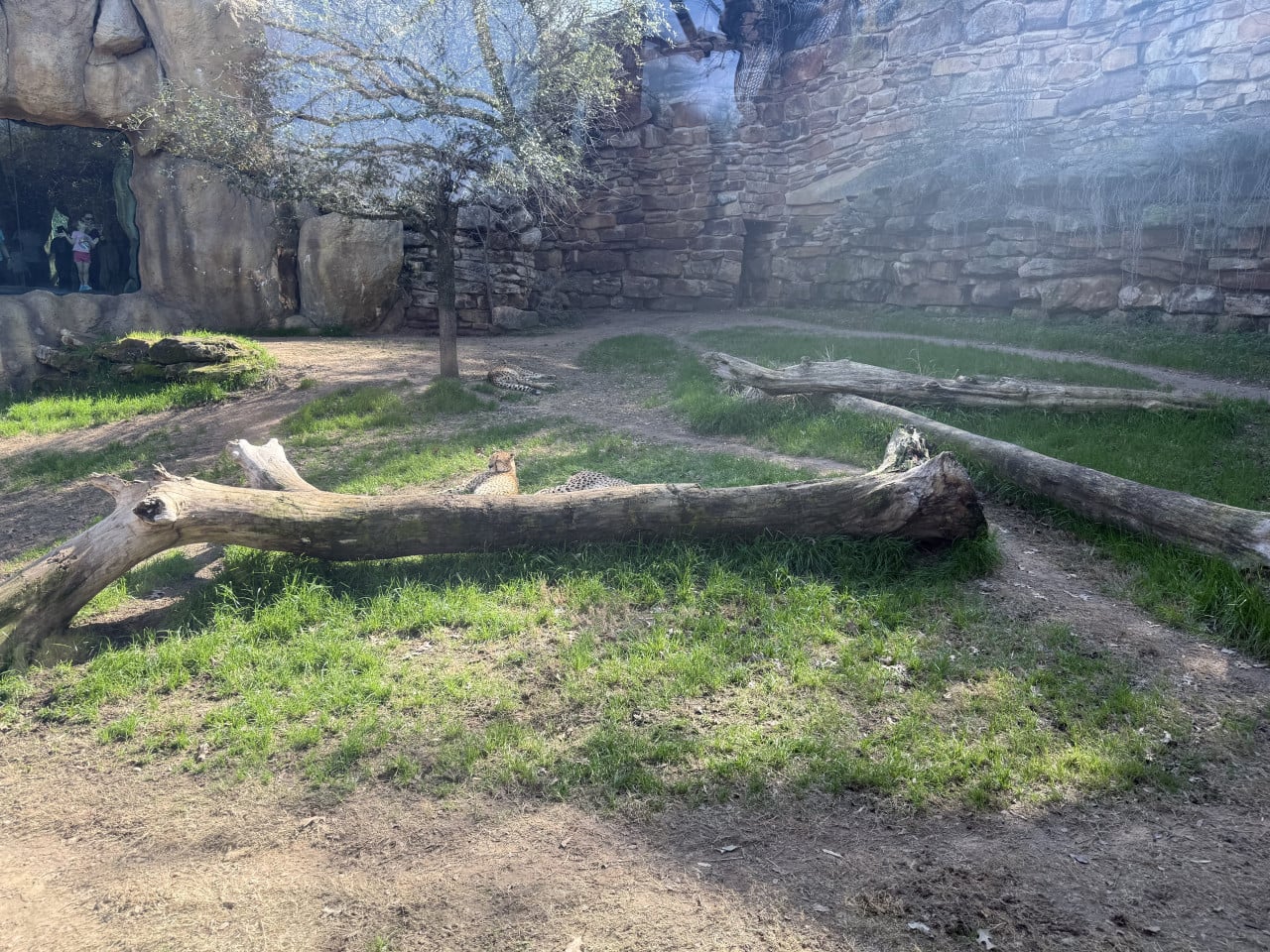
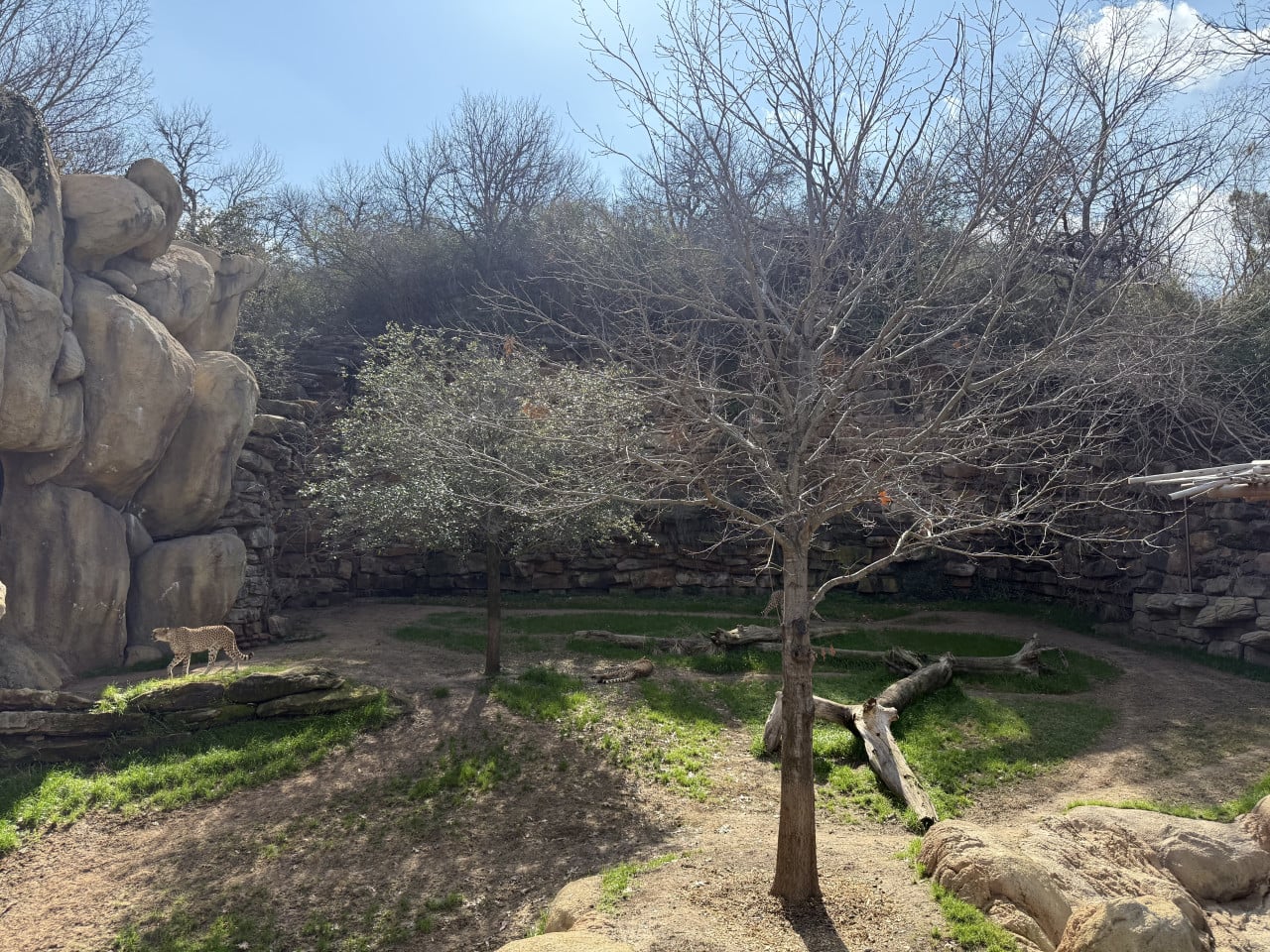
We also walked through the Predators of Asia & Africa section (opened in June 2023), which is home to Malayan tigers, African lions, cheetahs, and leopards. We saw a tiger from the viewing platform above the enclosure as it was walking by the water.
And I can't forget the flamingos and penguins—they are housed in an indoor pavilion, so you can also see them underwater.
Texas Wild!—a piece of the Wild West in the middle of the zoo
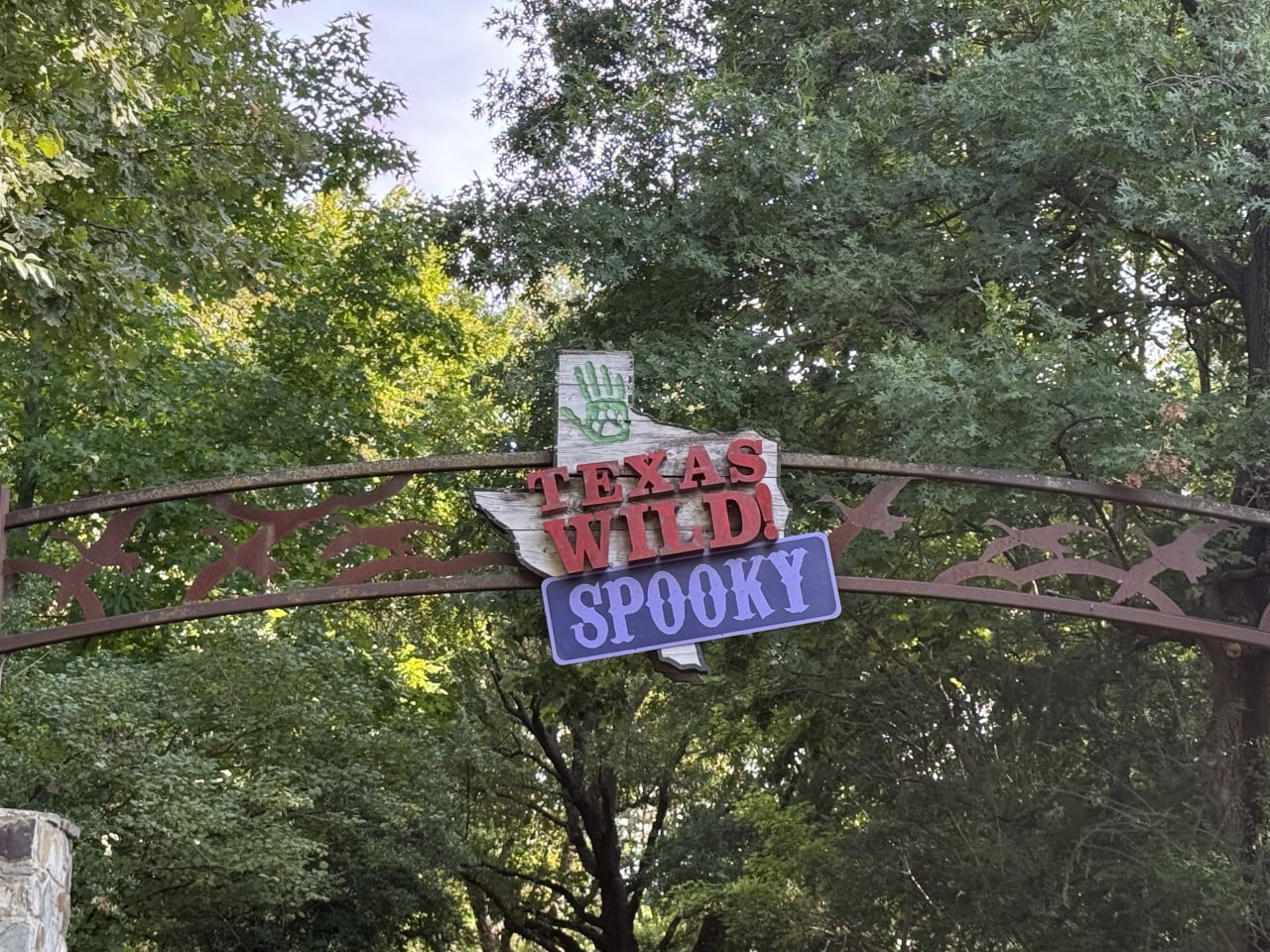
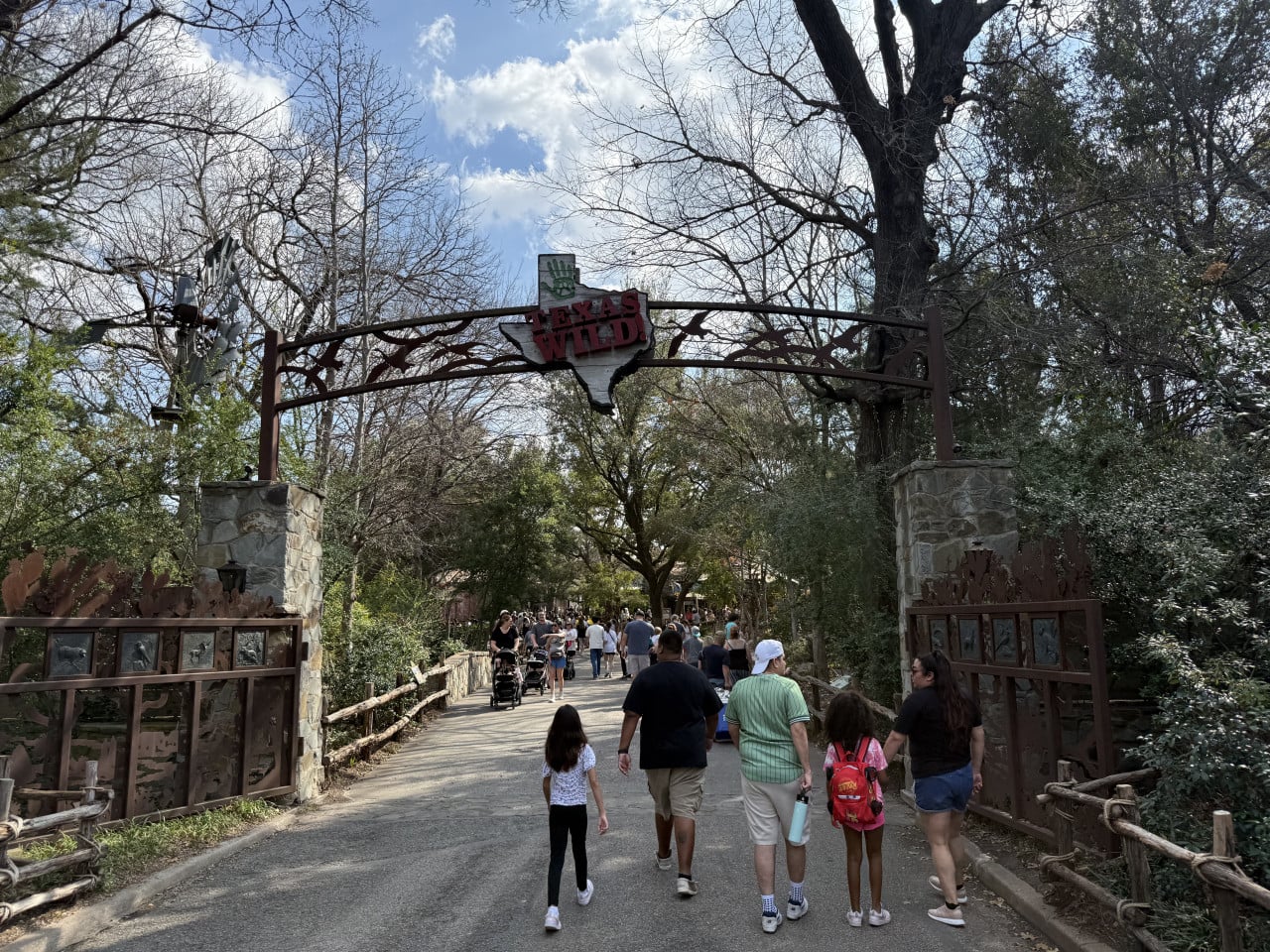
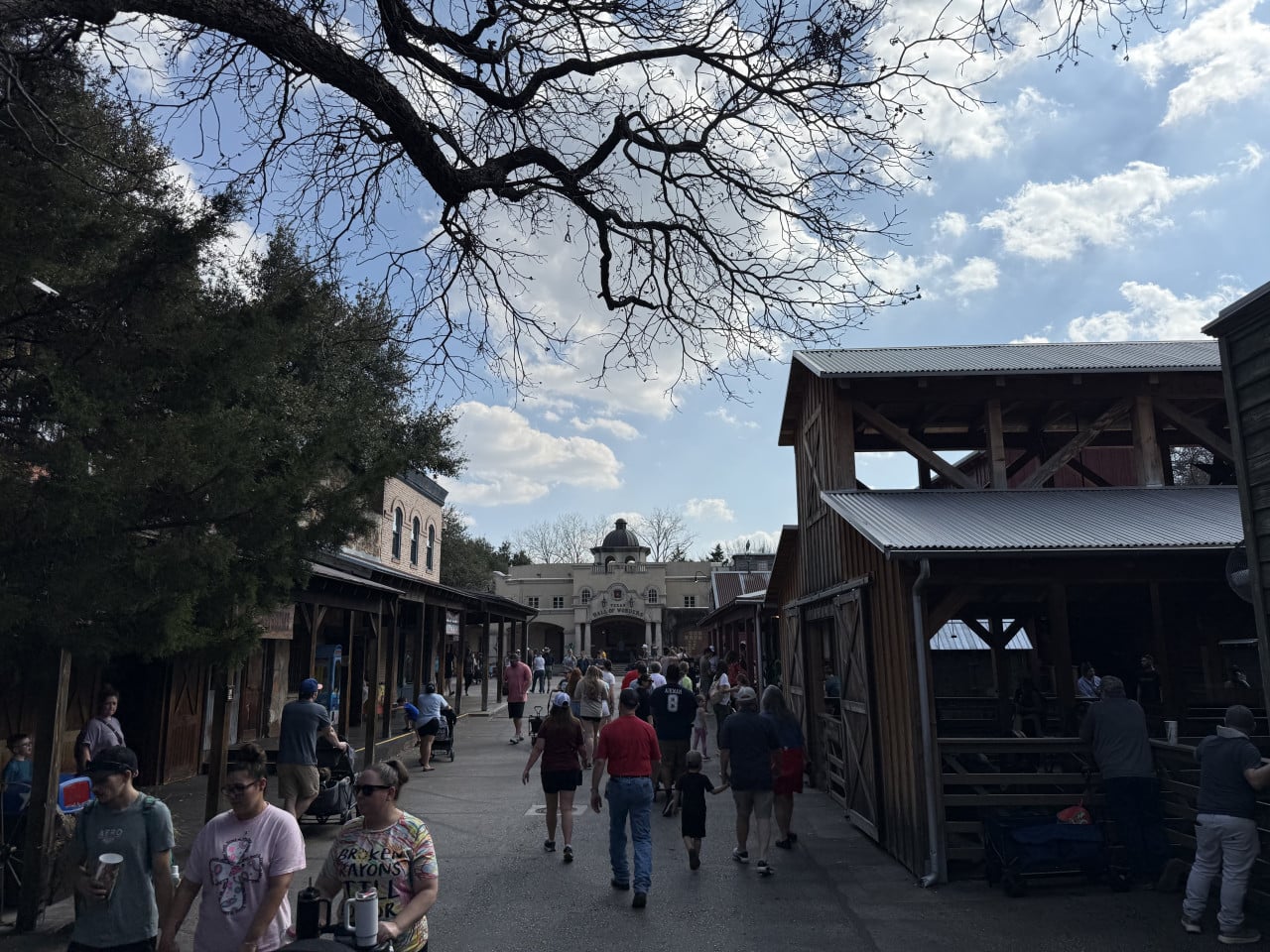
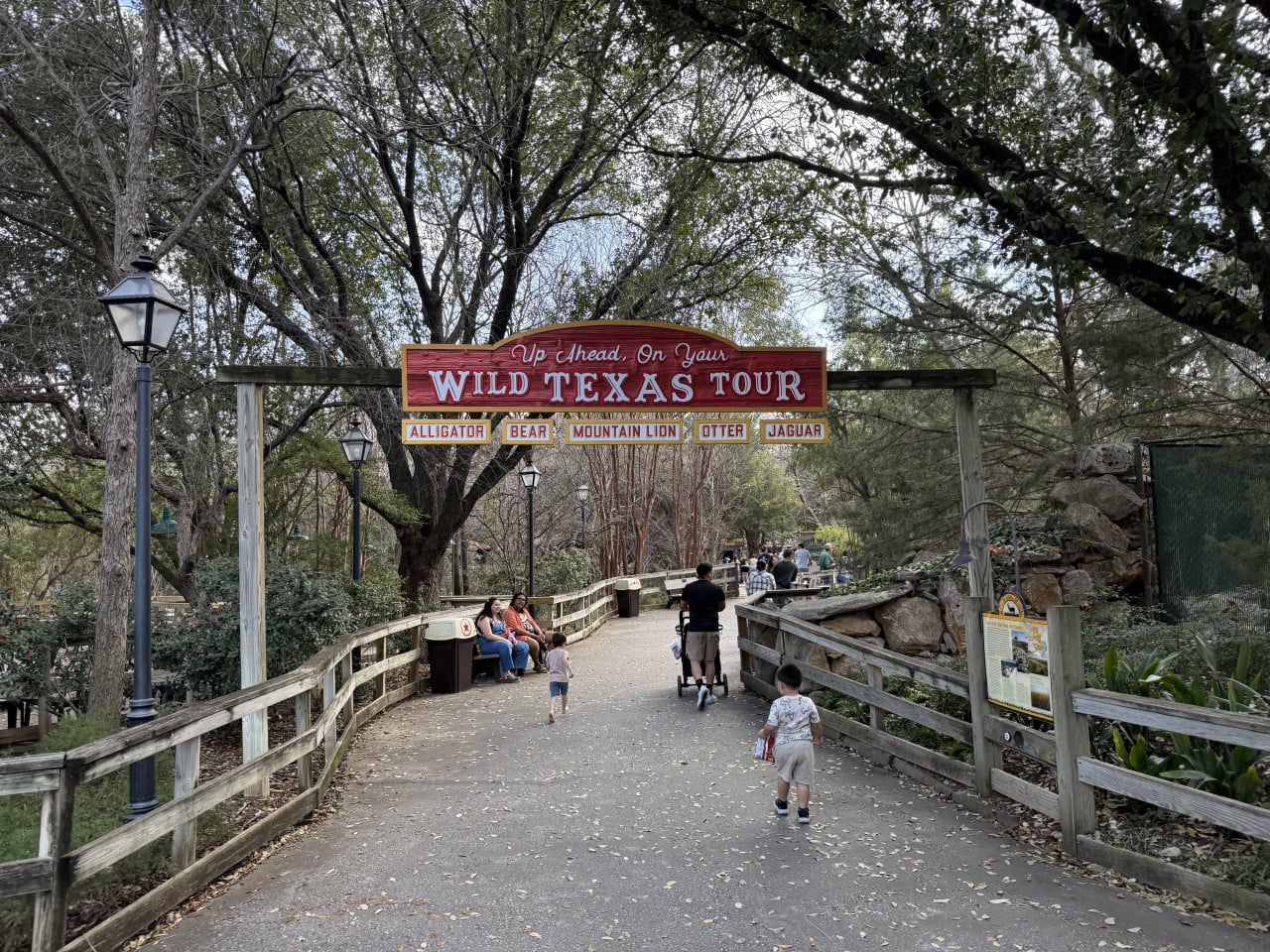
What I enjoyed most about Fort Worth Zoo, however, was the section called Texas Wild!. It opened in 2001 and is dedicated to native Texan wildlife and Wild West culture.
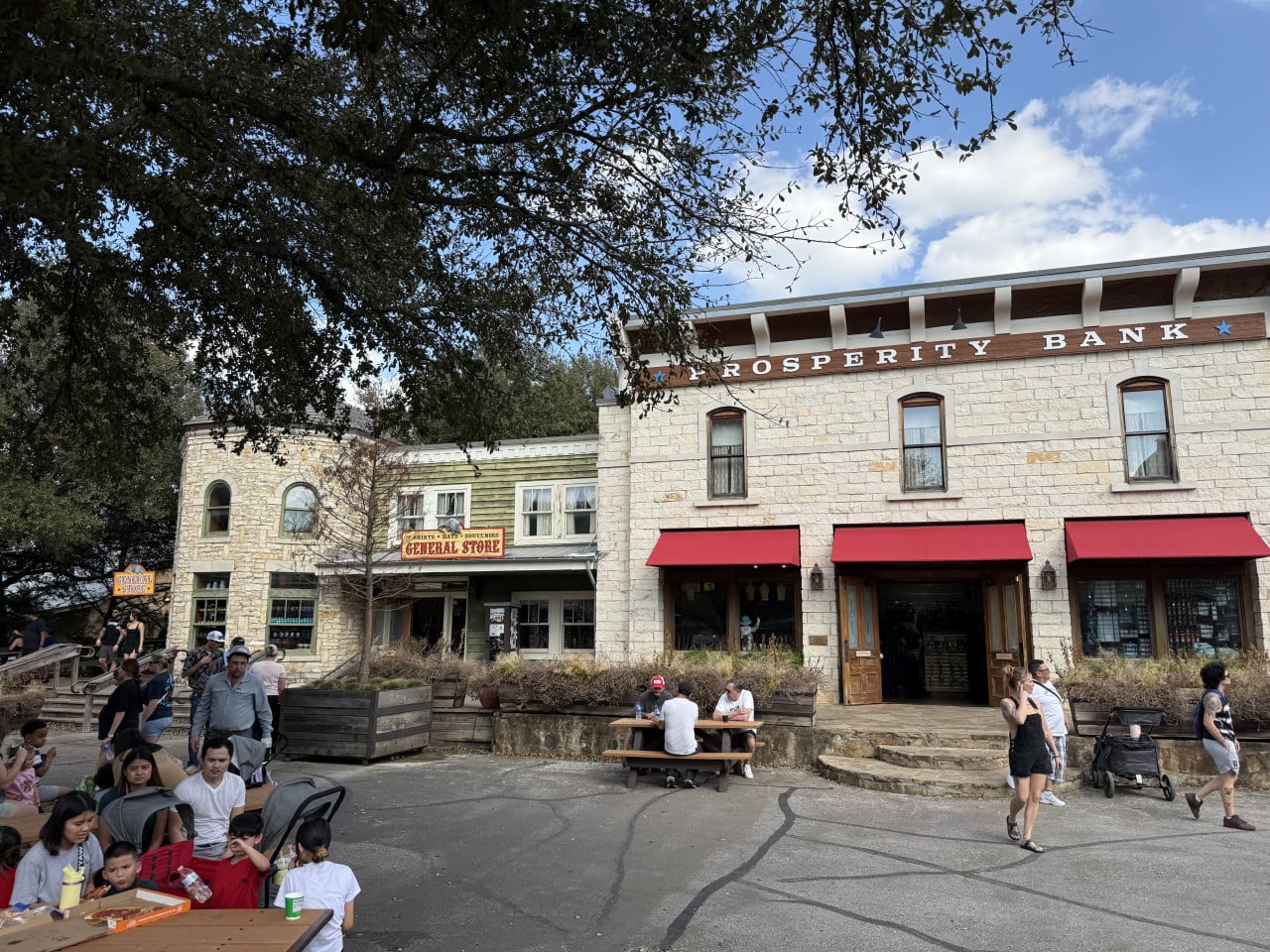
The entrance looks like a gateway to a Western town, and inside you will find a literal complete Western town called Texas Town. There is a General Store, Prosperity Bank, and everything is designed down to the smallest detail as if it came straight out of a Western.
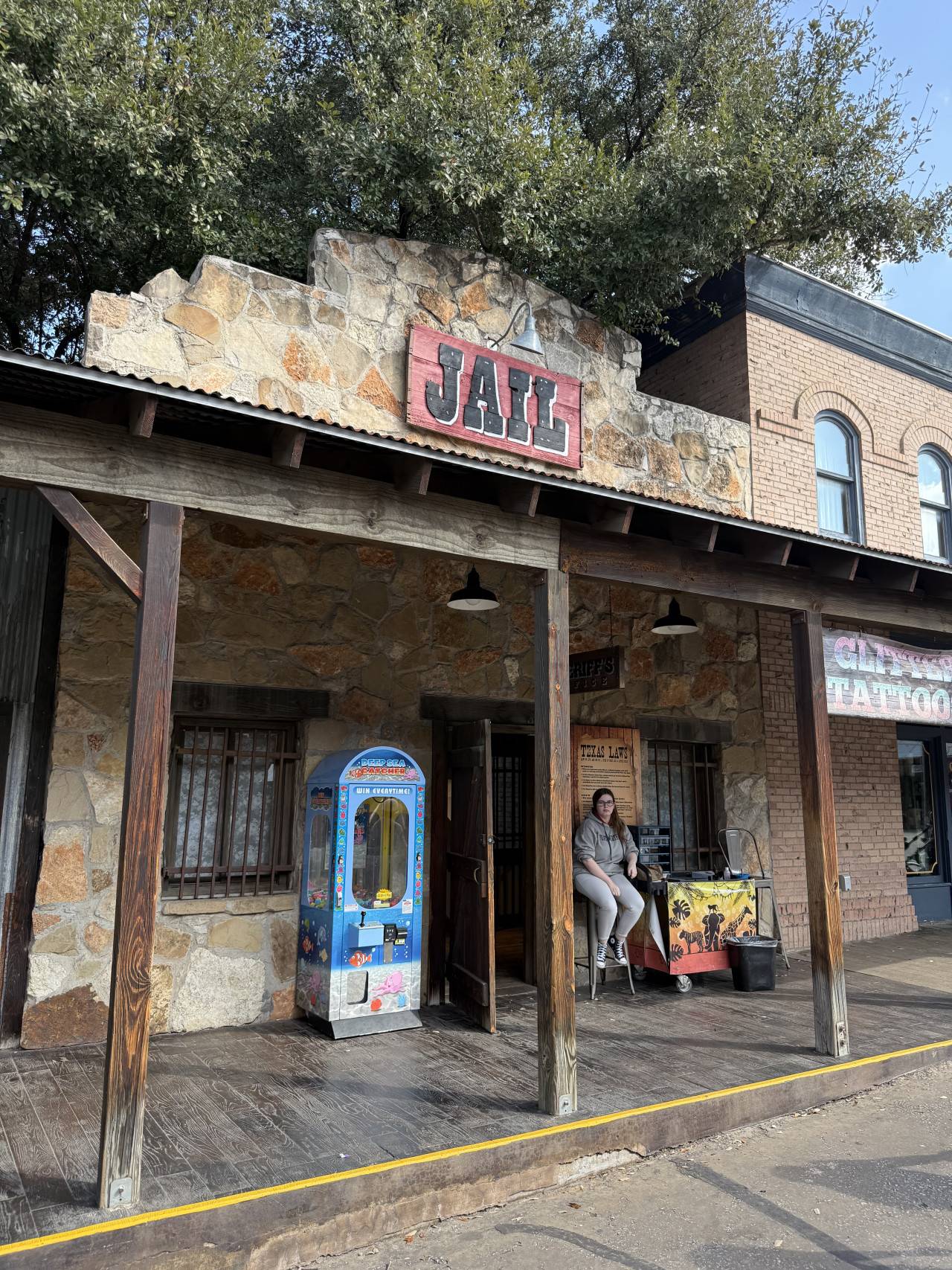
The JAIL is also great—a small stone jail that children can walk through. A female "sheriff" sits beside it, and there are interactive elements as well.
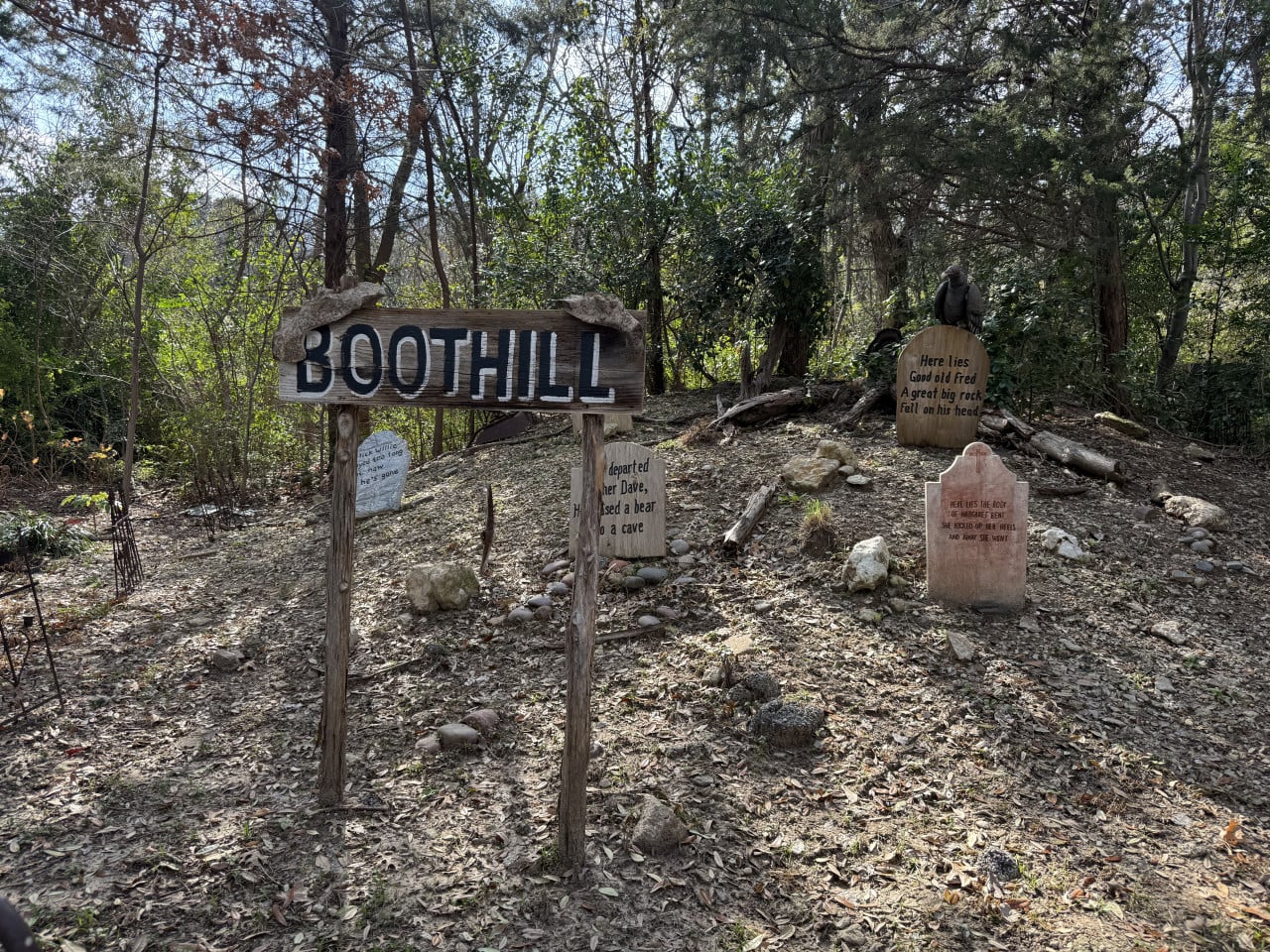
Right next to it is a parody cemetery called Boothill, with funny gravestones—for example, "Here lies Good old Fred, a great big rock fell on his head". The children have a good laugh, while adults can enjoy the lighthearted humor.
At Texas Wild!, of course, you will also see native Texan animals. In the individual zones, we came across:
-
alligators in the aquatic animals section,
-
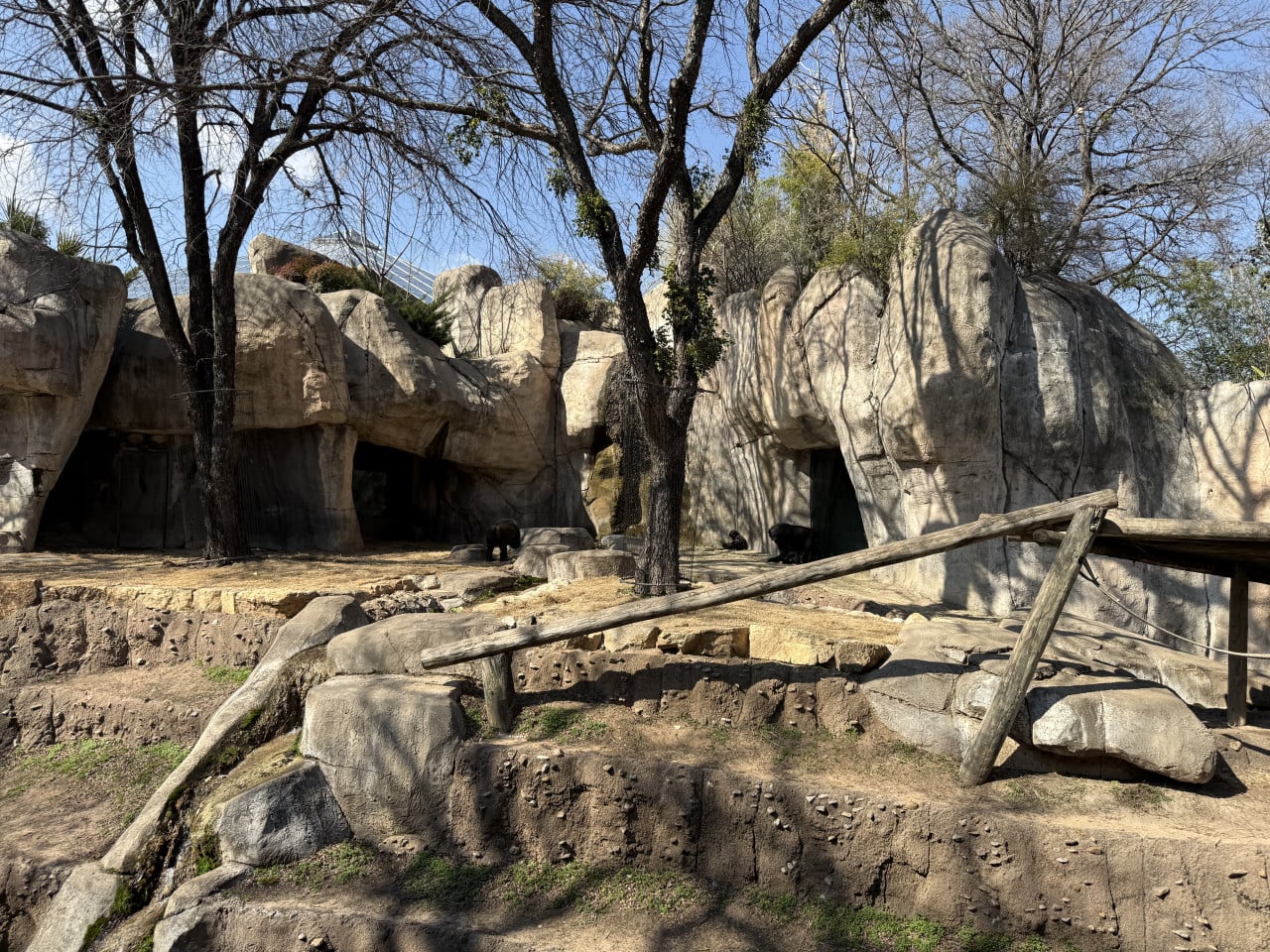
American black bears,
-
mountain lions / cougars,
-
river otters,
-
jaguars, ocelots, and bobcats,
-
coyotes and other Texas predators,
-
and in the High Plains and Prairies section, prairie dogs, foxes, great horned owls, white-tailed deer, and wild turkeys.
Texas Hall of Wonders and the interactive children's center
As a dad, I was really impressed by this part of Fort Worth Zoo.
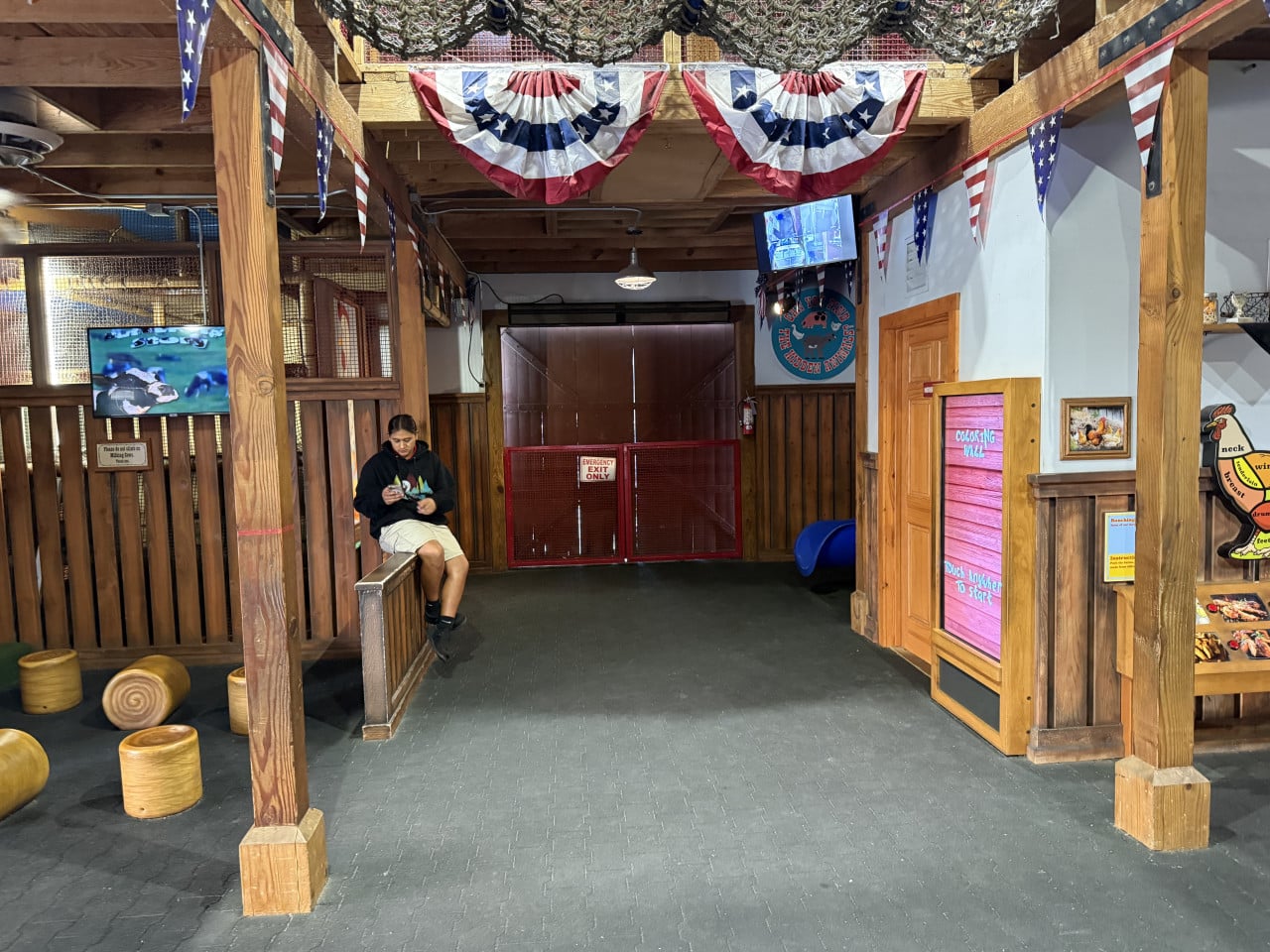
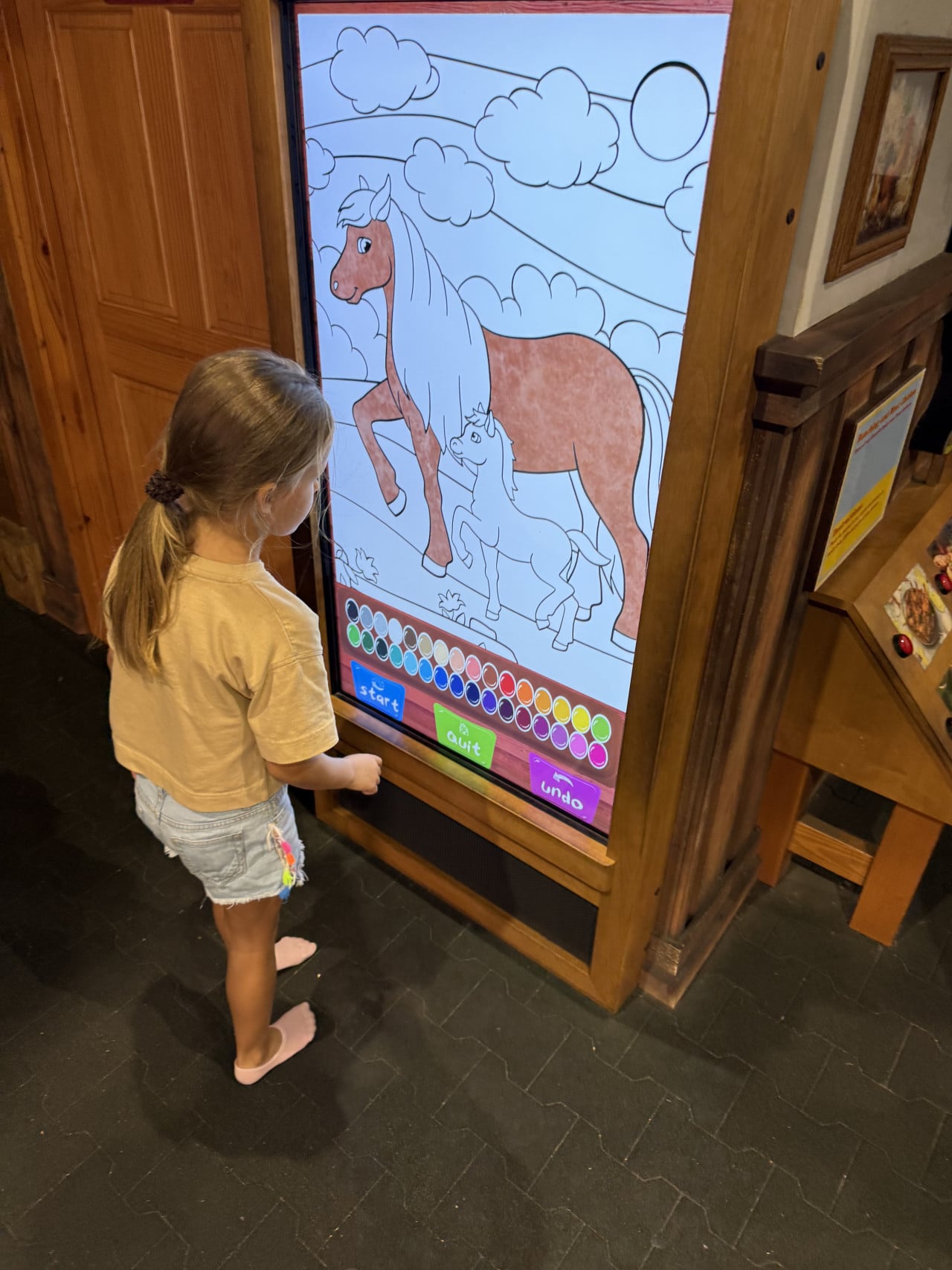
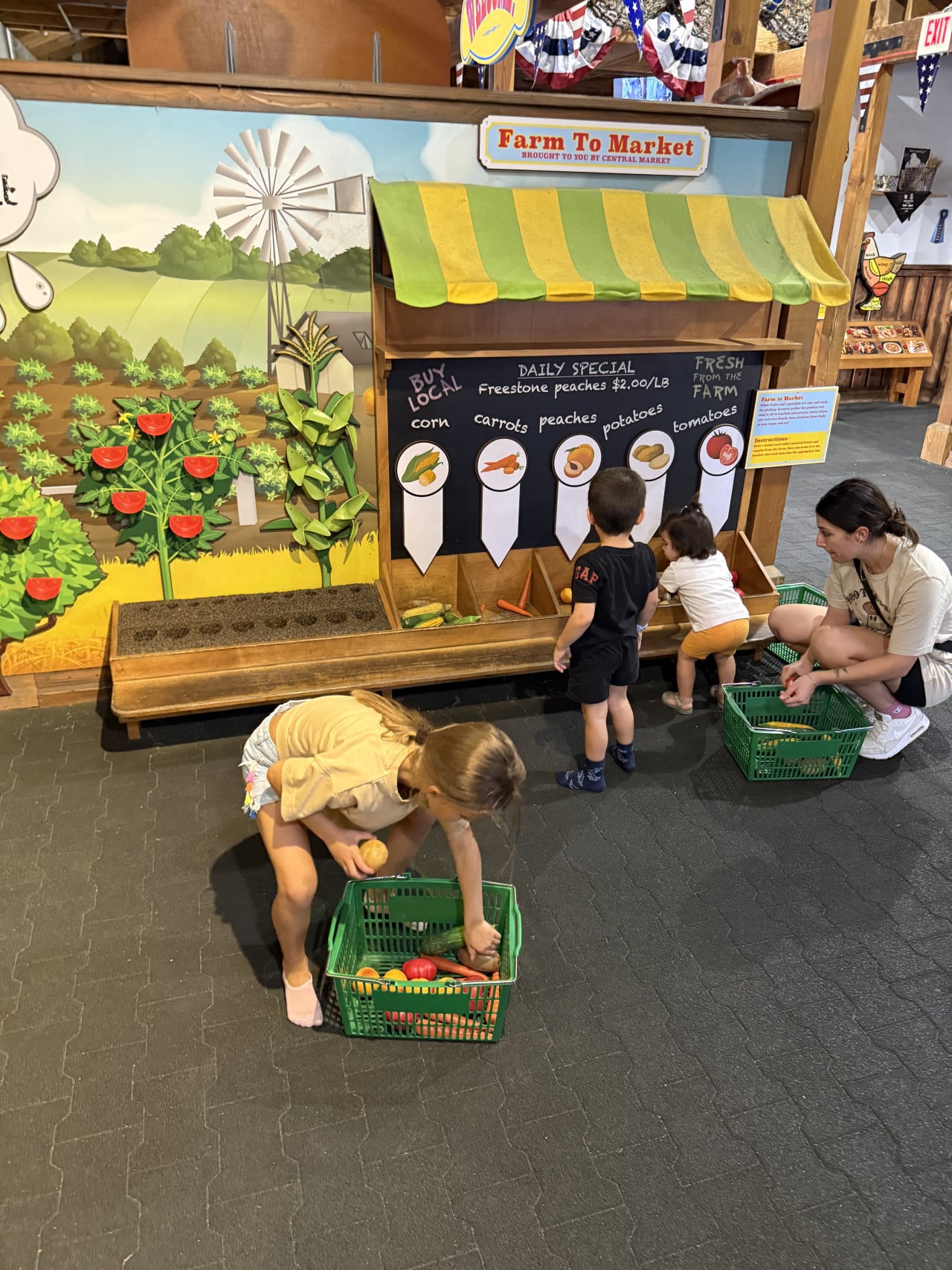
Texas Hall of Wonders is essentially an interactive children's town inside Texas Wild!. There are large touchscreens where children can, for example, color in an animal, learn about local wildlife, or play educational games.
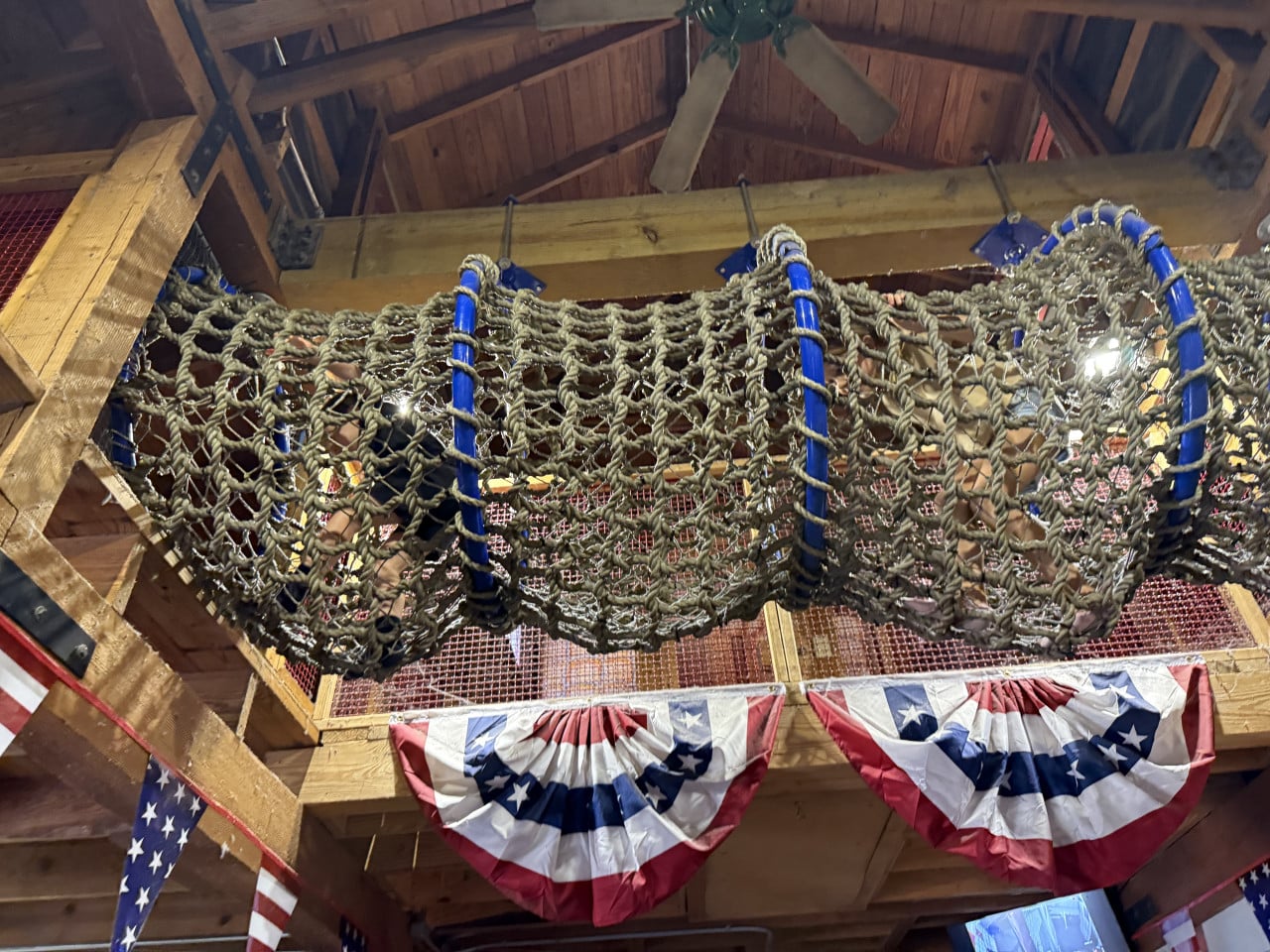
I also have to mention the PlayBarn—essentially a small covered "barn with climbing structures." So there is plenty of space for children to burn off energy. They can climb up and down, crawl through nets, and slide. And the best part is the camera system installed there.
There are cameras throughout the climbing structures, and you can see footage from the individual areas on large screens downstairs. So as a parent, you don't have to climb through the play structure with your child—you can sit comfortably downstairs and use the cameras to watch where your little one is climbing and make sure they haven't wandered off somewhere, which is especially useful when there are lots of children there.
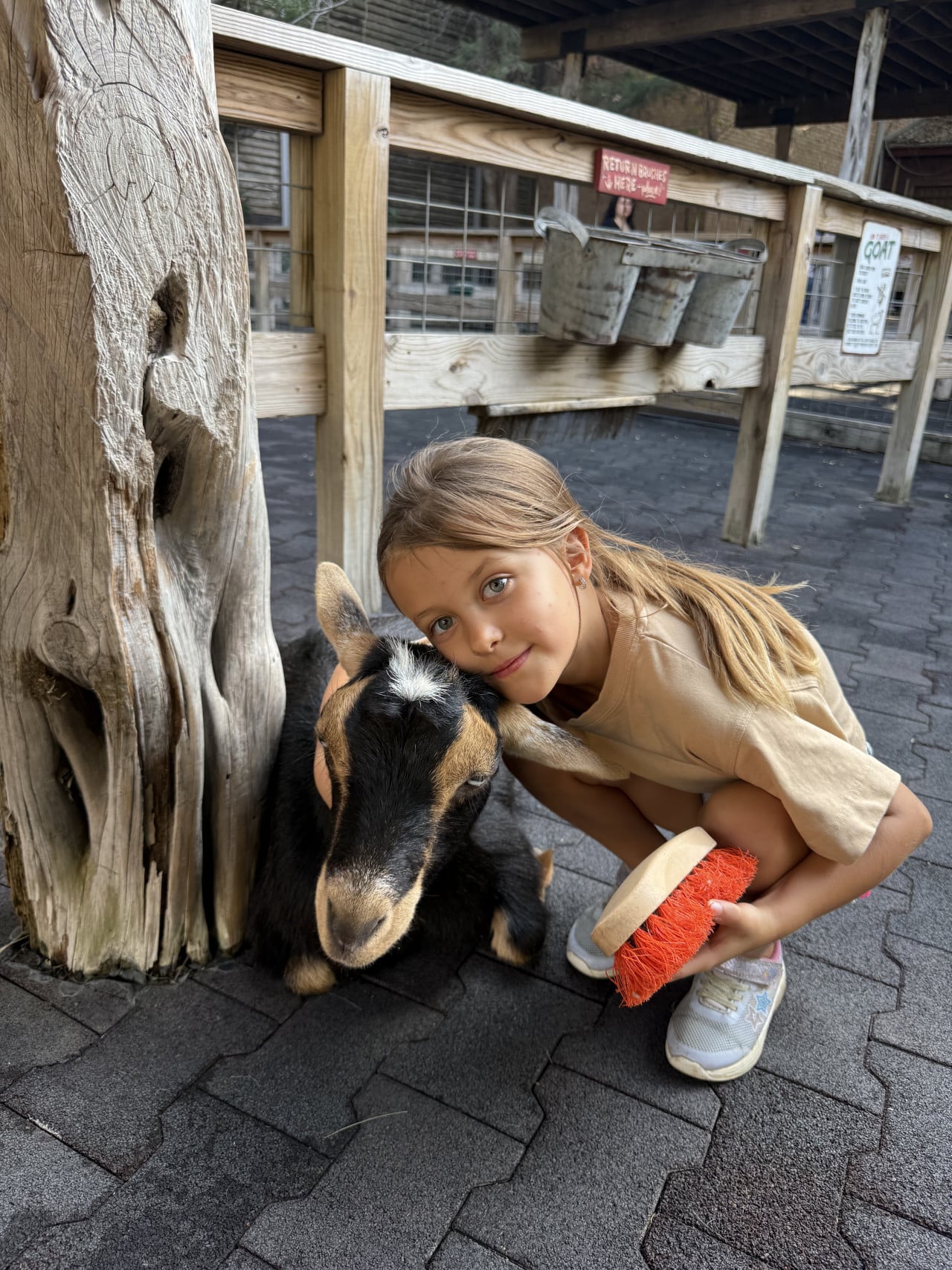
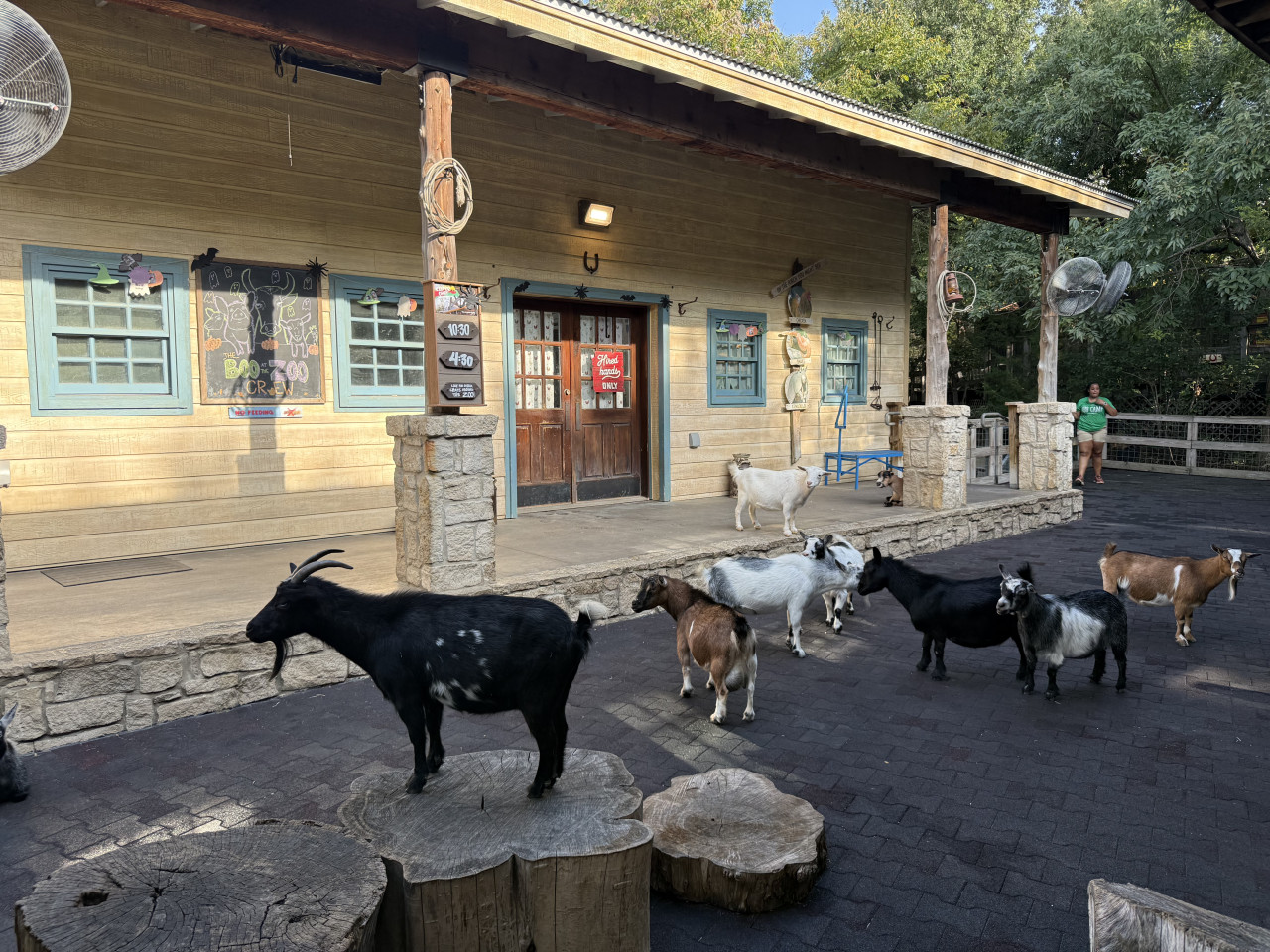
Petting Corral— a yard where children can cuddle goats
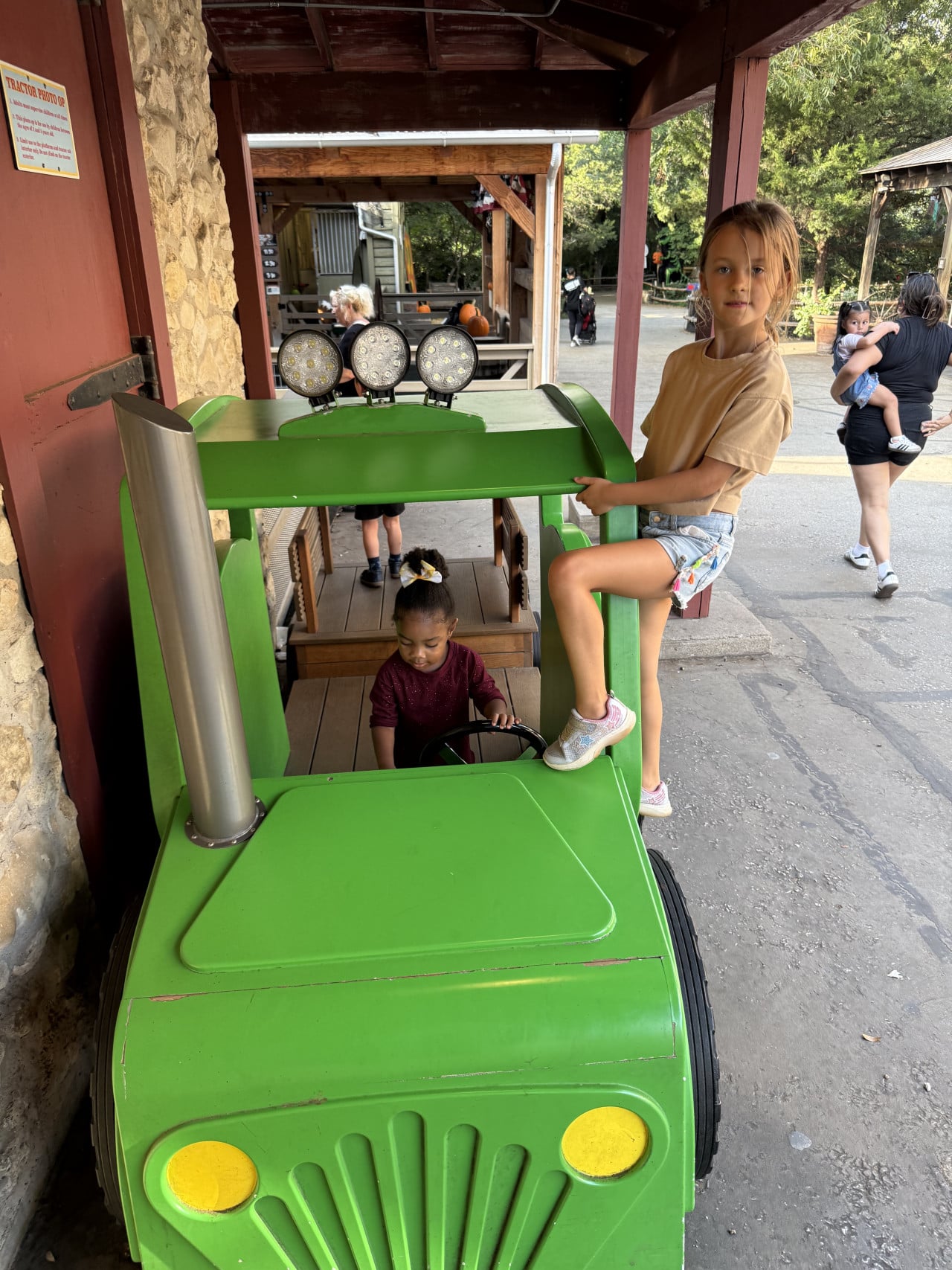
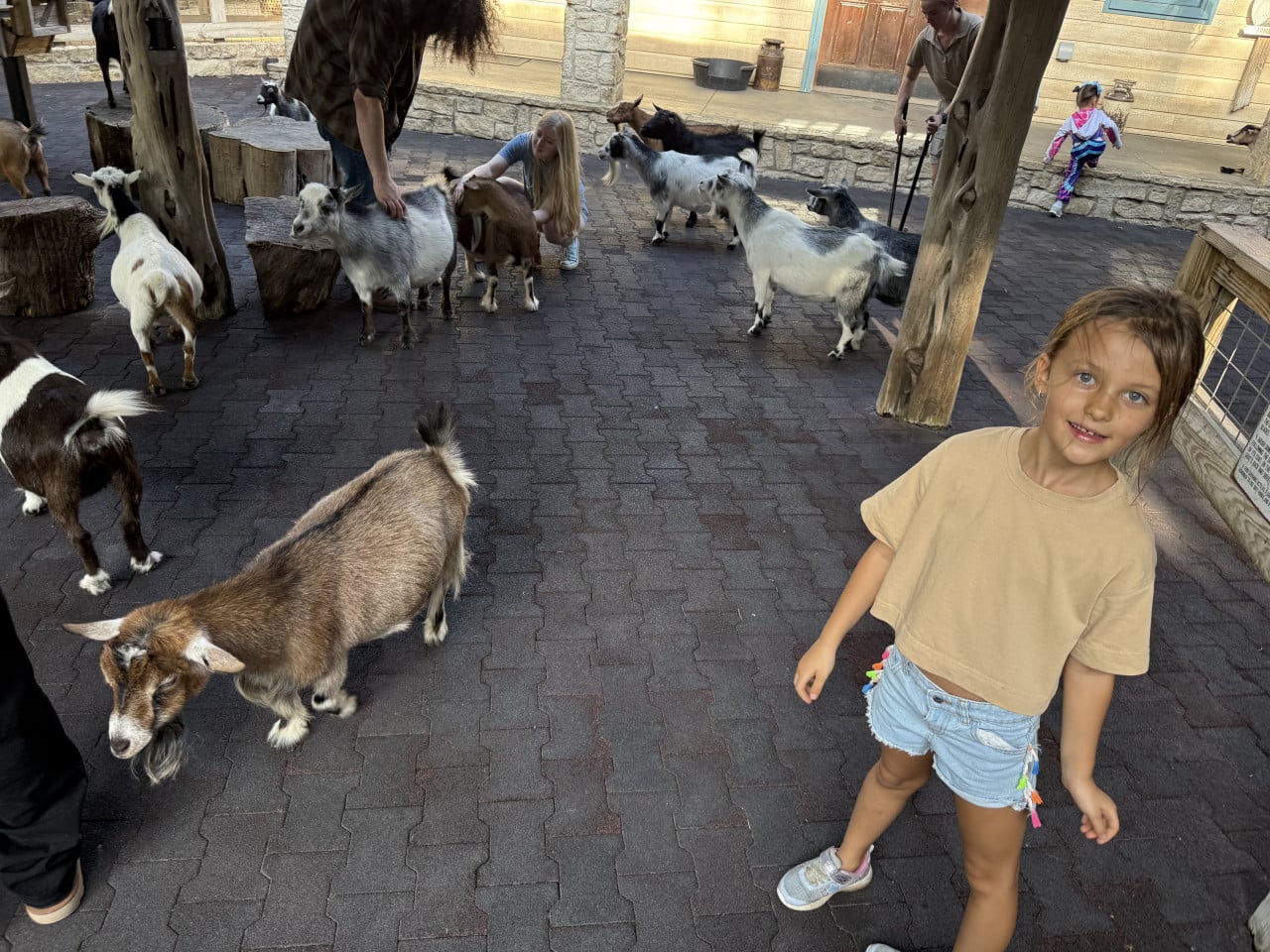
Right next to the entrance to Texas Wild! is the Petting Corral—a yard with domestic animals that children can enter. Goats, chickens, turtles, and other animals that enjoy human contact live here.
Children can take a brush and groom the goats, pet them, and feed them. It is an incredible experience for children—to approach a live animal, touch it, and see it up close.
I recommend allowing extra time here—children usually don't want to leave.
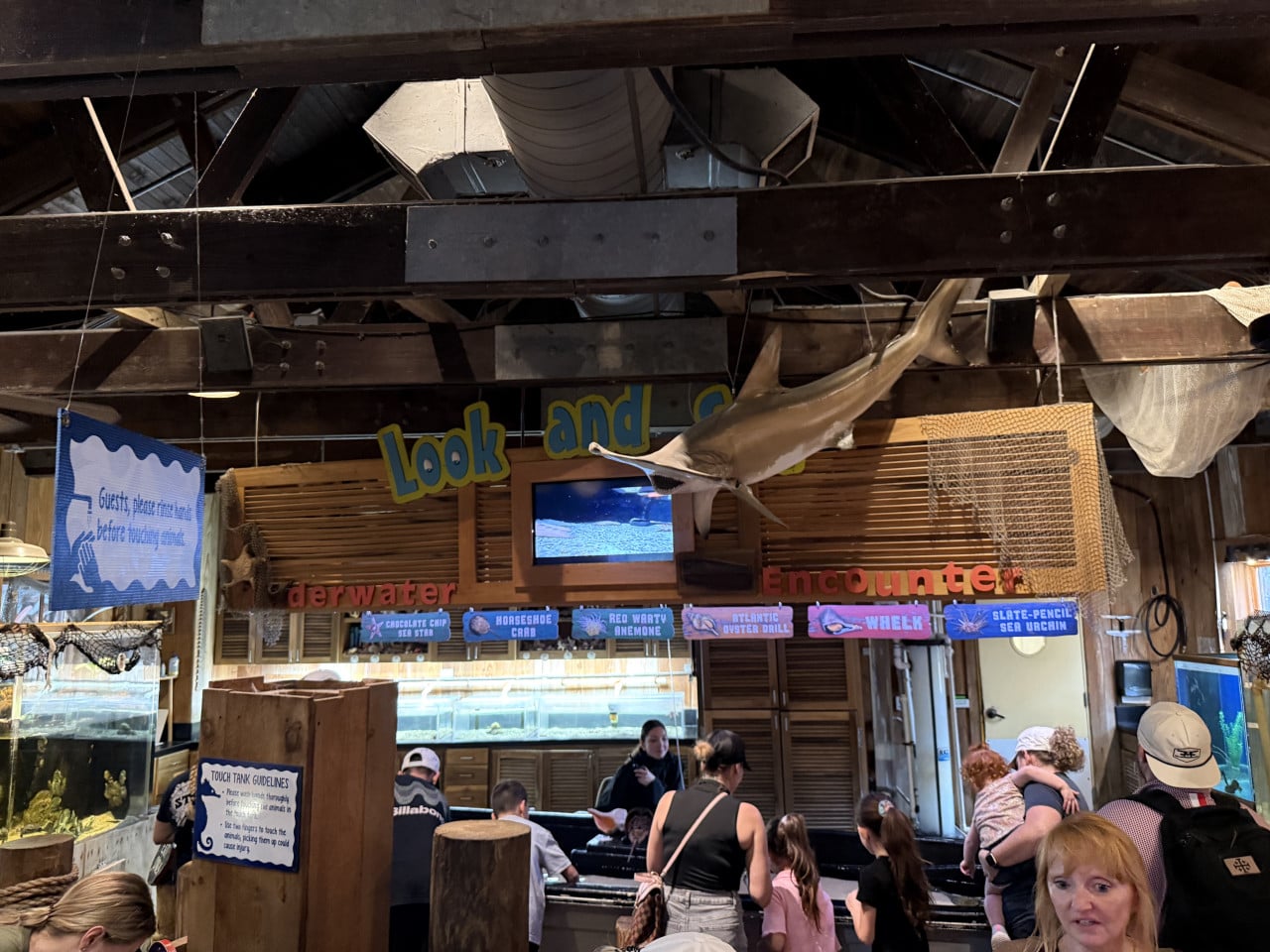
Look and Encounter—an aquarium beneath a hammerhead
Before leaving Texas Wild!, we came across another interesting exhibit called Look and Encounter
A preserved hammerhead shark hangs above the entire space, creating an impressive centerpiece for the exhibit.
Food and drinks at the zoo
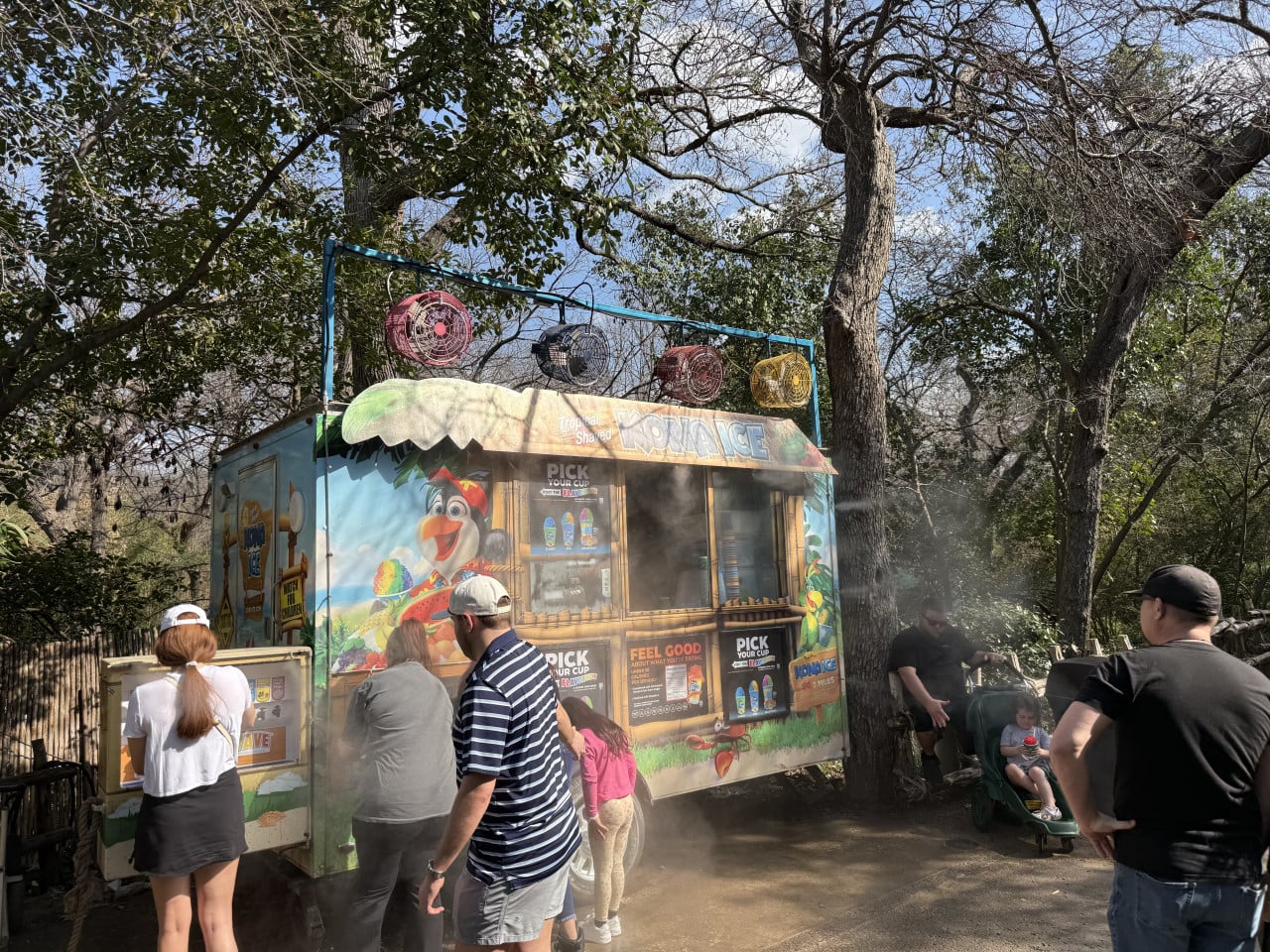
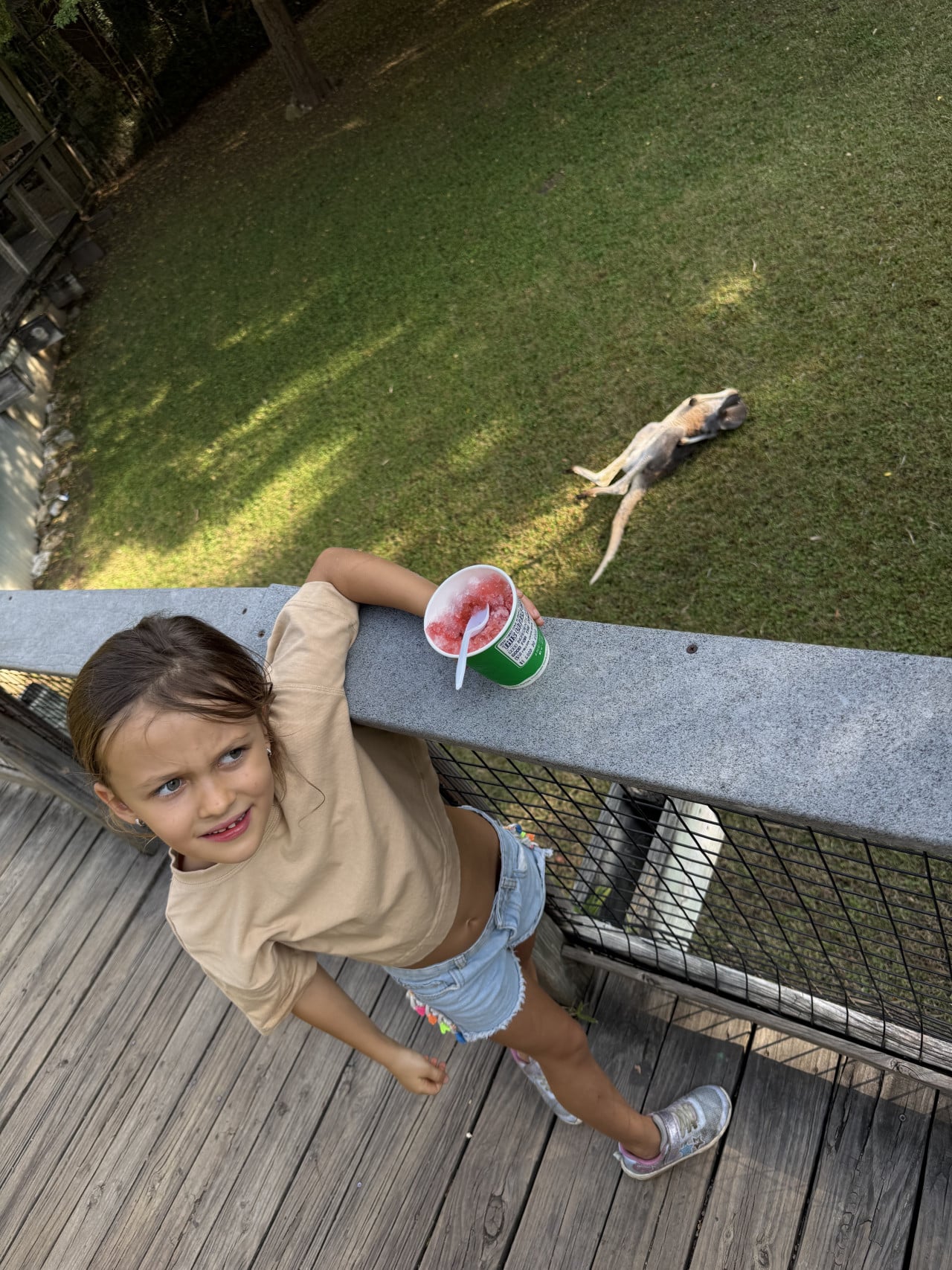
After walking for hours in the Texas sun, sooner or later you will get hungry or thirsty. You can choose from various food trucks and stands located throughout the zoo—we took a short break at the Kona Ice stand, which serves icy fruit drinks, and misting fans positioned along the paths help combat the heat.
A walk around the "primate lagoon"
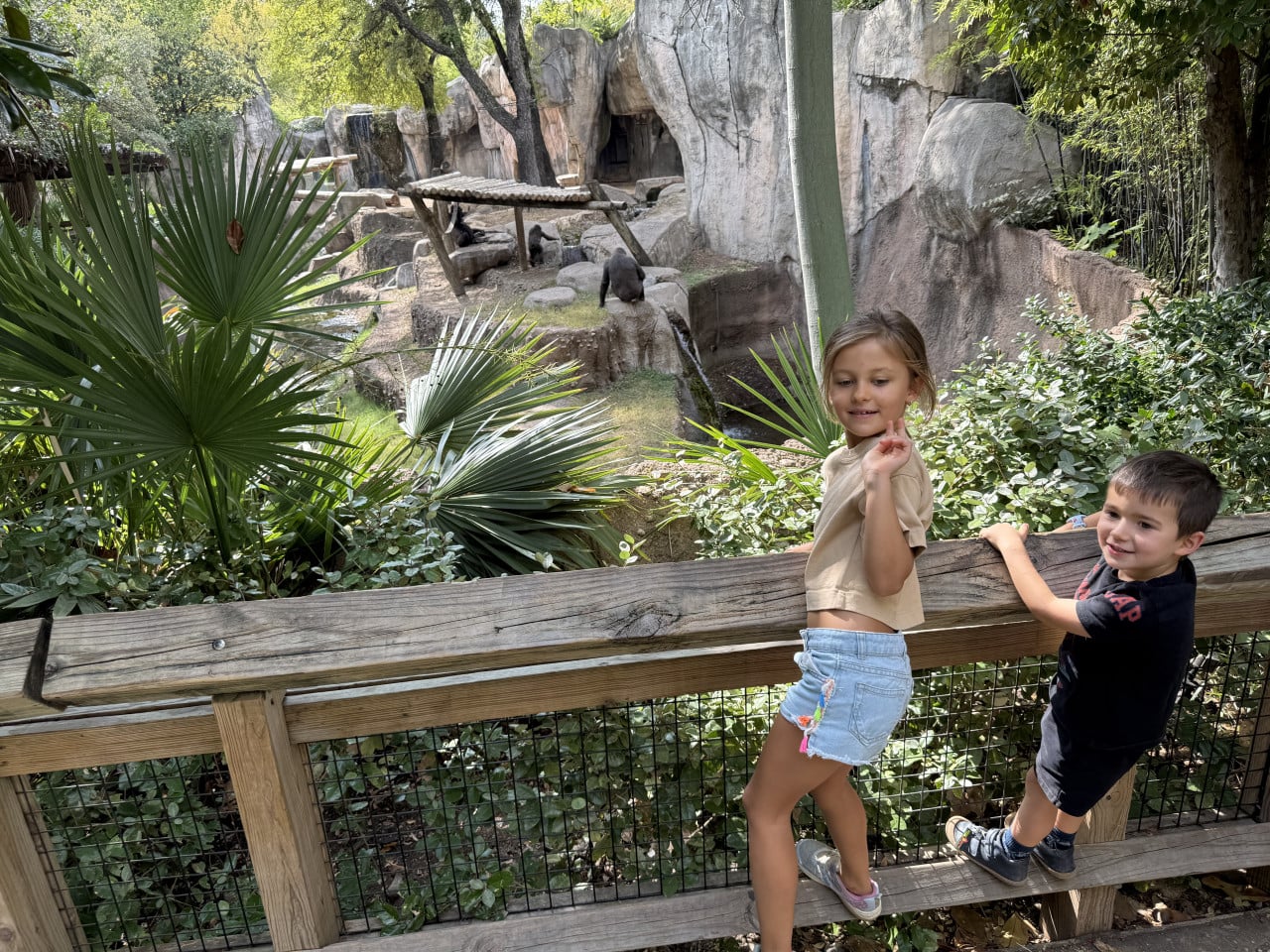
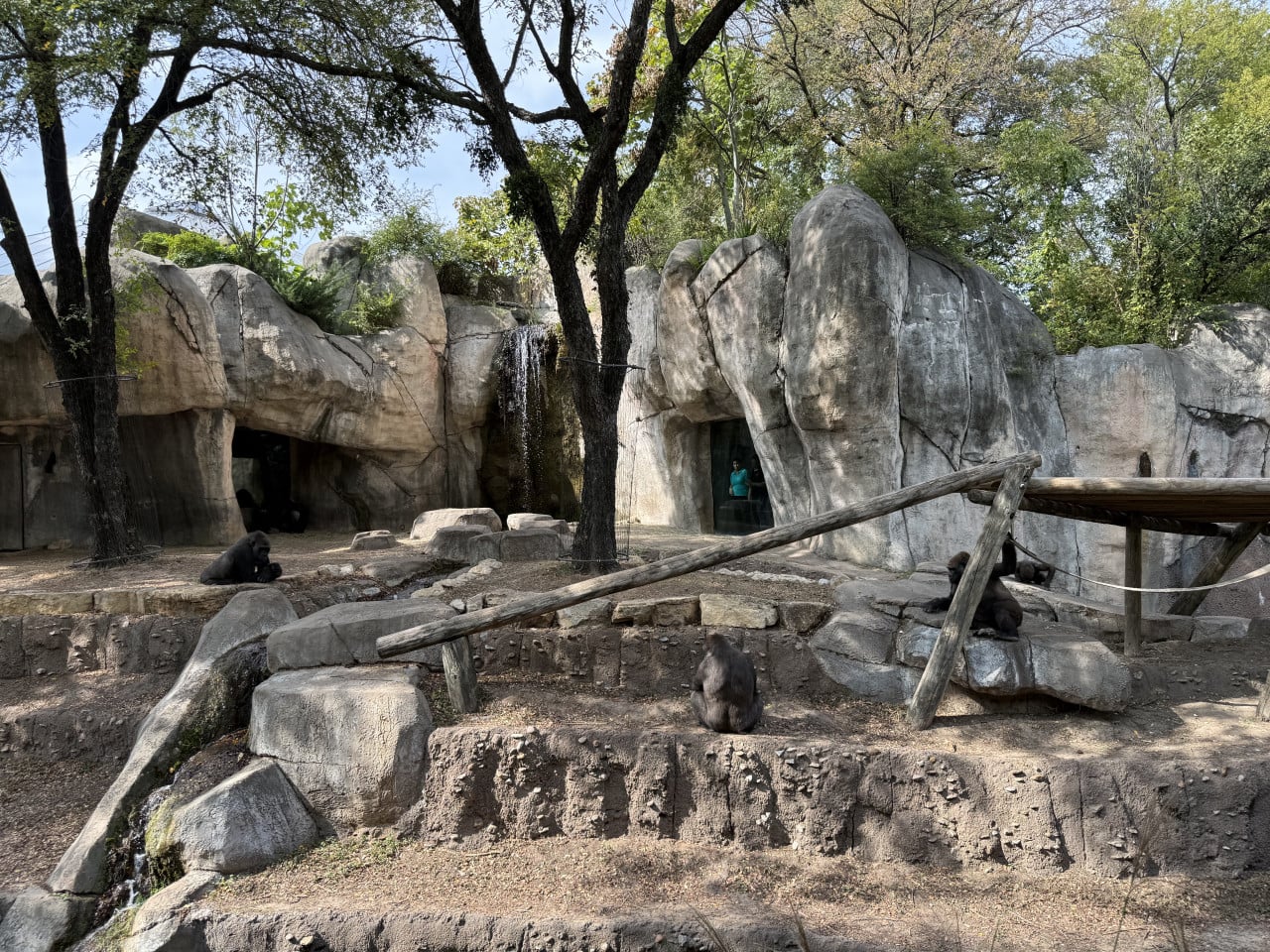
Along the way, we also passed the primate enclosures, where I appreciated how beautifully they had been designed. Rocks, trees, water—it was clear that attention had been paid to every detail.
The World of Primates section opened back in 1992 and is home to all four species of great apes—western lowland gorillas, Sumatran orangutans, mandrills, and the aforementioned bonobos.
Practical tips for your visit
A few things you should know before you go:
-
The zoo is open 365 days a year. During the main season (March–September), it is open from 10:00 a.m. to 5:00 p.m., and until 6:00 p.m. on weekends. During the winter season, it closes at 4:00 p.m.
-
Wednesday = half-price admission. If that day works for you, you can save some money.
-
Parking is $5 per car (free for members).
-
You may bring your own food and drinks—so feel free to pack snacks and water; you will save money and won't have to eat “junk food”.
-
Bring comfortable shoes and a baseball cap. The zoo covers approximately 40 hectares, and the Texas sun is intense even in October.
-
If you are traveling with younger children, plan for a full-day visit. The PlayBarn and Petting Corral can easily take up two hours.
Is Fort Worth Zoo worth visiting?
In short: definitely yes.
Fort Worth Zoo surprised me with its size, attention to detail, and overall quality. It isn't just an "ordinary zoo"—it is more like an adventure park that combines a traditional zoo visit with the Western atmosphere of Texas Wild!, interactive elements for children, and the renowned American standard of production.
If you are ever in the Dallas / Fort Worth area—whether for work, like us for the horse show, or on a trip—add Fort Worth Zoo to your itinerary. Ideally, set aside an entire day for it.
And if you are as lucky as we were and visit during the period leading up to Halloween, you will also get a dose of that typical American Halloween atmosphere, which complements the entire experience beautifully.