

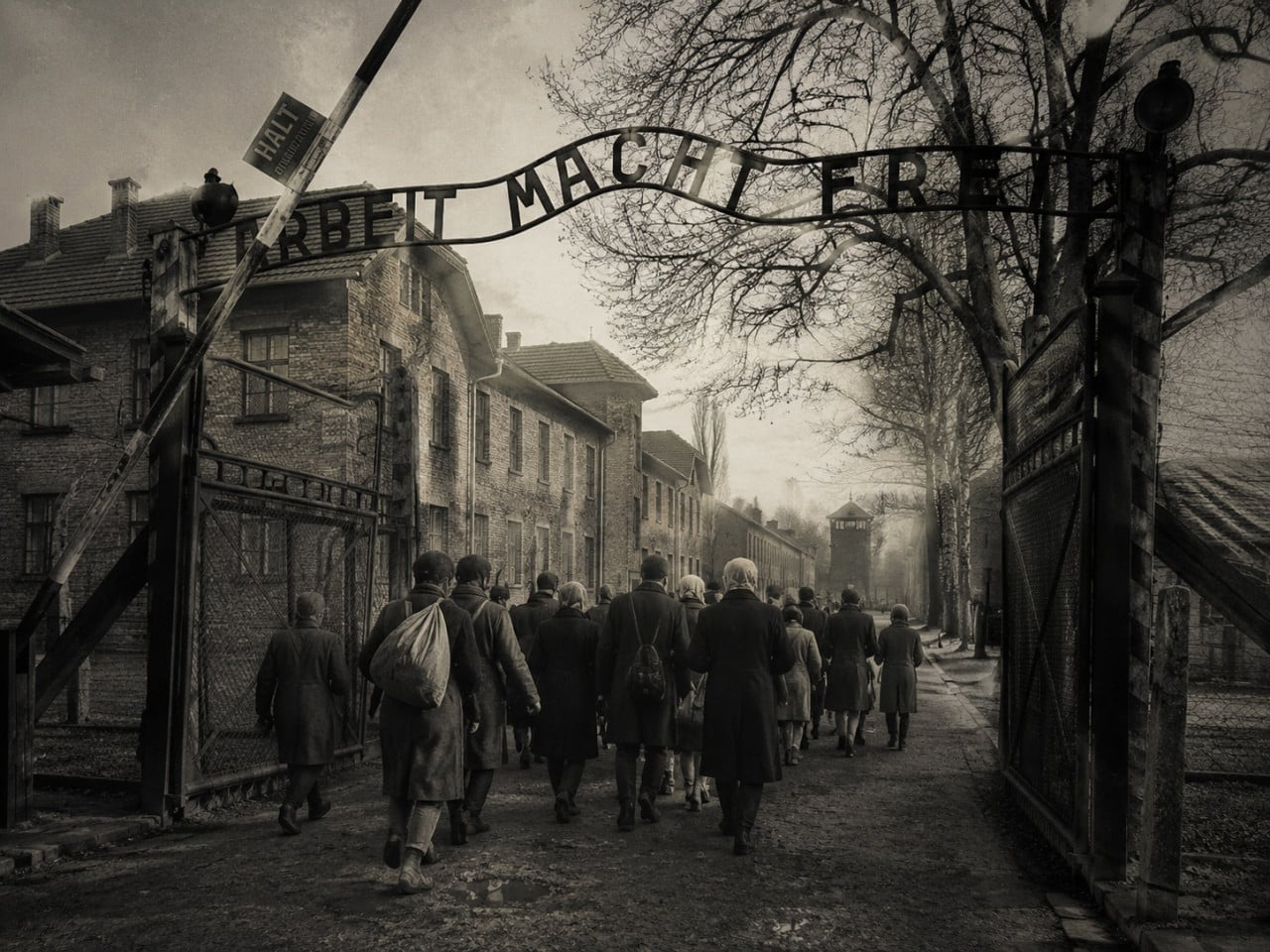
In the autumn of 2025, specifically in September, the guys and I set out for a place I had wanted to visit for a long time—the Auschwitz-Birkenau concentration and extermination camp in Oświęcim, Poland.
Honestly, I did not expect the visit to affect me so deeply. And to be even more honest—I did not expect it at all, but I experienced something there that I still cannot fully explain. I will get to that later, though.
In this article, I will share everything you should know about visiting Auschwitz—from practical tips and reservations to the history of the camp and my personal impressions. The places, stories, and photographs that affected me the most.
Before you go: booking a guide is absolutely essential
The first and most important piece of advice I would like to share is: book a guide well in advance. And I mean really far in advance.
We originally wanted to go in the summer, but we discovered that the summer season is extremely busy. There was literally nothing available in English—everything was booked weeks in advance. Without a reservation, they probably would not even have let us in because admission is strictly managed by their staff, and tours have precise allocated times.
Book your tickets and guide directly through the official Auschwitz-Birkenau Memorial website. You can choose a language—Polish, English, German, and others. If you do not speak Polish or German, English is your only sensible option. That is why we ultimately did not go until September, when things had calmed down a little.
A few useful tips:
-
Plan at least several weeks in advance, or preferably months during peak season.
-
Arrive at the site on time—no one will wait for you, and groups start promptly.
-
It is said—I read it online—that you may be able to visit without a ticket in the evening, but I am not certain about that. A guided tour is also an experience I recommend not missing.
A brief look at the history of Auschwitz
Before I share my own experiences, it is useful to know at least the basic context.
Auschwitz (Osvětim in Czech, Oświęcim in Polish) was the largest complex of Nazi concentration and extermination camps built by the Germans in occupied Poland during World War II. The camp was established on Heinrich Himmler's orders on April 27, 1940, on the grounds of former Polish artillery barracks. Rudolf Höss became its commandant.
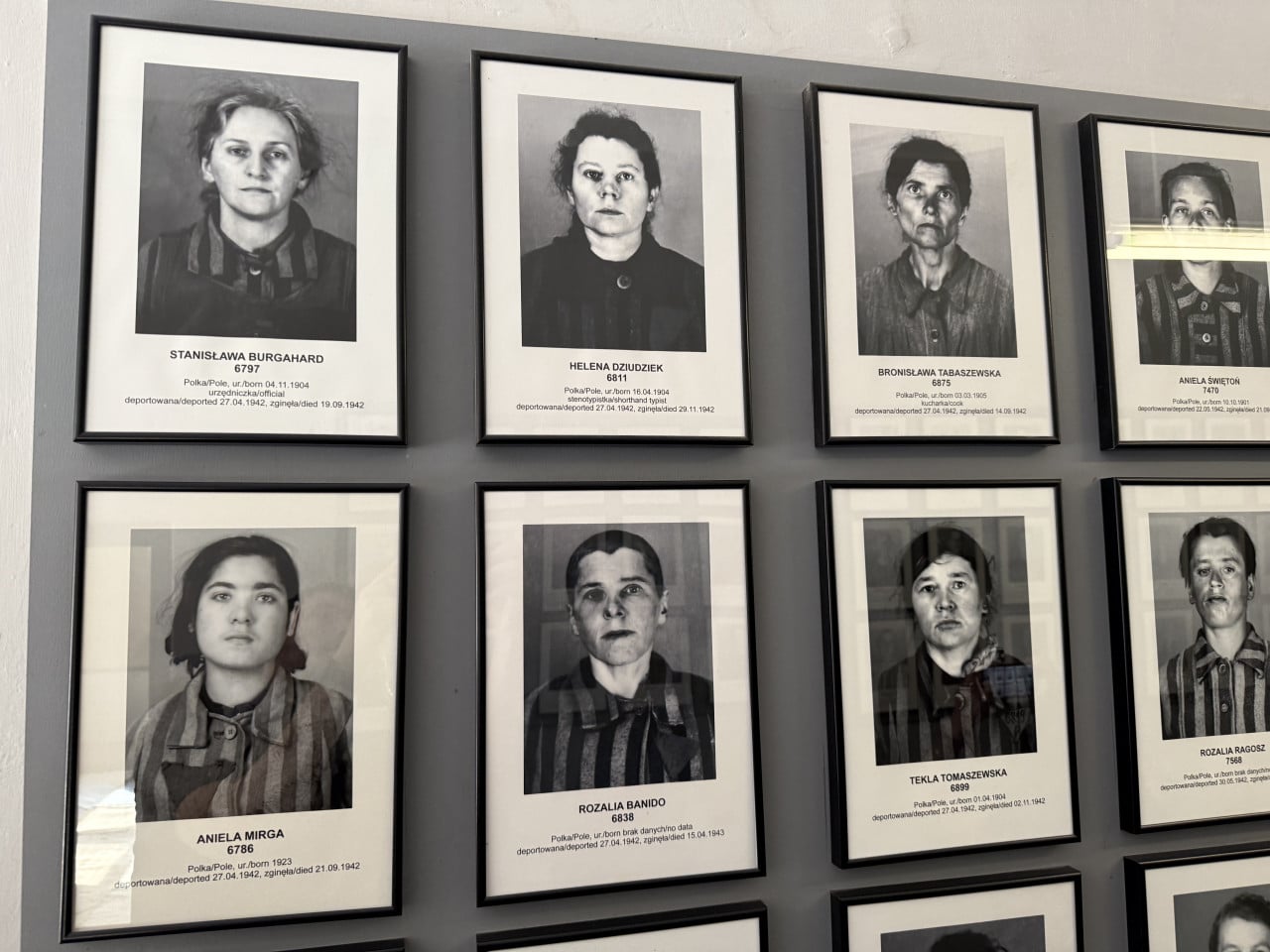
The first transport arrived on June 14, 1940—it consisted of 728 Polish political prisoners from Tarnów, including 20 people of Jewish origin. They were assigned camp numbers 31 to 758. Initially, the camp was intended primarily for Polish political prisoners, intellectuals, priests, and members of the resistance.
Over the years, the camp expanded, gradually developing into three main sections:
-
Auschwitz I—the original main camp, where the tour begins today. It serves as a museum with historical exhibitions.
-
Auschwitz II – Birkenau—a vast extermination camp built in 1941 on the site of the former village of Brzezinka, roughly 3 kilometers from Auschwitz I.
-
Auschwitz III – Monowitz—a labor camp where prisoners were forced to work for the chemical conglomerate IG Farben.
In addition, approximately 45 satellite camps operated in which prisoners were exploited as slaves by German companies.
How many people Auschwitz consumed
The figures commonly cited are so horrifying that they are difficult to comprehend. According to current historical estimates, at least 1.3 million people were deported to Auschwitz, including:
-
1,100,000 Jews
-
140,000–150,000 Poles
-
23,000 Roma
-
15,000 Soviet prisoners of war
-
25,000 prisoners of other nationalities
Of these, approximately 1,100,000 people died at Auschwitz. Roughly 90% of the victims were Jews, most of whom were murdered in the gas chambers. The camp was liberated by Red Army soldiers on January 27, 1945. By then, only around 7,650 prisoners remained, mostly the weakest and sickest, whom the Nazis had not managed to evacuate.
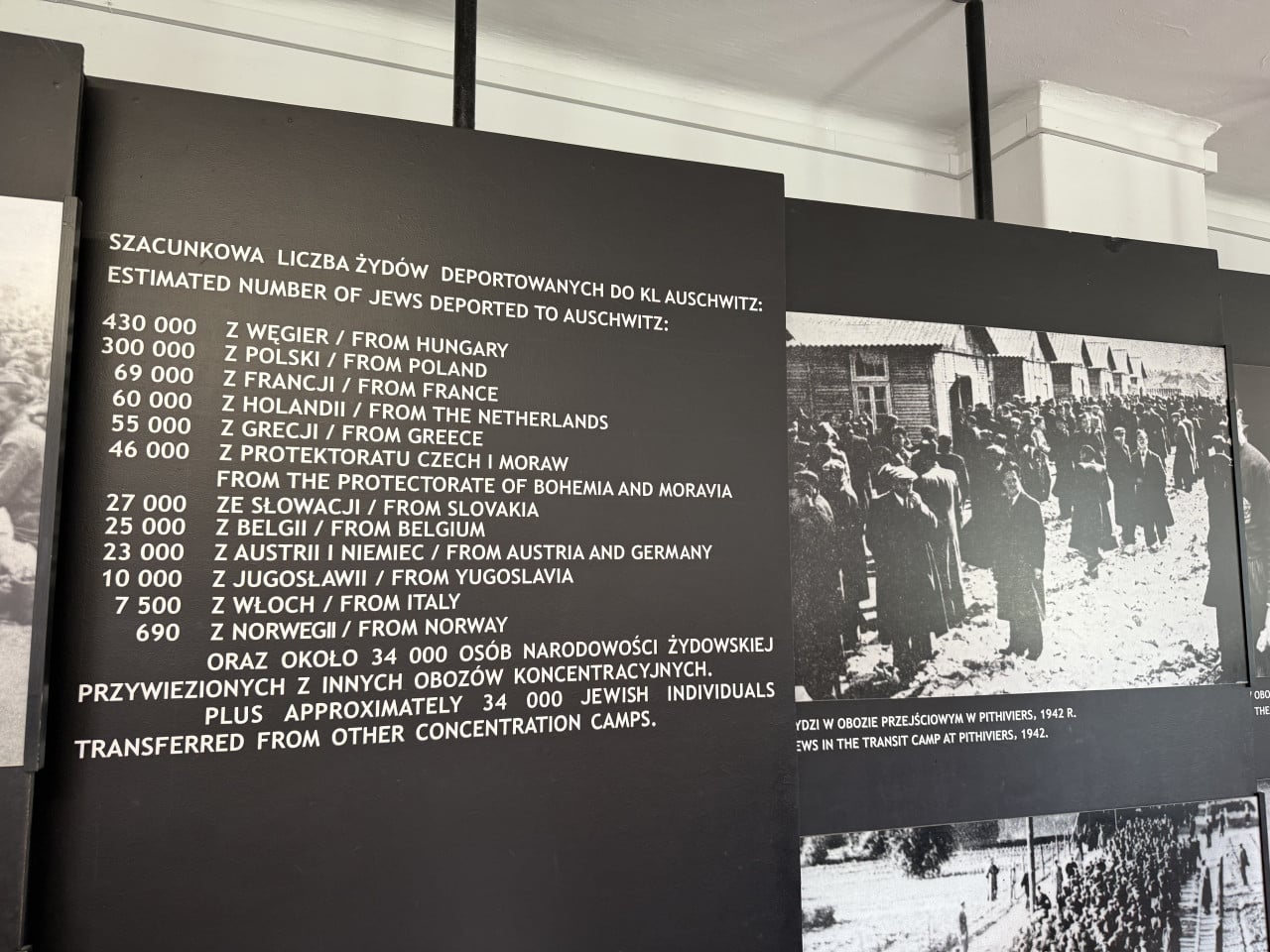
To understand where people came from, you only need to look at the statistics of deported Jews by country: the largest numbers came from Hungary (430,000), Poland (300,000), France (69,000), the Netherlands (60,000), Greece (55,000), the Protectorate of Bohemia and Moravia (46,000), Slovakia (27,000), and so on.
Arrival and the “Arbeit macht frei” gate
It took us about three hours to drive from Brno to Oświęcim. As we began to approach, the typical brick buildings were already visible in the distance, and I immediately realized what they were. I had never studied Auschwitz and knew it mainly from photographs—and almost everyone knows that one photograph of the gate bearing the words “Arbeit macht frei”.
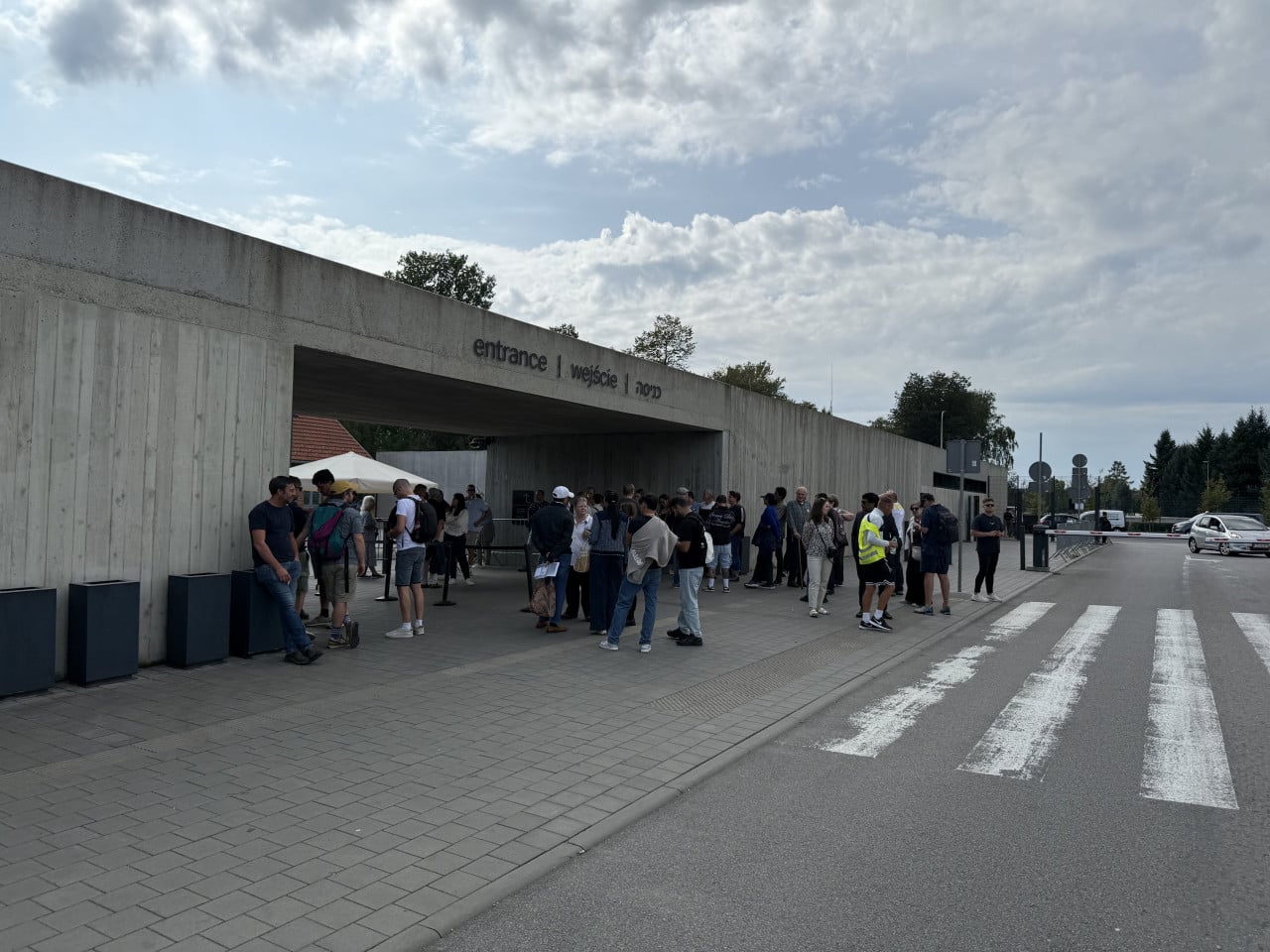
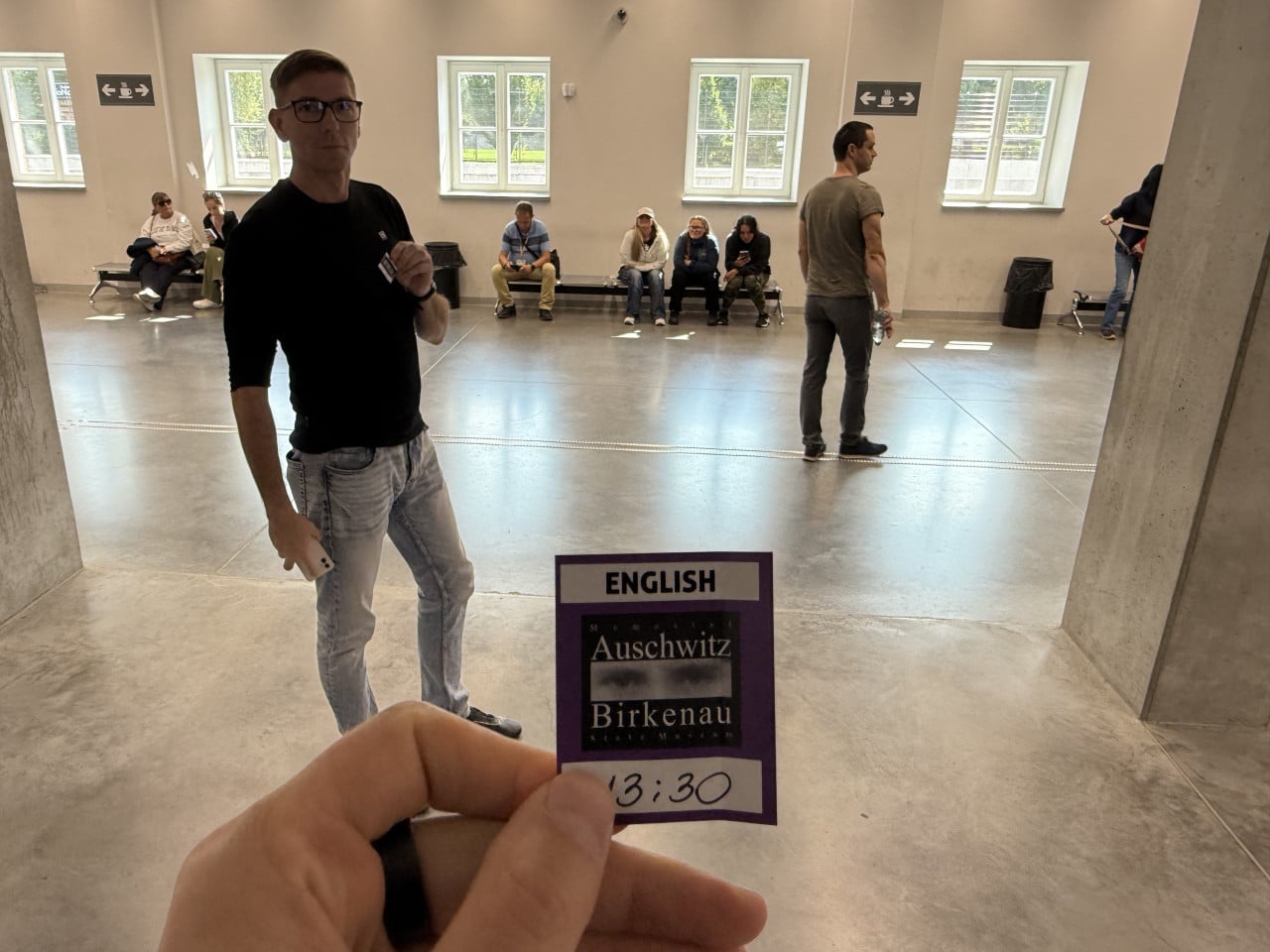
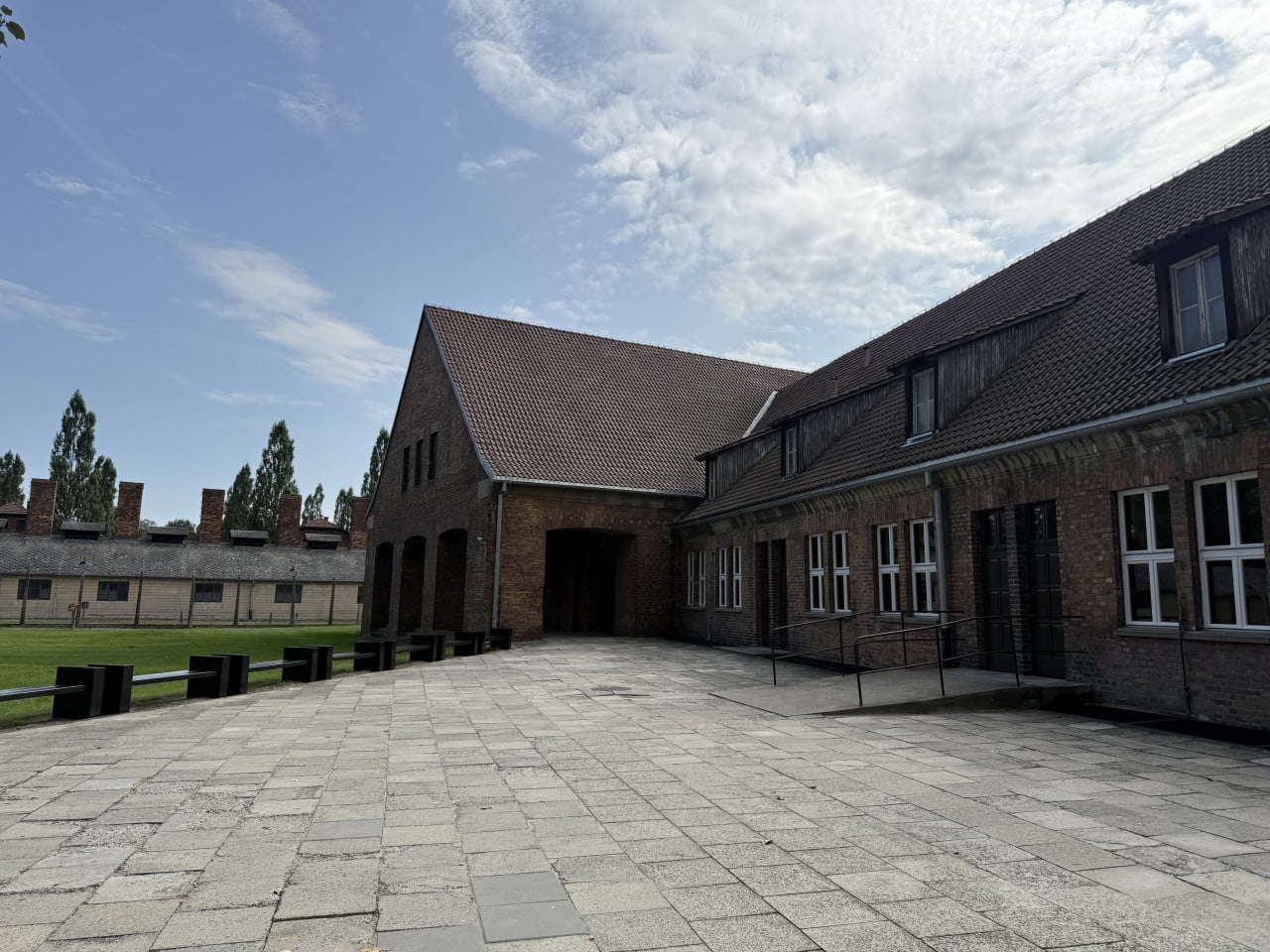
At the entrance, we waited in the entrance building, received stickers showing the starting time of our tour, met our guide, and headed inside.
What “Arbeit macht frei” means and why the inscription is so symbolic
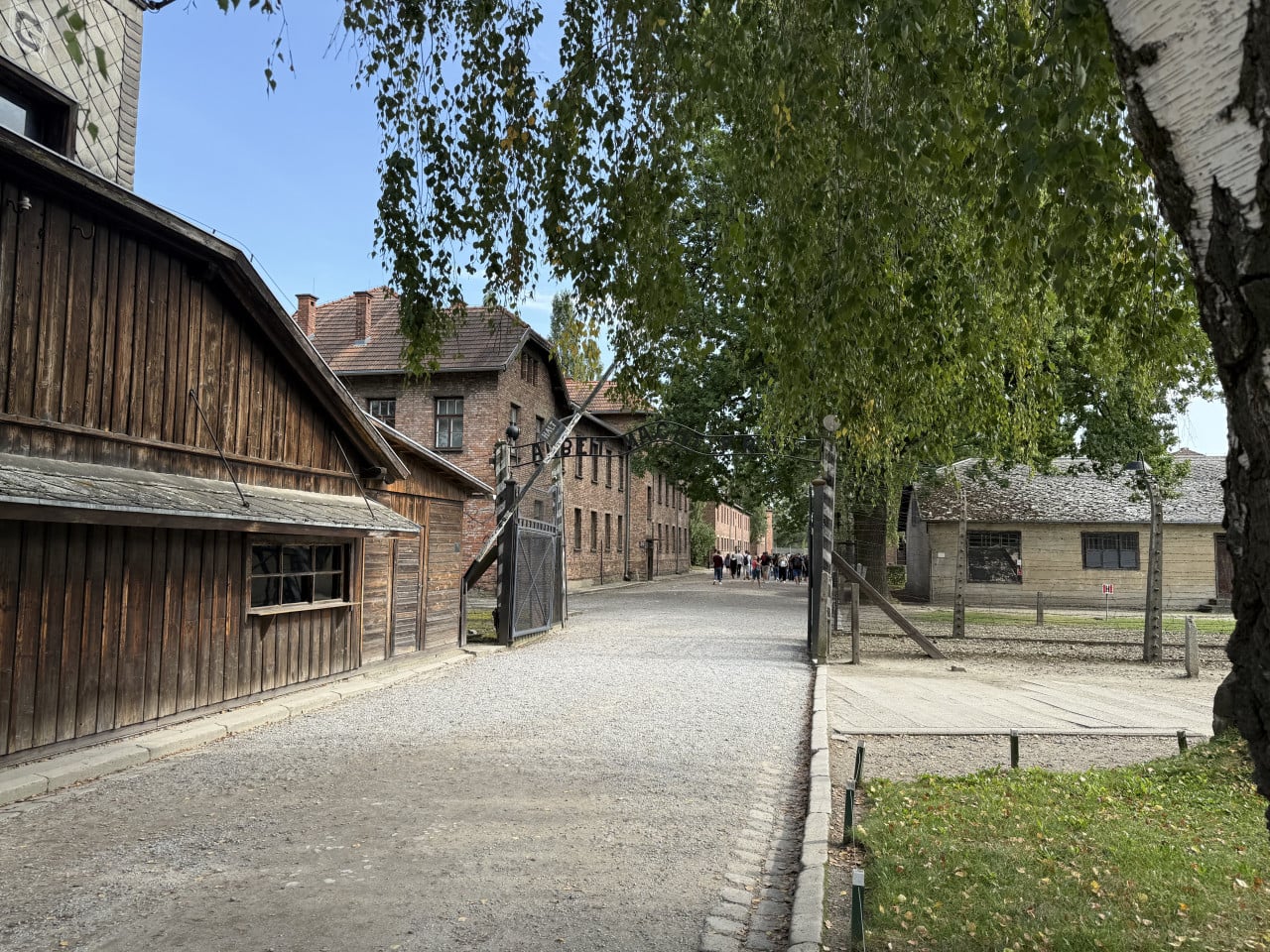
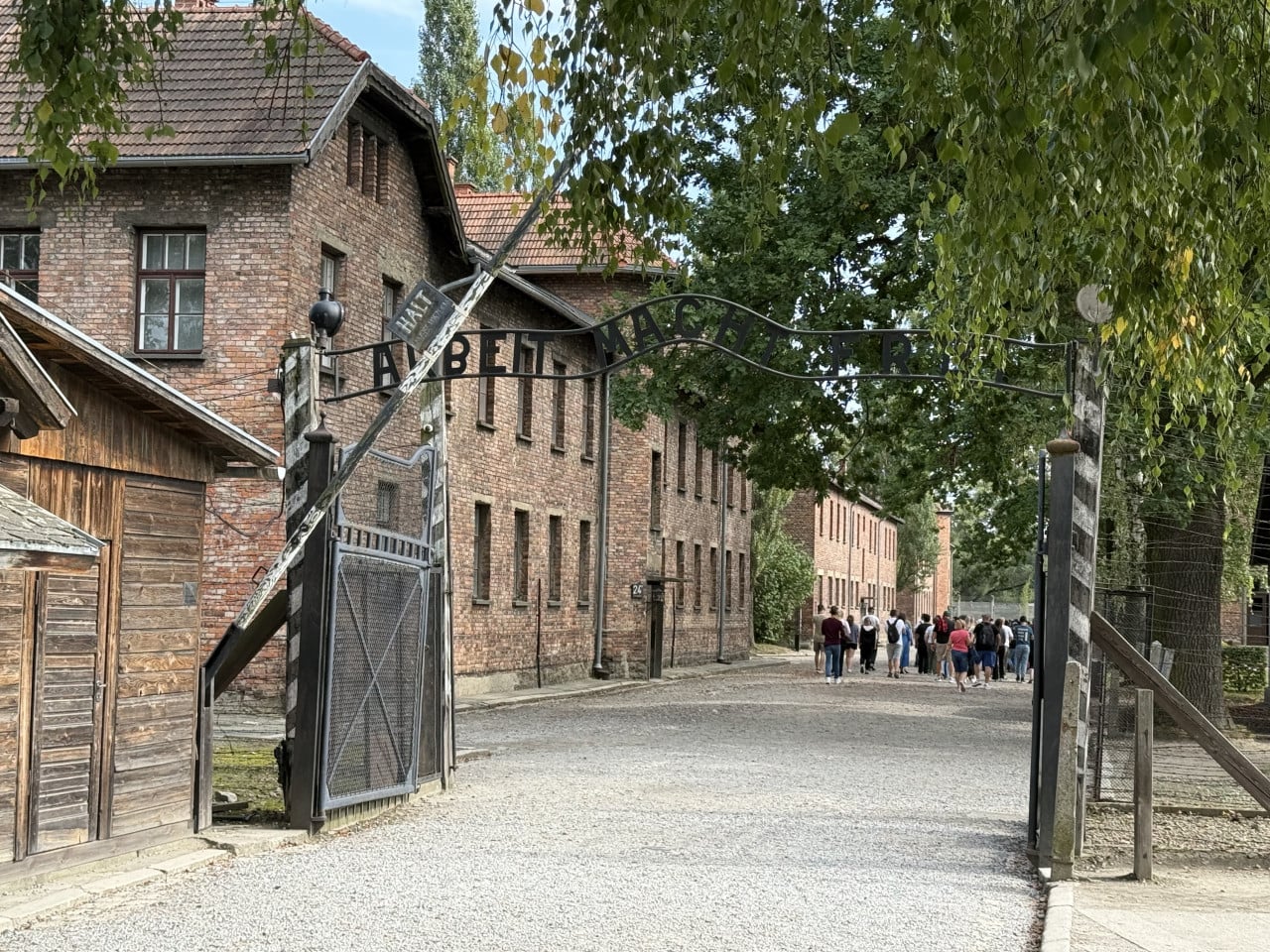
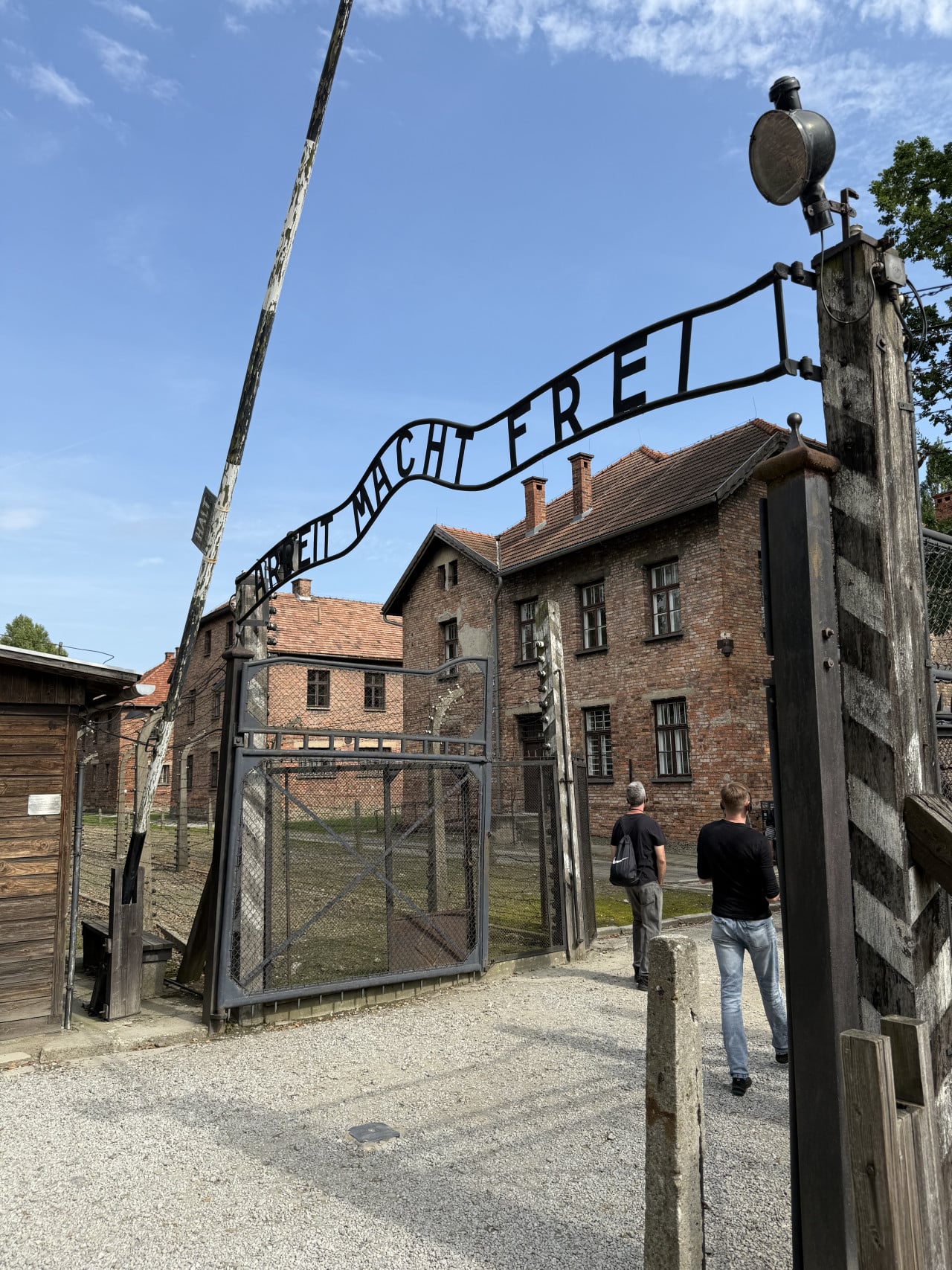
The phrase “Arbeit macht frei” translates into English as “Work sets you free”. It comes from the title of an 1873 novel by German writer Lorenz Diefenbach, and in interwar Germany it was also used as a propaganda slogan to promote public works during the economic crisis.
The Nazis first placed this inscription above the gate of the Dachau concentration camp in 1933. It gradually appeared above the gates of other camps—in Sachsenhausen, Gross-Rosen, Terezín, and, of course, Auschwitz.
At Auschwitz, the inscription was made in a metalworking shop inside the camp. It was created by Polish political prisoner Jan Liwacz. An attentive visitor will notice that the letter “B” in the word ARBEIT is upside down—some still see this as a silent act of resistance by the prisoners, but most historians believe it was simply an ordinary mistake.
When thousands of prisoners passed through this gate every morning, they knew that long hours of exhausting labor awaited them. In the evening, many returned carrying the bodies of those who had not survived the day. The camp orchestra played marches by the gate, supposedly to “help” the prisoners march to work and back—in reality, however, it was another form of cynical dehumanization.
The inscription became such a powerful symbol of the Holocaust that it is also associated with a bizarre modern-day story. On the night of December 18–19, 2009, it was stolen. A group of thieves unscrewed it directly from the gate and cut it into three pieces—one for each word. The theft provoked international outrage, and three days later the inscription was found in northern Poland. As it turned out, the perpetrators had stolen it on behalf of a former Swedish neo-Nazi leader. The original has since been restored and is kept in the museum, so an exact replica now hangs above the gate.
Tour of Auschwitz I: blocks, exhibits, and haunting photographs
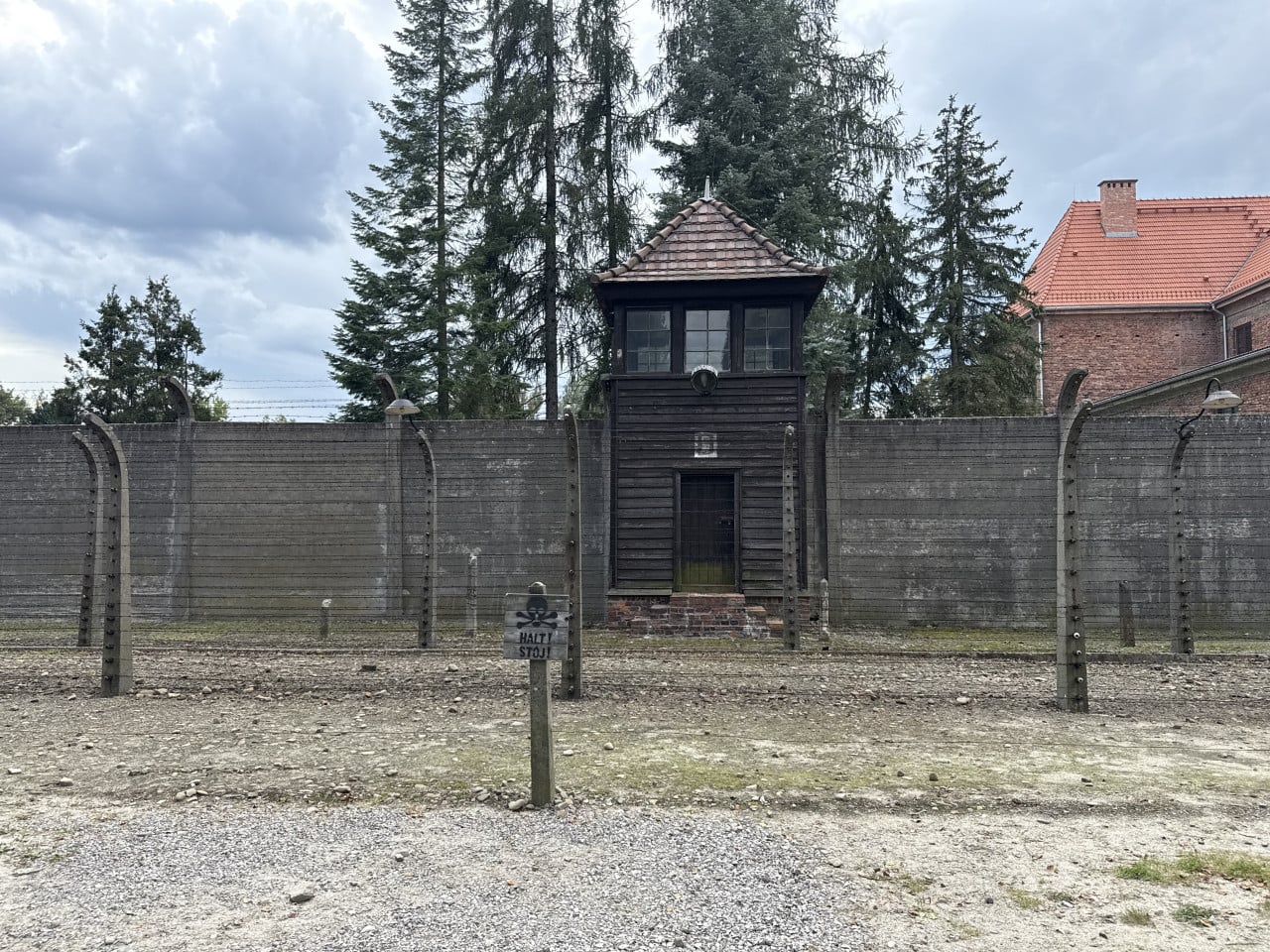
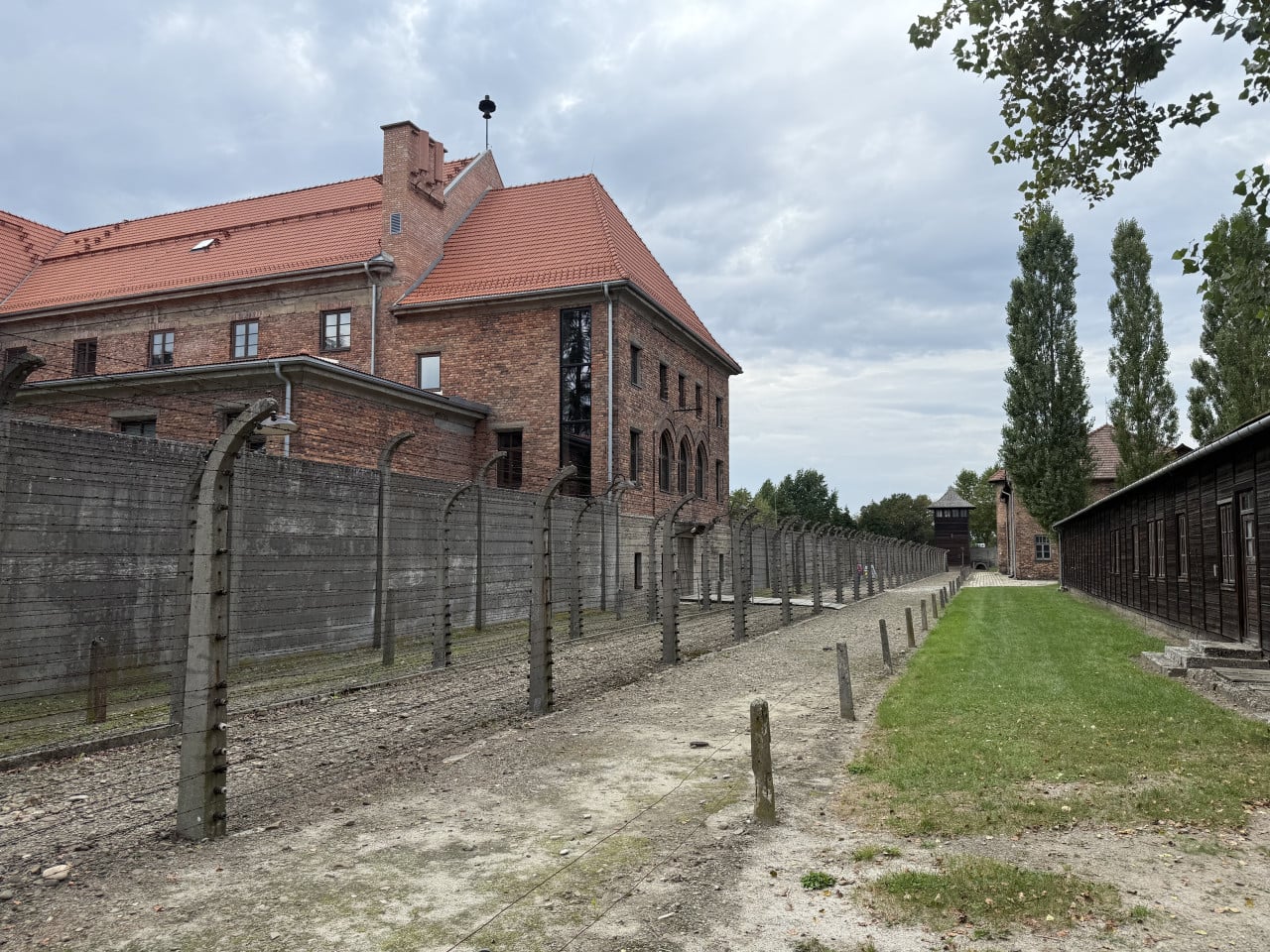
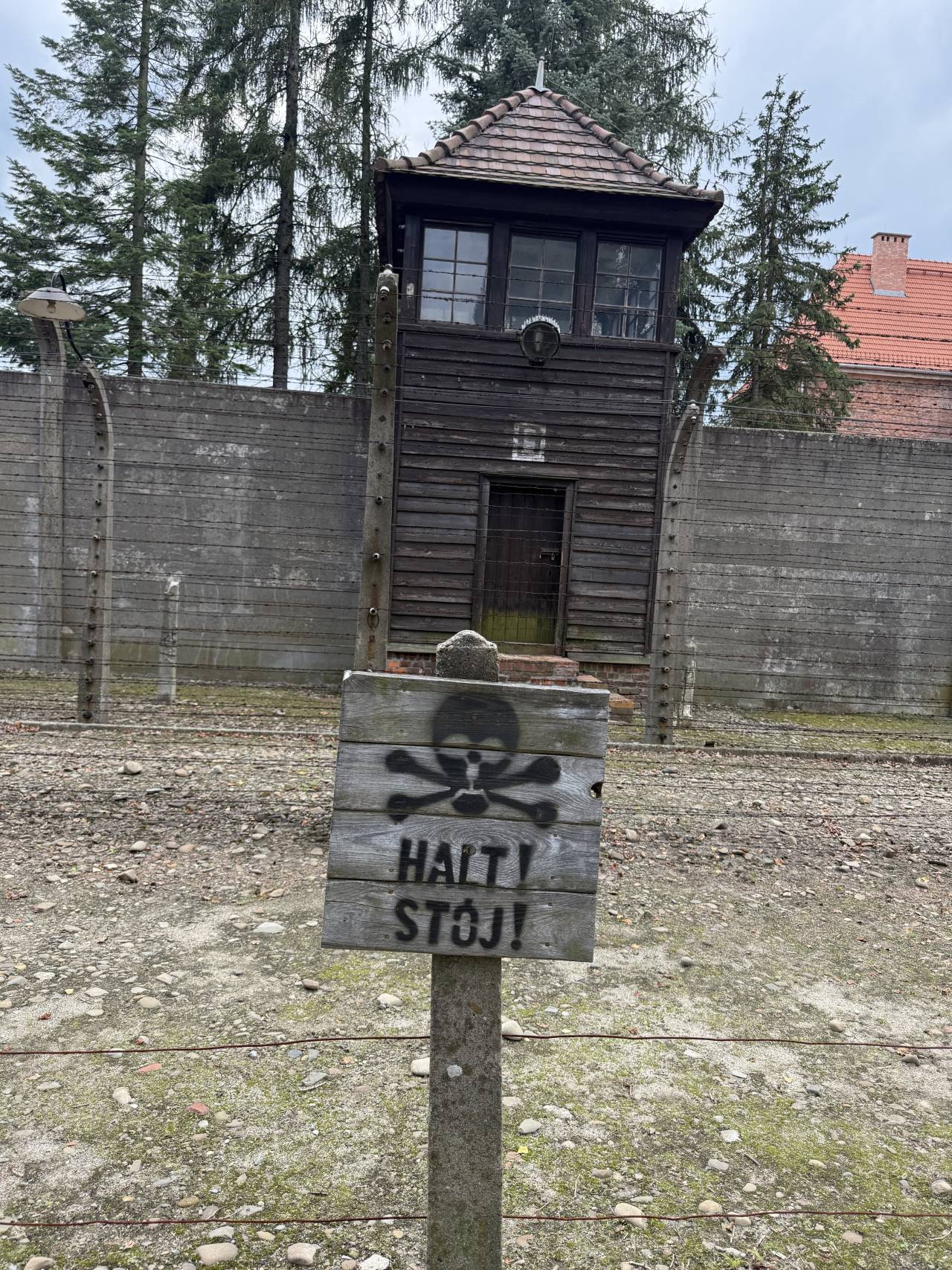
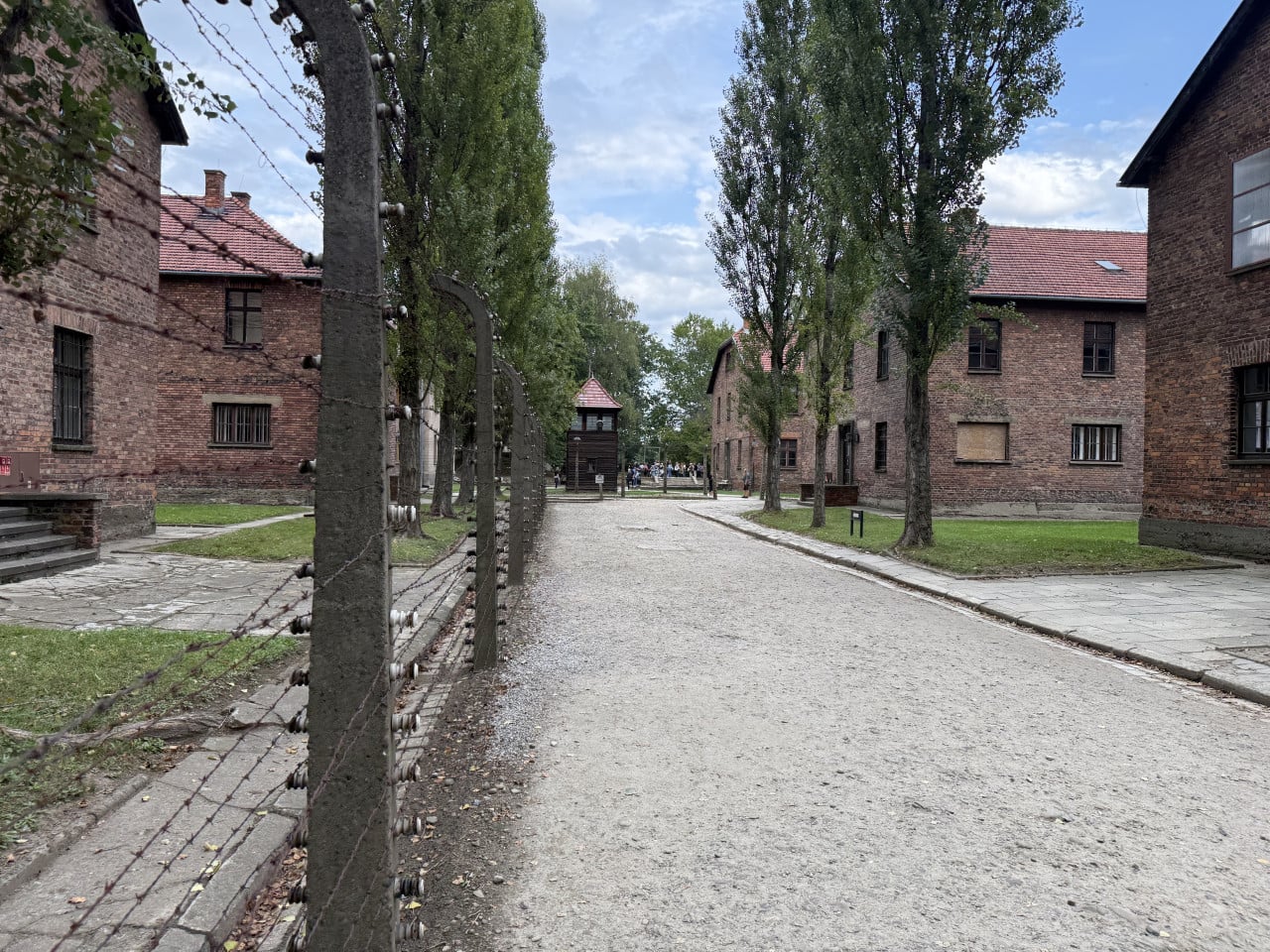
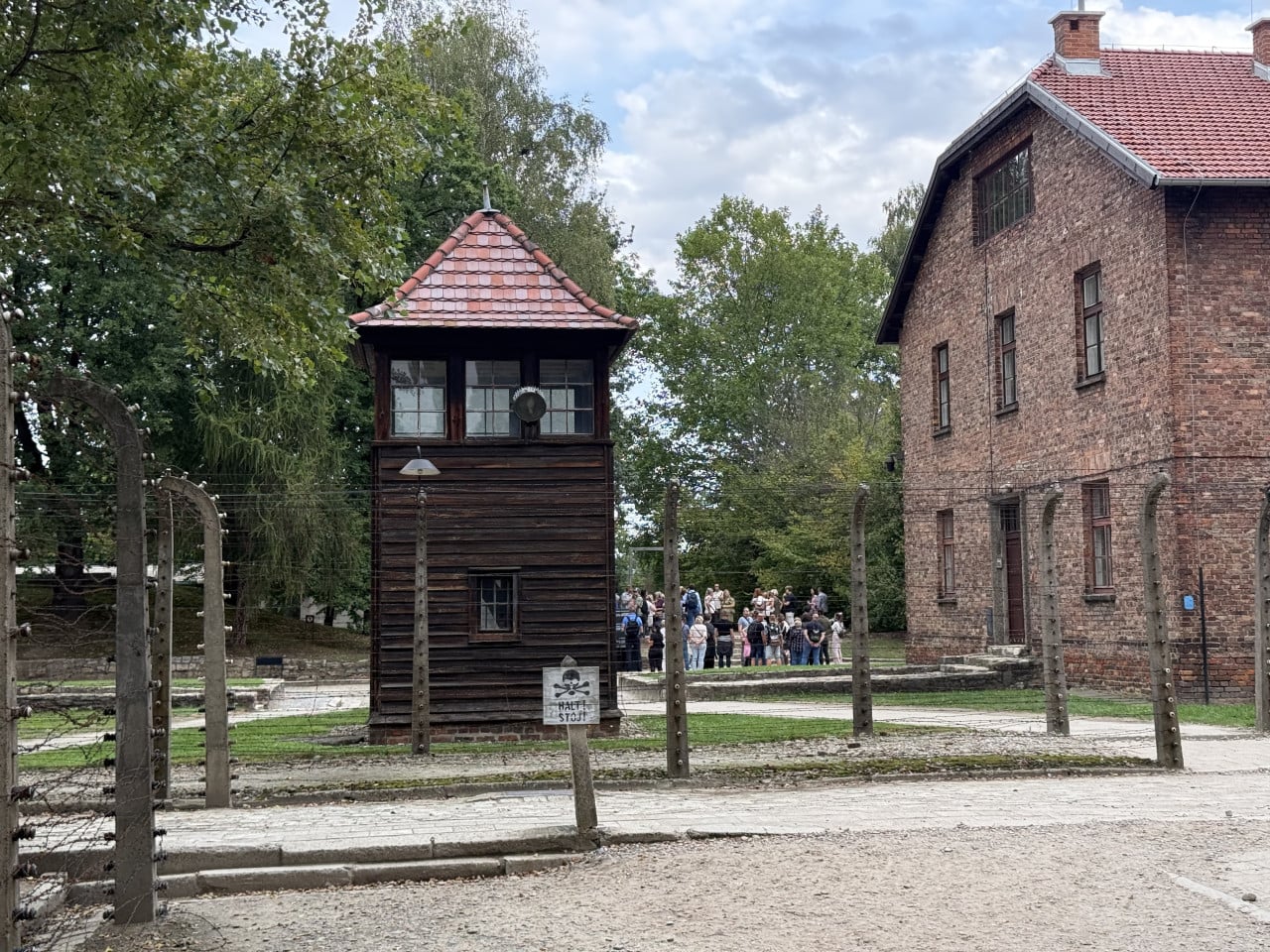
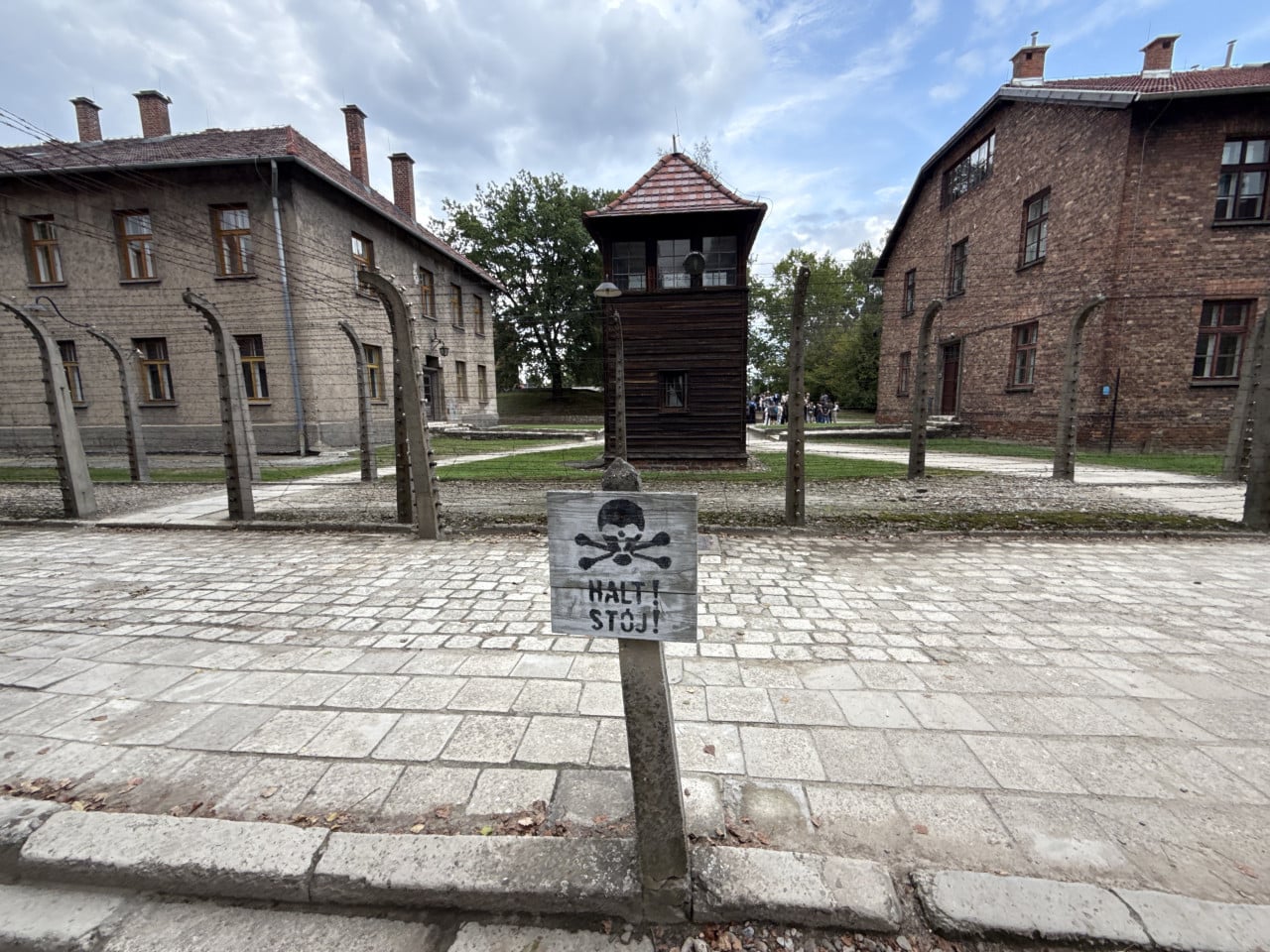
The entire Auschwitz I site is surrounded by barbed wire—originally electrified at 800 volts—which is quite brutal in itself. The atmosphere is sad and quiet, but personally, I did not feel its weight as strongly in this first section. Some visitors reportedly feel the “energy” of the place, but I did not feel it here. That came later.
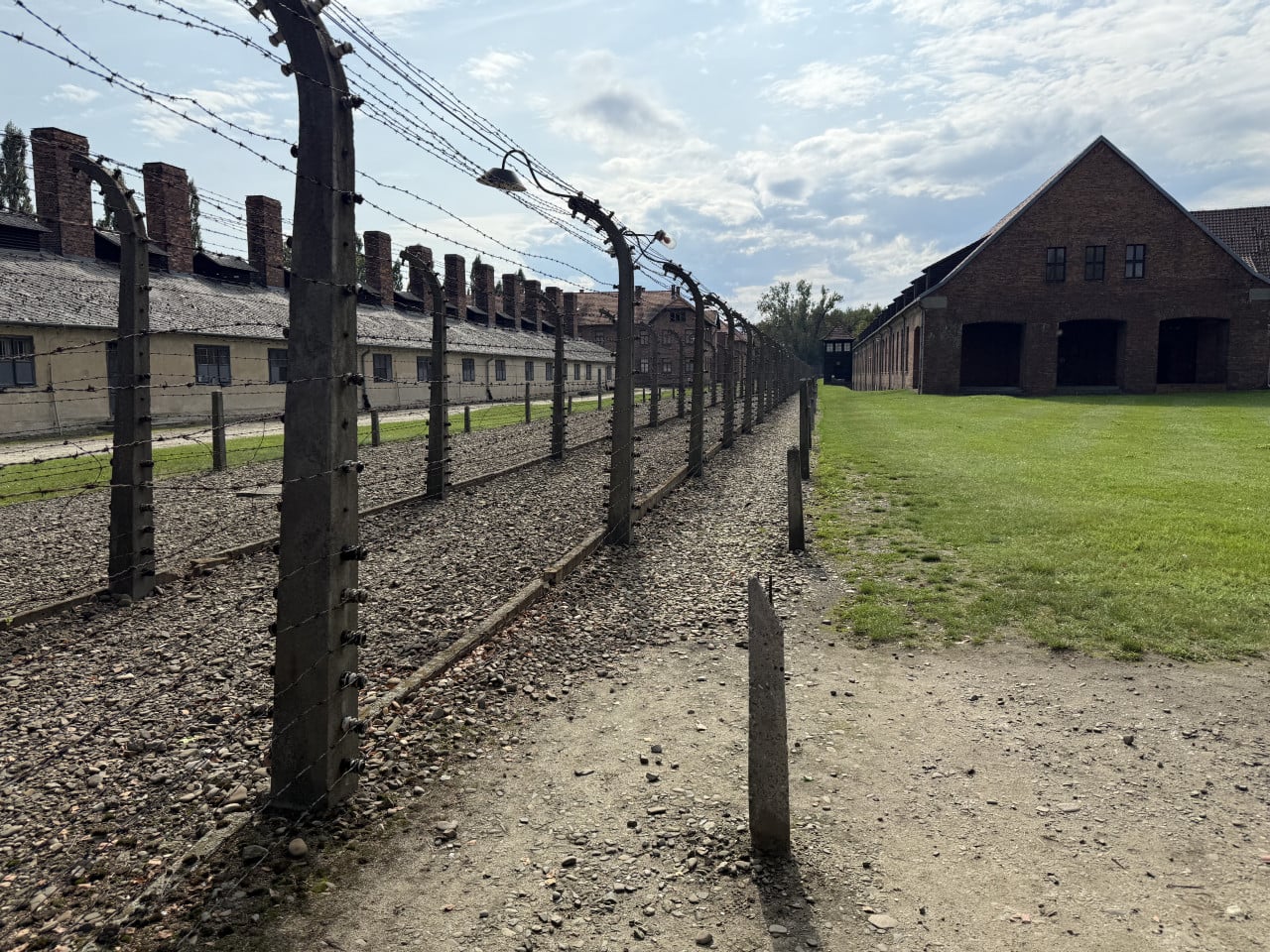
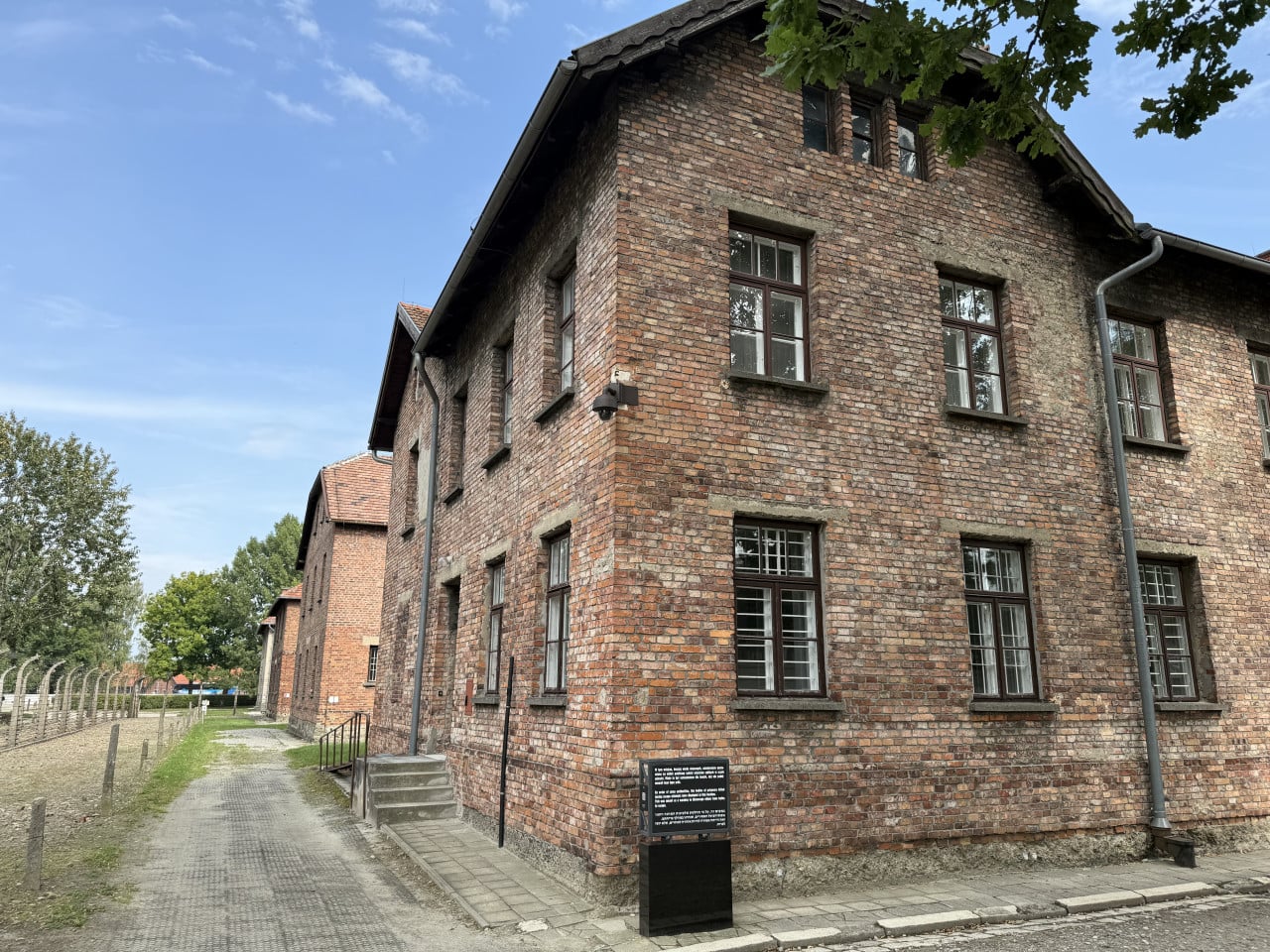
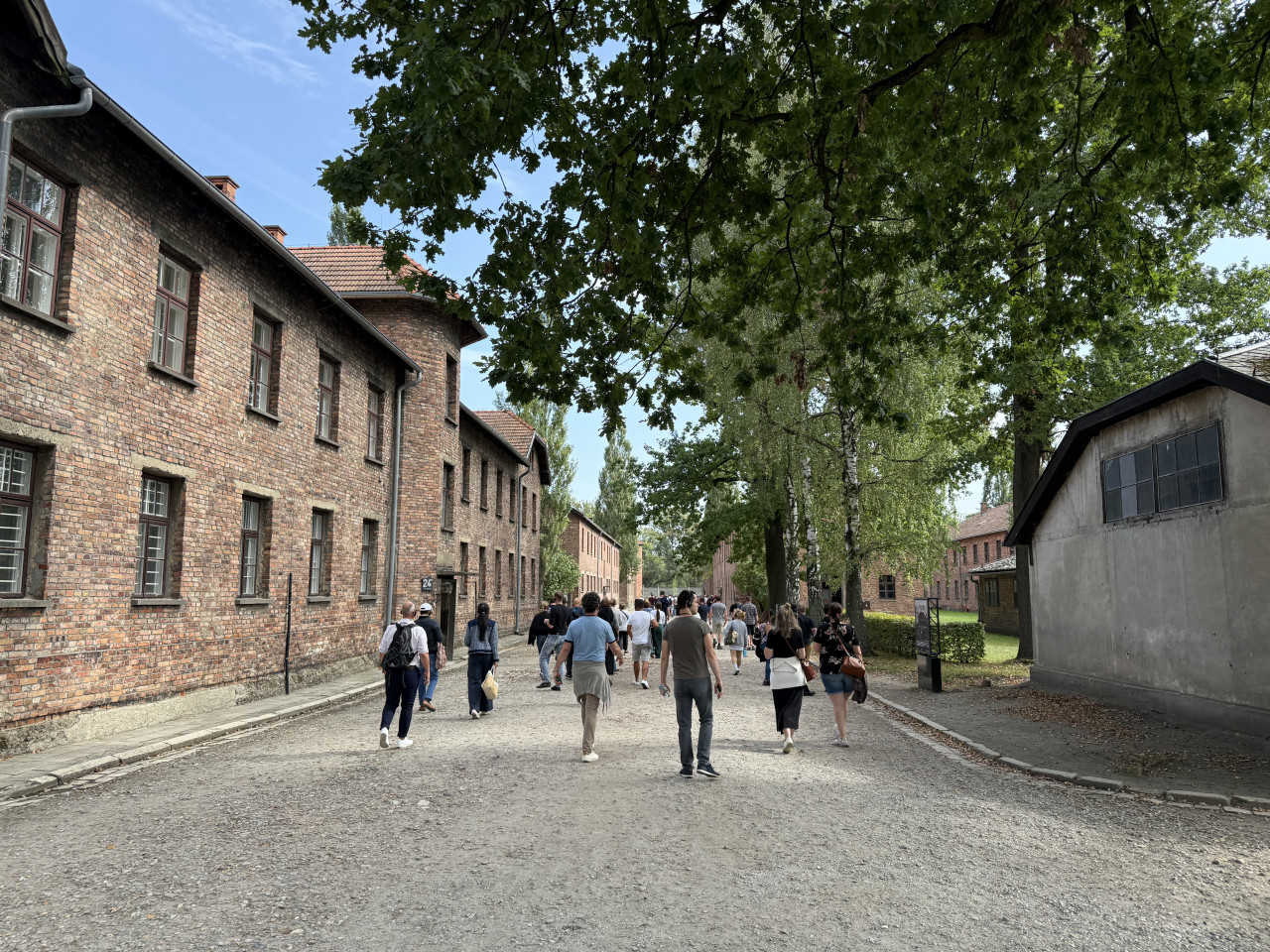
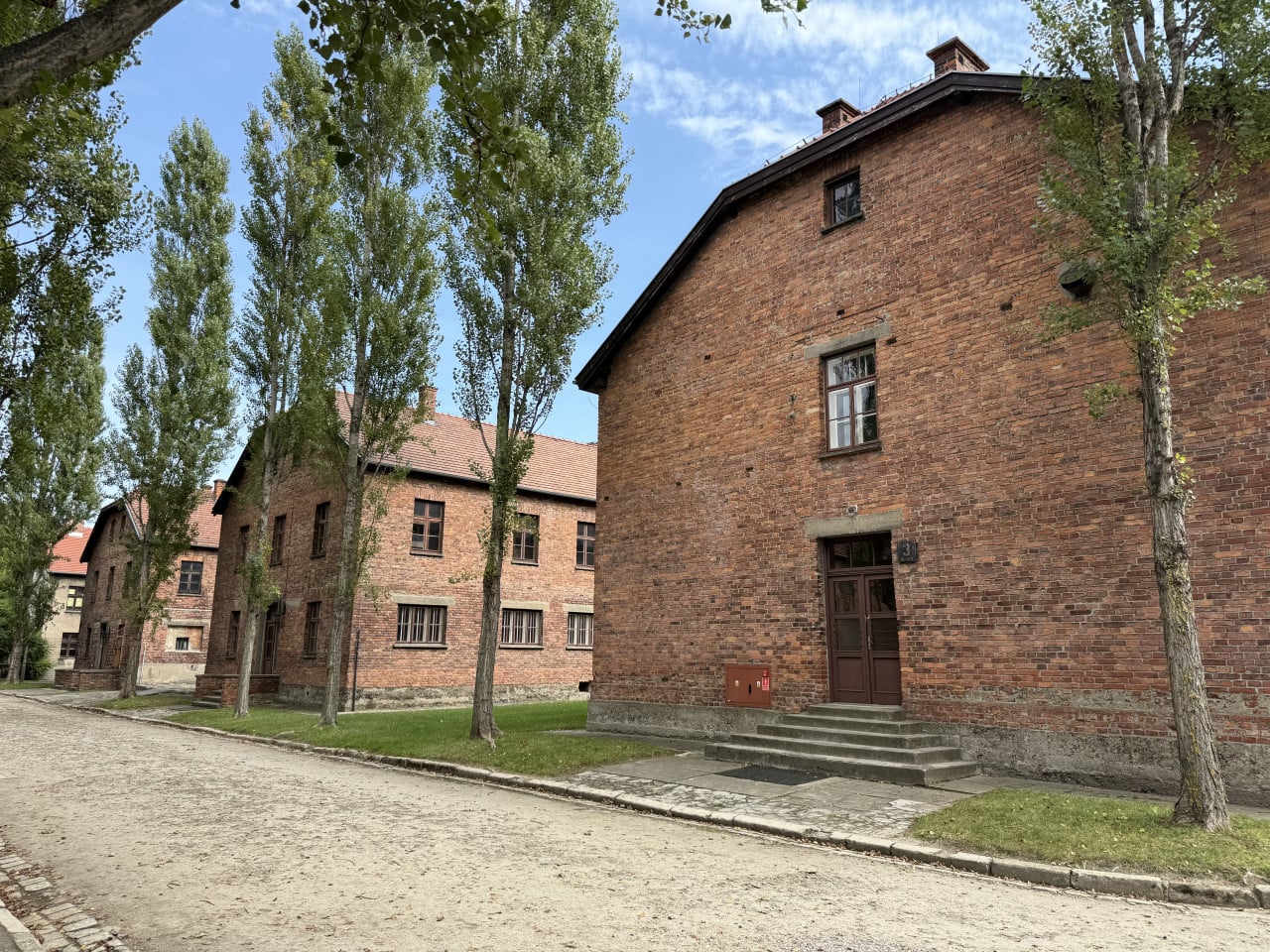
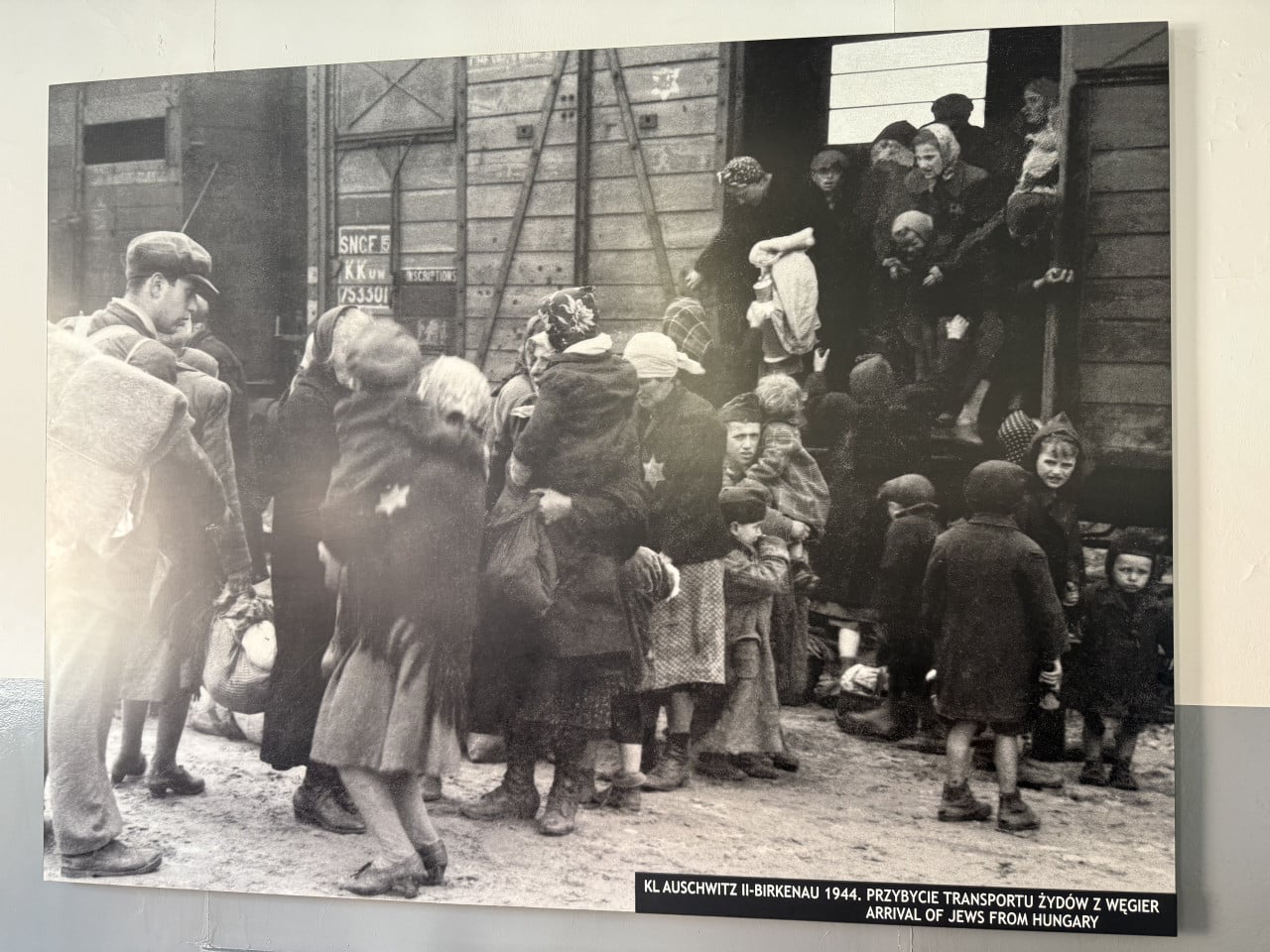
We walked through permanent exhibitions in the individual blocks. Historical photographs show transports arriving in cattle cars and the selection process taking place on the ramp—the immediate decision as to who would be sent to work and who would go directly to the gas chamber. For most victims, their fate was decided in a few seconds and depended on the mood of an SS doctor.
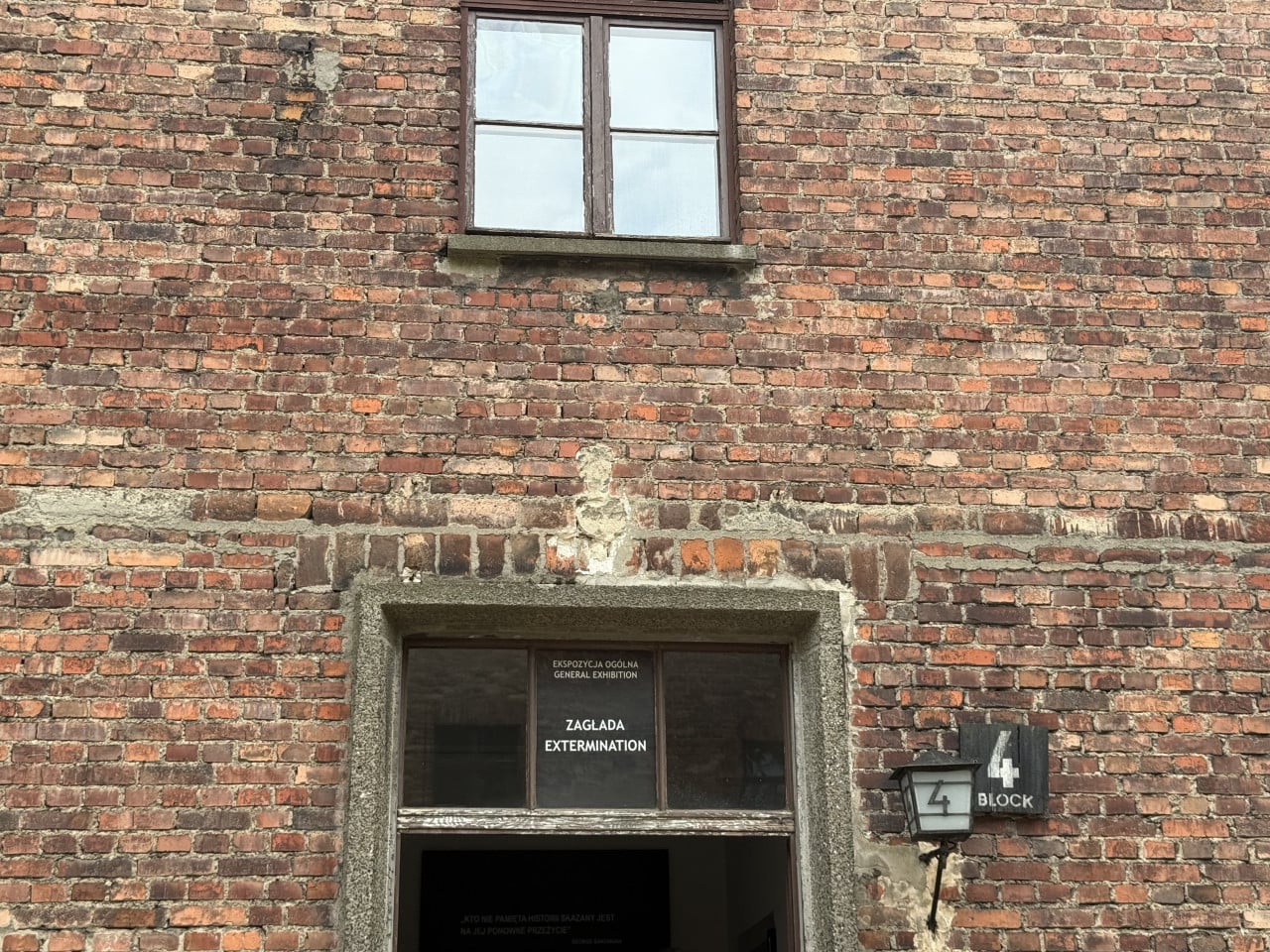
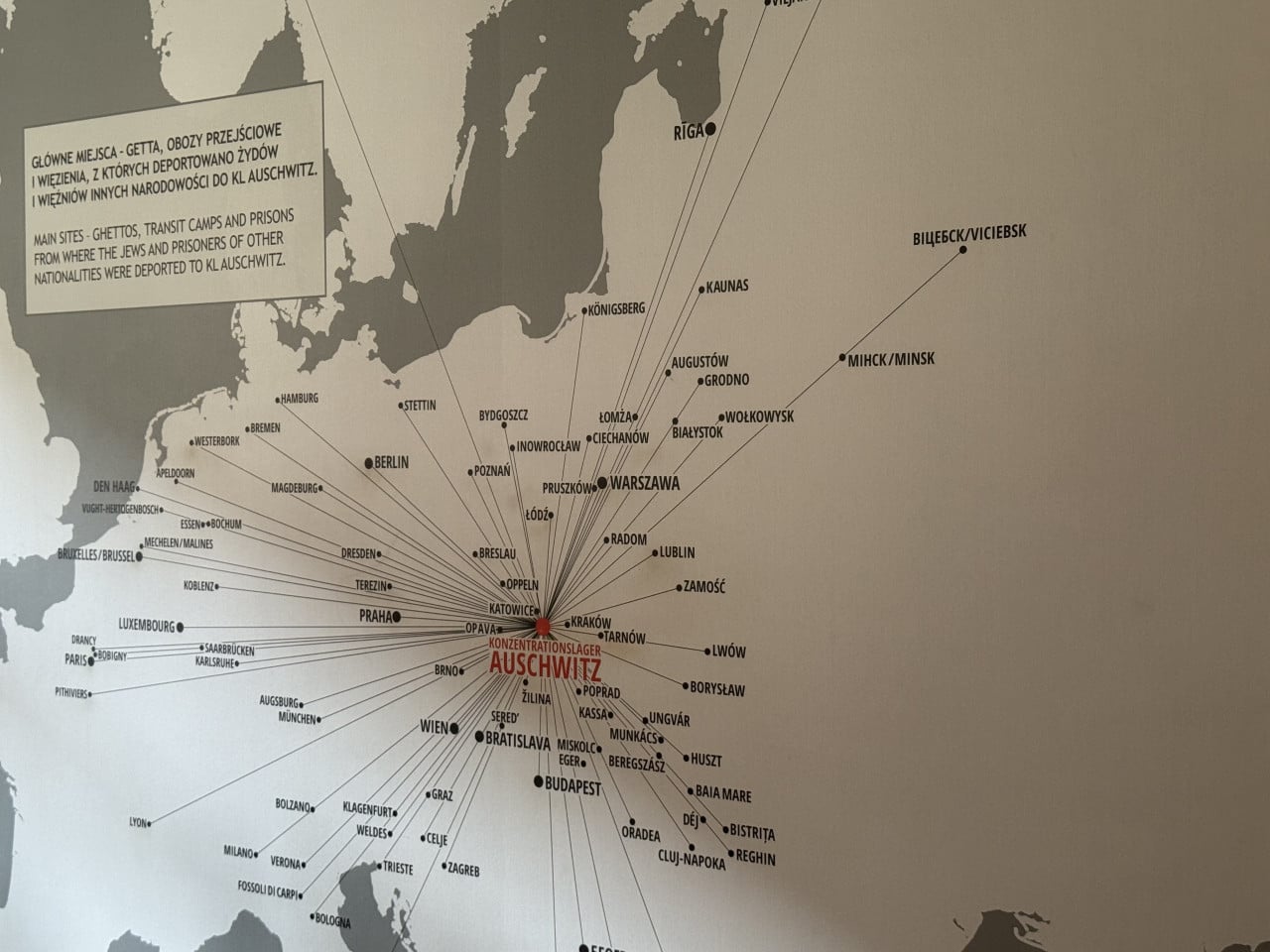
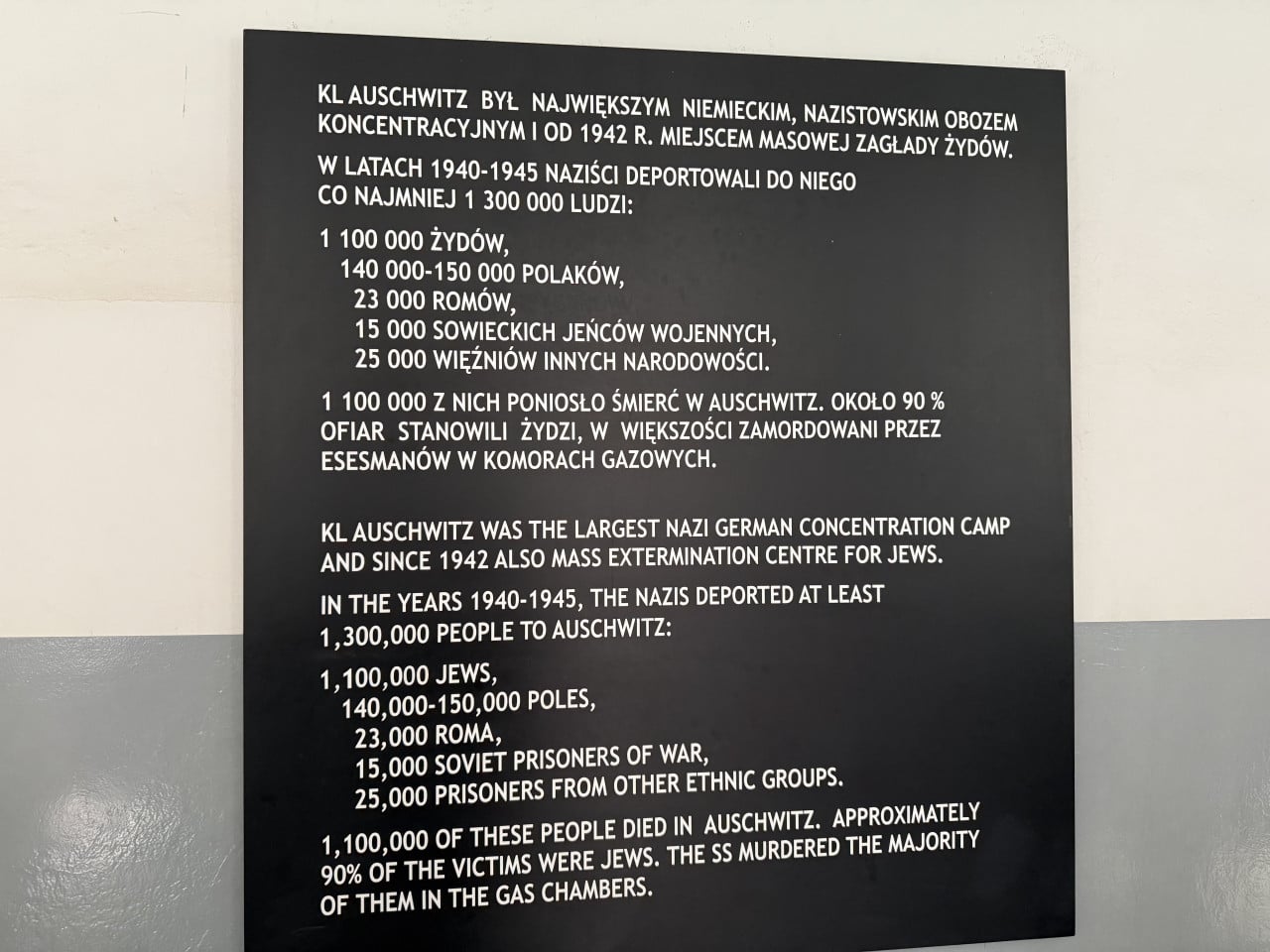
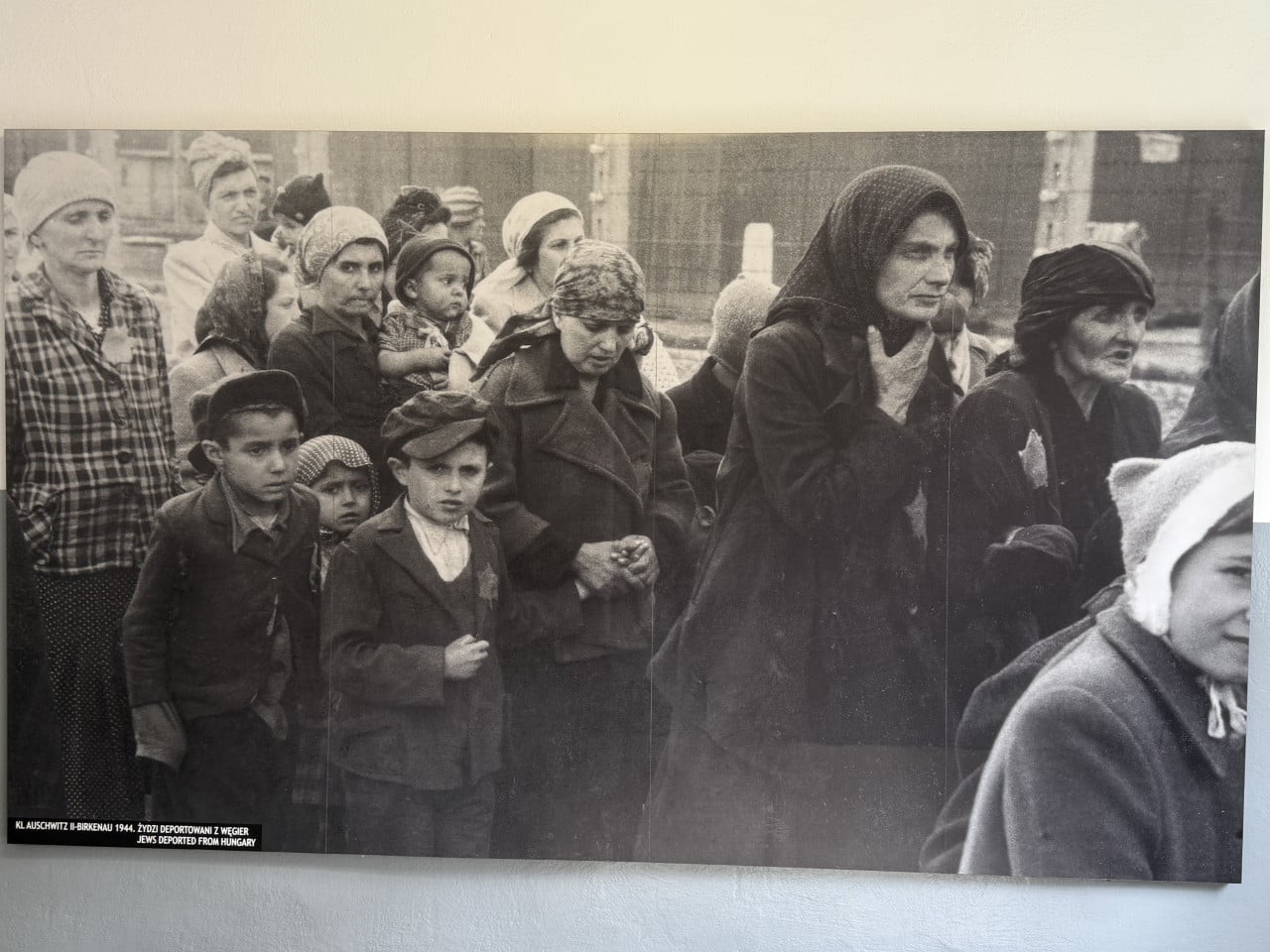
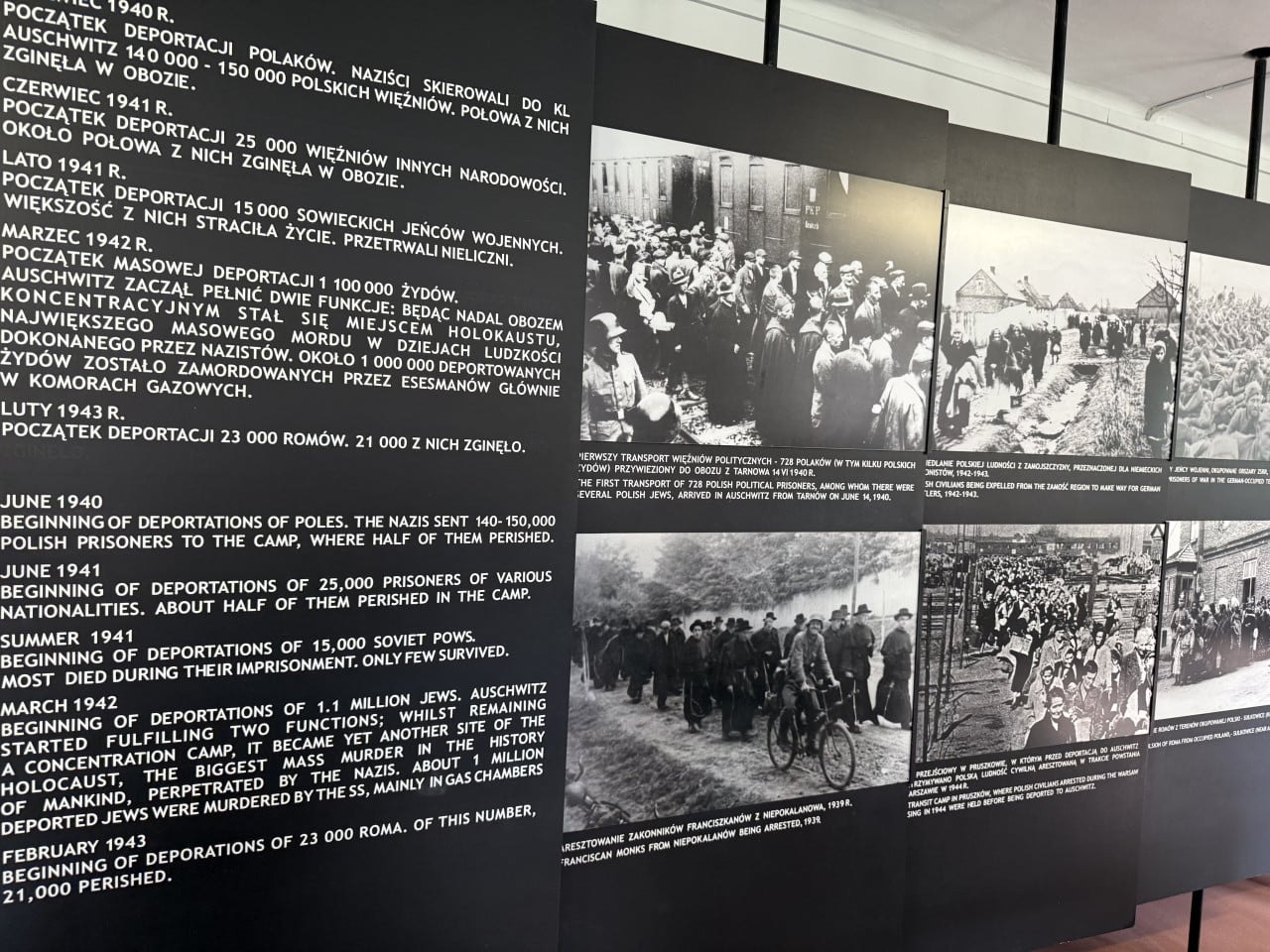
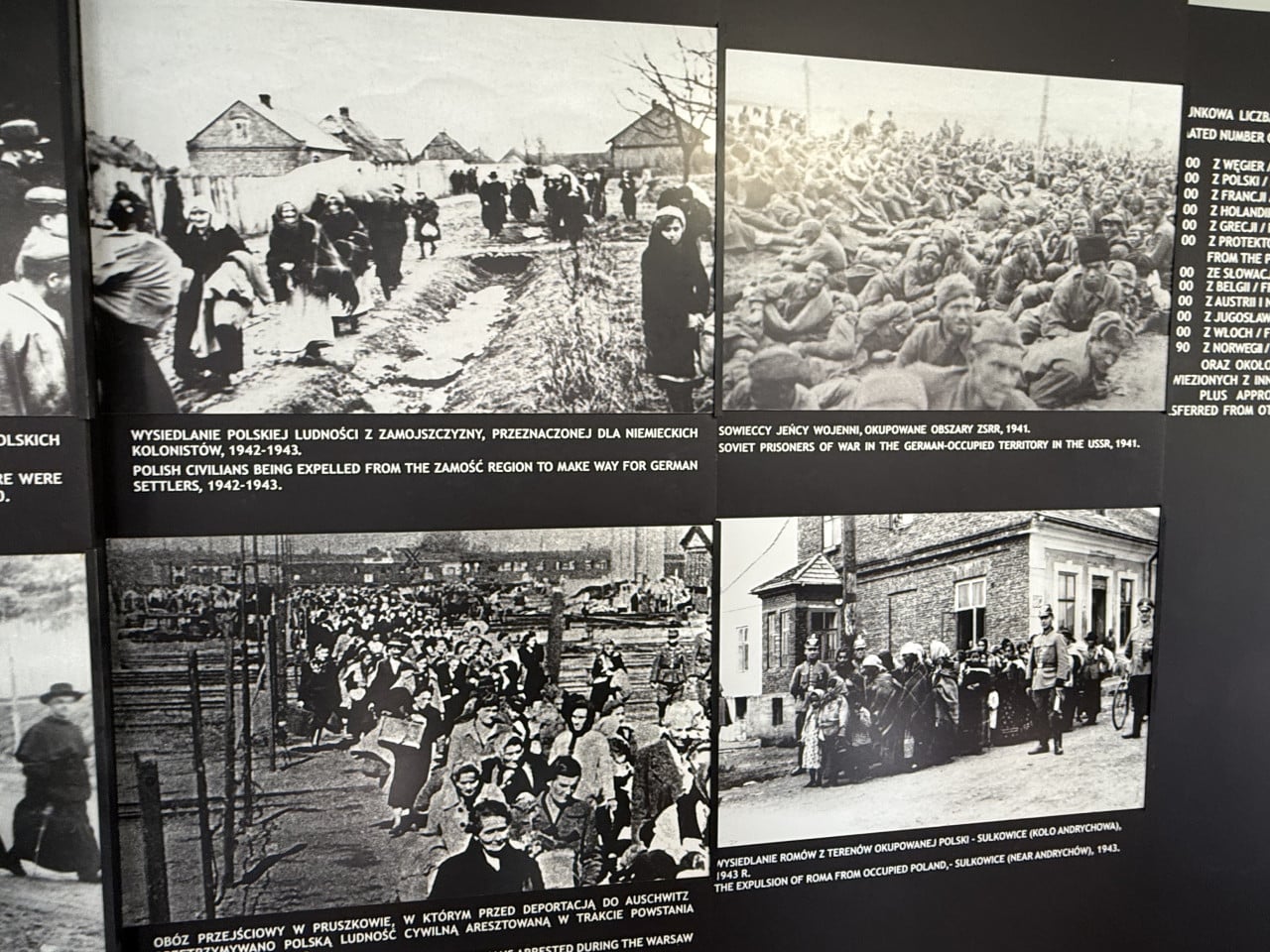
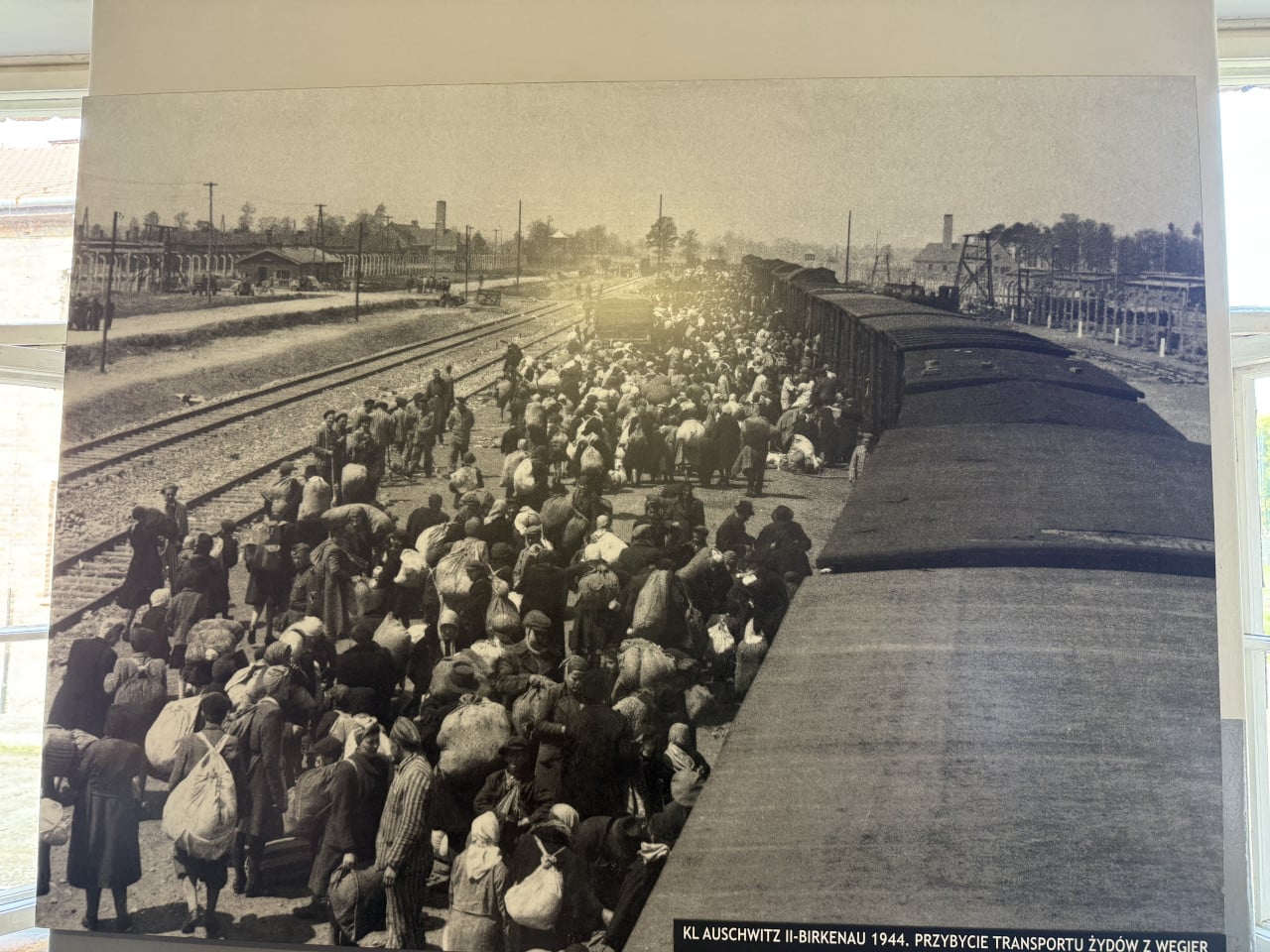
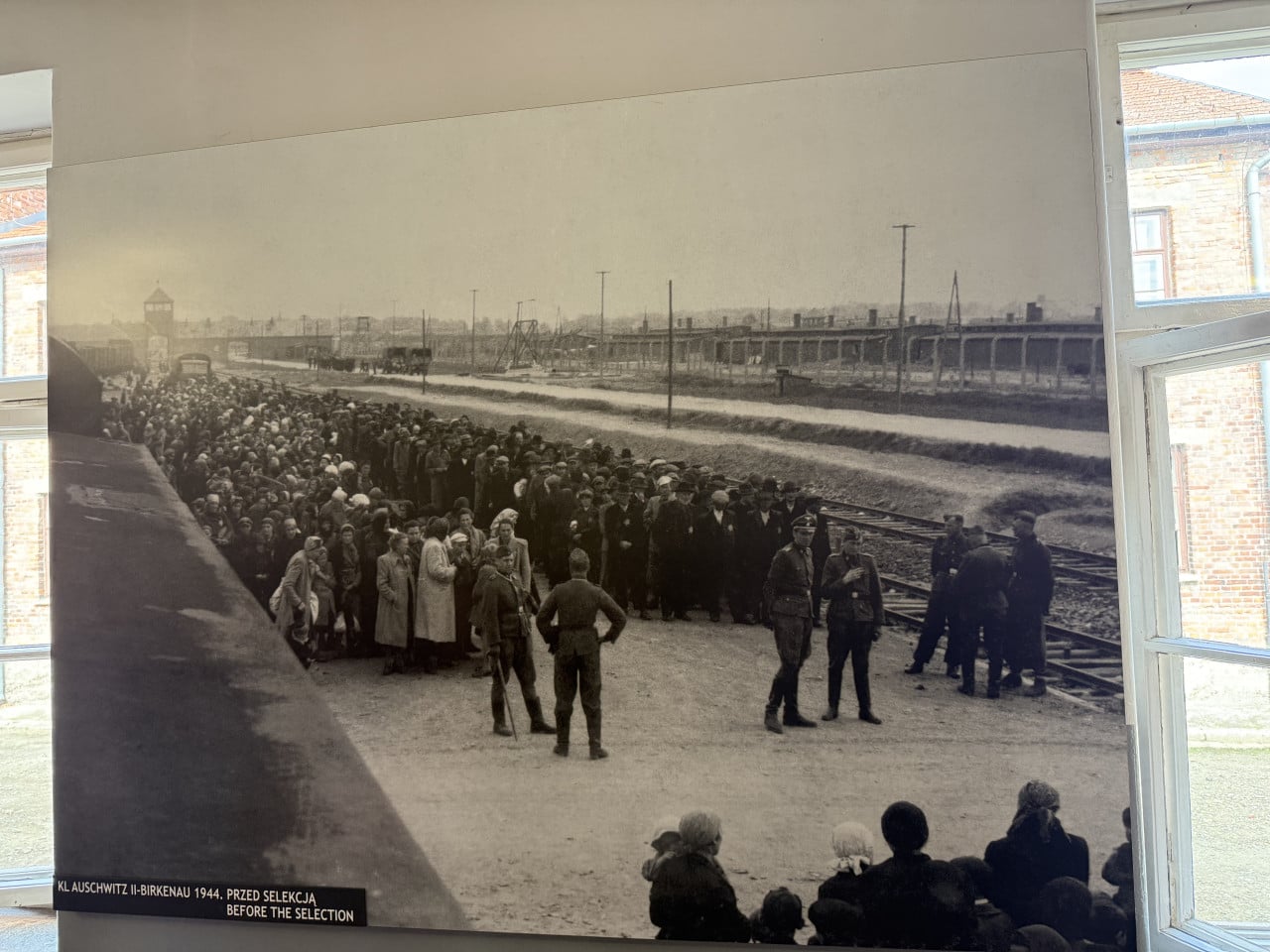
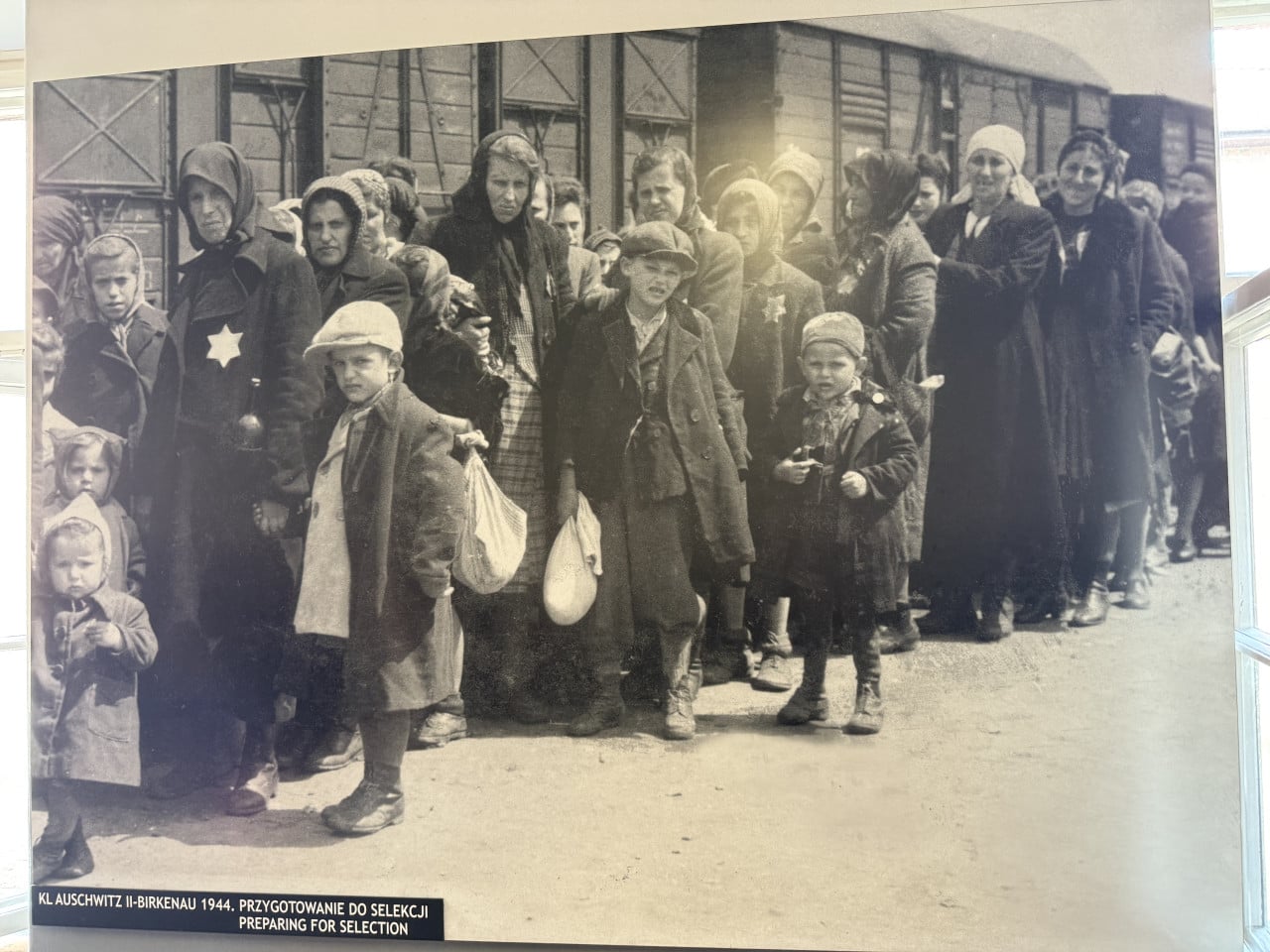
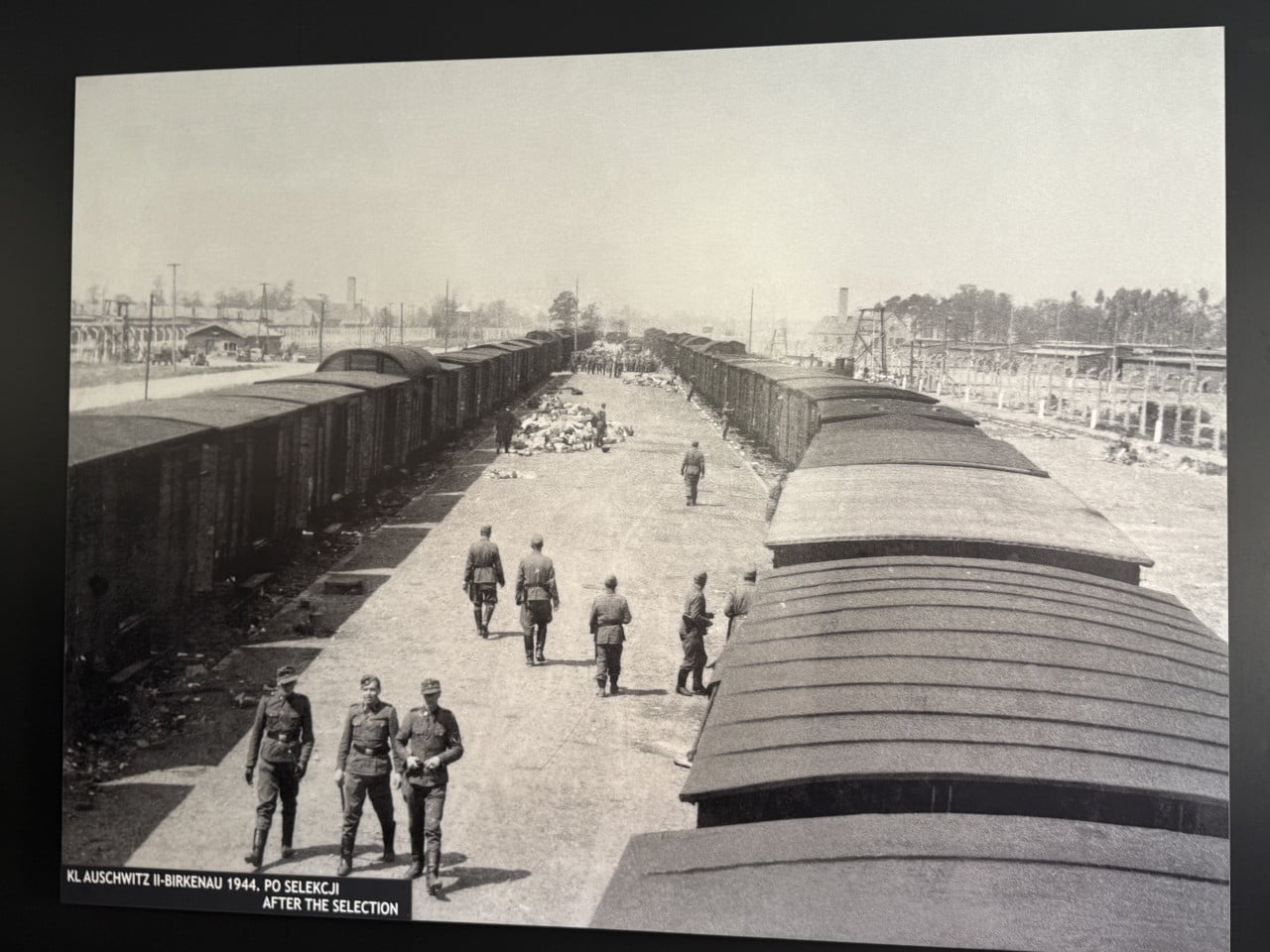
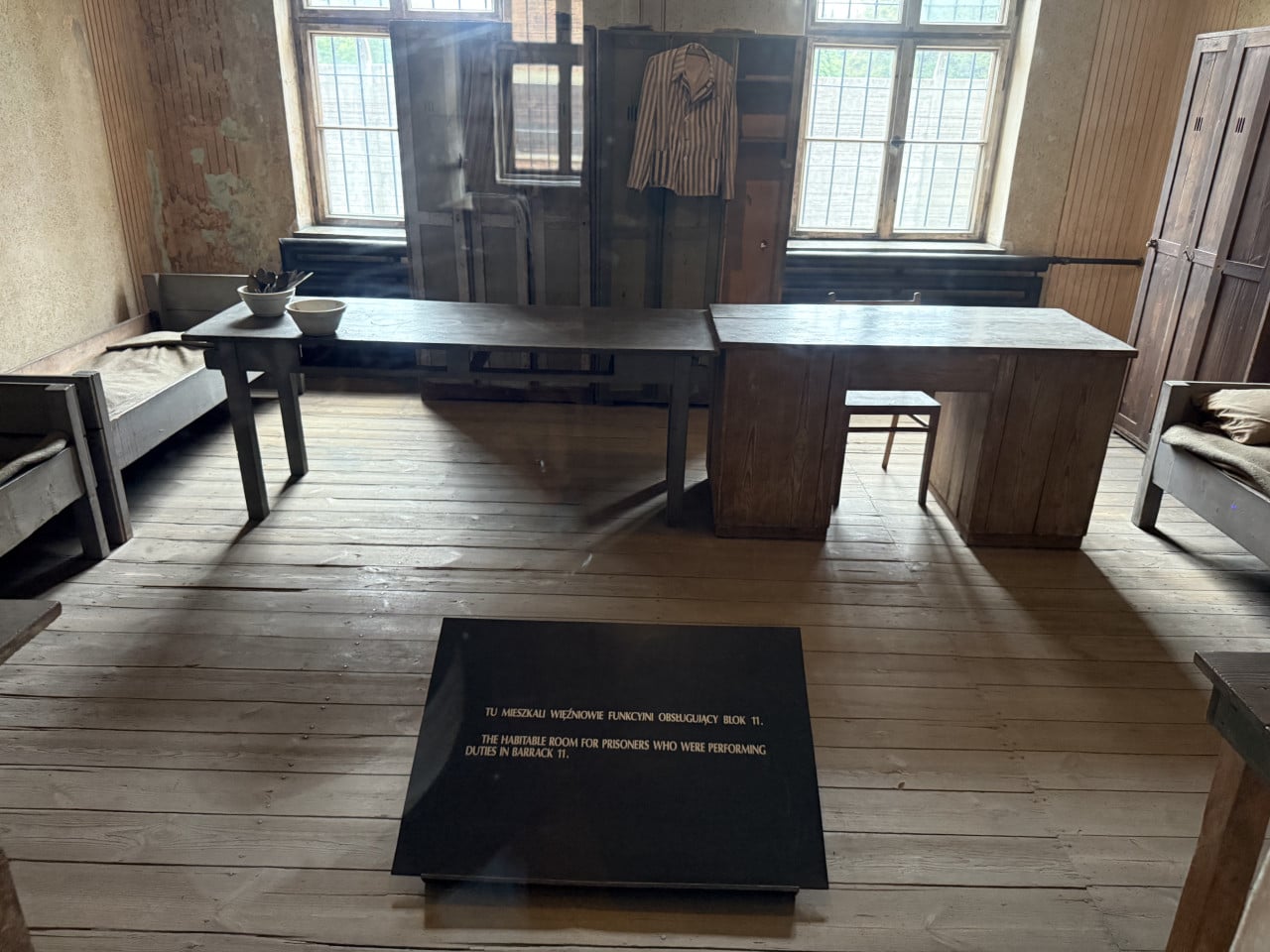
Some exhibits are difficult to look at. In one of the exhibition rooms are piles of Zyklon B cans—a hydrogen cyanide-based pesticide that the Nazis used for mass killing in the gas chambers. The first “test” was conducted in September 1941 on Soviet prisoners of war in Block 11.
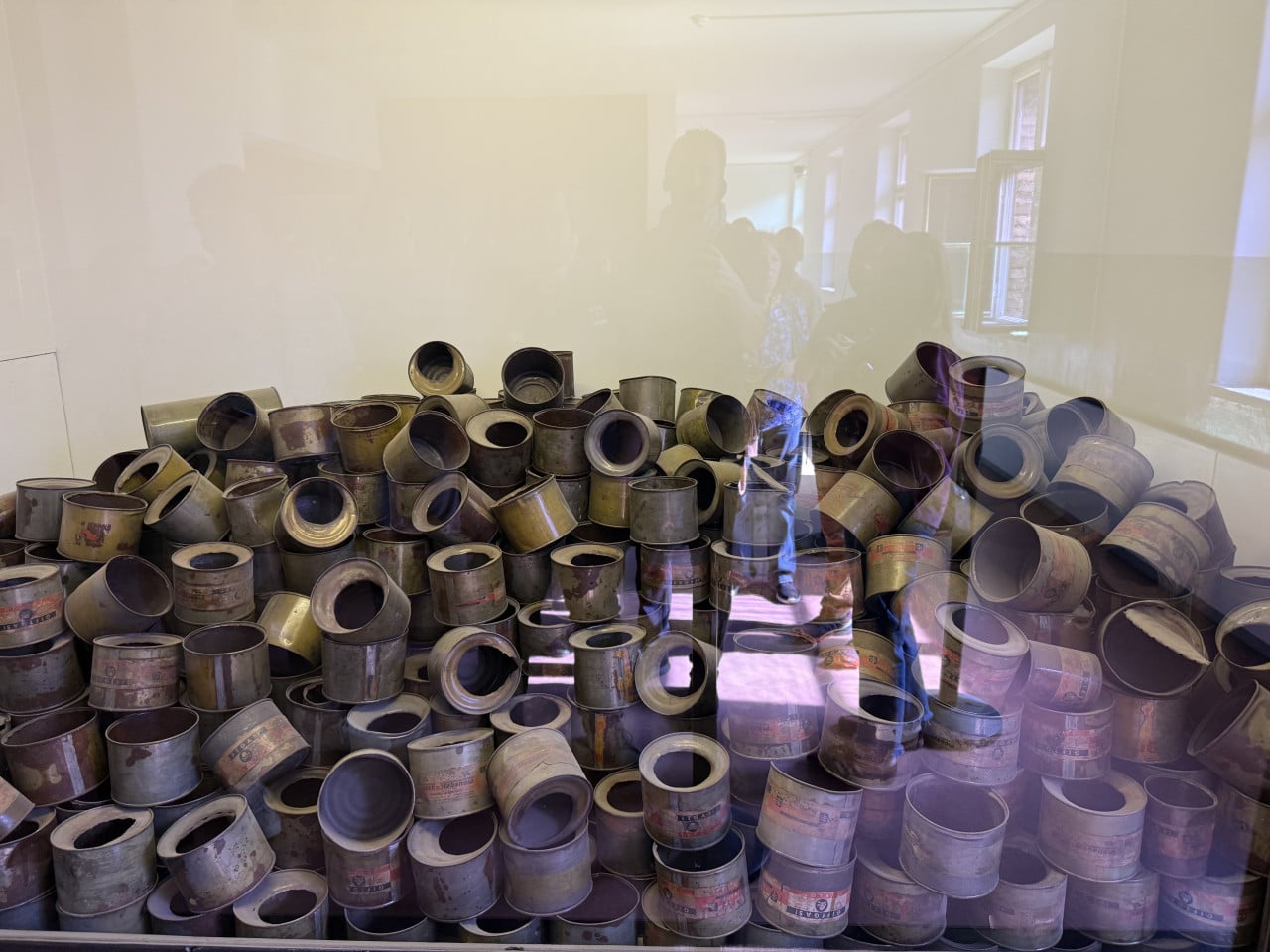
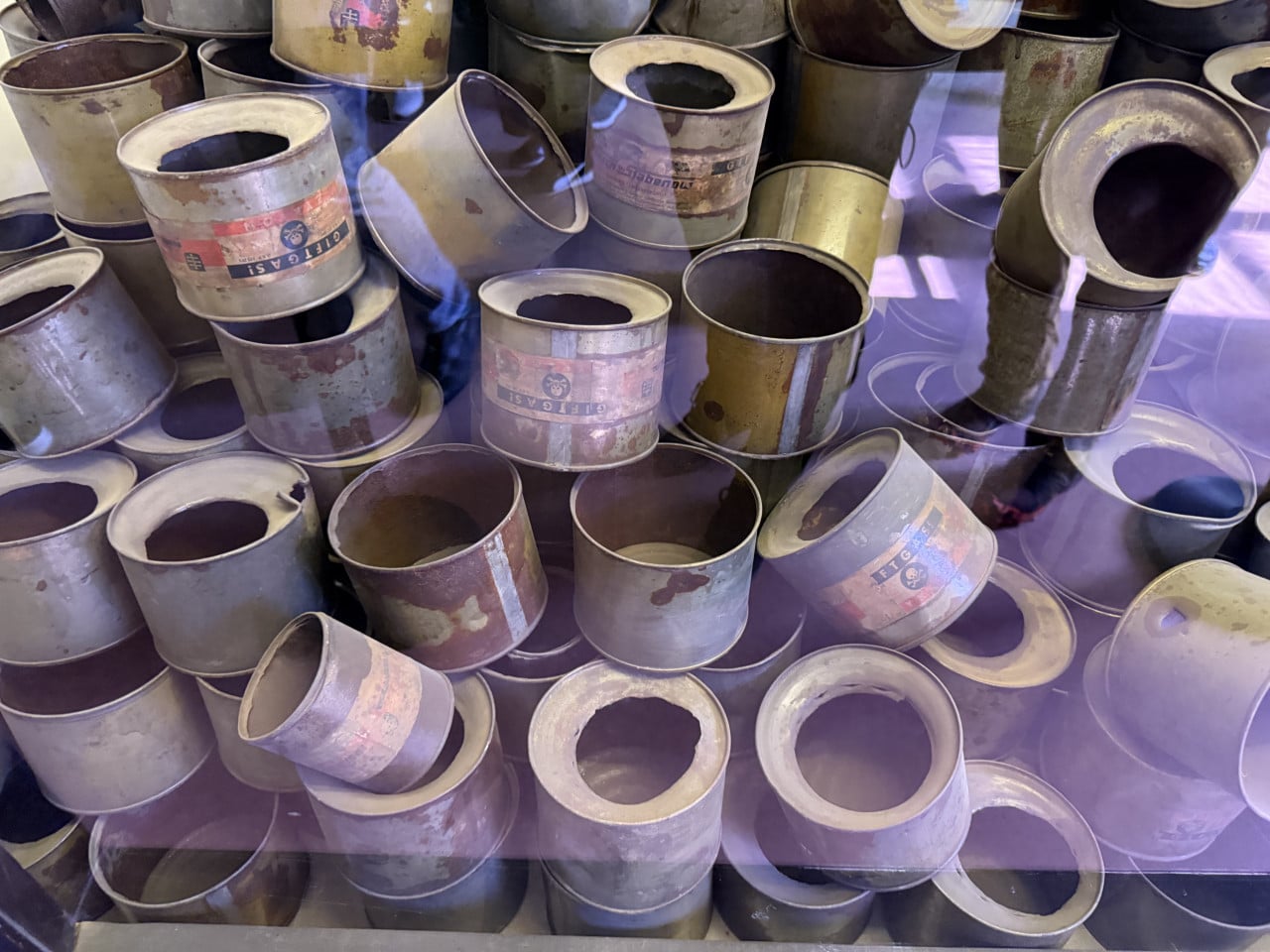
Other rooms contain piles of the victims' personal belongings—enormous heaps of shoes, suitcases, pots, brushes, glasses, and children's clothing. People brought their most important possessions to the camp because they had been told they were moving “to a new home.” In reality, most of them died in a gas chamber within hours of arriving.
Among the suitcases, one particular detail caught my attention. Just look—one of the suitcases has “PETR GANS PILSEN” written on it in white chalk. Pilsen. Suddenly, the enormous scale of the tragedy takes on a human dimension. This was someone from the Protectorate, someone from the Czech lands, with their own name and address, who had carefully labeled their suitcase because they believed they would see it again someday.
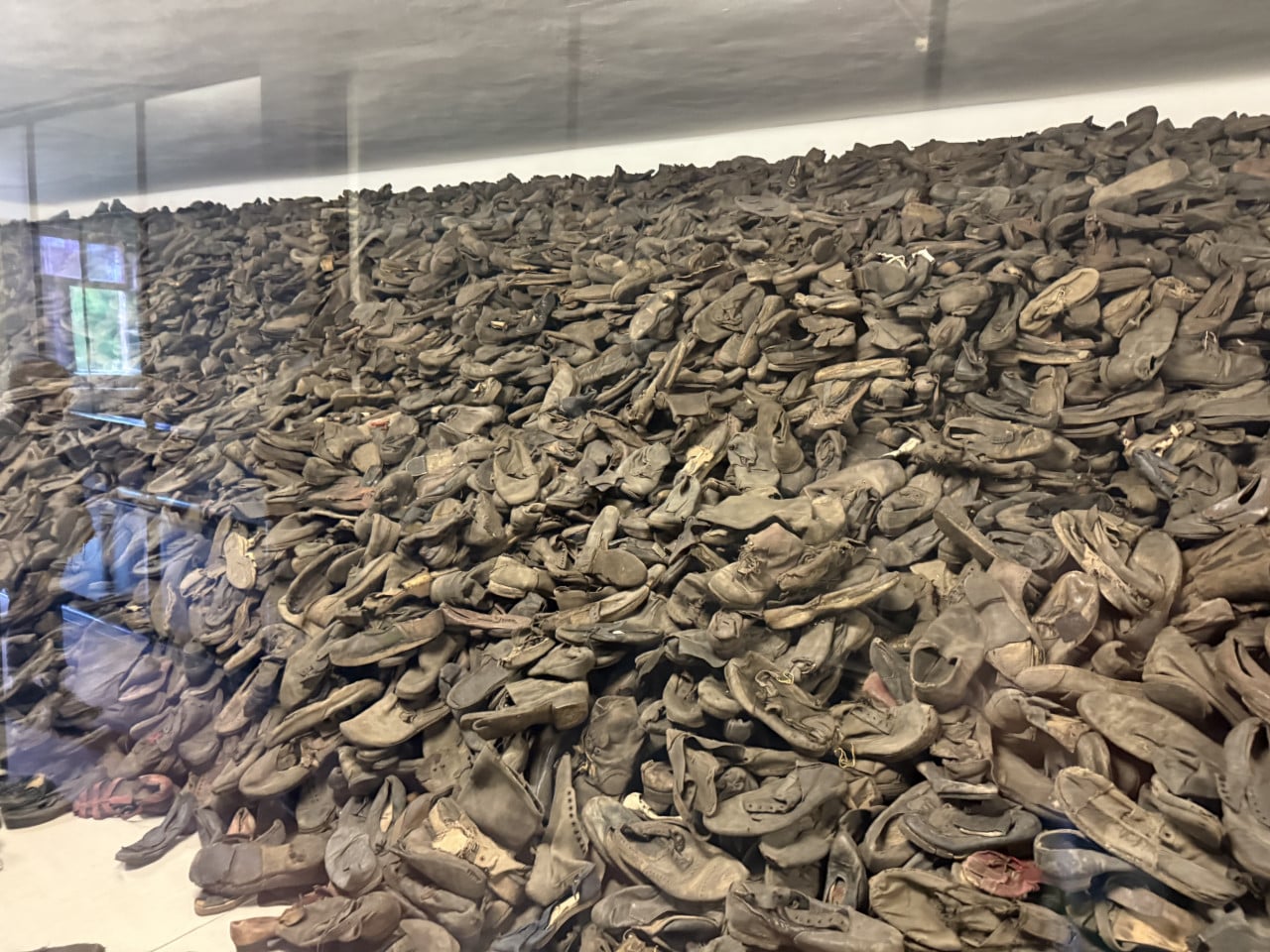
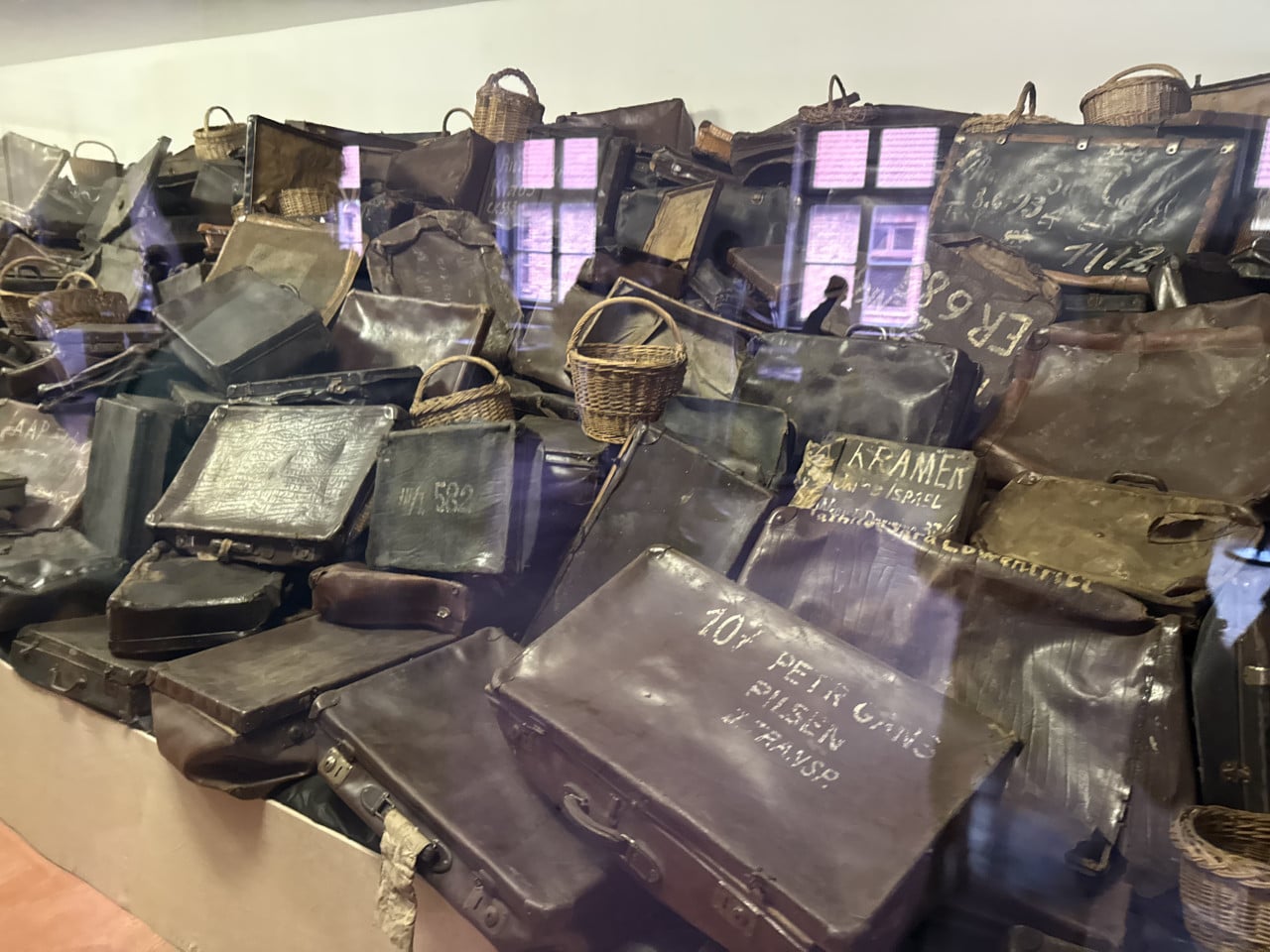
But the Nazis did not use only personal belongings. They made mattresses and textiles from hair cut from prisoners before they were gassed, while gold teeth, for example, were melted into ingots.
Life in a block: 700 to 1,000 people per barrack
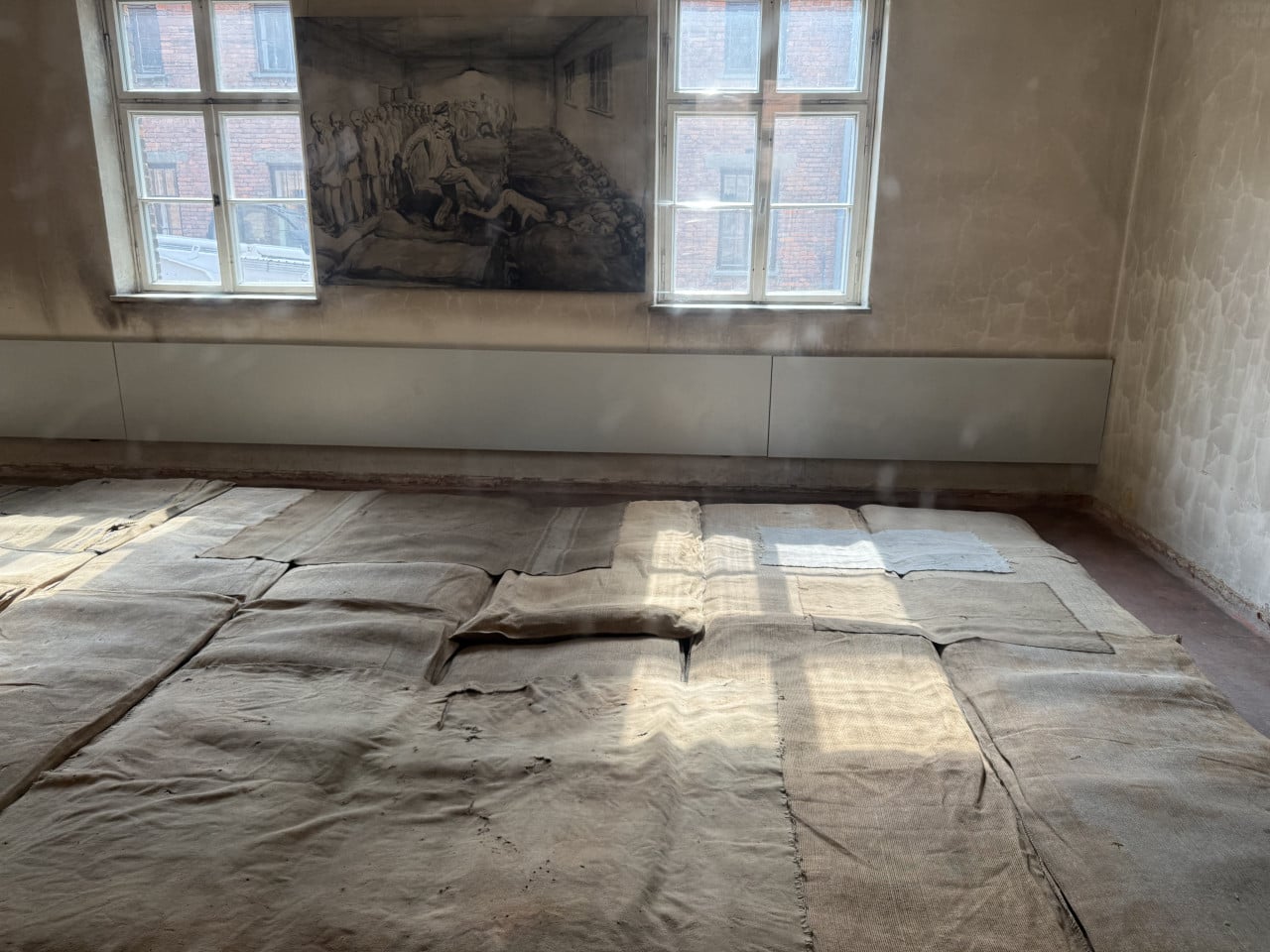
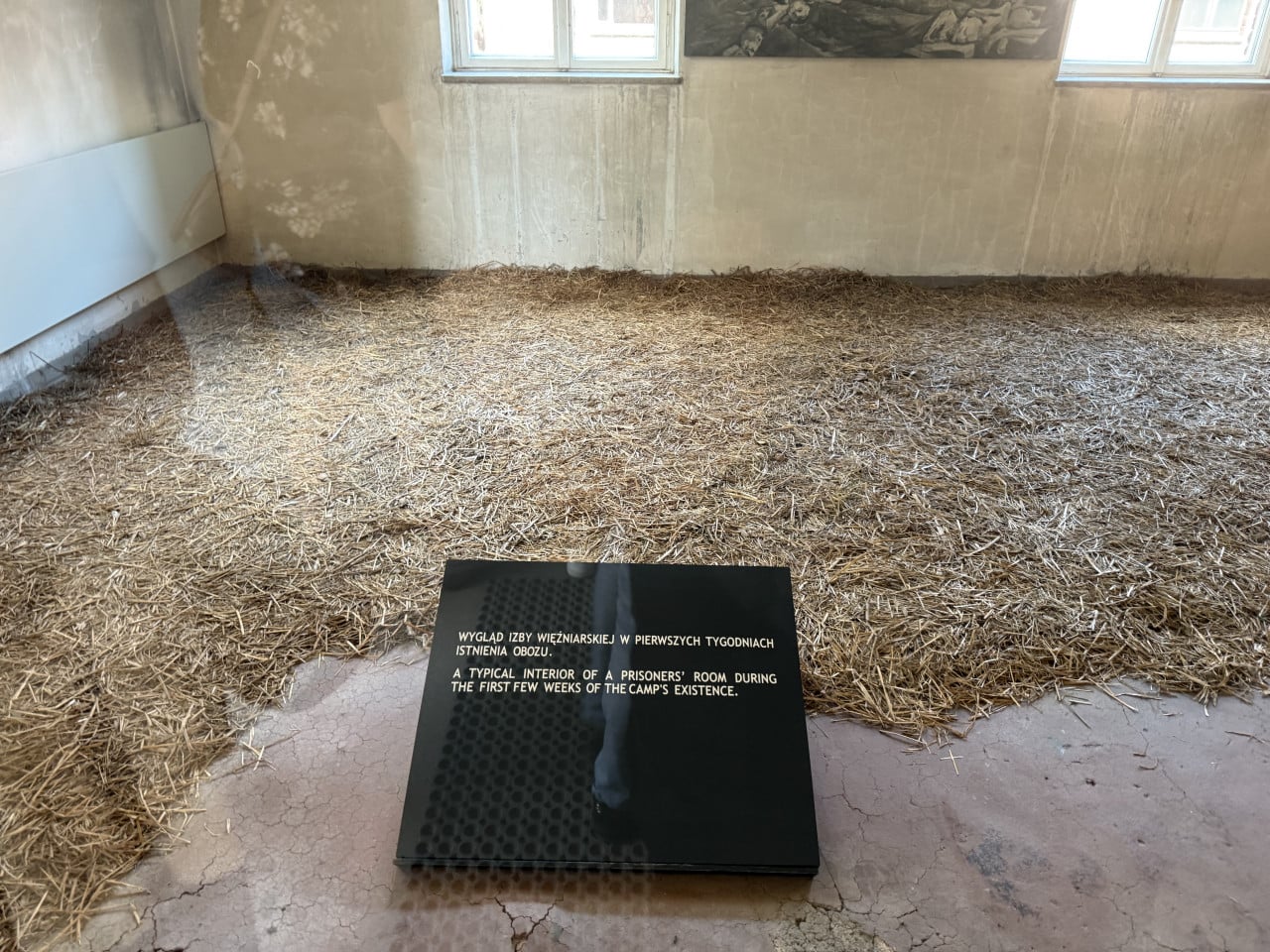
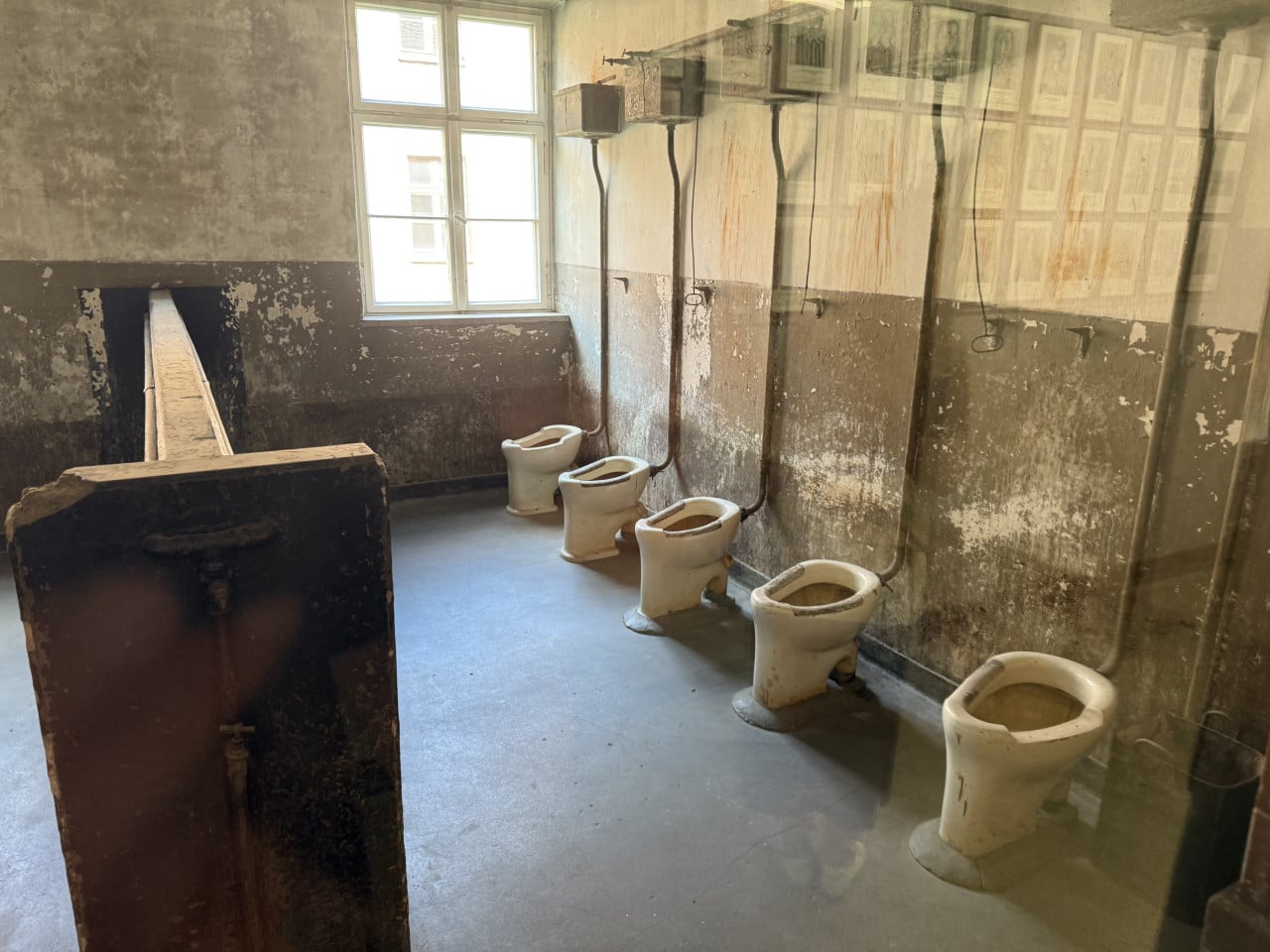
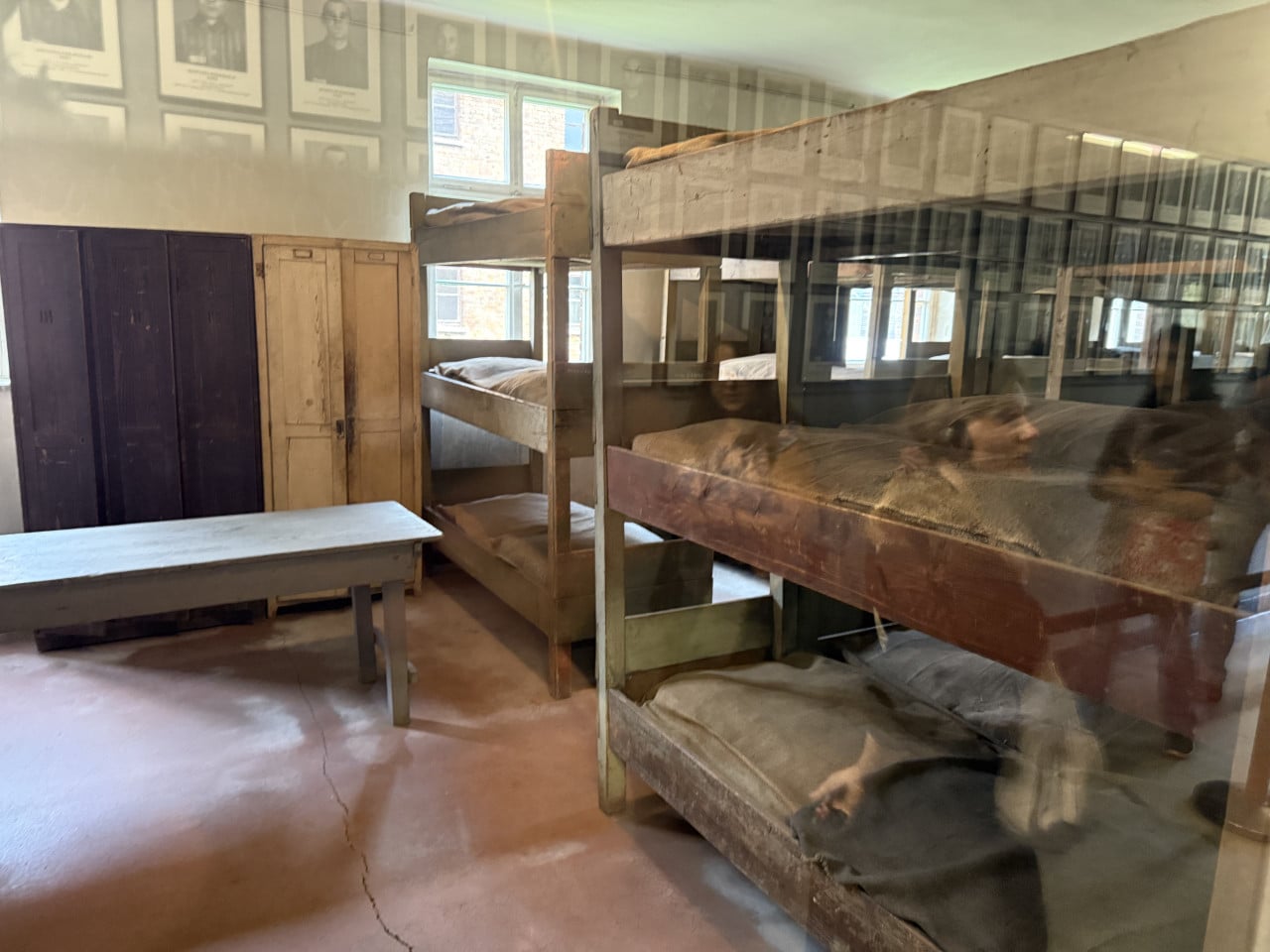
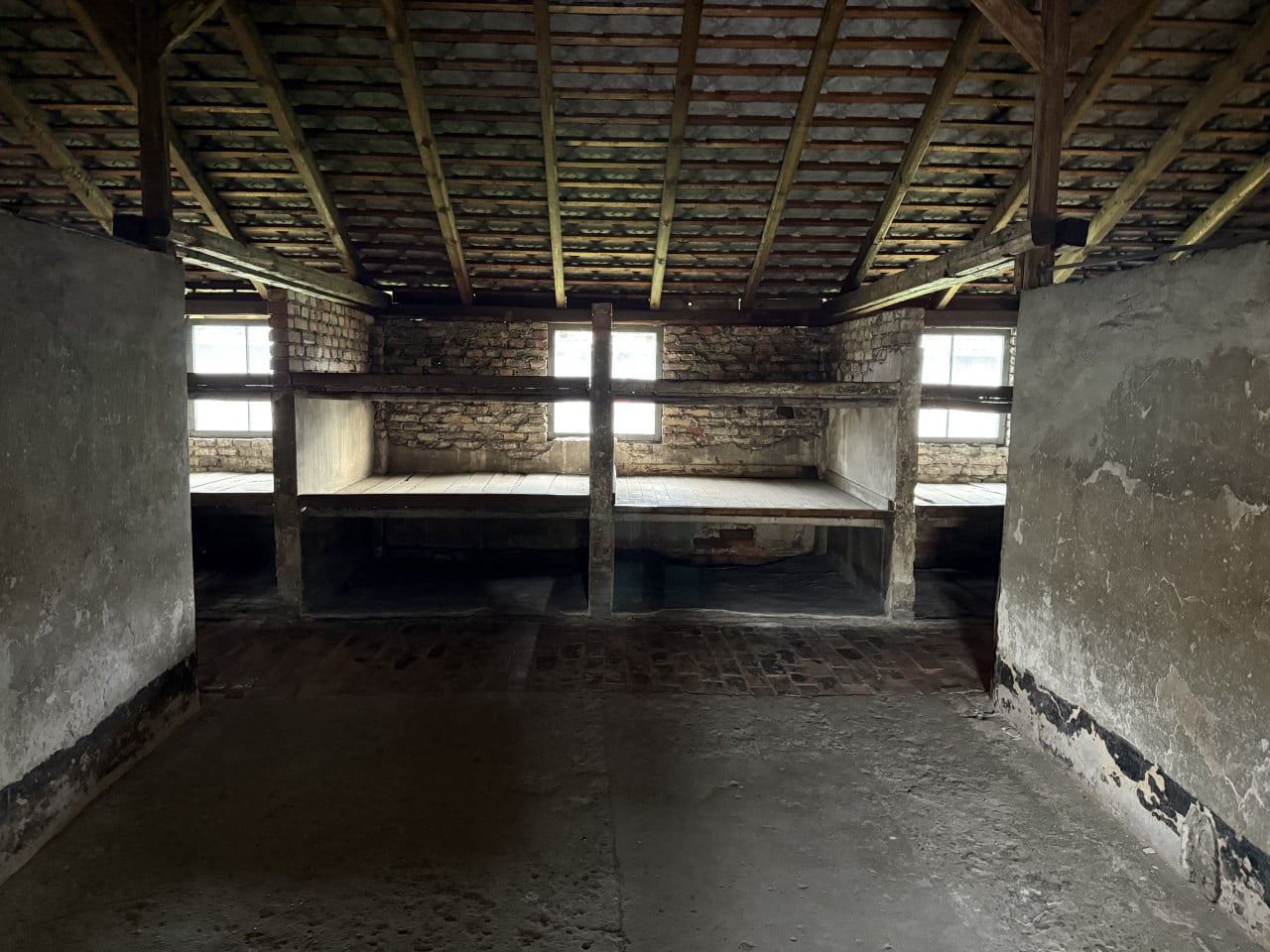
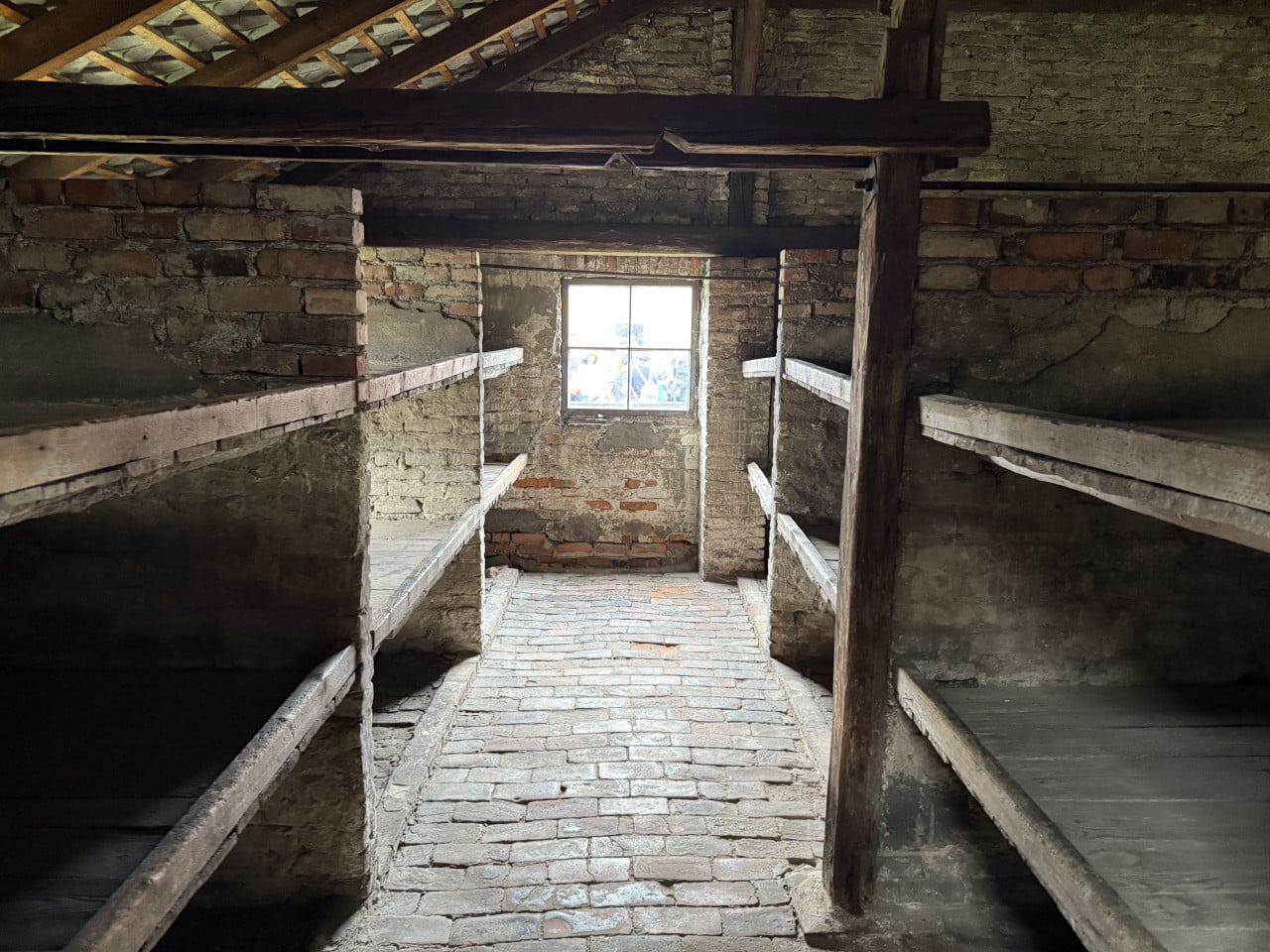
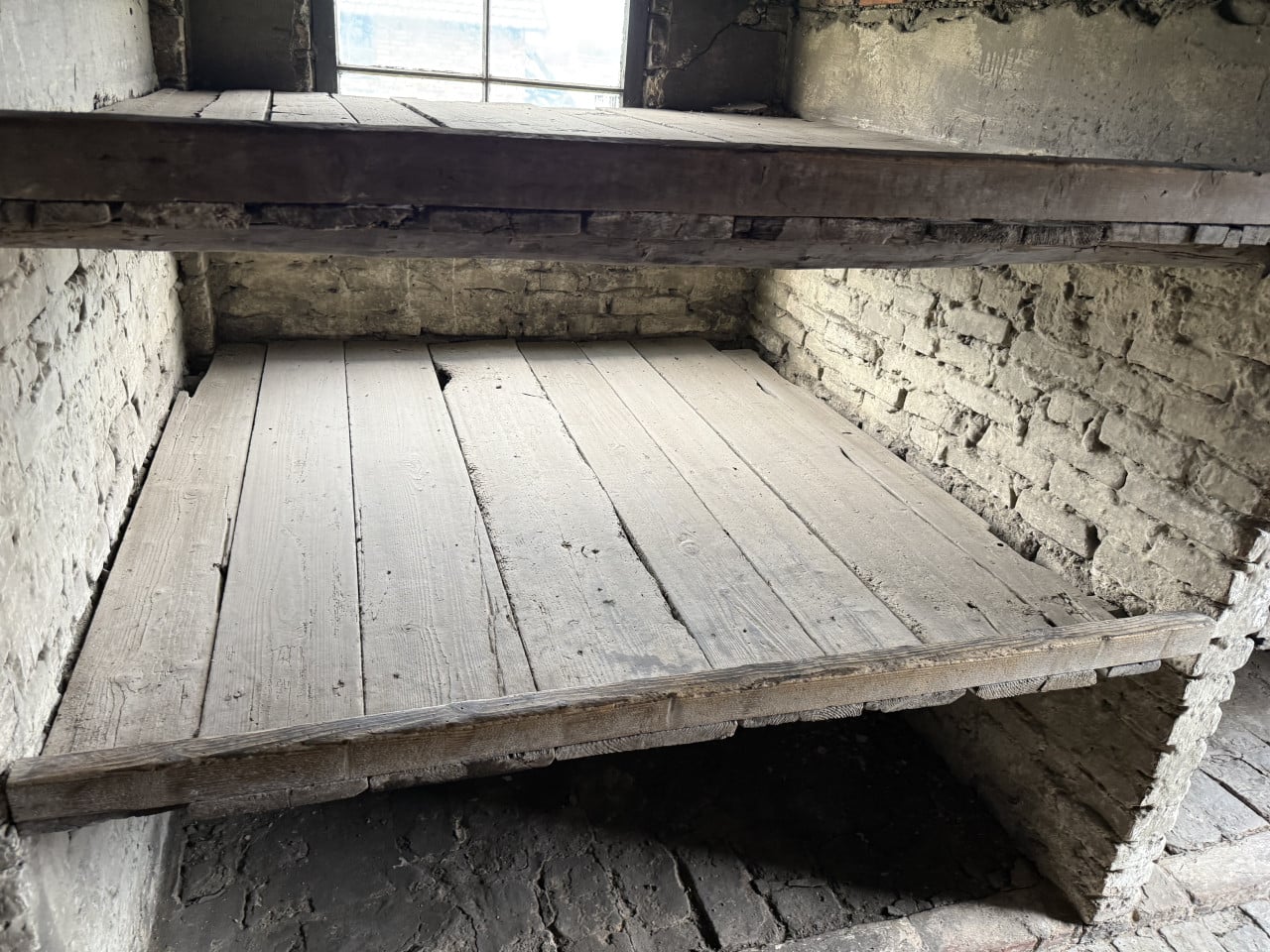
The accommodation conditions were utterly inhuman. Each barrack, originally intended for several dozen people, housed an average of 700 prisoners, but often more than 1,000.
Prisoners slept on bare floors on straw mattresses or on wooden bunk beds, with six to ten people crammed onto each of three levels.
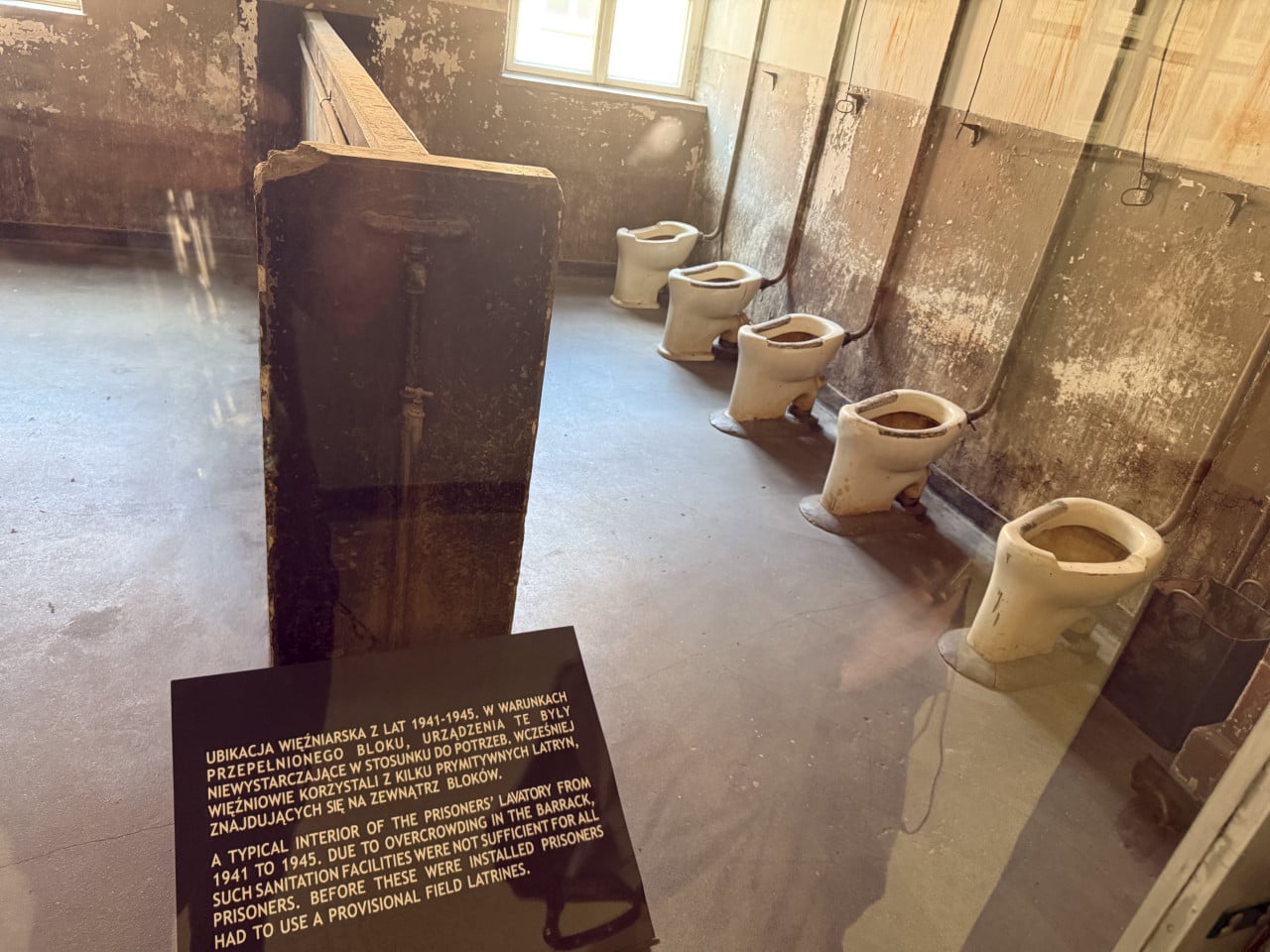
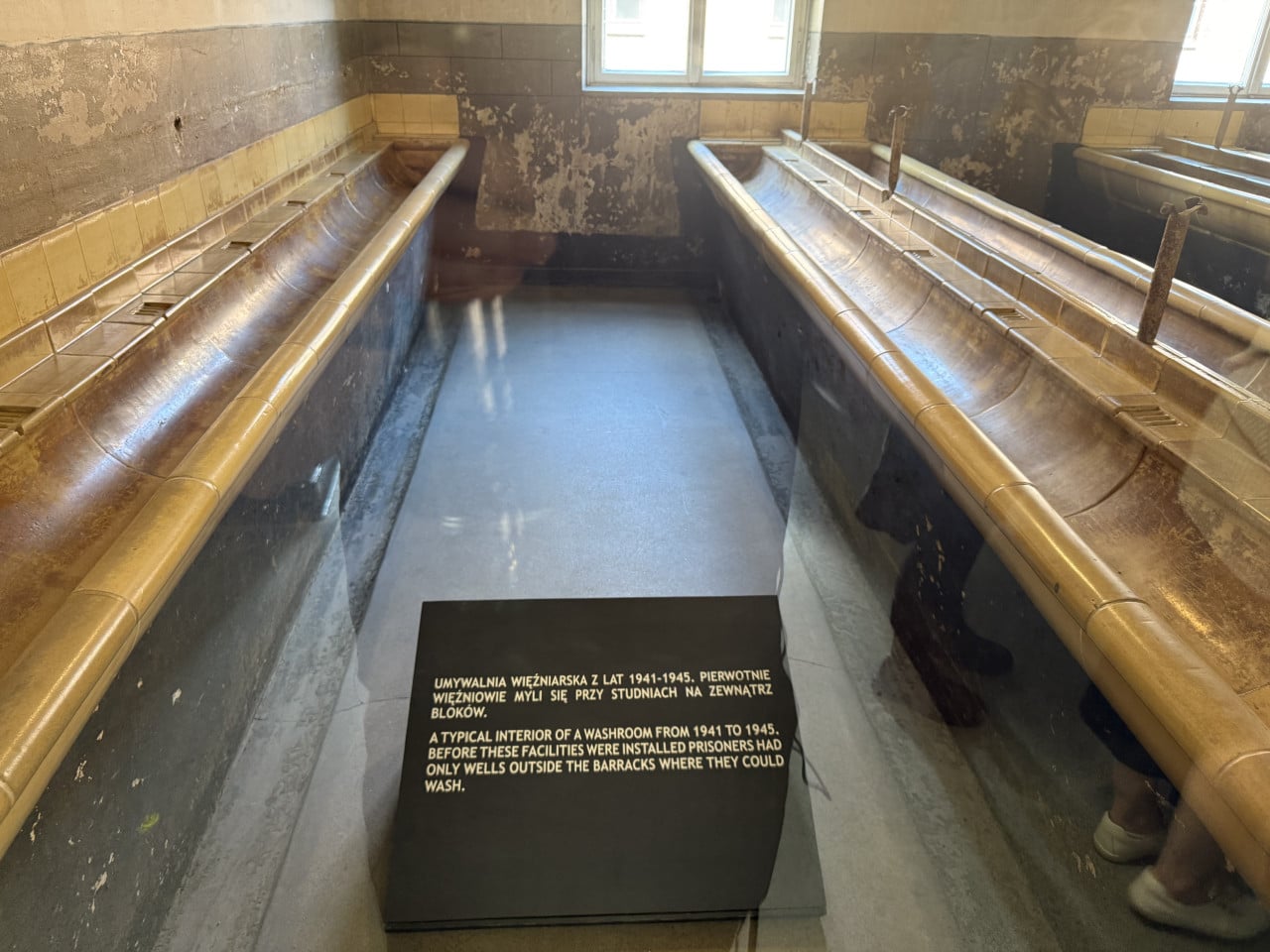
Hygienic conditions were catastrophic. We were also shown the original washroom—a long communal trough with only a few taps for hundreds of prisoners.
Courtrooms, the Death Wall, and medical experiments
At the site, we also passed through a courtroom where sentences were handed down to prisoners who had tried to escape or violated camp rules. The punishments were absurdly harsh and often meant death. Between Blocks 10 and 11 stands the so-called Death Wall, where members of the SS shot several thousand people, primarily members of the Polish resistance.
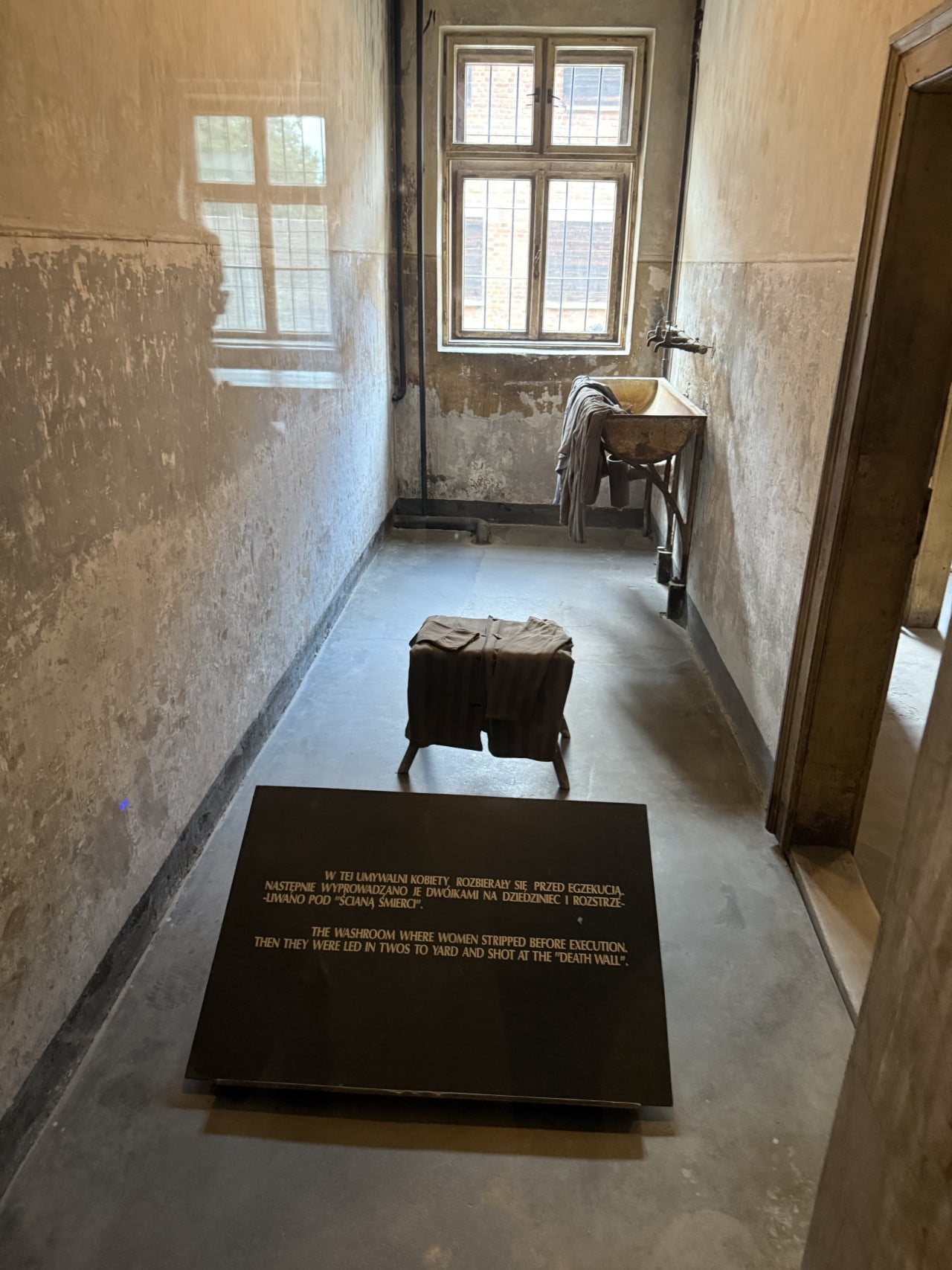
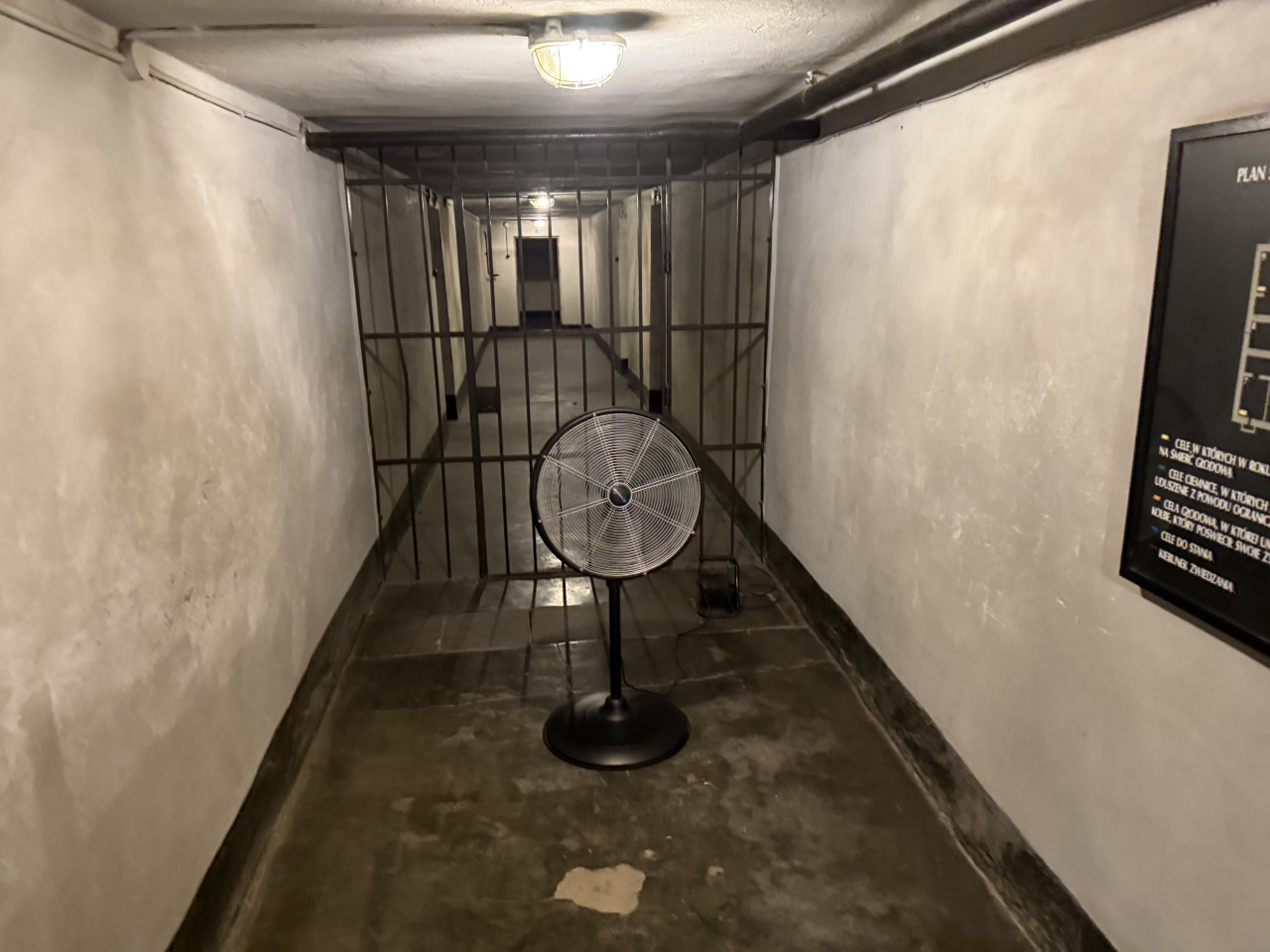
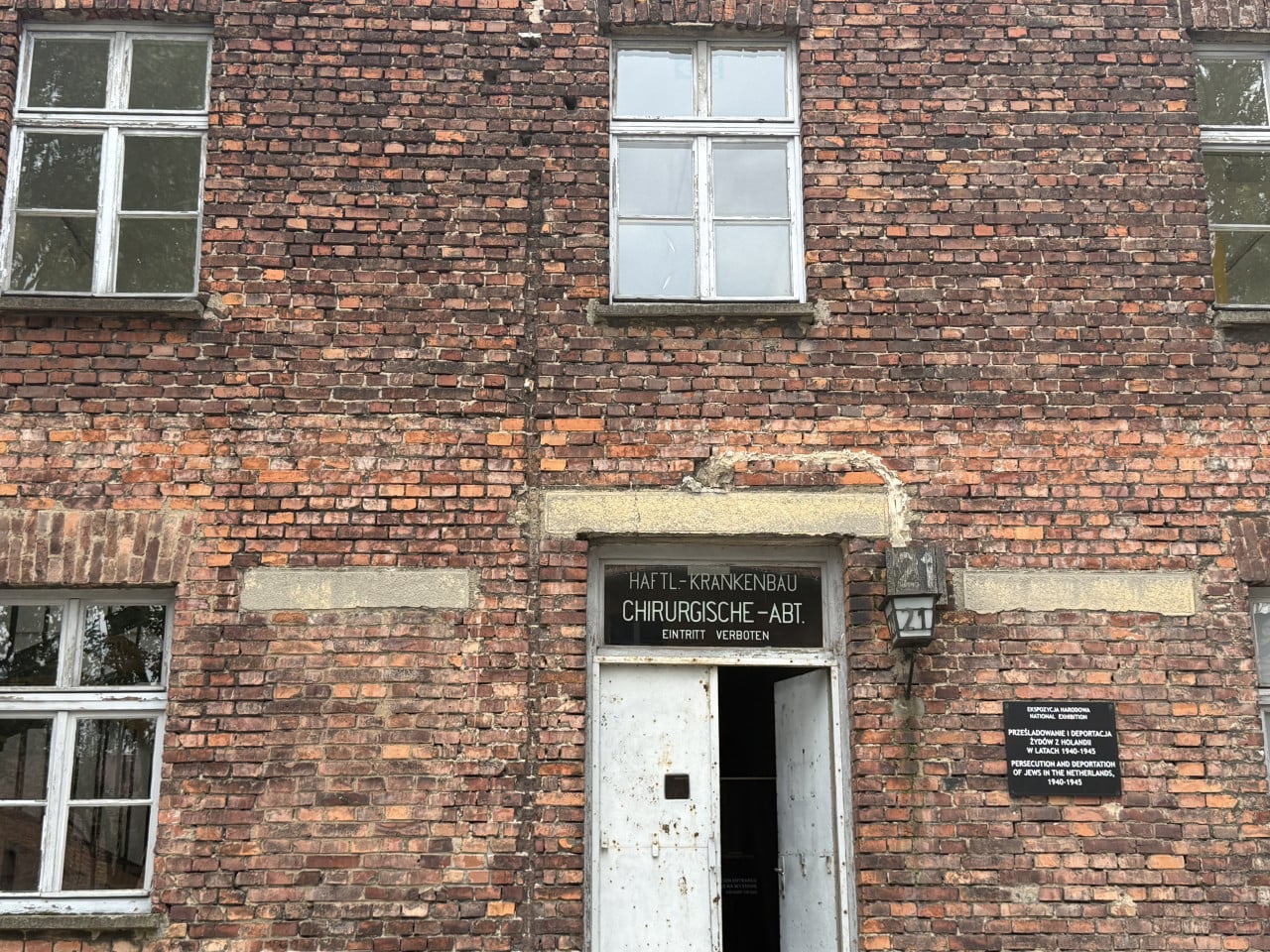
In Block 10, German gynecologist Prof. Dr. Carl Clauberg conducted criminal sterilization experiments, mainly on Jewish women, from April 1943 to May 1944. Some died during the experiments, while others were killed so that autopsies could be performed. Those who survived were left permanently disabled.
Also notorious was the pseudoscientific doctor Josef Mengele, nicknamed the “Angel of Death,” who conducted experiments at Birkenau mainly on twins, young children, and Roma.
Two stories you should not forget
Among the millions of Auschwitz victims are stories that stand out from history like a light and deserve to be known. I will choose the two that I find the most powerful.
Witold Pilecki was a Polish officer and member of the Polish resistance who did something incredible—he voluntarily allowed himself to be arrested so that he could infiltrate Auschwitz and discover what was happening there. In September 1940, he deliberately allowed himself to be captured during a roundup in Warsaw, was assigned number 4859, and became a prisoner. From within the camp, he built an underground resistance network numbering hundreds of prisoners and secretly smuggled reports about the killings out of the camp—probably the first detailed testimonies to reach the Allies. In April 1943, he managed to escape with two companions. After the war, Poland's communist regime executed him as a “Western spy,” and his story was suppressed for decades.
The second story is that of Father Maximilian Kolbe, a Polish Franciscan priest imprisoned at Auschwitz as a political prisoner. In July 1941, after one of the prisoners attempted to escape from the camp, the SS selected ten men to starve to death in the basement bunker of Block 11 as punishment for his escape. One of those selected, Franciszek Gajowniczek, cried out in despair that he had a family. Kolbe stepped out of line and asked the commandant to take him instead. The commandant agreed. In the bunker, Kolbe sang prayers with the others and, as the last of the ten to remain alive, was killed by an injection of carbolic acid on August 14, 1941. Gajowniczek survived the war and did not die until 1995. Maximilian Kolbe was canonized by Pope John Paul II in 1982.
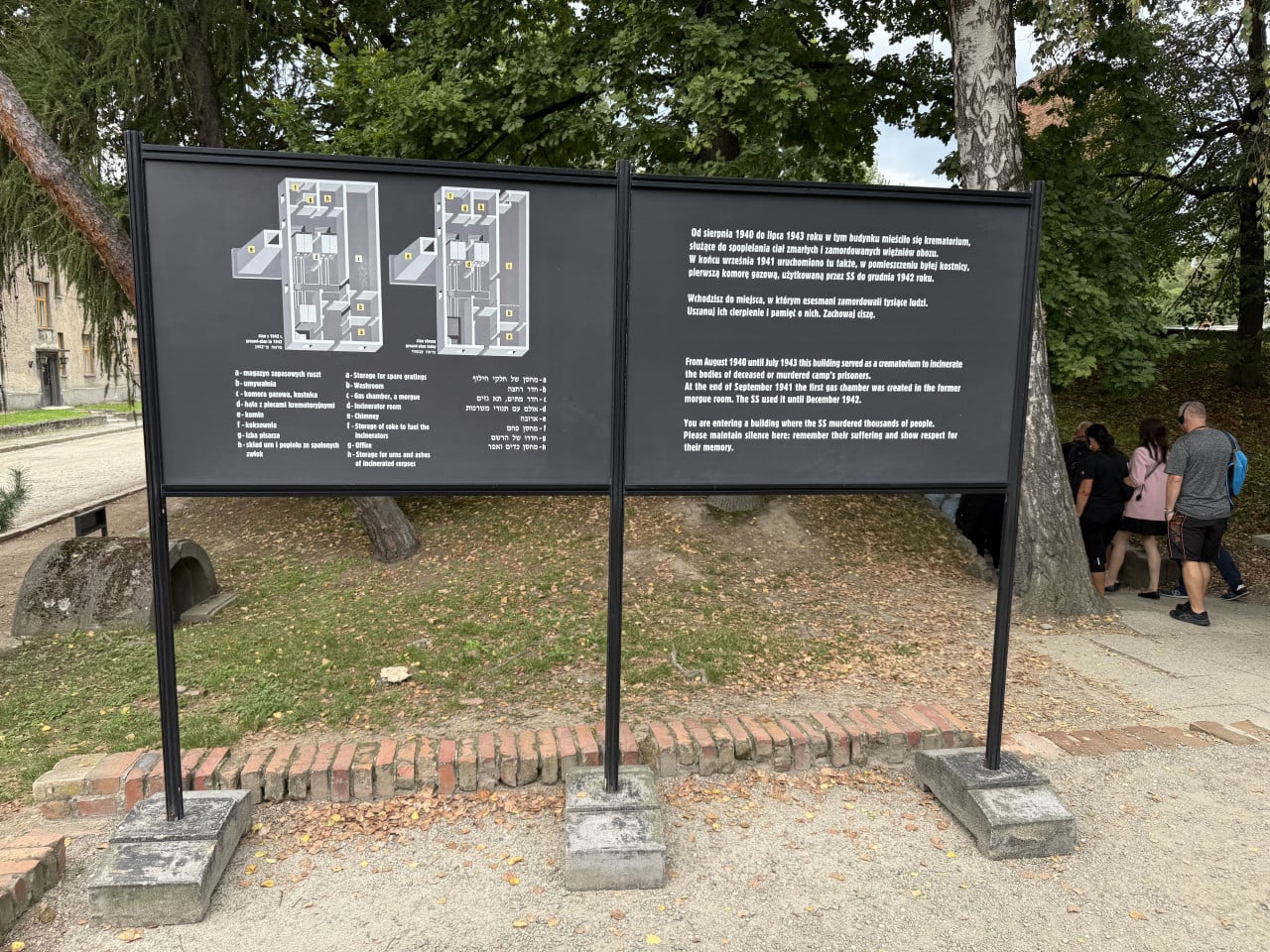
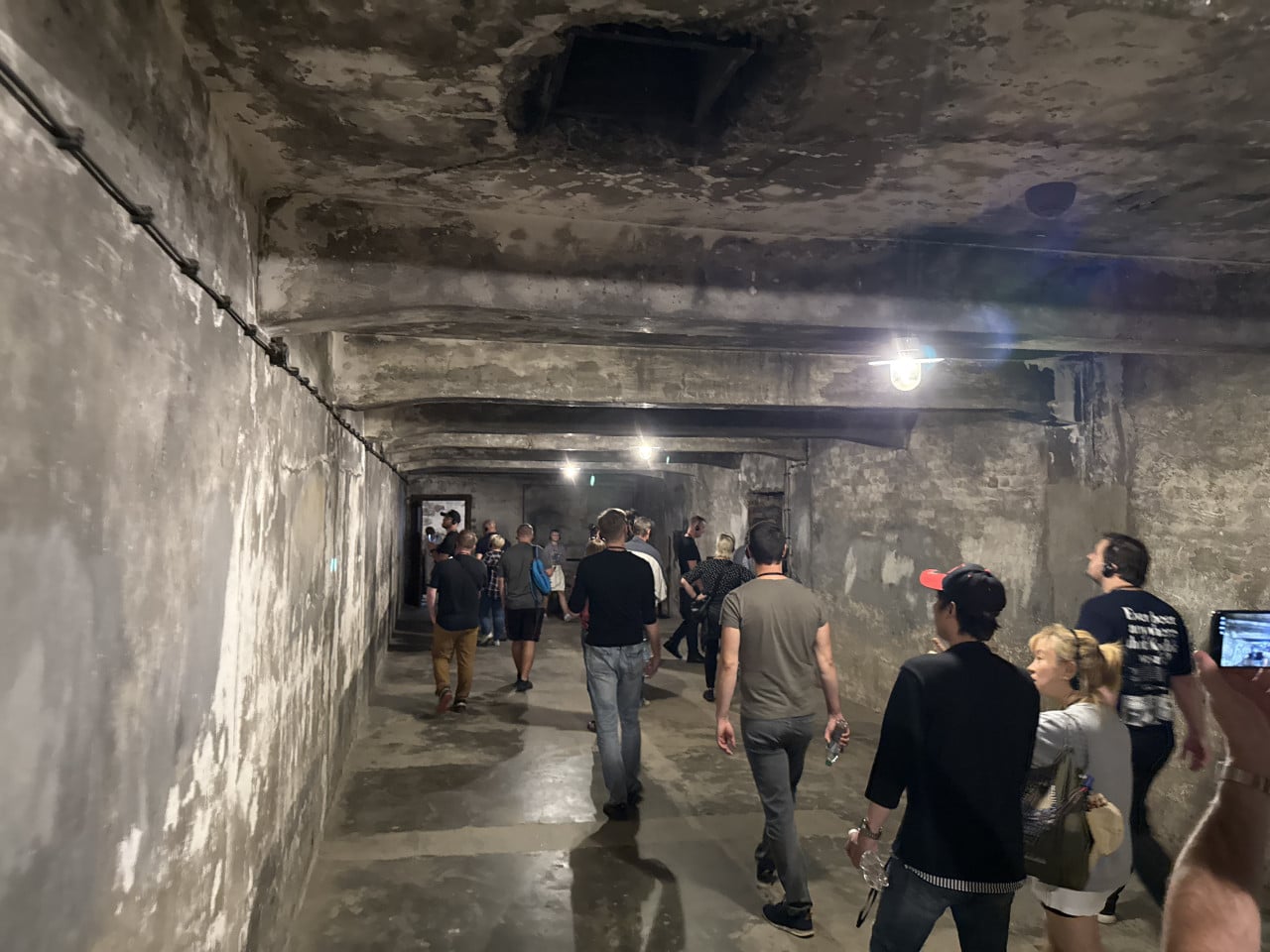
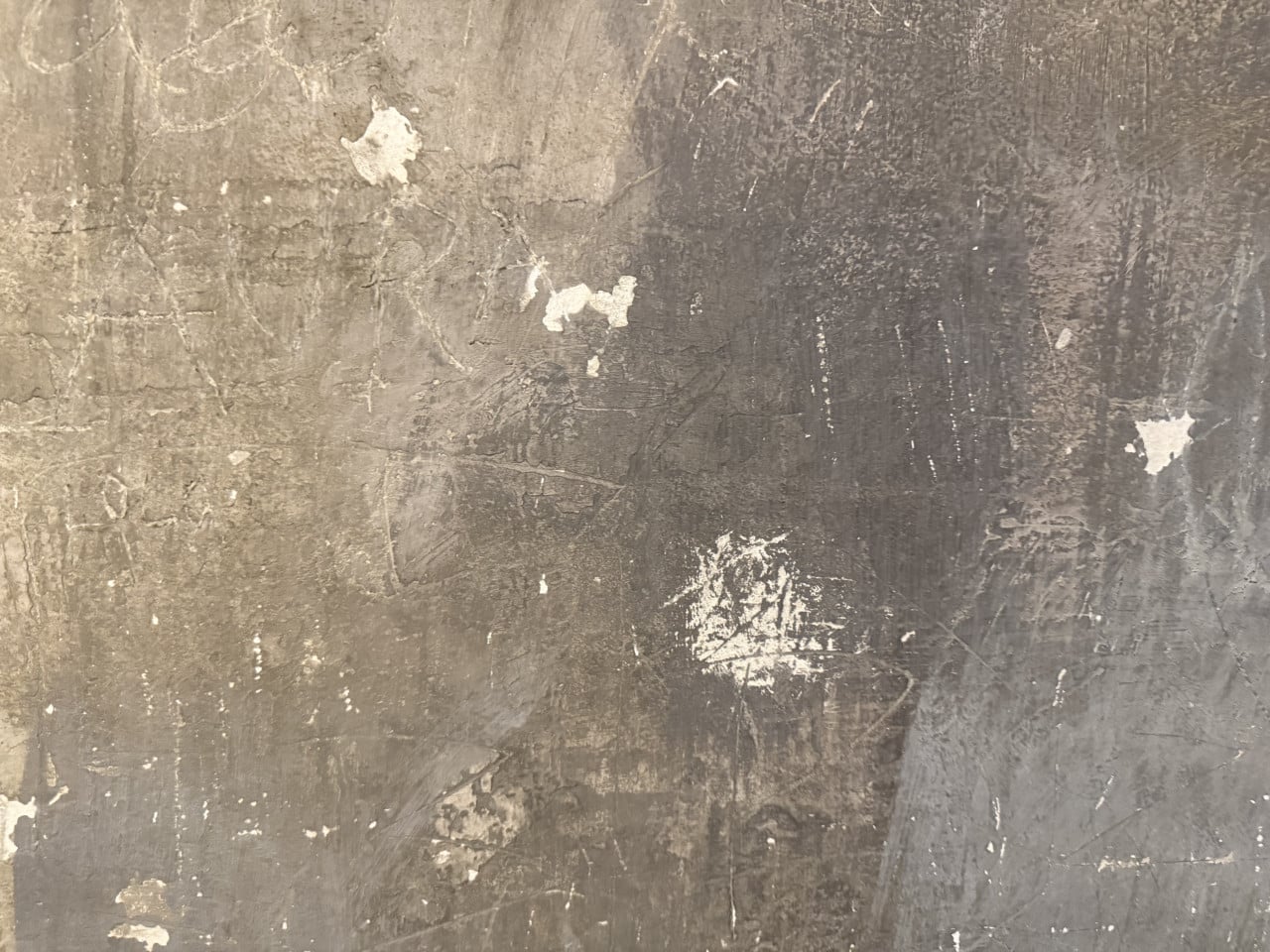
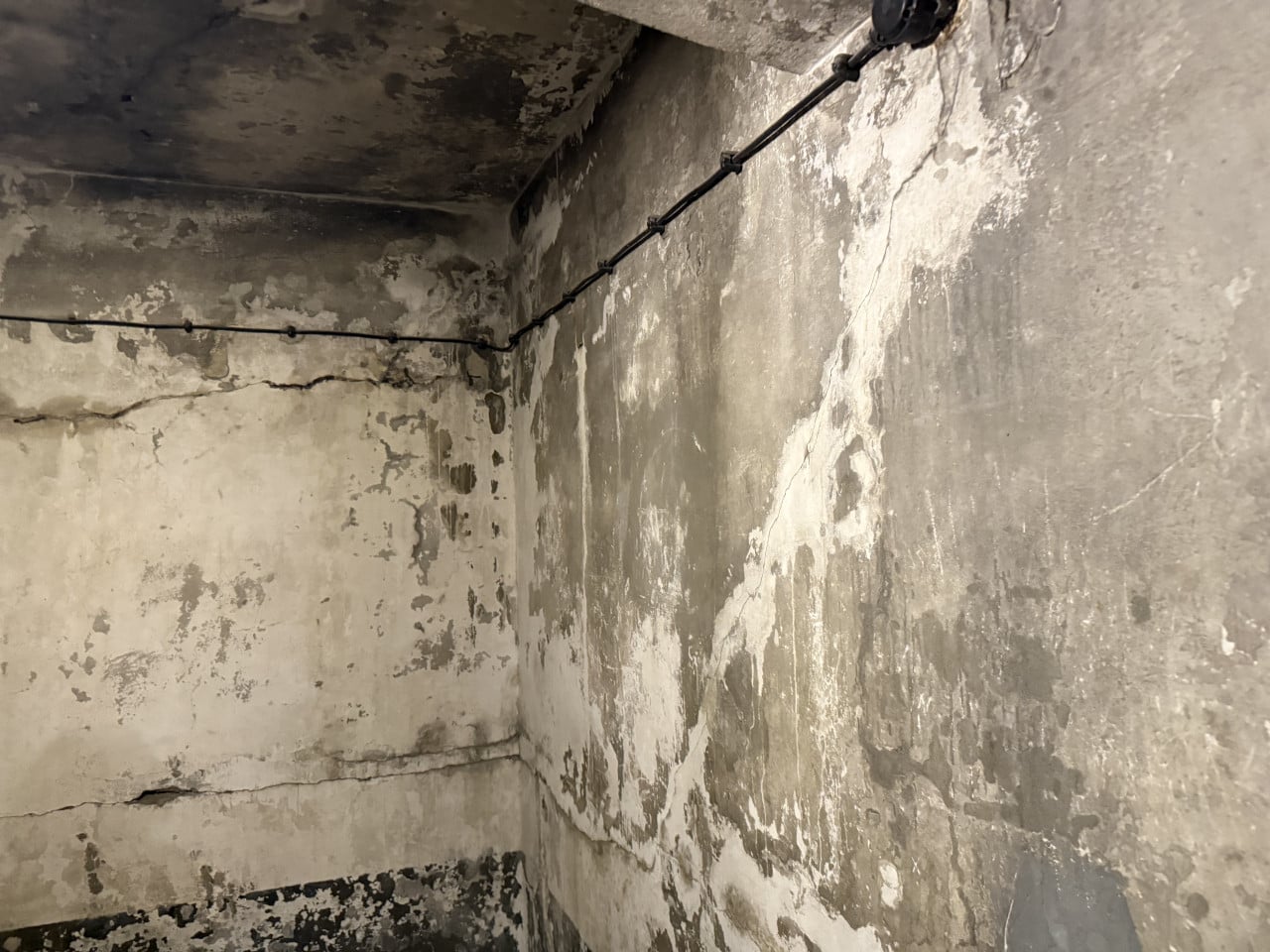
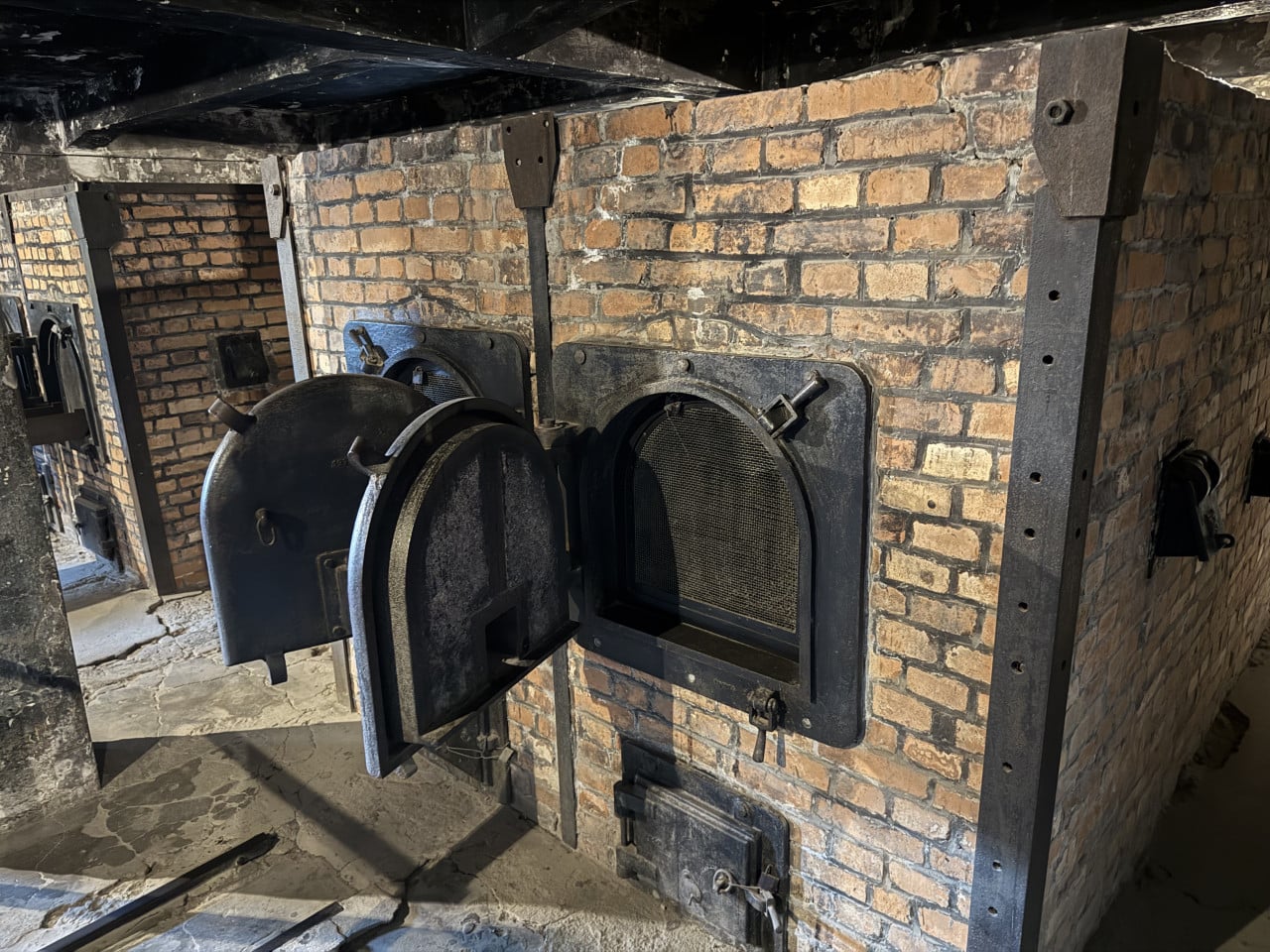
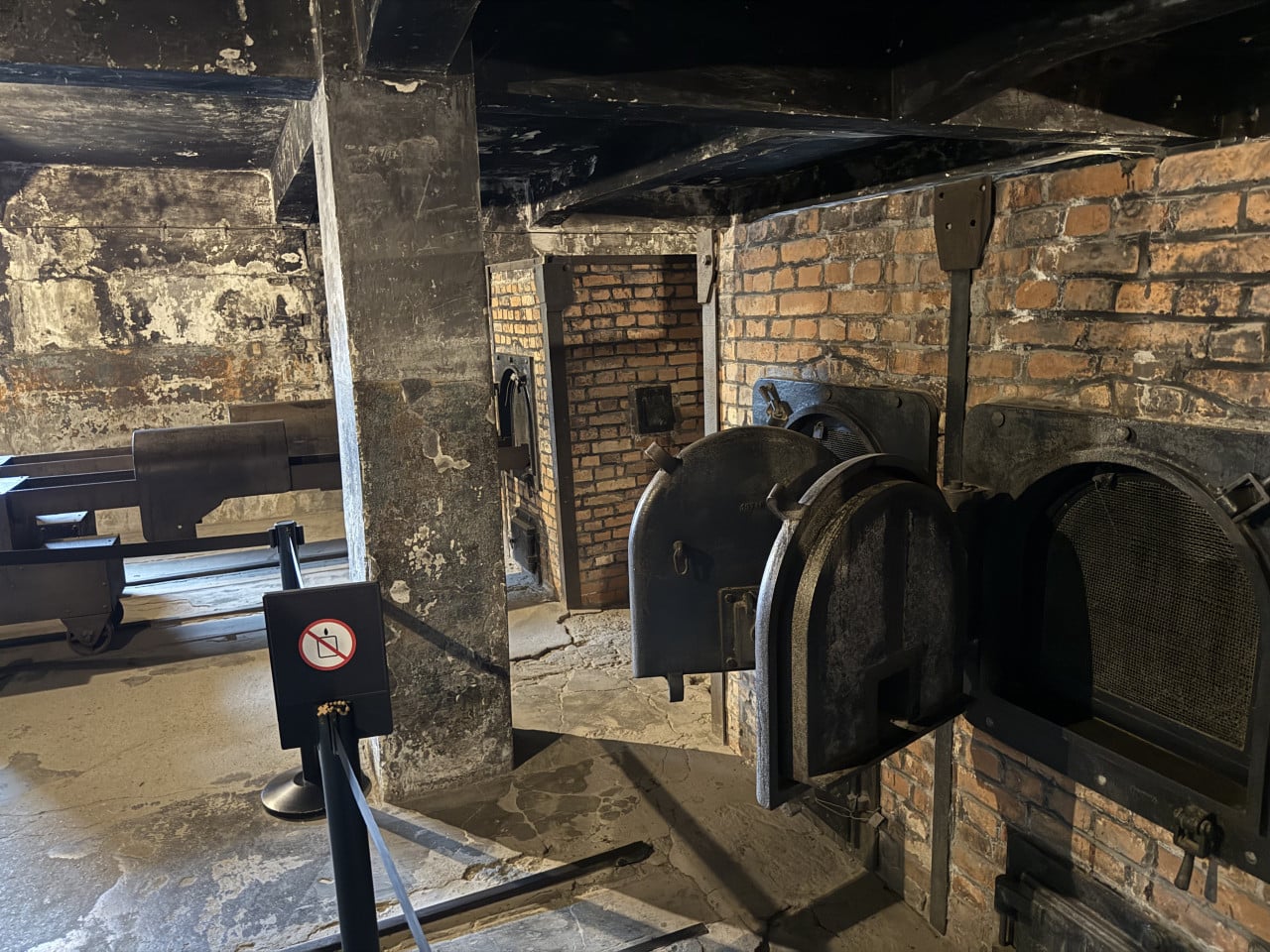
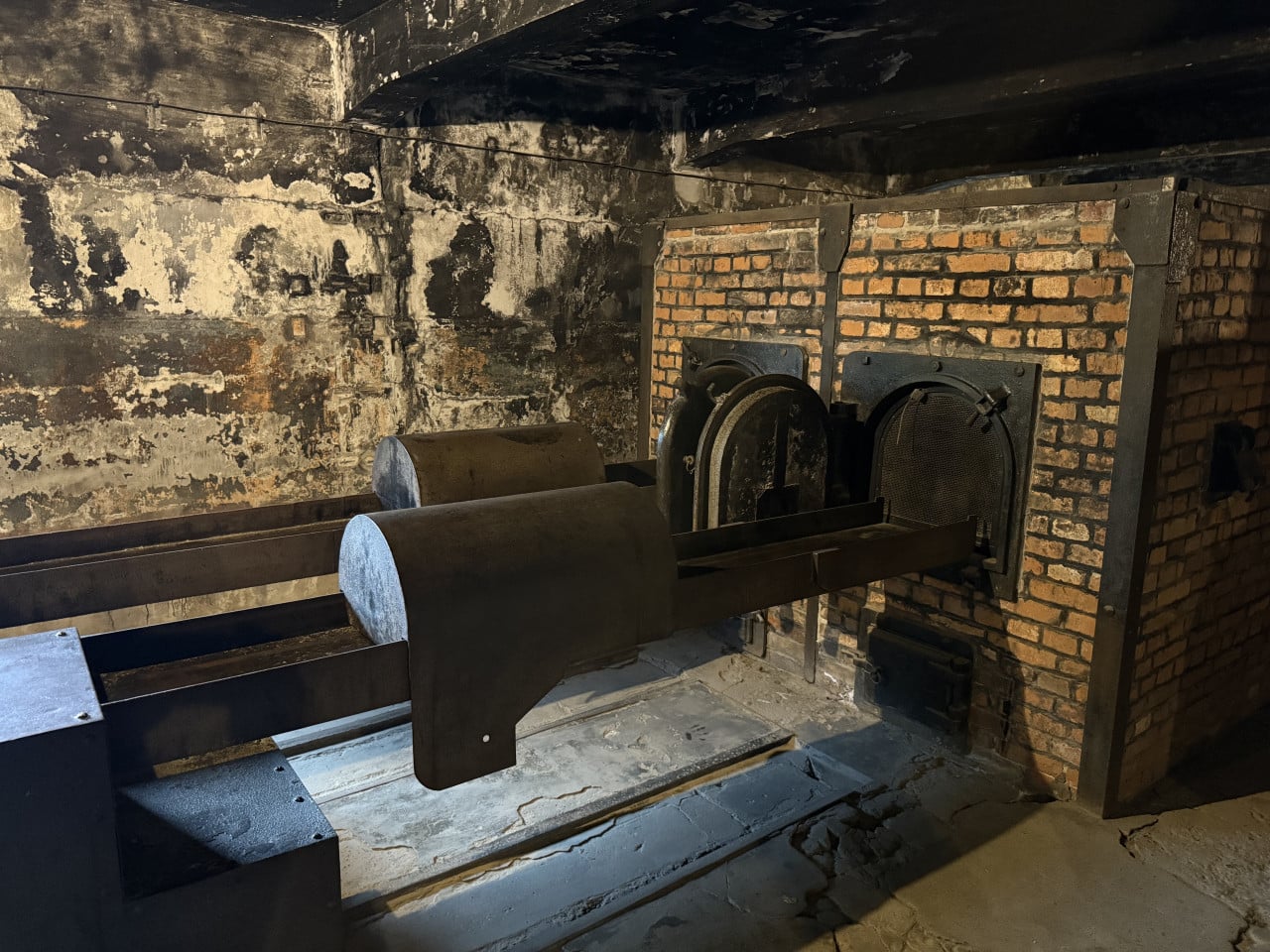
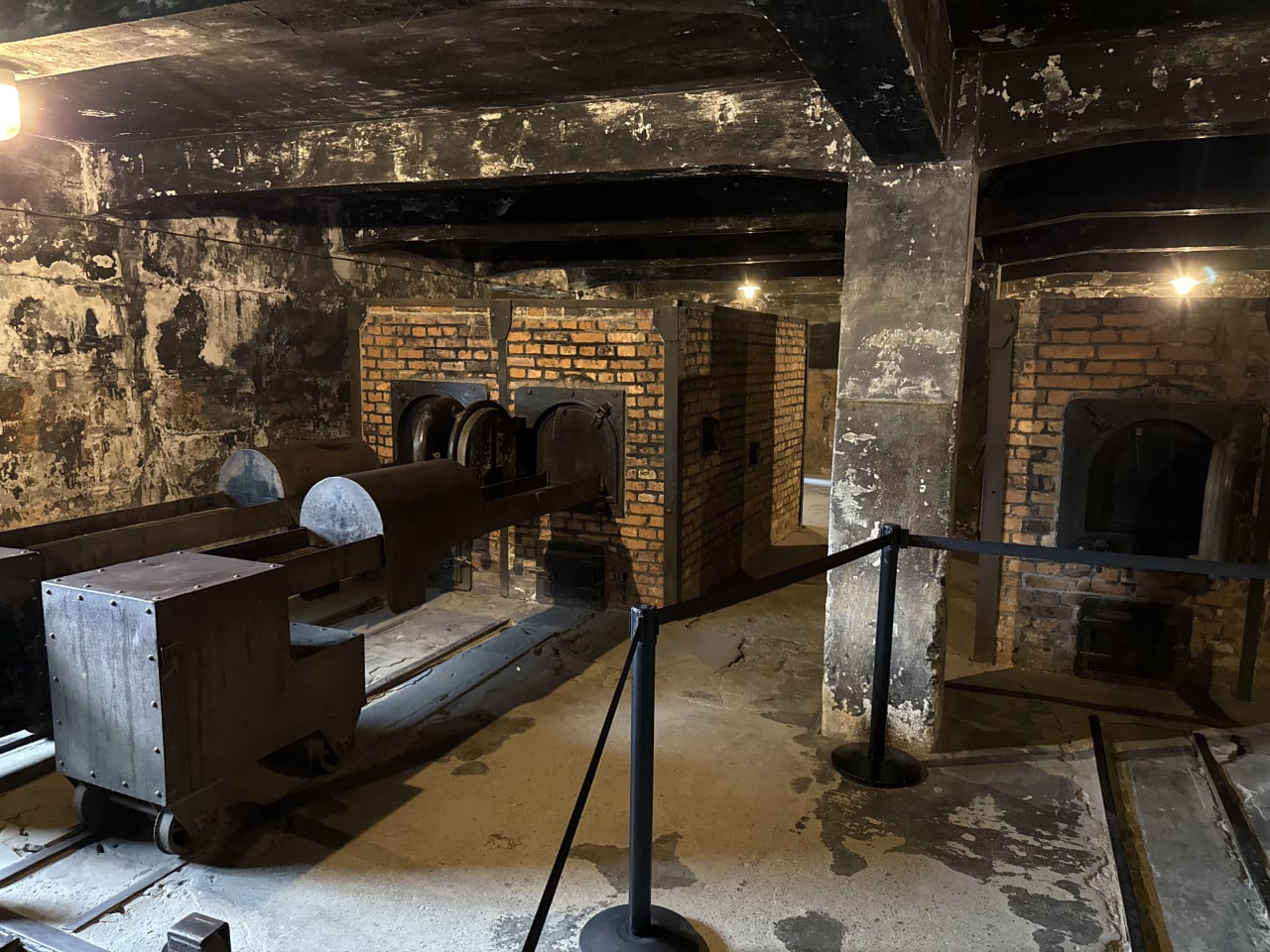
This is what a gas chamber at Auschwitz looks like; there is probably no need to elaborate. Scratches made by the fingernails of those being executed can be seen on the walls.
Moving on to Birkenau: where all comparisons end
After our tour of Auschwitz I, a bus took us about three kilometers away to Birkenau (Březinka in Czech). And this was where I saw what I knew from pictures—the long ramp, the tracks leading into the camp, and the famous “Gate of Death” with its observation tower. I had only a general familiarity with Auschwitz I, but this silhouette is the most distinctive symbol of the Holocaust.
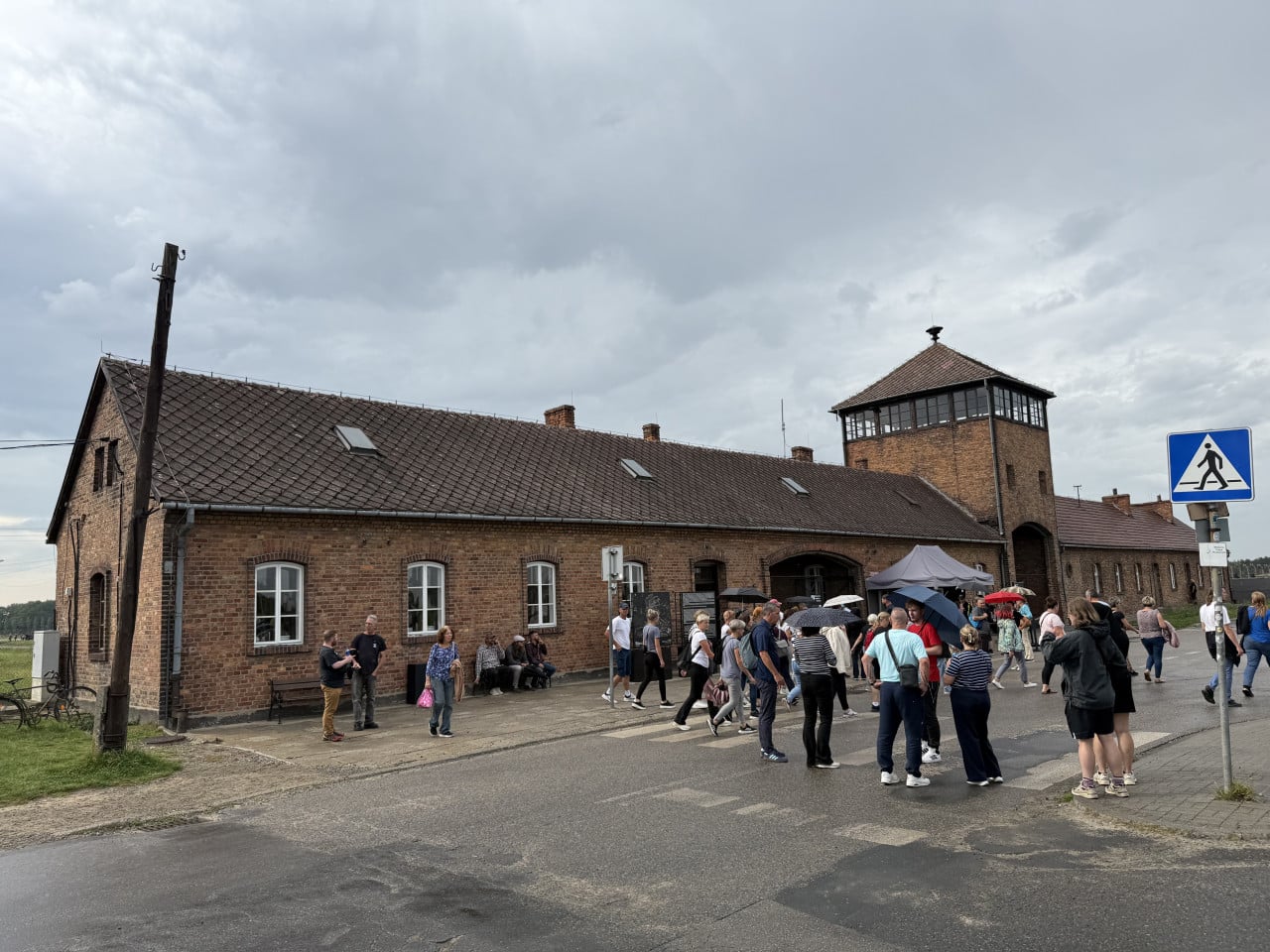
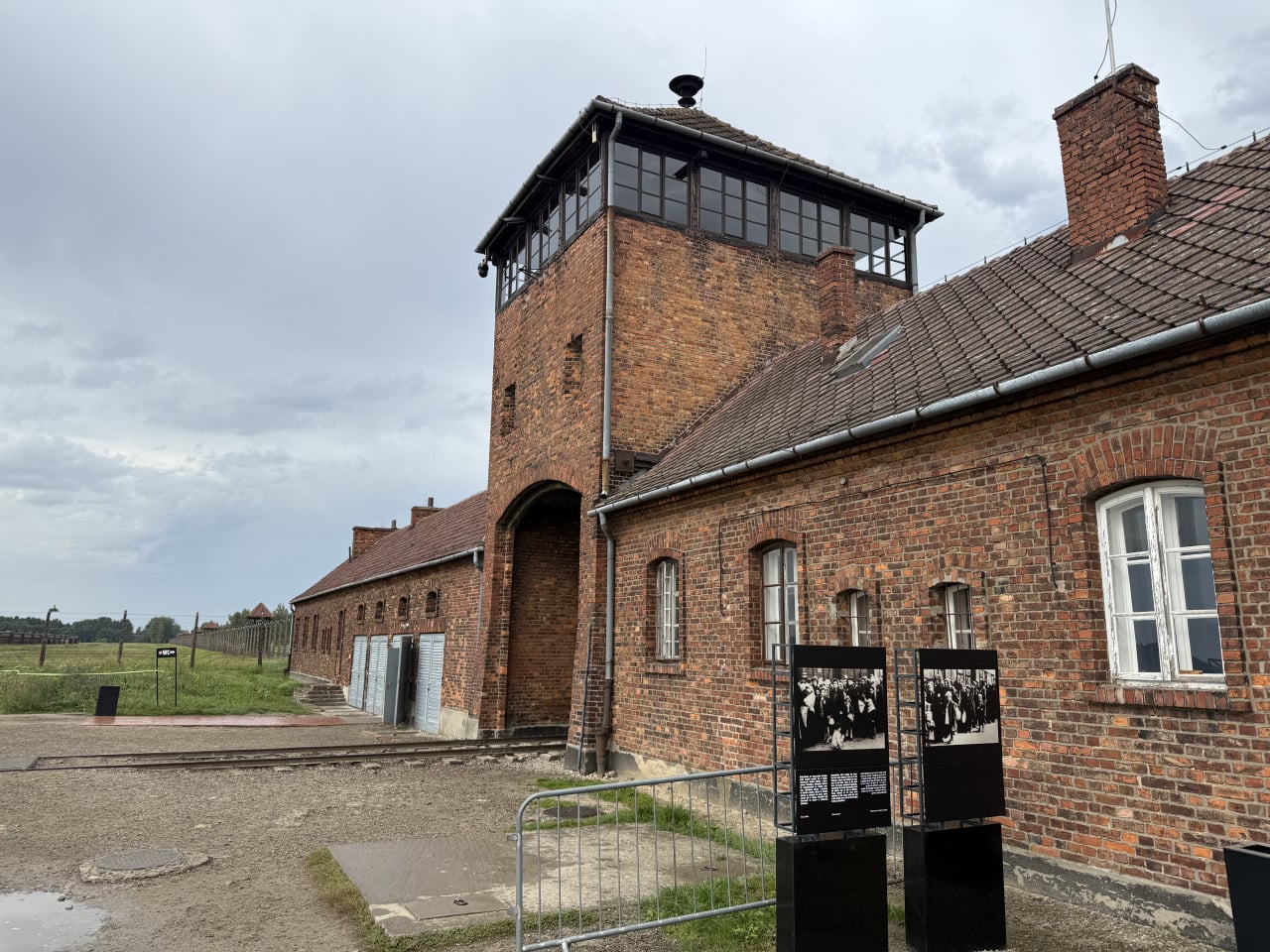
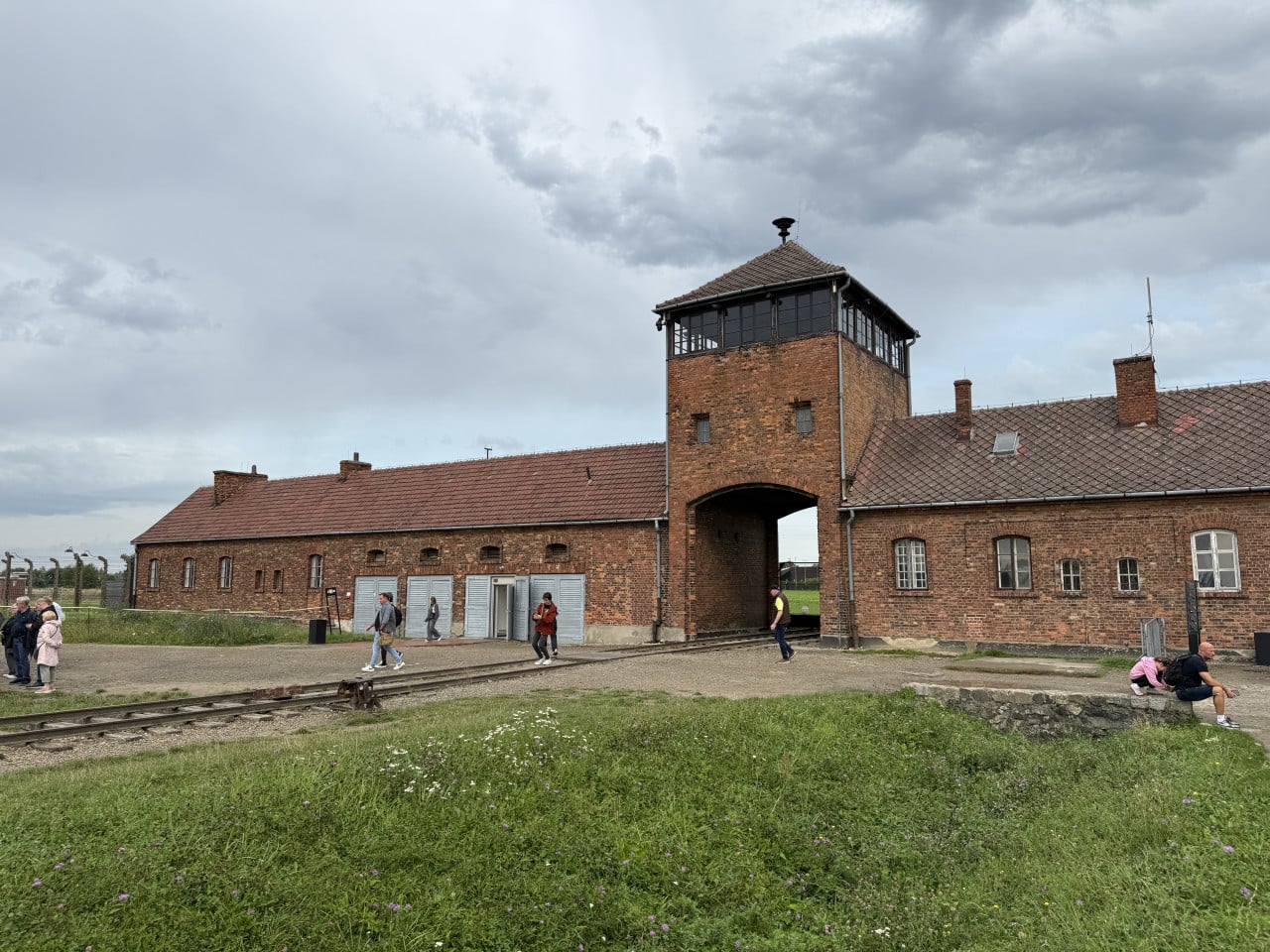
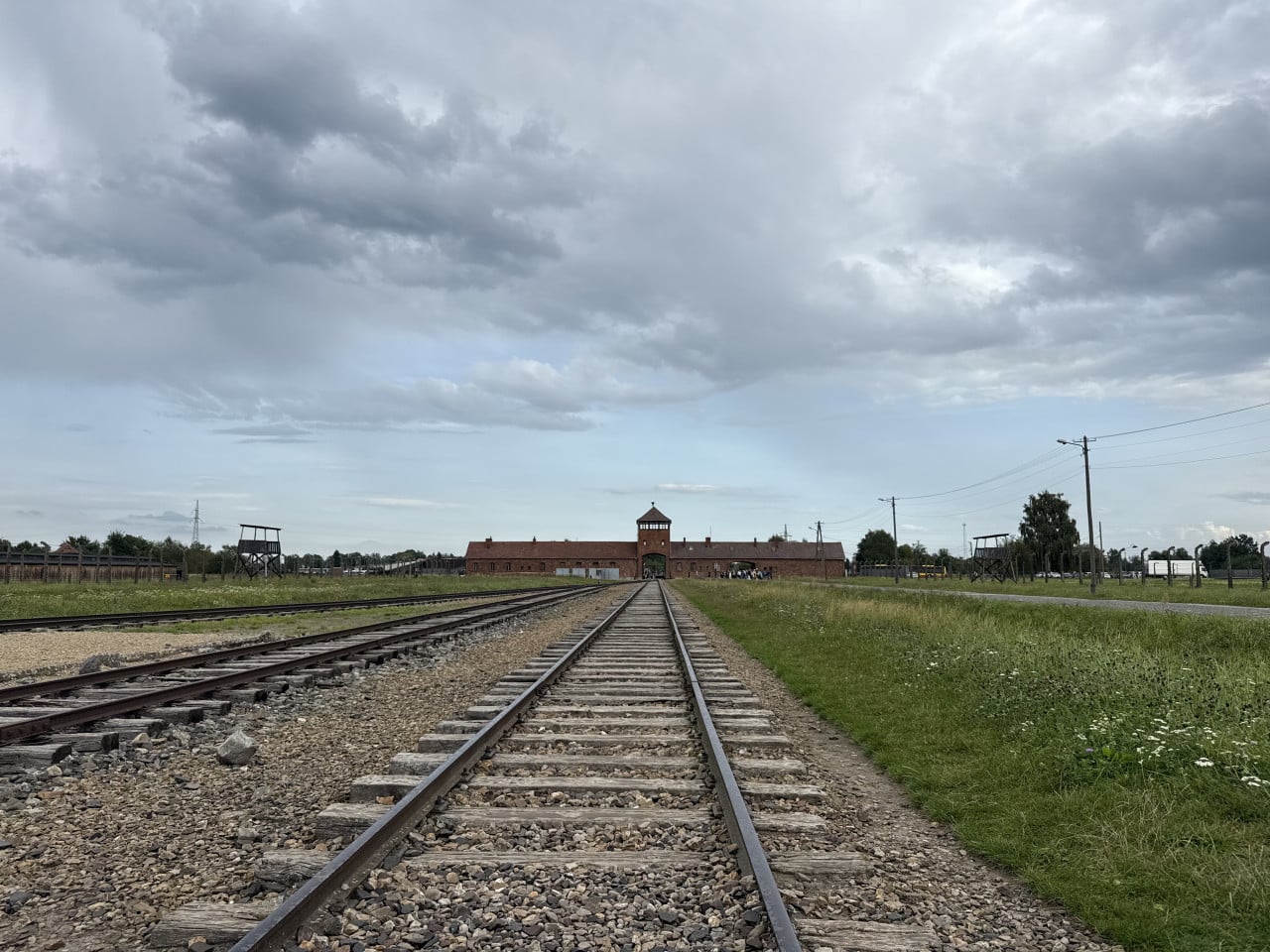
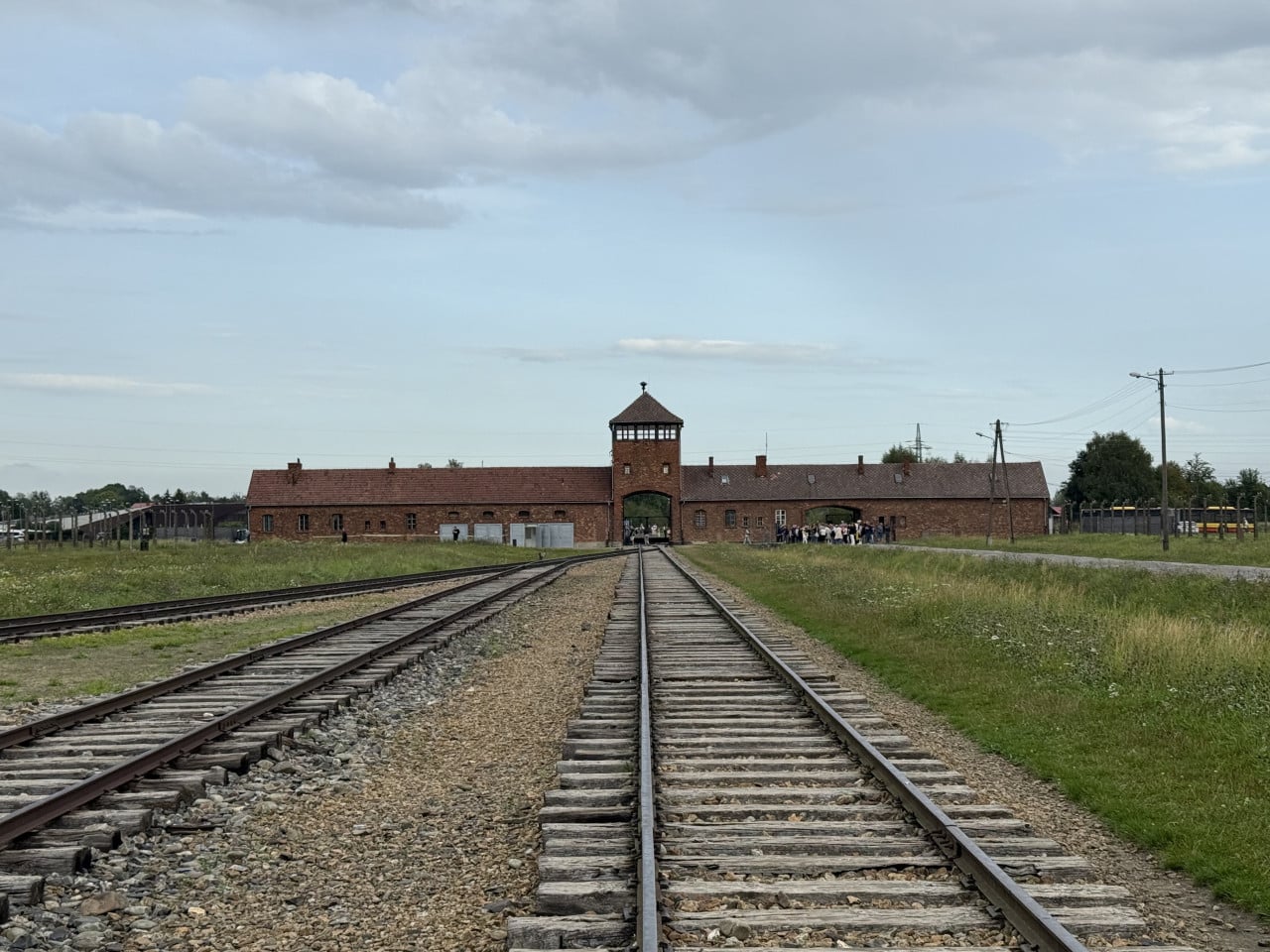
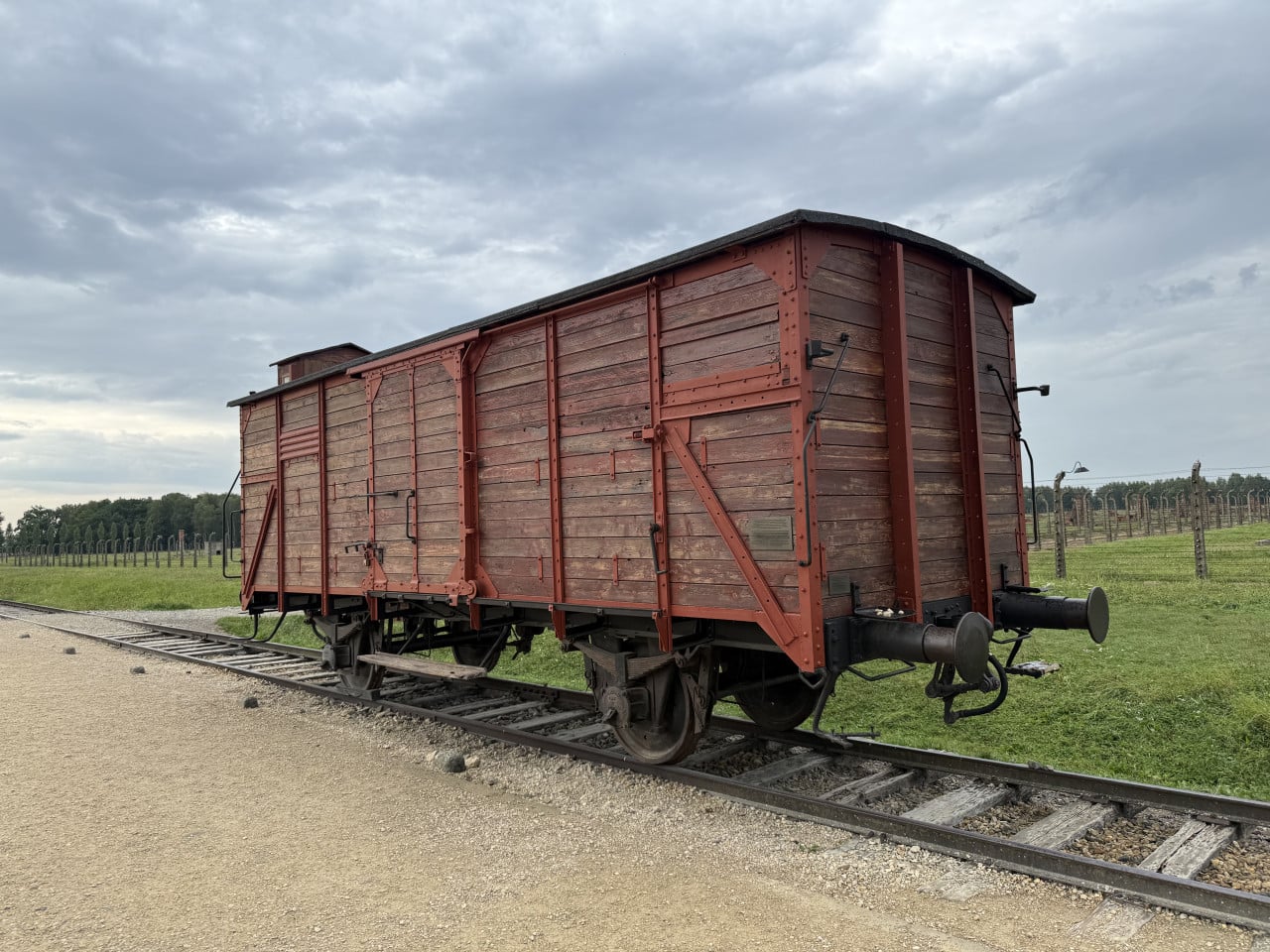
Beside the tracks stands a replica of a cattle car of the kind into which people were crammed for the journey to the camp. Without a toilet, windows, water, and often without any food, they traveled locked inside sealed railcars for seven to ten days. When the Germans opened the doors at Auschwitz, some of the deportees were already dead—most commonly elderly people and children.
The history of Birkenau: the extermination machine in full operation
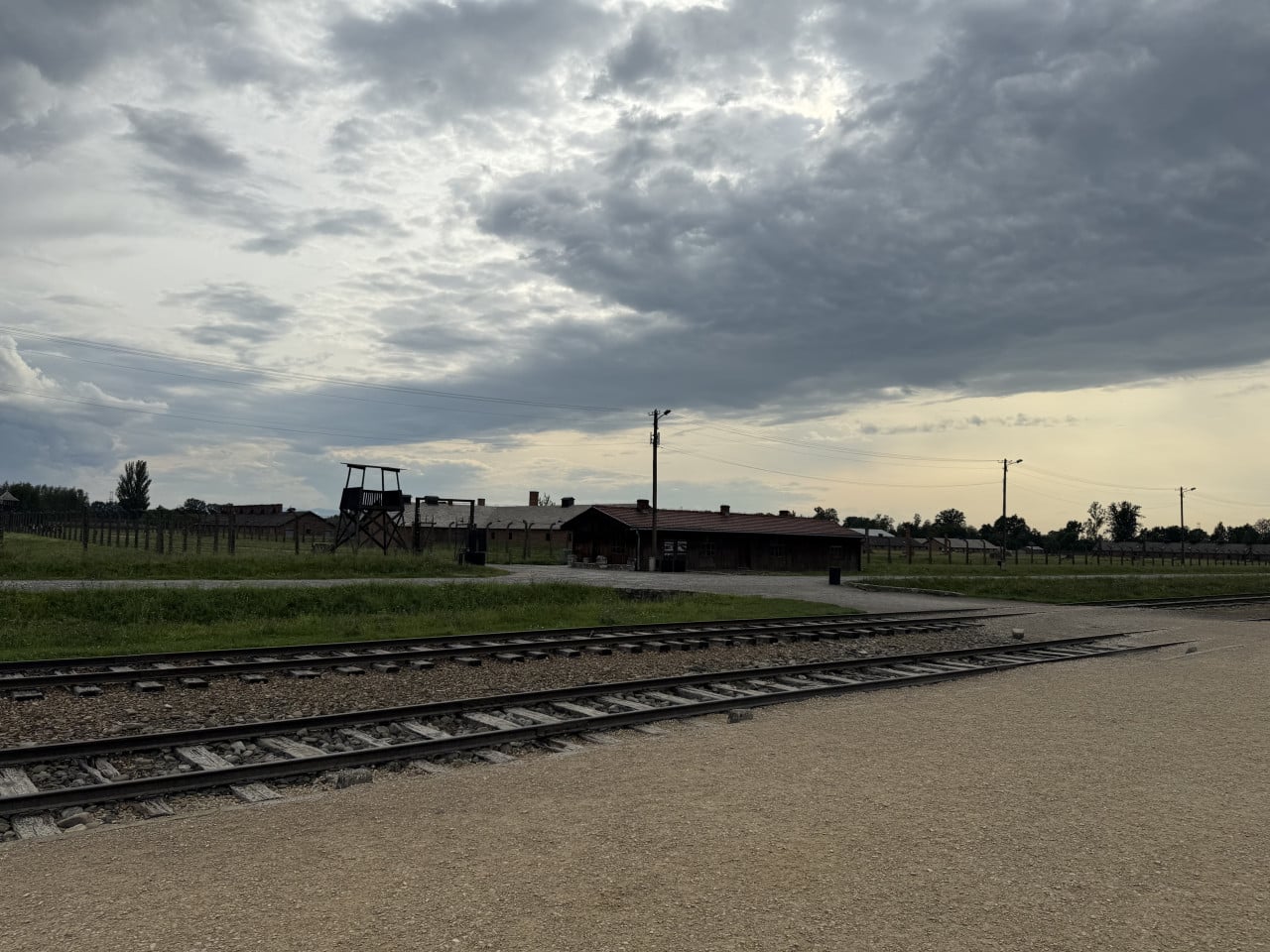
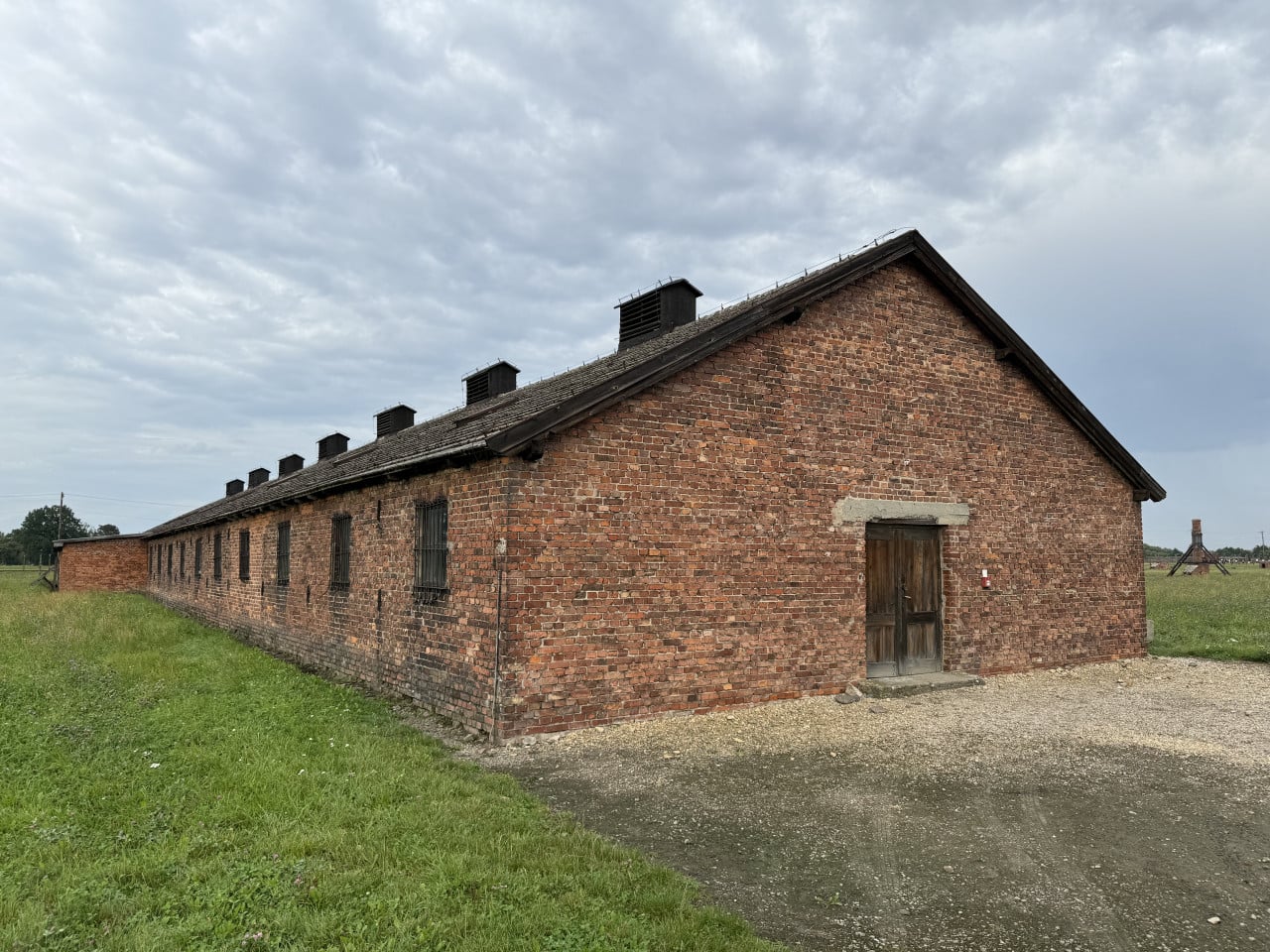
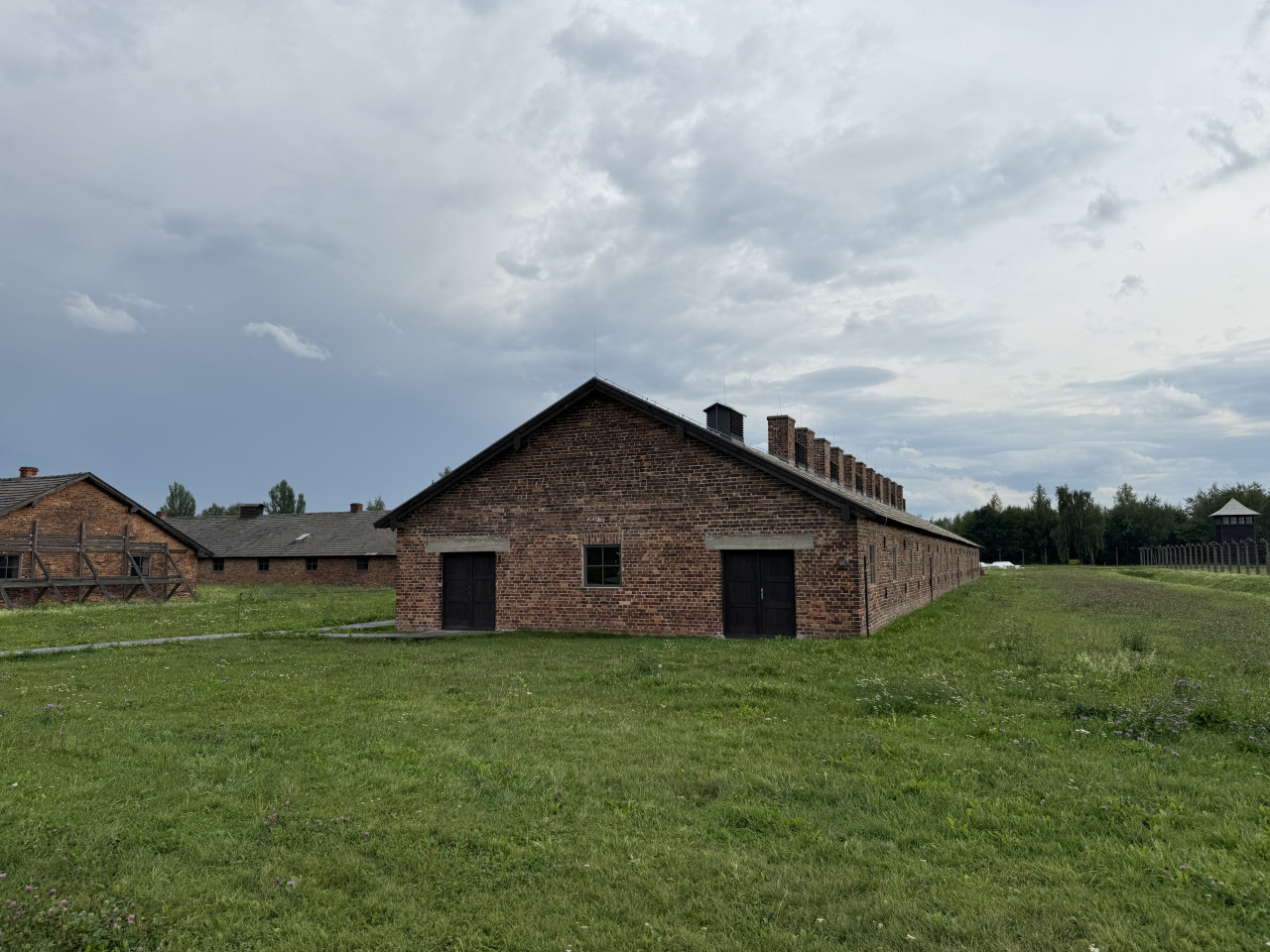
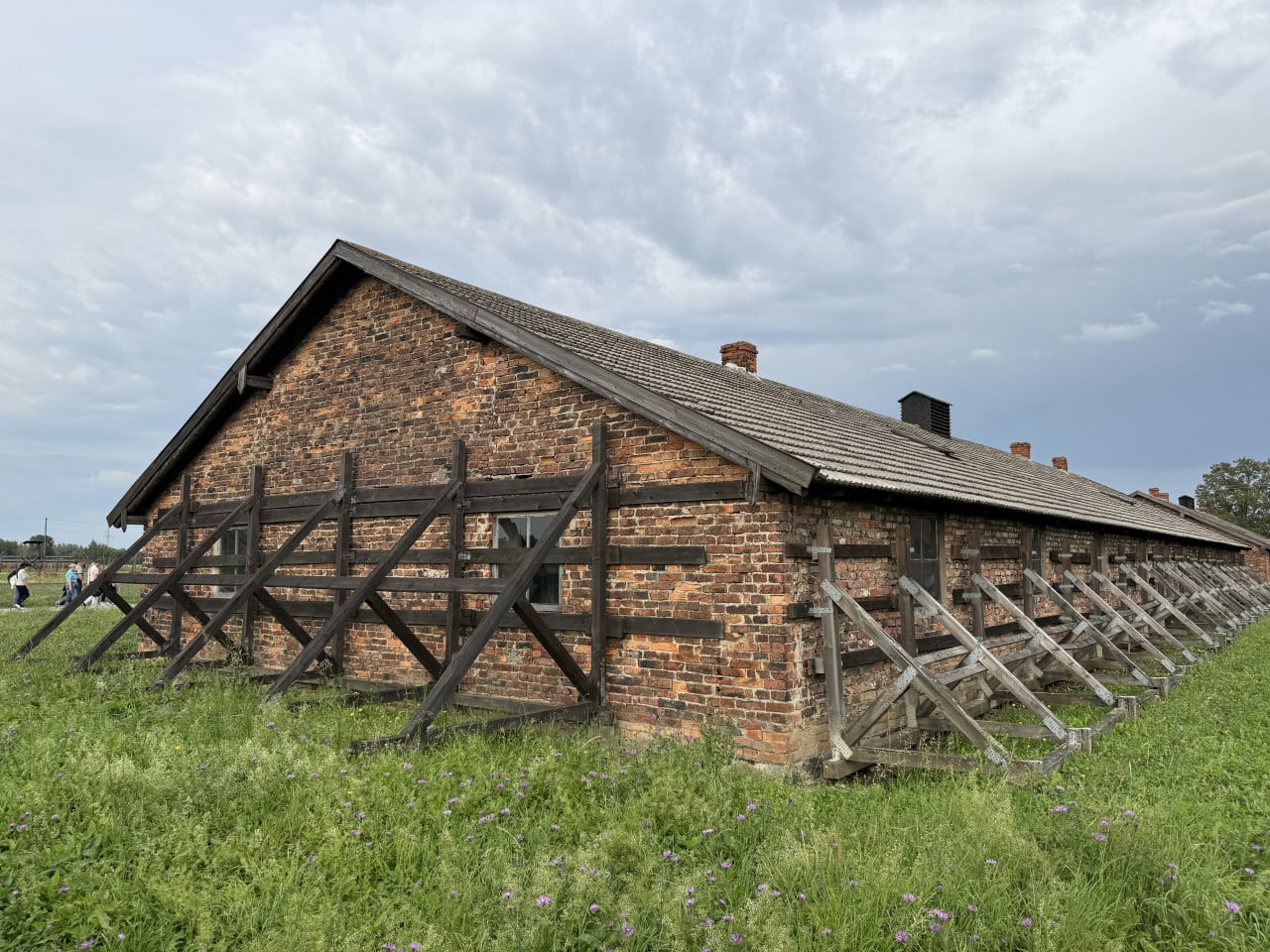
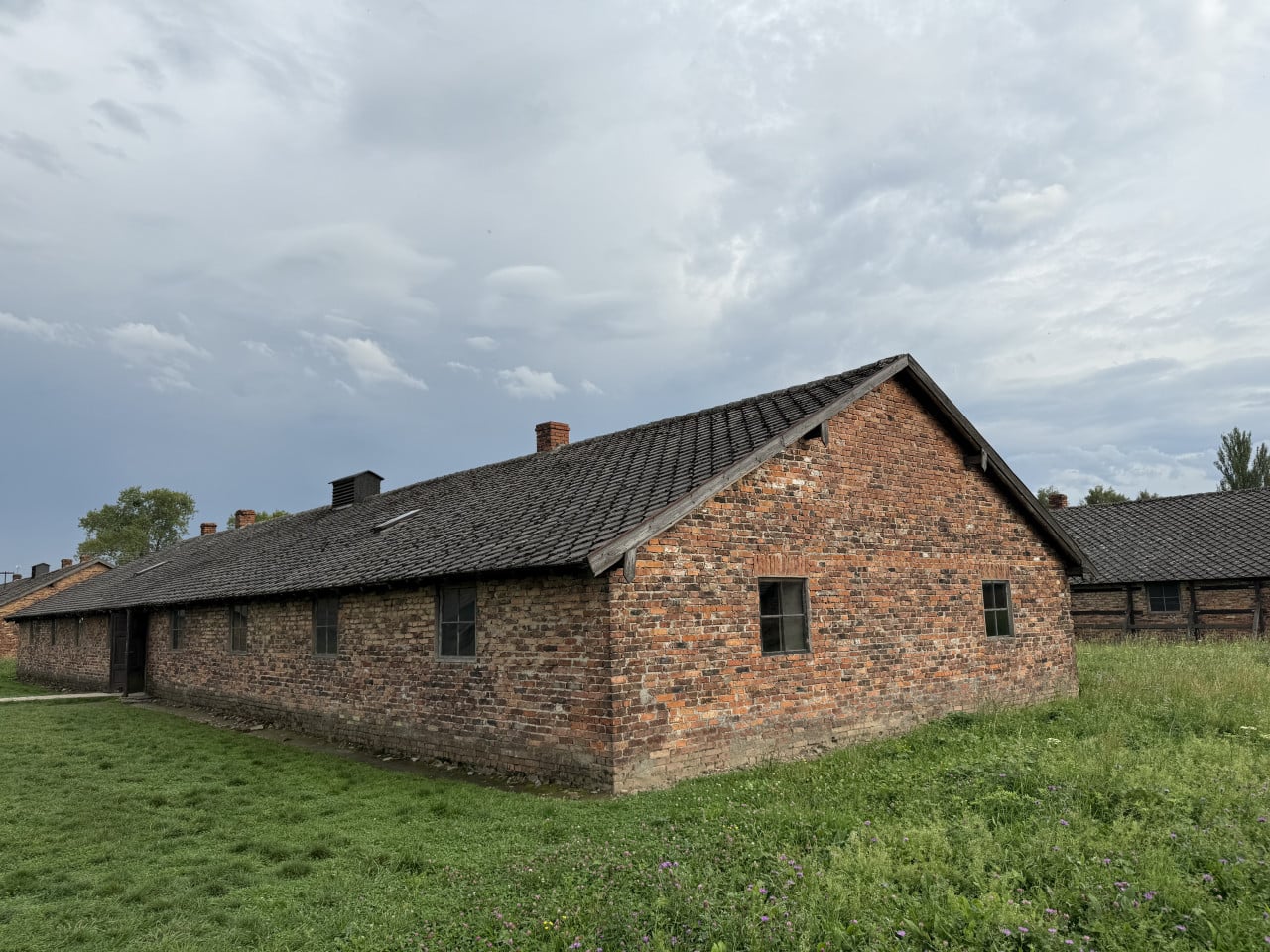
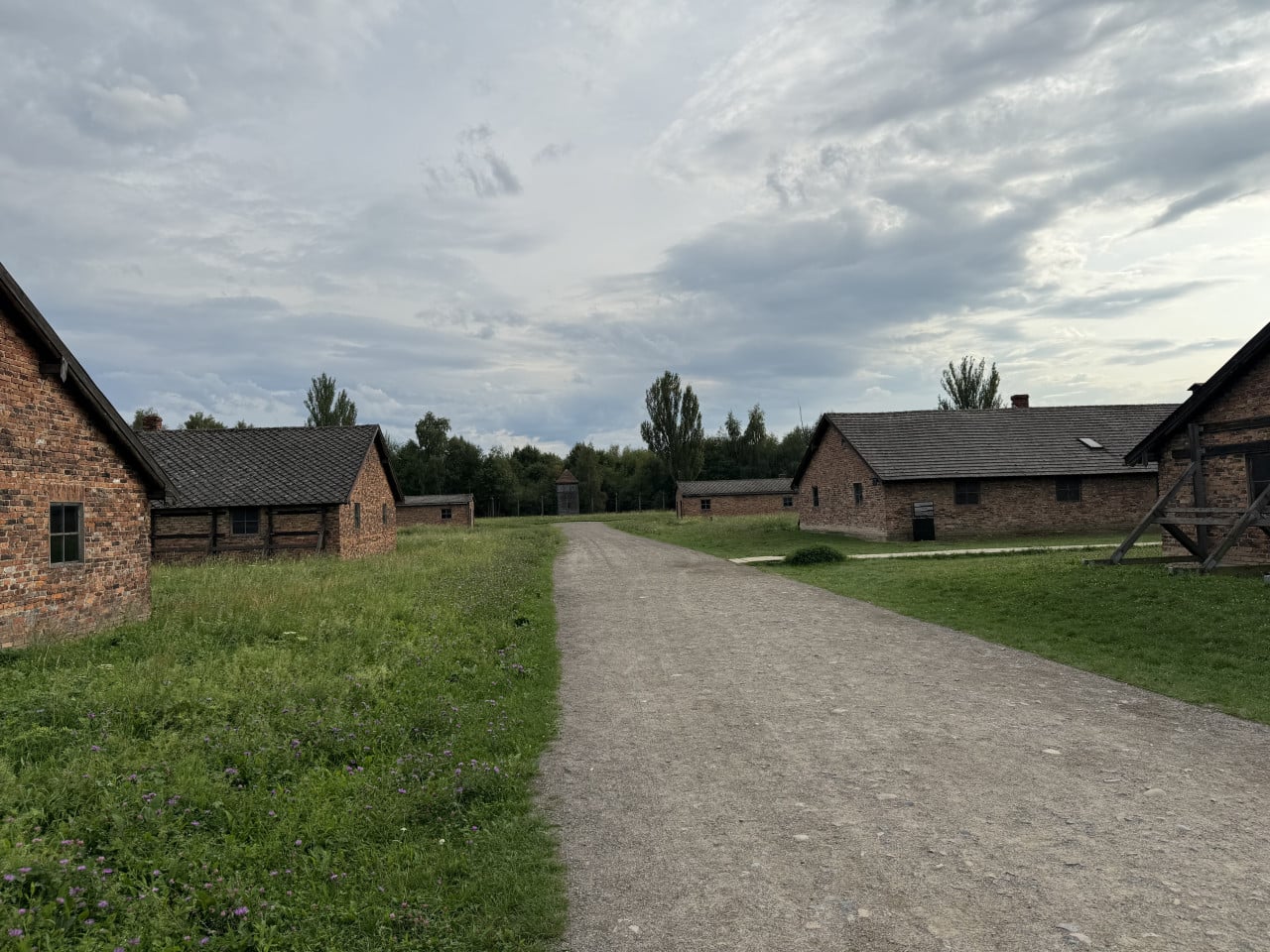
The Nazis began building Birkenau in the autumn of 1941, roughly three kilometers from the original camp. It was constructed on the site of the Polish village of Brzezinka, whose inhabitants were forcibly expelled by the Germans, while their houses were demolished and the building materials used to construct barracks. Most of these barracks were built by the prisoners themselves under utterly inhuman conditions.
The camp covers an area of approximately 140 hectares, and at the height of its operation, more than 100,000 people were interned there at one time. Birkenau was divided into sectors BI, BII, and BIII, separated by electrified barbed wire.
It was at Birkenau that roughly 90% of all Auschwitz victims were murdered. Four large crematoria with gas chambers stood there (KII, KIII, KIV, and KV), in which up to six thousand people could be killed and burned each day. The chambers were disguised as showers, and the victims were given soap and believed they were going to be disinfected. Zyklon B poured through openings in the ceiling killed them within 15–20 minutes.
From the spring of 1944, the selection ramp was moved directly into the camp to speed up the flow of people. The largest massacre in a single day took place in the summer of 1944 during the Hungarian transports—five trains arrived instead of the planned three, and more than 9,000 people died in the gas chambers in a single day.
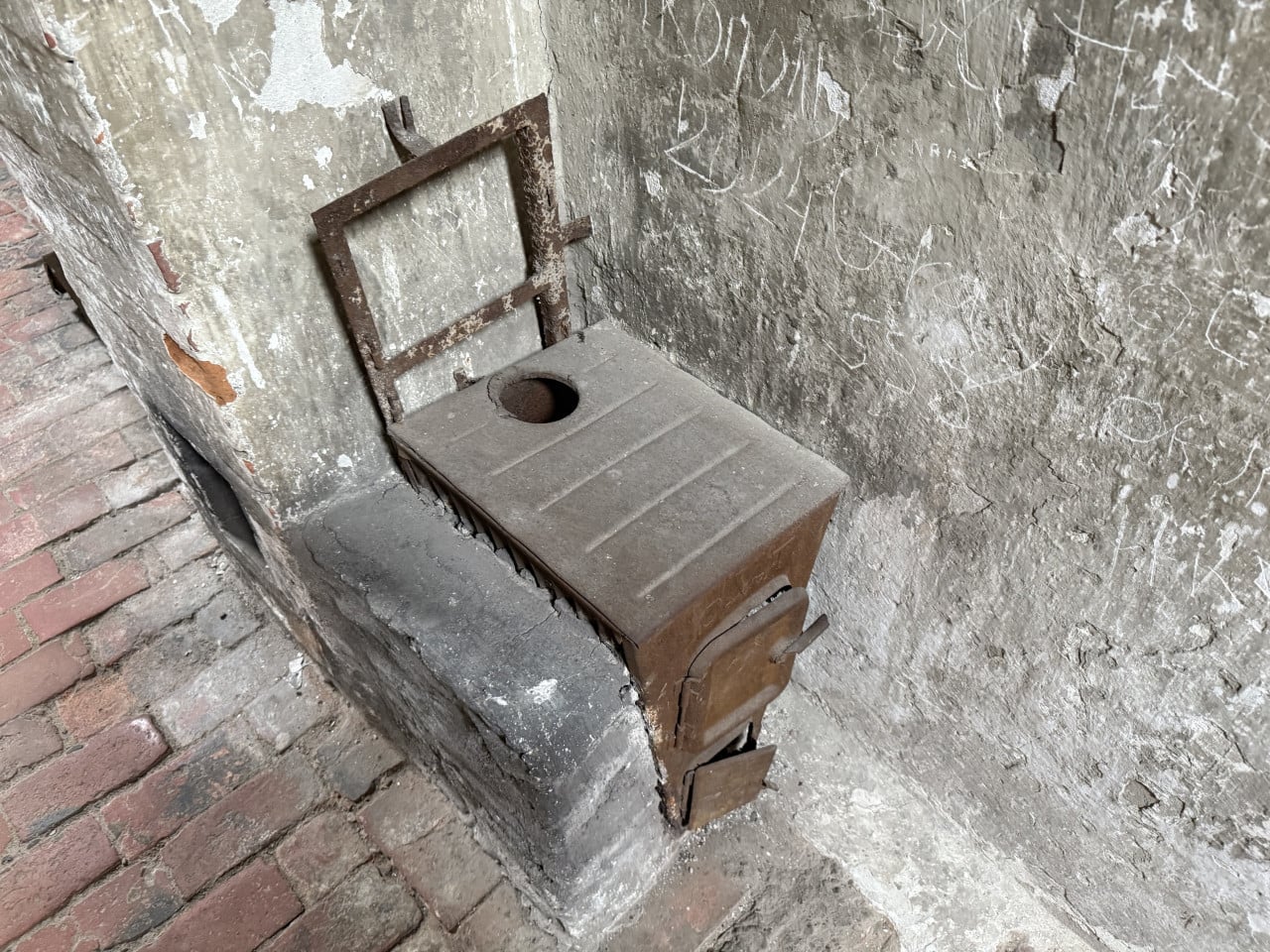
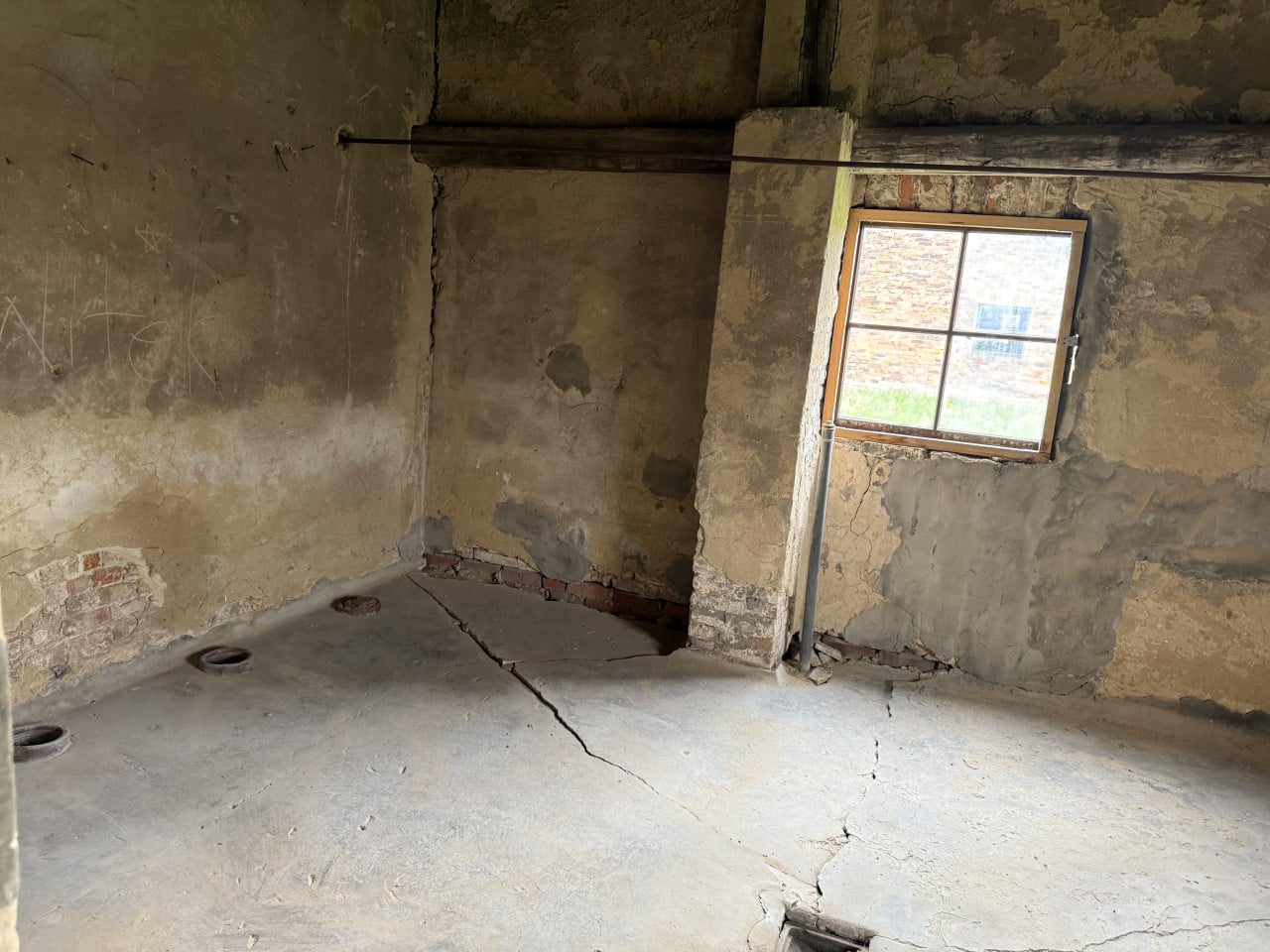
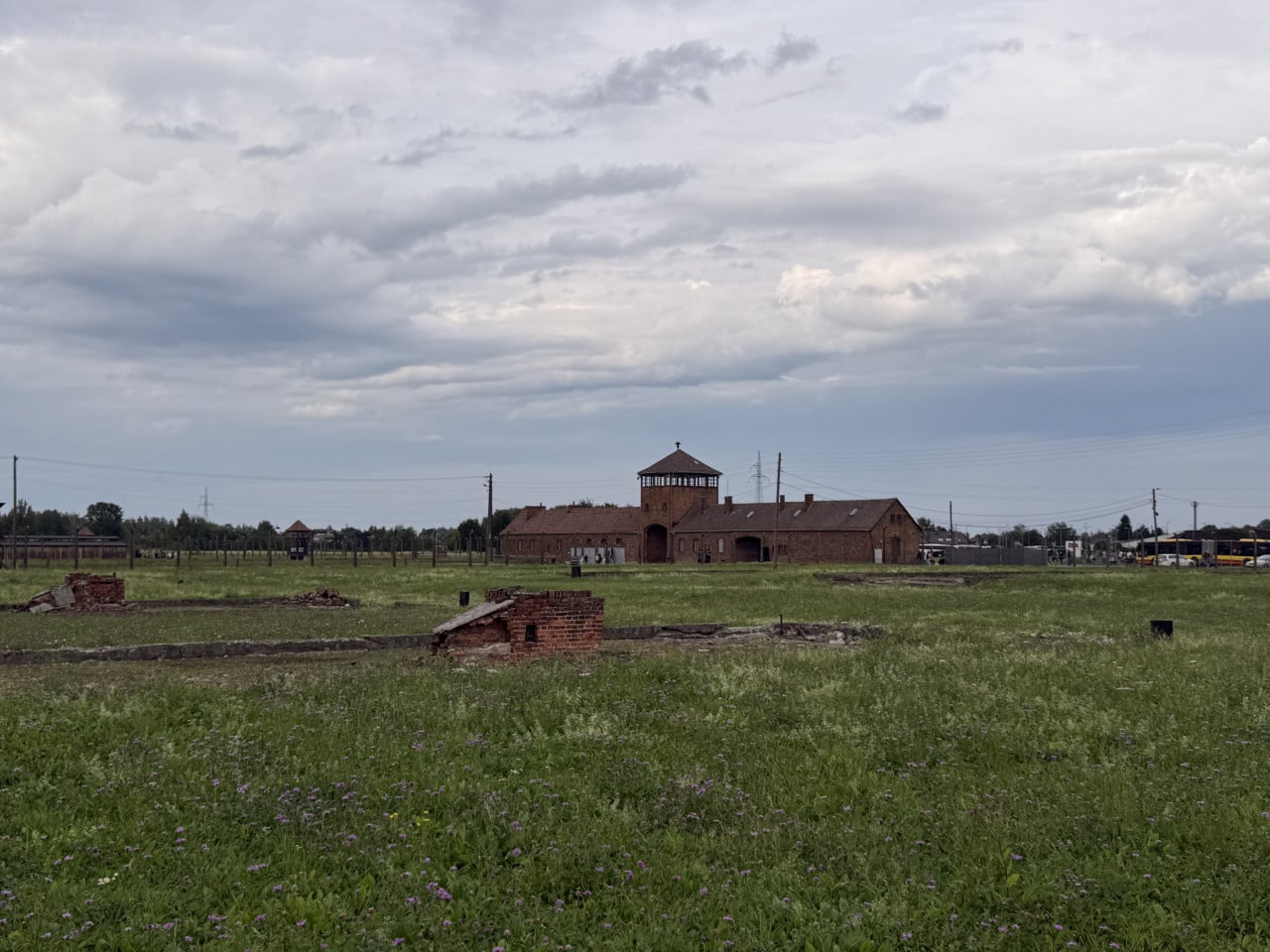
The Czech family camp: the largest mass murder of Czechs in history
Birkenau also has a powerful Czech chapter. In September 1943, the Nazis transported 5,007 people, including children, here from Terezín and, instead of carrying out the usual selection, placed them all in a special section called BIIb, which they named the “Familienlager”—the Terezín family camp. Families were not separated, people were allowed to keep their hair, and children attended an improvised “children's block.”
Historians still do not agree on exactly why the camp was established. One theory claims that it was intended to serve as a stage set for a potential inspection by the International Committee of the Red Cross—allowing the Nazis to “prove” that the Jews were all right.
On the night of March 8–9, 1944, however, 3,792 men, women, and children were murdered in the gas chambers, most of them citizens of Czechoslovakia. It was the largest single mass murder of Czechoslovak citizens in history. Before their deaths, they were forced to write postcards home saying that they were being “transferred to another camp.”
Birkenau and something I still cannot explain
As we walked through Birkenau, something did not feel right. Something truly strange.
The entire time, I did not see a single bird. Not one grasshopper, ant, nothing. Not a single living creature. In September, in the sunshine, on a huge meadow with plenty of trees around—and nothing. Absolutely nothing. It was as though I were walking across an empty, lifeless land. That is perhaps the feeling I remember most intensely.
Then came the second moment.
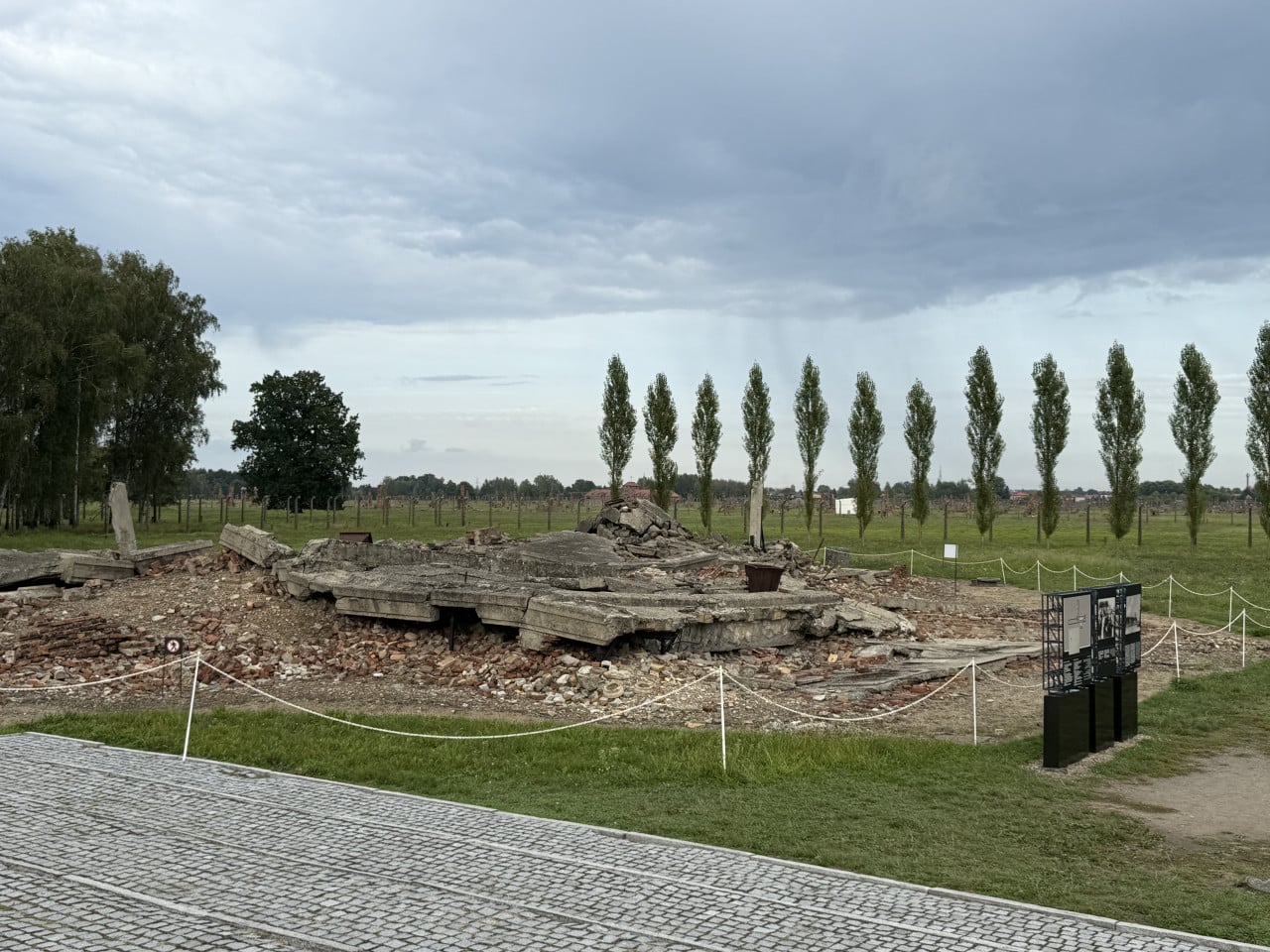
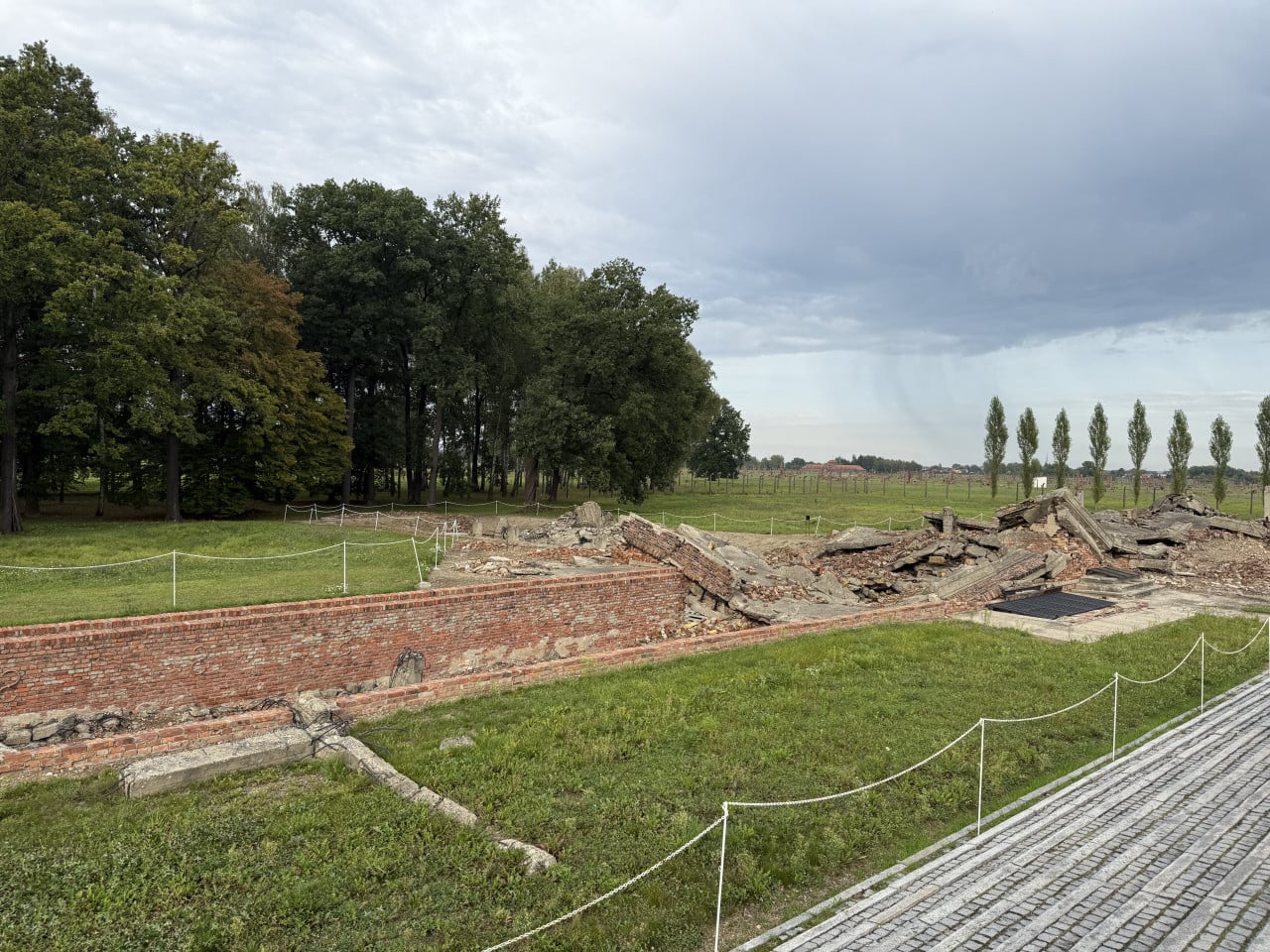
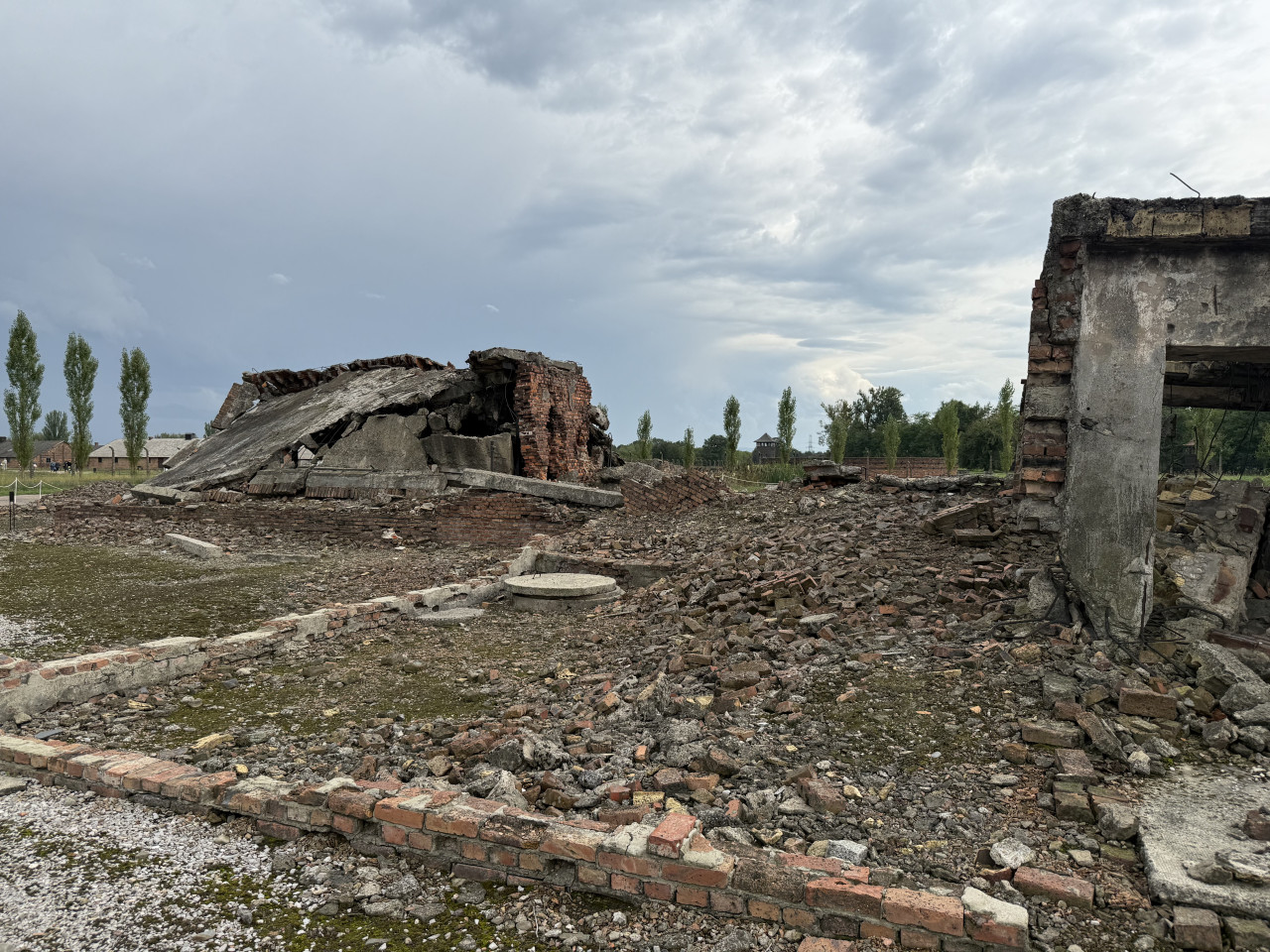
We reached the memorial to the victims, which is paved in the center of Birkenau, and beside it lie the ruins of the gas chambers and crematoria that were blown up. When the Nazis feared the arrival of the Red Army in January 1945, they destroyed most of the evidence—Crematoria II and III were blown up on January 20, and the last one, Crematorium V, was destroyed the day before the camp was liberated.
As I approached the ruins, I began to feel strange. And as I stood above that rubble, my head began to hurt so brutally that I was completely out of it and could not concentrate on anything at all. It was not autosuggestion or expectation—until then, I had genuinely thought that nothing was “weighing on me.” And then it felt as though a hammer had struck me on the head. I was dizzy, felt sick, and simply could not cope with it physically.
I looked inside one more of the barracks where prisoners had lived, and then we headed back to the bus. The most interesting part is that within fifteen minutes of leaving Birkenau, the pain disappeared completely. As if someone had flipped a switch. On the bus ride back to the car in the parking lot, my head stopped hurting. And it never came back.
I do not know what it was. I do not think it was dehydration because I had been drinking fairly regularly. It could have been a coincidence or psychological exhaustion. But I believe that there are things in the world that we as humans cannot consciously perceive—energies, dimensions, things that are not in textbooks and that we have yet to describe. And something truly horrific happened at Birkenau. So perhaps something remained there. I do not know. Take it however you want, but that is what I experienced there, and I cannot explain it.
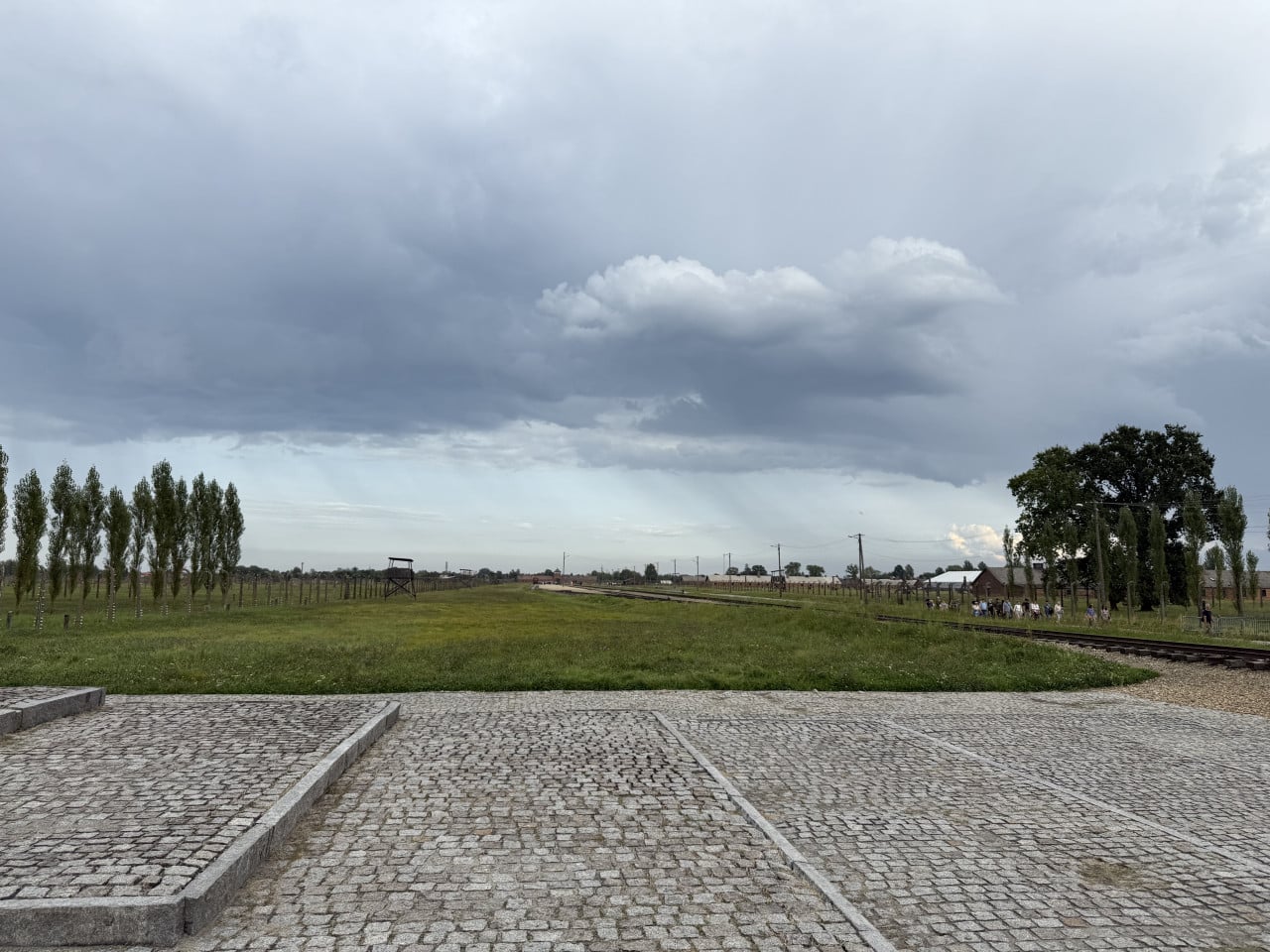
A story that resounded for the last time at Birkenau: the Sonderkommando revolt
While I am on the subject of Birkenau, there is one story that should not be forgotten.
The Sonderkommando was a labor unit composed mainly of Jewish prisoners whom the Nazis forced to operate the gas chambers and crematoria—to remove the dead, burn the bodies, and sort the victims' possessions. They were “unwanted witnesses,” and the Germans regularly murdered entire units and replaced them with new ones.
In the summer and autumn of 1944, they discovered that the same fate awaited them—their liquidation had already been planned. So they began preparing something that had long seemed impossible: an armed revolt in the very heart of the death factory.
A key role was played by Jewish female prisoners from the Union-Werke munitions factory, where gunpowder was handled. Led by Róza Robota and several other women, they began smuggling gunpowder in tiny packages—wrapped in scraps of cloth and hidden in their clothing—to the Sonderkommando. This continued for months.
On October 7, 1944, the revolt broke out. Prisoners at Crematorium IV attacked the SS guards with hammers, chisels, knives, and improvised grenades. Three SS men were killed—one was reportedly burned alive in a furnace—and a dozen others were injured. They blew up and set fire to Crematorium IV. Several hundred prisoners managed to cut through the fence and escape into the surrounding area.
The resistance was quickly suppressed, however. Of the 450 participants, the SS caught and shot around 250. The last few survivors faced execution. Four women from the munitions factory—including Róza Robota—were horrifically tortured for a month to make them reveal more names. Not one of them spoke. On January 6, 1945, three weeks before the camp was liberated, all four were hanged. Before her execution, Róza reportedly managed to whisper: Continue the resistance.
Crematorium IV never stood again. When you stand at the memorial in Birkenau today, you are looking directly at its ruins.
Auschwitz is not for everyone
If you are considering visiting Auschwitz, think carefully about it.
It is not an attraction. It is not merely an item on a “checklist.” It is a place where some of the worst things in the twentieth century and in human history took place—and I feel that it is right to visit, to see it, to pass the experience on, and above all to remind ourselves how fortunate we are today. To remind ourselves how far human indifference, propaganda, and obedience can lead.
At the same time, however, be prepared for it to affect you more deeply than you expect. Both physically and psychologically. The stories the guides tell there are harrowing. The exhibits are even more harrowing. And the atmosphere of Birkenau—at least for me—was something I will not soon forget.
If you take three things away from this article, let them be these:
-
Book a guide as far in advance as possible, especially if you plan to visit during the summer season.
-
Be punctual—the group will not wait for you.
-
Be prepared for Birkenau and Auschwitz to remain in your mind. And perhaps in your body as well.
And if you would like to learn more about Auschwitz and Birkenau, I recommend reading the writings of Witold Pilecki—the man who voluntarily had himself sent to the camp so that he could tell the world the truth about it. It is the kind of reading that affects you all over again after Auschwitz.