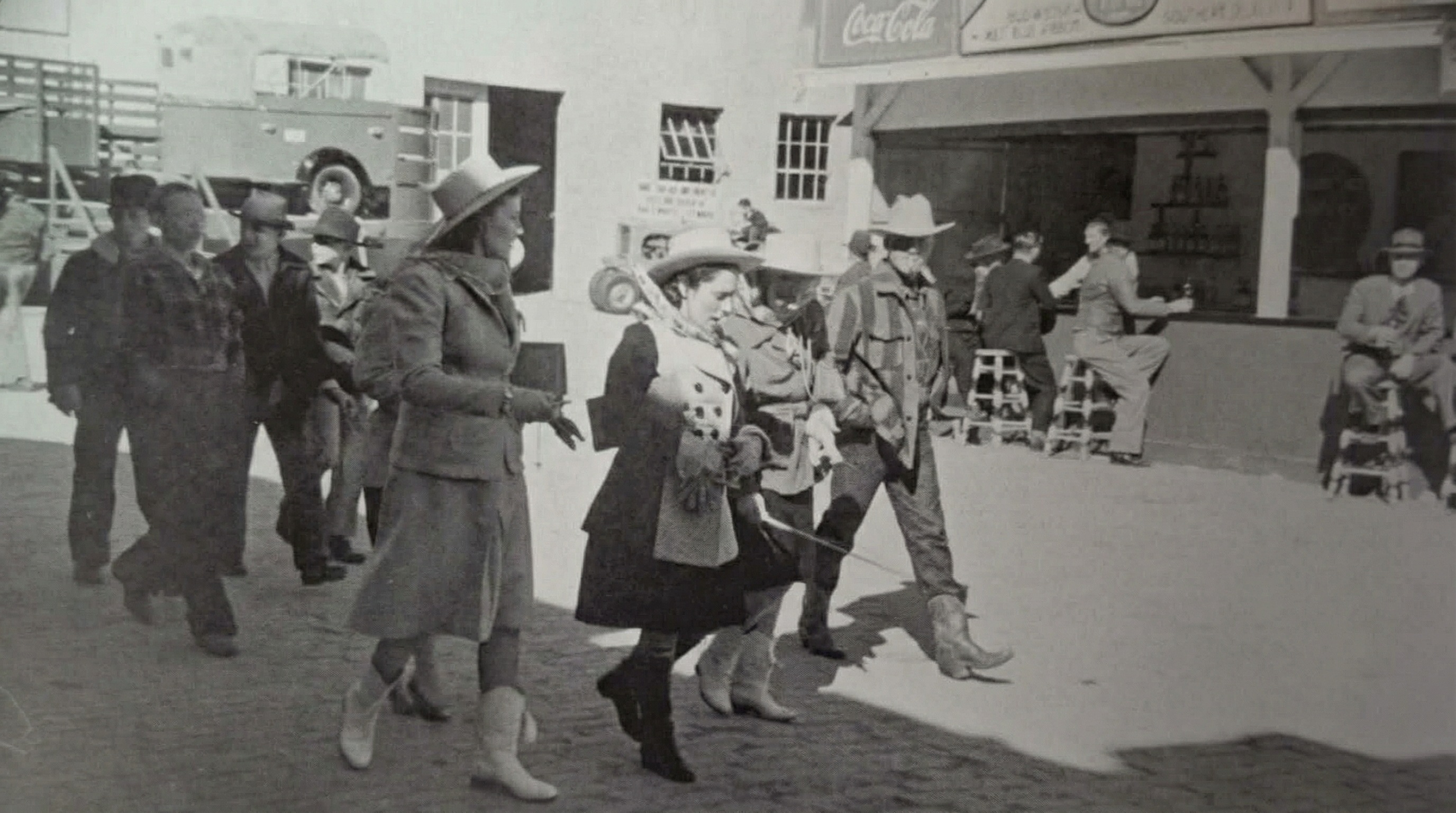
... Fort Worth locals enjoy dressing in Western style when they attend the annual livestock show and rodeo (opening image).
In this photograph from March 8, 1941, even the ladies made sure they wore boots and custom-tailored Western clothing when they came to enjoy the festivities. Although Levi's and other jeans dominate in the 21st century, boots have always been the right choice.
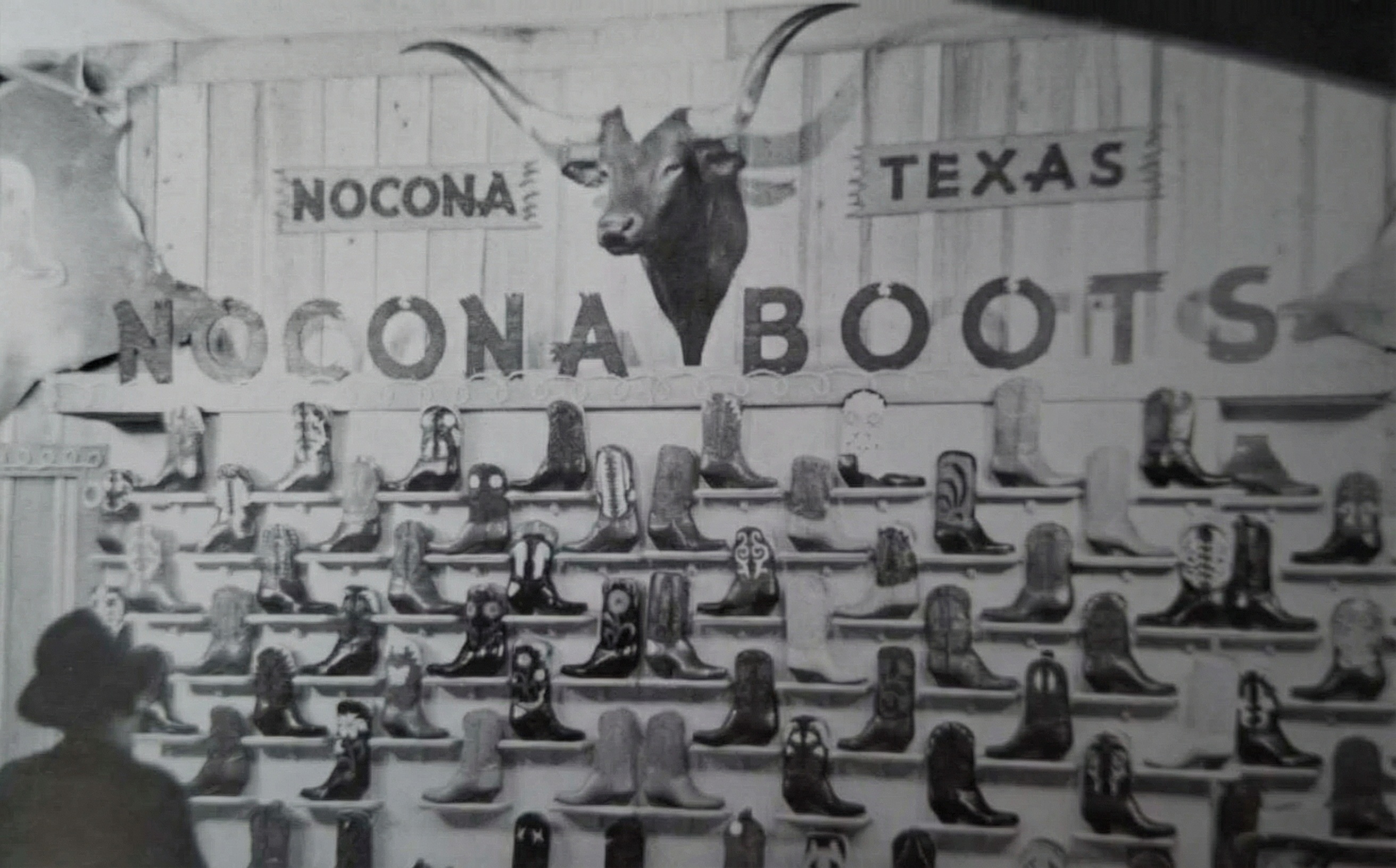
Children loved the Midway amusement area, while their parents enjoyed the exhibition building, where booths featured a variety of Western products. Enid Justin, whose family owned Justin Boots, founded her own business, the Nocona Boot Company, when her brothers moved the Justin company from Nocona to Fort Worth in 1925. She built it into a multimillion-dollar business. A stroke in 1981 prompted her to sell the company to Justin Boots. She died in 1990 at the age of 96.
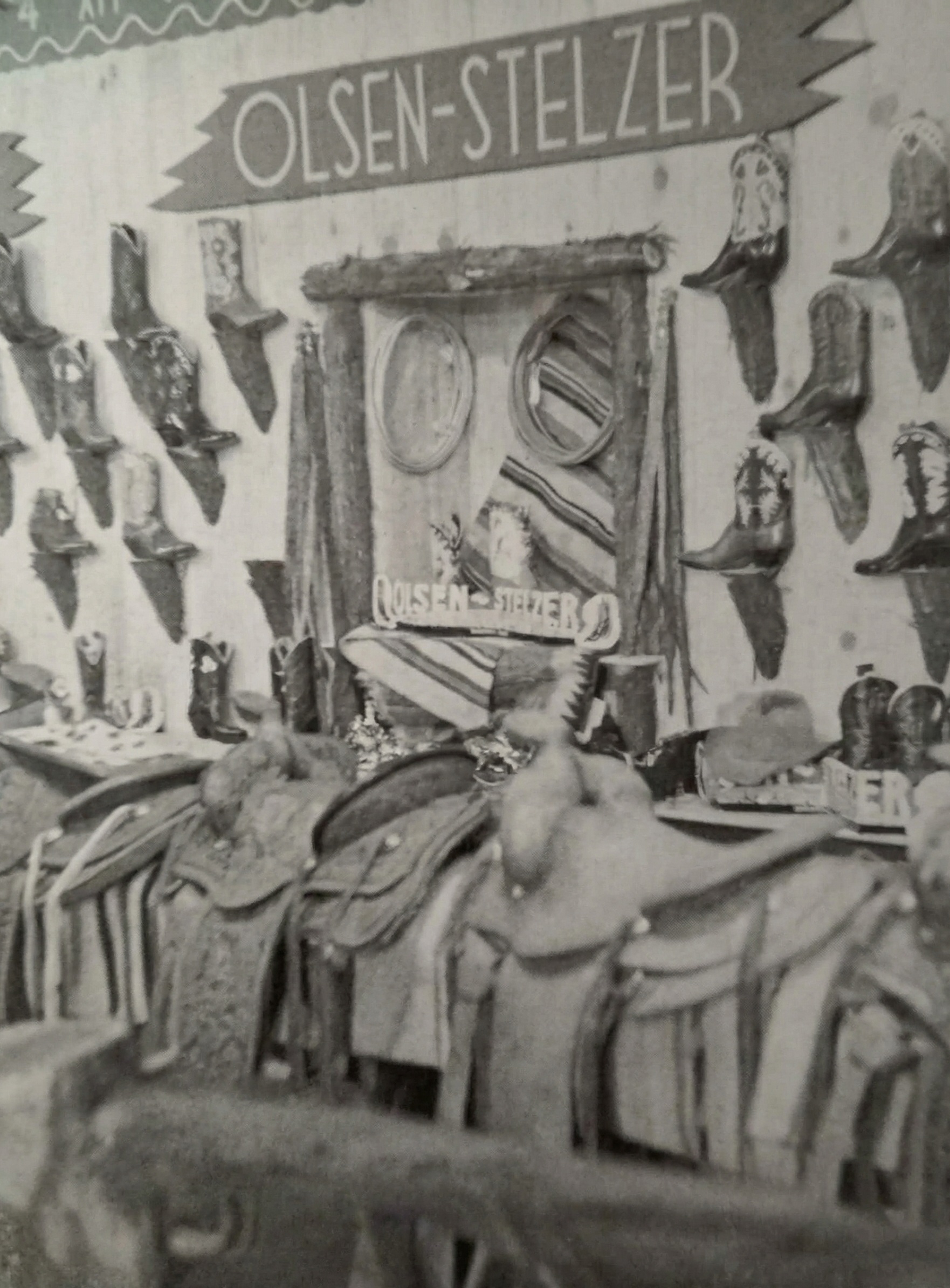
The Olsen-Stelzer Boot Company competed with the Nocona Boot Company from its workshop in Henrietta, Texas, just 30 miles west of Nocona. Olsen-Stelzer also made saddles, as shown by its booth at the livestock show in March 1941. Julius Stelzer, Enid Justin's former husband, and his partner Carl Olsen, a longtime bootmaker, founded the Olsen-Stelzer Boot Company in 1934. After a brief closure in the 1980s, Olsen-Stelzer is once again making boots in Henrietta.
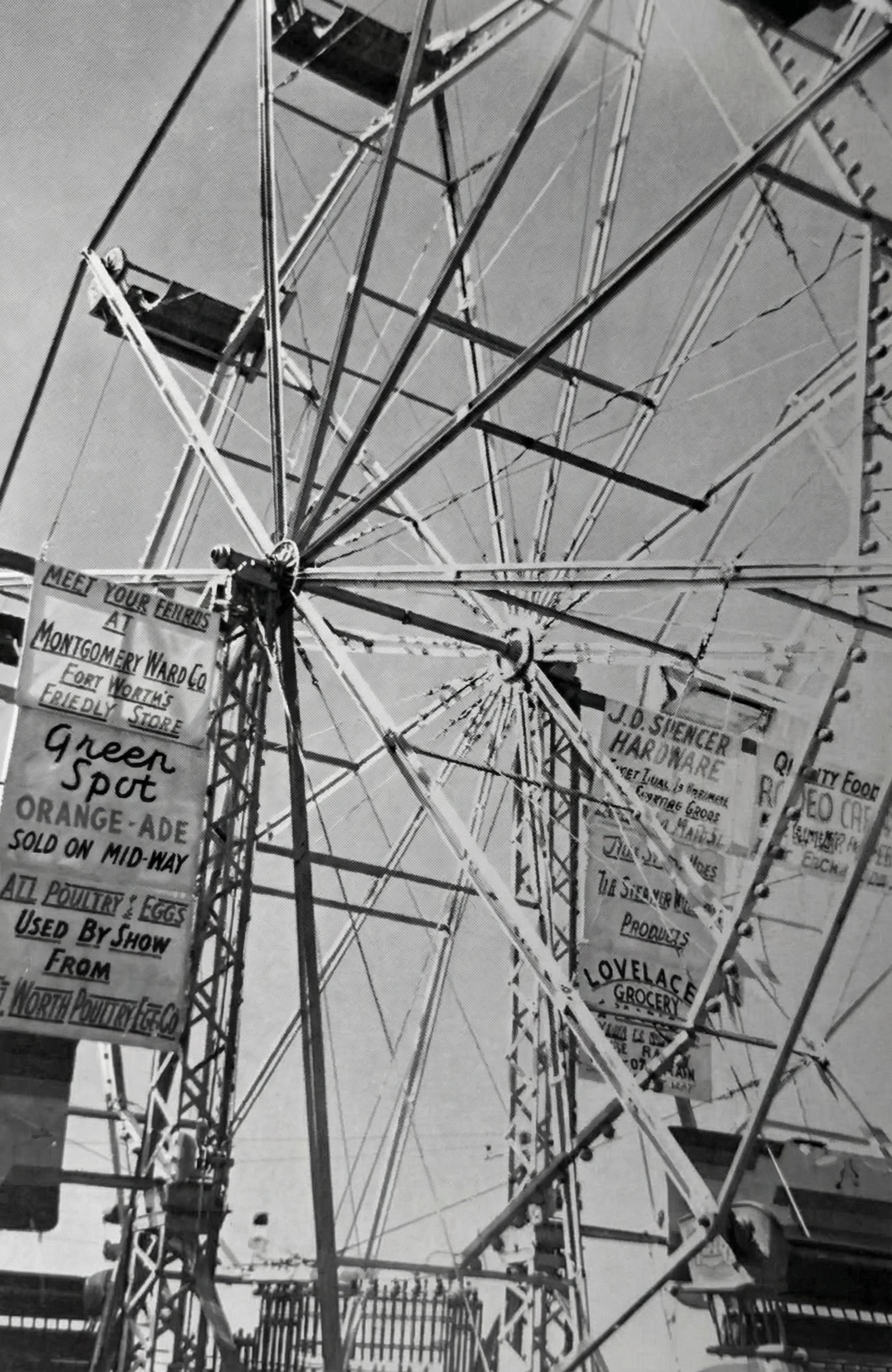
The Midway amusement area at the Southwestern Exposition and Fat Stock Show and Rodeo in March 1941 featured a large Ferris wheel and numerous advertisements from Fort Worth businesses, such as Montgomery Wards, Fort Worth Poultry Egg Company, J. D. Spencer Hardware, Lovelace Grocery, and others. The Ferris wheel originated at the World's Columbian Exposition in Chicago in 1893. Today, no Midway amusement area is complete without one.
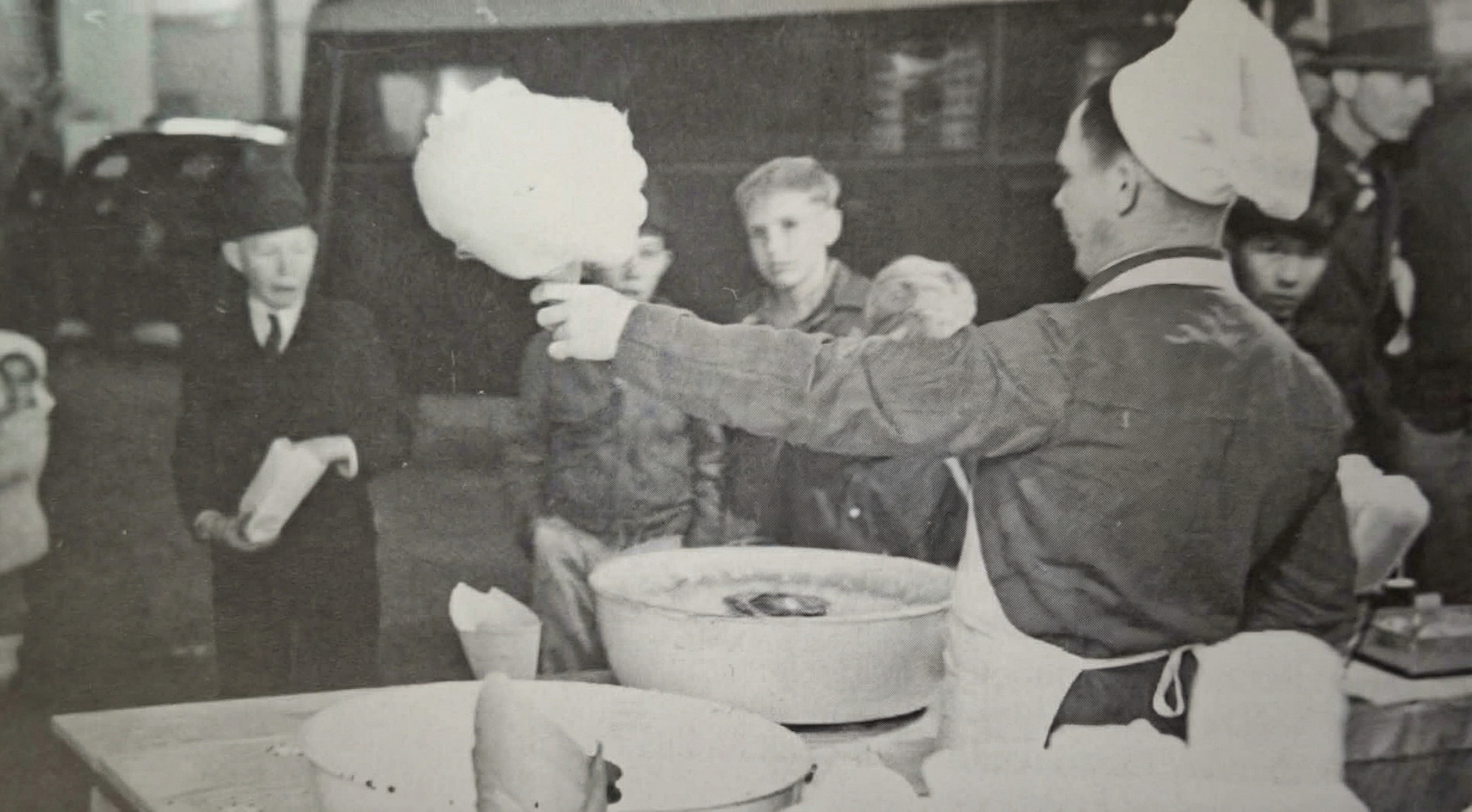
One treat children looked forward to each year at the livestock show was the cotton candy stand—with its fluffy pink clouds of sweet but messy confection. When the boys returned home with sticky stains on their clothes, their mothers were probably glad that the show came only once a year. Nevertheless, the “pink stuff” was often sold at other Fort Worth events as well, such as the circus.
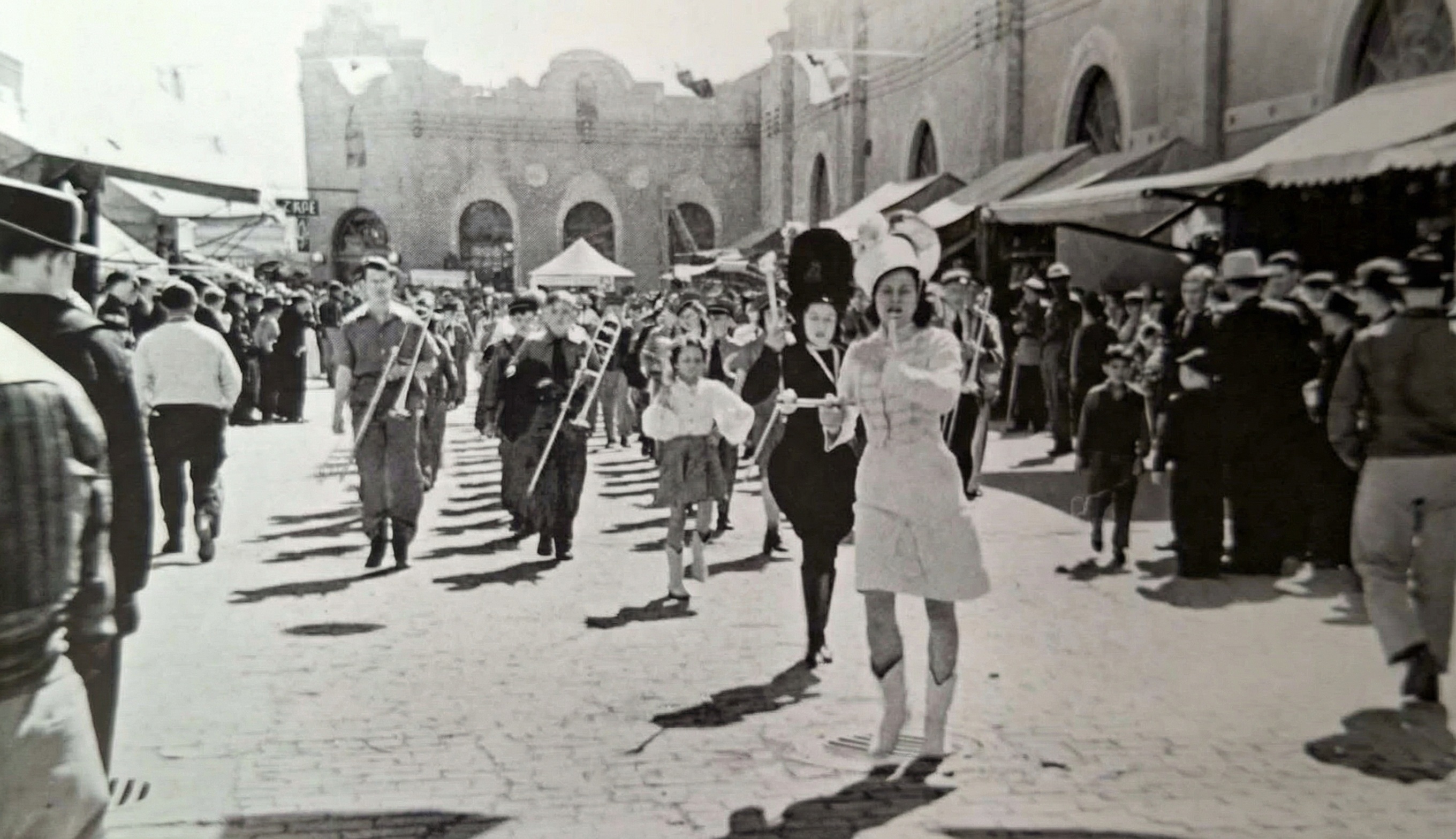
A parade in the Midway amusement area entertained visitors during the 1941 show. Various high schools from across Fort Worth took turns providing music for the parade. If people thought that school bands in 1941 always had boys as drum majors, they would have been mistaken. The lively young person leading this band is a drum majorette.
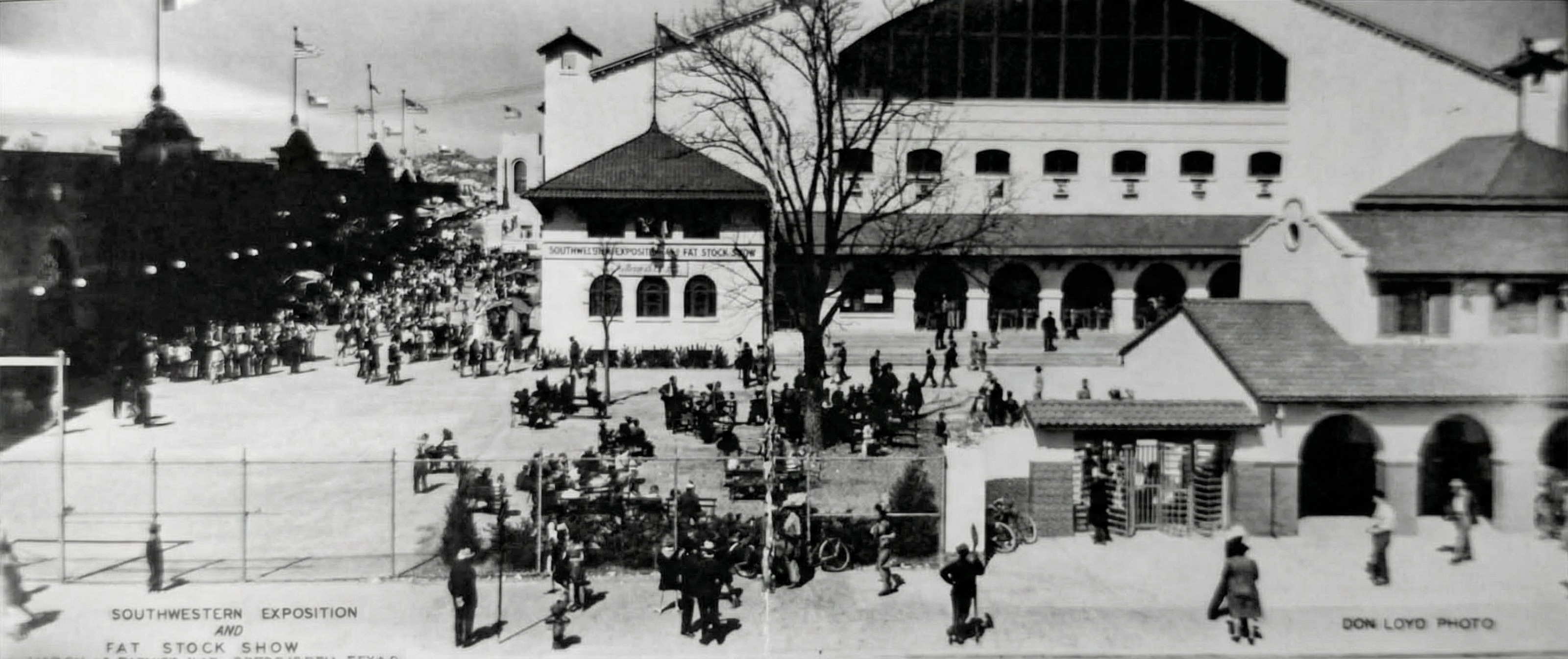
This photograph shows the large ticket office with turnstiles for the Southwestern Exposition and Fat Stock Show and Rodeo in March 1942, the last year the event was held at the Stockyards. The ticket office is still used for other events at Cowtown Coliseum, including weekly rodeos every Friday and Saturday night. In the image, the fence keeps people out of the grounds and helps control the crowd by directing them through the turnstile. From there, visitors can reach the coliseum's main entrance.
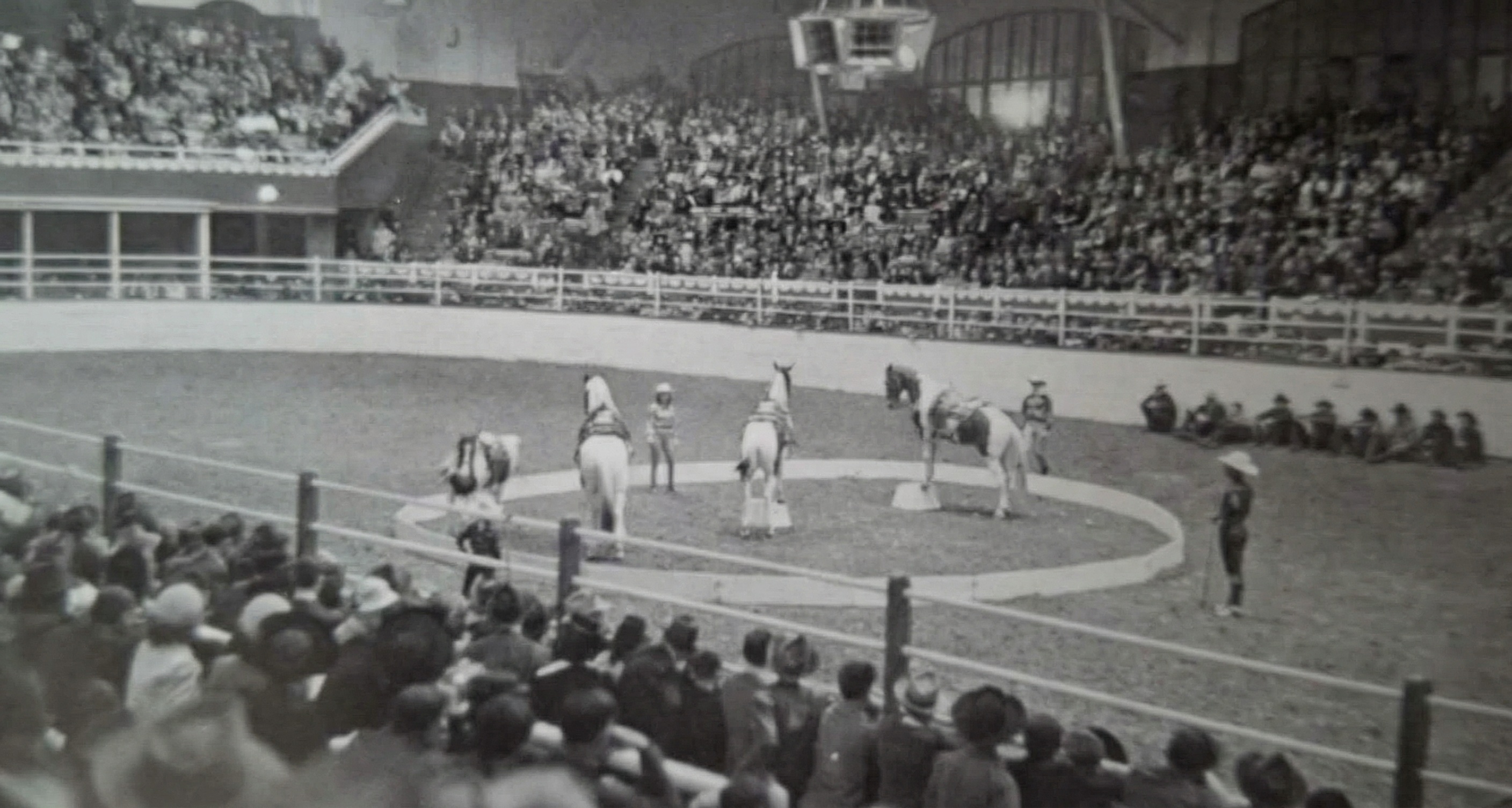
Not all rodeo performances are competitive events for cowboys. Sometimes people simply want to enjoy a good show. The owners of these performing horses and the record crowd in the coliseum enjoyed the festivities, unaware that this would be the last year the Southwestern Exposition and Fat Stock Show and Rodeo would be held at the Stockyards on the North Side. World War II and flooding in the area necessitated a move to the other side of town.
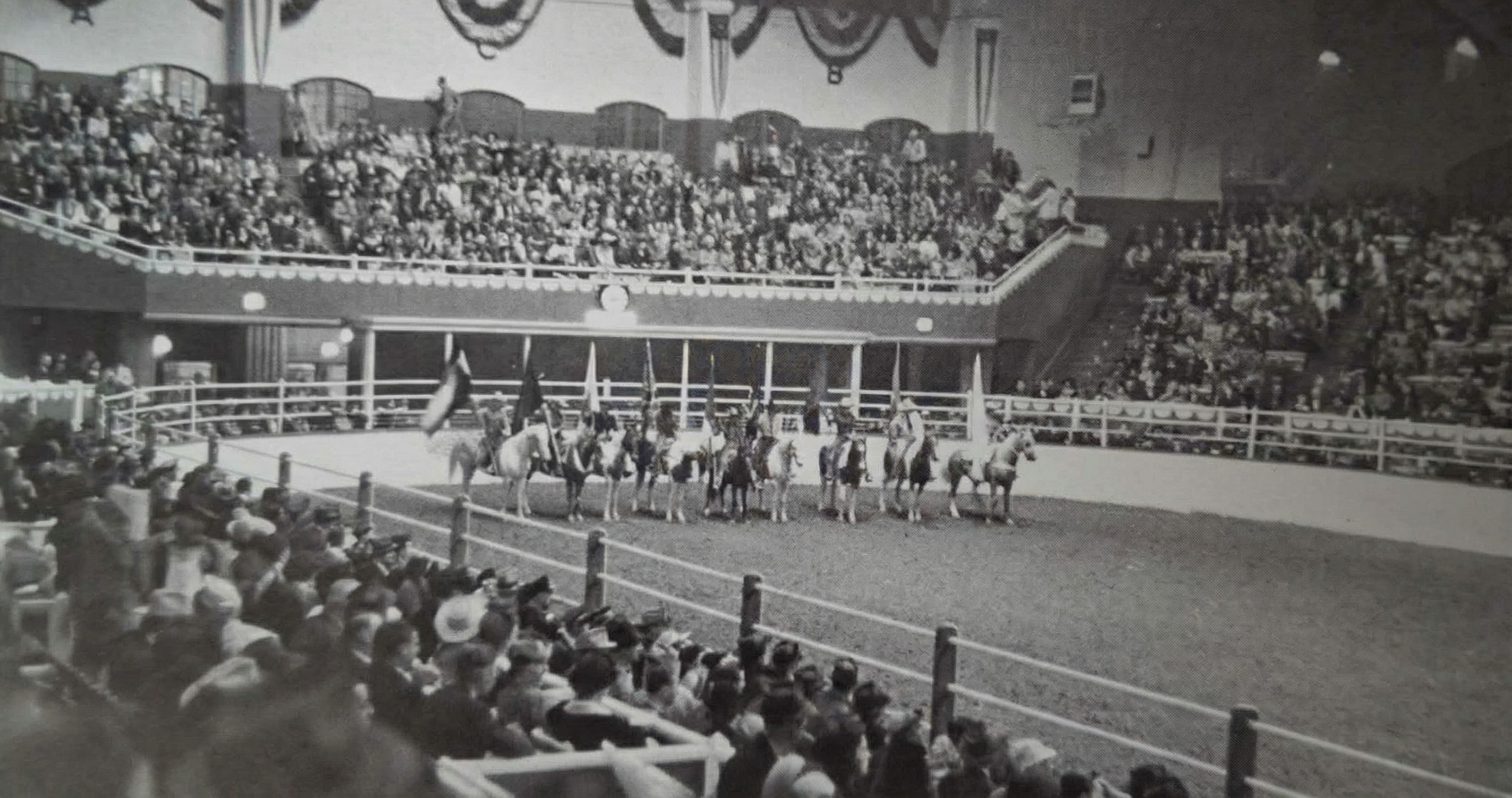
A horseback ceremony called Posting the Colors opens every rodeo. This particular ceremony took place in 1942, during the final year that the Southwestern Exposition and Fat Stock Show and Rodeo was held at the Stockyards. It seems fitting that a photograph from the final year closes this chapter about the show, which first began on a snowy day in March 1896 at the Fort Worth Stockyards. The Southwestern Exposition and Fat Stock Show and Rodeo continued for 46 years at the Stockyards before relocating.