

Over the past year, optimistic reports have emerged about China’s progress in artificial intelligence (AI), but some leading Chinese researchers are now speaking openly about the difficulties. According to them, the chances of catching up with the United States in the short term are slim, mainly due to a shortage of advanced chips. Tang Jie, founder of the Chinese startup Zhipu, said at a conference in Beijing last weekend that the gap between China and the US may actually be widening. He acknowledged that although they are achieving good results in some areas, the differences remain significant.
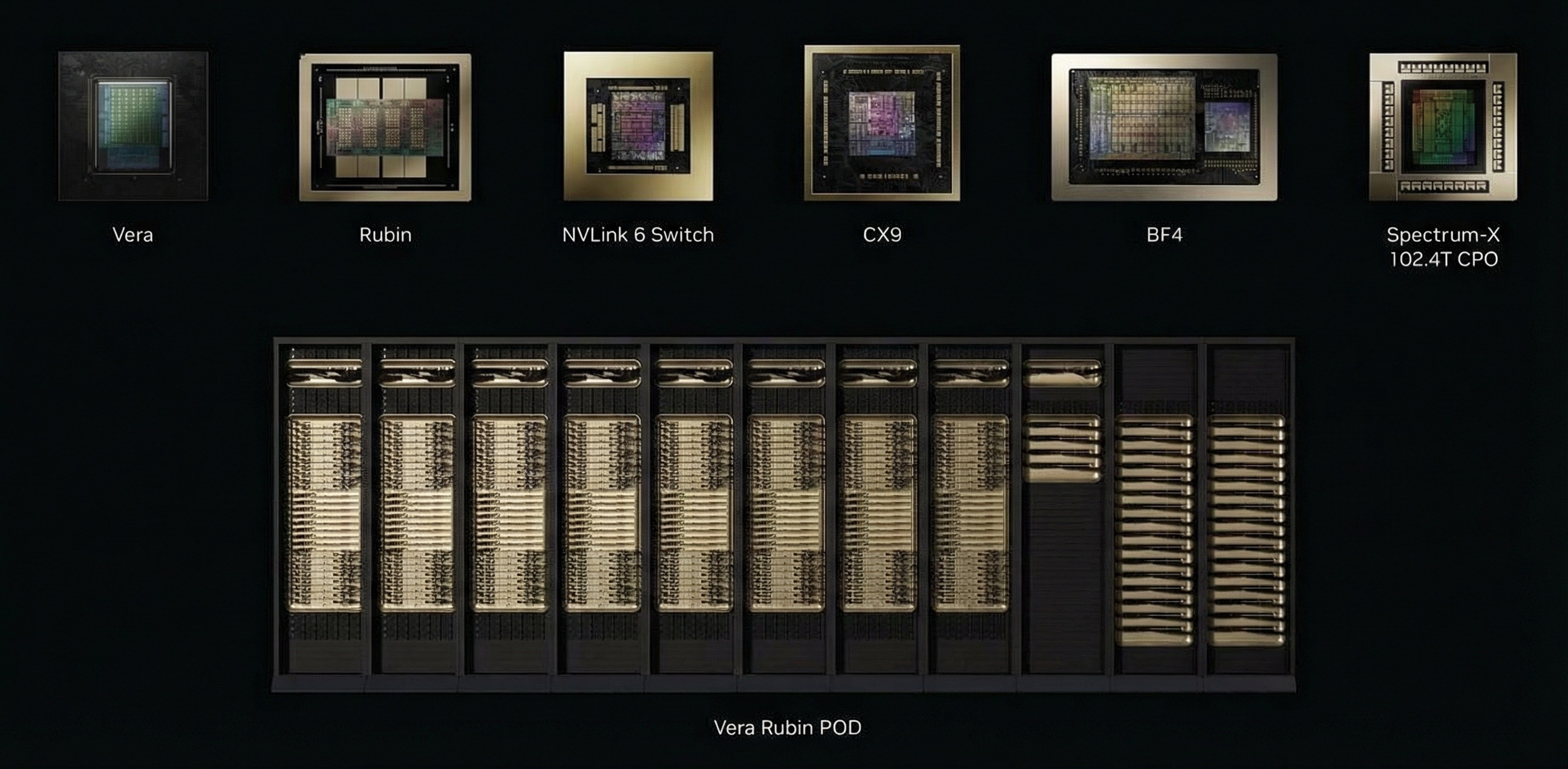
One example is the situation surrounding Nvidia’s new generation of hardware. When Nvidia unveiled its latest Rubin series, it named several American companies as customers, but no Chinese company was on the list. This is due to US regulations prohibiting direct sales to China. Chinese companies are now negotiating to lease computing power at data centers in Southeast Asia and the Middle East to gain access to Rubin chips. This follows similar efforts last year, when they sought access to Nvidia’s Blackwell series chips.
A difficult situation for Chinese companies
Such agreements to use Nvidia chips in third countries are generally considered legal, but they require complex arrangements. This puts Chinese AI developers at a disadvantage compared with American competitors, which have better funding and easier access. For example, Justin Lin, who leads development of the Qwen AI model at Alibaba, estimated at the Beijing conference that the chance of any Chinese company surpassing giants such as OpenAI or Anthropic in the next three to five years was 20% or less.
US export controls restrict China’s access to the most advanced AI chips, discouraging many Chinese companies from pursuing cutting-edge AI, which consumes enormous amounts of computing power. Instead, they focus on mainstream applications, while US companies invest in the latest chips to push the boundaries. Alibaba’s Justin Lin noted that at US companies such as OpenAI, a large share of computing power is devoted to next-generation research, while they in China are so busy meeting day-to-day demands that they do not have enough resources for it.
UBS analysts estimate that the total capital expenditure of China’s leading internet companies, much of it on AI, reached the equivalent of approximately CZK 1.19 trillion last year. That is roughly one-tenth of what their American counterparts spend.
Advances and obstacles in Chinese research
Nevertheless, no one is writing China off yet, because companies such as DeepSeek have demonstrated an ability to adapt to limited resources. Two other AI developers – Zhipu (officially Knowledge Atlas Technology) and MiniMax – raised more than CZK 20.87 billion through initial public offerings in Hong Kong this month. MiniMax shares doubled from their IPO (initial public offering) price within two trading days.
Alyssa Lee, a veteran technology investor who now works at an AI startup, said that despite the more challenging environment, investors are counting on the possibility of catching up technologically or achieving a breakthrough. According to her, this optimism reflects the level of innovation demonstrated by Chinese companies.
DeepSeek made its mark in the US with a high-quality AI model a year ago and has since been publishing techniques for making AI development more efficient, which have also been adopted by Western researchers. This month, DeepSeek published two research papers: one on a new training architecture that makes it possible to create larger models with fewer chips, and another on a memory design that improves model efficiency.
This year, models from DeepSeek and Alibaba have narrowed the gap with the best American models to just four months, compared with an average lag of seven months in previous years, according to the nonprofit research organization Epoch AI. Many leading Chinese models are open-source, meaning they can be downloaded and modified for free. This helps Chinese companies increase their global visibility, while top American models remain closed.
China’s domestic chips
DeepSeek has encountered problems, however. Last year, while developing a new flagship model, it tried less advanced chips from Huawei and other domestic suppliers, but the results were unsatisfactory, so it turned to Nvidia chips for part of the training. It then made progress and is preparing to unveil the model in the coming weeks.
In recent years, Huawei and many Chinese chip startups have made progress – Zhipu announced on Wednesday that it had created an open-source image-generation model using only Huawei chips – but the performance gap compared with the best American chips remains significant.
China is constrained by US bans on acquiring cutting-edge chipmaking technology. Companies cannot use leading manufacturers in Asia such as Samsung or Taiwan Semiconductor Manufacturing Co. for many advanced chips, but must rely on less sophisticated imported and domestic machinery to increase capacity.
Yao Shunyu of Chinese internet giant Tencent, who recently left OpenAI to lead AI efforts at Tencent, described chip manufacturing capacity as the main obstacle at the Beijing event.
Washington’s recent decision to allow Nvidia’s H200 chip to be sold to China is unlikely to change the situation. Nvidia CEO Jensen Huang said Chinese demand for the chip is high, but people at Chinese tech companies say that the H200 – which is two generations behind the Rubin series – is no longer sufficient for training cutting-edge AI.
Companies are still waiting for approval from Beijing to purchase the H200. Chinese officials recently told some companies that purchases should be limited to "essential" purposes, such as advanced AI research, and that China would continue to promote the use of domestic chips.
Sources: wsj.com livemint.com


