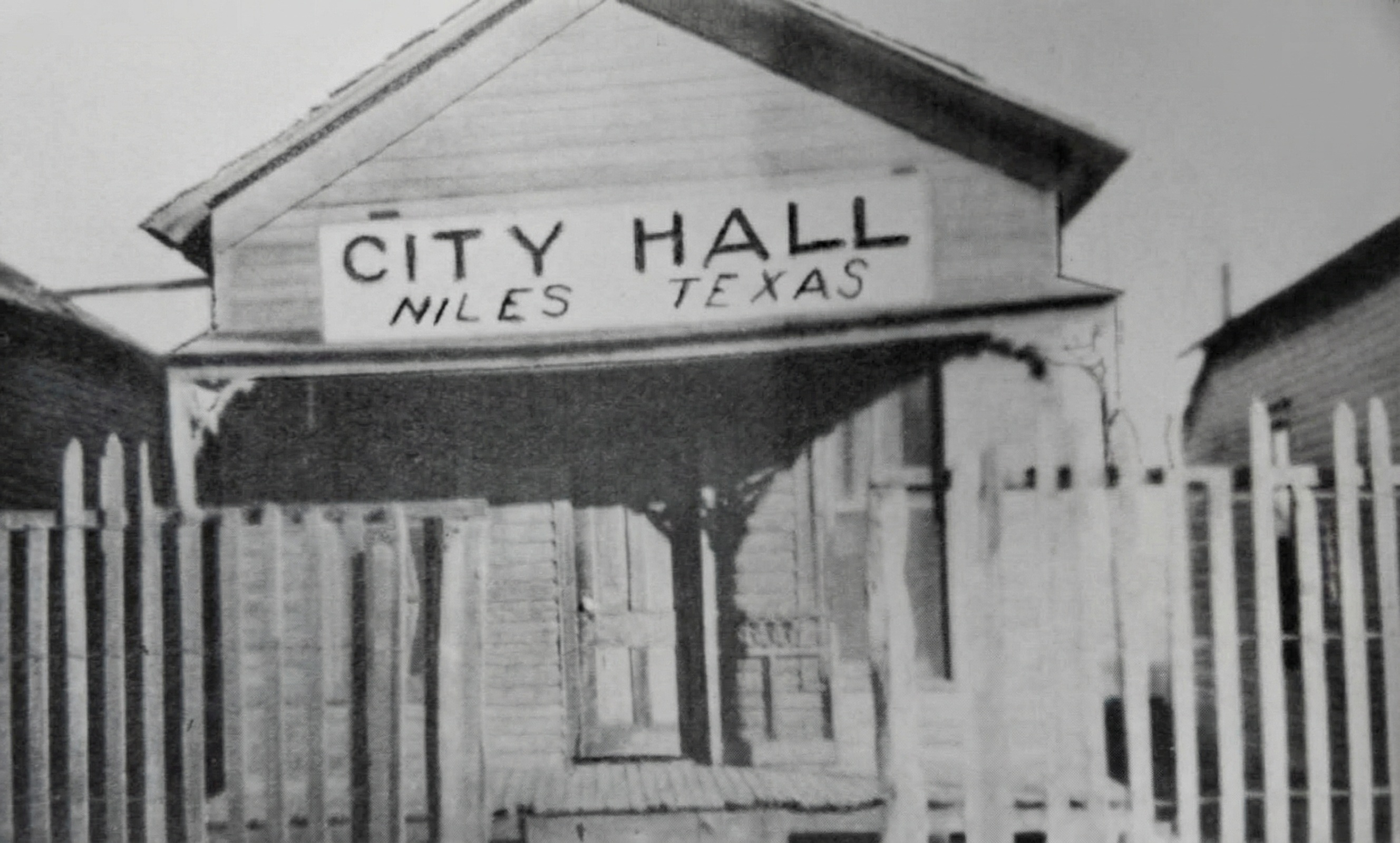
... This picket fence (opening image) and wooden building housed the local municipal government of Niles City, "the richest little city in the USA." When wealth is measured by per capita income, a small population with an enormous industry equals "the richest." Although it was located north of Fort Worth, the meatpacking plants established their own city, first called North Fort Worth and later Niles City after Fort Worth annexed North Fort Worth. It was named after Louville Niles, a Boston meatpacking plant owner who, together with a partner, bought the local meatpacking plants in 1893.
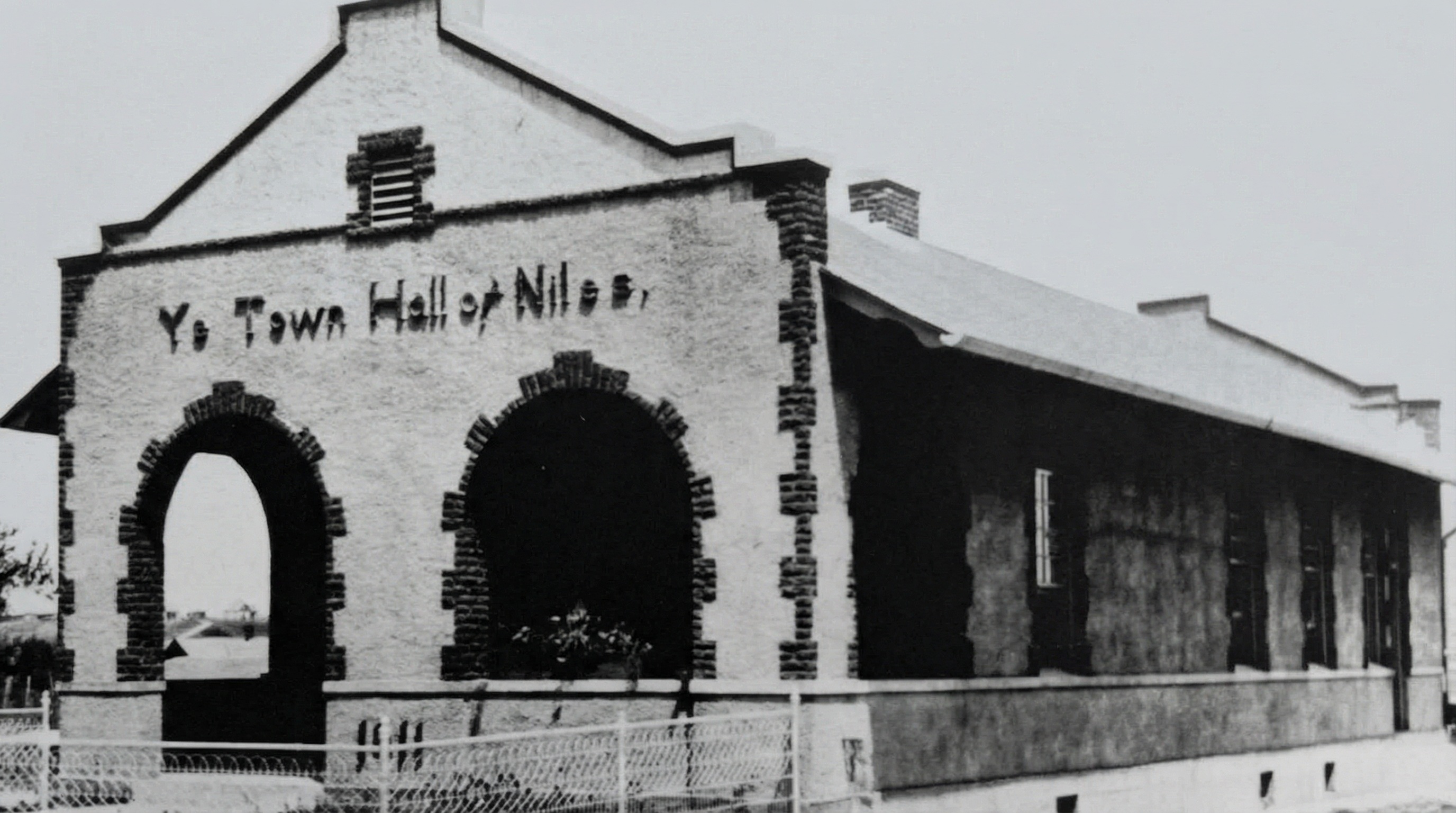
Niles City Hall stood at 2354 Decatur Avenue and was the second building to house the municipal offices. Fort Worth annexed the reluctant Niles City in 1922 following a court battle.
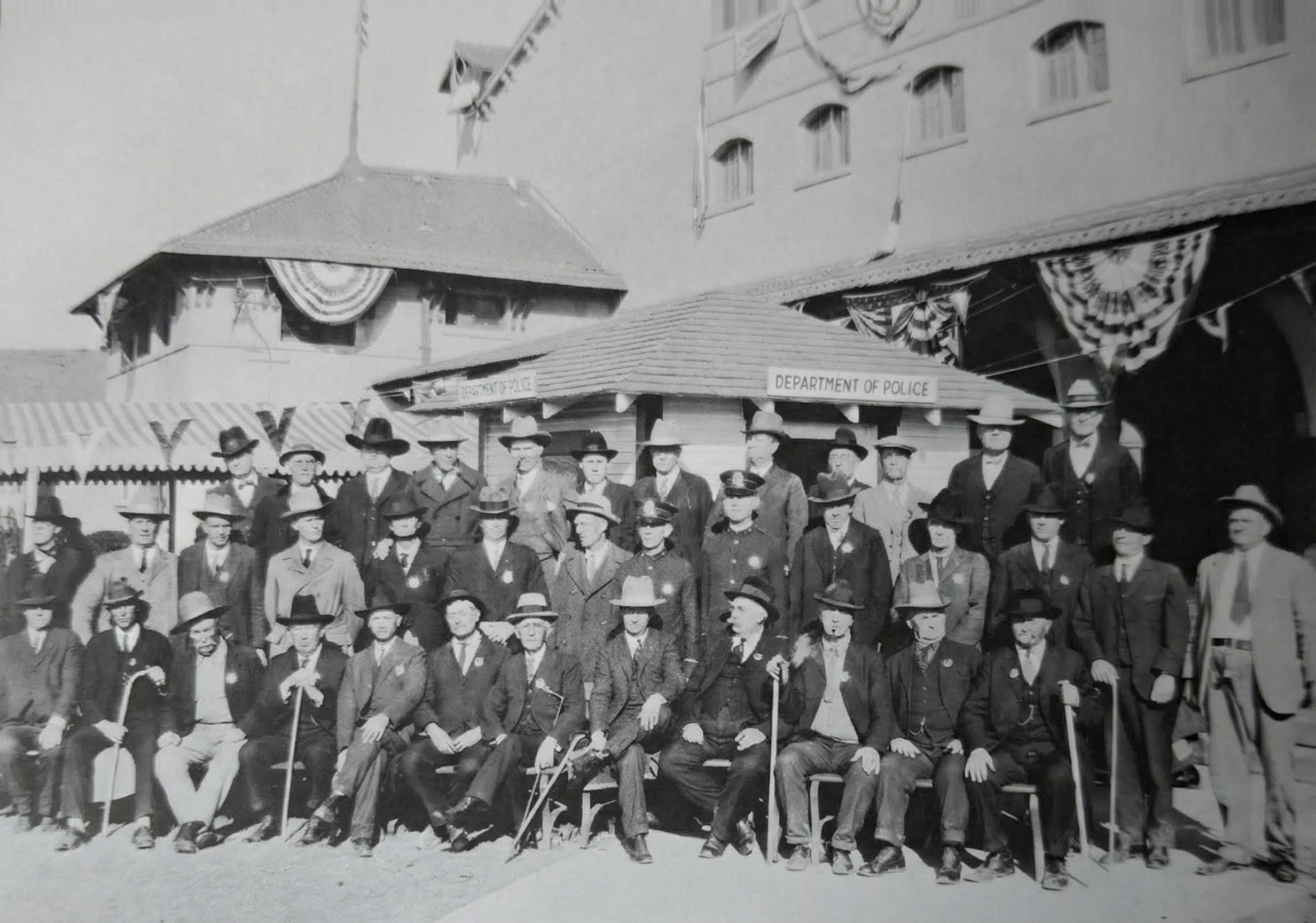
Although these men are in plain clothes, they are actually police officers. The Fort Worth Police Department was often called upon to protect the large crowds attending livestock shows. During one or two strikes at the meatpacking plants, the police had to confront crowds of strikebreakers who were trying to prevent workers from entering the meat-processing plants.
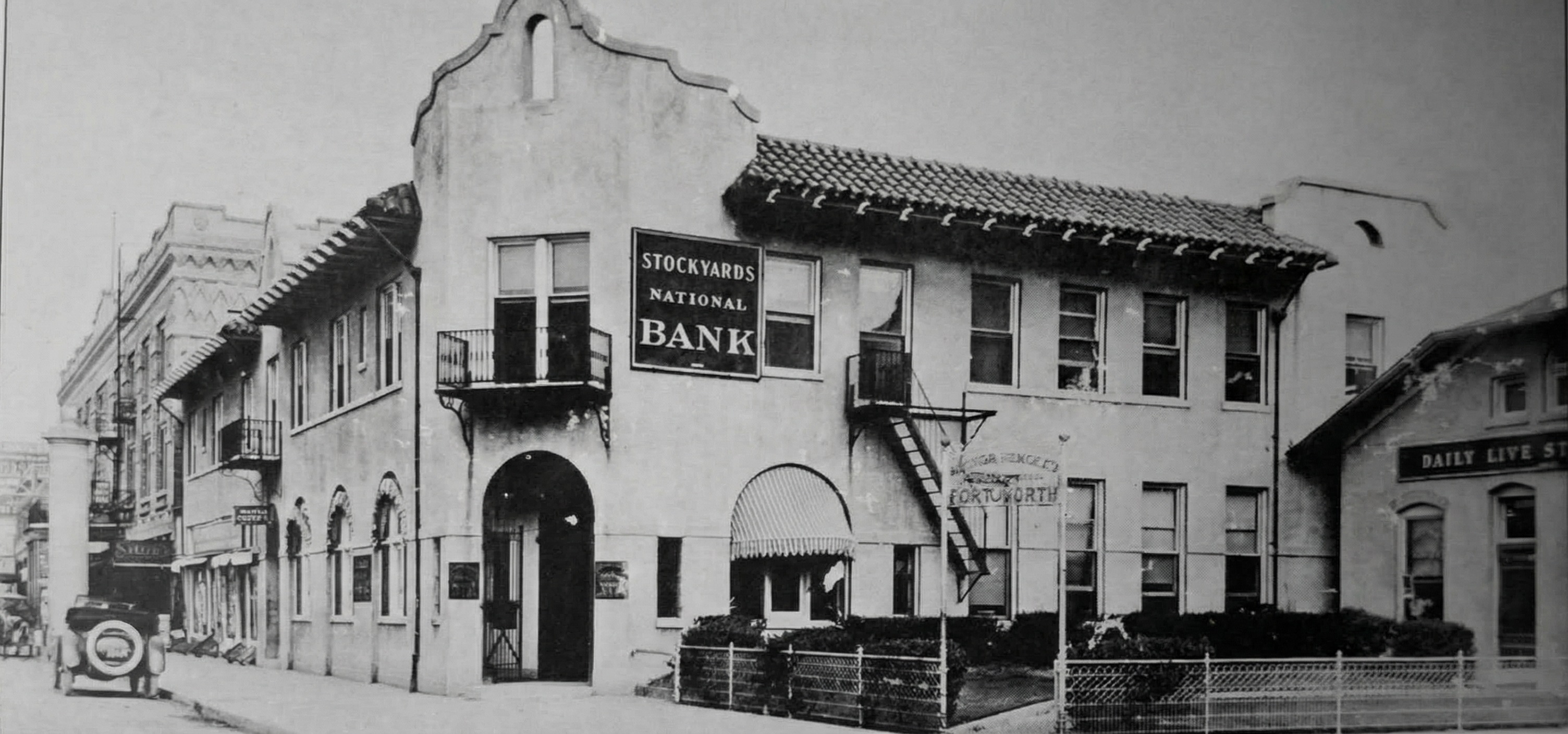
Stockyards National Bank, owned by Fort Worth Stockyards, advertised itself as "the clearinghouse for the great livestock market of the Southwest." The gate bearing the inscription "Anchor Fence Co. Fort Worth" leads to the small building at the far right that housed the Daily Livestock Reporter, a newspaper owned by the company operating the meatpacking plants. This small building has since been demolished.
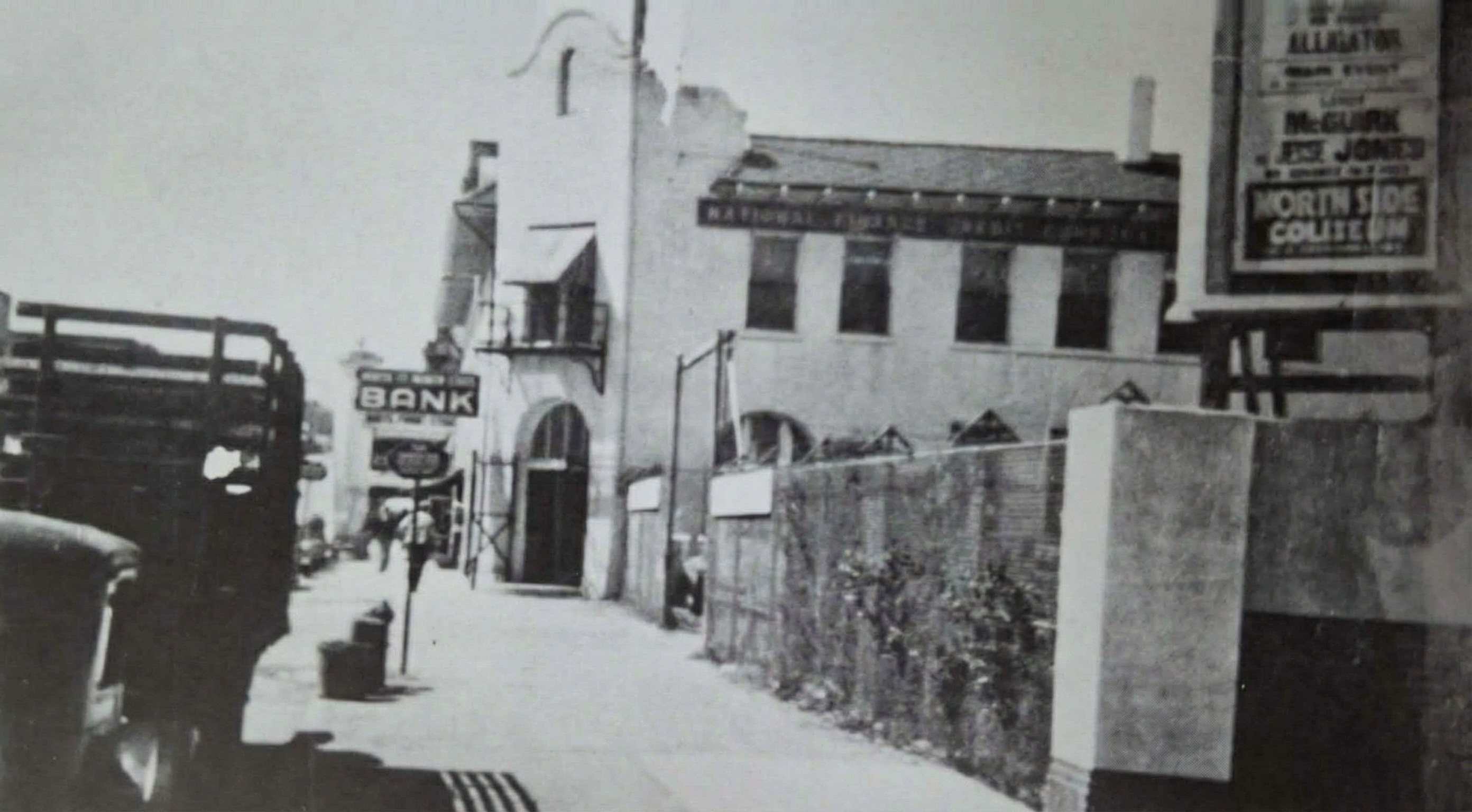
Before this white stucco building (photographed here in the 1940s) became North Fort Worth Bank in 1939, it was once Stockyards National Bank, where a robbery took place in 1930. A desperate man named Nathan Martin brought nitroglycerin into the building and demanded $10,000 from the teller. When police officers came through the door, he dropped his weapon, killing himself and a bank employee. In 1977, White and Fincher's Clothing Store moved in. The bank vault is still inside the store.
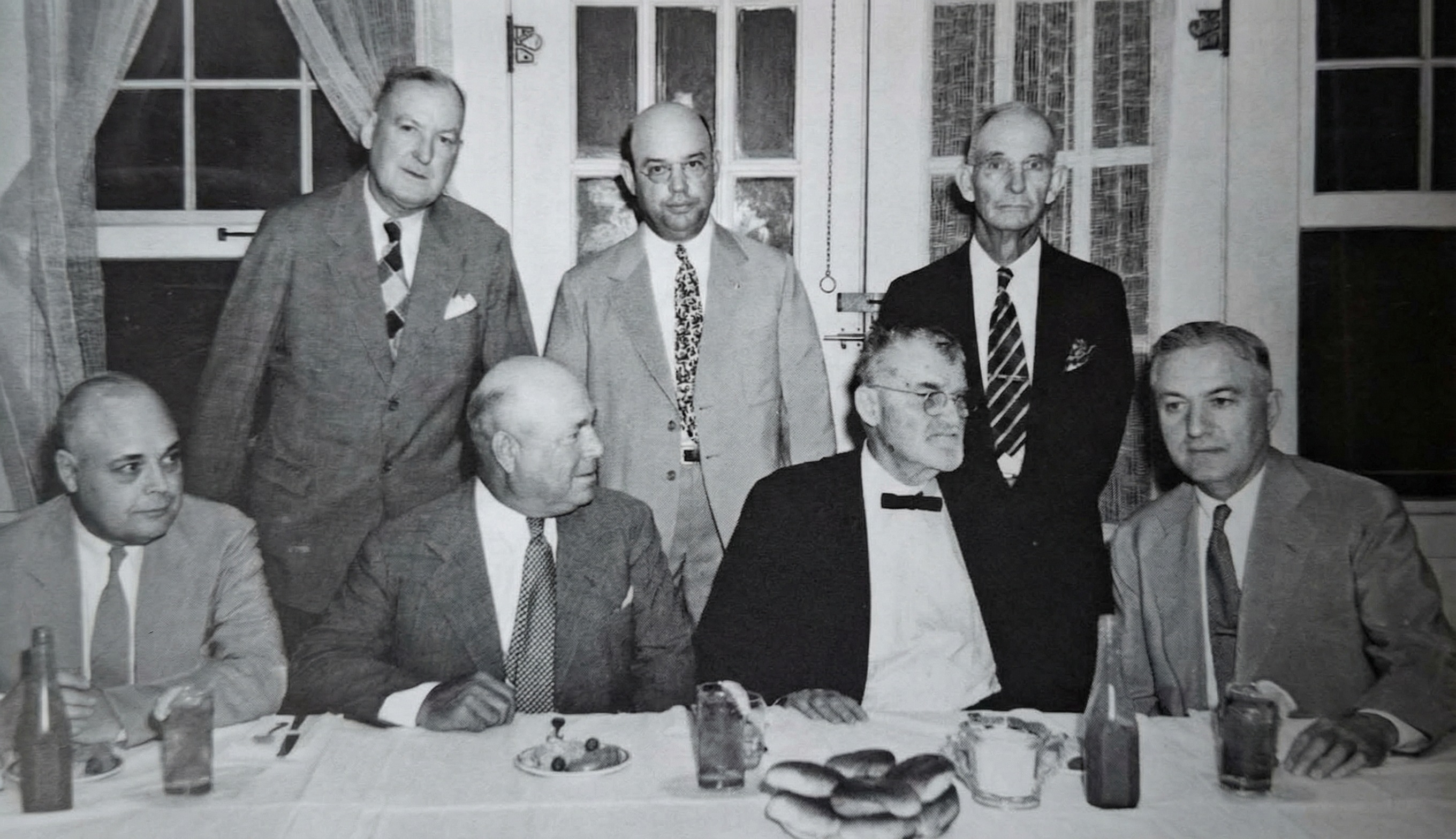
Guests at a livestock-focused dinner around 1938 include, from left to right, (seated) A. A. Lund, general manager of Armour and Company; Charlie Daggett, Daggett Commission Company; Jim Farmer, Farmer Commission Company; and John Hall, general manager of Swift and Company; (standing) Bert O'Connell, chief cattle buyer, Swift and Company; George Scaling, chief cattle buyer, Armour and Company; and Charlie Breedlove, Breedlove Commission Company.
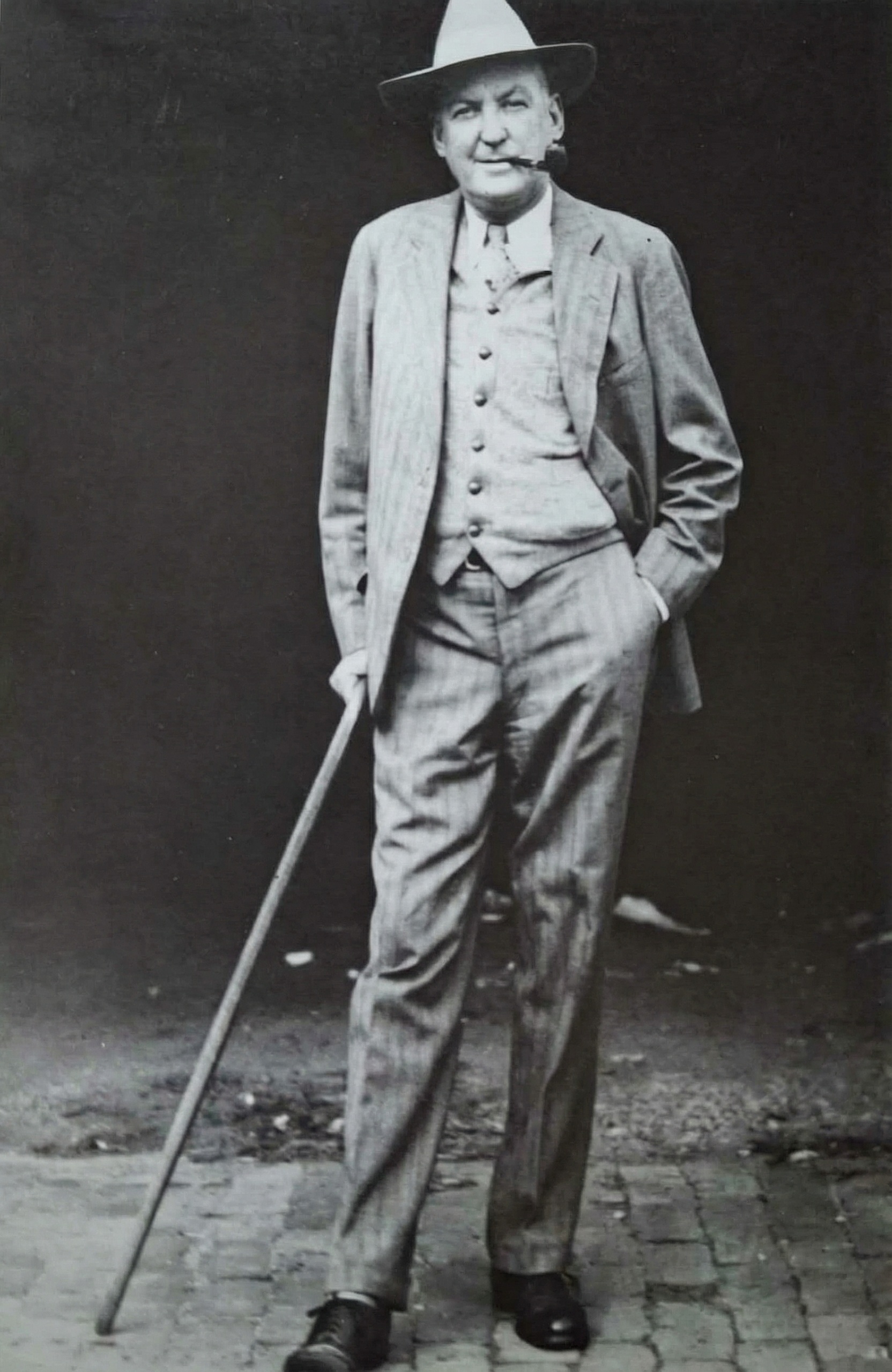
This is a photograph of Bert O'Connell, chief cattle buyer for Swift and Company from 1910 to 1940. A cattle or hog buyer could look at an animal and estimate, within a few pounds, how much its dressed carcass would weigh after processing at the meatpacking plant. If a buyer was wrong too often in his estimates, the bosses at Armour or Swift replaced him with someone who could be a little more accurate. O'Connell must clearly have been excellent at estimating weight.
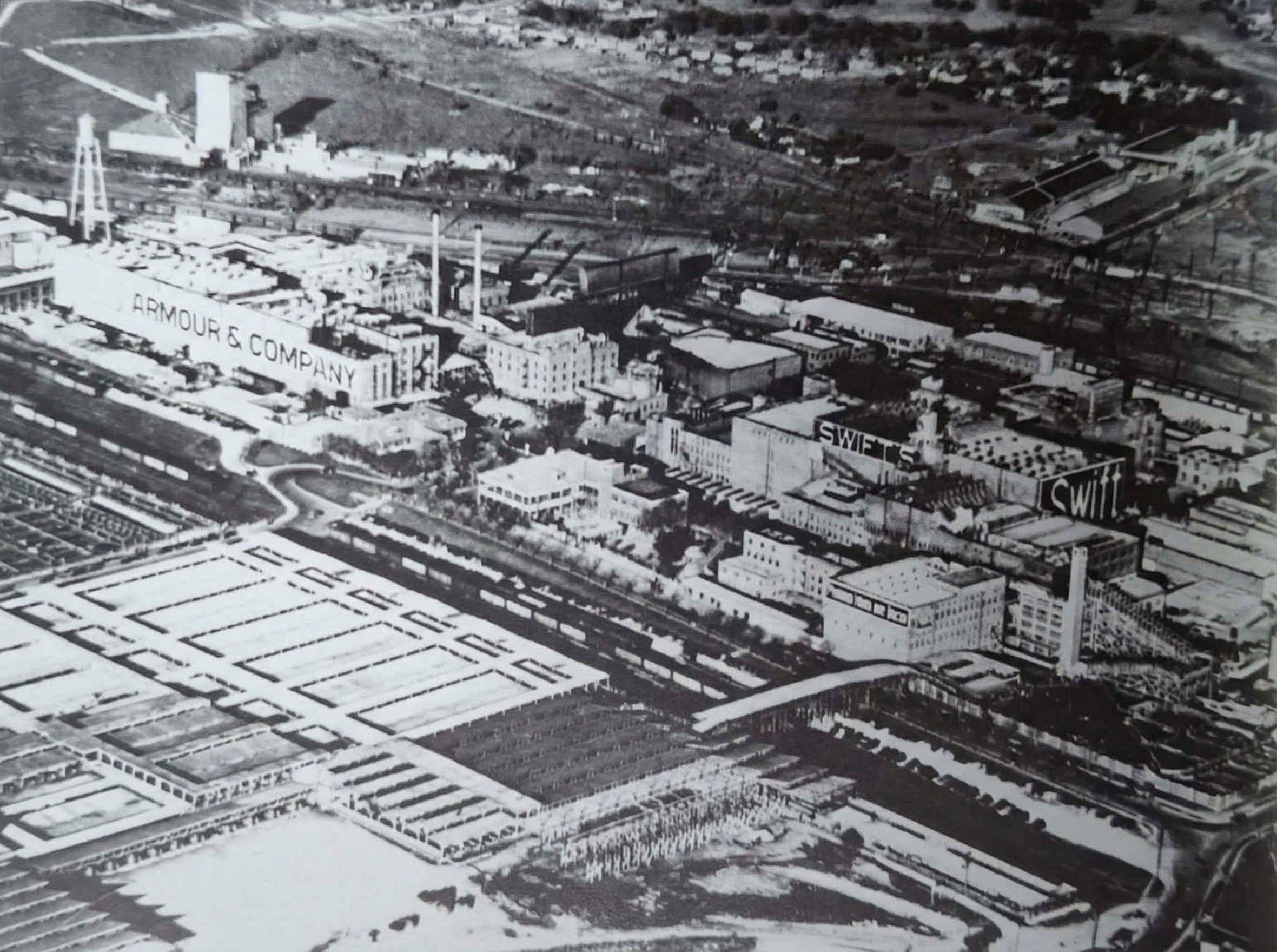
In this aerial view of the meatpacking plants from the 1930s, Armour and Company can clearly be seen on the left. The buildings on the right make up the Swift and Company complex. In the foreground, railroad tracks separate the buildings from the covered hog and sheep pens. The cattle ramp on the right crosses the railroad tracks toward Swift.
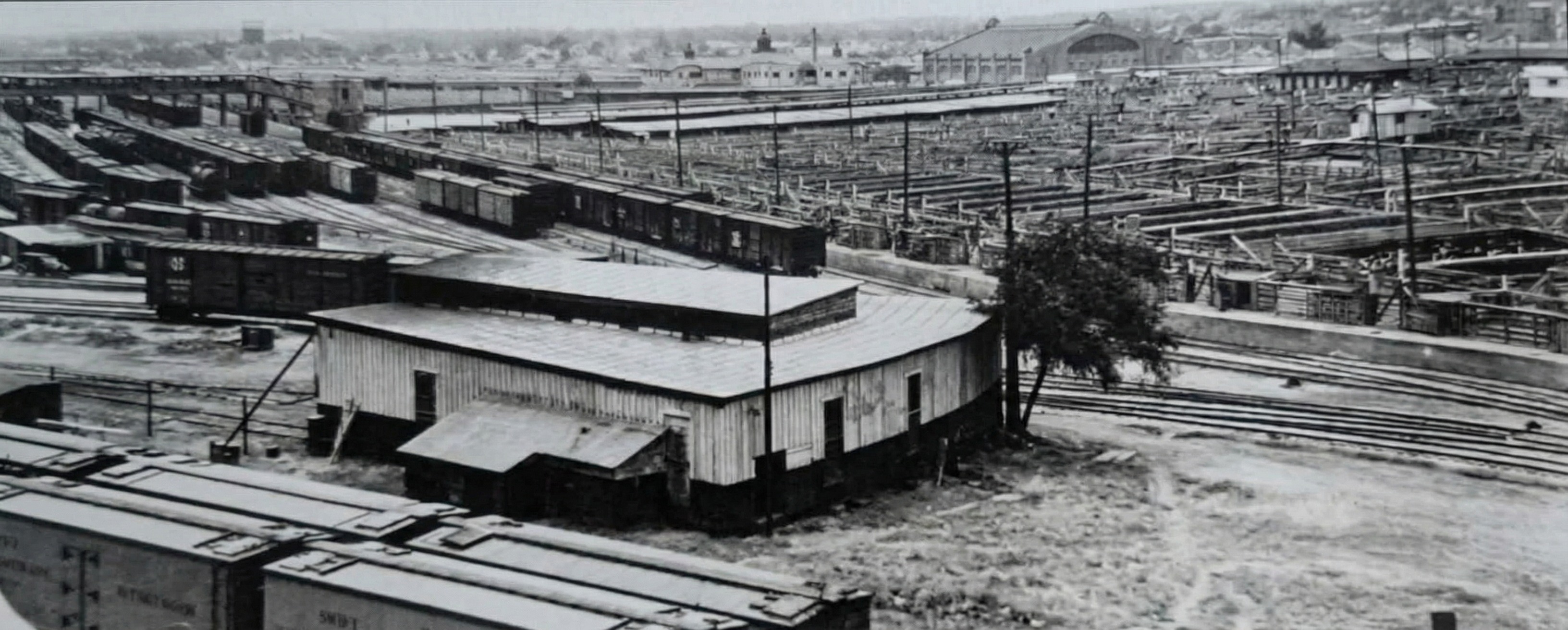
This photograph from July 1935 shows a view of the meatpacking plants looking south from Twenty-eighth Street. In the background, just right of center, the rear of the Coliseum can be seen with the Livestock Exchange Building to its left. The large building in the foreground, surrounded by trains and railroad tracks, was a railroad shop. Thanks to the meatpacking plants, as many as 10 railroad companies laid tracks into Fort Worth at the beginning of the 20th century.
... continued next time ...