Ordinary People
History is sometimes shaped by very important figures, and at other times by completely ordinary people. Many others merely witness the great deeds of others and cheer them on. This chapter cannot capture or even mention everyone who contributed to the success of the Fort Worth Stockyards—not once, but twice. The first success came in the early 20th century. Local businesspeople worked toward it for three decades: bringing in railroads, attracting meatpacking plants, and helping develop the entire stockyards complex. Charles French’s livestock associations and the livestock show, held to attract ranchers with their finest animals, also played their part. In the early 20th century, thousands of immigrants poured into the United States, and the growing cattle industry drew many of them to Fort Worth. The Fort Worth Stockyards became the largest market in the entire southwestern United States and ranked third or fourth nationwide for more than half a century.
The Fort Worth Stockyards’ second success—their transformation into a thriving tourist attraction—came about because local people wanted it to happen. Cooperation among the North Fort Worth Historical Society, the North Fort Worth Business Association (later renamed the Fort Worth Stockyards Business Association), and the city of Fort Worth itself made a significant contribution. Jim Wright, then a congressman and later Speaker of the U.S. House of Representatives, helped secure federal grants to improve the city’s infrastructure and attract businesspeople willing to invest in its revitalization. Fortunately, many came forward.
This chapter presents a selection of people whose lives intersected with the Fort Worth Stockyards at least once—and some who spent virtually all their time there.
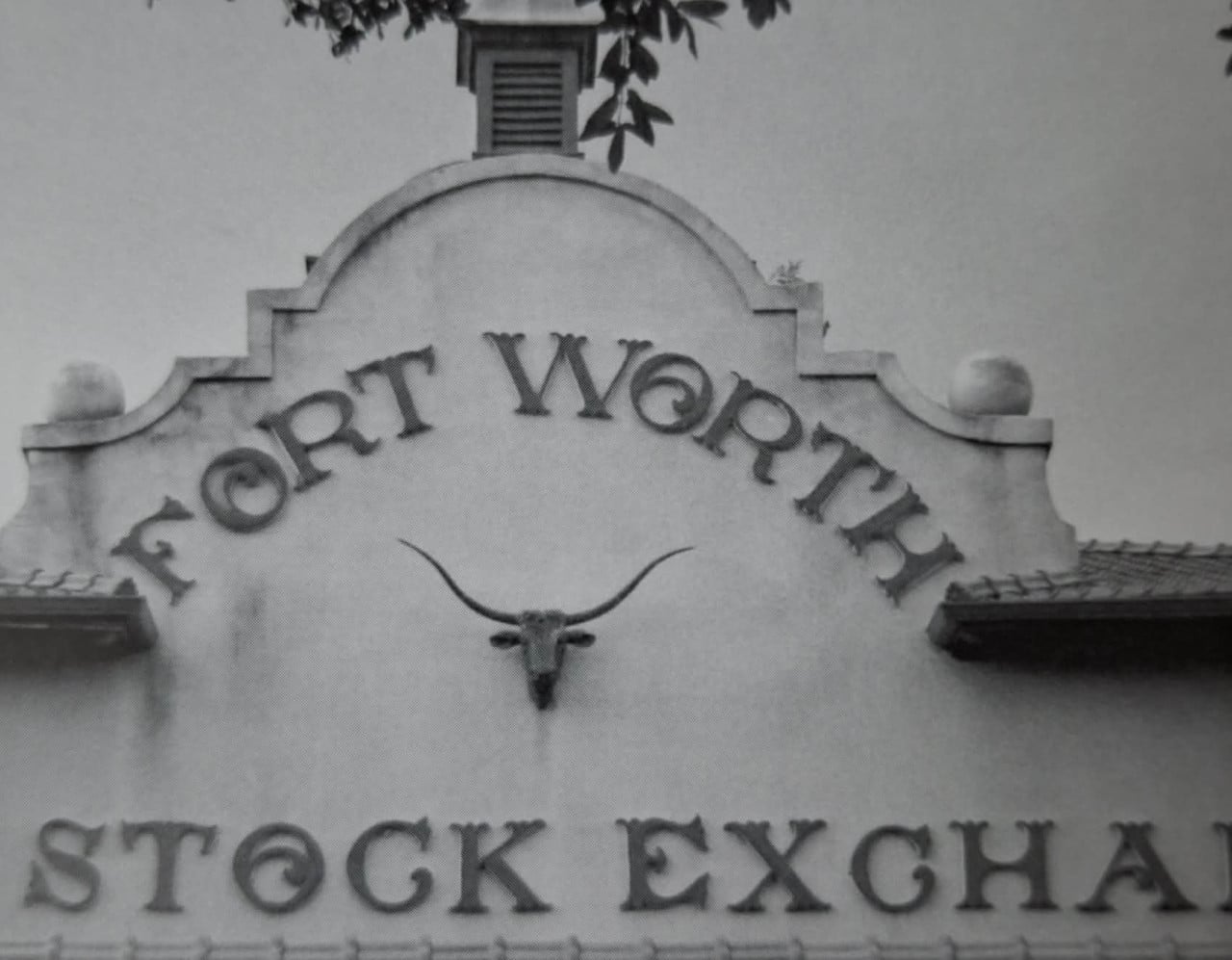
The first name deserving of recognition does not belong to a person, but it has been here longer than anyone else. Molly is the name of the bronze statue of a longhorn bull whose head and horns adorn the facade of the Livestock Exchange Building. Given the importance of the Fort Worth Stockyards to the local economy, the city adopted the longhorn bull as its symbol, appearing on letterhead, vehicles, and other city property.
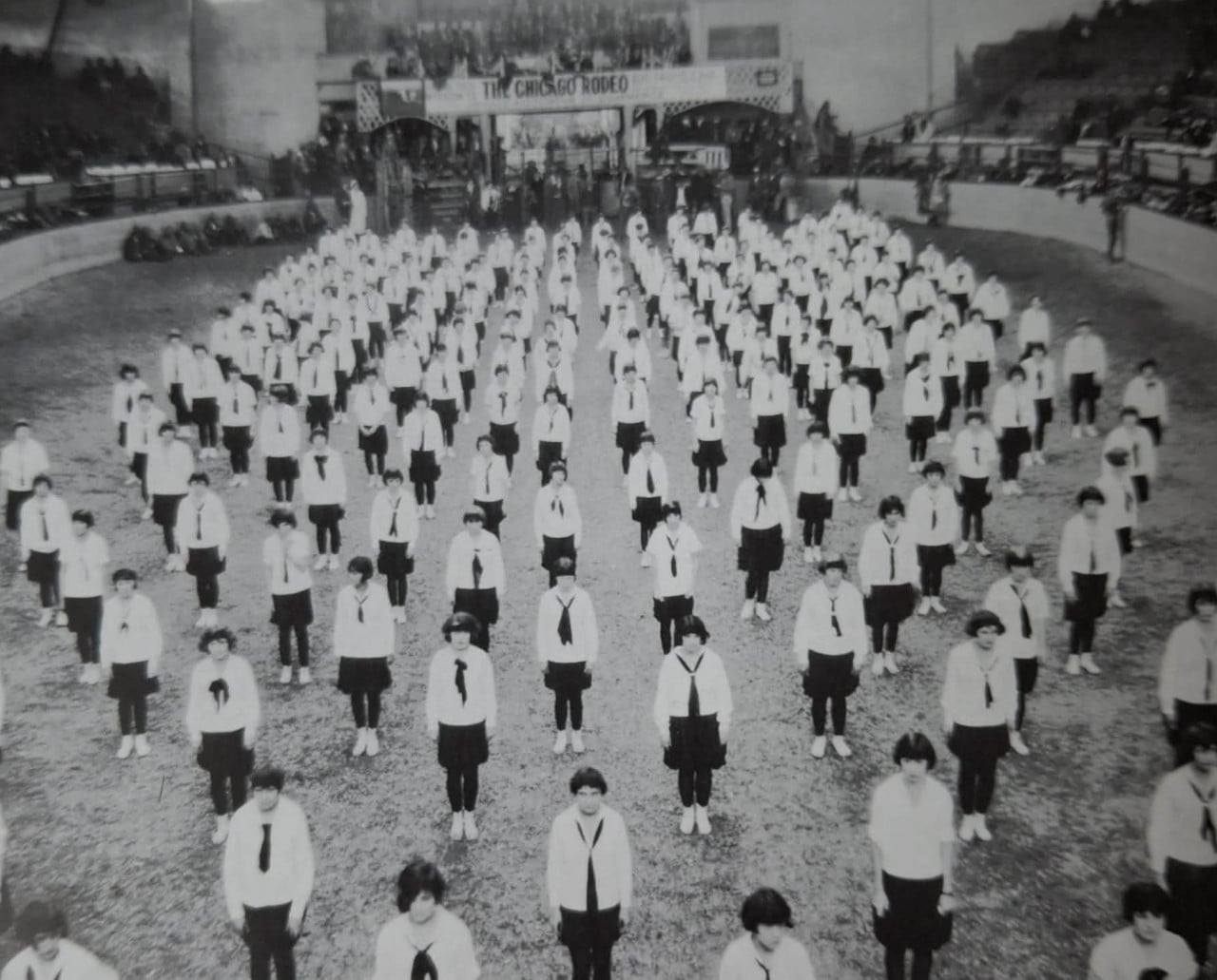
These boys and girls represent the immigrants who came to Fort Worth, Texas, primarily during the first decade of the 20th century. These young people were members of Sokol, a Czechoslovak organization, and performed gymnastic exercises in the Coliseum. Many immigrants from Central and Eastern Europe came to North Fort Worth to work in the meatpacking plants and stockyards. Sokol was a patriotic organization founded in the old country with the aim of keeping young people physically fit.
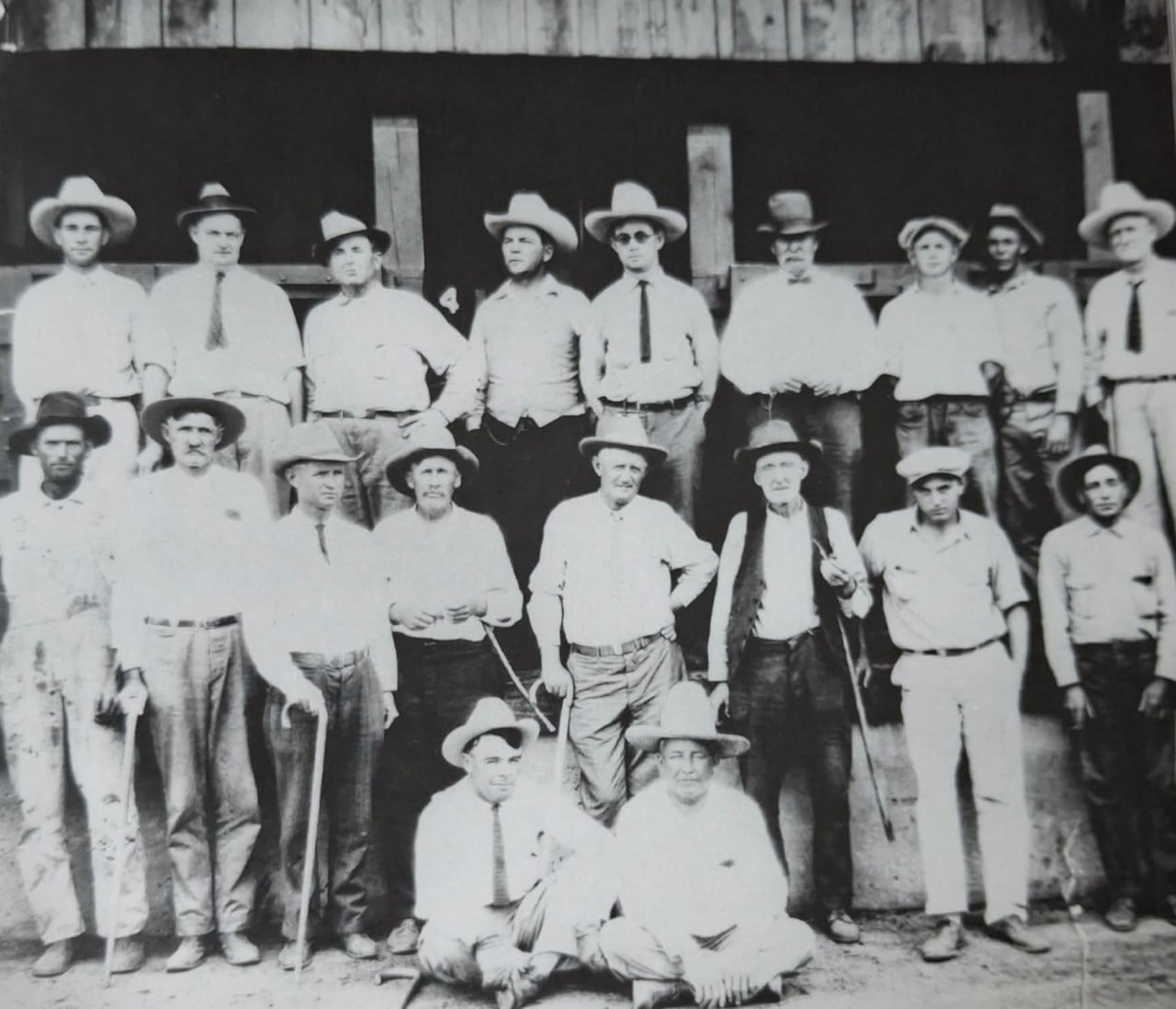
In the early days, large numbers of stockyards workers were needed to unload animals from railroad cars, drive them into pens, feed and water them, take them to be weighed, hand them over to their new owners after purchase, and so on. All these activities took place in all kinds of weather from dawn to dusk—and sometimes a little longer. One eyewitness described it this way: “We worked from the time you could [see] until the time you could [not see]."
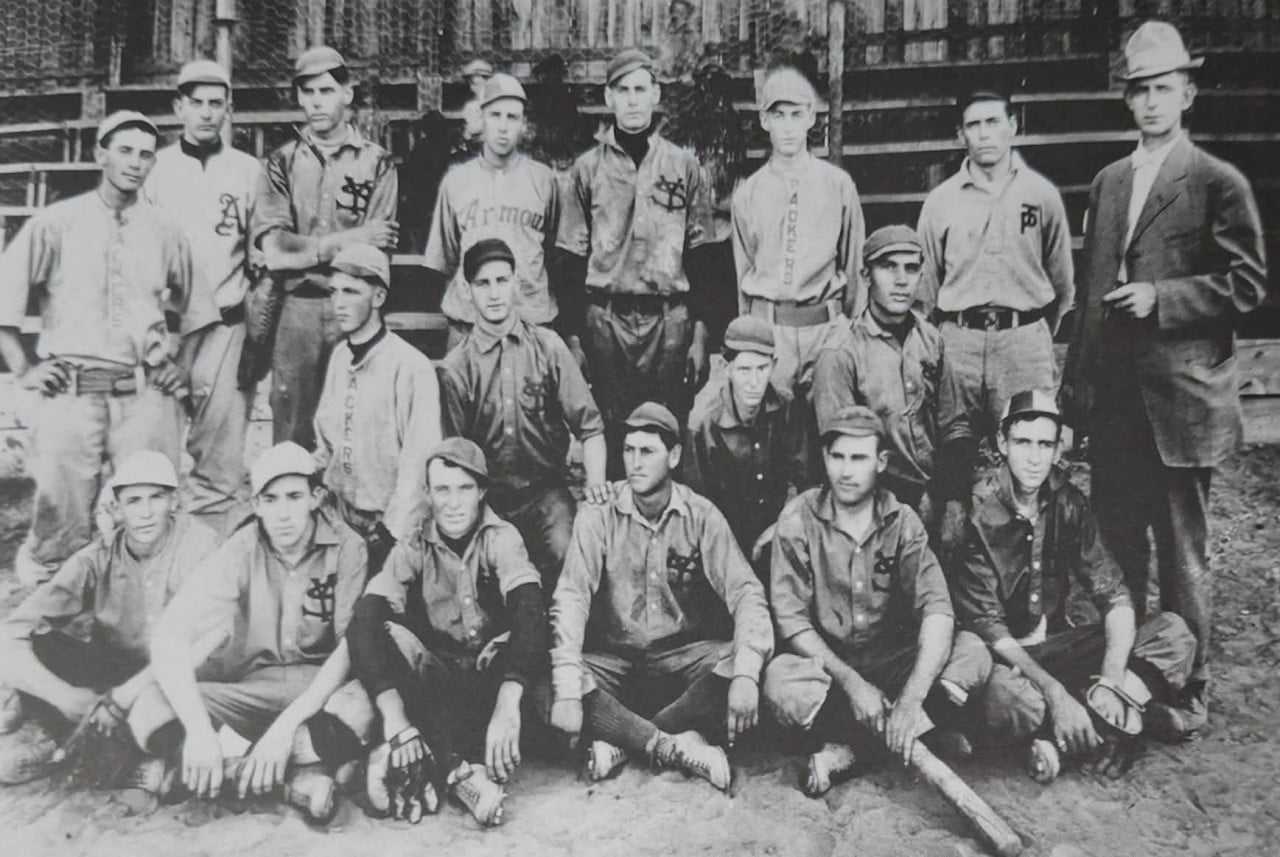
Armour, Swift, and the stockyards workers themselves each had their own baseball team. The members of the Fort Worth Stockyards baseball team in the photograph dated July 13, 1912, are, from left to right (first row): an unidentified player, Lester Thannisch, Lee Allen, Lou Watson, Bunk Thetford, and Maurice Butz; (second row): Johnnie Bolinger, Harry Fifer, Claude Richards, and an unidentified player; (third row): Lefty Wright, Henry Klebold, Ward Farmer, Sammy Rogers, J. D. “Bus" Farmer, Raiford Ward, ? Taylor, and Katy Railroad superintendent Frank Ely.
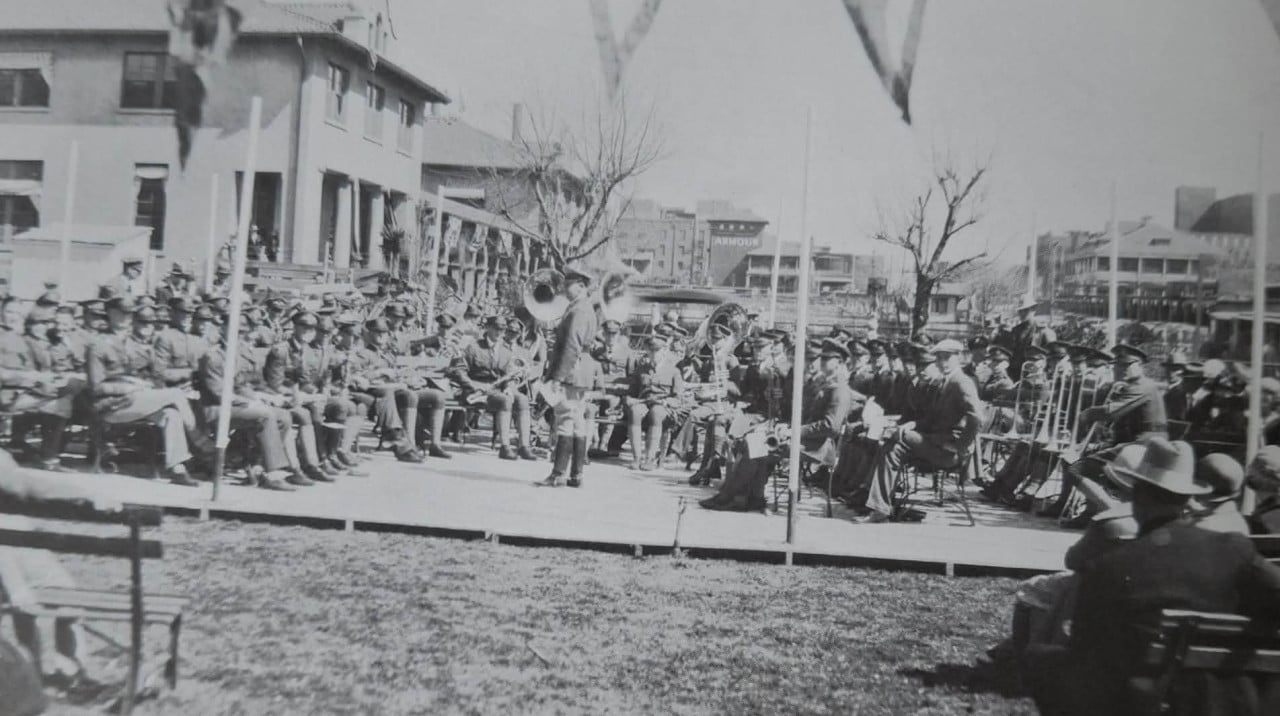
The Texas Agricultural and Mechanical College band held an outdoor concert in 1917 or 1918 in front of the Livestock Exchange Building. This performance probably took place as part of the annual livestock show.
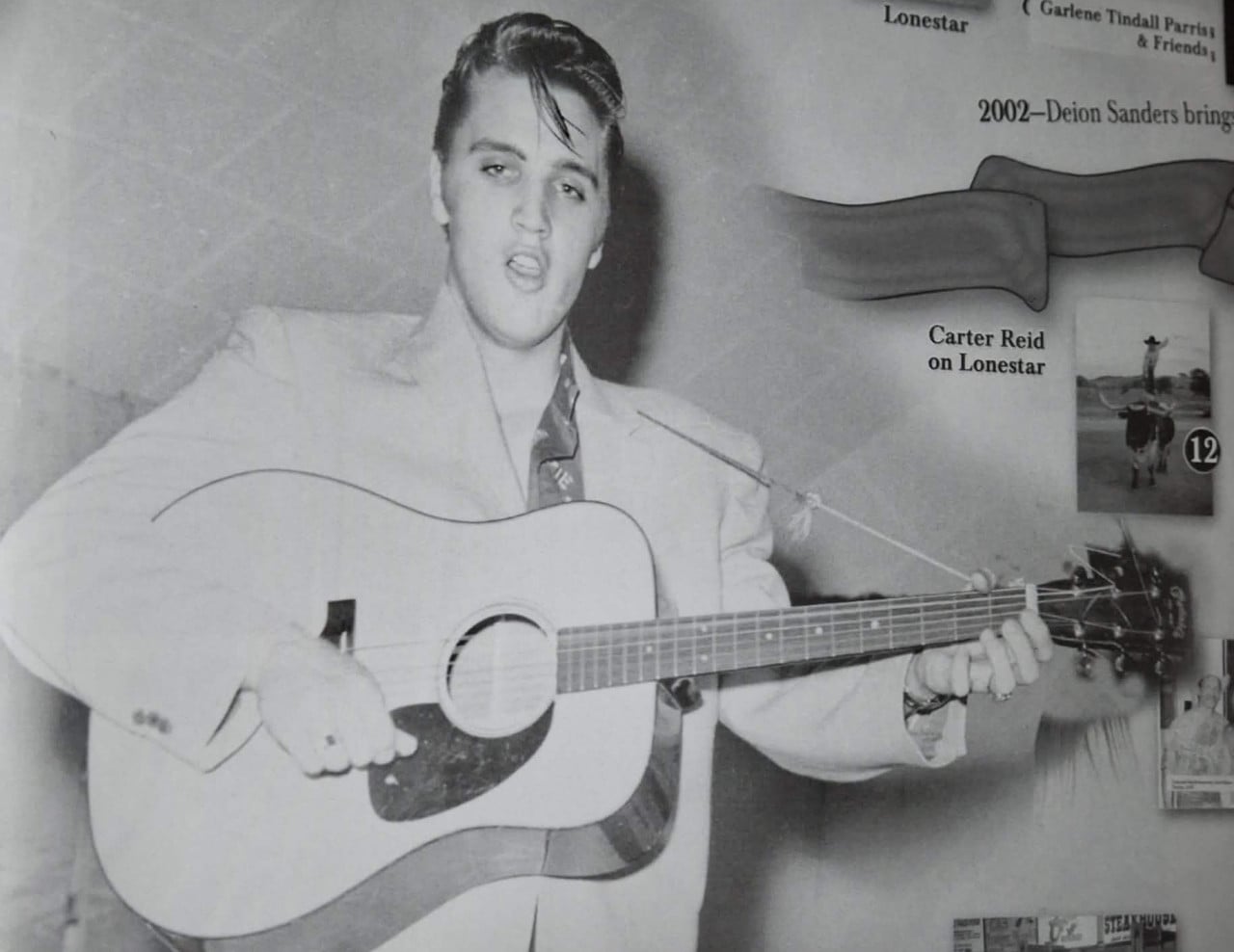
Elvis Presley came to Fort Worth in the fall of 1956 and performed at the North Side Coliseum. This photograph of the musician is part of a historical panorama of photographs in the Coliseum lobby. Coliseum manager R. G. McElyea booked Elvis early in the year, before he became widely famous, and promised him $500 for the performance. When Presley and his band arrived, the release of a new record prompted Presley’s management to demand a significantly higher fee—but McElyea held Elvis to the original $500. Elvis was reportedly so angry that he refused to perform in Fort Worth for 16 years.
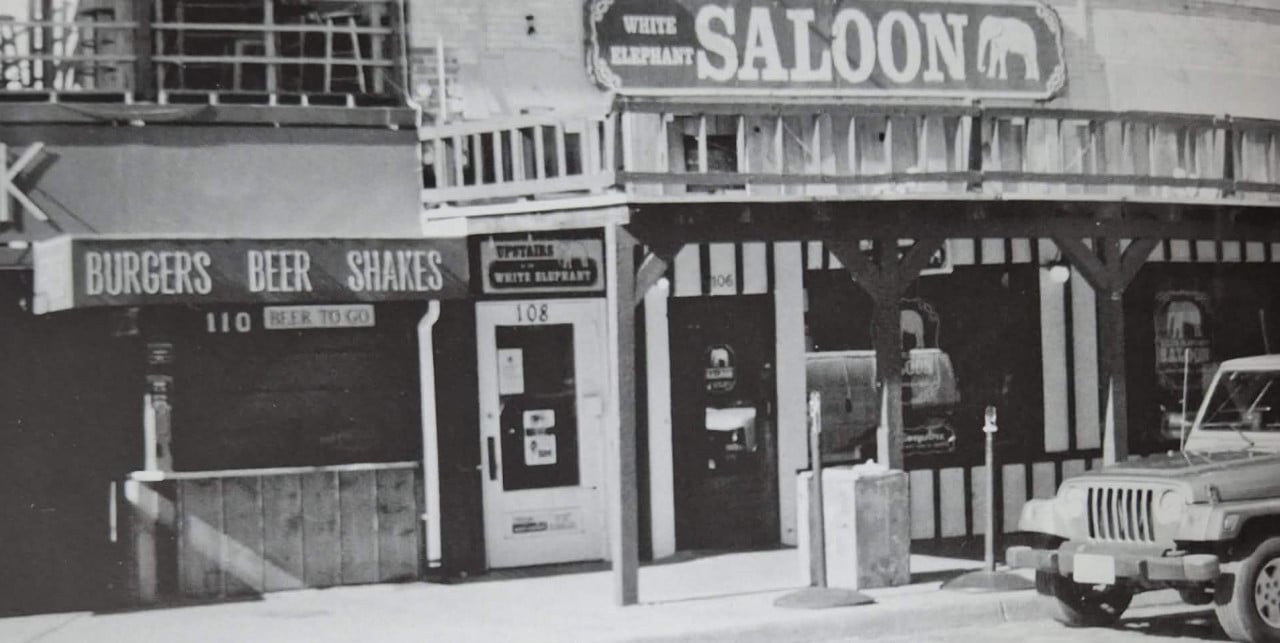
Although it was not located at the stockyards—which did not yet exist at the time—the White Elephant was a real saloon in downtown Fort Worth during the era of the cattle drives. In the 1970s, Joe Dulle opened an establishment of the same name in the stockyards district, and it is now a popular nightclub.
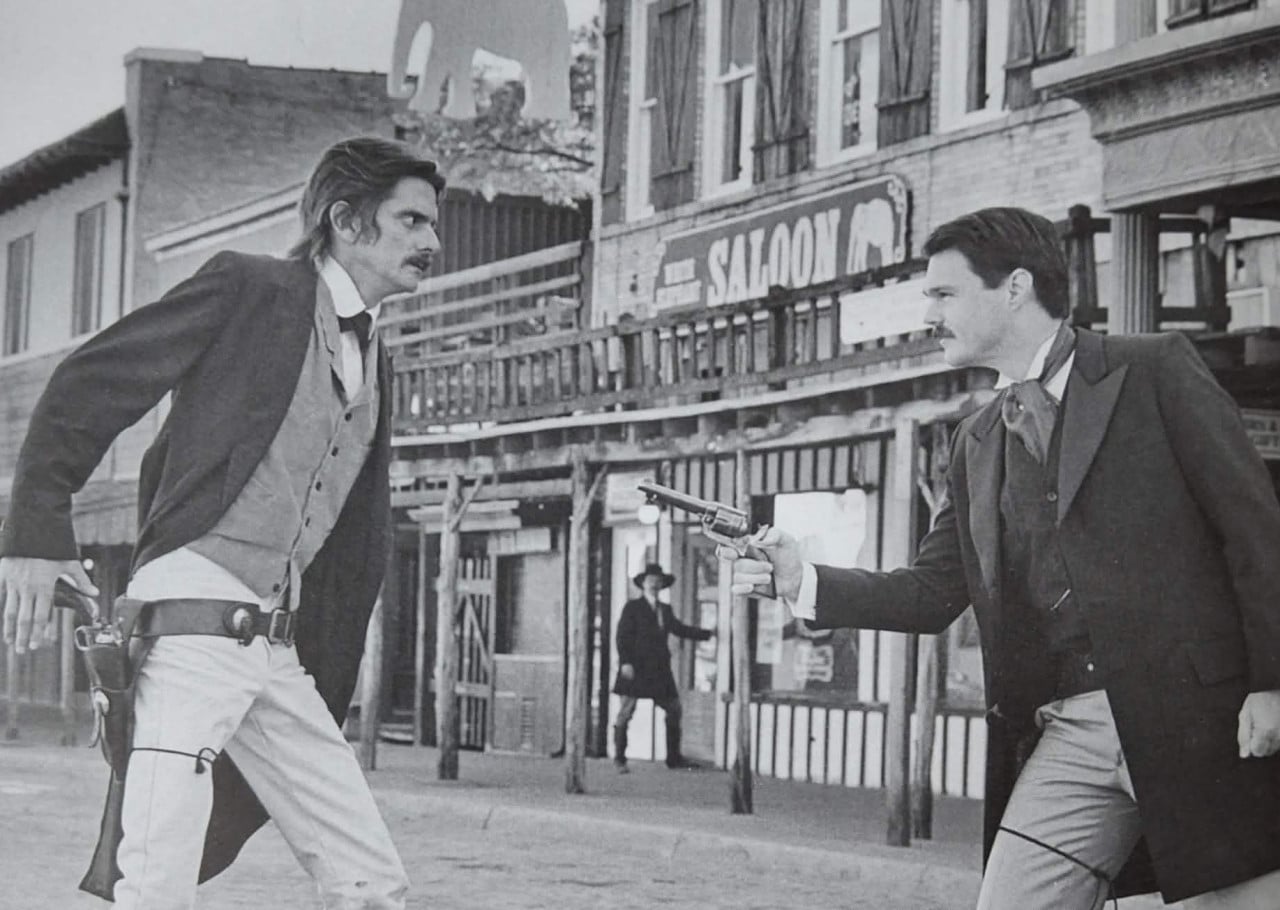
On February 8, 1887, a gunfight took place in downtown Fort Worth between Jim Courtright and Luke Short, reenacted here in front of the White Elephant Saloon. In the photograph, Mike Googins (left) portrayed Courtright, while North Fort Worth Historical Society member and local attorney Quentin McGown (right) took on the role of Luke Short. Short was the owner of the original White Elephant Saloon.
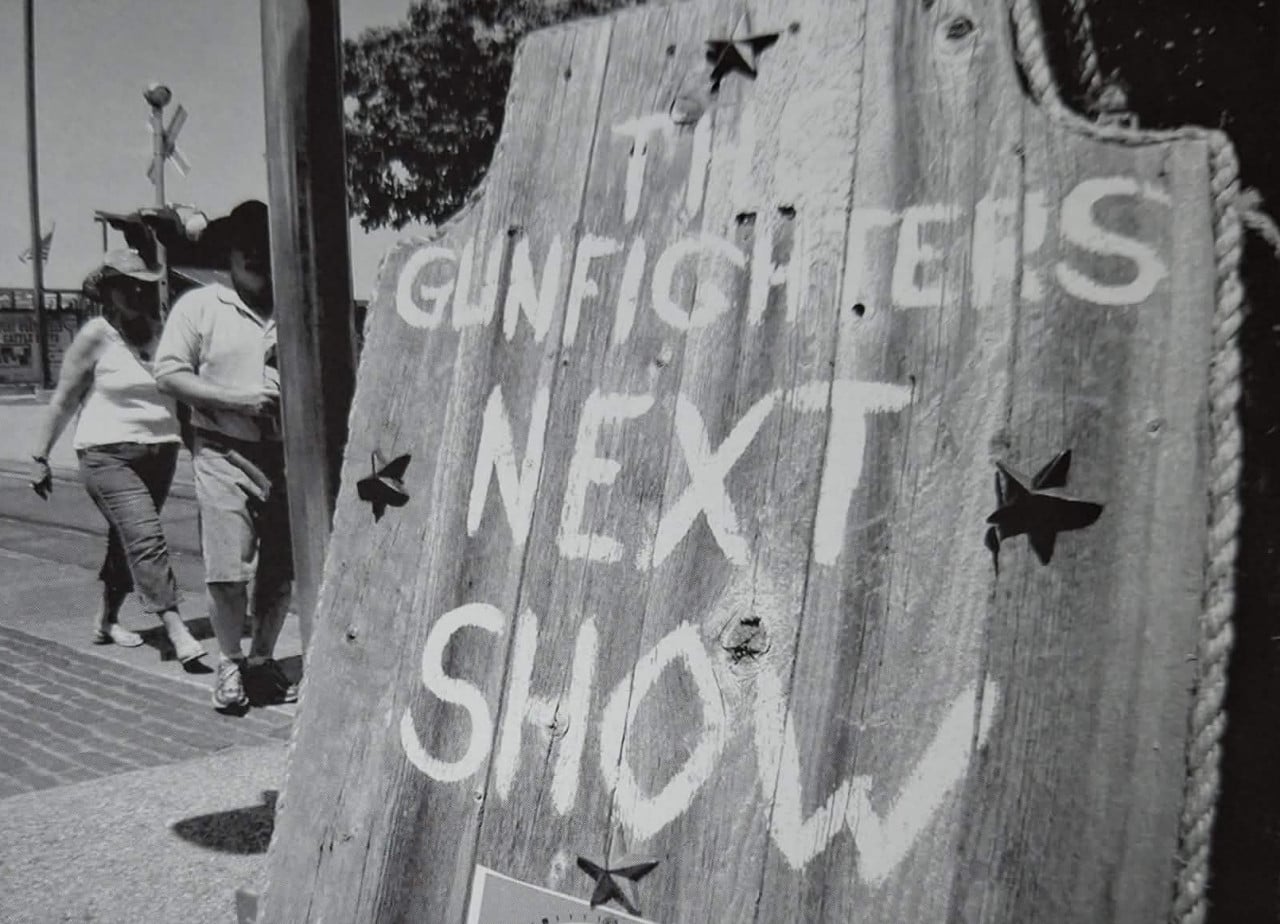
This sign stands in front of the White Elephant Saloon to remind tourists of the time of the next street gunfight. In the actual gunfight, Short shot and killed Courtright, the Fort Worth city marshal. Both are buried near each other in Oakwood Cemetery, which lies northwest of downtown.